
Strategic supply chain framework for the automotive industry
|
|
|
- Aleesha Richard
- 10 years ago
- Views:
Transcription
1 African Journal of Business Management Vol. 4(10), pp , 18 August, 2010 Available online at ISSN Academic Journals Full Length Research Paper Strategic supply chain framework for the automotive industry I. M. Ambe* and J. A. Badenhorst-Weiss Department of Business Management, College of Economic and Management Sciences, University of South Africa, P. O. Box 392, UNISA 0003, South Africa. Accepted 7 June, 2010 The changing business conditions of the 21 st century has led to companies facing issues ranging from globalisation, economic uncertainty to new technologies and increasing consumer demands. In the automobile industry, as manufacturers design and build vehicles globally, their supply chains become increasingly complex with challenges that often stand in the way of profitability and higher shareholder value such as long order-to-delivery lead times, unreliable production schedules, excess inventory across the supply chain, lengthy demand planning cycles and lack of visibility of suppliers. The effect of the global economic meltdown increased the pressure on automotive executives to make right decisions about their supply chain for better performance. In a highly challenging and competitive environment such as today, where supply chain is a popular tool for improving the organisational competitiveness, an efficient and effective supply chain strategy is a must for automotive manufacturers and their component manufacturers so as to meet changing consumer demands. The paper explores the concept of lean and agility as generic supply chain strategies and presents a strategic supply chain framework for the automobile industry as a possible strategy to respond to changing consumer demand. Key words: Supply chain management, strategies, automobile industry. INTRODUCTION Fierce competition, fluctuating market demand and rising customer requirements has led to customers becoming more demanding with increased preferences (Zhang and Cheng, 2006). This is as a result of today s marketplace, characterized by shorter product lifecycles, more competitive product introductions and volatility in demand, which makes life-cycle demand more uncertain and difficult to predict (Christopher and Rutherford, 2004). In the automotive industry, the 21 st century, participating largely in globalization has created significant opportunities, and at the same time, put pressure on manufacturers to enhance quality, improve styling, increase organizational efficiencies and drive innovative features into their products in an effort to attract customers and expand into new markets (BCC, *Corresponding author. [email protected]. Tel: ). These challenges imply that automotive manufacturers need to be flexible and responsive to customer demand in order to succeed. The critical role of supply chain management (SCM) in enhancing the automotive performance cannot be underscored. Authorities and organisations such as (Gunasekaran and Ngai, 2004; Hugo et al., 2004; Wei and Chen, 2008; IBM, 2009) have in one way or the other acknowledged the role of supply chain as source of competitive advantage to the automobile industry. The industry has undergone significant structural and other changes in the last decade (Michalos et al., 2009). In light of this, the last 20 years has seen SCM practices developed toward more lean process approaches, in order to increase supply chain efficiency (reducing costs and eliminating inefficiencies). Concepts such as just-in-time; supplier base rationalization; virtual inventory; outsourcing; customized and global networks; reduction of buffers in material, capacity and time; and reduction in the number of distribution facilities have led

2 Ambe and Badenhorst-Weiss 2111 to improvements in supply chain performance particularly in reducing costs. Due to vulnerability and turbulence in the business environment, lean supply chain cannot cope with changing customer demands. As stated by Sweicky and Gerth (2008), the characteristics of the traditional downstream supply chain (lean) do not make provisions to respond to changing business environment but for low cost and waste minimisation (value stream mapping). Therefore, lean is not a universal solution to meet all the needs of the supply chain. To achieve a high degree of flexibility and customer responsiveness, a combination of lean philosophy and new technology is required to quickly design new streamlined operations on the shop floor and beyond. Agile supply chain systems permit fast costeffective responses to unpredictable and ever-changing product demand, and support rapid product launches for previously unplanned products tailored to meet changing customer desires (Elkins et al., 2004). Recently, scholarly attention has geared towards leagile supply chain strategy (a hybrid approach) based on the combination of lean and agile strategies. The leagile concept (Naylor et al., 1999; Mason-Jones, 2000) has become a popular way to more effectively adapt to changes in the business environment and to address market and customer needs in a more proactive manner while maintaining high levels of operational efficiency (Lee, 2004). However, despite the popularity of this hybrid strategy, much has not been done to uncover this strategy in automotive companies in South Africa. There is the need for more practical examination and illustration of this hybrid strategy. Against this backdrop, the paper explore the concept of supply chain management to (1) determine the different types of supply chain strategies that exists, (2) the conditions for implementing the strategies and (3) to develop a supply chain strategy that would respond to changing customer requirements. The paper employs a theoretical analytical approach supplemented by a case study of BMW (Bayerische Motoren Werke) Rosslyn plant in Pretoria, South Africa. The paper concludes by suggesting a framework for leagile supply chain. The paper contributes to the knowledge of total supply chain management and the application of the leagile supply chain framework will optimise automotive supply chain performance. The remaining section of the paper presents: (i) Supply chain management (SCM) (ii) Supply chain strategies (iii) research method (iv) case study of BMW Rosslyn plant and (iv) framework for leagile supply chain. Supply chain management The fiercely competitive global business environment and increasing customer demands have led to the development and continuous evolution of a number of related disciplines including SCM (Sahay et al., 2006). Supply chain management (SCM) can be defined as the design and management of seamless, value-added process across organisational boundaries to meet the real needs of the end customer (Fawcett et al., 2007). Generally, SCM involves relationships and managing the inflow and outflow of goods, services and information (network) between and within producers, manufacturers and the consumers (Christopher, 2005; Samaranayake, 2005; Gripsrud, 2006). A supply chain includes all activities, functions and facilities (directly or indirectly) in the flow and transformation of goods and services from the material stage to the end user (Sherer, 2005). It consists of an upstream supplier network and downstream channel (Klemencic, 2006). Today, many organisations have become part of at least one supply chain. They have to perform equally well in order to achieve better performance. A typical supply chain may include suppliers, manufacturers, distributors, retailers and customers. Automotive supply chain The automotive industry is made up of supply management and physical distribution management. The industry supply chain stretches from the producers of raw materials through to the assembly of the most sophisticated electronic and computing technologies (Tang and Qian, 2007). The major component of the supply chain include suppliers (tier 1-3), OEMs, distribution centres, dealers, customers (Hugo et al., 2004). Most automotive OEMs create 30 to 35% of value internally and delegate the rest to their supplier (Dietz, 2004). Manufacturers purchased entire subassemblies, such as doors, power trains, and electronics from suppliers. The desire to work with partners to outsource subassemblies is leading to a radically new infrastructure to support the design, procurement, and logistics processes of the manufacturers (Benko et al., 2004). Tang and Qian (2007) comprehend that to improve their innovative ability, get cars to market faster and reduce errors, automotive manufacturers need to improve their development and management abilities through advances in computer-aided design (CAD), computeraided process planning (CAPP), computer-assisted manufacturing (CAM), computer-aided engineering (CAE), concurrent engineering (CE), product data management (PDM), business process engineering, etc. Structural changes in the automotive supply chain The automotive industry has undergone a transformational evolution over the last two decades (Swieki and Gerth, 2008). Hugo et al. (2004) noted that the traditional method for designing an automotive supply chain requires a fully integrated, lean materials flow pipeline,

3 2112 Afr. J. Bus. Manage. certain design constructs and activities have to be engineered into the supply chain. Historically, the industry operated under a push model. In this model, marketing and sales takes a best guess at market demand and then feed these forecasts into the design, engineering, financial and manufacturing teams to determine make and/or model production volumes (Howard et al., 2006). With the boom of the Internet, data has become much more accessible to both manufacturers and consumers of automobiles (GXS, 2005; Tang and Qian, 2007). The industry focused primarily on lean, Just-In-Time manufacturing processes and their supporting technologies. OEMs and suppliers spent millions of dollars and millions of man-hours re-engineering processes and technologies to support a demand-driven model. Because the price tag for reengineering and supporting technologies, for example, ERP was prohibitively high, efforts were limited to OEMs and their Tier 1 suppliers. Significant progress was made to commonize process and technology within the four walls, however, these efforts were creating a widening process and technology gap between OEMs, Tier 1s and the rest of the automotive supply chain. As the Internet became a common fixture in automotive business-to-business (B2B), competitive pressures grew exponentially (Tang and Qian, 2007). In mature markets, automotive firms face stiff competition and demanding customers. Mass production (forecast driven) has led to overstocking, extra marketing expenses and low profitability (Holweg and Pil, 2004; Zhang and Chen, 2006). Supply chain strategies Businesses today do not only operate at a lower cost to compete, but has to develop core competencies to distinguish itself from competitors and stand out in the market (Hugo et al., 2004). Supply chain strategy is part of the overall business strategy, designed around a welldefined basis of competition (innovation, low cost, service, quality) (Cohen and Rousell, 2005). It is integrated with marketing strategy and with customers' needs, product strategy as well as power position. In a rapidly evolving global economy, no firm exist in a vacuum (Hugo et al., 2004). A supply chain strategy is defined, relative to its competitors set of customer needs that it seeks to satisfy through its products and services (Chopra and Meindl, 2007). This involves decisions relating to the selection of suppliers, the location of facilities and the choice of distribution channels. As noted by Christopher et al. (2006), it is now increasingly accepted that one size does not fit all when it comes to designing a supply chain strategy to support a wide range of products with different characteristics sold in a diversity of markets. Therefore, supply chain strategies should be tailored to match the required order winning criteria in the market place with appropriate product/market conditions (Christopher, 2005). There are three basic principles in developing a supply chain strategy that will meet the taste of the customer needs (Taylor, 2004; Hines, 2006; Fawcett et al., 2007; Chopra and Meindl, 2010). These include: understanding the customer and degree of uncertainty; understanding the supply chain capabilities; and evaluating the options and selecting the design. Fisher (1997) developed a framework to help managers understand the nature of their product and devised the supply chain that can best satisfy that demand (Jacobs et al., 2009). Lee (2002), Selldin and Olhager (2007) and Jacobs et al. (2009) based on Fisher (1997) framework, stated that products can be categorised as either primarily functional or primarily innovative. Each of the categories requires distinctive different kinds of supply chain leading to the root cause of the supply chain problems. These classification and categorisation resulted in four types of strategies based on the nature of demand and supply characteristics. These strategies include: efficient supply chains, risk-hedging supply chains, responsive supply chains and agile supply chains (Kaipia and Holmstrom, 2007; Jacobs et al., 2009), where efficient supply chain is lean supply chain. However, Manson-Jones et al. (2000), Christopher and Towill (2001), Christopher (2005), Hull (2005), Simons and Zokaei (2005), Hallgren and Olhager (2009), Vinodh et al. (2009) and Pandey and Garg (2009) acknowledged two main strategies in the supply chain. These strategies are term generic supply chain strategies and include lean and agility. Lean works best in high volume, low variety and predictable environments, whereas agility is needed in a less predictable environment where the demand for variety is high (Christopher, 2005). Identifying the types of supply chain strategies might be appropriate in different circumstances to position the product in an organization s portfolio according to their supply and demand characteristics. Lean supply chain The term lean means series of activities or solutions to eliminate waste, reduce non-value added (NVA) operations and improve the value added (Wee and Wu, 2009). Rahiminia et al. (2009) define it thus: leanness means developing a value stream to eliminate all waste, including time and to ensure a level schedule. Lean is a systematic approach to identifying and eliminating waste (non-value-added activities). As acknowledged by Castle and Harvey (2009) and Womack and Jones (2003) identified that in order to meet customer s needs; an organisation must identify what customers think of waste. Elimination of waste and ensuring value is the core objective of lean. Hines et al. (2004) and Kollberg et al. (2007) stated that the idea of lean production was born in the 1950 s and did not reach readers outside Japan until the The term does not have a clear and concise

4 Ambe and Badenhorst-Weiss 2113 definition. According to Simons and Zakaei (2005), Comn and Mathaisel (2005) and Salman et al. (2007), in Western communities, the term was introduced through the book: The Machine that changed the World - The story of lean production (Womack et al., 1990). The book documents the evolution of the automotive industry from craft production, through mass production to ultimately lean production. The concept of lean is associated with Henry Ford in the 1920s when he applied the concept of continuous flow to the assembly line process. The practice focused on reduction by improving quality through output. The aim was to bridge the gap in performance between Toyota and western car makers using mass production systems (Kollberg et al., 2009). In 1996, the concept was further elaborated in Womack and Jones book Lean Thinking (Womack and Jones, 2003). The concept extended from the shop floor to include the entire organisation, not only manufacturing function (Kollberg et al., 2009). Hines et al. (2004) termed this process extension to include a new design based on the lean principles. As noted by Papadopoulou and Ozabayrak (2005), the origin of lean is associated with two concepts: Toyota Production Systems (TPS) and Just-In-Time (JIT) philosophy. A lean supply chain is a strategy that produces just what and how much is needed, when it is needed, and where it is needed. Lean is a supply chain term defined as the enhancement of value by the elimination of waste (Womack and Jones, 2003). The primary objective of a lean supply chain can be realised by integrating the most basic forms of data communication on inventories, capacities, and delivery plans and fluctuations, within the framework of just-in-time (JIT) principles. The aim of integration is to ensure commitment to cost and quality, as well as achieving minimum distortion of plans, schedules and regular delivery of small volumes of orders. Lean supply chain is mainly concerned with cost reduction by operating the basic processes at minimum waste. Lean philosophy is applicable when market demand is predictable and buyers decisions are highly dependent on the lowest price criterion. Due to the fact that market demand is predictable, product supply is based on forecasts (Gattorna, 2006). Customers in lean supply chains are delivered value through low production cost and logistics achieved by using all available synergies and economies of scale (Gattorna, 2006). However, lean is unable to deal with turbulent market conditions because it is a low cost strategy (Sweicki and Gerth, 2008). Agile supply chain The concept of agility is widely adapted to the area of contemporary business (Agarwalet al., 2007). Gunasekaran et al. (2007) stated that the requirements for organisations and facilities to become more flexible and responsive to customers need led to agile manufacturing. According to Christopher (2005) and Vinodh et al. (2009), the term agility was first introduced as a management paradigm in 1991, when the Iacocca Institute of Lehigh University (USA), released its report 21st Century Manufacturing Enter-prise Strategy: An Industry-Led View (Christopher, 2005; Kispersker-maron and Swierczek, 2008; Rahminia et al., 2009). Agility has been expressed in different ways and agility had its roots in time-based competition and fast-cycle innovation. It is built on a foundation of some, but not all of the practices common to lean thinking. Agility has been introduced as a total integration of business components. As noted by Gunasekaran et al., (2007) one of the factors contributing to agility becoming an agile manufacturer has been the development of manufacturing support technology that allows marketers, design and production personnel to share a common database of parts and products and to share data on production capabilities and problems. According to Iskanius (2006) as noted by Preiss (2005), agility is a comprehensive response to the business challenges of profiting from rapidly changing, continually fragmenting, global markets for high-quality, high-performance, customer-configured goods and services. Gunasekaran et al. (2009) defines agility as using market knowledge and a visual corporation to exploit profitable opportunities in a volatile market. Pandey and Garg (2009) defined agility as a businesswide capability that embraces organisational structures, information systems, logistics processes and, in particular, mindsets. Therefore agility means different things to different enterprises in different contexts. As companies faces changes and pressures differently, the degree of agility required by individual companies will be different and therefore agility could stem from different issues. The application of agility to the concept of supply chains was introduced to transfer and apply the winning strategy of agility to that of supply chains (Rahminia et al., 2009). Agility in the context of SCM focuses on responsiveness (Christopher and Towill, 2000). Li et al. (2008), professed that in today s complex and challenging supply chain, agility is critical in global competitiveness. Kisperka-manson and Swierczek (2009) stated that the drivers behind the need for agility in supply chains are similar to those that drove the introduction of the agile manufacturing concept and stem from the rate of change and uncertainties in the business environment. Agility in a supply chain, according to Ismail and Sharifi (2006), is the ability of the supply chain as a whole and its members to rapidly align the network and its operations to dynamic and turbulent requirements of the customers. The main focus is on running businesses in network structures with an adequate level of agility to respond to changes as well as proactively anticipate changes and seek new emerging opportunities. It is a measure of how well the relationships involved in the

5 2114 Afr. J. Bus. Manage. processes can be enhanced and widely accepted as winning strategy for growth (Christopher and Towill, 2000; Ismail and Sharifi, 2006; Kisperka-manson and Swierczek, 2009). As denoted by Gunasekaran et al. (2007), agility should not only be based on responsiveness and flexibility, but also on the cost and quality of goods and services. Hence, lean is a prerequisite for agility. Leagile supply chain Numerous researches have shown that lean and agility approaches can be integrated in a variety of ways (Faisal et al., 2006; Krishnamurthy and Yauch, 2007; Hilletofth, 2009). This is because they are common to each other; and can be linked to evolve a new manufacturing paradigm under the name leagile (Vinodh et al., 2009). Krishnamurthy and Yauch (2007) define leagility as a system in which the advantages of leaness and agility are combined. Leagile supply chain aims to infuse competitiveness in an organisation in a cost effective mannar. Leagility is the combination of lean and agile paradigms within a total supply chain strategy by positioning the decoupling point so as to best suit the need for responding to a volatile demand downstream yet providing level schedule upstream from the decoupling point (Hull, 2005; Vinodh et al., 2009; Rahiminia and Moghadasian, 2010). Vinodh et al. (2009) noted that leagile supply chain was developed exclusively to enhance the performance of supply chains. Mistry (2005), studied the evolutional development of the concepts of lean and agile supply chains. He developed an integrated framework for the evolution of lean and agile supply chain. Christopher and Towill (2001) and Hilletofth (2009) visualized three distinct lean-agile hybrids. Christopher (2005) noted that the goal of a hybrid strategy should be to build an agile response upon a lean platform by seeking to follow lean principles up to the decoupling point and agile practice after that point. The first is founded on the Pareto Rule, recognizing that 80% of a company s revenue is generated from 20% of its products (Christopher, 2005). It is suggested that the dominant 20% of the product assortment can be managed in a lean manner, given that demand is relatively stable for these items and that efficient replenishment is the appropriate objective, while the remaining 80% can be managed in an agile manner (Goldsby et al., 2006). The second lean-agile hybrid is founded on the principle of base and surplus demand, recognizing that most companies experience a base level of demand over the course of the year. Krishnamurthy and Yauch (2007) suggested that the base demand can be managed in a lean manner, while demand peaks over the course of peak seasons or heavy promotion periods can be managed in an agile manner (Christopher and Towill, 2001; Goldsby et al., 2006). The third lean-agile hybrid is founded on the principle of postponement. The foundation of postponement is that risk and uncertainty costs are linked to the differentiation of products that occurs during the activities in the supply chain (Hilletofth, 2009). Costs in the supply chain can be reduced, or fully eliminated, by postponing certain activities (logistics and manufacturing activities) in the supply chain until customer orders are received (Faisal et al., 2006). The decoupling point is most cited amongst the three hybrid strategies (Wikner and Rudberg, 2005). It separates the lean and agile paradigms. As noted by Hull (2005), this is the point where the product characteristics to which customers orders penetrate (Rahiminia et al., 2009). That is the point where order driven and forecast meet. Krishnamurthy and Yauch (2007) and Rahiminia and Moghadasian (2010) noted that lean and agile systems do not co-exist; they have a demarcation between them. Figure 1 illustrates an example of a de-coupling point of lean and agile paradigms. The decoupling point approach employs the concept of postponement which is now increasingly widely used by organisations in a range of industries (Hull, 2005; Wikner and Rudberg, 2005; Rahminia and Moghadasian, 2010). The concept of postponement dates back to It can be defined as the delaying of operational activities in a system until customer orders are received rather than completing activities in advance and then waiting for orders (Krishnamurthy and Yauch, 2007). The basic idea is to hold inventory in some generic or modular form and only complete the final assembly or configuration when the precise customer order is received (Christopher, 2005; Jonsson, 2008). A company may delay the forward movement (distribution) of the products as long as possible in the chain of operations, and that product(s) are kept in storage at central locations in the distribution chain (Hilletofth, 2009). This can be through assembly (assembly-to-order), production (make-to-order) and source or even design (engineer-to-order). The choice of a supply chain strategy is intimately related to the positioning of the decoupling point (Wikner and Rudberg, 2005). The types of manufacturing strategies in which to place the decoupling point in order to determine supply chain paradigms have to be well documented (Rahiminia and Moghadasian, 2010). Four most common manufacturing activities based on speculation and customer order commitments are maketo-stock, make-to-order, configure-to-order and engineerto-order (Taylor, 2004; Cohen and Rousell, 2005; Shapiro, 2007; Webster, 2008; and Bowersox et al., 2010). This means that manufacturing strategies determine the strategic positioning of the decoupling point in an organisation. Hence, employing a leagile supply chain ensures that an organisation will minimise cost, maintain stability while at the same time be flexible and responsive to customer demand. This will lead to competitive advantage through innovation, cost, service and quality as shown in Figure 2. Agile supply chain is a winning strategy for growth while

6 Ambe and Badenhorst-Weiss 2115 Figure 1. The decoupling point. Source: Christopher (2005). Leagile supply chain Lean Supply Chain Agile Supply Chain Competitive Advantage Innovation Cost Service Quality Figure 2. Achieving competitive advantage through leagile supply chain. lean supply chain is a pre-requisite for the creation of an agile supply chain; hence leagile supply chain is a strategy for competitive advantage. RESEARCH METHODOLOGY The paper employs a theoretical analytical approach to examine literature related to supply chain management and strategies in the automotive environment with the objective to determine the types of supply chain strategies that exist and to suggest a framework for supply chain that would respond to market changes. A case study of BMW Roslyn plant, located in Pretoria, South Africa was used to supplement the paper. The objective was to determine the types of supply chain strategies in the manufacturing plant. In this regard, the authors conducted an information interview with the supply chain manager at the plant to examine how supply chain operations were performed. The responses to the questions coupled with documented practices of BMW to develop a case study. A checklist about supply chain practise was established to benchmark the characteristics of lean and agile supply chain in the manufacturing plant. The findings indicated that BMW possess features or characteristics of both lean and agile supply chain strategies. Case study of BMW Rosslyn plant Background BMW Rosslyn plant is located in Pretoria, Republic of South Africa. Rosslyn plant was the first BMW assembly line established outside Germany, with production starting in Rosslyn plant exports over 50,000 3 Series cars a year and has a significant increase in local content. It employs about 2,500 people and produces about 220 units per day. The Rosslyn Plant makes Four Door 3 Series Sedan, right and left hand drive for both local and overseas market. About 80% of the cars produced by the plant are exported to countries such as USA, Japan and Australia while the remaining is for the South African market. Rosslyn plant is fully integrated in BMW s worldwide supply network and has established itself as the fastest growing BMW plant in the world. It is the only subsidiary outside BMW Group in Germany that combines the vehicle manufacturing business and the national sales and marketing organisation into one company. It is at the forefront of the most technologically advanced automotive manufacturing plant in the southern hemisphere, as well as a sales and marketing division spearheading an aggressive product offensive and commanding impressive market share compared to other parts of the world. There is diverse range of challenges and exposure opportunities such as hi-tech, world-class vehicle manufacturing based on a multitude of engineering and process disciplines. Supply chain processes The supply chain process at BMW starts from the costumer and ends with the customer. BMW uses built-to-order system to give their customers what they want. Customer makes their request through the dealers. The information is then communicated to Munich (Germany). The information is captured in a central data base. Bill allocation is done to determine cost of manufacturing and deciding where the car will be manufactured. This is informed by the nature of the product, the lead time and the cost involved. All parts are supplied on built-to-stock basis on the model life of the car imported. Parts are received at the Cape Town international airport by shipment. It is conveyed to the Rosslyn plant in Pretoria where the assembly takes place. Once assembled, it is taken to the warehouse where it is transported to the dealers ready for collection by the customer (Kaps, 2006). Some of the manufacturing processes at Rosslyn plant include production of cars, painting, suppliers of parts, distribution of cars, exportation, quality standards at BMW and the use of mysap technology for enhancing communication. These processes can be explained as follows. Production The production process of cars goes through different shops where specific technologies are applied to ensure that quality cars are delivered to customers. The process starts at Body-in-White Shop, where different pressed body parts are assembled into a body shell. The next process is the Paint Shop, where it is painted according to

7 2116 Afr. J. Bus. Manage. the customers order. Finally the painted body goes to Assembly Shop where parts are fitted as per specification requested by the customer. The central issue is flexible manufacturing. Painting of cars BMW is committed to using environmentally friendly, technologically advanced processes to enhance the quality of paintwork, both in terms of appearance and functionality. The Paint Shop at Plant Rosslyn provides BMW with the flexibility to manufacture cars which meet the customers specific requests. Colour is an important criterion for the customer selecting a car and is a powerful marketing tool. Each customer is provided with the particular model they require, with all the options and personalised features ordered, calls for an extremely high standard, not only in assembly but also in production and vehicle delivery management. One of the major activities on the assembly line occurs at the marriage point: the point at which the engine and drive train are "married" to the body of the car. Improvements made on the assembly line have made it possible for plant Rosslyn to produce all the 3 Series 4-door model derivatives and option requirements for the local and export market. Suppliers BMW Rosslyn has about 44 local suppliers. Suppliers bring more than 60% of the components of each car to the line. Just in time (JIT) supply processes ensure that certain parts of the vehicle arrive on the assembly line just in time to be fitted to the particular vehicle they are made for. JIT supply systems are used to bring door panels, exhaust systems and front and rear axles to the right point on the assembly line. Using a JIT supply system saves space by minimizing stock on the premises. Typically, there is only one and a half hours worth of stock on the line at any given time. This prevents damage to stock and saves storage and transport costs. The Roslyn plant delivers world-class quality products to customers across the globe. All production operations are managed for delivering uncompromising, optimum quality. Each and every process involved in manufacturing the car is checked for process capability and inspections are implemented where required. destination: Japan - 23 days, USA days, Australia days. Quality Standards To ensure optimum customer satisfaction, the built quality of the vehicles produced at Rosslyn Plant is measured through a process called Complete Product Audit. This audit compares the quality of a unit to the customer's requirements, including technical specifications, fitment and function. These audits are performed throughout the build process at specified points. These strict audit standards are set at BMW Germany by the Central Quality department and are the same for all BMW plants. Using mysap at BMW BMW uses mysap Automotive to monitor production status in real time. mysap automotive registers production confirmation and parts consumption information every three minutes. Parts consumed during assembly are removed from the inventory count, and costs are posted to calculate the value of work in process. mysap automotive helps to reduce order-to delivery time, strengthens supply chain activities in the areas of demand planning and tracking and tracing of material deliveries, and improves inventory accuracy across plant enabling significant reduction time-to customer. It also receives custom-configured manufacturing orders from BMW's planning system. The orders include all the parts required to build each car. BMW sends these long-horizon forecasts and short-horizon JIT delivery schedules to its suppliers. Larger suppliers receive the information via electronic data interchange (EDI). Other suppliers access the mysap automotive supplier portal, where BMW posts the requirements to provide up-to-date information on its delivery needs. Using only an Internet browser, suppliers can view this information in real time, including release schedules, purchasing documents, invoices, and engineering documents. When they ship parts, the suppliers send BMW advance shipping notifications (ASNs) to provide the car manufacturer with exact information on parts counts and delivery dates. Parts arriving at the BMW dock are then received and transferred directly to the line. Distribution BMW Rosslyn Vehicle Distribution Centre (VDC) has a cost-effevtive storage and distribution facility, allowing the protection and quality preservation of the vehicles. The facility has a dedicated railway siding on which a 200-vehicle car-train loads export vehicles and off-loads import vehicles each day. It has about 196 dealers locally. Vehicles destined for dealers are loaded onto car carriers and delivered to dealerships around the country, so saving the vehicle from any undue wear and tear prior to delivery to a customer. Associates at the VDC inspect all vehicles prior to loading to ensure that the highest possible levels of delivery quality to dealers are maintained. The VDC also has a mechanical and paint/body workshop for the service and repair of company vehicles as well as approved used cars. Vehicles manufactured are transported to Durban (SA) for export. Transportation of vehicles to Durban port takes place on a daily basis. BMW South Africa has two train carriers, each with a storage capacity of 176 units. The trains are used to transport imports units from Durban harbour to the VDC in Rosslyn. At the Durban harbour the vehicles are loaded onto carcarrying vessels, known as RORO ships. These ships transport vehicles to various markets at the opposite ends of the earth. Cars are shipped on a bi-monthly basis to the Far East, USA and Australia, respectively. The transit period varies according to the CASE ANALYSIS BMW Rosslyn has fully integrated systems and network worldwide. It uses a service management system as part of a wider plan to improve supply chain lifecycles. The platform is triggered by complexities in the technology embedded in its cars and subsequent demand for systems to support servicing. It uses a portal to integrate information and systems with its suppliers. This leads to quicker information platform for communication. It also uses advance technology applications such as mysap, just-in-time manufacturing, built-to-order which are all characteristics of lean manufacturing and innovations. Despite the efficient supply chain processes, technology behind the process needs to be seamless and as fast as possible for survival in these uncertain times. Table 1 shows a checklist of features of lean and agile characteristics of BMW Roslyn plant. As demonstrated in Table 1, BMW Roslyn plant is flexible to customer demands giving the choice for them

8 Ambe and Badenhorst-Weiss 2117 to dictate the type of cars they want at the appropriate price available. Cars are built-to-customers orders rather than by mass production. For example, differentiation techniques are used during painting as well as choices of the car features for comfort, hence flexible manufacturing. They do not hold inventory because the strategy is focused on built-to-order, so cars are made in sequence as the orders are placed using advanced technology such as mysap which communicates demand planning across the actors of the supply chain. Hence, BMW possess characteristics of lean and agile supply chain. Therefore the implementation of a framework for leagile supply chain is possible so as to react to changes in the market. Traditionally, the auto industry has employed mass production focusing on cost reduction strategy (Zhang and Chen, 2006). But due to changes in the business environment, globalisation etc, there has been a shift from the practice (Elkins, 2004; Sweicki and Gerth, 2008). The case analysis is based on BMW and should not be generalized to the auto industry. BMW Rosslyn and the automobile industry in general have felt the results of the global economic meltdown resulting in a noticeable decrease in sales and export across the globe. In responding to this challenge, BMW has focused on cost reduction strategies with suppliers and reducing manufacturing plants as a measure to alleviate the situation. Not surprisingly, cost containment is a concern that figures prominently on the automobile agenda. As noted by IBM (2009) survey, there are five primary challenges facing auto makers in these uncertain times. This includes visibility, risk, cost containment, customer demand and globalisation. More to this, are rising energy cost and raw materials, strong fluctuation and interest rates. In this uncertain business climate, in addition to lean manufacturing, automobile manufacturers should be agile and responsive in addressing change. A superior supply chain is a must to help auto manufacturers redesign and differentiate themselves. Therefore there is the need to redefine and redesign the automotive supply chain strategies, layouts and operations so as to be able to respond to changing market demands. It should be accepted that the automobile industry possess certain agile characteristics and the implementation of a leagile supply chain is vital for the survival of the automobile industry in this uncertain times and for the years to come. Leagile supply chain framework The automotive industry is currently witnessing rapid increases in the number of models and model variants that are available on the global market. The industry is now required to offer ever increasing levels of product variety. A key issue in the industry is the reliability of the production and delivery process. An unreliable production and delivery process perpetuates the stock push system as dealers sell from stock rather than place vehicles on order and risk upsetting customers. Each customer order must become a batch-size-of one, meeting exact customer requirements in terms of specification and delivery date. Therefore, a fundamental change in mindset is required to shift towards build-to-order, suggesting dramatic rise in flexibility and responsiveness across supply chain partners. Leagile is the combination of the lean and agile paradigms within a total supply chain strategy by positioning the decoupling point so as to best suit the need for responding to a volatile demand downstream while providing level scheduling upstream from the marketplace. In order to achieve leagile supply chain, the upstream of the decoupling point should be designed to be lean while downstream agile as shown in Figure 3. The framework is explained in terms of lean supply chain, agile supply chain and the decoupling point. Figure 3 depicts the framework for leagile supply chain in the automobile industry. Lean supply chain A lean supply chain employs continuous improvement efforts that focus on eliminating waste or non-value steps along the chain. It is supported by efforts to achieve internal manufacturing efficiencies and setup time reduction, which enable the economic production of small quantities and enhance cost reduction, profitability, and manufacturing flexibility to some degree. The short setup times provide internal flexibility, but a lean supply chain may lack external responsiveness to customer demands, which can require flexibility in product design, planning and scheduling, and distribution in addition to manufacturing. As the rate of change increases in the market, the lean supply chain approach has evolved into multiple niche competition, which is the production of any volume, even a single unit, combined with the ability to satisfy multiple market segments. Automobile organizations should recognize that along with the added variety and responsiveness squeeze, they must remain adaptable to future changes. Customer requirements are continuously evolving and product life cycles are growing shorter, therefore, along with being lean, supply chains must respond to the market. Agile supply chain The aim of the agile supply chain is to carry inventory as generic as possible. This is the concept of postponement. Postponement can increase the efficiency of the supply chain by moving product differentiation (at the decoupling point) closer to the end user. Postponing the decoupling point reduces the risk of being out of stock and of holding too much stock of products that are not required. Furthermore, products can be offered at lower total cost with a higher level of variety, enabling strategies of mass-customization to be pursued. One of the classic examples of this strategy can be the postponement of the colour of paint to the retailer/customer

9 2118 Afr. J. Bus. Manage. Table 1. A checklist of features of lean and agile characteristics. Features of BMW Lean characteristics Agile characteristics Just-in-time manufacturing Total quality management Reengineering Build-to-order Benchmarking Market sensitivity Differentiation Flexibility Competency Adaptability Collaborative relationships Information systems and integration Characteristics Best quality Low Cost Shortest lead time Just-in-time Operational stability SUPPLY CHAIN OPERATIONS Characteristics Network of Partnering Speed and flexibility Information and technology systems Knowledge management 2 ND TIER SUPPLIERS 1 ST TIER SUPPLIERS ORIGINAL EQUIPMENT MANUFACTURERS (OEM) DISTRIBUTION CENTERS END CUSTOMERS Push System DEMAND DRIVEN activated by forecast PHYSICALLY EFFICIENT (LEAN) triggered by value creation DECOUPLING POINT Pull System SUPPLY DRIVEN activated by orders RESPONSIVE (AGILE) triggered by change STRATEGIC INVENTORY MATERIAL INVENTORY VISIBILITY INFORMATION INVENTORY Figure 3. Framework for leagile supply chain in the auto industry. level. Rather than holding a wide variety of premixed colours, retailers began to stock paint in a neutral colour, and customize the final colour upon specific customer orders. Decoupling point The supply chain decoupling point is situated at the boundary between the push part and the pull part as depicted in Figure 3. It is the point at which the switch from the built-to-forecast mode to the built-to-order mode takes place. The inventories of supplied and made-inhouse components are kept at this point and their corresponding levels are determined by means of Stochastic methods. Due to their position in the supply chain, these inventories are sometimes called decoupling inventories. The customization process is initiated in the pull system after the customer order arrives. The necessary components are picked out from stock and combined in the main assembly line into customized products which are shipped to customers. From the

10 Ambe and Badenhorst-Weiss 2119 Original Equipment Manufacturer (OEM) s perspective, there are two positions which are worth to be highlighted: the differentiation point and assembly line decoupling point. The study defines a differentiation point in the assembly line as a point in which variety increases. For example, the painting station in the automotive industry represents a point of differentiation in which the car bodies assume their unique colours. It should be noted that in the assembly process, there is not only a single but many differentiation points at which the products acquire more identity. In the main assembly line, it is more advantageous to delay downstream which is the first point of differentiation. Thus, prior to the first differentiation point there are more standardized steps which are common to the entire end product mix. In doing so, the proliferation of variety in the assembly line can be reduced and the assembly time for customized products can be decreased. In this way, the supply chain decoupling point can be even moved to the position of the first differentiation point if the main common subassembly is produced on stock according to demand forecasts. Whereas the differentiation point is a real point in the process, the assembly line decoupling point is a fictive point which represents an aggregation of the positions of the distinct differentiation points (Figure 3). For the same extent of product variety offered, the closer the decoupling point is to the customer, the better would be the performance of the assembly system. By adopting a JIT approach to inventory, component manufacturers can ensure they have enough stock to meet current and expected customer requirements. As any problem in the supply chain can damage a supplier s ability to deliver, which could be very costly, effectively managing the supply chain is critical. Supply chain management focuses on the processes that are needed to synchronise supply to customer demands, allows the optimisation of inventory held, and minimises waste. For supply chains that involve suppliers overseas, it is important to have visibility of what is happening with goods in transit, to keep track of associated costs and to get accurate landed costs. For most component suppliers, managing the forecasts, schedules and calloffs from OEMs is difficult. Most monthly or weekly forecasts are only accurate to about 10%; daily call-offs are far more accurate. Balancing stock against ever-changing manufacturing schedules and reconciling the different plans against prior dispatches and forecasts requires sophisticated requirements planning, order and procurement handling, material control and inventory management. Conclusion The fierce competition, fluctuating market demand and rising customer requirements is a key challenge in the automotive industry. Lengthy demand planning cycles and lack of visibility to supplier, material, and pro-duction constraints have caused scheduling delays and shortterm production changes. Customers are more demanding and the sheer varieties of cars create an increasingly complex challenge, different preferences and specific requirements for each car, which includes the range of body-styles, engine sizes, colours, options, and trim levels, etc. The automotive industry requires flexibility and responsiveness in their supply chains. In order to maintain and improve levels of efficiency, quality and cost effectiveness, automotive component suppliers will have to look at different areas across the board to streamline their operations. The generic supply chain strategies are lean and agile supply chain. While leanness is most appropriate to be used in a stable and predictable environment, agility can achieve more benefits in a volatile and unanticipated environment. The leanness paradigm pays more attention to the low cost, high quality and is more focused on technology and systems. On the contrary, the agility may put higher emphasis on the flexibility and quick delivery to the customers. An agile manufacturer needs to maintain a certain degree of buffer capacity to cope with the volatile demand and high variety of products and is focused on people and information. Furthermore, the paper suggests a framework for leagile supply chain for the automobile industry. Application of the framework would ensure cost minimization and at the same time respond to customer demand. The industry is faced with global financial crisis. This has led to increased pressure on the automotive competitive performance. Hence, leagile supply chain is the strategy of the millennium that can alleviate the automobile industry from the current challenges and suggesting a framework for leagile supply chain strategy is of utmost importance to the industry. REFERENCES Agarwal A, Shankar R, Tiwari MK (2007). Modeling Agility of Supply Chain. Industrial Marketing Management. 36: Benko C, McFarlan W (2004). Metamorphosis in the auto industry. Strategy and Leadership, 31 (4): 4-8. Bowersox DJ, Closs DJ, Cooper MB (2010). Supply chain logistics management. 3 rd edition, McGraw-Hill, Singapore. Christopher M, Towill D (2001) An integrated model for the design of agile supply chains. Int. J. Physical Distribution Logistics, 31(4): Christopher M, Rutherford C (2004). Creating supply chain resilience through agile six sigma. Critical Eye, June-August, Christopher M (2005). Logistics and supply chain management: Creating value-added networks. Harlow, England: Prentice Hall. Christopher M, Peck H, Towill D (2006). A taxonomy for selecting global supply chain strategies. Int. J. Logistics Manage., 17(2): Chopra S, Meindl P (2007). Supply chain management: Strategy, Planning and Operation. Upper saddle River, New Jessey: Pearson. Cohen S, Rousell J (2005). Strategic Supply Chain Management: The Five Disciplines for Top Performance. New York: McGraw-Hill. Comm CL, Mathaisel DFX (2005). A case study in applying lean sustainability concepts to universities. Int. J. Sustainability Higher

11 2120 Afr. J. Bus. Manage. Educ., 6(2): Elkins DA, Huang N, Aiden JM (2004). Agile manufacturing systems in the automotive industry. Int. J. Prod. Econ., 91: Faisal MN, Banwet DK, Shankar R (2006). Mapping supply chains on risk and customer sensitivity dimensions, Industrial Manage. data syst., 106(6): Fawcett SE, Ellram LM, Ogden JA (2007). Supply Chain Management: From vision to implementation. Upper Saddle River, New Jessey: Prentice Hall. Fisher M (1997). What is the Right Supply Chain for your Product? Harvard Business Review, March/April. Gattorna J (2006). Liniving Supply Chain: How to mobilise the enterprise around delivery what your customers want? Prentice Hall, Great Britain. Gunasekaran A, Ngai EWT (2004). Information systems in supply chain integration and management, European J. Operational Res. 159: Gunasekaran A, Lai KH, Cheng TC (2008). Responsive supply chain: A competitive strategy in a networked economy. Int. J. Manage. Sci., 36: Hallgren M, Olhager J (2009). Lean and agile manufacturing: external and internal drivers and performance outcomes. Int. J. Operations Prod. Manage., 29(10): Hilletofth P (2009). How to develop a differentiated supply chain strategy. Industrial management and data systems. 109(1): Hines P, Holweg M, Rich N (2004). Learning to evolve. A review of comptemporary lean thinking. Int. J. Operations Prod. Manage., 24(10): Hines T (2006). Supply Chain Strategies: Customer-driven and customer focused. Boston: Elsevier. Holweg M, Disney SM, Hines P, Naim MM (2005), Towards responsive vehicle supply: a simulation-based investigation into automotive scheduling systems. J. Operations Manage., 32(5): Hugo WMJ, Badenhorst-Weiss JA, Van Biljon EHB (2004). Supply chain management: logistics in perspective. 3 rd edition, Pretoria: Van Schaik. Hull BZ (2005). Are supply (driven) chains forgetting? Int. J. Logistics Manage., 16(2): IBM (2009). The Smarter Supply Chain of the Future; Automotive Industry Edition. Iskanius P (2006). An Agile Supply Chain for a project-oriented steel product network. Available from Accessed on the 1 st July Ismail HS, Sharifi H (2006). A balanced approach to building agile supply chains. Int. J. Physical Distribution. Logistics Manage., 26(6): Jacobs FR, Chase RB, Aquilano NJ (2009). Operations and supply management. 12 th edition, McGraw-Hill, United States. Jonsson P (2008). Logistics and supply chain management. McGraw- Hill. UK. Kaipia R, Holmstrom J (2007). Selecting the right planning approach for a product. Supply chain management: An Int. J. 12(1): Kaps T (2006). Production at Plant Rosslyn, AIDC Conference, ZA-T- 1. March Klemencic E (2006). Management of Supply Chain-Case of Danfoss District Heating Business Area, Faculty of Economics. Ljubljana University, February Kollberg B, Dahlgaard JJ, Brehmer PO (2007). Measuring lean initiatives in health services: Issues and findings. Int. J. Produc. Performance Manage., 56(1): Kisperska-moron D, Swierczek A (2009). The agile capabilities of Polish companies in the supply chain: An empirical study. Int. J. Prod. Econ., (118): KPMG (2005). Global Location Management in the Automotive Supplier Industry. Publication number: November Krishnamurthy R, Yauch CA (2007). Leagile manufacturing: A proposed corporate infrastructure. Int. J. Produc. Performance Manage., 27(6): Lee HL (2002). Aligning supply chain strategies with product uncertainties. California Manage. Rev., 44(3): Lee HL (2004). The Triple-A Supply Chain. Harv. Bus. Rev. 82(10): Mason-Jones R, Naylor B., Towill, DR (2000). Engineering the leagile supply chain. Int. J. Agile Manage. Syst., 2(1): Mistry JJ (2005), Supply chain management: a case study of an integrated lean and agile model. QRAM. 2(2): Naylor BN, Mohammed M, Danny B (1999). Leagility: interfacing the lean and agile manufacturing paradigm in the total supply chain. Int. J. Prod. Econ., 62: Pandey VC, Garg S (2009). Analysis of interaction among the enablers of agility in supply chain. J. Advances Manage. Res., 16(1): Papadopoulou TC, Ozbayrak M (2005). Leanness: experience from the journey to date. J. Manufacturing Technol. Manage., 16(.): Preiss K (2005). Agility the Origins, the Vision and the Reality. In: Andersin HE, Niemi E, Hirvonen V (eds) Proceedings of the International Conference on Agility ICAM, Otaniemi, Finland, July 2005, Helsinki University of Technology. pp Rahiminia F, Moghadasian M, Castka P (2009). Benchmarking leagility in services. The case of a fast food restaurant chains in Iran. Benchmarking: Int. J. 16(6): Rahiminia F, Moghadasian M (2010). Supply chain leagility in professional services: how to apply decoupling point concept in healthcare delivery system. Supply chain management: Int. J. 15/1: Sahay BS, Gutpta FNJ, Mohan R (2006). Managing supply chains for competitiveness: The Indian scenario. Supply chain management: Int. J., 11(1): Samaranayake P (2005). A conceptual framework for supply chain management: a structural integration. Supply chain management: An Int. J., 10/1: Shapiro JF (2007). Modeling the supply chain, 2 nd edition, Thormson, USA. Sharifi H, Ishmail HS, Reid I (2006). Achieving agility in supply chain through simultaneous design of and design for supply chain. J. Manufacturing Technol. Manage., 17(8): Sherer S (2005). From supply-chain management to value network advocacy: implications for e-supply chains. Supply chain management: Int. J., 10/2: Simons D, Zokaei K (2005). Application of lean paradigm in red meat processing. Brit. Food J., 107(4): South Africa Automotive Week (2009). Vision 2020 is it a fantasy or a reality? Available from www. Saw.co.za/news/ /vision_2020. Accessed on the 15/02/2010. Swiecki B, Gerth RJ (2008). Collaboration in the Automotive Supply Chain - Realizing the Full Potential of a Powerful Tool, Centre for Automotive Research, October Tang D, Qian X (2008). Product lifecycle management for automotive development focusing on supplier integration, Computers in industry, 59: Taylor DA (2004). Supply chain s. A manager s guide, Pearson Education, USA. Vinodh S, Sundararaj G, Devadasan SR (2009). Total agile design system model via literature exploration. Ind. Manage. Data Syst., 109(4): Webster S (2008). Principles and tools for supply chain management, McGraw-Hill, USA. Wee HM, Wu S (2009). Lean supply chain and its effect on product cost and quality: a case study on ford motor company. Supply chain management: Int. J. 14/5: Wikner J, Rudberg M (2005). Integrating production and engineering perspectives on the customer order decoupling point. Int. J. Operations Prod. Manage., 25(7): Womack JP, Jones DT (2003). Lean thinking, banish waste and create wealth in our corporation, Zhan X, Chen R (2006). Forecast-driven or customer-order-driven? An empirical analysis of the Chinese automotive industry, Int. J. Operations Prod. Manage., 26(6):

International Business & Economics Research Journal May/June 2014 Volume 13, Number 3
 Alignment Of Supply Chain Strategies And Practices Of Locally Made Vehicles In South Africa Intaher Marcus Ambe, University of South Africa (UNISA), South Africa ABSTRACT This paper sought to investigate
Differentiating supply chain strategies: the case of light vehicle manufacturers in South Africa
 Intaher Marcus Ambe (South Africa) Problems and Perspectives in Management, Volume 12, Issue 4, 2014 Differentiating supply chain strategies: the case of light vehicle manufacturers in South Africa Abstract
Six Key Trends Changing Supply Chain Management Today. Choosing the optimal strategy for your business
 A Knowledge-Driven Consulting White Paper 2009 Corporation Six Key Trends Changing Supply Chain Management Today Choosing the optimal strategy for your business Contents Demand Planning.........................................
Creating the Agile Supply Chain. Martin Christopher, Cranfield School of Management
 Creating the Agile Supply Chain Martin Christopher, Cranfield School of Management One of the biggest challenges facing organisations today is the need to respond to everincreasing levels of volatility
Improving supply chain performance: The strategic integration of lean and agile supply chain
 African Journal of Business Management Vol. 5(17), pp. 7557-7563, 4 September, 2011 Available online at http://www.academicjournals.org/ajbm DOI: 10.5897/AJBM11.596 ISSN 1993-8233 2011 Academic Journals
Logistics Management SC Performance, SC Drivers and Metrics. Özgür Kabak, Ph.D.
 Logistics Management SC Performance, SC Drivers and Metrics Özgür Kabak, Ph.D. Outline Supply Chain Performance: Achieving Strategic Fit and Scope Competitive and supply chain strategies Achieving strategic
Business Challenges. Customer retention and new customer acquisition (customer relationship management)
 Align and Optimize Workflows with Lean Dan Marino Marino Associates, LLC Strategic and tactical planning Information systems integration Customer retention and new customer acquisition (customer relationship
Cutting-Edge Concepts in Inventory Management
 Cutting-Edge Concepts in Inventory Management Just-In-Time (JIT) and Accurate Response have quickly become popular approaches due to the dramatic improvements on profitability. Due to the reduction in
The Need for Lean Training
 The Need for Lean Training Jim Keyes University of Wisconsin Stout The recent economic downturn and the sustaining of lower economic conditions into the near future have caused manufacturers to reevaluate
ENTERPRISE MANAGEMENT AND SUPPORT IN THE AUTOMOTIVE INDUSTRY
 ENTERPRISE MANAGEMENT AND SUPPORT IN THE AUTOMOTIVE INDUSTRY The Automotive Industry Businesses in the automotive industry face increasing pressures to improve efficiency, reduce costs, and quickly identify
Five Tips to Achieve a Lean Manufacturing Business
 Five Tips to Achieve a Lean Manufacturing Business Executive Overview Introduction The more successful manufacturers today are those with the ability to meet customer delivery schedules while maintaining
Content. Chapter 1 Supply Chain Management An Overview 3. Chapter 2 Supply Chain Integration 17. Chapter 3 Demand Forecasting in a Supply Chain 28
 Content Part I: Principles of Supply Chain Management Chapter 1 Supply Chain Management An Overview 3 Part II: Supply Chain Planning & Design Chapter 2 Supply Chain Integration 17 Chapter 3 Demand Forecasting
Manufacturing Flow Management
 Manufacturing Flow Management Distribution D Distribution Authorized to Department of Defense and U.S. DoD Contractors Only Aim High Fly - Fight - Win Supply Chain Management Processes Information Flow
Creating Supply Chain Resilience Through Agile Six Sigma By Professor Martin Christopher & Christine Rutherford
 June - August 2004 Creating Supply Chain Resilience Through Agile Six Sigma By Professor Martin Christopher & Christine Rutherford Today s global supply chains are, in effect, highly complex networks.
The Role of Decoupling Points in Value Chain Management
 The Role of Decoupling Points in Value Chain Management Jan Olhager Abstract All supply chains are not the same. A key factor that affects the design and management of a value chain is the position of
HISTORY AND INTRODUCTION
 HISTORY AND INTRODUCTION I 1 Introduction The APICS dictionary defines the term supply chain as either the processes from the initial raw materials to the ultimate consumption of the finished product linking
Enterprise Systems: From Supply Chains to ERP to CRM
 Enterprise Systems: From Supply Chains to ERP to CRM Management Information Code: 164292-02 Course: Management Information Period: Autumn 2013 Professor: Sync Sangwon Lee, Ph. D D. of Information & Electronic
Supply Chain development - a cornerstone for business success
 Supply Chain development - a cornerstone for business success Agenda 1. Supply chain considerations 2. Benefits of a developed SCM strategy 3. Competitive advantage by using a LSP 4. CRM/SCM key to business
Management of Uncertainty In Supply Chain
 Management of Uncertainty In Supply Chain Prof.D.P.Patil 1, Prof.A.P.Shrotri 2, Prof.A.R.Dandekar 3 1,2,3 Associate Professor, PVPIT (BUDHGAON), Dist. Sangli(M.S.) [email protected] [email protected]
LOGISTICS & SUPPLY CHAIN MANAGEMENT
 LOGISTICS & SUPPLY CHAIN MANAGEMENT Section 1 Understanding the Supply Chain and its logistics activities C O R R A D O C E R R U T I What is Logistics? Logistics takes care of the activities and the decisions
Strategic Framework to Analyze Supply Chains
 Strategic Framework to Analyze Supply Chains 1 Andy Guo A Strategic Framework for Supply Chain Design, Planning, and Operation Part I: Understand the supply chain Part II: Supply chain performance Part
CHOICES The magazine of food, farm, and resource issues
 CHOICES The magazine of food, farm, and resource issues 4th Quarter 2005 20(4) A publication of the American Agricultural Economics Association Logistics, Inventory Control, and Supply Chain Management
Understanding Operations Management The Open University (2011)
 Understanding Operations Management The Open University (2011) 1 Understanding operations management Consider the ingredients of your breakfast this morning. Unless you live on a farm and produced them
AN AUTOMOTIVE SUPPLY CHAIN MODEL FOR A DEMAND-DRIVEN ENVIRONMENT
 AN AUTOMOTIVE SUPPLY CHAIN MODEL FOR A DEMAND-DRIVEN ENVIRONMENT INTAHER M. AMBE* JOHANNA A. BADENHORST-WEISS** *[email protected] **[email protected] Department of Business Management University of
Supply Chains: From Inside-Out to Outside-In
 Supply Chains: From Inside-Out to Outside-In Table of Contents Big Data and the Supply Chains of the Process Industries The Inter-Enterprise System of Record Inside-Out vs. Outside-In Supply Chain How
Section D: Logistics. 2008 APICS All rights reserved. 2-141 Version 1.4 Draft 2
 This section is designed to Define logistics and explain its relationship to supply chain strategy Describe the interrelationship of the various logistics functions Define warehousing and sketch a brief
Making Strategic Decisions with Oracle Advanced Planning. An Oracle White Paper September 2006
 Making Strategic Decisions with Oracle Advanced Planning An Oracle White Paper September 2006 Making Strategic Decisions with Oracle Advanced Planning SUMMARY Strategic decision making is more important
Supply Chain Management Build Connections
 Build Connections Enabling a business in manufacturing Building High-Value Connections with Partners and Suppliers Build Connections Is your supply chain responsive, adaptive, agile, and efficient? How
Value chains, value networks and supply chain management
 RELEVANT TO ACCA QUALIFICATION PAPER P3 Value chains, value networks and supply chain management Sections A4, E2 and E3 of the Syllabus and Study Guide relate to value chains and value networks, and Sections
Increasing operational efficiency through improved customer service a case from the process maintenance business
 Increasing operational efficiency through improved customer service a case from the process maintenance business Jaana Auramo, Kari Tanskanen and Johanna Småros Department of Industrial Engineering and
The Future Perfect Supply Chain
 53 Perimeter Center Suite 201 Atlanta, GA 30346 (877)237-4291 www.competitivelogistics.com The Future Perfect Supply Chain Achieving Responsiveness and Efficiency By Art Brown VP Professional Services
How To Outsource Mro Supply
 mro : indirect supply driving new efficiencies in the indirect supply chain Procurement & logistics strategies for maintenance, repair and operations (MRO) supplies A White Paper from the Americas Leader
Agile Manufacturing for ALUMINIUM SMELTERS
 Agile Manufacturing for ALUMINIUM SMELTERS White Paper This White Paper describes how Advanced Information Management and Planning & Scheduling solutions for Aluminium Smelters can transform production
Outline. Logistics and Supply Chain Management. Competitive and Supply Chain Strategies. What is Supply Chain Management? Supply Chain Performance
 Logistics and Supply Chain Management Supply Chain Performance 1 Outline Competitive and supply chain strategies Ahi Achieving i strategic t fit Expanding strategic scope Chopra and Meindl (2006) Supply
Infor ERP SyteLine Enterprise Resource Planning for Manufacturers
 Infor ERP SyteLine Enterprise Resource Planning for Manufacturers Businesses today face far more competition and external influences than they did five to ten years ago. With pressure on resources and
Vehicle Sales Management
 Solution in Detail Automotive Executive Summary Contact Us Vehicle Sales Optimizing Your Wholesale Business Efficient Sales Collaborative Operation Faced with declining margins, automotive sales organizations
Responsive Lean Supply Chain Case study in a Japanese vehicle manufacturer in the UK. The cover page. Abstract number: 008-0679
 The cover page Abstract number: 008-0679 Abstract title: Responsive lean supply chain Authors information: Wu.Ting (Surname: Wu and Name: Ting) [email protected] PhD Student The Open University Business
LEAD LOGISTICS PARTNER
 Lead Logistics Partner LEAD LOGISTICS PARTNER visit www.dhl.com/supplychain Delivering supply chain transformation that drives a competitive advantage. 2 Understanding supply chain dynamics Understanding
Combining Lean and Agile
 An Integrated Approach to Supply Chain Strategy: Combining Lean and Agile Solutions Professor Martin Christopher Cranfield School of Management Cranfield University Cranfield Bedford MK43 0AL United Kingdom
The goal of logistics and supply chain management is to achieve competitive There is a growing advantage through both cost reduction and
 Logistics and Supply Chain Management: Creating Value-Adding Networks 3rd Edition Martin Christopher FT Prentice Hall 2005 ISBN: 02736811761, 298 pages Theme of the Book The central theme of the book is
Creating and Embedding a Customer Driven Supply Chain
 To get there. Together. Creating and Embedding a Customer Driven Supply Chain Point of view Contents Creating and Embedding a Customer Driven Supply Chain 3 How to Embed a Customer Driven Supply Chain
Supply Chain. cinagement. IStlGS USO OS.S. Fourth Edition. Donald J. Bowersox David J. Closs M. Bixby Cooper John C. Bowersox.
 USO OS.S Supply Chain IStlGS cinagement Fourth Edition Donald J. Bowersox David J. Closs M. Bixby Cooper John C. Bowersox Michigan State University Me Graw Hill About the Authors iv Preface v PART ONE
Cost-effective supply chains: Optimizing product development through integrated design and sourcing
 Cost-effective supply chains: Optimizing product development through integrated design and sourcing White Paper Robert McCarthy, Jr., associate partner, Supply Chain Strategy Page 2 Page 3 Contents 3 Business
Steel supply chain transformation challenges Key learnings
 IBM Global Business Services White Paper Industrial Products Steel supply chain transformation challenges Key learnings 2 Steel supply chain transformation challenges Key learnings Introduction With rising
HOUSE BUILDING SUPPLY CHAIN STRATEGIES:
 HOUSE BUILDING SUPPLY CHAIN STRATEGIES: Selecting The Right Strategy To Meet Customer Requirements Paul Childerhouse 1, Séverine M. Hong-Minh 2 and, Mohamed M. Naim 3 ABSTRACT Supply chain management has
OPERATIONAL EXCELLENCE A KEY TO WORLD- CLASS BUSINESS PERFORMANCE
 OPERATIONAL EXCELLENCE A KEY TO WORLD- CLASS BUSINESS PERFORMANCE NĂFTĂNĂILĂ Ion Academy of Economic Studies, Bucharest, Romania RADU Cătălina Academy of Economic Studies, Bucharest, Romania CIOANĂ Georgiana
China Grand Auto: Partnering with SAP on a State-of-the-Art Platform for a Multibrand Dealer Group
 2015 SAP SE or an SAP affiliate company. All rights reserved. China Grand Auto: Partnering with SAP on a State-of-the-Art Platform for a Multibrand Dealer Group Company China Grand Automotive Services
ENTERPRISE MANAGEMENT AND SUPPORT IN THE INDUSTRIAL MACHINERY AND COMPONENTS INDUSTRY
 ENTERPRISE MANAGEMENT AND SUPPORT IN THE INDUSTRIAL MACHINERY AND COMPONENTS INDUSTRY The Industrial Machinery and Components Industry Manufacturers in the industrial machinery and components (IM&C) industry
SUPPLY CHAIN DESIGN: SOME CRITICAL QUESTIONS
 SUPPLY CHAIN DESIGN: SOME CRITICAL QUESTIONS JD NEL* JA BADENHORST-WEISS** *[email protected] **[email protected] Department of Business Management University of South Africa (Unisa) South Africa ABSTRACT
Globalization Drives Market Need for Supply Chain Segmentation: Research & Key Strategies
 Globalization Drives Market Need for Supply Chain Segmentation: Research & Key Strategies Sponsored by: Conducted by: On behalf of: Introduction Businesses continue look to their supply chain operations
Aligning Supply Chain Strategies with Product Uncertainties. Lee, Hau L. California Management Review, Vol. 44, No. 3, (2002) pp.
 Aligning Supply Chain Strategies with Product Uncertainties 1 Lee, Hau L. California Management Review, Vol. 44, No. 3, (2002) pp. 105-119 April 1 3, 2013 Overview 2 Issue addressed Fit into broader field
AGILE SUPPLY CHAIN: STRATEGY FOR COMPETITIVE ADVANTAGE
 AGILE SUPPLY CHAIN: STRATEGY FOR COMPETITIVE ADVANTAGE ABSTRACT Intaher Marcus AMBE University of South Africa The main objective of this paper is to explore the concept of agile supply chain and to determine
SUPPLY CHAIN MODELING USING SIMULATION
 SUPPLY CHAIN MODELING USING SIMULATION 1 YOON CHANG AND 2 HARRIS MAKATSORIS 1 Institute for Manufacturing, University of Cambridge, Cambridge, CB2 1RX, UK 1 To whom correspondence should be addressed.
SCM. Logistics, Service, and Operations Management [email protected]
 SCM Logistics, Service, and Operations Management [email protected] Key concerns Demand/supply/lead time variability Inventory & Transportation Information technology Technological advances Level of service
COORDINATION IN THE SUPPLY CHAIN: VENDOR MANAGED INVENTORY IS THE WAY TO GO
 www.sjm.tf.bor.ac.yu Serbian Journal of Management 1 (1) (2006) 41-47 Serbian Journal of Management COORDINATION IN THE SUPPLY CHAIN: VENDOR MANAGED INVENTORY IS THE WAY TO GO R. Piplani * Center for Supply
Chapter 9. Video Cases. 6.1 Copyright 2014 Pearson Education, Inc. publishing as Prentice Hall
 Chapter 9 Achieving Operational Excellence and Customer Intimacy: Enterprise Applications Video Cases Video Case 1a: What Is Workday: Enterprise Software as a Service (Saas) Video Case 1b: Workday: Mobile
BSCM Sample TEST. CPIM(Certified In Production & Inventory Management) - 1 -
 BSCM Sample TEST. 1. Which of the following demand fulfillment approaches typically provides the longest delivery time? A) Engineer-to-order. B) Make-to-order. C) Assemble-to-order. D) Make-to-stock. 2.
Improving production and operation systems with RFID. Taking manufacturing to the next level: RFID Work-in-Process solutions from IBM
 Improving production and operation systems with RFID Taking manufacturing to the next level: RFID Work-in-Process solutions from IBM RFID: A proven technology changing the factory floor Today the most
How To Improve Your Business
 ACHIEVING OPERATIONAL EXCELLENCE AND CUSTOMER INTIMACY: ENTERPRISE APPLICATIONS Content How do enterprise systems help businesses achieve operational excellence? How do supply chain management systems
MSD Supply Chain Programme Strategy Workshop
 MSD Supply Chain Programme Strategy Workshop Day 2 APPENDIX Accenture Development Partnerships Benchmarking MSD s Current Operating Supply Chain Capability 1.0 Planning 2.0 Procurement 3.0 Delivery 4.0
Operations Management Part 12 Purchasing and supplier management PROF. NAKO STEFANOV, DR. HABIL.
 Operations Management Part 12 Purchasing and supplier management PROF. NAKO STEFANOV, DR. HABIL. Introduction basic terms Supply management describes the methods and processes of modern corporate or institutional
The Network Approach to Inventory Management
 The Network Approach to Inventory Management Getting Accurate Inventory Information Across the Entire Supply Chain Stream Creates Healthy Companies A GT Nexus White Paper The Inventory Challenge The problem
GAINING COMPETITIVE ADVANTAGE USING EFFECTIVE SUPPLY CHAIN MANAGEMENT By Osita Chukwuma
 GAINING COMPETITIVE ADVANTAGE USING EFFECTIVE SUPPLY CHAIN MANAGEMENT By Osita Chukwuma 1.0 Introduction Christopher (2005, p.5) describes supply chain management as follows: The management of upstream
INFORMATION TECHNOLOGIES AND MATERIAL REQUIREMENT PLANNING (MRP) IN SUPPLY CHAIN MANAGEMENT (SCM) AS A BASIS FOR A NEW MODEL
 Bulgarian Journal of Science and Education Policy (BJSEP), Volume 4, Number 2, 2010 INFORMATION TECHNOLOGIES AND MATERIAL REQUIREMENT PLANNING (MRP) IN SUPPLY CHAIN MANAGEMENT (SCM) AS A BASIS FOR A NEW
Supply chain intelligence: benefits, techniques and future trends
 MEB 2010 8 th International Conference on Management, Enterprise and Benchmarking June 4 5, 2010 Budapest, Hungary Supply chain intelligence: benefits, techniques and future trends Zoltán Bátori Óbuda
Supply Chain Performance Achieving Strategic Fit and Scope. Bent Steenholt Kragelund [email protected]
 Supply Chain Performance Achieving Strategic Fit and Scope Bent Steenholt Kragelund [email protected] Competitive and Supply Chain Strategies Competitive strategy defines the set of customer needs a firm seeks
Best-Run Dealer Business Management
 Solution in Detail Automotive Executive Summary Contact Us Best-Run Dealer Business Next Generation of Retail Auto Dealers Auto Retail Transformation Customer Centricity Today s auto dealers consistently
Management Information Systems MANAGING THE DIGITAL FIRM, 12 TH EDITION GLOBAL EDITION
 MANAGING THE DIGITAL FIRM, 12 TH EDITION GLOBAL EDITION Chapter 9 ACHIEVING OPERATIONAL EXCELLENCE AND CUSTOMER INTIMACY: ENTERPRISE APPLICATIONS VIDEO CASES Case 1: Sinosteel Strengthens Business Management
APICS acknowledges the Basics of Supply Chain Management Committee for its contributions in the development of this resource.
 APICS acknowledges the Basics of Supply Chain Management Committee for its contributions in the development of this resource. Jim Caruso, CPIM, CSCP (chair) Carol Bulfer, CPIM James F. Cox, Ph.D., CFPIM,
Supply Chain Management and Value Creation
 Supply Chain Management and Value Creation YAN Xi 1, KANG Canhua 2 School of Economics, Wuhan University of Technology, Wuhan 430070, China 1. [email protected], [email protected] Abstract: In recent
LECTURE 11 INTRODUCTION TO STRATEGIC MANAGEMENT ACCOUNTING
 LECTURE 11 INTRODUCTION TO STRATEGIC MANAGEMENT ACCOUNTING Deficiencies of Traditional Management Accounting Thus far covered cost accounting referred to as traditional management accounting techniques.
Supply Chain Management: from a necessary evil to a core organisational competency
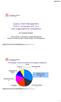 Supply Chain : from a necessary evil to a core organisational competency Dr Sinéad Roden Senior Lecturer in Operations & Supply Director of Studies for MSc in Global Supply Chain Percentage of world revenues
Project: Operations Management- Theory and Practice
 Operations management can be defined as the management of the supply chain logistics of an organisation to the contemporary measures of performance of cost, time and quality. Research the literature on
Segmentation and Evaluation of the Order-to-Delivery Process of Agricultural Machinery
 Segmentation and Evaluation of the Order-to-Delivery Process of Agricultural Machinery Jonathan Köber ([email protected]) Dep. of Supply Chain Management, CLAAS Selbstfahrende Erntemaschinen GmbH,
Chapter 2 Supply Chain Performance: Achieving Strategic Fit and Scope (24)
 Chapter 2 Supply Chain Performance: Achieving Strategic Fit and Scope (24) 2004 Prentice-Hall, Inc. 2-1 Outline Competitive and supply chain strategies Achieving strategic fit Expanding strategic scope
Supply chains and power regimes:
 pag.: 1 van 11 Supply chains and power regimes: Toward an analytic framework for managing extended networks of buyer and supplier relationships Source: The Journal of Supply Chain Management, spring 2001
The goal of this discussion is the development of one, comprehensive definition upon which we can use on our collaborative framework.
 Introduction Despite the popularity on the term Supply Chain Management (SCM), both in academic and practise, there remains considerable confusion to its meaning. Some authors define SCM in operational
Demand Chain Management: The Other Side of Supply Chain Management. Abstract
 Demand Chain Management: The Other Side of Supply Chain Management Dr. Ungul Laptaned Logistics Engineering Department, School of Engineering, The University of the Thai Chamber of Commerce Vibhavadee-Rangsit
The e-supply Chain of the Future in the Automotive Industry
 The e-supply Chain of the Future in the Automotive Industry Dr.-Eng. Stefan Wolff 1 ; Dr.-Eng. Kerstin Geiger 2 The automotive industry supply chain will in future be widely electronically integrated the
Integrating the Supply Chain
 INTEGRATING THE SUPPLY CHAIN 3 T he role of the manufacturing industry is to create wealth by adding value and selling products. Integrating the Supply Chain by Graham C. Stevens The Scope of the Supply
Information and Responsiveness in Spare Parts Supply Chains
 Information and Responsiveness in Spare Parts Supply Chains Table of Contents 1.0 Motivation... 3 2.0 What is Supply Chain?... 3 2.1 Spare Parts Supply Chain... 4 2.2 Spare Part Supply Chain Characteristics...
Today, the Cisco Enterprise B2B team has created automated and standardized processes in the following areas:
 How Cisco Enables Electronic Interactions with Sales, Manufacturing, and Service Partners Business-to-business drives productivity, growth, and an improved customer experience. Cisco IT Case Study/Business
APPLICATION OF KANBAN SYSTEM FOR MANAGING INVENTORY
 Bulletin of the Transilvania University of Braşov Vol. 3 (52) - 2010 Series I: Engineering Sciences APPLICATION OF KANBAN SYSTEM FOR MANAGING INVENTORY M. APREUTESEI 1 I.R. ARVINTE 1 E. SUCIU 2 D. MUNTEANU
COMPARATIVE STUDY OF LEAN AND AGILE SUPPLY CHAIN MANAGEMENT ALONG WITH THE OPTIMAL MODEL PRESENTATION OF AGILE SUPPLY CHAIN MANAGEMENT
 COMPARATIVE STUDY OF LEAN AND AGILE SUPPLY CHAIN MANAGEMENT ALONG WITH THE OPTIMAL MODEL PRESENTATION OF AGILE SUPPLY CHAIN MANAGEMENT Shahram Gilaninia 1, Mohammad Taleghani 2, Seyyed Javad Mousavian
Supply Chain Performance: The Supplier s Role
 Supply Chain Performance: The Supplier s Role March 2005 Industry Directions Inc. www.industrydirections.com Companies of all sizes are realizing that they no longer have complete control over their market
Operations Practice. Excellence in Supply Chain Management
 Operations Practice Excellence in Supply Chain Management 3 Foreword As the global business landscape continues to evolve, so do its challenges. New competitors are entering the market. Product life cycles
STRENGTHS AND WEAKNESSES OF CURRENT SUPPLY CHAIN MANAGEMENT AND INITIATIVES FOR THE FUTURE. Diana-Maria DIACONU (NIDELEA) 1 Cristina ALPOPI 2
 STRENGTHS AND WEAKNESSES OF CURRENT SUPPLY CHAIN MANAGEMENT AND INITIATIVES FOR THE FUTURE Diana-Maria DIACONU (NIDELEA) 1 Cristina ALPOPI 2 ABSTRACT Supply Chain Management is the potential way of securing
Chapter 11. MRP and JIT
 Chapter 11 MRP and JIT (Material Resources Planning and Just In Time) 11.1. MRP Even if MRP can be applied among several production environments, it has been chosen here as a preferential tool for the
SUPPLY CHAIN FLEXIBILITY
 66 Romanian Economic and Business Review Vol. 2, No. 1 SUPPLY CHAIN FLEXIBILITY Simona Daniela Grigore Abstract To be flexible means to have the ability to vary as you like, according to the needs. Flexibility
consulting group Increase Competitiveness Reduce Costs
 Strengthen the Textile Supply Chain Through IT Increase Competitiveness Increase Efficiencies Reduce Costs The real Textile World The Garment Industry Retail The Chemical Fibre Industry The Chemical Industry
The Global Supply Chain Goes Collaborative
 WIPRO CONSULTING SERVICES The Global Supply Chain Goes Collaborative www.wipro.com/consulting The Global Supply Chain Goes Collaborative By Sebastian Ennulat In today s era of high customer expectations,
Ryder Dedicated Contract Carriage. Solutions that Speed Products to Market
 Ryder Dedicated Contract Carriage Solutions that Speed Products to Market F ew logistics providers are as equipped as Ryder to provide consistent, reliable, high-quality service. We don t just manage companies
Definition, Nature and Objectives of Supply Chain Management
 Definition, Nature and Objectives of Supply Chain Management Session Speaker Prof. P.S.Satish 1 Session Objectives To understand the role of Supply Chain Management in Manufacturing and Service Organisations
Plan forecast optimise
 Plan forecast optimise Don t Forecast the future, CONTROL IT Reflex Business Forecasting breaks new ground. This is sales forecasting software with unique features that allow you to create real value for