
Part 1: Depression Screening in Primary Care
|
|
|
- Coleen Gallagher
- 10 years ago
- Views:
Transcription
1 Part 1: Depression Screening in Primary Care Toni Johnson, MD Kristen Palcisco, BA, MSN, APRN MetroHealth System
2 Objectives Part 1: Improve ability to screen and diagnose Depression in Primary Care Increase ability to use PHQ-2 and PHQ-9 tools in Primary Care

3 Why screen for depression in primary care?
4 Depression Facts -- Epidemiology Lifetime prevalence of 10-24% in women and 5-12% in men 19 million Americans diagnosed each year 151 million people affected worldwide 2 nd leading cause of disability by 2020 Depressive disorders are 2-fold more prevalent in patients with diabetes, CAD, HIV, and stroke Depression associated with 2x increase in risk of type 2 diabetes Depression associated with 64% increase in risk of CAD Untreated symptoms of depression exacerbate chronic illness

5 Depression in Primary Care <5% of clinical instruction for 20-33% of primary care practice Only 30-50% of patients with depression are recognized by PCPs Only 50% of patients with depression receive treatment New England Journal of Medicine March; 354 (12)

6 Challenges for Depression Screening in Primary Care Provider time Provider knowledge about depression Responding to score on screening tool Appropriate treatment (antidepressant) Provider concern about suicide risk and liability Provider concern about ability to refer to Psychiatry or to receive timely direction (curbside consultation)

7 Depression Screening Recommended

8 Better Health Greater Cleveland Recommendations Every adult with diabetes, heart failure or hypertension at least once a year for depression using the Patient Health Questionnaire (PHQ-2/PHQ-9). All patients who screen positive for depression will be provided with appropriate diagnosis, treatment, and follow-up. Eligible patients with an established diagnosis of depression should have follow-up monitoring using the PHQ-9 at least annually.
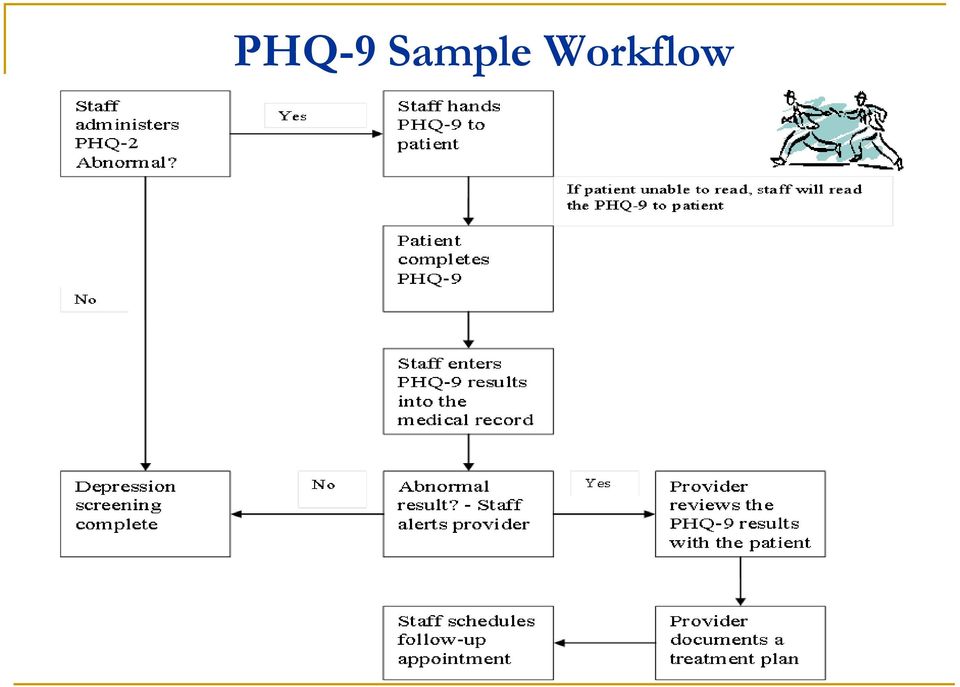
9 Depression Screening: Tool The Patient Health Questionnaire: PHQ-2 and PHQ-9 The PHQ-9 is a screening tool studied in the primary care setting (3000 primary care patients and 3000 OB/GYN patients) Used to screen and monitor treatment for Major Depression Contains 9 items, with scores ranging from 0-3 (depending on frequency of symptoms which reflects severity) #9 asks about death/ suicide thinking Includes item #10, to measure the impact severity of symptoms on work, home life, and relationships
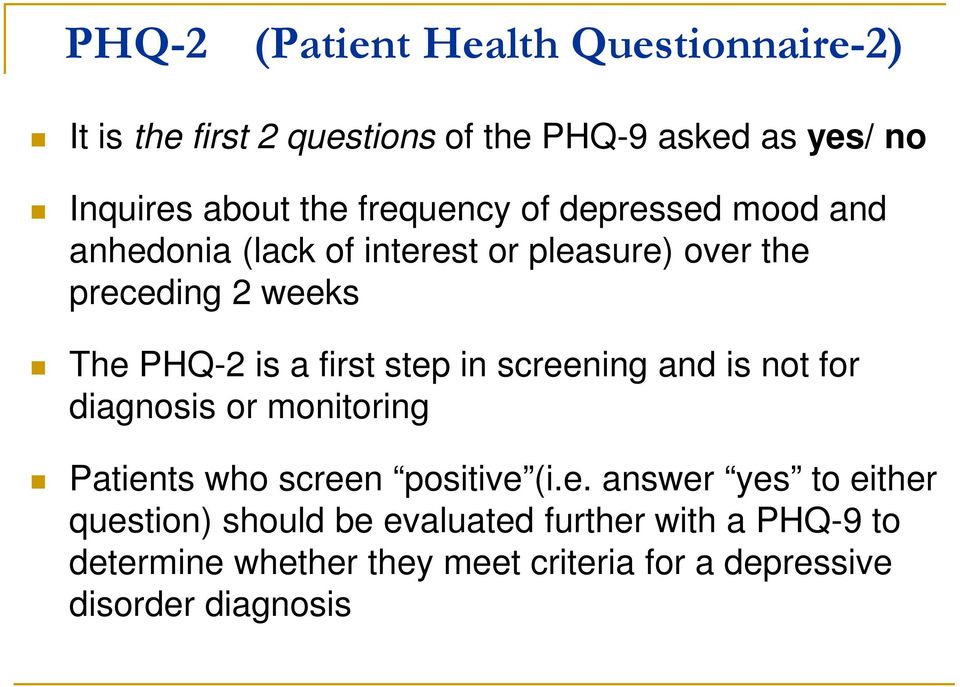
10 PHQ-2 (Patient Health Questionnaire-2) It is the first 2 questions of the PHQ-9 asked as yes/ no Inquires about the frequency of depressed mood and anhedonia (lack of interest or pleasure) over the preceding 2 weeks The PHQ-2 is a first step in screening and is not for diagnosis or monitoring Patients who screen positive (i.e. answer yes to either question) should be evaluated further with a PHQ-9 to determine whether they meet criteria for a depressive disorder diagnosis
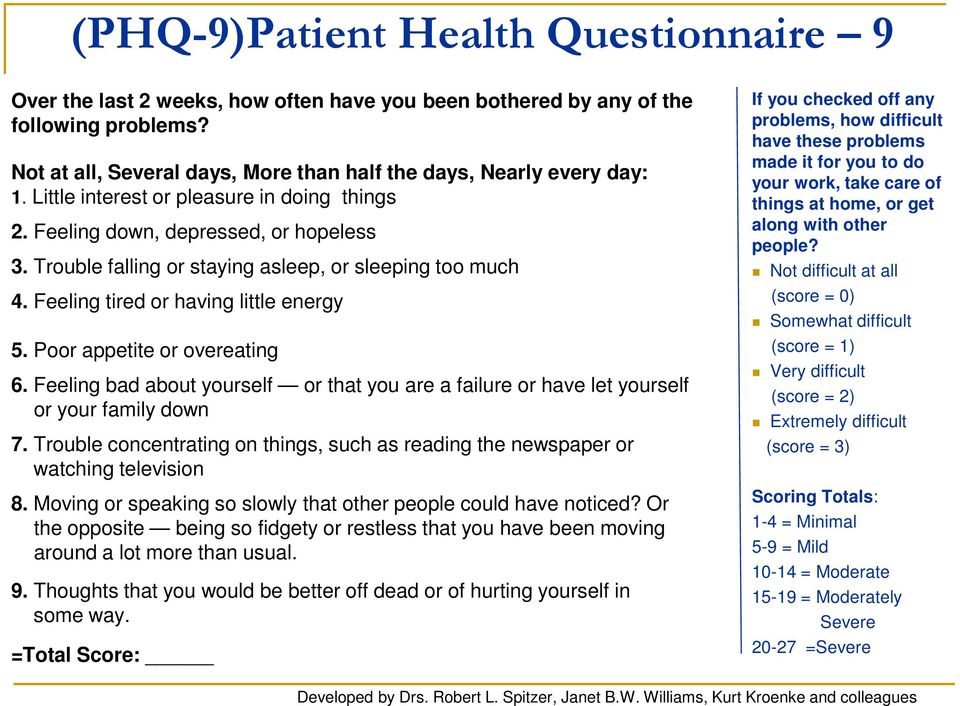
11 (PHQ-9)Patient Health Questionnaire 9 Over the last 2 weeks, how often have you been bothered by any of the following problems? Not at all, Several days, More than half the days, Nearly every day: 1. Little interest or pleasure in doing things 2. Feeling down, depressed, or hopeless 3. Trouble falling or staying asleep, or sleeping too much 4. Feeling tired or having little energy 5. Poor appetite or overeating 6. Feeling bad about yourself or that you are a failure or have let yourself or your family down 7. Trouble concentrating on things, such as reading the newspaper or watching television 8. Moving or speaking so slowly that other people could have noticed? Or the opposite being so fidgety or restless that you have been moving around a lot more than usual. 9. Thoughts that you would be better off dead or of hurting yourself in some way. =Total Score: If you checked off any problems, how difficult have these problems made it for you to do your work, take care of things at home, or get along with other people? Not difficult at all (score = 0) Somewhat difficult (score = 1) Very difficult (score = 2) Extremely difficult (score = 3) Scoring Totals: 1-4 = Minimal 5-9 = Mild = Moderate = Moderately Severe =Severe Developed by Drs. Robert L. Spitzer, Janet B.W. Williams, Kurt Kroenke and colleagues
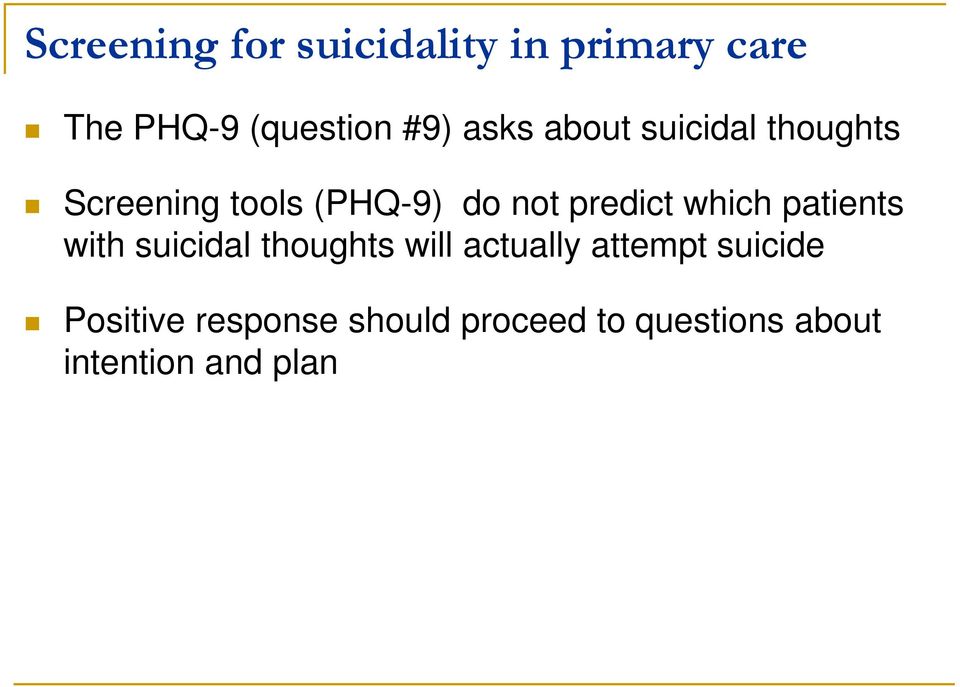
12 Screening for suicidality in primary care The PHQ-9 (question #9) asks about suicidal thoughts Screening tools (PHQ-9) do not predict which patients with suicidal thoughts will actually attempt suicide Positive response should proceed to questions about intention and plan
13

14 Best Practice Alert in Epic For Providers

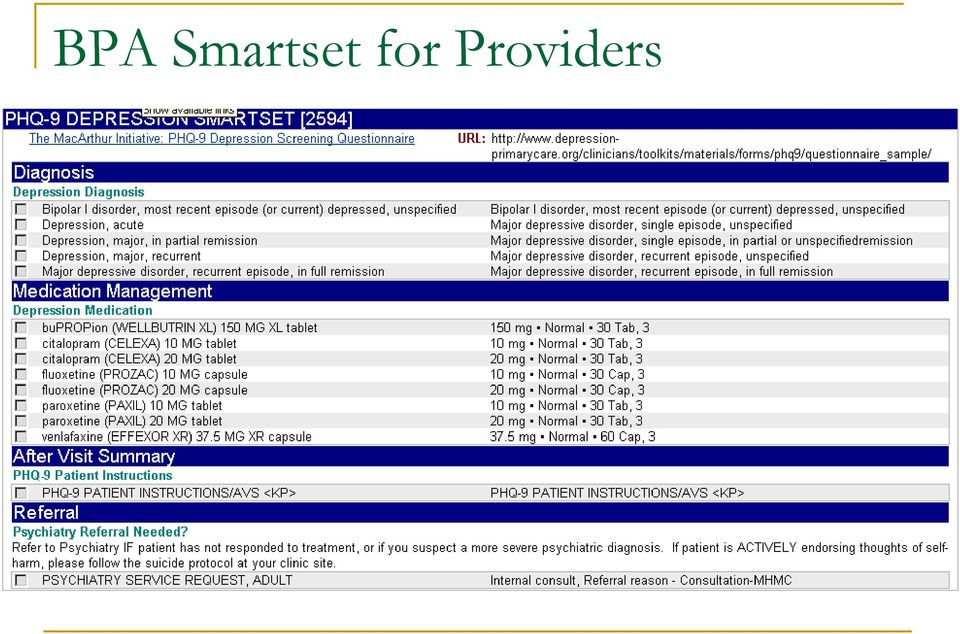
15 BPA Smartset for Providers
16 PHQ-9 Sample Workflow
17 Diagnosis of Depression

18 Phases of Major Depressive Disorder

19 Major Depressive Disorder (commonly referred to as Major Depression or Depression) DSM IV Criteria Depressed mood or anhedonia (loss of interest/ pleasure) every day, all day for at least 2 weeks At least 4 additional symptoms: Sleep changes Fatigue Appetite or weight changes Psychomotor agitation or retardation Helplessness Hopelessness (excessive guilt) Difficulty concentrating or making decisions Recurrent thoughts of death or suicide Significant functional impairment (in occupational, educational, social/ relationship areas of life) Rule out other cause such as substances or general medical

20 Recurrence of Depression Recurrence of episode of depression is 50-85% after 1st episode. Risk of recurrence increases with each successive depressive episode. Untreated episodes are associated with treatment resistant recurrence. Schneider RK and Levenson JL. ACP

21 Depressive episode of Bipolar Disorder? Bipolar disorder has either manic or hypo-manic episodes in addition to major depressive episodes. Patients with bipolar disorder may present in the depressive phase with symptoms that appear to be major depression. Bipolar depression requires different treatment than major depression. The Mood Disorder Questionnaire (MDQ) can provide clues to bipolar disorder but is not a diagnostic tool. You can find the MDQ at BETTERHEALTHCLEVELAND.ORG
22 DSM-IV Criteria for Mania Abnormally and persistently elevated, expansive or irritable mood for at least 1 week. At least 3 symptoms listed (4 symptoms if mood is only irritable): Distractibility Irresponsibility: Involvement in pleasurable activities with high potential for painful consequences Grandiosity or inflated self-esteem Flight of ideas or reports racing thoughts Increase in activity level (goal-directed) or psychomotor agitation Decreased need for sleep Talkative: pressured to keep talking Significant functional impairment (occupational, social, relationships, educational, recreational) Rule out other cause such as substances, or general medical
23 Screening for Mania or Hypomania Has there ever been a period of 4 days or more when you were feeling so good, high, excited, or hyper that you:..did not need to sleep (for long)?..made illogical (impulsive) decisions you later regretted?..did things you normally would not do (spending, sexual, high risk)?..got into trouble (legal or social)?..had family or friends worried, irritated with you?..had a doctor tell you that you were manic or bipolar? Not related to substance use or medical condition
24 Some Medical Mimics or Causes of Exacerbation of Mood Disorders (Depression and Bipolar) Endocrinopathies (hypo- or hyperthyroidism) Substance use/abuse/dependence Medications (opiates, corticosteroids, hormonal therapies, interferon/ chemotherapy, stimulants, antidepressants) Chronic viral infections (HIV, Hep C) Liver disease Neurological diseases (Parkinson s, Multiple Sclerosis, seizure disorders, dementias)
25 End of Part One
26 Thank You! Questions or Comments? Toni Johnson, MD Kristen Palcisco, BA, MSN, APRN 26
27 Toolkit Availability A hardcopy of our Behavioral Health Toolkit is available for any Better Health Greater Cleveland member practice at no charge. E-copies also are available. Please contact Bonnie at or [email protected]
Depression Screening in Primary Care
 Depression Screening in Primary Care Toni Johnson, MD Kristen Palcisco, BA, MSN, APRN MetroHealth System Our Vision Make Greater Cleveland a healthier place to live and a better place to do business. 2
PCORE Depression Post Survey
 PCORE Depression Post Survey 1. Please enter your UNI. 467 answered question 467 skipped question 0 2. Please fill in the name of institution you are working at for your Clerkship. 467 answered question
How To Write A Health Questionnaire
 Office Workflow Examples Overview These office workflow examples are shared from the Pittsburgh Regional Health Initiative (PRHI) teams in Pennsylvania. These documents represent the local workflows and
BIPOLAR DISORDER IN PRIMARY CARE
 E-Resource January, 2014 BIPOLAR DISORDER IN PRIMARY CARE Mood Disorder Questionnaire Common Comorbidities Evaluation of Patients with BPD Management of BPD in Primary Care Patient resource Patients with
Measure #370 (NQF 0710): Depression Remission at Twelve Months National Quality Strategy Domain: Effective Clinical Care
 Measure #370 (NQF 0710): Depression Remission at Twelve Months National Quality Strategy Domain: Effective Clinical Care 2016 PQRS OPTIONS F INDIVIDUAL MEASURES: REGISTRY ONLY DESCRIPTION: Adult patients
Presently, there are no means of preventing bipolar disorder. However, there are ways of preventing future episodes: 1
 What is bipolar disorder? There are two main types of bipolar illness: bipolar I and bipolar II. In bipolar I, the symptoms include at least one lifetime episode of mania a period of unusually elevated
Feeling Moody? Major Depressive. Disorder. Is it just a bad mood or is it a disorder? Mood Disorders. www.seclairer.com S Eclairer 724-468-3999
 Feeling Moody? Is it just a bad mood or is it a disorder? Major Depressive Disorder Prevalence: 7%; 18-29 years old; Female>Male DDx: Manic episodes with irritable mood or mixed episodes, mood disorder
Bipolar Disorder. When people with bipolar disorder feel very happy and "up," they are also much more active than usual. This is called mania.
 Bipolar Disorder Introduction Bipolar disorder is a serious mental disorder. People who have bipolar disorder feel very happy and energized some days, and very sad and depressed on other days. Abnormal
Caring for depression
 Caring for depression Aetna Health Connections SM Disease Management Program Get information. Get help. Get better. 21.05.300.1 B (6/08) Get back to being you How this guide can help you Having an ongoing
B i p o l a r D i s o r d e r
 B i p o l a r D i s o r d e r Professor Ian Jones Director National Centre for Mental Health www.ncmh.info @ncmh_wales /WalesMentalHealth 029 2074 4392 [email protected] Robert Schumann 1810-1856 Schumann's
Treating Depression to Remission in the Primary Care Setting. James M. Slayton, M.D., M.B.A. Medical Director United Behavioral Health
 Treating Depression to Remission in the Primary Care Setting James M. Slayton, M.D., M.B.A. Medical Director United Behavioral Health 2007 United Behavioral Health 1 2007 United Behavioral Health Goals
DEPRESSION Depression Assessment PHQ-9 Screening tool Depression treatment Treatment flow chart Medications Patient Resource
 E-Resource March, 2015 DEPRESSION Depression Assessment PHQ-9 Screening tool Depression treatment Treatment flow chart Medications Patient Resource Depression affects approximately 20% of the general population
Dr. Anna M. Acee, EdD, ANP-BC, PMHNP-BC Long Island University, Heilbrunn School of Nursing
 Dr. Anna M. Acee, EdD, ANP-BC, PMHNP-BC Long Island University, Heilbrunn School of Nursing Overview Depression is significantly higher among elderly adults receiving home healthcare, particularly among
`çããçå=jéåí~ä= aáëçêçéêëw=^åñáéíó=~åç= aééêéëëáçå. aêk=`=f=lâçåü~ jéçáå~ä=aáêéåíçê lñäé~ë=kep=cçìåç~íáçå=qêìëí=
 `çããçå=jéåí~ä= aáëçêçéêëw=^åñáéíó=~åç= aééêéëëáçå aêk=`=f=lâçåü~ jéçáå~ä=aáêéåíçê lñäé~ë=kep=cçìåç~íáçå=qêìëí= Overview: Common Mental What are they? Disorders Why are they important? How do they affect
Depression Overview. Symptoms
 1 of 6 6/3/2014 10:15 AM Return to Web version Depression Overview What is depression? When doctors talk about depression, they mean the medical illness called major depression. Someone who has major depression
Major Depressive Disorder (MDD) Guideline Diagnostic Nomenclature for Clinical Depressive Conditions
 Major Depressive Disorder Major Depressive Disorder (MDD) Guideline Diagnostic omenclature for Clinical Depressive Conditions Conditions Diagnostic Criteria Duration Major Depression 5 of the following
Bipolar disorders: Changes from DSM IV TR to DSM 5
 Bipolar disorders: Changes from DSM IV TR to DSM 5 M. Amin Esmaeili, MD, MPH Iranian Research Center for HIV/AIDS (IRCHA) Iranian National Center for Addiction Studies (INCAS) Mood disorders committee
ENTITLEMENT ELIGIBILITY GUIDELINE
 ENTITLEMENT ELIGIBILITY GUIDELINE BIPOLAR DISORDERS MPC 00608 ICD-9 296.0, 296.1, 296.4, 296.5, 296.6, 296.7, 296.8, 301.13 ICD-10 F30, F31, F34.0 DEFINITION BIPOLAR DISORDERS Bipolar Disorders include:
Mental health issues in the elderly. January 28th 2008 Presented by Éric R. Thériault [email protected]
 Mental health issues in the elderly January 28th 2008 Presented by Éric R. Thériault [email protected] Cognitive Disorders Outline Dementia (294.xx) Dementia of the Alzheimer's Type (early and late
How to Recognize Depression and Its Related Mood and Emotional Disorders
 How to Recognize Depression and Its Related Mood and Emotional Disorders Dr. David H. Brendel Depression s Devastating Toll on the Individual Reduces or eliminates pleasure and jo Compromises and destroys
REVISED E-Health Patient Screening Survey
 REVISED E-Health Patient Screening Survey The Patient screening survey will be administered online after the patient has electronically signed the patient consent form. 1 E-Health Patient Screening Survey
Symptoms of mania can include: 3
 Bipolar Disorder This factsheet gives information on bipolar disorder. It explains the symptoms of bipolar disorder, treatments and ways to manage symptoms. It also covers what treatment the National Institute
MOLINA HEALTHCARE OF CALIFORNIA
 MOLINA HEALTHCARE OF CALIFORNIA MAJOR DEPRESSION IN ADULTS IN PRIMARY CARE HEALTH CARE GUIDELINE (ICSI) Health Care Guideline Twelfth Edition May 2009. The guideline was reviewed and adopted by the Molina
A Depression Education Toolkit
 A Depression Education Toolkit Facts about Depression in Older Adults What is Depression? Depression is a medical illness. When sadness persists or interferes with everyday life, it may be depression.
3/17/2014. Pediatric Bipolar Disorder
 Pediatric Bipolar Disorder 1 Highlighted Topics 1. Review the current DSM-5 definition and criteria for bipolar disorder 2. Highlight major historical developments in the scientific understanding of bipolar
Bipolar Disorder UHN. Information for patients and families. Read this booklet to learn:
 Bipolar Disorder UHN Information for patients and families Read this booklet to learn: what bipolar disorder is what causes it the signs or symptoms of bipolar disorder what treatments can help Please
Mood Disorders and Different Kinds of Depression
 Mood Disorders and Different Kinds of Depression We ve been there. We can help. In any given year, nearly one in 10 American adults will suffer from a mood disorder. These illnesses involve changes in
PATIENT HEALTH QUESTIONNAIRE PHQ-9 FOR DEPRESSION
 PATIENT HEALTH QUESTIONNAIRE PHQ- FOR DEPRESSION USING PHQ- DIAGNOSIS AND SCORE FOR INITIAL TREATMENT SELECTION A depression diagnosis that warrants treatment or treatment change, needs at least one of
Understanding. Depression. The Road to Feeling Better Helping Yourself. Your Treatment Options A Note for Family Members
 TM Understanding Depression The Road to Feeling Better Helping Yourself Your Treatment Options A Note for Family Members Understanding Depression Depression is a biological illness. It affects more than
Bipolar Disorder. Mania is the word that describes the activated phase of bipolar disorder. The symptoms of mania may include:
 Bipolar Disorder What is bipolar disorder? Bipolar disorder, or manic depression, is a medical illness that causes extreme shifts in mood, energy, and functioning. These changes may be subtle or dramatic
Depression in Older Persons
 Depression in Older Persons How common is depression in later life? Depression affects more than 6.5 million of the 35 million Americans aged 65 or older. Most people in this stage of life with depression
A Manic Episode is defined by a distinct period during which there is an abnormally and persistently elevated, expansive, or irritable mood.
 Bipolar disorder Bipolar (manic-depressive illness) is a recurrent mode disorder. The patient may feel stable at baseline level but experience recurrent shifts to an emotional high (mania or hypomania)
D0100: Should Resident Mood Interview Be Conducted?
 SECTION D: MOOD Intent: The items in this section address mood distress, a serious condition that is underdiagnosed and undertreated in the nursing home and is associated with significant morbidity. It
Bipolar Disorder. in Children and Teens. Does your child go through intense mood changes? Does your child have
 Bipolar Disorder in Children and Teens Does your child go through intense mood changes? Does your child have extreme behavior changes too? Does your child get too excited or silly sometimes? Do you notice
Depression and its Treatment in Older Adults. Gregory A. Hinrichsen, Ph.D. Geropsychologist New York City
 Depression and its Treatment in Older Adults Gregory A. Hinrichsen, Ph.D. Geropsychologist New York City What is Depression? Everyday use of the word Clinically significant depressive symptoms : more severe,
Depression Assessment & Treatment
 Depressive Symptoms? Administer depression screening tool: PSC Depression Assessment & Treatment Yes Positive screen Safety Screen (see Appendix): Administer every visit Neglect/Abuse? Thoughts of hurting
FACT SHEET 4. Bipolar Disorder. What Is Bipolar Disorder?
 FACT SHEET 4 What Is? Bipolar disorder, also known as manic depression, affects about 1 percent of the general population. Bipolar disorder is a psychiatric disorder that causes extreme mood swings that
Self Assessment: Substance Abuse
 Self Assessment: Substance Abuse Please respond TRUE (T) or FALSE (F) to the following items as they apply to you. Part 1 I use or have used alcohol or drugs for recreational purposes. I use alcohol despite
Bipolar Disorder. Some people with these symptoms have bipolar disorder, a serious mental illness. Read this brochure to find out more.
 Bipolar Disorder Do you go through intense moods? Do you feel very happy and energized some days, and very sad and depressed on other days? Do these moods last for a week or more? Do your mood changes
The Clinical Presentation of Mood Disorders. Bob Boland MD
 The Clinical Presentation of Mood Disorders. Bob Boland MD 1 The Clinical Presentation of Mood Disorders 2 Concentrating On Depression Major Depression Mania Bipolar Disorder (Manic-Depression) For the
WHAT IT MEANS TO BE A TEAM LEADER. Presented by: Arthur Berger, Ed.D Director of Behavioral Health
 WHAT IT MEANS TO BE A TEAM LEADER Presented by: Arthur Berger, Ed.D Director of Behavioral Health Overview of Urban Health Plan (UHP) Federally Qualified Community Health Center JCAHO accredited Located
Depression, Mental Health and Native American Youth
 Depression, Mental Health and Native American Youth Aisha Mays, MD UCSF Department of Family And Community Medicine Native American Health Center Oakland, CA July 8, 2015 Presenter Disclosures No relationships
Depression Definition
 Depression Definition Depression may be described as feeling sad, blue, unhappy, miserable, or down in the dumps. Most of us feel this way at one time or another for short periods. Clinical depression
Depression: What You Need to Know
 Depression: What You Need to Know What is a Depressive Illness? A depressive illness is a whole-body illness, involving your body, mood, thoughts, and behavior. It affects the way you eat and sleep, the
Irritability and DSM-5 Disruptive Mood Dysregulation Disorder (DMDD): Correlates, predictors, and outcome in children
 Irritability and DSM-5 Disruptive Mood Dysregulation Disorder (DMDD): Correlates, predictors, and outcome in children Ellen Leibenluft, M.D. Chief, Section on Bipolar Spectrum Disorders National Institute
Ways to support the person with bipolar disorder
 Ways to support the person with bipolar disorder People differ in what help they need and want from caregivers. Caregivers differ in how involved they are in providing support. Finding ways to provide
What Is Bipolar Disorder? Dha. Dat. DJane F. Mountain, MD
 Bip at W t What Is Bipolar Disorder? D DD Ds Dis DIDIsDsD D DJane F. Mountain, MD DWh Dha Dat Dt What Is Bipolar Disorder? Jane F. Mountain, MD PLEASE NOTE: This book is not meant to substitute for medical
Depression Signs & Symptoms
 Depression Signs & Symptoms Contents What Is Depression? What Are The Signs And Symptoms Of Depression? How Do The Signs And Symptoms Of Depression Differ In Different Groups? What Are The Different Types
CHAPTER 5 MENTAL, BEHAVIOR AND NEURODEVELOPMENT DISORDERS (F01-F99) March 2014. 2014 MVP Health Care, Inc.
 CHAPTER 5 MENTAL, BEHAVIOR AND NEURODEVELOPMENT DISORDERS (F01-F99) March 2014 2014 MVP Health Care, Inc. CHAPTER 5 CHAPTER SPECIFIC CATEGORY CODE BLOCKS F01-F09 Mental disorders due to known physiological
Depression. What Causes Depression?
 National Institute on Aging AgePage Depression Everyone feels blue now and then. It s part of life. But, if you no longer enjoy activities that you usually like, you may have a more serious problem. Feeling
Bipolar Disorders. Poll Question
 Bipolar Disorders American Counseling Association DSM-V Webinar Series July 10, 2013 Dr. Todd F. Lewis, Ph.D., LPC, NCC The University of North Carolina at Greensboro Poll Question Who are you? Clinical
Personality Disorders
 Personality s The Good, the Bad and the Really, Really Ugly: Borderline and other Cluster B Personality s BY CHRIS OKIISHI, MD! Long standing! Often life long! Developmental origins! Genetic origins! Resistant
Psychosis Psychosis-substance use Bipolar Affective Disorder Programmes EASY JCEP EPISO Prodrome
 Dr. May Lam Assistant Professor, Department of Psychiatry, The University of Hong Kong Psychosis Psychosis-substance use Bipolar Affective Disorder Programmes EASY JCEP EPISO Prodrome a mental state in
Depre r s e sio i n o i n i a dults Yousuf Al Farsi
 Depression in adults Yousuf Al Farsi Objectives 1. Aetiology 2. Classification 3. Major depression 4. Screening 5. Differential diagnosis 6. Treatment approach 7. When to refer 8. Complication 9. Prognosis
Bipolar Disorder. Manic Episode
 Bipolar Disorder Manic Episode A distinct period of abnormally and persistently elevated, expansive, or irritable mood lasting at least one week and including at least three of the following: inflated
MEDGUIDE SECTION. What is the most important information I should know about SEROQUEL? SEROQUEL may cause serious side effects, including:
 MEDGUIDE SECTION Medication Guide SEROQUEL (SER-oh-kwell) (quetiapine fumarate) Tablets Read this Medication Guide before you start taking SEROQUEL and each time you get a refill. There may be new information.
Welcome New Employees. Clinical Aspects of Mental Health, Developmental Disabilities, Addictive Diseases & Co-Occurring Disorders
 Welcome New Employees Clinical Aspects of Mental Health, Developmental Disabilities, Addictive Diseases & Co-Occurring Disorders After this presentation, you will be able to: Understand the term Serious
Depression Flow Chart
 Depression Flow Chart SCREEN FOR DEPRESSION ANNUALLY Assess for depression annually with the PHQ-9. Maintain a high index of suspicion in high risk older adults. Consider suicide risk and contributing
Depression Remission at Six Months Specifications 2014 (Follow-up Visits for 07/01/2012 to 06/30/2013 Index Contact Dates)
 Description Methodology Rationale Measurement Period A measure of the percentage of adults patients who have reached remission at six months (+/- 30 days) after being identified as having an initial PHQ-9
Dual Diagnosis Nursing Care: Treating the Patient with Co-Occurring Addiction & Mental Health Disorders. Deborah Koivula R.N.
 Dual Diagnosis Nursing Care: Treating the Patient with Co-Occurring Addiction & Mental Health Disorders. Deborah Koivula R.N. Webinar Overview & Objectives I. Review current trends in co-occurring disorders
Psychological Assessment Intake Form
 Cooper Counseling, LLC 251 Woodford St Portland, ME 04103 (207) 773-2828(p) (207) 761-8150(f) Psychological Assessment Intake Form This form has been designed to ask questions about your history and current
NORTH DAKOTA NURSING FACILITY PAYMENT SYSTEM
 NORTH DAKOTA NURSING FACILITY PAYMENT SYSTEM North Dakota Department of Human Services Medical Services 600 E Boulevard Ave Dept 325 Bismarck ND 58505 BACKGROUND State law requires all nursing facilities
Seniors and. Depression. What You Need to Know. Behavioral Healthcare Options, Inc.
 Seniors and Depression What You Need to Know Behavioral Healthcare Options, Inc. Depression More Than Just The Blues ou may not know exactly what is wrong with you, but you do know that you just don t
Depression is a medical illness that causes a persistent feeling of sadness and loss of interest. Depression can cause physical symptoms, too.
 The Family Library DEPRESSION What is depression? Depression is a medical illness that causes a persistent feeling of sadness and loss of interest. Depression can cause physical symptoms, too. Also called
Mood Disorders. What Are Mood Disorders? Unipolar vs. Bipolar
 Mood Disorders What Are Mood Disorders? In mood disorders, disturbances of mood are intense and persistent enough to be clearly maladaptive Key moods involved are mania and depression Encompasses both
Understanding Suicidal Thinking
 Understanding Suicidal Thinking Suicidal thoughts are temporary. Suicide is permanent. Don t give in to suicidal thoughts you can overcome them. If depression or bipolar disorder (also known as manic depression)
Guide for family and friends of people affected by bipolar disorders. www.douglas.qc.ca
 Guide for family and friends of people affected by bipolar disorders www.douglas.qc.ca This guide is intended for families, friends and other people who are interested in understanding the different aspects
See also www.thiswayup.org.au/clinic for an online treatment course.
 Depression What is depression? Depression is one of the common human emotional states. It is common to experience feelings of sadness and tiredness in response to life events, such as losses or disappointments.
Adolescent Depression. Danielle Bradshaw, DO Diplomate of the American Board of Psychiatry and Neurology Adult and Child/Adolescent Psychiatry
 Adolescent Depression Danielle Bradshaw, DO Diplomate of the American Board of Psychiatry and Neurology Adult and Child/Adolescent Psychiatry Adolescence When does it start? When does it end? Characteristics:
Sex and Love Addiction
 Sex and Love Addiction Yes, love and sex can be addictive and as destructive, at least socially, as compulsive substance use. The high hinges on physical or psychological arousal, and relationships can
Accommodation and Compliance Series. Employees with Bipolar Disorder
 Accommodation and Compliance Series Employees with Bipolar Disorder Preface The Job Accommodation Network (JAN) is a service of the Office of Disability Employment Policy of the U.S. Department of Labor.
Billy. Austin 8/27/2013. ADHD & Bipolar Disorder: Differentiating the Behavioral Presentation in Children
 ADHD & Bipolar Disorder: Differentiating the Behavioral Presentation in Children Judy Goodwin, MSN, CNS Meadows Psychiatric Associates Billy Austin 1 Introduction Distinguishing between ADHD and Bipolar
Assessment of depression in adults in primary care
 Assessment of depression in adults in primary care Adapted from: Identification of Common Mental Disorders and Management of Depression in Primary care. New Zealand Guidelines Group 1 The questions and
Revised 7/05. Copyright 2005 St. Jude Children's Research Hospital www.stjude.org Page 1 of 6
 Antidepressants are drugs used, most often, to treat depression. Depression is a complex illness that involves sad and hopeless feelings that do not go away. Doctors sometimes order these drugs for other
Major Depression. What is major depression?
 Major Depression What is major depression? Major depression is a serious medical illness affecting 9.9 million American adults, or approximately 5 percent of the adult population in a given year. Unlike
Postpartum Depression (PPD) Beth Buxton, LCSW Massachusetts Department of Public Health [email protected]
 Postpartum Depression (PPD) Beth Buxton, LCSW Massachusetts Department of Public Health [email protected] Mental Health Disorders An estimated 57.7 million adults (26.2% of adult population) suffer
Brief Review of Common Mental Illnesses and Treatment
 Brief Review of Common Mental Illnesses and Treatment Presentations to the Joint Subcommittee to Study Mental Health Services in the 21st Century September 9, 2014 Jack Barber, M.D. Medical Director Virginia
The sooner a person with depression seeks support, the sooner they can recover.
 Depression Summary Depression is a constant feeling of dejection and loss, which stops you doing your normal activities. Different types of depression exist, with symptoms ranging from relatively minor
Recognizing and Treating Depression in Children and Adolescents.
 Recognizing and Treating Depression in Children and Adolescents. KAREN KANDO, MD Division of Child and Adolescent Psychiatry Center for Neuroscience and Behavioral Medicine Phoenix Children s Hospital
DEPRESSION MANAGEMENT TOOL KIT 2009 3CM, LLC
 DEPRESSION MANAGEMENT TOOL KIT 2009 3CM, LLC www.depression-primarycare.org Created by and for THE JOHN D. & CATHERINE T. MACARTHUR FOUNDATION S INITIATIVE ON DEPRESSION & PRIMARY CARE AND 3CM, LLC The
Depression in the Elderly: Recognition, Diagnosis, and Treatment
 Depression in the Elderly: Recognition, Diagnosis, and Treatment LOUIS A. CANCELLARO, PhD, MD, EFAC Psych Professor Emeritus and Interim Chair ETSU Department of Psychiatry & Behavioral Sciences Diagnosis
Remeron (mirtazapine)
 Remeron (mirtazapine) FDA ALERT [07/2005] Suicidal Thoughts or Actions in Children and Adults Patients with depression or other mental illnesses often think about or attempt suicide. Closely watch anyone
SLEEP DISTURBANCE AND PSYCHIATRIC DISORDERS
 E-Resource December, 2013 SLEEP DISTURBANCE AND PSYCHIATRIC DISORDERS Between 10-18% of adults in the general population and up to 50% of adults in the primary care setting have difficulty sleeping. Sleep
Sleep Medicine and Psychiatry. Roobal Sekhon, D.O.
 Sleep Medicine and Psychiatry Roobal Sekhon, D.O. Common Diagnoses Mood Disorders: Depression Bipolar Disorder Anxiety Disorders PTSD and other traumatic disorders Schizophrenia Depression and Sleep: Overview
Structured Clinical Interview for DSM-IV Axis I Disorders
 Structured Clinical Interview for DSM-IV Axis I Disorders Patient Edition (February 996 FINAL) SCID-I/P (Version.0) verview INTERVIEW INFRMATIN Status: In progress Completed Consensus reviewed Type: Computer
Children s Community Health Plan INTENSIVE IN-HOME MENTAL HEALTH / SUBSTANCE ABUSE SERVICES ASSESSMENT AND RECOVERY / TREATMENT PLAN ATTACHMENT
 Children s Community Health Plan INTENSIVE IN-HOME MENTAL HEALTH / SUBSTANCE ABUSE SERVICES ASSESSMENT AND RECOVERY / TREATMENT PLAN ATTACHMENT Please fax with CCHP prior authorization form to 608-252-0853
Schizoaffective disorder
 Schizoaffective disorder Dr.Varunee Mekareeya,M.D.,FRCPsychT Schizoaffective disorder is a psychiatric disorder that affects about 0.5 to 0.8 percent of the population. It is characterized by disordered
Recognition and Treatment of Depression in Parkinson s Disease
 Recognition and Treatment of Depression in Parkinson s Disease Web Ross VA Pacific Islands Health Care System What is depression? Depression is a serious medical condition that affects a person s feelings,
Preferred Practice Guidelines Bipolar Disorder in Children and Adolescents
 These Guidelines are based in part on the following: American Academy of Child and Adolescent Psychiatry s Practice Parameter for the Assessment and Treatment of Children and Adolescents With Bipolar Disorder,
TELEMEDICINE SERVICES Brant Haldimand Norfolk INITIAL MENTAL HEALTH ASSESSMENT NAME: I.D. # D.O.B. REASON FOR REFERRAL:
 TELEMEDICINE SERVICES Brant Haldimand Norfolk TMS INITIAL MENTAL HEALTH ASSESSMENT NAME: I.D. # D.O.B. (OPTINAL) ADDRESS: CITY: P.C. HOME PHONE: ALTERNATE PHONE: G.P: MARITAL STATUS: AGE: ASSSESSMENT DATE: