
Disclosure. Course Objectives. Course Objectives. Cancer Rehabilitation is different 1/3/2015
|
|
|
- Sheena Haynes
- 10 years ago
- Views:
Transcription
1 1/3/2015 THE IMPACT OF NATIONAL MANDATES FOR ONCOLOGY REHABILITATION ON THE PROFESSION Charles McGarvey, PT, MS, DPT, FAPTA Nicole L. Stout DPT, CLT-LANA Lisa VanHoose, PT, PhD, CLT-LANA Disclosure No relevant financial relationship exists for the speakers related to the content in this course Academic and professional affiliations will be included in the subsection title pages APTA Combined Sections Meeting 2015 Indianapolis, IN Course Objectives 1. Discuss the current climate of policies and initiatives related to oncology rehabilitation. 2. Describe the alliance and joint programming between APTA, the Oncology Section, and the Commission on Cancer. 3. Identify the criteria outlined by CARF for Cancer Rehabilitation Specialty Programs. 4. Review the eligibility criteria for rehabilitation services as defined by the Commission on Cancer accreditation program. THE IMPACT OF NATIONAL MANDATES FOR ONCOLOGY REHABILITATION ON THE PROFESSION Nicole L. Stout DPT, CLT-LANA Damascus, MD APTA Combined Sections Meeting 2015 Indianapolis, IN Course Objectives Cancer Rehabilitation is different 1. Discuss the current climate of policies and initiatives related to oncology rehabilitation. 2. Describe the alliance and joint programming between APTA, the Oncology Section, and the Commission on Cancer. 3. Identify the criteria outlined by CARF for Cancer Rehabilitation Specialty Programs. Globally unique Multi-system involvement Short term and late effects Dynamic disease and treatment process High rehabilitation impact potential Population incidence rates Survivorship is increasing Functional morbidity remains significant Morbidity incurred is amenable to rehabilitation interventions 1

2 1/3/2015 Cancer Rehabilitation Needs Policy Matters to Cancer Rehabilitation Rehabilitation delivery system designed around the cancer continuum Pathways for specialty workforce development Practice Guidelines Standardized clinical measurement tools Screening tools Outcomes measurement tools Research funding mechanisms Payment models that are aligned with the continuum of care Multiple levels of impact on clinical practice, payment and regulatory aspects of care National reports: Institute of Medicine, AHRQ cancer survivorship Accreditation standards: Commission on Cancer, CARF Professional association initiatives: ASCO guidelines, Oncology Section of APTA Specialization, ACRM, NCCN guidelines Regulatory initiatives: CMS functional limitation reporting, Meaningful use criteria, NIH funding Environmental Analysis Policy Drivers Institute of Medicine (IOM) Reports Agency for Health Care Research and Quality (AHRQ) technical report Themes: Deficits in cancer care and recommended solutions Patient engagement, patient centered care Need for quality indicators and outcomes measurement Suggestions for standards in clinical workflow and workforce skills National Reports Institute of Medicine (IOM) 2005 From Cancer Patient to Cancer Survivor: Lost in Transition Describes the needs of cancer patients post treatment and deficits that exist in managing care Heavy emphasis on identification of late effects Started the survivorship movement Lost-in-Transition.aspx National Reports Institute of Medicine (IOM) 2013 Delivering Affordable Cancer Care in the 21 st Century Dissemination of recommendations towards improving affordability and quality of cancer care. Novel models of care delivery; medical centered home, bundled payment models Quality indicators National Reports Institute of Medicine (IOM) 2013 Delivering High-Quality Cancer Care: Charting a New Course for a System in Crisis Advocates for patient-centered care Workforce recommendations- training and coordinated care efforts Charting-a-New-Course-for-a-System-in-Crisis.aspx 2
3 1/3/2015 National Reports AHRQ 2013 Models of Survivorship Care: Technical Brief Survivorship care is highly-specific to the institution and usual care does not exist Concerns raised regarding Payment for care Adequacy of training of health care providers Greater rather than less fragmented care Environmental Analysis Accreditation Drivers CARF Cancer Specialty Program Standards released in 2014 Commission on Cancer (CoC) Accreditation Standards developed for rehabilitation requirements, deployed 2012, mandated for 2015 Themes: Patient engagement, patient centered care Need for quality indicators and outcomes measurement Movement towards standardized, evidence-based clinical practice Suggestions for standards in clinical workflow and workforce skills Commission on the Accreditation of Rehabilitation Facilities (CARF) International Standards Advisory Board (2013) Criteria for CARF accredited Cancer Rehabilitation Programs. The cancer rehabilitation specialty program focuses on strategies to optimize outcomes from the time of diagnosis through the trajectory of cancer in an effort to prevent or minimize the impact of impairments, reduce activity limitations, and maximize participation for the persons served. 35 Standards for programs to meet for accreditation Roll out in 2014 Description of Cancer Rehabilitation Specialty Program Personnel demonstrate competencies and application of evidence based practices to deliver services that address: Preventive Restorative Supportive Palliative rehabilitation needs Description of Cancer Rehabilitation Specialty Program Integral component of quality cancer care Focuses on optimizing outcomes from time of diagnosis through the trajectory of cancer in an effort to: Prevent or minimize the impact of impairments Reduce activity limitations Maximize participation For more information: Chris MacDonell Medical Rehabilitation Director 3
4 1/3/2015 Environmental Analysis Dietz Model care delivery framework Professional Association Initiatives Delivery of care models APTA, ACS, STAR, MOG, LAF Practice guidelines ASCO, NCCN, ONS Survivorship care plans - LAF Themes: Evidence for impairment management Screening for impairments throughout treatment and survivorship Streamlined, interdisciplinary care Need to develop workforce Lack of global outcomes measure Lack of screening tools for common late effects Preventive Rehabilitation Supportive Rehabilitation Restorative Rehabilitation Palliative Rehabilitation Cancer Rehabilitation Model Across the Care Continuum Pre-Operative Rehab Assessment Cancer Treatment Early Post-Operative Rehab Cancer Survivorship Ongoing Surveillance and Continued Interval Rehab Professional Association Initiatives APTA Novel Models of Care for ACOs Prospective Surveillance Model for Cancer Rehabilitation Based on PSM research in breast cancer Identifies an optimal role for PT along the cancer continuum: from Diagnosis through Survivorship Adapted from Stout et al, Cancer, 2012 Referral to/initiation of Rehabilitation More on Prospective Surveillance APTA Video series on Emerging Models of Care American Cancer Society Supplement to Cancer April 6, 2012 A Prospective Surveillance Model for Rehabilitation for Women with Breast Cancer. 4

5 1/3/2015 Integrated Models of Care The Oncology Rehab Partners STAR Program Certification (Survivorship Training and Rehabilitation) training, protocols and tools needed to deliver evidence-based cancer exercise and rehabilitation services. There are over 140 programs certified nationwide at over 400 facilities The Medically Oriented Gym (MOG) specialty care programs for cancer survivors with exercise and physical activity engagement protocols using an interdisciplinary model of care, to create individualized fitness and wellness guidance in a community-based setting. The MOG cancer exercise programs are staffed with cancer exercise specialists and are located across 10 states in the US LIVESTRONG at the YMCA Twelve-week, small group program designed for adult cancer survivors. Targets exercise and physical activity interventions For more information: Actions/Programs-Partnerships/LIVESTRONG-atthe-YMCA Professional Association Initiatives - Workforce Why Oncology Specialization? Oncology Section of APTA Specialization Goal of the initiative: Achieve ABPTS recognition as an area of PT specialty practice Description of Advanced Practice Knowledge areas Ex: Histology and pathology of disease, medical interventions, physiology, hematology, blood chemistry Professional roles, responsibilities and values Ex: EBP, consultant role, professional org. participation Practice expectations for the clinical specialist Ex: tests and measures, communication, specialized interventions Goal: Provide a specialty care provider who is dedicated to the special needs of this population GOAL: Create and perpetuate a workforce of PT s who are specialists in this domain and participate in development of the field through practice, education and research Professional Association Initiatives- Workforce American College of Sports Medicine- Certified Cancer Exercise Trainer (CET) Certified over 170 professional in the United States. Designs and administers fitness assessments and exercise programs specific to a client's cancer diagnosis, treatment and current recovery status. A wide array of health care professionals may qualify to take the certification program as well as athletic trainers and other certified ACSM fitness providers. GOAL: Provide a basic level of cancer-related knowledge to an exercise professional to enable a better understanding of the impact of cancer treatment side effects on an exercise program linelocator_process.cfm Professional Association Initiatives Practice Guidelines American Society of Clinical Oncology (ASCO) Depression and Anxiety Fatigue Chemotherapy-induced neuropathy National Comprehensive Cancer Network (NCCN) Fatigue guidelines Survivorship guidelines American Cancer Society Nutrition and physical activity guidelines American College of Sports Medicine Exercise guidelines for the cancer survivor 5
6 1/3/2015 Professional Association Initiatives Interdisciplinary practice and research National Institutes of Health: Initiative in Cancer Rehabilitation American Congress of Rehabilitation Medicine (ACRM) Cancer Rehabilitation Networking Group Stood up in 2013 Over 150 members from 6 countries Focus on collaboration for research and practice Continuous track cancer rehabilitation programming in 2014 with over 14 lectures October 2015 Dallas Texas Lead by the Rehabilitation Medicine Department at the Clinical Center with collaboration of National Center for Medical Rehabilitation Research (NCMRR) and the National Cancer Institute (NCI) Subject Matter Expert interdisciplinary consortium has been created Nationally recognized experts in practice and research both internal and external to NIH National Institutes of Health: Initiative in Cancer Rehabilitation 4 working groups have been created from the SME group 1: Rehabilitation Clinical Models for Cancer Care 2: Screening for impairment and toxicity that impact function across the continuum 3: Functional outcomes measures 4: Interdisciplinary integration of rehabilitation and shared decision making National Institutes of Health: Initiative in Cancer Rehabilitation Highlight practice models and evidence for models in various settings of care Identify common elements of care models, including intervention and education Identify deficits in research and challenges regarding practical elements of implementation Highlight examples of existing practice models at institutions and identify common elements that could be recognized as foundational to cancer rehab programs Subject Matter Expert Consortium Dr. Andrea Cheville MD Mayo Clinic Rochester Dr. Michael Stubblefield MD Kessler Institute for Rehabilitation Dr. Julie Silver MD Harvard Medical School Dr. Vishwa Raj MD Carolinas HealthCare System Dr. Lynn Gerber MD George Mason University Dr. G. Steve Morris PT, PhD Wingate University Dr. Kiri Ness PT, PhD St Jude Children s Research Hospital Dr. Laura Gilchrist PT, PhD St. Catherine University Dr. Tim Wolf OT, PhD Washington University St. Louis Brad Braveman OT MD Anderson Cancer Center Dr. Mary Radomski OT, PhD Courage Kenny Rehabilitation Center Dr. Lee Jones PhD Memorial Sloan Kettering Cancer Center Dr. Kerri Winters-Stone PhD Oregon Health and Science University National Institutes of Health: Initiative in Cancer Rehabilitation National Survey of Cancer Rehabilitation practice will be conducted in collaboration with ACRM Dissemination of Findings: NIH/RMD Cancer Rehabilitation Symposium; June 2015 Publication(s) of findings Collaboration with national associations Seek inter-institute collaborations in cancer rehabilitation initiatives to promote extra-mural funding vehicles 6

7 1/3/2015 NIH Initiative in Cancer Rehabilitation SAVE THE DATE June 8-9, 2015 Natcher Auditorium, NIH Campus Bethesda, MD FREE to attendees Environmental Analysis Research Measurement of outcomes Quality indicators Value of services Themes: No standardized screening tools exist Outcomes are measured in disparate ways using a variety of disparate tools Clinically meaningful thresholds are unknown to gauge quality of care What is the value proposition of cancer rehab? What is our Value Proposition? Adapted from Jewell et al. PTJ 2013 Policy Development and Implementation Cost Effectiveness Identification of Best Practices Value Based Health Care Provider Adoption of Best Practices Measurement of Provider Performance Value Proposition Road Map: Identification of Best Practices Move from here Creation of Best Practice Guidelines Identifying clinical models of care for intervention RCT s or cohort studies to here Promote high value, effective care delivery models Community-based/Homebased assessment tools Education models towards early identification and risk reduction Best practice condition management Data contributions to national registry for population data Use of valid outcomes measures Value Proposition Road Map: Adoption of Best Practices Value Proposition Road Map: Provider Performance Measurement Move from here to here Move from here to here Defining a standard of care Promulgating equivalency studies of treatment techniques Documenting clinical judgment Generating translational research evidence Comparative effectiveness studies Defining a level of education for providers Concern only with our episode of care Participate in quality reporting mandates Adoption of Health IT Actively promote specialization standards in clinical practice Assess outcomes measures for their ability to distinguish quality between providers Understand how outcomes impact the totality of and individuals health 7
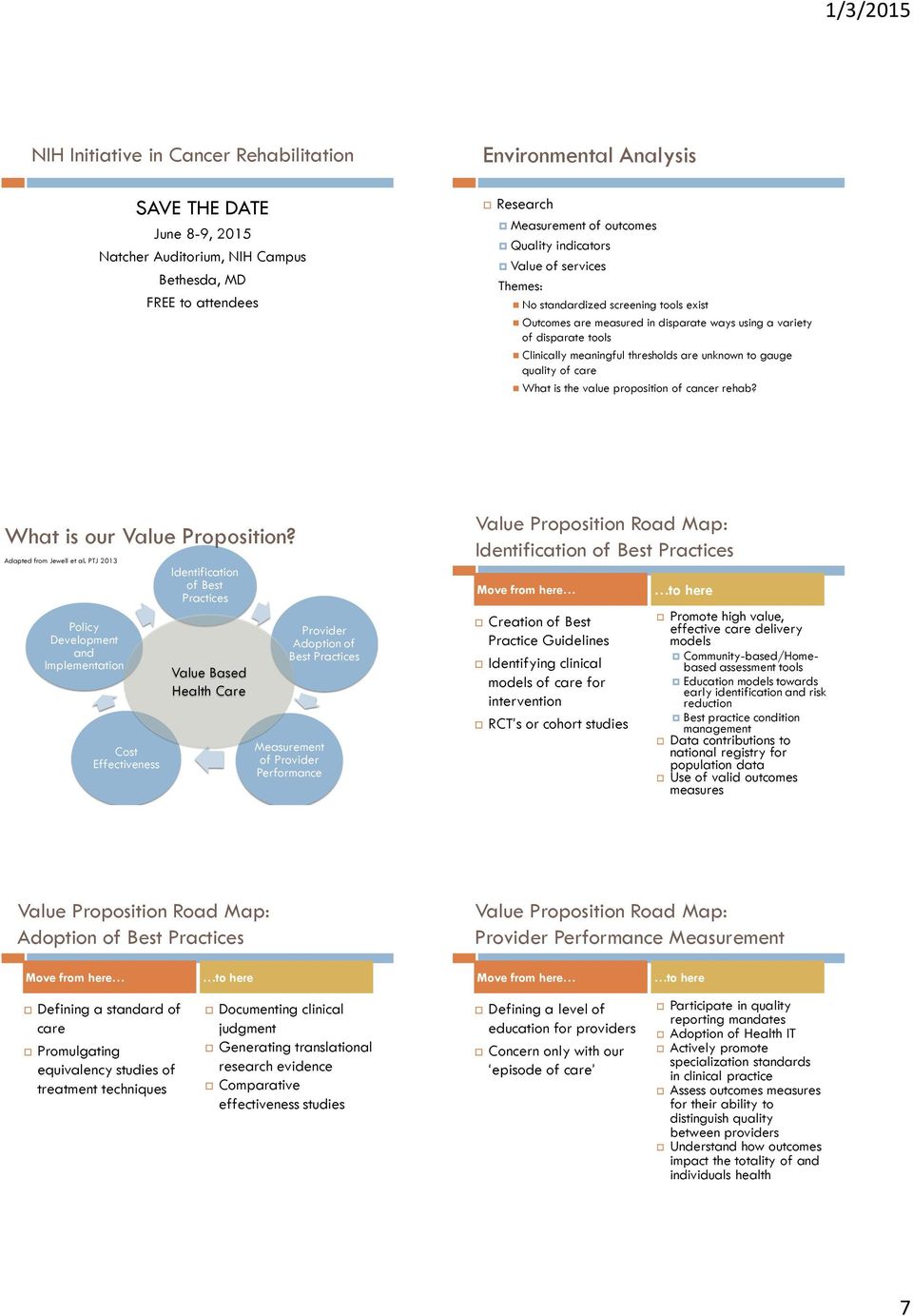
8 1/3/2015 Value Proposition Road Map: Cost Effectiveness Value Proposition Road Map: Policy Development Move from here to here Move from here to here Capturing direct costs Cost comparisons Identify meaningful outcomes and analyze the relationship between outcomes and cost Generate rehabilitationcentric cost effectiveness evidence Reacting to policy changes Provide data that drives change in policy Advocate as an individual using tools from your professional association Integrate cancer rehabilitation professionals on regulatory advisory boards What is our Value Proposition? To improve access to quality services and lower costs while requiring greater accountability on the part of all stakeholders within the health care system to provide cancer patients with optimal rehabilitation services. - Stakeholder accountability to implement best practices - Reducing variation in practice - Improving the patient experience - Reducing total cost - Improving the health of the population Questions? Thank You! THE IMPACT OF NATIONAL MANDATES FOR ONCOLOGY REHABILITATION ON THE PROFESSION Charles McGarvey, PT, MS, DPT, FAPTA Rockville, MD [email protected] APTA Combined Sections Meeting 2015 Indianapolis, IN 8

9 1/3/2015 Course Objectives 1. Discuss the current climate of policies and initiatives related to oncology rehabilitation. 2. Describe the alliance and joint programming between APTA, the Oncology Section, and the Commission on Cancer. 4. Review the eligibility criteria for rehabilitation services as defined by the Commission on Cancer accreditation program. 9

10 Commission on Cancer Charles L. McGarvey PT MS DPT FAPTA APTA and Oncology Section Representative Commission on Cancer (CoC)

11 Chronology of Association December, 2012, Dr. Lisa VanHoose, President of the Oncology Section of the American Physical Therapy Association (APTA) contacted Dr. Charles L. McGarvey regarding his interest/consent to be considered as a nominee to serve as a representative of the APTA to the CoC. Dr. McGarvey consented to serve and the nomination was forwarded to the APTA. On April 1, 2013, Dr. Paul Rockar, President of the APTA informed Dr. Charles L. McGarvey that he had been selected to serve as the APTA s nominee member organization representative to the CoC. Dr. McGarvey was informed on April 12, 2013 by the CoC of his election to serve as the APTA representative for a 3 year term effective 4/01/ /01/2016. Dr. David P. Winchester MD FACS, Medical Director, Cancer Programs, American College of Surgeons (ACS) was identified as Dr. McGarvey s mentor. Dr. McGarvey was appointed to serve on the CoC Accreditation Committee. The first meeting attended by Dr. McGarvey was the CoC Spring Meeting 2013

12 Presentation Objectives Overview the purpose, objectives and structure of the CoC Describe the purpose and goals of the CoC. Provide a high-level overview of current CoC initiatives Identify future opportunities for APTA and Oncology Section
13 Commission on Cancer Mission The CoC is a consortium of professional organizations dedicated to improving survival and quality of life for cancer patients through standard-setting, prevention, research, education, and the monitoring of comprehensive quality care.

14 CoC Objectives Establish standards to ensure quality, multidisciplinary, and comprehensive cancer care delivery in healthcare settings. Conduct surveys in healthcare settings to assess compliance with those standards. Collect standardized, high quality data from CoC-accredited healthcare settings to measure cancer care quality. Use data to monitor treatment patterns and outcomes and enhance cancer control and clinical surveillance activities. Develop effective educational interventions to improve cancer prevention, early detection, care delivery, and outcomes in healthcare settings.

15 Commission on Cancer Membership 54 professional organization representatives Surgeons Radiologists/Oncologists Medical Oncologists Pathologists Cancer Registrars Hospice & Palliative Care Patient Advocacy Groups Nurses Social Workers Administrators Nutritionists Surveillance Government Genetics

16 CoC Structure College National Accreditation Program for Breast Centers Cancer Programs American Joint Committee on Cancer Commission on Cancer Executive Committee Nominating Committee Standing Committees Quality Integration Cancer Liaison Initiatives Member Organization Steering Accreditation Advocacy Education Scientific Review Subcommittee Site-Specific Quality Measure Workgroups Program Review Subcommittee Field Staff Subcommittee Constituency Education Subcommittee Clinical Congress Topics Subcommittee Survival Workgroup Recruitment and Retention Subcommittee Speaker Recruitment Subcommittee 11/15/13

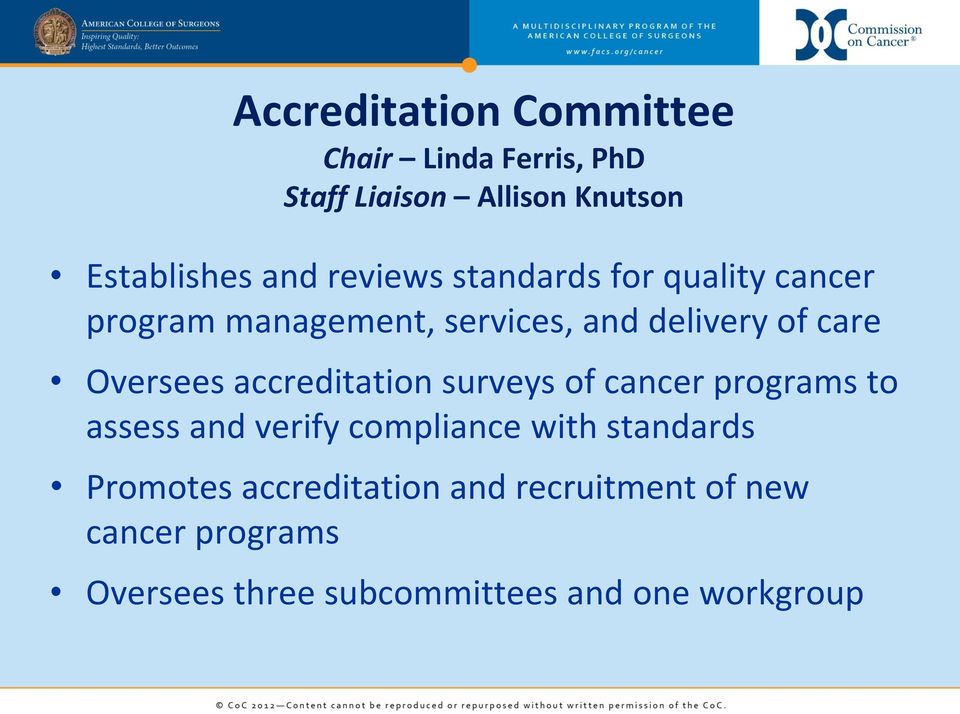
17 Accreditation Committee Chair Linda Ferris, PhD Staff Liaison Allison Knutson Establishes and reviews standards for quality cancer program management, services, and delivery of care Oversees accreditation surveys of cancer programs to assess and verify compliance with standards Promotes accreditation and recruitment of new cancer programs Oversees three subcommittees and one workgroup
18 New Accreditation Programs Oncology Medical Home Accreditation - First draft of Standards manual completed - Pilot surveys of 7 sites in 1 st quarter of 2015 Expansion of Pediatric Accreditation - Pediatric specific standards - Pediatric quality measures International accreditation - NAPBC has done their first international accreditation surveys - Significant interest in CoC accreditation in several countries Rectal Cancer accreditation program - Standards being developed - Will require CoC accreditation from participating facilities

19 Other Accreditation Committee Initiatives Standardized process to update standards each year Clarification and education to programs on Chapter 3 - -Continuum of Care Standards - ACS Webinars - Special CoC source articles


20 CoC-Accredited Cancer Programs Approximately 1500 CoC-accredited cancer programs in US and Puerto Rico 7

21 Demonstrates commitment to high quality cancer care. Benefits of CoC Accreditation Improved patient outcomes across all domains of cancer care. Dedicated resources to provide the screening, prevention treatment and support services. Use of NCDB applications to serve as the basis for quality improvement. Improved transparency and accountability.
22 What is the NCDB? A nationwide cancer treatment and outcomes database Represents patients treated at more than 1,500 CoC-accredited cancer programs Collects over a million new cancer cases annually Represents 71% of total cases in U.S. Data used to explore patterns and trends in cancer care and quality improvement opportunities Jointly supported by CoC and ACS
23 How Does NCDB Collect Its Data? From all CoC accredited hospital registries Analytic cases: diagnosed, first course treatment in facility Record care given elsewhere, annual follow-up Annual submission in January Diagnosis year that ended full year prior (in January 2014, will collect 2012 diagnoses for the first time) From program s Reference Date forward, all newlyabstracted and updated cases Secure online transmission, automated processing
24 National Cancer Data Base Activities Maintain CoC Data Reporting Requirements FORDS Manual Generate annual Call for Data from CoC-accredited cancer programs Provide access to Participant User Files (PUFs) Maintain reporting and quality improvement tools for use by CoC-accredited cancer programs Hospital Comparison Benchmark Reports Survival Reports Cancer Program Practice Profile Reports (CP 3 R) Rapid Quality Reporting System (RQRS) Conduct special studies and participate in collaborative research efforts Publish numerous research papers
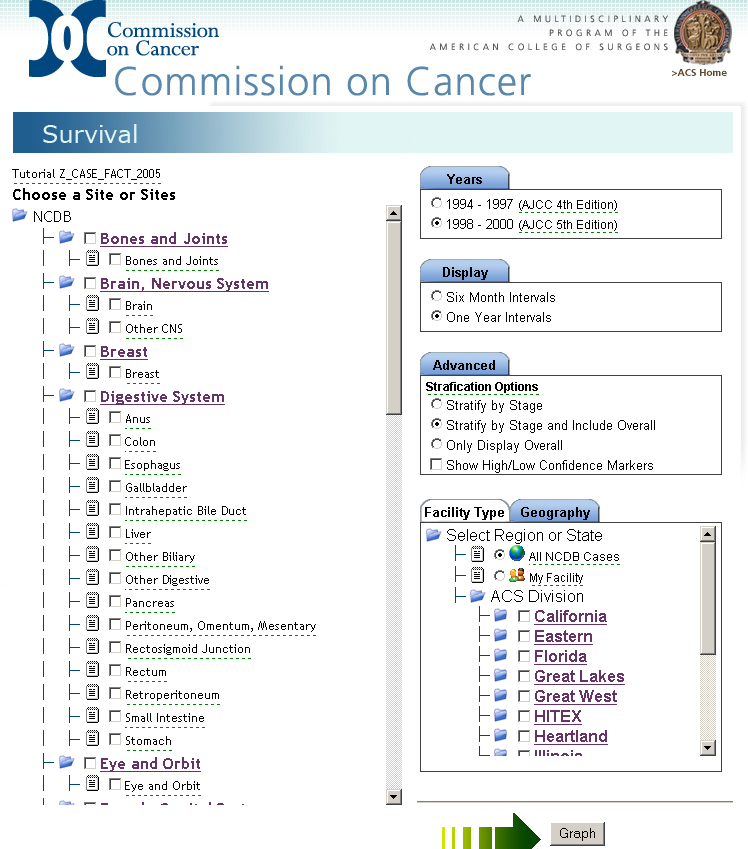
25 National Cancer Data Base Hospital Comparison Benchmark Reports Survival Reports Cancer Program Practice Profile Reports (CP 3 R) Rapid Quality Reporting System (RQRS) CQIP Tools and Resources 16
26 Rapid Quality Reporting System Promotes & facilitates evidence-based cancer care at CoCaccredited cancer programs in real clinical time Immediate case ascertainment Case tracking Ongoing reporting of quality metrics Integration with survivorship plans and patient reported data Includes National Quality Forum-endorsed accountability and quality measures 3 are for breast cancer, 2 colon cancer measures, and 1 surveillance measures - rectal Planned expansion with additional QI measures for other cancer sites
27 Quality Integration Priorities NCDB Reporting Tools Updated with 2011 data Moving to common interface/look and feel in 2013 Modernizing Facility Oncology Registry Data Standards (FORDS) Over a decade old Review of data items is due Harmonization of quality measures with other professional societies.
28 Quality Integration Priorities New measures to be introduced into CP 3 R and RQRS 4 Non-small cell lung, 2 gastric, 1 esophageal, 1 revision of the rectal measure. Need to move to other sites and other types of measures Patient experience Quality of life Cost Continuation of the Cancer Quality Improvement Report (CQIP) with other disease sites highlighted.
29 Quality Integration Priorities Participant Use File (PUF) >200 applications received in 2014 New policies and procedures developed for PUF s New round of applications open to all accredited programs in 2015 (may expand to biannual applications)
30 Current Commission on Cancer Initiatives Expand current and develop new Accreditation Programs Pediatrics Oncology Medical Home International Accreditation Rectal Cancer Accreditation Program Expand quality tools and measures Increase utilization of RQRS Public reporting of outcomes Expand collaboration with Alliance for Clinical Trials in Oncology
31 EXPANSION OF THE USE OF THE RAPID QUALITY REPORTING SYSTEM (RQRS) The future of cancer reporting New commendation standard for programs enrolling in RQRS Over 1000 cancer programs now enrolled
32 Public Reporting / Transparency Central to quality care Consumers, payers, and regulators deserve and want transparency Affordable Care Act requires public reporting New commendation standard added for public reporting Exploring public reporting strategies Pilot project with Pennsylvania Health Care Quality Alliance
33 Alliance for Clinical Trials in Oncology Merger of CALGB, NCCTG and ACOSOG American College of Surgeons Clinical Research Program(ACSCRP) Mission To reduce the impact of cancer by Engaging a broad oncology community in cancer clinical trials Reducing the time from trials reporting to practice implementation Developing best cancer practices and standardize cancer practices Creating novel programs of research in comparative effectiveness and emerging technologies Two PCORI Grants received to perform special studies with COC examining post-treatment surveillance in breast and colon cancer
34 Challenges Facing the CoC Support for accredited programs CQIP; quality measures; best practices Program recruitment and retention Provide good customer service to our programs Address concerns of stakeholders Need for transparency and reporting biggest issue Meaningful quality measures Enhance perception of public/payers/regulatory organizations of the value of accreditation
35 Meetings and Communications 2015 Meetings CoC Committees and State Chair Meetings May 7 9 American College of Surgeons, Chicago, IL Committee conference calls quarterly or as needed CoC Annual Meeting and Cancer Liaison Physicians Meeting October 3 4 during the American College of Surgeons Clinical Congress, Chicago, IL Communications CoC Source newsletter distributed last day of each month CoC Member Updates Website
36 CoC Web site -
37 Potential Opportunities for the APTA and Oncology Section of the APTA: 1.) Webinair: Within the next 3 years, the APTA will have the opportunity to introduce and showcase the role of physical therapy in the assessment and treatment of patients with cancer. 2.) Cancer Care Initiatives: Each member organization is requested to participate in a survey which describes its mission goals and accomplishments. Done 3.) Article for the CoC newsletter: Member organizations are offered the opportunity to provide an article for the CoC newsletter which is sent out on-line to all (1500+) CoC accredited and participating organizations. 4.) CoC exhibition at professional conference: The CoC has resources to exhibit at professional conferences (i.e. Combined Sections and/or Annual Meetings) 5.) Press Release: The CoC has materials and resources in place to assist in any press releases as appropriate.
38 Potential Opportunities for the APTA and Oncology Section of the APTA: 6.) Platform and Poster presentation at CoC Spring meeting (2015 or 2016): Member organization are encouraged to present platform and poster presentations at the Spring CoC meeting. Done 7.) Cancer Quality Improvement Program (CQIP): Opportunity to identify clinical outcomes related to functional metrics which could be objectively measured and documented for accreditation. 8.) Cancer Program Standards (Currently 2014: Standard 3.3 Survivorship Care Plan) Opportunity to identify clinical outcomes related to functional metrics which could be objectively measured and documented for accreditation. (See handout) 9.) Patient Portal for Survivors: Opportunity to respond to patient queries related to questions of cancer treatment and intervention from a rehabilitation need or perspective. 10.) Payer Relations: Identification of the value of physical therapy and rehabilitation in the assessment and intervention of patients with cancer.
39 Potential Opportunities for the APTA and Oncology Section of the APTA: 11.) Government Relations: Opportunity to participate with the CoC in lobbying efforts through the organization One Voice Against Cancer. Opportunity to provide information or participation in meetings with CMS/NCI/VA/FDA. 12.) Clinical Trials: Opportunity to participate in clinical trials to assess function and quality of life issues related to the treatment of cancer patients. 13.) National Cancer Data Base (NCDB): Opportunity to participate in request for proposals to access the NCDB to conduct retrospective analysis of data compiled by the CoC and ACS. Access to data compiled by various quality measurement systems including: Quality Integration, C-QIPS, National Quality Forum (NQF), Cancer Practice Program Profile Reports (CP3R) and Rapid Quality Reporting System (RQRS).
40 Questions
41 September 9, 2014 Accreditation Committee Clarifications for Standard 3.3 Survivorship Care Plan This is the second in a series of two communications that addresses clarifications made by the CoC Accreditation Committee for the phase in standards in Chapter 3 of Cancer Program Standards, 2012: Ensuring Patient-Centered Care, v This communication addresses Standard 3.3 Survivorship Care Plan. In late summer of 2013, the CoC Member Organizations conducted a readiness survey that asked CoC-accredited programs to report their implementation activities for Standards 3.1 Patient Navigation process, 3.2 Distress Screening, and 3.3 Survivorship Care Plan. The published implementation date for Standard 3.3 is January 1, The survey results indicated that only 37 percent of responding cancer programs felt completely confident that their program would be able to implement Standard 3.3 by 2015; only 40 percent of respondents are addressing the entire Standard; of the 60 percent not addressing the entire standard help was needed in the following areas: information about how to evaluate survivorship care plan processes, tools that could be used for a comprehensive care plan and follow-up plan, additional information about what is required to successfully implement [the Standard], and recommendations for organizations that could help them implement the Standard. Furthermore, only 21 percent indicated that a survivorship care plan process has been developed. Finally, 63 percent believed that Standard 3.3 is the most difficult to implement, compared to Standard 3.1 and 3.2. The Accreditation Committee is providing additional clarifications to assist with comprehension of Standard 3.3 in order to meet compliance. 1. Who is a cancer survivor? The definition of survivor in the Institute of Medicine (IOM) Report, From Cancer Patient to Cancer Survivor: Lost in Transition, states that an individual is considered a cancer survivor from the time of cancer diagnosis through the balance of his or her life, according to the National Coalition for Cancer Survivorship and the NCI Office of Cancer Survivorship. Standard 3.3, though, is focused on the subset of survivors who are treated with curative intent, and have completed active therapy (other than long-term hormonal therapy). This includes patients with cancer from all disease sites. Patients with metastatic disease, though survivors by some definitions, are not targeted for delivery of comprehensive care summaries and follow-up plans under Standard What data elements are to be included in the treatment summary and survivorship care plan? The standard requires that the survivors be provided with a comprehensive care summary and follow-up plan that is clearly and effectively explained however, debate remains on what data fields should populate such a document.
42 The American Society of Clinical Oncology (ASCO) has concluded a process, with broad-based input from multiple stakeholders, including patients, that has defined what they believe are the minimal data elements to be included in a treatment summary and survivorship care plan. It is anticipated that this document will be published shortly. The Accreditation Committee determined that the ASCO data set will be the minimal content for the treatment summary and survivorship care plans required by Standard 3.3. This does not preclude programs from adding additional data elements. The core set of data elements, as recommended by ASCO, are: TREATMENT SUMMARY Contact information of the treating institutions and providers Specific diagnosis (e.g. breast cancer), including histologic subtype (e.g. non-small cell lung cancer) when relevant Stage of disease at diagnosis (e.g. I-III) Surgery (yes/no). If yes, a. Surgical procedure with location on the body b. Date(s) of surgery (year required, month optional, day not required) Chemotherapy (yes/no). If yes, a. Names of systemic therapy agents administered (listing individual names rather than regimens) b. End date(s) of chemotherapy treatment (year required, month optional, day not required) Radiation (yes/no). If yes, c. Anatomical area treated by radiation d. End date(s) of radiation treatment (year required, month optional, day not required) Ongoing toxicity or side-effects of all treatments received (including those from surgery, systemic therapy and/or radiation) at the completion of treatment. Any information concerning the likely course of recovery from these toxicities should also be covered. For selected cancers, genetic/hereditary risk factor(s) or predisposing conditions and genetic testing results if performed FOLLOW-UP CARE PLAN Oncology team member contacts with location of the treatment facility [repeat if separate document] Need for ongoing adjuvant therapy for cancer a. Adjuvant therapy name
43 b. Planned duration c. Expected side effects Schedule of follow up related clinical visits (to be presented in table format to include who will provide the follow-up visit and how often and where this will take place) Cancer surveillance tests for recurrence (to be presented in table format to include who is responsible for ordering/carrying out the test, the frequency of testing, and where this will take place) Cancer screening for early detection of new primaries to be included only if different from the general population (presented in table format to include who is responsible for carrying out, the frequency of testing, and where this will take place) Other periodic testing and examinations (rather than outlining specific testing, the group suggested an inclusion of a general statement to continue all standard non-cancer related health care with your primary care provider, with the following exceptions: [if there are any] ) Possible symptoms of cancer recurrence (rather than including a list of possible symptoms, the group suggested inclusion of a general statement, Any new, unusual and/or persistent symptoms should be brought to the attention of your provider. ) A list of likely or rare but clinically significant late- and/or long-term effects that a survivor may experience based on his or her individual diagnosis and treatment if known (including symptoms that may indicate the presence of such conditions). A list of items (e.g. emotional or mental health, parenting, work/employment, financial issues, and insurance) should be covered with standard language stating that survivors have experienced issues in these areas and that the patient should speak with his or her oncologist and/or PCP if having related concerns. Include a list of local and national resources to assist the patient obtain proper services. A general statement emphasizing the importance of healthy diet, exercise, smoking cessation and alcohol use reduction may be included. Statements may be tailored if particularly pertinent to the individual. 3. Which health care provider(s) should gather the requisite information and which health care provider(s) should deliver the information to the patient? The verbiage in the Standard currently states, A survivorship care plan is prepared by the principal provider(s) who coordinated the oncology treatment for the patient with input from the patient s other care providers. It is well-recognized that models of health care delivery vary across the nation and often within institutions. In some instances, for example, programs have established APRN-led, multidisciplinary clinics to serve their cancer survivor cohorts. Although existing guidelines do not unequivocally endorse a singular best practice that would fit all programs, there appears to be consensus that the treating physician(s) is central to the process.
44 In the context of multidisciplinary care teams it would appear reasonable that the cancer committee develop a policy of identifying a physician team member or advanced practice partner (such as an APRN member of the treatment team) who would be responsible for discussing the care plan with a patient. An overarching goal is to allow each cancer program some flexibility in the formulation and implementation of their own policies and procedures in this regard. 4. When is standard 3.3 to be implemented? The Accreditation Committee made the following changes to the established time frame and scope of implementation for Standard 3.3. January 1, 2015 Implement a pilot survivorship care plan process involving 10% of eligible patients. January 1, 2016 Provide survivorship care plans to 25% of eligible patients. January 1, 2017 Provide survivorship care plans to 50% of eligible patients. January 1, 2018 Provide survivorship care plans to 75% of eligible patients. January 1, 2019 Provide survivorship care plans to all eligible patients. During the implementation period, cancer programs should initially concentrate on their most common disease sites, such as breast, colorectal, prostate, early-stage bronchogenic, and lymphoma. Cancer Programs that have fully implemented the Standard by the time of their on-site visit during the 2015, 2016, 2017 survey cycle, will receive special recognition in their Performance Reports at the time of their next survey. Questions about this and other standards are to be submitted to the CAnswer Forum. Linda W. Ferris, PhD Chair, Accreditation Committee Danny Takanishi, MD, FACS Vice Chair, Accreditation Committee Lawrence Shulman, MD, FACS Chair, Quality Integration Committee Member Organization Representative, American Society of Clinical Oncology (ASCO)
45 Key Guideline Recommendations Preliminary ASCO Guidelines For anxiety and depression: All patients should be periodically evaluated for depression and anxiety symptoms using validated protocols. Treatment of patients with depression or anxiety should be tailored based on severity of symptoms and history of depression. Follow-up of patients is crucial, as many symptomatic patients are less likely to comply with referrals and treatments. Health care providers should be aware of their institutions resources for treatment of depression and anxiety and should have patients make use of supportive care services, including those that facilitate prevention and mitigation of symptoms. For fatigue: Regular screening is highly recommended, starting at the time of diagnosis and continuing after completion of primary treatments, at least annually and using semi-quantitative or quantitative measures. Patients should be offered education and advice about managing fatigue following treatment. Maintaining adequate levels of physical activity are encouraged, particularly walking. Other non-drug treatments such as psychosocial interventions and mindbody interventions (yoga, acupuncture) are encouraged. Pharmacological interventions for posttreatment patients are not encouraged, as there is limited evidence that drugs are effective in reducing fatigue in those who have completed therapy and are currently disease-free. For neuropathy: Duloxetine is recommended for treatment of chemotherapy-induced peripheral neuropathy (CIPN). No agents are recommended for prevention of CIPN during active chemotherapy treatment. No strong clinical evidence for benefits from other agents such as tricyclic antidepressants, gabapentin, and topical gels containing baclofen, amitriptyline HCL, and ketamine are seen, but they may be tried in certain patients. See more at: symptoms-affecting-cancer-survivors?guid=1d4f296f-e af- 925C6366D69B&rememberme=1&ts= #sthash.ogQHHlwQ.dpuf
46 1/3/2015 THE IMPACT OF NATIONAL MANDATES FOR ONCOLOGY REHABILITATION ON THE PROFESSION Lisa VanHoose, PT, PhD, CLT-LANA Hampton, VA or Course Objectives 1. Discuss the current climate of policies and initiatives related to oncology rehabilitation. 2. Describe the alliance and joint programming between APTA, the Oncology Section, and the Commission on Cancer. APTA Combined Sections Meeting 2015 Indianapolis, IN How do these mandates affect the profession? Current Number of Physical Therapy (FSBPT) 182,000 APTA Membership 59,552 APTA PTs 122,448 Non-APTA PTs Oncology as Primary Clinical Focus (Membership Renewal) 3.5% or 2, % or 4,286 A Model to Project the Supply and Demand of Physical Therapists , APTA Cancer Treatment & Survivorship, Facts and Figures , ACS How do these mandates affect me? How do these mandates affect me? Certification Competency in a specific job role Certification can be a component of specialization Specialization Job role competency in a specific area Certification STAR Oncology Rehabilitation Partners Certified Cancer Exercise Trainer American College of Sports Medicine Physiological Oncology Rehabilitation Institute (J. Osborne) PINC or Steel Rocky Mountain Cancer Rehabilitation Institute Specialization American Physical Therapy Association Oncology Section 1
47 1/3/2015 THE IMPACT OF NATIONAL MANDATES FOR ONCOLOGY REHABILITATION ON THE PROFESSION Charles McGarvey, PT, MS, DPT, FAPTA, Nicole L. Stout DPT, CLT-LANA, Specialization Lisa VanHoose, PT, PhD, CLT-LANA, APTA Combined Sections Meeting 2015 Indianapolis, IN References Stout et al. A Prospective Surveillance Model for Rehabilitation for Women with Breast Cancer. Cancer, American Physical Therapy Association. A Model to Project the Supply and Demand of Physical Therapists Last Updated: 10/8/2013 American Cancer Society. Cancer Treatment & Survivorship, Facts and Figures pdf 2
Navigation and Cancer Rehabilitation
 Navigation and Cancer Rehabilitation Messina Corder, RN, BSN, MBA Manager, MWHC Regional Cancer Center Regina Kenner, RN Cancer Navigator, MWHC Regional Cancer Center Cancer Action Coalition of Virginia
THE FIRST STEPS INTO SURVIVORSHIP
 10 th Annual Nebraska Cancer Summit THE FIRST STEPS INTO SURVIVORSHIP Sheri Sheriff, PT, DPT April 16, 2014 History of Cancer Wellness Program Need for Enhanced Survivorship Services Fragmented Resources
COMMISSION ON CANCER. Cancer Program Standards 2012: Ensuring Patient-Centered Care. v1.2.1
 COMMISSION ON CANCER Cancer Program Standards 2012: Ensuring Patient-Centered Care v1.2.1 www.facs.org 2012 AMERICAN COLLEGE OF SURGEONS CHICAGO, IL ALL RIGHTS RESERVED 1 Table of Contents Dedication...
2014 Report of Cancer Program Activities for 2013
 2014 Report of Cancer Program Activities for 2013 The University of Vermont Health Network-Central Vermont Medical Center (UVMHN-CVMC) Cancer Committee is pleased to present our Cancer Program Annual Report
Survivorship Care Plans Guides for Living After Cancer Treatment
 Survivorship Care Plans Guides for Living After Cancer Treatment Institute of Medicine Report 2005 Recommendations for meeting needs of cancer survivors Implement survivorship care plan Build bridges
Cancer Treatment Planning: A Means to Deliver Quality, Patient-Centered Care
 Cancer Treatment Planning: A Means to Deliver Quality, Patient-Centered Care Patricia A. Ganz, M.D. Jonsson Comprehensive Cancer Center UCLA Schools of Medicine & Public Health Overview of Presentation
Analysis of Prostate Cancer at Easter Connecticut Health Network Using Cancer Registry Data
 The 2014 Cancer Program Annual Public Reporting of Outcomes/Annual Site Analysis Statistical Data from 2013 More than 70 percent of all newly diagnosed cancer patients are treated in the more than 1,500
www.asco.org/guidelines/ 2014 American Society of Clinical Oncology. All rights reserved.
 Screening, Assessment and Management of Fatigue in Adult Survivors of Cancer: An American Society of Clinical Oncology Clinical Practice Guideline Adaptation Introduction This guideline summarizes the
How To Know If You Have Cancer At Mercy Regional Medical Center
 MERCY REGIONAL CANCER CENTER 2012 CANCER PROGRAM ANNUAL REPORT Using 2011 Data Mercy Regional Cancer Center When you have cancer, you might think first of treatments chemotherapy and radiation. You want
The Role of Clinical Practice Guidelines, Survivorship Care Plans, and Inter-sectoral Care in Cancer Rehabilitation
 The Role of Clinical Practice Guidelines, Survivorship Care Plans, and Inter-sectoral Care in Cancer Rehabilitation Prof. Eva Grunfeld, MD, DPhil, FCFP Ontario Institute for Cancer Research/Cancer Care
Bristol Hospital Cancer Care Center 2015 Annual Report
 Bristol Hospital Cancer Care Center 2015 Annual Report 2015 Annual Report Cancer Care Center At every point along the path, our team is there, keeping the focus on the most important team member - the
Oncology Medical Home Measure Specification Data
 Oncology Medical Home Measure Specification Data Measure Name Chemotherapy pathway compliance Measure # 1 Measure Description % of chemotherapy treatments that have adhered to NCCN guidelines or pathways.
Health Information. Technology and Cancer Information Management. Health Information Technology & Cancer Information Management 363
 Health Information Technology & 363 Health Information Technology and Cancer Information Management Opportunities in the health information field have expanded with changes in health care delivery, utilization
Level 1 Level 2 Level 3 Level 4 Level 5. At least one physician champion referring to Navigation Program
 Definitions: Key Stakeholders: Those people that you feel are essential to making a program work. Include Administration, s, Staff, Physicians (both employed and private practice). Specialty areas include
Evaluation Process and Performance Measurement in Health Care
 Cancer Center of Excellence Performance Measures, Rating System, and Rating Standard 1 Introduction The designation of a hospital, treatment center, or other organization as a Cancer Center of Excellence
Best Practices in Patient Navigation and Cancer Survivorship Survey Results
 Best Practices in Patient Navigation and Cancer Survivorship Survey Results December 2013 Best Practices in Navigation and Cancer Survivorship Survey Results The George Washington University Cancer Institute
C a nc e r C e nter. Annual Registry Report
 C a nc e r C e nter Annual Registry Report 214 214 Cancer Registry Report Larraine A. Tooker, CTR Please note that the 214 Cancer Registry Annual Report is created in 214, but it reflects data on cases
In 2012, there were more than 13.7 million cancer
 Implementation of an oncology exercise and wellness rehabilitation program to enhance survivorship: the Beaumont Health System experience Tomas B Lanni, Jr, MBA, FACHE, a Eric Brown, MD, FACS, b Nafsa
merge programs split program rename program X modify program Name of Current Program(s) Graduate Certificate in Oncology Rehabilitation (GCOR) (6228)
 OAKLAND UNIVERSITY GRADUATE COUNCIL Graduate Education 520 O Dowd Hall Modify Approved Graduate Academic Program The Graduate Council approves all major curriculum changes, deletions and additions to graduate
January 12, 2015. Sincerely, Scott H. Kurtzman, MD, FACS Chair, NAPBC Standards and Accreditation Committee Attached (NAPBC Performance Report)
 January 12, 2015 Anees B. Chagpar, MD, MSc, MA, MPH, MBA The Breast Center -- Smilow Cancer Hospital at Yale-New Haven Yale-New Haven Hospital 20 York St, First Floor New Haven, CT 06510 Dear Anees B.
Chapter 1: Program Management Standards, Cont.
 Chapter 1: Program Management Standards, Cont. Thomas Eisenhauer, MD, FACS Surveyor Hendersonville, NC 1 Standard 1.7 Monitoring Conference Activity # case presentation Frequency Evaluate seven areas of
Mary Baker MSN, FNP-C, AOCNP Bon Secours Richmond Cancer Survivorship
 Mary Baker MSN, FNP-C, AOCNP Bon Secours Richmond Cancer Survivorship INSTITUTE OF MEDICINE S LANDMARK REPORT ON CANCER SURVIVORSHIP, 2005 Although some cancer survivors recover with a renewed sense of
Cancer Rehabilitation: A Critical Component of Survivorship Care
 Cancer Survivorship E-Learning Series for Primary Care Providers Cancer Rehabilitation: A Critical Component of Survivorship Care Julie K. Silver, MD Associate Professor Department of Physical Medicine
SUBTITLE D--PROVISIONS RELATING TO TITLE IV SEC 10408 GRANTS FOR SMALL BUSINESSES TO PROVIDE COMPREHENSIVE WORKPLACE WELLNESS PROGRAMS
 SUBTITLE D--PROVISIONS RELATING TO TITLE IV SEC 10408 GRANTS FOR SMALL BUSINESSES TO PROVIDE COMPREHENSIVE WORKPLACE WELLNESS PROGRAMS The Secretary of HHS will award grants to eligible employers to provide
May 7, 2012. Submitted Electronically
 May 7, 2012 Submitted Electronically Secretary Kathleen Sebelius Department of Health and Human Services Office of the National Coordinator for Health Information Technology Attention: 2014 edition EHR
Role of Nursing Professional Development in Helping Meet. Institute of Medicine s Future of Nursing Recommendations. Preamble:
 1 Role of Nursing Professional Development in Helping Meet Institute of Medicine s Future of Nursing Recommendations Preamble: The Robert Wood Johnson Foundation s Initiative on The Future of Nursing at
No. prev. doc.: 8770/08 SAN 64 Subject: EMPLOYMENT, SOCIAL POLICY, HEALTH AND CONSUMER AFFAIRS COUNCIL MEETING ON 9 AND 10 JUNE 2008
 COUNCIL OF THE EUROPEAN UNION Brussels, 22 May 2008 9636/08 SAN 87 NOTE from: Committee of Permanent Representatives (Part 1) to: Council No. prev. doc.: 8770/08 SAN 64 Subject: EMPLOYMENT, SOCIAL POLICY,
A Prostate and Genitourinary Multidisciplinary Oncology Clinic in a Multi-Hospital System by Richard B. Reiling, MD, FACS
 A Prostate and Genitourinary Multidisciplinary Oncology Clinic in a Multi-Hospital System by Richard B. Reiling, MD, FACS In Brief At Presbyterian Cancer Center in Charlotte, N.C., we are seeing a higher
Cancer Care Delivered Locally by Physicians You Know and Trust
 West Florida Physician Office Building Johnson Ave. University Pkwy. Olive Road N. Davis Hwy. For more information on West Florida Cancer Center: 850-494-5404 2130 East Johnson Avenue Pensacola, Florida
LEARNING WHAT WORKS AND INCREASING KNOWLEDGE
 About This Series In February 2010, the George Washington University School of Public Health and Health Services, Department of Health Policy released Changing po 2 licy: The Elements for Improving Childhood
A Career in Pediatric Hematology-Oncology? Think About It...
 A Career in Pediatric Hematology-Oncology? Think About It... What does a pediatric hematologist-oncologist do? What kind of training is necessary? Is there a future need for specialists in this area? T
How Oncology Nurses Use Evidence Based Practices in Patient Navigation
 How Oncology Nurses Use Evidence Based Practices in Patient Navigation Sharon Gentry, RN, MSN, AOCN, CBCN Breast Nurse Navigator Novant Health Derrick L Davis Cancer Center Winston Salem, N.C. 27103 How
Quality of Life & Survivorship
 Quality of Life & Survivorship Dick Brumley is a prostate cancer survivor. Diagnosed in 2002 following a routine physical exam, he has traveled a long distance with cancer: surgery, radiation, hormone
PRACTICE FRAMEWORK AND COMPETENCY STANDARDS FOR THE PROSTATE CANCER SPECIALIST NURSE
 PRACTICE FRAMEWORK AND COMPETENCY STANDARDS FOR THE PROSTATE CANCER SPECIALIST NURSE MARCH 2013 MONOGRAPHS IN PROSTATE CANCER OUR VISION, MISSION AND VALUES Prostate Cancer Foundation of Australia (PCFA)
Tricia Cox on 7/18/2012 at Oncology Center. Sarah Randolf. Female
 SAMPLE This Survivorship Care Plan will facilitate cancer care following active treatment. It may include important contact information, a treatment summary, recommendations for follow-up care testing,
Oncology Medical Home: Strategies for Changing What and How We Pay for Oncology Care
 Oncology Medical Home: Strategies for Changing What and How We Pay for Oncology Care John Fox, MD MHA Senior Medical Director Priority Health 1 Cancer Care is the Leading Edge of Medical Cost Trend for
Big Data and Oncology Care Quality Improvement in the United States
 Big Data and Oncology Care Quality Improvement in the United States Peter P. Yu, MD, FACP, FASCO President, American Society of Clinical Oncology Director of Cancer Research, Palo Alto Medical Foundation
Mellen Center for Multiple Sclerosis
 Mellen Center Cleveland Clinic Marie Namey, RN, MSN, MSCN Mellen Center Cleveland Clinic Cleveland, OH Home of. Mellen Center for Multiple Sclerosis Mellen Center Mission The Mellen Center remains committed
Guidelines for Patient-Centered Medical Home (PCMH) Recognition and Accreditation Programs. February 2011
 American Academy of Family Physicians (AAFP) American Academy of Pediatrics (AAP) American College of Physicians (ACP) American Osteopathic Association (AOA) Guidelines for Patient-Centered Medical Home
Fixing Mental Health Care in America
 Fixing Mental Health Care in America A National Call for Measurement Based Care in Behavioral Health and Primary Care An Issue Brief Released by The Kennedy Forum Prepared by: John Fortney PhD, Rebecca
WellPoint Cancer Care Quality Program Provider FAQs
 WellPoint Cancer Care Quality Program Provider FAQs WellPoint Cancer Care Quality Program What is the WellPoint Cancer Care Quality Program? Anthem Blue Cross and Blue Shield (Anthem) is pleased to bring
Michael Friedman, MPT, MBA CURRICULUM VITAE
 Michael Friedman, MPT, MBA CURRICULUM VITAE January 14, 2014 Michael Friedman DEMOGRAPHIC AND PERSONAL INFORMATION Current Appointments Director Rehabilitation Therapy Services, Physical Medicine and Rehabilitation,
Coverage Analysis: The Cornerstone of Clinical Research Billing Presented by: Mary L. Veazie, CPA, MBA, CHC, CHRC Executive Director, Clinical
 Coverage Analysis: The Cornerstone of Clinical Research Billing Presented by: Mary L. Veazie, CPA, MBA, CHC, CHRC Executive Director, Clinical Research Finance The University of Texas MD Anderson Cancer
CANCER PROGRAM STANDARDS: Ensuring Patient-Centered Care
 CANCER PROGRAM STANDARDS: Ensuring Patient-Centered Care 2016 Edition Table of Contents Table of Contents Cancer Program Standards: Ensuring Patient-Centered Care 2015 American College of Surgeons Chicago,
2012 Oncology Service Line Goals and Accomplishments
 2012 Oncology Service Line Goals and Accomplishments 2012 Program goals and outcomes Quality and Service Seek NAPBC accreditation by December 31, 2012 Application was accepted; visit date set for April
EDUCATING, SUPPORTING & COORDINATING CARE: ONCOLOGY NURSE NAVIGATORS
 EDUCATING, SUPPORTING & COORDINATING CARE: ONCOLOGY NURSE NAVIGATORS Nancy Foreman, RN, BSN Oncology Nurse Navigator Cancer Centers of Northern Arizona Healthcare Learning Objectives: Identify five services
Department of Anesthesia & Perioperative Medicine 5-Year Strategic Plan FY 2012-2016. Contents
 Anesthesia & Perioperative Medicine 167 Ashley Avenue, Suite 301 MSC 912 Charleston, SC 29425-9120 Tel 843 792 2322 Fax 843 792 9314 Department of Anesthesia & Perioperative Medicine 5-Year Strategic Plan
Inova. Breast Care Institute
 Inova Breast Care Institute At the Inova Breast Care Institute, our commitment is to provide expert care for you, every step of the way. Our multidisciplinary team of more than 80 experts provides a full
Nutrition in the Multidisciplinary Oncology Team: Risk Identification and Intervention
 Nutrition in the Multidisciplinary Oncology Team: Risk Identification and Intervention SUMMARY Nutrition services play a key role in quality patient care in the oncology setting. As multidisciplinary teams
The Center for Prostate Cancer. Personalized Treatment. Clinical Excellence.
 The Center for Prostate Cancer Personalized Treatment. Clinical Excellence. The Center for Prostate Cancer Leaders in Prostate Cancer Treatment and Research The Center for Prostate Cancer at the North
Exercise Guidelines and Certifications: What s new? Anna L. Schwartz, PhD, FNP-BC, FAAN
 Exercise Guidelines and Certifications: What s new? Anna L. Schwartz, PhD, FNP-BC, FAAN Overview Review of Research Evidence ACSM Cancer Survivor Exercise Guidelines ACSM/ACS Certification Collaborators
Questions to ask your doctor. about Prostate Cancer and selecting a treatment facility
 Questions to ask your doctor about Prostate Cancer and selecting a treatment facility The Basics Establishing an open dialogue with a doctor provides you with the opportunity to learn specific information
The Development of an APN Led Post Cancer Treatment Follow-Up Clinic
 The Development of an APN Led Post Cancer Treatment Follow-Up Clinic Shari Moura RN MN CON(C) CHPCN(C) Advanced Practice Nurse After Cancer Treatment Transition Clinic WCH-PMH ACTT Clinic CANO/ACIO Annual
Electronic health records to study population health: opportunities and challenges
 Electronic health records to study population health: opportunities and challenges Caroline A. Thompson, PhD, MPH Assistant Professor of Epidemiology San Diego State University [email protected]
Secondary Uses of Data for Comparative Effectiveness Research
 Secondary Uses of Data for Comparative Effectiveness Research Paul Wallace MD Director, Center for Comparative Effectiveness Research The Lewin Group [email protected] Disclosure/Perspectives Training:
The Center for Cancer Care. Comprehensive and compassionate care
 The Center for Cancer Care Comprehensive and compassionate care Welcome to the Center for Cancer Care The Center for Cancer Care at Exeter Hospital provides comprehensive, compassionate care for a wide
Oncology Nurse Care Coordinators as. Navigators. Improving cancer disease management and the patient experience
 Oncology Nurse Care Coordinators as Navigators Improving cancer disease management and the patient experience Oncology nurses have always played a crucial role in coordinating physicians, other cancer
Northeast Ohio Medical University (NEOMED) Chair of Pharmaceutical Sciences Search
 Northeast Ohio Medical University (NEOMED) Chair of Pharmaceutical Sciences Search Spring 2013 About NEOMED Northeast Ohio Medical University (NEOMED) www.neomed.edu is a dynamic free-standing community-based,
IOM National Cancer Policy Forum: Ensuring Quality Cancer Care through the Oncology Workforce
 IOM National Cancer Policy Forum: Ensuring Quality Cancer Care through the Oncology Workforce Kevin W. Sowers, RN, MSN Interim Chief Executive Officer Chief Operating Officer Duke University Hospital Durham,
Table of Contents. Cancer Committee Chairman s Report Accountability and Quality Improvement Measures Cancer Registry Cancer Sites
 Table of Contents 2 3 6 8 9 Cancer Committee Chairman s Report Accountability and Quality Improvement Measures Cancer Registry Cancer Sites 1 2014 Cancer Committee Thomas Sunnenberg, MD, Medical Oncology,
Primary Care Management of Colorectal Cancer
 Primary Care Management of Colorectal Cancer Dr. Dan Renouf, Medical Oncologist, BC Cancer Agency Vancouver Centre November 1, 2014 www.fpon.ca Primary Care Management of Colorectal Cancer Survivors Daniel
Cancer research in the Midland Region the prostate and bowel cancer projects
 Cancer research in the Midland Region the prostate and bowel cancer projects Ross Lawrenson Waikato Clinical School University of Auckland MoH/HRC Cancer Research agenda Lung cancer Palliative care Prostate
Main Section of the proposal: 1. Overall Aim & Objectives:
 Main Section of the proposal: 1. Overall Aim & Objectives: Over the past two decades Providence Health & Services has developed a comprehensive tobacco cessation program within our health system. The foundation
Guidance for Industry FDA Approval of New Cancer Treatment Uses for Marketed Drug and Biological Products
 Guidance for Industry FDA Approval of New Cancer Treatment Uses for Marketed Drug and Biological Products U.S. Department of Health and Human Services Food and Drug Administration Center for Drug Evaluation
Referral Strategies for Engaging Physicians
 Referral Strategies for Engaging Physicians Cindy DeCoursin, MHSA, FACMPE Chief Operations Officer Richard Naftalis, MBA, MD, FAANS, FACS Chairman, Specialist Affairs Committee Pam Zippi, Director Marketing
Accountability and Innovation in Care Delivery Models
 Accountability and Innovation in Care Delivery Models Lisa McDonnel Senior Vice President, Network Strategy & Innovation, United Healthcare November 6, 2015 Today s discussion topics Vision Our strategic
The Cancer Patient Journey. Dr. Jaco Fourie
 The Cancer Patient Journey Dr. Jaco Fourie The Cancer Patient Journey Prevention and health promotion Screening Diagnosis and staging Treatment Surveillance and survivorship End of life care The Cancer
KINGS COUNTY HOSPITAL CENTER EXECUTIVE SUMMARY. Always Here When You Need Us
 KINGS COUNTY HOSPITAL CENTER EXECUTIVE SUMMARY Always Here When You Need Us Kings County Hospital Center Cancer Care Program ANNUAL REPORT 2013: EXECUTIVE SUMMARY The Kings County Hospital Center Cancer
NCCN Prostate Cancer Early Detection Guideline
 NCCN Prostate Cancer Early Detection Guideline Joan McClure Senior Vice President National Comprehensive Cancer Network African American Prostate Cancer Disparity Summit September 22, 2006 Washington,
Preface to Practice Standards
 0 0 0 0 Preface to Practice Standards A profession s practice standards serve as a guide for appropriate practice. The practice standards define the practice and establish general criteria to determine
National Professional Development Framework for Cancer Nursing in New Zealand
 National Professional Development Framework for Cancer Nursing in New Zealand Adapted from: National Cancer Education Project (EdCan). 2008. National Education Framework: Cancer nursing A national professional
To provide standardized Supervised Exercise Programs across the province.
 TITLE ALBERTA HEALTHY LIVING PROGRAM SUPERVISED EXERCISE PROGRAM DOCUMENT # HCS-67-01 APPROVAL LEVEL Executive Director Primary Health Care SPONSOR Senior Consultant Central Zone, Primary Health Care CATEGORY
646 HEALTH CARE POLICY IN THE U.S.: DEVELOPMENT, IMPACTS AND IMPLICATIONS FOR NURSES
 Graduate Courses: Master s Courses (NURS) AY 2012-13 (Effective August 2012) Professional Core 646 HEALTH CARE POLICY IN THE U.S.: DEVELOPMENT, IMPACTS AND IMPLICATIONS FOR NURSES (3). This course examines
How To Manage Health Care Needs
 HEALTH MANAGEMENT CUP recognizes the importance of promoting effective health management and preventive care for conditions that are relevant to our populations, thereby improving health care outcomes.
UW Medicine Northwest Hospital & Medical Center. Implementation Strategy
 UW Medicine Northwest Hospital & Medical Center Implementation Strategy 2013 Implementation Strategy Introduction Northwest Hospital & Medical Center is a component of the UW Medicine Health System. The
Stage 1 Meaningful Use for Specialists. NYC REACH Primary Care Information Project NYC Department of Health & Mental Hygiene
 Stage 1 Meaningful Use for Specialists NYC REACH Primary Care Information Project NYC Department of Health & Mental Hygiene 1 Today s Agenda Meaningful Use Overview Meaningful Use Measures Resources Primary
Lung Cancer Multidisciplinary Meeting Toolkit. National Lung Cancer Working Group
 Lung Cancer Multidisciplinary Meeting Toolkit National Lung Cancer Working Group September 2014 Contents Introduction 1 Multidisciplinary meetings 1 Toolkit for implementing high-quality lung cancer MDMs
Oncology Nursing Society Annual Progress Report: 2008 Formula Grant
 Oncology Nursing Society Annual Progress Report: 2008 Formula Grant Reporting Period July 1, 2009 June 30, 2010 Formula Grant Overview The Oncology Nursing Society received $12,473 in formula funds for