
AN OVERVIEW OF PASSIVE RFID
|
|
|
- Rudolf McKinney
- 10 years ago
- Views:
Transcription
1 Applications & Practice AN OVERVIEW OF PASSIVE RFID Vipul Chawla and Dong Sam Ha, Virginia Polytechnic Institute and State University ABSTRACT This article discusses the basics of passive RFID technologies, with an emphasis on tags, for general readers and entrylevel practitioners. Following a brief history of RFID, it describes the types of tags and their operation, and regulations and frequency ranges. It then presents representative applications and describes the major technical hurdles still to be overcome before the adoption of RFID can be widespread, and offers a vision of the technology s future. INTRODUCTION A Radio Frequency Identification (RFID) system consists of readers (also called interrogators) and tags (or transponders). A typical system has a few readers, either stationary or mobile, and many tags, which are attached to objects, such as pallets, cartons, bottles, etc. A reader communicates with the tags in its wireless range and collects information about the objects to which tags are attached. Depending upon their operating principle, tags are classified into three categories: passive, semi-passive, and active. A passive tag is the least complex and hence the cheapest. It has no internal power source but uses the electromagnetic (EM) field transmitted by a reader to power its internal circuit. It relies not on a transmitter but on backscattering to transmit data back to the reader. A semi-passive tag has its own power source but no transmitter and also uses backscattering. An active tag has both internal power supply and an on-tag transmitter. A BRIEF HISTORY The concept of communication using reflected radio energy is quite old and dates back to the origin of radar technology. Many developments in the early 20th century applied radio back-scatter. For example, the Identify-Friend or Foe (IFF) transponder developed by British was used by the allies in World War II for identification of friendly aircraft. It relied on passive radar reflectors, tuned to the home radar frequency, which made a friendly aircraft much brighter to a home radar than an enemy aircraft. Among the earliest and significant works related to RFID is the continuous time modulation of reflected signals, published by Stockman in October 1948 [1]. While working at the Air Materiel Command in Massachusetts, he designed a device that modulated human voice on reflected light signals. The decades of the 1960s and 1970s were marked by the research community s interest in RFID. An early breakthrough of this period was a passive RFID transponder developed and patented by Richardson in July The device could couple and rectify energy from an interrogator s EM field and transmit signals at a harmonic of the received frequency. Later in the decade, Vinding developed a simple and inexpensive interrogator-transponder system based on inductive coupling, which was granted a U.S. patent in January The transponder used repetitive tuning or loading of its antenna circuit at a rate characteristic of the particular transponder under interrogation. Koelle, Depp and Freyman, while at Los Alamos Scientific Laboratory (LASL) in northern New Mexico, introduced the novel concept of transponder antenna load modulation as a simple and effective way for backscatter modulation in August The first commercial application of RFID Electronic Article Surveillance, was developed by companies such as Kongo, Sensormatic and Checkpoint in the late 1960s. Commercialization picked up in the 1980s and 1990s with varying interest in different parts of the world. Interest in the United States included transportation and personnel access, while European countries were interested in short-range systems for tracking animals, industrial and business applications and electronic toll-collection. The first RFID-based toll-collection system became operational in October 1987 in Ålesund, Norway. The increase in commercial use of RFID prompted a need for standards, which led to many standardization activities in the 1990s. Most of these were conducted by the International Standards Organization (ISO) and International Electrotechnical Commission (IEC). ISO, a global organization to which 157 countries belong, develops industry-wide standards in a number of fields. IEC is also a global organization, but it concentrates on standards for electrical, electronics, and related technologies. Initial standardization interests were in animal tracking (ISO and ISO-11785) and contactless proximity cards (ISO-14443) applications. The 1990s saw the acceptance of RFID as an important enabler in supply chain management, which spurred a further series of standardization activities. A milestone came in 1996 with the standardization of RFID as a data carrier by the Article Number Association (ANA) and European Article Numbering (EAN) groups. In 1999, EAN International, and the Uniform Code Council (UCC) of the United States, now both known as GS1, adopted a UHF frequency band for RFID and established the Auto-ID Center at the Massachusetts Institute of Technology. This organization was charged with developing a global RFID standard for product labeling called the Electronic Product Code (EPC). The Auto-ID Center later evolved into Auto-ID Labs and EPCglobal Inc. The latter is a nonprofit organization, set up by UCC and EAN International, pursuing the commercialization of EPC technology. IEEE Applications & Practice September /07/$ IEEE 11

2 V in 1-cell Figure 1. Two-stage Greinacher half-wave rectifier [2]. Only recently have advances in silicon technology made RFID tags cheap and reliable. Thus, the first decade of the 21st century sees the world moving toward the technology s widespread and large-scale adoption. A major landmark was the announcement by Wal-Mart Inc., in the United States, to mandate RFID for its suppliers in the near future, at the Retail Systems Conference in June 2003 in Chicago. This was followed by the release of the first EPCglobal standard in January Till date more than 1000 Wal-Mart locations have already implemented EPC RFID standard. TYPES OF TAGS Without a power supply of their own, passive RFID tags depend upon the electromagnetic field of the reader. The coupled energy is rectified and the voltage multiplied to power up internal circuits. A multi-stage Greinacher half-wave rectifier or a derivative is commonly used for this purpose (Fig. 1). Two different coupling techniques, near and far fields, are used by passive tags. NEAR-FIELD COUPLING The EM field in the near-field region is reactive in nature-the electric and the magnetic fields are orthogonal and quasi-static. Depending upon the type of antenna, one field (such as the electric field for a dipole or magnetic field for a coil) dominates the other. Most near-field tags rely on the magnetic field through inductive coupling to the coil in the tag. This mechanism is based upon Faraday s principle of magnetic induction (Fig. 2). A current flowing through the coil of a reader produces a magnetic field around it. This field causes a tag s coil in the vicinity to generate a small current. Communication between a reader and a tag is through a mechanism called load modulation. Any V variation of the current in a tag s coil causes a small out current variation in a reader s coil due to the mutual inductance between the two, and the variation is detected by reader. A tag varies the current by changing the load on its antenna coil, and hence the mechanism is called load modulation. Because of its simplicity, inductive coupling was initially adopted for passive RFID systems. Depending upon the application, near-field tags come in many form factors. Some examples are shown in Fig. 3. The boundary between near-field and far-field regions is inversely proportional to frequency and approximately equal to c/2πf, where c is the speed of light [3]. Therefore, only low carrier frequencies are used in near-field coupling tags; the two most common are 128 khz (LF) and MHz (HF). For example, the boundary distances are 372 m 1 for 128 khz and 3.5 m for MHz. One problem with use of low frequencies is that a large antenna coil is required. Also, the power of magnetic field of a magnetic dipole loop drops as 1/r 6 in the near-field region, where r is the distance between a reader and a tag. Another downside is the low bandwidth and, hence, the low data rate. FAR-FIELD COUPLING The EM field in the far-field region is radiative in nature. Coupling here captures EM energy at a tag s antenna as a potential difference. Part of the energy incident on a tag s antenna is reflected back due to an impedance mismatch between the antenna and the load circuit. Changing the mismatch or loading on the antenna can vary the amount of reflected energy, a technique called backscattering. Figure 4 illustrates the mechanism. Far-field coupling is commonly employed for long-range (5 20 m) RFID, and, in contrast to near-field, there is no restriction on the field boundary for far-field RFID. The Power and data Tag inlay Network interface Reader L O AD RF Control/ memory/ crypto Antenna coil Data transmitted via changes in field strength Alternating magnetic field in near field region Figure 2. Near-field communication using inductive coupling. 12 IEEE Applications & Practice April 2007

3 Nail tag Glass tags TI Tag-It inlay Disk tag Figure 3. Different types of near-field RFID tags. attenuation of the EM field in far-field region is proportional to 1/r 2, which is smaller by orders of magnitude than in the near-field range (which is 1/r 6 ). An advantage of a far-field tag operating at a high frequency is that the antenna can be small, leading to low fabrication and assembly costs. Innovative circuit designs combined with advances in silicon technology have made far-field passive tags, which consume only a few microwatts, practical. Far-field tags usually operate in the MHz UHF band or in the 2.45 GHz Microwave band. Various form factors and antenna shapes are used for far-field tags to meet application requirements. Some of these tags are shown in Fig The boundary value may be too loose to be useful. Several emerging technologies in the UHF and LF bands try to exploit advantages of both near-field and far-field tags. UHF proponents are promoting near-field UHF tags for label tagging, which has been the sole domain of HF near-field tags [4]. The advantage of using UHF here is the low tag cost, resulting from small antenna size. RuBee, a relatively new active RFID technology, operates in the LF band and employs long-wave magnetic signaling [5]. It can achieve a read range of 30 m. Long-wave magnetic signaling has a great advantage: it is highly resistant to performance degradation near metal objects and water, a serious problem for UHF and Microwave far-field RFID. SAW TAGS A third type of passive tag, which operates on a completely different principle, relies on surface acoustic wave (SAW) technology. The key component of a SAW RFID is an interdigital transducer (IDT), which converts a radio wave pulse into a surface acoustic wave on a nanoscale SAW chip. An IDT, which is based on the piezoelectric effect, does not require DC power for operation. In a SAW RFID system, a reader emits electromagnetic pulses, which are converted into nanoscale acoustic wave pulses by an IDT. These pulses travel away from the IDT on the surface of the SAW chip. A set of wave reflectors on the chip produce a unique sequence of reflected acoustic wave pulses. These reflected pulses travel in the opposite direction, towards the IDT, and are converted back to radio pulses and transmitted back through the tag s antenna. The reader receives the radio pulses and identifies the ID of the SAW tag, based upon the time-gaps in the pulse sequence received. Figure 6 illustrates the operation. SAW technology was bulky and expensive in its early days, and so received little attention. Recent advances, including device miniaturization, precision amplitude and phase weighting of reflectors, and accurate control of parasitic effects, have opened the possibility for smaller, lighter and relatively cheaper SAW tags, as compared to silicon-based RFID tags [6]. Other advantages of SAW tags are their built-in ability to measure an object s temperature and to estimate real-time location. It is also claimed that RF SAW tags can achieve a Power and data Tag inlay Network interface Reader L O AD RF Control/ memory/ crypto Antenna Data transmitted via backscattering Propagating electromagnetic field Near field region Far field region Figure 4. Far-field communication via backscattering. IEEE Applications & Practice September

4 ALIEN Technology Corp s - Squiggle UPM-RAFLATAC s RAFSEC Dog Bone TI Inc s EPC UHF OMRON Corp s Excaliber ABSORPTION BY NON-CONDUCTORS Nonconductors with a high dielectric constant can cause severe performance degradation for UHF and Microwave RFID, yet have little impact on low-frequency RFID. Therefore, LF or HF tags are preferred for animal tagging or those involving humans. A summary of RFID bands, frequency characteristics, and corresponding standards are tabulated in Table 1. RFID tags and readers fall under short range devices, which normally do not require a license for operation. However, their frequency emissions are governed by regulations varying from one country to another. Currently, only the MHz and 2.45 GHz bands are globally accepted, but the 2.45 GHz band regulations are not as uniform as for the MHz band. Regulations for the 900 MHz band vary the most among RFID bands. However, with adoption of EPC Class-1 Gen-2 as a global UHF RFID standard for supply chain management, countries throughout the world are amending their spectrum allocations and/or opening up portions of spectrum in the UHF band for RFID. Table 2 summarizes radio regulations of representative countries and continents. APPLICATIONS Applications of RFID are limited only by our imagination. The applications listed below by no means, cover all of them, either existing or emerging. Figure 5. Various UHF tag inlays [adopted from longer read range and greater reliability in the presence of water and metal. In spite of these possible advantages, RF SAW tags have not gained a wide acceptance. REGULATIONS AND STANDARDS Performance of RFID is sensitive to the carrier frequency because of the frequency-dependent properties of an electromagnetic field. Therefore, it is important to select the right frequency band for an application. Some important frequencydependent parameters are: DATA TRANSMISSION RATES A higher carrier frequency can achieve a higher data-transmission rate owing to a larger available bandwidth. A higher data rate can accommodate a sophisticated anti-collision algorithm during read attempts and so support a larger population of tags for a single reader. REFLECTIONS AND INTERFERENCE Reflected and transmitted EM waves interfere, which is more severe for a far-field RFID operating at a UHF or microwave band. Destructive interference leads to nulls in the EM field, which can cause a reliability problem for far-field RFID. Interference is not so significant for near-field RFID. EDDY CURRENT LOSSES Such losses in conducting surfaces are proportional to frequency. This means that performance degradation near metal objects is more severe for UHF and Microwave RFID frequencies as compared to LF and HF frequencies. Reader SUPPLY CHAIN The benefits of RFID in supply chains have been well-known for a while, but the high cost of tags has so far limited them only to box or pallet tagging. Recently, this application received a major push after Wal- Mart and the U.S. Department of Defense mandated use of passive RFID in their respective supply chains. Advantages of using RFID in the supply chain include: Automation of warehousing and distribution such as being able to send advanced shipping notices Superior tracking of goods, leading to a reduction in lost goods Anti-counterfeiting using embedded RFID tags to identify genuine products, and Improved stock management through real-time awareness of stock ACCESS CONTROL RFID is employed here as an electronic key for controlling access to secure locations and equipment, such as office buildings and safes. Proximity cards, containing an inductive passive RFID tag, are widely used in access control systems. These cards are covered by the ISO/IEC standard, and companies usually add their own proprietary encryption layers to enhance security. Related applications include airport security, school ID cards and computer security. TRANSPORT PAYMENT RFID for transport payment is used for person/vehicle identification or for recording prepaid balances. Applications include: Electronic vehicle tolling such as the E-ZPass system common in the eastern United States, AutoPass in Norway, and passive tags in Argentina s Neuquen Province. Transit fare collection examples include Octopus Tag antenna Radio waves IDT Surface acoustic wave pulses SAW RFID chip Wave reflectors Figure 6. Operation of SAW tag [adopted from 14 IEEE Applications & Practice September 2007

5 Frequency range < 135 KHz [LF] MHz [HF] MHz [UHF] 2.45GHz [Microwave] Relevant standards ISO & ISO/IEC ISO ISO/IEC EPC class-1 ISO ISO (A/B) ISO/IEC EPC class-0, class-1 ISO/IEC Typical read range <0.5 m ~1 m ~4 5 m ~1 m Tag type Passive-inductive coupling Passive-inductive coupling Passive or active Passive or Active Typical applications Access control, animal tagging, vehicle immobilizer Smart cards, access control, payment ID, item-level tagging, baggage control, biometrics, libraries, transport, apparel Supply chain pallet- and box-level tagging, baggage handling, electronic toll collection Electronic toll collection, cold chain management, environment monitoring Multiple tag ead rate Slower Faster Ability to read near metal or wet surfaces Better Worse Passive tag size Larger Smaller Table 1. Frequency characteristics of RFID systems [7]. Cards in Hong Kong, EZ-Link cards in Singapore, and the Charlie Cards of the Massachusetts Bay Transport Authority. E-PASSPORTS Introduced in Malaysia in 1998, RFID tags store the information contained in passports. Currently, the United States and United Kingdom are issuing e-passports. AUTOMOTIVE SECURITY RFID is now commonplace for automotive security applications. For example, ignition keys equipped with RFID are used in most high-end cars as an anti-theft measure. LIVESTOCK ID Animal identification for livestock managements and disease control is important for the animal products industry. The United States is running the National Animal Identification System (NAIS), which promotes RFID for animal identification to improve animal health and to control disease outbreak. NAIS recommends button RFID tags for the purpose and considers implantable RFID as well. AUTOMATED LIBRARIES RFID can be useful in streamlining library work-flow including:. Check-in and check-out of books Books inventory, performed without removing books from the shelves Maintaining a library inventory in real time. The United States leads worldwide in RFID application to libraries, followed by United Kingdom and Japan. Around 30 million library items worldwide are estimated to have RFID tags attached. HEALTHCARE RFID offers great benefits for the healthcare industry, which include: Tracking hospital personnel, equipment, and supplies Checking for counterfeit products Preventing errors in healthcare administration, and Maintenance of shared yet secured medical records HURDLES TO ADOPTION RFID has the potential for a significant impact on many business sectors. However, a number of hurdles are holding back its widespread adoption. COST The first and foremost hurdle is its relatively high cost. Three major sources of cost for tags are the IC chip and antenna, and the tag s assembly. Fortunately, the price of IC chips is dropping rapidly. Companies are also developing less expensive assembly processes, such as Alien Technology Corp. s Fluidic Self Assembly. In fact, SmartCode Corp. announced it had broken the barrier of 5 cents per tag, in quantities of 100 million, in the summer of 2006, which was considered a significant milestone. However, the relatively high cost of RFID still poses the major barrier for applications such as labels. RFID tags should be dirt cheap if they re to replace bar codes on small items such as 50-cent candy bars. RELIABILITY Performance of an RFID system depends on several factors such as the orientation of tag and reader antennas, the material of the item to which a tag is attached, and the environment in which the system operates. Performance degradation can be severe enough in some situations to pose reliability problems. Several measures such as better antenna designs (for example, omni-directional antennas and multiple antennas orthogonal to each other) and use of back-plates to improve signal strength have improved reliability [8], but further research is necessary. SECURITY AND PRIVACY These concerns are inherent with any wireless systems, including RFID. Security concerns in RFID have been especially highlighted after many demonstrations of successful hacking of secure systems. A recent example is the hack of HID Corp. s Prox cards by Chris Paget of IOActive Inc. at the RSA Conference in February 2007 [9]. Some RFID applications and standards have compromised security and privacy in favor IEEE Applications & Practice September

6 a. LF Band ( khz) USA/Canada Europe Japan China 2400/f(inkHz) 300m khz: m khz: 30 3m P peak < 1W b. HF Band (13.56 MHz) USA/Canada Europe Japan China c. UHF Band ( MHz) USA/Canada Europe 1 Japan China MHz P 2 e.i.r.p. = 4W MHz P e.r.p. = +20 dbm MHz P e.r.p. = +27 dbm MHz P e.r.p. = +33 dbm MHz P e.r.p. = 1 W +6dB antenna gain = 4 W MHz P e.r.p. = 2 W MHz P e.r.p. = 2 W (Available since May 2007) d. Microwave Band (2.45 GHz) USA/Canada Europe Japan China GHz P e.i.r.p. = 4W GHz P e.i.r.p. = 500 mw or 4 W (indoors) GHz 3 mw/mhz(pe.i.r.p. = 1 W) GHz m (Pe.i.r.p. = 21 mw) 1 Listen-before-talk for 200 khz channels. 2 Equivalent isotropically radiated power (e.i.r.p) = 1.64 Effective Radiated Power (e.r.p.) Table 2. International telecommunication union frequency regulations. of low cost, consequently making them prone to counterfeiting, illicit tracking and information leakage. A conventional approach for secure RFID is to encrypt the tag ID [10]. It is difficult for this approach to incorporate fullstrength keys because there is not enough energy for powering up encryption circuits. Another approach is to secure the communication between a tag and a reader by employing asymmetric modulation schemes, narrowband for power-up and ultra wideband (UWB) for communication [11]. SYSTEM INTEGRATION A large-scale RFID system, especially for some applications such as supply chain management and luggage tracking, makes the integration process complicated. It involves integrating new data into the system as it is obtained and using the accumulated information for greater efficiency. The process is further complicated by lack of a single industry-wide standard for both hardware and software. The EPCglobal Inc. standard eases adoption of RFID for supply-chain management, but evolving standards still pose a major inconvenience for existing users. To ease the problem, many vendors like Sybase Inc., headquartered in Dublin, Calif., are developing RFID middleware, which link new RFID systems into existing back-end infrastructures. VISION FOR THE FUTURE With the current level of progress in RFID, IDTechEx forecast that the RFID market would rise to $28 billion in 2017 [12]. Foreseeable technological developments, which will further expand RFID applications include: PRINTED ELECTRONICS To reduce cost, printed RFID tags using non-silicon or polymer-based semiconductor technologies have been investigated extensively, and RFID based on polymer semiconductors was demonstrated at MHz [13]. However, polymer semiconductors have drawbacks such as the availability only of PMOS transistors, a low cutt-off frequency (f T ) of 300 khz, and an extremely low threshold voltage of 20 V [14]. Further advancements in non-silicon-based semiconductors may make future RFID tags dirt cheap. LOCALIZATION CAPABILITY Tracking assets such as medical doctors and instruments requires being able to localize each tag. The most common method involves triangulation, in which distances from known reference readers are measured. Alippi et al. achieved accuracy of 0.6 m using a Bayesian statistical method based on readings collected from multiple RFID readers [15]. The accuracy may be improved with tags employing UWB. Further research on the localization of tags is expected to improve accuracy over greater distances. INTEGRATION OF SENSORS RFID tags with built-in sensors can open up a wide range of new applications such as temperature monitoring, care giving for the elderly, and personal activity-based prompts. A key 16 IEEE Applications & Practice September 2007

7 requirement is low power sensors (as well as tag circuits) that can be powered from the energy harvested from the radio wave of a reader or scavenged from the ambient. Various low-power sensors have been investigated for integration with RFID. ENERGY SCAVENGING Scavenging enables passive tags to assume the benefits of active tags. Energy can be scavenged from ambient heat, light, radio waves, and mechanical vibration. Energy scavengers can harvest energy in the range of a few tens of a microwatt to a few hundred miliwatts [16]. Efficiency and miniaturization of energy scavengers are important issues, and intensive research is ongoing. The amount of energy scavenged from the ambient is critical. It is often the deciding factor for the types of sensors that can be selected, and their performance. CONCLUSIONS RFID finds relatively limited applications these days, and must overcome many technical hurdles for wide acceptance. However, none of these hurdles seems to pose a fundamental barrier, and it is evident RFID will soon be pervasive in our daily life. We envision that RFID has the same potential as the Internet. As the Internet has affected everybody s life and impacted every business sector, so may RFID in the near future. It is only our imagination that limits how and where RFID is going to be used, and it is exciting to witness how RFID will unfold its great potential to revolutionize society. REFERENCES [1] H. Stockman, Communication by Means of Reflected Power, Proc. Institute of Radio Engineers, Oct. 1948, pp [2] J. P. Curtsy et al., A Model for m-power Rectifier Analysis and Design, IEEE Trans. Circuits and Systems-I, Dec. 2005, pp [3] R. Want, RFID Explained: A Primer on Radio Frequency Identification Technologies Synthesis Lectures on Mobile and Pervasive Computing, Morgan & Claypool Publishers, 15 Oct [4] P. V. Nikitin et al., An Overview of Near Field UHF RFID, Proc. IEEE Int l. Conf. RFID, Mar. 2007, pp [5] RuBee, [6] C. S. Hartmann, A Global SAW ID Tag with Large Data Capacity, Proc. IEEE Ultrasonic Symp., Oct [7] Whitepaper on RFID Technology and its Use in the Supply Chain [8] Symbol: RFID Cargo Tag, [9] RFID Hacking Demonstrations, freq&q=rfid+hacking+demonstrations [10] P. Peris-Lopez et al., RFID Systems: A Survey on Security Threats and Proposed Solutions, Proc. Int l. Conf. Pers. Wireless Commun., Sept [11] D. S. Ha and P. R. Schaumont, Replacing Cryptography with Ultra Wideband (UWB) Modulation in Secure RFID, Proc. IEEE Int l. Conf. RFID, Mar. 2007, pp [12] RFID Forecasts, Players & Opportunities , [13] Philips Demonstrates World-First Technical Feasibility of MHz RFID Tags Based on Plastic Electronics, rfid.html [14] V. Subramanian et al., All-Printed RFID Tags: Materials, Devices, and Circuit Implications, Proc. Int l. Conf.VLSI Design, Jan [15] C. Alippi et al., A statistical Approach to Localize Passive RFIDs, Proc. IEEE Int l. Symp. Circuits and Systems, May [16] J. A. Paradiso and T. Starner, Energy Scavenging for Mobile and Wireless Electronics, IEEE Pervasive Computing Mag., Jan.-Mar. 2005, pp BIOGRAPHIES VIPUL CHAWLA ([email protected]) is currently a graduate student at Virginia Tech in Bradley Department of Electrical and Computer Engineering. He received his B.Tech. in Electrical Engineering from Indian Institute of Technology Delhi in DONG SAM HA [M 86, SM 97] received the B.S. degree in electrical engineering from Seoul National University, Seoul, Korea, in 1974 and the M.S. and Ph.D. degrees in electrical and computer engineering from University of Iowa, Iowa City, in 1984 and 1986, respectively. Since Fall 1986, he has been a faculty member with the Department of Electrical and Computer Engineering, Virginia Tech, Blacksburg. Currently, he is Professor and Director of the Center for Embedded Systems for Critical Applications. His research interests include low-power VLSI design for wireless communications, low-power/ high-speed analog and mixed-signal design, RF IC design, ultra wideband secure RFIDs, and structural health monitoring systems. IEEE Applications & Practice September
![Energy can be scavenged from ambient heat, light, radio waves, and mechanical vibration. Energy scavengers can harvest energy in the range of a few tens of a microwatt to a few hundred miliwatts [16].](/docs-images/42/4950262/images/page_7.jpg "Efficiency and miniaturization of energy scavengers are important issues, and intensive research is ongoing. The amount of energy scavenged from the ambient is critical.")
How To Understand The Power Of An Freddi Tag (Rfid) System
 Radio Frequency Identification Done by: Haitham Habli. Table of contents Definition of RFID. Do they need license? RFID vs other identification systems. Classification of RFID systems. Emerge of passive
CHAPTER 1 Introduction 1
 Contents CHAPTER 1 Introduction 1 CHAPTER 2 Short-Range Communications Systems 3 2.1 Radio-Frequency Spectrum and Propagation 3 2.1.1 Theory of Electromagnetism and Maxwell s Equations 3 2.1.2 RF Propagation
RFID Design Principles
 RFID Design Principles Harvey Lehpamer ARTECH HOUSE BOSTON LONDON artechhouse.com Contents Introduction 2 2.1 2.1.1 2.1.2 2.1. 2.1.4 2.2 2.2.1 2.2.2 2. 2..1 2..2 2.4 2.4.1 2.4.2 2.5 2.5.1 2.5.2 Comparison
RFID BASED VEHICLE TRACKING SYSTEM
 RFID BASED VEHICLE TRACKING SYSTEM Operating a managed, busy parking lot can pose significant challenges, especially to a government organization that also owns some of the vehicles in the lot. The parking
RFID Design Principles
 RFID Design Principles Second Edition Harvey Lehpamer ARTECH HOUSE BOSTON LONDON artechhouse.com Contents CHAPTER 1 Introduction CHAPTER 2 Short-Range Communications Systems 2.1 Radio-Frequency Spectrum
RFID Tags. Prasanna Kulkarni Motorola. ILT Workshop Smart Labels USA February 21, 2008
 RFID Tags Prasanna Kulkarni Motorola ILT Workshop Smart Labels USA February 21, 2008 Agenda RFID tags Brief overview Roadmap of key attribute needs Existing tag technologies Emerging tag technologies Critical
RFID Basics HEGRO Belgium nv - Assesteenweg 25-29 - 1740 Ternat Tel.: +32 (0)2/582.31.97 Fax : +32 (0)2/582.11.24 email : info@hegrobelgium.
 RFID Basics RFID Basics Introduction Radio Frequency Identification (RFID) technology has been attracting considerable attention with the expectation of improved supply chain visibility for both suppliers
Radio Frequency Identification (RFID)
 Radio Frequency Identification (RFID) Raj Jain Washington University in Saint Louis Saint Louis, MO 63130 [email protected] These slides are available on-line at: http://www.cse.wustl.edu/~jain/cse574-06/
Radio Frequency Identification (RFID) Vs Barcodes
 Radio Frequency Identification (RFID) Vs Barcodes Which one to choose? Which one is the better technology? Why choose one over the other? Answer: It really depends on the application, and what you want
WHITE PAPER. ABCs of RFID
 WHITE PAPER ABCs of RFID Understanding and using Radio Frequency Identification Basics - Part 1 B.Muthukumaran Chief Consultant Innovation & Leadership Gemini Communication Ltd #1, Dr.Ranga Road, 2nd Street,
SATO RFID White Paper
 SATO RFID White Paper Rev_0710 1 Overview This white paper describes the basic components of a Radio Frequency Identification (RFID) system and explores the technology, applications, and competitive advantages
UHF-Technology. Vorlesung RFID Systems Benno Flecker, Michael Gebhart TU Graz, Sommersemester 2014
 UHF-Technology Vorlesung RFID Systems Benno Flecker, Michael Gebhart TU Graz, Sommersemester 2014 RFID System A traditional passive label (tag) is queried and it responds with it s ID accordingly. Power
rf Technology to automate your BUsiness
 Motorola Tech Brief June 2011 Understanding the characteristics of the rfid spectrum: Choosing the Right rf Technology to automate your BUsiness How to choose the right rfid technology for your Identification,
The Place of Emerging RFID Technology in National Security and Development
 The Place of Emerging RFID Technology in National Security and Development Akintola K.G. Boyinbode O.K. Computer Science Department, Computer Science Department, University of Houston-Victoria, University
Contactless Smart Cards vs. EPC Gen 2 RFID Tags: Frequently Asked Questions. July, 2006. Developed by: Smart Card Alliance Identity Council
 Contactless Smart Cards vs. EPC Gen 2 RFID Tags: Frequently Asked Questions July, 2006 Developed by: Smart Card Alliance Identity Council Contactless Smart Cards vs. EPC Gen 2 RFID Tags: Frequently Asked
Using RFID Techniques for a Universal Identification Device
 Using RFID Techniques for a Universal Identification Device Roman Zharinov, Ulia Trifonova, Alexey Gorin Saint-Petersburg State University of Aerospace Instrumentation Saint-Petersburg, Russia {roman,
Innovative Wafer and Interconnect Technologies - Enabling High Volume Low Cost RFID Solutions
 Innovative Wafer and Interconnect Technologies - Enabling High Volume Low Cost RFID Solutions Innovative Wafer & Interconnect Technologies Outline Low cost RFID Tags & Labels Standard applications and
Automated Identification Technologies
 Spec 2000 ebusiness Forum Automated Identification Technologies Jon Andresen President Technology Solutions [email protected] Budapest, Hungry 23 October 2008 Agenda 1. AIT Chapter 9 Intro - Jon A. AIT
WHAT IS RFID & HOW WILL IT IMPACT MY BUSINESS?
 WHAT IS RFID & HOW WILL IT IMPACT MY BUSINESS? TABLE OF CONTENTS What is RFID? 1 Will RFID replace Barcodes? 1 How does RFID work? 1 What is an RFID Tag? 3 What are Smart Labels? 4 Why use RFID? 5 Why
EPCglobal RFID standards & regulations. Henri Barthel OECD Paris, 5 October 2005
 EPCglobal RFID standards & regulations Henri Barthel OECD Paris, 5 October 2005 Roots of EPCglobal Auto ID Center (launched in 1999) Six world-class academia Labs: MIT (US), Cambridge (UK), Adelaide (Australia),
tags Figure D-1 Components of a Passive RFID System
 Attachment D: RFID Technology Overview The following sections provide an overview to RFID technology, the applications in which they are currently used and other considerations of RFID technology as it
II. Radio equipment which transmits only under the control of electronic communications networks
 LIST of radio equipment using frequency bands harmonised throughout the EU and electronic communications terminal equipment I. Electronic communications terminal equipment intended for connection to the
Location-Aware and Safer Cards: Enhancing RFID Security and Privacy
 Location-Aware and Safer Cards: Enhancing RFID Security and Privacy 1 K.Anudeep, 2 Mrs. T.V.Anantha Lakshmi 1 Student, 2 Assistant Professor ECE Department, SRM University, Kattankulathur-603203 1 [email protected],
A. Background. In this Communication we can read:
 On RFID The Next Step to THE INTERNET OF THINGS Information of the Presidency 2832nd Council meeting, Competitiveness (Internal Market, Industry and Research), Brussels, 22-23 November 2007 A. Background
RF-Enabled Applications and Technology: Comparing and Contrasting RFID and RF-Enabled Smart Cards
 RF-Enabled Applications and Technology: Comparing and Contrasting RFID and RF-Enabled Smart Cards January 2007 Developed by: Smart Card Alliance Identity Council RF-Enabled Applications and Technology:
RFID Radio Frequency Identification
 RFID Radio Frequency Identification 11 February 2004 Dr. Bradley J. Bazuin Assistant Professor, ECE Dept. With material from the ECE 481 & 482 project by Shen-Ping Lee, Young-Sun Kim, and Pradeep Kannan
Design And Implementation Of Bank Locker Security System Based On Fingerprint Sensing Circuit And RFID Reader
 Design And Implementation Of Bank Locker Security System Based On Sensing Circuit And RFID Reader Khaing Mar Htwe, Zaw Min Min Htun, Hla Myo Tun Abstract: The main goal of this system is to design a locker
Enabling the secure use of RFID
 Enabling the secure use of RFID BLACK ME/FOTOLIA.com Enhancing security of radio frequency identification to connect safely to the Internet of Things UHF radio frequency identification (RFID) promises
Military Usage of Passive RFID 1
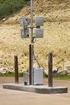 Military Usage of Passive RFID The Initiative The DoD, which is larger than most of the world s businesses, has an annual budget of almost US$343 billion with logistics accounting for nearly one third
Tracking metal parts with passive UHF RFID. April 2007
 Tracking metal parts with passive UHF RFID April 2007 Confidex in brief Focused in wireless identification, especially on industrial RFID tags on 13,56MHz (HF) and 865-952 MHz (UHF) Main business areas
Radio Frequency Identification (RFID) An Overview
 Radio Frequency Identification (RFID) An Overview How RFID Is Changing the Business Environment Today Radio frequency identification (RFID) technology has been in use for several decades to track and identify
How To Combine Active And Passive Rdi For A More Complete Solution
 Evigia RFID Technology Overview: Introduction to Active and Passive RFID Technologies Active RFID and Passive RFID technologies, while often considered and evaluated together, are fundamentally distinct
On the Security of RFID
 On the Security of RFID Hung-Min Sun Information Security Lab. Department of Computer Science National Tsing Hua University slide 1 What is RFID? Radio-Frequency Identification Tag Reference http://glossary.ippaper.com
RFID Penetration Tests when the truth is stranger than fiction
 RFID Penetration Tests when the truth is stranger than fiction Dr. Tomáš Rosa, [email protected] Raiffeisenbank, a.s. Agenda Technology overview Physical layer of LF and HF bands The Unique ID phenomenon
RFID TECHNOLOGY: A PARADIGM SHIFT IN BUSINESS PROCESSES. Alp ÜSTÜNDAĞ. Istanbul Technical University Industrial Engineering Department
 RFID TECHNOLOGY: A PARADIGM SHIFT IN BUSINESS PROCESSES Alp ÜSTÜNDAĞ Istanbul Technical University Industrial Engineering Department ABSTRACT: Radio Frequency Identification (RFID) is fast becoming an
Wireless Medical Devices
 ITU WORKSHOP on SHORT RANGE DEVICES (SRDs) AND ULTRA WIDE BAND (UWB) (Geneva, 3 June 2014*) Wireless Medical Devices Fatih Mehmet Yurdal On behalf of ETSI TG30 Wireless Medical Devices International Telecommunication
Electronic Communications Committee (ECC) within the European Conference of Postal and Telecommunications Administrations (CEPT)
 Electronic Communications Committee (ECC) within the European Conference of Postal and Telecommunications Administrations (CEPT) COMPATIBILITY BETWEEN INDUCTIVE LF AND HF RFID TRANSPONDER AND OTHER RADIO
EMC Standards: Standards of good EMC engineering
 Electromagnetic Compatibility (EMC) IEEE Definition Origin, control, and measurement of electromagnetic effects on electronic and biologic systems. IEEE EMC Society Areas of Interest EMC Standards: Standards
Omni-iD white paper the technology of On-metal rfid
 Omni-ID white paper The Technology of On-Metal RFID September 2009 What Is RFID? Radio Frequency Identification, or RFID, is a method of communicating using radio waves. Just as radio signals can travel
ANYTIME ANYPLACE-REMOTE MONITORING OF STUDENTS ATTENDANCE BASED ON RFID AND GSM NETWORK
 ANYTIME ANYPLACE-REMOTE MONITORING OF STUDENTS ATTENDANCE BASED ON RFID AND GSM NETWORK Mr.C.S.Karthikeyan 1 S.Murugeswari 2 Assistant professor, Dept. of ECE, Kamaraj College of Engineering and Technology,
Evolving Bar Codes. Y398 Internship. William Holmes
 Evolving Bar Codes Y398 Internship By William Holmes Table of contents Introduction: What is RFID? Types of Tags: Advantages of Tags: RFID applications Conclusion: Introduction: Bar codes have evolved
AN2866 Application note
 Application note How to design a 13.56 MHz customized tag antenna Introduction RFID (radio-frequency identification) tags extract all of their power from the reader s field. The tags and reader s antennas
communication over wireless link handling mobile user who changes point of attachment to network
 Wireless Networks Background: # wireless (mobile) phone subscribers now exceeds # wired phone subscribers! computer nets: laptops, palmtops, PDAs, Internet-enabled phone promise anytime untethered Internet
RF Attendance System Framework for Faculties of Higher Education
 RF Attendance System Framework for Faculties of Higher Education Ms. Unnati A. Patel 1 Dr. Swaminarayan Priya R 2 1 Asst. Professor, M.Sc(IT) Department, ISTAR, V.V.Nagar-388120, India 2 Head & ProfessorHH,
If you are interested in Radio Frequency Identification technology, then this is the best investment that you can make today!
 If you are interested in Radio Frequency Identification technology, then this is the best investment that you can make today! Here s Here's a training course on on RFID technology, with which CERTIFICATION
AAS. Automatic Attendance System. Grant Hornback, Alex Babu, Bobby Martin, Ben Zoghi, Madhav Pappu, Rohit Singhal
 AAS Automatic Attendance System Grant Hornback, Alex Babu, Bobby Martin, Ben Zoghi, Madhav Pappu, Rohit Singhal Abstract Due to the easy availability of almost all information on the internet these days,
DT3: RF On/Off Remote Control Technology. Rodney Singleton Joe Larsen Luis Garcia Rafael Ocampo Mike Moulton Eric Hatch
 DT3: RF On/Off Remote Control Technology Rodney Singleton Joe Larsen Luis Garcia Rafael Ocampo Mike Moulton Eric Hatch Agenda Radio Frequency Overview Frequency Selection Signals Methods Modulation Methods
Strengthen RFID Tags Security Using New Data Structure
 International Journal of Control and Automation 51 Strengthen RFID Tags Security Using New Data Structure Yan Liang and Chunming Rong Department of Electrical Engineering and Computer Science, University
Application Note AN-00126
 Considerations for Operation within the 902-928MHz Band Application Note AN-00126 Introduction This application note is designed to give the reader a basic understanding of the legal and technical considerations
Analysis of Immunity by RF Wireless Communication Signals
 64 PIERS Proceedings, Guangzhou, China, August 25 28, 2014 Analysis of Immunity by RF Wireless Communication Signals Hongsik Keum 1, Jungyu Yang 2, and Heung-Gyoon Ryu 3 1 EletroMagneticwave Technology
TECHNOLOGY BRIEF. Business Benefits from Radio Frequency Identification (RFID)
 TECHNOLOGY BRIEF Business Benefits from Radio Frequency Identification (RFID) Executive summary Today the largest government and business enterprises in the world are developing plans to deploy electronic
EMC STANDARDS STANDARDS AND STANDARD MAKING BODIES. International. International Electrotechnical Commission (IEC) http://www.iec.
 EMC STANDARDS The EMC standards that a particular electronic product must meet depend on the product application (commercial or military) and the country in which the product is to be used. These EMC regulatory
Study of Logistics Warehouse Management System Based on RFID
 Advanced Materials Research Vol. 748 (2013) pp 1281-1284 Online available since 2013/Aug/30 at www.scientific.net (2013) Trans Tech Publications, Switzerland doi:10.4028/www.scientific.net/amr.748.1281
Part 1: Active and Passive RFID: Two Distinct, But Complementary, Technologies for Real-Time Supply Chain Visibility
 Part 1: Active and Passive RFID: Two Distinct, But Complementary, Technologies for Real-Time Supply Chain Visibility Active RFID and Passive RFID technologies, while often considered and evaluated together,
RFID current applications and potential economic benefits
 OECD ICCP Foresight Forum on RFID Applications and Public Policy Considerations RFID current applications and potential economic benefits Naji Najjar Director, IBM South West Europe IBM is involved in
MEASUREMENT AND ANALYSIS OF RF EME LEVELS FROM MOBILE TELEPHONE BASE STATIONS LOCATED AT LEICHHARDT, NSW
 AUSTRALIAN RADIATION PROTECTION AND NUCLEAR SAFETY AGENCY A R P N S A Lower Plenty Road YALLAMBIE VIC 3085 Phone 61 3 9433 2211 Fax 61 3 9432 1835 E-mail: [email protected] Web: www.arpansa.gov.au
a leap ahead in analog
 EMV Contactless Payment Systems based on AS3911 Overview and System Simulations Giuliano Manzi, PhD Mannheim, May 23 25, 2012 CST EUROPEAN USER CONFERENCE 2012 a leap ahead in analog OUTLINE AS3911 OVERVIEW
REAL TIME MONITORING AND TRACKING SYSTEM FOR AN ITEM USING THE RFID TECHNOLOGY
 Review of the Air Force Academy No 3 (30) 2015 REAL TIME MONITORING AND TRACKING SYSTEM FOR AN ITEM USING THE RFID TECHNOLOGY For the past few years, location systems have become a major studying field,
RF ID Security and Privacy
 RF ID Security and Privacy EJ Jung 11/15/10 What is RFID?! Radio-Frequency Identification Tag Antenna Chip How Does RFID Work? 02.3DFEX4.78AF51 EasyToll card #816 Radio signal (contactless) Range: from
RTLS 101 What It Is and Why You Need It
 RTLS 101 What It Is and Why You Need It RTLS 101 WHAT IT IS AND WHY YOU NEED IT In business, knowledge is power, and with it comes efficiency, productivity, safety, and profits. Real Time Locating Systems
Human Exposure Limits
 Human Exposure Limits Session 3 0 Version December 2014 Learning objectives In this session we will: Learn about the international exposure limits for workers and the public Learn about methods for assessing
ASSET TRACKING USING RFID SRAVANI.P(07241A12A7) DEEPTHI.B(07241A1262) SRUTHI.B(07241A12A3)
 ASSET TRACKING USING RFID BY SRAVANI.P(07241A12A7) DEEPTHI.B(07241A1262) SRUTHI.B(07241A12A3) OBJECTIVE Our main objective is to acquire an asset tracking system. This keeps track of all the assets you
RFID: Technologies and Application
 RFID: Technologies and Application Luigi Battezzati Ph.D. Visiting Professor di Operations al Politecnico di Milano Osservatorio sulle applicazioni del RFID del Politecnico di Milano Geneve, March, 16th
RFID in a nutshell. Colin Jervis, Director, Kinetic Consulting Ltd
 Colin Jervis, Director, Kinetic Consulting Ltd Enthusiasts in healthcare fields suggest that one day a tiny RFID (or radio-frequency identification) tag implanted under your skin could transmit your NHS
Table 1 Mixed-Signal Test course major topics. Mixed-signal Test and Measurement Concepts ENCT 351 What are Mixed-signal circuits
 Mixed-Signal Test Emphasis in Engineering Technology Rainer J. Fink, Jay Porter, Yong-Kyu Jung, B. Ben Zoghi Department of Engineering Technology and Industrial Distribution Texas A&M University College
Divvela.Santhosh Raghava Rao [1],Sreevardhan cheerla [2]
![Divvela.Santhosh Raghava Rao [1],Sreevardhan cheerla [2]](/thumbs/24/2385990.jpg "Divvela.Santhosh Raghava Rao [1],Sreevardhan cheerla [2]") Signal Strength Enhancement Using Cellular Repeater On Three Frequency Bands For Low Signal Coverage Areas (GSM900, GSM 1800/DCS, 3G) Divvela.Santhosh Raghava Rao [1],Sreevardhan cheerla [2] [1] B.tech
Signal Strength Enhancement Using Cellular Repeater On Three Frequency Bands For Low Signal Coverage Areas (GSM900, GSM 1800/DCS, 3G) Divvela.Santhosh Raghava Rao [1],Sreevardhan cheerla [2] [1] B.tech
Secure and Reliable Wireless Communications for Geological Repositories and Nuclear Facilities
 Session S14: Safeguards Needs at Geological Repositories and Encapsulation Facilities Secure and Reliable Wireless Communications for Geological Repositories and Nuclear Facilities Richard E. Twogood Dirac
Key Priorities for Sub-GHz Wireless Deployment
 Key Priorities for Sub-GHz Wireless Deployment Silicon Laboratories Inc., Austin, TX Introduction To build an advanced wireless system, most developers will end up choosing between two industrial, scientific
a GAO-05-551 GAO INFORMATON SECURITY Radio Frequency Identification Technology in the Federal Government Report to Congressional Requesters
 GAO United States Government Accountability Office Report to Congressional Requesters May 2005 INFORMATON SECURITY Radio Frequency Identification Technology in the Federal Government a GAO-05-551 Accountability
Regulations and Standards for Wireless Medical Applications
 Regulations and Standards for Wireless Medical Applications Salim A. Hanna Spectrum Engineering Branch, Industry Canada, 365 Laurier Ave. W., Ottawa, Ontario, Canada, K1A 0C8. ([email protected]) Abstract:
Understanding RFID (Radio Frequency Identification)
 25 Valleywood Drive, Unit 19, Markham, ON L3R 5L9 CANADA Phone: +1 905.513.8919 Fax: +1 905.513.7651 [email protected] / www.rfidcanada.com Understanding RFID (Radio Frequency Identification) (Passive
Energy Harvesting Powered Wireless Sensor Node and Asset Tracking Solutions in Random Vibration Environments
 White Paper Energy Harvesting Powered Wireless Sensor Node and Asset Tracking Solutions in Random Vibration Environments by Anurag Kasyap, Ph.D. April 2009 Copyright 2009 AdaptivEnergy LLC. All rights
NEW TECHNOLOGY. Figure 1. Simplified view of data transfer in low-frequency passive RFID tags (the tag is enlarged for clarity).
 RFID offers tantalizing benefits for supply chain management, inventory control, and many other applications. Find out whether your company could benefit. Ron Weinstein RFID: A Technical Overview and Its
Best Practices for the Use of RF-Enabled Technology in Identity Management. January 2007. Developed by: Smart Card Alliance Identity Council
 Best Practices for the Use of RF-Enabled Technology in Identity Management January 2007 Developed by: Smart Card Alliance Identity Council Best Practices for the Use of RF-Enabled Technology in Identity
RFID SECURITY. February 2008. The Government of the Hong Kong Special Administrative Region
 RFID SECURITY February 2008 The Government of the Hong Kong Special Administrative Region The contents of this document remain the property of, and may not be reproduced in whole or in part without the
VON BRAUN LABS. Issue #1 WE PROVIDE COMPLETE SOLUTIONS ULTRA LOW POWER STATE MACHINE SOLUTIONS VON BRAUN LABS. State Machine Technology
 VON BRAUN LABS WE PROVIDE COMPLETE SOLUTIONS WWW.VONBRAUNLABS.COM Issue #1 VON BRAUN LABS WE PROVIDE COMPLETE SOLUTIONS ULTRA LOW POWER STATE MACHINE SOLUTIONS State Machine Technology IoT Solutions Learn
Why Has the Development in RFID Technology Made Asset Management More Urgent?
 E-ISG Asset Intelligence, LLC Why Has the Development in RFID Technology Made Asset Management More Urgent? 3500 Boston Street Suite 316 Baltimore, MD 21224 Phone: 866.845.2416 Website: www.e-isg.com May,
Time & Access System An RFID based technology
 Time & Access System An RFID based technology OpenWorks TIME Technical Specification V1.0.2 M. I. Suhile Ahamed KCP Technologies Limited 2, Dr. P. V. Cherian Crescent, Egmore, Chennai - 600 008, INDIA.
K.Srinivasu Ravi 1, Seema Kalangi 2, Veeraiah Maddu 3
 REPLACING E- PASSPORT USING BIO-CHIP WITH UNIQUE IDENTIFICATION (ADHAAR ID) K.Srinivasu Ravi 1, Seema Kalangi 2, Veeraiah Maddu 3 1 Professor, ECM Department, KL University, A.P, India. 2 (I/II) M.TECH,
COMMUNICATIONS AND MULTIMEDIA ACT 1998 CLASS ASSIGNMENTS NO. 1 OF 2015
 COMMUNICATIONS AND MULTIMEDIA ACT 1998 CLASS ASSIGNMENTS NO. 1 OF 2015 IN exercise of the powers conferred by section 169 of the Communications and Multimedia Act 1998 [Act 588], the Commission issues
Data Transmission. Data Communications Model. CSE 3461 / 5461: Computer Networking & Internet Technologies. Presentation B
 CSE 3461 / 5461: Computer Networking & Internet Technologies Data Transmission Presentation B Kannan Srinivasan 08/30/2012 Data Communications Model Figure 1.2 Studying Assignment: 3.1-3.4, 4.1 Presentation
Overview of the Internet of Things {adapted based on Things in 2020 Roadmap for the Future by EU INFSO D.4 NETWORKED ENTERPRISE & RFID}
 Overview of the Internet of Things {adapted based on Things in 2020 Roadmap for the Future by EU INFSO D.4 NETWORKED ENTERPRISE & RFID} John Soldatos Associate Professor, Athens Information Technology
A Highly Efficient Power Management System for Charging Mobile Phones using RF Energy Harvesting
 A Highly Efficient Power Management System for Charging Mobile Phones using RF Energy Harvesting Ajay Sivaramakrishnan, Kailarajan Jeyaprakash Jegadishkumar 2 B.E Electronics & Communication, II year,
Understanding Range for RF Devices
 Understanding Range for RF Devices October 2012 White Paper Understanding how environmental factors can affect range is one of the key aspects to deploying a radio frequency (RF) solution. This paper will
RFID AND YOUR PRIVACY Myths and Facts
 RFID AND YOUR PRIVACY Myths and Facts EXECUTIVE SUMMARY Businesses and consumers today are asking, Does radio frequency identification (RFID) invade the public s right to privacy? With any emerging technology,
mm-wave System-On-Chip & System-in-Package Design for 122 GHz Radar Sensors
 mm-wave System-On-Chip & System-in-Package Design for 122 GHz Radar Sensors 12th International Symposium on RF MEMS and RF Microsystems Athens, Greece J. C. Scheytt 1, Y. Sun 1, S. Beer 2, T. Zwick 2,
An Introductory and Elementary Study on RFID & Its Applications
 An Introductory and Elementary Study on RFID & Its Applications Priyashree Baghel M.Tech Scholar, Electronics & Communication Department, Bhabha Engineering & Research Institute, RGPV, Bhopal, India Abstract