
Blood and Marrow Stem Cell Transplantation LEUKEMIA LYMPHOMA MYELOMA
|
|
|
- Cory Carson
- 10 years ago
- Views:
Transcription
1 Blood and Marrow Stem Cell Transplantation LEUKEMIA LYMPHOMA MYELOMA
2 Table of Contents Introduction 1 Here to Help 2 Normal Blood and Marrow 4 Overview and Types of Stem Cell Transplantation 6 Stem Cell Transplantation and 10 Cancers of the Blood and Marrow Stem Cell Collection for Transplantation 17 Autologous Stem Cell Transplantation 22 Standard and Reduced-Intensity 24 Allogeneic Stem Cell Transplantation Side Effects of Conditioning Treatment 28 for Stem Cell Transplantation Graft-Versus-Host Disease 31 Posttransplantation 34 Research and Clinical Trials 36 Medical Terms 37 More Information 50 This publication is designed to provide accurate and authoritative information about the subject matter covered. It is distributed as a public service by The Leukemia & Lymphoma Society (LLS), with the understanding that LLS is not engaged in rendering medical or other professional services.

3 Introduction A stem cell transplant is a procedure that replaces unhealthy blood-forming cells with healthy ones. This booklet provides information about blood and marrow stem cell transplantation for the treatment of blood cancers (leukemia, lymphoma, myeloma, myelodysplastic syndromes and myeloproliferative neoplasms). Stem cell transplantation procedures continue to be improved, making transplantation a treatment option for more patients. Certain other marrow disorders are also treated with transplantation, and many of the principles are the same as those described in this booklet. Blood and Marrow Stem Cell Transplantation includes definitions of medical terms. Some of the terms used in this booklet are synonyms for other terms used by healthcare professionals. Check with your doctor if you have questions about how the terms used in this booklet apply to you. page 1

4 Here to Help Good doctor-patient communication can make a difference in treatment outcomes and quality of life. This booklet will help you to talk to your doctor about stem cell transplantation. We encourage you to take the lead in asking questions and conveying your concerns. This will give members of your healthcare team the opportunity to answer your questions, extend emotional support and provide any needed referrals. Having a stem cell transplant will affect your daily life for a time. You may want to ask friends or family members to help you Get information Take care of chores. LLS Has Ways to Help. We offer free information and free services for individuals and families touched by blood cancers. Information Specialists. Our Information Specialists are master s level professionals. They provide up-to-date blood cancer information. You can call to speak with an Information Specialist Monday through Friday, 9 a.m. to 6 p.m. ET at (800) You can also [email protected] or visit our website, Chapter Programs and Services. LLS chapter offices around the United States and Canada offer support and education. Your chapter has local support groups and education programs; a First Connection program to put you in touch with a blood cancer survivor; and a Patient Financial Aid program, which offers a limited amount of financial aid for qualified patients. Find your local chapter by calling (800) or by visiting Clinical Trials. Our Information Specialists help patients work with their doctors to find out about specific clinical trials. You can also use TrialCheck, an online clinical trial search service supported by LLS that offers patients and caregivers immediate access to listings of blood cancer clinical trials. Education Programs. LLS provides free telephone and web programs by blood cancer experts for patients and caregivers. Contact our Information Specialists or visit for more information. Free Materials and Información en Español. LLS has free education and support booklets for patients in both English and Spanish. You can read these online or print them from our website. Free print versions can be ordered at or by contacting an Information Specialist at (800) page 2

5 Language Services. Free language interpretation services are available for calls with our Information Specialists. The Trish Greene Back to School Program for Children With Cancer. This program helps doctors, nurses, parents and school personnel work together for a smooth return to school for children with cancer. For more information contact your local LLS chapter or contact our Information Specialists at (800) Reach Out. You and your loved ones can reach out to others for support. For example: LLS offers online Blood Cancer Discussion Boards at Local or Internet support groups and blogs can give support. You may get to know other people living with cancer. These friendships provide support. Suggestions From People Living With Cancer Get information about choosing a cancer specialist or treatment center. Talk with family and friends about how you feel and how they can help you. Find out what your insurance covers. Find out what financial assistance is available. Talk openly with the doctor about your fears or concerns. Tell your doctor if you have any side effects of treatment. Contact your doctor if you have fatigue, fever, pain or sleep problems. Get medical advice if you experience changes in mood or feelings of sadness or depression. We d Like to Hear From You. We hope this booklet helps you. Please tell us what you think at Click on LLS Disease & Treatment Publications Survey for Patients, Family and Friends. page 3

6 Normal Blood and Marrow Blood is composed of cells suspended in a fluid called plasma. The plasma is made up largely of water in which many chemicals are dissolved. The chemicals include Proteins (such as albumin and blood-clotting proteins made in the liver, and erythropoietin, which is made in the kidneys) Hormones (such as thyroid hormone and cortisol) Minerals (such as iron and magnesium) Vitamins (such as folate and vitamin B 12 ) Electrolytes (such as calcium, potassium and sodium) Antibodies, which are made by cells in the plasma. The cells suspended in plasma include the following: Red cells, which make up a little less than half the volume of the blood. They are filled with hemoglobin, a protein that picks up oxygen in the lungs and delivers it to the cells all around the body; hemoglobin also picks up carbon dioxide from the body s cells and delivers it back to the lungs, where it is removed when we breathe out. Platelets, which are small cells (one-tenth the size of red cells) that help stop bleeding at the site of an injury in the body. For example, when a person has a cut, the vessels that carry blood are torn open. Platelets stick to the torn surface of the vessel, clump together and plug up the bleeding site with the help of blood-clotting proteins such as fibrin and electrolytes such as calcium. Later, a firm clot forms. The vessel wall then heals at the site of the clot and returns to its normal state. The platelets also release growth factors that stimulate wound repair and new blood vessel formation. Neutrophils and monocytes, which are types of white cells. They are called phagocytes (eating cells) because they can ingest and kill bacteria or fungi. Unlike red cells and platelets, phagocytes can leave the blood and enter the tissues, where they can attack invading organisms and help combat infection. Other types of white cells are eosinophils and basophils, which respond to allergens or parasites, and lymphocytes. Most lymphocytes are found in the lymph nodes, the spleen and the lymphatic channels, but some enter the blood. There are three major types of lymphocytes: T lymphocytes (T cells), B lymphocytes (B cells) and natural killer (NK) cells. White cells are part of the body s immune system. page 4
7 Marrow is a tissue (sometimes described as spongy or crunchy ) where blood cell development takes place. It occupies the central cavity of bones. In newborns, all bones have active marrow. By the time a person reaches young adulthood, the bones of the hands, feet, arms and legs no longer have functioning marrow. The spine (vertebrae), hip and shoulder bones, ribs, breastbone and skull contain the marrow that makes blood cells in adults. The process of blood cell formation is called hematopoiesis. A small group of cells, the stem cells, develop into all the blood cells in the marrow by a process called differentiation (see Figure 1, below). Blood Cell & Lymphocyte Development Stem Cells Multipotential Hematopoietic Cells Differentiate & mature into six types of blood cells Multipotential Lymphocytic Cells Differentiate & mature into three types of lymphocytes Red Cells Neutrophils Eosinophils Basophils Monocytes Platelets T Lymphocytes B Lymphocytes Natural Killer Cells Figure 1. Stem cells develop into blood cells (hematopoiesis) and lymphocytic cells. In healthy individuals, there are enough stem cells to keep producing new blood cells continuously. Blood passes through the marrow and picks up the fully developed and functional red and white cells and platelets for circulation throughout the body. Some stem cells enter the blood and circulate. They are present in such small numbers that they cannot be counted or identified by standard blood count tests. Their presence in the blood is important because they can be collected by a special technique. There are methods to induce more stem cells to leave their home in the marrow and circulate in the blood so that more stem cells can be collected. If enough stem cells are harvested from a compatible donor, they can be transplanted into a recipient. Stem cell circulation, from marrow to blood and back, also occurs in the fetus. After birth, placental and umbilical cord blood can be collected, stored and used as a source of stem cells for transplantation. page 5

8 Overview and Types of Stem Cell Transplantation Stem cell transplantation is a technique that can restore marrow function for patients who have had severe marrow injury or abnormalities of the immune system. Marrow injury can occur because of primary marrow failure, destruction or replacement of marrow by disease, or intensive chemical or radiation exposure. Fast Facts About Stem Cell Transplantation Since blood and marrow are both good sources of stem cells for transplantation, the term stem cell transplantation has replaced bone marrow transplantation as the general term for this procedure. The abbreviation BMT is now used to represent blood and marrow transplantation. Today, the stem cells used for transplantation can come from marrow, peripheral blood or umbilical cord blood. Peripheral blood is now the most common source of stem cells for transplantation. The use of cord blood stem cells for transplantation is about two decades old. Compared to peripheral blood or marrow, cord blood is a relatively new source of cells, especially for adults. Reduced-intensity allogeneic stem cell transplantation is a newer transplant option for certain patients who have a stem cell donor. Compared to a fully myeloablative allogeneic transplant (referred to as a standard allogeneic transplant throughout this booklet), a reduced-intensity transplant delivers lower doses of chemotherapy drugs and/or radiation to the patient in preparation for the transplant. The success of reducedintensity transplantation is a result of the graft-versus-tumor effect of the donor stem cells, rather than of high doses of chemotherapy. This approach may benefit older and sicker patients and other selected patients. Attempts to use the marrow cells of a healthy individual to restore the lost marrow function of another person began about 65 years ago. The basis for stem cell transplantation is that all blood cells and immune cells arise from stem cells in marrow. At the turn of the 20th century, scientists began to formulate the idea that a small number of cells in the marrow might be responsible for the development of all blood cells. They began to refer to them as stem cells. The scientific exploration of marrow transplantation as a form of treatment began at the end of World War II. page 6

9 The source for the earliest transplants was the marrow of a healthy donor who had the same tissue (human leukocyte antigen [HLA]) type as the patient. Usually, the source was a brother or sister. Today donor programs are in place to identify an unrelated donor who has a tissue type that matches the patient s. This approach requires screening tens of thousands of people in order to find a suitable donor, and such donor registries now contain typing on millions of volunteers. Autologous Stem Cell Transplantation. This type of transplant involves the use of a patient s own stem cells. The stem cells are collected from marrow or blood, then frozen. The thawed cells are returned to the patient after he or she has received intensive chemotherapy and/or radiation therapy for his or her underlying disease. Autologous transplantation requires that an individual have sufficient numbers of healthy stem cells in the marrow or blood. For example, in patients with acute leukemia, remission must be achieved before the patient s marrow or blood is harvested and frozen for later use (see page 23). This technique is also referred to as autologous stem cell infusion, because stem cells are not being transferred from one person to another. Since the stem cells are the recipient s own, graft-versus-host disease (GVHD) is not a problem. However, the immune system does require time to recover after the procedure. Standard Allogeneic Stem Cell Transplantation. This type of transplant involves the use of donor stem cells. The donated stem cells can come from a related or unrelated donor. Siblings have the potential to match the patient most closely, because the patient and the donor received their genes from the same parents. However, siblings do not always have closely matched tissue types. The term matched unrelated donor (MUD) is sometimes used to describe a donor who is not a blood relative. MUDs are found by searching registries of volunteer donors for an individual who happens to be identical or very similar in tissue type to the patient. Transplant doctors can test to determine the degree of compatibility before a decision is made to use a particular donor. Compatibility is assessed by laboratory tests that identify the tissue type of donor and recipient. Stem cells from cord blood may also be a source for allogeneic transplants for certain patients (see page 19). When a transplant is successful, the donor stem cells can restore normal marrow function. The immune system and the blood system are closely linked and cannot be separated from each other. Because of this, allogeneic transplantation means that not only the blood system but also the immune system of the donor is transferred to the recipient. As a result, these effects are possible: page 7

10 Immune rejection of the donated stem cells by the recipient (host-versusgraft effect) Immune reaction by the donor cells against the tissues of the recipient [Graft-Versus-Host Disease (GVHD)]. Before a standard allogeneic transplant, patients receive high doses of chemotherapy and sometimes radiation therapy. This treatment is called a conditioning regimen. The preparative regimen destroys the cancer cells. It also destroys the patient s immune system; therefore, the immune system cannot attack the transplanted donor stem cells. The immune reaction, or GVHD, is treated by giving drugs to the recipient after the transplant to reduce the ability of the donated immune cells to attack and injure the patient s tissues (see Graft-Versus-Host Disease, page 31). Reduced-Intensity Allogeneic Stem Cell Transplantation. This type of transplant involves using less-intense conditioning treatment to prepare for the transplant compared to a standard allogeneic transplant. With a standard allogeneic transplant, the pretransplant treatment destroys most of the cancer cells. However, a reduced-intensity allogeneic transplant relies on the donor immune cells to fight the disease. Reduced-intensity allogeneic transplants (sometimes called nonmyeloablative transplants ) may be an option for certain patients who are older, who have major organ complications or are otherwise not healthy or strong enough to undergo standard allogeneic transplantation. However, reduced-intensity allogeneic transplants do carry many of the same risks as standard allogeneic transplants. Research study results to date indicate that reduced-intensity allogeneic transplants are more effective as a treatment for some types and/or stages of blood cancer. Research indicates that reduced-intensity allogeneic transplants may be effective in treating certain patients with chronic myeloid (myelogenous) leukemia (CML), acute myeloid leukemia (AML), non-hodgkin lymphoma (NHL) or myeloma. Your doctor will discuss whether a reducedintensity allogeneic transplant is an option for you. The preparative regimen for a reduced-intensity allogeneic transplant does not destroy many cancer cells. However, it suppresses or weakens the patient s immune system so that it cannot attack the donor cells. The cells for a reducedintensity transplant can come from a family member, an unrelated donor or, less often, a cord blood unit. The donor cells grow a new immune system and the new immune cells destroy the cancer cells. The donor cells are called the graft. When the donor cells attack the diseased cells, it is called the graftversus-tumor (GVT) effect. page 8
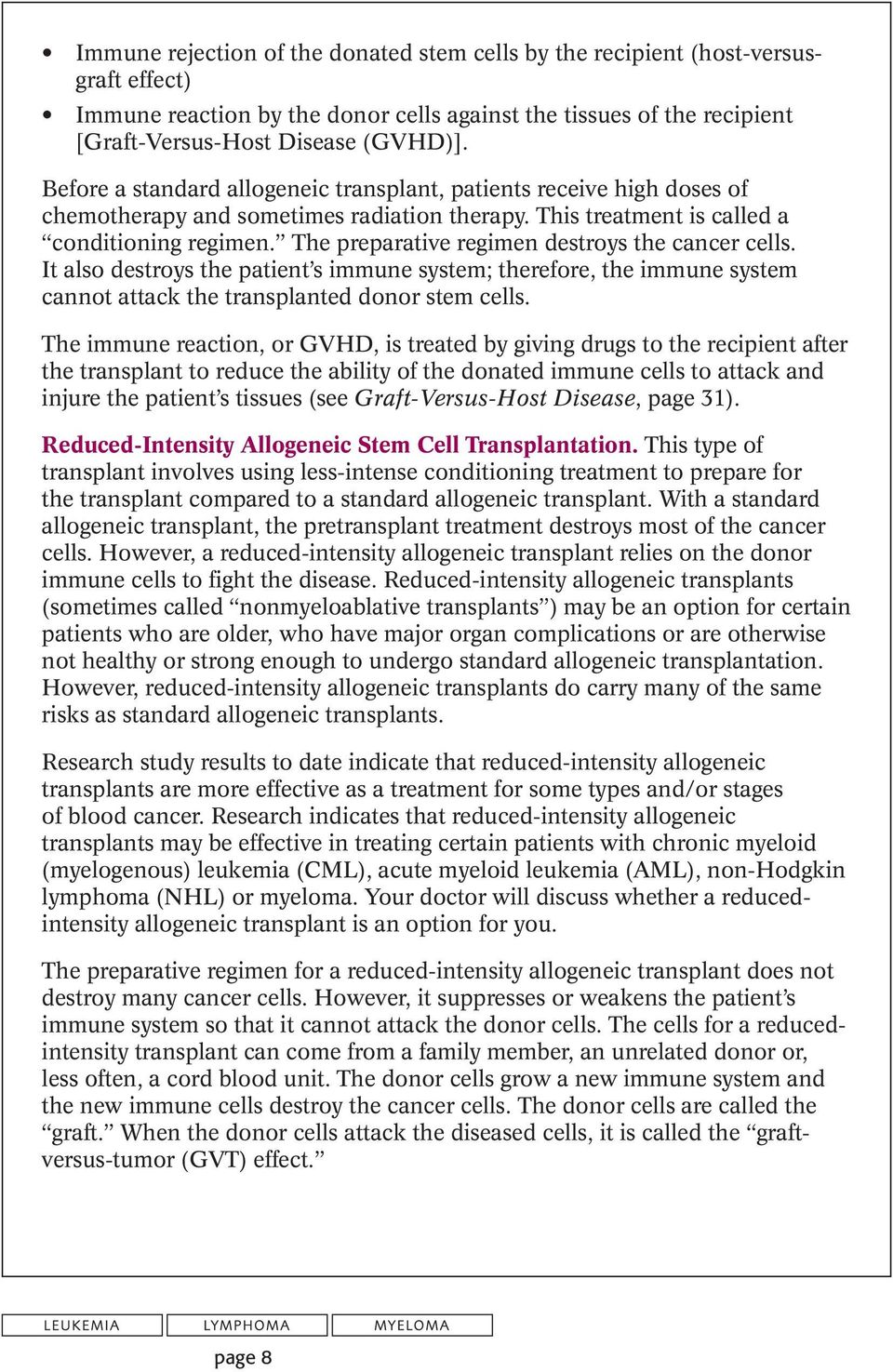
11 Syngeneic Stem Cell Transplantation. This term is used to describe an allogeneic transplant when the donor and recipient are twins with identical genetic makeup and the same tissue type. With this kind of transplantation, donor cells are not rejected and the recipient s tissues are not attacked by the donor s immune cells. No treatments are needed to prevent graft rejection or GVHD. However, no beneficial GVT effect is expected, either. The procedure continues to be improved, making it a treatment option for more patients each year. The estimated number of stem cell transplants for 2006 in North America, by blood cancer type, is shown in Table 1, below. Table 1. Estimated Number of Stem Cell Transplants in North America, by Blood Cancer Type, in 2006 Blood Cancer Type Allogeneic Autologous Stem Cell Stem Cell Transplants Transplants Myeloma 280 4,750 Acute myeloid leukemia 2, Acute lymphocytic leukemia 1, Chronic myeloid leukemia Non-Hodgkin lymphoma 740 3,370 Hodgkin lymphoma 70 1,400 Myelodysplastic syndromes/ Myeloproliferative diseases Other types of leukemia Total 5,830 9,970 Between 1970, when the National Marrow Donor Program (NMDP) transplant registry began tracking data, and today, the number of blood cancer patients successfully transplanted has increased from hundreds to thousands each year. In North America, an estimated 5,830 people had allogeneic stem cell transplants and an estimated 9,970 people had autologous stem cell transplants for blood cancers in 2006 (the most current data available). The data in this table are presented with permission from The Center for International Blood and Marrow Transplant Research. These data are preliminary and the analysis has not been reviewed or approved by the Advisory or Scientific Committees of the CIBMTR. page 9
12 Stem Cell Transplantation and Cancers of the Blood and Marrow Transplant doctors use stem cell transplantation so that they can give large doses of chemotherapy or radiation therapy to increase the chance of eliminating disease in the marrow and then restoring normal blood cell production. The infusion of a sufficient number of stem cells from a closely matched donor, whether a sibling or unrelated donor, will begin to restore marrow function and blood cell production and allow recovery from the intensive treatment. After several decades of research, discovery and clinical trials, allogeneic stem cell transplantation can now be used successfully to cure some patients who are at high risk of relapse, who do not respond fully to treatment, or who relapse after prior successful treatment. Autologous stem cells (obtained from the patient s own blood or marrow) can also be used in some circumstances. A critical benefit of allogeneic transplantation is the generation of a graft-versustumor (GVT) effect that may be even more important than the very intensive therapy administered to destroy cancer cells. This effect is a result of the donor s immune system recognizing the patient s cancer cells and eliminating them. Unfortunately, despite appropriate tissue matching, similar donor cells may also react against the patient s normal cells and generate a serious condition called graft-versus-host disease (GVHD). The use of autologous stem cells has neither the drawbacks of GVHD nor the advantages of a GVT effect. Patients with leukemia, lymphoma, myeloma, myelodysplastic syndromes or idiopathic myelofibrosis, with disease that does not respond to standard therapy, may be treated with very intensive chemotherapy and/or radiation therapy, which requires complementary allogeneic transplantation or autologous stem cell infusion (autologous transplantation). The decision to use this treatment approach takes into account The patient s age, general health and medical condition The likelihood that the disease will respond to the conditioning regimen The availability of an HLA-matched donor or the ability to use the patient s own stem cells. Two key questions that should be answered when considering a transplant for a patient in remission are: Does the current medical evidence indicate that stem cell transplantation will be more likely to cure the disease than other forms of therapy? Is there an appropriate stem cell donor available? page 10

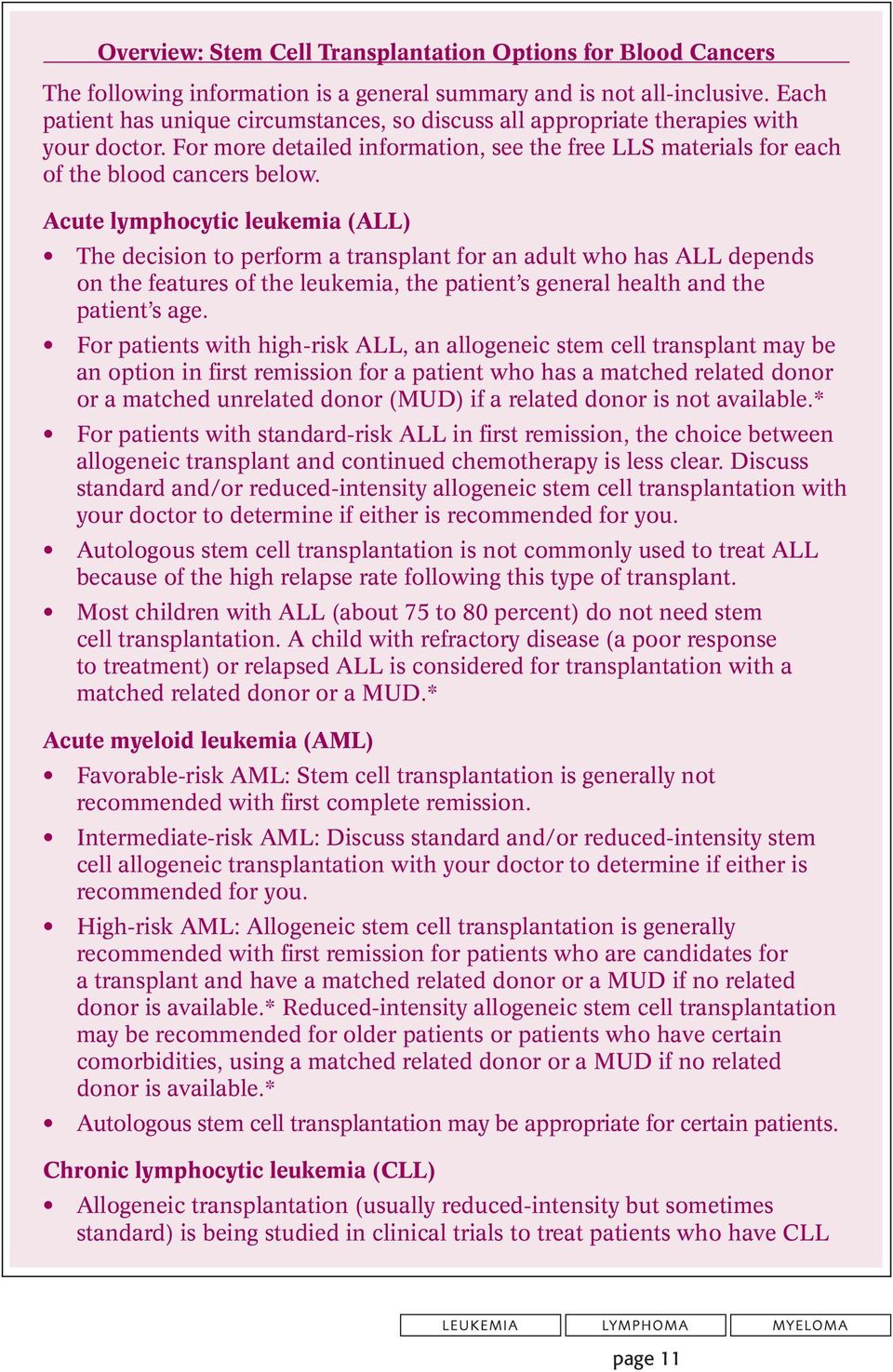
13 Overview: Stem Cell Transplantation Options for Blood Cancers The following information is a general summary and is not all-inclusive. Each patient has unique circumstances, so discuss all appropriate therapies with your doctor. For more detailed information, see the free LLS materials for each of the blood cancers below. Acute lymphocytic leukemia (ALL) The decision to perform a transplant for an adult who has ALL depends on the features of the leukemia, the patient s general health and the patient s age. For patients with high-risk ALL, an allogeneic stem cell transplant may be an option in first remission for a patient who has a matched related donor or a matched unrelated donor (MUD) if a related donor is not available.* For patients with standard-risk ALL in first remission, the choice between allogeneic transplant and continued chemotherapy is less clear. Discuss standard and/or reduced-intensity allogeneic stem cell transplantation with your doctor to determine if either is recommended for you. Autologous stem cell transplantation is not commonly used to treat ALL because of the high relapse rate following this type of transplant. Most children with ALL (about 75 to 80 percent) do not need stem cell transplantation. A child with refractory disease (a poor response to treatment) or relapsed ALL is considered for transplantation with a matched related donor or a MUD.* Acute myeloid leukemia (AML) Favorable-risk AML: Stem cell transplantation is generally not recommended with first complete remission. Intermediate-risk AML: Discuss standard and/or reduced-intensity stem cell allogeneic transplantation with your doctor to determine if either is recommended for you. High-risk AML: Allogeneic stem cell transplantation is generally recommended with first remission for patients who are candidates for a transplant and have a matched related donor or a MUD if no related donor is available.* Reduced-intensity allogeneic stem cell transplantation may be recommended for older patients or patients who have certain comorbidities, using a matched related donor or a MUD if no related donor is available.* Autologous stem cell transplantation may be appropriate for certain patients. Chronic lymphocytic leukemia (CLL) Allogeneic transplantation (usually reduced-intensity but sometimes standard) is being studied in clinical trials to treat patients who have CLL page 11
14 with certain high-risk features and a matched related donor or a MUD if no related donor is available.* Chronic myeloid leukemia (CML) Oral CML therapies are generally used to treat newly diagnosed CML patients. In cases of advanced or refractory disease (a poor response to treatment), standard allogeneic stem cell transplantation (or reduced-intensity allogeneic stem cell transplantation) may be recommended for patients who have a matched related donor or a MUD if no related donor is available.* Hodgkin lymphoma (HL) Autologous stem cell transplantation is used to treat HL patients in first relapse. Standard and reduced-intensity stem cell allogeneic transplantation are under study in clinical trials to treat HL patients who have a matched related donor or a MUD if no related donor is available.* Non-Hodgkin lymphoma (NHL) Autologous stem cell transplantation is generally used to treat patients who have relapsed or refractory disease; transplantation in first remission is only done in clinical trials with some exceptions for example, in certain cases of mantle cell lymphoma. Allogeneic transplantation is used to treat selected patients who have NHL. Ask your doctor about the specific recommendations for your subtype of NHL. Myelodysplastic syndromes (MDS) A standard allogeneic stem cell transplant (or a reduced-intensity allogeneic stem cell transplant for older or other selected patients) may be recommended for people who have intermediate- or high-risk MDS and a matched related donor or a MUD if no related donor is available.* Autologous stem cell transplants are used infrequently. Myeloma Autologous stem cell transplantation is an important part of treatment for certain myeloma patients. Allogeneic stem cell transplantation is not a common treatment for myeloma patients but may be used for selected younger patients who have a matched related donor or a MUD if no related donor is available.* page 12

15 Reduced-intensity allogeneic stem cell transplantation is used in some cases following autologous stem cell transplantation, for patients who have a matched related donor or a MUD if no related donor is available.* Myeloproliferative diseases (MPDs) Myelofibrosis: A standard allogeneic transplant (or a reduced-intensity allogeneic stem cell transplant for older patients or patients who have certain comorbidities) may be recommended for certain patients who have a matched related donor or a MUD if no related donor is available.* Polycythemia vera and essential thrombocythemia: Allogeneic stem cell transplantation and reduced-intensity allogeneic stem cell transplantation are being studied in clinical trials for certain patients who have a matched related donor or a MUD if no related donor is available.* *Cord blood stem cells may also be a source for the graft. Age and Transplantation. About three-quarters of people who develop a blood cancer are more than 50 years old. In general, older individuals are more likely to Have complicating medical problems Develop GVHD Have decreased tolerance for the cumulative effects of the intensive chemotherapy and for radiation treatments needed before the transplant. However, these are generalizations. Myeloablative allogeneic stem cell transplantation, reduced-intensity allogeneic stem cell transplantation and autologous stem cell transplantation are procedures that can be used in older people when medically appropriate. Whether or not a patient is a candidate for transplantation is determined by medical indications (and for allogeneic transplants, the availability of a donor). There is no specific age cutoff for stem cell transplantation. The risks of stem cell transplantation have decreased with each decade. Ongoing research is likely to continue to improve the risk-versus-benefit ratio in favor of transplantation. On the other hand, for some diseases and patients, effective new drugs and new types of therapies may lessen the potential benefits (as compared to the risk) of transplantation. Timing of Transplantation and Tissue Typing. The points at which transplant options are considered during an individual s disease course vary. Transplantation is recommended for some patients in first remission. For others, it is recommended later on in the course of treatment for relapsed or refractory disease. This calculation may depend on the response of the underlying disease to initial therapy and to other factors discussed in the previous section. If allogeneic transplantation is a page 13

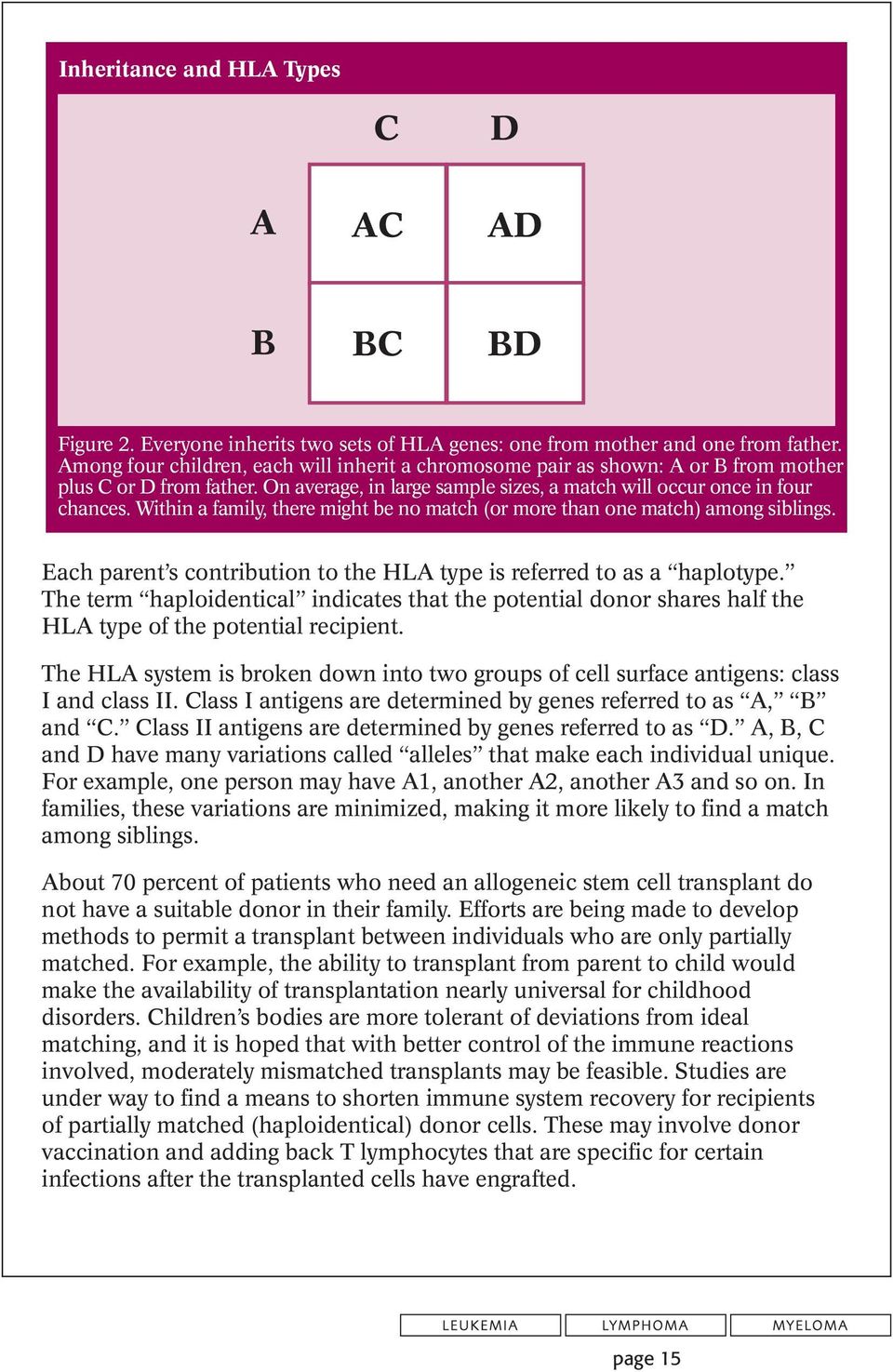
16 consideration, it is best to have the patient s tissue typing (HLA typing) done early in the disease course. The patient s siblings should have tissue typing. If the patient does not have a sibling match, then decisions about whether to enter the patient s tissue typing into unrelated donor registries can be made. It is a good idea to do this to determine whether suitable unrelated donor matches or cord blood matches will be available if needed. Note that HLA tissue typing is different from the red blood cell typing used to determine blood transfusion compatibility. Fast Facts About HLA Tissue Typing Leukocytes (white cells) have specific proteins on their surfaces that can be detected in a blood sample. The immune reactions that occur when individuals receive a stem cell transplant are largely governed by the patient s and the donor s human leukocyte antigens; these antigens are cell surface proteins. In general, human cells have 46 chromosomes: a pair of each chromosome numbered from 1 to 22 plus two sex chromosomes (either XX in a female or XY in a male). A person s HLA type is governed by genes on chromosome 6. Testing of potential donors involves obtaining either a blood sample (usually three to four tubes of blood) or a scraping from the cheek inside the mouth (buccal scraping). Both samples yield enough cells for typing at protein and DNA levels. Collection of cells from sibling or related donors is usually performed at the recipient s transplant center. For unrelated donors, the collection is usually performed close to the donor s home, after which the blood or marrow harvest product is transported by courier to the transplant center. Donors who do not live in the same area as the transplant center can have samples collected at a facility in their own locality and then shipped in appropriate kits to the transplant center. On average, a person has one chance in four of having the same HLA type as his or her sibling, but many patients will not have a sibling with the same tissue type (see Figure 2, page 15). Donor programs are in place to identify an unrelated donor who has a tissue type that matches the patient s. If you do not have a donor in your family, your doctor can contact the National Marrow Donor Program (NMDP). The NMDP registry lists more than 8 million potential donors and more than 100,000 cord blood units. Patients searching the NMDP registry also have access to an additional 5 million donors through its agreements with international cooperative registries. page 14

17 Inheritance and HLA Types C D A AC AD B BC BD Figure 2. Everyone inherits two sets of HLA genes: one from mother and one from father. Among four children, each will inherit a chromosome pair as shown: A or B from mother plus C or D from father. On average, in large sample sizes, a match will occur once in four chances. Within a family, there might be no match (or more than one match) among siblings. Each parent s contribution to the HLA type is referred to as a haplotype. The term haploidentical indicates that the potential donor shares half the HLA type of the potential recipient. The HLA system is broken down into two groups of cell surface antigens: class I and class II. Class I antigens are determined by genes referred to as A, B and C. Class II antigens are determined by genes referred to as D. A, B, C and D have many variations called alleles that make each individual unique. For example, one person may have A1, another A2, another A3 and so on. In families, these variations are minimized, making it more likely to find a match among siblings. About 70 percent of patients who need an allogeneic stem cell transplant do not have a suitable donor in their family. Efforts are being made to develop methods to permit a transplant between individuals who are only partially matched. For example, the ability to transplant from parent to child would make the availability of transplantation nearly universal for childhood disorders. Children s bodies are more tolerant of deviations from ideal matching, and it is hoped that with better control of the immune reactions involved, moderately mismatched transplants may be feasible. Studies are under way to find a means to shorten immune system recovery for recipients of partially matched (haploidentical) donor cells. These may involve donor vaccination and adding back T lymphocytes that are specific for certain infections after the transplanted cells have engrafted. page 15
18 Pretreatment (Conditioning). High-dose chemotherapy and/or radiation therapy prior to a stem cell transplant is necessary to Decrease the risk that the recipient s immune cells will reject the transplanted cells in patients who are having a standard allogeneic stem cell transplant Eliminate any disease that might remain at the time of the transplant in patients who have blood cancer Eliminate the disordered lymphocytes that are attacking the patient s developing blood cells, in certain cases involving marrow failure. Patients being prepared for a reduced-intensity allogeneic stem cell transplant receive lower dosages of chemotherapy drugs and/or radiation in preparation for the transplant, compared to the dosages given to patients receiving a standard allogeneic stem cell transplant. page 16

19 Stem Cell Collection for Transplantation Overview. Stem cells for transplantation can be collected from the blood or the marrow. The patient s doctor chooses the collection method that is best for the patient, and after the preferences and consent of the donor are obtained, arrangements can be finalized. The collection of peripheral blood stem cells (PBSCs) requires a nonsurgical procedure called apheresis, which allows harvesting of blood stem cells that have been released from the marrow into the bloodstream. Normally, only a small number of stem cells circulate in the blood. When PBSCs are collected from a person for a transplant, injections of medication are given to move more blood-forming stem cells from the marrow into the blood. The person s blood is then removed through a needle in one arm and passed through an apheresis machine. The machine separates out all the stem cells. The remaining blood is returned through the person s other arm. Stem cells are usually back to their normal levels soon after the procedure. The collection of stem cells from marrow is a minor surgical procedure. It is generally done in a hospital setting on an outpatient basis with anesthesia. Doctors use a needle to withdraw liquid marrow from the back of the pelvic bone. The marrow replaces itself completely very soon after the procedure, but because red cells are also removed, anemia may persist for a time; in some cases the anemia is successfully treated with iron supplementation. Before the stem cells are collected, the blood is tested for hepatitis viruses, human immunodeficiency virus (HIV) and other infectious agents. A test result that is positive for cytomegalovirus (CMV) or certain other viruses does not necessarily disqualify a person from being a donor. Also, a patient history is obtained and a physical examination is done to make sure the donation is safe. Blood. Peripheral blood (also called circulating blood ) is currently the most common source of stem cells for transplant. PBSCs are blood-forming stem cells released from the marrow into the blood. The use of PBSCs eliminates the need for general or spinal anesthesia when stem cells are collected from the marrow and the few days of discomfort at the sites where needles are inserted into the pelvic bone to obtain marrow stem cells. Stem Cell Mobilization. Normally, the marrow releases only a small number of stem cells into the blood. To obtain enough stem cells from the peripheral blood for a transplant, a donor is usually given a white cell growth factor, such as granulocyte-colony stimulating factor (G-CSF), to encourage more bloodforming stem cells to move from the marrow into the blood. page 17

20 In most cases, when a patient s own stem cells are used for the transplant, the stem cells are mobilized by a combination of the chemotherapy used to treat the underlying disease and G-CSF. In patients who have myeloma and non- Hodgkin lymphoma, the drug plerixafor (Mozobil ) may be used to mobilize autologous stem cells. Apheresis. The cells are collected from the blood using a process called apheresis. For apheresis, a needle is placed in the donor s vein, usually in the arm. The blood of the donor (or the patient, in the case of an autologous transplant) is circulated through an apheresis machine, which separates the blood into four components: red cells, plasma, white cells and platelets. The white cell fraction is collected because it contains the stem cells. The rest of the blood is returned to the donor (or patient). The number of stem cells that must be collected depends on the patient s weight and the disease for which the transplant is being performed. A marker on the cell surface called CD34 is used to determine the number of stem cells that have been collected. (CD is an abbreviation for cluster designation, a term used with a number to identify a specific molecule on the surface of an immune cell.) Stem cell collection is completed for an allogeneic transplant after one or two sessions of apheresis for the donor. In some cases, because of prior chemotherapy, autologous stem cell collections may require more than two apheresis sessions. In the unusual case where there is an inadequate autologous collection, the patient may undergo a marrow collection, or a subsequent reattempt at collection may be tried with the same or a different mobilization stimulus. Marrow. Before a donor gives marrow, he or she needs to have a thorough physical examination, including an electrocardiogram, chest x-ray, blood chemistry evaluation and confirmation that blood cell counts are within normal limits. The donor s blood is tested to ensure that hepatitis viruses and HIV are not present. Tests are run to identify other viruses that may be present. However, positive test results (a positive CMV test result, for example) do not necessarily disqualify a donor. Marrow donation is a surgical procedure and is performed in an operating room, using anesthesia. The transplant doctor uses a special hollow needle attached to a syringe to withdraw marrow from the top edge of the pelvic bone. This area can easily be felt under the skin of the sides and back just below the waist. The insertion of the needle through the skin and into the rim of the pelvic bone is repeated until several pints of marrow are removed. The donor usually remains in the hospital for about six to eight hours. During this time, the donor recovers from both the anesthesia and the acute pain at the needle insertion sites. The donor can typically expect to feel soreness in the lower page 18

21 back, which improves slowly, for a few weeks or longer. Most donors are back to their normal routine in a week. The donor s body regenerates the donated bone marrow quickly. The amount of marrow removed from the donor is related to the size of the recipient. A large adult requires more marrow cells for the transplanted stem cells to engraft than a small child does. The harvested marrow is passed through a series of filters to remove fragments of bone or tissue and then placed in a plastic bag from which it can be infused into the recipient s vein. It is usually administered to the recipient within a few hours and, in most cases, within less than 24 hours. If necessary, the harvested marrow cells can be frozen and stored for later use. The marrow can be frozen for years and remain suitable for stem cell transplantation. Freezing is commonplace in anticipation of autologous stem cell infusion. In this circumstance, the patient s own stem cells are collected during a period of disease remission following treatment. The stem cells are thawed and then returned to the patient after the intensive conditioning treatment has been given. Cord Blood. The blood in the umbilical cord and placenta contains stem cells. This blood can be collected after the baby is born; the collected blood is called a cord blood unit. During delivery, the focus is on the mother and baby. After the baby is delivered, the umbilical cord is clamped. The blood from the umbilical cord and placenta is collected before or after the placenta is delivered, depending upon the procedure at the hospital. Blood is collected into a sterile bag; this bag of blood is the cord blood unit. The collected blood is given an identification number and stored temporarily. The cord blood unit is transported to a cord blood bank for testing, freezing and long-term storage. Testing procedures include HLA typing to determine the level of matching to potential recipients, cell counts and testing for infectious agents such as the HIV, CMV and hepatitis viruses. The cord blood unit is checked to make sure it has enough blood-forming cells for a transplant. If there are too few cells, the cord blood unit may be used for research to improve the transplantation process for future patients, or it may be discarded. Next, the blood is frozen and stored at a very low temperature, usually in liquid nitrogen, for future use. When needed for a transplant, the cord blood unit can be shipped, often within a few days, to the transplant center, where it is thawed and infused into the patient. Some mothers elect to have their baby s cord blood stored privately. Such cord blood units are not available through the registries for general use. The number of cells required to give a transplant patient the best chance for engraftment and for surviving the transplant is based on his or her weight, age and disease status. A cord blood unit needs to have the correct number of stem cells based on the recipient s size. Due to the smaller number of stem cells in the cord blood unit, cord blood stem cell transplants engraft more slowly than page 19
22 stem cells from marrow or peripheral blood. Until engraftment occurs, patients are at risk of developing life-threatening infections. Cord blood transplants may require a lower level of matching between the donor and recipient. When compared to other transplants, these transplants using the less mature stem cells from cord blood seem to be associated with a decreased risk of GVHD. Also, research is under way to improve the yield of cord blood stem cells and to examine the use of more than one cord blood unit per transplant to see if this improves the time to engraftment. See the free LLS fact sheet Cord Blood Stem Cell Transplantation for more information. T-Lymphocyte Depletion. T lymphocytes in a donor s marrow or blood can cause GVHD. On the other hand, T lymphocytes are also beneficial. They help the donated stem cells take hold (engraft) and grow in the recipient s marrow. In some cases, T lymphocytes attack blood cancer cells, enhancing the results of other treatment. This is the graft-versus-tumor (GVT) effect and is seen mostly in the myeloid (myelogenous) leukemias. The attack on the remaining blood cancer cells makes it less likely that the disease will return after transplantation. A technique called T-lymphocyte depletion is under study. With this technique, the stem cells collected for the transplant are treated with agents to decrease the number of T lymphocytes that would be infused with the stem cells. The aim of using this technique is to reduce the incidence and severity of GVHD. However, T-lymphocyte depletion may result in increased rates of graft rejection, decreased GVT effect and slower immune recovery. For these reasons, T lymphocytes are depleted from the stem cell collection only in certain circumstances, and transplant doctors must be careful about how many T lymphocytes are removed when this technique is used. Stem Cell Selection. In some cases, the collected stem cells may be depleted of most T lymphocytes, as described in the previous section. Alternatively, a technique called stem cell selection may be used before the stem cells are administered to the recipient. This technique results in a marked decrease in the number of T lymphocytes that the patient receives. There are specific features on the outer coat of stem cells that permit them to be removed selectively from a mixture of cells. This selection technique results in a cell population that is enriched in stem cells and has many fewer other cells, including T lymphocytes. The aim of reducing the number of T lymphocytes is to reduce the frequency or severity of GVHD. This selection procedure is not routinely used but may be used in certain clinical trials. Transfusing the Stem Cells. The infusion of stem cells into the recipient s vein is similar to a blood transfusion. However, stem cell infusion is given through a central line into a large blood vessel. The same type of administration is used for marrow, PBSCs or cord blood stem cells. (Stem cell infusion is also referred to as stem cell transfusion. ) page 20
23 Most central lines are positioned on the chest wall. Placement is usually done with local anesthesia. To place the central line, a small incision is made where the catheter (tubing) enters the vein, and the opposite end of the catheter is passed under the skin and exits at a second small incision made at a distance from the first incision. This distance helps prevent infection. There may be a few stitches at one or both sites until the areas have healed. Small, clear dressings are changed frequently to prevent infection. The transfusion process consists of the following measures: The donor stem cells are collected in a plastic blood transfusion bag. If stem cells are from marrow, special filters are used to separate bone fragments, fatty particles, and large clusters of cells from the collected stem cells before the product is placed into the transfusion bag. This is done in the operating room. The product is then sent to a blood bank or cellprocessing laboratory where The number of cells is determined Either the red cells or the plasma (the fluid surrounding the cells) may need to be removed if the donor and recipient do not share the same red blood cell type. Infusing the stem cells usually takes several hours. Patients are checked frequently for signs of fever, chills, hives, a drop in blood pressure or shortness of breath. Side effects occasionally occur; these are treated and the infusion is completed. Often, patients experience no side effects from the infusion. Reactions from the cryopreservative in the stem cell collection that has been frozen and thawed may also occur in patients receiving this treatment. Side effects may include headache, nausea, flushing and shortness of breath. These problems can usually be managed and the infusion completed. page 21
24 Autologous Stem Cell Transplantation Autologous stem cells are used to restore blood cell production after intensive radiation and/or chemotherapy in the treatment of pediatric and adult patients, thereby making chemotherapy and radiation therapy tolerable. Autologous stem cell transplantation is used mainly to treat people who have a blood cancer diagnosis, but may be used to treat patients who have some other types of cancer. Autologous Transplantation Basics The infusion of autologous stem cells does not carry the risk of either graft rejection or graft-versus-host disease (GVHD). Autotransplantation does not require immunosuppressive treatment. However, the patient receives intensive cytotoxic therapy to kill residual blood cancer cells (see Figure 3, page 23). The principal concerns with autologous transplantation are that The number of collected stem cells (called an autograft ) returned to the patient be enough for full engraftment Any tumor cells in the autograft are not enough to reestablish the disease in the patient. (There is a possibility that the patient s blood cancer cells may contaminate an autograft, even when obtained from a patient in remission. However, purging techniques used in an attempt to eliminate any remaining malignant cells have not improved outcomes and are no longer performed, except in clinical trials.) The main adverse effects of autologous transplantation result from the highintensity conditioning therapy used to destroy remaining cancer cells. Markedly decreased blood counts may lead to Infection The need for transfusions of red cells (for anemia) or platelets (to prevent or treat hemorrhage). Certain conditioning drugs can result in specific complications, especially interstitial pneumonia, which may be the result of infection or damage from intensive therapy. Oral mucositis (painful oral ulcers) may develop; rarely, these can prevent fluids or solids from being taken by mouth. When needed, agents such as the skin-cell growth factor palifermin (Kepivance ), given intravenously, can be used to prevent or minimize the effects of oral mucositis. Other measures can also be used to prevent and treat this complication. page 22
25 Autologous Transplantation 1 Treatment to decrease blood cancer cells 4 Following very intensive cytotoxic therapy of the patient, stem cell suspension is thawed and administered through a vein 3 Stem cell suspension frozen for later use 2 Stem cells collected from blood or marrow Figure 3. This diagram explains the steps involved in autologous stem cell transplantation. 1) The patient is treated to control the disease and to markedly decrease the number of cancer cells in marrow and blood. 2) The stem cells from blood or marrow are then harvested. If blood is used as the source of stem cells, the patient is treated with a stem cell mobilizer after chemotherapy, which draws stem cells out of the marrow and into the blood. If the marrow is the source of stem cells, the marrow is removed under sterile conditions in the operating room while the patient is anesthetized. 3) The cells are mixed with a cryoprotective agent so that they can be frozen and later thawed without injury. 4) At a later time, when the patient is treated intensively with chemotherapy and/or total body radiation that destroys the marrow function, the frozen stem cell collection is thawed and infused into the patient so that blood cell production can be restored. page 23
26 Standard and Reduced-Intensity Allogeneic Stem Cell Transplantation Standard allogeneic stem cell transplantation is the term used in this booklet to indicate that the patient receives a high-dose conditioning regimen prior to transplantation to severely or completely impair his or her ability to make stem cells (see Figure 4, page 26). High-dose conditioning regimens are used for a large percentage of patients undergoing allogeneic stem cell transplantation. These high-dose regimens are particularly useful in conditioning patients with aggressive malignancies, where there is a need for a strong anticancer effect. Standard Allogeneic Transplantation Basics Two processes are necessary for a successful standard allogeneic stem cell transplant: Suppression of the recipient s immune system before the transplant Suppression of the donor immune cells after the transplant. Prior to transplantation, the patient receives conditioning therapy, which Treats the remaining cancer cells intensively to make a recurrence of the cancer less likely Inactivates the patient s immune system to minimize the chance of stem cell graft rejection Enables donor immune cells to engraft and exert their potent antitumor effect. The degree of difference in tissue type between donor and recipient is the main determinant of The intensity of host-versus-graft (HVG) effect (when the patient s cells reject the donor stem cells) Graft-versus-host disease (GVHD) (when the donor stem cells attack the patient s cells). HVG effect and GVHD Do not occur if the recipient and the donor are identical twins May occur if the recipient and the donor are nonidentical siblings, even if they are matched by tissue typing. page 24
27 Standard Allogeneic Stem Cell Transplantation Conditioning Regimens. A number of different high-dose conditioning regimens can be used, depending on the type of blood cancer and other factors. The treatment may consist of chemotherapy drugs alone (for example, busulfan [Myleran ] and cyclophosphamide [Cytoxan ]) or chemotherapy given with total body radiation. Certain conditioning regimens may have unique side effects, and members of the transplant team will discuss these with the patient before beginning the conditioning therapy. Radiation therapy is administered in several divided daily doses. This technique is referred to as fractionation of the dose. Fractionation minimizes side effects such as lung injury, nausea and vomiting (see Table 2, page 28). The drugs and radiation therapy are given throughout the week before a transplant. The number of treatment days and the sequence of administration depend on the specific conditioning regimen. The days prior to the transplant are labeled day minus 6, minus 5, and so on; transplantation (donor stem cell infusion) is day zero; the day after the transplant starts with plus 1, plus 2, and so forth. The Immediate Posttransplant Period. Patients may experience side effects during the days they are receiving the high-dose conditioning radiation or chemotherapy. Often by the second or third day after an allogeneic stem cell infusion, the decrease in marrow function begins to have its effects. The allogeneic stem cell transplant patient is usually kept in a protected environment to minimize contact with infectious agents (see Infection on page 30). Generally within two to four weeks after the transplant, the engraftment of donated cells is apparent from the appearance of normal white cells in the patient s blood. The patient receives periodic transfusions of red cells and platelets until marrow function is restored by the transplanted stem cells. Careful monitoring of the patient by physical examinations, blood chemistries, imaging studies and other tests is done to ensure that major organs such as the heart, lungs, kidneys and liver are functioning normally. page 25
28 Standard Allogeneic Stem Cell Transplantation 2A Depletion of T lymphocytes or selection of stem cells Donor 1 2 Blood or marrow 3 cells removed and cell suspension administered through a vein Previously Treated and Conditioned Recipient Figure 4. A matched related or unrelated donor is identified. 1) When peripheral blood stem cells are used as the source of stem cells for the transplant, the donor is treated with a stem cell mobilizer to draw stem cells out of the marrow into the blood. The stem cells from blood are recovered by apheresis. When marrow is the source of stem cells, the donor is anesthetized and the cells are harvested in an operating room. The marrow stem cell collection is filtered and placed in a plastic bag. 2) and 3) The stem cell collection is administered through a vein to the recipient, who has been treated intensively with total body irradiation and/or chemotherapy. 2A) In some cases, the stem cell collection may be depleted of most T lymphocytes. Alternatively, stem cell selection may be employed, which results in a marked decrease in the number of T lymphocytes. Then the stem cells are administered to the recipient. Blood cancer patients who have an allogeneic transplant require drugs to prevent GVHD, in addition to blood transfusions. Periods of duodenal tube or intravenous feeding, called hyperalimentation, may be needed for some patients to ensure adequate nutrition intake in the presence of poor appetite and diarrhea. Allogeneic stem cell transplants for older patients, or patients with overall poor health, have been relatively uncommon. This is because the pretransplant conditioning therapy is generally not well tolerated by such patients, especially those with poorly functioning internal organs. Sufficient numbers of reducedintensity allogeneic stem cell transplants have been performed to conclude that this may be an appropriate treatment for certain older, sicker or other selected patients. page 26
29 Fast Facts About Reduced-Intensity Allogeneic Transplants Transplant doctors have been developing reduced-intensity conditioning regimens that may help selected patients with suitable donors, including cord blood units, up to the seventh and eighth decades of life who have Less rapidly progressive blood cancers Certain infections or additional serious medical conditions such that a standard allogeneic transplant would not be indicated. Reduced-intensity stem cell transplantation does not completely destroy the patient s diseased marrow and relies on donor immune cells to fight the patient s disease. Conditioning therapy for reduced-intensity stem cell transplantation varies among transplant centers. It ranges from very low intensity treatments to those only somewhat milder than high-dose conditioning regimens. Some reduced-intensity stem cell transplants are of intermediate intensity and may be used when a standard allogeneic transplant could not be tolerated but a reduced-intensity transplant would not be sufficient treatment. Graft-versus-host disease (GVHD) is an important and potentially disabling side effect of both standard and reduced-intensity allogeneic stem cell transplantation. The effectiveness of reduced-intensity transplants depends on the graft-versustumor (GVT) effect, in which the recipient s new immune system (originating from the donated stem cells) may destroy the bulk of remaining cancer cells. The procedure uses low doses of either radiation or chemotherapy to condition the patient. Potent immune therapy is given to suppress the recipient s T lymphocytes to avoid rejection of the donor stem cells. The goal is to have the donor stem cells take up residence in the recipient s marrow and produce lymphocytes (immune cells) that attack the patient s blood cancer cells. When the immune cells made from the donor's stem cells attack and suppress the remaining cancer cells in the recipient, the transplant is considered successful. The GVT effect underlying both standard allogeneic and reduced-intensity allogeneic stem cell transplantation is strongest in patients being treated for chronic myeloid leukemia (CML). Patients with other malignancies also benefit from GVT but to lesser degrees. Reduced-intensity allogeneic stem cell transplants are usually performed with peripheral blood stem cell grafts, but stem cells from marrow or cord blood can be used. In some instances where the donor s immune system does not completely replace that of the recipient (a state called mixed chimerism ), extra boosts of donor immune cells (lymphocytes) can be infused to improve the engraftment and possibly the immune system s antitumor effects. These infusions are called DLI (donor leukocyte infusion) therapy. page 27
30 Many centers are working to answer questions about the risks and benefits of reduced-intensity transplants. To locate transplant centers performing reducedintensity transplantation, Speak to your doctor Contact the LLS Information Resource Center at (800) or access the LLS website at Search for the locations of clinical trials using TrialCheck at Visit the National Marrow Donor Program (NMDP) website, org/access, for a listing of NMDP Network centers Contact the National Cancer Institute at CANCER ( ) or access the NCI website at Side Effects of Conditioning Treatment for Stem Cell Transplantation The conditioning treatment given prior to allogeneic or autologous transplantation can affect any body system that depends on replacement by stem cells (see Table 2, below). Table 2. Some Side Effects of Conditioning Treatment Cataracts Congestive heart failure Diarrhea Growth retardation Hair loss Infertility Loss of blood cell formation Mucositis Nausea and vomiting Occlusion (blockage) of veins in liver Pneumonitis (pneumonia) Premature menopause For information about conditioning therapy for a reduced-intensity allogeneic stem cell transplant, speak to your doctor to see how these side effects may apply. Effects of Cell-Damaging Chemotherapy and Radiation Therapy. The following areas are especially sensitive to cytotoxic drugs and radiation therapy. Gastrointestinal Tract. Ulcers and other gastrointestinal tract side effects are common. These include mouth sores (oral mucositis), nausea, diarrhea, page 28
31 intestinal cramps and rectal or anal ulceration. Several strategies, including treatment with a skin-cell growth factor, palifermin (Kepivance ), may be used to minimize the severity of oral mucositis. Palifermin stimulates the cells that line the mouth and gastrointestinal tract to grow and develop. Other topical and intravenous agents are being evaluated for their ability to prevent or treat mucositis. Hair. Hair loss occurs with many conditioning regimens. It is generally temporary and hair growth resumes when drug dosages are decreased or the drugs are discontinued. Heart. Some conditioning therapies can affect the heart. The effect may be temporary but can sometimes be permanent. Prior to transplantation, patients have tests, such as an echocardiogram (ECHO), to see how well the heart is working. Lungs. This part of the body is sensitive to the conditioning regimen, especially with total body radiation following chemotherapy. A reaction called interstitial pneumonitis (pneumonia) can occur. This side effect is caused by a tissue reaction and does not mean that an infection is present. However, it can be very severe and prevent the efficient exchange of oxygen in the lungs. This complication is treated with drugs. It may occur at any time from a few days after high-dose chemotherapy to several months after treatment and may even occur after a patient has returned home from a transplant center. It is important for a patient who experiences shortness of breath or a new cough after an allogeneic transplant to bring this to the immediate attention of his or her doctor. Skin. Rashes may develop. Skin effects are evaluated and treated to help make patients more comfortable and to prevent serious complications. Blood Vessels. Leaky blood vessels may result from the accumulated injury caused by chemotherapy and radiation therapy. (Chemicals released as a result of the immune reactions to donor cells also contribute to this effect by damaging vessel walls.) Fluid escapes from the vessels and accumulates in the tissues (edema). In the lungs, fluid accumulation may cause congestion, poor exchange of oxygen and shortness of breath. Agents such as corticosteroids, which decrease inflammation, are sometimes used to manage this complication. Liver. The blood vessels that lead into and pass through the liver are prone to blockage after transplantation. This serious side effect is called veno-occlusive disease (VOD). This effect is brought about by toxic changes in the liver due to chemotherapy and radiation therapy. Signs include jaundice (yellowing of the skin and eyes) and an accumulation of fluid in the abdomen and elsewhere. Sometimes toxins normally removed by the liver can accumulate, leading to mental confusion and sleepiness. Treatment of VOD may include red blood cell page 29
32 transfusions, diuretics and drug therapy, such as the agent defibrotide, which is being examined for its potential benefit in this setting. Infection. Intensive treatment is usually required to suppress immune function when donor cells are transplanted and to kill tumor cells prior to the transplant. The resulting suppression of white cells that normally prevent or combat infections leads to a high risk of infection. Infections by bacteria, fungi, viruses or other parasites are likely. These organisms are present most often on the skin and in the mouth or the lower bowel. They are also found in uncooked food (for example, leafy green salads) and in the air. When blood cell and immune cell levels are normal, and when the skin and lining of the mouth and bowel are intact, the body easily fends off such microbes. These normal defenses are lost in transplant patients. For this reason, antibiotics and other antimicrobial drugs are sometimes administered to patients in anticipation of the development of infection. The drugs are usually continued until the white cells reappear in the blood in sufficient numbers to make infections unlikely. The term opportunistic infection applies to infections caused by bacterial, fungal and viral agents that rarely cause disease in healthy persons but cause infection in persons with severe immunodeficiency. Infectious agents include varieties of Candida, Aspergillus, Pneumocystis and Toxoplasma organisms. Many precautions are taken to minimize the risk of infection. Measures to combat infection include the use of a single room with filtered air, control of contact with visitors, use of masks and meticulous hand washing by staff and visitors who enter the patient s room. Central line sites must be kept clean. Patients are usually advised to eliminate certain foods that may carry microorganisms, such as raw eggs or raw seafood. Fruits that are washed or peeled are usually allowed, but recommendations vary from center to center. Implementing several of these measures to prevent or manage infection helps to isolate the patient for the month or more that it takes for the donor stem cells to begin forming enough blood and immune cells to replenish the body s immune system. page 30
33 Graft-Versus-Host Disease Graft-versus-host disease (GVHD) is a side effect that occurs in many allogeneic and reduced-intensity allogeneic transplant patients. With GVHD, the transplanted donor immune cells attack the patient s body, causing various effects (see Table 3, below). Medications are given to help prevent GVHD. These are usually started one to two days before the stem cell infusion. Multiple agents have been used to help prevent GVHD. Common regimens include cyclosporine and methotrexate; tacrolimus (Prograf ) and methotrexate; and tacrolimus and mycophenolate mofetil (CellCept ), among others. Recently, a combination of tacrolimus and sirolimus (Rapamune ) has been reported to be effective for the prevention of GVHD. All of these regimens suppress the immune system, and patients may need to continue to take them for many months after transplantation. GVHD may be acute or chronic. Its severity ranges from a mild condition to one that is life-threatening. The severity of GVHD depends on the differences in tissue type between patient and donor. With increased age, the reaction may occur more frequently and be more serious. Table 3. Some Effects of GVHD Skin changes Gastrointestinal tract malfunction Liver injury Other organ system impairment GVHD results when the donor s immune cells, especially the T lymphocytes, sense that the host cells are different from themselves. In the case of stem cell transplantation, the donor cells monitor the recipient s cells for differences and attack them if they find significant variations. The differences may involve cell surface proteins that are not measured by HLA typing, or there may be subtle differences in HLA type that permit transplantation but cause the reaction. Except in the case of identical twins, some incompatibility will exist even though HLA testing indicates enough similarity to permit a successful transplant. Acute GVHD. Acute GVHD can occur soon after the transplanted cells begin to appear in the recipient. Typically, acute GVHD will manifest in the first 100 days but may appear later. The first signs are usually page 31
34 A rash, with burning and redness of the skin, that erupts on the patient s palms or soles; this rash, along with the burning and redness, may spread to the patient s trunk and eventually develop over the entire body. The skin may blister, and in severe cases of GVHD the exposed surface of the skin may flake off. Nausea, vomiting, abdominal cramps and loss of appetite, indicating involvement of the gastrointestinal tract. Diarrhea is common. Jaundice, which may indicate that GVHD has injured the liver; the liver may be enlarged. Abnormalities of liver function would be noticed on blood test results. Acute GVHD may be mild, moderate or severe. It may be a life-threatening condition if its manifestations are difficult to control. It is usually diagnosed by biopsy of one of the involved organs, and it is given a grade from I (mildest) to IV (most severe). Chronic GVHD. Chronic GVHD usually occurs after the third month posttransplant, but may not develop for a year or more after the transplant. Older patients are more likely to develop chronic GVHD, as is the case with acute GVHD. It is more likely to occur in patients who previously have had acute GVHD, but it may appear without prior acute GVHD. Most patients with chronic GVHD experience skin problems. A rash and itching may occur first. The skin may become scaly. If the reaction is severe, patches of skin may be lost. The patient s skin color may deepen and the texture become very hard. The skin may heal by scarring, and the motion of nearby joints, such as the fingers, may be restricted. Hair loss may accompany the skin injury. The drying and scarring effects of the attack by the donor immune cells can affect the inside of the mouth and the esophagus (the tubular passage that extends from the throat to the stomach). It may become excessively dry and damaged, and ulcers could result. The tendency to drying may lead to loss of tear formation and general eye redness and irritation; dryness of the vagina and other surfaces may also occur. The lungs may also show effects of drying and scarring. Liver injury may result in failure of liver function and the diminished flow of bile. In severe cases, the bile may back up into the blood and cause jaundice. In other cases, these problems may not be overt, but they can be detected by blood chemistry measurements. Chronic GVHD can be mild (with later improvement), or more severe, persistent and incapacitating. Treatment for GVHD. Several drugs are used to prevent or minimize GVHD. The development of new drugs to treat GVHD, combined with early detection and advances in understanding the disease, have resulted in significant reductions in serious or fatal outcomes from GVHD. Successful treatments for both acute and chronic GVHD have been developed, but GVHD does not always respond to these treatments and can still result in fatal outcomes page 32
35 in some cases. Many deaths related to GVHD occur as a consequence of infections that develop in patients with suppressed immune systems. Advances in transplantation techniques, such as more precise HLA matching, treating patients with immunosuppressive drugs, depletion of T lymphocytes from the donor graft and, when possible, using umbilical cord blood as the source of donor cells have helped to reduce patients risk of developing acute GVHD. If acute GVHD does develop after transplantation, glucocorticoids such as methylprednisolone or prednisone in combination with cyclosporine are administered. New drugs and strategies that are available now or in clinical trials can supplement standard treatment. They include but are not limited to Antithymocyte globulin (rabbit ATG; Thymoglobulin ) Denileukin diftitox (Ontak ) Monoclonal antibodies, such as daclizumab (Zenapax ); infliximab (Remicade ); or, more rarely, alemtuzumab (Campath ) Mycophenolate mofetil (CellCept ) Sirolimus (Rapamune ) Tacrolimus (Prograf ) Oral nonabsorbable corticosteroids such as budesonide or beclomethasone dipropionate Intra-arterial corticosteroids Pentostatin (Nipent ) Extracorporeal photopheresis (procedure) Infusions of mesenchymal stem cells (experimental only at this time). Primary therapy for chronic GVHD is administration of corticosteroids. Cyclosporine may be combined with prednisone. Clinical trials investigating steroid-refractory GVHD have reported some success for the following treatments, among others: Daclizumab (Zenapax ) Etanercept (Enbrel ) Extracorporeal photopheresis (procedure) Infliximab (Remicade ) Mycophenolate mofetil (CellCept ) Pentostatin (Nipent ) Rituximab (Rituxan ; role still being investigated) Tacrolimus (Prograf ) Thalidomide (Thalomid ) Imatinib mesylate (Gleevec ) for some skin changes. page 33
36 Drug dosages depend on the severity of the graft-versus-host reaction and on kidney and liver functions. Supportive care measures for skin, eyes, oral cavity, vaginal mucosa and lungs are also important as is attention to nutrition. One of the most important aspects of chronic GVHD treatment is surveillance for and treatment of any infections that may develop in this condition, where the immune system is suppressed by both the disease itself and its treatments. If GVHD stabilizes or improves, the dosages of medications for GVHD may sometimes be tapered, and then, eventually, the drugs may be discontinued. Usually, after a year or so, new T lymphocytes are formed from the engrafted donor cells. The newly formed lymphocytes do not attack the recipient s cells, and immunosuppressive therapy can be stopped. The patient s immune system can work efficiently to protect against infections, and risk of infection begins to approach that of a healthy person. This state of tolerance between the donor immune cells and the recipient s cells, which is anticipated to occur over time, is important for the long-term success of the transplant. Posttransplantation Stem cell transplantation, or a portion of an autologous or allogeneic transplant, may be done in an outpatient or inpatient setting. On average, patients who are treated on an inpatient basis recover sufficiently to leave the hospital in three to five weeks posttransplant. (The length of stay varies, so patients are advised to check with their doctors.) Before discharge, both the doctor and patient should feel comfortable that there is no remaining need for hospitalization. The recovery rate of blood cell counts and the severity of other associated complications, especially graft-versus-host disease (GVHD), vary from patient to patient. A patient is ready for discharge when The patient s marrow is producing a sufficient number of healthy red cells, white cells and platelets. There are no severe treatment complications. The patient has a sense of well-being (as a result of restored blood cell counts). Mouth sores and diarrhea lessen or disappear. Appetite improves; it is important that patients be able to eat and drink to get sufficient fluid and nourishment before they are discharged from the hospital. The patient does not have fever and is not vomiting. page 34
37 Many patients will have a central line in place. Hospital or clinic staff will show patients or family how to clean and care for the central line at home. Also, home care agencies can provide help with catheter care at home to help prevent infection. Some allogeneic or autologous stem cell transplant patients may require posttransplant hospitalization for a variety of reasons. A return to the hospital may be for a problem such as infection, management of dehydration or management of GVHD. Aftercare. In general, there is a shorter recovery period after autologous stem cell transplantation than after allogeneic stem cell transplantation. Some of the complications and restrictions described in this section are identified as applying mainly to allogeneic stem cell transplant patients. After the transplant, patients and families are instructed in at-home care needs. They learn the signs, such as fever, pain or diarrhea, that should prompt a call to their healthcare provider. Home visits by nurses or doctors and patient visits to the outpatient clinic are important for follow-up and adjustment of activities and medications. Initially, visits may be frequent and allogeneic transplant patients may need follow-up visits several times per week. If all is going as anticipated, the central line can be removed and the frequency of follow-up visits can gradually be decreased. Many autologous transplant patients can be followed by their referring oncologist within a short time posttransplant. It often takes at least 6 to 12 months to recover nearly normal blood cell levels and immune cell function in a patient who receives an allogeneic transplant. Some important points regarding posttransplant follow-up include: Patients should discuss their risk of infection and any recommended precautions and prophylactic antibiotics with their doctors. Patients may be advised to avoid contact with children who have had recent immunization with live viruses. The lenses of the eyes of patients treated with total body radiation during conditioning would have been irradiated, and there is the possibility that cataracts may develop. This may not occur until several years after the transplant. Irradiation of the gonads may lead to infertility. Hormone replacement is usually not necessary for men. For women, estrogen and progesterone replacement therapy may be needed. Fertility may persist in some patients, so when pregnancy is not desired, contraceptive measures are important. Children may have a slowed growth rate and may require growth hormone treatment and replacement of other hormones. In young patients, puberty may be delayed and hormonal therapy required. page 35
38 Radiation may decrease thyroid function, so thyroid hormone may need to be administered orally. The severity of chronic GVHD is the major determinant of the patient s quality of life. This immune reaction can result in serious complications, including troublesome infections. Treatment for severe GVHD can also cause complications. Long-term follow-up care is important after both autologous and allogeneic transplantation. If a patient is unable to return to the transplant center for yearly follow-up visits, it is important that his or her local oncologist be aware of all the recommendations for follow-up related to various organ systems. In addition to the items mentioned in this section, attention to bone health for those patients who require corticosteroid therapy is important. New vaccinations to boost immunity to various infectious agents are usually administered after one year, and the patient s transplant doctor can provide a schedule for these. Observation for secondary malignancies, dental caries and dry eyes or cataracts is also important. See the free LLS fact sheets Fertility, Long-term and Late Effects of Treatment in Childhood Leukemia or Lymphoma and Long-term and Late Effects of Treatment in Adults for more information about treatment effects and followup care. Research and Clinical Trials LLS invests research funds in both basic and applied research programs to improve the cure rate for patients with blood cancers. For example, LLS is investing in research aimed at reducing side effects, such as lung and liver damage that can occur after stem cell transplantation. A clinical trial may be sponsored by a transplant center, a cooperative group of transplant centers such as the Blood and Marrow Transplant Clinical Trials Network (web.emmes.com/study/bmt2), a pharmaceutical company, or the National Cancer Institute. Some studies have the potential to benefit individuals undergoing a transplant, but others only have the potential to benefit future transplant recipients. Participation in clinical trials involves a detailed consent process and a careful weighing of risks and benefits of participation in each individual s case. These trials are of great importance in improving understanding of how transplantation can be most effective. Patients are encouraged to ask members of their transplant teams for more information. page 36
39 The Information Resource Center at LLS, (800) , offers guidance to help patients work with their doctors to find out if a specific clinical trial is an appropriate treatment option. Information Specialists will conduct individualized clinical trial searches for patients, family members and healthcare professionals. Patients, caregivers and healthcare professionals can also use TrialCheck, an LLS-supported online tool that offers immediate access to listings of blood cancer clinical trials ( Medical Terms Absolute Neutrophil Count The number of neutrophils (a type of white cell) that a person has to fight infection. The absolute neutrophil count (ANC) is calculated by multiplying the total number of white blood cells by the percentage of neutrophils. Allogeneic Stem Cell Transplantation A treatment that uses donor stem cells to restore a patient s marrow and blood cells. For a standard allogeneic stem cell transplant, the patient is first given conditioning therapy (high-dose chemotherapy or high-dose chemotherapy with total body radiation) to treat the disease and to turn off the immune system so that the donor stem cells will not be rejected. See also Reduced- Intensity Allogeneic Transplantation. Anemia A decrease in the number of red cells and, therefore, the hemoglobin concentration of the blood. This results in diminished ability of the blood to carry oxygen. If severe, anemia can cause a pale complexion, weakness, fatigue and shortness of breath on exertion. Antibodies Proteins, released by plasma cells, which recognize and bind to the specific foreign substances called antigens. Antibodies coat, mark for destruction or inactivate foreign particles like bacteria and viruses or harmful toxins. Antibodies can also be made in the laboratory in two ways. If one injects material from one species into another, the latter will recognize it as foreign and make antibodies to it. These antibodies are usually polyclonal antibodies; that is, they react to multiple targets (antigens). A laboratory technique is used to produce a specific antibody known as a monoclonal antibody. Monoclonal antibodies react to only one target (antigen) and can be used in several important ways. They can be used to identify and classify human leukemias and lymphomas or be altered to make them useful in antibody-mediated immunotherapy. page 37
40 Antigen A foreign substance that enters the body and stimulates the production of complementary antibodies by plasma cells. A foreign substance may stimulate the response of T lymphocytes as well. When bacteria infect a tissue, the immune system recognizes them as foreign and causes the B lymphocytes to create antibodies against them. These antibodies attach to the antigen. This attachment of antibodies to their antigen facilitates the ingestion of bacteria by bacteria-eating neutrophils (phagocytes). Transplanted cells can act to stimulate an immune response of a different type in which T lymphocytes of the recipient attack the cells from the donor perceived as foreign, or T lymphocytes in the stem cell collection from the donor can attack the tissue cells in the recipient perceived as foreign (see Graft-Versus-Host Disease). Apheresis The process of removing components of a donor s blood and returning the unneeded parts to the donor. Apheresis uses continuous circulation of blood from a donor through a machine and back to the donor. This makes it possible to remove desired elements from large volumes of blood. Platelets, red cells, white cells or plasma can be removed separately. For example, this technique permits the harvest of enough platelets for transfusion from one donor (rather than six to eight separate donors). In so doing, the recipient of the platelets is exposed to fewer donors or can be given HLA-matched platelets from a single related donor. Apheresis is also used to remove circulating blood stem cells, which can be frozen, stored and later used for transplantation, instead of marrow stem cells. Autologous Stem Cell Transplantation A treatment that involves infusion of a patient s own stem cells after intensive therapy. The treatment consists of the following steps: 1) The patient achieves a complete response (remission), or a good partial response, to induction drug therapy; 2) the patient s stem cells are harvested, usually from the blood, with enough stem cells being collected for two or more transplants if possible; 3) the stem cells are frozen for later use, and the patient receives conditioning drug therapy; 4) the stem cells are thawed and infused back to the patient through an indwelling catheter (central line). Basophil A type of white cell that participates in certain allergic reactions. B Lymphocyte One of three specialized lymphocytes (white cells) that produce antibodies in response to any foreign substance, and especially to bacteria, viruses and fungi. These lymphocytes are a vital part of the immune system and are important to our defense against infection. Some B lymphocytes mature into plasma cells, which are the principal antibody-producing cells. page 38
41 Bone Marrow A spongy tissue that occupies the hollow central cavity of the bones and plays the major role in the development of blood cells. By puberty, the marrow in the spine (vertebrae), ribs, breastbone, hips, shoulders and skull is most active in blood cell formation. In adulthood, the bones of the hands, feet, legs and arms do not contain marrow in which blood cells are made. In these sites the marrow is filled with fat cells. When marrow cells have matured into blood cells, they enter the blood that passes through the marrow and are carried throughout the body. Central Line See Indwelling Catheter. Chemotherapy The use of chemicals (drugs or medications) to kill malignant cells. Numerous chemicals have been developed for this purpose, and most act to injure the DNA of the cells. When the DNA is injured, the cells cannot grow or survive. Successful chemotherapy depends on the fact that malignant cells are somewhat more sensitive to the chemicals than normal cells. Because the cells of the bone marrow, the gastrointestinal tract, the skin and the hair follicles are most sensitive to these chemicals, injury to these organs results in the common side effects of chemotherapy such as mouth sores and hair loss. Chromosome One of 46 structures (23 pairs) in all human cells, made up principally of genes, which are specific stretches of DNA. Genome is the term for an organism s complete set of DNA. It is estimated that the human genome has about 30,000 genes. The genes on the X and Y chromosomes, the sex chromosomes, are the determinants of our gender: two X chromosomes in females and an X and a Y chromosome in males. The number or size of chromosomes may be altered in cancer cells, as a result of chromosome breakage and rearrangement (translocation). Clonal (Monoclonal) A designation for a population of cells derived from a single primitive cell. Virtually all neoplasms, benign and malignant (cancers), are derived from a single cell with an injury (mutation) to its DNA and thus are clonal. The DNA of the mutated cell is altered, forming an oncogene. This leads to its transformation into a cancer-causing cell. The cancer is the total accumulation of cells that grow from the single mutated cell. Leukemia, lymphoma and myeloma are examples of cancers that are clonal; that is, derived from a single abnormal cell. Cluster Designation (CD) A term used with a number to identify a specific molecule on the surface of an immune cell. It is commonly used in its abbreviated form; for example, CD34, a cluster designation molecule present on certain cells within the human body. page 39
42 Conditioning Treatment Therapy before autologous or allogeneic transplantation with cytotoxic drugs, or drugs and total body radiation. The conditioning treatment serves several purposes. If a person is being treated for a blood cancer and receives high-dose conditioning treatment prior to an autologous or standard allogeneic stem cell transplant, the conditioning treatment serves to greatly reduce any remaining tumor cells. It also markedly decreases the number of marrow cells. This may be important in order to open up the special niches that transplanted stem cells lodge in to engraft. Finally, if donor stem cells are used for standard allogeneic stem cell transplantation, the conditioning therapy severely depresses the lymphocytes that are the key cells in the immune system. This action helps to prevent the rejection of the stem cell graft by the recipient. Conditioning therapies for reduced-intensity allogeneic stem cell transplantation, which relies on donor immune cells to fight the patient s disease, do not completely destroy the patient s diseased marrow. Reduced-intensity conditioning regimens vary, and range from those of very low intensity to those only somewhat milder than high-dose conditioning regimens. Cord Blood Stem Cells Stem cells that are present in blood drained from the placenta and umbilical cord. These stem cells can repopulate the marrow of a compatible recipient and produce blood cells. Frozen cord blood is a source of donor stem cells for transplantation to HLA-matched recipients. Most cord blood transplants are done using matched or nearly matched unrelated donors. Cryopreservation A technique used to keep frozen cells intact and functional for many years. Blood or marrow cells, including stem cells, can be stored for very long periods and remain functional if they are suspended in a liquid containing a chemical that prevents cellular injury during freezing or thawing. This chemical is referred to as a cryoprotective agent. Dimethyl sulfoxide (DMSO) is one of the most commonly used agents. The freezing temperature is much lower (colder) than that of a household freezer. Cycle of Treatment An intensive, clustered period of chemotherapy and/or radiation therapy. The treatment may be given for several days or weeks. The treatment plan may call for two, three or more cycles of treatment. Cytokines Chemicals that are secreted by various types of cells and act on other cells to stimulate or inhibit their function. Chemicals produced by lymphocytes are called lymphokines. Chemicals from lymphocytes that act on other white cells are called interleukins ; that is, they interact between two types of leukocytes. Some cytokines can be made commercially and are used in treatment. Granulocyte-colony stimulating factor (G-CSF) is one such cytokine. page 40
43 It stimulates the production of neutrophils and shortens the period of low neutrophil counts in the blood after chemotherapy. Cytokines that stimulate cell growth are sometimes referred to as growth factors. Cytokines such as G-CSF are used to mobilize stem cells from marrow to blood. DNA The abbreviation for deoxyribonucleic acid, the material inside the nucleus of cells that carries genetic information. Genes tell the cell how to make the proteins that enable the cell to carry out its functions. DNA can become highly abnormal in cancer cells. Donor Lymphocyte Infusion (DLI) A therapy that involves giving lymphocytes from the original stem cell donor to a patient who has had a remission after an allogeneic stem cell transplant, followed by a relapse of disease. DLI may induce an immune reaction against the patient s cancer cells. Engraftment The process in which transplanted donor stem cells migrate to the recipient s marrow and then produce blood cells of all types. This result is first evident when new white cells, red cells and platelets begin to appear in the recipient s blood following transplantation. Eosinophil A type of white cell that participates in allergic reactions and helps to fight certain parasitic infections. Erythrocyte See Red Cell. Extracorporeal Photopheresis A procedure being studied to treat steroid-refractory graft-versus-host disease (GVHD). The procedure involves a series of treatments. Blood is removed through a vein and then treated with methoxsalen (UVADEX ), a drug that sensitizes the cells to ultraviolet (UV) light. UVA rays are used to irradiate the cells, which are then reinfused into the patient. Fractionation of the Dose A strategy intended to minimize the significant side effects of total body irradiation conditioning therapy. The required dose of radiation is given in several smaller doses daily rather than in one larger dose. This approach has decreased the adverse effects of the treatment. Graft-Versus-Host Disease (GVHD) The immune attack by lymphocytes in the donor stem cell collection (the graft) against the tissues of the recipient (the host). The immune cells most engaged in this reaction are donor T lymphocytes, which are present in the donor s blood or marrow, the source of stem cells. The principal sites of injury are the skin, the page 41
44 liver and the gastrointestinal tract. The reaction does not occur in identical twin transplants. The reaction may be minimal in closely matched individuals or severe in less well-matched individuals. These reactions are mediated in part by antigens that are not in the major HLA system and cannot be matched prior to transplant. For example, in the case of a female stem cell donor and a male recipient, factors that are produced by genes on the Y chromosome may be seen as foreign by the female donor cells, which do not share the genes on the Y chromosome. This fact does not prohibit female donors and male recipients, but it makes the risk of immune reaction higher. Graft-Versus-Tumor (GVT) Effect The potential immune reaction of transplanted donor T lymphocytes to recognize and attack the malignant cells of the recipient. This effect was noted when 1) leukemia recurrence after transplant was seen to be more likely if the donor and recipient were identical twins than if they were nonidentical siblings; 2) the more prominent the graft-versus-host disease was, the less likely was leukemia recurrence; and 3) the removal of donor T lymphocytes decreased the incidence of graft-versus-host disease but also resulted in a higher frequency of leukemia relapse. Each of these observations could be explained best by an immune attack by donor lymphocytes against recipient leukemia cells that collaborated with the intensive conditioning treatment to keep the leukemia in check. This effect seems to be most active in myeloid (myelogenous) leukemia, although it may also occur in patients with myeloma. Granulocyte A type of white cell that has a large number of prominent granules in the cell body. Neutrophils, eosinophils and basophils are types of granulocytes. Granulocyte-Colony Stimulating Factor (G-CSF) See Growth Factor. Growth Factor A chemical used to stimulate the production of neutrophils and shorten the period of low neutrophil counts in the blood after chemotherapy. Granulocytecolony stimulating factor (G-CSF) and granulocyte-macrophage colonystimulating factor (GM-CSF) are examples of growth factors that are made commercially. GM-CSF can also stimulate monocytes. Haplotype The tissue type passed on by parent to offspring, representing the genes on one parental chromosome. A transplant procedure between a sibling donor and a recipient who are haplotype identical is sometimes possible if the underlying disease makes it worth risking partial compatibility. Conditioning of the recipient and lymphocyte depletion of the donor stem cell collection are steps taken to reduce the risk of immune cell activation caused by the tissue-type differences. page 42
45 Hematologist A doctor who specializes in the treatment of blood cell diseases. This person is either an internist, who treats adults, or a pediatrician, who treats children. Hematopathologist A pathologist who specializes in the diagnosis of blood cell diseases and who performs the specialized laboratory tests often required to make a conclusive diagnosis. Hematopoiesis The process of blood cell development in the marrow. The most undeveloped cells in the marrow are stem cells. They start the process of blood cell development. The stem cells begin to develop into young or immature blood cells like red cells or white cells of various types. This process is called differentiation. The young or immature blood cells then further develop into fully functional blood cells. This process is called maturation. The cells then leave the marrow and enter the blood and circulate throughout the body (see Figure 1, page 5). Hematopoiesis is a continuous process that is active normally throughout life. The reason for this activity is that most blood cells live for short periods and must be continuously replaced. Red cells die in four months, platelets in ten days and most neutrophils in two or three days. About 500 billion blood cells are made each day. This requirement for very rapid replacement explains the severe deficiency in blood cell counts when the marrow is injured by replacement with leukemia, lymphoma or myeloma cells. HLA Abbreviation for human leukocyte antigen(s). These are proteins on the surface of most tissue cells that give each individual his or her unique tissue type. Hence, the testing for HLA antigens is referred to as tissue typing. There are four major groups of HLA antigens: A, B, C and D. These proteins act as antigens when donated (transplanted) to another individual, such as a bone marrow or stem cell recipient. If the antigens on the donor cells are identical (those from identical twins, for example) or very similar (such as those from HLA-matched siblings), the transplant (comprising donated marrow or cells) is more likely to survive (engraft) in the recipient. In addition, the recipient s body cells are less likely to be attacked by the donated cells (see Graft-Versus-Host Disease). Host The recipient of a transplant who acts as host to the transplanted stem cells. Immune System Cells and proteins that defend the body against infection. The marrow, lymph nodes, lymphocytes and spleen are some of the parts of the immune system. Immunosuppression A state in which the immune system does not function properly and its protective functions are inadequate. The immunosuppressed patient is more page 43
46 susceptible to infections, including those from microbes that are usually not highly infectious (see Opportunistic Infection). This can occur as a result of intensive chemotherapy and radiation therapy, especially when used in high doses to condition a patient for transplantation. It also can occur because of disease states. Human immunodeficiency virus (HIV) infection is one such disease. Graft-versus-host disease (GVHD) creates an immunosuppressive state in which immune protection against infection is inadequate. In the transplant patient, the conditioning regimen and severe GVHD can result in overwhelming infection. Indwelling Catheter Any of several types of catheters (Groshong, Hickman, Broviac and others) used for patients receiving intensive chemotherapy or nutritional support. An indwelling catheter is a special tubing inserted into a large vein in the upper chest. The catheter is tunneled under the skin of the chest to keep it firmly in place. The external end of the catheter can be used to administer medications, fluids or blood products or to withdraw blood samples. With meticulous care, catheters can remain in place for long periods of time (many months) if necessary. They can be capped and remain in place in patients after they leave the hospital and be used for outpatient chemotherapy or blood product administration. Another type of long-term catheter incorporates an implanted port. The port is surgically inserted under the skin s surface on the upper chest wall. After the site heals, no dressings are needed and no special home care is required. When medicines are needed, a doctor, physician assistant or nurse inserts a needle through the skin to access the port. The patient can choose to have a local numbing cream applied to the injection site before the port is used. Blood can be drawn from, and blood products administered through, this device. Interstitial Pneumonitis A severe inflammation in the lungs that can occur as a toxic effect of total body irradiation in the conditioning regimen. The small airways and intervening spaces between air sacs get congested and swollen, and exchange of oxygen can be compromised. Typically, no infection is present, although a similar reaction can occur as a result of infection. Intrathecal Designation for the space between the covering or lining of the central nervous system and the brain or spinal cord. The lining is called the meninges. In some situations drugs have to be administered directly into the spinal canal when cancer cells are in the meninges. This is called intrathecal therapy. Leukocyte See White Cell. Leukopenia A decrease below normal in the number of blood leukocytes (white cells). page 44
47 Lymph Nodes Small structures, the size of beans, that contain large numbers of lymphocytes and are connected with each other by small channels called lymphatics. These nodes are distributed throughout the body. In patients with lymphoma, Hodgkin lymphoma and some types of lymphocytic leukemia, the malignant lymphocytes grow and expand the lymph nodes so that they may become enlarged. This enlargement of lymph nodes can be seen, felt or measured by computed tomography (CT) scan or magnetic resonance imaging (MRI), depending on the location and degree of enlargement. Lymphocyte A type of white cell that participates in the body s immune system. There are three major types of lymphocytes: B lymphocytes, which produce antibodies to help combat infectious agents such as bacteria, viruses and fungi; T lymphocytes, which have several functions, including assisting B lymphocytes to make antibodies and attack virus-infected cells; and natural killer (NK) cells, which can attack tumor cells. Marrow See Bone Marrow. Monoclonal Antibodies Antibodies made by cells belonging to a single clone. These highly specific antibodies can be produced in the laboratory. They are very important reagents for identifying and classifying disease by immunophenotyping cells. They also have clinical applications for targeted delivery of drugs to leukemia or lymphoma cells and can be used to purify cells obtained for stem cell transplants. Monocyte (Macrophage) A type of white cell that assists in fighting infection. The monocyte and the neutrophil are the two major microbe-eating and killing cells in the blood. When monocytes leave the blood and enter the tissue, they are converted to macrophages. The macrophage is the monocyte in action and can combat infection in the tissues or can serve other functions, such as ingesting dead cells (scavenging). Mucous Membranes The inner lining of cavities such as the mouth, nose and sinuses. These linings require new cells to be made to replace those that drop off. This replacement is a normal process and keeps the lining intact and moist. Radiation therapy or chemotherapy drugs that block cells from dividing prevent the replacement of lost cells. The linings become dry and defective and may ulcerate in patients who receive such treatment. This change can be painful, as when ulcers develop in the mouth. These painful, ulcerating lesions are referred to as oral mucositis. Anal ulcers can also develop. The loss of what is referred to as the barrier function of mucous membranes permits microbes to enter the tissue or blood and often leads to infection. page 45
48 Multidrug Resistance (MDR) A characteristic of cells that makes them resistant to the effects of several different classes of drugs. There are several forms of drug resistance. Each of these is determined by genes that govern how the cell will respond to the chemical agents. One type of MDR involves the ability to eject several drugs out of the cell. The cell s outer wall (cell membrane) contains a pump that ejects chemicals, preventing them from reaching a toxic concentration. The resistance to drugs can be traced to the expression of genes that direct the formation of high amounts of the protein that prevents the drugs from affecting the malignant cells. If the gene or genes involved are not expressed or are weakly expressed, the cells are more sensitive to the drug s effect. If the genes are highly expressed, the cells are less sensitive to the drug s effect. Mutation A genetic alteration that results from a change to a part of the DNA that represents a gene. A germ cell mutation is present in the egg or the sperm and can be transmitted from parent(s) to offspring. A somatic cell mutation occurs in a specific tissue cell and can result in the growth of the specific tissue cell into a tumor. Most cancers start after a somatic mutation. In leukemia, lymphoma, myeloma or myelodysplastic syndromes, a primitive marrow or lymph node cell undergoes a somatic mutation or mutations leading to the formation of malignant cells. In these cases, the cells are usually widely distributed when detected; they usually involve the marrow of many bones or involve lymph nodes in several sites. Myeloablation The severe or complete depletion of bone marrow cells, as in the administration of high doses of chemotherapy or radiation therapy prior to standard allogeneic stem cell transplantation. Myeloablative therapy completely eliminates an individual s ability to make blood cells. Neutropenia A decrease below normal in the number of blood neutrophils, a type of white cell. Neutrophil The principal phagocyte (microbe-eating cell) in the blood. This blood cell is the main cell that combats infection. Often, it is not present in sufficient quantities in patients with acute leukemia or after chemotherapy, thus increasing susceptibility to infection. A neutrophil may be called a poly (for polymorphonuclear) or seg (for segmented nucleus). Oncogene See Clonal. Oncologist A doctor who diagnoses and treats patients with cancer. This person is usually an internist, who treats adults, or a pediatrician, who treats children. Radiation oncologists specialize in the use of radiation to treat cancer, and surgical page 46
49 oncologists specialize in the use of surgical procedures to treat cancer. These doctors cooperate and collaborate to provide the best treatment plan (surgery, radiation therapy or chemotherapy) for patients. Opportunistic Infection A bacterial, viral, fungal or protozoan infection that usually does not cause disease in a healthy individual but can produce serious infections in persons with immune deficiency, such as those undergoing allogeneic stem cell transplantation. Pancytopenia A decrease below normal levels in the concentration of the three major blood cell structures: red cells, white cells and platelets. Pathologist A doctor who identifies disease by studying tissues under a microscope. A hematopathologist is a type of pathologist who studies diseases of blood cells by looking at blood smears, bone marrow aspirates and biopsies, lymph nodes and other tissues, and uses his or her expertise to identify diseases such as acute myeloid (myelogenous) leukemia. In addition to using a microscope, a hematopathologist also uses laboratory values, flow cytometry and molecular diagnostic tests to make the most accurate diagnosis. The hematopathologist works closely with the hematologist/oncologist who sees the patient and decides on the best treatment based upon the diagnosis. Phagocyte A cell that readily eats (ingests) microorganisms such as bacteria or fungi and can kill them and thus protect the body against infection. The two principal phagocytes in the blood are neutrophils and monocytes. A decrease in the number of these blood cells is the principal cause of susceptibility to infection in patients with leukemia or those treated with intensive radiation therapy and/ or chemotherapy, which suppresses blood cell production in the bone marrow. Platelet A cell fragment (constituting about one-tenth the volume of red cells) that sticks to the site of a blood vessel injury, aggregates and seals off the injured blood vessel to stop bleeding. Thrombocyte is a synonym for platelet and is often used as the prefix in terms describing disorders of platelets, such as thrombocytopenia or thrombocythemia. Platelet Transfusion The transfusion of donor platelets, which is frequently needed to support patients treated for leukemia or lymphoma. The platelets can be pooled from several unrelated donors and given as pooled random-donor platelets. Platelets from about six 1-unit blood donors are needed to significantly raise the platelet count in a recipient. Sufficient platelets can be obtained from one page 47
50 donor if his or her platelets are obtained by apheresis. The advantage of singledonor platelets is that the patient is not exposed to the different antigens on platelets from many different people and is less likely to develop antibodies against donor platelets. HLA-matched platelet transfusion can be given from a related donor with an identical or very similar HLA tissue type. Red Cell (Erythrocyte) A blood cell that carries hemoglobin, which binds oxygen and transports it to the tissues of the body. The red cells make up about 40 to 45 percent of the volume of the blood in healthy individuals. Reduced-Intensity Allogeneic Stem Cell Transplantation Stem cell transplantation that involves preconditioning with administration of chemotherapy plus or minus radiation that is not given in full doses as when administered in a standard allogeneic stem cell transplant. This term is sometimes used as a synonym for nonmyeloablative transplant or mini-transplant. Refractory Disease Disease that does not go into remission or improve substantially after initial standard therapy. Relapse (Recurrence) A return of the disease after it has been in remission following treatment. Remission Disappearance of evidence of a disease, usually as a result of treatment. Remission can be described as complete or partial. Complete remission means that all evidence of the disease is currently gone. Partial remission means that the disease is markedly improved by treatment, but residual evidence of the disease is present. Long-term benefit usually requires a complete remission, especially in acute leukemia or progressive lymphomas and certain other cancers of the blood and marrow. Resistance to Treatment The ability of cells to live and divide despite their exposure to a drug that ordinarily kills cells or inhibits their growth. In refractory disease, a proportion of malignant cells resist the damaging effects of a drug or drugs. Cells have several ways to develop drug resistance (see Multidrug Resistance). Spleen An organ of the body located in the left upper portion of the abdomen just under the left side of the diaphragm. It contains clusters of lymphocytes, and it filters old or worn-out cells from the blood. It is often affected in lymphocytic leukemias and lymphomas. Enlargement of the spleen is called splenomegaly. Removal of the spleen by surgery is called splenectomy. Removal of the spleen is used to treat certain diseases. Most of the functions of the spleen can page 48
51 be performed by other organs, such as the lymph nodes and liver, but a person whose spleen has been removed has a greater risk for infection. He or she is given antibiotic therapy immediately at the first sign of infection, such as a fever. Stem Cells The multipotential cells in marrow that are required to make red cells, white cells and platelets. The stem cells are found largely in the marrow, but some leave the marrow and circulate in the blood. Using special techniques, the stem cells in blood can be collected, preserved by freezing and later thawed and used for stem cell therapy (see Hematopoiesis). Thrombocyte See Platelet. Thrombocytopenia A decrease below normal in the number of blood platelets (thrombocytes). T-Lymphocyte Depletion A process to decrease the number of immune cells that cause GVHD (graftversus-host disease). Typically, antibodies against T lymphocytes are used to draw these cells out of the stem cell sample to be used for transplant. The decreased presence of T lymphocytes in the transplant minimizes the intensity of GVHD. T lymphocytes are depleted only in certain circumstances, because T lymphocytes are also beneficial. They help the donated stem cells take hold (engraft) and grow in the recipient s marrow. In some cases, T lymphocytes attack blood cancer cells, enhancing the results of other treatment. This graft-versus-tumor effect can be seen mostly in the myeloid (myelogenous) leukemias. The attack on the remaining blood cancer cells makes it less likely that the disease will return after transplant. Translocation See Chromosome. Veno-occlusive Disease (VOD) A disease that may be a complication following high-dose chemotherapy and/ or radiation, in which the blood vessels that carry blood through the liver swell and become clogged. White Cell (Leukocyte) Any of the five major types of infection-fighting cells in the blood: neutrophils, eosinophils, basophils, monocytes and lymphocytes. page 49
52 More Information Resources The Leukemia & Lymphoma Society (LLS) For more information about programs, services and financial assistance, or to order publications, call your local chapter or the Information Resource Center at (800) , or visit The American Society for Blood and Marrow Transplantation (ASBMT) ASBMT is an international professional association that promotes the advancement of blood and marrow transplantation both in clinical practice and in research. (847) The Center for International Blood and Marrow Transplant Research (CIBMTR ) CIBMTR leads a worldwide collaboration of scientists and clinicians to advance understanding and outcomes of hematopoietic cell transplantation. This research helps assess donor safety and helps identify the most promising transplant approaches and the patients most likely to benefit from this therapy. (414) [email protected] The National Marrow Donor Program (NMDP) The NMDP, a nonprofit organization dedicated to creating an opportunity for all patients to receive a bone marrow or umbilical cord blood transplant when they need it, offers the Be The Match Web Site This site provides general information about the NMDP, the Be The Match Registry and the Be The Match Foundation SM NMDP Office of Patient Advocacy (888) [email protected] page 50
53 References Appelbaum FR, Forman SJ, Negrin RS, Blume KG, eds. Thomas Hematopoietic Cell Transplantation. 4th ed. Oxford, England: Blackwell Publishing Ltd; Cavazzana-Calvo M, Andre-Schmutz I, Dal Cortivo L, Neven B, Hacein- Bey-Abina S, Fischer A. Immune reconstitution after haematopoietic stem cell transplantation: obstacles and anticipated progress. Current Opinion in Immunology. 2009;21: Champlin R, Ippoliti C, eds. Supportive Care Manual for Blood and Marrow Transplantation. Armonk, NY: Summit Communications; National Marrow Donor Program. HLA Matching: Finding the Best Donor or Cord Blood Unit. Available at: Tx_Process/The_Search_Process/HLA_Matching_Finding_the_Best_/index.html. Accessed May 25, National Marrow Donor Program. Long-Term Survival Guidelines: Recommended Post-transplant Care. October Available at: marrow.org/physician/medical_education/quick_reference/index.html. Accessed May 25, Negrin RS, Blume KG. Principles of hematopoietic cell transplantation. In: Lichtman MA, Beutler E, Kipps TJ, Seligsohn U, Kaushansky K, Prchal JT, eds. Williams Hematology. 7th ed. New York, NY: McGraw Hill Professional; 2006: Paczesny S, Choi SW, Ferrera JL. Acute graft-versus-host disease: new treatment strategies. Current Opinion in Hematology. 2009;16: Acknowledgements For her critical review of Blood and Marrow Stem Cell Transplantation and important contributions to the material presented in this publication, LLS gratefully acknowledges Jane Liesveld, MD Professor of Medicine Clinical Director, Leukemia and BMT Program University of Rochester Medical Center, Rochester, NY LLS also gratefully acknowledges members of the staff of the Center for International Bone Marrow Transplant Research and members of the staff of the National Marrow Donor Program for their important contributions to the material presented in this publication. page 51
54 Notes The Leukemia & Lymphoma Society s Light The Night Walk Taking Steps to Cure CancerTM Join a Light The Night Walk near you to raise funds for lifesaving cancer research and to improve patients quality of life. LIGHTTHENIGHT.ORG 877.LTN.WALK page 52
55
56 For more information, please contact: or: Home Office 1311 Mamaroneck Avenue White Plains, NY Information Resource Center (IRC) (Language interpreters available upon request.) Our Mission: Cure leukemia, lymphoma, Hodgkin s disease and myeloma, and improve the quality of life of patients and their families. LLS is a nonprofit organization that relies on the generosity of individual, foundation and corporate contributions to advance its mission. PS40 35M 7/10
Bone Marrow Transplantation and Peripheral Blood Stem Cell Transplantation: Questions and Answers. Key Points
 CANCER FACTS N a t i o n a l C a n c e r I n s t i t u t e N a t i o n a l I n s t i t u t e s o f H e a l t h D e p a r t m e n t o f H e a l t h a n d H u m a n S e r v i c e s Bone Marrow Transplantation
Blood and Marrow Stem Cell Transplantation
 Blood and Marrow Stem Cell Transplantation Revised 2013 A Message from Louis J. DeGennaro, PhD President and CEO of The Leukemia & Lymphoma Society The Leukemia & Lymphoma Society (LLS) is committed to
Blood-Forming Stem Cell Transplants
 Blood-Forming Stem Cell Transplants What are bone marrow and hematopoietic stem cells? Bone marrow is the soft, sponge-like material found inside bones. It contains immature cells known as hematopoietic
Narrator: Transplants using stem cells from the blood, bone marrow or umbilical cord blood
 [Track 2: What Is a Transplant?] Narrator: Transplants using stem cells from the blood, bone marrow or umbilical cord blood can be an effective treatment for people with blood cancers such as leukemia,
Cord Blood Stem Cell Transplantation
 LEUKEMIA LYMPHOMA MYELOMA FACTS Cord Blood Stem Cell Transplantation No. 2 in a series providing the latest information on blood cancers Highlights Umbilical cord blood, like bone marrow and peripheral
SEARCHING FOR A BONE MARROW DONOR
 SEARCHING FOR A BONE MARROW DONOR Angela received a bone marrow transplant from an unrelated donor to treat her non-hodgkin s lymphoma. INFORMATION FOR PATIENTS AND THEIR FAMILIES For patients who need
Blood & Marrow Transplant Glossary. Pediatric Blood and Marrow Transplant Program Patient Guide
 Blood & Marrow Transplant Glossary Pediatric Blood and Marrow Transplant Program Patient Guide Glossary Absolute Neutrophil Count (ANC) -- Also called "absolute granulocyte count" amount of white blood
Acute Myeloid Leukemia
 Acute Myeloid Leukemia Introduction Leukemia is cancer of the white blood cells. The increased number of these cells leads to overcrowding of healthy blood cells. As a result, the healthy cells are not
How To Save A Patient From A Cancer
 BIOSTATISTICS FOR TRANSLATIONAL & CLINICAL RESEARCH Blood-&-Marrow Transplants & CANCERS Stem Cells Stem cells are immature body cells that act like "starter dough" because they can make identical copies
Helping you find the one match.. Guide for Unrelated Stem Cell Transplant Patients OneMatch Stem Cell and Marrow Network BLOOD.
 Helping you find the one match.. Guide for Unrelated Stem Cell Transplant Patients OneMatch Stem Cell and Marrow Network BLOOD.CA WWW This guide is intended for patients in need of an unrelated volunteer
Bone Marrow (Stem Cell) Transplant for Sickle Cell Disease
 Bone Marrow (Stem Cell) Transplant for Sickle Cell Disease Bone Marrow (Stem Cell) Transplant for Sickle Cell Disease 1 Produced by St. Jude Children s Research Hospital Departments of Hematology, Patient
PERIPHERAL STEM CELL TRANSPLANT INTRODUCTION
 PERIPHERAL STEM CELL TRANSPLANT INTRODUCTION This booklet was designed to help you and the important people in your life understand the treatment of high dose chemotherapy with stem cell support: a procedure
DEPARTMENT OF BONE MARROW AND STEM CELL TRANSPLANT
 www.narayanahealth.org DEPARTMENT OF BONE MARROW AND STEM CELL TRANSPLANT About Narayana Health City Narayana Health, one of India's largest and the world's most economical healthcare service providers
STEM CELL TRANSPLANTS
 UAMS Information on STEM CELL TRANSPLANTS What is a Stem Cell Transplant? A stem cell transplant is an infusion of stem cells following high-dose chemotherapy. The infused cells effectively rescue the
Estimated New Cases of Leukemia, Lymphoma, Myeloma 2014
 ABOUT BLOOD CANCERS Leukemia, Hodgkin lymphoma (HL), non-hodgkin lymphoma (NHL), myeloma, myelodysplastic syndromes (MDS) and myeloproliferative neoplasms (MPNs) are types of cancer that can affect the
Multiple Myeloma. This reference summary will help you understand multiple myeloma and its treatment options.
 Multiple Myeloma Introduction Multiple myeloma is a type of cancer that affects white blood cells. Each year, thousands of people find out that they have multiple myeloma. This reference summary will help
Corporate Medical Policy
 Corporate Medical Policy Hematopoietic Stem-Cell Transplantation for CLL and SLL File Name: Origination: Last CAP Review: Next CAP Review: Last Review: hematopoietic_stem-cell_transplantation_for_cll_and_sll
Introduction. About 10,500 new cases of acute myelogenous leukemia are diagnosed each
 Introduction 1.1 Introduction: About 10,500 new cases of acute myelogenous leukemia are diagnosed each year in the United States (Hope et al., 2003). Acute myelogenous leukemia has several names, including
YOU RE A POTENTIAL MATCH
 YOU RE A POTENTIAL MATCH Explore the Journey to Donation Edward, PBSC donor, with his wife, Andrea TABLE OF CONTENTS A patient needs you You re a potential match and next steps 3 Steps of the donation
Acute myeloid leukemia (AML)
 Acute myeloid leukemia (AML) Adult acute myeloid leukemia (AML) is a type of cancer in which the bone marrow makes abnormal myeloblasts (a type of white blood cell), red blood cells, or platelets. Adult
Other treatments for chronic myeloid leukaemia
 Other treatments for chronic myeloid leukaemia This information is an extract from the booklet Understanding chronic myeloid leukaemia. You may find the full booklet helpful. We can send you a copy free
What is a Stem Cell Transplantation?
 What is a Stem Cell Transplantation? Guest Expert: Stuart, MD Associate Professor, Medical Oncology www.wnpr.org www.yalecancercenter.org Welcome to Yale Cancer Center Answers with Drs. Ed and Ken. I am
Donating stem cells. What s involved?
 Donating stem cells What s involved? Revised February 2012 The diagnosis of a blood cancer can be a devastating event for patients, families and friends. It is therefore vital for everyone to have access
Hematopoietic Stem Cell Transplantation. Imad A. Tabbara, M.D. Professor of Medicine
 Hematopoietic Stem Cell Transplantation Imad A. Tabbara, M.D. Professor of Medicine Hematopoietic Stem Cells Harvested from blood, bone marrow, umbilical cord blood Positive selection of CD34 (+) cells
Stem Cell Transplant (Peripheral Blood, Bone Marrow, and Cord Blood Transplants)
 Stem Cell Transplant (Peripheral Blood, Bone Marrow, and Cord Blood Transplants) What we ll cover here This document reviews bone marrow transplants and different types of stem cell transplants used to
TRANSPLANT BASICS Understanding transplant and how it works
 TRANSPLANT BASICS Understanding transplant and how it works Thuy, transplant recipient AT EVERY STEP, WE ARE HERE TO HELP As you journey through transplant, you re not alone. Be The Match is ready to help.
INFORMATION ON STEM CELLS/BONE MARROW AND REINFUSION/TRANSPLANTATION SUR703.002
 INFORMATION ON STEM CELLS/BONE MARROW AND REINFUSION/TRANSPLANTATION SUR703.002 COVERAGE: SPECIAL COMMENT ON POLICY REVIEW: Due to the complexity of the Peripheral and Bone Marrow Stem Cell Transplantation
General Information about Donating Blood Stem Cells
 General Information about Donating Blood Stem Cells This document contains general information about joining the national Registry and donating blood stem cells. You could be the Questions & Answers Paul
On April 4, a group of physicians at the 37th annual
 By Ronale Tucker Rhodes, MS Better gene sampling and newer transplant regimens are making stem cell transplantation possible for a host of disease states that previously were rarely considered for this
Infosheet. Allogeneic stem cell transplantation in myeloma. What is the principle behind stem cell transplantation?
 Infosheet Allogeneic stem cell transplantation in myeloma High-dose therapy and autologous stem cell transplantation is currently the first-line treatment standard of care for younger/fitter myeloma patients.
Multiple Myeloma Understanding your diagnosis
 Multiple Myeloma Understanding your diagnosis Multiple Myeloma Understanding your diagnosis When you first hear that you have cancer you may feel alone and afraid. You may be overwhelmed by the large amount
Understanding Blood Stem Cell Transplantation
 Developed by: Donna Kerrigan, M.S. Kathryn Hollen Jeanne Kelly Brian Hollen Discusses how bone marrow produces bloodforming stem cells that include starter immune cells. When diseases like cancer or its
Q: Why is there a need for people to join the Be The Match Registry?
 Q: Why is there a need for people to join the Be The Match Registry? A: Thousands of patients with blood cancers like leukemia and lymphoma, sickle cell and other life-threatening diseases depend on the
Bone Marrow or Blood Stem Cell Transplants in Children With Certain Rare Inherited Metabolic Diseases *
 Bone Marrow or Blood Stem Cell Transplants in Children With Certain Rare Inherited Metabolic Diseases * A Review of the Research for Parents and Caregivers * Wolman Disease, Farber Disease, Niemann-Pick
SAVE A LIFE... BY GIVING LIFE!
 SAVE A LIFE... BY GIVING LIFE! FOLLOW US ON: HÉMA-QUÉBEC PUBLIC CORD BLOOD BANK www.hema-quebec.qc.ca Scan this code with your smart phone to access the page Register to the Public Cord Blood Bank on the
Severe Combined Immune Deficiency (SCID)
 Severe Combined Immune Deficiency (SCID) ASCIA EDUCATION RESOURCES (AER) PATIENT INFORMATION Severe combined immune deficiency (SCID) is the most serious form of primary immune deficiency and is usually
APPENDIX B SAMPLE INFORMED CONSENT FORM
 APPENDIX B SAMPLE INFORMED CONSENT FORM B.1 INFORMED CONSENT TO PARTICIPATE IN A RESEARCH STUDY Umbilical Cord Blood Banking for Transplantation You are being asked to take part in a research study that
UMBILICAL CORD BLOOD, STEM CELL BANKING
 UMBILICAL CORD BLOOD, STEM CELL BANKING Dr.Sharad Jain MD Blood Transfusion officer, & I/C Transfusion Medicine NSCB Medical College. Jabalpur.MP. Introduction: Every parent during childbirth DREAMS the
Stem Cell Transplantation
 Harmony Behavioral Health, Inc. Harmony Behavioral Health of Florida, Inc. Harmony Health Plan of Illinois, Inc. HealthEase of Florida, Inc. Ohana Health Plan, a plan offered by WellCare Health Insurance
Blood Transfusion. There are three types of blood cells: Red blood cells. White blood cells. Platelets.
 Blood Transfusion Introduction Blood transfusions can save lives. Every second, someone in the world needs a blood transfusion. Blood transfusions can replace the blood lost from a serious injury or surgery.
Blood Transfusion. Red Blood Cells White Blood Cells Platelets
 Blood Transfusion Introduction Blood transfusions are very common. Each year, almost 5 million Americans need a blood transfusion. Blood transfusions are given to replace blood lost during surgery or serious
Bone Marrow or Blood Stem Cell Transplants in Children With Severe Forms of Autoimmune Disorders or Certain Types of Cancer
 Bone Marrow or Blood Stem Cell Transplants in Children With Severe Forms of Autoimmune Disorders or Certain Types of Cancer A Review of the Research for Parents and Caregivers Is This Information Right
UMBILICAL CORD BLOOD BANKING. A guide for parents
 UMBILICAL CORD BLOOD BANKING A guide for parents This guide has been elaborated by the Council of Europe European Committee on Organ Transplantation (CD-P-TO). For more information, please visit https://go.edqm.eu/transplantation.
Stem Cell Quick Guide: Stem Cell Basics
 Stem Cell Quick Guide: Stem Cell Basics What is a Stem Cell? Stem cells are the starting point from which the rest of the body grows. The adult human body is made up of hundreds of millions of different
CORD BLOOD BANKING FAQ
 CORD BLOOD BANKING FAQ Cord Blood & Stem Cells Q: What is umbilical cord blood (UCB)? A: Bone marrow, peripheral blood and UCB constitute the three primary sources of stem cells. Cord blood, which, until
The CML Guide Information for Patients and Caregivers
 The CML Guide Information for Patients and Caregivers LEUKEMIA LYMPHOMA CHRONIC MYELOGENOUS LEUKEMIA MYELOMA Printing of this publication made possible by a grant from A Message from John Walter President
Acute myeloid leukaemia (AML) in children
 1 61.02 Acute myeloid leukaemia (AML) in children AML can affect children of any age, and girls and boys are equally affected. Leukaemia Acute myeloid leukaemia (AML) FAB classification of AML Causes of
ACUTE MYELOID LEUKEMIA (AML),
 1 ACUTE MYELOID LEUKEMIA (AML), ALSO KNOWN AS ACUTE MYELOGENOUS LEUKEMIA WHAT IS CANCER? The body is made up of hundreds of millions of living cells. Normal body cells grow, divide, and die in an orderly
Canadian Blood Services National Public Cord Blood Bank Give Life Twice Transfusion Medicine Residents
 Canadian Blood Services National Public Cord Blood Bank Give Life Twice Transfusion Medicine Residents Eileen Quinlan Collection Supervisor, Brampton (GTA) 2015-11-10 History One Match Stem Cell and Marrow
Pros and Cons of Stem Cell Sources and their availability in Africa. Dr Jaimendra Singh Inkosi Albert Luthuli Central Hospital Durban, South Africa
 Pros and Cons of Stem Cell Sources and their availability in Africa Dr Jaimendra Singh Inkosi Albert Luthuli Central Hospital Durban, South Africa Introduction The ability to perform a haematopoietic stem
Childhood Leukemia Overview
 Childhood Leukemia Overview What is childhood leukemia? Leukemia is a type of cancer that starts in early forms of blood cells. Cancer starts when cells grow out of control. Cells in nearly any part of
UMBILICAL CORD BLOOD BANKING A guide for parents
 UMBILICAL CORD BLOOD BANKING A guide for parents 2 nd EDITION INTRODUCTION The cells contained in the umbilical cord blood have therapeutic value for the treatment of blood disorders and immune diseases.
My Sister s s Keeper. Science Background Talk
 My Sister s s Keeper Science Background Talk Outline Acute promyelocytic leukemia (APL) APL Treatment Savior Siblings In vitro fertilization (IVF) Pre-implantation Genetic Diagnosis (PGD) Risks of donating
BLOOD-Chp. Chp.. 6 What are the functions of blood? What is the composition of blood? 3 major types of plasma proteins
 6.1 Blood: An overview BLOOD-Chp Chp.. 6 What are the functions of blood? Transportation: oxygen, nutrients, wastes, carbon dioxide and hormones Defense: against invasion by pathogens Regulatory functions:
Leukemias and Lymphomas: A primer
 Leukemias and Lymphomas: A primer Normal blood contains circulating white blood cells, red blood cells and platelets 700 red cells (oxygen) 1 white cell Neutrophils (60%) bacterial infection Lymphocytes
Thymus Cancer. This reference summary will help you better understand what thymus cancer is and what treatment options are available.
 Thymus Cancer Introduction Thymus cancer is a rare cancer. It starts in the small organ that lies in the upper chest under the breastbone. The thymus makes white blood cells that protect the body against
KEY CHAPTER 14: BLOOD OBJECTIVES. 1. Describe blood according to its tissue type and major functions.
 KEY CHAPTER 14: BLOOD OBJECTIVES 1. Describe blood according to its tissue type and major functions. TISSUE TYPE? MAJOR FUNCTIONS connective Transport Maintenance of body temperature 2. Define the term
RADIATION THERAPY FOR LYMPHOMA. Facts to Help Patients Make an Informed Decision TARGETING CANCER CARE AMERICAN SOCIETY FOR RADIATION ONCOLOGY
 RADIATION THERAPY FOR Facts to Help Patients Make an Informed Decision TARGETING CANCER CARE AMERICAN SOCIETY FOR RADIATION ONCOLOGY FACTS ABOUT The lymphatic system is a network of tiny vessels extending
Public Cord Blood Tissue Bank Committee on Health Care Services and Representative Peaden
 HOUSE OF REPRESENTATIVES COMMITTEE ON HEALTH CARE SERVICES ANALYSIS BILL #: HB 2337 (PCB HCS 00-07) RELATING TO: SPONSOR(S): TIED BILL(S): Public Cord Blood Tissue Bank Committee on Health Care Services
What Does My Bone Marrow Do?
 What Does My Bone Marrow Do? the myelodysplastic syndromes foundation, inc. Illustrations by Kirk Moldoff Published by The Myelodysplastic Syndromes Foundation, Inc. First Edition, 2009. 2012. Table of
14.0 Stem Cell Laboratory Services
 Laboratory Services Contact Information: To inquire about assisting with surgical harvesting of bone marrow, cellular therapy (CT) product processing, cryopreservation, storage, or any other lab services,
The Facts about Cord Blood
 The Facts about Cord Blood Dear Future Mom and/or Dad, All of us at CorCell would like to give you a big CONGRATULATIONS on your new baby! Now that you are expecting, you have probably heard about saving
CPT Codes for Bone Marrow Transplant January 2015 James L. Gajewski, MD
 The blood and marrow transplant field has 15 dedicated CPT codes. These CPT codes can be categorized into three groups: 1. Collection Codes 2. Cell Processing Codes 3. Cell Infusion Codes Collection Codes
A fact sheet UNRELATED BONE MARROW AND CORD BLOOD STEM CELL TRANSPLANTS
 A fact sheet UNRELATED BONE MARROW AND CORD BLOOD STEM CELL TRANSPLANTS Each year, thousands of patients are diagnosed with diseases treatable by a blood stem cell transplant. These blood stem cells can
Blood, Lymphatic and Immune Systems
 Component 3-Terminology in Healthcare and Public Health Settings Unit 4-Blood, Lymphatic and Immune Systems This material was developed by The University of Alabama at Birmingham, funded by the Department
How To Treat Leukaemia With Cord Blood Stem Cell
 Cord blood for the treatment of acute lymphoblastic leukemia in young children By Caitlin McGreevy Kiara Paramjothy Pass with Merit RESEARCH PAPER BASED ON PATHOLOGY LECTURES AT MEDLINK 2011 1 Abstract:
CHAPTER 1 BACKGROUND AND CORD BLOOD BANK (CBB) ORGANIZATION
 CHAPTER 1 BACKGROUND AND CORD BLOOD BANK (CBB) ORGANIZATION Chapter 1 BACKGROUND AND CORD BLOOD BANK (CBB) ORGANIZATION 1.1 OVERVIEW OF THE CORD BLOOD TRANSPLANTATION STUDY Bone marrow transplantation
Understanding Allogeneic Transplants. A guide for patients and families
 Understanding Allogeneic Transplants A guide for patients and families NOTES CONTENTS PAGE Introduction 3 The Leukaemia Foundation 4 Bone marrow, stem cells and blood cell formation 7 Bone marrow and blood
Donating bone marrow or peripheral blood stem cells Information for the donor family
 Donating bone marrow or peripheral blood stem cells Information for the donor family Introduction This information has been written for you as a brother, sister or parent and potential bone marrow or stem
Donating Life. The Workplace Partnership for Life Program
 The Workplace Partnership for Life Program Every day about 63 people receive an organ transplant, but another 16 people on the waiting list die because not enough organs are available. Approximately 80,000
It can be devastating to be diagnosed with a cancer like multiple myeloma. But there are treatments that can help you live longer and feel better.
 Patient information from the BMJ Group It can be devastating to be diagnosed with a cancer like multiple myeloma. But there are treatments that can help you live longer and feel better. What is multiple
Not All Stem Cells are the Same
 Cord Blood Banking and Transplantation Jennifer Willert, M.D. Hematology/Oncology Blood and Marrow Transplant Rady Children s Hospital San Diego Clinical Professor UCSD Not All Stem Cells are the Same
BCSLS Telehealth Stem Cell Transplantation. Becky Luk, Patient & Transplant Liaison Specialist
 BCSLS Telehealth Stem Cell Transplantation Becky Luk, Patient & Transplant Liaison Specialist Our Story Why is there a need for stem cells? What is OneMatch Stem Cell & Marrow Newtork s role in Stem Cell
Bone Marrow, Peripheral Blood Stem Cells or Umbilical Cord Blood transplantation? Federica Giannotti, MD Eurocord-Hôpital Saint Louis, Paris
 Bone Marrow, Peripheral Blood Stem Cells or Umbilical Cord Blood transplantation? Federica Giannotti, MD Eurocord-Hôpital Saint Louis, Paris Background Hematopoietic stem cell transplantation (HSCT) is
INTRAPERITONEAL HYPERTHERMIC CHEMOTHERAPY (IPHC) FOR PERITONEAL CARCINOMATOSIS AND MALIGNANT ASCITES. INFORMATION FOR PATIENTS AND FAMILY MEMBERS
 INTRAPERITONEAL HYPERTHERMIC CHEMOTHERAPY (IPHC) FOR PERITONEAL CARCINOMATOSIS AND MALIGNANT ASCITES. INFORMATION FOR PATIENTS AND FAMILY MEMBERS Description of Treatment A major difficulty in treating
Cord Cor Blood Banking Scott N. Furlan, MD Ellen S. Plummer, Plummer MD
 Cord Blood Banking Scott N. Furlan, MD Ellen S.Plummer, MD Overview Background Biology of Stem Cell Transplant Opportunities i at Parkland Logistics of Banking Potential Barriers Indications for HCT Cancer
BLOOD COLLECTION. How much blood is donated each year and how much is used?
 BLOOD COLLECTION How much blood is donated each year and how much is used? Each unit of blood consists of a volume of 450-500 milliliters or about one pint. Because of the constant demand for blood, about
Stem Cell Banking. Umbilical Cord. The Leading Cell Bank www.stemology.co.uk. Protect your family s future
 Protect your family s future The Leading Cell Bank www.stemology.co.uk Stem Cell Banking Umbilical Cord For women in their 1st, 2nd or 3rd Trimester of Pregnancy Introduction to Stemology Imagine you
Collect and label sample according to standard protocols. Gently invert tube 8-10 times immediately after draw. DO NOT SHAKE. Do not centrifuge.
 Complete Blood Count CPT Code: CBC with Differential: 85025 CBC without Differential: 85027 Order Code: CBC with Differential: C915 Includes: White blood cell, Red blood cell, Hematocrit, Hemoglobin, MCV,
A Gift for life. HTA Licence No. 22653
 A Gift for life HTA Licence No. 22653 2 3 the best possible gift for your new born child. 4 6 8 9 10 12 14 16 19 what is cord blood current treatments services contents properties for treatment process
UMBILICAL CORD BLOOD TRANSPLANTATION: KFSH EXPERIENCE
 UMBILICAL CORD BLOOD TRANSPLANTATION: KFSH EXPERIENCE HIND AL HUMAIDAN, MD,FRCPA Director, Blood Bank (Donor & Transfusion Services) and Stem Cell Cord Blood Bank Consultant Hematopathologist INTRODUCTION
The cure for blood cancer is in YOUR HANDS
 WE NEED YOU! If you are between the ages of 18 and 44 and have diverse ancestry, patients especially need you! Donors and patients who share the same ancestry are most likely to match. Not enough diverse,
GRANIX (tbo-filgrastim)
 RATIONALE FOR INCLUSION IN PA PROGRAM Background Neutropenia is a hematological disorder characterized by an abnormally low number of neutrophils. A person with severe neutropenia has an absolute neutrophil
Treatment of low-grade non-hodgkin lymphoma
 Produced 28.02.2011 Due for revision 28.02.2013 Treatment of low-grade non-hodgkin lymphoma Lymphomas are described as low grade if the cells appear to be dividing slowly. There are several kinds of low-grade
Stem Cell Transplantation and the Canadian First Nations Community. Becky Luk (PTLS) Tanya Petraszko, MD
 Stem Cell Transplantation and the Canadian First Nations Community Becky Luk (PTLS) Tanya Petraszko, MD Why is there a need for stem cells? Our Story Why are we engaging the First Nations, Metis and Inuit
Immune System Memory Game
 Immune System Memory Game Recommended Age: 12 years old Time: 45 minutes Everyday our bodies come in contact with millions of tiny organisms and particles that could potentially make us sick. Despite this,
Immuno-Oncology Therapies to Treat Lung Cancer
 Immuno-Oncology Therapies to Treat Lung Cancer What you need to know ONCHQ14NP07519 Introduction: Immuno-oncology represents an innovative approach to cancer research that seeks to harness the body s own
Smoking and misuse of certain pain medicines can affect the risk of developing renal cell cancer.
 Renal cell cancer Renal cell cancer is a disease in which malignant (cancer) cells form in tubules of the kidney. Renal cell cancer (also called kidney cancer or renal adenocarcinoma) is a disease in which
UMBILICAL CORD BLOOD COLLECTION
 UMBILICAL CORD BLOOD COLLECTION by Frances Verter, PhD Founder & Director, Parent's Guide to Cord Blood Foundation [email protected] and Kim Petrella, RN Department of Obstetrics and Gynecology