
SBAR A Home Health Package
|
|
|
- Claribel Wilcox
- 10 years ago
- Views:
Transcription
1 S Home Health Package This material was prepared by Quality Insights of Pennsylvania, the Medicare Quality Improvement Organization Support Center for Home Health, under contract with the Centers for Medicare & Medicaid Services (CMS), an agency of the U.S. Department of Health and Human Services. The contents presented do not necessarily reflect CMS policy. Publication number 8SOW-P-HHQ

2 Home Health Package Introduction S Purpose: The S tool is a strategy to improve communication from clinician to physician, clinician-to-clinician and/or staff to manager. S was adapted from the US Navy Nuclear Submarine Service. Submarine officers and crew needed a situational briefing model to communicate clearly, effectively and efficiently. S organizes the message in a consistent and concise manner. S has been adapted successfully into health care. S = Situation What is going on with the patient? concise statement of the problem. = ackground What is the clinical background information that is pertinent to the situation? = ssessment What did you find? nalysis and considerations of options. = ecommendation What action/recommendation is needed to correct the problem? What do you want? S, the Home Health Connection: S is perfect for improving communications in a home health agency (HH). This simple tool condenses messages so they contain only concise and significant information about the patient and allows for the clinician to verbalize their assessment of the situation - what they think is happening and what recommendations/actions the clinician feels are needed to correct the problem. S can be a strategy used with physicians to improve communications and outcomes, including reducing avoidable acute care hospitalizations. S can also be used between staff and/or management. This tool can help HHs clearly, effectively and efficiently express the real message of the patient situation. S works well for home health aides to communicate to their supervisors or to the nurse as well as in interdisciplinary communication. Sequencing & einforcing S: S is a standardized communication tool that is very easy and simple to use. It is recommended that you start with a small group or office and pilot this method prior to rolling it out to the entire workforce. During the pilot you can make necessary changes without any problems. Once you have successfully implemented it on a small scale you can spread it throughout your organization. S works well in more complex situations such as designing it to meet the specifications of a disease management program (refer to COPD example in package). lways remember to reinforce the new concept to gain behavioral changes and staff buy-in. This package includes several tools/resources to help you. These tools should be modified to your agency s specifications.

3 S Home Health Package Contents & Description: S - n Opportunity to Improve Communication within the Home Health rena Educational Session o XX minute Webex and audio recording on what S is and how to use S in home health. WebEx or audio can be used as part of staff education on S and for leadership education. S Tool o simple one page S tool designed for home health. This document is in Microsoft Word and can be modified by your agency to meet your needs. The agency logo or name can also be added. COPD S o This COPD S tool was designed using current standards of practice per the Global Initiative for Chronic Obstructive Lung Disease (GOLD), S Poster o This poster was designed by Kaiser Permanente to be utilized as a visual reminder for staff throughout the organization. S Interdisciplinary Communication o Sample S sheets for each discipline (nursing, physical therapy, occupational therapy, speech therapy, medical social worker and home health aide). Print the sheets and cut in half to use in your learning sessions. S Pocket Card template o Print these cards on heavier paper and laminate for each staff member when introducing the S concept. Include this pocket card in your orientation process. S Phone Sticker template o Print stickers and place on or near phones as a visual reminder for staff on how to use S. S Discipline worksheets o Exercise worksheets developed for each discipline (nursing, physical therapy, occupational therapy, speech therapy, medical social worker and home health aide) to be used in either small group setting or individually. Print the worksheets and fold back the answer section. S eference/esource list o vailable resources related to S S Home Health Package is located on MedQIC at Care Transitions, Tools.

4 This educational session covers the following areas related to S: How can an agency transform communication? What is S? Where did S come from? How does S impact health care? Is S only for improving communication to physicians? What S resources are available for home care? This WebEx, audio recording and handouts are located at: under Care Transitions, Presentations.

5 [gency Logo] Patient Name: ecord #: (Physician Communication) Have LL information VILLE when reporting: chart, allergies, medication list, pharmacy number, pertinent lab results S SITUTION I am calling about: The problem I am calling about is: (patient s name) CKGOUND State the primary diagnosis & reason patient is being seen for home care: State the pertinent medical history: Most recent findings: Mental status Neuro changes Temp P Pulse rate/quality/rhythm esp rate/quality Lung sounds Pulse Oximetery % Oxygen L/min via GI/GU changes (nausea/vomiting/diarrhea/impaction/hydration) Weight (actual) Loss or Gain Skin color lood Glucose Wound status (drainage, wound bed, treatment) Pain level/location/status Musculoskeletal changes (weakness) DN Status Other SSESSMENT (What do you think is going on with the patient?) I think that the patient is: or I am not sure of what the problem is, but the patient s status is deteriorating. ECOMMENDTION I suggest or request: PN visit or referral: Nurse PT ST OT HH ide MSW Dietician Visits frequency change Schedule for a physician office visit Physician, Nurse Practitioner or Physician ssistant home visit Pulse Oximetery Lab work Urinalysis, C & S X-rays EKG Medication changes Wound care changes Nutrition or fluid restriction changes Other Call physician with: Staff Name Date & Time Physician s Name

6 [gency Logo] Patient Name: ecord #: (Physician Communication) Have LL information VILLE when reporting: chart, allergies, medication list, pharmacy number, pertinent lab results S SITUTION Identify self <name, title and agency> I am calling about <patient name and location>. The patient's code status is The problem I am calling about is: I am concerned that <patient name> has worsening of their respiratory symptoms. CKGOUND I have just assessed the patient personally: Vital signs are: lood pressure / Pulse Temperature espiratory: espiration rate Pulse oximetry Spirometry FEV1 (indicate pre or post bronchodilator) Peak expiratory flow (PEF) (< 100 L/min. indicates a severe exacerbation) Lung sounds: wheezing, rales Edema: LE, abdominal Dyspnea: increased ate on modified dyspnea scale (0-10, 0 nothing at all to 10 max.) Worse at night? Sputum: increased amount, thicker/stickier, change in color <note color> Cough: increased Evidence of pleuritic chest pain yes no ccessory muscle retraction: yes no ltered mental status: sleepiness confusion increased anxiety The last hospital admission occurred on <date and time> & the reason for admission was <diagnosis> espiratory medications include: Short-acting bronchodilator: <name and dose> Long-acting bronchodilator (anticholinergic and/or 2-agonist): <name and dose> Theophylline: <name and dose> ronochodilator/glucocorticosteroid combination: <name and dose> Systemic glucocorticosteroids: <name and dose> ntibiotic: <name and dose> Today <patient name> took the following medications: <name and dosages> The patient is not or is on oxygen. The patient has been on (l/min) or (%) oxygen for minutes (hours) The oximeter is reading % The oximeter does not detect a good pulse and is giving erratic readings. Other comorbidity <name of cormorbid states> and medications for these comorbid conditions include: <name and dosages> The most recent lab results are: <note date and time test was done and results of previous tests for comparison> Staff Name Date & Time Physician s Name

7 [gency Logo] Patient Name: ecord #: SSESSMENT (What do you think is going on with the patient?) I think that the patient is: I think this patient is having an exacerbation of their COPD due to: Infection Trigger Stress ECOMMENDTION I suggest or request that you: Intensify bronchodilator treatment dd: antibiotic and/or steroid djust O2 rate Transfer the patient to emergency room eposition patient and continue pursed lip breathing Talk to the patient or family about code status Other re any tests needed in the home? Do you need any tests like: Spirometry (indicate pre- or post-bronchodilator) PEF Pulse Oximettry G Others? If a change in treatment is ordered then ask: How often do you want vital signs? How long to you expect this problem will last? If the patient does not get better what medicine should be given and for how long? When would you want us to call again? Staff Name Date & Time Physician s Name

8 S Interdisciplinary Communication Skilled Nursing Use the following S steps to communicate issues, problems or opportunities for improvement to coworkers or supervisors. S can be applied to both written and verbal communications. SITUTION State what is happening at the present time that has warranted the S communication. Example: Hi ertha (nursing supervisor) this is Nancy Nurse calling to report that my patient, Lois Lane, has an elevated blood pressure this morning. She also verbalized that she had a nosebleed this a.m. CKGOUND Explain circumstances leading up to this situation. Put the situation into context for the reader/listener. Example: Miss Lane s blood pressure is 188/92 () up from 126/80, 186/90 (L). Her pulse has increased from 64 bpm (regular rate and rhythm) to 98 bpm (regular rate and rhythm). Miss Lane reported one nosebleed this a.m. that was stopped when ice was applied to the back of her neck. No other abnormal CPV symptomatology evident during my assessment. The patient has verbalized that she is slightly nervous and jumpy but denies any unusual activity or stress. SSESSMENT What do you think the problem is? Example: It is difficult to determine what is going on with the patient when the only change in her condition is an elevated blood pressure and what appears to be a panic attack. ECOMMENDTION What would you do to correct the problem? Example: I would like you to notify the physician of these findings and ask if we can have a MSW referral for an evaluation. There may be something going on in Miss Lane s life that she has not recognized as causing the possible anxiety attacks. I would also like you to visit the patient in the a.m. to assess her blood pressure. We will call the physician tomorrow with our findings to see if he would like to schedule Miss Lane for an office visit. S Interdisciplinary Communication Skilled Nursing Use the following S steps to communicate issues, problems or opportunities for improvement to coworkers or supervisors. S can be applied to both written and verbal communications. SITUTION State what is happening at the present time that has warranted the S communication. Example: Hi ertha (nursing supervisor) this is Nancy Nurse calling to report that my patient, Lois Lane, has an elevated blood pressure this morning. She also verbalized that she had a nosebleed this a.m. CKGOUND Explain circumstances leading up to this situation. Put the situation into context for the reader/listener. Example: Miss Lane s blood pressure is 188/92 () up from 126/80, 186/90 (L). Her pulse has increased from 64 bpm (regular rate and rhythm) to 98 bpm (regular rate and rhythm). Miss Lane reported one nosebleed this a.m. that was stopped when ice was applied to the back of her neck. No other abnormal CPV symptomatology evident during my assessment. The patient has verbalized that she is slightly nervous and jumpy but denies any unusual activity or stress. SSESSMENT What do you think the problem is? Example: It is difficult to determine what is going on with the patient when the only change in her condition is an elevated blood pressure and what appears to be a panic attack. ECOMMENDTION What would you do to correct the problem? Example: I would like you to notify the physician of these findings and ask if we can have a MSW referral for an evaluation. There may be something going on in Miss Lane s life that she has not recognized as causing the possible anxiety attacks. I would also like you to visit the patient in the a.m. to assess her blood pressure. We will call the physician tomorrow with our findings to see if he would like to schedule Miss Lane for an office visit.

9 S Interdisciplinary Communication Physical Therapy Use the following S steps to communicate issues, problems or opportunities for improvement to coworkers or supervisors. S can be applied to both written and verbal communications. S Interdisciplinary Communication Physical Therapy Use the following S steps to communicate issues, problems or opportunities for improvement to coworkers or supervisors. S can be applied to both written and verbal communications. SITUTION State what is happening at the present time that has warranted the S communication. Example: Hi James (rehab manager). This is Phil Thompson, the physical therapist. I am calling about my patient, Mr. Clark Kent, who is complaining of increased pain and redness of the right knee. CKGOUND Explain circumstances leading up to this situation. Put the situation into context for the reader/listener. Example: Mr. Kent had a right total knee replacement (TK) 10 days ago. Sutures were removed by nurse 3 days ago and the closed incision is open to air. Caregiver has not cleaned incision as directed by the nurse and therapist. Pain level has increased from a 3 to an 8 over the last 24 hours. Patient is using ice to knee appropriately and taking pain medications as ordered. There is an increased amount of edema in right knee from 1+ to a 2+, and incision is reddened and tender to touch. There is no drainage and no temperature. Pain and edema are interfering with ambulation and exercise program today. SSESSMENT What do you think the problem is? Example: Possible infection of surgical incision. ECOMMENDTION What would you do to correct the problem? Example: PN skilled nursing visit for wound assessment and to contact physician for wound care orders and teach family wound care. Schedule a follow-up visit with physician. SITUTION State what is happening at the present time that has warranted the S communication. Example: Hi James (rehab manager). This is Phil Thompson, the physical therapist. I am calling about my patient, Mr. Clark Kent, who is complaining of increased pain and redness of the right knee. CKGOUND Explain circumstances leading up to this situation. Put the situation into context for the reader/listener. Example: Mr. Kent had a right total knee replacement (TK) 10 days ago. Sutures were removed by nurse 3 days ago and the closed incision is open to air. Caregiver has not cleaned incision as directed by the nurse and therapist. Pain level has increased from a 3 to an 8 over the last 24 hours. Patient is using ice to knee appropriately and taking pain medications as ordered. There is an increased amount of edema in right knee from 1+ to a 2+, and incision is reddened and tender to touch. There is no drainage and no temperature. Pain and edema are interfering with ambulation and exercise program today. SSESSMENT What do you think the problem is? Example: Possible infection of surgical incision. ECOMMENDTION What would you do to correct the problem? Example: PN skilled nursing visit for wound assessment and to contact physician for wound care orders and teach family wound care. Schedule a follow-up visit with physician.

10 S Interdisciplinary Communication Occupational Therapy Use the following S steps to communicate issues, problems or opportunities for improvement to coworkers or supervisors. S can be applied to both written and verbal communications. SITUTION State what is happening at the present time that has warranted the S communication. Example: Hi James (rehab manager). This is Oliver Thorpe, the occupational therapist (OT) calling about my patient, Mrs. Martha Kent, who is refusing a shower bath at this time. CKGOUND Explain circumstances leading up to this situation. Put the situation into context for the reader/listener. Example: Mrs. Kent had an OIF of the left femur from a fall in the home. Pins were removed and patient is now allowed to shower. Patient has refused actual shower and/or handheld shower unit. OT has instructed and performed dry transfers and practiced bathing activities using the tub transfer bench. OT has provided emotional and physical support. Mrs. Kent lives alone, is very anxious and fearful of falling. mbulating feet with std. walker and is being followed by physical therapy (PT). alance in shower is fair to fair +. Patient scored high risk level on falls screening checklist. Education provided on falls prevention. SSESSMENT What do you think the problem is? Example: Patient is too anxious and afraid of falling at this time, which is creating an unsafe environment. ECOMMENDTION What would you do to correct the problem? Example: Supervisor to obtain a home health aide order for 2 3 weeks to allow PT to improve strength, balance and confidence. PT to notify OT when patient is steady enough and is willing to begin to work on shower bathing. Skilled nursing/medical social worker to evaluate patient s anxiety and emotional status. ll disciplines to continue teaching falls prevention program to patient and family. S Interdisciplinary Communication Occupational Therapy Use the following S steps to communicate issues, problems or opportunities for improvement to coworkers or supervisors. S can be applied to both written and verbal communications. SITUTION State what is happening at the present time that has warranted the S communication. Example: Hi James (rehab manager). This is Oliver Thorpe, the occupational therapist (OT) calling about my patient, Mrs. Martha Kent, who is refusing a shower bath at this time. CKGOUND Explain circumstances leading up to this situation. Put the situation into context for the reader/listener. Example: Mrs. Kent had an OIF of the left femur from a fall in the home. Pins were removed and patient is now allowed to shower. Patient has refused actual shower and/or handheld shower unit. OT has instructed and performed dry transfers and practiced bathing activities using the tub transfer bench. OT has provided emotional and physical support. Mrs. Kent lives alone, is very anxious and fearful of falling. mbulating feet with std. walker and is being followed by physical therapy (PT). alance in shower is fair to fair +. Patient scored high risk level on falls screening checklist. Education provided on falls prevention. SSESSMENT What do you think the problem is? Example: Patient is too anxious and afraid of falling at this time, which is creating an unsafe environment. ECOMMENDTION What would you do to correct the problem? Example: Supervisor to obtain a home health aide order for 2 3 weeks to allow PT to improve strength, balance and confidence. PT to notify OT when patient is steady enough and is willing to begin to work on shower bathing. Skilled nursing/medical social worker to evaluate patient s anxiety and emotional status. ll disciplines to continue teaching falls prevention program to patient and family.

11 S Interdisciplinary Communication Speech Therapy Use the following S steps to communicate issues, problems or opportunities for improvement to coworkers or supervisors. S can be applied to both written and verbal communications. S Interdisciplinary Communication Speech Therapy Use the following S steps to communicate issues, problems or opportunities for improvement to coworkers or supervisors. S can be applied to both written and verbal communications. SITUTION State what is happening at the present time that has warranted the S communication. Example: Hi Ginny (nursing manager). This is Samantha Turner, the speech therapist. I evaluated our patient, Mr. Perry White, today for difficulty swallowing. CKGOUND Explain circumstances leading up to this situation. Put the situation into context for the reader/listener. Example: Mr. White has a hx of CV and has developed occasional choking on thin liquids. Instructed his wife to have patient in upright position (90 degrees) when feeding him and the use of chin to chest technique for swallowing. lso instructed to add Thick-it to the consistency of honey for all thin liquids (water, coffee, juice) and to eat slowly and chew food thoroughly. patient education sheet on dysphagia and s/s aspiration was left in the patients folder in the home. SSESSMENT What do you think the problem is? Example: Patient s physical status beginning to decline, losing some muscle tone in throat muscles. ECOMMENDTION What would you do to correct the problem? Example: Skilled nursing (SN) to reinforce ST teaching, teaching sheet, use of Thick-it, and s/s to notify agency or physician. SN to continue to monitor swallowing difficulty and re-consult ST if status starts to decline. ST would obtain order for arium Swallow if status declines. SITUTION State what is happening at the present time that has warranted the S communication. Example: Hi Ginny (nursing manager). This is Samantha Turner, the speech therapist. I evaluated our patient, Mr. Perry White, today for difficulty swallowing. CKGOUND Explain circumstances leading up to this situation. Put the situation into context for the reader/listener. Example: Mr. White has a hx of CV and has developed occasional choking on thin liquids. Instructed his wife to have patient in upright position (90 degrees) when feeding him and the use of chin to chest technique for swallowing. lso instructed to add Thick-it to the consistency of honey for all thin liquids (water, coffee, juice) and to eat slowly and chew food thoroughly. patient education sheet on dysphagia and s/s aspiration was left in the patients folder in the home. SSESSMENT What do you think the problem is? Example: Patient s physical status beginning to decline, losing some muscle tone in throat muscles. ECOMMENDTION What would you do to correct the problem? Example: Skilled nursing (SN) to reinforce ST teaching, teaching sheet, use of Thick-it, and s/s to notify agency or physician. SN to continue to monitor swallowing difficulty and re-consult ST if status starts to decline. ST would obtain order for arium Swallow if status declines.

12 S Interdisciplinary Communication Medical Social Worker (MSW) Use the following S steps to communicate issues, problems or opportunities for improvement to coworkers or supervisors. S can be applied to both written and verbal communications. SITUTION State what is happening at the present time that has warranted the S communication. Example: Hi Ginny (nursing manager). This is Melissa Stewart, the medical social worker. I was consulted to see our patient, Mr. James Olsen, related to medication non-compliance with oral medications, diet and possible financial issues. CKGOUND Explain circumstances leading up to this situation. Put the situation into context for the reader/listener. Example: Mr. Olsen was admitted for diabetes management 2 weeks ago. Patient s blood sugars remain above 200, even with medication adjustments. Diabetic educator saw patient and will be following up with patient this week. Patient has been only taking his blood sugar pills once a day to try to stretch them out until he gets his check in 2 weeks. SSESSMENT What do you think the problem is? Example: MSW found that he does have financial hardship with oral medications and with buying sugar-free foods. Mr. Olsen does qualify for additional medical and financial assistance. ECOMMENDTION What would you do to correct the problem? Example: MSW made appropriate referrals to medical assistance office related to medications and food. lso referral made to local food bank and community network to help provide him immediate food assistance. MSW contacted the patient s niece, who will purchase the additional medications needed, until financial assistance is in place. skilled nursing (SN) to follow up with patient s niece and evaluate his medication regimen for possible consolidation of medications. SN needs to remind the patient to follow through with the medial assistance office. S Interdisciplinary Communication Medical Social Worker (MSW) Use the following S steps to communicate issues, problems or opportunities for improvement to coworkers or supervisors. S can be applied to both written and verbal communications. SITUTION State what is happening at the present time that has warranted the S communication. Example: Hi Ginny (nursing manager). This is Melissa Stewart, the medical social worker. I was consulted to see our patient, Mr. James Olsen, related to medication non-compliance with oral medications, diet and possible financial issues. CKGOUND Explain circumstances leading up to this situation. Put the situation into context for the reader/listener. Example: Mr. Olsen was admitted for diabetes management 2 weeks ago. Patient s blood sugars remain above 200, even with medication adjustments. Diabetic educator saw patient and will be following up with patient this week. Patient has been only taking his blood sugar pills once a day to try to stretch them out until he gets his check in 2 weeks. SSESSMENT What do you think the problem is? Example: MSW found that he does have financial hardship with oral medications and with buying sugar-free foods. Mr. Olsen does qualify for additional medical and financial assistance. ECOMMENDTION What would you do to correct the problem? Example: MSW made appropriate referrals to medical assistance office related to medications and food. lso referral made to local food bank and community network to help provide him immediate food assistance. MSW contacted the patient s niece, who will purchase the additional medications needed, until financial assistance is in place. skilled nursing (SN) to follow up with patient s niece and evaluate his medication regimen for possible consolidation of medications. SN needs to remind the patient to follow through with the medial assistance office.

13 S Interdisciplinary Communication Home Health ide Use the following S steps to communicate issues, problems or opportunities for improvement to coworkers or supervisors. S can be applied to both written and verbal communications. S Interdisciplinary Communication Home Health ide Use the following S steps to communicate issues, problems or opportunities for improvement to coworkers or supervisors. S can be applied to both written and verbal communications. SITUTION State what is happening at the present time that has warranted the S communication. Example: Hi ertha (nursing supervisor). This is Holly, the home health aide, and I am calling to report that my patient, Mr. Lex Luthor, is more short of breath today. CKGOUND Explain circumstances leading up to this situation. Put the situation into context for the reader/listener. Example: Mr. Luthor became short of breath when he walked to the bathroom and during his shower. His wife is concerned and said that he has not been watching his salt and is eating what he wants. SSESSMENT What do you think the problem is? Example: He is more short of breath, and he is not following his diet. ECOMMENDTION What would you do to correct the problem? Example: Have the nurse make a visit or phone call to Mr. Luthor. SITUTION State what is happening at the present time that has warranted the S communication. Example: Hi ertha (nursing supervisor). This is Holly, the home health aide, and I am calling to report that my patient, Mr. Lex Luthor, is more short of breath today. CKGOUND Explain circumstances leading up to this situation. Put the situation into context for the reader/listener. Example: Mr. Luthor became short of breath when he walked to the bathroom and during his shower. His wife is concerned and said that he has not been watching his salt and is eating what he wants. SSESSMENT What do you think the problem is? Example: He is more short of breath, and he is not following his diet. ECOMMENDTION What would you do to correct the problem? Example: Have the nurse make a visit or phone call to Mr. Luthor.

14 S structured communication technique designed to convey a great deal of information in a succinct and brief manner. This is important as we all have different styles of communicating, varying by profession, culture, and gender. S Situation concise statement of the problem What is going on now ackground Pertinent and brief information related to the situation What has happened ssessment nalysis and considerations of options What you found/think is going on ecommendation equest/recommend action What you want done 2004 Kaiser Foundation Health Plan, Inc. Kaiser Foundation Health Plan, Inc. is the owner and holds the copyright of the material(s) and must be acknowledged in all print and electronic media as the original developer and copyright holder of the material(s).

15 Copy on heavy paper and laminate for staff

16

17 S Scenario ead the following scenario and then complete the S individually or in a small group. Discuss your S with your partner or your small group. S Nursing Mr. Smith is a 78-year-old patient with CHF and HTN who lives with elderly wife. Today s vital signs were: T , P - 188/90, He is more SO today as evidenced by an increased respiration rate and now SO ambulating 8 feet (baseline ability - ambulate 20 feet). Lung sounds were previously clear, but today he has crackles in the posterior bilateral lower bases (1/3 rd lung fields). He usually has +1 edema, but today it is now +2 and slightly pitting. Mr. Smith s wife forgot to weigh him for the last 3 days, but he has now gained 6 lbs. over 4 days. His current med regime includes: Digoxin, mg, every day; Lasix, 20 mg, every day; Slow-K, 20 meq, every day; and Prinivil, 5 mg, every day. He has no standing/prn orders. You talk with his wife about his compliance with his medication regimen and she states her daughter pre-fills the medications once a week. Upon examining the pillbox, it appears that the medications were given as ordered. His diet recall was not much different than his normal 2 gm Na diet, except for a ham dinner 2 days ago. His wife is anxious over his change in status. Nancy Nurse calls Dr. Gannon with the update. Skilled Nursing Worksheet

18 S Dr. Gannon, I am Nancy Nurse from C Home Care. I am calling about Mr. James Smith, whose blood pressure, respirations & weight are elevated. Mr. Mr. Smith, a 78-year-old patient, with diagnosis of CHF & HTN. P has increased to 188/90, resp. to 24. SO when ambulating 8 feet, previously SO at 20 feet. Wgt increased 6#/4 days. Crackles in the posterior bilateral lower bases (1/3 rd lung field). Compliant with medications. For the most part he is compliant with his 2 gm Na diet, with the exception of eating ham for dinner two days ago. Smith is experiencing fluid retention which may or may not have been exacerbated by the ham dinner. ead the sample scenario inside and complete the S. Then, look at the back panel for a possible example. I would like to give Mr. Smith a dose of IV Lasix now and then continue with his daily Lasix p.o. dose in the a.m. I will have his wife measure his urine output for the next 24 hours to assess his diuresis. I would like an order to visit in the a.m. to assess his respiratory status, and urine output. May I draw a stat K+ level? I will call you with the visit results in the a.m. The on-call nurse will call his wife in 2 hours to assess Mr. Smith s SO and urine output. Mrs. Smith will be instructed on the s/s to watch for and to call if the patient s SO worsens. Skilled Nursing Worksheet

19 S Scenario ead the following scenario and then complete the S individually or in a small group. Discuss your S with your partner or your small group. S Physical Therapy Mrs. Jones is a 78-year-old female. She lives in a one-story home with her elderly husband, who is also a patient on home care, and she is his primary caregiver. Mrs. Jones s past medical diagnosis is HTN. She has become increasingly unsteady on her feet within the last several weeks. referral was made to PT to evaluate lower extremity strengthening and gait training. Phillip Thomas (physical therapist) findings include: ambulates feet using furniture & walls. oth ambulation and standing balance fair (-). Strength LE 3+/5 & UE 3+/5. No other gait abnormalities exist. Pt. showers alone and there are no grab bars or any other shower equipment. fall risk assessment evidences the patient scored as high risk. PT initiates call to Dr. Gannon, the patient s physician. Physical Therapy Worksheet

20 S Dr. Gannon, I am Phillip Thomas, a physical therapist at C Home Care. I am calling about Mrs. Helen Jones who was referred with weakness, and I am identifying as a high risk for falling. Mrs. Patient Jones, a 78-year-old patient, lives at home with her elderly, ill husband. She scored at high risk on our falls risk assessment related to ambulating only with walls and furniture for support short distances; her balance is fair (-). She does not have any safety equipment in the bathroom (no grab bars). Her standing balance is fair. There is no other s/s at this time. has developed some weakness with her legs and she has a balance issue that is putting her at risk for a fall. ead the sample scenario inside and complete the S. Then, look at the back panel for a possible example. Patient needs an order for: a standard walker and a medical social worker referral to assess Mrs. Jones declining condition, which may negatively impact her ability to care for her husband. Physical Therapy Worksheet

21 S Scenario ead the following scenario and then complete the S individually or in a small group. Discuss your S with your partner or your small group. S Occupational Therapy Mr. Wilson is a 69-year-old patient with CV 5 years ago with right latent hemiplegia. Skilled nursing (SN) was referred to see patient due to an open wound on right thumb from contracture of the right hand. SN initiated appropriate wound care and obtained an order for an OT evaluation. Oliver Thorpe, OT s findings included: right hand contracture, fist-like, with pressure being applied to mid thumb joint from the index finger. ight wrist drop was also noted. The patient is unable to grip with his right hand. There is good circulation to the hand without other reddened areas at this time. The patient is at high risk for more breakdown. Caregiver denies having a splint or cone for patient. OT wants to fabricate a cock-up splint for the right hand and to see the patient according to the following schedule - 3x/week x 2 weeks; 2x/week x 2 weeks. The OT visits will involve teaching the caregiver a massage and exercise program to prevent skin breakdown. OT has contacted Dr. Gannon, the patient s physician regarding his plan for the patient. Occupational Therapy Worksheet
22 S Dr. Gannon, I am Oliver Thorpe, the occupational therapist at C Home Care. I am calling about Mr. Wilson s residual right hand contracture and hand drop causing an open wound. Mr. Pressure Wilson is your 69-year-old patient with a history of CV with residual right hemiplegia, right hand contracture and right wrist drop. Open area right middle thumb joint which the nurse initiated wound care. There is good circulation to right hand. Patient does not have a splint or a cone for prevention. and poor positioning of right wrist caused on open wound on right middle thumb. ead the sample scenario inside and complete the S. Then, look at the back panel for a possible example. OT would like to see patient 3x/week x 2 weeks; 2x/week x 2 weeks to fabricate a cock-up splint right hand, teach the caregiver a massage and exercise program to prevent skin breakdown. Occupational Therapy Worksheet
23 S Scenario ead the following scenario and then complete the S individually or in a small group. Discuss your S with your partner or your small group. S Speech Therapy Mrs. dams, a 74-year-old who had a CV 7 weeks ago, has residual mild weakness of right side. She has been on home care services for the past 6 weeks. Services include SN and PT. OT was previously discontinued. She has now developed some swallowing difficulties, especially with solid foods. She complains that it is difficult to get the food to go down at times, but has no problem with liquids. Speech therapy findings included:,, & oriented x 3. Speech is clear and non-slurred, and facial muscle tone is normal. She has good gag reflex and is able to swallow liquids without choking or difficulty. Mrs. dams is able to swallow soft foods, i.e. mashed potatoes and applesauce, but is having difficulty with pieces of meat and some raw vegetables. The patient and family were given instructions on proper feeding techniques as well as safety instructions on eating solid foods. Samantha Turner, the speech therapist, has contacted Dr. Gannon with the aforementioned findings. Speech Therapy Worksheet
24 S Dr. Gannon, I am Samantha Turner, a speech therapist from C Home Care. I am calling about Mrs. Sarah dams who is having difficulty swallowing solid foods. Mrs. Mrs. dams is your 74-year-old patient who had a CV 7 weeks ago. She had some residual mild weakness of right side from the CV. ecently she developed swallowing difficulties with solid foods, such as meats and raw vegetables. No problem with liquids. Muscle tone of face and throat muscles appear intact and WNL. No neuro abnormalities including normal gag reflex. dams dysphagia may be obstructive in nature, such as stricture or a partial mechanical obstruction. ead the sample scenario inside and complete the S. Then, look at the back panel for a possible example. equesting a Modified arium Swallow. Speech Therapy Worksheet
25 S Scenario ead the following scenario and then complete the S individually or in a small group. Discuss your S with your partner or your small group. S Medical Social Worker Mrs. White is a 72-year-old with CHF, diabetes, HTN and renal insufficiency. Currently she is ordered 10 different medications. The nurse feels the patient is non-compliant with her medications, and there is very little food in the home. MSW Melissa Stewart s evaluation includes: Patient receives Social Security of XX dollars a month. Her expenses include rent, utilities, etc. plus her approximated medicine co-payments are more than her monthly income. Patient admits that she has to skip medications because she cannot afford to get them refilled. The MSW finds the patient eligible for some of the state and community programs, since her income is below poverty level. The patient is interested in applying for benefits. ppropriate referrals will be made, but it will take time to process them. The MSW calls a case conference with the primary nurse. The MSW also contacts the physician to ask for appropriate paperwork for the state referrals and reviews Mrs. White s medication list for the purpose of reducing or consolidating any of her medications. The MSW will send the appropriate state paperwork to Dr. Gannon, the physician for his completion. complete medication list and the S communication will be faxed to Dr. Gannon. Medical Social Worker Worksheet
26 S Dr. Gannon, I am Melissa Stewart, the medical social worker from C Home Care. Mrs. White is not taking her medications correctly and is having financial difficulties. She Mrs. is a 72-year-old with CHF, diabetes, HTN and renal insufficiency. Currently she is ordered 10 different medications. Her Social Security income does not meet her monthly expenses (rent, utilities, medication co-pays, etc.) and there is little food in the home. She does meet the poverty level for some state and community programs, but it will take time to make referrals and be approved. White is not taking her medications as ordered related to financial issues. She does qualify for medical assistance and additional community programs to which she is agreeable. ead the sample scenario inside and complete the S. Then, look at the back panel for a possible example. Please have the attached referral forms completed by Dr. Gannon as soon as possible, and send to this address (XXX) to initiate referral. Dr. Gannon will need to review her medication list (attached) to see if any medication reduction or reconciliations could occur to assist with financial savings while waiting for referrals to be processed. Medical Social Worker Worksheet
27 S Scenario ead the following scenario and then complete the S individually or in a small group. Discuss your S with your partner or your small group. S Home Health ide Helen the home health aide visits Mrs. Elmer twice a week for bathing. When Helen assists Mrs. Elmer to the bathroom today, she notices that the patient became increasingly short of breath. When Helen asks Mrs. Elmer about her increase in her shortness of breath, Mrs. Elmer responded by saying that it started last night. This morning when she weighed herself she noticed that she was 2 lbs heavier. Helen sat Mrs. Elmer on the chair and called Tammy, the patient s primary nurse to find out what she should do. Home Health ide Worksheet
28 S Hi Tammy (nurse) this is Helen dams the home health aide. I am at Mrs. Elmer s house and she is experiencing more shortness of breath (SO) when walking today. When I I walked Mrs. Elmer to the bathroom for her bath she had SO than she didn t have on Monday (today is Wednesday). Mrs. Elmer also verbalized that she weighs 2 lbs more than yesterday. I also noticed that her ankles are swollen. If I press on the swollen area and remove my finger you can see the indentation. think that it is her Congestive Heart Failure (CHF) again. ead the sample scenario inside and complete the S. Then, look at the back panel for a possible example. I think that you need to see Mrs. Elmer. Home Health ide Worksheet
29 eferences Leonard, M., onacum, D., Taggart, Using S to Improve Communication etween Caregivers. Institute for Healthcare Improvement. Leonard, M The S Technique: Improving Verbal Communication and Teamwork in Clinical Care. PONL ulletin, 2(1). Leonard, M., Graham, S., onacum, D The Human Factor: The Critical Importance of Teamwork and Communication in Providing Self Care. Qual Saf Heath Care 2004, 13:i85-i90. MJ Publishing Group Ltd. and Institute for Healthcare Improvement. Maison, D The Interdisciplinary Team Perspective. Effective Communications re More Important Than Ever, Physician s Perspective. Home Healthcare Nurse, 24(3). Nunes, J Patient Safety Leadership Fellowship Learnings Help Put Theory into Practice. Newsletter from the National Patient Safety Foundation. 8(3). Quality Insights of Pennsylvania Organizational Culture The Path Through the Woods. Sentinel Events Statistics March 31, Joint Commission on ccreditation of Healthcare Organizations. Whittington, J., Nagamine, J S: pplication and Critical Success Factors of Implementation. Institute for Healthcare Improvement.
IN-HOME QUALITY IMPROVEMENT BEST PRACTICE: PHYSICIAN RELATIONSHIPS NURSE TRACK
 IN-HOME QUALITY IMPROVEMENT BEST PRACTICE: PHYSICIAN RELATIONSHIPS NURSE TRACK Best Practice Intervention Packages were designed for use by any In-Home Provider Agency to support reducing avoidable hospitalizations
COLLABORATIVE NURSING DOCUMENTATION
 COLLABORATIVE NURSING DOCUMENTATION The following section is designed to assist the clinician in providing information to the nursing staff in effort to facilitate collaborative nursing documentation regarding
Better Breathing with COPD
 Better Breathing with COPD People with Chronic Obstructive Pulmonary Disease (COPD) often benefit from learning different breathing techniques. Pursed Lip Breathing Pursed Lip Breathing (PLB) can be very
Caring for the Client with Heart Failure
 Peak Development Resources, LLC P.O. Box 13267 Richmond, VA 23225 Phone: (804) 233-3707 Fax: (804) 233-3705 After reading the newsletter, the home health aide should be able to: 1. Define heart failure.
CAREGIVER GUIDE. A doctor. He or she authorizes (approves) the rehab discharge.
 Guide for Discharge to Home From Inpatient Rehab Who Is on the Discharge Team? Many people help plan a rehab discharge, and they are often referred to as a team. The team members include: A doctor. He
CONGESTIVE HEART FAILURE PATIENT TEACHING
 CONGESTIVE HEART FAILURE PATIENT TEACHING What is Heart Failure? Congestive Heart Failure occurs when the heart loses its ability to pump enough blood to meet the body s needs. Because the heart is not
Restorative Nursing Teleconference Script
 Slide 1 Slide 2 Slide 3 Maintaining independence in ADLs and mobility is very important to most of us. In fact, functional decline can lead to depression, withdrawal, social isolation, and complications
Heart Failure Clinical Pathway
 Patient & Family Guide 2016 Heart Failure Clinical Pathway www.nshealth.ca Heart Failure Clinical Pathway Your hospital stay will follow a written care plan called a Clinical Pathway. The pathway is a
The patient s response to therapy within the first hour in the Emergency Room is one of the most reliable ways to predict need for hospitalization.
 Emergency Room Asthma Management Algorithm The Emergency Room Asthma Management Algorithm is to be used for any patient seen in the Emergency Room with the diagnosis of asthma. (The initial history should
Marilyn Borkgren-Okonek, APN, CCNS, RN, MS Suburban Lung Associates, S.C. Elk Grove Village, IL
 Marilyn Borkgren-Okonek, APN, CCNS, RN, MS Suburban Lung Associates, S.C. Elk Grove Village, IL www.goldcopd.com GLOBAL INITIATIVE FOR CHRONIC OBSTRUCTIVE LUNG DISEASE GLOBAL STRATEGY FOR DIAGNOSIS, MANAGEMENT
Rehabilitation Integrated Transition Tracking System (RITTS)
 Rehab Criteria The patient must have a physical impairment requiring rehabilitation OR have a known cognitive impairment requiring ongoing rehabilitation support or services. The patient is medically stable:
Procedure for Inotrope Administration in the home
 Procedure for Inotrope Administration in the home Purpose This purpose of this procedure is to define the care used when administering inotropic agents intravenously in the home This includes: A. Practice
RN CONSULTATION. KEY TERMS: Assessment Basic tasks Consultation Home health services PRN Written parameters OBJECTIVES:
 RN CONSULTATION The purpose of this section is to assist the learner in understanding the role of a registered nurse (RN) consultant and when to seek RN consultation. KEY TERMS: Assessment Basic tasks
written by Harvard Medical School COPD It Can Take Your Breath Away www.patientedu.org/copd
 written by Harvard Medical School COPD It Can Take Your Breath Away www.patientedu.org/copd What Is COPD? COPD stands for chronic obstructive pulmonary disease. There are two major diseases included in
COPD What Is It? Why is it so hard to catch my breath? What does COPD feel like? What causes COPD? What is an exacerbation (ig-zas-er-bay-shun)?
 Attitudes and Beliefs 4 COPD What Is It? Why is it so hard to catch my breath? COPD is a disease that damages the lungs. In a healthy lung, the airways are open and the air sacs fill up with air. Then
Diuretics: You may get diuretic medicine to help decrease swelling in your brain. This may help your brain get better blood flow.
 Hemorrhagic Stroke GENERAL INFORMATION: What is a hemorrhagic stroke? A hemorrhagic stroke happens when a blood vessel in the brain bursts. This may happen if the blood vessel wall is weak, or sometimes
Endovascular Abdominal Aortic Aneurysm Repair Surgery
 Endovascular Abdominal Aortic Aneurysm Repair Surgery You are scheduled for an admission to Cooper University Hospital for Endovascular Abdominal Aortic Aneurysm surgery (EVAR). Please read this handout,
UW MEDICINE PATIENT EDUCATION. Your Care Team. Helpful information
 UW MEDICINE PATIENT EDUCATION Your Care Team Helpful information In this section: You: The Patient Medical Staff Nursing Staff Allied Health Professionals Support Staff Peer Mentors for People with Spinal
RESIDENT ASSESSMENT TOOL
 RESIDENT ASSESSMENT TOOL To be completed by a physician, certified nurse practitioner, registered nurse, or physician assistant within 30 days prior to admission, at least annually, & within 48 hours after
Triage Documentation. Keeping Yourself Out Of Court. Joy McCarron RN BScN
 Triage Documentation Keeping Yourself Out Of Court Joy McCarron RN BScN Objectives Review of documentation standards CNO NENA CTAS Complexities that Challenge Documentation Triage Documentation Downfalls
Asthma and COPD Awareness
 Asthma and COPD Awareness Molina Breathe with Ease sm and Chronic Obstructive Pulmonary Disease Molina Healthcare of Michigan Fall 2012 Importance of Controller Medicines Asthma is a disease that causes
By Brittany White, PT and Kathy Adam, SLP
 By Brittany White, PT and Kathy Adam, SLP Myasthenia Gravis Weakness and rapid fatigue of muscles under your voluntary control. Caused by a breakdown in the normal communication between nerves and muscles.
Standard for Documentation: Inpatient Care Units DRAFT 8/28/2012 #2
 Standard for Documentation: Inpatient Care Units DRAFT 8/28/2012 #2 POLICY: The patient record is the legal document which captures care provided and the patient s response to that care. The documentary
Communicating Effectively with Healthcare Providers
 Communicating Effectively with Healthcare Providers Presented by: APS Healthcare Southwestern PA Health Care Quality Unit (APS HCQU) August 2011 cap Disclaimer Information or education provided by the
CorCap Cardiac Support Device Patient Information Booklet
 What is Heart Failure? CorCap Cardiac Support Device Patient Information Booklet Heart failure is a condition in which the heart is unable to pump enough blood to meet the needs of the body. To compensate
Total Hip Replacement Surgery Home Care Instructions
 Total Hip Replacement Surgery Home Care Instructions Surgery: Date: Doctor: This handout will review the care you need to follow once you are home. If you have any questions or concerns, please ask your
How To Plan For A Hospital Discharge
 Family Caregiver Guide Rehab-to-Home Discharge Guide In Rehab: Planning for Discharge The best time to start planning for discharge is just after your family member is admitted. While it may seem too soon
7/1/2014 REGISTERED NURSE CONSULTATION PURPOSE & KEY TERMS OBJECTIVES
 REGISTERED NURSE CONSULTATION June 2012 DHS Office of Licensing and Regulatory Oversight 1 PURPOSE & KEY TERMS The purpose of this section is to assist the learner in understanding the role of a Registered
IN-HOME QUALITY IMPROVEMENT. BEST PRACTICE: DISEASE MANAGEMENT Chronic Obstructive Pulmonary Disease NURSE TRACK
 IN-HOME QUALITY IMPROVEMENT BEST PRACTICE: DISEASE MANAGEMENT Chronic Obstructive Pulmonary Disease NURSE TRACK Best Practice Intervention Packages were designed for use by any In-Home Provider Agency
USC Pediatric Residency Program Quality Improvement Pre-Program Self Assessment
 USC Pediatric Residency Program Quality Improvement Pre-Program Self Assessment 1. Have you had previous experience in quality improvement (QI)? Yes No 2. How many formal quality improvement projects have
PLAN OF ACTION FOR. Physician Name Signature License Date
 PLAN OF ACTION FOR Patient s copy (patient s name) I Feel Well Lignes I feel short directrices of breath: I cough up sputum daily. No Yes, colour: I cough regularly. No Yes I Feel Worse I have changes
Report a number that is zero filled and right justified. For example, 11 visits should be reported as 011.
 OASIS ITEM (M2200) Therapy Need: In the home health plan of care for the Medicare payment episode for which this assessment will define a case mix group, what is the indicated need for therapy visits (total
About the HCS-O Certification
 About the The (BMSC) now offers a professional certification in OASIS-C for home health clinicians. The new Home Care Clinical Specialist- OASIS certification () certification assures home health agencies
Importance of Integrating Stroke Rehabilitation Across the Continuum of Care
 Importance of Integrating Stroke Rehabilitation Across the Continuum of Care Dori Tooke, MHA, PT, CSCS Manager-Inpatient Rehab Program St. Luke s Medical Center Milwaukee, WI Disclosure Nothing to disclose
COPD - Education for Patients and Carers Integrated Care Pathway
 Patient NHS COPD - Education for Patients and Carers Integrated Care Pathway Date ICP completed:. Is the patient following another Integrated Care Pathway[s].. / If yes, record which other Integrated Care
GCE AS/A level 1661/01A APPLIED SCIENCE UNIT 1. Pre-release Article for Examination in January 2010 JD*(A09-1661-01A)
 GCE AS/A level 1661/01A APPLIED SCIENCE UNIT 1 Pre-release Article for Examination in January 2010 JD*(A09-1661-01A) 2 BLANK PAGE 3 Information for Teachers The attached article on asthma is based on some
 Charting Reporting and Recording Dr. Karima Elshamy Faculty of Nursing Mansoura University Egypt Learning Objectives: Define the following terminology chart, charting, patient record Discuss the purpose
CORONARY ARTERY BYPASS GRAFT & HEART VALVE SURGERY
 CORONARY ARTERY BYPASS GRAFT & HEART VALVE SURGERY www.cpmc.org/learning i learning about your health What to Expect During Your Hospital Stay 1 Our Team: Our cardiac surgery specialty team includes nurses,
Report a number that is zero filled and right justified. For example, 11 visits should be reported as 011.
 OASIS ITEM (M2200) Therapy Need: In the home health plan of care for the Medicare payment episode for which this assessment will define a case mix group, what is the indicated need for therapy visits (total
Medical Record Documentation and Legal Aspects Appropriate to Nursing Assistants
 Medical Record Documentation and Legal Aspects Appropriate to Nursing Assistants Medical records are legal records that must be done in a very careful legal way. They must also be used in a legal way.
LOEWENBERG SCHOOL OF NURSING LOEWENBERG SCHOOL OF NURSING HEALTH EXAMINATION FORM (FORM 003)
 SECTION I: To be completed by STUDENT: Name: DOB: Address: Phone (H): Phone (C): Health History: Please complete the following information: Recent weight loss or gain Fatigue, fever, sweats Difficulty
KINDRED HEALTHCARE. Billing & Coding for SNF Physician Visits. KINDRED HEALTHCARE Continue the Care
 KINDRED HEALTHCARE Billing & Coding for SNF Physician Visits KINDRED HEALTHCARE Continue the Care 1 SNF CPT Codes Initial Care Services 99304 99305 99306 Subsequent Care Services 99307 99308 99309 99310
NCLEX Sample Questions
 NCLEX Sample Questions 1. A nurse is working in an outpatient orthopedic clinic. During the patient s history the patient reports, I tore 3 of my 4 Rotator cuff muscles in the past. Which of the following
Spinal Cord Injury Rehabilitation Program
 Workbook Spinal Cord Injury Rehabilitation Program Table of Contents Page Before coming to Rehab... 1 Tests before starting your Rehabilitation Program... 2 SCI Personal Goal Tracking Tool... 3 To do
Living With Congestive Heart Failure
 Living With Congestive Heart Failure Information for patients and their families Patient information developed by EPICORE Centre, Division of Cardiology, University of Alberta The REACT study: supported
Emergency Care for Patients of The James
 PATIENT EDUCATION patienteducation.osumc.edu Emergency Care for Patients of The James Emergency Care During and After Treatment Here are guidelines about when and how to report problems that you may have
Wallingford Public Schools - HIGH SCHOOL COURSE OUTLINE
 Wallingford Public Schools - HIGH SCHOOL COURSE OUTLINE Course Title: Certified Nursing Assistant Course Number: A 8013 Department: Career and Technical Education Grade(s): 11-12 Level(s): Academic Credit:
1/12/2015. Tom Ambury, PT, CHC
 Tom Ambury, PT, CHC Attendees will understand the key components of the initial evaluation Attendees will understand the importance of the initial evaluation in establishing the skilled need for therapy
Medical Record Documentation and Legal Aspects Appropriate to Nursing Assistants
 We hope you enjoy this course. Most folks print a copy of the test and circle the answers while reading through the course. You can then log into your account (if you created one), enter your answers online,
After Your Gastrectomy
 After Your Gastrectomy UHN Information for patients and families Read this information to learn: what a gastrectomy is how to care for yourself what problems to look out for who to call if you have any
Colon Cancer Surgery and Recovery. A Guide for Patients and Families
 Colon Cancer Surgery and Recovery A Guide for Patients and Families This Booklet You are receiving this booklet because you will be having surgery shortly. This booklet tells you what to do before, during,
Adult Foster Home Screening and Assessment and General Information
 Office of Licensing and Regulatory Oversight Resident information Resident s name: Resident s current address: Resident s current living situation: Resident s current primary caregiver: Adult Foster Home
Admission to Inpatient Rehabilitation (Rehab) Services
 Family Caregiver Guide Admission to Inpatient Rehabilitation (Rehab) Services What Is Rehab? Your family member may have been referred to rehab after being in a hospital due to acute (current) illness,
Dear Potential Transfer Student,
 Dear Potential Transfer Student, Thank you for your interest in Faulkner State Community College s Nursing Program. The forms and checklist to be completed in order to be considered for transfer are enclosed.
GOING HOME AFTER YOUR TAVR PROCEDURE
 GOING HOME AFTER YOUR TAVR PROCEDURE HENRY FORD HOSPITAL CENTER FOR STRUCTURAL HEART DISEASE GOING HOME After your TAVR procedure, you will need help when you go home. It is hard to predict how much help
Exemplary Care: Registered Nurses and Licensed Practical Nurses Working Together
 Exemplary Care: Registered Nurses and Licensed Practical Nurses Working Together Exemplary Care: Registered Nurses and Licensed Practical Nurses Working Together Acknowledgements This document represents
National Stroke Association s Guide to Choosing Stroke Rehabilitation Services
 National Stroke Association s Guide to Choosing Stroke Rehabilitation Services Rehabilitation, often referred to as rehab, is an important part of stroke recovery. Through rehab, you: Re-learn basic skills
X-Plain Preparing For Surgery Reference Summary
 X-Plain Preparing For Surgery Reference Summary Introduction More than 25 million surgical procedures are performed each year in the US. This reference summary will help you prepare for surgery. By understanding
HOSPITAL TO HOME. Plan for a Smooth Transition
 HOSPITAL TO HOME Plan for a Smooth Transition R et urning home from a hospital stay can result in unexpected challenges for many seniors. Finding themselves back at home after a hospital stay, many older
Chemotherapy Side Effects Worksheet
 Page 1 of 6 Chemotherapy Side Effects Worksheet Medicines or drugs that destroy cancer cells are called cancer chemotherapy. It is sometimes the first choice for treating many cancers. Chemotherapy differs
What is Home Care? Printed in USA Arcadia Home Care & Staffing www.arcadiahomecare.com
 Printed in USA Arcadia Home Care & Staffing www.arcadiahomecare.com Home Care: What does it mean to you? For some people it may mean having only occasional help with the laundry, grocery shopping, or simple
You will be having surgery to remove a tumour(s) from your liver.
 Liver surgery You will be having surgery to remove a tumour(s) from your liver. This handout will help you learn about the surgery, how to prepare for surgery and your care after surgery. Surgery can be
NURSING DOCUMENTATION PAINT THE PICTURE COSMOS HOSPICE, LLC
 NURSING DOCUMENTATION PAINT THE PICTURE COSMOS HOSPICE, LLC 2. OBJECTIVES By the end of this session you will have learned to: Apply general documentation guidelines Discuss general and disease specific
PCOM Letterhead [Substitute same from participating institution and, of course, change Department, PI, and Co-Investigators]
![PCOM Letterhead [Substitute same from participating institution and, of course, change Department, PI, and Co-Investigators]](/thumbs/26/2087522.jpg "PCOM Letterhead [Substitute same from participating institution and, of course, change Department, PI, and Co-Investigators]") PCOM Letterhead [Substitute same from participating institution and, of course, change Department, PI, and Co-Investigators] Department of Neuroscience, Physiology and Pharmacology 215-871-6880 PATIENT
PCOM Letterhead [Substitute same from participating institution and, of course, change Department, PI, and Co-Investigators] Department of Neuroscience, Physiology and Pharmacology 215-871-6880 PATIENT
Hospice Certification, Care Planning and Documentation:
 Hospice Certification, Care Planning and Documentation: Created by: Created by: Brenda Lovelady, Liberty Hospital Hospice Presented by: Robin Carnett, Heartland Hospice Hospice Certification Written certification
Date Problem Goal Interventions Discipline Review 12/30/ Worried and scared since readmission Crying more frequently
 Mrs. M. Care Plan (Post Significant Change) Mrs. Cynthia M is a 90-year-old, Caucasian female, born June 22, 1920 in Germany and immigrated to the United States when she was seven years old. Mrs. M speaks
NEW PATIENT CLINICAL INFORMATION FORM. Booth Gardner Parkinson s Care & Movement Disorders Center Evergreen Neuroscience Institute
 NEW PATIENT CLINICAL INFORMATION FORM Booth Gardner Parkinson s Care & Movement Disorders Center Evergreen Neuroscience Institute Date: Name: Referring Doctor: How did you hear about us? NWPF Your Physician:
X-Plain Diabetes - Introduction Reference Summary
 X-Plain Diabetes - Introduction Reference Summary Introduction Diabetes is a disease that affects millions of Americans every year. Your doctor may have informed you that you have diabetes. Although there
PHYSICIAN SIGNATURE DATE TIME DRUG ALLERGIES WT: KG
 MED Hospitalist Stroke-TIA Vital Signs Vital Signs Q4H (DEF)* Q2H Q1H Vital Signs Orthostatic Activity Activity Bedrest, for 12 hours then Up ad lib (DEF)* Bedrest, for 24 hours then Up ad lib Up Ad Lib
Therapy Functional Reassessment: It s a good thing. Objectives. Oasis-not just a requirement 3/19/2012. Vicki D. Gines PT DPT CEEAA
 Therapy Functional Reassessment: It s a good thing Missouri Alliance For Home Care Annual Conference 2012 Vicki D. Gines PT DPT CEEAA Objectives State how Oasis ties to Therapy evaluations State key components
James F. Kravec, M.D., F.A.C.P
 James F. Kravec, M.D., F.A.C.P Chairman, Department of Internal Medicine, St. Elizabeth Health Center Chair, General Internal Medicine, Northeast Ohio Medical University Associate Medical Director, Hospice
Service Agreement SERVICE AGREEMENT
 SERVICE AGREEMENT Name of Client: Service Agreement : Address: of Referral or Initial Request for Service: of Initial Contact: Is Client MF/MC? Yes [ ] No [ ] Client s description of Services needed/specific
Maintaining Proper Bowel Elimination
 Peak Development Resources, LLC P.O. Box 13267 Richmond, VA 23225 Phone: (804) 233-3707 Fax: (804) 233-3705 After reading the newsletter, the nursing assistant should be able to: 1. Describe the normal
REHAB RESOURCES, INC. CONSENT FOR TREATMENT ASSIGNMENT OF BENEFITS BILLING AUTHORZATION ADULT (18 years and over)
 CONSENT FOR TREATMENT ASSIGNMENT OF BENEFITS BILLING AUTHORZATION ADULT (18 years and over) Rehab Resources, Inc. is a certified agency that provides outpatient therapy services. Occupational, Physical,
Barbara Hansen, MS, RN, LNCC, CPHRM. Copyright 2015 by The Medical Resource Network, Inc.
 Barbara Hansen, MS, RN, LNCC, CPHRM Copyright 2015 by The Medical Resource Network, Inc. I have no known conflicts of interest. The presentation presents only hypothetical situations. I am not a lawyer
How To Care For A Sick Person
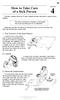 39 How to Take Care of a Sick Person Sickness weakens the body. To gain strength and get well quickly, special care is needed. Medicines are often not necessary. But good care is always important. The
Joan Carroll RN, CDMS, CCM Director of Care Transitions Lee Memorial Health System
 Joan Carroll RN, CDMS, CCM Director of Care Transitions Lee Memorial Health System 1 Explain how patients experience transitions of care Identify variables that affect transitions due to lack of patient
COPD and Asthma Differential Diagnosis
 COPD and Asthma Differential Diagnosis Chronic Obstructive Pulmonary Disease (COPD) is the third leading cause of death in America. Learning Objectives Use tools to effectively diagnose chronic obstructive
Department of Surgery
 Thoracic Surgery After Your Lung Surgery Patient Education Discharge Information You have just had lung surgery. The following are definitions of terms you may hear in connection with your surgery: THORACOTOMY
Fainting - Syncope. This reference summary explains fainting. It discusses the causes and treatment options for the condition.
 Fainting - Syncope Introduction Fainting, also known as syncope, is a temporary loss of consciousness. It is caused by a drop in blood flow to the brain. You may feel dizzy, lightheaded or nauseous before
Radiation Therapy for Palliative Treatment at The Carlo Fidani Peel Regional Cancer Centre
 Radiation Therapy for Palliative Treatment at The Carlo Fidani Peel Regional Cancer Centre Introduction...2 Patient Education and Information...2&3 Treatment Planning...3&4 Your Appointments...5 Radiation
Working Together: A Framework for the Registered Nurse and Licensed Practical Nurse
 Working Together: A Framework for the Registered Nurse and Licensed Practical Nurse HOW TO USE THIS DOCUMENT QUESTIONS FOR REFLECTION: At the end of many sections, you will find Questions for Reflection,
Resident will learn independently in addition to scheduled didactics. Learning is centered on the 7 core competencies as follows:
 Educational Goals & Objectives Physical and Occupational Therapies are an important part of patient care. The Physical Therapy rotation, under the supervision of the Director of Rehabilitation, is a one
Pulmonary Rehabilitation in Newark and Sherwood
 Pulmonary Rehabilitation in Newark and Sherwood With exception of smoking cessation pulmonary rehabilitation is the single most effective intervention for any patient with COPD. A Cochrane review published
LIVING WITH CHRONIC OBSTRUCTIVE PULMONARY DISEASE (COPD)*: MANAGING YOUR DIET, FITNESS, AND MOODS
 LIVING WITH CHRONIC OBSTRUCTIVE PULMONARY DISEASE (COPD)*: MANAGING YOUR DIET, FITNESS, AND MOODS Boehringer Ingelheim Pharmaceuticals, Inc. has no ownership interest in any other organization that advertises
Home Health Care: A More Cost-Effective Approach to Medicaid in Illinois Illinois HomeCare & Hospice Council December 2010
 Home Health Care: A More Cost-Effective Approach to Medicaid in Illinois Illinois HomeCare & Hospice Council December 2010 As the Illinois Legislature prepares to act on the future of Medicaid, it is important
Diabetes Hypoglycemia/Hyperglycemia Reaction
 Diabetes Hypoglycemia/Hyperglycemia Reaction Hypoglycemic Reaction (Insulin Shock) A. Hypoglycemic reactions (insulin reactions) should be treated according to current nursing and medical recommendations.
PATIENT HANDBOOK AND JOURNAL DAY OF SURGERY
 PATIENT HANDBOOK AND JOURNAL DAY OF SURGERY PREPARING YOUR SKIN BEFORE SURGERY PRE-OP HIBICLENS BATHING INSTRUCTIONS: General Information: Because the skin is not sterile, it is important to make sure
Emergency Room (ER) Visits: A Family Caregiver s Guide
 Family Caregiver Guide Emergency Room (ER) Visits: A Family Caregiver s Guide Your family member may someday have a medical emergency and need to go to a hospital Emergency Room (ER), which is also called
Quality Measures for Long-stay Residents Percent of residents whose need for help with daily activities has increased.
 Quality Measures for Long-stay Residents Percent of residents whose need for help with daily activities has increased. This graph shows the percent of residents whose need for help doing basic daily tasks
CONTENTS. Note to the Reader 00. Acknowledgments 00. About the Author 00. Preface 00. Introduction 00
 Natural Therapies for Emphysema By Robert J. Green Jr., N.D. CONTENTS Note to the Reader 00 Acknowledgments 00 About the Author 00 Preface 00 Introduction 00 1 Essential Respiratory Anatomy and Physiology
Home Health Aide Track
 Best Practice: Transitional Care Coordination Home Health Aide Track HHA This material was prepared by Quality Insights of Pennsylvania, the Medicare Quality Improvement Organization Support Center for
Preoperative Education: CERVICAL SPINE SURGERY
 Preoperative Education: CERVICAL SPINE SURGERY 1 Dear Patient, In order to make your hospital stay as comfortable as possible, we have prepared this informational packet for you designed to outline and
Multiple Sclerosis (MS)
 Multiple Sclerosis (MS) Purpose/Goal: Care partners will have an understanding of Multiple Sclerosis and will demonstrate safety and promote independence while providing care to the client with MS. Introduction
Your Recovery After a Cesarean Delivery
 Your Recovery After a Cesarean Delivery It is normal to have many questions about your care after delivery. Cesarean delivery is surgery and your body needs time to heal and recover for the next 6 weeks,