
Corpus-Based Transcription as an Approach to the Compositional Control of Timbre
|
|
|
- Mervyn Greene
- 10 years ago
- Views:
Transcription

1 Corpus-Based Transcription as an Approach to the Compositional Control of Timbre Aaron Einbond, Diemo Schwarz, Jean Bresson To cite this version: Aaron Einbond, Diemo Schwarz, Jean Bresson. Corpus-Based Transcription as an Approach to the Compositional Control of Timbre. International Computer Music Conference (ICMC), 2009, Montreal, QC, Canada. pp.1-1, <hal > HAL Id: hal Submitted on 8 Jun 2015 HAL is a multi-disciplinary open access archive for the deposit and dissemination of scientific research documents, whether they are published or not. The documents may come from teaching and research institutions in France or abroad, or from public or private research centers. L archive ouverte pluridisciplinaire HAL, est destinée au dépôt et à la diffusion de documents scientifiques de niveau recherche, publiés ou non, émanant des établissements d enseignement et de recherche français ou étrangers, des laboratoires publics ou privés.
2 CORPUS-BASED TRANSCRIPTION AS AN APPROACH TO THE COMPOSITIONAL CONTROL OF TIMBRE Aaron Einbond Center for New Music and Audio Technologies (CNMAT) Department of Music, University of California, Berkeley Diemo Schwarz, Jean Bresson Ircam Centre Pompidou CNRS-STMS 1 Place Igor Stravinsky, Paris ABSTRACT Timbre space is a cognitive model useful to address the problem of structuring timbre in electronic music. The recent concept of corpus-based concatenative sound synthesis is proposed as an approach to timbral control in both real- and deferred-time applications. Using CataRT and related tools in the FTM and Gabor libraries for Max/MSP we describe a technique for real-time analysis of a live signal to pilot corpus-based synthesis, along with examples of compositional realizations in works for instruments, electronics, and sound installation. To extend this technique to computer-assisted composition for acoustic instruments, we develop tools using the Sound Description Interchange Format (SDIF) to export sonic descriptors to OpenMusic where they may be further manipulated and transcribed into an instrumental score. This presents a flexible technique for the compositional organization of noise-based instrumental sounds. 1. BACKGROUND The manipulation of timbre as a structural musical element has been a challenge for composers for at least the last century. Pierre Boulez observes that compared to pitch or rhythm, it is often difficult to find codified theories for dynamics or timbre [1]. Trevor Wishart proposed that pitchfree materials could be organized based on their timbres and that computers would provide an invaluable resource for understanding the topology of timbre space [11]. Yet a decade later there is still a predominance of tools for organizing pitch and rhythm as compared to non-pitched materials. Wishart s observations were informed by research in music perception that suggested timbre could be organized by listeners into a multi-dimensional spatial representation. Wessel and Grey both used multi-dimensional scaling to model listeners perceptions of timbre into a 2- or 3-dimensional space [10, 6]. Momeni and Wessel have used such low-dimensional models to control computer synthesis based on spatial representations subjectively chosen by the user [7]. We propose an approach to structuring timbre that is based on perceptually-relevant descriptors and controllable in real-time. Using corpus-based concatenative synthesis (CBCS), a target sound is analyzed and matched to sounds in a pre-recorded database. While this technique can be used for more traditional sounds, it is especially effective for organizing non-pitched sounds based on their timbral characteristics. We present the implementation of this technique in CataRT and OpenMusic (OM) and its application in two recent compositions for instruments and electronics. 2. CORPUS-BASED CONCATENATIVE SYNTHESIS The recent concept of corpus-based concatenative sound synthesis[8] makes it possible to create music by selecting snippets of a large database of pre-recorded sound by navigating through a space where each snippet is placed according to its sonic character in terms of sound descriptors, which are characteristics extracted from the source sounds such as pitch, loudness, and brilliance, or higher level metadata attributed to them. This allows one to explore a corpus of sounds interactively or by composing paths in the space, and to create novel harmonic, melodic, and timbral structures while always keeping the richness and nuances of the original sound. The database of source sounds is segmented into short units, and a unit selection algorithm finds the sequence of units that best match the sound or phrase to be synthesised, called the target. The selected units are then concatenated and played, possibly after some transformations Real-Time Interactive CBCS CBCS can be advantageously applied interactively using an immediate selection of a target given in real-time as is implemented in the CataRTsystem [9] for Max/MSP with the extension libraries FTM and Gabor, 1 making it possible to navigate through a two- or more-dimensional projection of the descriptor space of a sound corpus in real-time, effectively extending granular synthesis by content-based direct access to specific sound characteristics. See Figure 1 for an example of CataRT s sound browsing interface, where grains are played according to prox

3 imity to the mouse- or controller-driven target position in a user-selected 2-descriptor plane. A weight w t k of zero means that descriptor k is not taken into account for selection. Either the unit with minimal C t is selected, or one is randomly chosen from the set of units with C t < r 2 when a selection radius r is specified, or one is chosen from the set of the k closest units to the target Compositional Application We use CataRT as a source for real-time electronic treatment of a live signal, as well as a resource in deferred time for computer-assisted composition. In the real-time case the target for synthesis is the live audio signal. In deferred time the target may be either an audio signal or an abstract trajectory in descriptor space which may be drawn with a mouse or tablet. While the two techniques share similar tools and mechanisms, they yield contrasting results. Figure 1. Screenshot of CataRT s 2D navigation interface Segmentation and descriptor analysis The segmentation of the source sound files into units can be imported from external files or calculated internally, either by arbitrary grain segmentation or by splitting according to silence or pitch change. Descriptors are either imported or calculated in the patch. The descriptors currently implemented are the fundamental frequency, periodicity, loudness, and a number of spectral descriptors: spectral centroid, sharpness, flatness, high- and mid-frequency energy, high-frequency content, first-order autocorrelation coefficient (expressing spectral tilt), and energy. For each segment, the mean value of each time-varying descriptor is stored in the corpus. Note that descriptors are also stored describing the unit segments themselves, such as each unit s unique id, its start time and duration, and the soundfile and group from which it originated Selection CataRT s model is a multi-dimensional space of descriptors, populated by the sound units. They are selected by calculating the target distance C t, which is a weighted Euclidean distance function that expresses the match between the target x and a database unit u i C t (u i,x) = K k=1 w t k Ct k (u i,x) (1) based on the individual squared distance functions Ck t for descriptor k between target descriptor value x(k) and database descriptor value u i (k), normalised by the standard deviation of this descriptor over the corpus σ k : ( ) x(k) Ck t (u ui (k) 2 i,x) = (2) σ k 3. REAL-TIME PERFORMANCE 3.1. Signal Analysis To pilot CataRT synthesis with a live instrument, the audio signal is analyzed in real time with tools from the Gabor library according to the same descriptors and parameters used by CataRT for its analysis of pre-recorded corpora. The list of calculated audio descriptor values, ten currently but with more possible in future versions of CataRT, are sent to the selection module to output a unit. The relative weights of each of the descriptors used in the selection can be adjusted graphically. At this point the rich possibilities of CataRT s triggering methods are available. We have had particularly attractive results with the fence mode, where a new unit is chosen whenever the unit closest to the target changes. The selected unit index is then sent to the synthesis module to output the result taking into account CataRT s granular synthesis parameters. Otherwise the unit indices may be recorded to an SDIF file to be further processed (see below). The rate at which units are synthesized is affected by the analysis window size, the triggering method, and the segmentation method of the corpus. Units need not be output in a regular rhythm: for example, in the fence mode not every new target window triggers selection. The analysis frames may be filtered by rate or descriptor value before being sent to CataRT. In particular, loudness and periodicity descriptors may be used to gate signal frames with values below desired thresholds Musical Realizations Beside Oneself CataRT has been used by several composers to synthesize fixed electronics, and has been used in improvised performance. However the first work to use it as a tool for pre-composed real-time treatment is Aaron Einbond s Beside Oneself for viola and live electronics, written as
4 part of the Cursus in music composition and technologies at IRCAM. Controlled by a Max/MSP patch incorporating CataRT and other Gabor and FTM objects, the computer analyzes sounds from the live violist and synthesizes matching grains from a corpus of close-miked viola samples. The goal is a smooth melding of live and recorded sound, a granular trail that follows the acoustic instrument. CataRT is also used indirectly in this work to stimulate resonant filters. Target pitches played by the viola are matched to a corpus containing samples of similar pitch. The synthesized result is then passed through resonance models, avoiding the possibility of feedback from the live signal What the Blind See A similar technique of real-time analysis and synthesis can be used when the microphone is turned toward the public instead of an instrumentalist. In Einbond s interactive sound installation What the Blind See, presented as part of the exhibition Notation: Kalkül und Form in den Künsten at the Akademie der Künste, Berlin, the sounds of the public as well as the installation s outdoor setting are analyzed as a target for CataRT synthesis from a corpus of filtered field recordings of insects and plants. 4. CORPUS-BASED TRANSCRIPTION Rather than using the synthesized audio output directly, CataRT s analysis and selection algorithms of can be used as a tool for computer-assisted composition. In this case, a corpus of audio files is chosen corresponding to samples of a desired instrumentation. The CataRT selection algorithm is called on to match units from this corpus to a given target. Instead of triggering audio synthesis, the descriptors corresponding to the selected units and the times at which they are selected are stored and can be imported into a compositional environment such as OM where they can be converted symbolicaly into a notated score. The goal can be for the instrumentalist reading the score to approximate the target in live performance. The target used to pilot this process could be an audio file, analyzed as above, or it could be symbolic: an abstract gesture in descriptor space and time, designed by hand with a controller such as a tablet or mouse. This process is summarized in Figure 2. Soundfile Controller Gabor analysis CatRT selection Instrumental sample corpus SDIF file OM: extracting descriptor data / processing / converting to symbolic Figure 2. Flowchart for corpus-based transcription. Score 4.1. Exporting Data with SDIF The results of the CataRT selection algorithm are recorded to an SDIF (Sound Description Interchange Format) file using a specially-created recording module. This file can be read by other programs such as OM, or by Max/MSP using FTM data structures and externals. SDIF is an established standard for the well-defined and extensible interchange of a variety of sound representations and descriptors [4, 12]. It consists of a basic data format framework and an extensible set of standard sound descriptions. This flexible and expandable format suggests a wide range of future applications for exporting audio descriptor data. The SDIF representation of the selection data is as follows: first, three types of information about the corpus are written to the file header. The list of descriptor names for the data matrix columns are encoded as a custom matrix type definition. The list of sound files with their associated indices, referenced in the data matrices, is stored in a name value table, as are the symbol lists for textual descriptors such as SoundSet, which can be assigned from the sound file folder name. Then, for each selected unit, a row matrix containing all its descriptor data is written to a frame at the time of the selection since recording started. Both frame and matrix are of the custom extended type defined in the file header Processing Descriptor Data in OpenMusic OpenMusic (OM) provides a library of functions and data structures for the processing of SDIF sound description data, which make it possible to link the results of the corpus-based analysis data to further compositional processing [2]. This integration in the computer-aided composition environment also allows the composer to take advantage of OM objects for displaying data lists in music notation. Once imported, the descriptors of choice can be extracted and displayed along with their SDIF time stamps. The SDIF frames can be filtered by descriptor value: for example to exclude units with loudness below a given threshold. They can also be segmented into multiple streams, which can be useful to group units to be played by different instruments. Finally, om-quantify can be used to transcribe the frame time values into traditional rhythmic notation and display the results in a voice or poly object. Some descriptors lend themselves to a more intuitive representation as MIDI notes than others: for example pitch or spectral centroid. However other descriptors can be transcribed as a more abstract representation of required information: for example sound file numbers can be assigned arbitrarily to MIDI note numbers, allowing the user to recall the sound file source of each unit. This could then be a useful tool for the user to interpret the results of the CataRT selection in a conventional score with verbal performance directions, articulation symbols, or noteheads. This stage of manual transcription could become better-automated
5 with the development of OM tools to display extra information on a score page, for example with the sheet object [3]. However, a final stage of subjective refinement may always be useful before the score is presented to an interpreter. Figure 3 shows an OM patch to transcribe a score with the poly object, which can then be exported in ETF format and subjectively-edited in Finale. 2 and rhythm are implemented in OM by Elvio Cipollone [5]; however a more sophisticated system would be necessary to incorporate extended playing techniques. 6. ACKNOWLEDGEMENTS This work is partially funded by the French National Agency of Research ANR within the project SampleOrchestrator. We thank Alexis Baskind, Eric Daubresse, John MacCallum, David Wessel, and Adrian Freed for their assistance implementing the software and their invaluable feedback on the manuscript. 7. REFERENCES [1] P. Boulez, On Music Today. Cambridge, MA: Harvard University Press, Figure 3. OM patch including raw score output Mapping Paradigms 5. DISCUSSION The applications presented proceed from a direct mapping, where parameters of the target are associated with parameters of synthesis. However other mappings can be proposed both to correct for sources of noise, and to allow novel sources of compositional control. Mathematical transformation of a descriptor of an input signal could be used to normalize it to the range of that descriptor in the corpus. This could compensate, for example, for systematic offsets in loudness or other parameters. A more interesting mapping could be created to transpose or invert a target before mapping it to a corpus, through an appropriate translation or reflection in descriptor space. Wessel s research suggests that listeners could be sensitive to such a timbral transposition [10]. A further remove could be achieved by mapping one descriptor of the target analysis to a different descriptor in the corpus output. Rather than a transposition, this would be a kind of gestural analogy Playability Constraints In the transcription stage of our algorithm there are no constraints based in instrumental playability. Samples of live instruments are selected by the CataRT algorithm according to spectral characteristics alone, and then transcribed to notation in OM. It would be interesting to incorporate constraints based on speed, register, and playing technique in this process such that the final score would require less manual editing. An example of such constraints on pitch 2 ETF may be replaced by the more flexible MusicXML format as the bridge between future versions of Finale and OM. [2] J. Bresson and C. Agon, SDIF sound description data representation and manipulation in computer assisted composition, in Proc. ICMC, Miami, USA, [3], Scores, programs and time representation: The sheet object in openmusic, Computer Music Journal, vol. 32, no. 4, [4] J. J. Burred, C. E. Cella, G. Peeters, A. Röbel, and D. Schwarz, Using the SDIF sound description interchange format for audio features, in ISMIR, [5] E. Cipollone, CAC as maieutics: OM-Virtuoso and Concerto, in OM Composer s Book, vol. 2. Paris: Editions Delatour France / Ircam, [6] J. M. Grey, Multidimensional perceptual scaling of musical timbres, J. Acoust. Soc. Am., vol. 61, [7] A. Momeni and D. Wessel, Characterizing and controlling musical material intuitively with geometric models, in Proc. NIME, Montreal, Canada, [8] D. Schwarz, Corpus-based concatenative synthesis, IEEE Sig. Proc. Mag., vol. 24, no. 2, Mar [9] D. Schwarz, R. Cahen, and S. Britton, Principles and applications of interactive corpus-based concatenative synthesis, in JIM, GMEA, Albi, France, Mar [10] D. Wessel, Timbre space as a musical control structure, Computer Music Journal, vol. 3, no. 2, [11] T. Wishart, On Sonic Art. London: Harwood Academic Publishers, [12] M. Wright et al., Audio applications of the sound description interchange format standard, in Audio Engineering Society 107th Convention, New York, 1999.
ibalance-abf: a Smartphone-Based Audio-Biofeedback Balance System
 ibalance-abf: a Smartphone-Based Audio-Biofeedback Balance System Céline Franco, Anthony Fleury, Pierre-Yves Guméry, Bruno Diot, Jacques Demongeot, Nicolas Vuillerme To cite this version: Céline Franco,
Mobility management and vertical handover decision making in heterogeneous wireless networks
 Mobility management and vertical handover decision making in heterogeneous wireless networks Mariem Zekri To cite this version: Mariem Zekri. Mobility management and vertical handover decision making in
A graph based framework for the definition of tools dealing with sparse and irregular distributed data-structures
 A graph based framework for the definition of tools dealing with sparse and irregular distributed data-structures Serge Chaumette, Jean-Michel Lepine, Franck Rubi To cite this version: Serge Chaumette,
A usage coverage based approach for assessing product family design
 A usage coverage based approach for assessing product family design Jiliang Wang To cite this version: Jiliang Wang. A usage coverage based approach for assessing product family design. Other. Ecole Centrale
VR4D: An Immersive and Collaborative Experience to Improve the Interior Design Process
 VR4D: An Immersive and Collaborative Experience to Improve the Interior Design Process Amine Chellali, Frederic Jourdan, Cédric Dumas To cite this version: Amine Chellali, Frederic Jourdan, Cédric Dumas.
Faut-il des cyberarchivistes, et quel doit être leur profil professionnel?
 Faut-il des cyberarchivistes, et quel doit être leur profil professionnel? Jean-Daniel Zeller To cite this version: Jean-Daniel Zeller. Faut-il des cyberarchivistes, et quel doit être leur profil professionnel?.
Minkowski Sum of Polytopes Defined by Their Vertices
 Minkowski Sum of Polytopes Defined by Their Vertices Vincent Delos, Denis Teissandier To cite this version: Vincent Delos, Denis Teissandier. Minkowski Sum of Polytopes Defined by Their Vertices. Journal
Aligning subjective tests using a low cost common set
 Aligning subjective tests using a low cost common set Yohann Pitrey, Ulrich Engelke, Marcus Barkowsky, Romuald Pépion, Patrick Le Callet To cite this version: Yohann Pitrey, Ulrich Engelke, Marcus Barkowsky,
ANIMATED PHASE PORTRAITS OF NONLINEAR AND CHAOTIC DYNAMICAL SYSTEMS
 ANIMATED PHASE PORTRAITS OF NONLINEAR AND CHAOTIC DYNAMICAL SYSTEMS Jean-Marc Ginoux To cite this version: Jean-Marc Ginoux. ANIMATED PHASE PORTRAITS OF NONLINEAR AND CHAOTIC DYNAMICAL SYSTEMS. A.H. Siddiqi,
Discussion on the paper Hypotheses testing by convex optimization by A. Goldenschluger, A. Juditsky and A. Nemirovski.
 Discussion on the paper Hypotheses testing by convex optimization by A. Goldenschluger, A. Juditsky and A. Nemirovski. Fabienne Comte, Celine Duval, Valentine Genon-Catalot To cite this version: Fabienne
GABOR, MULTI-REPRESENTATION REAL-TIME ANALYSIS/SYNTHESIS. Norbert Schnell and Diemo Schwarz
 GABOR, MULTI-REPRESENTATION REAL-TIME ANALYSIS/SYNTHESIS Norbert Schnell and Diemo Schwarz Real-Time Applications Team IRCAM - Centre Pompidou, Paris, France [email protected], [email protected]
Online vehicle routing and scheduling with continuous vehicle tracking
 Online vehicle routing and scheduling with continuous vehicle tracking Jean Respen, Nicolas Zufferey, Jean-Yves Potvin To cite this version: Jean Respen, Nicolas Zufferey, Jean-Yves Potvin. Online vehicle
An update on acoustics designs for HVAC (Engineering)
 An update on acoustics designs for HVAC (Engineering) Ken MARRIOTT To cite this version: Ken MARRIOTT. An update on acoustics designs for HVAC (Engineering). Société Française d Acoustique. Acoustics 2012,
QASM: a Q&A Social Media System Based on Social Semantics
 QASM: a Q&A Social Media System Based on Social Semantics Zide Meng, Fabien Gandon, Catherine Faron-Zucker To cite this version: Zide Meng, Fabien Gandon, Catherine Faron-Zucker. QASM: a Q&A Social Media
FP-Hadoop: Efficient Execution of Parallel Jobs Over Skewed Data
 FP-Hadoop: Efficient Execution of Parallel Jobs Over Skewed Data Miguel Liroz-Gistau, Reza Akbarinia, Patrick Valduriez To cite this version: Miguel Liroz-Gistau, Reza Akbarinia, Patrick Valduriez. FP-Hadoop:
Managing Risks at Runtime in VoIP Networks and Services
 Managing Risks at Runtime in VoIP Networks and Services Oussema Dabbebi, Remi Badonnel, Olivier Festor To cite this version: Oussema Dabbebi, Remi Badonnel, Olivier Festor. Managing Risks at Runtime in
Expanding Renewable Energy by Implementing Demand Response
 Expanding Renewable Energy by Implementing Demand Response Stéphanie Bouckaert, Vincent Mazauric, Nadia Maïzi To cite this version: Stéphanie Bouckaert, Vincent Mazauric, Nadia Maïzi. Expanding Renewable
Contribution of Multiresolution Description for Archive Document Structure Recognition
 Contribution of Multiresolution Description for Archive Document Structure Recognition Aurélie Lemaitre, Jean Camillerapp, Bertrand Coüasnon To cite this version: Aurélie Lemaitre, Jean Camillerapp, Bertrand
Information Technology Education in the Sri Lankan School System: Challenges and Perspectives
 Information Technology Education in the Sri Lankan School System: Challenges and Perspectives Chandima H. De Silva To cite this version: Chandima H. De Silva. Information Technology Education in the Sri
Control of affective content in music production
 International Symposium on Performance Science ISBN 978-90-9022484-8 The Author 2007, Published by the AEC All rights reserved Control of affective content in music production António Pedro Oliveira and
Generation and Representation of Data and Events for the Control of Sound Synthesis
 Generation and Representation of Data and Events for the Control of Sound Synthesis Jean Bresson, Marco Stroppa, Carlos Agon IRCAM - CNRS STMS / Music Representations, Paris, France Hochschule für Musik
Overview of model-building strategies in population PK/PD analyses: 2002-2004 literature survey.
 Overview of model-building strategies in population PK/PD analyses: 2002-2004 literature survey. Céline Dartois, Karl Brendel, Emmanuelle Comets, Céline Laffont, Christian Laveille, Brigitte Tranchand,
Use of tabletop exercise in industrial training disaster.
 Use of tabletop exercise in industrial training disaster. Alexis Descatha, Thomas Loeb, François Dolveck, Nathalie-Sybille Goddet, Valerie Poirier, Michel Baer To cite this version: Alexis Descatha, Thomas
Additional mechanisms for rewriting on-the-fly SPARQL queries proxy
 Additional mechanisms for rewriting on-the-fly SPARQL queries proxy Arthur Vaisse-Lesteven, Bruno Grilhères To cite this version: Arthur Vaisse-Lesteven, Bruno Grilhères. Additional mechanisms for rewriting
The IRCAM Musical Workstation: A Prototyping and Production Tool for Real-Time Computer Music
 The IRCAM Musical Workstation: A Prototyping and Production Tool for Real-Time Computer Music Cort Lippe, Zack Settel, Miller Puckette and Eric Lindemann IRCAM, 31 Rue St. Merri, 75004 Paris, France During
Running an HCI Experiment in Multiple Parallel Universes
 Running an HCI Experiment in Multiple Parallel Universes,, To cite this version:,,. Running an HCI Experiment in Multiple Parallel Universes. CHI 14 Extended Abstracts on Human Factors in Computing Systems.
Cobi: Communitysourcing Large-Scale Conference Scheduling
 Cobi: Communitysourcing Large-Scale Conference Scheduling Haoqi Zhang, Paul André, Lydia Chilton, Juho Kim, Steven Dow, Robert Miller, Wendy E. Mackay, Michel Beaudouin-Lafon To cite this version: Haoqi
Surgical Tools Recognition and Pupil Segmentation for Cataract Surgical Process Modeling
 Surgical Tools Recognition and Pupil Segmentation for Cataract Surgical Process Modeling David Bouget, Florent Lalys, Pierre Jannin To cite this version: David Bouget, Florent Lalys, Pierre Jannin. Surgical
Global Identity Management of Virtual Machines Based on Remote Secure Elements
 Global Identity Management of Virtual Machines Based on Remote Secure Elements Hassane Aissaoui, P. Urien, Guy Pujolle To cite this version: Hassane Aissaoui, P. Urien, Guy Pujolle. Global Identity Management
HOW MUSICAL ARE IMAGES? FROM SOUND REPRESENTATION TO IMAGE SONIFICATION: AN ECO SYSTEMIC APPROACH
 HOW MUSICAL ARE IMAGES? FROM SOUND REPRESENTATION TO IMAGE SONIFICATION: AN ECO SYSTEMIC APPROACH Jean-Baptiste Thiebaut Juan Pablo Bello Diemo Schwarz Dept. of Computer Science Queen Mary, Univ. of London
Application-Aware Protection in DWDM Optical Networks
 Application-Aware Protection in DWDM Optical Networks Hamza Drid, Bernard Cousin, Nasir Ghani To cite this version: Hamza Drid, Bernard Cousin, Nasir Ghani. Application-Aware Protection in DWDM Optical
Study on Cloud Service Mode of Agricultural Information Institutions
 Study on Cloud Service Mode of Agricultural Information Institutions Xiaorong Yang, Nengfu Xie, Dan Wang, Lihua Jiang To cite this version: Xiaorong Yang, Nengfu Xie, Dan Wang, Lihua Jiang. Study on Cloud
Towards Unified Tag Data Translation for the Internet of Things
 Towards Unified Tag Data Translation for the Internet of Things Loïc Schmidt, Nathalie Mitton, David Simplot-Ryl To cite this version: Loïc Schmidt, Nathalie Mitton, David Simplot-Ryl. Towards Unified
Improved Method for Parallel AES-GCM Cores Using FPGAs
 Improved Method for Parallel -GCM Cores Using FPGAs Karim Moussa Ali Abdellatif, Roselyne Chotin-Avot, abib Mehrez To cite this version: Karim Moussa Ali Abdellatif, Roselyne Chotin-Avot, abib Mehrez.
New implementions of predictive alternate analog/rf test with augmented model redundancy
 New implementions of predictive alternate analog/rf test with augmented model redundancy Haithem Ayari, Florence Azais, Serge Bernard, Mariane Comte, Vincent Kerzerho, Michel Renovell To cite this version:
Territorial Intelligence and Innovation for the Socio-Ecological Transition
 Territorial Intelligence and Innovation for the Socio-Ecological Transition Jean-Jacques Girardot, Evelyne Brunau To cite this version: Jean-Jacques Girardot, Evelyne Brunau. Territorial Intelligence and
A modeling approach for locating logistics platforms for fast parcels delivery in urban areas
 A modeling approach for locating logistics platforms for fast parcels delivery in urban areas Olivier Guyon, Nabil Absi, Dominique Feillet, Thierry Garaix To cite this version: Olivier Guyon, Nabil Absi,
Virtual plants in high school informatics L-systems
 Virtual plants in high school informatics L-systems Janka Majherov To cite this version: Janka Majherov. Virtual plants in high school informatics L-systems. Michael E. Auer. Conference ICL2007, September
Distributed network topology reconstruction in presence of anonymous nodes
 Distributed network topology reconstruction in presence of anonymous nodes Thi-Minh Dung Tran, Alain Y Kibangou To cite this version: Thi-Minh Dung Tran, Alain Y Kibangou Distributed network topology reconstruction
Partial and Dynamic reconfiguration of FPGAs: a top down design methodology for an automatic implementation
 Partial and Dynamic reconfiguration of FPGAs: a top down design methodology for an automatic implementation Florent Berthelot, Fabienne Nouvel, Dominique Houzet To cite this version: Florent Berthelot,
GDS Resource Record: Generalization of the Delegation Signer Model
 GDS Resource Record: Generalization of the Delegation Signer Model Gilles Guette, Bernard Cousin, David Fort To cite this version: Gilles Guette, Bernard Cousin, David Fort. GDS Resource Record: Generalization
Recent advances in Digital Music Processing and Indexing
 Recent advances in Digital Music Processing and Indexing Acoustics 08 warm-up TELECOM ParisTech Gaël RICHARD Telecom ParisTech (ENST) www.enst.fr/~grichard/ Content Introduction and Applications Components
A model driven approach for bridging ILOG Rule Language and RIF
 A model driven approach for bridging ILOG Rule Language and RIF Valerio Cosentino, Marcos Didonet del Fabro, Adil El Ghali To cite this version: Valerio Cosentino, Marcos Didonet del Fabro, Adil El Ghali.
DEM modeling of penetration test in static and dynamic conditions
 DEM modeling of penetration test in static and dynamic conditions Quoc Anh Tran, Bastien Chevalier, Pierre Breul To cite this version: Quoc Anh Tran, Bastien Chevalier, Pierre Breul. DEM modeling of penetration
Automatic Transcription: An Enabling Technology for Music Analysis
 Automatic Transcription: An Enabling Technology for Music Analysis Simon Dixon [email protected] Centre for Digital Music School of Electronic Engineering and Computer Science Queen Mary University
A causal algorithm for beat-tracking
 A causal algorithm for beat-tracking Benoit Meudic Ircam - Centre Pompidou 1, place Igor Stravinsky, 75004 Paris, France [email protected] ABSTRACT This paper presents a system which can perform automatic
SELECTIVELY ABSORBING COATINGS
 SELECTIVELY ABSORBING COATINGS J. Vuletin, P. Kuli ik, M. Bosanac To cite this version: J. Vuletin, P. Kuli ik, M. Bosanac. SELECTIVELY ABSORBING COATINGS. Journal de Physique Colloques, 1981, 42 (C1),
HOWARD COUNTY PUBLIC SCHOOLS MUSIC TECHNOLOGY
 HOWARD COUNTY PUBLIC SCHOOLS MUSIC TECHNOLOGY GOALS AND OBJECTIVES GOAL I: PERCEIVING, PERFORMING, AND RESPONDING: AESTHETICS The student will demonstrate the ability to perceive, perform, and respond
Understanding Big Data Spectral Clustering
 Understanding Big Data Spectral Clustering Romain Couillet, Florent Benaych-Georges To cite this version: Romain Couillet, Florent Benaych-Georges Understanding Big Data Spectral Clustering 205 IEEE 6th
Performance Evaluation of Encryption Algorithms Key Length Size on Web Browsers
 Performance Evaluation of Encryption Algorithms Key Length Size on Web Browsers Syed Zulkarnain Syed Idrus, Syed Alwee Aljunid, Salina Mohd Asi, Suhizaz Sudin To cite this version: Syed Zulkarnain Syed
An Automatic Reversible Transformation from Composite to Visitor in Java
 An Automatic Reversible Transformation from Composite to Visitor in Java Akram To cite this version: Akram. An Automatic Reversible Transformation from Composite to Visitor in Java. CIEL 2012, P. Collet,
Cracks detection by a moving photothermal probe
 Cracks detection by a moving photothermal probe J. Bodnar, M. Egée, C. Menu, R. Besnard, A. Le Blanc, M. Pigeon, J. Sellier To cite this version: J. Bodnar, M. Egée, C. Menu, R. Besnard, A. Le Blanc, et
How To Write A Jazz Songbook
 Improvisation Education Support Software Towards a Personal Improvisation Companion Robert M. Keller Harvey Mudd College Claremont, California, USA Leeds International Jazz Conference Leeds, England March
An integrated planning-simulation-architecture approach for logistics sharing management: A case study in Northern Thailand and Southern China
 An integrated planning-simulation-architecture approach for logistics sharing management: A case study in Northern Thailand and Southern China Pree Thiengburanathum, Jesus Gonzalez-Feliu, Yacine Ouzrout,
Towards Collaborative Learning via Shared Artefacts over the Grid
 Towards Collaborative Learning via Shared Artefacts over the Grid Cornelia Boldyreff, Phyo Kyaw, Janet Lavery, David Nutter, Stephen Rank To cite this version: Cornelia Boldyreff, Phyo Kyaw, Janet Lavery,
Novel Client Booking System in KLCC Twin Tower Bridge
 Novel Client Booking System in KLCC Twin Tower Bridge Hossein Ameri Mahabadi, Reza Ameri To cite this version: Hossein Ameri Mahabadi, Reza Ameri. Novel Client Booking System in KLCC Twin Tower Bridge.
Optimization results for a generalized coupon collector problem
 Optimization results for a generalized coupon collector problem Emmanuelle Anceaume, Yann Busnel, Ernst Schulte-Geers, Bruno Sericola To cite this version: Emmanuelle Anceaume, Yann Busnel, Ernst Schulte-Geers,
Thirukkural - A Text-to-Speech Synthesis System
 Thirukkural - A Text-to-Speech Synthesis System G. L. Jayavardhana Rama, A. G. Ramakrishnan, M Vijay Venkatesh, R. Murali Shankar Department of Electrical Engg, Indian Institute of Science, Bangalore 560012,
Undulators and wigglers for the new generation of synchrotron sources
 Undulators and wigglers for the new generation of synchrotron sources P. Elleaume To cite this version: P. Elleaume. Undulators and wigglers for the new generation of synchrotron sources. Journal de Physique
ANALYSIS OF SNOEK-KOSTER (H) RELAXATION IN IRON
 ANALYSIS OF SNOEK-KOSTER (H) RELAXATION IN IRON J. San Juan, G. Fantozzi, M. No, C. Esnouf, F. Vanoni To cite this version: J. San Juan, G. Fantozzi, M. No, C. Esnouf, F. Vanoni. ANALYSIS OF SNOEK-KOSTER
Business intelligence systems and user s parameters: an application to a documents database
 Business intelligence systems and user s parameters: an application to a documents database Babajide Afolabi, Odile Thiery To cite this version: Babajide Afolabi, Odile Thiery. Business intelligence systems
What Development for Bioenergy in Asia: A Long-term Analysis of the Effects of Policy Instruments using TIAM-FR model
 What Development for Bioenergy in Asia: A Long-term Analysis of the Effects of Policy Instruments using TIAM-FR model Seungwoo Kang, Sandrine Selosse, Nadia Maïzi To cite this version: Seungwoo Kang, Sandrine
The truck scheduling problem at cross-docking terminals
 The truck scheduling problem at cross-docking terminals Lotte Berghman,, Roel Leus, Pierre Lopez To cite this version: Lotte Berghman,, Roel Leus, Pierre Lopez. The truck scheduling problem at cross-docking
Pizzicato. Music Notation. Intuitive Music Composition. A Full Range of Music Software for the Musician. and
 Pizzicato TM Music Notation and Intuitive Music Composition Pizzicato Light Pizzicato Beginner Pizzicato Notation Pizzicato Guitar Pizzicato Choir Pizzicato Soloist Pizzicato Drums & Percussion Pizzicato
Music technology. Draft GCE A level and AS subject content
 Music technology Draft GCE A level and AS subject content July 2015 Contents The content for music technology AS and A level 3 Introduction 3 Aims and objectives 3 Subject content 4 Recording and production
Voltage. Oscillator. Voltage. Oscillator
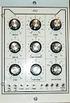 fpa 147 Week 6 Synthesis Basics In the early 1960s, inventors & entrepreneurs (Robert Moog, Don Buchla, Harold Bode, etc.) began assembling various modules into a single chassis, coupled with a user interface
IntroClassJava: A Benchmark of 297 Small and Buggy Java Programs
 IntroClassJava: A Benchmark of 297 Small and Buggy Java Programs Thomas Durieux, Martin Monperrus To cite this version: Thomas Durieux, Martin Monperrus. IntroClassJava: A Benchmark of 297 Small and Buggy
Advantages and disadvantages of e-learning at the technical university
 Advantages and disadvantages of e-learning at the technical university Olga Sheypak, Galina Artyushina, Anna Artyushina To cite this version: Olga Sheypak, Galina Artyushina, Anna Artyushina. Advantages
Raritan Valley Community College Academic Course Outline MUSC 190 - DIGITAL MUSIC COMPOSITION I
 Raritan Valley Community College Academic Course Outline I. Basic Course Information MUSC 190 - DIGITAL MUSIC COMPOSITION I A. Course Number and Title: MUSC 190: DIGITAL MUSIC COMPOSITION I B. New or Modified
Interactive Multimedia Courses-1
 Interactive Multimedia Courses-1 IMM 110/Introduction to Digital Media An introduction to digital media for interactive multimedia through the study of state-of-the-art methods of creating digital media:
DYNAMIC CHORD ANALYSIS FOR SYMBOLIC MUSIC
 DYNAMIC CHORD ANALYSIS FOR SYMBOLIC MUSIC Thomas Rocher, Matthias Robine, Pierre Hanna, Robert Strandh LaBRI University of Bordeaux 1 351 avenue de la Libration F 33405 Talence, France [email protected]
Proposal for the configuration of multi-domain network monitoring architecture
 Proposal for the configuration of multi-domain network monitoring architecture Aymen Belghith, Bernard Cousin, Samer Lahoud, Siwar Ben Adj Said To cite this version: Aymen Belghith, Bernard Cousin, Samer
Design and architecture of an online system for Vocational Education and Training
 Design and architecture of an online system for Vocational Education and Training Christos Bouras, Eri Giannaka, Thrasyvoulos Tsiatsos To cite this version: Christos Bouras, Eri Giannaka, Thrasyvoulos
Identifying Objective True/False from Subjective Yes/No Semantic based on OWA and CWA
 Identifying Objective True/False from Subjective Yes/No Semantic based on OWA and CWA Duan Yucong, Christophe Cruz, Christophe Nicolle To cite this version: Duan Yucong, Christophe Cruz, Christophe Nicolle.
Good Practices as a Quality-Oriented Modeling Assistant
 Good Practices as a Quality-Oriented Modeling Assistant Vincent Le Gloahec, Régis Fleurquin, Salah Sadou To cite this version: Vincent Le Gloahec, Régis Fleurquin, Salah Sadou. Good Practices as a Quality-Oriented
Distance education engineering
 Distance education engineering Olivier Marty To cite this version: Olivier Marty. Distance education engineering. Working paper. 2012. HAL Id: halshs-00776581 https://halshs.archives-ouvertes.fr/halshs-00776581
Genetic Analysis of Analogique B
 Kerry L Hagan [email protected] October 2005 Genetic Analysis of Analogique B Iannis Xenakis composed Analogique B for tape (1958-1959) concurrently with the instrumental work Analogique A. Both works utilize
ISO9001 Certification in UK Organisations A comparative study of motivations and impacts.
 ISO9001 Certification in UK Organisations A comparative study of motivations and impacts. Scott McCrosson, Michele Cano, Eileen O Neill, Abdessamad Kobi To cite this version: Scott McCrosson, Michele Cano,
CONCATENATIVE SOUND SYNTHESIS: THE EARLY YEARS
 CONCATENATIVE SOUND SYNTHESIS: THE EARLY YEARS Diemo Schwarz Ircam Centre Pompidou 1, place Igor-Stravinsky, 75003 Paris, France http://www.ircam.fr/anasyn/schwarz http://concatenative.net [email protected]
The LENA TM Language Environment Analysis System:
 FOUNDATION The LENA TM Language Environment Analysis System: The Interpreted Time Segments (ITS) File Dongxin Xu, Umit Yapanel, Sharmi Gray, & Charles T. Baer LENA Foundation, Boulder, CO LTR-04-2 September