
University of California, Riverside Graduate Student Handbook
|
|
|
- Douglas Ramsey
- 10 years ago
- Views:
Transcription
1 University of California, Riverside Graduate Student Handbook Graduate Division UC Riverside 8/15/2013

2 Table of Contents Introduction 5 Administration 5 Graduate Student Association 5 Suggestions for Successful Graduate Study 5 Sources of Information 6 Graduate Division Deans and Staff 7 Beginning Graduate School 8 Enrollment 8 Holds 8 Loss of Courses and Lapse of Student Status 8 Payment of Fees & Statement of Account 9 Amount Due and Payment Deadline 9 Late Fees 10 Student Aid on Hold 10 Refunds 10 Direct Deposit 10 Checks 10 Quarterly Stipends 10 Deferred Payment Plan (DPP) 10 Parking Permits 11 UCR ID Card 11 Internet and 11 Graduate Student Health Insurance Plan (GSHIP) 12 Withdrawals and Refund of Fees 12 California Residency 13 General University Academic Requirements 13 Standards of Scholarship 14 Academic Evaluation and Review 14 Language Requirement 14 The Master s Degree 14 The Thesis Plan (Plan I) 15 The Comprehensive Exam (Plan II) 15 Credit by Exam 16 Advancement to Candidacy 16 Second Master s Degrees 16 Entering the PhD Program from the Master's Program 16 The Doctoral Degree 16 The Qualifying Exam Committee 17 The Dissertation Committee 18 Lapse of Candidacy 18 Duplication of Higher Degrees (Second Masters & Phds) 18 Certificate of Resident Studies 18 Candidate in Philosophy 19 Designated Emphasis 19 General Policies on Registration, Enrollment, and Transfer of Credit 19 Continuous Registration 19 Filing Fee 19 Leave of Absence 20 In Absentia Registration 20 2

3 Enrollment 20 Confirming Enrollment 21 Half-time Study & Reduced Fees 21 UC Employee Fee Reduction Program 22 Transfer of Credit 22 Exams 23 S/NC Grading 23 Repeating Courses 24 Appeal of Grades 24 Academic Dishonesty 24 Dispute Resolution 25 Academic Issues 25 Employment Issues 25 Other Issues 26 Additional Resources 26 Sexual Harassment 26 Fellowship Recipients 27 General Regulations for Fellowship/Grant Holders 27 Working While Receiving Fellowship Money 27 Stipend Payments 28 Fellowships That Pay Fees 28 Taxes 28 Academic Employment (Teaching & Research Assistants) 28 Criteria for Appointment 28 Graduate Student Health Insurance and Tuition Remission 29 Salaries 29 TA Duties 29 Union Representation 30 Parking for Student Employees 30 Childcare Reimbursement for TAs and GSRs 30 Types of Financial Support 30 Merit-Based Aid (Fellowships) 30 Need-Based Aid 30 Reduced Nonresident Supplemental Tuition 31 Research Grants 31 Dissertation Research Grants 31 Master s Thesis Research Grant 31 Graduate Student Association Conference Travel Grants 31 Extramural Support 31 Special Programs 32 GradSuccess 32 Teaching Assistant Development Program (TADP) 32 Intercampus Exchange (ICE) 33 Education Abroad Program (EAP) 33 Family Related Benefits 33 Benefits for All Students 33 Benefits for ASEs 34 3

4 Childcare Reimbursement 34 Family Related Leave 34 Benefits for GSRs 34 Childbearing Leave 34 Family and Medical Leave 35 Parental Leave Without Pay 35 Active Service-Modified Duties 35 Childcare Reimbursement 35 Miscellaneous 36 Address Change 36 Name Change 36 Transcripts 36 Verification of Student Status 36 Voter Registration 37 Student Services 37 Career Center 38 Child Development Center 38 Computing 38 Counseling Center 38 Health Center 39 Housing 39 International Student Resource Center 39 Lesbian Gay Bisexual Transgender Resource Center 39 Media Resources 39 Ombudsperson 39 Special Services 40 Student Recreation Center 40 Women s Resource Center 40 University Libraries 40 General Information 41 The Raymond L. Orbach Science Library 41 The Tomas Rivera Library 41 The Multimedia Library 41 The Music Library 41 Special Collections 41 Special Research Opportunities 41 Botanic Gardens 42 Natural Reserve System 42 UCR/Californian Museum of Photography (CMP) 42 Culver Center for the Arts 42 Appendix 42 Salary Scales /GSR Steps 43 4

5 GRADUATE EDUCATION AT THE UNIVERSITY OF CALIFORNIA, RIVERSIDE FROM THE DEAN... These are the rules and regulations that every graduate student needs to know. We have pulled them together from a variety of publications in order to make your journey through graduate school a little simpler. The staff and deans in the Graduate Division are here to help you. If you have any questions or concerns, please contact us. ADMINISTRATION Policies concerning graduate education are set by the Graduate Council, a committee of the Academic Senate, and carried out by the Graduate Division staff (under the direction of the Graduate Dean). The Academic Senate consists of every faculty member (professor, associate professor, and assistant professor) on campus. The Graduate Council has 16 members. Each program has one or more Graduate Advisor, appointed by the Graduate Dean, whose job is to assist students in program planning and completing degree requirements, to approve official study lists, and to write a yearly evaluation of each student's progress toward the degree. Students should confer regularly with their Graduate Advisors. There is also one staff member in each department assigned to help graduate students. GRADUATE STUDENT ASSOCIATION All graduate students are automatically members of the Graduate Student Association (GSA), which seeks to represent their views and promote their interests with the faculty and administration, both at the campus level and system wide. They are responsible for negotiating and reviewing healthcare insurance coverage. A separate GSA fee is charged of all graduate students per quarter. With it the GSA administers the Conference Travel Grant Program, to provide travel grants to graduate students. To get involved, go to call (951) SUGGESTIONS FOR SUCCESSFUL GRADUATE STUDY 1) Formulate a plan that covers all stages of your career coursework, written qualifying exams, oral qualifying exams, and dissertation research. Outline how you will conduct each step of your dissertation research and writing. If you feel that you are off-track, speak to your faculty advisor or Graduate Advisor. Ask for assistance. They are here to help you stay on schedule. 2) Get Involved. Join your department community. Being a graduate student is more than attending classes and conducting research. Attend and participate in seminars, colloquia and other department activities. Become actively involved in your department and meet the entire faculty in your discipline. Attend social functions inside and outside of your department. Organize student get-togethers. Become a graduate student representative for your department or become involved in the Graduate Student Association. 3) If you are faced with a problem of an academic nature, first speak to the individual with whom you are having the difficulty. If that does not resolve the issue, seek help from your faculty advisor. If that is not possible, speak to the Graduate Advisor or director of your program and 5

6 then the Chair of the department. If all efforts at the department level fail, consult the Academic Affairs Director or Associate Dean in the Graduate Division. 4) If faced with a problem of a non-academic nature seek help. Don t try to do it alone. If you do not want to speak with your faculty advisor or Graduate Advisor, ask your graduate program assistant for direction or visit the Counseling Center. If you are an international student you may feel more comfortable speaking with the International Student Resource Center. The staff of the Graduate Division and Office of the Ombudsperson is also available to help you. SOURCES OF INFORMATION UCR WEBSITE GRADUATE DIVISION GRADUATE DIVISION FORMS & HANDBOOKS FOR CURRENT STUDENTS Student Handbook, degree check forms, and various student petitions SCHEDULE OF CLASSES GENERAL CATALOG OFFICE OF THE REGISTRAR GROWL or You can enroll in courses, view your grades, make address changes, view your statement, your current bill, course confirmations, view/accept your financial aid award, view your student ID, update your privacy restrictions, apply for the Deferred Payment Plan. THE LIBRARY Access includes Melvyl Catalog, Infomine (Scholarly Internet Resources), Electronic Journals and renewal of books on-line. STUDENT BUSINESS OFFICE For information on billing, the Deferred Payment Plan and Direct Deposit. GRADUATE STUDENT ASSOCIATION [email protected] 6

7 PHONE DIRECTORY INFOMINE The Scholarly Internet Resource Collections is located at STUDENT CONDUCT POLICIES GRADUATE DIVISION Below are the Deans and staff in the Graduate Division that you may need to contact during your tenure: ADMINISTRATION Joseph W. Childers, Dean Leah Haimo, Associate Dean Kevin Esterling, Associate Dean ACADEMIC AFFAIRS Linda G. Scott, Director Administration of academic affairs, readmission, student grievances and mediation, scholarship difficulties, statistical data, and time to degree (951) ; Kara E. Oswood Dissertation format review, Ph.D. degree checks, filing fee status, transfer units, waiver of course work, time to degree, and doctoral committees (951) ; Karen Smith Employment and fellowship issues, leaves of absence, intercampus exchange petitions, withdrawals, in-absentia, and half-time status petitions (951) ; Amanda Wong Thesis format review, Master s degree checks, filing fee status, transfer units, waiver of master s course work, Directed Studies Petitions (290), enrollment adjustment forms (add/drop forms) (951) ; [email protected] GRAD SUCCESS Maggie Gover, Director 7

8 BEGINNING GRADUATE SCHOOL REGISTRATION Registration is a two-step process: 1. Enrollment in courses 2. Payment of fees GROWL ( is the campus web service for enrolling in course work, reviewing grades, checking financial aid, billing, degree progress, address changes, etc. The Permanent Personal Identification Number (PermPIN) is a permanent six-digit number that is set by the Office of the Registrar once a student is admitted to the university. PermPINs are required for any Web transactions. The PermPIN can be found on the Admission Letter. If you have lost your PermPIN check with your Graduate Program Assistant or the Office of the Registrar. It is used throughout the career to verify access to a variety of data, such as grades and confirmations. Adding/Dropping Courses 1) Through the second week of classes students enroll in and drop courses via GROWL 2) During week three your Graduate Program Assistant can make adjustments for you. If they cannot help you must use the pink paper Enrollment Adjustment Form. After week three you must fill out a pink paper Enrollment Adjustment Form to make any changes. If you file it after the published deadline dates there is an additional form to complete (Petition for Late or Retroactive Enrollment Adjustment Form) which can be found All holds must be cleared prior to enrollment (below). HOLDS Students may have holds placed on their student records, which could affect registration, enrollment, financial aid, campus services and/or release of academic transcripts for failure to Comply with admission provisions Settle financial obligations with the university Respond to official notices Submit requested documents Each student who becomes subject to a hold action is given advance notice and ample time to respond. In most cases, the hold must be released from the initiating office before a student may enroll in classes or receive various campus services. Information on holds can be obtained from the office initiating the hold, as stated on GROWL. LOSS OF COURSES/LAPSE OF STUDENT STATUS Failure to pay fees by September 15th for Fall, December 15th for Winter and March 15th for Spring (if the 15 th falls on a weekend the deadline will be the last Friday before the 15 th ) will result in the loss of all enrolled courses and some student privileges, such as receipt of financial aid 8

9 awards. Students who have lost their courses and financial aid must enroll again and pay all applicable fees, including a $50 late fee. Failure to enroll in courses or pay fees by the end of the third week will result in the loss of all course work and a lapse of student status. All student privileges, such as receipt of financial aid awards and student services, will be lost. Students in lapsed status who seek reinstatement should contact the Graduate Division. PAYMENT OF FEES AND STATEMENT OF ACCOUNT Your statement of account can be viewed on-line at The fee schedule can be found at Statements are issued once a month. View current activity to see recent changes to your bill. The payment deadline of September 15th for Fall, December 15th for Winter and March 15th for Spring (if the 15 th falls on a weekend the deadline will be the last Friday before the 15 th ) applies to all students. Students may pay fees by mail, on-line with American Express, Master Card or Discover at or in person at the Main Cashier's Office (Student Services Building, Room 1111), Monday through Friday, 9 a.m. to 4 p.m. A $50 late charge is assessed for fees paid after these deadlines. Note Financial aid disbursements to pay fees/tuition are made only to students who have accepted their awards by returning the signed Financial Aid Notification Letter, submitted all required documents, completed any required pre-loan counseling, enrolled in classes, and cleared all student account holds. All financial aid documents should be submitted at least two weeks prior to fee payment deadlines to allow time for processing. The monthly on-line Statement of Account includes all fees and applicable tuition, other campus charges, credits for payments, waivers, and refunds or direct deposit transfers. Students receiving financial aid must enroll in classes before financial aid funds can be electronically disbursed to offset charges on the statement. Payment for the amount due from the student plus any waiver or deferment must equal the amount due on the Statement of Account. Students should refer to the box at the top of the Statement of Account to determine the payment deadline, the description, and the amount due. A late payment fee is assessed each month to accounts not paid by the payment deadline indicated on the statement. Payments received are credited first to accrued late charges and then applied to the remaining balance. Delinquent accounts may be subject to collection costs and attorney fees, or if applicable, a 10% per annum interest rate in accordance with California Civil Code 3289, when external collection activity becomes necessary to collect the debt. Amount Due and Payment Deadline At the top of the "Statement of Account," with the description of "All Charges," is an "Amount Due" and a "Payment Deadline," which reflects the amount that is due to pay fees/tuition and all charges. Financial aid that has been released to pay fees/tuition is already reflected in this "Amount Due." Late fees and oldest charges are paid first. However, payments designated for housing will pay housing charges only. Payment with American Express, Discover or MasterCard may be made on-line at the GROWL website. A 2.5% non-refundable convenience fee will be charged. Accounts with past due charges will have a hold until the delinquent charges have been paid in full. Visa card is NOT accepted. 9

10 Late Fees Fees/tuition not paid in full by the "Payment Deadline" will result in a late fee of $50 and loss of classes. Housing payments received after the payment deadline will incur a $15 late fee. Student Business Services will also assess a $12.50 late payment fee each month to accounts not paid by the deadline date indicated on the Statement of Account. Student Aid on Hold At the bottom of the Statement of Account the phrase Student Aid on Hold could mean that a student has an unmet academic, admission, administrative, or financial obligation to the University that needs attention. It could also mean that the student is not enrolled in classes or that future payments are on hold until the appropriate time for disbursing. Refunds If you are eligible for a refund, the amount of the refund will appear in the box on the lower half of the statement. Checks will not be distributed from Student Business Services. All refunds will be electronically transferred to your bank account or checks will be mailed to your billing address. Direct Deposit Direct Deposit is the electronic deposit of funds directly into personal bank accounts, which will allow you to have access to your money faster and more conveniently. Direct Deposit may be used for checking or savings accounts at any bank or credit union in the United States. Direct Deposits will begin to be disbursed on the first day of the quarter, as published in the Schedule of Classes. You will be notified of any Direct Deposit transactions via your monthly Statement of Account. To ensure Direct Deposit is effective for the first disbursement, your bank account information must be submitted three weeks prior to the start of the quarter. Please submit by September 1 for the Fall Quarter. Any authorization forms submitted after that date will not be in effect for the first quarterly disbursement. To enroll in Direct Deposit go to the GROWL Website. All financial aid and graduate fellowship disbursements (credit balance refunds) through the UCR Student Information System (SIS) will be available through Direct Deposit. Checks If the billing "Account Summary" reflects a line item stating "Refund Check" or "Stipend Check," the check will be mailed to your local address as it appears on the front of the Statement of Account. Students must make sure that Student Business Services has their correct billing address on file so that their refund check can be mailed to that address. Note: Once the check leaves the Student Business Services office, the delivery time cannot be guaranteed. Quarterly Stipends The quarterly stipend will appear under "Student Aid". Stipends are paid once a quarter. The "Payment Deadline" indicates when fees/tuition and other charges must be paid to avoid incurring late fees and losing classes. DEFERRED PAYMENT PLAN (DPP) The Deferred Payment Plan (DPP) is designed to give students an opportunity to pay fees and tuition over three months. There is no interest charge because DPP is not a loan. There is, however, a non-refundable processing charge of $25. Students who are in good financial and academic standing may apply for this assistance. Students may elect to use DPP whether or not 10

11 they qualify for financial aid. Students who owe the University money or have a history of payment difficulty may be denied DPP. DPP allows all fees and tuition, to the extent not covered by grants, scholarships, waivers or loans to be paid in three installments each quarter. Federal Direct Stafford/Ford Loans (FDSL) and Federal Direct Plus Loans (FDPL) are excluded from the calculation of DPP. DPP is not available for the summer term. Applications must be received on or before the deadline to pay fees and tuition for the quarter. The processing fee and the first DPP installment are also due at the fee and tuition deadline to avoid a $50 DPP late fee. DPP applications are accepted throughout the registration period each quarter, but all application late fees will apply if the application is received after the deadline to pay fees and tuition for the quarter. You can apply for this through your GROWL account. PARKING PERMITS All vehicles parked on the UCR campus between 7 a.m. and 10 p.m., Monday through Sunday, must display a valid regular or visitor UCR parking permit. Permits may be purchased on-line only at Visitor parking permits can be obtained at the information kiosks or at the dispensers located in lots 2, 6, 10, 24, 25 and in front of the Parking Services building. Call Transportation and Parking at (951) or check for more information about permits and payment arrangements. UCR ID CARD All students are required to carry and show a permanent photo ID card for identification, most official transactions, to check out books from the libraries, and for entrance into the Student Recreation Center and various buildings on campus. The UCR Card is also the meal card for students living in the residence halls. The UCR Card may be used as a debit card for discounted purchases at Commons Dining Services as well as purchases made at the UCR Bookstore, Printing & Reprographics, and the Exchange Student Store. The UCR Card is accepted for payment of bills at the Cashier's Office. The card is also accepted in vending machines, copiers at all libraries, and laundry facilities at all campus housing locations. Photos are taken at the UCR Card Office in the University Commons, Suite 249. Bring a valid form of ID, such as a driver's license or passport. Appointments can be made, but are not necessary. Your account is activated and ready for you to add value at any time as soon as you have received your UCR Card. You can add value by going to You can also add value with a check at the UCR Card Office, Monday - Friday between the hours of 9:00 am - 4:00 pm; or, you may add value with cash at any of the Cash Value Centers located throughout the campus. If your UCR Card is lost, stolen or misplaced, report it immediately by logging in to your My Card Account to deactivate your card, or calling (951) hrs/day, 7 days/week. If asked to leave a message, your call will be time and date stamped. You will not be held responsible for any fraudulent transactions after the time you called. This protects your money on the UCR Card Account and your Meal Plan, not your Vending Account. If you find your card, come to the UCR Card Office with your card and it can be reactivated.. Off-campus you can ride the RTA (Riverside Transit Agency) free. INTERNET ACCESS & POLICY UCR requires that all students have a computer with Internet access. UCR faculty will assume students have such access, and academic work usually requires it. The UCR administration will also assume that students have Internet access, and many administrative tasks may require students 11

12 to use the Internet. The primary mode of campus communications is , and it is therefore mandatory for students to utilize their campus accounts to review academic and administrative electronic correspondence. When you enroll at UCR you are automatically assigned an R mail account. This account allows you to access your account. Along with your account you will also receive a machine generated login name or Net ID. You cannot change your NetID; it will stay the same throughout your time at UCR. However, you may choose to change your password at your own discretion. Changes in your password will not affect your address nor will they alter the URL of your home page. Your initial password is your PermPIN number. If you forget it you can bring your student ID card to the Registrar's Office or your academic advisor during business hours. To access your account or find your address go to or We strongly recommend that you change your password as soon as possible. Occasionally, passwords are stolen and the amount of damage that can be done from a stolen password is considerable. If your password is your PermPIN number the amount of damage increases greatly because your academic information, and financial aid records may also be accessed. Please be aware of the University policy on theft or abuse of University computers and other University electronic resources. You can be charged by the University (the Student Conduct Office) with theft or abuse of University computers and/or other University electronic resources, such as, computer and electronic communications facilities, systems, and services. Abuses can include but are not limited to, unauthorized entry, use, transfer, or tampering with the communications of others; interference with the work of others and with the operation of computer and electronic communications facilities, systems, and services; or copyright infringement (for example, the illegal file-sharing of copyrighted materials). The University is routinely notified of copyright abuses by outside sources such as HBO, Showtime, Cinemax, the Record Industry Association of America, Random House Audiobooks, etc. Please refer to the UC Electronic Communications Policy ( and Digital Copyright Protection at UC ( for the University's position on digital copyright. GRADUATE STUDENT HEALTH INSURANCE PLAN (GSHIP) GSHIP is a mandatory health insurance plan. The insurance is designed to supplement the outpatient care available to all registered students through Campus Health Center. Certain academic appointees (Teaching Assistants, Graduate Student Researcher, Teaching Fellows, Associates, Readers, and Tutors) serving at 25% time or more per quarter will have their premiums paid by their payroll funding source(s). Fellowship recipients whose awards pay all assessed registration fees will have their premiums paid by the fellowship. Students who can demonstrate comparable insurance coverage from another source may apply to be exempted from the mandatory plan. For the waiver form and information on this go to Students awarded the exemption have the GSHIP fee removed from their bill but do not receive any monetary compensation. For additional information regarding policy benefits, comparable coverage exemptions and optional dependent coverage, please contact the Campus Health Center at (951) All students are eligible to use the Campus Health Center. Further information is at WITHDRAWAL Students who wish to cancel their registration up until and including the first day of classes should 12

13 contact the Graduate Division. They will receive a full refund of fees minus a processing fee. The Graduate and Professional Student Health Insurance (GSHIP) fee is not refunded if insurance has been used. Please contact Student Health Insurance, (951) , for details. A withdrawal form can be found at Thereafter, those who withdraw are entitled to a partial refund of fees. The amount of the refund is determined by the number of calendar days elapsed between the first day of instruction and the date on which a withdrawal form is filed with the Graduate Division. The withdrawal schedule can be found at: Students who are unable to file the necessary paperwork due to illness or emergency should call the Graduate Division for help at (951) CALIFORNIA RESIDENCY Students pay Nonresident Supplemental Tuition if they have not been living in California for at least one year immediately prior to the residence determination date for the term in which they propose to register at the University of California, Riverside. Along with the criterion of physical presence, the other criteria are intent and financial independence. Information on these three criteria is provided in appendix A of the UC Riverside General Catalog. This can be found at Indications of your intent to make California your permanent residence can include the following: 1) Registering to vote and voting in California elections 2) Designating California as your permanent address on all school and employment records 3) Obtaining a California driver s license or if you do not drive, a California ID card 4) Paying income taxes as a resident The residence determination date is the day instruction begins. Students classified as nonresidents shall retain that status until they apply for, and receive, a new classification. Students planning to file for residence status after their first year should talk with the Residence Deputy in the Office of the Registrar well before the appropriate residence determination date, preferably during their first few weeks in California. Students may apply for classification as California residents as soon as they meet all three criteria for residence. A student who attended high school in California for three or more years (9th grade included) and graduated from a California high school (or attained the equivalent) may be exempt from Nonresident Supplemental Tuition. Nonimmigrant students are not eligible for this exemption. All questions concerning residency are referred to the Residence Deputy in the Office of the Registrar. No other campus personnel are authorized to supply information regarding residence requirements for tuition purposes. Students wishing to appeal a final decision on residence classification by the Residence Deputy are assisted and referred to the appropriate member of the General Counsel's Office in the Office of the President in Oakland. Nonresident Supplemental Tuition must be paid pending the outcome of appeals. GENERAL UNIVERSITY REQUIREMENTS The minimum requirements for Master's and Doctor of Philosophy Degrees are outlined below. Academic departments and programs may impose further requirements, described in departmental 13

14 brochures and the UC Riverside General Catalog. STANDARDS OF SCHOLARSHIP Only courses in which grades of "A," "B," "C," or "S" are received are counted toward satisfying graduate degree requirements. To continue in good standing and obtain an advanced degree, students must maintain a minimum grade point average (GPA) of 3.00 in all upper division (100 level) and graduate (200 level) course work related to the degree. In addition, students must demonstrate acceptable progress toward their degree objectives. This entails the satisfactory completion of all course work and other degree requirements in a timely fashion. Students are considered to be making unacceptable progress and become subject to dismissal when: they have 12 or more units of "I" grades outstanding; the overall GPA falls below 3.00; the quarterly GPA falls below 3.00 for two consecutive quarters; they fail to take their oral qualifying exams within five years; they fail to fulfill program requirements such as exams or research in a timely and satisfactory manner; they have not completed their programs within one year after reaching the program s normative time; or they fail to pass comprehensive or qualifying examinations in two attempts; they fail to make progress in research for two consecutive quarters ACADEMIC EVALUATION AND REVIEW The program Graduate Advisor must do an overall written evaluation of each student s academic progress at least once each academic year. This should include a brief review of the student's work to date, with particular attention to the period since the last report. This report should address academic objectives for the next period. The report should be discussed with the student and a copy should be provided both to the student and to the Graduate Division. LANGUAGE REQUIREMENT Each program determines if knowledge of a foreign language or languages is required of students pursuing graduate degrees. Proficiency in a foreign language may be demonstrated: by passing a written exam administered by the department or program; by successfully completing a course in the language at a level specified by the program. With the support of the program and the approval of the Graduate Dean, students may receive credit for foreign language examinations or course work completed not more than four years before entering graduate study at UCR. THE MASTER'S DEGREE The minimum academic residence at the University of California for a master s degree is three quarters, two of which must be spent at the Riverside campus. Registration in at least 4 units of course work is necessary for each quarter of academic residence. Unless otherwise stated in the program description, the normative time required to complete the master's degree is two years. The master's degree can generally be earned in one of two ways: by writing a thesis or by passing a comprehensive examination. Some programs offer only one of these options. 14

15 Both plans require a minimum of 36-quarter units of graduate (200 level) or upper-division (100 level) undergraduate work in the major subject or another subject deemed relevant by the program faculty, as specified below. The Thesis Plan (or Plan I) Master's degree requires that at least 24 of the units required be graduate-level courses. Of these, only 12 may be in graduate research for the thesis. None may be transfer units from a university outside of the University of California. In addition to requiring an acceptable thesis, the department may require an exam to confirm that the student has an appropriate knowledge of the discipline. A Master's thesis committee consists of three members and is nominated by the department. Once approved by the Graduate Dean, the committee becomes responsible for the student's academic guidance and evaluation. Generally all three members of the committee are Academic Senate members and from the student s department but not always. Sometimes the third member is from another department. The chair of the committee should be from the student s department. If the department would like to appoint a faculty member from another department as chair a memo of exception must accompany the nomination of the committee. If the department wants to nominate a member who is not an Academic Senate member a memo of justification from the Graduate Adviser must be sent along with a vita. A memo need not be written for those holding Adjunct faculty positions unless they are being nominated to serve as the sole chair. For Cooperative Extension Specialists a vita and memo of support should be forwarded the first time that they are nominated to serve. Thereafter a memo of support is only necessary if they are nominated to serve as the sole chair of the committee. To avoid conflicts of interest or the appearance of a conflict of interest, when domestic partners or spouses are a majority of the faculty overseeing a thesis, another faculty member will be added to that committee. If a thesis defense is required all members must be physically present. In exceptional circumstances, determined in advance of examination scheduling and approved by Dean of the Graduate Division, one member of the examining committee (not the chair) may participate via video (e.g., Skype) or telephone conferencing. Exceptional circumstances may include but are not limited to: travel for research, or permanent residence, outside of the United States; participation in academic or research travel within the United States that cannot be shifted to accommodate the intended date of the oral examination or defense; hospitalization or other medical conditions that make it impossible to be physically present. Once the thesis is approved the student must file copies of their thesis electronically with the Graduate Division. Regulations on the format and filing deadline dates can be found at An original signature page must be filed with the Graduate Division. Quarterly workshops are given on how to prepare the format and file electronically. The Comprehensive Examination (or Plan II) Master's degree requires at least 18 units in graduate level (200) courses. None of these may be in research units. None may be in transfer units from a university outside of the University of California. The candidate must take a comprehensive examination, the content of which is determined by the department or program. No more than two attempts to pass the exam are allowed. In some departments the exams may take the form of a 15

16 project. Credit by Exam Master's students in residence and in good standing may earn course credit by examination. The course must be such that completion can reasonably be determined by examination. Credit by exam cannot be received for graduate seminars and research courses. Petitions should be filed no later than the third week of the quarter in which the student will be enrolled. Once approved by the Graduate Division the student must file this with the Registrar s Office with the fee. The Registrar then enrolls the student in the course and the exam can be taken. Advancement to Candidacy An application for Advancement to Candidacy, which is also a degree check form or application to graduate can be found at and should be filed no later than the first day of the quarter in which a student wants to receive the master s degree. If on thesis plan the student can file the form once they are done with course work but no later than the first day of the quarter in which they intend to graduate. The approval of the Graduate Dean is required for all substitutions or waivers of degree requirements. All requirements for the degree must be satisfied within one calendar year after completion of the required course work. After this time and/or if a student withdraws candidacy will lapse. Second Master s Degrees See page 18 Duplication of Higher Degrees. Entering the Ph.D. Program from the Master's Program Students who are admitted to the master's program only must have the approval of their departments and of the Graduate Division to continue for the Ph.D. The form to apply can be found at International students must submit a new letter verifying financial support for the duration of their studies before approval can be granted by the Graduate Division. THE DOCTORAL DEGREE The minimum academic residence for the Ph.D. is six quarters at the University of California, three of which must be spent in continuous residence at UCR. Registration in at least four units of course work is necessary to qualify for each quarter of academic residence. The normative time required to complete the Ph.D. varies from program to program and is given at the end of each program's Curriculum and Courses description in the UC Riverside General Catalog. The doctorate--the highest degree the University can bestow--is a research degree, conferred on the recommendation of a doctoral committee nominated in consultation with the student by the program faculty and confirmed by the Graduate Dean. Because the Ph.D. is a research degree, the University gives programs considerable latitude in establishing degree requirements. The individual student's program of study is planned in consultation with the Graduate Advisor, who supervises the student's progress before the appointment of the doctoral committee. A doctoral program generally involves two stages. The first stage is spent in fulfilling the requirements established by the program or department and the Graduate Council, typically a series of courses culminating in written and oral qualifying examinations. When all course work, language, 16

17 written and oral exams are passed, the student is advanced to candidacy for the Ph.D. The second or in-candidacy stage is devoted primarily to independent study and research and to the preparation of the dissertation. The doctoral dissertation must be an original work of research in the candidate's chosen field of specialization. The doctoral committee determines the acceptability of the dissertation and may require that the student 'defend' its contents in a Final Oral Examination (Final Defense). Once the dissertation is approved the student must file a copy of their dissertation electronically with the Graduate Division. Regulations on the format and filing deadline dates can be found at Quarterly workshops are given on how to prepare the format and file electronically. An original signature page must be filed with the Graduate Division as well. The Qualifying Exam Committee Before advancement to candidacy, the student must pass an oral exam conducted by a qualifying committee. This committee is nominated by the graduate department or program, and officially appointed by the Graduate Dean. By Academic Senate Regulation and Graduate Council policy, the Qualifying Committee is comprised of five members, a majority of whom, but not all, are affiliated with the program. The chair of the Qualifying Committee is normally from the academic unit supervising the student's Ph.D. program (any nominations who represent an exception must be justified), and a voting member of the Academic Senate. All committee members should normally be voting members of the UC Academic Senate. Any exceptions must hold a Ph.D., be qualified for a UC faculty appointment and must be supported by a memo of justification from the Graduate Adviser. A memo need not be written for those holding Adjunct faculty positions unless they are being nominated to serve as the sole chair. For Cooperative Extension Specialists a vita and memo of support should be forwarded the first time that they are nominated to serve. Thereafter a memo of support is only necessary if they are nominated to serve as the sole chair of the committee. One member of the Qualifying Committee, designated the "outside member," must be a voting member of the UC Academic Senate who does not hold an appointment in the student's academic unit or graduate group. This person represents the faculty at large and acts most importantly, as a "third party ensuring fairness." Special expertise in the area of the student's dissertation is not expected; this member's academic field may be unrelated to the field of study of the student and the other committee members, and this member is expected to be unaffiliated with the department. For the purpose of the qualifying committee, a cooperating member in a department cannot be an "outside member" but can be appointed as a regular member of the student s committee. The oral exam must be held on a single day. A passing performance requires that no more than one committee member vote to fail. If a student fails the qualifying examination, the committee should make a recommendation for or against a second examination and specify what part or parts of the original exam are to be repeated. Ordinarily, the second examination is not administered until at least three months have elapsed. A third examination is not permitted. All members must be physically present for the entire exam and deliberation period. In exceptional circumstances, determined in advance of examination scheduling and approved by Dean of the Graduate Division, one member of the examining committee (not the chair) may participate via video (e.g., Skype) or telephone conferencing. Exceptional circumstances may include but are not limited to: travel for research, or permanent residence, outside of the United States; participation in academic or research travel within the United States that cannot be shifted to accommodate the intended date of the oral examination or defense; hospitalization or other medical conditions that make it 17

18 impossible to be physically present. The Dissertation Committee Upon recommendation of the program's Graduate Advisor or department chair, the Dean of the Graduate Division appoints the doctoral dissertation committees. At this stage, the committee (rather than the department) assumes primary responsibility for the student's academic guidance and evaluation. A minimum of three faculty members must serve on the committee. The chair of the committee is normally from the academic unit supervising the student's Ph.D. program (any nominations who represent an exception must be justified), and a voting member of the Academic Senate. All committee members should normally be voting members of the UC Academic Senate. Any exceptions must hold a Ph.D., be qualified for a UC faculty appointment and must be supported by a memo of justification from the Graduate Adviser. A memo need not be written for those holding Adjunct faculty positions unless they are being nominated to serve as the sole chair. For Cooperative Extension Specialists a vita and memo of support should be forwarded the first time that they are nominated to serve. Thereafter a memo of support is only necessary if they are nominated to serve as the sole chair of the committee. conflicts of interest or the appearance of a conflict of interest, when domestic partners or spouses are a majority of the faculty overseeing a thesis, another faculty member will be added to that committee. For the dissertation defense all members must be physically present. In exceptional circumstances, determined in advance of examination scheduling and approved by Dean of the Graduate Division, one member of the examining committee (not the chair) may participate via video (e.g., Skype) or telephone conferencing. Exceptional circumstances may include but are not limited to: travel for research, or permanent residence, outside of the United States; participation in academic or research travel within the United States that cannot be shifted to accommodate the intended date of the oral examination or defense; hospitalization or other medical conditions that make it impossible to be physically present. Lapse of Candidacy Candidacy for the degree may be lost after withdrawing or failing to register at the end of a leave of absence. DUPLICATION OF HIGHER DEGREES The duplication of higher degrees is discouraged on the same basis as the duplication of the bachelor s degree. Permission to work for a second master's degree may be approved when there is little relation in content between the two degrees. Duplication of a master's degree in the same field is allowable only with permission from the Graduate Dean The duplication of the degree of Doctor of Philosophy is not allowed. CERTIFICATE OF RESIDENT STUDY FOR FOREIGN STUDENTS A certificate of resident study may be issued to a student from abroad provided he/she has completed at least two terms in full-time resident study with a grade point average of 2.00 or he/she has satisfactorily conducted a research program of at least nine calendar months duration; and the award of the certificate is recommended by the chair of the department or graduate group in the student s major subject; and the student s studies are not covered by a diploma or other certificate; and the student s visa requires his/her return upon completion of his/her studies in the U.S. 18

19 CANDIDATE IN PHILOSOPHY Candidate in Philosophy simply means that a student is advanced to candidacy for the PhD. A PhD student who is advanced to candidacy and has to leave UCR without a master s or PhD degree may apply for this status. It is posted on the transcript. DESIGNATED EMPHASIS All graduate students admitted to Ph.D. programs may participate in a Designated Emphasis (D.E.), a specialization which should include a new method of inquiry or an important field of application related to two or more existing Ph.D. programs. Graduate students who have completed a Designated Emphases may be more competitive candidates for positions in their primary disciplines. We currently have Designated Emphases in Book, Archive, and Manuscript Studies ( Middle East and Islamic Studies ( and Science Fiction and Techno-culture Studies (contact [email protected] for more information). D.E.s comprise additional units, where four of the units reflect a significant research product, whether a paper or poster. Courses used for the D.E. cannot be used towards a master s or PhD degree. The maximum time to D.E. that may be proposed is one calendar year from the quarter in which the candidate advances to candidacy and an overall GPA in the courses taken must be a The Designated Emphasis is awarded in conjunction with the Ph.D. degree and is signified by a transcript designation. GENERAL POLICIES ON REGISTRATION, ENROLLMENT, AND TRANSFER OF CREDIT CONTINUOUS REGISTRATION Unless a Leave of Absence has been granted, students are expected to register for every academic quarter once their graduate studies begin. For the quarter in which the degree is actually awarded, students must either be registered or on Filing Fee status. FILING FEE STATUS Students who have completed all degree requirements except for filing their dissertations/theses or sitting for their master's comprehensive exams are eligible for Filing Fee status during the final quarter of residence in lieu of paying student services fees. Students do NOT have to use Filing Fee status. For students writing dissertations or theses, the dissertation/thesis advisor must certify that the committee has read and approved a draft of the manuscript, that only minor revisions need to be made, and no more than 12 hours of faculty time will be required. Students on Filing Fee status pay only one-half of the Student Services Fee ($162 for 2013/2014). Only one quarter on Filing Fee status is allowed. Students who fail to complete their degree programs must register and pay full fees for the following quarter. Students on Filing Fee status may purchase Health Insurance separately through the Student Health Insurance Section of the Campus Health Center at ( or ) if they wish to be covered. A candidate on Filing Fee status cannot be employed with any student employment title code (such as GSR, TA, or Associate). Since a candidate on Filing Fee status does not pay registration fees or 19

20 enroll in units, they are not entitled to University student privileges or use of University facilities except for the Library. Applications can be found at LEAVE OF ABSENCE A Leave of Absence is intended to allow the temporary interruption of the student's academic program. Leaves are granted for the following reasons: serious illness or other temporary disability; the need to concentrate on a job or occupation not directly related to the degree program; or family responsibilities To be eligible for a Leave of Absence, students must have the approval of their Graduate Advisor, be in good standing, and have been enrolled for at least one quarter. Leaves are not normally granted for more than one year Since students on leave do not pay fees, they may not use University facilities or make demands on faculty time. Students on leave are ineligible for fellowships, research grants, or financial aid. A student on leave may not work on any other UC campus. Students on leave cannot take qualifying exams or receive credit for academic work done during the leave period. Applications can be found at IN ABSENTIA REGISTRATION Students pursuing graduate study or research outside the State of California for an entire quarter may register in absentia and may receive an 85 percent reduction in the Tuition and Student Services Fees. The health insurance fee, Nonresident Supplemental Tuition (if applicable), and professional school fees (if applicable) are still charged. The research or coursework must be of a nature that makes it necessary to be completed outside of the state of California for at least one full academic term. The work away from the UCR campus must be directly related to the student s degree program and the work must involve only indirect supervision (correspondence or review of written work) from UCR faculty during the in absentia period. Lastly, the work must involve no significant collaboration with UCR faculty during the in absentia period. Students may apply for and receive University fellowships and research assistantships, but not teaching assistantships or serve as readers or tutors. All applications are due by September 15 for Fall Quarter, December 15 for Winter Quarter and March 15 for Spring Quarter. Doctoral students must meet the following criteria. They must be advanced to candidacy by the time in absentia period begins and may only use in absentia registration for a maximum of 6 quarters. Student may apply for only one year at a time Master s students must have completed at least one year of course work by the time the in absentia period begins and may only use in absentia registration for a maximum of three quarters. Applications can be found at ENROLLMENT Each quarter, graduate students must pay their fees and enroll in courses by the date indicated in the 20

21 Schedule of Classes (no later than the third week of classes). Students are responsible for checking their study lists even if the Graduate Assistant has enrolled them electronically in courses. All graduate students are expected to carry a full academic course load unless good reasons exist for not doing so. Graduate students are considered to be full-time if they are carrying 12 graduate units. When a Study List contains both graduate and undergraduate courses, the following table is used to calculate the appropriate course load: Full Academic Program No. Graduate Units + No.Undergraduate Units=Fulltime = Fulltime = Fulltime = Fulltime = Fulltime = Fulltime = Fulltime = Fulltime = Fulltime = Fulltime = Fulltime = Fulltime = Fulltime = Fulltime CONFIRMING ENROLLMENT In order to receive credit for academic work completed and to meet the full-time enrollment requirements for fellowship and academic appointments, it is important that every student verify that their course enrollment through GROWL has been successful as soon as possible, and take action to correct enrollment errors and deficiencies during the first three weeks of classes. Students should examine any variable unit courses they might be taking. If the student failed to indicate the actual number of units, the unit value will default to 1.0 unit for the course. Additionally, any students who were approved to enroll in courses on an S/NC basis should ascertain that their course enrollments accurately reflect this. Students enrolled in research units should make sure they are enrolled with the correct professor. Course enrollment numbers change every quarter. PART-TIME STUDY & REDUCED FEES The regulations regarding a reduction in fees for attending part-time are set by the Office of the President. It is approved only for students who cannot attend full-time for reasons of occupation (full-time employment outside the university), unusual family responsibilities, or poor health. Students cannot enroll in more than six units and may not be advanced to candidacy for the PhD. The application must be submitted to the Graduate Division two weeks before fees are due unless students want to pay their full fees first. If full fees are paid first, a refund will be processed. In no event may the student turn in a petition after the third week of the quarter. If the student enrolls in more than the allotted number of units they will be billed the amount that was earlier deducted from their fees (one-half of the tuition and one-half of the nonresident supplemental tuition, if applicable; for MBA students this may include part of the professional fee). Students may apply for the entire academic year during the Fall quarter and must notify the Graduate Division if they terminate half-time status prior to the end of the academic year. Part-time students are not eligible for employment on campus or to hold University fellowships. 21
22 Prior to candidacy, part-time doctoral students will acquire time to the degree under the Normative Time to Degree Policy at one-half the rate of full-time students for those quarters during which they are approved for half-time study. After advancement to candidacy, all doctoral students will be considered full-time under the Normative Time Policy and for purposes of registering and enrolling. Thus, doctoral candidates who are advanced to candidacy are not eligible for part-time status. University financial aid is not available for students taking less than six units of course work. If approved for half-time status, eligibility for deferment of student loan repayment obligations may be in jeopardy. Students should consult the Student Business Office of the University where they incurred their debt for specific information. Students who are also full-time employees of the University should apply for the employee reduced fee program (below). If they do not qualify for that program they can apply for Half-Time Status. Federal regulations governing student visa status require full-time attendance for international students. Applications can be found at UC Employee Fee Reduction Program If the student is a career employee of the University, they may be eligible for a two-thirds reduction of the Student Services Fee and Tuition through the Employee Reduced Fee Program (contact the Benefits Office). More information and an application can be found at Since employees already have health insurance they would contact the Campus Health Center about waiving out of the student health insurance. TRANSFER OF CREDIT Petitions for transferring credit will be considered only when the work is necessary to fulfill degree requirements. The total number of units which students will be allowed to transfer onto their graduate record at UCR cannot exceed one-half the number of units needed for the graduate degree. Units cannot be transferred from a program that the student successfully completed. Units from another University of California campus may be used to satisfy one of the three quarters of the residence requirement and may be counted for up to one-half of the total units required for the UCR master's degree. Department and Graduate Division approval must be obtained before such units can be accepted for credit. A maximum of eight-quarter units from institutions outside the University of California may be counted toward the master's degree at UCR. All transfer work must have been completed in graduate standing with a minimum grade of "B." Department and Graduate Division approval must be obtained before these units can be accepted for credit. These units must be from an institution of recognized standing while the student was enrolled in a graduate program and did not receive a degree. The units cannot be used to reduce the minimum residency requirement or minimum requirement in 200 level courses taken at this University. Students pursuing the comprehensive exam option must still complete 18 units of 200 or graduate-level units. Students pursuing the thesis option must still complete 24 units of 200 or graduate-level units. These courses must apply to the graduate program in which the student is registered. Unit credit only is posted on the UCR 22
23 transcript (grades are not transferred). Students should complete a General Petition that can be found at UCR undergraduates who have no more than two courses or 8 units of course work remaining in their bachelor s programs and who have been admitted to graduate status may begin course work for their advanced degrees at the beginning of the final quarter of undergraduate study. Transferring units from undergraduate status is called backdating and it requires that students inform their college offices before beginning course work and that they petition the Graduate Division for credit once they are enrolled as graduate students. Units may not be transferred from other undergraduate institutions. Applications can be found at Students should complete a General Petition. Students may apply Summer Session course work from any University of California campus toward their graduate degree requirements if they have prior approval of their departments and of the Graduate Dean. UCR Extension (Concurrent Enrollment) Concurrent enrollment means that the student took regularly offered UCR courses but registered and paid for them through the Extension Office. Students may transfer in up to 8 units of UCR concurrent enrollment credit. However, students must have taken these units before their enrollment as graduate students. Matriculated graduate students (including students on leave of absence) may not enroll in course work through University Extension without the Graduate Dean s approval. Graduate students who withdraw before completing their program objectives, then take courses through University Extension, are required to wait one year before applying courses to their degrees. (Please note that a student could transfer-in eight additional units from the category 'Non-UC Campuses described above.) Grades from UCR Extension courses will be recorded on student transcripts. Students should complete a General Petition that can be found at EXAMS Ordinarily, examinations such as language exams, master's comprehensives, and written and oral qualifying exams may be given only during an academic session for which the student has registered or during the summer if the student was registered the previous fall, winter and spring or is enrolled in two units of summer session. In the event of unsatisfactory performance on critical examinations (including comprehensive examinations for master's or Ph.D. degrees and Ph.D. qualifying examinations), a second exam may be given upon the recommendation of the examination committee. The second examination may have a format different from the first, but the substance should be the same. In the case of oral qualifying exams the second examination will ordinarily not be given until three months have elapsed since the first examination. A third examination is not permitted unless the Graduate Council has approved a programmatic exception. To avoid conflicts of interest or the appearance of a conflict of interest, when domestic partners or spouses are a majority of the faculty overseeing an exam, another faculty member will be added to that committee. SATISFACTORY/NO CREDIT (S/NC) GRADING Graduate students may take course work on an S/NC basis only when the course description indicates that this is an option. Students who wish to enroll in undergraduate courses on an S/NC basis may petition the Dean. The Graduate Advisor must certify that these courses are not in the 23
24 student's major or program of study. If this is the case, students will not be allowed to use the course towards their degree. Applications can be found at A grade of S is equivalent to a grade of B (3.0) or better but does not count towards the student s grade point average. No credit is given for a course in which a grade of NC is assigned. REPEATING COURSES A graduate student may repeat only those courses in which a grade of D, F, or NC was received. Repetition of a course more than once requires the Dean's approval. Only the most recently earned grade is used in computing the student's grade point average. APPEAL OF GRADES The Regulations of the Riverside Division of the Academic Senate state that if a student believes that non-academic criteria have been used in determining a grade, the student shall attempt to resolve the grievance with the instructor of the course through written appeal to the instructor via the chair of the department. If the grievance is not resolved to the student's satisfaction at the departmental level, the student may file a complaint with the Dean of the Graduate Division. The complaint should be filed immediately after the alleged use of non-academic criteria but no later than six weeks after the beginning of the subsequent quarter not including summer. Non-academic criteria are criteria not directly reflective of class performance, such as discrimination on political grounds or for reasons of race, religion, sex, or ethnic origin or for other arbitrary or personal reasons. The procedures for appeal can be found at ACADEMIC DISHONESTY Academic dishonesty will not be tolerated at the University of California, Riverside. The consequences range from receiving an F for the assignment to dismissal from the University. Plagiarism is defined by Webster s Dictionary as the act of stealing and passing off as one s own the ideas or words of another. Submitting the same paper twice or fulfilling the requirements of two subjects with one paper is academically dishonest unless approved beforehand. In short, one can plagiarize oneself and be sanctioned for the violation. You may use the ideas and words from other sources, but you must document their use with citations, usually in the form of footnotes, endnotes, or text notes. By citing your sources, you indicate the extent of your research, thereby improving your paper. It is academically dishonest to manufacture or deliberately alter data submitted in connection with lab reports, term papers, or written material. Not only is this practice dishonest, it undermines the entire academic process. Collaboration occurs when a student works with other students to study, do lab work, review books, or develop a presentation or report. Students must receive very clear permission from the instructor to participate in collaborations. Unauthorized collaboration is an example of an academically dishonest act. What one instructor may view as collaboration may be seen as cheating by another. The important thing to note is that if the limits of collaboration are not clear, it is the student s responsibility to ask the instructor for very clear and specific direction. 24
25 DISPUTE RESOLUTION Graduate students are strongly encouraged to resolve conflicts directly and informally wherever possible. Successful dispute resolution requires clear and objective communication between the affected parties and good-faith efforts to establish common understanding and avoid subjective accusation. Unfortunately some disputes cannot be resolved informally. In such cases graduate students should follow these procedures. ACADEMIC ISSUES Most problems relating to academic status or acceptable progress, including comprehensive and qualifying examinations, should be handled first in an informal fashion, beginning with the faculty member(s) involved, and then, if necessary, the Graduate Adviser. If a satisfactory resolution cannot be achieved, the issue then should be taken to the student s Department Chair or Program Director. However there are some exceptions: For disputes involving course grades, the procedure for Appeal of Grades should be followed. For academic integrity issues, students should consult the academic integrity guidelines. The Graduate Dean is responsible for hearing appeals of academic decisions made at the program level and, importantly, for determining whether a graduate student is allowed to continue in his or her degree program. Therefore the Graduate Dean, in some cases with the assistance of the Graduate Council, serves as the final arbiter for graduate academic affairs. Decisions by the Dean may not be appealed. A student who desires to appeal an academic decision made at the program level must submit a written statement to the Graduate Dean within 30 calendar days after the date of notice of the decision. The Graduate Dean will consider such appeals only if based upon (i) procedural error and/or (ii) the use of non-academic criteria in evaluating student work, including personal bias and violations of the campus nondiscrimination policy. Recognizing that the university relies on the expertise of its faculty to evaluate the academic quality of students work, the Graduate Dean will not consider appeals from students based upon disagreements about academic quality. Upon receipt of a valid appeal, the Graduate Dean will initiate an investigation of the claims stated in the written appeal. The student is entitled to a meeting with the Dean during this investigation. After consultation with the student, the student s program, and any other relevant campus units, the Graduate Dean will rule on the appeal. Every reasonable effort will be made to notify the student of the ruling no later than 90 calendar days after the date of receipt of the original appeal. In reporting the final ruling, the Dean will communicate to the student and the student s program the basis for the ruling and its effective date. The Dean s ruling is final and cannot be appealed. Further information can be found at and EMPLOYMENT ISSUES Employment-related grievances* which cannot be resolved through informal discussion with the faculty member or administrator in charge should proceed in accordance with the appropriate university policy (note the timeliness provisions of these policies): 25
26 Graduate students with academic appointments such as GSRs but not including TAs, Associates, Teaching Fellows, Readers, Tutors, and Remedial Tutors are covered by the UC Academic Personnel Manual Policy 140. The APM specifies the rights and responsibilities of these appointees and also establishes a procedure for instituting corrective action or dismissal from the appointment when employment-related performance is perceived to be unsatisfactory. APM 150 (specifically APM ) describes this procedure. Graduate programs and major professors must adhere to APM- 150 in order to protect the due process rights of graduate students holding non-represented non-senate academic appointments. A corrective action or dismissal may reduce or eliminate any remaining financial obligation made to a student by the university. Graduate students with academic appointments, such as, TAs, Associates, Teaching Fellows, Readers, Tutors, and Remedial Tutors are covered by the ASE/UAW Contract Article 12 and those regulations should be followed. Most graduate students holding non-academic appointments on campus are covered by the UC Personnel Policies for Staff Members Article 70. Graduate students who are uncertain which policy pertains to their employment-related grievance can contact the Office of Administrative Resolution for advice. * A grievance is defined as a complaint by an eligible non-senate academic appointee that meets the scope/definition set out in APM OTHER ISSUES With the exception of Title IX/sexual harassment and student conduct issues that are addressed in the next section, other disputes arising from actions or inactions by faculty or administrators in graduate programs also should be handled first in an informal fashion, beginning with the faculty member(s) or administrator(s) involved, and then, if necessary, the Graduate Adviser or supervising administrator. If a satisfactory resolution cannot be achieved, the issue then should be taken to the student s Department Chair or Program Director. If a student still remains unsatisfied, an appeal may be submitted to the Graduate Dean or, in cases involving the Faculty Code of Conduct, the Dean of the student s school or college. ADDITIONAL RESOURCES Graduate students who are unsure about which procedure to follow or who have questions about the policies affecting their lives at UCR should first contact Kevin Esterling, Associate Dean for Academic Affairs, or Linda Scott, Director of Student Affairs. The Office of the Ombudsperson also is available as a neutral and independent office for advice and guidance on dispute resolution approaches. For student conduct issues, please refer to Student Conduct and Academic Integrity Programs for more information. The University Affirmative Action Office and the Title IX/Sexual Harassment Office are available to help where questions or issues related to inappropriate conduct (discrimination or sexual harassment) is involved. In addition, the Office of Administrative Resolution is available as a general resource for students with complaints. SEXUAL HARASSMENT The University of California is committed to creating and maintaining a community in which all 26
27 persons who participate in University programs and activities can work together in an atmosphere free of all forms of harassment, exploitation, or intimidation, including sexual. Specifically, every member of the University community should be aware that the University does not tolerate sexual harassment and that such behavior is prohibited by law and by University policy. It is the intention of the University to take whatever action may be needed to prevent, correct, and if necessary, discipline behavior that violates this policy. The University of California defines sexual harassment as unwelcome sexual advances, request for sexual favors, and other verbal or physical conduct of a sexual nature when: 1. Submission to such conduct is made either explicitly or implicitly a term or condition of instruction, employment, or participation in any University activity; 2. Submission to or rejection of such conduct by an individual is used as a basis for evaluation in making academic or personnel decisions affecting an individual; or 3. Such conduct has the purpose or effect of unreasonably interfering with an individual performance or creating an intimidating, hostile, or offensive university environment In determining whether conduct constitutes sexual harassment, consideration must be given to the totality of circumstances, including the nature and frequency of the conduct and the context in which the incidents occurred. If you would like to talk to someone about sexual harassment or file a charge, please contact the Title IX/Sexual Harassment Office ( ) or [email protected] FELLOWSHIP RECIPIENTS Fellowships are awarded on the basis of scholarly achievement and promise. UCR career employees are normally not eligible for fellowship money. GENERAL REGULATIONS FOR FELLOWSHIP/GRANT HOLDERS All recipients of fellowships: 1. Must enroll and complete 12 units of course work 2. Must maintain a 3.00 GPA 3. Must have no more than seven units of Incomplete grades 4. Must be advanced to candidacy for the PhD within 12 quarters after entry 5. Must graduate by the end of your programs normative time to degree plus on year. This is published at the end of your major s description in the University catalog. Changes in major or degree objective may affect eligibility. WORKING WHILE RECEIVING FELLOWSHIP MONEY Fellowships are awarded to students to free them from the need for employment. Fellowship awards with less than a $10,000 stipend may be supplemented. Fellowship awards with a stipend of $10,000 or greater may be supplemented only after approval of the Graduate Dean. It is not unusual for the Dean to approve employment of up to 10 hours a week (25 percent time) during the tenure of an award. Employment may be approved up to 50 percent time for limited periods, but only if employment averages 25 percent or less over the course of the academic year. The Graduate Advisor in your department must make the request of the Dean in writing. Fellowships that do not 27
28 allow supplementation are the GAANN and Dissertation Year Fellowship. The Graduate Research Mentorship Program may be supplemented with a 25% time GSR appointment only. STIPEND PAYMENTS Stipends are paid on the first day of the quarter. Only one check is issued per quarter so students should budget accordingly. You may authorize a direct deposit to the bank of your choice. Forms are available from Otherwise, checks will be mailed to your billing address. Call (951) if you have questions. FELLOWSHIPS THAT PAY FEES If your fees are paid by a fellowship, you must be enrolled in classes before fees are due. Financial Aid will not disburse until you are enrolled. TAXES Students receiving financial support should be aware that part or all of their awards might be subject to federal income tax. In general, the following rules apply: Fellowships and scholarships from any source in excess of the amount equal to tuition, fees, books, and course-related expenses is fully taxable, although generally not subject to withholding. Students are required to report this excess income on their tax returns as other income. Payments received for work or services performed (i.e., TAships, GSRs) are taxable through payroll. Income is subject to tax withholding and is reported to the IRS The International Student Resource Center has a website for tax information for international students at ACADEMIC EMPLOYMENT (TEACHING & RESEARCH ASSISTANTS) CRITERIA FOR APPOINTMENT Teaching and Graduate Research Assistantships are offered through academic departments. GSRs are normally arranged with individual faculty members or, in some cases, with the department. TAs and GSRs: Must be making acceptable progress toward the degree (see definition above for fellowship holders) Must be advanced to candidacy within 12 quarters after entry Must have no more than seven units of Incomplete grades. Must maintain a 3.00 GPA In addition: Any student who was born in a country where English is not the official language or who indicates on their application for admission that English is not their first language must pass an English language competency exam before performing duties as a TA If a PhD student has not advanced to candidacy within 12 quarters or is beyond time limits for acceptable progress, a timetable must be approved by the Graduate Dean 28
29 Once appointed as TAs or GSRs students are expected to continue to adhere to the above requirements and to enroll in and complete 12 units of course work or research each quarter. Graduate students may not be employed more than 50 percent time or 20 hours per week during the academic year in any combination of appointments. During quarter breaks and in the summer they may be employed full-time. The length of service for a Teaching Assistant or Associate is limited to 12 quarters. The Graduate Dean upon written request by the department may make exceptions. However, no one may serve in a teaching title for more than 18 quarters of service. No exceptions are made. GRADUATE STUDENT HEALTH INSURANCE AND REMISSION PROGRAMS The Graduate Student Health Insurance (GSHIP) is paid for all TAs, Teaching Fellows, Associates, Readers, Tutors, and GSRs employed 25 percent time (10 hours per week) or more. Additionally, they receive a remission of the Student Services Fee and Tuition. GSRs are eligible to have the Nonresident Supplemental Tuition remitted when they are appointed as a 45% time GSR for the full quarter, are not receiving other forms of support that fund Nonresident Supplemental Tuition, and meet all of the eligibility requirements for a GSR title. Students must work the entire quarter to be eligible to receive the fee remissions and if they do not they are responsible for repaying these fee remissions. Students who can demonstrate comparable insurance coverage from another source may apply to be exempted from the GSHIP plan. For the waiver form and information on this go to Students awarded the exemption have the GSHIP fee removed from their bill but do not receive any monetary compensation. Contact the graduate department or Graduate Division for further information regarding these remission programs. SALARIES The salaries of Teaching Assistants depend on the percentage time appointment. The amount Graduate Student Researchers are paid depends upon a variety of factors. See the appendix manual for a detailed breakdown. Salaries can also be found on the Office of the President website at TA DUTIES The following is expected of all TAs: a) To attend, to the extent required by the department or supervising faculty, all meetings of the class in which he or she is doing laboratory work, section discussions, or grading of papers or exams. b) To consult with the professor in charge of the course as to grading policies, course content, procedures, and proctoring. c) To attend all meetings of classes, sections, and laboratories for which she or he is personally responsible. Failure to meet regularly scheduled classes for which the TA is responsible constitutes a dereliction of duty and may be grounds for termination of employment. If there is a good reason for absence, the TA must inform the department and arrange for a substitute. d) To make proper and thorough preparation for each class, lab, or section for which she or he is responsible. 29
30 e) To assign the amount of written work proper to the lab or section for which she or he is responsible, and to read and grade the written work thoroughly and as rapidly as possible. f) To post office hours at least one hour per week per section or laboratory, depending on the course, and to hold those office hours without fail. g) To report grades accurately and on time to the instructor in charge of the course. h) To give grade books to the instructor in charge at the end of the appointment. i) To maintain a professional attitude toward all students in his or her classes at all times. The ethical standards of behavior for faculty instruction apply equally to Teaching Assistants. j) To notify the supervising instructor as soon as the TA anticipates any workload related issues that may result in a violation of the workload article of the ASE/UC contract. UNION REPRESENTATION All Teaching Assistants, Associates, Teaching Fellows, as well as Readers and Tutors, are covered under a collective bargaining agreement between the University and CASE/UAW. Students employed in these titles are required to pay either union dues or a fair share fee for union representation. GSRs are not covered by a collective bargaining agreement and do not have to pay these fees/dues. The contract can be found at _units/academicstudentemployees_bx/agreement.html The union can be contacted at CASE/UAW, 5015 Canyon Crest Dr., Suite 206, Riverside, CA or (951) or PARKING FOR STUDENT EMPLOYEES A student working on campus, once on payroll, becomes eligible for payroll deduction for parking which can be set up as pretax. The length of time for which a student is eligible is dependent on the ending date of the employment. Some employment end dates are June 30 of the following year; some are employed quarterly or for other lengths of time. In any case, they are eligible to have their parking costs deducted from their checks once they are on the payroll system. There is no obligation to put an individual on payroll until they are actually beginning their terms of employment. That students are put on payroll in July for employment beginning in late September is purely a matter for the departments. Large departments, which are fairly sure of their employee assignments, may do this, but many departments do not until much later in the summer. Until they are on the payroll system, student employees may use the Student Business Services Office to bill them for their parking costs. If a student needs a permit beginning July 1, but will not be on payroll until October, they may have Student Business Services bill him or her monthly for the parking fees. Once that student employee is on payroll, they may then elect to have those fees deducted from his or her paycheck. Student employees are NOT required to pay the entire amount of the parking permit in one lump sum. If a student decides to purchase a parking permit only for the time he or she is on campus, that permit is pro-rated. CHILD CARE REIMBURSEMENT An ASE or GSR appointed at 25% time or more for an entire quarter shall receive up to $600 per quarter for childcare expenses incurred during the appointment period. The child must be under the age of 5, in the custody of the ASE/GSR and claimed as a dependent on their tax return Childcare provided by the spouse, a child under age 19, or someone else the ASE/GSR claims as a dependent for tax purposes, is not reimbursable and the childcare provider must have a valid tax ID or social security number. The maximum amount is not per child but is the maximum amount that can be received for all children. Reimbursement requests are submitted after the expenses are incurred. See your department for more information. 30
31 TYPES OF FINANCIAL SUPPORT MERIT-BASED AID Fellowships are awarded on the basis of scholarly achievement and promise. They are offered only to full-time students pursuing graduate degrees. Credential and non-degree objective students are ineligible. Contact the department or program for application information. NEED-BASED AID The Office of Financial Aid assists students in meeting educational expenses they cannot afford from personal resources. Applicants must complete the Free Application for Federal Student Aid (FAFSA) in order to be considered for any need-based loans. FAFSA's are available in December for the following academic year and must be filed annually. In addition to submitting the FAFSA, various supporting materials which the office uses to determine individual financial need may be required. UCR accepts applications on a year-round basis. Students are encouraged to apply early in order to ensure adequate processing time for loan funds to be available by the fee payment deadlines. REDUCED NONRESIDENT SUPPLEMENTAL TUITION FOR PH.D. STUDENTS ADVANCED TO CANDIDACY Nonresident doctoral students who are advanced to candidacy are eligible for a 100% reduction of the Nonresident Supplemental Tuition for nine quarters. The student must be advanced to candidacy by the first day of instruction to be eligible in that quarter. RESEARCH GRANTS Dissertation Research Grants provide funds to doctoral candidates for expenses directly related to the student s dissertation research. Applicants must be advanced to candidacy and plan to be registered during the period of the award. Proposals may be funded up to a maximum of $l,000. The Master's Thesis Research Grant is for students enrolled in the Creative Writing and Writing for the Performing Arts, Experimental Choreography, Southeast Asian Studies, and Visual Arts programs for the purposes of expenses directly related to thesis research. Applications are available at Graduate Student Association Conference Travel Grants help to pay the travel expenses of students who have been invited to present scholarly papers or posters at regional and national professional conferences. Administered by the Graduate Student Association, academic departments are encouraged to provide matching funds. Contact them at (951) or view their website at EXTRAMURAL SUPPORT In addition to the fellowships, assistantships, grants and loans administered by the University, graduate students may also be eligible for other types of support provided by federal agencies and 31
32 private foundations. We strongly encourage students to explore these sources of support for study here at UCR. Not only is it a good source for extra support, but it is invaluable experience in your professional development. Applying for grants and writing proposals will be a part of your future academic experience and students who are willing to take the time to apply for these awards will find that they are one step ahead of the game when pursuing academic positions. Many fellowships are merit-based awards and may provide a stipend, and/or fees and tuition to support the educational and living expenses during graduate school such as the National Science Foundation, Fulbright, and Ford Foundation. Most awards have early deadlines (October/November) and are extremely competitive. UCR subscribes to several searchable databases listed on the Office of Research web site at In order to have access you must be working on a campus computer with a ucr.edu address: 1. InfoEd International's SPIN 2. The Illinois Researcher Information Service (IRIS) Other free searchable databases that don't require address: UCLA GRAPES (Graduate and Postdoctorate Extramural Support) Fastweb Following are just a few organizations and foundations that offer fellowships: National Science Foundation UC Office of the President Fellowship & Grants California Student Aid Commission The Foundation Center. SPECIAL PROGRAMS GRAD SUCCESS GradSuccess provides a variety of services to meet the needs of UCR's diverse graduate student population. Housed in Graduate Division, GradSuccess offers programs, workshops, seminars, and consultations by appointment and drop-in. GradSuccess supports graduate students at every stage of their study and is concerned with helping students become successful professionals. GradSuccess is comprised of the Graduate Student Resource Center ( the Teaching Assistant Development Program ( the University Teaching Certificate Program ( the International TA support program ( the Graduate Student Mentorship Program ( and the Graduate Writing Center ( TEACHING ASSISTANT DEVELOPMENT PROGRAM [email protected] UCR has a long history as a distinguished teaching campus and regards Teaching Assistant (TA) training as a crucial part of graduate instruction. Each new TA is required to attend the Teaching Assistant Development Program's (TADP) orientation in the fall. 32
33 All TAs are evaluated quarterly by their students. A TA who earns an average score below 4.0 on any TA evaluation question must complete additional training through TADP. As in the past, students who score below 4.0 on the "overall effectiveness" question must successfully complete individual training with a Mentor TA, including classroom observation, during the next quarter of service as a TA (not including summer). Furthermore, students who score below 4.0 on any other question must successfully complete workshops and/or English language training for their specific weaknesses during the quarter immediately following the low evaluations (not including summer). Students may serve as TAs while they complete their required training; however, students who fail to complete their training during the time frames described above will not be allowed to serve as TAs in subsequent quarters before successfully completing their training. Because training requires several weeks to complete, a student who postpones training likely will be ineligible to serve as a TA for an entire quarter. TADP provides services to the more experienced TA as well, including a teaching resource library, teaching portfolio development and assessment consultations. TADP also coordinates a Mentor TA Program in which TAs of proven ability have the opportunity to work closely with their less experienced colleagues. Contact your department or TADP (951) for further information on training requirements and upcoming seminars. INTERCAMPUS EXCHANGE The Intercampus Exchange Program (ICE) allows students to study for up to three quarters at another campus of the University of California. To be eligible, students must be in good standing with at least one quarter in residence at UCR and must demonstrate at least one of the following: the need to take a course or courses not offered at UCR, the need to study with a particular individual, or the need for continuous access to library holdings or other facilities not available at UCR. Applications can be obtained from the Graduate Division. EDUCATION ABROAD The Education Abroad Program (EAP) provides students with the opportunity to study abroad at one of several study centers. To be eligible, students should have completed one year of graduate study, be making acceptable progress toward the degree, and be familiar with the language of the host country. Applications and information can be obtained from the International Student Resource Center. For more information see or call (951) FAMILY RELATED BENEFITS What follows are the family-related benefits available to UCR graduate students. It does not summarize all benefits and wellness programs, nor does it supersede the primary documents referenced herein. For a more complete accounting of benefits available to graduate students, refer to the primary documents or contact the Graduate Division or Labor Relations. 1) Benefits for All Graduate Students a) Health Coverage for Dependents Graduate students are eligible to extend health coverage to qualified dependents through the Graduate Student Health Insurance Plan (GSHIP). Contact the Campus Health Center 33
34 for more information. b) Participation in the Campus Childcare Program Subject to classroom availability, all graduate students are eligible to enroll their dependent children in the UCR Child Development Center (CDC), often at reduced rates. Contact the CDC for more information. c) Family Student Housing Graduate students with families and/or children are eligible to apply for family student housing located adjacent to the campus and the UCR Child Development Center. Contact Housing Services for more information. d) Leaves of Absence A graduate student in good standing and with at least one quarter of residency at UCR is eligible to apply for a leave of absence due to family responsibilities. Contact the Graduate Division for more information. 2) Benefits for Academic Student Employees (ASEs) including Teaching Assistants a) Childcare (CASE/UAW Contract - Article 4) i) An ASE who is a registered student with one or more qualified dependents and at least a 25% appointment during a regular academic quarter is entitled to up to $600 for reimbursable expenses incurred during the appointment period. ii) An ASE who is a continuing student with one or more qualified dependents and at least a 25% appointment during one or more summer sessions is entitled to up to $600 total for reimbursable expenses incurred during the appointment period(s). iii) All ASEs with qualified dependents (non-school age children in the custody of the ASE) are entitled to participate in the UC Dependent Care Reimbursement Program. b) Family-Related Leave (CASE/UAW Contract - Article 17) i) A salaried ASE with a 50% appointment during a regular academic quarter is entitled to up to 2 days of paid short-term leave for the birth, adoption, or care of a qualified dependent, or family emergencies. A salaried ASE with less than a 50% appointment during a regular academic quarter is entitled to a prorated amount of this paid leave. Hourly ASEs are eligible for up to 2 days of unpaid leave. ii) All ASEs are eligible for additional unpaid short-term leave beyond that described above for the birth, adoption, or care of a qualified dependent, or family emergencies. iii) A salaried ASE who bears a child is entitled to up to 4 weeks of paid leave. iv) A salaried ASE is entitled to up to 2 weeks of paid leave for care of and bonding with the ASE s newborn or newly adopted child, or for serious health conditions (as defined by the Family and Medical Leave Act) of the ASE s qualified family member. For birthmothers this leave is not in addition to the leave in (iii) above. v) An ASE who receives paid family-related accommodation or leave from any other source within the University is not eligible for the benefits in (iii) and (iv) above. 3) Benefits for Graduate Student Researchers (GSRs) a) Childbearing Leave (APM - 760) 34
35 i) A GSR who bears a child and has served in her title or any other UC academic title for at least 12 consecutive months is entitled to up to 6 weeks of paid leave. A GSR who bears a child and has not served in her title or any other UC academic title for at least 12 consecutive months is entitled to a prorated amount of this paid leave. ii) A GSR who is certified disabled due to pregnancy or childbearing is entitled to up to 4 months of unpaid leave. This leave runs concurrently with the leave in (i) above. iii) A GSR who is pregnant is eligible for a temporary transfer or modification of duties if medically necessary and if the transfer or modification can be reasonably accommodated. This transfer or modification does not count against leave time unless it takes the form of a leave or reduced work schedule. iv) A GSR who has accrued vacation leave may use this leave in lieu of unpaid childbearing leave. b) Family and Medical Leave (APM - 715) i) A GSR who bears a child and is eligible for family and medical leave is entitled to up to 12 weeks of unpaid leave under the Family and Medical Leave Act (FMLA). This leave runs concurrently with childbearing leave. ii) A GSR who bears a child and is eligible for family and medical leave is entitled to up to 12 weeks of unpaid leave under the California Family Rights Act (CFRA). This leave is in addition to childbearing leave but may run concurrently with FMLA leave if FMLA leave has not been exhausted. iii) A GSR who bears a child and is eligible for family and medical leave is entitled to continue participation in health coverage (medical, dental, and vision) as if on pay status for up to 12 weeks in a calendar year. iv) All GSRs who meet the eligibility criteria in APM are entitled to leaves to care for qualified family members or dependents. v) A GSR who has accrued vacation leave may use this leave in lieu of unpaid family or medical leave. c) Parental Leave Without Pay (APM - 760) A GSR is eligible for full- or part-time parental leave without pay for up to 1 year to care for a qualified child. This leave runs concurrently with CFRA leave and must be concluded within 12 months following the child s birth or placement for adoption or foster care. A GSR who has accrued vacation leave may use this leave in lieu of parental leave without pay. d) Active Service-Modified Duties (APM - 760) A GSR who is responsible for at least 50% of the care of a qualified child is eligible for a temporary reduction of duties (and corresponding reduction in pay) to prepare and/or care for a newborn child or child under the age of 5 newly placed for adoption or foster care. The reduction normally should begin no more than 3 months prior to the birth or placement and should end no more than 12 months after the birth or placement. The total amount of childbearing leave and active service-modified duties status cannot exceed 1 quarter. e) Childcare Reimbursement Program 35
36 Effective October 1, 2013 a GSR appointed at 25% time or more for an entire quarter shall receive up to $600 per quarter for childcare expenses incurred during the GSR s appointment period. The child must be under the age of 5, in the custody of the GSR and claimed as a dependent on the GSR s tax return. Childcare provided by the spouse, a child of the GSR under age 19, or someone else the GSR claims as a dependent for tax purposes, is not reimbursable and the childcare provider must have a valid tax ID or social security number. The maximum amount is not per child but for all children. Reimbursement requests are submitted after the expenses are incurred. The GSR Childcare Reimbursement Form should be completed no later than the last day of the following term (e.g., reimbursement for Fall Quarter must be submitted no later than the end of Winter Quarter). If the reimbursement is for Spring Quarter, the request must be submitted before the end of the fiscal year (June 30). Receipts should be attached to the reimbursement form. The form is turned in to the department payroll personnel. Two employees may not each claim the credit for the same provider care for an eligible child unless the provider care exceeded the term dollar limit of $600 per quarter. The second employee may claim the additional expense reimbursement by submitting a separate claim. Contact your department for more information and the proper forms. MISCELLANEOUS ADDRESS CHANGE Students are responsible for ensuring that the Office of the Registrar has their current mailing address on file at all times. Students can change their address using their GROWL account. NAME CHANGE Name change petitions are available in the Office of the Registrar. Petitions require documentation showing legal change of name or use of name on other official identification (e.g., driver's license). TRANSCRIPTS Students can order transcripts from the Office of the Registrar (Student Services Building 1111) or online through GROWL. See for more information. VERIFICATION OF STUDENT STATUS Verification of student status may be obtained from the following offices for the purposes indicated: Contact the Office of the Registrar for: Student loan deferments Employment Cal Grant Congressional Teachers Fellowship Law school references Credit card companies 36
37 Good student driver's discount Insurance companies Banking services Military ID Contact Financial Aid for: Outside scholarships For International Students Contact the International Student Resource Center for: Student status letter (certifying registration status including expected completion of degree) Letter of financial information (certifying minimum expenses, for attendance at UCR) Education Abroad International ID Allow one week for verifications to be processed. Verification requests prior to the third week of instruction will be processed only if the student has paid fees and enrolled. (Scholarship verifications will not be completed by the Financial Aid Office until after the third week of the quarter.) Any student requesting verification for payment of fees should contact the Cashier's Office. See their website at VOTER REGISTRATION If you need to register for the first time, or reregister because you have moved or switched your party affiliation, forms can be obtained from the Student Special Services Office in 125 Costo Hall or the Associated Students (ASUCR) Office. STUDENT SERVICES CAREER CENTER Graduate education creates unique career hurdles by taking students out of the career mainstream at a time when others are actively advancing in the world of work. The dilemma is how to package the added value of an advanced degree. The Career Center assists students in exploring personal and career development issues as they relate to occupational choice and life after graduate school. Career assessment, interview skills training, job fairs, and job search seminars are among the services offered for graduate students. The Coordinator for Graduate Student Services serves as the primary liaison for graduate students in the Career Center. It is never too early to contact this office in your graduate career. Letters of Reference File. Academic job searches can be grueling and highly competitive. The Career Center can be of assistance in establishing a Letter of Reference File and advising students on accepted practices for constructing teaching and research portfolios, curriculum vitae, and letters of interest. Job Search Seminars. Whether in higher education or not, job searches are quite challenging. The Career Center provides job search seminars on a regular basis to acquaint students with approaches for obtaining full or part time employment while in school or after graduation. Career Interest Assessment. Assessment services help students investigate what types of occupational environments will match their training, research, and personal interests. Career 37
38 counselors meet with students to discuss strategies for integrating results into an overall career development plan. Career Counseling. The Career Center staff provides individual and group counseling for a range of issues from curriculum vitae construction and professional internships to career planning and professional relationships. Career Library. The Center s well-stocked career library aids in the process of discovery and development. Available to all students are current postings for academic and professional positions, career information, internship directories, and other career-related resources. Internships. Increasingly, internship training is being recognized as an important component in career development and advancement. The Center maintains a listing of currently available internships as well as assistance in developing positions not currently listed. Job Fairs are held throughout the year bringing employers to campus to meet students seeking employment. CHILD DEVELOPMENT CENTER Childcare services are available on campus for infants, toddlers, preschool, and kindergarten children (from four months through 5 years of age). Innovative learning and development programs are offered morning and afternoon, including a full-day kindergarten on a 12-month basis. The Center is accredited by the National Academy of Early Childhood Programs. The Center is open to children of students, faculty, and staff of UCR. Parents are encouraged to become involved in the early learning program. Internship and tutorial positions are available to UCR students. The Center is equipped with observation rooms to facilitate research opportunities. Classrooms have computers and developmentally based equipment and materials. Inquiries should be made to the Child Development Center Office at (951) COMPUTING & COMMUNICATIONS Student Computing Services provides microcomputer facilities and services for currently enrolled UCR students. All equipment available and operating hours are posted on the Web site. Student Computing Services is part of Academic Computing. Microcomputers are available in computer facilities in Watkins Hall, the A. Gary Anderson Graduate School of Management, Olmsted Hall, Sproul Hall, and Humanities and Social Sciences Building Macintosh Lab. For additional information contact (951) or [email protected] COUNSELING CENTER The Counseling Center exists to help students acquire the personal skills, self-knowledge, and psychological resources which will enhance their university experience in terms of developing their full potential as students and as emotionally healthy people. The Center seeks to achieve these goals by counseling students individually or in groups; by contributing to the university environment through consultation, training, and outreach; and by studying the environment and recommending changes based upon research data and clinical judgment. Services include individual or couple therapy, group therapy, psychological and career-interest tests, biofeedback training. Services to registered students are free and confidential. The Center is located in the Veitch Student 38
39 Center. Appointments can be scheduled by calling (951) Office hours are 8 a.m. to 5 p.m., Monday through Friday. If the need is urgent, a staff member is available for consultation immediately. After-hours emergency help can be obtained by calling UCR Police (951) or the Riverside Helpline (951) HEALTH CENTER In the Veitch Student Center building, which is located in the northeast area of campus between the residence halls, there is a complete outpatient health center including laboratory and X-ray services. It is open Monday through Friday during scheduled hours when school is in regular session. Students may be seen by appointment or on a walk-in basis. Appointments are necessary for the specialty clinics. For additional information contact the Campus Health Center at (951) For particulars of optional or mandatory student health insurance coverage, contact the Campus Health Center's Insurance Department at (951) It is important to note that there are limitations to the coverage of the student health insurance. HOUSING UCR offers a variety of on-campus housing to meet the needs of our graduate students. For information and contacts regarding university housing please contact each unit s administrative office separately. For more information check their website. INTERNATIONAL STUDENT RESOURCE CENTER The International Student Resource Center assists international students and scholars, offers support services to those interested in opportunities abroad, and features an international resource library. LESBIAN GAY BISEXUAL TRANSGENDER RESOURCE CENTER Provides support, education, and advocacy regarding sexual orientation and gender identity for the UCR campus community. Offers web resources, free pamphlets, and a library of books, films and magazines for academic research and personal growth, drop-in support, and referrals to on- and off-campus resources. Programs include the Allies Safe Zone network, Peer Connections mentoring program, Tuesday Rap Groups, Q-Camp Orientation, Winter Leadership Retreat, Lambda Celebration, Speakers Bureau panels, and campus-wide events in recognition of National Coming Out Day, Transgender Day of Remembrance, and Intersex Awareness Day. MULTIMEDIA TECHNOLOGIES Multimedia Technologies Group is an academic support unit for instruction and research, assists faculty and students in the creation and use of media for class presentations, for documentation of research, and for the promotion and public services needs of the campus. OMBUDSPERSON The role of the Ombudsperson is to ensure that all members of the university community--students, faculty, administrators, and staff--receive equitable treatment within the university. Anyone who has a university-related problem, or is in conflict with someone on campus, or has been treated unfairly can seek the assistance of the Ombudsperson. 39
40 The Office of the Ombudsperson provides an avenue for informal conflict resolution. The Ombudsperson explains what policies apply to a particular situation and develops strategies for dealing with the problem. The Ombudsperson also investigates complaints, facilitates communication between the parties in conflict, negotiates, mediates, and otherwise supports informal conflict resolution. The Ombudsperson can recommend changes in University regulations. Some topics that have been brought to the Ombudsperson include grading practices, graduation requirements, disputes about fees, and conflicts with supervisors and instructors. All records and communications are confidential. Complaints are pursued only with the consent of the complainant. The Office of the Ombudsperson functions independently of the usual administrative structures. SPECIAL SERVICES Services available to permanently and temporarily disabled students include campus and community referrals, handicapped parking, processing of fee deferments, readers, interpreters, library assistance, special testing arrangements, van transportation, wheelchair repair and loans, and disability management counseling. Specialized equipment, including adapted computer facilities, is also available. Special Services acts as a liaison for veterans and veteran's dependents with the US Department of Veterans Affairs. STUDENT RECREATION CENTER This 80,000 sq. ft. facility includes a Fitness Center dedicated to free-weights, weight machines, exercise bikes, treadmills and stair climbers. In addition, there are four racquetball courts, a squash court, three multi-purpose rooms, and four full-size basketball courts that are also marked for volleyball and badminton. All regularly enrolled graduate students are assessed membership fees as part of registration. WOMEN S RESOURCE CENTER (WRC) WRC offers projects, and services that focus on issues facing women and men today. The office offers workshops, speakers, films, and activities addressing women s and men s concerns. They provide escort services, information on sexual harassment and rape prevention education programs, empowerment groups, office-specific activities, the radio show (KUCR 88.3 FM or kucr.org.8000 on RealPlayer), and internships. UNIVERSITY LIBRARIES Hours are posted in each library and at The University Library is the focal point for research and study at UCR. It is housed in four facilities: the Tomás Rivera Library (serving the humanities, arts, and social sciences), the Raymond L. Orbach Science Library, the Music Library, and the Media Library. The Library has the latest in information technology. INFOMINE is an innovative Internet Web index and search engine created by the library to provide easy access to electronic information resources throughout the world. The MELVYL Online Catalog is a computerized catalog connecting all nine UC campuses and can be used in the Library. In addition, UCR faculty, students, and staff can access MELVYL from home or office via personal computer and modem. MELVYL includes books, indexes to magazine, newspaper, 40
41 and journal articles, as well as electronic access to the full text of many journals. The California Digital Library, a tenth library for the University of California, provides access to a variety of electronic resources at The Raymond L. Orbach Science Library -- (951) is housed in a prominent architectural structure with over 100 computers, wireless access through the library and laptop checkout. There are 25 group study rooms and several hundred individual study carrels. The Map Room has state-of-the-art electronic cartographic resources as well as an extensive collection of maps and atlases. The Tomas Rivera Library The Rivera Library supports business, education, humanities, fine arts and social sciences students. It also includes Special Collections and is home to the famed Eaton Collection, the world's largest cataloged collection of science fiction and fantasy. The Rivera Library also serves as a Government Publications depository for United States and California state documents and maintains various types of instructional and learning materials in Education Services for teachers in training. The Multimedia Library Room 2117 of the CHASS Interdisciplinary Building South, (951) holds the University Library's collection of media. It includes a wide variety of entertainment and educational programs, as well as computer-assisted instruction programs. Films and tapes can also be rented from off-campus sources. With its audiovisual equipment and media collections, the Media Resources Library serves as a walk-in playback center for the campus community. The Music Library Room 054 in the Arts Building, (951) houses some 25,808 scores, 12,210 sound recordings, and 3,131 compact discs. These are played from high-fidelity sound equipment in the central control room to 36 listening stations. The Special Collections Library 4 th Floor, Rivera Library, (951) houses rare books, manuscripts, and other unique or fragile materials. The J. Lloyd Eaton Collection of science fiction, fantasy, horror, and utopian literature with volumes ranging from the seventeenth century to today. The Thomas Hardy and Ezra Pound Collections include printed and manuscript materials. Special Collections administers the University Archives and a portion of the Riverside Municipal Archive collection of civic documents, Outstanding collections include the Sadakichi Hartmann Archive, the Heinrich Schenker Archive, part of the Oswald Jonas Memorial Collection, and collections on Paraguay, Paris, photography, B. Traven, local history, and national socialism. SPECIAL RESEARCH OPPORTUNITES In addition to providing service to the citizens of California, organized research units provide research opportunities to faculty and students that otherwise would not be readily available. The history of the Riverside campus dates back to the Citrus Experiment Station with its mission to research agricultural problems. Current research is conducted by the Citrus Research Center- Agricultural Experiment Station (CRC-AES) on more than 230 crop commodities. Additional research centers continue to be established in other disciplines at the UCR campus. Below is a listing of some UCR and affiliated research organizations. 41
42 BOTANIC GARDENS The UCR Botanic Gardens comprises more than 39 acres of gardens along the eastern boundary of the campus. Not only are the gardens used by UCR classes, but they are visited by classes from a variety of educational institutions in the vicinity of Riverside, as well as by other groups interested in furthering their knowledge of plants. NATURAL RESERVE SYSTEM This system consists of 35 reserves system wide encompassing the diversity of California s natural terrain. The reserves are available for teaching and research purposes ( UCR/CALIFORNIA MUSEUM OF PHOTOGRAPHY (CMP) UCR/CMP is a resource unique among institutions of higher learning. It has one of the largest and finest collections of photographs, cameras, and related material anywhere in the world. The museum offers opportunities to students in many fields to see exhibitions of challenging contemporary photographic and digital media productions and to explore a vast resource of historical pictorial documents in the museum s collections. For more information see CULVER CENTER OF THE ARTS Is an interactive art facility located next to the CMP, an 80-seat film screening room and exhibition space. For more information see APPENDIX SALARY SCALES See Title % Time Monthly Hourly % Time Monthly TA 50% 1, N/A Reader GSR, Step 2 100% % $1, GSR, Step 3 100% % $1, GSR, Step 4 100% % $1, GSR, Step 5 100% % $1, GSR, Step 6 100% 4, % $2, GSR, Step 7 100% 4, % $2, GSR, Step 8 100% 4, % $2, GSR, Step 9 100% 5, % $2, GSR, Step % 5, % $2,
43 GRADUATE STUDENT RESEARCHER (GSR) STEPS Most students work 49% time as GSRs during the academic year. Most departments use the following steps for GSR salaries: GSR, Step 2: The first three quarters of registration as a graduate student GSR, Step 3: Beginning of the student's fourth quarter of registration (or July 1) GSR, Step 4: The day after the student advances to candidacy for the Ph.D. If departments use other criteria, it is listed in the table below. Major Step Criteria Biochemistry 4 First year students 5 Completed one year of graduate study or has a master s degree 6 Advanced to candidacy for PhD CMDB 4 First year students 5 Passed written qualifying exams (usually in the beginning of the second September) 6 Advanced to candidacy for PhD Chemistry 4 First year students 5 Completed one year of graduate study or has a master s degree 6 Advanced to candidacy for PhD Education, Graduate School of Engineering, College of 2-10 GSRs who have earned their master's degree must be appointed at Step 3 or above. GSRs who have formally advanced to doctoral candidacy must be appointed at Step 5 or above. 2-4 Has less than one year of graduate study and no extensive appropriate work experience 3-5 Has one year or more of graduate study or extensive appropriate work experience without a master s degree 3-6 Has completed all required PhD course work but has not advanced to candidacy 4-7 Advanced to candidacy for PhD Genetics 4 First year students 5 Completed one year of graduate study 6 Advanced to candidacy for PhD Mathematics 4 First year students 5 Completed one year of graduate study 6 Advanced to candidacy for PhD Neuroscience 4 First year students 5 Completed one year of graduate study 6 Advanced to candidacy for PhD Plant Biology 4 First year students 5 Completed one year of graduate study 6 Advanced to candidacy for PhD 43
44 Plant Pathology 4 First year students 5 Completed one year of graduate study or has master s degree 6 Advanced to candidacy for PhD Statistics 4 First year students 5 Completed one year of graduate study 6 Advanced to candidacy for PhD NON-DISCRIMINATION STATEMENT The University of California, in accordance with applicable Federal and State law and University policy, does not discriminate on the basis of race, color, national origin, religion, sex, disability, age, medical condition (cancer-related), ancestry, marital status, citizenship, sexual orientation, or status as a Vietnam-era veteran or special disabled veteran. The University also prohibits sexual harassment. This nondiscrimination policy covers admission, access, and treatment in University programs and activities. Inquiries regarding the University's student-related nondiscrimination policies may be directed to the director of Affirmative Action (951)
Graduate Programs Manual Shawnee State University
 Graduate Programs Manual Shawnee State University INTRODUCTION The following is a guide to graduate programs at Shawnee State University (SSU). SSU retains the right to change its course offerings, academic
The general requirements of the Applied Statistics Ph.D. Program include:
 The Academic Program (Ph.D.) The general requirements of the Applied Statistics Ph.D. Program include: Completion of coursework Completion of written comprehensive qualifying exams Completion of three
Achieve the following goals:
 The Academic Program (Ph.D.) The general requirements of the Applied Statistics Ph.D. Program include: Completion of coursework Completion of written comprehensive and oral qualifying exams Completion
political Science Degree Requirements and Requirements
 UWM Political Science Department Graduate Program Policies A. Political Science at UWM B. M.A. C. Ph.D. D. Transfer of Credits E. Incompletes F. Scheduling Completion of M.A. and Ph.D. Degrees G. Fellowship
Graduate Program Policies and Procedures
 The University of British Columbia Department of Physics & Astronomy Graduate Program Policies and Procedures Sept 2011 Table of Contents 1. Introduction!... 4 2. Programs!... 4 3. Admissions!... 4 3.1.
DOCTORAL DEGREES ADMISSION REQUIREMENTS
 DOCTORAL DEGREES Ball State University offers programs leading to the doctor of philosophy degree (PhD), the doctor of education degree (EdD), the doctor of arts degree (DA), and the doctor of audiology
How To Get A Degree From Fiu
 FLORIDA INTERNATIONAL UNIVERSITY DEPARTMENT OF BIOLOGICAL SCIENCES This graduate manual is intended for the informational use of graduate students in the Department of Biological Sciences only. Its purpose
G E N E R A L I N F O R M A T I O N F O R G R A D U A T E S T U D E N T S
 G E N E R A L I N F O R M A T I O N F O R G R A D U A T E S T U D E N T S This supersedes previous announcements by the Department of Philosophy. All regulations are to be interpreted in conformity with
Department of Electrical and Computer Engineering. The University of Texas. San Antonio DOCTORAL PROGRAM ACADEMIC POLICIES AND PROCEDURES.
 Department of Electrical and Computer Engineering The University of Texas San Antonio DOCTORAL PROGRAM ACADEMIC POLICIES AND PROCEDURES August 2012 (Date of approval: Aug. 24, 2011) 1 I. Ph.D. Program
Graduate Student Handbook
 Graduate Student Handbook Department of Chemistry and Biochemistry Auburn University Revised Apr. 2008 I. INTRODUCTION General regulations for graduate students at Auburn University are covered in the
GRADUATE GROUP IN EPIDEMIOLOGY M.S. PLANS I AND II AND Ph.D. PLAN B DEGREE REQUIREMENTS Graduate Council Approval: June 28, 2013
 GRADUATE GROUP IN EPIDEMIOLOGY M.S. PLANS I AND II AND Ph.D. PLAN B DEGREE REQUIREMENTS Graduate Council Approval: June 28, 2013 The Graduate Group in Epidemiology has both M.S. and Ph.D. tracks. Students
Students select at time of application the option to which they would like to be admitted.
 German Graduate Program Ph.D. and MA Degree Requirements Revised: Sept 2008; Jan 2009; March 2014 Graduate Council Approved: Feb 18, 2009; Aug 14, 2014 Master s Degree Requirements 1) Admissions requirements
Materials Science and Engineering
 Materials Science and Engineering Graduate Program Requirements The Department of Materials Science and Engineering at the University of Utah offers three graduate degrees: Master of Science (M.S.) Thesis
COLLEGE OF WILLIAM AND MARY ANTHROPOLOGY GRADUATE PROGRAM PROCEDURES
 1 COLLEGE OF WILLIAM AND MARY ANTHROPOLOGY GRADUATE PROGRAM PROCEDURES TABLE OF CONTENTS PROGRAM OVERVIEW 2 ADMINISTRATIVE STRUCTURE. 2 ADMISSION TO THE PROGRAM 3 Page MASTER OF ARTS 1. Introduction. 4
Doctor of Philosophy in Industrial Organizational Psychology
 Doctor of Philosophy in Industrial Organizational Psychology 1 Doctor of Philosophy in Industrial Organizational Psychology Work leading to the degree of Doctor of Philosophy (PhD) is designed to give
DEPARTMENT OF POLITICAL SCIENCE MICHIGAN STATE UNIVERSITY
 DEPARTMENT OF POLITICAL SCIENCE MICHIGAN STATE UNIVERSITY PH.D. HANDBOOK Last Updated, September 2010 1 INTRODUCTION One of the main missions of the Department of Political Science at MSU is the education
I. Master s Degree Requirements: A. Completion of appropriate course work as defined by the student s area (Behavioral Neuroscience, Clinical, or
 I. Master s Degree Requirements: A. Completion of appropriate course work as defined by the student s area (Behavioral Neuroscience, Clinical, or Cognitive). Students are to fill out the area course check-list
AND MS DEGREE REQUIREMENTS
 Master s Degree Requirements 1) Admissions requirements Comparative Pathology Graduate Group Integrative Pathobiology (Pending Name Change) Ph.D. AND MS DEGREE REQUIREMENTS Revised: 2005, 2008, 2013 Graduate
GRADUATE DEGREE REGULATIONS
 Graduate Regulations-Spring 2014 1 GRADUATE DEGREE REGULATIONS DEPARTMENT OF PSYCHOLOGY UNIVERSITY OF FLORIDA GRADUATE DEGREE REGULATIONS 1 I. GENERAL INFORMATION 2 A. Graduate Advisor/Supervisory Committee.
Standards & Procedures
 Standards & Procedures for Graduate Study at UCLA Updated March 2015 Standards and Procedures for Graduate Study at UCLA 1 Contents Administration... 4 The Graduate Division... 4 The Graduate Council...
CULTURAL STUDIES GRADUATE GROUP DEGREE REQUIREMENTS Revisions: June 2006, February 2009 Approved by Graduate Council: May 20, 2009
 CULTURAL STUDIES GRADUATE GROUP DEGREE REQUIREMENTS Revisions: June 2006, February 2009 Approved by Graduate Council: May 20, 2009 M.A. PROGRAM 1) Admissions Requirements There are no admissions to the
GRADUATE ADMISSION FREQUENTLY ASKED QUESTIONS (AND ANSWERS) UCLA Chicana and Chicano Studies Graduate Program Updated (August 14, 2013)
 GRADUATE ADMISSION FREQUENTLY ASKED QUESTIONS (AND ANSWERS) UCLA Chicana and Chicano Studies Graduate Program Updated (August 14, 2013) FAQ What is the application deadline? The online application (http://www.gdnet.ucla.edu/gasaa/admissions/applicat.htm)
IV. MASTER OF SCIENCE DEGREE REQUIREMENTS
 IV. MASTER OF SCIENCE DEGREE REQUIREMENTS 1 ADMISSIONS REQUIREMENTS Consideration for program admission requires three letters of recommendation, official transcripts, GRE scores, TOEFL score (if applicable)
The Masters of Arts Program in Politics The Wilf Family Department of Politics Graduate School of Arts & Science New York University.
 The Masters of Arts Program in Politics The Wilf Family Department of Politics Graduate School of Arts & Science New York University Student Handbook Last Revised August 2014 Welcome to the Wilf Family
1. Development of a Plan of Study approved by the appropriate faculty or program adviser;
 Oakland University Graduate Council PhD Minimum Program Requirements The Doctor of Philosophy (Ph.D.) degree is awarded by Oakland University on the basis of evidence that the candidate has achieved a
Interdisciplinary Studies Doctorate. Graduate Student Handbook
 Interdisciplinary Studies Doctorate Graduate Student Handbook Graduate College April 2015 Introduction The Interdisciplinary Studies Doctorate at Western Michigan University is a unique degree that offers
COMPUTER SCIENCE & COMPUTER ENGINEERING GRADUATE STUDENT HANDBOOK Fall 2015
 COMPUTER SCIENCE & COMPUTER ENGINEERING GRADUATE STUDENT HANDBOOK Fall 2015 University of Arkansas JBHT 504 Fayetteville, Arkansas 72701 www.csce.uark.edu telephone 479-575-6197 fax 479-575-5339 Graduate
GENERAL PROCEDURES AND GUIDELINES
 Graduate Program Electrical and Computer Engineering Wallace H. Coulter School of Engineering GENERAL PROCEDURES AND GUIDELINES Revised: August 18, 2010 Table of Contents I. INTRODUCTION.. 1 II. ADMINISTRATIVE
KU School of Education Graduate Student Handbook
 KU School of Education Graduate Student Handbook 2011-2012 Graduate Student Responsibility All graduate students are responsible for informing themselves of requirements of the Graduate School as stated
PH.D. PROGRAM. 1) Admissions Requirements
 PH.D. PROGRAM 1) Admissions Requirements Admission to graduate standing in the Biomedical Engineering Graduate Group (BMEGG) requires a Bachelor s degree in a discipline relevant to biomedical engineering
Ph.D. Program Handbook
 Ph.D. Program Handbook School of International Service American University Academic Year 2011-12 Edition Table of Contents Academic Year 2011-12 Edition... i Introduction... ivv Purpose of this Handbook...
DEPARTMENT OF GEOGRAPHY AND GRADUATE SCHOOL POLICIES AND PROCEDURES AFFECTING GRADUATE STUDENTS. MA/MS Degree
 DEPARTMENT OF GEOGRAPHY AND GRADUATE SCHOOL POLICIES AND PROCEDURES AFFECTING GRADUATE STUDENTS MA/MS Degree July 2008 University of Georgia Athens, GA 30602-2502 (This document is also available at the
graduate academic policies and procedures
 graduate academic policies and procedures These pages contain information on policies, procedures, and regulations that are specific to graduate study at Columbia College Chicago. Students should check
M.S. DEGREE REQUIREMENTS
 Graduate Group in Biochemistry, Molecular, Cellular & Developmental Biology Ph.D. and M.S. DEGREE REQUIREMENTS Graduate Council Approval: April 15, 2009 MASTER'S PROGRAM 1) Admissions Requirements Applicants
Graduate Studies Policies Manual
 Graduate Studies Policies Manual Policy Number GP-03 02-Mar-2014 Responsible Office: DVC Research & Grad. Studies Page of this Policy 1 of 1 3. Overview Outlines the framework that governs students pathway
DEGREE REQUIREMENTS & ACADEMIC GUIDELINES
 Sam Houston State University 1 DEGREE REQUIREMENTS & ACADEMIC GUIDELINES Graduate Degree Requirements (p. 1) Academic Expectations and Guidelines (p. 3) Graduate programs are typically regarded as either
THE UNIVERSITY OF TEXAS AT EL PASO GRADUATE SCHOOL. Advisor s Handbook
 THE UNIVERSITY OF TEXAS AT EL PASO GRADUATE SCHOOL Advisor s Handbook Table of Contents General Degree Requirements.......3 Enrollment Verification....3 Registration 4 Academic Standing......5 Graduation..5
COLLEGE OF VISUAL ARTS AND DESIGN Department of Art Education and Art History DOCTORAL PROGRAM IN ART EDUCATION PROCEDURES MANUAL
 COLLEGE OF VISUAL ARTS AND DESIGN Department of Art Education and Art History DOCTORAL PROGRAM IN ART EDUCATION PROCEDURES MANUAL Revised 3/2008 HEJC MANUAL FOR DOCTORAL STUDENTS IN ART EDUCATION The information
DEPARTMENT OF BIOLOGICAL SCIENCES GRADUATE POLICIES & PROCEDURES MANUAL
 DEPARTMENT OF BIOLOGICAL SCIENCES GRADUATE POLICIES & PROCEDURES MANUAL This graduate manual is intended for the informational use of graduate students in the Department of Biological Sciences only. Its
DEPARTMENT OF CHEMISTRY AND BIOCHEMISTRY
 UNIVERSITY OF NOTRE DAME DEPARTMENT OF CHEMISTRY AND BIOCHEMISTRY GUIDE TO GRADUATE STUDIES 2014 2015 CONTENTS Chapter Page 1. INTRODUCTION 3 2. DEGREE REQUIREMENTS FOR THE DOCTOR OF PHILOSOPHY 3 3. ACADEMIC
Registration and Other Procedures
 University of California, Irvine 2015-2016 1 Registration and Other Procedures On This Page: Schedule of Classes and Registration Information Registration Procedures Enrolling in Classes Payment of Tuition
DEPARTMENT OF POLITICAL SCIENCE
 DEPARTMENT OF POLITICAL SCIENCE HANDBOOK FOR THE GRADUATE PROGRAM Revised Fall 2013 The Department of Political Science at the University of New Mexico is a department of eighteen full-time faculty members.
Mechanical Engineering Program. Policies and Procedures
 Mechanical Engineering Program Policies and Procedures For M.S. and Ph.D. Degrees in Mechanical Engineering At the University of California, Merced Submitted by: Ashlie Martini Chair of the Mechanical
Academic Policies and Procedures
 Academic Policies and Procedures Academic policies can be changed at any time by the University of North Texas Health Science Center School of Public Health (UNTHSC-SPH). Students should review the Student
Guidelines For Graduate Studies In Biology The Master of Science in Biology
 Guidelines For Graduate Studies In Biology The Master of Science in Biology Department of Biology Virginia Commonwealth University 1000 W. Cary St. Richmond, VA 23284-2012 Telephone: (804) 828-1562 Fax:
ADMISSION REQUIREMENTS PROGRAM REQUIREMENTS. Of interest to PH.D. IN COMPUTER SCIENCE PROGRAM DEGREE PROGRAMS APPLICATIONS REGISTRATION
 PH.D. IN COMPUTER SCIENCE PROGRAM ADMISSION REQUIREMENTS PROGRAM REQUIREMENTS ADMISSION REQUIREMENTS FOR THE PH.D. IN COMPUTER SCIENCE A student can be admitted into one of the following graduate degree
FEE POLICY FOR GRADUATE STUDENT IN ABSENTIA REGISTRATION
 FEE POLICY FOR GRADUATE STUDENT IN ABSENTIA REGISTRATION IN ABSENTIA REGISTRATION: In absentia status is a form of registration available to academic and professional degree graduate students undertaking
Requirements for Master s Degrees
 To receive the master s degree at San Diego State University, the candidate must complete the following general requirements as well as the more specific requirements listed in the appropriate sections
LLED Doctoral Program Requirements
 LLED Doctoral Program Requirements Students are responsible for information on the Graduate School website. See, especially the Graduate Bulletin and the Graduate School s Academic Regulations & Procedures
NORTHEASTERN UNIVERSITY College of Social Sciences and Humanities Department of History REGULATIONS GOVERNING GRADUATE STUDY IN HISTORY
 NORTHEASTERN UNIVERSITY College of Social Sciences and Humanities Department of History REGULATIONS GOVERNING GRADUATE STUDY IN HISTORY Applicable to Students Matriculating in September 2014 The Department
HANDBOOK. Educational Specialist Students. fv{ééä Éy Xwâvtà ÉÇ. for. TÇwÜxãá hç äxüá àç UxÜÜ xç fñü Çzá? ` v{ ztç
 HANDBOOK for Educational Specialist Students fv{ééä Éy Xwâvtà ÉÇ TÇwÜxãá hç äxüá àç UxÜÜ xç fñü Çzá? ` v{ ztç SPECIALIST CANDIDATE HANDBOOK INTRODUCTION This Handbook has been published to help students
DEPARTMENT OF EDUCATIONAL PSYCHOLOGY GRADUATE STUDENT / ADVISOR HANDBOOK DOCTORAL DEGREE PROGRAM. College of Education. University of Arizona
 1 DEPARTMENT OF EDUCATIONAL PSYCHOLOGY GRADUATE STUDENT / ADVISOR HANDBOOK DOCTORAL DEGREE PROGRAM College of Education University of Arizona Revised March 2014 2 DOCTORAL PLAN OF STUDY AND DEGREE FORMS
Summary of OS PhD Program Requirements for Faculty and Students Updated Sept 9, 2015
 Summary of OS PhD Program Requirements for Faculty and Students Updated Sept 9, 2015 1) Students are responsible for fulfilling all program requirements including those outlined in the USC Catalogue, the
Masters Program in Political Science:
 Masters Program in Political Science: Frequently Asked Questions Division of Political Science Mark O. Hatfield School of Government www.pdx.edu/hatfieldschool/political- science (Updated, September 2011)
Florida Gulf Coast University General Graduate Academic Policies
 I. Graduate Admission Policies Florida Gulf Coast University General Graduate Academic Policies A. Graduate Admission Requirements Applicants to graduate degree programs or post-baccalaureate professional
Mays Business School
 Mays Business School PhD Program Handbook NOTE: Mays Departments may have a Departmental PhD Handbook, set internal PhD Program procedures, requirements, and deadlines in additional to this Handbook. Contact
DOCTORAL DEGREE PROGRAM GUIDE
 DOCTORAL DEGREE PROGRAM GUIDE Purpose of the Degree The Doctoral degree in Political Science is intended to prepare students for academic careers in research and teaching, and professional careers in public
Graduate Student Handbook
 Handbook 2013-2014 Graduate Student Handbook Department of Geology and Geophysics Louisiana State University 2013-2014 Edition Chair-Dr. Carol M. Wicks Graduate Advisor Dr. Peter Clift Graduate Student
GRADUATE PROGRAM IN ANIMAL SCIENCES
 GRADUATE PROGRAM IN ANIMAL SCIENCES THE UNIVERSITY OF ILLINOIS AT URBANA-CHAMPAIGN College of Agricultural, Consumer and Environmental Sciences HANDBOOK POLICIES AND PROCEDURES FOR THE GRADUATE PROGRAM
Patterson School of Accountancy. PH.D. Program Guide. The University of Mississippi
 Patterson School of Accountancy PH.D. Program Guide The University of Mississippi Last Revised November 2013 PATTERSON SCHOOL OF ACCOUNTANCY THE UNIVERSITY OF MISSISSIPPI University, Mississippi 38677
Graduate Program Policies and Procedures
 The University of British Columbia Department of Physics & Astronomy Graduate Program Policies and Procedures May 2007 Table of Contents 1 Introduction 4 2 Programs 4 3 Admissions 4 3.1 Eligibility 4 3.2
Stanford University Department of Communication Degree Requirements & Department Procedures for Ph.D. Students and Ph.D. Advisors (October 10, 2015)
 Stanford University Department of Communication Degree Requirements & Department Procedures for Ph.D. Students and Ph.D. Advisors (October 10, 2015) Table of Contents 1. Introduction 2. Departmental Graduate
GRADUATE PROGRAMS AGRICULTURAL AND APPLIED ECONOMICS TEXAS TECH UNIVERSITY. September 2013
 GRADUATE PROGRAMS IN AGRICULTURAL AND APPLIED ECONOMICS AT TEXAS TECH UNIVERSITY September 2013 This handbook contains information about graduate programs in Agricultural and Applied Economics. It supplements
NEUROSCIENCE GRADUATE GROUP Ph.D. AND M.S. DEGREE REQUIREMENTS Revised: 2010 Graduate Council Approval: June 3, 2011
 NEUROSCIENCE GRADUATE GROUP Ph.D. AND M.S. DEGREE REQUIREMENTS Revised: 2010 Graduate Council Approval: June 3, 2011 Ph.D. PROGRAM 1) Admissions Requirements Consideration for admission requires a bachelor
Rules and Regulations for the Pursuit of Academic Degrees * in the Graduate School
 Rules and Regulations for the Pursuit of Academic Degrees * in the Graduate School ARTICLE I. ADMISSIONS Section 1. Admission to the Graduate School Any graduate with a minimum cumulative grade point average
VITICULTURE AND ENOLOGY M.S. DEGREE REQUIREMENTS Revised: December 2006 Graduate Council Approval: June 16, 2011
 VITICULTURE AND ENOLOGY M.S. DEGREE REQUIREMENTS Revised: December 2006 Graduate Council Approval: June 16, 2011 Master s Degree Requirements 1) Admissions requirements: Consideration for program admission
PhD Program Details. 1. Residency Requirements. 2. Registration Requirements. For students matriculating after Sept 1, 2004.
 PhD Program Details For students matriculating after Sept 1, 2004. There are three stages of admission to the doctoral program: admission to graduate study when the student first matriculates, admission
Entomology Graduate Degree Program Requirements
 Entomology Graduate Degree Program Requirements This document serves as a basic guide for entomology graduate students regarding policies and guidelines. All Entomology graduate students must meet two
Ph.D. PROGRAMS in ENGINEERING at BOSTON UNIVERSITY (Ph.D. Handbook)
 Ph.D. PROGRAMS in ENGINEERING at BOSTON UNIVERSITY (Ph.D. Handbook) A Guide for Students and Faculty 2010/2011 Academic Year College of Engineering Graduate Programs Office 48 Cummington Street 2nd Floor
Graduate Programs - Withdrawal and Penalties
 GRADUATE STUDENT POLICIES Graduate Student Policies CONTENTS ACADEMIC INTEGRITY, SUMMARY... 3 ACADEMIC PROBATION... 3 ADDING AND/OR DROPPING COURSES... 4 CHANGE OF ADDRESS... 5 CHANGE OF ADVISER... 5 CHILDREN...
Procedures of Policy No. (4) - Professional Doctorate Programs
 Responsible Office: DVC Research & Grad. Studies Pages of these Procedures 1 of 8 Procedures of Policy No. (4) - 1. Program Administration Each Professional Doctorate Program (PDP) is administered through
PART FOUR. Requirements for Master s Degrees Requirements for Doctoral Degrees
 PART FOUR Requirements for Master s Degrees Requirements for Doctoral Degrees Requirements for Master s Degrees To receive the master s degree at San Diego State University, the candidate must complete
All University units Graduate Students. Office of the Provost. Graduate College. This policy describes requirements for Doctoral degrees.
 3341-3-6 Doctoral Requirements- Graduate. Applicability All University units Graduate Students Responsible Unit Policy Administrator Office of the Provost Graduate College (A) Policy Statement and Purpose
GRADUATE HANDBOOK UNIVERSITY OF COLORADO DENVER DEPARTMENT OF MATHEMATICAL & STATISTICAL SCIENCES
 1 of 15 GRADUATE HANDBOOK UNIVERSITY OF COLORADO DENVER DEPARTMENT OF MATHEMATICAL & STATISTICAL SCIENCES Last Revision: February 12, 2014 Revised: March 3, 1999, April 30, 2000, October 15, 2004, August
DOCTORAL HANDBOOK IN MUSIC EDUCATION
 DOCTORAL HANDBOOK IN MUSIC EDUCATION Admission Standards To be admitted to the doctoral program in music education, an applicant must have a master s degree in music education or a total of 30 credits
Summer Semester, First Year SOPSY 660, Contemporary Social Psychology, is frequently offered during the summer.
 Sequence of Academic Activities Social Psychology* * Students completing a Double Major in Counseling and Social Psychology should also consult the Resources for Counseling Students Fall Semester, First
Graduate Studies Policies Manual. Overview Outlines the framework that governs students pathway to graduation from a Master s degree program.
 Graduate Studies Policies Manual Policy Number 02-Mar-2014 Responsible Office: DVC Research & Grad. Studies Page of this Policy 1 of 1 2. Overview Outlines the framework that governs students pathway to
Department of Computer Science Academic Policies
 Department of Computer Science Academic Policies January 2012 This manual describes the academic policies for the Master of Science Degree in Computer Science, Master of Science Degree in Computer Information
Doctoral Program Guidelines (revised 10/14/14)
 FLORIDA STATE UNIVERSITY COLLEGE OF COMMUNICATION AND INFORMATION School of Information Doctoral Program Guidelines (revised 10/14/14) The PhD degree is a research degree designed to produce the critical
Masters Program Handbook
 Masters Program Handbook Policies, Rules & Guidelines Fall 2014 Contents Program overview and requirements... 1 Admissions requirements... 1 Degree emphases... 1 Degree requirements... 2 Important dates...
Tuition and Fees 2014-2015. Academic and Registration Info
 Tuition and Fees 2014-2015 Academic and Registration Info North Idaho College 31 2014-2015 REGISTRATION Registration is the official process of enrolling in classes. NIC is on a 16-week Fall/Spring Semester,
Your Invoice Payment Due Dates...3 Financial Responsibility...3 Payment Options... 3-5 Explanation of Charges... 5-6
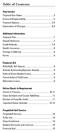 Table of Contents Your Invoice Payment Due Dates...3 Financial Responsibility...3 Payment Options... 3-5 Explanation of Charges... 5-6 Additional Information Payment Plan...7 Unpaid Balances...7 Credit
Policies and Procedures
 1 Policies and Procedures Observance of Bulletin Requirements A student, except a classified graduate student, who remains in continuous attendance in regular sessions and continuing in the same curriculum
2015-16 Academic Year
 2015-16 Academic Year Financial Aid & Scholarships Office This Award Notification Guide is your resource for understanding the types of financial aid offered and action required to accept your aid award,
GRADUATE COOPERATIVE EDUCATION SUMMARY OF POLICY
 GRADUATE COOPERATIVE EDUCATION SUMMARY OF POLICY A. POLICY INTENT AND STUDENT PARTICIPATION 1. Policy Intent Graduate cooperative education at NJIT is intended to complement formal classroom study and
UNIVERSITY OF MARYLAND. College of Education, Graduate Studies. Progress to Degree for the Master s Degree: Expectations for Completion
 UNIVERSITY OF MARYLAND College of Education, Graduate Studies Progress to Degree for the Master s Degree: Expectations for Completion Students are responsible for knowing and securing policies, regulations,
GIRNE AMERICAN UNIVERSITY TEACHING AND EXAMINATION BY LAW FOR ASSOCIATE AND BACHELOR S DEGREES
 GIRNE AMERICAN UNIVERSITY TEACHING AND EXAMINATION BY LAW FOR ASSOCIATE AND BACHELOR S DEGREES Name 1. This by law is referred to as the Girne American University Teaching and Examination By law for Associate
Admission to the College of Graduate Studies
 30 Admission to the College of Graduate Studies Admission to the College of Graduate Studies The University welcomes applications from individuals qualified for graduate study. Admission to graduate studies
The University of Mississippi. Doctoral Degrees
 The University of Mississippi Doctoral Degrees GENERAL REQUIREMENTS FOR ALL HIGHER DEGREES Degrees higher than the baccalaureate are granted at The University of Mississippi because of special attainments
Course registration Students may register for courses of study and drop or add courses only with the approval of the MLS director.
 Master of Liberal Studies (MLS) graduate students must meet the following minimums, deadlines and course or grade requirements to graduate in good standing from the university. These policies are based
Fee Payment Schedule & Tuition and Fee Schedule
 lassification Students ation, for purposes of applicable ed if, since original establishment of of legal residence has changed. ied as a non-resident for tuition or a change in classification to that now
ACADEMIC REGULATIONS FOR MASTER'S DEGREE PROGRAMS
 Additional Requirements 1. At least six hours of electives must be completed to present a minimum total of 120 semester hours. 2. A cumulative grade point average of 2.0, including a minimum of 2.0 in
Please review current Graduate College policies and procedures.
 Ph.D. Degree Requirements and Procedures Summary of Procedures for Ph.D. Students Complete every deficiency course with a grade of B or higher within the first two terms File an approved tentative program