
TOP 8 EXERCISES FOR AUTISM FITNESS
|
|
|
- Stella Dickerson
- 10 years ago
- Views:
Transcription

1 TOP 8 EXERCISES FOR AUTISM FITNESS By Eric Chessen

2 Top 8 Exercises for Autism Fitness Eric Chessen: Leading Authority in Autism Fitness AutismFitness.com, 90 Sherman Ave, Williston Park, NY 11596, USA [email protected] ( ) (internet) Copyright 2009 AutismFitness.com and Thera-Play, LLC. All right reserved. No part of this plan may be reproduced or transmitted in any form or by any means, electronic, mechanical, photocopying, recording, by an information retrieval and storage system or otherwise. except by a reviewer who may quote brief passages in a review to be printed in a magazine, newspaper, e-zine, blog without prior written permission from the publisher/author. For information contact: AutismFitness.com, 90 Sherman Ave, Williston Park, NY 11596, USA. [email protected]. First Printing 2009 Although the author and publisher have made every effort to ensure accuracy and completeness of information contained in this plan, we assume no responsibility for the errors, inaccuracies, omissions, or any inconsistency herein. Any slights of people, places or organizations are unintentional. The author or publisher shall have neither liability nor responsibility to any person or entity with respect to any loss or damage caused, directly or indirectly by the information contained in this plan. Trademarks are the property of their respective owners Attention organizations, certified, practicing trainers and schools: Quantity discounts are available on bulk purchases of this plan for educational purposes or fund raising. Special Plans or plan excerpts can be created to fit specific needs. For information contact: AutismFitness.com, 90 Sherman Ave, Williston Park, NY 11596, USA. [email protected].

3 About Fitness Fitness is an integral part of optimal development for everybody. When we learn how to move correctly and to engage in new or novel physical activities, our bodies and brains reap the benefits of new experiences and new skills. Many of the physical skills we develop as infants and toddlers cross over or generalize to daily life activities when we are older. For the autism population, a unique challenge exists due to several crucial issues: 1) A large proportion of children on the autism spectrum have gross motor imbalances that affect gait, posture, and the ability to correctly perform big movements (pushing, pulling, running, climbing, etc.) 2) Few, if any, fitness programs exist that focus on long-term fitness development for children, adolescents, and young adults with autism. As a result, the movement deficits or imbalances that occur in infancy continue to persist into later stages of life. Physical imbalances and weaknesses do not typically correct themselves. The human body is, if nothing else, an amazingly adaptive structure. If we tell our body to do something (jump over a hurdle, kick a ball, climb a ladder) our muscles respond, though not always in the most efficient way. Specific muscles evolved to perform specific functions. When the wrong muscles are compensating or taking over for the muscles that should be performing the activity, there is a higher likelihood of poor movement, imbalance, and possible injury. The good, rather, great news is that many exercises, particularly those in the Autism Fitness Top 8, are corrective in nature, especially when introduced to young populations. Rather than spending hours, money, and time with corrective

4 therapies, many movement patterns can be relearned, and optimized through simply including some exercise time every day. In addition to the physical benefits of exercise, research has demonstrated a strong connection between cognitive and emotional functioning and regular exercise. It is not an issue of brains vs. brawn, it is all about movement and mental ability! Teaching Exercise to children and teens with Autism Not all children on the autism spectrum enjoy new activities. In fact, as you probably know, that s kind of a theme among kids with ASD. Movement, particularly vigorous play (think playground, gymnastic area, fitness facility) is often a non-preferred or outright aversive activity. Borrowing from strategies used in Applied Behavior Analysis (ABA), we can pair exercise with know reinforcing activities (playing with a favorite toy, free time, listening to a favorite CD/MP3/whatever the next form of music delivery is, etc.) Suppose 9-year-old Gregory is not too big on learning to do a bear walk, but loves bouncing the big stability ball. If we make access to the ball contingent on performing the bear walk, Gregory will perform the bear walk (non-preferred) to get the ball. A very interesting (and important) process occurs over time. Exercise, having been paired with other reinforcers, can become reinforcing/preferred by itself. When exercise is inherently reinforcing, parents and instructors do not need to worry about providing new items/activities as rewards. Instead, the exercises and equipment, along with plenty of behavior-specific verbal praise is all you need. Behavior-specific verbal praise is effective in telling someone exactly what they

5 did well, rather than generalize, for example: Awesome job looking at me and throwing the ball is more specific than Great job. In the first instance, the child is being praised on the specific action they performed correctly. Prompting and fading are two other ABA concepts that are critical to the success of an exercise program. A child may have initial difficulty with a movement due to current physical or cognitive complications. Guiding the athlete through the exercise while they discover it for themselves can be an extremely helpful tool. Fading is the second half of the equation. If a parent/instructor has to hold their hands over the hands of the athlete for him to catch a ball, gradually decrease the prompt. For example, a parent/instructor may begin to fade the prompt from the hands to the wrists, and then perhaps a tap on the shoulder to remind the athlete to catch the ball. The goal is to have the individual performing the activity independently.

6 The Exercises Compound movements refer to activities that require several muscle groups to perform. These are big movements that have great generalization to other life skills including walking, carrying, balancing, cleaning, and engaging in novel play. I ve chosen these exercises in particular because they include all the major movement patterns (pushing, pulling, rotation, bending, and locomotion), are fun, and relatively easy to teach. Any one of these movements can be broken down or made simpler in order to meet the needs of an individual or group. As the young athlete progresses, he/she can begin performing the movements in new sequences or with additional activities (hopping, throwing a ball after performing the exercise). 1) Grab Ball Complex (GBC): - The athlete stands in front of the instructor/parent. Spot markers can be used to aid in spacial awareness. - Instructor/parent holds a ball or Sandbell at arms length in various positions in front of the athlete. The athlete should have to bend, rotate, and reach to grab the object. One or two hands can be used, and the sequence (up, down, right left) can be in a specific order or random.

7 2) Ball Tap Complex (BTC): - Similar to the GBC, in the Ball Tap Complex the athlete holds the ball or Sandbell while the instructor/parent holds out a hand or other object. The athlete taps the hand with the ball/sandbell. The target can be held in a variety of positions and presented in a particular sequence or random order. 3) Hurdle Step-overs: - Using low (6-1 ) hurdles, the athlete steps over each hurdle in order. The knees should be raised high and the head should be looking forward. If knees turn inward or outward, the instructor/parent can prompt the athlete with both a physical cue (such as tapping the knee or holding a hand next to the foot) and behavior-specific praise ( You re doing a great job picking that foot up high! ) - Hurdles can be placed in any order, and can be performed walking forwards or backwards, and laterally (sideways) as well. For more advanced athletes, jumping over hurdles with both or one foot and changing up directions (backwards, forwards) can be a great challenge. Prompting the athlete to step correctly with good form and eventual independent mastery

8 4) Bear Crawls - Bear crawls are fantastic for any population. With particular regard for individuals with ASD, bear crawls develop kinesthetic or body awareness, trunk strength, shoulder stability, and motor planning. - Begin in quadruped position (knees and hands on floor). - Extend legs until slightly bent, and walk using feet and hands to move across an area. Palms should make contact with floor and fingers should be spread wide. - Bear crawl can be assisted by prompting or guiding from the hips. - Bear crawl can be performed forwards, backwards, laterally (right or left), and with varying speeds. 1) Bear Crawl Start 2) Kicking legs back while performing Bear Crawl

9 3) Walking with both hands and feet 4) Completing a bear walk 5) Med ball/sandbell overhead throws and slams - Throwing and slamming weighted objects increases core strength, balance, and has some implications in stimulating brain centers responsible for shortterm memory. It is also a skill that has great carryover to daily life skills and social play. - Beginning in a standing position (spot markers can be used), the athlete raises the ball overhead and throws to partner. For the slam, the ball/sandbell is raised overhead and thrown onto the floor (or onto a specific target) with as much force as possible (don t worry, it s good for them). - Throwing progressions can include jumping and throwing, or scoop throws (holding the ball between the legs and scooping it forward to throw).

10 An awesome scoop throw with the Sandbell 6) Scramble - An awesome interactive activity made popular by IYCA Founder Brian Grasso. The Scramble can include many different movements beyond those listed here. It is a superb warm-up game that can be used with individuals or groups. It requires and develops listening skills, discrimination between movements and cues, and balance. - Athlete begins prone (lying on stomach) on soft surface (an exercise or yoga mat works great). This is the 1 st position. Position 2 is knees and hands on floor (quadruped), position 3 is quickly standing/bending knees, and position 4 is jumping up. Instructor can use specific verbal cues Stomach, knees and hands, jump up or other, more abstract cues such as one clap for stomach, two claps for knees and hands, three claps for standing, and four claps for jump up.

11 Position 1: Lying on stomach Position 2: Knees and Hands (quadruped) Position 3: Standing up/bending knees Position 4: Jumping up 7) Resistance Band Rotations - Rotation is important for spine and back health and is a particularly challenging movement pattern for young individuals with autism. Rotational movements strengthen the muscles around the spine as well as the core musculature. Rotation should not be a let s see how far we can turn movement. It is safest when turning to less-than-parallel with our hip bone.

12 - For the band rotation, a resistance band is placed in a doorway jamb securely fastened with a strap, or held by the instructor. The athlete grabs the band with both hands (one over the other) and rotates right and left. The movement should be controlled and the head should be positioned neutrally, not turning right or left with the upper body. Rotations can also be performed with a Sandbell or med ball. Rotating with Sandbell Rotating to the LEFT with resistance band (secured to tree) Rotating to the RIGHT with resistance band

13 8) Star Jumps - Star Jumps can be performed singularly or in multiple repetitions. They can also be done jumping forward, backwards, or laterally by more advanced athletes. The athlete begins in a squatting position with feet flat on the floor and arms tucked in so that the elbows touch the knees. On the instructor s cue, the athlete jumps up with arms and legs out, returning to squatting position with arms and legs tucked in. Repeat for up to 20 repetitions (or until fatigue is evident). When an athlete/group becomes proficient in these exercises, feel free to challenge them with any of the progressions listed above or create your own. You can develop a circuit using all of the mastered activities. Many of these exercises and more can be found in the Beyond Boundaries: Fitness for the Young Autism Population DVD series at:

14 For more information visit: Website: Website: You can contact the offices of Autism Fitness between the hours of 8:30am and 5:00pm at: or contact Eric Chessen via mail at: 90 Sherman Ave, Williston Park, Y 11596, USA

EXERCISE INSTRUCTIONS 1
 EXERCISE INSTRUCTIONS 1 Contents ANKLE TOUCHES... 4 BACK EXTENSIONS... 4 BACK REVERSE FLYES... 4 BALL ROLL... 4 BASKETBALL SQUATS... 4 BEAR CRAWL... 4 BICEP CURL (Resistance Band)... 4 BOXING JABS... 5
1. Cut & plant 6. Hitch Hiker 5-7 cuts on each side 3 x 20-30s. 2. Single-leg jumping 7. Y-position 5-10 reps 2 x 10 reps each arm
 Beach Volleyball program - Level 1 1. Cut & plant 6. Hitch Hiker 5-7 cuts on each side Keep knee over toe 5-7 cuts on each side Squeeze shoulder blades together Lift arms Thumb pointing upwards 2. Single-leg
Range of Motion. A guide for you after spinal cord injury. Spinal Cord Injury Rehabilitation Program
 Range of Motion A guide for you after spinal cord injury Spinal Cord Injury Rehabilitation Program This booklet has been written by the health care providers who provide care to people who have a spinal
Fact sheet Exercises for older adults undergoing rehabilitation
 Fact sheet Exercises for older adults undergoing rehabilitation Flexibility refers to the amount of movement possible around a joint and is necessary for normal activities of daily living such as stretching,
P.E. Activities for Junior and Senior School Children who have Dyspraxia
 P.E. Activities for Junior and Senior School Children who have Dyspraxia Michele Lee Grad.Dip.Phys, MCSP, SRP Introduction These activities and games can be enjoyed in PE lessons, or in clubs and groups.
Shoulders (free weights)
 Dumbbell Shoulder Raise Dumbbell Shoulder Raise 1) Lie back onto an incline bench (45 or less) with a DB in each hand. (You may rest each DB on the corresponding thigh.) 2) Start position: Bring the DB
Spinal Exercise Program/Core Stabilization Program Adapted from The Spine in Sports: Robert G. Watkins
 Spinal Exercise Program/Core Stabilization Program Adapted from The Spine in Sports: Robert G. Watkins Below is a description of a Core Stability Program, designed to improve the strength and coordination
EGOSCUE CLINIC PAIN/POSTURE STRETCHES 1. Standing Arm Circles: Helps Restore Upper Body Strength
 EGOSCUE CLINIC PAIN/POSTURE STRETCHES 1. Standing Arm Circles: Helps Restore Upper Body Strength Two sets of 40 repetitions each. Stand with your feet pointed straight and hip-width apart. Place your fingertips
Rehabilitation Exercises for Shoulder Injuries Pendulum Exercise: Wal Walk: Back Scratcher:
 Rehabilitation Exercises for Shoulder Injuries Begin these exercises when your pain has decreased about 25% from the time when your injury was most painful. Pendulum Exercise: Lean over with your uninjured
Exercises for older people
 Exercise for older people Exercises for older people Sitting Getting started If you ve not done much physical activity for a while, you may want to get the all-clear from a GP before starting. For the
Speed, Agility, Quickness Training
 Speed, Agility, Quickness Training Goal: To develop Speed, Agility, and Quickness (SAQ) and functional football strength for young football players through a consistent and safe format. Place the stations
Low Back Pain Exercises Interactive Video Series Transcript July 2013
 Introduction Low Back Pain Exercises Interactive Video Series Transcript July 2013 ** Note: If an exercise causes an increase in your pain, stop the exercise.** [Music introduction; Dr. John Sheehan onscreen]
Strength Training HEALTHY BONES, HEALTHY HEART
 Strength Training HEALTHY BONES, HEALTHY HEART No matter what your age, strength training can improve your bone health and your balance. As we age, our bones lose both tissue and strength. This condition
Activities for the Young Baby
 31 Chapter 5 Activities for the Young Baby (Birth to 6 Months) A new baby does not usually look as though she is doing very much. She spends most of her time eating, sleeping, and resting. But even though
Exercise 1: Knee to Chest. Exercise 2: Pelvic Tilt. Exercise 3: Hip Rolling. Starting Position: Lie on your back on a table or firm surface.
 Exercise 1: Knee to Chest Starting Position: Lie on your back on a table or firm surface. Action: Clasp your hands behind the thigh and pull it towards your chest. Keep the opposite leg flat on the surface
Stretching for Young Athletes. Shawn P. Anderson, SPT Duke University Doctor of Physical Therapy
 Stretching for Young Athletes Shawn P. Anderson, SPT Duke University Doctor of Physical Therapy Sports and exercise are usually integral parts of many adolescents life. Whether they play at school or in
An Hour a Day to Play. Infant Activities
 An Hour a Day to Play Infant Activities #Good4Growth good4growth.com Fun & Engaging Activities for Kids of All Ages Presented is a list to help kids of all ages through the following: Physical Well Being
EXERCISE DESCRIPTIONS PHASE I Routine #1
 EXERCISE DESCRIPTIONS PHASE I Routine #1 Hip Mobility Exercise: Forward Out-In Movement: Raise leg out to the side, and rotate around to the front. Keep shin/thigh angle at 90 degrees. Exercise: Backward
Throwers Ten Exercise Program
 Throwers Ten Exercise Program The Thrower s Ten Program is designed to exercise the major muscles necessary for throwing. The Program s goal is to be an organized and concise exercise program. In addition,
Basic Stretch Programme 3. Exercise Circuit 4
 Basic Stretch Programme 3 Exercise Circuit 4 2 1 Calves Stand approximately 1 metre away from wall with legs straight and heels on floor. Step and lean forward and slowly push hips towards wall. Should
Stretching in the Office
 Stretching in the Office Legs: Quads, Hamstrings, IT band, Hip flexors, Gluts, Calves Quads: Standing @ desk maintaining upright posture, grab one leg @ a time by foot or ankle and bring it towards backside
PD WARRIOR MODULE 1. Copyright PD Warrior 2012
 PD WARRIOR MODULE 1 1 PD WARRIOR STATIONS 1 OVERHEAD BALL THROW 2 SQUAT AND STOP 3 SCARF SNATCH 4 LADDER STEP & ARM BURNER 5 DOUBLE STEP TAP 6 BIKE SPRINTS 7 PARTNER BOX 8 BALL SLAMS & BALANCE 9 HELICOPTER
Archery: Coaching Young Athletes. Developing Fundamental Movement Skills
 Archery: Coaching Young Athletes Developing Fundamental Movement Skills Make a long term commitment Long Term Athlete Development Long Term Athlete Development (LTAD) is a strategy for helping youngsters
JUNIPERO SERRA VOLLEYBALL OFF SEASON TRAINING SCHEDULE
 JUNIPERO SERRA VOLLEYBALL OFF SEASON TRAINING SCHEDULE 2007 OFF SEASON WORKOUT Our off season workout is centered around Speed, Agility & Quickness which are athletic attributes that are very trainable
The 11+ A complete warm-up program
 The 11+ A complete warm-up program Part 1 & 3 A A }6m Part 2 B A: Running B: Jog back B! FIELD SET-UP A: Running exercise B: Jog back The course is made up of 6 pairs of parallel cones, approx. 5-6m apart.
12 Week Do-it-Yourself Fitness Program
 12 Week Do-it-Yourself Fitness Program Created by Brad Awalt, MS, ACSM Assistant Manager, Health Plus [email protected] January 2011 Do you have a goal to begin an exercise routine, but not sure
HELPFUL HINTS FOR A HEALTHY BACK
 HELPFUL HINTS FOR A HEALTHY BACK 1. Standing and Walking For correct posture, balance your head above your shoulders, eyes straight ahead, everything else falls into place. Try to point toes straight ahead
How To Stretch Your Body
 Exercise Module A New Leaf Choices for Healthy Living University of North Carolina at Chapel Hill 2007 Center for Health Promotion and Disease Prevention Physical Activity Exercises for Keeping Active
SHOULDER PULL DOWNS. To learn efficient use of the shoulder blades and arms while maintaining a neutral spine position.
 SHOULDER INTRODUCT ION Welcome to your shoulder exercise program The exercises in the program are designed to improve your shoulder mobility, posture and the control of the muscles in your neck and shoulder
Knowsley Approach to Gymnastics Key Stages 1 & 2
 Knowsley Approach to Gymnastics Key Stages 1 & 2 Introduction Welcome to the Knowsley approach to gymnastics for Key Stages 1 & 2. Enjoy using the scheme and make gymnastics a fun area of PE to teach.
Preventing Falls. Strength and balance exercises for healthy ageing
 Preventing Falls Strength and balance exercises for healthy ageing Exercise should be comfortable and fun. To get the most out of your home exercise book, join a class for older people to check your exercises
Plyometric Training for Track and Field Indiana High School Clinic 2008 Larry Judge, Ph.D. Ball State University
 Plyometric Training for Track and Field Indiana High School Clinic 2008 Larry Judge, Ph.D. Ball State University What is Plyometric Training? Exercises like hopping, skipping, jumping, bounding, depth
Range of Motion Exercises
 Range of Motion Exercises Range of motion (ROM) exercises are done to preserve flexibility and mobility of the joints on which they are performed. These exercises reduce stiffness and will prevent or at
BEACH VOLLEYBALL TRAINING PROGRAM
 2008 ELITE PERFORMANCE ATHLETE CONDITIONING BEACH VOLLEYBALL TRAINING PROGRAM Team BC 2008 Steve Van Schubert, CAT(C), CSCS Training Schedule General Outline Phase 1 2 Weeks Phase 2 3 Weeks Phase 3 3 Weeks
Chronos - Circuit Training Bodyweight
 Outline Chronos - Circuit Training Bodyweight 1. Mountain climbers doubles x 10 2. Mountain climbers singles x 10 each leg 3. Mountain climbers singles out x 10 each leg 4. Mountain Climbers Doubles out
The Examination...2. Pitching Mechanics...4. Core Exercises...5. Scapular Stretches...7. Scapular Exercises...8. Summary...10. Pitch Counts...
 Table of Contents The Examination....2 Pitching Mechanics...4 Core Exercises....5 Scapular Stretches...7 Scapular Exercises...8 Summary...10 Pitch Counts...12 Introduction Here at Vanderbilt Sports Medicine,
Lumbar/Core Strength and Stability Exercises
 Athletic Medicine Lumbar/Core Strength and Stability Exercises Introduction Low back pain can be the result of many different things. Pain can be triggered by some combination of overuse, muscle strain,
The Dance Lesson. A good dance lesson should contain some or all of the following:-
 The Dance Lesson The Primary School Curriculum says:- Dance in education involves the child in creating, performing and appreciating movement as a means of expression and communication. Dance differs from
ROTATOR CUFF HOME EXERCISE PROGRAM
 ROTATOR CUFF HOME EXERCISE PROGRAM Contact us! Vanderbilt Sports Medicine Medical Center East, South Tower, Suite 3200 1215 21st Avenue South Nashville, TN 37232-8828 For more information on this and other
FUNCTIONAL STRENGTHENING
 FUNCTIONAL STRENGTHENING *This group of exercises are designed to increase leg and core endurance and stability as related to bipedal functional activities. *Perform this program for 4-6 weeks. It is ideal
INTRODUCTION TO POSITIONING. MODULE 3: Positioning and Carrying
 MODULE 3: Positioning and Carrying Blankets, pillows and towels, sandbags, carpet on the floor, a doll with floppy limbs that can be positioned i.e. not a hard plastic doll, display materials. Icebreaker
Passive Range of Motion Exercises
 Exercise and ALS The physical or occupational therapist will make recommendations for exercise based upon each patient s specific needs and abilities. Strengthening exercises are not generally recommended
ISOMETRIC EXERCISE HELPS REVERSE JOINT STIFFNESS, BUILDS MUSCLE, AND BOOSTS OVERALL FITNESS.
 ISOMETRIC EXERCISE HELPS REVERSE JOINT STIFFNESS, BUILDS MUSCLE, AND BOOSTS OVERALL FITNESS. By Askari A. Kazmi KazmisBioscienceLabs exercise helps reverse joint stiffness, builds muscle, and boosts overall
Don t. Hamstrings. Calf Muscles. both legs 2-3 times. stretch is felt in the back of the calf. Repeat with both legs 2-3 times.
 Remember to: Warm-up your muscles first before stretching (e.g. stretch after walking). Stretch until you feel mild discomfort, not pain. Never bounce or force a stretch. Hold the stretch for 10-30 seconds
W SITTING, KNEELING, LONG LEG & SIDE SITTING Perils, Problems, & Prevention
 W SITTING, KNEELING, LONG LEG & SIDE SITTING Perils, Problems, & Prevention Tema Stein B.P.T., D.O (mp) Paediatric Physical Therapist Osteopathic Manual Practitioner Toddlers, preschoolers and children
Care at its Best! Foam Roller Exercise Program
 Foam Roller Exercise Program Foam rollers are a popular new addition the gym, physical therapy clinics or homes. Foam rollers are made of lightweight polyethyline foam. Cylindrical in shape, foam rollers
Chest (medicine ball)
 Kneel to Pushup Kneel to Pushup Start Position: Your body will be in an upright position sitting on your knees. Hold medicine ball at chest level. Keeping your torso erect fall forward and chest press
Kelly Corso MS, ATC, CES, FMSC, CSST
 ACL Injury Prevention Program Kelly Corso MS, ATC, CES, FMSC, CSST What is the ACL??? The ACL or anterior cruciate ligament, attaches the front top portion of the shin bone (tibia) to the back bottom portion
2015 Cheer Squad Summer Strength & Conditioning
 2015 Cheer Squad Summer Strength & Conditioning Hello Cheer Squad, Welcome to 1 st annual summer conditioning program for Rams Cheer Squad. In order to maximize your potential as a Cheer Squad member you
Strengthening Exercises - Below Knee Amputation
 Strengthening Exercises - Below Knee Amputation These exercises will help you strengthen your muscles to best use your prosthetic leg. Do these exercises as directed by your therapist or doctor. Do the
Rehabilitation after shoulder dislocation
 Physiotherapy Department Rehabilitation after shoulder dislocation Information for patients This information leaflet gives you advice on rehabilitation after your shoulder dislocation. It is not a substitute
Standing with legs slightly apart, inhale and expand chest and shoulders; exhale and draw in chest and shoulders.
 ILLUSTRATED EXERCISE #4 PAGE 1 2012 Bringing the Body to the Stage and Screen and Beyond by Annette Lust 1 Standing with legs slightly apart, inhale and expand chest and shoulders; exhale and draw in chest
stretches and exercises
 stretches and exercises The enclosed sheets contain stretches and exercises which can be used to delay and minimise the development of contractures and deformities occurring in children with Duchenne muscular
Trunk Strengthening and Muscle and Coordination Exercises for Lower Limb Amputees
 Trunk Strengthening and Muscle and Coordination Exercises for Lower Limb Amputees Part One: Trunk Strengthening Trunk Extension Needed: Sturdy chair or stool, Theraband, and a Theraball if necessary. Sit
Stair Workouts Get in Shape: Step up
 Stair Workouts Get in Shape: Step up Warning: If you feel any knee pain, refrain from continuing that particular exercise. Avoid the no pain, no gain motto and modify with regular walking or any activity
Sutton & Cheam Swimming Club. Land Training for Swimming and Water Polo
 Sutton & Cheam Swimming Club Land Training for Swimming and Water Polo Why do we need to perform land work? Many of the basics for swimming and water polo can be gained by experiencing activities out
Coaching Tips Tee Ball
 Coaching Tips Tee Ball Tee Ball Overview The great thing about tee ball is that there are very few rules to learn and that the game is all about involving lots of kids. It s about making sure all players
Contact us for more info: 020 7736 8191 /
 Winter Sports Advanced Ski Exercises - Introduction The following exercises are for individuals who already have a significant level of fitness. If you are unsure as to whether they are appropriate for
Instructor Training Program Levels 1 through 4 Uneven Bars
 USA Gymnastics Online: Technique: Uneven Bars Page 1 of 9 Instructor Training Program Levels 1 through 4 Uneven Bars Level 1 - Uneven Bars MOUNT: BACK HIP PULLOVER Grasp bar with hands "shoulder width"
CONDITIONING PROGRAM
 CONDITIONING PROGRAM Speed and Agility are two major components of sport that need to be trained just like strength, size, and power are developed in the weight room. It is true that no matter what your
Lower Body Strength/Balance Exercises
 Compliments of (Medical Group Name & Phone # to be inserted here) Lower Body Strength/Balance Exercises Hip Flexion Strengthens thigh and hip muscles. Use ankle weights, if you are ready to. Stand to the
SAMPLE WORKOUT Full Body
 SAMPLE WORKOUT Full Body Perform each exercise: 30 secs each x 2 rounds or 2-3 sets of 8-12 reps Monday & Wednesday or Tuesday & Thursday Standing Squat Muscles: glutes (butt), quadriceps (thigh) Stand
Knee Conditioning Program. Purpose of Program
 Prepared for: Prepared by: OrthoInfo Purpose of Program After an injury or surgery, an exercise conditioning program will help you return to daily activities and enjoy a more active, healthy lifestyle.
General Guidelines. Neck Stretch: Side. Neck Stretch: Forward. Shoulder Rolls. Side Stretch
 Stretching Exercises General Guidelines Perform stretching exercises at least 2 3 days per week and preferably more Hold each stretch for 15 20 seconds Relax and breathe normally Stretching is most effective
Physical Capability Strength Test: One Component of the Selection Process
 Physical Capability Strength Test: One Component of the Selection Process One aspect of the Power Systems Institute selection process is to successfully complete and achieve a passing score on a physical
Clasp hands behind hips and stretch arms down towards floor. Roll shoulder back to open chest. Do not let back arch. Power Skips
 Warm Up Exercises Jump Rope Ankle Bounces Jumping Jacks Using a fast twirl, rapidly jump up and down using spring in the feet and ankles, not in knees. V-Jumps Rapidly jump up and down using spring in
Prasara Yoga Lesson: Iguana Asana for Leg Swoops
 Prasara Yoga Lesson: Iguana Asana for Leg Swoops About the author: Jason Erickson, CST, ACE-PT, NCTMB has been teaching Circular Strength Training since 2004. A personal trainer, yoga instructor, and massage
ANKLE STRENGTHENING INTRODUCTION EXERCISES SAFETY
 ANKLE STRENGTHENING INTRODUCTION Welcome to your Ankle Strengthening exercise program. The exercises in the program are designed to improve your ankle strength, fitness, balance and dynamic control. The
MINDING OUR BODIES. Healthy Eating and Physical Activity for Mental Health
 MINDING OUR BODIES Healthy Eating and Physical Activity for Mental Health Facilitators Guide: Background Information (note: tell participants to consult with their doctor before starting to exercise) What
Exercises for Low Back Injury Prevention
 DIVISION OF AGRICULTURE RESEARCH & EXTENSION University of Arkansas System Family and Consumer Sciences Increasing Physical Activity as We Age Exercises for Low Back Injury Prevention FSFCS38 Lisa Washburn,
No Equipment Agility/Core/Strength Program for Full Body No Equip Trainer: Rick Coe
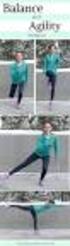 No Equipment Agility/Core/Strength Program for Full Body No Equip Trainer: Rick Coe Introduction Program designed to be performed in a circuit. Perform exercises in sequence without rest 2-3 times. Increase
Lower Body Exercise One: Glute Bridge
 Lower Body Exercise One: Glute Bridge Lying on your back hands by your side, head on the floor. Position your feet shoulder width apart close to your glutes, feet facing forwards. Place a theraband/mini
Otago Exercise Program Activity Booklet
 Head Movements Stand up tall and look ahead. Slowly turn your head as far as you can to the right. Slowly turn your head as far as you can to the left. Repeat five times to each side. 44 Neck Movements
PE in Primary Schools Resource Summer Games
 PE in Primary Schools Resource Summer Games 1 2 PE in Primary Schools Resource Summer Games Ollie Dowding Kerri Brown Tom Eisenhuth Athletics Cricket Golf Page 5-10 Page 16-21 Page 22-27 3 Example Key
Chair Exercises For Older Adults
 Chair Exercises For Older Adults Many of these exercises were adapted from these sources: National Institute on Aging, Exercise: A Guide from the National Institute on Aging, 2001, http://www.nia.nih.gov/healthinformation/publications/exerciseguide/.
Strength Training for the Runner
 Strength Training for the Runner Strength Training for the Runner What? The goal of resistance training for runners is not necessarily adding muscle mass but 1. improving muscular strength, 2. improving
THROWER S TEN EXERCISE PROGRAM
 THROWER S TEN EXERCISE PROGRAM Diagonal Pattern D2 Extension Involved hand will grip tubing handle overhead and out to the side. Pull tubing down and across your body to the opposite side of leg. During
Rehabilitation. Rehabilitation. Walkers, Crutches, Canes
 Walkers, Crutches, Canes These devices provide support through your arms to limit the amount of weight on your operated hip. Initially, after a total hip replacement you will use a walker to get around.
-Balance on hands and feet rolling the upper hamstring area.
 -Begin w/roller around mid balance w/ back flat on ground, put hands behind head. -Slowly roll to mid/upper shoulder blade area. -Roll to right or left to emphasize one side. Thoracic Spine Mobility -Sit
Exercises for the Hip
 Exercises for the Hip Gluteal Sets: Lie on your back, tighten buttocks and hold for 3-5 seconds. Repeat 20 times. Supine Hip ER/IR: Lie on your back with legs straight. Gently rotate knees out and in limited
Developing Fundamental Movement Skills
 Developing Fundamental Movement Skills GENERAL OVERVIEW OF CATCH Being able to catch a ball is vital in order to play many team games (such as netball, Gaelic football, rugby, baseball, cricket and basketball)
try Elise s toning exercise plan
 try Elise s toning exercise plan Whether you want to start things off slow and gradually build up your fi tness, or begin with a challenge, Elise s toning exercise programme is designed for all levels.
The Santa Monica Orthopaedic and Sports Medicine Research Foundation. The PEP Program: Prevent injury and Enhance Performance
 The Santa Monica Orthopaedic and Sports Medicine Research Foundation The PEP Program: Prevent injury and Enhance Performance This prevention program consists of a warm-up, stretching, strengthening, plyometrics,
are you reaching your full potential...
 T h e r e s n o s u c h t h i n g a s b a d e x e r c i s e - j u s t e x e r c i s e d o n e b a d l y FIT for sport are you reaching your full potential... These tests are a series of exercises designed
Hip Conditioning Program. Purpose of Program
 Prepared for: Prepared by: OrthoInfo Purpose of Program After an injury or surgery, an exercise conditioning program will help you return to daily activities and enjoy a more active, healthy lifestyle.
CHAPTER 3: BACK & ABDOMINAL STRETCHES. Standing Quad Stretch Athletic Edge - www.athleticedge.biz - (650) 815-6552
 CHAPTER : BACK & ABDOMINAL STRETCHES Standing Quad Stretch ) Stand and grasp right ankle with same hand, use a wall or chair to Lower maintain Back balance with left hand. Maintain an upright Stretches
Yoga Teacher Training Home Study Course. Part 3b. Teaching and Practicing Sun Salutations
 Yoga Teacher Training Home Study Course Part 3b Teaching and Practicing Sun Salutations Sun Salutations (Surya Namaskar) A sun salutation is a graceful sequence of positions performed as one continuous
Cervical Exercise: How important is it? What can be done? The Backbone of Spine Treatment. North American Spine Society Public Education Series
 Cervical Exercise: The Backbone of Spine Treatment How important is it? What can be done? North American Spine Society Public Education Series Important: If you have had an accident that started your neck
Ensure that the chair you use is sturdy and stable. Wear comfortable clothes and supportive footwear.
 Page 1 Safety Ensure that the chair you use is sturdy and stable. Wear comfortable clothes and supportive footwear. Prepare a space and have your exercise band and a glass of water (for afterwards) ready
Teaching Motor Skills to Children with Cerebral Palsy
 Teaching Motor Skills to Children with Cerebral Palsy and Similar Movement Disorders A Guide for Parents and Professionals Sieglinde Martin Woodbine House 2006 2006 Sieglinde Martin All rights reserved
McMaster Spikeyball Therapy Drills
 BODY BLOCKS In sequencing Breathing and Tempo Flexibility / Mobility and Proprioception (feel) Upper body segment Middle body segment Lower body segment Extension / Static Posture Office / Computer Travel
COMMON OVERUSE INJURIES ATTRIBUTED TO CYCLING, AND WAYS TO MINIMIZE THESE INJURIES
 COMMON OVERUSE INJURIES ATTRIBUTED TO CYCLING, AND WAYS TO MINIMIZE THESE INJURIES Listed are a few of the most common overuse injuries associated with cycling long distances. 1. Cervical and upper back
A proper warm-up is important before any athletic performance with the goal of preparing the athlete both mentally and physically for exercise and
 A proper warm-up is important before any athletic performance with the goal of preparing the athlete both mentally and physically for exercise and competition. A warm-up is designed to prepare an athlete
Leg Strengthening Exercises
 Leg Strengthening Exercises This exercise program has been designed for you by your physical therapist. Do only the exercises marked. Do them slowly and smoothly on a firm surface. Never hold your breath
Back Safety and Lifting
 Back Safety and Lifting Structure of the Back: Spine The spine is the part of the back that supports the trunk and head. It protects the spinal cord as well as giving flexibility to the body. Vertebrae
THREE SPECIALLY CREATED WORKOUTS
 THREE SPECIALLY CREATED WORKOUTS PIERRE POZZUTO, PERSONAL TRAINER One of the UK s most renowned personal trainers, Pierre s celebrity clients include Keira Knightley and Gordon Ramsay. Starting out as
CPD GYM BASED BOXING MANUAL
 CPD GYM BASED BOXING MANUAL Gym Based Boxing Manual www.thetrainingroom.com 2 MANUAL CONTENTS Page Unit 1 Health and Safety Considerations Unit 2 Benefits of Gym Based Boxing Unit 3 Correct Stance Unit
Brachial Plexus Palsy
 Patient and Family Education Brachial Plexus Palsy A Therapy Guide for Your Baby Brachial Plexus Palsy is caused by trauma to the nerves of the arm. This trauma may have caused muscle weakness, lack of
The advanced back rehabilitation programme
 Physiotherapy Department The advanced back rehabilitation programme This booklet explains what happens during the advanced back rehabilitation programme and how the exercises may help your condition. We