
Many Mindfulness Exercises Patricia Bear, LPC
|
|
|
- Daniel Murphy
- 10 years ago
- Views:
Transcription
1 Many Mindfulness Exercises Patricia Bear, LPC Breath based Just notice: Without changing anything about your breathing, just notice what parts of your body move with each inhale and exhale. Focus on each inhale and exhale for several breaths. When your mind wanders, return to your breath. Belly breathing: Sit or lie in a comfortable position. Place your hand on your stomach, between your ribs and your belly button. With each inhale feel your hand move outward from your spine, indicating that you diaphragm is lowering and pulling air all the way to the bottom of your lungs while pushing out the organs in your abdomen. As you exhale notice your hand moving back toward your spine. Focus on each inhale and exhale. As other thoughts come to mind, gently let them go wit hout judgment, and return your focus to your breath. Counting: Begin with belly breathing. Count as you inhale, then start counting over as you exhale. Notice whether your inhale or your exhale is longer. Notice if you pause between inhaling and exhaling, between exhaling and inhaling, both, or neither. You may want to slowly increase the length of each inhale and exhale. Counting the breaths: Begin with belly breathing. As you inhale think inhale one and as you exhale think exhale one. Continue with the next breath and think inhale two and then exhale two. Continue for five breaths to begin with, and work your way up to ten breaths. If you lose count of your breaths, don t judge yourself, and start over at one. Begin with exhale: Begin with belly breathing. Rather than thinking of your inhale as the beginning of your breath cycle, think of your exhale as the beginning of your breath cycle. Count as with Counting the breaths above. Slower, deeper, longer, quieter: Begin with belly breathing. Count the lengths of your inhales and exhales. Consciously try to lengthen each breath. As you are lengthening your breath, think about breathing slower, quieter, and deeper. Triangle breathing: Begin with belly breathing. Inhale for a count of four, hold your breath gently for a count of seven, and exhale for a count of eight. Repeat four or five times if you can. Increase the number of cycles as you are able. Relaxing sigh: Take a deep breath and exhale loudly, as if you are sighing. Repeat several times. Deep exhale: Imagine that you are blowing up a balloon. With each exhale purse your lips and blow out as much air as you possibly can. Think about pulling your belly button up and toward your spine a bit. You will inhale automatically! Start with four or five exhales and increase as you feel comfortable. Allowing yourself to be breathed: Imagine that the universe is gently blowing air into your body with each inhale, and gently drawing air out of your body with each exhale. Th e universe knows exactly how much air you need to take in and release with each breath.

2 Walking and breathing: As you are walking count how many steps you take for each inhalation and each exhalation. Notice how breathing feels in your body as you are walking. If you wish you can try to make your inhalation and exhalation the same number of steps, or you can try to lengthen the number of steps you take with each inhalation or exhalation. Stimulating breath: Place the tip of your tongue on the soft tissue just above your upper teeth and keep it there. Breathe rapidly in and out through our nose with your mouth closed. Inhalations and exhalations should be equal and short, and you will feel the muscles in our neck and stomach working hard. Breathe as rapidly as you can and so quickly that you can hear your breath. Start with only 15 seconds and gradually add time as you are comfortable. This is energizing rather than relaxing. Expansive breath: Stand with your feet about shoulder width apart and your arms straight out in front of you with your hands touching each other and your shoulders relaxed. Inhale and exhale through your mouth for this exercise. As you inhale spread your hands open and open your arms wide, bringing your hands behind you as far as you can and pointing your finger tips behind you. Tip your head back slightly and look upward. As you exhale bring your arms into your stomach and bend over slightly, letting your head hang and looking at your hands. Repeat several times at a comfortable pace. Power breathing: Stand with your feet about shoulder width apart and your arms hanging comfortably at your sides. Hold your head erect with your chin slightly forward. Imagine that you are standing on a color that represents power, and imagine that you are breathing in a color that represents strength. Follow your breathing for several breaths or minutes, imagining the power and strength flowing into your body with each breath. Sensation based Raisin Meditation: Start with three raisins. Pick up the first and use all five senses in turn to examine the raisin. First, look at it carefully; second, roll it around in your fingers; third, smell it; fourth, place it in your mouth and roll it around on your tongue; fifth, slowly chew and taste it. Listen to the sounds your mouth makes while chewing. Completely chew and swallow the first raisin before moving on to the second. Follow the same process with the second (and then the third) raisin, noticing any differences between raisins. This can also be done with other dried fruits or foods; the advantage of raisins is that they vary! Look: Find any object in your environment. Look at it and try to absorb sensations through your vision only. Try to clear your mind of any other input or distractions, focusing only on your sense of sight. Listen: Notice any sound in your environment. Listen and try to absorb sensations only through sound. Try to clear your mind of any other input or distractions, focusing only on your sense of hearing. Variation: Listen to your favorite music (or any music) mindfully by focusing on each distinct sound that creates the whole piece. Feel: Notice any physical sensation in your body. Try to clear your mind of any other input or distractions, focusing only on your sense of physical feeling. Just notice, without judging.

3 The Betty: Think of it this way: Look, Listen, Feel, 3, 2, 1. First, look at three objects in your environment. It doesn t matter what they are, just focus on three separate things in succession. Next, listen to three sounds in your environment. Again, just switch from one, to the next, to the next. Then feel three things with your body. Just notice three separate sensations in succession. Now go back to looking, and look at two things. They can be the same things you looked at before or different, it doesn t matter. Then two sounds, then two physical sensations. Now look at one thing, listen to one thing, and feel one thing. Breathe deeply and relax. Observe: Just notice your environment. Pay attention to what is going on around you in this moment (and this one and this one ). Use all your senses. When your thoughts wander to something from the past or the future, return your attention to the present. Do this again and again. Describe: Focus on any object or sensation (sound, smell, taste, feeling) and put words on your experience. Imagine you are describing the object or sensation to an alien and include as much detail as you can. Be specific and exact. Notice details. Imagery based Waves: This is best done lying on your back in a comfortable position. Begin with belly breathing. With each inhale imagine a wave cresting just above your belly button, and with each exhale imagine the wave crashing out in every direction, washing away tension from every muscle in your body. Colors: Think of a color that is soothing to you. Imagine that with each inhale you are breathing in air that is rich with that color. With each exhale the air you breathe out is a little lighter. The rich soothing color fills your whole body, getting deeper and richer with each breath. Sponge: Imagine that your body is a sponge and you are sitting or lying in a pool of very warm or hot water. With each inhale your body soaks up some of the warm water, and with each exhale the warm water saturates your body-sponge. As you continue you body becomes warmer and warmer, as well as softer and softer. Countdown in the sand: Imagine yourself sitting or lying on the beach in the sand. With your nonwriting hand smooth a small area of sand in front of you. With your writing hand write the number 10 in the sand. With your non-writing hand smooth the sand over, and with your writing hand write the number 9. Continue smoothing the sand over and writing numbers in reverse order until you reach 0. Vary by starting with any number you wish. Under the waves: Imagine that you are a pebble and you have been dropped in the ocean. The waves may be stormy or calm on the surface of the ocean, and you pass through them. As you sink lower and lower you notice that the water becomes more and more still and calm. Look up and notice the waves and weather on the surface of the ocean, while remaining in the calm and still place deeper down in the water. Firefly: Begin with belly breathing. With each inhale imagine that you re bringing light and energy into your body. With each exhale imagine the light and energy flowing out through every pore of your skin. Imagine your body creating a rhythmic glowing, like a firefly.

4 Balloon: Begin with belly breathing. Imagine that each inhale fills your body with a little more air, as if you were blowing up a balloon. First fill your chest and torso, then your arms, then your legs, and finally your head. Imagine the air filling your body from the top of your head, all the way to your fingertips, and all the way to your toes. Appreciation/Heart coherence: Begin with belly breathing. Imagine that your breath is massaging your heart with each inhale and exhale. Think of something you appreciate or otherwise bring a positive emotion to mind. Focus this positive feeling right on your heart, and imagine your breath massaging it into your heart with each inhale and exhale. (Adapted from HeartMath Quick Coherence T echnique) Guided Imagery: Many guided imagery CDs are available at the library or on-line. I recommend Andrew Weil, M.D.; Martin Rossman, M.D.; Jon Kabat-Zinn; or Belleruth Naparstek. Some websites have a few free downloads. Body based Any physical activity can be a mindfulness exercise. Yoga and Tai Chi are particularly good mindfulness activities because they incorporate body, mind, and spirit. Team sports are great because they require focus and participation. The key is to keep increasing your practice so that your body and mind are challenged enough to stay focused. If you find your mind wandering, take your practice to the next level so that you have to concentrate and focus again. Just noticing: Focus on the physical sensations in your body. Notice any tightness, pain, softness, or other sensations. Do not try to change anything, just notice and accept your body. Alternate Finger Feeling: Place your finger tips together. Rub one finger around on the other. Notice that you can direct your attention so that you feel only one finger at a time. Switch fingers. Mindful Walking: Start by taking very slow and deliberate steps. Notice all the small adjustments your body has to make to keep yourself upright and moving forward. Next walk at a regular pace and notice what muscles your body is using. Think about your feet gently kissing the earth as you take each step. Take a walk outside and notice your environment through your five senses. Use mindfulness to keep your attention on the present moment with each step. Body feeling contrast: Place one part of your body, such as your hand, on another part of you body, such as your leg, or opposite arm. Notice that you can focus your attention on the sensations in one body part separately from the sensations in the other body part. For example, if you place a cold hand on a warm stomach, you can notice your hand feeling warmth, and you can notice your stomach feeling cold. Body scan: Begin with belly breathing. While sitting or lying in a comfortable position, bring your attention to different parts of your body in order. For example, you might start with noticing your feet, then your ankles, then legs and knees, then hips and abdomen, then chest and back, then shoulders, arms, and hands, then face and head. Experiment with focusing on smaller and larger parts of your body, such as toes balls of feet, heels, ankles or an entire leg at a time. Experiment with starting with your head and moving toward your feet.

5 Juggling: Toss a ball or scarf from one hand to the other. If you tend to drop the ball frequently, stand facing you bed with your thighs against the side. If you drop the ball it won t go as far and you won t have to bend down as far to pick it up. When you can toss a ball from one hand to another without concentrating (you notice your mind wandering) start juggling two balls. Juggling instructions and videos can be found on line (try YouTube). Mountain pose: Imagine a triangle on the bottom of your foot with one point at your heel, one below your big toe, and on below your little toe. Put most of your weight first on one foot and try to distribute your weight evenly on the triangle. Find your balance. Then switch your weight to the other foot and distribute the weight evenly on the triangle of that foot. Find your balance. Now distribute your weight evenly on both feet, again thinking of the triangles. Find your balance. Hold for several breaths, noticing the small movements throughout your body that keep you balanced and upright. Tree pose: This is a classic yoga balancing pose. Stand and begin following your breath. Find a small dot on the floor about six feet in front of you (look down the tip of your nose) and stare at it to help with balance. Settle your weight on one leg and bring the other foot to the inside of your ankle, leg, or knee. Turn the bent knee out to the side and place the bottom of your foot against the inside of your standing leg. Bring your palms together in front of your chest and slowly raise your arms above your head, keeping your hands together. Your balance will improve as you focus on breathing and staring at the small dot on the floor. If you can count your breaths, try to maintain your balance for up to ten breaths, increasing slowly with practice. When finished slowly lower your arms and legs and shake them out, then repeat on the other leg. Child s pose: This is a classic yoga relaxation pose. Kneel on the floor on a rug or a mat or other soft surface. Point your toes so the tops of your feet are on the floor. Bring your hips down so your sitting bones are on your heels. Fold forward from the hips, sliding your ribs forward along your thighs, and bring your forehead to the floor. Your arms can reach forward above your head with your palms and forearms relaxed on the floor, or you can bring them down alongside of your legs with the palms up and the backs of the hands resting on the floor. Imagine your lower back muscles relaxing away from your spine. Focus on your breath and stay in this position as long as it is comfortable to you. Meditations Non-meditation: Find a comfortable place to sit and just be still. Try to maintain for 20 minutes. Allow your mind to wander wherever it wanders. You may want to take no te of the thoughts and feelings you experience. No judging! It is impossible to do this exercise wrong. Concentration: Find something to focus your attention on. You may want to focus on your breath, a candle flame, a sound or some music, or an object within your field of vision. Try to keep your attention on the object you have chosen. Whenever your mind wanders, gently bring your attention back to the object you chose. No judging! When you first practice this your mind will wander constantly. As you practice you will slowly notice that your focus increases. Think of it as exercising a muscle you will slowly get stronger. Begin with practicing for one or two minutes and slowly increase to five, ten or more minutes.

6 Radiating love or light: Begin with belly breathing. Focus on your heart and imagine that it is glowing with love or light. Slowly watch the light spread from your heart so that it fills your entire chest cavity, then your arms, legs, and head. Once your body is filled with light, imagine the light flowing out from your heart toward someone that you love until it embraces and fills them. Each time you practice this, choose a different person to reach out to in love. As you develop your practice, you may want to start including strangers, other beings, or even enemies. Eventually you may want to include the whole universe! Mountain: Imagine yourself as a mountain. Some thoughts and feelings will be stormy, with thunder, lightning, and strong winds. Some will be like fog or dark, ominous clouds. Inhaling, think mountain. Exhaling, think stable. Use your breath to focus on the present moment and cultivate the ability to weather the storm. If you find yourself swept up in a thought or emotion, notice it and simply return to the breath. The key is to pay attention to the ever-changing process of thinking rather than to the contents of your thoughts. As you begin to see that they are just thoughts, they will begin to lose their power. You will no longer believe everything you think! You are not your thoughts! Continue to watch and become mindful of your thoughts, feelings, and sensations for 5-20 minutes. Do what you re doing (be one-mindful): Whatever you are doing, focus on your thoughts, feelings and sensations while doing it. For example, while doing the dishes, notice the feel of the water and the dishes, the smell of the soap, the sounds of the water, etc. Use all of your senses to be in the moment. Do the same while gardening, doing laundry, walking the dog, or any other activity. Connection to the Universe: Focus on one little thing that you appreciate (socks, hot water, music, etc.) and create a link to all of the people and processes that have put in effort for you to have that particular thing. Example: To be looking at my candle I needed a match to light it. Someone invented the match and many other people were involved in creating the match that I used, including the people who transported it to the store and sold it to me. Likewise with the candle. B e as detailed as you can in your thinking about how many people were required to put in effort so you could have what you have. Mantras: Find a thought, statement, or affirmation that you wish to focus on. Repeat the mantra to yourself with each inhale and exhale. Lovingkindness: There are many variations of this classic meditation. The key is to focus on feeling love and compassion for yourself first, and then for others. Spend plenty of time focusing on yourself. When you are ready to move on, first think of someone you care about deeply, then move to a friend, then an acquaintance, then a stranger. Resources Undoing Perpetual Stress, Richard O Connor, Ph.D. The HeartMath Solution, Doc Childre & Deborah Rozman, Ph.D. Feel Happy Now!, Michael Neill The Miracle of Mindfulness, Thich Nhat Hahn 8 Weeks to Optimal Health, Andrew Weil, M.D. Essential Yoga, Olivia H. Miller

How To Stretch Your Body
 Exercise Module A New Leaf Choices for Healthy Living University of North Carolina at Chapel Hill 2007 Center for Health Promotion and Disease Prevention Physical Activity Exercises for Keeping Active
SHOULDER PULL DOWNS. To learn efficient use of the shoulder blades and arms while maintaining a neutral spine position.
 SHOULDER INTRODUCT ION Welcome to your shoulder exercise program The exercises in the program are designed to improve your shoulder mobility, posture and the control of the muscles in your neck and shoulder
Qigong. Ba Duan Jin. The Eight Pieces of Brocade
 Qigong Ba Duan Jin The Eight Pieces of Brocade by Col and g Hamilton Yiheyuan Martial Arts Contents Page Introduction 2 Preparation 2 1. Hold up the Sky 3 2. The Archer 4 3. Join Heaven and Earth 5 4a.
General Guidelines. Neck Stretch: Side. Neck Stretch: Forward. Shoulder Rolls. Side Stretch
 Stretching Exercises General Guidelines Perform stretching exercises at least 2 3 days per week and preferably more Hold each stretch for 15 20 seconds Relax and breathe normally Stretching is most effective
CHAPTER 3: BACK & ABDOMINAL STRETCHES. Standing Quad Stretch Athletic Edge - www.athleticedge.biz - (650) 815-6552
 CHAPTER : BACK & ABDOMINAL STRETCHES Standing Quad Stretch ) Stand and grasp right ankle with same hand, use a wall or chair to Lower maintain Back balance with left hand. Maintain an upright Stretches
EGOSCUE CLINIC PAIN/POSTURE STRETCHES 1. Standing Arm Circles: Helps Restore Upper Body Strength
 EGOSCUE CLINIC PAIN/POSTURE STRETCHES 1. Standing Arm Circles: Helps Restore Upper Body Strength Two sets of 40 repetitions each. Stand with your feet pointed straight and hip-width apart. Place your fingertips
Exercise 1: Knee to Chest. Exercise 2: Pelvic Tilt. Exercise 3: Hip Rolling. Starting Position: Lie on your back on a table or firm surface.
 Exercise 1: Knee to Chest Starting Position: Lie on your back on a table or firm surface. Action: Clasp your hands behind the thigh and pull it towards your chest. Keep the opposite leg flat on the surface
EXERCISE INSTRUCTIONS 1
 EXERCISE INSTRUCTIONS 1 Contents ANKLE TOUCHES... 4 BACK EXTENSIONS... 4 BACK REVERSE FLYES... 4 BALL ROLL... 4 BASKETBALL SQUATS... 4 BEAR CRAWL... 4 BICEP CURL (Resistance Band)... 4 BOXING JABS... 5
Cardiac Rehab Program: Stretching Exercises
 Cardiac Rehab Program: Stretching Exercises Walk around the room, step side to side, ride a bike or walk on a treadmill for at least 5 minutes to warm up before doing these stretches. Stretch warm muscles
Relaxation and Relaxation Exercises
 Relaxation and Relaxation Exercises When we are under stress the body goes into survival mode. It produces stress hormones, which gear us up to respond to perceived danger. This has come to be known as
Fact sheet Exercises for older adults undergoing rehabilitation
 Fact sheet Exercises for older adults undergoing rehabilitation Flexibility refers to the amount of movement possible around a joint and is necessary for normal activities of daily living such as stretching,
How To Improve Drainage
 Rehabilitation Home Program Edema Exercises To Improve Drainage You will improve your lymph flow by doing a few exercises each day. These exercises are an important part of your home program. They may
KNEE EXERCISE PROGRAM
 KNEE PROGRAM INTRODUCT ION Welcome to your knee exercise program. The exercises in the program are designed to improve your knee stability and strength of the muscles around your knee and hip. The strength
Kriya for Negative Mind
 Kriya for Negative Mind Bron: The Ten Light Bodies of Conciousness van Nirvair Singh Khalsa So So So So Hung Hung Hung Hung 3 MINUTES. Let s start with this pranayam. It s going to be a 4:4 breathing pattern.
Basic Stretch Programme 3. Exercise Circuit 4
 Basic Stretch Programme 3 Exercise Circuit 4 2 1 Calves Stand approximately 1 metre away from wall with legs straight and heels on floor. Step and lean forward and slowly push hips towards wall. Should
Yoga Teacher Training Home Study Course. Part 3b. Teaching and Practicing Sun Salutations
 Yoga Teacher Training Home Study Course Part 3b Teaching and Practicing Sun Salutations Sun Salutations (Surya Namaskar) A sun salutation is a graceful sequence of positions performed as one continuous
During the breathing exercises, it is important not to use your neck or shoulder muscles. Generally, ten breath cycles per session is adequate.
 Cool-Down Breathing Exercises Overview Breathing exercises help make use of the entire lung and keep the chest muscles active. They allow for more oxygen with each breath and to breathe with less effort.
MANAGING BREATHLESSNESS
 12 Leaflet issued by: Pulmonary Rehabilitation Service Anglian Community Enterprise (CIC) Kennedy House Kennedy Way, Clacton-on-sea Essex CO15 4AB Tel: 01255 206263 MANAGING BREATHLESSNESS On request,
Range of Motion. A guide for you after spinal cord injury. Spinal Cord Injury Rehabilitation Program
 Range of Motion A guide for you after spinal cord injury Spinal Cord Injury Rehabilitation Program This booklet has been written by the health care providers who provide care to people who have a spinal
Exercises for older people
 Exercise for older people Exercises for older people Sitting Getting started If you ve not done much physical activity for a while, you may want to get the all-clear from a GP before starting. For the
SELF-MASSAGE HANDOUTS
 SELF-MASSAGE HANDOUTS Self-Massage for the Head and Face Self-Massage for the Low Back and Buttocks Self-Massage for Runners Self-Massage for the Neck Self-Massage for the Feet Self-Massage for the Arms
by Ellen Saltonstall and Dr. Loren Fishman
 10 Yoga Poses for Low Back Pain Prevention by Ellen Saltonstall and Dr. Loren Fishman Introduction This series of poses is designed to prevent future back pain and also to relieve back pain that you may
A Stretch-Break Program for Your Workplace! www.healthyworkplaceweek.ca
 www.healthyworkplaceweek.ca A Stretch-Break Program for Your Workplace! Why is stretching at work important? Sitting at a desk or computer; or standing at your work station for extended periods of time
Easy Yogic Breathing for a Restful Sleep
 YOGA POSES Enliven your days with the benefits of yoga. Discover physical and breathing poses to complement your mood, calm your mind and achieve balance in your body. Easy Yogic Breathing for a Restful
Brain Yoga - Instruction Guide. Congratulations!
 Brain Yoga - Instruction Guide Brain Yoga offers real help to those with learning difficulties, autism, Alzheimer s disease and anyone whose memory is not as sharp as it should be. This report is the companion
Exercises for Low Back Injury Prevention
 DIVISION OF AGRICULTURE RESEARCH & EXTENSION University of Arkansas System Family and Consumer Sciences Increasing Physical Activity as We Age Exercises for Low Back Injury Prevention FSFCS38 Lisa Washburn,
Care at its Best! Foam Roller Exercise Program
 Foam Roller Exercise Program Foam rollers are a popular new addition the gym, physical therapy clinics or homes. Foam rollers are made of lightweight polyethyline foam. Cylindrical in shape, foam rollers
Relaxation technique 1: Breathing meditation for stress relief. Relaxation technique 2: Progressive muscle relaxation for stress relief
 Relaxation technique 1: Breathing meditation for stress relief With its focus on full, cleansing breaths, deep breathing is a simple, yet powerful, relaxation technique. It s easy to learn, can be practiced
Strengthening Exercises - Below Knee Amputation
 Strengthening Exercises - Below Knee Amputation These exercises will help you strengthen your muscles to best use your prosthetic leg. Do these exercises as directed by your therapist or doctor. Do the
DRAFT OUTLINE YOGA IN HOSPICE CARE PRESENTATION Michele Hoffman, E-RYT, CYT April 21, 2015
 DRAFT OUTLINE YOGA IN HOSPICE CARE PRESENTATION Michele Hoffman, E-RYT, CYT April 21, 2015 1. What is Yoga? Holistic practice over 5,000 years old which works on all levels of being mind, body and spirit.
ISOMETRIC EXERCISE HELPS REVERSE JOINT STIFFNESS, BUILDS MUSCLE, AND BOOSTS OVERALL FITNESS.
 ISOMETRIC EXERCISE HELPS REVERSE JOINT STIFFNESS, BUILDS MUSCLE, AND BOOSTS OVERALL FITNESS. By Askari A. Kazmi KazmisBioscienceLabs exercise helps reverse joint stiffness, builds muscle, and boosts overall
stretches and exercises
 stretches and exercises The enclosed sheets contain stretches and exercises which can be used to delay and minimise the development of contractures and deformities occurring in children with Duchenne muscular
Sheet 1A. Treating short/tight muscles using MET. Pectorals. Upper trapezius. Levator scapula
 Sheet 1A Treating short/tight muscles using MET Pectorals Once daily lie at edge of bed holding a half-kilo can, arm out sideways. Raise arm and hold for 10 seconds, then allow arm to hang down, stretching
Functional rehab after breast reconstruction surgery
 Functional rehab after breast reconstruction surgery UHN A guide for women who had DIEP, latissimus dorsi with a tissue expander or implant, or two-stage implant based breast reconstruction surgery Read
Low Back Pain: Exercises
 Low Back Pain: Exercises Your Kaiser Permanente Care Instructions Here are some examples of typical rehabilitation exercises for your condition. Start each exercise slowly. Ease off the exercise if you
A proper warm-up is important before any athletic performance with the goal of preparing the athlete both mentally and physically for exercise and
 A proper warm-up is important before any athletic performance with the goal of preparing the athlete both mentally and physically for exercise and competition. A warm-up is designed to prepare an athlete
Yoga for Healthy Digestion
 Yoga for Healthy Digestion By Margaux Permutt CDA Annual Meeting 2015 Vocabulary Words Yoga- Means "Union" the object being to unite body and breath, mind and body. Yoga is an ancient practice from India
Myofit Massage Therapy Stretches for Cycling
 Guidelines for Stretching Always assume the stretch start position and comfortably apply the stretch as directed. Think Yoga - gently and slowly, no ballistic actions or bouncing at joint end range. Once
Table of Contents. Summary of Tupler Technique Program... 2. How the Program Works... 3. Checking for Diastasis... 4. Splinting Tips...
 Tips Table of Contents Summary of Tupler Technique Program... 2 How the Program Works... 3 Checking for Diastasis... 4 Splinting Tips... 5-6 Exercise Tips... 7-8 Other Tips... 9 Ongoing Support with the
Preventing Falls. Strength and balance exercises for healthy ageing
 Preventing Falls Strength and balance exercises for healthy ageing Exercise should be comfortable and fun. To get the most out of your home exercise book, join a class for older people to check your exercises
Ensure that the chair you use is sturdy and stable. Wear comfortable clothes and supportive footwear.
 Page 1 Safety Ensure that the chair you use is sturdy and stable. Wear comfortable clothes and supportive footwear. Prepare a space and have your exercise band and a glass of water (for afterwards) ready
MELT Mini Map For Motorcyclists
 MELT Mini Map For Motorcyclists The MELT Self-Treatment Tools needed for this monthʼs Mini Map can be found online at store.meltmethod.com. Depending on which tools you have on hand, you can start with
Otago Exercise Program
 Otago Exercise Program Edited Version Exercise Booklet Created by: Genesee County Coalition Supported by a grant from the Health Foundation for Western and Central New York Otago Exercise Program to Prevent
Strength Training HEALTHY BONES, HEALTHY HEART
 Strength Training HEALTHY BONES, HEALTHY HEART No matter what your age, strength training can improve your bone health and your balance. As we age, our bones lose both tissue and strength. This condition
Reduce Stress with This 15-Minute Restorative Yoga Sequence
 Reduce Stress with This 15-Minute Restorative Yoga Sequence Try this short, stress-busting restorative yoga sequence to ease tension around the holidays, at work, and more Stress it s something everyone
Lumbar/Core Strength and Stability Exercises
 Athletic Medicine Lumbar/Core Strength and Stability Exercises Introduction Low back pain can be the result of many different things. Pain can be triggered by some combination of overuse, muscle strain,
Shoulders (free weights)
 Dumbbell Shoulder Raise Dumbbell Shoulder Raise 1) Lie back onto an incline bench (45 or less) with a DB in each hand. (You may rest each DB on the corresponding thigh.) 2) Start position: Bring the DB
try Elise s toning exercise plan
 try Elise s toning exercise plan Whether you want to start things off slow and gradually build up your fi tness, or begin with a challenge, Elise s toning exercise programme is designed for all levels.
Take a few minutes for yourself and incorporate some Office Yoga into your daily routine.
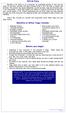 OFFICE YOGA Working in an office or at a computer for prolonged periods of time can put strain on the neck, shoulder and back muscles which in turn can lead to tension and stiffness. This tension can cause
Otago Exercise Program Activity Booklet
 Head Movements Stand up tall and look ahead. Slowly turn your head as far as you can to the right. Slowly turn your head as far as you can to the left. Repeat five times to each side. 44 Neck Movements
Kennedy s Disease Smart Exercise Guide. Part II Physical Therapist Recommendations
 Kennedy s Disease Smart Exercise Guide Part II Physical Therapist Recommendations Updated January 22, 2009 TABLE OF CONTENTS The Concept Exercise and Kennedy s Disease...3 Instructions...3 Do No Harm...3
MEDITATION TO ADJUST YOUR MAGNETIC FIELD AFTER AN EARTHQUAKE
 MEDITATION TO ADJUST YOUR MAGNETIC FIELD AFTER AN EARTHQUAKE What It Will Do for You: The magnetic relationship of the 2 hemispheres of the brain is readjusted with this meditation. How to Do It Sit straight.
Prasara Yoga Lesson: Iguana Asana for Leg Swoops
 Prasara Yoga Lesson: Iguana Asana for Leg Swoops About the author: Jason Erickson, CST, ACE-PT, NCTMB has been teaching Circular Strength Training since 2004. A personal trainer, yoga instructor, and massage
SAMPLE WORKOUT Full Body
 SAMPLE WORKOUT Full Body Perform each exercise: 30 secs each x 2 rounds or 2-3 sets of 8-12 reps Monday & Wednesday or Tuesday & Thursday Standing Squat Muscles: glutes (butt), quadriceps (thigh) Stand
The Eight Principles of Movement
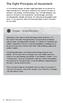 The Eight Principles of Movement At Functional Synergy we follow eight principles of movement to help maintain focus and ease. Based on the natural concepts of anatomy, physiology, and kinesiology, they
The Energy Medicine Daily Routine
 The Energy Medicine Daily Routine Improve your well-being in less than 10 minutes a day! Through years of practice we have designed a Daily Energy Routine that combines the most potent techniques we know
Standing with legs slightly apart, inhale and expand chest and shoulders; exhale and draw in chest and shoulders.
 ILLUSTRATED EXERCISE #4 PAGE 1 2012 Bringing the Body to the Stage and Screen and Beyond by Annette Lust 1 Standing with legs slightly apart, inhale and expand chest and shoulders; exhale and draw in chest
Info. from the nurses of the Medical Service. LOWER BACK PAIN Exercise guide
 Info. from the nurses of the Medical Service LOWER BACK PAIN Exercise guide GS/ME 03/2009 EXERCISE GUIDE One of the core messages for people suffering with lower back pain is to REMAIN ACTIVE. This leaflet
Relaxation Techniques for Stress Relief
 Relaxation Techniques for Stress Relief The body s natural relaxation response is a powerful antidote to stress. Relaxation techniques such as deep breathing, visualization, progressive muscle relaxation,
Lower Body Strength/Balance Exercises
 Compliments of (Medical Group Name & Phone # to be inserted here) Lower Body Strength/Balance Exercises Hip Flexion Strengthens thigh and hip muscles. Use ankle weights, if you are ready to. Stand to the
Stretching in the Office
 Stretching in the Office Legs: Quads, Hamstrings, IT band, Hip flexors, Gluts, Calves Quads: Standing @ desk maintaining upright posture, grab one leg @ a time by foot or ankle and bring it towards backside
EXERCISE DESCRIPTIONS PHASE I Routine #1
 EXERCISE DESCRIPTIONS PHASE I Routine #1 Hip Mobility Exercise: Forward Out-In Movement: Raise leg out to the side, and rotate around to the front. Keep shin/thigh angle at 90 degrees. Exercise: Backward
Sue Schuerman, PT, GCS, PhD UNLVPT
 Sue Schuerman, PT, GCS, PhD UNLVPT Exercise & Physical Activity (Your Everyday Guide from the National Institute on Aging) Go4Life Retain our physical and mental health Continue to do the things we enjoy
HELPFUL HINTS FOR A HEALTHY BACK
 HELPFUL HINTS FOR A HEALTHY BACK 1. Standing and Walking For correct posture, balance your head above your shoulders, eyes straight ahead, everything else falls into place. Try to point toes straight ahead
Spinal Exercise Program/Core Stabilization Program Adapted from The Spine in Sports: Robert G. Watkins
 Spinal Exercise Program/Core Stabilization Program Adapted from The Spine in Sports: Robert G. Watkins Below is a description of a Core Stability Program, designed to improve the strength and coordination
Kriya for Positive Mind
 Kriya for Positive Mind Bron: The Ten Light Bodies of Conciousness van Nirvair Singh Khalsa Ego Eliminator (heart center) 6 MINUTES. Sit cross-legged. Lift left arm up to 60 degrees with the palm up. Right
INTRODUCTION TO POSITIONING. MODULE 3: Positioning and Carrying
 MODULE 3: Positioning and Carrying Blankets, pillows and towels, sandbags, carpet on the floor, a doll with floppy limbs that can be positioned i.e. not a hard plastic doll, display materials. Icebreaker
Don t. Hamstrings. Calf Muscles. both legs 2-3 times. stretch is felt in the back of the calf. Repeat with both legs 2-3 times.
 Remember to: Warm-up your muscles first before stretching (e.g. stretch after walking). Stretch until you feel mild discomfort, not pain. Never bounce or force a stretch. Hold the stretch for 10-30 seconds
Spine Conditioning Program Purpose of Program
 Prepared for: Prepared by: OrthoInfo Purpose of Program After an injury or surgery, an exercise conditioning program will help you return to daily activities and enjoy a more active, healthy lifestyle.
TRE TM Template for Level I Trainees June 2013
 TRE TM Template for Level I Trainees June 2013 THIS DOCUMENT IS TO BE PROVIDED TO TRE LEVEL I TRAINEES WHO ARE: ENROLLED IN THE TRE ENROLLMENT WEBSITE AND WORKING WITH A LEVEL III TRAINER WITHIN THE TRE
Falling Asleep & Staying Asleep Handout
 Falling Asleep & Staying Asleep Handout This handout contains information that may help if you have difficulty falling asleep or staying asleep. In the pages that follow, you will learn about sleep disorders
Stair Workouts Get in Shape: Step up
 Stair Workouts Get in Shape: Step up Warning: If you feel any knee pain, refrain from continuing that particular exercise. Avoid the no pain, no gain motto and modify with regular walking or any activity
8-Week Yoga Protocol for Lung Cancer
 Introduction 8-Week Yoga Protocol for Lung Cancer Vijai Sharma, PhD We present a comprehensive yoga program in Viniyoga 1 tradition, which includes Yoga poses (asanas), breathing techniques (pranayama),
The Eight Pieces of Brocade
 The Eight Pieces of Brocade Ba Duan Jin (The Eight Pieces of Brocade) was developed during the twelfth century by the famous general Yueh Fei (who also created the Hsing I internal martial art) as a way
Managing my Breathlessness
 James Paget University Hospitals NHS Foundation Trust Managing my Breathlessness Patient Information Contents Living with breathlessness 3 Battery life 4 How can I control my breathlessness? 5 Simple breathing
Leg Strengthening Exercises
 Leg Strengthening Exercises This exercise program has been designed for you by your physical therapist. Do only the exercises marked. Do them slowly and smoothly on a firm surface. Never hold your breath
Chronos - Circuit Training Bodyweight
 Outline Chronos - Circuit Training Bodyweight 1. Mountain climbers doubles x 10 2. Mountain climbers singles x 10 each leg 3. Mountain climbers singles out x 10 each leg 4. Mountain Climbers Doubles out
Wellness Workbook. Journaling your way to a healthier life! By Tamiko Arbuckle http://myfoggybrain.com
 Wellness Workbook Journaling your way to a healthier life! By Tamiko Arbuckle http://myfoggybrain.com Please send any questions/ feedback to [email protected] Here s to your Wellness! Welcome and
Activities for the Young Baby
 31 Chapter 5 Activities for the Young Baby (Birth to 6 Months) A new baby does not usually look as though she is doing very much. She spends most of her time eating, sleeping, and resting. But even though
Guo Lin walking Qigong and the standing Guo Lin Qigong practices.
 Guo Lin walking Qigong and the standing Guo Lin Qigong practices. These are the forms used by Guo Lin to treat her own cancer, and used to treat the cancer of many others. If you have cancer, please consult
Breathing techniques to help breathlessness 1
 Breathing techniques to help breathlessness 1 Breathing techniques to help breathlessness This information is from the booklet Managing breathlessness. You may find the full booklet helpful. We can send
UPPER QUADRANT PAC. Do only those exercises that I have checked off for you to do independently. THINGS TO AVOID
 UPPER QUADRANT PAC Most common pain / disfunction syndromes occur as a result of a combination of poor posture habit and imbalanced muscle groups. The following exercise protocols will address the most
Operating Instructions
 Operating Instructions Table of Contents IMPORTANT INFORMATION 1-2 1 The backrack TM 3-6 Introduction 3 What does it do? 4 How do I use it? 5 How often should I use it? 6 2 Getting On 7-10 3 Basic Exercises
Self- Lymphatic Massage for Arm, Breast or Trunk Lymphedema
 Self- Lymphatic Massage for Arm, Breast or Trunk Lymphedema Patient Education Improving health through education The lymphatic system is part of our circulatory system. It helps balance the fluids of our
CHINESE QI GONG EXERCISES TAUGHT BY JAKE PAUL FRATKIN, OMD
 1 CHINESE QI GONG EXERCISES TAUGHT BY JAKE PAUL FRATKIN, OMD Doctor of Oriental Medicine MORNING ROUTINE SUMMATION 1. Joint Opening Exercises 2. Meridian Stretching Exercises 3. Qi Circulation Exercises
Tai Chi Nation guide to Qigong - Part 1
 Tai Chi Nation guide to Qigong - Part 1 We hope this guide will help introduce you to and inspire you in the practice of Tai Chi Qigong. We love this wonderful art and have gained so much benefit from
Sensory Sanctuary Staff Occupational Therapy Stress Management Program [email protected]
 Abdominal Breathing Technique How it s done: With one hand on the chest and the other on the belly, take a deep breath in through the nose, ensuring the diaphragm (not the chest) inflates with enough air
12 Week Do-it-Yourself Fitness Program
 12 Week Do-it-Yourself Fitness Program Created by Brad Awalt, MS, ACSM Assistant Manager, Health Plus [email protected] January 2011 Do you have a goal to begin an exercise routine, but not sure
Psychic Lotto Formula 3-Step Formula Secret Template To Lottery Secrets Module 3
 Page 1 Table of Content The Psychic Lotto Formula Jackpot to Success System... 4 Part 1 Channeling the Power of Your Mind to Success... 6 Part 2 Visualization... 12 Part 3 Integrating Luck and Making it
Wu Ming Qigong for Breast Cancer Treatment and Prevention
 Wu Ming Qigong for Breast Cancer Treatment and Prevention The most powerful tool traditional Chinese medicine has to offer for breast cancer treatment and prevention is qigong (pronounced chee-kung), an
MINDING OUR BODIES. Healthy Eating and Physical Activity for Mental Health
 MINDING OUR BODIES Healthy Eating and Physical Activity for Mental Health Facilitators Guide: Background Information (note: tell participants to consult with their doctor before starting to exercise) What
Yoga Routine. Khun Reinhard. (www.khunreinhard.com)
 Yoga Routine by Khun Reinhard (www.khunreinhard.com) Yoga-Routine Khun Reinhard - 2 - December 2013 Introduction This yoga routine has been taught by the author of this paper over many years to more than
The Breathe Better resource has been developed in partnership with Wintec s Centre for Sport Science and Human Performance with funding provided by
 BREATHE BETTER The Breathe Better resource has been developed in partnership with Wintec s Centre for Sport Science and Human Performance with funding provided by the Wintec Research Office through a research
Psoas Syndrome. The pain is worse from continued standing and from twisting at the waist without moving the feet.
 Psoas Syndrome The iliopsoas muscle is a major body mover but seldom considered as a source of pain. Chronic lower back pain involving the hips, legs, or thoracic regions can often be traced to an iliopsoas
BEACH VOLLEYBALL TRAINING PROGRAM
 2008 ELITE PERFORMANCE ATHLETE CONDITIONING BEACH VOLLEYBALL TRAINING PROGRAM Team BC 2008 Steve Van Schubert, CAT(C), CSCS Training Schedule General Outline Phase 1 2 Weeks Phase 2 3 Weeks Phase 3 3 Weeks
Living Room Bodyweight Workout Week 1 March or jog in place for 1 min to increase heart rate and lubricate joints.
 Warm Up- Living Room Bodyweight Workout Week 1 March or jog in place for 1 min to increase heart rate and lubricate joints. Protocol- All exercises will be done for 2 sets of 10 repetitions. After the
Physical Capability Strength Test: One Component of the Selection Process
 Physical Capability Strength Test: One Component of the Selection Process One aspect of the Power Systems Institute selection process is to successfully complete and achieve a passing score on a physical
This guide book must only be used in conjunction with the accompanying audio classes.
 This guide book must only be used in conjunction with the accompanying audio classes. P.1 Medical Warning. Check with your doctor before starting this or any other exercise program in particular if you
Lower Body Exercise One: Glute Bridge
 Lower Body Exercise One: Glute Bridge Lying on your back hands by your side, head on the floor. Position your feet shoulder width apart close to your glutes, feet facing forwards. Place a theraband/mini
Starting position: Lying with knees bent up and feet flat on floor/bed about 12" (30cms) apart
 Exercise 3 Bridging Starting position: Lying with knees bent up and feet flat on floor/bed about 12" (30cms) apart Tighten your buttocks, then raise them off the floor to form a bridge, then hold. Then