
Contraindicated Exercises
|
|
|
- Elinor Gilmore
- 10 years ago
- Views:
Transcription
1 Contraindicated Exercises Assisting Navy health & fitness professionals in providing safe & effective physical conditioning instruction to Sailors. (NMCPHC TM 2008XXXXXXXX)
2 Contraindicated / Inefficient Exercises: The Navy Physical Training Series Contraindicated / Inefficient Exercise Section is a tool designed to assist Navy health and fitness professionals in providing safe and effective physical conditioning instruction to Sailors. This product may be utilized by health promotion educators, Independent Duty Corpsmen (IDCs), installation / operational platform fitness personal training staff, functional training instructors, or command fitness leaders during the development and implementation of a physical conditioning program. Industry guidelines and physical fitness subject matter experts in the Navy and the civilian fitness industry served as references for the information utilized during the development of all primary sections included in the Navy Physical Training Series. 1
3 Exercise: Hurdler s Stretch Objective: To stretch the hamstring muscles Contraindication: The Hurdler s Stretch places the knee in a rotated position, which stresses the flexed knee. The hurdler s stretch is apt to stretch the ligaments and capsule and damage the cartilage. It may also cause strain in the groin muscles. Alternative: Instead of bending the knee of the opposite leg back and putting the foot behind you, bend the knee in front of the body and bring the foot toward the inner thigh of the opposite leg. 2
4 Exercise: Quadriceps Stretch with Both Knees Flexed Objective: To stretch the quadriceps muscles Contraindication: The quadriceps stretch, with both knees flexed, overly stresses the knee joint which could lead to injury. Alternative: Lying on your stomach, reach around with one arm and grasp the same foot (i.e. reach with the right hand and grasp the right foot). Gently pull the foot toward the buttocks until a stretch is felt in the front of the right leg. To put less strain on the neck, turn your head to look toward the same side as you are reaching (to avoid putting your face on the floor you can place the opposite hand under the head. For example, look toward the right and place your left hand under your head). When you switch sides, change the direction you are looking. 3
5 Exercise: Seated Hamstring Stretch with Both Legs Extended Objective: To stretch the hamstring muscles Contraindication: The seated hamstring stretch with both legs extended overly stresses the lower back if the hamstrings are short and/or tight. If performed only on rare occasions as a test, there is less chance of injury than if incorporated into a regular exercise program. Alternative: Perform the modified Hurdler Stretch with one leg bent in front of the body and the foot toward the inner thigh of the leg you are stretching. 4
6 Exercise: Standing Hamstring Stretches Objective: To stretch the hamstring muscles Contraindication: By bending forward in an unsupported position and flexing (rounding) the spine, the entire weight of the upper torso is placed on the low back extensor muscles. These muscles are not designed to support this amount of load on their own. Additionally, if the knee joints are locked out it can cause hyperextension of the knee joint and place unnecessary stress on the ligaments of the knee. Alternative: Perform the modified Hurdler Stretch with one leg bent in front of the body and the foot toward the inner thigh of the leg you are stretching. Better hamstring would be the figure 4 stretch. 5
7 Exercise: Placing the Neck into Extreme Forward Positions (Overhead Bicycle, Yoga Plow) Objective: To loosen up and stretch the muscles of the neck Contraindication: Two classic exercises press your neck into extreme forward positions: the Overhead Bicycle (where you churn your legs in the air with all your weight on your shoulders and neck) and the Yoga Plow exercise. These exercises both flex the cervical spine in an extreme fashion, putting pressure on the discs and overstretching the long ligament down the back of your neck. Additionally, the weight of the legs is supported by the low back muscles, which were not designed for this kind of stress and load. Alternative: There are no safe alternatives for these exercises. 6
8 Exercise: Neck Hyperextension and Neck Rolls Objective: To loosen up and stretch the muscles of the neck Contraindication: Tipping the head backward during an exercise, such as is done in neck circling, can pinch anterior nerves in the neck and at the base of the skull, grind on disks, and produce dizziness. The vertebrae of your neck are not shaped for motion through a circular path. Neck rolls (head rolls) are bad to the neck over time. As a general rule, exercises that hyperextend the neck should be avoided and full neck rolls should be avoided. Alternative: Stretch the neck by tilting the head forward and dropping the chin toward the chest. Hold that position for a count of 10 or 15. Also try tilting the head to the side and moving the ear toward the shoulder, then hold that position for a stretch before repeating on the other side. 7
9 Exercise: Donkey Kicks Objective: To strengthen the glutes and hamstrings. Contraindication: Donkey Kicks place excessive stress on the lower back because the back is hyper extended during the exercise. Alternative: This exercise can be safely modified by resting on your elbows instead of your hands and making sure to not hyperextend (arch) your back. Ensure that your spine is in neutral alignment by making an imaginary line from your ears to your shoulders to your hips. Also, keep the knee of the leg you are lifting bent during the entire exercise and focus on pressing the bottom of your shoe upward, instead of up and out. In other words, do not straighten the leg when you lift it up toward the ceiling. Avoid letting the torso rotate with the kick, which indicates that you are most likely lifting the leg too high. 8
10 Exercise: Deep Knee Bends & Starbursts Objective: To make a squatting movement more intense. Contraindication: Deep knee bends, with or without weights, places the knee joint in hyper flexion. This tends to wedge it open, which stretches the ligaments, irritates the knee, and possibly damages the knee cartilage. Starbursts involve dynamic deep knee flexion, and they are highly contraindicated. Tibio-femoral joint contact area decreases to 55% as knee is flexed to 90 degrees Pressure = Force / Area Less contact area = greater pressure in one location Think about getting stuck by a needle as opposed to a finger with same force! Possible long-term degenerative changes, i.e. osteoarthritis Alternative: The alternative to deep knee bends is to not squat as deeply, trying to stop at 90 degrees (hips do not drop below the knees). For starbursts, perform the movement without squatting so deeply to start (again, hips do not drop below the knee). 9
11 Exercise: Deep Knee Lunges Objective: Strengthen the quadriceps, hamstrings and gluteals Contraindication: When the knee joint breaks a 90 degree angle, that is, the knee joint moves past the lower portion of the leg, it places tremendous stress on the knee joint. Alternative: Keep the knee over the foot when performing lunges; do not let the knee move past the toes. 10
12 Exercise: The Windmill Exercise Objective: Dynamic warm-up; to stretch and strengthen the muscles of the torso Contraindication: Unsupported forward flexion with rotation places a tremendous amount of stress on the spine and supporting muscles. As seen in the straight-leg standing hamstring stretch (reviewed above), unsupported forward flexion means the smaller muscles of the low back are responsible for supporting the entire weight of the upper body. The Windmill Exercise also adds rotation in this flexed position, which can put excessive twisting forces on the spine, in an already compromised position. Additionally, by fixing the legs in a straight position and then adding movement in the upper body, there is a greater chance of hyper extending and straining the knee joints. 11
13 Exercise: Swimmers Arm Stretch Objective: To stretch and increase range of motion of the chest, shoulders and arms Contraindication: Typically this move is performed in a ballistic manner, with the exerciser pulsing the stretch upward. Ballistic/bouncing movement should always be avoided as they actually induce the stretch-reflex (which can produce tightening of the muscle instead of helping it to release.) The price of this stretch can be shoulder instability and predisposition to long term injury. Also, as the photos show, performing this exercise with the legs straight puts a lot of strain and stress on the low back. Alternative: Perform the standing doorway chest stretch, or if you do not have a doorway, any type of wall or column can be used. To stretch both sides at the same time, step with one foot forward into the doorway and place your forearms on either side of the door frame, elbows bent up to 90 degrees. Lean forward through the doorway until you feel a gentle stretch on the muscles of the chest and front shoulder. Release and change legs then repeat. To perform one side at a time, follow the same instructions but just use one arm against the wall or pole. In both examples, be sure to keep your shoulders pressed down away from your ear, and try to get a wide positioning of the elbows (in other words, the stretch is more effective if the elbows are farther out from the body, rather than tucked in close). 12
14 Exercise: Flutter Kicks Objective: To strengthen the abdominals Contraindication: Flutter Kicks impose a high level of stress on the muscles of the low back and the neck. The majority of people do not have the abdominal strength or body awareness necessary to maintain core stabilization and support both legs extended and lowered at the same time. This results in the back and neck arching (hyper extending). Therefore, as you extend and lower both legs out from the body the muscles of the low back have to work to keep the back from hyper extending, and the neck muscles are also working harder to maintain a neutral spine. Alternative: Dead Bugs are a modified version or flutter kicks that use one leg at a time and incorporate the upper body as well. This exercise will challenge the abdominals and work the opposing sides of the body simultaneously, a function your body utilizes in everyday motion (i.e. walking). To perform, lie on your back with your legs in the air, knees bent to 90 degrees, hands resting on the thighs. Contract the abdominals and raise the shoulders, neck and head slightly off the ground so you are looking toward the ceiling above your knees (do no look straight up to the ceiling). Start to move your legs one at a time, extending one leg out away from the body while the other stays bent at 90 degrees. The hands follow the legs, so when the right leg extends the right arm lowers and the left leg and left arm will remain close to the torso. Start small with the arms and legs not moving much, then progress to fully extending one leg and reaching the opposite arm overhead. 13
15 Exercise: 8 Count Body Builders Objective: To strengthen the core. Contraindication: This exercise can cause increased compression on the spine, fractures and stress reactions in the body, as well as muscle strains resulting from hyperextension of the spine. Alternative: There are a number of exercises that can strengthen the core safely and effectively without putting undue pressure on the spine: Plank: Rest your body weight on your elbows and your toes, drawing your abdominals in by compressing/tightening the muscles (not by sucking it in ). Maintain a straight line from the ears through the shoulders to the hips and ankles. Make sure the elbows are under the shoulders and the shoulder blades are pulled back (do not round the upper back). Maintain a neutral neck by looking at the ground slightly in front of your hands. Depending on fitness levels, the exercise can be modified up or down. The typical line of progression is as follows, from easiest to most advanced: knees down, on your toes but feet wide, on your toes with feet together, on your toes with one foot down and the other hooked behind the foot that s on the ground (note: be sure to change legs). Side Bridges: Similar to the plank but performed facing the side. Place one elbow under your shoulder and line up your body in a straight line. For beginners, place the knees on the ground. Superman: Lying on your stomach with arms and legs extended, simultaneously reach out, trying to get your fingers and toes as far apart as possible. Do not focus on lifting up but rather lengthening your body as long as you can. The arms and legs will naturally lift off the floor as you reach. Also, keep a neutral neck by looking at the ground slightly in front of you (not up) Swimmer: Similar to the Superman exercise, but extend one arm and the opposite leg instead of both arms and legs. Again, focus on reaching out instead of up. 14
16 Exercise: Mountain Climbers Objective: To strengthen the upper body and the core Contraindication: Poor technique usually results in high compressive forces on the spine and can lead to low back pain. The functional transfer of Mountain Climbers is also questionable because it puts the spine in a loaded flexed position and then incorporates movement of the lower extremities. This is not a normal requirement of the body. Alternative: See Alternatives listed above for 8 Count Body Builders. The plank and side bridge can be made more advanced by lifting one knee or leg off the floor (as you remove contact points the demand on core stabilization increases). Ballistic Wood Chops: Any exercise that is conducted that requires straight legs and combined with trunk flexion can be hard on your back, even if you are in good shape. Wood chops that involve ballistic/bouncing movement is contraindicated movement (stretch reflex). Remember Proper Lumbar Alignment Proper lumbar alignment is key for preventing low back injuries Compression forces increase as demands on core stabilization increase Be cautious at all times with stability exercises Start off easy and always in control! Kavic et al Spine (20):
17 Other Incorrectly Performed Exercises: 1. Bench press (with the person lying on the bench and the feet on the floor they end up arching their back and pushing off their feet to get the weight up), 2. Dead lifts (people tend to lock out the knees and/or round their low back, flexing from the back not the hips as they lower the weight in front). 3. Behind the head lat pull downs (should only be pulling in front of the head). 16
18 Project Authors Settles, Diana, MAT, ATC Program Manager, Physical Fitness & Injury Prevention Navy and Marine Corps Public Health Center Portsmouth, VA Senior Advisor, Health & Wellness Center for Personal and Professional Development Dam Neck Annex, Virginia Beach, VA Baglio-Alker, Tricia, BA Contractor, Certified through ACE, AFAA, ISCA, BOSU, GRAVITY, and Reebok. Prior program specialist for American Council on Exercise Headquarters Office. San Diego, CA Contributors Tricia Baglio-Alker, BA Contractor, Certified through ACE, AFAA, ISCA, BOSU, GRAVITY, and Reebok. Prior program specialist for American Council on Exercise Headquarters Office. San Diego, CA Joseph Bullinger Still Photography Naval Education and Training Professional Development & Technology Center - VI Dam Neck Annex, Virginia Beach, VA Models HM2 Anthony Royal Medical Division - Marine Forces Command Norfolk, VA HMCS (SW/AW/FMF) Jose Negron Command Fitness Leader PCU GEORGE H W BUSH (CVN-77) PS1 Paula Ryel PCU GEORGE H W BUSH (CVN-77) 17
19 References Bookspan, Jolie. Health and Fitness in Plain English, Healthy Learning Produced in Cooperation with the American Council on Exercise, Onate, Dr. James, Old Dominion University, Director of Sports Medicine and Human Performance Laboratory. Contraindicated Exercise Information Presented during the 2005 Navy and Marine Corps Public Health Center (prior NEHC) Conference. Settles, Diana and Cooper Institute for Aerobics Research (March 2000). Stretching and Injury Prevention for Readiness, (NEHC Technical Manual ). Norfolk, VA: Navy Environmental Health Center. Thompson, Walter, R., Baldwin, Kenneth. American College of Sports Medicine s Resources for the Personal Trainer, 2 nd Edition, Lippincott Williams and Wilkins,
Spine Conditioning Program Purpose of Program
 Prepared for: Prepared by: OrthoInfo Purpose of Program After an injury or surgery, an exercise conditioning program will help you return to daily activities and enjoy a more active, healthy lifestyle.
Lumbar/Core Strength and Stability Exercises
 Athletic Medicine Lumbar/Core Strength and Stability Exercises Introduction Low back pain can be the result of many different things. Pain can be triggered by some combination of overuse, muscle strain,
General Guidelines. Neck Stretch: Side. Neck Stretch: Forward. Shoulder Rolls. Side Stretch
 Stretching Exercises General Guidelines Perform stretching exercises at least 2 3 days per week and preferably more Hold each stretch for 15 20 seconds Relax and breathe normally Stretching is most effective
EXERCISE DESCRIPTIONS PHASE I Routine #1
 EXERCISE DESCRIPTIONS PHASE I Routine #1 Hip Mobility Exercise: Forward Out-In Movement: Raise leg out to the side, and rotate around to the front. Keep shin/thigh angle at 90 degrees. Exercise: Backward
Range of Motion. A guide for you after spinal cord injury. Spinal Cord Injury Rehabilitation Program
 Range of Motion A guide for you after spinal cord injury Spinal Cord Injury Rehabilitation Program This booklet has been written by the health care providers who provide care to people who have a spinal
Exercise 1: Knee to Chest. Exercise 2: Pelvic Tilt. Exercise 3: Hip Rolling. Starting Position: Lie on your back on a table or firm surface.
 Exercise 1: Knee to Chest Starting Position: Lie on your back on a table or firm surface. Action: Clasp your hands behind the thigh and pull it towards your chest. Keep the opposite leg flat on the surface
SAMPLE WORKOUT Full Body
 SAMPLE WORKOUT Full Body Perform each exercise: 30 secs each x 2 rounds or 2-3 sets of 8-12 reps Monday & Wednesday or Tuesday & Thursday Standing Squat Muscles: glutes (butt), quadriceps (thigh) Stand
How To Stretch Your Body
 Exercise Module A New Leaf Choices for Healthy Living University of North Carolina at Chapel Hill 2007 Center for Health Promotion and Disease Prevention Physical Activity Exercises for Keeping Active
Cardiac Rehab Program: Stretching Exercises
 Cardiac Rehab Program: Stretching Exercises Walk around the room, step side to side, ride a bike or walk on a treadmill for at least 5 minutes to warm up before doing these stretches. Stretch warm muscles
Shoulders (free weights)
 Dumbbell Shoulder Raise Dumbbell Shoulder Raise 1) Lie back onto an incline bench (45 or less) with a DB in each hand. (You may rest each DB on the corresponding thigh.) 2) Start position: Bring the DB
Don t. Hamstrings. Calf Muscles. both legs 2-3 times. stretch is felt in the back of the calf. Repeat with both legs 2-3 times.
 Remember to: Warm-up your muscles first before stretching (e.g. stretch after walking). Stretch until you feel mild discomfort, not pain. Never bounce or force a stretch. Hold the stretch for 10-30 seconds
Knee Conditioning Program. Purpose of Program
 Prepared for: Prepared by: OrthoInfo Purpose of Program After an injury or surgery, an exercise conditioning program will help you return to daily activities and enjoy a more active, healthy lifestyle.
COMMON OVERUSE INJURIES ATTRIBUTED TO CYCLING, AND WAYS TO MINIMIZE THESE INJURIES
 COMMON OVERUSE INJURIES ATTRIBUTED TO CYCLING, AND WAYS TO MINIMIZE THESE INJURIES Listed are a few of the most common overuse injuries associated with cycling long distances. 1. Cervical and upper back
EGOSCUE CLINIC PAIN/POSTURE STRETCHES 1. Standing Arm Circles: Helps Restore Upper Body Strength
 EGOSCUE CLINIC PAIN/POSTURE STRETCHES 1. Standing Arm Circles: Helps Restore Upper Body Strength Two sets of 40 repetitions each. Stand with your feet pointed straight and hip-width apart. Place your fingertips
Low Back Pain Exercises Interactive Video Series Transcript July 2013
 Introduction Low Back Pain Exercises Interactive Video Series Transcript July 2013 ** Note: If an exercise causes an increase in your pain, stop the exercise.** [Music introduction; Dr. John Sheehan onscreen]
CHAPTER 3: BACK & ABDOMINAL STRETCHES. Standing Quad Stretch Athletic Edge - www.athleticedge.biz - (650) 815-6552
 CHAPTER : BACK & ABDOMINAL STRETCHES Standing Quad Stretch ) Stand and grasp right ankle with same hand, use a wall or chair to Lower maintain Back balance with left hand. Maintain an upright Stretches
A proper warm-up is important before any athletic performance with the goal of preparing the athlete both mentally and physically for exercise and
 A proper warm-up is important before any athletic performance with the goal of preparing the athlete both mentally and physically for exercise and competition. A warm-up is designed to prepare an athlete
Basic Stretch Programme 3. Exercise Circuit 4
 Basic Stretch Programme 3 Exercise Circuit 4 2 1 Calves Stand approximately 1 metre away from wall with legs straight and heels on floor. Step and lean forward and slowly push hips towards wall. Should
Exercises for Low Back Injury Prevention
 DIVISION OF AGRICULTURE RESEARCH & EXTENSION University of Arkansas System Family and Consumer Sciences Increasing Physical Activity as We Age Exercises for Low Back Injury Prevention FSFCS38 Lisa Washburn,
HELPFUL HINTS FOR A HEALTHY BACK
 HELPFUL HINTS FOR A HEALTHY BACK 1. Standing and Walking For correct posture, balance your head above your shoulders, eyes straight ahead, everything else falls into place. Try to point toes straight ahead
Fact sheet Exercises for older adults undergoing rehabilitation
 Fact sheet Exercises for older adults undergoing rehabilitation Flexibility refers to the amount of movement possible around a joint and is necessary for normal activities of daily living such as stretching,
Lower Body Exercise One: Glute Bridge
 Lower Body Exercise One: Glute Bridge Lying on your back hands by your side, head on the floor. Position your feet shoulder width apart close to your glutes, feet facing forwards. Place a theraband/mini
Spinal Exercise Program/Core Stabilization Program Adapted from The Spine in Sports: Robert G. Watkins
 Spinal Exercise Program/Core Stabilization Program Adapted from The Spine in Sports: Robert G. Watkins Below is a description of a Core Stability Program, designed to improve the strength and coordination
Chair Exercises For Older Adults
 Chair Exercises For Older Adults Many of these exercises were adapted from these sources: National Institute on Aging, Exercise: A Guide from the National Institute on Aging, 2001, http://www.nia.nih.gov/healthinformation/publications/exerciseguide/.
Info. from the nurses of the Medical Service. LOWER BACK PAIN Exercise guide
 Info. from the nurses of the Medical Service LOWER BACK PAIN Exercise guide GS/ME 03/2009 EXERCISE GUIDE One of the core messages for people suffering with lower back pain is to REMAIN ACTIVE. This leaflet
try Elise s toning exercise plan
 try Elise s toning exercise plan Whether you want to start things off slow and gradually build up your fi tness, or begin with a challenge, Elise s toning exercise programme is designed for all levels.
THE BIG SIX. Six Best Volleyball Strength Training Exercises. By Dennis Jackson, CSCS www.strength-and
 THE BIG SIX Six Best Volleyball Strength Training Exercises By Dennis Jackson, CSCS www.strength-and and-power power-for for-volleyball.com THE SQUAT What it is The two most common squatting exercises
Stretching in the Office
 Stretching in the Office Legs: Quads, Hamstrings, IT band, Hip flexors, Gluts, Calves Quads: Standing @ desk maintaining upright posture, grab one leg @ a time by foot or ankle and bring it towards backside
Care at its Best! Foam Roller Exercise Program
 Foam Roller Exercise Program Foam rollers are a popular new addition the gym, physical therapy clinics or homes. Foam rollers are made of lightweight polyethyline foam. Cylindrical in shape, foam rollers
Day #1: Dynamic Warm-Up, Cool-Down, and Stretching
 Day #1: Dynamic Warm-Up, Cool-Down, and Stretching After completing the PRT, the students will return to the gym to begin the Dynamic Warm-up gym session. Prior to initiating exercise, the CFL Instructor
EXERCISE INSTRUCTIONS 1
 EXERCISE INSTRUCTIONS 1 Contents ANKLE TOUCHES... 4 BACK EXTENSIONS... 4 BACK REVERSE FLYES... 4 BALL ROLL... 4 BASKETBALL SQUATS... 4 BEAR CRAWL... 4 BICEP CURL (Resistance Band)... 4 BOXING JABS... 5
Injury Prevention for the Back and Neck
 Injury Prevention for the Back and Neck www.csmr.org We have created this brochure to provide you with information regarding: Common Causes of Back and Neck Injuries and Pain Tips for Avoiding Neck and
Exercises for older people
 Exercise for older people Exercises for older people Sitting Getting started If you ve not done much physical activity for a while, you may want to get the all-clear from a GP before starting. For the
are you reaching your full potential...
 T h e r e s n o s u c h t h i n g a s b a d e x e r c i s e - j u s t e x e r c i s e d o n e b a d l y FIT for sport are you reaching your full potential... These tests are a series of exercises designed
KNEE EXERCISE PROGRAM
 KNEE PROGRAM INTRODUCT ION Welcome to your knee exercise program. The exercises in the program are designed to improve your knee stability and strength of the muscles around your knee and hip. The strength
by Ellen Saltonstall and Dr. Loren Fishman
 10 Yoga Poses for Low Back Pain Prevention by Ellen Saltonstall and Dr. Loren Fishman Introduction This series of poses is designed to prevent future back pain and also to relieve back pain that you may
Chronos - Circuit Training Bodyweight
 Outline Chronos - Circuit Training Bodyweight 1. Mountain climbers doubles x 10 2. Mountain climbers singles x 10 each leg 3. Mountain climbers singles out x 10 each leg 4. Mountain Climbers Doubles out
Standing with legs slightly apart, inhale and expand chest and shoulders; exhale and draw in chest and shoulders.
 ILLUSTRATED EXERCISE #4 PAGE 1 2012 Bringing the Body to the Stage and Screen and Beyond by Annette Lust 1 Standing with legs slightly apart, inhale and expand chest and shoulders; exhale and draw in chest
Low Back Pain: Exercises
 Low Back Pain: Exercises Your Kaiser Permanente Care Instructions Here are some examples of typical rehabilitation exercises for your condition. Start each exercise slowly. Ease off the exercise if you
No Equipment Agility/Core/Strength Program for Full Body No Equip Trainer: Rick Coe
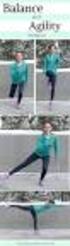 No Equipment Agility/Core/Strength Program for Full Body No Equip Trainer: Rick Coe Introduction Program designed to be performed in a circuit. Perform exercises in sequence without rest 2-3 times. Increase
A small roller with a big effect. The mini roller for massaging, strengthening, stretching and warming up
 A small roller with a big effect The mini roller for massaging, strengthening, stretching and warming up Suva Preventative products P. O Box, 6002 Lucerne Enquiries Tel. 041 419 58 51 Orders www.suva.ch/waswo
Hip Conditioning Program. Purpose of Program
 Prepared for: Prepared by: OrthoInfo Purpose of Program After an injury or surgery, an exercise conditioning program will help you return to daily activities and enjoy a more active, healthy lifestyle.
Stretching for Young Athletes. Shawn P. Anderson, SPT Duke University Doctor of Physical Therapy
 Stretching for Young Athletes Shawn P. Anderson, SPT Duke University Doctor of Physical Therapy Sports and exercise are usually integral parts of many adolescents life. Whether they play at school or in
Posture. Let s look at. in the head is jutting. the norm. you know if your belt. If you belt. lower body. 2 sections, upper. pulls?
 Fixing the Computer Guy Posture Lower back/h hip stability Let s look at ideal posture for a minute. Look at your profile in the mirror. Chances are you re gonna find that your head is jutting forward,
Instructor Training Program Levels 1 through 4 Uneven Bars
 USA Gymnastics Online: Technique: Uneven Bars Page 1 of 9 Instructor Training Program Levels 1 through 4 Uneven Bars Level 1 - Uneven Bars MOUNT: BACK HIP PULLOVER Grasp bar with hands "shoulder width"
MINDING OUR BODIES. Healthy Eating and Physical Activity for Mental Health
 MINDING OUR BODIES Healthy Eating and Physical Activity for Mental Health Facilitators Guide: Background Information (note: tell participants to consult with their doctor before starting to exercise) What
12 Week Do-it-Yourself Fitness Program
 12 Week Do-it-Yourself Fitness Program Created by Brad Awalt, MS, ACSM Assistant Manager, Health Plus [email protected] January 2011 Do you have a goal to begin an exercise routine, but not sure
Most Effective Abdominal Exercises
 The following abdominal exercises, when done correctly, will give you an incredible workout. They are suitable for both men and women. Most Effective Abdominal Exercises You have full rights to distribute
Cervicothoracic Mobility Exercises
 Cervicothoracic Mobility Exercises Upper Cervical Mobility Exercises... 2 Lower Cervical Mobility Exercises... 3 Cervicothoracic Junction Mobility Exercises... 4 1 st Rib Mobility Exercises... 5 Cervical
BEACH VOLLEYBALL TRAINING PROGRAM
 2008 ELITE PERFORMANCE ATHLETE CONDITIONING BEACH VOLLEYBALL TRAINING PROGRAM Team BC 2008 Steve Van Schubert, CAT(C), CSCS Training Schedule General Outline Phase 1 2 Weeks Phase 2 3 Weeks Phase 3 3 Weeks
Australian Centre for Agricultural Health and Safety. Farming with Back Pain
 Australian Centre for Agricultural Health and Safety Farming with Back Pain 2008 Australian Centre for Agricultural Health and Safety All rights reserved Title: Farming with Back Pain Authors: Boughton
Kelly Corso MS, ATC, CES, FMSC, CSST
 ACL Injury Prevention Program Kelly Corso MS, ATC, CES, FMSC, CSST What is the ACL??? The ACL or anterior cruciate ligament, attaches the front top portion of the shin bone (tibia) to the back bottom portion
back stabilization and core strengthening
 back stabilization and core strengthening EXERCISE OOKLET back stabilization and core strengthening TLE OF CONTENTS Introduction 1 Hook-lying Stabilization Progression Neutral position 2 Hook-lying with
The 11+ A complete warm-up program
 The 11+ A complete warm-up program Part 1 & 3 A A }6m Part 2 B A: Running B: Jog back B! FIELD SET-UP A: Running exercise B: Jog back The course is made up of 6 pairs of parallel cones, approx. 5-6m apart.
Physical Capability Strength Test: One Component of the Selection Process
 Physical Capability Strength Test: One Component of the Selection Process One aspect of the Power Systems Institute selection process is to successfully complete and achieve a passing score on a physical
CORRECTIVE CHIROPRACTIC EXERCISES
 CORRECTIVE CHIROPRACTIC EXERCISES J O W E T T & M O U L T O N C h i r o p r a c t o r s introduction This booklet, presented by Jowett and Moulton Chiropractors, is designed to provide you with a general
X-Plain Neck Exercises Reference Summary
 X-Plain Neck Exercises Reference Summary Introduction Exercising your neck can make it stronger, more flexible and reduce neck pain that is caused by stress and fatigue. This reference summary describes
Flexibility Assessment and Improvement Compiled and Adapted by Josh Thompson
 Flexibility Assessment and Improvement Compiled and Adapted by Josh Thompson Muscles must have a full and normal range of motion in order for joints and skeletal structure to function properly. Flexibility
PERFORMANCE RUNNING. Piriformis Syndrome
 Piriformis Syndrome Have you started to experience pain in your hip or down your leg while beginning or advancing your fitness program? This pain may be stemming from the piriformis muscle in your hip.
Physical & Occupational Therapy
 In this section you will find our recommendations for exercises and everyday activities around your home. We hope that by following our guidelines your healing process will go faster and there will be
McMaster Spikeyball Therapy Drills
 BODY BLOCKS In sequencing Breathing and Tempo Flexibility / Mobility and Proprioception (feel) Upper body segment Middle body segment Lower body segment Extension / Static Posture Office / Computer Travel
Preventing Overuse Injuries at Work
 Preventing Overuse Injuries at Work The Optimal Office Work Station Use an adjustable chair with good lumbar support. Keep your feet flat on a supportive surface (floor or foot rest). Your knees should
Operating Instructions
 Operating Instructions Table of Contents IMPORTANT INFORMATION 1-2 1 The backrack TM 3-6 Introduction 3 What does it do? 4 How do I use it? 5 How often should I use it? 6 2 Getting On 7-10 3 Basic Exercises
The Lose-the-Last-1o-Pounds Workout
 Printable Workout: www.myfitstation.com The Lose-the-Last-1o-Pounds Workout From The Women s Health Big Book of Exercises Phase 1) Week 1-4 It s time to finish off that fat for good! This 8-week plan from
Exercises for the Hip
 Exercises for the Hip Gluteal Sets: Lie on your back, tighten buttocks and hold for 3-5 seconds. Repeat 20 times. Supine Hip ER/IR: Lie on your back with legs straight. Gently rotate knees out and in limited
Basic Training Exercise Book
 Basic Training Exercise Book Basic Training Exercise Book Instructions The exercises are designed to challenge the major muscles groups every day, approximately every 2 to 3 hours., for a total of 6 times
9 exercises to rehab a torn ACL without surgery
 MENU Search foxnews.com Health Home Men's Health Women's Health Children's Health Alternative Medicine Diabetes Heart Health Allergies HEALTH 9 exercises to rehab a torn ACL without surgery By Julie Wilcox
Preventing Falls. Strength and balance exercises for healthy ageing
 Preventing Falls Strength and balance exercises for healthy ageing Exercise should be comfortable and fun. To get the most out of your home exercise book, join a class for older people to check your exercises
JUNIPERO SERRA VOLLEYBALL OFF SEASON TRAINING SCHEDULE
 JUNIPERO SERRA VOLLEYBALL OFF SEASON TRAINING SCHEDULE 2007 OFF SEASON WORKOUT Our off season workout is centered around Speed, Agility & Quickness which are athletic attributes that are very trainable
Lower Body Strength/Balance Exercises
 Compliments of (Medical Group Name & Phone # to be inserted here) Lower Body Strength/Balance Exercises Hip Flexion Strengthens thigh and hip muscles. Use ankle weights, if you are ready to. Stand to the
Pre - Operative Rehabilitation Program for Anterior Cruciate Ligament Reconstruction
 Pre - Operative Rehabilitation Program for Anterior Cruciate Ligament Reconstruction This protocol is designed to assist you with your preparation for surgery and should be followed under the direction
Sutton & Cheam Swimming Club. Land Training for Swimming and Water Polo
 Sutton & Cheam Swimming Club Land Training for Swimming and Water Polo Why do we need to perform land work? Many of the basics for swimming and water polo can be gained by experiencing activities out
Mike s Top Ten Tips for Reducing Back Pain
 Mike s Top Ten Tips for Reducing Back Pain The following article explains ways of preventing, reducing or eliminating back pain. I have found them to be very useful to myself, my clients and my patients.
Avoid The Dreaded Back Injury by Proper Lifting Techniques
 Avoid The Dreaded Back Injury by Proper Lifting Techniques If you ve ever strained your back while lifting something, you ll know the importance of lifting safely. Agenda Introduction About the Back The
Psoas Syndrome. The pain is worse from continued standing and from twisting at the waist without moving the feet.
 Psoas Syndrome The iliopsoas muscle is a major body mover but seldom considered as a source of pain. Chronic lower back pain involving the hips, legs, or thoracic regions can often be traced to an iliopsoas
Myofit Massage Therapy Stretches for Cycling
 Guidelines for Stretching Always assume the stretch start position and comfortably apply the stretch as directed. Think Yoga - gently and slowly, no ballistic actions or bouncing at joint end range. Once
stretches and exercises
 stretches and exercises The enclosed sheets contain stretches and exercises which can be used to delay and minimise the development of contractures and deformities occurring in children with Duchenne muscular
How To Improve Drainage
 Rehabilitation Home Program Edema Exercises To Improve Drainage You will improve your lymph flow by doing a few exercises each day. These exercises are an important part of your home program. They may
SHOULDER PULL DOWNS. To learn efficient use of the shoulder blades and arms while maintaining a neutral spine position.
 SHOULDER INTRODUCT ION Welcome to your shoulder exercise program The exercises in the program are designed to improve your shoulder mobility, posture and the control of the muscles in your neck and shoulder
THREE SPECIALLY CREATED WORKOUTS
 THREE SPECIALLY CREATED WORKOUTS PIERRE POZZUTO, PERSONAL TRAINER One of the UK s most renowned personal trainers, Pierre s celebrity clients include Keira Knightley and Gordon Ramsay. Starting out as
Rehabilitation Exercises for Shoulder Injuries Pendulum Exercise: Wal Walk: Back Scratcher:
 Rehabilitation Exercises for Shoulder Injuries Begin these exercises when your pain has decreased about 25% from the time when your injury was most painful. Pendulum Exercise: Lean over with your uninjured
NETWORK FITNESS FACTS THE HIP
 NETWORK FITNESS FACTS THE HIP The Hip Joint ANATOMY OF THE HIP The hip bones are divided into 5 areas, which are: Image: www.health.com/health/static/hw/media/medical/hw/ hwkb17_042.jpg The hip joint is
STRETCHING EXERCISES. Physical Activity Resource Center for Public Health PARC-PH
 STRETCHING EXERCISES Physical Activity Resource Center for Public Health PARC-PH STRETCHING 2 Safety Information...3 Benefits of Stretching...3 Safety Considerations Before and During Exercise...3 A Set
Strengthening Exercises - Below Knee Amputation
 Strengthening Exercises - Below Knee Amputation These exercises will help you strengthen your muscles to best use your prosthetic leg. Do these exercises as directed by your therapist or doctor. Do the
Living Room Bodyweight Workout Week 1 March or jog in place for 1 min to increase heart rate and lubricate joints.
 Warm Up- Living Room Bodyweight Workout Week 1 March or jog in place for 1 min to increase heart rate and lubricate joints. Protocol- All exercises will be done for 2 sets of 10 repetitions. After the
The advanced back rehabilitation programme
 Physiotherapy Department The advanced back rehabilitation programme This booklet explains what happens during the advanced back rehabilitation programme and how the exercises may help your condition. We
A Stretch-Break Program for Your Workplace! www.healthyworkplaceweek.ca
 www.healthyworkplaceweek.ca A Stretch-Break Program for Your Workplace! Why is stretching at work important? Sitting at a desk or computer; or standing at your work station for extended periods of time
The Santa Monica Orthopaedic and Sports Medicine Research Foundation. The PEP Program: Prevent injury and Enhance Performance
 The Santa Monica Orthopaedic and Sports Medicine Research Foundation The PEP Program: Prevent injury and Enhance Performance This prevention program consists of a warm-up, stretching, strengthening, plyometrics,
Wellness Workbook. Journaling your way to a healthier life! By Tamiko Arbuckle http://myfoggybrain.com
 Wellness Workbook Journaling your way to a healthier life! By Tamiko Arbuckle http://myfoggybrain.com Please send any questions/ feedback to [email protected] Here s to your Wellness! Welcome and
TIPS and EXERCISES for your knee stiffness. and pain
 TIPS and EXERCISES for your knee stiffness and pain KNEE EXERCISES Range of motion exercise 3 Knee bending exercises 3 Knee straightening exercises 5 STRENGTHENING EXERCISES 6 AEROBIC EXERCISE 10 ADDITIONAL
During the breathing exercises, it is important not to use your neck or shoulder muscles. Generally, ten breath cycles per session is adequate.
 Cool-Down Breathing Exercises Overview Breathing exercises help make use of the entire lung and keep the chest muscles active. They allow for more oxygen with each breath and to breathe with less effort.
Rotator Cuff and Shoulder Conditioning Program. Purpose of Program
 Prepared for: Prepared by: OrthoInfo Purpose of Program After an injury or surgery, an exercise conditioning program will help you return to daily activities and enjoy a more active, healthy lifestyle.
Back Safety and Lifting
 Back Safety and Lifting Structure of the Back: Spine The spine is the part of the back that supports the trunk and head. It protects the spinal cord as well as giving flexibility to the body. Vertebrae
Do s and Don ts with Low Back Pain
 Do s and Don ts with Low Back Pain Sitting Sit as little as possible and then only for short periods. Place a supportive towel roll at the belt line of the back especially when sitting in a car. When getting
BRUGGER'S POSTURAL RELIEF EXERCISE
 BRUGGER'S POSTURAL RELIEF EXERCISE Brugger's Postural Relief Exercise strengthens your muscles. lt promotes stability and relaxes tight muscles that tighten due to postural stress (see Figure 2). Check
CB Athletic Consulting, Inc. www.ttmembers.com
 About Craig Ballantyne & Turbulence Training Craig Ballantyne, CSCS, M.Sc., is a Strength & Conditioning coach in Toronto, author of Turbulence Training, a contributing author to Men s Health and Women
Anterior Cruciate Ligament Reconstruction Rehabilitation Protocol
 The First Two Weeks After Surgery You will go home with crutches and be advised to use ice. Goals 1. Protect reconstruction 2. Ensure wound healing 3. Maintain full knee extension 4. Gain knee flexion
DSM Spine+Sport - Mobility
 To set yourself up for success, practice keeping a neutral spine throughout all of these movements. This will ensure the tissue mobilization is being applied to the correct area, and make the techniques
Physical Therapy after Hip Arthroscopy Therapy Phases 1 and 2
 Physical Therapy after Hip Arthroscopy Therapy Phases 1 and 2 patienteducation.osumc.edu Table of Contents Physical Therapy after Hip Surgery... 3 OSU Sports Medicine Locations... 4 Hip Therapy Goals...