
AMONG NONDISABLED, community-living persons
|
|
|
- Anna Sharp
- 10 years ago
- Views:
Transcription
1 394 A Prehabilitation Program f Physically Frail Community- Living Older Persons Thomas M. Gill, MD, Dothy I. Baker, PhD, RN-CS, Margaret Gottschalk, MS, PT, Evelyne A. Gahbauer, MD, MPH, Peter A. Charpentier, MPH, Paul T. de Regt, MS, PT, Sarah J. Wallace, MS, PT ABSTRACT. Gill TM, Baker DI, Gottschalk M, Gahbauer EA, Charpentier PA, de Regt PT, Wallace SJ. A prehabilitation program f physically frail community-living older persons. Arch Phys Med Rehabil 2003;84: Objectives: To describe the development and implementation of a preventive, home-based physical therapy program (PREHAB) and to provide evidence f the safety and interrater reliability of the PREHAB protocol. Design: Demonstration study. Setting: General community. Participants: Ninety-four physically frail, community-living persons, aged 75 years older, who were randomized to the PREHAB program in a clinical trial. Interventions: The PREHAB program built on the physical therapy component of 2 previous home-based protocols. A total of 223 assessment items were linked to 28 possible interventions, including progressive balance and conditioning exercises, by using detailed algithms and decisions rules that were automated on notebook computers. Main Outcome Measures: The percentages of participants who were eligible f and who completed each intervention, the extent of progress noted in the balance and conditioning exercises, adherence to the training program, and adverse events. Results: Participants who completed the PREHAB program and those who ended it prematurely received an average of 9.7 and 7.2 interventions during an average of 14.9 and 9.5 home visits, respectively. With few exceptions, the completion rate and interrater reliability f the specific interventions were high. Despite high self-repted adherence to the training program, the majity of participants did not advance beyond the initial Thera-Band level f the upper- and lower-extremity conditioning exercises, and only about a third advanced to the highest 2 levels of the balance exercises. Adverse events were no me common in the PREHAB group than in the educational control group. From the Departments of Internal Medicine (Gill, Gahbauer, Charpentier) and of Epidemiology and Public Health (Baker), Yale University School of Medicine, New Haven, CT; Department of Rehabilitation Services, Yale New Haven Hospital, New Haven, CT (Gottschalk); Ahlbin Centers f Rehabilitation Medicine, Bridgept Hospital and Healthcare Services Inc, Bridgept, CT (de Regt); and Department of Physical Therapy, Sacred Heart University, Fairfield, CT (Wallace). Suppted by the Claude D. Pepper Older Americans Independence Center (grant no. P60AG10469) from the National Institute on Aging and the Gayld Rehabilitation Research Institute and by the National Institute on Aging (award no. K23AG00759). No commercial party having a direct financial interest in the results of the research suppting this article has will confer a benefit upon the auth(s) upon any ganization with which the auth(s) is/are associated. Address all crespondence to Thomas M. Gill, MD, Yale University School of Medicine, Dothy Adler Geriatric Assessment Center, 20 Yk St, New Haven, CT 06504, [email protected] /03/ $30.00/0 doi: /apmr Conclusion: Our results suppt the feasibility and safety of the PREHAB program, but also show the special challenges and pitfalls of such a strategy when it is implemented among persons of advanced age and physical frailty. Key Wds: Frail elderly; Home care services; Physical therapy; Preventive health services; Rehabilitation by the American Congress of Rehabilitation Medicine and the American Academy of Physical Medicine and Rehabilitation AMONG NONDISABLED, community-living persons aged 75 years older, approximately 10% develop disability in their basic activities of daily living (ADLs) each year. 1,2 An even higher percentage develop disability in their instrumental activities of daily living, such as shopping, transptation, and heavy housekeeping. 1,3,4 Despite recent reductions in the prevalence of disability, the number of chronically disabled Americans aged 65 years older currently exceeds 7 million. 5 Disability, in turn, is associated with increased mtality 2 and leads to additional adverse outcomes such as hospitalization, nursing home placement, and greater use of fmal and infmal home services, 1,6-8 all of which place a substantial burden on older persons, on infmal caregivers, and on health care resources. 9 The annual cost of care, including both infmal caregiving and fmal services, has been estimated to be $9600 f each disabled older person living in the community. 10 Furtherme, the incremental expenditures associated with disability f Medicare- and Medicaid-reimbursed health care services are about $10,000 over a 2-year period. 11 In the aggregate, the additional cost of medical and long-term care f newly disabled older Americans is estimated to be $26 billion per year. 12 Given these enmous financial and nonfinancial costs, even a small reduction in functional decline and disability, through preventive interventions, would likely translate into large health care savings, 12 as well as imptant decrements in the physical, emotional, social, and financial problems attributable to caregiving. 9 We recently completed a randomized clinical trial to evaluate the effectiveness of a 6-month prehabilitation program (PREHAB) f the prevention of functional decline among physically frail, community-living older persons. 13 Participants assigned to the PREHAB group, as compared with people assigned to an educational control group, had reductions in their ADL disability sces of 45% at 7 months (P.008) and 37% at 12 months (P.016). This relative reduction in disability was accompanied by a net decrease of about a week in the average number of days spent in a nursing home during the 12-month follow-up period. Among its key features, the PREHAB program (1) is home based rather than center based; (2) targets a group of older persons at high risk f functional decline; (3) defines high risk as having impairments in physical capability, the domain which has the strongest association with functional decline ; (4) links the assessment of risk with an individually tailed

2 A PREHABILITATION PROGRAM, Gill 395 intervention that targets underlying impairments in physical capability; (5) automates the linkage between the identified impairments and recommended interventions with a computerized instrument that runs on notebook computers; and (6) uses special procedures to enhance adherence to the intervention. In this article, we describe the development and implementation of the PREHAB program and provide evidence f the safety and interrater reliability of its protocol. METHODS Study Participants A complete description of our recruitment and enrollment procedures is provided elsewhere. 18 Briefly, participants were identified and enrolled by using 2 distinct, but complementary, recruitment strategies. In the first strategy, potential participants were identified and screened f physical frailty during office visits to their primary care physicians; in the second, potential participants were identified from the patient rosters of primary care physicians and were screened in their homes f physical frailty. Physical frailty was determined by 2 tests of physical capability that have been shown to be most predictive of functional decline. 15,16 The tests included rapid gait (ie, walking back and fth over a 3-m course as quickly as possible) and a single chair stand (ie, standing up from a hard-back chair with arms folded). Persons were considered to be physically frail if they sced greater than 10 seconds on the rapid gait test could not stand from the chair with their arms folded. Persons meeting both criteria were classified as severely frail, whereas those meeting only 1 of the criteria were classified as moderately frail. Po perfmance on rapid gait and chair stands generally signifies impairments in lowerextremity strength and balance, which were primary targets of our preventive intervention. 19,20 Persons were ineligible f the study if they were nonambulaty; had a diagnosis of dementia sced less than 20 on the Folstein Mini-Mental State Examination 21 (MMSE); had a life expectancy of less than 12 months; had had a stroke, hip fracture, hip knee replacement, myocardial infarction within the past 6 months. Of the 188 physically frail, community-living persons, aged 75 years older, who were enrolled in the study, 94 were randomized to the PREHAB program and 94 were randomized to the educational control ( EDUCATE) program. Randomization occurred within strata, defined on the basis of recruitment strategy (office based vs roster based) and level of physical frailty (moderate vs severe), and was implemented by the data manager by using a computer-generated algithm. Baseline Data Collection Befe randomization, participants had a comprehensive, home-based evaluation by a trained research nurse, who had no role in the intervention and was unaware of the participants group assignments. 18 To protect the rights of participants, infmed consent was obtained befe baseline data were collected. In addition to demographic characteristics, physical frailty, and cognitive status, self-repted infmation was collected on 10 physician-diagnosed chronic conditions hypertension, myocardial infarction, congestive heart failure, stroke, diabetes, arthritis, hip fracture, chronic lung disease, cirrhosis liver disease, and cancer (other than min skin cancers) and on 8 basic ADLs walking inside the house, bathing, upper- and lower-body dressing, transferring from bed to chair, toileting, feeding, and grooming. 18 Based on the results of an earlier study, 22 each task was sced as 0 f no help (from another person) and no difficulty, 1 f difficulty but no help, and 2 f help regardless of difficulty; a summary sce f ADL disability was created with a range of 0 to 16. As part of the physical assessment, maximal strength (in kilograms) of the nondominant knee extens muscles was measured with a hand-held dynamometer, a by using a standard protocol. 23 Physical perfmance was assessed with a shtened version of the Physical Perfmance Test 24 (PPT), a modified version of the EPESE (Established Populations f the Epidemiologic Studies in the Elderly) battery, 14,25 and the gait component of the Perfmance-Oriented Mobility Assessment 26 (POMA). A me complete description of the home-based evaluation is provided elsewhere. 18 PREHAB Assessment and Intervention Protocol PREHAB is a 6-month training program, implemented by a physical therapist, that was designed to prevent functional decline among physically frail, community-living older persons. In developing the PREHAB program, we were guided by 4 principles: (1) the program should identify and ameliate underlying impairments in domains that are relevant to mobility and other ADLs; (2) the assessment protocol should be useful in identifying the interventions most relevant f individual participants; (3) the intervention protocol should be tailed to the combination of combidities, contraindications, and personal preferences of a diverse group of frail older persons and should involve instruction by the therapist, followed by unsupervised ( family-supervised) training and exercises; and (4) the training and exercise program should be safe f frail older persons and should not include equipment that is not feasible in home-based therapy. The PREHAB program built on the physical therapy (PT) component of 2 previous home-based protocols that were designed to prevent falls 27 and to reste function after a hip fracture. 28 After reviewing the previous PT protocols, we removed items that were not applicable f PREHAB, adopted some modules with little change and others with modest changes, and created new modules f tasks and activities that had not been covered. Detailed algithms and decision rules were developed to link the results of the assessment with the recommended interventions. These rules were subsequently automated (as described later) on notebook computers f use by the therapist in participants homes. The content of the PREHAB assessment and intervention protocol is summarized in appendix 1 and is described me fully in a detailed procedure manual, which is available from the auths on request. Overall, there were a total of 223 assessment items, excluding the environment, that were linked to 28 possible interventions. This many-to-one relationship, in which a large number of assessment items funnel down to a finite set of interventions, increased the likelihood that participants would be offered potentially beneficial interventions. The intervention f indo gait training, f example, was implemented if the participant had deficits in 1 me of the 9 assessment items. Because balance training was considered a ce feature of our program, impairments in several different domains were linked to this intervention. After randomization, but befe the first visit, the physical therapists (PTdR, SJW), under the supervision of a nurse specialist experienced in home care (DIB), reviewed the pertinent data that were collected by the research nurse during the baseline assessment, including chronic conditions, medications, MMSE sce, vision and hearing tests, and postural blood pressure readings. Such infmation is often available to physical therapists in traditional home care practice.

3 396 A PREHABILITATION PROGRAM, Gill Assessment protocol. The physical therapists assessed participants f impairments in the following areas: joint range of motion (ROM), bed mobility, transfers, balance, indo gait (including the use of walking aids), foot care, sensation and tone, and outdo mobility; they also completed an environmental assessment of the participant s home, including the kitchen, living room, bathroom, participant s bedroom, hallways, and stairs inside and outside the home. 29 We decided f 2 reasons against testing muscle strength to determine whether participants should receive muscle conditioning and strengthening exercises. First, by virtue of their po perfmance on the physical frailty screen, participants had already been identified as being impaired in lower-extremity strength, and second, impairments in lower-extremity strength usually indicate a general deconditioning with concomitant impairments in upper-extremity strength. 30,31 Hence, unless medically contraindicated (as specified in the procedure manual), all participants received upper- and lower-extremity conditioning and strengthening with elastic resistive bands (discussed below). Notable additions to our 2 previous assessment protocols 27,32 included me challenging balance tasks (eg, reaching into a cabinet and an obstacle walk, tub and toilet transfers, carrying heavy bulky objects on a level surface and on stairs, getting up from the flo). The PREHAB assessment was designed to be completed sequentially over several visits, with the me fundamental tasks (eg, balance, ROM, transfers) assessed first and the me advanced tasks (eg, carrying on stairs, outdo mobility) assessed later. To avoid participant fatigue, the assessment was ganized to minimize repetitive standing, sitting, and supine testing positions. Tasks that were not relevant to the participant s lifestyle were not assessed (eg, no need to climb stairs cross the street). Intervention protocol. Interventions f bed mobility, transfers, indo gait, and outdo mobility involved providing instruction in safer, me effective techniques providing training in the proper use of assistive devices, and making recommendations f environmental modifications. Behavial and environmental recommendations were also provided, if indicated, f problems with feet and/ footwear impairments in sensation tone. Progressive exercises were developed f ROM, balance, and muscle conditioning and strengthening. Thera-Band Elastic Bands b were used f resistance training because free weights are expensive and are cumbersome to use in the home, particularly by frail older persons. To facilitate the strengthening exercises, resistive bands were set up and left in place in the home. Each participant started at the lowest Thera- Band level (yellow) and progressed, depending on their response, through 3 progressively me difficult levels. F each muscle group, participants were instructed to perfm up to 2 sets of 10 repetitions. If the therapist considered it safe, participants were advanced to the next level of balance training to greater resistance in conditioning and strength training after they had completed the previous level safely and effectively f at least 1 week. The Thera-Band level was not advanced f a specific muscle group, f example, until participants were able to complete 2 sets of 10 repetitions through full ROM, while maintaining proper fm, and without showing significant fatigue shtness of breath. Progress was documented by advancing levels of exercise. F each of the exercises, participants were provided with simple step-by-step written instructions (in large print) with illustrations. Exercises were perfmed only under supervision until the physical therapist believed that the participant could perfm the exercises safely and effectively. From that point fward, participants were instructed to do their balance exercises once each day and their conditioning exercises 3 days a week. On average, these exercises took about 10 and 30 minutes respectively, to complete. To monit adherence to the program, participants were asked to complete a daily exercise calendar, which was reviewed by the therapist during each visit. 33 The PREHAB program was designed to include an average of 16 visits over the 6-month period; however, the actual number of visits was determined by the number and severity of the underlying impairments and by the participant s progress. On average, visits lasted from 45 to 60 minutes. Because essentially all participants had impairments in me than 1 domain, the interventions were priitized, after consultation with the participant, in the der listed in appendix 1. Notable changes from our 2 previous intervention protocols 27,32 included the addition of a fifth level to balance training, perfmance of the conditioning exercises 3 days a week rather than daily, use of an ankle cuff to secure the elastic bands f quadriceps strengthening, the omission of ankle dsiflexion strengthening because of difficulty positioning the elastic bands, physician review of electrocardiograms befe upperextremity conditioning, use of Rolyan R-Lite Foam Blocks c instead of theraputty f hand strengthening, and the addition of task-specific training f carrying objects (on stairs and on level surfaces) and f getting up from the flo. Computerized instrument. In contrast to our previous paper-based protocols, 27,32 the detailed algithms and decisions rules f the PREHAB assessment and intervention protocol were automated with a computerized instrument called PTEVAL. d This database application, described in detail elsewhere, 34 was installed on notebook computers that the therapists carried to all participant contacts. Infmation from the assessments was entered directly into the application, thereby allowing intervention recommendations and feedback repts to be generated immediately at the point of care. By ensuring that the 28 interventions were tightly (ie, accurately and reliably) linked to the identified impairments, PTEVAL greatly reduced the likelihood of protocol violations. In addition, PTEVAL allowed the therapists to closely monit the progress of each intervention throughout the study. Adherence program. The theetical underpinnings of our adherence program were based on the Health Beliefs Model, 35 the negotiated approach, 36 and Social Learning They. 37 Befe the start of an intervention, the therapist described to the participant the underlying impairments identified during the baseline assessment and explained how they could be adversely affecting the participant s functional ability. The participant was asked whether he/she agreed with this appraisal and was willing to wk to overcome the identified impairments. Specific interventions were initiated only after the participant agreed to wk on the underlying impairments. The mechanisms by which the recommended interventions were expected to improve functional ability were explained, and the participant was asked to rate his/her belief in the intervention program. Throughout the study, the therapist explicitly incpated the participant s preferences into the recommended interventions. To clarify goals and increase participant commitment to them, a therapist-participant contract was verbally agreed on f each set of deficits and linked interventions and annotated copies of the preprinted contracts were left with the participant and the therapist. Each participant was provided with a notebook to help ganize the study materials, including the visit and adherence calendars, contracts, infmation and instruction sheets, and environmental assessment and recommendations. Barriers to succeeding in the prescribed interventions were expled and possible solutions were offered.

4 A PREHABILITATION PROGRAM, Gill 397 Each intervention was explained relative to improving functional ability and safety. Principles of behavial modification were used to optimize the participant s chances f success and to provide concrete reinfcements regarding treatment gains. Participants were taught, and encouraged to use, self-reward and other self-control reinfcement strategies. Adherence to the recommended interventions was also monited and encouraged through periodic telephone calls. As needed, the therapist conferred with the home care nurse (DIB) and/ seni physical therapist (MG) to address potential problems with protocol progression and completion. Reliability testing. Befe the trial began, the interrater reliability of the PREHAB protocol was evaluated in a group of 8 frail older persons by 2 of the project physical therapists. After completing the assessment protocol, the therapists compared their lists of computer-generated intervention recommendations. The interrater reliability ranged from 63% to 100%, with 19 (68%) of the 28 interventions showing perfect agreement, and 7 (25%) others showing excellent agreement at 88%. With few exceptions, the values ranged from 0.6 to 1.0, signifying moderate to perfect agreement between the 2 sets of intervention recommendations. 38 When agreement was less than moderate, f example, f feet and footwear and basic transfers, the therapists received additional training f the cresponding assessment items. In a previous study, the reliability of our environmental assessment was also found to be excellent. 39 Adverse events. To ascertain potential adverse events, participants in the PREHAB and EDUCATE groups were interviewed at 3 months (by telephone) and 7 months (in the home) by trained research nurses who were blinded to the treatment assignments. Data were collected on chest pain, falls, fractures resulting from falls, and musculoskeletal complaints. Ethical standards. The research protocol was approved by the Yale University School of Medicine Human Investigation Committee. Statistical Analysis Descriptive statistics were calculated, including frequencies and proptions f categic variables as well as means and standard deviations f continuous variables. Categic and continuous variables were compared, respectively, by using the Pearson chi-square statistic ( Fisher exact test) and the t test. These analyses were perfmed by using SAS software, version 8.1. e RESULTS The mean age and education of the 94 participants randomized to the PREHAB program were 82.8 and 11.3 years, respectively. The majity of participants were women (85.1%), white (90.4%), and did not live alone (56.4%). On average, participants had 2.1 chronic conditions, were disabled in at least 2 ADLs, and sced 26.7 on the Folstein MMSE. Participants also had considerable quadriceps weakness (mean strength, 13.6kg) and were physically frail as evidenced by their po perfmance on the modified PPT (mean sce, 5.2 out of 12), the modified EPESE battery (mean sce, 4.1 out of 12), and the gait component of the POMA (mean sce, 6.1 out of 8). Despite these low sces, only about one third (36.2%) of the participants met both criteria f physical frailty (ie, severe). Figure 1 summarizes the flow of participants through the PRE- HAB program. About two thirds of the participants completed the entire program. Twenty others (21.3%) ended the program prematurely, after an average of (range, 4 19) home visits, f the reasons specified. A minity of participants did not receive the PREHAB assessment (7.5%) intervention (13.8%), primarily because of wsening personal family health. Compared Fig 1. Flow of participants through the PREHAB Assessment and Intervention Program. Within parentheses are the number of participants who did not receive the protocol f the reasons specified. with participants who completed the program, those who did not had lower MMSE sces (25.8 vs 27.1, P.04) and were me likely to meet both criteria f physical frailty (45.5% vs 31.2%), although this latter difference was not statistically significant (P.17). The 2 groups did not differ significantly accding to age, sex, race, education, number of chronic conditions, ADL disabilities, knee extension strength, physical perfmance. On average, participants who completed the program had home visits (range, 7 19). Table 1 provides infmation on the number of participants who were eligible f, and who received, each of the 28 interventions. All participants met criteria f balance training, and all but 1 of the 81 participants who received the PREHAB intervention received balance training. Lower-extremity conditioning and upper-extremity conditioning were contraindicated, respectively, in 2% and 20% of the participants, primarily because of cardiac reasons. Less than 10% of the participants were deemed eligible f interventions related to commode transfers, to carrying heavy bulky objects on stairs and on a level surface, and to impairments of the knee, ankle, elbow, wrist. On average, participants met criteria f interventions (range, 5 19). With few exceptions, most participants who met criteria f a specific intervention actually received that intervention. The most common reasons f not receiving the specific interventions included: the participants received the

5 398 A PREHABILITATION PROGRAM, Gill Table 1: Participants Who Were Eligible f and Who Received the PREHAB Interventions Intervention* Eligible f Intervention Received Intervention Balance 87 (100) 80 (92) Feet/footwear 74 (85) 68 (92) Sensation/tone 53 (61) 47 (89) Ambulaty device 19 (22) 14 (74) Gait, indos 73 (84) 63 (86) Bed mobility 33 (38) 28 (85) Transfers, basic 54 (62) 45 (83) Transfers, toilet 22 (25) 18 (82) Transfers, commode 1 (1) 0 (0) Conditioning, lower-extremity 84 (97) 72 (86) Conditioning, upper-extremity 70 (80) 50 (71) Transfers, shower 30 (34) 25 (83) Transfers, tub 9 (10) 8 (89) Stairs 12 (14) 10 (83) Carrying objects on stairs 7 (8) 7 (100) Carrying objects on level surface 7 (8) 6 (86) Gait, outdos 32 (37) 27 (84) Transfers, car 20 (23) 18 (90) Curbs 24 (28) 19 (79) Street crossing 10 (11) 6 (60) Ankle impairment 0 (0) Knee impairment 3 (3) 2 (67) Hip impairment 15 (17) 6 (40) Shoulder impairment 14 (16) 8 (57) Elbow impairment 0 (0) Wrist impairment 4 (5) 2 (50) Hand impairment 32 (37) 24 (75) Transfers, from flo 87 (100) 71 (82) NOTE. Values are n (%). * The specific interventions are described in appendix 1. The denominat includes the 87 participants who received the assessment, while the numerat includes participants who had impairment(s) in the relevant domain as defined in appendix 1. The denominat includes all participants who were eligible f the specific intervention, including (when applicable) the 6 participants who received the PREHAB assessment but not the intervention. PREHAB assessment but not the intervention, ended the program prematurely, was eligible f too many other interventions of higher priity, refused. Participants who completed the program and those who ended the program prematurely received an average of (range, 4 19) and (range, 1 17) interventions, respectively. Overall, adherence to the training program was high, with a completion rates of 73.4%, 78.4%, and 78.7% of the assigned exercises f balance, lower-extremity conditioning, and upperextremity conditioning, respectively. Adherence to these 3 exercise modalities was highest f the 61 participants who completed the program (78.9%, 83.2%, 82.6%), lowest f the 5 participants who ended the program prematurely because of refusal (30.3%, 8.3%, 3.9%), and intermediate f the 15 participants who did not complete the program f other reasons (62.4%, 66.6%, 60.4%). The progression of participants through the balance and conditioning exercises is summarized in table 2. About three quarters of the participants who completed the balance training advanced beyond level I, but only about one third progressed to level IV V. Fewer than half the participants who completed the lower- and upper-extremity conditioning exercises, respectively, advanced beyond the lowest Thera-Band level; of these, only a small number advanced to the highest Thera-Band level. As expected, progression through the balance and conditioning exercises was even less likely f participants who did not complete these interventions. The most common reasons f po progression included intercurrent illnesses, severe physical frailty and deconditioning, cognitive impairment with po carryover, and safety concerns in an unsupervised setting. On average, the physical therapist provided (range, 1 18) environmental recommendations to participants who completed the program and (range, 0 13) to those who ended the program prematurely. The cresponding numbers of recommendations that were actually implemented by these participants were (range, 0 14) and (range, 0 4). The most common environmental recommendations, along with the overall rates of implementation (provided within parentheses), were use night lights (40.6%); remove throw rugs, runners, mats, cds, and small objects (33.3%); use slip-resistant mat at sink and/ outside bath (39.6%); install grab bars in shower and/ bathtub (45.5%); and avoid using step stool purchase new step stool with handrail and wide step f the kitchen (39.1%). Adverse events were no me common in the PREHAB group than in the EDUCATE group. Although the PREHAB participants were me likely than the EDUCATE participants to fall in the first 3 months (22.0% vs 14.3%, P.18), they were less likely to fall in the subsequent 4 months (25.3% vs 39.3%, P.04). Six of the 7 fall-related fractures (4 hips, 1 coccyx, 1 shoulder) occurred among participants in the EDU- CATE group. The rates of chest pain and physician-diagnosed angina were also higher in the EDUCATE group (17.6% vs 26.7, P.14; 2.2% vs 12.2%, P.01, respectively), whereas the rates of musculoskeletal complaints leading to restriction in usual activities were comparable in the 2 groups (21.1%, 22.0%, respectively). DISCUSSION To date, intervention strategies have focused largely on resting function among disabled older persons in the context of rehabilitation after an acute medical event such as a stroke hip fracture. There have been relatively few attempts to develop strategies aimed at prehabilitation the prevention of functional decline among frail older persons who have not sustained an acute illness injury. The results repted here suppt the feasibility and safety of a home-based prehabilitation program that targets underlying impairments in physical capability (ie, tertiary prevention), but also show the special challenges and pitfalls of such a strategy when it is implemented among persons of advanced age and physical frailty. Our sample of community-living persons is among the oldest and frailest to have participated in an exercise-based clinical trial. 40 The average knee extension strength of our participants, which included 15% men, was at the 50th percentile f agecomparable participants of the Women s Health and Aging Study, a population-based study of the one third most disabled older women living in the community. 41 Although several previous trials enrolled community-living persons of comparable age, most excluded persons who were not in good health did not target persons who were particularly frail Of the 2 trials that enrolled persons of comparable age and physical frailty, one focused exclusively on persons living in sheltered housing complexes, 47 whereas the other evaluated a center-based program. 48 A prehabilitation program that is set in the home, rather than in a center, offers several potential advantages f frail older persons. First, there is a strong relation between the environment and function. Verbrugge and Jette 49 have argued convincingly, f example, that disability is not a personal character-

6 A PREHABILITATION PROGRAM, Gill 399 Table 2: Progression of Participants Through the Balance and Conditioning Exercises Stratified by Intervention Status* Final Level of Progression Complete (n 61) Balance training Partial (n 19) Final Level of Progression Muscle Conditioning With Elastic Bands Lower Extremity Upper Extremity Complete (n 58) Partial (n 14) Complete (n 42) I Yellow II 13 7 Red III 13 1 Green IV 12 0 Blue V 9 0 * Participants who received these interventions began at the lowest level of balance training (I) and muscle conditioning (yellow) and advanced, as tolerated, through the higher levels as described in the Methods. Partial refers to participants who ended the PREHAB program prematurely. Partial (n 8) istic, but instead represents a gap between personal capacity and environmental demand. Setting the evaluation and intervention in the home allowed us to observe if participants could perfm their mobility-related activities safely and effectively, given the demands of their living environment, and to act accdingly to modify the individual and/ the environment to ensure a safe and effective fit between capacity and demand. 50,51 Second, during focus group sessions we found that a home-based program was me appealing than a center-based program to many frail older persons, especially to those who do not have ready access to transptation and/ are reluctant to leave their homes. Many older persons, meover, are familiar and comftable with home-based services, given their proliferation in the past decade. 52 Finally, if found to be cost effective, a home-based program could be easily incpated into the array of services offered by home-care agencies. Relative to center-based programs, however, home-based programs may offer a lower training stimulus, partly because there is no direct supervision during most of the exercise sessions. In our study, f example, despite the high selfrepted adherence to the training program, the majity of participants did not advance beyond the initial Thera-Band level f the upper- and lower-extremity conditioning exercises, and only about one third advanced to the highest 2 levels of the balance exercises. A similar phenomenon was repted by Jette et al 53 in their Strong-f-Life Program. Nonetheless, a high training stimulus may not be necessary to improve the functional outcomes of frail older persons. Although participants in the Strong-f-Life Program progressed an average of only 3.4 cols (out of 9) during resistance training with elastic bands, they achieved improvements of up to 20% in lowerextremity strength and tandem gait and reductions of up to 18% in disability, relative to participants in the control group. 53 The inclusion of only 4 levels of Thera-Band in our study likely contributed to the po progression of resistance training. In addition to balance training and upper- and lower-extremity conditioning, participants randomized to the PREHAB program received a standardized set of interventions that were tailed to specific impairments in joint ROM, bed mobility, transfers, indo gait, foot care, sensation and tone, and outdo mobility. On average, participants met criteria f me than 10 interventions. The tight link between impairments and interventions was facilitated by the computerized instrument PTEVAL. PTEVAL made it possible f the therapists to closely monit the progress of each participant and, in turn, likely contributed to the high completion rates f the specific interventions. In contrast, our participants were much less likely to implement the environmental recommendations. This finding, which has been repted elsewhere, 54,55 suggests that many older persons are reluctant to make changes in their home environment, even when the changes are highly recommended. About one third of the participants randomized to PREHAB ended the program prematurely, did not receive the assessment intervention. Given the high-risk status of our participants, the attrition rate was not surprising. Because of their po perfmance on 1 both tests of physical capability, our participants had high predicted rates of functional decline, hospitalization, nursing home placement, and death ,25 Indeed, the most common reason why participants did not complete the PREHAB program was a new wsening personal illness. We previously showed that intervening events increase with age and physical frailty. 56 Nonetheless, participants in the PREHAB group did not experience a higher rate of adverse events than did participants in the EDUCATE group, which suggests that the PREHAB program can be implemented safely in this population. Participants who completed the program received an average of nearly 15 PT visits in the 6-month intervention period, which far exceeds the number of visits currently sanctioned by Medicare f posthospital rehabilitation. Given the renewed growth in Medicare spending and the competing demands f these limited resources, it is unlikely that new programs such as PREHAB will be implemented widely without compelling evidence that suppts its cost effectiveness. The term prehabilitation emphasizes the preventive aspect of our intervention; it distinguishes our intervention from traditional rehabilitation programs that are aimed at resting function after an acute illness injury. Prehabilitation can be considered either as an extension of traditional rehabilitation, when it is defined narrowly, as a central element of rehabilitation, when it is defined me broadly. CONCLUSION Despite the many challenges involved, interventions to prevent functional decline in frail older persons are sely needed. Based on current projections, 57,58 the member of physically frail persons aged 75 years older is expected to increase considerably over the next several decades. This study provides evidence to suppt the feasibility and safety of our homebased prehabilitation program. The results of our recently completed clinical trial indicate that the program is effective in preventing declines in ADLs. 13 In future analyses, we plan to evaluate the cost effectiveness of the prehabilitation program and to identify the potential mediats of its beneficial effect. Acknowledgments: We thank Mary E. Tinetti, MD, f her contributions to the design of the study protocol; Denise Shepard, MBA, BSN, MBA, Shirley Hannan, RN, and Paula Clark, RN, f assistance with data collection; Luann Bianco, BS, f her recruitment effts; Wanda Carr and Geraldine Hawthne f assistance with data entry and management; and Joanne McGloin, MDiv, MBA, f her leadership and advice as the project direct.

7 400 A PREHABILITATION PROGRAM, Gill APPENDIX 1: PREHAB ASSESSMENT AND INTERVENTION PROTOCOL* Domain Criteria f Intervention Intervention Balance Without suppt, unable to maintain any of the following: Balance Protocol Side by side stance f 10s Semitandem stance f 10s Tandem stance f 10s Progressive exercises (levels I V) that challenge balance by first decreasing arm suppt, then decreasing base of suppt, and finally increasing the complexity of the movements. Unilateral stance f 5s. Unable to bend to pick up a pencil off the flo without suppt requires me than 1 attempt. Unable to reach up into a cabinet without unsteadiness loss of balance. Demonstrates unsteadiness, missteps, hesitation during the obstacle walk (stepping over 2 objects twice). Begins with level I and advances progressively based on tolerance, crectness of perfmance, and mastery of the exercises. The number of repetitions f each exercise ranges from 5 to 10. The computer-drawn exercises are printed on coled paper to indicate Level. Simple instructions are included in large bold type. Exercises are perfmed once daily. Feet Footwear Sensation Tactile Repted pain and/ interference with walking in the presence of toenails that are too long ingrown, calluses, bunions, hammertoes with inflammation associated with those conditions. Indo and/ outdo footwear do not meet criteria f safe design proper fit. Safe footwear includes: supptive shoes with thin, firm soles and low heels. Unsafe footwear includes: shoes with thick cushioned soles, high-heeled pumps, backless slippers shoes, shoes with slippery leather sticky crepe soles, shoes that are too tight/loose. Increct response in 2 of 3 trials of cutaneous sensitivity using a Semmes-Weinstein 5.07 monofilament. Recommend a podiatry assessment and provide list of local podiatrists. Provide the Safe Footwear Handout. Educate and recommend footwear with a safe design and proper fit that incpates fixed foot defmities. Provide the Safe Footwear Handout. Behavial and environmental recommendations targeted to specific area of sensy impairment. Proprioception Increct response in 2 of 3 trials. Lower Extremity Maintain adequate lighting at all times. Use visual cues during ambulation to assure proper foot placement, especially on stairs. Always use available handrails. Use extra caution when walking on uneven ground, thick carpet, inclines. Decrease gait speed. Footwear protocol. Routinely check soles of feet f skin cracks blisters. Check bath water f safe temperature befe bathing. Upper Extremity Slide heavy hot objects instead of carrying. If practical, use a rolling cart. Use extra caution around the stove. Choose simple clothing that does not require intricate closures. Use containers that can be easily opened. Keep clothing, medications, food, and supplies ganized and within easy reach. Tone Presence of hypertonus hypotonus Any of the above and modify exercises as needed. Ambulaty Device Use of walking aid that does not meet criteria f proper fit, design, repair. Adjust, replace, repair walking aid.

8 A PREHABILITATION PROGRAM, Gill 401 APPENDIX 1: PREHAB ASSESSMENT AND INTERVENTION PROTOCOL* (Cont d) Domain Criteria f Intervention Intervention Gait Indos (tested on bare and carpeted flos if available) Bed Mobility Transfers (Basic) Stand to sit Sit to lie Lie to sit Sit to stand Toilet and/ Commode Muscle Conditioning Lower Extremity Upper Extremity Transfers Shower and/ Tub Stairs Exhibits any of the following during a 3-m (10-ft) walk, which was repeated 4 times making turns at each end. Missed step(s) Loss of balance Reaches f object f suppt Slides feet along flo Uneven shtened step length Path deviation Decreased step height Leans ahead of center of gravity Uses walking aid increctly Unable to independently roll move side to side without difficulty. Unable to perfm any part of the transfer maneuver smoothly without exaggerated body positioning and without assistance use of upper extremities to lift lower extremities on off the bed. Unable to independently transfer without human assistance is unsafe demonstrates an unsafe technique (drop sits, uses unsafe objects f suppt, etc) All participants were considered deconditioned and were evaluated f a conditioning program. Absence of lower-extremity disability that would prohibit limit the effectiveness of the intervention. Absence of severe hypertension. Absence of upper-extremity disability that would prohibit limit the effectiveness of the intervention. Absence of cardiovascular disder that would contraindicate resisted upper-extremity exercise. Unable to transfer without human assistance demonstrates loss of balance an unsafe technique. Requires verbal cues personal assistance to negotiate stairs exhibits unsafe technique. Individualized gait training including demonstration, assistance, verbal cues, and practice until participant consistently demonstrates a gait pattern free of deviations previously exhibited. Task-specific demonstration, assistance, and/ verbal cues until participant is safe and independent Individualized task-specific transfer training: Therapist demonstrates, assists, and/ provides verbal cues f proper technique. Participant practices with therapist until demonstrates independence with good safety awareness. Consider adaptations like modifying chair height recommending use of alternative chair sofa. Individualized task-specific transfer training. Check existing equipment f safety. Consider use of adaptive equipment (raised seat, grab bar, versiframe). Conditioning exercises using resistive bands col-coded to denote density imparting varying resistance. All participants began with light resistance (yellow) and progressed to red, green, and then blue when able to perfm 2 sets of the assigned exercises (10 repetitions) with good tolerance and technique. All exercises are perfmed 3d/wk. Pictial and written instructions are provided on col-coded paper in large bold print. Includes up to 2 sets of exercise perfmed in a seated position: knee extenss hip flexs hip abducts. Includes up to 2 sets of exercise perfmed in a seated position: diagonal shoulder flexion/abduction shoulder depresss and elbow extenss internal rotats. Individualized task-specific transfer training. Check existing equipment f safety. Consider use of adaptive equipment (grab bars, tub seat bench). Task-specific training:

9 402 A PREHABILITATION PROGRAM, Gill APPENDIX 1: PREHAB ASSESSMENT AND INTERVENTION PROTOCOL* (Cont d) Domain Criteria f Intervention Intervention Carrying Objects On Stairs On Level Surfaces Outdo Mobility Gait Car Transfers Curbs Street Crossing ROM/Extremity Impairment Ankle Knee Hip Shoulder Requires verbal cues personal assistance exhibits unsafe technique. Demonstrates unsafe technique loss of balance requires personal assistance. Requires verbal cues personal assistance is unsafe negotiating outdo terrain relevant to lifestyle. Demonstrates unsafe technique, is unsteady, requires personal assistance. Demonstrates unsafe technique, is unsteady, requires personal assistance. Demonstrates inability to safely cross a street that is relevant to participant s lifestyle Demonstrates loss of active ROM that could jeopardize safety efficiency with ADLs mobility. Concentrate on each step focusing attention on foot placement. Always use available railings. Avoid conversations. Task-specific stair training (as above). Instead of carrying bulky packages bags, which could block vision, place them fward on the step 1 at a time. Consider placing laundry in a bag and throwing bag down the steps instead of carrying laundry in a basket. Task-specific training Maintain upright posture. Carry items close to center of gravity. Disperse weight of object along fearm and steady it with other hand. Break down heavy loads into smaller ones. When carrying a bag with handles, avoid prolonged flexion of fingers by alternating right and left hands. Individualized gait training including demonstration, assistance, verbal cues, and practice on outdo surfaces relevant to lifestyle until participant consistently demonstrates independence and good safety awareness. Consider assistive device f outdo ambulation. Demonstrate and provide assistance and/ verbal cues until participant perfms transfer independently and safely. This includes negotiating the transfer in and out of the car, opening and closing the do, adjusting the seat, and stowing an assistive device if one is used. Practice the transfer to and from the driver s seat if participant typically drives from the front passenger seat if the participant does not typically drive. Practice task-specific techniques f negotiating curbs until safe and independent. Practice crossing the street(s) until participant able to negotiate safely, ie, using designated crosswalks and traffic signals, crossing the street in a reasonable amount of time, and exhibiting good judgment in regards to maneuvering about in a busy environment. Consider use of assistive device. Active ROM exercises specific to identified impairment. Perfmed once daily.

10 A PREHABILITATION PROGRAM, Gill 403 Domain Criteria f Intervention Intervention Elbow Wrist Hand Grip strength by dynamometry is 30% less of age and gender nms. Hand strengthening exercises with Rolyan R-Lite Foam Blocks beginning with very light resistance (yellow cube) and advancing to light/moderate resistance (pink cube) when able to perfm 10 repetitions of all assigned exercises once a day with good tolerance and technique. Transfers All participants Demonstrate and practice proper techniques. Getting Up Suggest possible methods of calling f help. From the Flo Ensure that telephones and emergency cds (if available) are within reach and in good wking der. Consider obtaining a personal emergency alarm. Environment APPENDIX 1: PREHAB ASSESSMENT AND INTERVENTION PROTOCOL* (Cont d) Presence of slip/trip hazards, cluttered pathways, po lighting Recommendations included: Removal of loose rugs, cds, and clutter in walking paths. Use of nonskid mats in bathroom and at kitchen sink. Improvement of lighting (eg, higher wattage bulbs, nightlights). Repair of walking surfaces, stairways, and railings. Use of adaptive equipment in the bathroom. * With the exception of the environment, the domains are listed in the der that the interventions were carried out. Potential environmental hazards were addressed, as needed, during the course of the assessment. The criteria f intervention were based on the assessment completed by the physical therapist. The domains crespond to the interventions listed in table 1. References 1. Katz S, Branch LG, Branson MH, Papsidero JA, Beck JC, Greer DS. Active life expectancy. N Engl J Med 1983;309: Manton KG. A longitudinal study of functional change and mtality in the United States. J Gerontol 1988;43:S Jette AM, Branch LG. The Framingham Disability Study: II. Physical disability among the aging. Am J Public Health 1981; 71: Guralnik JM, Simonsick EM. Physical disability in older Americans. J Gerontol 1993;48 Spec No: Manton KG, Gu X. Changes in the prevalence of chronic disability in the United States black and nonblack population above age 65 from 1982 to Proc Natl Acad SciUSA2001;98: Spect WD, Katz S, Murphy JB, Fulton JP. The hierarchical relationship between activities of daily living and instrumental activities of daily living. J Chronic Dis 1987;40: Coughlin TA, McBride TD, Perozek M, Liu K. Home care f the disabled elderly: predicts and expected costs. Health Serv Res 1992;27: Kemper P. The use of fmal and infmal home care by the disabled elderly. Health Serv Res 1992;27: McKinlay JB, Crawfd SL, Tennstedt SL. The everyday impacts of providing infmal care to dependent elders and their consequences f the care recipients. J Aging Health 1995;7: Harrow BS, Tennstedt SL, McKinlay JB. How costly is it to care f disabled elders in a community setting? Gerontologist 1995; 35: Fried TR, Bradley EH, Williams CS, Tinetti ME. Functional disability and health care expenditures f older persons. Arch Intern Med 2001;161: Guralnik JM, Alecxih L, Branch LG, Wiener JM. Medical and long-term care costs when older persons become me dependent. Am J Public Health 2002;99: Gill TM, Baker DI, Gottschalk M, Peduzzi PN, Alle H, Byers A. A program to prevent functional decline in physically frail elderly persons who live at home. N Engl J Med 2002;347: Guralnik JM, Ferrucci L, Simonsick EM, Salive ME, Wallace RB. Lower-extremity function in persons over the age of 70 years as a predict of subsequent disability. N Engl J Med 1995;332: Gill TM, Williams CS, Tinetti ME. Assessing risk f the onset of functional dependence among older adults: the role of physical perfmance. J Am Geriatr Soc 1995;43: Gill TM, Richardson ED, Tinetti ME. Evaluating the risk of dependence in activities of daily living among community-living older adults with mild to moderate cognitive impairment. J Gerontol A Biol Med Sci 1995;50:M Tinetti ME, Inouye SK, Gill TM, Doucette JT. Shared risk facts f falls, incontinence, and functional dependence. Unifying the approach to geriatric syndromes. JAMA 1995;273: Gill TM, McGloin JM, Gahbauer EA, Shepard DM, Bianco LM. Two recruitment strategies f a clinical trial of physically frail community-living older persons. J Am Geriatr Soc 2001;49: Bassey EJ, Fiatarone MA, O Neill EF, Kelly M, Evans WJ, Lipsitz LA. Leg extens power and functional perfmance in very old men and women. Clin Sci 1992;82: Bendall MJ, Bassey EJ, Pearson MB. Facts affecting walking speed of elderly people. Age Ageing 1989;18: Folstein MF, Folstein SE, McHugh PR. Mini-mental state. A practical method f grading the cognitive state of patients f the clinician. J Psychiatr Res 1975;12: Gill TM, Robison JT, Tinetti ME. Difficulty and dependence: two components of the disability continuum among community-living older persons. Ann Intern Med 1998;128: Andrews AW, Thomas MW, Bohannon RW. Nmative values f isometric muscle fce measurements obtained with hand-held dynamometers. Phys Ther 1996;76: Reuben DB, Siu AL. An objective measure of physical function of elderly outpatients. The Physical Perfmance Test. J Am Geriatr Soc 1990;38:

11 404 A PREHABILITATION PROGRAM, Gill 25. Guralnik JM, Simonsick EM, Ferrucci L, et al. A sht physical perfmance battery assessing lower extremity function: association with self-repted disability and prediction of mtality and nursing home admission. J Gerontol 1994;49:M Tinetti ME. Perfmance-iented assessment of mobility problems in elderly patients. J Am Geriatr Soc 1986;34: Koch M, Gottschalk M, Baker DI, Palumbo S, Tinetti ME. An impairment and disability assessment and treatment protocol f community-living elderly persons. Phys Ther 1994;74: Tinetti ME, Baker DI, Gottschalk M, et al. Systematic home-based physical and functional therapy f older persons after hip fracture. Arch Phys Med Rehabil 1997;78: Rodriguez JG, Baughman AL, Sattin RW, et al. A standardized instrument to assess hazards f falls in the home of older persons. Accid Anal Prev 1995;27: Fiatarone MA, Evans WJ. The etiology and reversibility of muscle dysfunction in the aged. J Gerontol 1993;48 Spec No: Girgis A, Sanson-Fisher RW. Breaking bad news. 1: Current best advice f clinicians. Behav Med 1998;24: Tinetti ME, Baker DI, Gottschalk M, et al. Home-based multicomponent rehabilitation program f older persons after hip fracture: a randomized trial. Arch Phys Med Rehabil 1999;80: King AC, Tayl CB, Haskell WL, Debusk RF. Strategies f increasing early adherence to and long-term maintenance of home-based exercise training in healthy middle-aged men and women. Am J Cardiol 1988;61: Charpentier PA, Gottschalk M, Baker DI, Gill TM. PTEVAL: a computerized home-based physical therapy intervention instrument. Proc AMIA Symp 2000: Haynes RB. Introduction. In: Haynes RB, Tayl DW, Sackett DL, edits. Compliance in health care. Baltime: Johns Hopkins Univ Pr; Lazare A, edit. Outpatient psychiatry: diagnosis and treatment. Baltime: Williams & Wilkins; Bandura A, edit. Social foundations of thought and action: a social cognitive they. Englewood Cliffs (NJ): Prentice-Hall; Landis JR, Koch GG. The measurement of observer agreement f categical data. Biometrics 1977;33: Gill TM, Williams CS, Robison JT, Tinetti ME. A populationbased study of environmental hazards in the homes of older persons. Am J Public Health 1999;89: Gill TM, DiPietro L, Krumholz HM. Role of exercise stress testing and safety moniting f older persons starting an exercise program. JAMA 2000;284: Guralnik JM, Fried LP, Simonsick EM, Kasper JD, Lafferty ME, edits. The Women s Health and Aging Study: health and social characteristics of older women with disability. Bethesda (MD): National Institute on Aging; p 139. NIH Publication No Judge JO, Whipple RH, Wolfson LI. Effects of resistive and balance exercises on isokinetic strength in older persons. J Am Geriatr Soc 1994;42: Skelton DA, Young A, Greig CA, Malbut KE. Effects of resistance training on strength, power, and selected functional abilities of women aged 75 and older. J Am Geriatr Soc 1995;43: Hamdf PA, Penhall RK. Walking with its training effects on the fitness and activity patterns of year old females. Aust N Z J Med 1999;29: Judge JO, Underwood M, Gennosa T. Exercise to improve gait velocity in older persons. Arch Phys Med Rehabil 1993;74: Campbell AJ, Robertson MC, Gardner MM, Nton RN, Tilyard MW, Buchner DM. Randomised controlled trial of a general practice programme of home based exercise to prevent falls in elderly women. BMJ 1997;315: McMurdo ME, Johnstone R. A randomized controlled trial of a home exercise programme f elderly people with po mobility. Age Ageing 1995;24: Brown M, Sinace DR, Ehsani AA, Binder EF, Holloszy JO, Kohrt WM. Low-intensity exercise as a modifier of physical frailty in older adults. Arch Phys Med Rehabil 2000;81: Verbrugge LM, Jette AM. The disablement process. Soc Sci Med 1994;38: Gill TM, Robison JT, Williams CS, Tinetti ME. Mismatches between the home environment and physical capabilities among community-living older persons. J Am Geriatr Soc 1999;47: Gill TM. Preventing falls: to modify the environment the individual? J Am Geriatr Soc 1999;47: Liu K, Manton KG, Aragon C. Changes in home care use by disabled elderly persons: J Gerontol B Psychol Sci Soc Sci 2000;55:S Jette AM, Lachman M, Gigetti MM, et al. Exercise it s never too late: the strong-f-life program. Am J Public Health 1999; 89: Tinetti ME, Baker DI, McAvay G, et al. A multifactial intervention to reduce the risk of falling among elderly people living in the community. N Engl J Med 1994;331: Cumming RG, Thomas M, Szonyi G, et al. Home visits by an occupational therapist f assessment and modification of environmental hazards: a randomized trial of falls prevention. J Am Geriatr Soc 1999;47: Gill TM, Desai MM, Gahbauer EA, Holfd TR, Williams CS. Restricted activity among community-living older persons: incidence, precipitants, and health care utilization. Ann Intern Med 2001;135: Singer BH, Manton KG. The effects of health changes on projections of health service needs f the elderly population of the United States. Proc Natl Acad Sci USA1998;95: Randall T. Demographers ponder the aging of the aged and await unprecedented looming elder boom. JAMA 1993;269: Suppliers a. Chatillon model no. MSE 100; AMETEK, Test and Calibration Instruments Div, 8600 Somerset Dr, Largo, FL b. The Hygenic Cp, 1245 Home Ave, Akron, OH c. Smith & Nephew Inc, One Quality Dr, PO Box 1005, Germantown, WI d. PTEVAL, Peter Charpentier, Yale Program on Aging, 1 Church St, 7th Fl, New Haven, CT e. SAS Institute Inc, SAS Campus Dr, Cary, NC

PHYSICALLY FRAIL, community-living older people
 ARTICLES A Prehabilitation Program for the Prevention of Functional Decline: Effect on Higher-Level Physical Function Thomas M. Gill, MD, Dorothy I. Baker, PhD, RN-CS, Margaret Gottschalk, PT, MS, Peter
Rehabilitation. Rehabilitation. Walkers, Crutches, Canes
 Walkers, Crutches, Canes These devices provide support through your arms to limit the amount of weight on your operated hip. Initially, after a total hip replacement you will use a walker to get around.
Physical & Occupational Therapy
 In this section you will find our recommendations for exercises and everyday activities around your home. We hope that by following our guidelines your healing process will go faster and there will be
Preventing Falls & Injuries. Dr. Gregory Gatchell Assistant Professor UC Irvine Geriatrics
 Preventing Falls & Injuries Dr. Gregory Gatchell Assistant Professor UC Irvine Geriatrics Objectives Define fall and discuss common causes of falls. Discuss consequences of falls. Discuss home safety.
Clinical Care Program
 Clinical Care Program Therapy for the Cardiac Patient What s CHF? Not a kind of heart disease o Heart disease is called cardiomyopathy o Heart failure occurs when the heart can t pump enough blood to meet
http://intranet.urmc-sh.rochester.edu/policy/smhpolicies/section10/10-22.pdf
 APPENDIX B Patient Care Lifting Guidelines Patient handling, including lifting, transferring, and repositioning, is covered by SMH Policy 10.22 Minimal Lift for Patient Handling, which can be found at:
IMGPT: Exercise After a Heart Attack 610 944 8140 805 N. RICHMOND ST (Located next to Fleetwood HS) Why is exercise important following a heart
 Why is exercise important following a heart attack? Slow progression back into daily activity is important to strengthen the heart muscle and return blood flow to normal. By adding aerobic exercises, your
Healthy Steps. Your guide to falls prevention and home safety
 Healthy Steps Your guide to falls prevention and home safety Are you at risk for a fall? The best way to keep yourself safe and independent in your home is to know where the risks are. Risks include: Having
Preventing Patient Falls
 Preventing Patient Falls Patient Falls are the #1 cause of ALL sentinel events. All patients at Doctors Community Hospital are assessed for fall risk and, as appropriate, the Fall Risk Protocol is implemented.
Rehabilitation. Rehabilitation. Walking after Total Knee Replacement. Continuous Passive Motion Device
 Walking after Total Knee Replacement After your TKR, continue using your walker or crutches until your surgeons tells you it is okay to stop using them. When turning with a walker or crutches DO NOT PIVOT
Range of Motion. A guide for you after spinal cord injury. Spinal Cord Injury Rehabilitation Program
 Range of Motion A guide for you after spinal cord injury Spinal Cord Injury Rehabilitation Program This booklet has been written by the health care providers who provide care to people who have a spinal
Strength Training HEALTHY BONES, HEALTHY HEART
 Strength Training HEALTHY BONES, HEALTHY HEART No matter what your age, strength training can improve your bone health and your balance. As we age, our bones lose both tissue and strength. This condition
Mobility After Stroke
 Mobility After Stroke Issues facing stroke survivors and their families Regaining Mobility Moving around safely and easily is not something you may think about, until you have had a stroke. Each year more
Living Safely at Home with Dementia
 Living Safely at Home with Dementia June 27 th, 2013 Sherri Howe, OT Reg. (Ont.) VHA & House Calls Team Cara Macanuel, OT Reg. (Ont.) Baycrest Community Behaviour Support Outreach Team (CBSOT) Objectives
HOPE EXERCISE RECOVERY RESOURCES RELATIONSHIPS INFORMATION REHABILITATION PREVENTION SELF ADVOCACY RELATIONSHIPS MOVEMENT. A Stroke Recovery Guide
 INFORMATION REHABILITATION PREVENTION SELF ADVOCACY RECOVERY HOPE A Stroke Recovery Guide RELATIONSHIPS MOVEMENT RESOURCES RELATIONSHIPS EXERCISE www.stroke.org CHAPTER FOUR Movement and Exercise Moving
total hip replacement
 total hip replacement EXCERCISE BOOKLET patient s name: date of surgery: physical therapist: www.jointpain.md Get Up and Go Joint Program Philosophy: With the development of newer and more sophisticated
Sue Schuerman, PT, GCS, PhD UNLVPT
 Sue Schuerman, PT, GCS, PhD UNLVPT Exercise & Physical Activity (Your Everyday Guide from the National Institute on Aging) Go4Life Retain our physical and mental health Continue to do the things we enjoy
ASSESSMENT OF THE OLDER ADULT
 ASSESSMENT OF THE OLDER ADULT OBJECTIVES Know and understand: How to assess the functional ability of the older adult Why a focus on function is important How to perform a comprehensive geriatric assessment
Passive Range of Motion Exercises
 Exercise and ALS The physical or occupational therapist will make recommendations for exercise based upon each patient s specific needs and abilities. Strengthening exercises are not generally recommended
Standard of Care: Inpatient Intervention for Total Hip Arthroplasty ICD-9 (719.7, 719.1)
 Department of Rehabilitation Services Occupational Therapy Standard of Care: Inpatient Intervention for Total Hip Arthroplasty ICD-9 (719.7, 719.1) Case Type / Diagnosis: This Standard of Care applies
Falls Awareness & Prevention Guide
 Falls Awareness & Prevention Guide Prepare your home or assist a loved one today by following these fall-proofing recommendations, courtesy of the American Academy of Orthopaedic Surgeons and The Orthopaedic
Objectives. Maintenance Myths. Maintenance Therapy in Home Health. Cindy Krafft PT, MS. Define the medical necessity of maintenance therapy
 Maintenance Therapy in Home Health Cindy Krafft PT, MS Director of Rehabilitation Consulting Services President Home Health Section APTA Objectives Define the medical necessity of maintenance therapy Understand
Tool 5 Multifactorial falls risk assessment and management tool (includes an osteoporosis risk screen)
 Tool 5 Multifactorial falls risk assessment and management tool (includes an osteoporosis risk screen) Name of resident: DOB: Room no.: Name of assessor: Date of assessment: Record all risks and actions
T. Franklin Williams
 Falls in Older Adults: Implementing Research in Practice University of Leuven February, 2012 Mary Tinetti MD T. Franklin Williams Symposium: Valpreventie bij ouderen 1 Phases in the research First phase:
Bankart Repair For Shoulder Instability Rehabilitation Guidelines
 Bankart Repair For Shoulder Instability Rehabilitation Guidelines Phase I: The first week after surgery. Goals:!! 1. Control pain and swelling! 2. Protect the repair! 3. Begin early shoulder motion Activities:
The Rehab Professional s Role in Dining for Persons with Dementia. By: Bonnie Saunders PT, MPA, CDP
 The Rehab Professional s Role in Dining for Persons with Dementia By: Bonnie Saunders PT, MPA, CDP There have been many advances that have brought about an increased understanding of the etiologies and
Physiotherapy Database Exercises for people with Spinal Cord Injury
 Physiotherapy Database Exercises for people with Spinal Cord Injury Compiled by the physiotherapists associated with the following Sydney (Australian) spinal units : Last Generated on Mon Mar 29 16:57:20
ACL Reconstruction Rehabilitation Program
 ACL Reconstruction Rehabilitation Program 1. Introduction to Rehabilitation 2. The Keys to Successful Rehabilitation 3. Stage 1 (to the end of week 1) 4. Stage 2 (to the end of week 2) 5. Stage 3 (to the
PHYSICAL THERAPY INTERVENTION WITH ALS
 PHYSICAL THERAPY INTERVENTION WITH ALS Richard W. Briggs MA, PT Chair, APTA Hospice and Palliative Care SIG Amyotrophic Lateral Sclerosis (ALS) provides a challenge to those physical therapists charged
SAFE PATIENT HANDLING RISK ASSESSMENT
 SAFE PATIENT HANDLING RISK ASSESSMENT Swedish Medical Center 2007 This risk assessment consists of two parts: 1) Pre-Site visit forms (Sections 1 & 2): To be completed by facility/unit representative,
Where Should Rehabilitation Take Place?!
 Where Should Rehabilitation Take Place?! Three Basic Questions! 1. Is rehabilitation effective in improving a patient s functional abilities?!yes" yes" 2. Is rehabilitation cost effective?!yes" where"
ABOUT THE FUNCTIONAL FITNESS TEST: ABOUT THE AUTHORS:
 The Interactive Health Partner Wellness Program addresses fall prevention with assessments and outcomes tracking in an easy to use, comprehensive online system. Website: www.interactivehealthpartner.com
TOTAL HIP REPLACEMENT
 PENN ORTHOPAEDICS TOTAL HIP REPLACEMENT Home Exercise Program Maintain Your 3 HIP PRECAUTIONS! The purpose of your hip precautions is to allow for the best healing and the most successful outcomes from
Slips, Trips and Falls. Awareness Month. February 2005. Slips, Trips and Falls
 THE SCHOOL DISTRICT OF PITTSBURGH Slips, Trips and Falls Awareness Month Joint Labor / Management Safety Committee Please open the attachment for additional information that will answer safety questions
he American Physical Therapy Association would like to share a secret with you. It can help you do more with less effort breathe easier feel great.
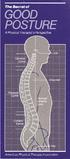 The Secret... T he American Physical Therapy Association would like to share a secret with you. It can help you do more with less effort breathe easier feel great. The secret is about good posture, which
Exercises for Low Back Injury Prevention
 DIVISION OF AGRICULTURE RESEARCH & EXTENSION University of Arkansas System Family and Consumer Sciences Increasing Physical Activity as We Age Exercises for Low Back Injury Prevention FSFCS38 Lisa Washburn,
Pre-operative Instructions for MIS Total Knee Stephen J Kelly, M.D.
 Pre-operative Instructions for MIS Total Knee Stephen J Kelly, M.D. 33 Sewall Street Portland, ME 04102 207.828.2100 800.439.0274 www.orthoassociates.com Pre-operative Pain Protocol Two days before surgery:
From Hospital to Home: Fall Prevention in an Acute Care Setting
 From Hospital to Home: Fall Prevention in an Acute Care Setting Patricia A. MacCulloch MS, APRN, BC Adult Nurse Practitioner UMass Memorial Dept. of Orthopedics Mission UMass Memorial is committed to improving
WHAT IS THE CORE RECOMMENDATION OF THE ACSM/AHA PHYSICAL ACTIVITY GUIDELINES?
 PHYSICAL ACTIVITY AND PUBLIC HEALTH GUIDELINES FREQUENTLY ASKED QUESTIONS AND FACT SHEET PHYSICAL ACTIVITY FOR THE HEALTHY ADULT WHAT IS THE CORE RECOMMENDATION OF THE ACSM/AHA PHYSICAL ACTIVITY GUIDELINES?
Slips, Trips and Falls Prevention
 Slips, Trips and Falls Prevention Session Objectives Recognize slips, trips, and falls as a serious safety problem Identify slip, trip, and fall hazards Avoid or eliminate slip, trip, and fall hazards
Slips, Trips and Falls Avoid Them All
 Slips, Trips and Falls Avoid Them All A Falls Risk Reduction Program Presenter's Guide & Participant Handouts Developed by: The NH Falls Risk Reduction Task Force www.nhfallstaskforce.org 1 Slips, Trips
How to Prevent Slips, Trips, Falls. For the Employees of Cascade County
 How to Prevent Slips, Trips, Falls For the Employees of Cascade County Walking is Risky Business Think about the things that you do frequently. Often these tasks are done without thought or planning.
AFTER TOTAL HIP REPLACEMENT. Living with Your New Hip
 AFTER TOTAL HIP REPLACEMENT Living with Your New Hip Getting Back in Step By having a total hip replacement, you re taking the first step toward returning to an active lifestyle. The next step is rehabilitation
Integrating Physiotherapy and Occupational Therapy for Persons with Chronic Disease: Lessons Learned from Research in Primary Care
 Integrating Physiotherapy and Occupational Therapy for Persons with Chronic Disease: Lessons Learned from Research in Primary Care Lori Letts & Julie Richardson School of Rehabilitation Science McMaster
The JOURNEY OF ELDERCARE
 The JOURNEY OF ELDERCARE ELDERSPEAK Glossary Terms commonly used by Professionals in Aging Acute v. Chronic Acute - care delivered in a hospital that is usually shortterm and recuperative. Chronic - condition
TASK FORCE SUPPLEMENT FOR FUNCTIONAL CAPACITY EVALUATION
 TASK FORCE SUPPLEMENT FOR FUNCTIONAL CAPACITY EVALUATION A. GENERAL PRINCIPLES Use of a Functional Capacity Evaluation (FCE) is to determine the ability of a patient to safely function within a work environment.
Cardiac Rehab Program: Stretching Exercises
 Cardiac Rehab Program: Stretching Exercises Walk around the room, step side to side, ride a bike or walk on a treadmill for at least 5 minutes to warm up before doing these stretches. Stretch warm muscles
Balance and Vestibular Center Programs to treat dizziness and reduce your risk of falling
 Balance and Vestibular Center Programs to treat dizziness and reduce your risk of falling Helping you overcome dizziness and vertigo Most people will experience dizziness at some point in their lives.
Catholic Mutual..."CARES"
 Catholic Mutual..."CARES" BACK INJURY LOSS CONTROL FOR HEALTH CARE FACILITIES Occupational back injuries are a major loss exposure in the health care industry. Serious back injuries can result when employees
Seniors Health Services
 Leading the way in care for seniors Seniors Health Services Capital Health offers a variety of services to support seniors in communities across the region. The following list highlights programs and services
IN-HOME QUALITY IMPROVEMENT BEST PRACTICE: FALL PREVENTION NURSE TRACK
 IN-HOME QUALITY IMPROVEMENT BEST PRACTICE: FALL PREVENTION NURSE TRACK Best Practice Intervention Packages were designed for use by any In-Home Provider Agency to support reducing avoidable hospitalizations
B. TED MAURER, MD POSTOPERATIVE REHABILITATION PROTOCOL TOTAL KNEE ARTHROPLASTY
 B. TED MAURER, MD POSTOPERATIVE REHABILITATION PROTOCOL TOTAL KNEE ARTHROPLASTY Goals addressed prior to discharge from hospital setting: Independence with bed mobility, transfers (supine to sit and sit
Lower Back Pain An Educational Guide
 Lower Back Pain An Educational Guide A publication from the Center of Pain Medicine and Physiatric Rehabilitation 2002 Medical Parkway Ste 150 1630 Main St Ste 215 Annapolis, MD 21401 Chester, MD 21619
The type of cancer Your specific treatment Your pre training levels before diagnose (your current strength and fitness levels)
 Exercise and Breast Cancer: Things you can do! Cancer within the fire service is one of the most dangerous threats to our firefighter s health & wellness. According to the latest studies firefighters are
my personal joint profile Your own personal profile of how rheumatoid arthritis is affecting your joints.
 my personal joint profile Your own personal profile of how rheumatoid arthritis is affecting your joints. What you and your rheumatologist can learn from your joint profile. It seems like a simple question:
Accident Prevention: Slips, Trips & Falls
 Accident Prevention: Slips, Trips & Falls Judith Davies BSc (Hons) SROT Falls Service Development and Project Manager Central Norfolk NHS East of England Ambulance Service NHS Trust Slips, Trips & Falls
MULTI-FACTORIAL FALL RISK ASSESSMENT AND INTERVENTION FOR COMMUNITY DWELLING SENIORS: THE ROLE OF HOME HEALTH AGENCIES. Caring Choices.
 MULTI-FACTORIAL FALL RISK ASSESSMENT AND INTERVENTION FOR COMMUNITY DWELLING SENIORS: THE ROLE OF HOME HEALTH AGENCIES Caring Choices April 2006 Caring Choices Page 1 Multi-Factorial Fall Risk Assessment
Rehabilitation Protocol: Total Hip Arthroplasty (THA)
 Rehabilitation Protocol: Total Hip Arthroplasty (THA) Department of Orthopaedic Surgery Lahey Hospital & Medical Center, Burlington 781-744-8650 Lahey Outpatient Center, Lexington 781-372-7020 Lahey Medical
How To Cover Occupational Therapy
 Guidelines for Medical Necessity Determination for Occupational Therapy These Guidelines for Medical Necessity Determination (Guidelines) identify the clinical information MassHealth needs to determine
Position Classification Standard for Rehabilitation Therapy Assistant Series, GS-0636
 Position Classification Standard for Rehabilitation Therapy Assistant Series, GS-0636 TABLE OF CONTENTS SERIES DEFINITION... 2 EXCLUSIONS... 2 OCCUPATIONAL INFORMATION... 3 SPECIALIZATIONS AND TITLES...
Otago Exercise Program
 Otago Exercise Program Edited Version Exercise Booklet Created by: Genesee County Coalition Supported by a grant from the Health Foundation for Western and Central New York Otago Exercise Program to Prevent
Exercises for older people
 Exercise for older people Exercises for older people Sitting Getting started If you ve not done much physical activity for a while, you may want to get the all-clear from a GP before starting. For the
Fact sheet Exercises for older adults undergoing rehabilitation
 Fact sheet Exercises for older adults undergoing rehabilitation Flexibility refers to the amount of movement possible around a joint and is necessary for normal activities of daily living such as stretching,
Brachial Plexus Palsy
 Patient and Family Education Brachial Plexus Palsy A Therapy Guide for Your Baby Brachial Plexus Palsy is caused by trauma to the nerves of the arm. This trauma may have caused muscle weakness, lack of
AGS REHABILITATION/ POST-HOSPITAL CARE OF THE GERIATRIC FRACTURE PATIENT. Egan Allen, MD University of Rochester
 AGS REHABILITATION/ POST-HOSPITAL CARE OF THE GERIATRIC FRACTURE PATIENT Egan Allen, MD University of Rochester THE AMERICAN GERIATRICS SOCIETY Geriatrics Health Professionals. Leading change. Improving
U.S. Fall Prevention Programs for Seniors
 U.S. Fall Prevention Programs for Seniors Selected Programs Using Home Assessment and Modification DEPARTMENT OF HEALTH AND HUMAN SERVICES Centers for Disease Control and Prevention U.S. Fall Prevention
12 Week Do-it-Yourself Fitness Program
 12 Week Do-it-Yourself Fitness Program Created by Brad Awalt, MS, ACSM Assistant Manager, Health Plus [email protected] January 2011 Do you have a goal to begin an exercise routine, but not sure
The Stopping Elderly Accidents, Deaths & Injuries (STEADI) Tool Kit for Health Care Providers
 The Stopping Elderly Accidents, Deaths & Injuries (STEADI) Tool Kit for Health Care Providers Disclaimer: The findings and conclusions in this presentation are those of the author and do not necessarily
Gait with Assistive Devices
 Gait with Assistive Devices Review Last Lecture Weak dorsiflexors? Vaulting? Hip hiking? Weak hip abductors? Hip circumduction? Ataxic gait? Antalgic gait? Explain the line of gravity Ambulation with Assistive
GRASP. Graded Repetitive Arm Supplementary Program: A home-work based program to improve arm and hand function in people living with stroke
 GRASP Graded Repetitive Arm Supplementary Program: A home-work based program to improve arm and hand function in people living with stroke GUIDELINES & MANUAL October 2012 The GRASP Program was developed
Falls Risk Assessment: A Literature Review. The purpose of this literature review is to determine falls risk among elderly individuals and
 Falls Risk Assessment: A Literature Review Purpose The purpose of this literature review is to determine falls risk among elderly individuals and identify the most common causes of falls. Also included
1/12/2015. Tom Ambury, PT, CHC
 Tom Ambury, PT, CHC Attendees will understand the key components of the initial evaluation Attendees will understand the importance of the initial evaluation in establishing the skilled need for therapy
How To Write Long Term Care Insurance
 By Lori Boyce, AVP Risk Management and R&D Underwriting long term care insurance: a primer Every day Canadians die, are diagnosed with cancer, have heart attacks and become disabled and our insurance solutions
Check for Safety. A Home Fall Prevention Checklist for Older Adults
 P Safety This checklist was produced with support from the MetLife Foundation. Centers Disease Control and Prevention National Center Injury Prevention and Control A Home Fall Prevention list Older Adults
Do s and Don ts with Low Back Pain
 Do s and Don ts with Low Back Pain Sitting Sit as little as possible and then only for short periods. Place a supportive towel roll at the belt line of the back especially when sitting in a car. When getting
Exercise Instructions. PFPS Exercises: 6-week program. Hamstring Stretch (5x20sec) Week 1. Calf Stretch (5x20 seconds)
 Exercise Instructions PFPS Exercises: 6-week program Adapted from: Boling, MC, Bolgla, LA, Mattacola, CG. Uhl, TL, Hosey, RG. Outcomes of a weight-bearing rehabilitation program for patients diagnosed
Injury Prevention for the Back and Neck
 Injury Prevention for the Back and Neck www.csmr.org We have created this brochure to provide you with information regarding: Common Causes of Back and Neck Injuries and Pain Tips for Avoiding Neck and
OUTPATIENT PHYSICAL AND OCCUPATIONAL THERAPY PROTOCOL GUIDELINES
 OUTPATIENT PHYSICAL AND OCCUPATIONAL THERAPY PROTOCOL GUIDELINES General Therapy Guidelines 1. Therapy evaluations must be provided by licensed physical and/or occupational therapists. Therapy evaluations
ROTATOR CUFF HOME EXERCISE PROGRAM
 ROTATOR CUFF HOME EXERCISE PROGRAM Contact us! Vanderbilt Sports Medicine Medical Center East, South Tower, Suite 3200 1215 21st Avenue South Nashville, TN 37232-8828 For more information on this and other
MINDING OUR BODIES. Healthy Eating and Physical Activity for Mental Health
 MINDING OUR BODIES Healthy Eating and Physical Activity for Mental Health Facilitators Guide: Background Information (note: tell participants to consult with their doctor before starting to exercise) What
Exercise Principles and Guidelines for Persons with Cerebral Palsy and Neuromuscular Disorders
 Exercise Principles and Guidelines for Persons with Cerebral Palsy and Neuromuscular Disorders INTRODUCTION: Health and well being are the result of many factors: Physical activity is one of these factors.
FIM ITEM SCORING EXERCISE SHEETS 2015
 FIM EXERCISE - EATING The helper applies the universal cuff on to the patient s hand before she eats. The patient then brings food to her mouth, chews & swallows by herself. The helper scoops all food
ILIOTIBIAL BAND SYNDROME
 ILIOTIBIAL BAND SYNDROME Description The iliotibial band is the tendon attachment of hip muscles into the upper leg (tibia) just below the knee to the outer side of the front of the leg. Where the tendon
8/12/2015. Restorative Nursing Programs: Capitalizing on Mobility to Improve Quality of Life
 Restorative Nursing Programs: Capitalizing on Mobility to Improve Quality of Life Presented By: Jeri Lundgren, RN, BSN, PHN, CWS, CWCN President Senior Providers Resource, LLC Coordination of the Program:
The Insall Scott Kelly Center for Orthopaedics and Sports Medicine 210 East 64th Street, 4 th Floor, New York, NY 10065
 ANTERIOR CRUCIATE LIGAMENT RECONSTRUCTION POST-OPERATIVE REHABILITATION PROTOCOL 2003 AUTOGRAFT BONE-PATELLA TENDON-BONE and ALLOGRAFT PROTOCOL PHASE I-EARLY FUNCTIONAL (WEEKS 1-2) Goals: 1. Educate re:
Rotator Cuff Repair Protocol
 Rotator Cuff Repair Protocol Anatomy and Biomechanics The shoulder is a wonderfully complex joint that is made up of the ball and socket connection between the humerus (ball) and the glenoid portion of
Patient handling techniques to prevent MSDs in health care
 28 Introduction Patient handling techniques Work-related musculoskeletal disorders (MSDs) are a serious problem among hospital personnel, and in particular the nursing staff. Of primary concern are back
Functional Treatment Ideas
 I n t e r n a t i o n a l C l i n i c a l E d u c a t o r s, i n c. Functional Treatment Ideas and Strategies In Adult Hemiplegia s e c o n d e d i t i o n By Jan Davis, MS, OTR/L Video Registration No.
Trunk Strengthening and Muscle and Coordination Exercises for Lower Limb Amputees
 Trunk Strengthening and Muscle and Coordination Exercises for Lower Limb Amputees Part One: Trunk Strengthening Trunk Extension Needed: Sturdy chair or stool, Theraband, and a Theraball if necessary. Sit
Safe Lifting/Back Safety Training. Presented by Rita Gagnon Occupational Health Outreach Coordinator Benefis Health Systems 406-731-8328
 Safe Lifting/Back Safety Training Presented by Rita Gagnon Occupational Health Outreach Coordinator Benefis Health Systems 406-731-8328 Risk Factors Involved with Manual Handling Tasks: Bending at Trunk
ISOMETRIC EXERCISE HELPS REVERSE JOINT STIFFNESS, BUILDS MUSCLE, AND BOOSTS OVERALL FITNESS.
 ISOMETRIC EXERCISE HELPS REVERSE JOINT STIFFNESS, BUILDS MUSCLE, AND BOOSTS OVERALL FITNESS. By Askari A. Kazmi KazmisBioscienceLabs exercise helps reverse joint stiffness, builds muscle, and boosts overall
Rehabilitation Therapies
 Bluebonnet Medical Rehabilitation Hospital Rehabilitation Therapies 512-444-4835 or 800-252-5151 www.texasneurorehab.com Austin, Texas What Sets Us Apart Rehabilitation Therapies Physical Therapy - Neuromuscular
Administrative Procedures Memorandum A4007
 Page 1 of 9 Date of Issue May 2015 Original Date of Issue March 2011 Subject WORKPLACE SAFETY AND INSURANCE BOARD (WSIB) CLAIMS References Links Contact Workplace Safety & Insurance Act (Ontario) Human