
Hospital-Wide (All-Condition) 30 Day Risk-Standardized Readmission Measure
|
|
|
- Josephine Rose
- 10 years ago
- Views:
Transcription
1 Hospital-Wide (All-Condition) 30 Day Risk-Standardized Readmission Measure DRAFT Measure Methodology Report Submitted By Yale New Haven Health Services Corporation/Center for Outcomes Research & Evaluation (YNHHSC/CORE): Leora Horwitz, MD, MHS Chohreh Partovian, MD, PhD Zhenqiu Lin, PhD Jeph Herrin, PhD Jacqueline Grady, MS Mitchell Conover, BA Julia Montague, MPH Chloe Dillaway, BA Kathleen Bartczak, BA Joseph Ross, MD Susannah Bernheim, MD, MHS Elizabeth Drye, MD, SM Harlan M. Krumholz, MD, SM Contract number: HHSM I/HHSM-500-T0001, Modification No Prepared For: Centers for Medicare & Medicaid Services (CMS) Last updated August 10, 2011 DRAFT 1

2 TABLE OF CONTENTS LIST OF TABLES... 4 LIST OF FIGURES... 5 GLOSSARY OF TERMS INTRODUCTION Overview of Measure Hospital-wide Readmission as a Quality Indicator Approach to Measure Development METHODS Overview Outcome Definition Planned readmissions Thirty-day timeframe All-cause readmission Definition of Eligible Population Grouping patients into clinically coherent discharge condition categories by using AHRQ Clinical Classification System (AHRQ-CCS) Inclusion / exclusion criteria Administrative Model Development Data sources Multiple models Models are defined by care team (service line) or clinical coherence Risk Adjustment Complications of hospitalization Case mix adjustment: risk variables Service mix adjustment Statistical Approach to Model Development Models for each cohort of conditions Hospital performance reporting Creating interval estimates Algorithm RESULTS SUMMARY DRAFT 2

3 5. REFERENCES APPENDIX TABLES Appendix A Top 10 primary discharge diagnoses for planned procedures Appendix B List of AHRQ procedure CCs defining the surgical/gynecological cohort Appendix C Condition categories assigned to the medical cohorts Appendix D Conditions that are treated as complications if occurring during index admission Appendix E Candidate risk variables Appendix F Final risk-adjustment variables DRAFT 3

4 LIST OF TABLES Table 1 Planned procedure list Table 2 Discharge condition categories considered acute or complications of care Table 3 Admissions, readmissions and mortality for the seven cohorts (2008) Table 4 Frequency of hospitals in each cohort (Number of hospitals = 4919) Table 5 Number of hospitals based on number of models to which they contribute Table 6 C-statistic for each model DRAFT 4

5 LIST OF FIGURES Figure 1 Graphical representation of time to readmission Figure 2 Inclusion and exclusion criteria* Figure 3 Distribution of 30-day hospital-wide readmission rates Figure 3a Unadjusted rate Figure 3b Risk-standardized rate DRAFT 5

6 GLOSSARY OF TERMS Term Index admission Readmission Planned readmission Discharge diagnosis Discharge condition category Cohort Measure population Procedure category Risk variable Case mix Service mix Definition Any eligible admission to an acute care hospital assessed in the measure for the outcome (readmitted or not within 30 days). (See Section 2.3.2) An admission to an acute care hospital within 30 days of discharge from an acute care hospital. (See Section 2.2). A readmission may in turn serve as an index admission. An intentional readmission within 30 days of discharge from an acute care hospital that is a scheduled part of the patient s plan of care. Planned readmissions are not counted as outcomes in this measure (see Section 2.2.1). ICD-9 level code of the principal reason for hospitalization. A group of related discharge diagnosis ICD-9 codes, as grouped by the Agency for Healthcare Research and Quality (AHRQ) Clinical Classification Software (CCS). (See Section 2.3.1). A group of admissions for patients with related condition categories or procedure categories; this measure includes seven cohorts, each with its own risk model (see Section 2.4.3). The full set of admissions eligible for inclusion in the measure. A group of related procedure codes, as grouped by the Agency for Healthcare Research and Quality Clinical Classification Software (CCS) (see Section 2.4.3). A variable in the risk-adjustment model intended to account for patient comorbid conditions or age. A risk variable may include multiple conditions. Each condition is a group of ICD-9 diagnosis codes, as defined by the Centers for Medicare and Medicaid Services Condition Category groups (CCs) (see Section 2.5.2). The variation among hospitals in illness severity and age of their patients. The variation among hospitals in the types of conditions they care for and procedures they provide. DRAFT 6

7 1. INTRODUCTION 1.1 Overview of Measure Readmission following hospitalization is a costly and often preventable event. During 2003 and 2004, almost one-fifth of Medicare beneficiaries over 2.3 million patients were rehospitalized within 30 days of discharge. 1 Jencks estimated that readmissions within 30 days of discharge cost Medicare more than $17 billion dollars annually. 1 A 2006 Commonwealth Fund report estimated that if national readmission rates were lowered to the levels achieved by the top-performing regions, Medicare would save $1.9 billion annually. 2 Currently, the Centers for Medicare and Medicaid Services (CMS) publicly reports riskstandardized readmission rates for heart failure, pneumonia and acute myocardial infarction. 3-9 CMS has also developed hospital readmission measures for stroke and for hip and knee replacement, and is developing them for chronic obstructive pulmonary disease and vascular procedures. While it is helpful to assess readmission rates for specific groups of patients, these conditions account for only a small minority of total readmissions. 10 By contrast, a hospital-wide, all-condition readmission measure could provide a broader assessment of the quality of care at hospitals. Therefore, CMS has contracted with Yale New Haven Health Services Corporation/Center for Outcomes Research and Evaluation (YNHHSC/CORE) to develop a claims-based, risk adjusted hospital-wide readmission (HWR) measure for public reporting that reflects the quality of care for hospitalized patients in the United States. In this technical report we provide detailed information on the development of the HWR measure. Briefly, we developed the measure as an all-condition measure designed to capture unplanned readmissions within 30 days of discharge. The HWR measure complies with accepted standards for outcomes measure development, including appropriate risk adjustment and transparency of specifications. The measure includes all admissions except those for which a subsequent readmission would not be considered a quality signal. The measure does not count planned readmissions in the measure outcome, since they do not represent a quality signal. The overall risk-standardized readmission rate is derived from a composite of seven statistical models built for groups of admissions that are clinically related. The seven risk adjustment models will be tested for reliability in a split sample dataset combining two calendar years (2007 and 2008), and the stability of the measure over time will be tested using data from Although we developed the measure using Medicare data, the measure will also be tested in and adapted for all-payer datasets. 1.2 Hospital-wide Readmission as a Quality Indicator Hospital readmission, for any reason, is disruptive to patients and caregivers, costly to the healthcare system, and puts patients at additional risk of hospital-acquired infections and complications. Readmissions are also a major source of patient and family stress and may DRAFT 7

8 contribute substantially to loss of functional ability, particularly in older patients. Some readmissions are unavoidable and result from inevitable progression of disease or worsening of chronic conditions. However, readmissions may also result from poor quality of care or inadequate transitional care. Transitional care includes effective discharge planning, transfer of information at the time of discharge, patient assessment and education, and coordination of care and monitoring in the post-discharge period. Numerous studies have found an association between quality of inpatient or transitional care and early (typically 30-day) readmission rates for a wide range of conditions Therefore, while readmission rates would never be expected to be zero, variation in readmission rates for a broad spectrum of conditions is related to quality of care. Furthermore, randomized controlled trials have shown that improvement in the following areas can directly reduce readmission rates: quality of care during the initial admission; improvement in communication with patients, their caregivers and their clinicians; patient education; predischarge assessment; and coordination of care after discharge Evidence that hospitals have been able to reduce readmission rates through these qualityof-care initiatives illustrates the degree to which hospital practices can affect readmission rates. Successful randomized trials have reduced 30-day readmission rates by 20-40%. Widespread application of these clinical trial interventions to general practice has also been encouraging. Since 2008, 14 Medicare Quality Improvement Organizations have been funded to focus on care transitions, applying lessons learned from clinical trials. Several have been notably successful in reducing readmissions within 30 days. 36 Given that studies have shown readmissions within 30-days to be related to quality of care, and that interventions have been able to reduce 30-day readmission rates, it is reasonable to consider an all-condition 30-day readmission rate as a quality measure. 1.3 Approach to Measure Development We developed this measure in consultation with national guidelines for publicly reported outcomes measures, consistent with the technical approach to outcomes measurement set forth in National Quality Forum (NQF) guidance for outcomes measures, 37 CMS Measure Management System guidance, and the guidance articulated in the American Heart Association scientific statement, Standards for Statistical Models Used for Public Reporting of Health Outcomes. 3 These standards include adequate risk adjustment and transparency. We are obtaining expert input during measure development, both through CMS and consultation with clinical and statistical experts. We are now soliciting comments from the general public via a public comment period. DRAFT 8

9 2. METHODS 2.1 Overview We developed a hospital-wide 30-day readmission measure. This measure reports the hospital-level, risk-standardized rate of unplanned all-cause readmission after admission for any condition within 30 days of hospital discharge. The measure comprises a single summary score, derived from the results of seven different models, one for each of the following cohorts (groups of discharge condition categories or procedure categories): general medicine, surgery/gynecology, cardiorespiratory, cardiovascular, neurology, oncology, and psychiatry, each of which will be described in greater detail below. The measure uses one year of data. We developed the measure in the Medicare fee-for-service (FFS) population age 65 and older discharged from any non-federal short-stay acute care hospital or critical access hospital in the United States, excluding PPS-exempt cancer hospitals. The measure covers 95% of hospitalizations occurring in 2008 in this population, and includes 88% of readmissions following those hospitalizations. Hospitalizations were eligible for inclusion if the patient was enrolled in FFS Medicare Part A for 12 months prior and one month after the admission, if the discharge disposition was not to another acute care hospital, and if the patient was alive upon discharge. We excluded admissions for which we considered readmission not to be a signal of quality of care (patients who leave against medical advice, or have a discharge condition category with very high post-discharge mortality). To compare readmission performance across hospitals, we accounted for differences in patient characteristics (patient case mix) as well as differences in mixes of services and procedures offered by hospitals (hospital service mix). To develop the measure, we analyzed admissions among Medicare FFS beneficiaries 65 and older who were discharged during The datasets were restricted to inpatient data, and included data on each patient for the 12 months prior to the index admission and the 30 days following discharge. We used the Agency for Healthcare Research and Quality (AHRQ) Condition Classification System (CCS) to group hospitalizations into clinically-coherent, mutually-exclusive condition categories according to their principal diagnosis. We collapsed these discharge condition categories into seven major cohorts according to care teams (hospital service lines) and built a separate model for each one of these cohorts. We used hierarchical generalized linear models (HGLMs) to adjust for differences in hospital case mix and to account for the clustering of patients within a hospital. We adjusted for case mix differences among hospitals by risk-adjusting for patients comorbid conditions identified in inpatient episodes of care for the 12 months prior to the index admission as well as those present at admission. We did not risk-adjust for diagnoses that may have been a complication of care during the index admission. We used CMS Condition Category groups (CCs) to define the comorbid risk adjusters and used a fixed set of comorbid risk variables across models. We risk-adjusted for service mix differences DRAFT 9

10 among hospitals by including indicators for discharge condition categories (as defined by AHRQ CCS) in each model. Finally, we used each of the seven models to calculate predicted and expected numbers of readmissions (as defined below in 2.6.1) for each hospital in each cohort. We then derived a single summary score from the results of the seven models by calculating the volume-weighted log average of the predicted over expected ratios from each model and multiplying the result by the average national readmission rate. This approach allowed us to take into account the variation in service mix across hospitals. We evaluated the performance of the measure for various types of hospitals and groups of patients. We will test the reliability of the measure by randomly splitting combined 2007 and 2008 data and comparing the performance in each split sample. We will also test the measure s stability over time by comparing 2008 and 2009 performance. 2.2 Outcome Definition The outcome for this measure is unplanned all-cause 30-day readmission after an admission for any condition. We define a readmission as a subsequent inpatient admission to any acute care facility which occurs within 30 days of the discharge date of an eligible index admission. Any readmission is eligible to be counted as an outcome except those that are considered planned Planned readmissions Readmissions may be either unplanned or planned. Unplanned readmissions are acute clinical events experienced by a patient that require urgent hospital management. Higher than expected unplanned readmission rates suggest lower quality of care and are the focus of quality measurement as part of quality improvement efforts. Because planned readmissions are not a signal of quality of care, we chose to exclude planned readmissions from the numerator. In order to do this, we developed an algorithm for identifying planned readmissions in claims data that will not count as readmissions in the measure. The algorithm was based on two main principles: 1. We define planned readmissions as those in which one of a pre-specified list of procedures took place (which will be described in detail below), or those for maintenance chemotherapy. Although other readmissions may be planned for medical reasons, these are rare and there is no reliable means of identifying them in administrative claims data. Maintenance chemotherapy is a common planned medical readmission that is reliably distinguishable in the data. 2. Admissions for acute illness or for complications of care are not planned. Even a typically planned procedure performed during an admission for an acute illness would not likely have been planned. We can identify readmissions as acute or non-acute by considering the principal discharge condition. DRAFT 10

11 We therefore developed an algorithm that uses procedure codes and discharge diagnosis categories for each readmission to identify planned readmissions. Readmissions that occur for planned procedures (listed below) and which are not for acute diagnoses or complications of care (listed below) are identified as planned. The following examples illustrate this point: Example 1: A readmission with a discharge condition category of biliary tract disease that included a cholecystectomy would be considered planned A readmission with a discharge condition category of septicemia that included a cholecystectomy would be considered unplanned A readmission with a discharge condition category of complications of surgical procedures or medical care would be considered unplanned Example 2: A readmission with a discharge condition category of coronary atherosclerosis that included a percutaneous coronary intervention (PCI) would be considered planned A readmission with a discharge condition category of acute myocardial infarction that included PCI would be considered unplanned Therefore, the HWR measure defines planned readmissions as any readmission that was either: 1. A non-acute readmission in which one of 32 typically planned procedures occurs or 2. A readmission for maintenance chemotherapy All other readmissions are considered unplanned and are counted as readmissions in the measure. List of planned procedures In order to develop a list of planned procedures, we reviewed the full AHRQ Clinical Classification System (CCS) procedure category list and identified 32 procedures that are typically planned and require an inpatient stay (Table 1). Readmissions in which any of these procedures are performed are considered planned if the discharge condition category is not acute or a complication of care. DRAFT 11

12 Table 1 Planned procedure list Readmissions AHRQ without an acute Procedure Procedure diagnosis or a All readmissions CC complication of care Number Percent Number Percent 45 Percutaneous transluminal coronary angioplasty (PTCA) 23, , Cholecystectomy and common duct exploration 15, , Condition Maintenance chemotherapy CCS 45 14, , Amputation of lower extremity 13, , Endarterectomy; vessel of head and neck 11, , Colorectal resection 11, , Coronary artery bypass graft (CABG) 11, , Arthroplasty knee 10, , Transurethral resection of prostate (TURP) 7, , Hip replacement; total and partial 5, , Therapeutic radiology for cancer treatment 5, , Spinal fusion 5, , Insertion; revision; replacement; removal of cardiac pacemaker or cardioverter/defibrillator 5, , Laminectomy; excision intervertebral disc 5, , Lobectomy or pneumonectomy 4, , Peripheral vascular bypass 4, , Heart valve procedures 4, , Aortic resection; replacement or anastomosis 3, , Nephrectomy; partial or complete 3, , Embolectomy and endarterectomy of lower limbs 2, , Inguinal and femoral hernia repair 2, , Hysterectomy; abdominal and vaginal 2, , Mastectomy 1, , Arthroplasty other than hip or knee 1, , Gastrectomy; partial and total 1, , Open prostatectomy 1, , Oophorectomy; unilateral and bilateral 1, , Thyroidectomy; partial or complete , Bone marrow transplant Lumpectomy; quadrantectomy of breast Kidney transplant Other organ transplantation ICD , Electroshock therapy Total 181,203 Data from 2008 MedPAR file, incorporating all final inclusion and exclusion criteria for the measure DRAFT 12

13 List of discharge condition categories that are acute or complications of care According to our algorithm, admissions in which a planned procedure was performed are only considered planned if the patient was not admitted for an acute illness or complication of care. To develop a list of these acute and complication discharge condition categories, we reviewed the 10 most frequent discharge condition categories associated with each of our final set of 32 potentially planned procedures (Appendix A). From this set of 320 condition categories, we identified those which could be categorized as acute illnesses or complications of medical care. When a discharge condition category contained a mix of acute and chronic diagnoses, it was categorized as acute. Based on these criteria, we categorized 26 discharge condition categories as acute or complications of care, all listed within Table 2. Table 2 Discharge condition categories considered acute or complications of care AHRQ CC Discharge condition categories that are acute or complications of care and are associated with planned procedures Number of 30 day readmissions with this condition and a planned procedure 100 Acute myocardial infarction Complication of device; implant or graft Cardiac dysrhythmias Congestive heart failure; nonhypertensive Conduction disorders Diverticulosis and diverticulitis Septicemia (except in labor) Complications of surgical procedures or medical care Aortic and peripheral arterial embolism or thrombosis 1427 Fracture (207, 225, 226, 227, 229, 230, 231, 232) Intestinal obstruction without hernia Infective arthritis and osteomyelitis (except that caused by TB or sexually transmitted disease) Acute cerebrovascular disease Peri ; endo ; and myocarditis; cardiomyopathy Pneumonia (except that caused by TB or sexually transmitted disease) Syncope Chronic obstructive pulmonary disease and bronchiectasis Respiratory failure; insufficiency; arrest (adult) Fluid and electrolyte disorders Urinary tract infections Pleurisy; pneumothorax; pulmonary collapse Acute and unspecified renal failure Gastroduodenal ulcer (except hemorrhage) Gastrointestinal hemorrhage Calculus of urinary tract Transient cerebral ischemia 30 DRAFT 13

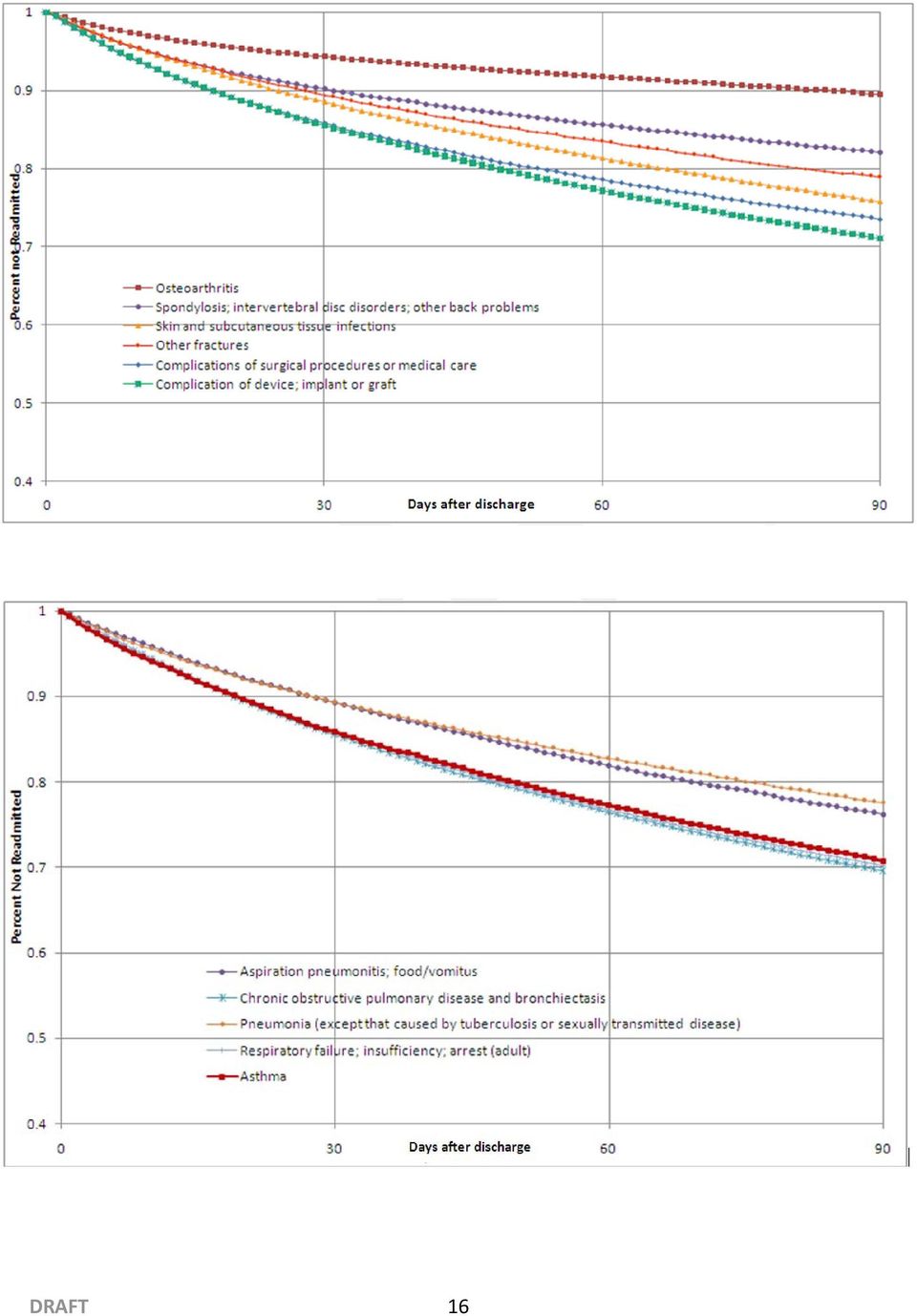
14 All condition categories 64,378 We quantified the impact of our decisions regarding the definition of planned readmissions on readmission rates. In 2008, there were 181,203 planned readmissions, accounting for 12% of all readmissions Thirty-day timeframe We considered 30 days as a clinically reasonable timeframe for multiple reasons: 1) Within a 30-day time frame, readmissions are more likely attributable to care received during the index hospitalization and during the transition to the outpatient setting. A number of studies have demonstrated that improvements in care at the time of patient discharge can reduce 30-day readmission rates. 20,21,23,28-35,38 Hospitals, in collaboration with their medical communities, can take a number of actions to reduce readmissions: ensure patients are clinically ready at discharge; reduce risk of infection; reconcile medications; improve communications among providers involved in transition of care; encourage strategies that promote disease management principles; and educate patients about symptoms to monitor, whom to contact with questions, and where and when to seek follow-up care. 20,21,23,28-35,38 2) The 30-day timeframe is consistent with the other readmission measures approved by the National Quality Forum (NQF) and publicly reported by CMS. 3) In addition to clinical judgment, we reviewed time to event curves of readmission over time to decide whether 30-day readmission is a quality signal. The readmission time-to-event curves showed a very similar pattern for all these discharge condition categories: a rapid early accrual of readmissions, with a stable and consistent readmission rate thereafter. Curves typically stabilized within 30 days of discharge, indicating that a 30-day cutoff is clinically reasonable. Time-to-event curves for the most common conditions are shown in Figure 1. DRAFT 14

15 Figure 1 Graphical representation of time to readmission DRAFT 15

16 DRAFT 16
17 2.2.3 All-cause readmission We defined the outcome as all-cause unplanned readmissions rather than readmissions related to the previous hospitalization for multiple reasons. First, from the patient perspective, readmission for any reason is likely to be an undesirable outcome of care. Furthermore, readmission for any reason exposes the patient to risks associated with hospitalization, such as iatrogenic errors. Second, there is no reliable way to determine whether a readmission is related to the previous hospitalization based on the documented cause of readmission. For example, a stroke patient who develops aspiration pneumonia may ultimately be readmitted for respiratory distress. It would be inappropriate to treat this readmission as unrelated to the care the patient received for stroke. Third, the range of potentially avoidable readmissions also includes those not directly related to the index condition category, such as those resulting from medication reconciliation errors, poor communication at discharge, or inadequate follow-up post-discharge. Creating a comprehensive list of potentially avoidable readmissions related to the previous hospitalization s condition category would be arbitrary and, ultimately, challenging to implement. Fourth, all existing CMS readmission measures report all-cause readmission, making this approach consistent with existing measures. Fifth, research shows that readmission reduction interventions can reduce all-cause readmission, not only condition-specific readmission. Finally, defining the outcome as all-cause readmissions may encourage hospitals to implement broader initiatives aimed at improving the overall care within the hospital and transitions from the hospital setting instead of limiting the focus to a narrow set of conditionspecific approaches. The goal of this measure is not to reduce readmissions to zero, but to assess hospital performance relative to what is expected given the performance of other hospitals with similar case mixes. 2.3 Definition of Eligible Population Our guiding principle for defining the eligible population was that the measure should capture as many unplanned readmissions as possible across a maximum number of acute care hospitals. Therefore we included in the measure all admissions except those for which full data was not available or for which 30-day readmission cannot reasonably be considered a signal of quality of care Grouping patients into clinically coherent discharge condition categories by using AHRQ Clinical Classification System (AHRQ-CCS) For our previous claims-based condition- and procedure-specific outcomes measures we have used individual ICD-9 codes or CPT codes of the index admission to define the cohort. For the HWR measure, using ICD-9 codes would have been very impractical because there are potentially thousands of ICD-9 codes that would have to be included. Therefore, we aggregated ICD-9 codes into clinically coherent conditions. DRAFT 17

18 To aggregate these codes, we chose the Agency for Healthcare Research and Quality s Clinical Classifications Software (CCS). We selected CCS because 1) it is well-known and widely used, 2) it is based on the principal diagnosis and not on complications or events that occur during hospitalization (unlike the Medicare Severity Diagnosis Related Groups [MS-DRGs]), and 3) because the groups of ICD-9 codes within each category are more clinically homogenous than other available groupers (MS-DRGs and CMS Condition Categories) and have relatively similar readmission rates. AHRQ CCS has been used by managed care plans, insurers and researchers for a variety of functions, such as assessing resource use, predicting future expenses, comparing procedure or condition rates among payers or hospitals, or profiling patients. There are a total of 285 mutually exclusive AHRQ condition categories, most of which are single, homogenous diseases such as pneumonia or acute myocardial infarction. Some are aggregates of conditions, such as other bacterial infections. Mental health and substance abuse categories are included. In addition, AHRQ provides 231 mutually exclusive procedure categories to group procedures a patient might have had during hospitalization Inclusion / exclusion criteria Admissions are eligible for inclusion in the measure if: i. Patient is alive upon discharge Rationale: Patients who die during the initial hospitalization cannot be readmitted. ii. Patient is not transferred to another acute care hospital upon discharge Rationale: In an episode of care in which patient is transferred among hospitals, responsibility for the readmission is assigned to the final discharging hospital. Therefore these intermediate admissions within a single episode of care are not eligible for inclusion. iii. Patient is 65 or older Rationale: Younger Medicare patients represent a distinct population with dissimilar characteristics and outcomes. iv. Patient has at least 30 days of post-discharge enrollment in FFS Medicare or died within the 30-day post-discharge period Rationale: This is necessary in order to identify the outcome (readmission) in the dataset.. v. The admission is not to a PPS-exempt cancer hospital Rationale: These hospitals care for a unique population of patients that is challenging to compare to other hospitals. DRAFT 18
![Severity Diagnosis Related Groups [MS-DRGs]), and 3) because the groups of ICD-9 codes within each category are more clinically homogenous than other available groupers (MS-DRGs and CMS Condition](/docs-images/40/361079/images/page_18.jpg "Categories) and have relatively similar readmission rates.")
19 These inclusion criteria are consistent with existing CMS publicly reported measures for readmission except for the final one, which is unique to the HWR measure. We then applied several exclusion criteria to the measure population. The first two are consistent with existing measures; the remainder are unique to the HWR measure. a. Patients not continuously enrolled in FFS Medicare for the 12 months prior to the index admission are excluded Rationale: This is necessary to capture historical data for risk adjustment b. Patients discharged against medical advice (AMA) are excluded Rationale: Hospital had limited opportunity to implement high quality care c. Admissions for rehabilitation care; fitting of prostheses and adjustment devices (CCS 254) are excluded Rationale: These admissions are not for acute care or to acute care hospitals d. Patients admitted for a condition category with high competing mortality risk in the post-discharge period are excluded. A high competing mortality risk condition category is one for which there were more patients who died postdischarge without being readmitted than there were patients who were readmitted. i) One condition category met this criteria for all cohorts: Malignant neoplasm without specification of site (CCS 43) ii) Several condition categories met this criteria only for the cancer and medicine cohorts (that is, admissions in the surgical cohort with these conditions were not excluded): Melanomas of skin (CCS 22) Cancer of breast (CCS 24) Cancer of colon (CCS 14) Cancer of liver and intrahepatic bile duct (CCS 16) Cancer of pancreas (CCS 17) Secondary malignancies (CCS 42) Cancer of bronchus, lung (CCS 19) Cancer of other male genital organs (CCS 31) Cancer; other and unspecified primary (CCS 41) Fracture of neck of femur (hip) (CCS 226) Cancer of ovary (CCS 27) Rationale: A high ratio of post-discharge deaths per readmissions reduces the opportunity for readmissions and interferes with the readmission quality signal. In addition the quality signal may be dwarfed by the unavoidable severity of illness. DRAFT 19

20 2.4 Administrative Model Development Data sources To develop the measure, we constructed a dataset that contains administrative hospitalization data for fee-for-service (FFS) Medicare beneficiaries, 65 and older on admission, hospitalized in The dataset also includes data on each patient for the 12 months prior to the index admission and the 30 days following discharge. We obtained index admission, readmission, and in-hospital comorbidity data from the Medicare Provider Analysis and Review (MEDPAR) file. Enrollment and postdischarge mortality status were obtained from the Medicare Denominator file, which contains beneficiary demographic, benefit, coverage, and vital status information. Comorbidities were assessed using data from the index admission and any admission in past year. The Medicare outpatient (Part B) data were not included because 1) this was technically cumbersome, and 2) it would make expanding the measure later to an all-payer population very difficult (all-payer data typically includes only data for hospitalized patients). The final measure population is shown in Figure 2. DRAFT 20

21 Figure 2 Inclusion and exclusion criteria* *Based on 2008 MedPAR data DRAFT 21
22 2.4.2 Multiple models Because the risk of readmission varies with patient factors, including age and comorbidities, hospital comparisons using readmission rates need to account for differences in these factors. To adjust for such case mix differences we used regression analysis. Rather than assume that effect of risk factors would be homogeneous across all discharge condition categories, we assessed the performance of a single model versus multiple models. Our analyses showed consistently that a single model did not perform as well as multiple models, independently of how we defined the multiple models. The multiple models approach showed better discrimination and predictive ability for readmission risk. The risk of readmission also varies according to the mix of conditions and procedures at a hospital (service mix). A multiple models approach better captures these variations. Finally, dividing the measure into several models may increase the practical utility of the measure by providing actionable information to hospitals Models are defined by care team (service line) or clinical coherence In this step we organized admissions into seven mutually exclusive cohorts: general medicine, surgery/gynecology, cardiorespiratory, cardiovascular, neurology, oncology, and psychiatry. We built a separate model for each cohort. a) Rationale: We expect the hospital component of readmission risk to be in part related to the care provided by a team of doctors, nurses, care coordinators, pharmacists, etc. Conditions typically cared for by the same team of clinicians would therefore be expected to experience similar added (or reduced) levels of readmission risk. Therefore, we grouped discharge condition categories typically cared for by the same group of clinicians into six cohorts: medicine, surgery, cardiovascular, neurology, oncology and psychiatry. Organizing results by care team (service line) in this way will allow hospitals to identify areas of strength and weakness if the results of each component model are reported separately. b) Approach to individual cohorts: i. Surgical/gynecology. This cohort includes admissions likely cared for by surgical or gynecologic teams. We used AHRQ procedure categories (rather than AHRQ condition categories) to identify these patients. We reviewed the list of AHRQ CCS procedures and identified those which could typically result in surgical or gynecological teams caring for the patient. Minor procedures that would not have required a patient to be on the surgical service were not included in the list (for example: breast biopsy). Procedures that would generally accompany other, more major, procedures were also not included in the list on the assumption that patients undergoing these procedures would also undergo another procedure on the list (for example, intraoperative cholangiogram). The full DRAFT 22
23 list of procedures assigned to the surgical/gynecology cohort is summarized in Appendix B. We will consult surgeons from various specialties to confirm our list of surgical procedures. Any admission during which a procedure from the final list was performed was assigned to the surgical/gynecology cohort. ii. Cardiorespiratory. This cohort includes several conditions with very high readmission rates pneumonia, chronic obstructive pulmonary disease, and heart failure as well as admissions for other condition categories related to these three (asthma, acute bronchitis, pulmonary heart disease, and respiratory failure). We combined these patients into a single cohort because patients with these diseases are often clinically indistinguishable, are typically treated by the same care teams, and are often simultaneously treated for several of these diagnoses. iii. Cardiovascular. This cohort includes cardiovascular condition categories such as acute myocardial infarction that in large hospitals might be cared for by a separate cardiac or cardiovascular team. iv. Neurology. This cohort includes neurologic condition categories such as stroke that in large hospitals might be cared for by a separate neurologic team. v. Oncology. This cohort includes medical admissions for cancer treatment. Patients with cancer diagnoses who undergo eligible surgical procedures (for example, a patient with a colon cancer diagnosis who undergoes a colectomy during hospitalization) are assigned to the surgical cohort. vi. Psychiatry. This cohort includes admissions with primary psychiatric condition categories. c) Assignment of admissions to cohorts i. Admissions are first screened for the presence of an eligible surgical procedure category. Admissions with any of these procedures are assigned to the surgical cohort, regardless of the diagnosis code of the admission. ii. All remaining admissions are assigned to cohorts on the basis of the discharge condition category. The AHRQ procedure categories for the surgical cohort are shown in Appendix B. The AHRQ discharge condition categories for the medical groups are shown in Appendix C. Summary results for the seven cohorts are shown in Table 3. DRAFT 23
24 Table 3 Admissions, readmissions and mortality for the seven cohorts (2008) Model Group Admits Unplanned Readmits Unadjusted Unplanned 30-Day Readmit Rate Deaths Without Readmit 30-Day Death Rate Without Readmit Planned Readmits Unadj. Planned 30-Day Readmit Rate % Readmits that are Planned Cardiovascular 843, , % 22, % 25, % 17% Cancer 82,394 20, % 11, % 14, % 41% Cardiorespiratory 1,405, , % 74, % 16, % 5% Medicine 3,009, , % 150, % 59, % 10% Neurology 459,189 68, % 30, % 8, % 11% Psychiatry 89,859 14, % 3, % % 6% Surgical 2,163, , % 37, % 55, % 17% Total 8,053,354 1,357, % 329, % 181, % 12% 2.5 Risk Adjustment The goal of risk adjustment is to account for differences across hospitals in patient demographic and clinical characteristics that might be related to the outcome but are unrelated to quality of care. Risk adjustment for this measure is complicated by the fact that it includes many different discharge condition categories. We must therefore adjust both for case mix differences (clinical status of the patient, accounted for by adjusting for comorbidities) and service mix differences (the types of conditions/procedures cared for by the hospital, accounted for by adjusting for the discharge condition category). Consistent with NQF guidelines, we did not adjust for socioeconomic status, gender, race, or ethnicity because hospitals should not be held to different standards of care based on the demographics of their patients. We did not adjust for patients admission source or discharge disposition (e.g. skilled nursing facility) because these factors are associated with structure of the health care system, and may reflect the quality of care delivered by the system Complications of hospitalization Complications occurring during hospitalization are not comorbid illnesses, may reflect hospital quality of care, and therefore should not be used for risk adjustment. Although adverse events during hospitalization may increase the risk of readmission, including them as covariates in a risk-adjusted model could attenuate the measure s ability to characterize the quality of care delivered by hospitals. CORE has previously reviewed every CMS Condition Category (CMS- CC) and identified those which, if they occur during the index hospitalization, would be considered potential complications rather than comorbidities. For example: fluid, electrolyte or base disorders; sepsis; and acute liver failure are all examples of CCs that could potentially be complications of care (see Appendix D for the complete list). For the HWR measure, we applied this pre-established list to all DRAFT 24
25 potential risk variables. CCs on this list were not counted as a risk factor in our analyses if they appeared only on the index admission Case mix adjustment: risk variables We used CMS-CCs, the grouper used in previous CMS risk-standardized outcomes measures, to group ICD-9-CM codes into risk adjustment variables, since four CMS condition-specific claims-based readmission models that use this grouper to define variables for risk adjustment have been validated against models that use chart-abstracted data for risk adjustment. 5,7,8 We decided to use a fixed, common set of variables in all our models for simplicity and ease of data collection and analysis. We describe below the steps for variable selection: a. We developed a starter set of 30 variables drawn from previous readmission measures (AMI, heart failure, pneumonia, hip and knee arthroplasty, and stroke). In many cases, these variables included multiple CMS-CCs each b. Next we reviewed all the remaining CMS-CCs and determined on a clinical basis whether they were likely to be relevant to an all-condition measure. We selected 11 additional variables to consider. (See Appendix E for complete set of starter variables). c. Using data from the index admission and any admission in the prior 12 months, we ran a standard logistic regression model for every discharge condition category with the full set of candidate risk adjustment variables. We compared odds ratios for different variables across different condition categories (excluding condition categories with fewer than 700 events in order to be able to fit the models). We selected the final set of risk variables based on the following principles: i. We excluded risk factors that were statistically significant for very few condition categories, given that they would not contribute much to the overall models. ii. We excluded risk factors that behaved in clinically incoherent ways. For example, we dropped risk factors that sometimes increased risk and sometimes decreased risk, when we could not identify a clinical rationale for the differences. iii. We excluded risk factors that were predominantly protective when we felt this protective effect was not clinically reasonable but more likely reflected coding factors. For example, hypertension (CC 91), drug/alcohol abuse without dependence (CC 53) and delirium and encephalopathy (CC 48) were all protective for readmission risk although clinically they should increase patients severity of illness. It is possible these factors appeared falsely protective because they were coded more often in healthier patients DRAFT 25
26 who had few other comorbidities than in sicker patients who had more competing comorbidities to include in the billing form. iv. Where possible, we grouped together risk factors that were clinically coherent and carried similar risks across condition categories. For example, we combined coronary artery disease (CCs 83-84) with cerebrovascular disease (CCs 98, 99, and 103). v. We examined risk factors that had been combined in previous CMS publicly reported measures, and in one instance separated them: for cancers, the previous measures generally pool 5 categories of cancers (CCs 8 to12), together. In our analysis, lung cancer (CC 8) and other severe cancers (CC 9) carried higher risks, so we separated them into a distinct risk factor and grouped other major cancers (CC 10), benign cancers (CC 11), and cancers of the urinary and GI tracts (CC 12) together. Consistent with other publicly-reported measures, we also left metastatic cancer/leukemia (CC 7) as a separate risk factor. The final list containing 74 CMS CCs, grouped into 31 risk variables, is shown in Appendix F Service mix adjustment For all condition categories with sufficient volume (defined as those with more than 1,000 admissions nationally each year), we include a condition-specific indicator in the model. Rationale: Condition categories differ in their baseline readmission risks and hospitals will differ in their relative distribution of these condition categories within each cohort (service mix). When comparing hospitals it is thus best to compare hospitals with similar service mix. Where this is not feasible, comparison is made more accurate by using an indicator variable for the discharge condition category in addition to risk variables for comorbid conditions. 2.6 Statistical Approach to Model Development We used a full year of admission data from 2008, with 12 months history data (i.e., 2007), to create the condition cohorts and select risk variables. To assess reliability of the model performance, we combined 2007 and 2008 data, randomly split this dataset and ran the model on each split sample. To assess the stability of the model over time we compared estimates based on 2008 data to estimates based on 2009 data Models for each cohort of conditions Due to the natural clustering of observations within hospitals, we used hierarchical generalized linear models (HGLMs) to model the log-odds of readmission for each DRAFT 26
27 of the 7 cohorts. 39 Readmission within 30 days was modeled as a function of patient-level demographic and clinical characteristics and a random hospital-level intercept. This model specification accounts for within-hospital correlation of the observed outcomes and models the assumption that underlying differences in quality among the health care facilities being evaluated lead to systematic differences in outcomes. We estimated a separate logistic HGLM model for each cohort of condition categories. We used the results of each HGLM to calculate the predicted number of readmissions and the expected number of readmissions at each hospital. The predicted number of readmissions in each cohort was calculated, using the corresponding HGLM, as the sum of the predicted probability of readmission for each patient, including the hospital-specific (random) effect. The expected number of readmissions in each cohort for each hospital was similarly calculated as the sum of the predicted probability of readmission for each patient, ignoring the hospital specific (random) effect. Specifically, for a given cohort, we estimate a hierarchical generalized linear model as follows. Let Y ij denote the outcome (equal to 1 if patient i is readmitted within 30 days, zero otherwise) for a patient in cohort C {1.,,,.7} at hospital j; Z ij denotes a set of risk factors. Let M denote the total number of hospitals and m j the number of index patient stays in hospital j. We assume the outcome is related linearly to the covariates via a logit function: logit(prob(y i = 1)) = α j + β*z ij (1) α j = μ + ω j ; ω j ~ N(0,τ 2 ) where Z ij = (Z 1, Z 2,... Z k ) is a set of k patient-level covariates. α j represents the hospital specific intercept; μ is the adjusted average outcome over all hospitals; and τ 2 is the between hospital variance component. The HGLM for each cohort was estimated using the SAS software system (GLIMMIX procedure). Then, to calculate the predicted number of admissions pred Aj for index admissions in cohort C=1,...,7 at hospital j, we used pred Cj = logit -1 (α j + β*z ij ) (2) where the sum is over all m Cj index admissions in cohort C with index admissions at hospital j. To calculate the expected number exp Aj we used exp Cj = logit -1 (μ + β*z ij ) (3) Then, as a measure of excess or reduced readmissions among index admissions in cohort C at hospital j, we calculated the risk-adjusted readmission ratio R Cj as R Cj = pred Cj /exp Cj (4) DRAFT 27
28 2.6.2 Hospital performance reporting The previous section describes how the risk-standardized readmission ratio for each hospital and each cohort is estimated using a separate HGLM for that cohort. To report a single readmission score, the separate risk-standardized readmission ratios were combined into a single value. We created a single score as follows. For a given hospital, j, which has patients in some subset of cohorts C {1,...,7}, calculate the risk-standardized readmission ratio as described above for each condition cohort for which the hospital discharged patients. If the hospital does not have index admissions in a given cohort c, then m cj = 0 and we take R cj = 1. Then, calculate the volume-weighted logarithmic mean: R j = exp( ( m cj log(r cj )) / m cj ) (5) where the sums are over all condition cohorts; note that if a hospital does not have index admissions in a given cohort (m cj = 0) then that cohort contributes nothing to the overall score R j. This value, R j, is the risk-standardized hospital-wide readmission ratio. To improve interpretation, this ratio is then multiplied by the overall national readmission rate for all index admissions in all cohorts, Y, to produce the risk-standardized hospital-wide readmission rate. RSRR j = R j (6) Creating interval estimates Because the statistic described in Equation (5) is a complex function of parameter estimates, we will use re-sampling and simulation techniques to derive an interval estimate for the final risk-standardized rate. The bootstrapping simulation has the advantage of avoiding unnecessary distributional assumptions Algorithm Let M denote the total number of hospitals in the sample. We repeat steps 1 4 below for b = 1,2, B times: 1. Sample M hospitals with replacement. 2. Fit the seven cohort HGLMs using all patients within each sampled hospital. We use as starting values the parameter estimates obtained by fitting the model to all hospitals. If some hospitals are selected more than once in a bootstrapped sample, we treat them as distinct so that we have M random effects to estimate the variance components. At the conclusion of Step 2, we have: DRAFT 28
29 a. β (b), the vector of coefficients, and the corresponding variance covariance matrix V. b. μ (b), the average hospital rate; τ 2(b), the between hospital variance, and c. the set of hospital-specific intercepts and corresponding variances; {α j (b), var[α j (b) ] : j = 1,2,,M} 3. We generate a hospital random effect by sampling from the distribution of the hospital-specific distribution obtained in Step 2c. We approximate the distribution for each random effect by a normal distribution. Thus, we draw α j (b*) ~ N(α j (b), var[α j (b) ]) for the unique set of hospitals sampled in Step Within each unique hospital j sampled in Step 1, and using index admissions i=1,...,m j in that hospital, we calculate R* j and then RSRR* j as in equations (5) and (6). Ninety-five percent interval estimates (or alternative interval estimates) for the hospital-standardized outcome can be computed by identifying the 2.5 th and 97.5 th percentiles of randomly half of the B estimates (or the percentiles corresponding to the alternative desired intervals). DRAFT 29
30 3. RESULTS Figure 3 Distribution of 30-day hospital-wide readmission rates Figure 3a Unadjusted rate Figure 3b Risk-standardized rate DRAFT 30
31 Table 4 Frequency of hospitals in each cohort (Number of hospitals = 4919) Cohort Frequency Percent Medicine Surgical Cancer Cardiovascular Cardiorespiratory Psychiatry Neurology Table 5 Number of hospitals based on number of models to which they contribute Total Cohorts Frequency Percent Cumulative Frequency Cumulative Percent Table 6 C-statistic for each model Cohort C statistic Medicine Surgical Cancer Cardiovascular Cardiorespiratory Psych Neurology DRAFT 31
32 4. SUMMARY In this draft measure methodology report, we present a measure for 30 day readmission following hospitalization for any condition that is based on administrative claims data for FFS Medicare beneficiaries 65 years and older. The measure is comprised of seven hierarchical logistic regression models, each of which includes a clinically coherent group of admissions. The measure includes adjustment for case mix (patient comorbidity) and service mix (types of conditions and procedures cared for by the hospital). The measure excludes planned readmissions. Our approach to model development and risk adjustment is consistent with quality measure methods recommendations for publicly reported outcomes measures from NQF, CMS, and the American Heart Association scientific statement. Results to date show that this measure captures 95% of eligible Medicare admissions and 88% of readmissions following those admissions, that most hospitals (71%) have admissions in every cohort, and that c-statistics for performance of each model are consistent with other public report measures. Reliability testing is under way. The measure will also be tested with allpayer data and modified as necessary to apply to the full spectrum of adult hospitalized patients. The measure will be completed in September, at which time we will provide full data on model performance and the final measure methodology. We now seek public comment on the proposed methods, including inclusion/exclusion criteria, cohort definitions and definition of planned readmissions. DRAFT 32
33 5. REFERENCES 1. Jencks SF, Williams MV, Coleman EA. Rehospitalizations among patients in the Medicare fee-for-service program. N Engl J Med. Apr ;360(14): Why Not the Best? Results from a National Scorecard on U.S. Health System Performance. Harrisburg, PA: The Commonwealth Fund; Krumholz HM, Brindis RG, Brush JE, et al. Standards for statistical models used for public reporting of health outcomes - An American Heart Association scientific statement from the quality of care and outcomes research interdisciplinary writing group - Cosponsored by the Council on Epidemiology and Prevention and the Stroke Council - Endorsed by the American College of Cardiology Foundation. Circulation. Jan ;113(3): Krumholz HM, Wang Y, Mattera JA, et al. An administrative claims model suitable for profiling hospital performance based on 30-day mortality rates among patients with an acute myocardial infarction. Circulation. Apr ;113(13): Keenan PS, Normand SL, Lin Z, et al. An administrative claims measure suitable for profiling hospital performance on the basis of 30-day all-cause readmission rates among patients with heart failure. Circulation. Sep 2008;1(1): Bratzler DW, Normand SL, Wang Y, et al. An administrative claims model for profiling hospital 30-day mortality rates for pneumonia patients. PLoS One. 2011;6(4):e Krumholz HM, Lin Z, Drye EE, et al. An administrative claims measure suitable for profiling hospital performance based on 30-day all-cause readmission rates among patients with acute myocardial infarction. Circulation. Mar ;4(2): Lindenauer PK, Normand SL, Drye EE, et al. Development, validation, and results of a measure of 30-day readmission following hospitalization for pneumonia. Journal of Hospital Medicine. Mar 2011;6(3): National Quality Measures Clearinghouse. 2011; Accessed Feb 21, Jenks SA, Sanz I. Altered B cell receptor signaling in human systemic lupus erythematosus. Autoimmun Rev. Jan 2009;8(3): Frankl SE, Breeling JL, Goldman L. Preventability of emergent hospital readmission. American Journal of Medicine. Jun 1991;90(6): Corrigan JM, Martin JB. Identification of factors associated with hospital readmission and development of a predictive model. Health Services Research. Apr 1992;27(1): Oddone EZ, Weinberger M, Horner M, et al. Classifying general medicine readmissions. Are they preventable? Veterans Affairs Cooperative Studies in Health Services Group on Primary Care and Hospital Readmissions. Journal of General Internal Medicine. Oct 1996;11(10): Ashton CM, Del Junco DJ, Souchek J, Wray NP, Mansyur CL. The association between the quality of inpatient care and early readmission: a meta-analysis of the evidence. Med Care. Oct 1997;35(10): Benbassat J, Taragin M. Hospital readmissions as a measure of quality of health care: advantages and limitations. Archives of Internal Medicine. Apr ;160(8): Courtney EDJ, Ankrett S, McCollum PT. 28-Day emergency surgical re-admission rates as a clinical indicator of performance. Annals of the Royal College of Surgeons of England. Mar 2003;85(2): DRAFT 33
34 17. Halfon P, Eggli Y, Pr, et al. Validation of the potentially avoidable hospital readmission rate as a routine indicator of the quality of hospital care. Medical Care. Nov 2006;44(11): Hernandez AF, Greiner MA, Fonarow GC, et al. Relationship between early physician follow-up and 30-day readmission among Medicare beneficiaries hospitalized for heart failure. JAMA. May ;303(17): Medicare Payment Advisory Commission (MedPAC). 2007; Accessed Sep 22, Naylor M, Brooten D, Jones R, Lavizzo-Mourey R, Mezey M, Pauly M. Comprehensive discharge planning for the hospitalized elderly. A randomized clinical trial. Ann Intern Med. Jun ;120(12): Naylor MD, Brooten D, Campbell R, et al. Comprehensive discharge planning and home follow-up of hospitalized elders: a randomized clinical trial. Jama. Feb ;281(7): Krumholz HM, Amatruda J, Smith GL, et al. Randomized trial of an education and support intervention to prevent readmission of patients with heart failure. Journal of the American College of Cardiology. Jan ;39(1): van Walraven C, Seth R, Austin PC, Laupacis A. Effect of discharge summary availability during post-discharge visits on hospital readmission. Journal of General Internal Medicine. Mar 2002;17(3): Conley RR, Kelly DL, Love RC, McMahon RP. Rehospitalization risk with secondgeneration and depot antipsychotics. Annals of Clinical Psychiatry. Mar 2003;15(1): Coleman EA, Smith JD, Frank JC, Min S-J, Parry C, Kramer AM. Preparing patients and caregivers to participate in care delivered across settings: the Care Transitions Intervention. Journal of the American Geriatrics Society. Nov 2004;52(11): Phillips CO, Wright SM, Kern DE, Singa RM, Shepperd S, Rubin HR. Comprehensive discharge planning with postdischarge support for older patients with congestive heart failure: a meta-analysis. JAMA. Mar ;291(11): Jovicic A, Holroyd-Leduc JM, Straus SE. Effects of self-management intervention on health outcomes of patients with heart failure: a systematic review of randomized controlled trials. BMC Cardiovasc Disord. 2006;6: Garasen H, Windspoll R, Johnsen R. Intermediate care at a community hospital as an alternative to prolonged general hospital care for elderly patients: a randomised controlled trial. BMC Public Health. 2007;7: Mistiaen P, Francke AL, Poot E. Interventions aimed at reducing problems in adult patients discharged from hospital to home: a systematic meta-review. BMC Health Services Research. 2007;7: Courtney M, Edwards H, Chang A, Parker A, Finlayson K, Hamilton K. Fewer emergency readmissions and better quality of life for older adults at risk of hospital readmission: a randomized controlled trial to determine the effectiveness of a 24-week exercise and telephone follow-up program. Journal of the American Geriatrics Society. Mar 2009;57(3): Jack BW, Chetty VK, Anthony D, et al. A reengineered hospital discharge program to decrease rehospitalization: a randomized trial. Ann Intern Med. Feb ;150(3): Koehler BE, Richter KM, Youngblood L, et al. Reduction of 30-day postdischarge hospital readmission or emergency department (ED) visit rates in high-risk elderly medical patients through delivery of a targeted care bundle. Journal of Hospital Medicine. Apr 2009;4(4): DRAFT 34
35 33. Weiss M, Yakusheva O, Bobay K. Nurse and patient perceptions of discharge readiness in relation to postdischarge utilization. Medical Care. May 2010;48(5): Stauffer BD, Fullerton C, Fleming N, et al. Effectiveness and cost of a transitional care program for heart failure: a prospective study with concurrent controls. Archives of Internal Medicine. Jul ;171(14): Voss R, Gardner R, Baier R, Butterfield K, Lehrman S, Gravenstein S. The care transitions intervention: translating from efficacy to effectiveness. Archives of Internal Medicine. Jul ;171(14): (CFMC) CFfMC. Care Transitions QIOSC. 2010; National Quality Forum. National voluntary consensus standards for patient outcomes, first report for phases 1 and 2: A consensus report Accessed August 19, Coleman EA, Smith JD, Frank JC, Min SJ, Parry C, Kramer AM. Preparing patients and caregivers to participate in care delivered across settings: the Care Transitions Intervention. J Am Geriatr Soc. Nov 2004;52(11): Normand S-L, Glickman ME, Gatsonis CA. Statistical Methods for Profiling Providers of Medical Care: Issues and Applications. Journal of the American Statistical Association. September 1997;92(439):11. DRAFT 35
36 6. APPENDIX TABLES Appendix A Top 10 primary discharge diagnoses for planned procedures Proc Procedure CCS CCS 2 Insertion; replacement; or removal of extracranial ventricular shunt 3 Laminectomy; excision intervertebral disc 10 Thyroidectomy; partial or complete 36 Lobectomy or pneumonectomy CCS Diag CCS Diagnosis Description 30 Day Readmits Total Admits Obs 30 Day Rate Total 1,203 6, % 81 Other hereditary and degenerative nervous system conditions 629 4, % 237 Complication of device; implant or graft % 109 Acute cerebrovascular disease % 233 Intracranial injury % 42 Secondary malignancies % 47 Other and unspecified benign neoplasm % 238 Complications of surgical procedures or medical care % 95 Other nervous system disorders % 35 Cancer of brain and nervous system % 2 Septicemia (except in labor) % Total 8, , % 205 Spondylosis; intervertebral disc disorders; other back problems 6,535 85, % 209 Other acquired deformities 462 5, % 217 Other congenital anomalies 130 1, % 237 Complication of device; implant or graft 186 1, % 238 Complications of surgical procedures or medical care 228 1, % 231 Other fractures % 212 Other bone disease and musculoskeletal deformities % 207 Pathological fracture % 81 Other hereditary and degenerative nervous system conditions % 42 Secondary malignancies % Total , % 48 Thyroid disorders 241 5, % 36 Cancer of thyroid 292 2, % 47 Other and unspecified benign neoplasm 74 1, % 51 Other endocrine disorders % 11 Cancer of head and neck % 42 Secondary malignancies % 38 Non Hodgkin`s lymphoma % 131 Respiratory failure; insufficiency; arrest (adult) % 2 Septicemia (except in labor) % 101 Coronary atherosclerosis and other heart disease % Total 3,883 28, % 19 Cancer of bronchus; lung 2,679 19, % 133 Other lower respiratory disease 274 2, % 42 Secondary malignancies 216 2, % 130 Pleurisy; pneumothorax; pulmonary collapse 154 1, % 122 Pneumonia (except that caused by tuberculosis or sexually transmitted disease) % 127 Chronic obstructive pulmonary disease and bronchiectasis % 101 Coronary atherosclerosis and other heart disease % DRAFT 36
37 Proc CCS 30 Day Total Obs 30 Procedure CCS CCS Diagnosis Description CCS Diag Readmits Admits Day Rate 238 Complications of surgical procedures or medical care % 38 Non Hodgkin`s lymphoma % 4 Mycoses % 43 Heart valve procedures 44 Coronary artery bypass graft (CABG) 45 Percutaneous transluminal coronary angioplasty (PTCA) 48 Insertion; revision; replacement; removal of cardiac pacemaker or cardioverter/ Total 9,348 41, % 96 Heart valve disorders 6,610 30, % 101 Coronary atherosclerosis and other heart disease 1,018 4, % 100 Acute myocardial infarction 449 1, % 108 Congestive heart failure; nonhypertensive 375 1, % 237 Complication of device; implant or graft 305 1, % 115 Aortic; peripheral; and visceral artery aneurysms % 97 Peri ; endo ; and myocarditis; cardiomyopathy (except that caused by tuberculosis or sexually % transm 213 Cardiac and circulatory congenital anomalies % 106 Cardiac dysrhythmias % 99 Hypertension with complications and secondary hypertension % Total 17,449 93, % 101 Coronary atherosclerosis and other heart disease 9,754 58, % 100 Acute myocardial infarction 3,639 17, % 96 Heart valve disorders 2,655 11, % 237 Complication of device; implant or graft 334 1, % 108 Congestive heart failure; nonhypertensive 379 1, % 106 Cardiac dysrhythmias % 115 Aortic; peripheral; and visceral artery aneurysms % 97 Peri ; endo ; and myocarditis; cardiomyopathy (except that caused by tuberculosis or sexually % transm 238 Complications of surgical procedures or medical care % 114 Peripheral and visceral atherosclerosis % Total 36, , % 101 Coronary atherosclerosis and other heart disease 17, , % 100 Acute myocardial infarction 12,841 72, % 237 Complication of device; implant or graft 2,382 17, % 108 Congestive heart failure; nonhypertensive 1,138 4, % 106 Cardiac dysrhythmias 568 2, % 131 Respiratory failure; insufficiency; arrest (adult) % 2 Septicemia (except in labor) % 127 Chronic obstructive pulmonary disease and bronchiectasis % 122 Pneumonia (except that caused by tuberculosis or sexually transmitted disease) % 99 Hypertension with complications and secondary hypertension % Total 27, , % 106 Cardiac dysrhythmias 10,102 74, % 105 Conduction disorders 3,663 31, % 108 Congestive heart failure; nonhypertensive 3,957 21, % 237 Complication of device; implant or graft 2,012 14, % 101 Coronary atherosclerosis and other heart disease 1,585 11, % 100 Acute myocardial infarction 1,270 5, % DRAFT 37
38 Proc CCS 30 Day Total Obs 30 Procedure CCS CCS Diagnosis Description CCS Diag Readmits Admits Day Rate defibrillator 97 Peri ; endo ; and myocarditis; cardiomyopathy (except that caused by tuberculosis or sexually 381 2, % transm 96 Heart valve disorders 609 2, % 245 Syncope 287 2, % 109 Acute cerebrovascular disease 265 1, % 51 Endarterectomy; vessel of head and neck 52 Aortic resection; replacement or anastomosis 55 Peripheral vascular bypass 60 Embolectomy and endarterectomy of lower limbs Total 6,017 59, % 110 Occlusion or stenosis of precerebral arteries 4,940 53, % 109 Acute cerebrovascular disease 326 2, % 101 Coronary atherosclerosis and other heart disease 257 1, % 100 Acute myocardial infarction % 112 Transient cerebral ischemia % 96 Heart valve disorders % 106 Cardiac dysrhythmias % 114 Peripheral and visceral atherosclerosis % 237 Complication of device; implant or graft % 108 Congestive heart failure; nonhypertensive % Total 3,705 27, % 115 Aortic; peripheral; and visceral artery aneurysms 3,345 25, % 237 Complication of device; implant or graft % 96 Heart valve disorders % 114 Peripheral and visceral atherosclerosis % 101 Coronary atherosclerosis and other heart disease % 238 Complications of surgical procedures or medical care % 100 Acute myocardial infarction % 108 Congestive heart failure; nonhypertensive % 106 Cardiac dysrhythmias % 2 Septicemia (except in labor) % Total 6,468 29, % 114 Peripheral and visceral atherosclerosis 2,735 15, % 115 Aortic; peripheral; and visceral artery aneurysms 556 3, % 248 Gangrene 1,042 3, % 237 Complication of device; implant or graft 631 2, % 116 Aortic and peripheral arterial embolism or thrombosis 415 2, % 50 Diabetes mellitus with complications 510 1, % 117 Other circulatory disease % 238 Complications of surgical procedures or medical care % 2 Septicemia (except in labor) % 201 Infective arthritis and osteomyelitis (except that caused by tuberculosis or sexually transmitted di % Total 4,229 18, % 114 Peripheral and visceral atherosclerosis 1,447 7, % 116 Aortic and peripheral arterial embolism or thrombosis 796 3, % 237 Complication of device; implant or graft 448 1, % 115 Aortic; peripheral; and visceral artery aneurysms 333 1, % 248 Gangrene 422 1, % 50 Diabetes mellitus with complications % 238 Complications of surgical procedures or medical care % 117 Other circulatory disease % 101 Coronary atherosclerosis and other heart disease % DRAFT 38
39 Proc CCS 30 Day Total Obs 30 Procedure CCS CCS Diagnosis Description CCS Diag Readmits Admits Day Rate 100 Acute myocardial infarction % 64 Bone marrow transplant 74 Gastrectomy; partial and total 75 Small bowel resection 78 Colorectal resection Total 268 1, % 40 Multiple myeloma % 38 Non Hodgkin`s lymphoma % 39 Leukemias % 45 Maintenance chemotherapy; radiotherapy % 37 Hodgkin`s disease % 44 Neoplasms of unspecified nature or uncertain behavior % 58 Other nutritional; endocrine; and metabolic disorders % 237 Complication of device; implant or graft % 250 Nausea and vomiting % 106 Cardiac dysrhythmias % Total 1,294 6, % 13 Cancer of stomach 590 2, % 12 Cancer of esophagus % 139 Gastroduodenal ulcer (except hemorrhage) % 153 Gastrointestinal hemorrhage % 44 Neoplasms of unspecified nature or uncertain behavior % 141 Other disorders of stomach and duodenum % 47 Other and unspecified benign neoplasm % 238 Complications of surgical procedures or medical care % 17 Cancer of pancreas % 143 Abdominal hernia % Total 4,697 24, % 145 Intestinal obstruction without hernia 1,212 6, % 143 Abdominal hernia 635 3, % 155 Other gastrointestinal disorders 404 2, % 114 Peripheral and visceral atherosclerosis 327 1, % 14 Cancer of colon 228 1, % 42 Secondary malignancies 256 1, % 146 Diverticulosis and diverticulitis 161 1, % 238 Complications of surgical procedures or medical care % 2 Septicemia (except in labor) % 237 Complication of device; implant or graft % Total 16, , % 14 Cancer of colon 5,035 36, % 146 Diverticulosis and diverticulitis 2,230 15, % 47 Other and unspecified benign neoplasm 1,075 10, % 15 Cancer of rectum and anus 1,691 9, % 145 Intestinal obstruction without hernia 943 4, % 155 Other gastrointestinal disorders 862 4, % 147 Anal and rectal conditions 313 2, % 114 Peripheral and visceral atherosclerosis 570 2, % 2 Septicemia (except in labor) 500 1, % 238 Complications of surgical procedures or medical care 326 1, % 80 Appendectomy Total 2,894 24, % 142 Appendicitis and other appendiceal conditions 1,285 14, % 145 Intestinal obstruction without hernia 155 1, % DRAFT 39
40 Proc CCS Procedure CCS 84 Cholecystectomy and common duct exploration 85 Inguinal and femoral hernia repair 103 Nephrotomy and nephrostomy 104 Nephrectomy; partial or complete CCS 30 Day Total Obs 30 CCS Diagnosis Description Diag Readmits Admits Day Rate 14 Cancer of colon 159 1, % 146 Diverticulosis and diverticulitis 133 1, % 27 Cancer of ovary % 47 Other and unspecified benign neoplasm % 155 Other gastrointestinal disorders % 2 Septicemia (except in labor) % 32 Cancer of bladder % 15 Cancer of rectum and anus % Total 12,476 95, % 149 Biliary tract disease 7,825 67, % 152 Pancreatic disorders (not diabetes) 861 7, % 2 Septicemia (except in labor) 633 3, % 14 Cancer of colon 259 1, % 17 Cancer of pancreas 326 1, % 18 Cancer of other GI organs; peritoneum 252 1, % 42 Secondary malignancies % 145 Intestinal obstruction without hernia % 143 Abdominal hernia % 47 Other and unspecified benign neoplasm % Total 2,193 17, % 143 Abdominal hernia 1,588 13, % 238 Complications of surgical procedures or medical care % 29 Cancer of prostate % 145 Intestinal obstruction without hernia % 14 Cancer of colon % 149 Biliary tract disease % 2 Septicemia (except in labor) % 237 Complication of device; implant or graft % 114 Peripheral and visceral atherosclerosis % 32 Cancer of bladder % Total 3,089 11, % 160 Calculus of urinary tract 491 2, % 2 Septicemia (except in labor) 421 1, % 157 Acute and unspecified renal failure 438 1, % 161 Other diseases of kidney and ureters 270 1, % 32 Cancer of bladder % 159 Urinary tract infections % 237 Complication of device; implant or graft % 42 Secondary malignancies % 238 Complications of surgical procedures or medical care % 29 Cancer of prostate % Total 1,766 16, % 33 Cancer of kidney and renal pelvis 1,130 11, % 161 Other diseases of kidney and ureters 98 1, % 47 Other and unspecified benign neoplasm 77 1, % 34 Cancer of other urinary organs % 32 Cancer of bladder % 159 Urinary tract infections % 42 Secondary malignancies % 215 Genitourinary congenital anomalies % 99 Hypertension with complications and secondary % hypertension 237 Complication of device; implant or graft % 105 Kidney Total 551 1, % DRAFT 40
41 Proc CCS Procedure CCS CCS Diag CCS Diagnosis Description transplant 99 Hypertension with complications and secondary 113 Transurethral resection of prostate (TURP) 114 Open prostatectomy 119 Oophorectomy; unilateral and bilateral 124 Hysterectomy; abdominal and vaginal 30 Day Readmits Total Admits Obs 30 Day Rate 316 1, % hypertension 50 Diabetes mellitus with complications % 158 Chronic renal failure % 237 Complication of device; implant or graft % 215 Genitourinary congenital anomalies % 156 Nephritis; nephrosis; renal sclerosis % 151 Other liver diseases % 115 Aortic; peripheral; and visceral artery aneurysms % 117 Other circulatory disease % 157 Acute and unspecified renal failure % Total 4,237 41, % 164 Hyperplasia of prostate 2,319 28, % 29 Cancer of prostate 440 4, % 32 Cancer of bladder 175 1, % 162 Other diseases of bladder and urethra 93 1, % 160 Calculus of urinary tract % 163 Genitourinary symptoms and ill defined conditions % 159 Urinary tract infections % 238 Complications of surgical procedures or medical care % 157 Acute and unspecified renal failure % 2 Septicemia (except in labor) % Total 1,010 20, % 29 Cancer of prostate , % 164 Hyperplasia of prostate 137 1, % 32 Cancer of bladder % 162 Other diseases of bladder and urethra % 238 Complications of surgical procedures or medical care % 160 Calculus of urinary tract % 165 Inflammatory conditions of male genital organs % 163 Genitourinary symptoms and ill defined conditions % 166 Other male genital disorders % 15 Cancer of rectum and anus % Total 3,530 35, % 25 Cancer of uterus 940 9, % 170 Prolapse of female genital organs 218 5, % 47 Other and unspecified benign neoplasm 302 4, % 27 Cancer of ovary 697 3, % 175 Other female genital disorders 117 2, % 172 Ovarian cyst 99 1, % 14 Cancer of colon % 146 Diverticulosis and diverticulitis % 18 Cancer of other GI organs; peritoneum % 42 Secondary malignancies % Total 2,732 35, % 170 Prolapse of female genital organs , % 25 Cancer of uterus 965 9, % 27 Cancer of ovary 427 2, % 47 Other and unspecified benign neoplasm 137 2, % 175 Other female genital disorders 97 1, % 46 Benign neoplasm of uterus 86 1, % 26 Cancer of cervix % 18 Cancer of other GI organs; peritoneum % DRAFT 41
42 Proc CCS Procedure CCS 145 Treatment; fracture or dislocation of radius and ulna 147 Treatment; fracture or dislocation of lower extremity (other than hip or femur) 148 Other fracture and dislocation procedure 152 Arthroplasty knee CCS 30 Day Total Obs 30 CCS Diagnosis Description Diag Readmits Admits Day Rate 42 Secondary malignancies % 32 Cancer of bladder % Total 2,048 18, % 229 Fracture of upper limb 1,146 12, % 226 Fracture of neck of femur (hip) 369 2, % 230 Fracture of lower limb % 231 Other fractures % 233 Intracranial injury % 237 Complication of device; implant or graft % 212 Other bone disease and musculoskeletal deformities % 245 Syncope % 106 Cardiac dysrhythmias % 238 Complications of surgical procedures or medical care % Total 4,361 34, % 230 Fracture of lower limb 3,223 26, % 237 Complication of device; implant or graft 345 2, % 203 Osteoarthritis % 212 Other bone disease and musculoskeletal deformities % 238 Complications of surgical procedures or medical care % 225 Joint disorders and dislocations; trauma related % 229 Fracture of upper limb % 207 Pathological fracture % 226 Fracture of neck of femur (hip) % 233 Intracranial injury % Total 4,064 31, % 229 Fracture of upper limb 1,421 12, % 205 Spondylosis; intervertebral disc disorders; other back problems 448 4, % 237 Complication of device; implant or graft 503 3, % 231 Other fractures 194 1, % 225 Joint disorders and dislocations; trauma related 152 1, % 212 Other bone disease and musculoskeletal 127 1, % deformities 226 Fracture of neck of femur (hip) 207 1, % 207 Pathological fracture % 230 Fracture of lower limb % 238 Complications of surgical procedures or medical care % Total 15, , % 203 Osteoarthritis 12, , % 237 Complication of device; implant or graft 1,588 16, % 204 Other non traumatic joint disorders 94 1, % 209 Other acquired deformities 141 1, % 202 Rheumatoid arthritis and related disease % 225 Joint disorders and dislocations; trauma related % 212 Other bone disease and musculoskeletal deformities % 230 Fracture of lower limb % 238 Complications of surgical procedures or medical care % DRAFT 42
43 Proc CCS Procedure CCS 153 Hip replacement; total and partial 154 Arthroplasty other than hip or knee 157 Amputation of lower extremity CCS Diag CCS Diagnosis Description 201 Infective arthritis and osteomyelitis (except that caused by tuberculosis or sexually transmitted di 30 Day Readmits Total Admits Obs 30 Day Rate % Total 20, , % 203 Osteoarthritis 5,349 86, % 226 Fracture of neck of femur (hip) 10,996 68, % 237 Complication of device; implant or graft 2,601 18, % 212 Other bone disease and musculoskeletal deformities 568 5, % 207 Pathological fracture 308 1, % 204 Other non traumatic joint disorders % 209 Other acquired deformities % 230 Fracture of lower limb % 229 Fracture of upper limb % 231 Other fractures % Total 1,669 30, % 203 Osteoarthritis , % 229 Fracture of upper limb 406 4, % 211 Other connective tissue disease 103 2, % 237 Complication of device; implant or graft 153 1, % 204 Other non traumatic joint disorders 75 1, % 212 Other bone disease and musculoskeletal deformities % 232 Sprains and strains % 225 Joint disorders and dislocations; trauma related % 202 Rheumatoid arthritis and related disease % 230 Fracture of lower limb % Total 10,822 39, % 50 Diabetes mellitus with complications 3,243 12, % 248 Gangrene 3,065 10, % 201 Infective arthritis and osteomyelitis (except that caused by tuberculosis or sexually transmitted di 515 2, % 114 Peripheral and visceral atherosclerosis 810 2, % 2 Septicemia (except in labor) 621 2, % 238 Complications of surgical procedures or medical care 554 2, % 237 Complication of device; implant or graft 462 1, % 199 Chronic ulcer of skin % 116 Aortic and peripheral arterial embolism or % thrombosis 117 Other circulatory disease % 158 Spinal fusion Total 7,495 74, % 205 Spondylosis; intervertebral disc disorders; other back problems 4,782 52, % 209 Other acquired deformities 853 8, % 217 Other congenital anomalies 224 2, % 237 Complication of device; implant or graft 303 2, % 231 Other fractures 344 2, % 212 Other bone disease and musculoskeletal deformities 206 1, % 207 Pathological fracture % 227 Spinal cord injury % 42 Secondary malignancies % 201 Infective arthritis and osteomyelitis (except that caused by tuberculosis or sexually transmitted diseases) % DRAFT 43
44 Proc Procedure CCS CCS 166 Lumpectomy; quadrantectomy of breast CCS Diag CCS Diagnosis Description 30 Day Readmits Total Admits Obs 30 Day Rate Total 483 4, % 24 Cancer of breast 278 3, % 167 Nonmalignant breast conditions % 238 Complications of surgical procedures or medical care % 42 Secondary malignancies % 106 Cardiac dysrhythmias % 108 Congestive heart failure; nonhypertensive % 2 Septicemia (except in labor) % 122 Pneumonia (except that caused by tuberculosis or % sexually transmitted disease) 127 Chronic obstructive pulmonary disease and % bronchiectasis 131 Respiratory failure; insufficiency; arrest (adult) % 167 Mastectomy Total 1,265 19, % 24 Cancer of breast 1,154 18, % 167 Nonmalignant breast conditions % 259 Residual codes; unclassified % 238 Complications of surgical procedures or medical 176 Other organ transplantation 211 Therapeutic radiology for cancer treatment % care 42 Secondary malignancies % 106 Cardiac dysrhythmias % 55 Fluid and electrolyte disorders % 157 Acute and unspecified renal failure % 109 Acute cerebrovascular disease % 103 Pulmonary heart disease % Total % 151 Other liver diseases % 133 Other lower respiratory disease % 108 Congestive heart failure; nonhypertensive % 16 Cancer of liver and intrahepatic bile duct % 127 Chronic obstructive pulmonary disease and bronchiectasis % 663 Screening and history of mental health and substance abuse codes % 6 Hepatitis % 101 Coronary atherosclerosis and other heart disease % 237 Complication of device; implant or graft % 149 Biliary tract disease % Total 7,089 22, % 42 Secondary malignancies 1,572 5, % 19 Cancer of bronchus; lung 798 2, % 45 Maintenance chemotherapy; radiotherapy 743 1, % 29 Cancer of prostate % 55 Fluid and electrolyte disorders % 122 Pneumonia (except that caused by tuberculosis or sexually transmitted disease) % 38 Non Hodgkin`s lymphoma % 95 Other nervous system disorders % 40 Multiple myeloma % 2 Septicemia (except in labor) % DRAFT 44
45 Appendix B List of AHRQ procedure CCs defining the surgical/gynecological cohort CC Procedure Maximum Admissions* Maximum Readmissions* Readmission Rate 1 Incision and excision of CNS 28,261 5, % 2 Insertion; replacement; or removal of extracranial ventricular shunt 7,270 1, % 3 Laminectomy; excision intervertebral disc 79,631 6, % 9 Other OR therapeutic nervous system procedures 16,275 2, % 10 Thyroidectomy; partial or complete 12, % 12 Other therapeutic endocrine procedures 10,415 1, % 13 Corneal transplant % 14 Glaucoma procedures % 15 Lens and cataract procedures % 16 Repair of retinal tear; detachment % 17 Destruction of lesion of retina and choroid % 20 Other intraocular therapeutic procedures 1, % 21 Other extraocular muscle and orbit therapeutic procedures 1, % 22 Tympanoplasty % 23 Myringotomy % 24 Mastoidectomy % 26 Other therapeutic ear procedures 2, % 28 Plastic procedures on nose 1, % 30 Tonsillectomy and/or adenoidectomy % 33 Other OR therapeutic procedures on nose; mouth and pharynx 8, % 36 Lobectomy or pneumonectomy 32,065 4, % 42 Other OR Rx procedures on respiratory system and mediastinum 16,452 3, % 43 Heart valve procedures 45,477 10, % 44 Coronary artery bypass graft (CABG) 82,527 14, % 49 Other OR heart procedures 41,585 8, % 51 Endarterectomy; vessel of head and neck 63,024 6, % 52 Aortic resection; replacement or anastomosis 27,967 3, % 53 'Varicose vein stripping; lower limb % 55 Peripheral vascular bypass 28,972 6, % 56 Other vascular bypass and shunt; not heart 2, % 59 Other OR procedures on vessels of head and neck 14,335 1, % 60 Embolectomy and endarterectomy of lower limbs 9,770 2, % 61 Other OR procedures on vessels other than head and neck 178,209 37, % 66 Procedures on spleen 2, % 67 Other therapeutic procedures; hemic and lymphatic 42,288 5, % DRAFT 45
46 CC system Procedure Maximum Maximum Readmission Admissions* Readmissions* Rate 72 Colostomy; temporary and permanent 10,365 1, % 73 Ileostomy and other enterostomy 5,592 1, % 74 Gastrectomy; partial and total 6,507 1, % 75 Small bowel resection 21,833 4, % 78 Colorectal resection 105,467 16, % 79 Local excision of large intestine lesion (not endoscopic) % 80 Appendectomy 19,326 1, % 84 Cholecystectomy and common duct exploration 102,698 13, % 85 Inguinal and femoral hernia repair 14,656 1, % 86 Other hernia repair 33,253 3, % 89 Exploratory laparotomy 2, % 90 Excision; lysis peritoneal adhesions 36,415 6, % 94 Other OR upper GI therapeutic procedures 31,731 4, % 96 Other OR lower GI therapeutic procedures 33,387 5, % 99 Other OR gastrointestinal therapeutic procedures 29,873 6, % 101 Transurethral excision; drainage; or removal urinary obstruction % 103 Nephrotomy and nephrostomy 13,530 3, % 104 Nephrectomy; partial or complete 19,504 2, % 105 Kidney transplant 10,873 3, % 106 Genitourinary incontinence procedures 8, % 112 Other OR therapeutic procedures of urinary tract 17,650 3, % 113 Transurethral resection of prostate (TURP) 42,523 4, % 114 Open prostatectomy 23,965 1, % 118 Other OR therapeutic procedures; male genital 6, % 142 Partial excision bone 37,930 5, % 143 Bunionectomy or repair of toe deformities % 144 Treatment; facial fracture or dislocation 1, % 145 Treatment; fracture or dislocation of radius and ulna 14,471 1, % 146 Treatment; fracture or dislocation of hip and femur 149,336 22, % 147 Treatment; fracture or dislocation of lower extremity (other than hip or femur) 39,901 5, % 148 Other fracture and dislocation procedure 23,019 2, % 150 Division of joint capsule; ligament or cartilage 3, % 151 Excision of semilunar cartilage of knee 1, % 152 Arthroplasty knee 292,149 17, % 153 Hip replacement; total and partial 207,011 23, % 154 Arthroplasty other than hip or knee 32,597 1, % 157 Amputation of lower extremity 51,213 13, % DRAFT 46
47 CC Procedure Maximum Admissions* Maximum Readmissions* Readmission Rate 158 Spinal fusion 106,703 10, % 160 Other therapeutic procedures on muscles and tendons 32,254 4, % 161 Other OR therapeutic procedures on bone 29,314 5, % 162 Other OR therapeutic procedures on joints 25,661 4, % 164 Other OR therapeutic procedures on musculoskeletal system 5,963 1, % 166 Lumpectomy; quadrantectomy of breast 2, % 167 Mastectomy 16,333 1, % 172 Skin graft 13,987 2, % 175 Other OR therapeutic procedures on skin and breast 6, % 176 Other organ transplantation 2, % 119 Oophorectomy; unilateral and bilateral 33,667 2, % 120 Other operations on ovary % 121 Ligation or occlusion of fallopian tubes % 122 Removal of ectopic pregnancy % 123 Other operations on fallopian tubes % 124 Hysterectomy; abdominal and vaginal 48,236 3, % 125 Other excision of cervix and uterus 1, % 126 Abortion (termination of pregnancy) % Dilatation and curettage (D&C); aspiration after delivery or abortion % Repair of cystocele and rectocele; obliteration of vaginal vault 14, % Other non OR therapeutic procedures; female organs % 132 Other OR therapeutic procedures; female organs 13, % 133 Episiotomy % 134 Cesarean section 6, % 135 Forceps; vacuum; and breech delivery % 136 Artificial rupture of membranes to assist delivery 1, % 137 Other procedures to assist delivery 5, % 139 Fetal monitoring 1, % 140 Repair of current obstetric laceration 1, % 141 Other therapeutic obstetrical procedures % 174 Female infertility % Total 2008 admissions: 8,203,390 Total 2008 unique readmissions: 1,473,914 *Full Medicare data including those <65 years. Not mutually exclusive; multiple procedures may be performed during a single admission. DRAFT 47
48 Appendix C Condition categories assigned to the medical cohorts Model Group CCS Description Admits Unplanned 30 Day Readmits Unplanned 30-Day Readmit Rate Cardiovascular 106 Cardiac dysrhythmias 315,298 50, % Cardiovascular 102 Nonspecific chest pain 142,883 15, % Cardiovascular 100 Acute myocardial infarction 116,810 25, % Cardiovascular 101 Coronary atherosclerosis and other heart disease 116,147 15, % Cardiovascular 117 Other circulatory disease 56,016 9, % Cardiovascular 105 Conduction disorders 33,899 3, % Cardiovascular 114 Peripheral and visceral atherosclerosis 27,169 4, % Cardiovascular 97 Peri-; endo-; and myocarditis; cardiomyopathy (except caused by TB/STD 13,241 2, % Cardiovascular 96 Heart valve disorders 9,920 1, % Cardiovascular 115 Aortic; peripheral; and visceral artery aneurysms 5, % Cardiovascular 116 Aortic and peripheral arterial embolism or thrombosis 2, % Cardiovascular 107 Cardiac arrest and ventricular fibrillation 2, % Cardiovascular 104 Other and ill-defined heart disease 1, % Cardiovascular 213 Cardiac and circulatory congenital anomalies % Cardiovascular Total 843, , % Cancer 45 Maintenance chemotherapy; radiotherapy 21,522 4, % Cancer 44 Neoplasms of unspecified nature or uncertain behavior 10,160 3, % Cancer 38 Non-Hodgkin`s lymphoma 7,977 2, % Cancer 39 Leukemias 7,809 2, % Cancer 40 Multiple myeloma 4,624 1, % Cancer 35 Cancer of brain and nervous system 3, % Cancer 13 Cancer of stomach 3, % Cancer 29 Cancer of prostate 3, % Cancer 15 Cancer of rectum and anus 3, % Cancer 18 Cancer of other GI organs; peritoneum 2, % Cancer 12 Cancer of esophagus 2, % Cancer 11 Cancer of head and neck 2, % Cancer 33 Cancer of kidney and renal pelvis 1, % Cancer 32 Cancer of bladder 1, % Cancer 25 Cancer of uterus 1, % Cancer 36 Cancer of thyroid % Cancer 21 Cancer of bone and connective tissue % Cancer 20 Cancer; other respiratory and intrathoracic % Cancer 23 Other non-epithelial cancer of skin % Cancer 26 Cancer of cervix % Cancer 28 Cancer of other female genital organs % Cancer 34 Cancer of other urinary organs % Cancer 37 Hodgkin`s disease % Cancer 30 Cancer of testis 4-0.0% Cancer Total 82,394 20, % DRAFT 48
49 Model Group CCS Description Admits Unplanned 30 Day Readmits Unplanned 30-Day Readmit Rate Cardiorespiratory 108 Congestive heart failure; nonhypertensive 453, , % Cardiorespiratory 122 Pneumonia (except that caused by TB/STD) 403,973 71, % Cardiorespiratory 127 Chronic obstructive pulmonary disease and bronchiectasis 297,736 64, % Cardiorespiratory 131 Respiratory failure; insufficiency; arrest (adult) 117,569 28, % Cardiorespiratory 128 Asthma 61,696 11, % Cardiorespiratory 103 Pulmonary heart disease 45,122 7, % Cardiorespiratory 125 Acute bronchitis 25,833 3, % Cardiorespiratory Total 1,405, , % Medicine 2 Septicemia (except in labor) 236,993 50, % Medicine 159 Urinary tract infections 232,590 41, % Medicine 55 Fluid and electrolyte disorders 178,808 33, % Medicine 157 Acute and unspecified renal failure 163,357 36, % Medicine 153 Gastrointestinal hemorrhage 135,891 23, % Medicine 197 Skin and subcutaneous tissue infections 111,670 17, % Medicine 245 Syncope 107,933 11, % Medicine 129 Aspiration pneumonitis; food/vomitus 88,296 19, % Medicine 145 Intestinal obstruction without hernia 88,193 14, % Medicine 146 Diverticulosis and diverticulitis 85,920 11, % Medicine 237 Complication of device; implant or graft 81,549 18, % Medicine 238 Complications of surgical procedures or medical care 81,398 14, % Medicine 59 Deficiency and other anemia 79,517 17, % Medicine 50 Diabetes mellitus with complications 74,976 14, % Medicine 135 Intestinal infection 70,077 16, % Medicine 231 Other fractures 69,105 10, % Medicine 99 Hypertension with complications and secondary hypertension 67,337 14, % Medicine 118 Phlebitis; thrombophlebitis and thromboembolism 48,254 7, % Medicine 205 Spondylosis; intervertebral disc disorders; other back problems 46,916 7, % Medicine 155 Other gastrointestinal disorders 44,151 9, % Medicine 133 Other lower respiratory disease 36,203 6, % Medicine 152 Pancreatic disorders (not diabetes) 34,779 5, % Medicine 149 Biliary tract disease 33,718 5, % Medicine 138 Esophageal disorders 33,354 4, % Medicine 154 Noninfectious gastroenteritis 33,236 4, % Medicine 259 Residual codes; unclassified 32,960 5, % Medicine 93 Conditions associated with dizziness or vertigo 30,934 2, % Medicine 130 Pleurisy; pneumothorax; pulmonary collapse 29,482 7, % Medicine 140 Gastritis and duodenitis 29,329 5, % Medicine 211 Other connective tissue disease 28,565 4, % Medicine 251 Abdominal pain 27,091 4, % Medicine 151 Other liver diseases 20,612 6, % Medicine 244 Other injuries and conditions due to external causes 20,470 3, % Medicine 98 Essential hypertension 18,409 2, % DRAFT 49
50 Model Group CCS Description Admits Unplanned 30 Day Readmits Unplanned 30-Day Readmit Rate Medicine 207 Pathological fracture 18,040 3, % Medicine 239 Superficial injury; contusion 17,651 2, % Medicine 141 Other disorders of stomach and duodenum 17,168 3, % Medicine 58 Other nutritional; endocrine; and metabolic disorders 16,379 3, % Medicine 199 Chronic ulcer of skin 16,350 3, % Medicine 51 Other endocrine disorders 16,343 3, % Medicine 229 Fracture of upper limb 15,309 2, % Medicine 252 Malaise and fatigue 14,677 2, % Medicine 63 Diseases of white blood cells 14,138 3, % Medicine 123 Influenza 14,096 1, % Medicine 7 Viral infection 13,805 2, % Medicine 230 Fracture of lower limb 13,448 2, % Medicine 246 Fever of unknown origin 13,079 2, % Medicine 242 Poisoning by other medications and drugs 12,394 1, % Medicine 160 Calculus of urinary tract 12,195 1, % Medicine 163 Genitourinary symptoms and ill-defined conditions 11,122 1, % Medicine 204 Other non-traumatic joint disorders 10,891 1, % Medicine 250 Nausea and vomiting 10,795 2, % Medicine 120 Hemorrhoids 10,365 1, % Medicine 62 Coagulation and hemorrhagic disorders 9,534 2, % Medicine 134 Other upper respiratory disease 9,068 1, % Medicine 234 Crushing injury or internal injury 8,329 1, % Medicine 201 Infective arthritis and osteomyelitis (except that caused by TB/STD 8,105 1, % Medicine 203 Osteoarthritis 7,984 1, % Medicine 144 Regional enteritis and ulcerative colitis 7,954 1, % Medicine 60 Acute posthemorrhagic anemia 7,768 1, % Medicine 4 Mycoses 7,739 2, % Medicine 126 Other upper respiratory infections 7, % Medicine 143 Abdominal hernia 7,410 1, % Medicine 139 Gastroduodenal ulcer (except hemorrhage) 7,378 1, % Medicine 47 Other and unspecified benign neoplasm 7,123 1, % Medicine 161 Other diseases of kidney and ureters 7,057 1, % Medicine 121 Other diseases of veins and lymphatics 6,969 1, % Medicine 232 Sprains and strains 6, % Medicine 54 Gout and other crystal arthropathies 6,150 1, % Medicine 84 Headache; including migraine 5, % Medicine 147 Anal and rectal conditions 5,116 1, % Medicine 212 Other bone disease and musculoskeletal deformities 4, % Medicine 158 Chronic renal failure 4,886 1, % Medicine 228 Skull and face fractures 4, % Medicine 165 Inflammatory conditions of male genital organs 4, % Medicine 52 Nutritional deficiencies 4, % Medicine 253 Allergic reactions 3, % DRAFT 50
51 Model Group CCS Description Admits Unplanned 30 Day Readmits Unplanned 30-Day Readmit Rate Medicine 162 Other diseases of bladder and urethra 3, % Medicine 137 Diseases of mouth; excluding dental 3, % Medicine 164 Hyperplasia of prostate 3, % Medicine 148 Peritonitis and intestinal abscess 3, % Medicine 48 Thyroid disorders 3, % Medicine 235 Open wounds of head; neck; and trunk 3, % Medicine 241 Poisoning by psychotropic agents 3, % Medicine 6 Hepatitis 3, % Medicine 202 Rheumatoid arthritis and related disease 2, % Medicine 8 Other infections; including parasitic 2, % Medicine 236 Open wounds of extremities 2, % Medicine 49 Diabetes mellitus without complication 2, % Medicine 198 Other inflammatory condition of skin 2, % Medicine 76 Meningitis (except that caused by TB/STD) 2, % Medicine 248 Gangrene 1, % Medicine 90 Inflammation; infection of eye (except that caused by by TB/STD) 1, % Medicine 132 Lung disease due to external agents 1, % Medicine 136 Disorders of teeth and jaw 1, % Medicine 89 Blindness and vision defects 1, % Medicine 210 Systemic lupus erythematosus and connective tissue disorders 1, % Medicine 243 Poisoning by nonmedicinal substances 1, % Medicine 3 Bacterial infection; unspecified site 1, % Medicine 240 Burns 1, % Medicine 77 Encephalitis (except that caused by by TB/STD) 1, % Medicine 91 Other eye disorders 1, % Medicine 175 Other female genital disorders 1, % Medicine 225 Joint disorders and dislocations; trauma-related 1, % Medicine 94 Other ear and sense organ disorders 1, % Medicine 119 Varicose veins of lower extremity % Medicine 200 Other skin disorders % Medicine 167 Nonmalignant breast conditions % Medicine 257 Other aftercare % Medicine 168 Inflammatory diseases of female pelvic organs % Medicine 87 Retinal detachments; defects; vascular occlusion; and retinopathy % Medicine 142 Appendicitis and other appendiceal conditions % Medicine 209 Other acquired deformities % Medicine 156 Nephritis; nephrosis; renal sclerosis % Medicine 173 Menopausal disorders % Medicine 1 Tuberculosis % Medicine 64 Other hematologic conditions % Medicine 92 Otitis media and related conditions % Medicine 166 Other male genital disorders % Medicine 5 HIV infection % DRAFT 51
52 Model Group CCS Description Admits Unplanned 30 Day Readmits Unplanned 30-Day Readmit Rate Medicine 247 Lymphadenitis % Medicine 249 Shock % Medicine 9 Sexually transmitted infections (not HIV or hepatitis) % Medicine 258 Other screening for suspected conditions (not mental or infectious) % Medicine 217 Other congenital anomalies % Medicine 214 Digestive congenital anomalies % Medicine 170 Prolapse of female genital organs % Medicine 215 Genitourinary congenital anomalies % Medicine 124 Acute and chronic tonsillitis % Medicine 61 Sickle cell anemia % Medicine 57 Immunity disorders % Medicine 206 Osteoporosis % Medicine 10 Immunizations and screening for infectious disease % Medicine 88 Glaucoma % Medicine 172 Ovarian cyst % Medicine 208 Acquired foot deformities % Medicine 46 Benign neoplasm of uterus % Medicine 53 Disorders of lipid metabolism % Medicine 171 Menstrual disorders % Medicine 86 Cataract % Medicine 256 Medical examination/evaluation % Medicine 255 Administrative/social admission % Medicine 56 Cystic fibrosis % Medicine 169 Endometriosis % Medicine 174 Female infertility 1-0.0% Medicine Total 3,009, , % Neurology 109 Acute cerebrovascular disease 197,598 28, % Neurology 112 Transient cerebral ischemia 82,499 9, % Neurology 95 Other nervous system disorders 58,486 10, % Neurology 83 Epilepsy; convulsions 38,034 6, % Neurology 233 Intracranial injury 35,366 5, % Neurology 81 Other hereditary and degenerative nervous system conditions 10,075 1, % Neurology 110 Occlusion or stenosis of precerebral arteries 9,091 1, % Neurology 79 Parkinson`s disease 6, % Neurology 113 Late effects of cerebrovascular disease 6,396 1, % Neurology 85 Coma; stupor; and brain damage 6, % Neurology 111 Other and ill-defined cerebrovascular disease 5, % Neurology 80 Multiple sclerosis 1, % Neurology 82 Paralysis % Neurology 227 Spinal cord injury % Neurology 78 Other CNS infection and poliomyelitis % Neurology 216 Nervous system congenital anomalies % Neurology Total 459,189 68, % DRAFT 52
53 Model Group CCS Description Admits Unplanned 30 Day Readmits Unplanned 30-Day Readmit Rate Psych 653 Delirium, dementia, and amnestic and other cognitive disorders 44,266 6, % Psych 661 Substance-related disorders 11,050 1, % Psych 660 Alcohol-related disorders 8,578 1, % Psych 657 Mood disorders 7,874 1, % Psych 659 Schizophrenia and other psychotic disorders 7,849 1, % Psych 663 Screening and history of mental health and substance abuse codes 4,482 1, % Psych 651 Anxiety disorders 3, % Psych 670 Miscellaneous disorders 1, % Psych 654 Developmental disorders % Psych 650 Adjustment disorders % Psych 658 Personality disorders % Psych 652 Attention-deficit, conduct, and disruptive behavior disorders % Psych 656 Impulse control disorders, NEC % Psych 655 Disorders usually diagnosed in infancy, childhood, or adolescence % Psych 662 Suicide and intentional self-inflicted injury % Psych Total 89,859 14, % DRAFT 53
54 Appendix D Conditions that are treated as complications if occurring during index admission CC Label Potential Complications 2 Septicemia/Shock x 6 Other Infectious Diseases x 17 Diabetes with Acute Complications x 23 Disorders of Fluid/Electrolyte/Acid Base x 24 Other Endocrine/Metabolic/ Nutritional Disorders 28 Acute Liver Failure/Disease x 31 Intestinal Obstruction/Perforation x 34 Peptic Ulcer, Hemorrhage, Other Specified Gastrointestinal Disorders x 36 Other Gastrointestinal Disorders 37 Bone/Joint/Muscle Infections/Necrosis 43 Other Musculoskeletal and Connective Tissue Disorders 46 Coagulation Defects and Other Specified Hematological Disorders x 47 Iron Deficiency and Other/ Unspecified Anemias and Blood Disease 48 Delirium and Encephalopathy x 51 Drug/Alcohol Psychosis 75 Coma, Brain Compression/Anoxic Damage x 76 Mononeuropathy, Other Neurological Conditions/Injuries 77 Respirator Dependence/Tracheostomy Status x 78 Respiratory Arrest x 79 Cardio Respiratory Failure and Shock x 80 Congestive Heart Failure x 81 Acute Myocardial Infarction x 82 Unstable Angina and Other Acute Ischemic Heart Disease x 85 Heart Infection/Inflammation, Except Rheumatic 92 Specified Heart Arrhythmias x 93 Other Heart Rhythm and Conduction Disorders x 95 Cerebral Hemorrhage x 96 Ischemic or Unspecified Stroke x 97 Precerebral Arterial Occlusion and Transient Cerebral Ischemia x 100 Hemiplegia/Hemiparesis x 101 Diplegia (Upper), Monoplegia, and Other Paralytic Syndromes x 102 Speech, Language, Cognitive, Perceptual x 104 Vascular Disease with Complications x 105 Vascular Disease x 106 Other Circulatory Disease x 111 Aspiration and Specified Bacterial Pneumonias x 112 Pneumococcal Pneumonia, Emphysema, Lung Abscess x 114 Pleural Effusion/Pneumothorax x 124 Other Eye Disorders DRAFT 54
55 CC Label Potential Complications 129 End Stage Renal Disease x 130 Dialysis Status x 131 Renal Failure x 132 Nephritis x 133 Urinary Obstruction and Retention x 135 Urinary Tract Infection x 148 Decubitus Ulcer of Skin x 152 Cellulitis, Local Skin Infection x 154 Severe Head Injury x 155 Major Head Injury x 156 Concussion or Unspecified Head Injury x 157 Vertebral Fractures 158 Hip Fracture/Dislocation x 159 Major Fracture, Except of Skull, Vertebrae, or Hip x 160 Internal Injuries 161 Traumatic Amputation 162 Other Injuries 163 Poisonings and Allergic Reactions x 164 Major Complications of Medical Care and Trauma x 165 Other Complications of Medical Care x 166 Major Symptoms, Abnormalities 174 Major Organ Transplant Status x 175 Other Organ Transplant/Replacement x 176 Artificial Openings for Feeding or Elimination x 177 Amputation Status, Lower Limb/Amputation x 178 Amputation Status, Upper Limb x 179 Post Surgical States/Aftercare/Elective x DRAFT 55
56 Appendix E Candidate risk variables Label Pope et al. CCs Description* rf1 1, 3 5 History of Infection rf2 6 Other infectious disease rf3 7 Metastatic cancer/acute leukemia rf4 8 Lung or other severe cancers rf5 9 Other major cancers rf6 10 Other major cancers rf7 11 Cancer rf8 12 Cancer rf9 15,16,18 20, 119, 120 Diabetes mellitus or DM complications rf10 21 Protein calorie malnutrition rf11 25, 26 Liver or biliary disease rf12 44 Other hematologoical disorders rf13 49, 50 Dementia or other specified brain disorders rf14 52, 53 Drug/alcohol abuse/dependence/psychosis rf Major psychiatric disorders rf16 58 Depression rf17 60 Other psychiatric disorders rf , , 177, 178 Hemiplegia, paraplegia, paralysis, functional disability rf19 74 Seizure disorders and convulsions rf20 80 CHF rf21 83, 84 Coronary atherosclerosis or angina rf22 86 Valvular or rheumatic heart disease rf23 90 Hypertensive heart failure rf24 92, 93 Specified arrhythmias rf25 98, 99, 103 Cerebrovascular disease rf COPD rf Fibrosis of lung or other chronic lung disorders rf Asthma rf29 129, 130 End stage renal disease rf Decubitus ulcer or chronic skin ulcer rf31 2 Septicemia/Shock rf32 22, 23 Disorders of fluid, electrolyte, acid base rf33 47 Iron deficiency rf34 79 Cardio respiratory failure or shock rf35 81, 82 Acute coronary syndrome rf36 95, 96 Stroke rf37 104, 105, 106 Circulatory or vascular disease rf38 111, 112, 113 Pneumonia rf Renal failure rf Other urinary tract disorders rf Decubitus ulcer DRAFT 56
57 Appendix F Final risk-adjustment variables Label Pope et al. CCs Description* Not adjusted for if only present on index admission (complication) Age n/a Age ( 65) Cond. Ind. n/a Condition indicator (AHRQ CCS) 1, 3 5 Severe infection rf1 rf2 1 HIV/AIDS 3 Central nervous system infection 4 Tuberculosis 5 Opportunistic infections 6, Other infectious disease & pneumonias 6 Other infectious disease x 111 Aspiration and specified bacterial pneumonias x 112 Pneumococcal pneumonia, emphysema, lung abscess x 113 Viral and unspecified pneumonia, pleurisy x rf3 7 Metastatic cancer/acute leukemia rf4 rf6 rf9 8, 9 Severe cancer 8 Lung, upper digestive tract, and other severe cancers 9 Other major cancers 10, 11, 12 Other major cancers 10 Breast, prostate, colorectal and other cancers and tumors 11 Other respiratory and heart neoplasms 12 Other digestive and urinary neoplasms 15,16,18 20, 119, 120 Diabetes mellitus 15 Diabetes with renal manifestation 16 Diabetes with neurologic or peripheral circulatory manifestation 17 Diabetes with acute complications x 18 Diabetes with ophthalmologic manifestation 19 Diabetes with no or unspecified complications 20 Type I diabetes mellitus 119 Proliferative diabetic retinopathy and vitreous hemorrhage 120 Diabetic and other vascular retinopathies rf10 21 Protein calorie malnutrition rf11 25, 26 End Stage liver disease 25 End Stage Liver Disease DRAFT 57
58 Label Pope et al. CCs Description* Not adjusted for if only present on index admission (complication) 26 Cirrhosis of Liver rf12 44 Other hematologoical disorders rf14 rf15 rf Drug and Alcohol disorders 52 Drug/alcohol dependence 51 Drug/alcohol psychosis 54 56, 58, 60 Psychiatric comorbidity 54 Schizophrenia 55 Major depressive, bipolar, and paranoid disorders 56 Reactive and unspecified psychosis 58 Depression 60 Other psychiatric disorders 67 69, , 177, 178 Hemiplegia, paraplegia, paralysis, functional disability 67 Quadriplegia, other extensive paralysis 68 Paraplegia 69 Spinal Cord Disorders/Injuries 100 Hemiplegia/hemiparesis 101 Diplegia (upper), monoplegia, and other paralytic syndromes 102 Speech, language, cognitive, perceptual 177 Amputation status, lower limb/amputation 178 Amputation status, upper limb rf19 74 Seizure disorders and convulsions rf20 80 CHF x 81 84, 89, 98, 99, Coronary atherosclerosis or angina, cerebrovascular disease 81 Acute myocardial infarction x 82 Unstable angina and other acute ischemic heart disease x 83 Angina pectoris/old myocardial infarction rf21 84 Coronary atherosclerosis/other chronic ischemic heart disease 89 Hypertensive heart and renal disease or ensephalopathy 98 Cerebral atherosclerosis and aneurysm 99 Cerebrovascular disease, unspecified 103 Cerebrovascular disease late effects, unspecified 104 Vascular disease with complications x 105 Vascular disease x DRAFT 58
59 Label Pope et al. CCs Description* Not adjusted for if only present on index admission (complication) rf Other circulatory disease x 92, 93 Specified arrhythmias 92 Specified heart arrhythmias 93 Other heart rhythm and conduction disorders rf Chronic obstructive pulmonary disease rf Fibrosis of lung or other chronic lung disorders rf Dialysis Status x rf Ulcers 148 Decubitus ulcer x 149 Decubitus ulcer or chronic skin ulcer rf31 2 Septicemia/shock x rf Disorders of fluid, electrolyte, acid base 22 Other significant endocrine and metabolic disorders x 23 Disorders of fluid/electrolyte/acid base x rf33 47 Iron deficiency x rf34 79 Cardio respiratory failure or cardio respiratory shock x rf Acute Renal failure x rf40 32 Pancreatic disease rf41 38 Rheumatoid arthritis and inflammatory connective tissue disease rf42 77 Respirator dependence/tracheostomy status rf43 128, 174 Transplants 128 Kidney transplant status 174 Major organ transplant status rf44 46 Coagulation defects and other specified hematological disorders rf Hip fracture/dislocation DRAFT 59
HCUP Methods Series Overview of Key Readmission Measures and Methods Report # 2012-04
 HCUP Methods Series Contact Information: Healthcare Cost and Utilization Project (HCUP) Agency for Healthcare Research and Quality 540 Gaither Road Rockville, MD 20850 http://www.hcup-us.ahrq.gov For Technical
Medicare Hospital Quality Chartbook
 Medicare Hospital Quality Chartbook Performance Report on Outcome Measures SEPTEMBER 2014 AMI COPD Heart Failure Pneumonia Stroke 0.5 0.4 Density 0.3 0.1 30 0.0 25 0 10 20 30 30 day Risk standardized Mortality
Specialty Excellence Award and America s 100 Best Hospitals for Specialty Care 2013-2014 Methodology Contents
 Specialty Excellence Award and America s 100 Best Hospitals for Specialty Care 2013-2014 Methodology Contents Introduction... 2 Specialty Excellence Award Determination... 3 America s 100 Best Hospitals
2014 Measure Updates and Specifications Report Hospital-Wide All-Cause Unplanned Readmission Version 3.0
 2014 Measure Updates and Specifications Report Hospital-Wide All-Cause Unplanned Readmission Version 3.0 Submitted By: Yale New Haven Health Services Corporation/Center for Outcomes Research & Evaluation
CMS National Dry Run: All-Cause Unplanned Readmission Measure for 30 Days Post Discharge from Inpatient Rehabilitation Facilities
 CMS National Dry Run: All-Cause Unplanned Readmission Measure for 30 Days Post Discharge from Inpatient Rehabilitation Facilities Special Open Door Forum October 20, 2015 2-3 PM ET RTI International is
Preventing Readmissions
 Emerging Topics in Healthcare Reform Preventing Readmissions Janssen Pharmaceuticals, Inc. Preventing Readmissions The Patient Protection and Affordable Care Act (ACA) contains several provisions intended
Using Medicare Hospitalization Information and the MedPAR. Beth Virnig, Ph.D. Associate Dean for Research and Professor University of Minnesota
 Using Medicare Hospitalization Information and the MedPAR Beth Virnig, Ph.D. Associate Dean for Research and Professor University of Minnesota MedPAR Medicare Provider Analysis and Review Includes information
See page 331 of HEDIS 2013 Tech Specs Vol 2. HEDIS specs apply to plans. RARE applies to hospitals. Plan All-Cause Readmissions (PCR) *++
 Hospitalizations Inpatient Utilization General Hospital/Acute Care (IPU) * This measure summarizes utilization of acute inpatient care and services in the following categories: Total inpatient. Medicine.
PHC4 35 Diseases, Procedures, and Medical Conditions for which Laboratory Data is Required Effective 10/1/2015
 PHC4 35 Diseases, Procedures, and Medical Conditions for which Laboratory Data is Required Effective 10/1/2015 Laboratory data is to be submitted for discharges in the following conditions: 1. Heart Attack
SECTION 4 COSTS FOR INPATIENT HOSPITAL STAYS HIGHLIGHTS
 SECTION 4 COSTS FOR INPATIENT HOSPITAL STAYS EXHIBIT 4.1 Cost by Principal Diagnosis... 44 EXHIBIT 4.2 Cost Factors Accounting for Growth by Principal Diagnosis... 47 EXHIBIT 4.3 Cost by Age... 49 EXHIBIT
Medicare Hospital Quality Chartbook
 Medicare Hospital Quality Chartbook Performance Report on Outcome Measures SEPTEMBER 2013 PREPARED BY Yale New Haven Health Services Corporation Center for Outcomes Research and Evaluation List of Contributors
Presented by Kathleen S. Wyka, AAS, CRT, THE AFFORDABLE CA ACT AND ITS IMPACT ON THE RESPIRATORY C PROFESSION
 Presented by Kathleen S. Wyka, AAS, CRT, THE AFFORDABLE CA ACT AND ITS IMPACT ON THE RESPIRATORY C PROFESSION At the end of this session, you will be able to: Identify ways RT skills can be utilized for
Supplemental Technical Information
 An Introductory Analysis of Potentially Preventable Health Care Events in Minnesota Overview Supplemental Technical Information This document provides additional technical information on the 3M Health
HCIM ICD-10 Training Online Course Catalog August 2015
 HCIM ICD-10 Training Online Course Catalog August 2015 Course/Content Duration Quiz Duration CME Credits Assessments: Assessment: Provider - Baseline - E/M Emergency Department 45 5/1/2015 Assessment:
STATISTICAL BRIEF #160
 HEALTHCARE COST AND UTILIZATION PROJECT STATISTICAL BRIEF #160 Agency for Healthcare Research and Quality August 2013 National Inpatient Hospital Costs: The Most Expensive Conditions by Payer, 2011 Celeste
The Centers for Medicare & Medicaid Services (CMS) Acute Care Hospital Fiscal Year (FY) 2018 Quality Improvement Program Measures
 ID Me asure Name NQF # - (HRRP) ID Me asure Name NQF # - (HRRP) ID Me asure Name NQF # - (HRRP) CMS Measures Fiscal Year 2018 The Centers for Medicare & Medicaid Services (CMS) Acute Care Fiscal Year (FY)
Medical Surgical Nursing (Elsevier)
 1 of 6 I. The Musculoskeletal System Medical Surgical Nursing (Elsevier) 1. Med/Surg: Musculoskeletal System: The Comprehensive Health History 2. Med/Surg: Musculoskeletal System: A Nursing Approach to
Measure Information Form (MIF) #275, adapted for quality measurement in Medicare Accountable Care Organizations
 ACO #9 Prevention Quality Indicator (PQI): Ambulatory Sensitive Conditions Admissions for Chronic Obstructive Pulmonary Disease (COPD) or Asthma in Older Adults Data Source Measure Information Form (MIF)
Total Cost of Cancer Care by Site of Service: Physician Office vs Outpatient Hospital
 Total Cost of Cancer Care by Site of Service: Physician Office vs Outpatient Hospital Prepared by Avalere Health, LLC Page 2 Executive Summary Avalere Health analyzed three years of commercial health plan
Clinical Governance Development Committee October 2007 Dr Foster RTM Alerts Progress Report
 Clinical Governance Development Committee October 2007 Dr Foster RTM Alerts Progress Report 1. Background Information 1.1. Initial review of the tool in November 2006, and subsequent queries in January
Project Database quality of nursing (Quali-NURS)
 Project Database quality of nursing (Quali-NURS) Summary Introduction. The literature provides considerable evidence of a correlation between nurse staffing and patient outcomes across hospitals and countries
Cognos Web-based Analytic Tool Overview
 Cognos Web-based Analytic Tool Overview Market, Quality and Physician Data Analysis with Drill-thru Feature Mari Tietze, PhD, RN-BC Director, Nursing Research and Informatics DFWHC ERF 2009 1 UB-04 Source
Refining the hospital readmissions reduction program
 Refining the hospital readmissions reduction program C h a p t e r4 C H A P T E R 4 Refining the hospital readmissions reduction program Chapter summary In this chapter In 2008, the Commission reported
Term Critical Illness Insurance
 Term Critical Illness Insurance PRODUCT GUIDE 5368-01A-JUL14 ASSUMPTION LIFE This document is a summary of the various features of Assumption Life's products. It is neither a contract nor an insurance
NOVOSTE BETA-CATH SYSTEM
 HOSPITAL INPATIENT AND OUTPATIENT BILLING GUIDE FOR THE NOVOSTE BETA-CATH SYSTEM INTRAVASCULAR BRACHYTHERAPY DEVICE This guide is intended solely for use as a tool to help hospital billing staff resolve
STATISTICAL BRIEF #168
 HEALTHCARE COST AND UTILIZATION PROJECT STATISTICAL BRIEF #168 Agency for Healthcare Research and Quality December 2013 Costs for Hospital Stays in the United States, 2011 Anne Pfuntner, Lauren M. Wier,
Your Guide to Express Critical Illness Insurance Definitions
 Your Guide to Express Critical Illness Insurance Definitions Your Guide to EXPRESS Critical Illness Insurance Definitions This guide to critical illness definitions will help you understand the illnesses
FINANCIAL IMPLICATIONS OF EXCESS HOSPITAL READMISSIONS JOSESPH B. HENDERSON, J.D.
 FINANCIAL IMPLICATIONS OF EXCESS HOSPITAL READMISSIONS JOSESPH B. HENDERSON, J.D. Executive MHA Candidate, 2013 University of Southern California Sol Price School of Public Policy Abstract A 2007 Medicare
FY2015 Final Hospital Inpatient Rule Summary
 FY2015 Final Hospital Inpatient Rule Summary Interventional Cardiology (IC) Peripheral Interventions (PI) Rhythm Management (RM) On August 4, 2014, the Centers for Medicare & Medicaid Services (CMS) released
Description of the OECD Health Care Quality Indicators as well as indicator-specific information
 Appendix 1. Description of the OECD Health Care Quality Indicators as well as indicator-specific information The numbers after the indicator name refer to the report(s) by OECD and/or THL where the data
The Top 20 ICD-10 Documentation Issues That Cause DRG Changes
 7th Annual Association for Clinical Documentation Improvement Specialists Conference The Top 20 ICD-10 Documentation Issues That Cause DRG Changes Donna Smith, RHIA Project Manager, Consulting Services
CLINICAL QUALITY MEASURES FINALIZED FOR ELIGIBLE HOSPITALS AND CRITICAL ACCESS HOSPITALS BEGINNING WITH FY 2014
 CLINICAL QUALITY MEASURES FINALIZED FOR ELIGIBLE HOSPITALS AND CRITICAL ACCESS HOSPITALS BEGINNING WITH FY 2014 e 55 0495 2 Emergency Department (ED)- 1 Emergency Department Throughput Median time from
MASSACHUSETTS RESIDENTS WESTERN MA. Acute Care Hospital Utilization Trends in Massachusetts FY2009-2012
 ACUTE CARE HOSPITAL UTILIZATION TRENDS I N MASSACHUSETTS FY2009-2012 MASSACHUSETTS RESIDENTS WESTERN MA Introduction The Center for Health Information and Analysis (CHIA) is publishing these inpatient,
Ohio Health Homes Learning Community Meeting. Overview of Health Homes Measures
 Ohio Health Homes Learning Community Meeting Overview of Health Homes Measures Tuesday, March 5, 2013 Presenter: Amber Saldivar, MHSM Associate Director, Informatics Analysis Health Services Advisory Group,
Risk Adjustment: Implications for Community Health Centers
 Risk Adjustment: Implications for Community Health Centers Todd Gilmer, PhD Division of Health Policy Department of Family and Preventive Medicine University of California, San Diego Overview Program and
Florida Center for Health Information and Policy Analysis
 Florida Center for Health Information and Policy Analysis Data Overview for the Commission on Healthcare and Hospital Funding May 20, 2015 1 Office of Data Collection and Quality Assurance Collection of
Tool 6: How To Monitor Re-Engineered Discharge Implementation and Outcomes
 Tool 6: How To Monitor Re-Engineered Discharge Implementation and Outcomes 6.. Purpose of This Tool Monitoring the RED lets you know whether each component of RED is being successfully implemented and
NHS outcomes framework and CCG outcomes indicators: Data availability table
 NHS outcomes framework and CCG outcomes indicators: Data availability table December 2012 NHS OF objectives Preventing people from dying prematurely DOMAIN 1: preventing people from dying prematurely Potential
STATISTICAL BRIEF #8. Conditions Related to Uninsured Hospitalizations, 2003. Highlights. Introduction. Findings. May 2006
 HEALTHCARE COST AND UTILIZATION PROJECT STATISTICAL BRIEF #8 Agency for Healthcare Research and Quality May 2006 Conditions Related to Uninsured Hospitalizations, 2003 Anne Elixhauser, Ph.D. and C. Allison
Value-Based Purchasing Program Overview. Maida Soghikian, MD Grand Rounds Scripps Green Hospital November 28, 2012
 Value-Based Purchasing Program Overview Maida Soghikian, MD Grand Rounds Scripps Green Hospital November 28, 2012 Presentation Overview Background and Introduction Inpatient Quality Reporting Program Value-Based
How We Rate Hospitals
 How We Rate Hospitals June 2014 1. Overview....................................................................... 2 2. Patient Outcomes 2.1 Avoiding infections.......................................................
Care Coordination and Transitions in Behavioral Health
 Care Coordination and Transitions in Behavioral Health Pam Pietruszewski Integrated Health Consultant The National Council for Behavioral Health This product is supported by the Florida Department of Children
How To Pay For Critical Illness Insurance From The Ihc Group
 You ve protected your family s financial future by purchasing life and health insurance. Critical Illness Insurance It s cash when you need it. You choose how to spend it. So you can focus on getting well.
CARDIA 288 MONTH FOLLOW-UP SUPPLEMENTAL FORM (FORM B) HOSPITALIZATION CASE #: INTERVIEWER ID FY288BIVID2. Page 1 of 6 FY288BH4CN
 HOSPITALIZATION CASE #: 2 8 8 0 H FY288BH4CN Has the participant indicated any of the following reasons for being admitted overnight for this case? 1. Suspected or confirmed problems with the heart, circulation,
Physician and other health professional services
 O n l i n e A p p e n d i x e s 4 Physician and other health professional services 4-A O n l i n e A p p e n d i x Access to physician and other health professional services 4 a1 Access to physician care
National Provider Call: Hospital Value-Based Purchasing (VBP) Program
 National Provider Call: Hospital Value-Based Purchasing (VBP) Program Fiscal Year 2016 Overview for Beneficiaries, Providers and Stakeholders Cindy Tourison, MSHI Lead, Hospital Inpatient Quality Reporting
Critical Illness Insurance
 You ve protected your family s financial future by purchasing life and health insurance. Critical Illness Insurance It s cash when you need it. You choose how to spend it. So you can focus on getting well.
Breaking the Code: ICD-9-CM Coding in Details
 Breaking the Code: ICD-9-CM Coding in Details ICD-9-CM diagnosis codes are 3- to 5-digit codes used to describe the clinical reason for a patient s treatment. They do not describe the service performed,
Dashboard Views. Email Alerts
 Dashboard Views There are a range of different dashboard views available as standard within the system. The expandable list view (HED Signals, NHS Choice Indicators, Nationally Published Indicators and
ACCURACY OF CONDITION PRESENT ON ADMISSION, DO NOT RESUSCITATE, AND E-CODES IN CALIFORNIA PATIENT DISCHARGE DATA
 ACCURACY OF CONDITION PRESENT ON ADMISSION, DO NOT RESUSCITATE, AND E-CODES IN CALIFORNIA PATIENT DISCHARGE DATA Prepared for the Office of Statewide Health Planning and Development, Healthcare Outcomes
Hospital Inpatient Quality Reporting (IQR) Program
 Clinical Process Measures Program Changes for Fiscal Year 2014 Beginning with January 1, 2012 discharges; hospitals will begin data collection and submission for 4 new measures. Hospitals will not be required
Texas Medicaid Managed Care and Children s Health Insurance Program
 Texas Medicaid Managed Care and Children s Health Insurance Program External Quality Review Organization Summary of Activities and Trends in Healthcare Quality Contract Year 2013 Measurement Period: September
HOW TO UNDERSTAND YOUR QUALITY AND RESOURCE USE REPORT
 HOW TO UNDERSTAND YOUR QUALITY AND RESOURCE USE REPORT CONTENTS A BACKGROUND AND PURPOSE OF THE MID-YEAR QUALITY AND RESOURCE USE REPORTS... 1 B EXHIBITS INCLUDED IN THE MID-YEAR QUALITY AND RESOURCE USE
Critical Illness Supplemental Insurance
 You ve protected your family s financial future by purchasing life and health insurance. Critical Illness Supplemental Insurance It s cash when you need it. You choose how to spend it. So you can focus
MASSACHUSETTS RESIDENTS CENTRAL MA. Acute Care Hospital Utilization Trends in Massachusetts FY2009-2012
 ACUTE CARE HOSPITAL UTILIZATION TRENDS I N MASSACHUSETTS FY2009-2012 MASSACHUSETTS RESIDENTS CENTRAL MA Introduction The Center for Health Information and Analysis (CHIA) is publishing these inpatient,
Improving risk adjustment in the Medicare program
 C h a p t e r2 Improving risk adjustment in the Medicare program C H A P T E R 2 Improving risk adjustment in the Medicare program Chapter summary In this chapter Health plans that participate in the
Aiming for Fewer Hospital U-turns: The Medicare Hospital Readmission Reduction Program
 Aiming for Fewer Hospital U-turns: The Medicare Hospital Readmission Reduction Program Cristina Boccuti and Giselle Casillas For Medicare patients, hospitalizations can be stressful; even more so when
Three-Star Composite Rating Method
 Three-Star Composite Rating Method CheckPoint uses three-star composite ratings to enable consumers to more quickly and easily interpret information about hospital quality measures. Composite ratings combine
Medicare Value-Based Purchasing Programs
 By Jane Hyatt Thorpe and Chris Weiser Background Medicare Value-Based Purchasing Programs To improve the quality of health care delivered to Medicare beneficiaries, the Centers for Medicare and Medicaid
CALCULATING DISEASE BASED MEDICAL CARE EXPENDITURE INDEXES FOR MEDICARE BENEFICIARIES: A COMPARISON OF METHOD AND DATA CHOICES 1
 CALCULATING DISEASE BASED MEDICAL CARE EXPENDITURE INDEXES FOR MEDICARE BENEFICIARIES: A COMPARISON OF METHOD AND DATA CHOICES 1 Anne E. Hall* Tina Highfill * June 2014 ABSTRACT Disease based medical care
Methodological Issues in Comparing Hospital Performance: Measures, Risk Adjustment, and Public Reporting
 Methodological Issues in Comparing Hospital Performance: Measures, Risk Adjustment, and Public Reporting Harlan M. Krumholz, MD Yale University School of Medicine July 31, 2015 2015 National Forum on Pay
Hospital Compare Downloadable Database Data Dictionary
 System Requirements Specification Hospital Compare Downloadable Database Data Dictionary Centers for Medicare & Medicaid Services https://data.medicare.gov/data/hospital-compare of Contents Introduction...
3M Health Information Systems. Potentially Preventable Readmissions Classification System. Methodology Overview GRP 139 05/08
 3M Health Information Systems Potentially Preventable Readmissions Classification System Methodology Overview 3 GRP 139 05/08 Document number GRP 139 05/08 Copyright 2008, 3M. All rights reserved. This
Accountable Care Organization 2015 Program Analysis Quality Performance Standards Narrative Measure Specifications
 January 9, 2015 Accountable Care Organization 2015 Program Analysis Quality Performance Standards Narrative Measure Specifications Prepared for (The Pioneer ACO Model) Division of Accountable Care Organization
2014: Volume 4, Number 1. A publication of the Centers for Medicare & Medicaid Services, Office of Information Products & Data Analytics
 2014: Volume 4, Number 1 A publication of the Centers for Medicare & Medicaid Services, Office of Information Products & Data Analytics Medicare Post-Acute Care Episodes and Payment Bundling Melissa Morley,¹
Site-neutral payments for select conditions treated in inpatient rehabilitation facilities and skilled nursing facilities
 C h a p t e r6 Site-neutral payments for select conditions treated in inpatient rehabilitation facilities and skilled nursing facilities C H A P T E R 6 Site-neutral payments for select conditions treated
A predictive analytics platform powered by non-medical staff reduces cost of care among high-utilizing Medicare fee-for-service beneficiaries
 A predictive analytics platform powered by non-medical staff reduces cost of care among high-utilizing Medicare fee-for-service beneficiaries Munevar D 1, Drozd E 1, & Ostrovsky A 2 1 Avalere Health, Inc.
INSURANCE COMPANY OF SCOTT AND WHITE FIXED INDEMNITY BASIC MEDICAL-SURGICAL EXPENSE POLICY REQUIRED OUTLINE OF COVERAGE
 INSURANCE COMPANY OF SCOTT AND WHITE FIXED INDEMNITY BASIC MEDICAL-SURGICAL EXPENSE POLICY REQUIRED OUTLINE OF COVERAGE (1) READ YOUR POLICY CAREFULLY. This outline of coverage provides a very brief description
Analysis of Care Coordination Outcomes /
 Analysis of Care Coordination Outcomes / A Comparison of the Mercy Care Plan Population to Nationwide Dual-Eligible Medicare Beneficiaries July 2012 Prepared by: Varnee Murugan Ed Drozd Kevin Dietz Aetna
June 25, 2012. Dear Acting Administrator Tavenner,
 June 25, 2012 Marilyn B. Tavenner, RN, Acting Administrator Centers for Medicare and Medicaid Services Department of Health and Human Services Attention: CMS-1588-P P.O. Box 8011 Baltimore, MD 21244-1850
Group Critical Illness Insurance Provides lump-sum cash benefits that can help with daily expenses
 What can living with a critical illness mean to you? Daily out-of-pocket expenses for fighting the disease while still paying your bills! GROCERIES CAR HOME PRESCRIPTIONS Benefit coverage for A Plus Benefits
How Regulations Affect Coding and Documentation
 How Regulations Affect Coding and Documentation Byline Deborah Neville, RHIA, CCS-P Director Revenue Cycle, Coding and Compliance for Elsevier, Inc. INTRODUCTION Regulations, laws, mandates, and guidelines
Quality Scorecard overall heart attack care overall heart failure overall pneumonia care overall surgical infection rate patient safety survival
 Quality Scorecard s are required to report quality statistics to the s for Medicare and Medicaid Services (CMS) and the Department of Health (DOH). This information is made available at www.hospitalcompare.hhs.gov
Summary Evaluation of the Medicare Lifestyle Modification Program Demonstration and the Medicare Cardiac Rehabilitation Benefit
 The Centers for Medicare & Medicaid Services' Office of Research, Development, and Information (ORDI) strives to make information available to all. Nevertheless, portions of our files including charts,
Innovations@Home. Home Health Initiatives Reduce Avoidable Readmissions by Leveraging Innovation
 How Does CMS Measure the Rate of Acute Care Hospitalization (ACH)? Until January 2013, CMS measured Acute Care Hospitalization (ACH) through the Outcomes Assessment and Information Set (OASIS) reporting
Evidence Based Practice to. Value Based Purchasing. Barb Rogness BSN MS Building Bridges May 2013
 Evidence Based Practice to Value Based Purchasing Barb Rogness BSN MS Building Bridges May 2013 Why this topic? Value based Purchasing is here and not going away. It will grow by leaps and bounds. The
Hospital Sector 2014-2015
 Hospital Sector Facility #: 718 Hospital Name: Hospital Legal Name: Schedule A: Funding Allocation Target Intended Purpose or Use of Funding Estimated 1 Funding Allocation 1 FUNDING SUMMARY Other LHIN
Performance Measurement for the Medicare and Medicaid Eligible (MME) Population in Connecticut Survey Analysis
 Performance Measurement for the Medicare and Medicaid Eligible (MME) Population in Connecticut Survey Analysis Methodology: 8 respondents The measures are incorporated into one of four sections: Highly
FY2015 Proposed Hospital Inpatient Rule Summary
 FY2015 Proposed Hospital Inpatient Rule Summary Cardiac Rhythm Management (CRM) Electrophysiology (EP) Interventional Cardiology (IC) Peripheral Intervention (PI) On April 30, 2014, the Centers for Medicare
Medicare Patient Readmission Rates in Thirteen Philadelphia Hospitals
 Center Public Health Initiatives IDEAS SCIENCE ACTION Medicare Patient Readmission Rates in Thirteen Philadelphia Hospitals This report uses available Philadelphia data provided by the US Department of
METROPOLITAN LIFE INSURANCE COMPANY 200 PARK AVENUE, NEW YORK, NEW YORK 10166-0188
 METROPOLITAN LIFE INSURANCE COMPANY 200 PARK AVENUE, NEW YORK, NEW YORK 10166-0188 POLICYHOLDER: NORFOLK PUBLIC SCHOOLS Group Policy Form No: GPNP04-CI (Referred to herein as the Group Policy ) Certificate
MASSACHUSETTS RESIDENTS NORTHEAST MA. Acute Care Hospital Utilization Trends in Massachusetts FY2009-2012
 ACUTE CARE HOSPITAL UTILIZATION TRENDS I N MASSACHUSETTS FY2009-2012 MASSACHUSETTS RESIDENTS NORTHEAST MA Introduction The Center for Health Information and Analysis (CHIA) is publishing these inpatient,
CHIA HOSPITAL-WIDE ADULT ALL-PAYER READMISSIONS IN MASSACHUSETTS: 2011-2013 JUNE 2015 CENTER FOR HEALTH INFORMATION AND ANALYSIS
 CENTER FOR HEALTH INFORMATION AND ANALYSIS HOSPITAL-WIDE ADULT ALL-PAYER READMISSIONS IN MASSACHUSETTS: 2011-2013 JUNE 2015 CHIA CONTENTS EXECUTIVE SUMMARY...1 I. INTRODUCTION...2 II. STATEWIDE ALL-PAYER
Stroke Coding Issues Presentation to: NorthEast Cerebrovascular Consortium
 Stroke Coding Issues Presentation to: NorthEast Cerebrovascular Consortium October 30, 2008 Barry Libman, RHIA, CCS, CCS-P President, Barry Libman Inc. Stroke Coding Issues Outline Medical record documentation
Group Critical Illness Insurance Provides lump-sum cash benefits that can help with daily expenses
 What can living with a critical illness mean to you? Daily out-of-pocket expenses for fighting the disease while still paying your bills! GROCERIES CAR HOME PRESCRIPTIONS Benefit coverage for Catholic
Medicare Skilled Nursing Facility Prospective Payment System
 Medicare Skilled Nursing Facility Prospective Payment System Payment Rule Brief FINAL RULE Program Year: FFY 2016 Overview and Resources On August 4, 2015, the Centers for Medicare and Medicaid Services
CARE GUIDELINES FROM MCG
 3.0 2.5 2.0 1.5 1.0 CARE GUIDELINES FROM MCG Evidence-based guidelines from MCG span the continuum of care, supporting clinical decisions and care planning, easing transitions between care settings, and
June 22, 2012. Dear Administrator Tavenner:
 Submitted Electronically Marilyn Tavenner Acting Administrator Centers for Medicare & Medicaid Services Department of Health and Human Services Room 445-G Hubert H. Humphrey Building 200 Independence Avenue
8/14/2012 California Dual Demonstration DRAFT Quality Metrics
 Stakeholder feedback is requested on the following: 1) metrics 69 through 94; and 2) withhold measures for years 1, 2, and 3. Steward/ 1 Antidepressant medication management Percentage of members 18 years
Phone: 1-877-336-3736 Fax: 1-877-556-3737 M F 8:00 am 9:00 pm ET
 QUICK REFERENCE CODING & BILLING GUIDE PHYSICIAN OFFICE CMS National Coverage Determination and Q-Code for PROVENGE Simplifies patient coverage criteria Clarifies coding requirements Expedites electronic