
The Dabhol Power Project Settlement
|
|
|
- Meghan Laureen Manning
- 10 years ago
- Views:
Transcription
1 The Dabhol Power Project Settlement What Happened? and How? Kenneth Hansen, Robert C. O Sullivan and W. Geoffrey Anderson By late 2001, the $2.9 billion Dabhol power project had become, for the second time, a leading international investment disaster. Six months earlier, cash flow from the Maharashtra State Electricity Board (MSEDB), the sole offtaker, had stopped. After a year or so of smooth operations followed by months of slow and defaulted payments, Dabhol Power Company (DPC) sent MSEB a notice of arbitration in May MSEB responded by, among other things, seeking an injunction to block that arbitration and by repudiating the power purchase agreement (PPA). Lacking income, the 740 MW Phase I power station was shut in June 2001, with all employees terminated. Phase II, which would have trebled the plant s capacity to 2184 MW, was then roughly 5 per cent shy of completion. With the shutdown of Phase I, refusals of state agencies to approve permits to test the Phase II turbines, and the purported repudiation of the PPA, lenders suspended funding for completion of Phase II. Construction stopped, and the contractors left the site. In 1992 the government of India announced an invitation to private, including foreign, project developers and lenders to participate in the expansion of the Indian power sector through a fast track program. New laws were passed to assure protection of those investments. Enron responded by quickly signing a memorandum of understanding with the government of the state of Maharashtra for a project that would have included not only the largest independent power generation facility in the world but also its own LNG regasification plant, a related gas pipeline, an LNG tanker to access gas supplies in Qatar and a port at the site to accommodate it. Execution of the PPA followed in December MSEB s payment obligations were guaranteed by both the government of Maharashtra (GOM) and, subject to a roughly $300 million cap, the Central Government. Based largely on that PPA and those guaranties, Enron raised $1.9 billion in project debt. It was raise from a coalition of Indian government-owned banks, export credit agencies, a syndicate of offshore, commercial lenders and the Overseas Private Investment Corporation (OPIC), the US government s development-thoughforeign-investment-promotion agency. OPIC supplied, at $160 million, the single largest offshore loan commitment. It also provided $200 million in political risk insurance for the investments by Enron, GE and Bechtel as well as roughly $32 million in coverage of one of the commercial banks. Not everyone was clamoring to get involved, however. The World Bank was approached by India for support. In April 1993, however, the bank s manager for India concluded that the Dabhol plant was not economically viable. Within India, the project was the target of political and policy attacks. Critics noted that there had been no competitive bidding. Project costs and power tariffs were higher than other power projects in India, and the concern arose that the cost of Dabhol power could inflate power prices elsewhere. The cost of fulfilling its take-orpay purchase promise would constitute half of the MSEB s entire budget. Concerns were raised that commitments were made to the project before an environmental impact assessment had been undertaken. Finally, it became known that Enron had allocated a $20 million education fund to prepare the way for the project in India. Critics assumed that these payments consisted of little more than bribes to procure official support for the project. The controversies blew up shortly after ground was broken, when, in 1995, a change in political control led state of Maharashtra authorities to cancel the project. That dispute was resolved with a renegotiation of the tariff, a reduction of project costs and by the sale by Enron to an MSEB affiliate of a 30 per cent equity interest in the project for $137 million, reducing Enron s interest in DPC to 50 per cent. MSEB s 30 per cent interest was subsequently diluted to roughly 15 per cent upon its failure to contribute to further equity investments. Nonetheless, there was an expectation creation of a shared interest in the success of the project would, going forward, reduce its vulnerability to political attack. Construction recommenced. There was some cause to hope that the rough times were past. Indeed, Enron s 1998 annual report noted: The Dabhol power project in the state of Maharashtra is the cornerstone of Enron s activities in India and is expected to be a strong contributor to Enron s earnings in 1999 and beyond. In early 1999, Phase I achieved commercial operation and began supplying power to the Indian grid. It supplied power in a volume, and at a price, that might have been supportable given the demand projections taken seriously by both Enron and Indian officials in That demand did not, however, develop until after the subsidence of the Asian economic crisis and until roughly, ironically, the time that the project had collapsed. The predictions that the project consisted of too much, too soon proved, however, to be prescient. It was clear by 2001 that MSEB neither needed, nor could afford, 1

2 the energy it had committed to buy from the project. The October 2000 payment due from MSEB went unpaid until January 2001 when the state Government stepped in to bail out the cash-strapped MSEB. Months of slow payments, and non-payments followed. By June, the project had collapsed. Though the allocation of responsibility for the allegedly expropriatory actions taken by Indian officialdom remains controversial and to some degree uncertain, it was clear that at the time Phase II was threatening to achieve commercial operation (which would treble MSEB s already taxing offtake obligations). Officialdom came to the rescue with: refusals to permit the testing, and thus the operation, of Phase II turbines; repudiation of Phase I and Phase II payment obligations; and injunctions blocking arbitration of the payment dispute and against taking the steps that would have triggered MSEB s obligation to buy-out the project. With no alternative customers, the project was brought to its knees. Enron, at 65 per cent the controlling project sponsor, might have been expected to have mounted an aggressive defense of the project. That is what had happened in Instead, Enron CEO Ken Lay led a delegation to India during the summer of 2001 to seek to close a sale of Enron s equity interest to Indian government interests. The price was rumored at $600 million to $1 billion. But India was not buying. By December 2001, Enron was no longer capable of maintaining its core operations, much less prepared to invest in the defense of a large, troubled project. Thus, by late 2001, the fate of the world s largest independent power project and the largest foreign investment in India was put in the hands of creditors, minority investors, defaulting governmental stakeholders and lawyers. The Workout The initial months of attempts to restructure the project were characterized by stalemate. Lenders sought to subordinate the claims of the equity investors. Indeed, the offshore lenders were somewhat shocked when OPIC acted to block steps being considered to foreclose on the project assets and to expel the equity holders from further involvement. While the documents provided the lenders such rights, the technical expertise of, at least, GE and Bechtel appeared to be critical to restart the Phase I turbines and put the finishing touches on Phase II, much less to undertake the rehabilitation necessitated by the months of abandonment of the project site and facilities. A key stakeholder whose interests and position were a source of constant guessing throughout meetings of the project lenders was the Government of India (GOI). The GOI was a party not only because of its defaulted counter-guaranty of the PPA and its inherent interest in seeing the power needs of the country satisfied, but also because of its risk of being held responsible under various international agreements to the extent arguments might be successfully advanced that Indian agencies had engaged in behavior that was, as least in effect, expropriatory. In fact, responsibility for Dabhol was passed rapidly through a series of officials, none of whom seemed charged with the issues long enough to take a position or, in the rare occasion when a position was taken long enough to follow through on it. When the project was first conceived Enron s role was obviously key. By early 2002, Enron was variously termed radioactive, contaminated, and obstructionist. Perhaps the only issue on which the offshore lenders, the Indian banks, GE and Bechtel, and the GOI could agree was that the continued presence of Enron made a difficult situation worse. It would be better for everyone if Enron were to go quietly, but at what price? No one was willing, or expected anyone else to be willing, to advance the sorts of funding that Lay had sought during his summer 2001 sales tour in India. In an internal meeting at OPIC during the summer of 2002 the suggestion was raised that, notwithstanding the offer price of the previous summer, the continued deterioration of both the project and of the apparent prospects for early resolution of the various claims and disputes might well have led Enron s creditors committee to ascribe a minimal value to Enron s investment. Perhaps Enron might be bought out for what previously would have been considered a small number. The further idea arose to propose that OPIC might return to Enron the roughly $16 million that had been paid over the years by Enron to OPIC for political risk insurance coverage of a portion of Enron investment. Rather than simply rescinding the contract and thereby resolving the pending claim, the proposal would be that Enron would turn over to OPIC, or its designee, its full interest in the project. Enron countered with the request that it also receive interest on the returned premium and also be compensated for certain outstanding claims which it held against the project company. It was fairly quickly agreed, however, that, in exchange for the rough equivalent of a return by OPIC of the insurance premiums paid by Enron, Enron would walk away not only from its pending $142 million claim against OPIC but also from its full interest in the project, assigning the Enron-owned shares to OPIC or its designee. A key issue was who would be that designee? DPC was an unlimited liability company embroiled in litigation and potential claims, so taking over a controlling interest in such an operation would carry risks. Two parties that were not interested in increasing their exposure were GE and Bechtel. So, for some weeks the search was on for someone who would 2

3 accept the shares and control of DPC. In due course, however, GE and Bechtel decided that the liabilities could be managed and that control of DPC was the best way to assure that the claims and potential claims that DPC held against Indian authorities would be retained. So, the Enron-buyout was structured so that Enron s control of DPC passed to GE and Bechtel in exchange, in effect, for a return to Enron of insurance premiums previously paid to OPIC. Though there was unanimous support for Enron s departure, an ironic impediment arose to closing the transaction the GOI. One term of the GOI s counter-guaranty of the PPA was that Enron s ownership should not be less than 26 per cent. While discussions with the finance ministry had led to concurrence that Enron should go, and that the GOI would waive the requirement of at least 26 per cent Enron participation, as the transaction was being structured and approaching implementation, the GOI failed to provide consent. The GOI position was simply that they no longer cared whether Enron was in or out. OPIC was not, however, willing to support a transaction that could have cost offshore lenders a $300 million asset. Thus evolved the transaction that came to be known as Enron Lite. The decision was to structure the Enron buy-out in two phases. The first would reduce Enron s interest to just over the required 26 per cent. enough to give GE and Bechtel control of DPC and to assure their ability to continue enforcement of DPC s claims against MSEB, the GOI, the GOM and other defendants. Enron would be fully compensated upon closure of the first phase, but would transfer the balance of its interest only when directed, which would occur after GOI had consented or the other parties had decided to go forward notwithstanding the absence of GOI consent. Enron Lite was approved by the New York Bankruptcy Court on April 8, 2004, and closed by the end of that month. Not much else that ultimately proved dispositive seemed to occur in workout efforts underway since There were a series of proposals regarding the buy-out of the project company and/or its assets. But lack of cooperation by one or another of the necessary participants stood in the way of progress. Efforts to clarify the completion and offtake support that a restarted and complete project would enjoy from Indian officialdom reached a dead end at the doors of the relevant ministries. Deposits proffered by prospective buyers were returned. Indeed, a primary consequence of months of intermittent meetings and rebuffed proposals appeared to be deteriorating relationships and an ever-increasingly likelihood that the workout would ultimately consist of little more than pressing and settling lawsuits. That risk was enhanced when, in 2002, the Indian banks, in violation of their intercreditor agreement with the offshore lenders, appealed to the Bombay High Court for appointment of a receiver to assume control of DPC s assets. What from one perspective was merely the predictable action of lenders taking reasonable steps to preserve their collateral appeared from another to confirm that GOI-controlled interests were committed to expropriate this previously foreign-owned asset. It led to yet further litigation, as the offshore lenders collectively filed for arbitration against the Indian banks, claiming violation of their intercreditor agreement. Workout discussions evolved from debates over the best way to sell the plant to third parties and allocate the proceeds and losses from that sale, into a focus on the offshore interests being bought out by the Indian banks already exposed to the project. Most developments were litigious. In September 2003, an arbitral panel found against OPIC s posiiton that certain protective provisions of the GE and Bechtel political risk insurance policies should be applied and ordered OPIC to pay their respective expropriation claims. In January 2004, at OPIC s instigation in order to recover these payments as well as payments made to an insured bank and, as described above, to Enron, the United States Government called for an arbitration against the GOI alleging expropriation of the Dabhol Power Project. This was the first time in OPIC s history that an arbitration was initiated against a host government under the bilateral agreements pursuant to which OPIC conducts its political risk insurance program. GE and Bechtel each initiated arbitrations under the India-Mauritius bilateral investment treaty, taking advantage of the structuring of their respective investments in DPC though Mauritian subsidiaries. Several offshore commercial lenders were exploring their options at following suit by filing bilateral investment treaty arbitrations. Things were looking quite bleak when, in March 2005, the situation changed dramatically. In meetings in Washington among the Indian banks, the offshore commercial lenders and OPIC, the Indian banks tabled terms that were significantly better and, as it turned out, well within the range of what most commercial lenders had already decided would be acceptable. Within 48 hours, a deal had been initialed that included settlement of OPIC s pending claims against the GOI for reimbursement of what it had paid in claims to insured investors. Separately, if not independently, talks were underway between the same Indian banks and GE and Bechtel seeking both an assignment of their equity interests in the project and their commitment to cooperate with the restart and completion of the project. There too, the prospect for progress appeared better. While the precise terms evolved, and additional time was required to come to terms with the equity investors, by late 3

4 June, the settlements were falling into place. On July 8, the GE settlement closed. On July 12, the offshore lender position was acquired by a special purpose vehicle acting for the Indian banks. On July 16, OPIC and Bechtel settled, leaving the project, for the first time, fully owned and controlled by Government of India interests. Part of the settlement is the expectation that Phase I will, within the coming year, be restarted and Phase II will be completed. OPIC s Role Helped. OPIC played a pre-eminent role in both the creation of the Dabhol power project and the workout. On the creation side, OPIC s participation was crucial, as it agreed to provide $160 million in investment guaranties, in addition to providing roughly $225 million in political risk insurance on both the debt and equity sides. Wearing its governmental hat in the deal, OPIC brought the full faith and credit of the USG to the table, if ever needed. This nascent role proved pivotal at various stages of the workout. From the time of the shutdown of the plant in 2001, OPIC s vision was unwavering: to conclude a comprehensive commercial settlement, with fair treatment of all stakeholders claims. OPIC s strong opposition surprise the other lenders but kept alive the prospect of salvaging the project. In pursuit of OPIC s vision, and to simplify the complex array of stakeholders, OPIC devised and executed a plan to buy out Enron s interest in the project, increase the equity shares of GE and Bechtel, and settle Enron s $142 million claim against OPIC under its insurance policy. By negotiating an acceptable price for Enron to relinquish its interests in Dabhol, and funding the cost of the transaction whereby Enron s equity shifted to GE and Bechtel, OPIC removed an onerous presence from the workout and settled a large claim on extremely favorable terms. It also advanced OPIC s goal of a fair settlement. OPIC s position eventually prevailed, for many reasons. The change in the GOI s political leadership, the authority and resolve demonstrated by the new Indian negotiators, the looming $6 billion Bechtel and GE arbitrations, the USG arbitration, the offshore banks threatened arbitrations under bilateral investment treaties, the shortage of power in Maharashtra, and even general frustration and the size of mounting expenses may all have contributed to the sudden change in the Indians negotiating position in March 2005, and all therefore contributed to the comprehensive commercial settlement that was achieved. Dabhol Past or Prologue? Investment failures of the magnitude of Dabhol are not common. Boasting a complexity and longevity that prompted four case studies by Harvard business school, the project and subsequent workout brought together a cast of international actors, enormous financial resources, and powerful global political entities that defy quick replication. As future sponsors, bankers, government entities and policy analysts assess Dabhol and its meaning for potential projects, they will conclude that Dabhol s executed agreements contained attractive financial, legal, and political protections for all the stakeholders, yet the project failed. This fact must give all pause. As a potential stakeholder in potential power projects, Enron must be regarded as unique and its bankruptcy thereby diminishes the likelihood of another Dabhol. Wielding a weight which its subsequent collapse revealed as deception, Enron achieved, through sheer tenacity and negotiating skill, a set of Indian government-backed guaranties that were as remarkable as they were, ultimately, unreliable. To the extent that the failure can be blamed on governmental deference to unrealistic claims proffered by an energy superpower, the likelihood of the mistake repeating itself, at least on a similar scale, would seem to be slight, if only for the absence of any industry player that carries such weight. Neither investors nor their official hosts want a repeat of Dabhol. The government surely concluded, as would other government-investors who view the Dabhol model, that the project s failure carried a high price, measured in some 30 arbitrations and lawsuits, the first government-to-government arbitration with the United States under an investment incentive agreement, an international black eye for alleged serious expropriatory acts, and reduced foreign investment as a consequence of the impaired investment climate. Investors preferences are bound to tend toward environments where host government undertakings, if made, can be taken seriously. It is difficult to measure the cost to India of Dabhol, particularly with the overlay of the economic boom that is now being enjoyed. There can be little doubt, however, that, all else equal, the experience of Dabhol makes investors wiser and slower, in committing their resources to India. The attraction is still there, but the calculation today has to compensate for risks that, before Dabhol, would not have been given as much weight. Dispute that share many characteristics of Dabhol, though smaller, are likely. The root causes of Dabhol s downfall are not grounded in any particular corporate culture, the politics of one nation or the economics of one business sector. Rather, a Dabhol-like controversy could arise in any privatization anywhere, and even if the investor were a model corporation. Such a dispute might be especially likely to arise in connection with a new private greenfield project in a sector that was previously the exclusive domain of state-owned enterprises. Fifteen years ago, infrastructure firms saw enormous business opportunities in 4

5 developing countries and the newly emerging market economies of Central and Eastern Europe and the former Soviet republics. Their expectation was that the combination of pent-up demand, projected economic growth, the need to modernize and upgrade existing infrastructure, and the realization that bilateral and multilateral assistance would not be provided on anything like the scale required to accomplish all of this, would create unprecedented new private investment opportunities. Whether enthusiastic about rejoining the Western world or resigned to the passing of a statist world order of one sort or another, host governments entered into investment agreements for privatizations or new projects to modernize and expand their infrastructure: power, water, telecommunications, highways, sea ports, airports, etc. Some policymakers in the West took pride in the newly dominant role that private capital was playing in the economic development process, viewing this as yet another triumph over Marxism. It did not take long for the contradictions between the assumptions of foreign private investors and the mentality of public officials and the general population of host countries to assert themselves. Suddenly, running water is available that is safe to drink, it is possible to have a telephone installed within days instead of years, calls and faxes reliably go through, electric power functions 24/7, and better transportation infrastructure supports the growth of tourism, manufacturing, etc. But, utility rates rise, there are tolls to pay, privatized utility companies trim payrolls and expect the remaining workers to show up for work, and the profits from these impositions go to foreigners. What more does an opposition party need for a domestic campaign issue, to be followed by an international investment dispute, no matter which party wins the election? Indian politicians were criticized for making Dabhol a political issue at the state and national level, but few politicians anywhere could have resisted such a temptation. Recent potential expropriation cases are unlike the Latin American claims of the 1970 s, where host governments overtly asserted control over natural resources, or the fairly obvious claims that arose in Vietnam and Iran. Recent expropriation claims arise from various sorts of public/private partnerships that have gone wrong, privatizations that have been reconsidered, economic crises that have been mishandled, and even economic reform efforts that have unintended consequences. They are difficult to resolve as all or nothing liability claims, but the very presence of valid competing interests that makes a finding of liability difficult should offer grounds for settlement. What To Do When the Situation Sours? When OPIC receives notice of a potential expropriation claim, or just an investment dispute involving an insured investor, OPIC consults with the insured investor and may intervene with the foreign government in an attempt to resolve the dispute or avert the claims. These so-called advocacy efforts are nothing new, but OPIC has recently attempted to formalize them by creating an Advocacy Center through which such requests for intervention can be managed. Counterpart agencies of other governments may provide similar assistance, and the World Bank s Multilateral Investment Guarantee Agency ( MIGA ) has achieved some success in resolving disputes between investors from member countries and governments of other member countries. Government and multilateral insurers have well-established, open avenues of communication with host country officials and, as investment promotion agencies, can create incentives for resolving disputes. Host country governments perceive such agencies as development institutions implementing mutually advantageous investment encouragement programs, notwithstanding their own financial interest in achieving a resolution that avoids a claim against them, and so they can play the role of honest broker while protecting their own economic interests. As in any other advocacy situation, it helps to have the facts and the law on your side, and the investor is in a position to help in both respects. Project agreements that create rights and enforceable remedies are a good starting point. The ability to invoke foreign investment laws and investment protection treaties enhances the investor s position. Awareness of pressure points such as the visit of a head of state, the periodic meeting of a joint economic commission, and the opportunity to challenge a country s eligibility for trade or investment benefits or economic assistance contributes to a successful advocacy campaign. Sources of Information Governments may prefer diplomacy and confidentiality, but pressure on governments and international organizations for greater transparency makes a great deal of information about investment disputes publicly available, and the Internet makes at least recent information transparent. An investor who has become involved in an investment dispute with a country may wonder whether others are having, or have had, similar problems. Better yet, an investor contemplating an investment in a country may wonder whether that would be a wise move given the experience of predecessor investors. If a country has signed investment protection treaties or the ICSID Convention, investment disputes may have been submitted to ICSID arbitration. A visit to ICSID s website will reveal whether there 5

6 are any pending or decided cases involving the website lists 97 pending cases. that country. If the case is still pending, one Argentine claims predominate, with an can learn the investor involved and the otherwise wide geographical distribution. procedural history of the case. If the case is OPIC has always published its decided, the decision will be available, if claims determinations and cumulative not through the website, then from the claims history. Recent claim ICSID Journal. As of September 10, 2005, determinations (since 1996) are available Enron vs, Others Failures Why Was the Workout So Difficult? 1. Poor economic assumptions. It is an unenviable fact that all the stakeholders in Dabhol, whether debt, equity, or government guarantor, miscalculated, perhaps badly, concerning the assumptions and financial model they believed would produce enough revenue under the power purchase agreement to run the plant, service and repay the debt, provide a sufficient return on equity, and provide for future capitalization. The financial agreements called for the $2.9 billion project to be funded by $1 billion in equity from Enron (80 per cent), Bechtel (10 per cent), and GE (10 per cent); $1.2 billion of project debt was to come from the Indian Banks, $160 million from OPIC, and the remainder from a syndicate of offshore lenders and export credit agencies. Had any stakeholder opted out, as the World Bank did based on their study that concluded the project was likely to fail, that stakeholder would have saved time, money, and economic opportunity lost by those stakeholders who stayed in the project. 2. Failure of the GOI. When Enron, Bechtel, and GE secured the impressive guaranties and economic concessions from the GOI, it s hard to imagine that they foresaw the upcoming failure of the GOI to honor its financial and contractual obligations, much less the GOI s course of conduct that was deemed expropriatory by an American arbitration panel. In addition to failing to honor its counter-guaranty, the GOI also, through its judiciary, improperly thwarted international arbitration panels from proceeding. Most importantly, however, the GOI refused to commit the resources to solve the problems raised through the project s failure. For four years, the GOI presence consisted of representatives without sufficient negotiating authority who frequently were replaced by new representatives, who similarly lacked negotiating authority. 3. Failure of the GOM. The government of Maharashtra was the sole purchaser of power under the PPA, and was also, ultimately, a 15 per cent equity holder in the project. Through its subsidiary, MSEB, the GOM was a prime mover in every aspect of the deal s completion, and was the chief beneficiary of the PPA due to the state s energy starvation. When it refused to honor its financial obligations, including a direct, unlimited financial guaranty, the GOM threw a massive obstacle in the path to a fair workout. This unforeseen contractual breach was followed by the GOM s participation in important arbitrations and lawsuits, sometimes willingly, sometimes not. The GOM also utterly failed to participate or assist the long workout efforts. Their absence was as confounding as it was difficult to work around. 4. The positions of GE and Bechtel. The differing negotiating positions of the sponsors during the workout cut both ways on this issue. They took an aggressive stance in litigation and arbitration, pursuing claims against the GOI, GOM, MSEB, and MPDCL through a variety of causes of action and venues. at OPIC s electronic reading room ( FOIA Reading Room). The annual reports of OPIC, MIGA and other investment insurers often contain information about recent claims and investment disputes. At a level of generality, one can obtain information about the investment climate of any country, including investment disputes, from State Department background notes on that country ( Armed with this information, an investor may be able to form alliances, share information, demonstrate that its difficulties are not unique, and contribute to the public pressure on the foreign government to face up to the problem and resolve it fairly. There are multiple stakeholders in any project, and all can be enlisted in resolving an investment dispute. The project sponsors and investors are the most obvious, but suppliers and customers are also stakeholders, along with their governments and specific agencies of those governments with divergent and even conflicting interests. Finally, unless there is something fundamentally wrong with the project or the host government has totally reversed its position on foreign investment, it too will wish to put the problem behind it and move on. So, the host government may be part of the problem, but, pursuing its own interests for its own reasons, the host government often proves to be, as in the settlement of the Dabhol claims, a key element in the solution. Kenneth Hansen is a project finance partner in the Washington DC office of Chadbourne & Parke LLP and is reachable at [email protected]; Robert C. O Sullivan is Associate General Counsel for Insurance Claims and W. Geoffrey Anderson is Deputy General Counsel, both at the Overseas Private Investment Corp. and are reachable at Views expressed in this article are those of the authors and not necessarily those of OPIC or Chadbourne & Parke. 6

Blispay Card agreement
 Blispay Card agreement 1. Definitions 2. How Blispay Card works 3. Making payments 4. Fees and interest 5. When things go wrong 6. Arbitration Provision 7. Legal 8. Communications and information sharing
A case study of the Dabhol Power Plant
 A case study of the Dabhol Power Plant Agenda 1. The Dabhol Case Case Facts Demand for power in India was set to grow in 1995 Growth of the Indian Power Sector Capacity (MW) 160000 140000 120000 100000
LNG sale and purchase agreements
 LNG sale and purchase agreements Susan Farmer Fulbright & Jaworski LLP Harry W Sullivan ConocoPhillips 1. Introduction Long-term liquefied natural gas (LNG) sale and purchase agreements are the linchpins
OUT-OF-COURT RESTRUCTURING GUIDELINES FOR MAURITIUS
 These Guidelines have been issued by the Insolvency Service and endorsed by the Bank of Mauritius. OUT-OF-COURT RESTRUCTURING GUIDELINES FOR MAURITIUS 1. INTRODUCTION It is a generally accepted global
SECURING AND ENHANCING INSURANCE COMPANY INVOLVEMENT IN THE MEDIATION OF CONSTRUCTION CLAIMS. Lawrence M. Watson, Jr.
 SECURING AND ENHANCING INSURANCE COMPANY INVOLVEMENT IN THE MEDIATION OF CONSTRUCTION CLAIMS Lawrence M. Watson, Jr. INTRODUCTION Without question, active and engaged involvement by relevant insurance
What You Should Know About General Agreements of Indemnity and Why You Should Know It
 What You Should Know About General Agreements of Indemnity and Why You Should Know It Summary When a contractor (for purposes of this discussion, contractor includes subcontractor) first seeks surety credit,
This Chief Counsel Advice responds to your request for assistance. This advice may not be used or cited as precedent.
 Office of Chief Counsel Internal Revenue Service Memorandum Number: 201002035 Release Date: 1/15/2010 CC:ITA:B01: ----------- POSTF-114404-09 UILC: 165.00-00, 741.00-00, 1231.00-00 date: September 25,
The two sides disagree on how much money, if any, could have been awarded if Plaintiffs, on behalf of the class, were to prevail at trial.
 SUPERIOR COURT OF THE COUNTY OF LOS ANGELES If you are a subscriber of Kaiser Foundation Health Plan, Inc. and you, or your dependent, have been diagnosed with an autism spectrum disorder, you could receive
Agreements, bonds and guarantees
 Agreements, bonds and guarantees SPV Formation The Special Project Vehicle (SPV) may take a variety of forms, including a corporation, limited liability company, general partnership, limited partnership,
DEPARTMENT STORES NATIONAL BANK CREDIT CARD DISCLOSURES. This APR will vary with the market based on the Prime Rate.
 (DSNB180TC122315) (PL068) DEPARTMENT STORES NATIONAL BANK CREDIT CARD DISCLOSURES Interest Rates and Interest Charges Annual Percentage Rate 24.75% * (APR) for Purchases Store Accounts This APR will vary
Act on Guaranties and Third-Party Pledges
 NB: Unofficial translation Ministry of Justice, Finland Act on Guaranties and Third-Party Pledges (361/1999) Chapter 1 General provisions Section 1 Scope of application and mandatory provisions (1) This
Why Does Every Financial Institution Need BPL Coverage?
 Why Every Financial Institution Should Have Bankers Professional Liability Insurance, by Michael A. Rossi and Catherine L. Rivard, Copyright 2001 Insurance Law Group, Inc. One very thorough treatise on
How to Restructure Debt Outside Chapter 11
 How to Restructure Debt Outside Chapter 11 In Chapter 11 the only choice for a company that can t pay its debts? What about just striking a deal with creditors? How do the costs, speed and risks compare
Whistleblower Claims: Are You Covered?
 Portfolio Media. Inc. 860 Broadway, 6th Floor New York, NY 10003 www.law360.com Phone: +1 646 783 7100 Fax: +1 646 783 7161 [email protected] Whistleblower Claims: Are You Covered? Law360, New
AN OVERVIEW OF THE CONTRACT SURETY BOND CLAIMS PROCESS
 The Associated General Contractors of America 333 John Carlyle Street Suite 200 Alexandria, VA 22314 AN OVERVIEW OF THE CONTRACT SURETY BOND CLAIMS PROCESS Developed by the Associated General Contractors
APPLICATION FOR TRADE CREDIT INSURANCE
 Zurich Emerging Markets Solutions Political Risk and Trade Credit Insurance 1201 F Street, NW, Suite 250, Washington, DC 20004 Tel: (202) 585-3100 Fax: (202) 628-2216 APPLICATION FOR TRADE CREDIT INSURANCE
Inca One Gold Corp. Insider Trading Policy
 Inca One Gold Corp. Insider Trading Policy 1.0 Introduction The Board of Directors (the Board ) of Inca One Gold Corp. ( Inca One ) 1 has determined that Inca One should formalize its policy on securities
USAA CREDIT CARD AGREEMENT USAA SAVINGS BANK
 USAA CREDIT CARD AGREEMENT USAA SAVINGS BANK PART A: Important Information about this Agreement 1. The Parties to this Agreement.................. p.4 2. The Documents that Make Up this Agreement.... p.4
CLAIMS AGAINST TELEPHONE ANSWERING SERVICES: THE TRILOGY OF PREVENTION, HANDLING AND RESOLUTION PART TWO: WHAT TO DO WHEN A CLAIM HAPPENS
 CLAIMS AGAINST TELEPHONE ANSWERING SERVICES: THE TRILOGY OF PREVENTION, HANDLING AND RESOLUTION PART TWO: WHAT TO DO WHEN A CLAIM HAPPENS Martin M. Ween, Esq. Partner Wilson, Elser, Moskowitz, Edelman
LEGAL SCHEME REGULATIONS
 LEGAL SCHEME REGULATIONS These Regulations came into force on 1 July 2014. 1 Introduction 1.1 These Regulations govern the Union s legal Scheme. The Rules of the Union set out your other rights and entitlements.
General Conditions for Loans reference No.: General Terms and Conditions for Loans dated 1 March 2016
 General Conditions for Loans reference No.: General Terms and Conditions for Loans dated 1 March 2016 These General Conditions for Loans is made between ( Lender )and the Entity who signs the Schedule
REVISITING DIRECTOR AND OFFICER INDEMNIFICATION: PROVISIONS IN THE NEW D.C. NONPROFIT ACT
 Updated July 2015 REVISITING DIRECTOR AND OFFICER INDEMNIFICATION: PROVISIONS IN THE NEW D.C. NONPROFIT ACT 1. Initial Considerations The District of Columbia has recently modernized its statute dealing
TEN LOOPHOLES THAT CAN STOP FORCLOSURE FAST
 TEN LOOPHOLES THAT CAN STOP FORCLOSURE FAST Copyright Notice All rights reserved. No part of this publication may be reproduced or transmitted in any form or by any means electronic or mechanical. Any
Code of Practice - Risk Management Including With Regard To Debtors
 Code of Practice - Risk Management Including With Regard To Debtors The Code of Practice was first approved by the Minister of Finance on the 5 th July 2010, with this updated version approved by the Minister
MASTER DEALER AGREEMENT
 MASTER DEALER AGREEMENT DATE: PARTIES: Finco Holding Corp. (dba The Equitable Finance Company) 4124 SE 82 nd Ave Suite 650 Portland, OR 97266 ( Company ) ( Dealer ) AGREEMENT: IN CONSIDERATION, of the
BUSINESS CHECK CARD AGREEMENT AND DISCLOSURE
 BUSINESS CHECK CARD AGREEMENT AND DISCLOSURE In this Pacific Continental Bank Business Check Card Agreement and Disclosure for business debit card(s) (this Agreement ), the words we, our, and us mean Pacific
UNITED STATES DISTRICT COURT WESTERN DISTRICT OF WASHINGTON AT SEATTLE. No. 2:08-md-01919-MJP. Lead Case No. C07-1874 MJP
 UNITED STATES DISTRICT COURT WESTERN DISTRICT OF WASHINGTON AT SEATTLE IN RE WASHINGTON MUTUAL, INC. SECURITIES, DERIVATIVE AND ERISA LITIGATION This Document Relates to: ERISA Action No. 2:08-md-01919-MJP
EQUITY SHARING AGREEMENT
 EQUITY SHARING AGREEMENT This Equity Sharing Agreement (the Agreement ) is entered into as of the date set forth below by and between a California nonprofit corporation (the Church ), and (the Occupant
THE BASICS OF CHAPTER 11 BANKRUPTCY
 THE BASICS OF CHAPTER 11 BANKRUPTCY Bankruptcy is a legal proceeding in which a debtor declares an inability to pay consumer or business debts as they become due. Debtors may seek to be excused from continuing
NIKO REPORTS RESULTS FOR THE QUARTER ENDED DECEMBER 31, 2015
 NIKO REPORTS RESULTS FOR THE QUARTER ENDED DECEMBER 31, 2015 Niko Resources Ltd. ( Niko or the Company ) is pleased to report its operating and financial results for the quarter ended December 31, 2015.
USAA CREDIT CARD AGREEMENT USAA SAVINGS BANK
 USAA CREDIT CARD AGREEMENT USAA SAVINGS BANK PART A: Important Information about this Agreement 1. The Parties to this Agreement.................. p.4 2. The Documents that Make Up this Agreement.... p.4
FOR PROPERTY LOSS AND DAMAGE 1
 13-20-801. Short title Colorado Revised Statutes Title 13; Article 20; Part 8: CONSTRUCTION DEFECT ACTIONS FOR PROPERTY LOSS AND DAMAGE 1 This part 8 shall be known and may be cited as the Construction
LAW ON FOREIGN CURRENCY TRANSACTIONS. ( Official Herald of the Republic of Serbia, Nos. 62/2006 and 31/2011) I GENERAL PROVISIONS
 LAW ON FOREIGN CURRENCY TRANSACTIONS ( Official Herald of the Republic of Serbia, Nos. 62/2006 and 31/2011) The present Law shall govern: I GENERAL PROVISIONS Article 1 1) payments, collections and transfers
PRICING SCHEDULE. Interest Rates and Interest Charges
 This is an example of terms that were available to recent applicants as of 6/30/15. They may not be available now. If you apply, your terms will be based on the terms of the offer when you apply. This
Florida Foreclosure/Real Estate Law. E-Book. A Simple Guide to Florida Foreclosure/Real Estate Law. by: Florida Law Advisers, P.A.
 Florida Foreclosure/Real Estate Law E-Book A Simple Guide to Florida Foreclosure/Real Estate Law by: Florida Law Advisers, P.A. 1 Call: 800-990-7763 Web: www.floridalegaladvice.com TABLE OF CONTENTS INTRODUCTION...
THIRD PARTY ADMINISTRATOR AGREEMENT. (Hereinafter, Agreement ) Between
 THIRD PARTY ADMINISTRATOR AGREEMENT (Hereinafter, Agreement ) Between Those underwriting members of Lloyd s, and those other insurers (if any), individually and severally subscribing to the Contract(s)
FIDUCIARY DUTIES IN CASE OF A TROUBLED START UP COMPANY
 FIDUCIARY DUTIES IN CASE OF A TROUBLED START UP COMPANY PRESENTATION TO CORONADO VENTURES FORUM March 18, 2004 1. Fiduciary Duty to Creditors. Craig M. Tighe Gray Cary Ware & Freidenrich LLP a. General
PRICING SCHEDULE. Interest Rates and Interest Charges Annual Percentage Rate (APR) for Purchases
 PRICING SCHEDULE This is an example of terms that were available to recent applicants as of 3/31/15. They may not be available now. If you apply, your terms will be based on the terms of the offer when
Federal Securities Law Disclosure Obligations Regarding Governmental Investigations
 Federal Securities Law Disclosure Obligations Regarding Governmental Investigations Jared S. Richardson Associate General Counsel & Secretary Trinity Industries, Inc. W. Scott Wallace Partner Haynes and
Construction Defect Action Reform Act
 COLORADO REVISED STATUTES Title 13. Courts and Court Procedure Damages Regulation of Actions and Proceedings Article 20. Actions Part 8. Construction Defect Actions for Property Loss and Damage Construction
PATHS OF A FORECLOSURE IN NEW YORK STATE
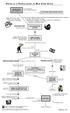 PATHS OF A FORECLOSURE IN NEW YORK STATE BORROWER DELINQUENT 2-3 months late with mortgage payments 90-DAY PRE-FORECLOSURE NOTICE Lender sends notices, bills, letters to borrower stating that he/she is
Directors and Officers Liability Insurance in Bankruptcy Settings What Directors and Officers Really Need to Know
 Directors and Officers Liability Insurance in Bankruptcy Settings What Directors and Officers Really Need to Know April 30, 2010 By Paul A. Ferrillo While director and officer ( D&O ) liability insurance
Outlines matters to be discussed when entering a shareholders agreement.
 This information leaflet gives you introductory guidance to shareholders agreements. It does not however give you legal advice. If you need legal advice please contact Kay Waddington in our Corporate department
INVOLUNTARY BANKRUPTCIES
 INVOLUNTARY BANKRUPTCIES Joseph S.U. Bodoff Bodoff & Associates, P.C. How It Works The statutory provisions dealing with involuntary bankruptcies are contained in section 303 of the Bankruptcy Code. There
IMPORTANT ACCOUNT DISCLOSURES
 GUARANTY BANK OR BESTBANK EASY ADVANCE LINE OF CREDIT AGREEMENT AND DISCLOSURES The information described is accurate as of November 2, 2013. Keep a copy of this Agreement for your records. Easy Advance
TAX ISSUES RAISED BY LNG PROJECTS
 TAX ISSUES RAISED BY LNG PROJECTS Jon Lobb Baker Botts L.L.P. ABSTRACT This paper discusses tax issues that may be encountered by a company investing in an LNG project. 1. Income Taxes A seller's income
FOR CUSTOMER SERVICE. Visit us online at www.pyramidmg.com or call 1-800-297-5009. Balance Inquiries Purchase More Gift Cards Special Offers
 FOR CUSTOMER SERVICE Visit us online at www.pyramidmg.com or call 1-800-297-5009 Balance Inquiries Purchase More Gift Cards Special Offers For easiest use ALWAYS KNOW YOUR BALANCE AND TELL THE CASHIER!
OPTIONS IN FORECLOSURE
 Section II: KEEPING YOUR HOME OPTIONS IN FORECLOSURE Deciding whether or not to keep your home is something that only you, the homeowner, can determine. The best housing counselors will ask what you d
Draft SHG, Inc./ XYZC0 Business Development Agreement February 2002
 Draft SHG, Inc./ XYZC0 Business Development Agreement February 2002 This Business Development Agreement ( Agreement ) is made and entered into by and between XYZCO, a (state) corporation with its principal
You ve Been Sued, Now What? A Roadmap Through An Employment Lawsuit
 You ve Been Sued, Now What? A Roadmap Through An Employment Lawsuit California employers facing their first employment lawsuit can be in for a rude awakening. Such lawsuits are a harsh introduction to
The Help to Buy equity loan scheme
 Report by the Comptroller and Auditor General Department for Communities and Local Government The Help to Buy equity loan scheme HC 1099 SESSION 2013-14 6 MARCH 2014 4 Key facts The Help to Buy equity
FR833282333_DILLARD S AMERICAN EXPRESS CARD T&C DC PDF 08/11 GE MONEY BANK DILLARD S AMERICAN EXPRESS CARD* PRICING INFORMATION
 FR833282333_DILLARD S AMERICAN EXPRESS CARD T&C DC PDF 08/11 Interest Rates and Interest Charges Annual Percentage Rate (APR) for Purchases APR for Balance Transfers GE MONEY BANK DILLARD S AMERICAN EXPRESS
Construction Defects And 'The Space Between'
 Portfolio Media. Inc. 860 Broadway, 6th Floor New York, NY 10003 www.law360.com Phone: +1 646 783 7100 Fax: +1 646 783 7161 [email protected] Construction Defects And 'The Space Between' Law360,
Foreign Currency Forward Master Contract
 Foreign Currency Forward Master Contract Foreign Currency Forward Master Agreement ( Agreement ), dated as of, 20 between the client ( Client ) and Tempus, Inc. ( Tempus ). BACKGROUND 1. Forward Contract.
Lampros Vassiliou Allens Arthur Robinson Group Bangkok
 Organisation for Economic Co-operation and Development the World Bank Asia Pacific Economic Cooperation and the Australian Treasury with the support of AusAID INSOLVENCY SYSTEMS IN ASIA: AN EFFICIENCY
Client Contracts: Business Risk, Professional Liability & Insurance Coverage
 Hanover Architects & Engineers Advantage Client Contracts: Business Risk, Professional Liability & Insurance Coverage Many client-drafted contracts endeavor to transfer unreasonable risk to the design
Singapore Domain Name Dispute Resolution Policy
 1. Purpose. a. This Singapore Domain Name Dispute Resolution Policy (the "Policy") has been adopted by the Singapore Network Information Centre (SGNIC) Private Limited ("SGNIC") as the registration authority
PATHS OF A FORECLOSURE IN NEW YORK STATE
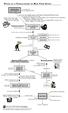 PATHS OF A FORECLOSURE IN NEW YORK STATE BORROWER DELINQUENT 2-3 months late with mortgage payments Lender sends notices, bills, letters to borrower stating that he/she is delinquent Borrower has multiple
PPP Basics and Principles of a PPP Framework
 Note 1 May 2012 PPP Basics and Principles of a PPP Framework This note is the first in a series of notes on developing a comprehensive policy, legal, and institution framework for public-private partnership
How To Plan A Bankruptcy In The United Kingdom
 The interpretations, opinions, and conclusions expressed in this presentation are entirely those of the author. They do not necessarily represent the views of the Turnaround Management Association or the
Saffron Building Society Mortgages Savings Investments Insurance Loans. Residential mortgage conditions. www.saffronbs.co.
 Saffron Building Society Mortgages Savings Investments Insurance Loans Residential mortgage conditions www.saffronbs.co.uk 0800 072 1100 Saffron Building Society Residential Mortgage Conditions (England
PATHS OF A FORECLOSURE IN NEW YORK STATE
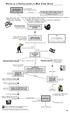 PATHS OF A FORECLOSURE IN NEW YORK STATE BORROWER DELINQUENT 2-3 months late with mortgage payments if S/P or N/T 90-DAY PRE-FORECLOSURE NOTICE* for all subprime and non-traditional loans (as defined by
Common Mortgage and Foreclosure Terms
 H ELP FOR N EW Y ORK S TATE H OMEOWNERS C ONCERNED A BOUT F ORECLOSURE Common Mortgage and Foreclosure Terms Talking about mortgages can feel like speaking a foreign language and is even more confusing
Article Estates and Trusts MARYLAND STATUTORY FORM PERSONAL FINANCIAL POWER OF ATTORNEY IMPORTANT INFORMATION AND WARNING
 [Previous][Next][Another Article] 17 202. Article Estates and Trusts MARYLAND STATUTORY FORM PERSONAL FINANCIAL POWER OF ATTORNEY IMPORTANT INFORMATION AND WARNING You should be very careful in deciding
Chris Pan, CWM, MFP-USA. MBA (Financial Management)-Aust MBA (Marketing)-UK Email: [email protected] Http://www.FMDynamics.com
 Chris Pan, CWM, MFP-USA MBA (Financial Management)-Aust MBA (Marketing)-UK Email: [email protected] Http://www.FMDynamics.com Its Your Business and Your Life. If your re like most small business owners,
Trading during difficult times for SMEs. November, 2009
 November, 2009 Introduction In an effort to support small and medium sized enterprises (SMEs), which constitute the main fabric of the upstream oil and gas supply chain, the Supply Chain Forum of Oil
Below is an overview of the Molex lease process as it applies to Molex Application Tooling equipment.
 Dear Valued Customer, Below is an overview of the Molex lease process as it applies to Molex Application Tooling equipment. Lease process: Molex does not offer leases for all of the equipment that we promote.
APPLICATION FOR BUSINESS CREDIT
 _. Return Completed Application to: Pike Industries, Inc. 3 Eastgate Park Road Belmont, NH 03220 Phone: 603.527.5100 Fax: 603.527.5101 APPLICATION FOR BUSINESS CREDIT Date: Pike Salesman s Name: NOTE:
foreign risk and its relevant to acca qualification paper F9
 01 technical foreign risk and its relevant to acca qualification paper F9 Increasingly, many businesses have dealings in foreign currencies and, unless exchange rates are fixed with respect to one another,
BROKER SALESPERSON INDEPENDENT CONTRACTOR AGREEMENT. THIS AGREEMENT is entered into this day of, 20, between ( Broker ) and ( Salesperson ).
 BROKER SALESPERSON INDEPENDENT CONTRACTOR AGREEMENT THIS AGREEMENT is entered into this day of, 20, between ( Broker ) and ( Salesperson ). RECITALS: Broker is engaged in business as a duly licensed real
Annual Percentage Rate (APR) for Purchases 25.49%* This APR will vary with the market based on the Prime Rate.
 (BA922TC0216MCY) (68/14) DEPARTMENT STORES NATIONAL BANK CREDIT CARD DISCLOSURES FOR THE MACY S AMERICAN EXPRESS ACCOUNT Interest Rates and Interest Charges Annual Percentage Rate (APR) for Purchases 25.49%*
CIVITAS SOLUTIONS, INC. INSIDER TRADING POLICY September 17, 2014. Adoption of Insider Trading Policy. Background
 CIVITAS SOLUTIONS, INC. INSIDER TRADING POLICY September 17, 2014 This policy applies to all directors, officers and employees of Civitas Solutions, Inc. and its subsidiaries (the Company ), and to consultants
What Trustees Should Know About Florida s New Attorneys Fee Statute. By David P. Hathaway and David J. Akins. Introduction
 What Trustees Should Know About Florida s New Attorneys Fee Statute By David P. Hathaway and David J. Akins Introduction More and more lawsuits are filed in Florida alleging that the trustee of a trust
FAMILY LAW NEWS & REVIEW
 FAMILY LAW NEWS & REVIEW LOS ANGELES COUNTY BAR ASSOCIATION FIRST QUARTER 2010 assist in the making of the child custody decision, and further delay in proceedings would have resulted if a new child custody
Financial Institutions Industry Insights
 February 2011 Address the heightened risks of your mortgage lending and servicing activities with enhanced internal controls The continuing stress within the housing and mortgage finance industries has
BBVA Compass Credit Card & Security Agreement (May Not Be Available to Residents of All States)
 BBVA Compass Credit Card & Security Agreement (May Not Be Available to Residents of All States) Thank you for choosing BBVA Compass! This Agreement contains the current terms and conditions of your Account.
Investor Sub Advisory Group GOING CONCERN CONSIDERATIONS AND RECOMMENDATIONS. March 28, 2012
 PCAOB Investor Sub Advisory Group GOING CONCERN CONSIDERATIONS AND RECOMMENDATIONS March 28, 2012 Auditing standards requiring auditors to issue going concern opinions have existed for several decades.
VISA. Classic. Credit Card. Agreement and Disclosure Statement. Classic. Federally insured by NCUA
 Classic The Partnership FCU MAILING ADDRESS For ALL correspondence, deposits & loan payments PO Box 18539 Washington DC 20036-8539 VISA Classic Credit Card Member Services & Loans Audio Response ADVANTAGE
Setoff and Recoupment in Bankruptcy: A Primer for Credit Managers By: Schuyler G. Carroll and Jeffrey D. Vanacore
 Setoff and Recoupment in Bankruptcy: A Primer for Credit Managers By: Schuyler G. Carroll and Jeffrey D. Vanacore Abstract Today s credit manager is under more pressure than ever. Accounting wants to know
Del O'Roark, Loss Prevention Consultant, Lawyers Mutual Insurance Co. of Ky.
 So You've Been Accused of Legal Malpractice? Well, Don't Just Do Something - Sit There! Del O'Roark, Loss Prevention Consultant, Lawyers Mutual Insurance Co. of Ky. KBA Bench & Bar, Vol. 58 No. 1, Winter
Winding Up Petition Guide how to deal with one
 A Practical Guide for Directors and Shareholders prepared by K2 Business Rescue a trading name of K2 Partners (Rescue) Limited Winding Up Petition Guide how to deal with one 1. INTRODUCTION This Guide
Seniors Beware: What You Should Know About Life Settlements
 Investor Education Series Investor Alert Key Topics: Senior Life Settlement Life Insurance Policy 1035 Exchange Viatical Settlements Death Benefits what s inside What Is a Life Settlement? How Do Life
I Didn t Want To File For Bankruptcy
 I Didn t Want To File For Bankruptcy I contemplated filing bankruptcy as my only option. Without your help I stood a real chance of losing my business, my home and the ability to provide for my family.
CONTRACTOR DEFAULT & SURETY PERFORMANCE:
 CONTRACTOR DEFAULT & SURETY PERFORMANCE: A PRACTICAL GUIDE FOR UNDERSTANDING AND NAVIGATING A BOND DEFAULT SITUATION TEXAS CITY ATTORNEYS ASSOCIATION SUMMER CONFERENCE JUNE 9-11, 2010 SOUTH PADRE ISLAND,
Risk Warning Notice. Introduction
 First Equity Limited Salisbury House London Wall London EC2M 5QQ Tel 020 7374 2212 Fax 020 7374 2336 www.firstequity.ltd.uk Risk Warning Notice Introduction You should not invest in any investment product
LGE Community Credit Union VISA COMMERCIAL CREDIT CARD AGREEMENT
 LGE Community Credit Union VISA COMMERCIAL CREDIT CARD AGREEMENT 1.0 INTRODUCTION. This COMMERCIAL CREDIT CARD AGREEMENT (Agreement) sets forth the terms of your VISA Credit Card account (Account) with
FAIRWINDS CASH REWARDS VARIABLE RATE CREDIT CARD AGREEMENT AND DISCLOSURE
 FAIRWINDS CASH REWARDS VARIABLE RATE CREDIT CARD AGREEMENT AND DISCLOSURE DEFINITIONS: Card means the FAIRWINDS Cash Rewards Credit Card, which we issue to you under this agreement, including any duplicates