
NFHS ICE HOCKEY RULES BOOK. ROBERT B. GARDNER, Publisher Dan Schuster, Editor NFHS Publications
|
|
|
- Grace Stone
- 9 years ago
- Views:
Transcription
1 NFHS ICE HOCKEY RULES BOOK ROBERT B. GARDNER, Publisher Dan Schuster, Editor NFHS Publications To maintain the sound traditions of this sport, encourage sportsmanship and minimize the inherent risk of injury, the National Federation of State High School Associations writes playing rules for varsity competition among student-athletes of high school age. High school coaches, officials and administrators who have knowledge and experience regarding this particular sport and age group volunteer their time to serve on the rules committee. Member associations of the NFHS independently make decisions regarding compliance with or modification of these playing rules for the student-athletes in their respective states. NFHS rules are used by education-based and non-education-based organizations serving children of varying skill levels who are of high school age and younger. In order to make NFHS rules skill-level and age-level appropriate, the rules may be modified by any organization that chooses to use them. Except as may be specifically noted in this rules book, the NFHS makes no recommendation about the nature or extent of the modifications that may be appropriate for children who are younger or less skilled than high school varsity athletes. Every individual using these rules is responsible for prudent judgment with respect to each contest, athlete and facility, and each athlete is responsible for exercising caution and good sportsmanship. These rules should be interpreted and applied so as to make reasonable accommodations for disabled athletes, coaches and officials. 2012, This rules book has been copyrighted by the National Federation of State High School Associations with the United States Copyright Office. No one may republish any material contained herein without the prior written consent of the NFHS. Republication of all or any portion of this rules book on the Internet is expresslyprohibited. Published by the NATIONAL FEDERATION OF STATE HIGH SCHOOL ASSOCIATIONS, PO Box 690, Indianapolis, Indiana 46206; Phone: , Fax: , Cover photos courtesy of 20/20 Photographic, Mt. Pleasant, Michigan.
2 Ice Hockey Rules Changes 1-4 A semicircle of 6 feet (1.83 m) radius, using the center of the goal line as the center point, shall be marked on the ice in front of each goal by a 2- inch-wide (5.08 cm) red line. One foot outside of each goal post, a 2-inchwide (5.08 cm) red line shall be painted extending 4 feet, 6 inches (1.37 m) in length. These lines shall be perpendicular to the goal line. A semicircular red line 6 feet (1.83 m) in radius and 2 inches (5.08 cm) in width shall be drawn using the center of the goal line as the center point and connecting both ends of the sides of the crease. The area outlined Effective for the season The on-ice officials shall be dressed in black trousers, an official s sweater and a black HECC certified ice hockey helmet, with a half face shield which meets the HECC certification at the time of manufacture and chin strap fastened. They shall be equipped with whistles. The referees in the three-official or four-official system shall wear arm bands If a team challenges the opposing team s goalkeeper equipment under and 4-4-3, no measurement is required and the officials should report the challenge to the state association. 6-7 CHECKING FROM BEHIND: No player shall body-check an opponent from behind (checking from behind). PENALTY: MINOR AND MISCONDUCT. If the check from behind is flagrant or causes the player to crash headfirst into the boards or goal frame, a GAME DISQUALIFICATION penalty must be assessed. ART. 1 No player shall push, charge, cross-check or body-check an opponent from behind in open ice. PENALTY: MINOR AND MISCONDUCT. ART. 2 Hitting from behind into the boards or goal frame is a flagrant violation. PENALTY: GAME DISQUALIFICATION. NOTE: The rules committee reminds coaches and players that the responsibility remains with the player approaching an opponent along the boards in this rule. While players turning to draw penalties are a concern, the positive change in behavior the committee observed outweighs this issue. Any penalty in relation to this rule along the boards or into the goal frame must be a game disqualification No attacking player who is in the goal crease (body and/or stick) may make (NEW) incidental contact with or visually impede the goalkeeper. PENALTY: Stoppage in play, if a goal is scored it shall be disallowed, faceoff at the nearest neutral zone faceoff spot. This rule applies if all of these conditions are met: (a) the attacking team is in possession of the puck, (b) the goalkeeper is in the goal crease, and (c) the puck is not already in the crease. NOTE: Regardless of the location of the goalkeeper or the puck, if the goalkeeper is physically prevented from defending the goal, apply rule or NOTE: Content crossed out is no longer in the rules book.
3 Tom Shafranski Chairman 2014 Madison, WI W. Scott Stuart Section Queensbury, NY Gary Wilkins Section Galena, OH NFHS ICE HOCKEY RULES COMMITTEE Steve Fillo NFHS Coaches 2013 Monument, CO Robert B. Gardner Publisher NFHS C.J. Beaurline NFHS Officials 2012 Ham Lake, MN Randy Allen Section East Lansing, MI David Hoff Section Bottineau, ND Al Butler Section Glenwood Springs, CO Dan Schuster Editor NFHS Thomas Neagle Section Glastonbury, CT Kirby Senden Section Eagle River, AK
4 POINTS OF EMPHASIS The NFHS Ice Hockey Rules Committee continues in its belief that the main threat to the health of high school ice hockey is violent and reckless play. The committee wishes to address the following areas in the hope that violence and reckless play will be minimized. MOUTHGUARDS Mouthguards are required to be worn by all players and goalkeepers in high school hockey. Coaches and players must take the responsibility to make sure mouthguards are worn. CONTACT TO THE HEAD Hits to the head are never to be considered a part of the game. Hits from high hands, elbows, forearms, high sticks and shoving the head into the glass add no value to the game and only increase the risk of injury to players. It is imperative to have helmets securely fastened. CONCUSSION RECOGNITION AND MANAGEMENT For the past several years, the NFHS has been at the forefront of national sports organizations in emphasizing the importance of education, recognition and proper management of concussions. Any player who exhibits signs, symptoms or behaviors consistent with a concussion shall be immediately removed from the game. State association protocol pertaining to concussion management must be reviewed and followed. Please review Rule and the Suggested Guidelines for Management of Concussions on page 82. ABUSIVE LANGUAGE Obscene and abusive language continues to persist as a major problem in high school ice hockey. This type of behavior is completely unacceptable for players or coaches and penalties must be assessed for every occurrence. The penalty for this behavior is a minor and a misconduct. This was reconfirmed by the NFHS Ice Hockey Rules Committee. Placing the team of the offender at a disadvantage sends a clear message regarding the expectation that such behavior will not be tolerated. Officials must be held to the same standard and any incident should be reported to the appropriate state authority. The rules are clear. The minor and misconduct must be assessed in addition to any other penalties assessed at that stoppage of play.
5 COMMENTS ON THE RULES Goal crease dimensions have been modified (1-4): The goal crease will no longer be a full half circle. Many rinks already follow the new dimensions (graphic on page 7).The committee is looking to create consistency for players, coaches and officials will require officials to wear a HECC certified half face shield (5-2-3): Officials have a full season to prepare for this rule change. Pucks played high off the glass and sticks continue to be a risk for on-ice officials. The HECC certified half shield will minimize the risk of injury for officials starting in the season. Equipment challenge procedure has been modified (3-3-4): Equipment challenges will be reported to the state association. Games will not be postponed or cancelled unless ordered by the state association. Checking from behind language has been revised (6-7): The committee has added language to clearly define checking from behind. It has been revised to assist officials, coaches, players and parents in defining this dangerous violation. Goal crease regulations have been modified for players (6-23-4): Players may legally skate or have a stick in the crease if the player or stick does not make physical contact with the goalkeeper or visually impede the goalkeeper.
6 RINK DIAGRAM See Pages for Detail of Markings 4.57m) (3.05m Red 20 (6.10m) radius recommended (3.05m-4.57m) (5.08cm) 18 To Goal Line (5.49m) (6.10m) (6.71m) 22 (6.71m) (19.51m) 64 Defending Zone WIDE NARROW (1.22m) 4 (0.58cm) 2 Red 12 Wide Blue (30.48cm) (1.52m) 5 Red (6.71m) 22 (6.71m) 22 Red 2 (5.08cm) 10 R (3.05m) 12 Wide Red (30.48cm) 4 Blue Penalty Timekeeper Varies 200 (61m) Recommended Length Blue Red (1.52m) 5 12 Wide Blue (30.48cm) (19.51m) 64 Attacking Zone Goalkeeper s Privileged Area 20 (6.10m) radius recommended (3.05m-4.57m) 85 (25.91m) Light Blue Recommended Width
7 4 (1.22m) 18 (5.39m) 15 (4.57m) maximum 10 (3.05m) minimum (0.61m) 2 2 (5.08cm) Red Extension Line to Goal Line Red 15 R (4.57m) 2 (5.08cm) 2 (5.08cm) 6 R (1.83m) Faceoff Spot and Circle Detail End Zone Red 6 (1.83m) 4 (1.22m) 1 12 R Radius Inside Posts (0.61m) 2 2 Blue (5.08cm) Blue Faceoff Spots End Zones and Neutral Zones Red Goals-Crease Detail Use Center of Goal Line for Center Point 2 (0.61m) Dia. of Semicircle Color Red R (4.57m) 2 3 (5.08cm) Blue Faceoff Spot Center Ice 12 (30.5cm) Dia " ALL LINES ARE 2 IN WIDTH FACEOFF CONFIGURATION Detail Center Ice Spot and Circle 6" 6 4 6" Red 4
8 TABLE OF CONTENTS RULE 1. The Rink 1-1 The Rink Rink Dimensions Goal Posts and Nets Goal Crease Division of Ice Surface Center Ice Spot and Circle Faceoff Spots in Neutral Zone End Zone Faceoff Spots and Circles Players Benches Penalty Benches Signal and Timing Devices Goalkeeper s Privileged Area...14 RULE 2. Teams 2-1 Teams Team Captains Players in Uniform Starting Lineups Change of Players Injured Players Participant Disabilities...19 RULE 3. Equipment 3-1 Sticks Skates Goalkeeper s Equipment Protective Equipment Dangerous Equipment Participants Properly Equipped Puck...24 RULE 4. Penalties 4-1 Time Penalties Minor Penalties Major Penalties Misconduct Penalties...26
9 4-5 Game Misconduct Penalties Game Disqualification Penalty Shot Goalkeeper s Penalties Delayed Penalties Calling of Penalties Removal from the Game State Association Penalties...29 RULE 5. Officials 5-1 Appointment of Officials Officiating Systems Duties of the Referees Duties of the Linesman Goal Judges Penalty Timekeeper Scorer Timekeeper...32 RULE 6. Playing Rules 6-1 Abuse of Officials and Other Misconduct Adjustment to Clothing and Equipment Attempt to Injure Boarding Broken Stick Charging Checking From Behind Contact to the Head Cross-Checking and Butt-Ending Delay of Game Elbowing and Kneeing Face Masks Faceoffs Falling on or Diving for the Puck Fighting Goals and Assists Goalkeeper Play of Puck Handling the Puck...43
10 6-19 High Sticks Holding Hooking Icing the Puck Interference/Obstruction Interference by/with Spectators Kicking a Player Kicking the Puck Leaving Players Bench or Penalty Bench Mistreatment of Officials Offsides Passes Puck Must Be Kept in Motion Puck Striking Official Refusing to Start Play Slashing Spearing Start of Game and Periods/Pregame Warm-up Throwing Stick or Other Equipment Time of Game Tied Games Tripping Unnecessary Roughness (Roughing) Girls Hockey Video Replay...52 Situations and Rulings...53 Summary of Penalties...73 NFHS Official Ice Hockey Signals...78 NFHS Official Ice Hockey Signal Chart...79 Requests for ice hockey rule interpretations or explanations should be directed to the state association responsible for the high school ice hockey program in your state. The NFHS will assist in answering rules questions from state associations whenever called upon.
11 Page NFHS Ice Hockey Rules Rule 1-1 NOTE: Within this text, the words he and his are used to include both male and female participants. Rule 1 The Rink SECTION 1 THE RINK ART Ice hockey shall be played on an area of ice called a rink. ART It is recommended no logo shall disrupt or interfere with any official ice markings. SECTION 2 RINK DIMENSIONS ART The recommended dimensions of the rink shall be 200 feet (61.0 m) long and 85 feet (25.91 m) wide. The corners shall be rounded in the arc of a circle with a radius of 20 feet (6.1 m) to 28 feet (8.5 m). ART The rink shall be surrounded by a wall or fence known as the boards which shall extend not less than 40 inches (101.6 cm) and not more than 48 inches (121.9 cm) above the level of the ice surface. The ideal height of the boards above the ice surface is 42 inches (106.7 cm). a. It is recommended that boards be white in color and that the bottom dasher be yellow. ART The boards shall be constructed in such a manner that the surface facing the ice shall be smooth and free of any object that could cause injury to players. a. It is recommended that all doors giving access to the playing surface swing away from the ice surface. b. All glass, wire or other types of protective screens and gear used to hold them in position shall be mounted on the boards on the side away from the playing surface. SECTION 3 GOAL POSTS AND NETS ART Goal posts shall be set between 10 feet (3.05 m) and 15 feet (4.57 m) from each end of the rink and in the center of a 2-inch-wide (5.08 cm) red line, known as the goal line, drawn completely across the width of the ice and continued vertically up the side of the boards. a. It is recommended that posts be placed 15 feet (4.57 m) from the end of the rink. The goal posts shall be set in such a manner as to remain stationary during the progress of a game. It is recommended that, whenever possible, the goal posts be anchored to the ice so the goal will release when struck by a player who collides with the goal cage. ART The goal posts shall extend vertically 4 feet (1.22 m) above the surface of the ice. They shall be set 6 feet (1.83 m) apart, measured from the inside of the posts. A crossbar of the same material as the goal posts shall extend from
12 Rule NFHS Ice Hockey Rules Page 12 the top of one post to the top of the other. The goal frames shall not have a metal deflector plate along the base of the back of the goal frame. ART A net shall be attached to each goal frame. There shall be no tears or holes in the net which would permit the puck to pass through. ART The paint of the goal posts, crossbar and the exterior surface of the other supporting framework shall be entirely red. All other exterior and interior surfaces shall be painted entirely white. ART A water bottle may be attached to the goal net for use by a goalkeeper. The bottle must be securely tied to the top of the net. SECTION 4 GOAL CREASE One foot outside of each goal post, a 2-inch wide 5.08 cm) red line shall be painted extending 4 feet, 6 inches (1.37 m) in length. These lines shall be perpendicular to the goal line. A semicircular red line 6 feet (1.83 m) in radius and 2 inches (5.08 cm) in width shall be drawn using the center of the goal line as the center point and connecting both ends of the sides of the crease. The area outlined by the crease lines (including the crease lines) and the space above it to 4 feet (1.22 m) shall be known as the goal crease. It is recommended that the goal crease area be colored light blue. There shall be two Ls in each goal crease. Each line shall be 5 inches (12.7 cm) long and 2 inches (5.08 cm) wide. The corners shall touch the goal crease line, 4 feet (1.22 m) out from the goal line. The line shall be parallel to and perpendicular to the goal line. SECTION 5 DIVISION OF ICE SURFACE ART The ice area between the two goals shall be divided into three parts by two 12-inch-wide (30.48 cm) blue lines drawn 64 feet (19.51 m) from the goal lines, and extending completely across the rink, parallel with the goal lines, and continuing vertically up the side of the boards. ART That portion of the ice surface in which the goal is situated shall be called the defending zone of the team defending that goal. The neutral zone is the central portion of the ice. The attacking zone of a team is that portion of the ice farthest from their defended goal. The zone line shall be considered part of the zone in which the puck is located. ART There shall also be a line 12 inches (30.48 cm) in width and red in color drawn completely across the rink in center ice, parallel with the goal lines and continuing vertically up the side of the boards, known as the center line. SECTION 6 CENTER ICE SPOT AND CIRCLE ART A circular blue spot, 12 inches (30.48 cm) in diameter, shall be marked exactly in the center of the rink; and with this spot as a center, a circle of 15 feet (4.57 m) radius shall be marked with a 2-inch-wide (5.08 cm) blue line. ART Two blue lines 4 feet (1.22 m) apart and parallel to the blue lines, 2
13 Page NFHS Ice Hockey Rules Rule 1-7 feet (0.61 m) long and 2 inches (5.08 cm) wide, shall be marked on the ice extending from the outer edge of both sides of the center circle. SECTION 7 FACEOFF SPOTS IN NEUTRAL ZONE Two red spots, 2 feet (0.61 m) in diameter, shall be marked on the ice in the neutral zone 5 feet (1.52 m) from each blue line. Within each faceoff spot, draw two parallel lines 4 inches (10.16 cm) from the top and bottom of the spot. The area within the two lines shall be painted red; the remaining area shall be painted white. The spots shall be 44 feet (13.41 m) apart and each shall be the same distance from the adjacent boards. SECTION 8 END ZONE FACEOFF SPOTS AND CIRCLES ART A red faceoff spot inside a circle shall be marked on the ice in both end zones and on both sides of each goal. The faceoff spots shall be 2 feet (0.61 m) in diameter. Within the faceoff spot, draw two parallel lines 3 inches (7.62 cm) from the top and bottom of the spot. The area within the two lines shall be painted red, the remaining area shall be painted white. The faceoff circles shall be 2 inches wide (5.08 cm) with a radius of 15 feet (4.57 m) from the center of the faceoff spots. ART Two red lines, 18 feet and 22 feet (5.49 m and 6.71 m) from the goal line and parallel to it, 2 feet (0.61 m) in length and 2 inches wide (5.08 cm), shall be marked on the ice extending from the outer edge of both sides of each faceoff circle. ART One foot away from the outer edge of the faceoff spot, two lines shall be drawn parallel with the sideboards that shall be 4 feet (1.22 m) in length and 18 inches (5.72 cm) apart. Parallel to the endboards, commencing at the end of the line nearest to the faceoff spot, a line shall extend 2 feet, 10 inches (86.36 cm) in length. All lines shall be 2 inches wide (5.08 cm). (See diagrams on pages 6 and 7.) ART The location of the faceoff spots shall be fixed in the following manner: along a line 20 feet (6.10 m) from each goal line and parallel to it, mark two points 22 feet (6.71 m) on both sides of the straight line joining the centers of the goals. Each such point shall be the center of a faceoff spot and circle. SECTION 9 PLAYERS BENCHES ART Seats shall be provided for the use of team personnel. The accommodations provided, including seats and doors, shall be uniform for both teams. It is recommended each team bench accommodate at least 20 persons and be placed immediately alongside the ice, convenient to the dressing rooms, in the neutral zone, as near to the center of the rink as possible with two doors opening in the neutral zone. It is recommended the two team benches be separated by a substantial distance.
14 Rule NFHS Ice Hockey Rules Page 14 ART Only players in uniform and five other team personnel shall be permitted to occupy the team bench area, unless modified by state association adoption. ART All students occupying any exposed bench area shall be required to wear a helmet with a face mask meeting HECC/ASTM standards. PENALTY: MINOR (captain s choice of players) after warning to team. SECTION 10 PENALTY BENCHES ART Seats to accommodate eight persons, known as the penalty bench, shall be provided. It is preferable to have penalty benches for each team separate from each other and substantially away from either team bench. a. The penalty bench(es) is for the exclusive use of the timekeeper, the penalty timekeeper, scorer and penalized players. No other person shall be allowed on the penalty bench(es). ART A semicircle of 10 feet (3.05 m) radius, marked with a line 2 inches (5.08 cm) wide, known as the referee s crease, shall be marked on the ice immediately in front of the penalty timekeeper s seat. SECTION 11 SIGNAL AND TIMING DEVICES ART A suitable sound device must be provided for the use of timekeepers. ART An electrical clock, or other timing device, shall be provided for the purpose of keeping the spectators, players and game officials accurately informed as to all time elements at all stages of the game, including the time remaining to be played in any period. a. Time recording for both game time and penalty time shall show time remaining to be played or served. b. A backup timing device must be available. ART It is recommended electric lights should be set up behind each goal for the use of the goal judges. A red light will signify the scoring of a goal. Where automatic lights are available, a green light will signify the end of a period or a game. A goal cannot be scored when a green light is showing. ART It is recommended enclosures be provided behind each goal to prohibit spectators interference with the activities of the goal judge assigned to that goal. SECTION 12 GOALKEEPER S PRIVILEGED AREA The goalkeeper s privileged area is an area bounded in the rear by that goalkeeper s end of the rink, in front by an imaginary line connecting the end zone faceoff spots, and on the sides by imaginary lines from the end zone faceoff spots to the end boards.
15 Page NFHS Ice Hockey Rules Rule 2-1 Rule 2 Teams, Players and Substitutes SECTION 1 TEAMS ART A team shall be composed of six players, designated: goalkeeper, right defense, left defense, center, right wing and left wing, respectively. ART All players shall wear numbered uniforms. It is required that all players be numbered with at least 10-inch (25.4 cm) high Gothic, colored numbers on the back of their jerseys and the same numbers at least 4 inches (10.16 cm) in height on both sleeves of the jersey. The color of the numbers shall contrast with the color of the jersey. a. All members of a team shall wear identical uniforms relative to color of helmets (excluding goalkeepers), jerseys, socks, pants and length of pants. b. It is required that the visiting team shall wear dark-colored jerseys; the home team shall wear white-/light-colored jerseys. c. One manufacturer s logo/trademark 2¼ square inches (14.52 sq. cm) with no dimension more than 2¼ inches (5.72 cm) and one American flag (2 [5.08 cm] x 3 [7.62 cm] maximum) may be worn on each item of uniform apparel. d. A commemorative/memorial patch not to exceed four square inches may be worn on the jersey provided it is not a number and is in an appropriate location that does not interfere with the captain s identification or the player s number. SECTION 2 TEAM CAPTAINS ART Each team shall designate prior to the game any combination of captains or alternates, not to exceed three. If more than one is on the ice at one time, only one may speak to the referee. a. The captain(s) and alternate(s) shall wear a C or an A in a contrasting color on the left, front shoulder of the jersey. No goalkeeper may have onice captain s privileges. ART If the captain or alternate receives a penalty, that player shall lose all captain s privileges for the duration of the penalty and shall proceed directly to the penalty box. ART Only coaches, the captain or an alternate may request a team time-out. ART Only one of the playing captains of either team may have the privilege to talk or confer with a referee. The playing captain shall not dispute judgment decisions of the referee. PENALTY: MINOR. If further disrespect, MISCONDUCT. If continued disrespect, GAME MISCONDUCT. If continued disrespect, GAME DISQUALIFICATION. ART The referee(s) shall meet with the captain(s) and coaches prior to the start of the game.
16 Rule NFHS Ice Hockey Rules Page 16 ART When rules indicate captain s choice of players for serving the penalty, the captain must select a player who was on the ice when the infraction occurred, excluding goalkeepers. SECTION 3 PLAYERS IN UNIFORM ART A maximum of 20 players, including goalkeepers, may dress for and play in a game, unless modified by state association adoption. It is recom mended that a minimum of two goalkeepers be among the 20 players dressed. ART A list of names and numbers of all eligible players and goalkeepers must be handed to the referee or official scorer before the game. After the game begins no changes may be made for a player who has already been listed. Additions may be made due to inadvertent clerical error. ART If a roster correction occurs after a game begins, that player s action shall stand. PENALTY: MINOR. (captain s choice of players) ART By state association adoption, at the conclusion of a period, teams must remain at their bench area until the referee signals the players to proceed directly to their respective dressing rooms. PENALTY: MINOR. (captain s choice of players) SECTION 4 STARTING LINEUPS ART If the name of the home team has not been established, the competing teams will decide which is to be the home team by mutual agreement; that is, by the flip of a coin or some similar method. ART Teams shall be on the ice, ready to play promptly at the beginning of each period. After the first period, starting players shall remain in their half of the ice and proceed to the center ice faceoff positions. All remaining players shall proceed directly to their benches, unless modified by state association adoption. First violation results in a team warning. Subsequent violations shall be penalized. PENALTY: MINOR (captain s choice of players). ART Team huddles are restricted to before the first period. They are not allowed before the second or third periods. PENALTY: MINOR. (captain s choice of players) SECTION 5 CHANGE OF PLAYERS ART Substitutions may be made at any time provided the player coming off the ice shall be at the players own bench and out of play before the substituting player enters onto the ice. All penalized players who are to be changed after a penalty has been served, must skate to their own players bench before any change shall be made. a. If, in the course of substitution, either the player legally entering the game or the player retiring is struck accidentally by the puck, the play will not be
17 Page NFHS Ice Hockey Rules Rule 2-5 stopped and no penalty will be called. PENALTY: MINOR (captain s choice of players). ART If during a play, a substitution is made for the goalkeeper before the goalkeeper is at the players bench and out of play, play shall be stopped immed - iately by the trailing official unless the non-offending team has possession of the puck, in which case stoppage will be delayed until the puck is in the offending team s possession. Play shall resume without penalty with a center spot faceoff; where play has stopped with the puck in the offending team s defending half of the ice, the faceoff shall take place at the point of the stoppage of play, as specified in Rule ART The number of times any player may be substituted (i.e., withdrawn from, or returned to, the game within the same period, or otherwise) is not limited. a. A substitute player is not required to notify a referee before engaging in play; and although the officials shall not begin play with extra players on either team, the responsibility for maintaining the proper number of players rests with the teams. ART After any stoppage of play, the visiting team shall promptly place a lineup on the ice ready for play; substitutions shall be made by the visiting team until the referee signals the home team for its last change. The home team then may make any substitutions that do not result in a delay of the game. The procedure for all stoppages is as follows: a. Referee points to site of the faceoff at his or her discretion. This starts the line-change procedure. b. The visiting team has up to five seconds to change players. c. The referee puts his or her hand up to the visiting team, indicating that the home team has up to five seconds to change players. d. When the referee s hand comes down, the official dropping the puck blows a quick whistle indicating the start of the faceoff and that the puck will be dropped in no more than five seconds. PENALTY: If a team intentionally delays the line change, it shall be warned. This serves as that team's warning for the remainder of the game. If that team intentionally delays a line change later in the game, a minor penalty (captain s choice of players) shall be assessed. (See 6-13) ART When a substitution has been made under this rule, no additional substitution may be made until play commences except when any penalty is imposed. PENALTY: MINOR (captain s choice of players). ART A player who has received a time penalty, or one who is serving for a disqualified player, shall remain in the penalty box until the penalty time is completed unless the penalized player is injured or ill and cannot return to the ice at the proper time.
18 Rule NFHS Ice Hockey Rules Page 18 ART On any faceoff, if a team starts play with fewer players than it is entitled to, any subsequently entering player shall not be eligible to play any puck coming from that team s defensive zone until the incoming player has returned to the defensive zone or until possession and control of the puck has been made by another player in the neutral zone or in the attacking zone of the incoming player. PENALTY: Faceoff at the defensive zone faceoff spot of offending team. ART If at any time, a team plays too many players, it shall immediately send the extra player or players from the ice. PENALTY: MINOR (captain s choice of players). ART If an extra player from the team bench or the penalty box prevents, or tries to prevent, a break-away attempt at goal, there shall be a delayed whistle. PENALTY: PENALTY SHOT and MISCONDUCT. ART If there are less than two minutes remaining in regulation time or anytime during overtime and a deliberate illegal substitution occurs (such as too many players on the ice or leaving the penalty box too soon), a penalty shot shall be awarded against the offending team. PENALTY: PENALTY SHOT. ART A goalkeeper who has been substituted for by another goalkeeper at a stoppage of play may not re-enter until the next stoppage of play. SECTION 6 INJURED PLAYERS ART Any player (including goalkeeper) who exhibits signs, symptoms or behaviors consistent with a concussion (such as loss of consciousness, headache, dizziness, confusion or balance problems) shall be immediately removed from the game and shall not return to play until cleared by an appropriate health-care professional. (See NFHS Suggested Guidelines for Management of Concussion). ART Should any player be injured during the game, or from any accident, be compelled to leave the ice, a referee shall immediately stop play and a substitute shall take the place of the player leaving the ice. A player who is bleeding or has an open wound, or has an excessive amount of blood on the uniform shall be considered an injured player and must immediately leave the game for appropriate treatment. (See Communicable Disease Procedures.) An injured player (except the goalkeeper) for whom play is stopped must leave the ice and cannot return until play has resumed. ART In case a team has no substitutes in goalkeeper s equipment and it becomes necessary to substitute for the goalkeeper because of his incapacitation by injury, breaking a skate or receiving a time or misconduct penalty, a reasonable length of time shall be allowed for the substitute to change into goalkeeper equipment. PENALTY: MINOR.
19 Page NFHS Ice Hockey Rules Rule 3-1 ART In case of injury to a goalkeeper, a reasonable length of time, as determined by the referee, shall be allowed for that player s recovery. All players are to go to the team bench area during the requested recovery period, and the time shall be kept by the game timekeeper. A goalkeeper who has been substituted for cannot re-enter the game until the next stoppage of play. ART An official who is bleeding or who has an open wound or who has an excessive amount of blood on his uniform shall be covered under Rule and the Communicable Disease Procedures. ART If a penalized player has been injured, the player may proceed to the dressing room without taking a seat on the penalty bench. If the injured player receives a minor and/or major penalty, a substitute player shall be placed on the penalty bench immediately and shall serve the penalty without change, except by the injured penalized player. A replacement for the penalized player shall not be permitted to enter the game except from the penalty bench. a. The penalized player who has been injured and been replaced on the penalty bench shall not be eligible to play until the penalty has expired. SECTION 7 PARTICIPANT DISABILITIES Each state association may, in keeping with applicable laws, authorize exceptions to NFHS playing rules to provide reasonable accommodations to individual participants with disabilities and/or special needs, as well as those individuals with unique and extenuating circumstances. The accommodations should not fundamentally alter the sport, allow an otherwise illegal piece of equipment, create risk to the athlete/others or place opponents at a disadvantage. Rule 3 Equipment The NFHS does not perform scientific tests on any specific items of equipment to determine if the equipment poses undue risks to student-athletes, coaches, officials or spectators. Such determinations are the responsibility of equipment manufacturers. SECTION 1 STICKS ART Sticks shall be made of wood, wood and aluminum, or other material approved by the NFHS Ice Hockey Rules Committee (nonmetal protective coverings are permitted). The end of a hollow stick must be fully covered. PENALTY: MINOR. ART Sticks shall not be more than 63 inches (160 cm) in length and the blade shall not be more than 12½ inches (31.75 cm) in length and no more than 3 inches (7.62 cm) nor at the tip less than 2 inches (5.08 cm) high when measured perpendicularly to the normal lie of the stick. PENALTY: MINOR.
20 Rule NFHS Ice Hockey Rules Page 20 ART The widened portion of the goalkeeper s stick extending up the shaft from the blade shall not extend more than 26 inches (66.04 cm) from the heel and shall not exceed 3½ inches (8.89 cm) in width. The length of the blade shall not exceed 15½ inches (39.37 cm). PENALTY: MINOR. ART The curvature of the blade of all sticks shall be restricted in such a way that the distance of a perpendicular line measured from a straight line drawn between the heel and the end of the blade to the point of maximum curvature shall not exceed ¾-inch (1.91 cm), measured on the bottom of the blade from the toe to the heel. PENALTY: MINOR. ART If a goal is scored with an illegal stick, and the stick is found to be illegal before play resumes following the goal, the goal is allowed and the assessed penalty begins immediately. ART Measurement of a challenged stick is to be made at first stoppage of play (or during the stoppage of play when the challenge is made). If a player s stick is found to be illegal, the minor penalty begins immediately. If a team challenges the stick of an opponent and if the measurement shows the opponent s stick to be legal, the challenging team will receive a minor penalty for delay of the game. This also applies to additional measurements requested by the same team in the same game in which sticks are found to be legal. Each stick examined is considered an individual challenge for the purpose of determining penalties. PENALTY: MINOR (captain s choice of players). ART A player shall not break a stick intentionally or have it broken by another team member before a measurement can be made. A stick broken, exchanged or misplaced to avoid measurement will be assumed to be illegal. PENALTY: MINOR and MISCONDUCT. ART No player (including goalkeeper) may participate in play while he is in possession of more than one stick, except that no penalty will be assessed to a player who is struck accidentally by the puck while he is carrying a replacement stick to a teammate. PENALTY: MINOR. SECTION 2 SKATES Skates shall be worn by all players and shall be free from points or dangerous extensions. It shall be considered dangerous if the blade extends more than three-quarters of an inch (1.91 cm) beyond the shoe at either toe or heel. The ends of the skates (both toe and heel) shall be rounded and blunt (covered with replaceable tips if necessary) so that there are no points which might cause injury. PENALTY: First offense, warning. Returning to game without correcting equipment, GAME MISCONDUCT.
21 Page NFHS Ice Hockey Rules Rule 3-3 SECTION 3 GOALKEEPER S EQUIPMENT ART Required equipment for goalkeepers shall include gloves, skates, stick, protective full face mask, flapper-style throat protector, leg pads and helmet with chin strap. The headgear should be fastened in accordance with manufacturer s specifications, protecting the entire crown, front, temple and back of the head. A dental guard is required. Flapper-style throat protection must be separate, commercially manufactured, unaltered and properly attached to the helmet or face mask. PENALTY: MINOR. ART The goalkeeper shall not wear or use any garment or equipment which would provide undue assistance. Webbing or aprons extending more than 3 inches (7.62 cm) below the crotch are not permitted. Each of the goalkeeper s leg pads shall not be wider than 11 inches (27.94 cm), nor longer than 38 inches (96.5 cm). GOALKEEPER CATCHING GLOVE GOALKEEPER BLOCKER GOALKEEPER PADS A B C D NFHS** A B NFHS** 8 15 A B NFHS** ** NFHS measurements take effect season ART Protective padding attached to the back or forming a part of a goalkeeper s blocker glove shall not exceed 8 inches (20.32 cm) in width at any point, nor shall it exceed 15 inches (38.1 cm) in length. The goalkeeper s catching glove shall have a maximum circumference of 45 inches (114.3 cm). The distance from the heel of the catching glove to the outside edge of the glove shall not exceed 18 inches (45.72 cm). The wrist cuff of the goalkeeper s catching glove shall not exceed 4 inches (10.16 cm) in height and 8 inches (20.32 cm) in width across the wrist. ART If a team challenges the opposing team s goalkeeper equipment,
22 Rule NFHS Ice Hockey Rules Page 22 under articles 2 and 3 of this section, no measurement is required and the officials should report the challenge to the state association. ART If a goalkeeper s mask or helmet is displaced, play shall be immediately stopped. SECTION 4 PROTECTIVE EQUIPMENT ART Each player is personally responsible for wearing protective equipment for all games. Recommended equipment includes: padded hockey pants/hockey pants, shin pads, thigh pads, hip pads, protective cup, elbow pads, shoulder pads, stick and throat/neck protector. Shin, elbow, shoulder, thigh and hip pads must be worn under outer clothing. a. Equipment shall not be modified from its original manufactured state and shall be worn in the manner the manufacturer intended it to be worn. PENALTY: First offense, TEAM WARNING; Further offense, MISCONDUCT. ART Required equipment for players, other than goalkeepers, shall include an ice hockey helmet with chin straps which are securely fastened to the head, gloves, skates, full face mask and tooth and mouth protector. PENALTY: PLAYERS (excluding goalkeeper) For tooth and mouth protector, must warn team first. See First offense, MISCONDUCT. Returning to the game without correcting equipment, GAME MISCONDUCT. GOALKEEPER MINOR. ART Required equipment shall be worn by all players and goalkeepers on the ice during warm-ups before the game, between periods and during each period. No team personnel shall be permitted on the ice for warm-up or play who are not wearing the required equipment specified in this section or who are wearing anything which is liable to cause injury to self or other players. PENALTY: PLAYERS (excluding goalkeeper) First offense, MISCONDUCT. Returning to the game without correcting equipment, GAME MISCONDUCT. GOALKEEPER MINOR. ART All players, including goalkeepers, shall wear and have properly inserted into their mouth during the course of play a tooth and mouth protector. A tooth and mouth protector (intraoral) shall include an occlusal (protecting and separating the biting surfaces) and a labial (protecting the teeth and supporting structures) portion and shall cover the posterior teeth with adequate thickness. It is recommended the protector be properly fitted and: (a) constructed from a model made from an impression of the individual s teeth, or (b) constructed and fitted to the individual by impressing the teeth into the tooth and mouth protector itself. The tooth and mouth protector shall be of any readily visible color, and may not be: (1) completely white; or (2) completely clear. PENALTY: INITIAL VIOLATION TEAM WARNING: And, offending player (excluding goalkeeper) shall be immediately replaced on the ice. An offending goalkeeper shall be immediately provided a tooth and mouth protector. SUB- SEQUENT TEAM VIOLATIONS MISCONDUCT.
23 Page NFHS Ice Hockey Rules Rule 3-5 ART All players, including goalkeepers, shall wear face masks which meet HECC/ASTM Standards at the time of manufacture. All players, including goalkeepers, shall wear helmets which meet current HECC/ASTM Standards at the time of manufacture. Face masks and helmets, including ear protectors, shall not be altered from original manufacturer specifications. PENALTY: PLAYERS (excluding goalkeeper) First offense, MISCONDUCT. Returning to the game without correcting equipment, GAME MISCONDUCT. GOALKEEPER MINOR. ART A glove from which all or part of the palm has been removed or cut to permit the use of the bare hand shall be considered illegal equipment. PENALTY: PLAYERS (excluding goalkeeper) First offense, MISCONDUCT. Returning to the game without correcting equipment, GAME MISCONDUCT. GOALKEEPER MINOR. ART An immediate whistle must be blown when a player s helmet or face mask becomes dislodged during play. a. That player must leave the ice for equipment adjustment and cannot return until after play resumes. PENALTY: MINOR. b. Intentional dislodging of helmet/face mask. PENALTY: MINOR AND MISCONDUCT. ART All players are required to wear helmets with face masks while in the players or penalty bench. PENALTY: MISCONDUCT. SECTION 5 DANGEROUS EQUIPMENT ART Hard and unyielding items (guards, casts, braces, etc.) on the hand, wrist, forearm, elbow or upper arm are illegal unless they are padded with a closed-cell, slow-recovery foam padding no less than ½ thick. a. Knee and ankle braces which are unaltered from the manufacturer s original design/production do not require any additional padding. ART Artificial limbs which, in the judgment of the rules-administering officials (state association office), are no more dangerous to contestants than the corresponding human limb and do not place an opponent in a disadvantage, may be permitted. ART Jewelry shall not be worn, except for religious or medical medals which shall be taped to the body under the uniform. PENALTY: First offense, MISCONDUCT. Returning to the game without correcting equipment, GAME MISCONDUCT. SECTION 6 PARTICIPANTS PROPERLY EQUIPPED Prior to the start of the game, the head coach of each team is required to verify to the referee that all participants are properly equipped according to the rules.
24 Rule NFHS Ice Hockey Rules Page 24 The game may not begin until both teams are in compliance. SECTION 7 PUCK ART The puck shall be a vulcanized black rubber disc, uniformly 1 inch (2.54 cm) in thickness and 3 inches (7.62 cm) in diameter, weighing from 5½ to 6 ounces ( to g), and free from cuts and indentations. ART It is recommended that pucks be slightly beveled or rounded on the edges and that they be chilled before being placed in competition. The puck shall have the NFHS authenticating mark. A current list of NFHS authenticated products can be found on the Web site, < Rule 4 Penalties SECTION 1 TIME PENALTIES ART Time penalties are: a. Minor two minutes of actual playing time; b. Major five minutes of actual playing time; and c. Misconduct 10 minutes of actual playing time. ART The time shall be served by the offending player unless otherwise specified. That player shall report immediately to the penalty box and remain there until the penalty timekeeper indicates the penalty time has expired, except when a game disqualification penalty is also imposed on the player, in which case that player shall be represented by a teammate in the penalty box. ART If the penalty time is unexpired at the end of a period, the penalty carries over into the next regular or overtime period. SECTION 2 MINOR PENALTIES ART For a minor penalty, any player, other than a goalkeeper, shall be ruled off the ice for two minutes, during which time no substitute shall be permitted. ART If a goal is scored while a team has fewer players on the ice than the opposing team because of one or more minor penalties, the first penalty shall terminate and all delayed minor penalties signaled by the referee on that team shall be served. The minor penalty that terminates shall be the one with the least time remaining on the penalty clock. ART When two minor penalties are assessed to one player at the same time and the opposing team scores a goal before expiration of two minutes, the
25 Page NFHS Ice Hockey Rules Rule 4-2 remaining time for the first minor is eliminated and the second minor penalty begins. ART No penalty shall terminate as a result of a goal scored on a penalty shot or awarded goal. ART When minor penalties on two players of the same team terminate at the same time, the captain of that team shall designate to the referee which players shall return to the ice first, and the referee shall instruct the penalty timekeeper accordingly. ART When a player receives a major and minor penalty at the same time, the major penalty shall be served first. ART Immediate substitution may be made for an equal number of coincident minor penalties assessed to each team. Each penalized player shall report immediately to the respective penalty bench and shall not return to the ice until the first stoppage of play following expiration of the full penalty time. The penalty times of the players for whom substitutions have been made under this rule shall begin immediately. ART When rules indicate captain s choice of players for serving the penalty, the captain must select a player who was on the ice when the infraction occurred, excluding goalkeepers. SECTION 3 MAJOR PENALTIES ART For any major penalty, the offender shall be ruled off the ice for five minutes, during which time no substitute shall be permitted. ART When a major penalty is assessed to a goalkeeper, the penalty time shall be served by the goalkeeper. A replacement on the ice shall be allowed for the penalized goalkeeper. An additional player shall go to the penalty bench with the penalized goalkeeper and shall enter the game when the penalty time has expired. The penalized goalkeeper shall not go on the ice until the substitute goalkeeper has left the ice. ART Immediate substitution may be made for an equal number of coincident major penalties assessed to each team. Each penalized player shall report immediately to the respective penalty bench and shall not return to the ice until the first stoppage of play following expiration of the full penalty time. ART Any player who incurs two major penalties in the same game shall be assessed a game misconduct. SECTION 4 MISCONDUCT PENALTIES ART A misconduct penalty involves the removal of a player, including a goalkeeper, from the game for a period of 10 minutes, but a substitute is permitted to replace that player immediately. A player whose misconduct has expired shall remain in the penalty box until the next stoppage of play. ART If a major or minor penalty is also assessed on the player receiving
26 Rule NFHS Ice Hockey Rules Page 26 the misconduct penalty, a substitute shall accompany the penalized player to the penalty bench; and the substitute may enter the game when the major or minor time has expired. If no penalty is assessed in addition to the misconduct penalty, a substitute for the penalized player may enter the game immediately. ART When a misconduct penalty is assessed to a goalkeeper, the penalty time shall be served by the goalkeeper. A replacement on the ice shall be allowed for the penalized goalkeeper. The penalized goalkeeper shall not go on the ice until the substitute goalkeeper has left the ice. SECTION 5 GAME MISCONDUCT PENALTIES ART A game misconduct penalty may be assessed when the referee determines that to preserve a sportsmanlike atmosphere of a specific game, a player, coach, manager or other team personnel should be removed from that game for its duration without affecting that individual s eligibility for subsequent games. When such penalty is assessed, the offender shall be removed immediately from the playing area (see 4-11). A substitute shall replace a penalized player immediately on the ice or in the penalty box. ART Any player who incurs five penalties, any combination of minors, majors or misconducts in the same game, shall be assessed a game misconduct penalty. SECTION 6 GAME DISQUALIFICATION ART A game disqualification penalty consists of a major penalty, suspension for the remainder of the current game and next game of that season. Within a single game, only one disqualification penalty can be assigned a player. However, after a disqualification this does not limit assessment of multiple major penalties to a single player. a. Unless increased by state association, the minimum application of the following progressive game disqualification structure applies throughout each season, including playoff games: 1. first disqualification that game plus the next; 2. second disqualification that game plus the next two; 3. third disqualification that game plus the next three and so forth. ART The offending player shall not occupy the team bench or the penalty box and may not occupy any area desig nated or reserved for players. When such a penalty is assessed, the offender shall be removed immediately from the playing area (see 4-11). A substitute, other than a spare goalkeeper, shall enter the penalty box in place of the disqualified player and shall not enter the game until the major penalty time has elapsed. ART When coincident game disqualification penalties are assessed to an equal number of players of each team, the penalized players shall leave the game and each team shall thereafter be permitted to place a substitute player on the ice
27 Page NFHS Ice Hockey Rules Rule 4-7 for each of its disqualified players. ART It is recommended that all game disqualifications be reported to the state association office. SECTION 7 PENALTY SHOT ART A penalty shot is awarded to restore a lost scoring opportunity. (See Summary of Penalties, Penalty Shot) ART If the offense for which the penalty shot was awarded was one that normally would incur a minor penalty, the non-offending team may, prior to the penalty shot, elect that the minor penalty be assessed to the offending player or team in lieu of the penalty shot. If the penalty shot is taken, the player committing the infraction shall be charged with a penalty on the score sheet, but no penalty time will be served. ART The penalty shot shall be taken by the player fouled. If no player has been fouled, the shot may be taken by any player of the nonoffending side who is not serving a penalty when play is stopped for the penalty shot (captain s choice of players). ART The puck shall be placed at the center faceoff spot. At the referee s instruction, the attacking player shall begin toward the goal, keeping in motion toward the goal until the puck is shot or has crossed the goal line extended. Only one shot is permitted. ART The goalkeeper shall remain in the goal crease until the attacking player has touched the puck. The goalkeeper may attempt to stop the puck in any manner except by throwing his stick. If a foul is committed by the goalkeeper during the try and the try is unsuccessful, another penalty shot is awarded. ART If the player awarded the penalty shot is injured, the try may be taken by any teammate who is not serving a penalty. ART If the attacking player commits a foul, that player may be permitted to take the shot before going to the penalty box. ART All players shall move to their respective bench areas and remain quiet until the shot has been completed. If a player other than the defending goalkeeper causes the penalty shot by another player to fail, a second attempt shall be awarded, and a misconduct penalty assessed to the player who interfered with or distracted the shooter. ART If a goal is scored from a penalty shot, a further penalty to the offending player shall be applied if the offense for which the penalty shot was awarded was such as to incur a major, disqualification or misconduct penalty. In that case, the penalty prescribed for the particular offense shall be imposed. ART In order to be awarded a penalty shot, all five of the following criteria must be met: a. The player must be in possession and control of the puck. The key word here is control. For example, a player who shoots the puck slightly ahead
28 Rule NFHS Ice Hockey Rules Page 28 in a controlled manner in order to skate faster is still considered in possession and control of the puck whereas a player who is trying to dig the puck out from between his skates while he is moving may not be considered to have enough control. b. The player must be beyond his/her defending c. There is no opponent present between the player and the opposing goalkeeper. (Note, the opposing defensemen does not have to be directly in the player s path but simply between the player and the opposing goalkeeper.) d. The player must be fouled directly from behind. an opponent who has an angle on the breakaway player and commits the foul from the side should be penalized, but no penalty shot shall be awarded. e. The player must have been deprived of a reasonable scoring opportunity. Note: A player who still has a reasonable scoring opportunity, even though fouled from behind, should not be awarded a penalty shot.) Like most rules, the term reasonable scoring opportunity is left to the official s discretion. SECTION 8 GOALKEEPER S PENALTIES ART When a minor penalty is assessed to a goalkeeper, the penalty time shall be served by a teammate on the ice at the time the offense was committed (chosen by the captain of that goalkeeper s team). ART If a goalkeeper incurs a major or misconduct penalty, the goalkeeper shall serve the time penalty. SECTION 9 DELAYED PENALTIES A team shall not be reduced by time penalties so that it has fewer than four players, including the goalkeeper, on the ice at any time. When two players of the same team are serving penalties and a third player of that team is penalized, the time of the third player s penalty shall not begin until one of the two previous penalties has elapsed. Players shall return to the ice in the order of their penalty expiration. SECTION 10 CALLING OF PENALTIES ART If a foul is committed by one team while the other team is in possession of the puck, the stoppage of play shall be delayed until the offending team has control of the puck. ART If a goal is scored either while teams have equal number of players on the ice or if the scoring team is shorthanded, and one or more delayed minor penalties are called, the first minor penalty shall not cause the offending player s team to lose a player from the ice. If any other fouls are com mitted on the same play or after the referee has stopped play, the offending players shall be penalized. The signaled penalty that is not assessed shall be recorded on the score sheet, but no penalty time will be served.
29 Page NFHS Ice Hockey Rules Rule 5-1 SECTION 11 REMOVAL FROM THE GAME ART When a player, manager or other team personnel is removed from the game, that person is to leave the playing area immediately. If the removed person is a student or school-age person, the removal will take place only if there are authorized school personnel available for supervision. a. If there is no one available for supervision, the individual must remain on the bench. At that point, the coach shall be notified that any further disruption by that individual shall result in termination of the contest. PENALTY: FORFEITURE, and the score shall be 1-0. SECTION 12 STATE ASSOCIATION PENALTIES State associations are authorized to investigate any incident that occurs in connection with any game and may assess additional suspensions and/or penalties, whether or not such offense has been penalized by the referee. Rule 5 Officials SECTION 1 APPOINTMENT OF OFFICIALS ART All games shall be officiated by a two-official, three-official or fourofficial system. The on-ice officials shall be the referees and linesman/linesmen. It is required that on-ice officials are adults. The off-ice officials should be a game timekeeper, a penalty timekeeper, scorer and two goal judges. The officials shall conduct the game in accordance with the official rules and interpretations contained in the NFHS Ice Hockey Rules Book. ART The referees shall have sole authority and control of the game. The decision of the referees shall be final and there shall be no appeals. ART The officials retain clerical authority over the contest through the completion of any reports, including those imposing disqualifications that are responsive to actions occurring while the officials had jurisdiction. State associations may intercede in the event of unusual incidents that occur before, during or after the officials jurisdiction has ended or in the event that a contest is terminated prior to the conclusion of regulation play. SECTION 2 OFFICIATING SYSTEMS ART The two-official system consists of two referees. The three-official system consists of two referees and one linesman. The four-official system consists of two referees and two linesmen. ART The on-ice officials should arrive on the ice together prior to arrival of teams before the warm-up and before each period and shall remain on the ice
30 Rule NFHS Ice Hockey Rules Page 30 at the conclusion of each period until all players have proceeded to their dressing rooms. ART The on-ice officials shall be dressed in black trousers, an official s sweater and a black HECC certified ice hockey helmet with chin strap fastened. It is recommended that on-ice officials wear a half face shield. They shall be equipped with whistles. The referees in the three-official or four-official system shall wear arm bands. NOTE: Beginning with the season, officials will be required to wear a HECC certified half face shield. ART If an on-ice official accidentally leaves the ice or receives an injury that incapacitates the individual from discharging the duties of the position while play is in progress, the game shall be stopped immediately by a remaining on-ice official, unless one of the teams has the puck in a scoring position, in which case the play shall be allowed to be completed. If it is obvious that the injury sustained is of a serious nature, play shall be stopped immediately. Should one of the appointed officials be unable to officiate because of sickness or accident or be unable to finish the game: a. In the two-referee system, the remaining referee shall have the power to appoint a replacement, if necessary, or finish the game alone. b. In the three-official system, the remaining officials shall officiate the game using a two-official system. c. In the four-official system, the remaining officials shall officiate the game using a three-official system. SECTION 3 DUTIES OF THE REFEREES ART The duties of the referees are as follows: a. Shall have general supervision of the game and shall have full control of all game officials and players. The referees shall have jurisdiction over the game upon entry on the ice prior to the game until the ice is cleared of contestants after the game. The referees shall enforce all rules and shall rule on situations not specifically covered by rule. The referees may increase any penalty, especially for deliberate or repeated infringement of the rules. In case of any dispute, the decision of the referees shall be final and there shall be no appeal. The referees may change their own decision or that of any other official, provided the change precedes resumption of play following rendering of the original decision. The referees may replace off-ice officials who interfere with the progress of the game. b. It is the responsibility of the referee to provide a metal tape measure with a minimum length of 6 feet, a stick-measurement device and a current copy of the NFHS Ice Hockey Rules Book at the penalty bench. c. The referees shall, before starting the game, see that the appointed game timekeeper, penalty timekeeper, official scorer and goal judges are in their respective places, be satisfied that the timing and signaling equipment is in order, and see that markings and cages conform to the rules.
31 Page NFHS Ice Hockey Rules Rule 5-4 d. Meet with team captains and coaches prior to the start of the game. The referee shall receive verification from the coach that all participants are properly equipped and emphasize to the coach and captains that all participants are expected to exhibit good sportsmanship throughout the contest. e. The referees shall impose such penalties as are prescribed by the rules for infractions thereof, to stop play for any other infraction of the rules and to give final decisions in the matters of disputed goals. The referees may, in matters of disputed goals, consult with the linesman and/or goal judge before making a decision. f. The referees shall order the teams on the ice at the appointed time for the beginning of the game and at the commencement of each period. g. When a referee becomes aware of any lack of conformity to the regulations on equipment, it shall be his duty to see that the required equipment is in use. h. The referee shall announce to the official scorer or penalty timekeeper all goals and assists legally scored, as well as penalties, and for what infractions such penalties are imposed. i. Terminate the game if playing conditions become unsatisfactory. j. Start play, even when a player who is attempting to delay the game is not ready. k. Stop play whenever necessary, including when there is an injury to a player (including the goalkeeper) or on-ice official, when the puck goes outside the playing area, when the puck is interfered with by ineligible persons, when the puck is struck with an illegal stick, and when there is an infringement of the rules, except that for a foul committed to prevent a goal, play shall not be stopped until the offending team has control of the puck. l. In the two-official system: 1. Determine infraction of rules concerning offside and icing. 2. At the center faceoff for the start of each period and after a goal, one referee shall drop the puck while facing the timekeeper, and the other referee shall stand at center ice across the rink. SECTION 4 DUTIES OF THE LINESMAN ART The duties of the linesman are as follows: a. The linesman shall determine infractions of the rules concerning offsides or preceding the puck into the attacking zone. b. The linesman shall stop the play: 1. When puck goes outside the playing area; 2. For premature substitution for a goalkeeper; 3. When an ineligible player plays the puck coming from his defending zone; 4. When an injury is sustained by a player, goalkeeper or official; 5. When the puck is played illegally with a hand or high stick; and 6. When there is a faceoff violation. c. The linesman shall conduct all faceoffs, except those required by this rule to be conducted by the referee.
32 Rule NFHS Ice Hockey Rules Page 32 d. The linesman shall, when requested to do so by the referee, give his version of any incident that may have taken place during the playing of the game. e. The linesman shall not stop the play to impose any penalty, except for violations of too many players on the ice and articles thrown onto the ice from the players' bench, and he shall report such violations to a referee. f. The linesman shall report immediately to a referee his version of the circumstances with respect to deliberately displacing the goal post from its normal position. g. The linesman shall report to a referee at the first stoppage of play his version of any infraction of the rules constituting a minor, major, disqualification or game misconduct penalty or any conduct calling for a misconduct penalty that occurs behind the play and is not observed by the referee. h. The linesman shall report a goal not observed by the referee. SECTION 5 GOAL JUDGES ART If goal judges are used, one goal judge shall be assigned to and shall judge at the same goal cage during the entire game. The rules committee recommends that the goal judges be isolated from spectators. ART The goal judge shall signal the referee when the puck enters the goal cage. The referee may give the goal judge an opportunity to: a. describe the manner in which the puck was caused to enter the goal cage, and b. determine compliance with the goal crease rule. The final decision as to whether or not it shall be scored shall be made by the referee. SECTION 6 PENALTY TIMEKEEPER ART The penalty timekeeper shall keep a record of the offenses and the players penalized and shall keep any players off the ice for the time of the penalty in actual time of play, starting when the puck strikes the ice on the faceoff and stopping whenever a referee signals the play to stop or when a goal is made. ART If a penalized player enters the rink before complete penalty time has been served, the penalty timekeeper shall notify the referee when play is stopped. ART In case of a delayed time penalty, the timekeeper shall see that no penalized player returns to the ice until there is a stoppage of play or the team is entitled to an additional player on the ice. SECTION 7 SCORER ART The scorer shall be responsible for keeping the score as reported by the referee. ART The scorer shall be responsible for seeing that after each goal the name of the persons scoring and assisting are announced as reported by the
33 Page NFHS Ice Hockey Rules Rule 6-1 referee and, in the event a goal is disallowed, for seeing that the referee s decision is properly announced. ART An up-to-date NFHS Ice Hockey Rules Book shall be at the scorer s table. SECTION 8 TIMEKEEPER ART The timekeeper shall time the actual play starting when the puck hits the ice on the faceoff and stopping whenever an on-ice official signals play to stop or when a goal is made. ART The timekeeper shall signal the end of each regular period and of any other period designated by the referee, and this signal shall mark the absolute conclusion of play. For a charged time-out, the timekeeper shall signal the referee when it is time to play. ART The timekeeper shall time intermissions and shall notify the referee and teams to be ready for play three minutes before the expiration of each intermission. ART It is recommended that, where reasonably possible, all rinks have automatic light equipment to mark the end of periods. ART The timekeeper shall time time-outs as designated by the referee. The referee s signal shall mark the beginning and conclusion of play. During timeout periods, teams must return to their team bench. Rule 6 Playing Rules SECTION 1 ABUSE OF OFFICIALS AND OTHER MISCONDUCT ART No player shall display any unsportsmanlike conduct, or act in any way to incite, threaten or taunt an opponent into incurring a penalty (e.g., threatening, dropping of gloves or stick, abusive language, gestures, intentionally spraying a goalkeeper or banging sticks on the ice or boards) during the warmup, during the progress of the game, or during an intermission, or following the game. PENALTY: MINOR. If further disrespect, MISCONDUCT. If continued disrespect, GAME MISCONDUCT. If continued disrespect or if after the game, GAME DIS- QUALIFICATION. ART No coach or other bench personnel shall display any unsportsmanlike conduct, or act in any way to incite, threaten or taunt an opponent into incurring a penalty (e.g., threatening, abusive language, gestures or banging sticks on the ice or boards) during the warm-up, during the progress of the game, or during an intermission, or following the game. PENALTY: MINOR (captain s choice of players). If further disrespect, GAME
34 Rule NFHS Ice Hockey Rules Page 34 MISCONDUCT. If continued disrespect or if after the game, GAME DISQUALI- FICATION. ART No player, when penalized, shall fail to go directly and immediately to the penalty box. PENALTY: MISCONDUCT. If further refusal, GAME MISCONDUCT. If continued refusal to obey the official, GAME DISQUALIFICATION. ART No player may enter or remain in the referee s crease except to enter the penalty box while the referee is consulting with game officials or enforcing a penalty. PENALTY: MISCONDUCT. If further disrespect, GAME MISCONDUCT. If continued disrespect, GAME DISQUALIFICATION. ART There shall be no whistles blown or other mechanical devices used to signal by coaches, other bench personnel or anyone other than officials. PENALTY: MINOR (captain s choice of players). ART No coach or other bench personnel shall enter onto the ice during the game, except by permission of the referee. PENALTY: MINOR (captain s choice of players). ART Activities of the coach or other bench personnel shall be confined to the immediate area of the bench. PENALTY: MINOR (captain s choice of players). ART No player, coach or other bench personnel shall throw a stick, puck or other equipment onto the ice. If equipment is thrown onto the ice which definitely interferes with or confuses play, an immediate whistle should occur. If play is not interfered with or confused, a slow whistle is in order. PENALTY: MINOR to offending player. If player is not identifiable, or if coach or other personnel, MINOR (captain s choice of players). ART No player shall use obscene language, directed at officials or others during the warm-up, during the progress of the game, or during an intermission. PENALTY: MINOR and MISCONDUCT. If continued or excessive, GAME MIS- CONDUCT. If further continued or if after the game, GAME DISQUALIFICATION. ART No coach or other bench personnel shall use obscene language, directed at officials or others during the warm-up, during the progress of the game, or during an intermission. PENALTY: MINOR (captain s choice of players). If continued or excessive, GAME MISCONDUCT. If further continued or if after the game, GAME DIS- QUALIFICATION. ART No player, coach or bench personnel shall use any obscene gestures or racial/ethnic slurs directed at officials or others during the warm-up, during the progress of the game, or during the intermission or after the game. PENALTY: MINOR and GAME MISCONDUCT to the offending player. If coach or other personnel, MINOR (captain s choice of players) and GAME MISCON-
35 Page NFHS Ice Hockey Rules Rule 6-3 DUCT. If further continued or if after the game, GAME DISQUALIFICATION. ART No player, coach or other bench personnel shall use any tobacco products at the game site during the periods of jurisdiction of the officials. PENALTY: GAME MISCONDUCT. ART No player shall deliberately shoot the puck after the whistle has blown. PENALTY: MINOR. SECTION 2 ADJUSTMENT TO CLOTHING AND EQUIPMENT No players shall delay the game by unnecessarily adjusting equipment or clothing or tying skates. PENALTY: After a team has once been warned for delay, subsequent violations call for a MINOR PENALTY. SECTION 3 ATTEMPT TO INJURE No player shall commit any act which deliberately attempts to injure or deliberately injures an opponent. PENALTY: GAME DISQUALIFICATION. SECTION 4 BOARDING ART No player shall check, cross-check, elbow, charge or trip an opponent in such a manner that causes the opponent to be thrown violently into the boards. PENALTY: MINOR. If flagrant, MAJOR. ART If the check causes the player to crash headfirst into the boards, a MAJOR or GAME DISQUALIFICATION penalty must be assessed. SECTION 5 BROKEN STICK ART A player or goalkeeper without a stick may participate in the game. A broken stick shall be dropped to the ice immediately, which means the player or a goalkeeper shall be allowed reasonable time to be aware the stick is broken. NOTE: A stick is not considered broken if the blade is only chipped or cracked, provided the blade is entirely covered with tape and there are no projecting points. PENALTY: MINOR. ART A player whose stick is broken shall (or a teammate on the ice shall) procure another stick from that player s team bench. A goalkeeper may not go to the bench to obtain a new stick. PENALTY: MINOR. ART No player or goalkeeper shall deliberately leave or discard a stick or other equipment on the ice in such a way as to prevent a goal. PENALTY: MINOR. If it prevents a goal or if it occurs with less than two minutes in the game or anytime during the overtime, PENALTY SHOT.
36 Rule NFHS Ice Hockey Rules Page 36 SECTION 6 CHARGING ART No player shall body-check the opposing goalkeeper in his privileged area. PENALTY: MINOR. If flagrant, MAJOR or GAME DISQUALIFICATION must be assessed. ART No player shall body-check an opponent with other than his hip or shoulder. PENALTY: MINOR. If flagrant, MAJOR or GAME DISQUALIFICATION must be assessed. ART No player shall make physical contact with an opponent after the whistle has been blown if, in the opinion of the referee, the player has had sufficient time after the whistle to avoid such contact. NOTE: A fair body check is one in which a player checks an opponent who is in possession of the puck, by using his upper body from the front or diagonally from the front or straight from the side, and does not take more than two steps in executing the check. (For girls teams, see 6-42) PENALTY: MINOR. If flagrant, MAJOR or GAME DISQUALIFICATION must be assessed. SECTION 7 CHECKING FROM BEHIND ART 1... No player shall push, charge, cross-check or body check an opponent from behind in open ice. PENALTY: MINOR AND MISCONDUCT ART 2... Hitting from behind into the boards or goal frame is a flagrant violation. PENALTY: GAME DISQUALIFICATION Note: The rules committee reminds coaches and players that the responsibility remains with the player approaching an opponent along the boards in this rule. While players turning to draw penalties are a concern, the positive change in behavior the committee observed outweighs this issue. Any penalty in relation to this rule along the boards or into the goal frame must be a game disqualification. SECTION 8 CONTACT TO THE HEAD No player shall make contact with an opposing player s head or neck area in any manner. PENALTY: MINOR or MAJOR or GAME DISQUALIFICATION. SECTION 9 CROSS-CHECKING AND BUTT-ENDING ART No player shall thrust the stick into an opponent with both hands unless part of the stick is on the ice and the primary effort is towards the puck, not the opponent (cross-checking). PENALTY: MINOR. If flagrant, MAJOR.
37 Page NFHS Ice Hockey Rules Rule 6-11 ART No player shall butt-end an opponent or attempt to butt-end an opponent. A butt-end is when a player uses the shaft of the stick above the upper hand to jab an opponent. An attempt to butt-end includes all cases where a buttend gesture is made regardless of whether contact is made. PENALTY: GAME DISQUALIFICATION. SECTION 10 DELAY OF GAME ART No player or goalkeeper shall deliberately shoot or bat the puck outside the playing area during play or stoppage of play. PENALTY: MINOR. ART No player shall deliberately hold (freeze) the puck against the boards, goal cage or ice with a stick, skate, foot or any other part of the body for the purpose of delaying the game. PENALTY: MINOR. If goalkeeper out of the privileged area, MINOR. ART No player shall deliberately displace a goal cage. PENALTY: MINOR. If it occurred with less than two minutes remaining in regulation or anytime during overtime, PENALTY SHOT. If this prevented an obvious and imminent goal, AWARD GOAL. ART No players shall delay the game by unnecessarily celebrating after goals, conferring with coaches, players or others, or committing any act for the obvious purpose of stalling. PENALTY: After a team has once been warned for delay, subsequent violations call for a MINOR PENALTY (If more than one player, captain s choice of players). ART No player shall deliberately remove his helmet and/or face mask during play. PENALTY: MINOR and MISCONDUCT. If during a breakaway, or during the last two minutes of play or anytime during overtime, PENALTY SHOT and MISCONDUCT. SECTION 11 ELBOWING AND KNEEING No player shall force an elbow or knee into an opponent. PENALTY: MINOR. If flagrant, MAJOR. SECTION 12 FACE MASKS ART No player shall grab the face mask of an opponent. PENALTY: MAJOR OR GAME DISQUALIFICATION. ART No player shall head-spear or head-butt (driving the head, helmet and/or face mask into the body of an opponent). PENALTY: MAJOR OR GAME DISQUALIFICATION.
38 Rule NFHS Ice Hockey Rules Page 38 SECTION 13 FACEOFFS ART All faceoffs must be conducted on one of the nine (9) faceoff spots located on the rink. ART The puck shall be faced off by the referee or linesman dropping the puck on the ice between the sticks of the players facing off. Players facing off will stand squarely facing their opponents' end of the rink, approximately one stick length apart with the blade of their sticks touching the ice. When the faceoff occurs at any of the end zone or neutral zone faceoff spots, the sticks of both players facing off shall have the blades on the ice within the designated white area. The attacking team player shall place his stick within the white area first. The official dropping the puck shall set the players and hold the puck at the beltline. When players are legally set, the official shall drop the puck. The official will not present the puck or hold the puck away from the beltline. ART If a player facing off fails to take the proper position immediately when directed by the official, the official may order that player replaced for that faceoff by any teammate then on the ice. ART A player facing off shall not contact an opponent with the body or stick except in the course of playing the puck after the faceoff. PENALTY: MINOR. ART All other players shall, at the time of a faceoff, be positioned so that their bodies and sticks are no closer than 36 inches from an opponent. They shall be closer to their own end of the rink than is the spot of the faceoff. No other players shall be allowed to have their skates (on or off the ice) inside the faceoff circle or beyond the parallel faceoff lines extended or come within 15 feet of the players facing off the puck. PENALTY: First violation, the official shall order the individual(s) of the offending team(s) taking the faceoff to be replaced for that faceoff by any teammate on the ice. Second violation, at the same faceoff by same team, MINOR penalty on player who commits the violation. ART When players are penalized at a stoppage in play where an immediate on-ice player differential is created due to the assessment of one or more penalties, the ensuing faceoff will occur at the defensive end zone faceoff spot of the team whose player reduction is greater. There are two exceptions to this application: a. when a penalty is assessed after the scoring of a goal the faceoff is at center ice; or b. when a penalty is assessed at the end of or prior to the start of a period, the faceoff is at center ice. ART The puck shall be faced off at the center of the rink: a. at the start of each period and overtime period and after a goal is scored; b. when ends are changed at the middle of any period;
39 Page NFHS Ice Hockey Rules Rule 6-13 c. when play is stopped for premature substitution for a goalkeeper. (see ); d. when the center ice faceoff spot is the nearest faceoff spot as defined in Articles 8, 9 and 10 of this rule; or e. official s error not covered elsewhere in Rule ART 8... The puck shall be faced off at the nearest faceoff spot, providing the least territorial advantage to the team causing the stoppage, in the zone where the puck was last fairly played, which is where the puck was last fairly in contact with a player or that player's stick, unless otherwise provided for in these rules, when: a. a player causes the puck to leave the rink from that player's defensive zone or the neutral zone or that player's stick was last to touch it before it left the rink from these zones; b. play becomes stalled in the neutral zone; c. a player passes or shoots the puck into his attacking zone from the neutral zone or that player's defensive zone when a teammate is in his attacking zone; d. play is officially stopped for any other reason not covered by these rules while the puck is in the neutral zone; e. play is stopped because of an injury, accident to or illness of a player when the puck is in that player's defensive zone or the neutral zone; f. on any faceoff, a team starts play with fewer players than entitled to and a subsequently entering player plays any puck coming from that player's defensive zone before that player has returned to his defensive zone or until the puck has been played by another player in the neutral zone or in that player s attacking zone; g. a stick, puck or other equipment is thrown onto the ice; h. the puck strikes an overhead obstruction; i. play is stopped for premature substitution for a goalkeeper (see 2-5-2); or j. when puck is grasped by hand (not a hand pass) and play is stopped. ART 9... The puck shall be faced off at the nearest faceoff spot in the zone where the puck was last fairly played, which is where the puck was last fairly in contact with a player or that player's stick, unless otherwise provided for in these rules, when a. play is stalled by two opposing players in any zone; b. fouls are called simultaneously on opposing players in any zone and no immediate on-ice player differential is created due to the penalties assessed; c. the puck leaves the rink for any unnatural reason (under the boards at end. etc.); or d. if an offensive player shoots the puck off the goal frame or net, the faceoff will take place on the nearest dot in the zone where the puck was last fairly played. ART The puck shall be faced off at the neutral zone faceoff spot nearest to where the puck was at the time of the stoppage in play, unless otherwise provided for in these rules, when:
40 Rule NFHS Ice Hockey Rules Page 40 a. an attacking player is illegally in the goal crease (see NOTE); b. an attacking player in the attacking zone causes the puck to leave the rink, or that player or his stick was last to touch it before it left the rink from this zone (6-13-9d takes precedence); c. play is stopped because of injury, accident to or illness of a player of the attacking team when the puck is in his attacking zone; d. any stoppage of play is caused by the attacking team in its attacking zone including causing the puck to become lodged in the outside of the goal cage net except as otherwise specified in these rules; e. a goal is scored illegally unless covered by these rules; f. a stoppage of play in an end zone takes place and is followed by a gathering of players. No attacking player on the ice or other player coming from the bench shall enter the end zone further than the outer edge of the faceoff circles nearest the blue line, except when a goal is scored; g. a player carries the puck into his attacking zone from the neutral zone when a teammate is in his attacking zone; h. play is stopped for an erroneous offside infraction; or i. a player in the attacking zone commits a penalty that does not result in an immediate on-ice player differential. ART The puck shall be faced off at the defensive end zone faceoff spot of the offending team whenever: a. icing is called; b. in the opinion of the referee, an intentional offside has been made; c. defensive stalling occurs; d. a goal cage is unintentionally displaced by the defending team; e. a defensive player causes the puck to become lodged on the outside of the goal cage netting; f. a penalty shot has been tried but not made; g. play is stopped due to a player striking the puck with the stick when the puck is above the height of 4 feet in any zone; h. play is stopped due to a player batting or propelling the puck with the hand or arm to a teammate. i. a goal is illegally scored as a result of a puck being deflected off an official in the attacking zone. The ensuing faceoff shall take place at the nearest end zone faceoff spot to the goal the puck entered; j. an official has erred in calling an icing the puck infraction. The ensuing faceoff shall take place at the nearest end zone faceoff spot to the goal line where play was stopped in error; or k. in penalty situations, see SECTION 14 FALLING ON OR DIVING FOR THE PUCK ART No player other than the goalkeeper shall pick up, throw, cover or trap the puck with his hands or body. PENALTY: MINOR. If in the goal crease of the defending team, PENALTY SHOT. ART A player who leaves his feet to play the puck shall not make con-
41 Page NFHS Ice Hockey Rules Rule 6-16 tact with his opponent. PENALTY: MINOR. SECTION 15 FIGHTING ART A GAME DISQUALIFICATION shall result for fighting. ART Subsequent player(s) shall not enter into a fight. PENALTY: GAME DISQUALIFICATION. ART Players not involved in an on-ice fight shall, upon verbal signal from the referee, skate immediately to their respective team bench area, excluding goalkeepers. PENALTY: MINOR for each player who does not comply. SECTION 16 GOALS AND ASSISTS ART A goal is made when the puck, entering from the front, passes between the goal posts, below the top of the net and completely across the goal line. ART An attacking player may score a goal when the puck was last touched by that player s stick, and then only if the puck was not more than 4 feet (1.22 m) off the ice (height of the goal cage). If the puck was last touched by a defending player before it entered the goal cage, the goal is allowed regardless of the manner in which the puck was caused to enter the goal cage, except as prohibited in this section. ART A goal shall NOT be allowed if: a. the puck is kicked, thrown, carried or otherwise deliberately directed into the goal by any means other than by a stick, or propelled illegally with the stick, even if the puck bounds or deflects off the person or equipment of any defensive player into the net; b. the puck hits an official and goes directly into the net; c. the puck is between the goalkeeper s pads or lodged in his equipment and is carried over the goal line by an opponent pushing the goal keeper into the goal cage. (But, if it is so carried over by a teammate pushing the goalkeeper, or if the goalkeeper himself propels it over the goal line, the goal is allowed); d. the attacking team commits a foul which assists in the making of a goal; e. the attacking team has too many players on the rink at the time the goal is made; f. the goal is contributed to by anyone other than an actual player; g. an attacking player is illegally in the goal crease (see and NOTE); h. a goal is made after a referee or timekeeper has signaled play to stop; i. the goal is made by a member of a team which has an illegal player on the ice (e.g., a penalized player returns to the ice from the penalty bench before his penalty has expired by his own error or the error of the penalty timekeeper); or j. the puck enters the defending team s goal during a delayed offside or
42 Rule NFHS Ice Hockey Rules Page 42 immediately after the offside. ART A goal scored shall count one point for the team not defending the goal cage in which the goal is made. ART A goal shall be credited in the scoring records to the player who propelled the puck into the opponent s goal. If the puck deflected into the goal from the shot of an attacking player by striking any part of the person of a player of the same side, a goal shall be allowed. If a goal is scored by a defensive player, credit shall go to the last offensive player to have touched the puck. Each goal shall count one point in the player s record. ART An assist shall be credited to the player or players taking part in the play preceding the goal, even though the play may originate in the defensive zone. Not more than two assists shall be given on any goal. Each assist so credited shall count one point in the player s record. ART A save for a goalkeeper shall be credited only when the goalkeeper has prevented the puck from entering the net. SECTION 17 GOALKEEPER PLAY OF PUCK ART A team shall have only one goalkeeper (player with goalkeeper s equipment and privileges) on the ice at any one time. If, while play is in progress, a player not wearing a goalkeeper s equipment is substituted for the goalkeeper, that player shall not be ruled as a goalkeeper. ART Within the privileged area bounded in the rear by the goalkeeper s end of the rink, in front by an imaginary line connecting the end zone faceoff spots, and on the sides by imaginary lines from the end zone faceoff spots to the endboards, the goalkeeper has certain privileges (see diagram of rink). The goalkeeper: a. may, when the puck is on or off the ice, and on or in front of the goal line, cover or trap it only to prevent an opponent from scoring. When the puck is behind the goal line, the goalkeeper shall not deliberately fall on or gather into the body, nor hold or place the puck against the boards, unless part of the goalkeeper or his equipment is in the goal crease. If the covering or trapping is done by the goalkeeper s body or equipment other than skates or stick, the official shall immediately signal play to stop. The faceoff shall be taken on the nearest end zone faceoff spot; PENALTY: MINOR. b. may, in stopping the puck, catch it, propel it or bat it with his hands or stick in any direction. In clearing the puck, the goalkeeper may pick it up, carry it out of the crease, or throw it towards the nearest end of the rink. In doing these things, the goalkeeper shall not hold the puck more than three seconds. A goalkeeper, after initial warning, may be guilty of delay of the game for unnecessary holding of the puck and may be subject to a minor penalty; PENALTY: End zone faceoff spot faceoff, except in deliberate falling on the puck when the puck is behind the goal line, which is a MINOR penalty.
43 Page NFHS Ice Hockey Rules Rule 6-18 c. may not deliberately conceal the puck in his equipment; PENALTY: End zone faceoff spot faceoff, except in deliberate falling on the puck when the puck is behind the goal line, which is a MINOR penalty. d. may not throw the puck towards the opponent s end of the rink; or PENALTY: End zone faceoff spot faceoff. e. may, with hands or arms, propel the puck on the ice or bat it in the air toward the opponent s end of the rink. PENALTY: End zone faceoff spot faceoff. ART When outside the privileged area, the goalkeeper does not have the privileges of ART. 2 in this section, and shall play the puck in the same manner as that prescribed for other players and is subject to the same penalties as other players except that the penalty time shall be served by another player. ART If beyond the center red line, a goalkeeper shall not participate in play in any manner. PENALTY: MINOR. ART No player shall slash, jab or poke at the puck after the goalkeeper has the puck covered and/or in possession, or body-check the goalkeeper when the goalkeeper is in his privileged area regardless of whether the referee has stopped play or not. PENALTY: MINOR. If flagrant, MAJOR. ART No player shall charge into, rough, physically interfere with, or commit any foul against a goalkeeper who is in his goal crease. PENALTY: MINOR. If flagrant, MAJOR. Exception: Waving arms in front of the goalkeeper is a MINOR penalty. ART An attacking player may stand on the goal crease line or in the goal crease if, in the opinion of the official, the player does not physically or visually prevent the goalkeeper from defending the goal. SECTION 18 HANDLING THE PUCK ART The puck may be stopped by any part of the body, but not carried. The puck may be stopped by the hand on or off the ice. It may be propelled by the hand or arm, even though in the crease, along the ice, but not thus passed to a teammate, unless both players are in their defensive zone. If the puck is caught and dropped immediately, play shall continue. (See j) PENALTY: Faceoff at the defensive zone faceoff spot of offending team. ART If the puck is first played by an opponent (except a deflection off the goalkeeper), after being batted in the air by hand or propelled by the hand along the ice, all players are eligible and play is not stopped. ART If the puck is first played by a teammate (except a sideward or backward bat from the goalkeeper) after being batted in the air by hand, or propelled by the hand along the ice, then play shall be immediately stopped (i.e., the player who last hit the puck is required to play it next for that team), unless both play-
44 Rule NFHS Ice Hockey Rules Page 44 ers are in their defensive zone. PENALTY: Faceoff at the defensive zone faceoff spot of offending team. SECTION 19 HIGH STICKS ART The puck may not be played or stopped with any part of the stick when the puck is over 4 feet (1.22 m) off the ice. If a puck is touched by a stick when the puck is more than 4 feet (1.22 m) off the ice, a slow whistle shall be in order unless the puck is first played by an opponent, regardless of the zone in which this violation occurs, except when the puck is directed at the goalkeeper or goal cage by a player from the attacking team in which case an immediate whistle should be blown. PENALTY: Faceoff at the defensive zone faceoff spot of the offending team. ART Carrying sticks above the height of 4 feet (1.22 m) in a way likely to cause injury is prohibited. PENALTY: MINOR. ART Striking an opponent with the stick above the opponent s shoulders is prohibited. PENALTY: MINOR. If flagrant, MAJOR (whether or not injury results). ART Intentionally striking an opponent with the stick above the opponent s shoulders is prohibited. PENALTY: MINOR, MAJOR, or GAME DISQUALIFICATION. SECTION 20 HOLDING There shall be no holding of an opponent, or an opponent s stick, with the hand, arm, leg, stick or otherwise, except that it shall be permissible for a player to lift the stick of an opponent who is playing or attempting to play the puck. Such lifting up or pressing down of the opponent s stick shall be only momentary and only for the purpose of obtaining the puck or preventing the opponent from playing it. This does not permit lifting or raising near the handle of an opponent s stick or with the stick across and against the opponent s body, or the raising of the opponent s stick so high that player s progress is stopped. PENALTY: MINOR. SECTION 21 HOOKING No player shall use his stick in a hooking manner to impede or hold back another player. PENALTY: MINOR. SECTION 22 ICING THE PUCK ART For the purpose of this rule, the center line will divide the ice into halves. Should any player of a team, equal or superior in numerical strength to the opposing team, shoot, bat or deflect the puck from his own half of the ice
45 Page NFHS Ice Hockey Rules Rule 6-23 beyond the goal line extended of the opposing team, play shall be stopped and the puck faced off at the end faceoff spot of the offending team, unless on the play the puck enters the net of the opposing team, in which case the goal shall be allowed. (If applicable, Rule takes precedence.) a. For the purpose of this rule, the point of last contact with the puck by the team in possession shall be used to determine whether icing has occurred or not, or a penalty is assessed against the non-offending team. b. Icing shall occur the instant the puck crosses the opponent s goal line extended. When a team is shorthanded as a result of a penalty and the penalty is about to expire, the decision as to whether icing has occurred shall be determined at the instant the penalty expires. If the puck is shot before the penalty expires, icing shall not be called. The action of a penalized player remaining in the penalty box will not alter the ruling. ART Icing is nullified and play shall continue when: a. players of the team icing the puck, deflect (or tip) the puck in the attacking half of the ice before the puck reaches the goal line extended; b. the icing team has fewer players on the ice than the opposing team; c. the shot is made from a faceoff; d. the puck touches an opposing player or his equipment before reaching the goal line extended; e. a player of the opposing team other than the goalkeeper is able, in the opinion of the referee, to play the puck before it passes the goal line extended but does not do so; f. the puck is played by the goalkeeper prior to reaching the goal line extended on the rink or enters the goal cage (in which case a goal is scored); or g. the puck is shot and rebounds from the body or stick of an opponent in his own end of the ice, it crosses the goal line extended of the player shooting the puck. PENALTY: Faceoff at end zone faceoff spot in defensive zone on side nearer the place from which shot was made. ART If the officials shall have erred in calling an icing the puck infraction, the ensuing face-off shall take place at the nearest end zone face-off spot to the goal line where play was stopped in error. SECTION 23 INTERFERENCE/OBSTRUCTION ART Interference with an opponent not in possession of the puck is not permitted anywhere under any circumstances. NOTE: A player is considered to be in possession after making a pass or shot until the puck is controlled by an opponent or teammate. PENALTY: MINOR. ART Obstruction, defined as use of stick or body to interfere with an opponent away from the play of the puck, shall be penalized under this rule. PENALTY: MINOR. ART No player shall kick, throw, hold or knock an opponent s stick or
46 Rule NFHS Ice Hockey Rules Page 46 any other piece of equipment for the purpose of keeping it from the possession of an opponent. PENALTY: MINOR. ART 4... No attacking player may stand on the goal crease line or in the goal crease if, in the opinion of the official, the player physically prevents the goalkeeper from defending the goal. PENALTY: MINOR. NOTE: If in the opinion of the official the player, while in the goal crease, makes or has incidental contact with or visually impedes the goalkeeper it shall result in a stoppage in play. A faceoff will be conducted at the nearest neutral zone faceoff spot. SECTION 24 INTERFERENCE BY/WITH SPECTATORS ART In the event that objects that interfere with the progress of the game are thrown onto the ice, the official shall blow the whistle and stop the play, and the puck shall be faced off at the spot where play is stopped. ART No player may physically interfere with a spectator. PENALTY: GAME MISCONDUCT. SECTION 25 KICKING A PLAYER No player shall kick or attempt to kick another player. PENALTY: GAME DISQUALIFICATION. SECTION 26 KICKING THE PUCK The puck may be stopped and carried or kick-passed by the skate; but it shall not be played by the so-called kick shot which combines use of the leg and foot driving the shaft and blade of the stick into the puck producing a very dangerous shot. PENALTY: MISCONDUCT. SECTION 27 LEAVING PLAYERS BENCH OR PENALTY BENCH ART No player shall leave the team bench or the penalty bench during an altercation. PENALTY: GAME DISQUALIFICATION. ART No player who is serving a penalty in the penalty box may return to the ice without permission of the penalty timekeeper. PENALTY: MINOR. ART In the case of a player returning to the ice before his time has expired through an error of the penalty timekeeper, the player is not to serve an additional penalty, but must serve his unexpired time. ART Players may return to their team bench during intermissions.
47 Page NFHS Ice Hockey Rules Rule 6-28 SECTION 28 MISTREATMENT OF OFFICIALS No coach, manager or other team personnel, including players, shall intentionally touch, trip, hold, push or in any other way physically abuse or attempt to physically abuse, an official before, during or after the game. PENALTY: GAME DISQUALIFICATION. SECTION 29 OFFSIDES ART A player is offside when both skates are completely over the outer edge of the blue line involved in the play at the instant the puck completely crosses the outer edge of that line. The position of the player s skates and not that of his stick shall be the determining factor in all instances in deciding an offside. To establish onside, one skate must be on the zone line. Exception: An attacking player in possession and control of the puck may precede the puck over the blue line. ART If an attacking player precedes the puck, which is shot, passed or deflected, into the attacking zone, but a defending player is able to play the puck, the official shall signal a delayed offside. The official shall drop his arm to nullify the offside violation and allow play to continue if: a. the defending team passes or carries the puck into the neutral zone; or b. all attacking players in the attacking zone clear the attacking zone by making skate contact with the blue line. If the attacking team does not clear the attacking zone, the official shall stop play for the offside violation if any attacking player touches the puck or attempts to gain possession of a loose puck while the puck is still in the attacking zone or forces the defending puck carrier further back in the attacking zone. NOTE: The attacking zone must be completely clear of attacking players before a delayed offside can be nullified with the puck still in the attacking zone. If the puck enters the defending team s goal during a delayed offside or immediately after the offside, the goal is disallowed. ART An intentional offside is one which is made for the purpose of deliberately securing an immediate stoppage of play, regardless of the reason, or where an offside play is made under conditions where there is no possibility of completing a legal play. If, in the opinion of the official, an intentional offside has been made, the puck shall be faced off at the end zone faceoff spot in the defending zone of the offending team. If the defensive player fails to advance the puck, a neutral zone faceoff shall result. SECTION 30 PASSES ART Any player is eligible to play the puck (on-side): a. in the neutral zone or that player s defensive zone. Exception: Players returning to the ice (Rule 2-5-7); b. in that player s attacking zone, provided the puck preceded that player into that zone; or
48 Rule NFHS Ice Hockey Rules Page 48 c. in that player s attacking zone and the puck is carried or passed there from the neutral zone by an opponent. ART The puck may be passed or carried from the defensive zone to the neutral zone, and any players who are in the defensive zone or neutral zone are eligible to play it. Exception: Players returning to the ice (Rule 2-5-7). SECTION 31 PUCK MUST BE KEPT IN MOTION ART A team in possession of the puck in its defensive zone shall always advance the puck towards the opposing goal except if prevented from doing so by players of the opposing team. PENALTY: Face off at the near defending zone faceoff spot of offending team. ART If the referee loses sight of the puck during a scramble in front of the net or because a player accidentally falls on the puck, play shall be stopped immediately and a faceoff conducted at the point where play was stopped unless otherwise stated in these rules. ART A minor penalty may be imposed on any player, including the goalkeeper, who holds, freezes or plays the puck with his stick, skates or body along the boards in such a manner as to cause a stoppage of play. There will not be a whistle for any reason for a stalled puck along the boards unless a player unintentionally falls on the puck, or in the judgment of the referee, continued play would lead to unnecessary contact surrounding the puck. ART If at any time while play is in progress a puck other than the one officially in play shall appear on the playing surface and interferes with the progress of the game, play shall be stopped immediately. ART Should either team refuse to take control of the puck during the delayed whistle, the official shall stop play and take the proper action as provided for in these rules. SECTION 32 PUCK STRIKING OFFICIAL If the puck hits an official, play shall not be stopped. (see b) SECTION 33 REFUSING TO START PLAY There shall be no refusal of a coach, manager or other team personnel, including players, to obey the decision of the referee. PENALTY: FORFEITURE, and the score shall be 1 to 0, unless the decision of the referee is accepted within three minutes, in which case a MAJOR penalty shall be assessed. SECTION 34 SLASHING No player shall swing his stick at an opponent with unnecessary force, regardless of height (slashing). PENALTY: MINOR. If flagrant, MAJOR.
49 Page NFHS Ice Hockey Rules Rule 6-38 SECTION 35 SPEARING No player shall spear or attempt to spear an opponent. Spearing shall mean stabbing an opponent with the point of the stick blade while the stick is being carried with one or both hands. PENALTY: GAME DISQUALIFICATION. SECTION 36 START OF GAME AND PERIODS/PREGAME WARM-UP ART A coach from each team shall be on their respective bench for pregame warm-ups. ART The home team shall have the choice of goal to defend. Teams shall change ends at the beginning of each subsequent regular period. If, in the opinion of the referee, conditions are more favorable to play at one end of the rink than at the other, the referee may equalize opportunities by having teams change ends at the middle of one or all three regular and overtime periods, but not in only two regular periods. The referee shall declare before the commencement of the game or period that this change is to be made, and the change shall take place at the exact midpoint of a period and not at a stoppage of play nearest that point. NOTE: The intent of this article is that no team shall play under unfavorable conditions for a disproportionate period of time. ART During the pregame warm-up, each team shall be allowed to skate on the entire surface until such time as one team assumes its own end. At that time, each team must confine its activity to its own end of the rink for the duration of the warm-up. SECTION 37 THROWING STICK OR OTHER EQUIPMENT ART No player, goalkeeper or bench personnel shall throw a stick or other equipment on the ice. PENALTY: MINOR. If to prevent a reasonable scoring opportunity in the attacking zone or with less than two minutes in the game or any time during the overtime, PENALTY SHOT. If this occurred in the attacking zone when the goalkeeper had been removed from the ice and prevented an obvious and imminent goal, AWARD GOAL. ART No player, including the goalkeeper, shall throw a stick or portion of a stick from the playing surface. PENALTY: MISCONDUCT. SECTION 38 TIME OF GAME ART There shall be three periods, each consisting of 15 minutes of actual play, with recommended intermissions of 12 minutes each between periods. ART By state association adoption, a procedure may be established whereby schools may play up to a 17-minute period.
50 Rule NFHS Ice Hockey Rules Page 50 ART By state association adoption, procedures may be established whereby games may be terminated after two periods or during the third period when a team leads another team by a specified number of goals. By state association adoption, running time may be utilized at any time when a team is leading another by a specified number of goals. Example 1) Games may be terminated when a team leads the opposing team by 10 or more goals. Example 2) Games may be shortened anytime by using running time when a team leads an opposing team by six or more goals. ART Each team will be permitted to take one time-out of one-minute duration during the game. The time-out must be taken during normal stoppage of play prior to the drop of the puck. Only coaches, captains and alternate captains may call a time-out. The time-out may be used for warming up the substitute goalkeeper or any other purpose. If a team takes a time-out, the opposing team may exercise the rights of the time-out, including warming up their goalkeeper. A maximum of 10 pucks may be used for warm-up of the goalkeeper. ART If, in the opinion of the referees, the conditions become unsatisfactory during the course of the game, they may call the game at any time. If, before two periods have been completed, a game is interrupted because of events beyond the control of the responsible administrative authorities (i.e., not involving the players), it shall be continued from the point of interruption, unless the teams agree otherwise or there are state association rules to cover the situation. If the interruption occurs after two periods, the game is considered completed and the score shall stand, unless the teams agree otherwise or there are state association rules to cover the situation. ART If any unusual delay occurs in the first or second periods, the referee may order the next regular intermission to be taken immediately and the balance of the period will be completed upon the resumption of the play with the teams defending the same goal, after which the teams will change ends and resume play of the ensuing period without delay. SECTION 39 TIED GAMES ART In case of a tie score at the end of the third period, if an overtime is played, there shall be a three-minute intermission, ends shall not be changed, and play shall be con tinued for not more than eight minutes. Teams shall remain in the bench area between the end of the third period and the beginning of the overtime period. The team that scores first wins, and the game is ended. If no score is made in these eight minutes, the game shall be declared a tie. NOTE: All games may be played under overtime policies adopted by the state high school association. PENALTY: If either team should decline to play the necessary extra period, the game shall be declared a loss for that team, and the score shall be 1 to 0.
51 Page NFHS Ice Hockey Rules Rule 6-42 ART If, in the opinion of the officials, the ice surface is unplayable, the ice shall be resurfaced. The normal intermission shall be in effect. SECTION 40 TRIPPING ART No player shall body-check an opponent below his opponent s knees (tripping). PENALTY: MINOR. If flagrant, MAJOR. ART No player shall trip or slash at an opponent with a stick, leg, foot, or sliding body-block. PENALTY: MINOR. If flagrant, MAJOR. ART No player shall foul from behind an opponent who is in control of the puck in the offending player s defensive zone when there are no defending players except the goalkeeper between the attacker and the defending team s goal, thus preventing a reasonable scoring opportunity. PENALTY: PENALTY SHOT. If this occurred when the goalkeeper had been removed and prevented an obvious and imminent goal, AWARD GOAL. SECTION 41 UNNECESSARY ROUGHNESS (ROUGHING) ART A player, whether in the act of covering or being covered, may never cross-check, hook, hold, shove, push or charge an opponent. A player may, however, guard, cover or maintain position against an opponent not playing the puck by standing in front of that player, even touching the opponent with some part of the body. PENALTY: MINOR. If flagrant, MAJOR. ART A penalty shall be assessed due to any avoidable body check to an opponent who does not have possession and control of the puck. NOTE: A player is considered to be in possession after making a pass or shot until the puck is controlled by an opponent or teammate. A player is no longer considered to be in control of the puck after making a pass or shooting the puck. PENALTY: MINOR. If flagrant, MAJOR. SECTION 42 GIRLS HOCKEY NOTE: This section only applies to teams identified as girls teams. ART There shall be no body checking. Body-checking is the intentional checking of an opponent in all areas of the ice. Body-checking occurs when a defensive player s objective is to gain possession of the puck by separating the puck carrier from the puck with a body check. Body contact is allowed. Body contact occurs when both players, attempting to play the puck, establish body position and a lane to the puck. a. A defensive player, when skating in the same direction as the puck, may legally hold a position on the ice to block and stop forward progression of the puck carrier.
52 Rule NFHS Ice Hockey Rules Page 52 b. Offensive and defensive players are allowed to establish body position in front of the net. c. Angling is permitted. Angling is a legal defensive skill used to influence the puck carrier to a place where the player must stop due to a defensive player s body position. d. Incidental contact is permissible, and occurs when two players collide unintentionally. e. When playing in a one-on-one situation, a defensive player is allowed to stop forward progress of the puck carrier by establishing position in the path of the puck carrier. Body contact is permitted. The defensive player cannot detain the puck carrier once forward progress has been stopped. PENALTY: MINOR. SECTION 43 VIDEO REPLAY By state association adoption, state association-authorized video replay may be used in games for reviewing goals and undetected goals, and for determining correct time on the clock. Procedures for video replay shall be determined by state association policy and procedures.
53 Page NFHS Ice Hockey Rules Rule 1 SITUATIONS AND RULINGS Rule 1 The Rink DIMENSION OF RINK *1.4 SITUATION: A game is being played at a facility where the goal crease marking is a 6-foot semicircle completely painted blue. RULING: Officials judgment shall be used to determine the portions of the blue area which are no longer part of the official NFHS crease SITUATION: The distance from the goal line to the blue line is 60 feet. Shall the game be played? RULING: Yes. Rink dimensions are to be treated as recommendations. TEAM BENCHES SITUATION: During the course of the game, it is brought to the referee s attention by Team B that Team A has more than five (5) team personnel occupying the team bench area. RULING: First offense warning, continued noncompliance minor penalty (unsportsmanlike conduct) SITUATION: A student manager on the bench is wearing a helmet without facemask. RULING: First occurrence warning to team. Second occurrence minor penalty (captain s choice of players on ice at time of infraction). Any student in an exposed bench area must wear helmet with full facemask. Rule 2 Teams, Players And Substitutes HELMETS SITUATION A: The goalkeeper s helmet is black, while the remaining players helmets are white. Is this permitted? RULING: Yes. The goalkeeper may wear a helmet of a different color than the teammates, but the remainder of the uniform must match the teammates uniforms SITUATION B: The home team s jerseys are light blue and the visiting team s jerseys are dark blue. RULING: As long as the officials can readily differentiate players of opposing teams, this is permissible. The home team should preferably wear white jerseys, but light non-white colors are permitted SITUATION C: One team has several players whose helmet color does not match their teammates helmets. Should they be permitted to play? RULING: Yes. It should be noted on the score sheet and reported to the state association.
54 Rule NFHS Ice Hockey Rules Page 54 TEAM CAPTAINS SITUATION: A team has elected its goalkeeper as a captain or an alternate. Is this allowable? RULING: Yes. However, the goalkeeper is not permitted to have on-ice captain s privileges SITUATION: At a stoppage of play, the captain confronts the referee to dispute a judgment call. RULING: Penalty minor. If further disrespect misconduct. If continued disrespect game misconduct. If further disrespect game disqualification. PLAYERS IN UNIFORM NOTE: Situations in this section assume maximum roster size of 20 players SITUATION: Team A arrives at the ice with 20 players, five of whom are dressed in goalkeepers equipment. RULING: A maximum of 20 players, including goalkeepers, may dress for and play in a game unless modified by state association rules. It is recommended that a minimum of two goalkeepers be among the 20 players dressed. The rules do not limit the number of goalkeepers among the 20 players dressed SITUATION A: Prior to the start of a game, the coach submits a list of fewer than 20 eligible players to the official scorer. After the start of the game, it is recognized that A1 s name and number were left off the list. Can A1 s name and number be added to the list and can A1 participate in the game? RULING: Yes, if after the opening faceoff, a minor penalty will be assessed SITUATION B: Prior to a game, the coach submits a list of 20 eligible players to the official scorer. After the start of the game, it is recognized that A1 s name and number were left off the list. Can a player be removed from the roster to make room for A1? RULING: No. This rule only permits player additions, not deletions. No player can be added to a roster that is already at the maximum. *2.3.2 SITUATION C: The game roster includes a player who will be arriving late. Should the officials cross that player off the roster before the game begins? RULING: No, unless there is a state rule to the contrary. However, the player should be crossed off if not present for the entire game. *2.3.3 SITUATION: On the game score sheet, player #20 is listed as #23 and player #23 is listed as #20. Also, player #29 s last name is misspelled. These errors are detected after the game begins. Are these penalty situations? RULING: No. The numbers on the score sheet should be adjusted to match the numbers on the jerseys that the players are wearing. The player s properly spelled last name should be listed. These are not considered roster corrections. STARTING LINEUPS SITUATION: Team A does not commence play with the same players announced as its starting line-up. Is there a penalty? RULING: There is no longer a penalty.
55 Page NFHS Ice Hockey Rules Rule 2 CHANGE OF PLAYERS SITUATION: During a delayed penalty on Team B, the goalkeeper from Team A skates towards his bench. When he is approximately 10 feet from the bench, the substitute enters the game. RULING: Premature goalkeeper substitution. Goalkeeper must be at the bench and out of play SITUATION: Both teams have changed lines and are ready for the faceoff. Prior to the actual faceoff, a Team A player is assessed a minor penalty. Is a player change permitted prior to the faceoff? RULING: Yes. Both teams are permitted to change players in this situation SITUATION: With 1:30 remaining, Team A deliberately skates seven players in the game. RULING: Penalty shot. If there are fewer than two minutes remaining in either regulation time or at any time during overtime, a deliberate illegal substitution results in a penalty shot SITUATION: Goalkeeper A is replaced on the ice with Goalkeeper B. What rules apply with respect to goalkeeper participation when play resumes? RULING: Goalkeeper A may not return to the ice prior to the next stoppage of play. Goalkeeper B may be replaced during the ensuing play with a player or with another goalkeeper other than Goalkeeper A. INJURED PLAYERS SITUATION: Is a goalkeeper considered a player under the Concussion Guidelines rule? RULING: Yes SITUATION A: Player (other than goalkeeper) from Team A is down and appears to be injured. The trainer goes onto the ice. As trainer is going to the player, the injured player gets up and appears to be all right. Does injured player have to leave the ice until after play is resumed? RULING: Yes, since the stoppage of play occurred due to the supposed injury to the player SITUATION B: Referee blows his whistle because it appears a player is injured. The player does not require attention from a coach or trainer. Does this player have to leave the ice? RULING: Yes, since the stoppage of play occurred due to the supposed injury to the player SITUATION: Official notices that the goalkeeper on Team A is bleeding. RULING: Goalkeeper is given a reasonable time by the referee to have the blood controlled and appropriate treatment. The referee will determine if it will take too long to control and ask for a substitute goalkeeper SITUATION: An injured player who has received a time penalty may be substituted for by a designated player. The substitute player shall serve the penalty without change. RULING: No. The injured player may replace the player on the penalty bench.
56 Rule NFHS Ice Hockey Rules Page 56 Rule 3 Equipment STICKS SITUATION: The end of a hollow stick is fully covered. RULING: Legal stick SITUATION A: The curvature of the stick measures ¼ at the bottom and 1 at the top of the blade. RULING: Legal stick. The maximum curve is determined by a measurement at the bottom of the stick SITUATION B: Prior to the game, in the dressing room, a coach requests the officials to measure some sticks for blade curvature. The sticks were acceptable and marked as such on the handle. During the course of the game, a goal is scored, and the opposing coach requests a stick measurement. (a) If the goal was scored by one of the sticks that was previously measured, does another measurement have to be made? (b) Does a measurement have to be made regardless of whether a goal was scored or not? RULING: In both (a) and (b), yes SITUATION C: During a stoppage of play, a goalkeeper s stick is found to be illegal. RULING: Minor penalty is assessed and the stick must be replaced SITUATION: The goalkeeper breaks his stick. Can a player bring a replacement stick to the goalkeeper during play? RULING: As long as the player does not participate in the play while in possession of the goalkeeper stick, no penalty. If participating in play while in possession of the goalkeeper stick, MINOR. GOALKEEPER EQUIPMENT SITUATION: Goalkeeper A1 begins game and is observed by coach of Team B to be wearing HECC-approved full-coverage goalkeeper s helmet (e.g., ITECH) without separate flapper-style throat protection. Official is informed of inadequate throat protection. RULING: Goalkeeper s required equipment includes a separate, commercially manufactured, unaltered and properly attached flapperstyle throat protector. The flapper-style throat protector must be attached to the helmet or face mask providing throat protection. Penalty: Minor. Goalkeeper may not return to game without correcting equipment SITUATION: A goalkeeper is wearing a device that attaches to the skate and is designed to increase mobility. RULING: This device provides undue assistance in keeping goal and is therefore illegal equipment and must be removed. PROTECTIVE EQUIPMENT SITUATION A: A player is found to be wearing elbow pads outside the jersey. RULING: First offense team warning; further noncompliance misconduct SITUATION B: A player appears on the ice wearing padded hockey pants that are ripped or unzipped. RULING: Player may not participate in the game
57 Page NFHS Ice Hockey Rules Rule 4 unless the situation is corrected such as by taping or fully zipping the pants. FIRST OFFENSE team warning; further noncompliance misconduct SITUATION C: A player loses a glove during play. RULING: Player may continue participating in the game until the next stoppage of play SITUATION: Player A participates in game with helmet that has strap securely fastened to helmet but strap hangs loosely below the chin. RULING: Misconduct, helmet strap must be securely fastened to the helmet and secured tightly to the chin. Returning without correcting equipment game misconduct SITUATION: A player is discovered participating with a glove with no palm. He is assessed a misconduct penalty. After returning to the ice, the same situation is discovered. RULING: Game misconduct SITUATION: Player A1 s helmet or face mask becomes dislodged. RUL- ING: Play must be stopped immediately. If A1 intentionally dislodges helmet or mask, minor penalty and misconduct (delay of game, Rule ) SITUATION A: A player removes his helmet while on the players bench in order to repair helmet or to treat an injury to head or neck. RULING: No penalty SITUATION B: The penalty timekeeper sees a player remove his helmet while in the penalty box. RULING: Misconduct. Since the penalty timekeeper is an off-ice official, he should notify the referee at the first stoppage of play. The referee should enforce the rule and penalize the offending player. JEWELRY SITUATION: Captain of Team A challenges referee that Player B1 is wearing jewelry. RULING: If medical/religious bracelet or medallion taped to player s body legal. If otherwise, it is a misconduct; further noncompliance game misconduct. Rule 4 Penalties NOTE: The NFHS rules require that officials appear on the ice prior to the arrival of players for warm-up and before all periods. All penalties apply during warm-ups. MINOR PENALTIES SITUATION A: A1 receives minor penalty at 8:34. B1 receives minor penalty at 8:46. A2 receives major penalty at 9:00. Team B scores a goal at 9:05. RULING: A1 returns SITUATION B: A1 and B1 each receive minor penalty at 8:00. A2 receives major penalty, also at 8:00. Team B scores at 8:30. RULING: No one returns SITUATION C: Team A is shorthanded because of a minor penalty to Player A1. During play, the referee indicates subsequent penalty or penalties to be called on Team A and Team B scores. RULING: Player A1 s penalty is terminated
58 Rule NFHS Ice Hockey Rules Page 58 and all subsequent penalties are to be served SITUATION D: A1 receives minor penalty at 4:00. B1 and A2 receive minor penalty at 4:30. Team B scores a goal at 5:00. RULING: A1 penalty terminates SITUATION E: Player A1 receives a major penalty at 2:00. Player A2 receives a minor penalty at 2:20. Team B scores at 3:00. Whose penalty terminates? RULING: A2, because goal does not nullify a major penalty SITUATION F: Player A1 receives a major penalty at 3:00. Players B1 and A2 receive coincidental minor penalties at 3:30. Team B scores at 4:00. Whose penalty terminates? RULING: No one comes out, since A1 s major was the only penalty to actually cause a shorthanded situation SITUATION G: A1 receives a major penalty at 1:00. A2 receives a minor at 1:30 and B1 receives a minor at 2:00. Team B scores at 2:30. RULING: A2 s minor penalty is terminated SITUATION H: A1 received a minor penalty at 4:00; B1 received two minor penalties at 4:00; A2 scored a goal at 4:30. Does the official cancel one of the two-minute minors on B1? RULING: Yes. The minor penalty to A1 and the first minor penalty to B1 are coincident and do not affect on-ice numerical strength. Thus, Team B is shorthanded due to the second minor penalty to B1, and that penalty terminates. The second minor penalty to B1 begins immediately SITUATION I: A1 receives a major penalty at 1:00. During play, the referee indicates delayed penalty or penalties to be called on Team A and Team B scores. RULING: The first delayed minor penalty is terminated. All other delayed penalties should be served. A1 remains in the penalty box since it is a major penalty SITUATION J: Player A1 receives two minor penalties at 4:00. At exactly 6:00, Team B scores. Has the first minor penalty to A1 been completely served? RULING: Yes, thus Player A1 s second penalty is nullified SITUATION K: Both teams have one player on the penalty bench serving non-coincident minor penalties. While the referee is signaling an additional minor penalty, the non-offending team scores. RULING: The signaled minor penalty terminates. Both teams were at even strength when the goal was scored. A delayed penalty does not affect either team s on-ice numerical strength SITUATION A: While Team A is shorthanded because a player is serving a minor penalty, Team B is awarded a penalty shot on which they score. RULING: The minor penalty being served does not terminate SITUATION B: Team A is short-handed by one player. The referee is signaling a delayed penalty to another Team A player. Play is stopped when a Team A player deliberately falls on the puck in the crease (penalty shot situation). Team B opts for the penalty shot and scores. Are any of the Team A penalties nullified?
59 Page NFHS Ice Hockey Rules Rule 4 RULING: No. A penalty shot does not affect any other penalties being served or signaled SITUATION A: At 4:00, the following penalties are assessed: A1 receives two minors. Teammate A2 receives one minor. Opponent B3 receives one minor. How are Team A's penalties served? RULING: Team A has the choice of being shorthanded by one player for four minutes or by two players for two minutes SITUATION B: Player A1 is assessed a minor penalty for slashing and a minor penalty for roughing. Player A2 is assessed a minor penalty at the same stoppage. Thirty seconds later, Team B scores. RULING: Captain s choice of terminating the first penalty to A1 or the penalty to A2 since both penalties expire at the same time. Multiple penalties are treated separately SITUATION: A1 receives one minor penalty. A2 also receives one minor penalty. B1 receives two minor penalties. All penalties are assessed simultaneously. Does the coincident minor penalty rule apply? RULING: Yes. There are an equal number of coincident minor penalties to each team, so on-ice strength is not affected. The penalty times begin immediately, even if there are other penalties already being served. MAJOR PENALTIES SITUATION: A1 and B1 each receive a major penalty at 9:00. RULING: Both teams are at full strength coincidental major penalty rule applies here SITUATION: A player receives a major penalty in the first period and another major penalty in the third period. RULING: Game misconduct. When a participant receives a second major penalty in the same game, an automatic game misconduct must be assessed. GAME MISCONDUCT *4.5.1 SITUATION: A player receives a game misconduct penalty. The player leaves the game and the bench area. After the game is over, the player returns to the ice and creates a disturbance. RULING: Game disqualification player has been removed from the game for its duration SITUATION: A1 is assessed a minor penalty in the first period, two minor penalties in the second period and a checking from behind minor penalty and accompanying 10-minute misconduct penalty at the 10-minute mark of the third period. The player is then removed from the ice. RULING: Correct. Any player who has been assessed any combination of five time penalties (minors, majors and/or misconducts), will be assessed a game misconduct at the time of the fifth penalty. DISQUALIFICATION SITUATION: Player A1 spears opposing player B1, then A1 and B1 engage in fighting. RULING: Both A1 and B1 receive disqualification penalties. A1
60 Rule NFHS Ice Hockey Rules Page 60 receives an additional major penalty for which A1 s team must play shorthanded. Although no player may receive more than one disqualification penalty in a game, player A1 clearly committed two major penalty infractions (a disqualification penalty includes a major penalty). PENALTY SHOT SITUATION: On a penalty shot, the puck (a) hits the post, hits the back of the goalkeeper s leg and enters the goal, or (b) hits the glass or boards, hits the goalkeeper s leg and enters the goal. RULING: In (a) goal is scored. In (b) no goal is scored, since puck crossed the goal line extended, which nullifies the play SITUATION A: Team A pulls its goalkeeper and a Team B player gets a breakaway. Team A player throws a stick. RULING: If this occurred in the attacking zone and prevented an obvious and imminent goal, a goal shall be awarded. If not, then a penalty shot is awarded with the goalkeeper returning to the ice. In both situations, the Team A player who threw the stick is charged with a penalty as prescribed in Rule SITUATION B: A player is awarded a penalty shot. The referee places the puck on the center ice faceoff spot. Before A1 touches the puck, the defending goalkeeper leaves the crease to take a better defensive position. The penalty shot (a) fails, (b) is successful. RULING: (a) the penalty shot is attempted again. The goalkeeper may not leave the crease until the player taking the penalty shot touches the puck, (b) the goal counts. DELAYED PENALTIES SITUATION: A1 receives a minor penalty at 3:00. A2 receives a minor at 3:30 and A3 receives a minor at 4:00. Play resumes and there is no stoppage of play until 7:15. RULING: The players leave the penalty box in the order of their expiration. At 5:30 A1 returns to the ice, at 7:00 A2 returns and A3 must wait until 7:15. CALLING OF PENALTIES SITUATION A: A1 has a delayed minor penalty. B1 takes a shot at the goalkeeper. The puck rebounds from the goalkeeper s pads to A1. The referee then blows the whistle. RULING: Rebounds do not constitute possession and control of the puck. Whistle should be withheld until Team A has control of the puck. Faceoff at the defensive zone faceoff spot of Team A SITUATION B: A1 trips B1 while Team B has control of the puck. The referee then indicates a penalty. As B2 passes to B3, a Team A player deflects the pass with his stick. The referee then blows the whistle to assess the penalty. RUL- ING: Team A did not have possession and control of the puck. Deflections from a stick do not constitute control. Whistle should be withheld until Team A has control of the puck. Faceoff at the defensive zone faceoff spot of Team A.
61 Page NFHS Ice Hockey Rules Rule 5 Rule 5 Officials REFEREE S JURISDICTION 5.2 SITUATION: A player who was disqualified is discovered playing in the next game. RULING: Game is played. This lies outside the referee s jurisdiction. The decision on the game should be made by the school and state association. REFEREE DUTIES 5.3 SITUATION: When does play stop? RULING: When the referee deems that play should stop, even if the whistle has not been blown. For example, the fact that the puck may come loose or cross the goal line before the sound of the whistle has no bearing if the referee determined that the play had stopped. GOAL JUDGES SITUATION: Official, when ready to start game, is informed that there is only one goal judge. Do you use one or go with none? RULING: Go with none, so neither team can complain about unfair advantage. Rule 6 Playing Rules TAUNTING SITUATION: How has the NFHS addressed the issue of taunting by players? RULING: The initial penalty is a minor. The progression for continued taunting is a misconduct, then a game disqualification. Any violation following the game is a game disqualification SITUATION A: How has the NFHS addressed the issue of taunting by coaches or other bench personnel? RULING: The initial penalty is a minor (captain s choice of players). Continued taunting is a game misconduct, then a game disqualification. Any violation following the game is a game disqualification. BENCH PERSONNEL PENALTIES SITUATION B: The coach is assessed a minor penalty prior to the start of a period or during the warm-up. Who serves the penalty? RULING: Any nonpenalized player, excluding a goalkeeper SITUATION C: The coach is assessed a minor penalty at the end of a period before the teams have left the ice. Who serves the penalty? RULING: A player who was on the ice at the end of the period. COACH ON ICE SITUATION: During a time-out, a coach enters on the ice to ask an official for a rule interpretation. RULING: Penalty minor (captain s choice of players).
62 Rule NFHS Ice Hockey Rules Page 62 ABUSE OF OFFICIAL SITUATION: A player uses obscene language directed at an official. RULING: Minor and misconduct. This infraction must be penalized under this rule and not under SITUATION: A coach or other bench personnel displays an obscene gesture directed at an official. RULING: Minor (captain s choice of players) and game misconduct. This infraction must be penalized under this rule and not under USE OF TOBACCO SITUATION: During the intermission between the first and second period, the Team A coach is seen smoking outside the Team A locker room. RULING: Team A coach receives a game misconduct penalty. BROKEN STICK SITUATION: The goalkeeper s stick breaks into two pieces. On the next play, he stops the puck with the handle of the broken stick and passes it to a teammate. RULING: Goalkeeper must be assessed a minor penalty for playing with a broken stick. A teammate may legally provide the goalkeeper with a replacement stick. Under 6-5-3, the goalkeeper is not permitted to go to the bench to obtain his replacement stick, even at a stoppage of play SITUATION: Team A goalkeeper leaves stick in front of net and goes to bench being substituted for by a Team A player. RULING: Minor penalty for leaving stick in front of net. If stick prevents a goal prior to stoppage of play penalty shot. CHECKING FROM BEHIND *6.7.1 SITUATION: (a) A1 is stickhandling the puck along the boards toward his attacking zone. B1 comes up from behind and pushes A1 with both forearms below the shoulder blades, (b) A1 is moving the puck down the ice when B1 approaches A1 from the side. A1 dips a knee and exposes his back to B1 as contact is made. RULING: (a) Penalty for checking from behind. If the player is checked towards open ice minor and misconduct. If the player is checked into the boards disqualification. (b) No penalty, since A1 turned to create penalty situation. DELAY OF GAME SITUATION: While attempting to pass the puck to a teammate, the goalkeeper inadvertently shoots the puck out of the playing area. RULING: The official deemed that the action was not deliberate, thus no penalty is assessed SITUATION A: Play is in front of the goal, and the goal cage is inadvertently bumped off its proper position just prior to the puck entering the goal. RUL-
63 Page NFHS Ice Hockey Rules Rule 6 ING: Goal is disallowed. For an awarded goal to apply, the goal cage displacement must be ruled as deliberate SITUATION B: What determines when a goal is awarded when the goal cage is displaced? RULING: The displacement must have been deliberate. The referee must be sure that the puck would have immediately entered the goal cage, thus creating the imminent and obvious scoring opportunity SITUATION A: The referee is ready to start play, and a player or team is attempting to delay the game. RULING: After a warning, the referee shall assess a minor penalty for delay of game SITUATION B: Team A scores a goal and the bench clears to congratulate teammate. RULING: Warning no penalty. If situation reoccurs, Team A would receive a minor penalty for delay of game. Each team is allowed one warning SITUATION: Player A1 intentionally dislodges his helmet or face mask during play. RULING: Minor and misconduct, if during a breakaway or the last two minutes of play or anytime during overtime, penalty shot. This ruling applies to players and goalkeepers. FACE MASK SITUATION: Should the game disqualification penalty be assessed to a player who, with an open hand, pushes (not grabs) an opponent s face mask? RULING: No, the game disqualification penalty under this rule is to be assessed only when the opponent has grabbed the face mask SITUATION: A1 is standing in front of the net waiting for a pass, B1 attempts to move A1 from his position. In the process, B1 drives his head into the rib cage area of A1. RULING: The referee shall assess a major or game disqualification for head-spearing. Any driving, spearing or butting with the head is a dangerous practice which can cause serious injury to the torso and several internal organs as well as the neck and spine of the violating player. FACEOFFS SITUATION A: Player A-1 is assessed a minor penalty. Play was stopped because of a Team B action (non-penalty). RULING: The Team A penalty takes precedence. The faceoff takes place at a Team A defensive zone faceoff spot SITUATION B: Team A shoots the puck from its own half of ice into Team B s defensive zone (icing situation). (a) A1 trips B1 in A1 s defensive zone; (b) B1 elbows A1 in A1 s defensive zone; (c) B1 slashes A1 in B1 s defensive zone; and (d) A1 pushes B1 in B1 s defensive zone. RULING: (a) faceoff spot in A s defending zone, (b) faceoff in B s defending zone, (c) same as (b), (d) same as (a) SITUATION C: Play is in Team A s defensive zone. The referee has a delayed minor on Player A1. Player B1 plays the puck with a high stick in his
64 Rule NFHS Ice Hockey Rules Page 64 offensive zone towards the goal keeper. Where is the faceoff? RULING: Immediate whistle for playing the puck with a high stick toward the goalkeeper with the faceoff taking place at the defensive zone faceoff spot of Team A. The penalty takes precedence when determining the faceoff location (similar to an icing and penalty) SITUATION: Off-ice official allows player in penalty box to return early to ice. Where is the ensuing faceoff? RULING: Center ice faceoff official s error. (6-13-7e) SITUATION: An attacking player causes a stoppage of play in his attacking zone by grasping the puck with his hand. RULING: Rule d takes precedence, so the faceoff takes place at the nearest neutral zone spot SITUATION: Team A player in the attacking zone shoots the puck which deflects off Team B s goal frame or net and goes directly out of the rink. RULING: Faceoff at the end faceoff spot in Team A s attacking zone. (6-13-9d) SITUATION: Puck is shot onto the back of the opponent s goal by an attacking player. The goalkeeper reaches back with his stick and freezes the puck on the back of the net. RULING: Faceoff is outside of attacking zone. (Play is stopped as soon as the puck comes to rest on the net.) ( d) SITUATION A: Player A1 shoots the puck and misses the goal while coming in on the goalkeeper. Player B1 falls and slides into the goalkeeper. The goal cage slides back about 2 inches. Player A2, trailing the play, picks up the puck as it comes off the boards and shoots it into the net. Goal or no goal? RUL- ING: No goal. Once the goal cage becomes dislodged, play is stopped. If the defensive team was responsible for displacing the goal cage, defensive end zone faceoff. ( d) SITUATION B: A player high-sticks the puck out of the rink. RULING: Because of stoppage of play by a high stick, the faceoff must be held at the defending zone faceoff spot. ( g) DIVING FOR THE PUCK SITUATION: In an attempt to catch B1, A1 dives to play the puck and: (a) A1 deflects puck and makes no contact, (b) A1 deflects puck and contacts B1 tripping him, (c) A1 deflects puck and makes contact only. RULING: (a) legal, (b) and (c) minor penalty. FIGHTING SITUATION A: During a fight between two opposing players, another player enters the fight only to restrain the player from his or her team. Should the intervening player be assessed a game disqualification penalty? RULING: Yes. A game disqualification penalty should be assessed to any player who participates or intervenes in a fight SITUATION B: Play is stopped when two opposing players are shoving
65 Page NFHS Ice Hockey Rules Rule 6 and roughing with each other that results in each player being assessed a minor penalty for roughing. A third player intervenes. Should that player be given a game disqualification penalty? RULING: No. A game disqualification penalty is only assessed for a player or players who intervene in a fight. The intervening player should be assessed a penalty if his actions warrant a penalty(s) to be assessed. The act of pulling his teammate from the situation doesn't require a penalty. GOALS SCORED SITUATION: Team A scores a goal that is observed by the goal judge but not by the on-ice officials. Play continues. At the next stoppage of play, the officials confer and determine that a goal had been scored. RULING: The goal is counted. Time is restored on the clocks to reflect the time of that goal. During the period of the elapsed time that is restored, any penalties are assessed, but any goal during that period is disallowed SITUATION: Team B has a delayed penalty. Team A pulls their goalkeeper. Team A shoots the puck and it hits the crossbar of Team B s goal and rebounds all the way back down the ice into Team A s goal with nobody touching the puck. RULING: Goal. Team A caused the puck to enter its own goal SITUATION A: Player A1 shoots the puck at the goalkeeper, and the goalkeeper, while in possession of the puck, falls back across the goal line with the puck crossing the goal line. RULING: Goal scored SITUATION B: A puck deflects off an attacking player s skate who is in the act of stopping and the puck goes into the goal. Shall the goal be allowed? RULING: Yes. When administering this rule, the puck must be legally propelled by a stick and it is not affected by an inadvertent deflection SITUATION: The puck is shot by a player on Team A. It deflects off of the shin pad of a teammate and into the opponent s goal cage. RULING: The goal is allowed. GOALKEEPER PLAY OF PUCK SITUATION A: Goalkeeper from Team A falls on puck behind the goal line extended. His stick is in the crease, but goalkeeper does not have hold of the stick. RULING: Minor penalty. Goalkeeper must have possession of his stick and it must be within the crease SITUATION B: Goalkeeper A freezes the puck behind the goal while having his stick in hand and the stick in the crease. RULING: Stick is part of the goalkeeper s equipment, thus no penalty is assessed SITUATION C: Goalkeeper hand-passes puck to a teammate in the defensive zone. RULING: No whistle, play is not stopped for a hand-pass completed in the defensive zone. (6-17-2e and ) SITUATION A: The goalkeeper leaves his crease and skates beyond the
66 Rule NFHS Ice Hockey Rules Page 66 center red line and deflects the puck to a teammate. RULING: Penalty minor. Goalkeeper cannot cross center red line while participating in play SITUATION B: Goalkeeper A goes beyond the center red line to congratulate teammate after scoring a goal. RULING: No penalty, but goalkeeper should be reminded to stay at his own end of the rink SITUATION: After Team A shoots puck on goalkeeper B, who is in crease, goal keeper B traps puck in equipment or catches puck in glove. A1 digs at puck or taps at puck and stick makes contact with goalkeeper B, (a) prior to official s whistle, (b) after official s whistle. RULING: (a) and (b) same, no player shall commit any foul against a goalkeeper who is in his crease. (minor or major penalty) HANDLING OF PUCK SITUATION: Players A1 and A2 are each in their defensive zone when A1 hand passes the puck. A2 receives the puck in the neutral zone. RULING: Faceoff at the defensive zone faceoff spot of offending team. The player passing the puck with the hand must do so in his defending zone. The player receiving the puck must do so in his defending zone, even if he was not in that zone when the hand pass originated. (6-18-3) SITUATION A: A1, in the attacking zone, uses the hand to bat the puck in the air. The puck hits B1 in the back and falls to the ice. A2 then plays the puck. There is an immediate whistle. RULING: Player B1 did not play the puck and the play results in a faceoff at a Team A defensive zone faceoff spot SITUATION B: A1 uses the hand to bat the puck in the air. B1 sticks a leg out and deflects the puck to A2. RULING: Continue play. B2's action of sticking out the leg constitutes "playing the puck"; therefore, the hand pass is nullified. HIGH STICKS SITUATION A: A1 plays the puck with the stick while the puck is over the height of 4 feet. The puck deflects off B1 and A2 plays the puck. RULING: Immediate whistle. B1 would have to play the puck for A2 to be eligible SITUATION B: A1 plays the puck with the stick while the puck is over the height of 4 feet. B1 reaches with the hand and deliberately bats the puck. A2 is the next player to play the puck. RULING: Continue play. B1's actions constitute playing the puck SITUATION C: A player has his stick blade above 4 feet and the puck strikes the butt-end of the stick which is below 4 feet, going into the goal cage. RULING: Goal. The intent of this rule is to keep all play of the puck below 4 feet SITUATION D: A1 shoots the puck from his defensive zone towards the opposite end of the rink. B1 plays the puck above the height of 4 feet in the neutral zone and deflects the puck from the rink. RULING: Faceoff will be in the end zone of B1 for playing the puck over the height of 4 feet.
67 Page NFHS Ice Hockey Rules Rule SITUATION: A1 and B1 go into a corner in order to obtain possession of the puck. After attempting to obtain possession, puck deflects out of the corner. As A1 and B1 break out of the corner, A1 accidentally taps B1 on the helmet with a stick. The referee then blows the whistle when Team A gets possession of the puck. RULING: The referee should assess a minor penalty for high-sticking. There was no intention to strike A1 above the shoulders. ICING THE PUCK SITUATION A: Team A is shorthanded. A1 is in penalty box. A2 sends the puck the length of the ice. Puck crosses both blue lines. Prior to crossing the goal line extended, A1 s penalty expires and A1 reenters the ice bringing the teams to equal strength. Puck crosses the goal line extended. RULING: No icing SITUATION B: A1 shoots the puck from his own half of the ice through the neutral zone beyond the opponent s goal line after which it is played by the opposing goalkeeper. RULING: Icing, play shall be stopped by the official when the puck crosses the goal line extended SITUATION A: Team A shoots the puck from its own half of the ice into Team B s defensive zone and the puck passes through the goal crease. RULING: Icing play shall be stopped by the official when the puck crosses the goal line extended SITUATION B: A1 shoots the puck from his own half of the ice through the goal line extended. B1 makes an attempt to play the puck but is not able to make contact. RULING: Icing shall be called. Icing shall not be nullified when an opposing player makes a reasonable attempt to play the puck but does not make contact. INTERFERENCE/OBSTRUCTION SITUATION: A player not in possession of the puck is intentionally pushed into the attacking zone by an opponent and is in that zone when the puck enters the zone. RULING: Offside and minor penalty for interference SITUATION: Play is moving into the Team A attacking zone. A Team A player in the neutral zone on the opposite side of the ice is restrained by a Team B player. RULING: Minor penalty for interference. This is the intent of the rule regarding obstruction. PENALTY BENCH SITUATION A: A1 is in the penalty box serving a minor penalty. A1 leaves the penalty box prior to the time expiring and intervenes in an altercation. RULING: Disqualification. Even if A1 didn't intervene in the altercation, the act of leaving the penalty bench during an altercation requires a game disqualification penalty to be assessed. NOTE: This applies to not only fights, but also situations that can be classified as alter-
68 Rule NFHS Ice Hockey Rules Page 68 cations. Players leaving the team or penalty bench is a serious offense, regardless of whether it is a fight or an altercation SITUATION B: Player A1 is in penalty box serving a minor penalty. A1 leaves penalty box before his time expires during an altercation and does become involved in the altercation. RULING: Disqualification. Even though both and should be applied to this situation, only (the more severe penalty) should be applied SITUATION A: A1 is in penalty box serving a minor penalty. A1 leaves the penalty box before his penalty time expires and participates in play. RULING: Minor SITUATION B: A1 is in the penalty box serving a minor penalty. Team A scores a goal to tie the game. A1 leaves the penalty box to congratulate his teammates, but returns to penalty box before next faceoff. RULING: Minor penalty for leaving penalty box during stoppage of play without permission of penalty timekeeper SITUATION C: Player A1 enters the game illegally from the penalty box because of a timekeeper s error. RULING: A1 must return to the penalty box. No additional penalty is assessed, but penalty time is adjusted. If a goal is scored by Team A while A1 is illegally on the ice, goal does not count. (6-16-3i) SITUATION: Team A calls time-out while it has players in the penalty box. Are the players allowed to return to the players bench during the time-out? RULING: No. OFFSIDES SITUATION: A player who is in possession and in control of the puck backs across his attacking blue line, preceding the puck. RULING: Onside SITUATION A: May a defending player carry the puck anywhere in his defending zone with a delayed offside in effect? RULING: Yes, as long as he is not being forced deeper into his zone by an attacking player. The intent of the delayed offside rule is to keep play in progress as long as the defending team has a reasonable opportunity to advance the puck out of the defending zone and moves promptly to do so SITUATION B: During a delayed offside, the only attacking player who was offside turns to go back to the blue line to tag-up. Before he reaches the blue line, a teammate who was onside skates into his attacking zone. The offside player touches the blue line with one skate. His teammate is about 10 feet into the attacking zone. Is the delayed offside now nullified and are all attacking players eligible to play the puck? RULING: No to both questions. At the instant the offside player(s) makes skate contact with the blue line, the attacking zone must be completely clear of all other attacking players SITUATION C: The only offside attacking player turns immediately and makes skate contact with the blue line. A teammate is crossing the blue line and
69 Page NFHS Ice Hockey Rules Rule 6 has one skate completely across the blue line into the attacking zone and the other skate fully on the blue line and not touching any part of white neutral zone ice. Should the delayed offside be nullified? RULING: Yes, even though neither is clear of the attacking zone and are both completely in the attacking zone when they contact the blue line, both players are only required to make contact with the blue line, not the neutral zone SITUATION D: Is the defending goalkeeper eligible to play the puck on a delayed offside without causing a stoppage of play? RULING: Yes SITUATION E: The puck is shot directly on goal by an attacking player in the neutral zone with a teammate in the attacking zone. May the official allow the play to continue with the delayed offside rule? RULING: Yes, depending upon the actions of the goalkeeper in handling the puck. If the goalkeeper holds onto the puck (on or off the ice), play should be stopped for the offside. If the goalkeeper chooses to play the puck, play continues unless the puck enters the goal while the delayed offside still applies, in which case the goal is disallowed SITUATION F: The puck is shot by an attacking player from the neutral zone into a corner with a teammate offside. The offside player continues toward the corner in an obvious attempt to play the loose puck. A defending player is slightly closer to the puck and it appears that he will get to the puck before the attacking player. Should the official continue to delay the offside call? RULING: No, when one or more offside players decline to turn immediately and go back to the blue line to tag up and, instead, continue in pursuit of the puck, play should be stopped immediately SITUATION G: May a goal ever be allowed during the course of a delayed offside? RULING: No, the attacking team caused the puck to enter the end zone illegally; therefore, no goal may be scored while the delayed offside is in effect SITUATION H: During a delayed offside, the attacking team is allowed to completely clear the attacking zone to nullity the delayed offside infraction. Must all offside players make skate contact with the neutral zone (white part) or the blue line to satisfy this condition? RULING: The blue line only. For the purposes of this rule, the offside players in the attacking zone must only make skate contact with the blue line even though, with the puck in the attacking zone, the blue line is considered to be a part of the attacking zone SITUATION A: A1 shot the puck into the offensive zone with two teammates in deep and well below the tops of the circles. Both players clear the zone with their teammates. The official shall pull the arm down, nullify the delayed offside situation and allow play to continue. RULING: Correct. The tops of the circles are no longer a determiner for intentional offside SITUATION B: During a delayed offside, A1 is in the zone and knows that it is a delayed offside. Instead of clearing the zone, A1 continues skating, causing
70 Rule NFHS Ice Hockey Rules Page 70 the puck carrier, B1, to go deeper into the zone. RULING: Whistle is blown early enough to prevent any contact. Since A1 knew the actions would result in a stoppage, this is considered intentional offside. The resulting faceoff is at a Team A defensive zone faceoff spot SITUATION C: During a delayed offside, the puck accidentally hits an offside player while the defending team was attempting to play the puck. RULING: Offside is called since there was no apparent action or intent by the offside player to play the puck SITUATION D: During a delayed offside situation, A1 is in the zone and knows that it is a delayed offside. Regardless, A1 touches the puck. RULING: Whistle is blown. Since the player knew the actions would result in a stoppage, this is considered intentional offside. The resulting faceoff is at a Team A defensive zone faceoff spot. PASSES SITUATION: A1 steps out of the penalty box in the neutral zone and receives a pass from Team A defensive zone. A1 shoots the puck into an unattended goal. RULING: A1 is eligible to play the puck and the goal is allowed. PUCK MUST BE KEPT IN MOTION SITUATION: Player A1 takes the puck and skates behind his own net and stands there. He does not make an attempt to advance the puck. RULING: Penalty defensive end zone faceoff for team stalling. A reasonable length of time should be allowed to advance the puck SITUATION: Team A has committed an infraction (e.g., time penalty, high-sticked puck) in which a stoppage of play is not immediately required. Team B refuses to play the puck. When should the official stop play? RULING: As soon as the official feels that neither team is going to take possession of the puck. The faceoff location is determined by the infraction(s). PUCK STRIKES OFFICIAL SITUATION: Team A is shorthanded and in an attempt to ice the puck, A1 shoots the puck along the boards where it hits the referee stationed at the blue line and rebounds back into the defensive zone. RULING: If the puck hits a referee, play shall not be stopped, regardless of whether a team is shorthanded, unless the puck hits an official and goes directly into the goal net. If the puck crossed the blue line, offside must be called. START OF GAME SITUATION: Official sees that during the warm-up, Team A has no coach on the players bench. RULING: Official orders the team off the ice until a coach or an assistant coach is on the bench.
71 Page NFHS Ice Hockey Rules Rule 6 THROWING STICK OR OTHER EQUIPMENT SITUATION A: A delayed penalty is being assessed during the first period. The goalkeeper has been removed from the game and a teammate throws a stick, not in the direction of the puck or the goal. RULING: Minor penalty. This is not a penalty shot or awarded goal situation. The action does not prevent a reasonable scoring opportunity, nor does it occur in the last two minutes of the game or during overtime SITUATION B: A player throws his stick at the puck in his defending zone while the goalkeeper is headed toward the team bench. An imminent and obvious goal is prevented. RULING: Penalty shot. In order for an awarded goal to apply, the goalkeeper must have been removed from the ice. TIME OF GAME SITUATION: When does the game officially start and end? RULING: The game begins when the teams enter the ice for warm-ups and ends when the teams are off the ice and in their dressing room. Penalties may be assessed anytime during the game SITUATION A: Team A does not use their time-out during the game, but calls a time-out in the overtime period. Is this permissible? RULING: Yes, an overtime period is an extension of the third period SITUATION B: The Team A captain requests a one-minute time-out from the referee. Simultaneously, the Team B captain requests a one-minute time-out from the other referee. Should the time-out be one minute or two minutes in duration? RULING: Two minutes, with each team charged with a time-out SITUATION C: Both teams have made their line changes and the official conducting the faceoff has blown his whistle indicating that the puck is to be dropped. Before the puck is dropped, Team A requests its timeout. Shall the timeout be allowed? RULING: Yes. A timeout may be called any time before the puck is dropped SITUATION: All the electrical power in the arena fails and cannot be rectified in a reasonable amount of time. a) Two periods have not been completed. b) Two periods have been completed. RULING: a) Game suspended and then resumed with same rosters from that point unless the state association rules otherwise. b) Game is terminated and score of the game stands unless the state association rules otherwise SITUATION: With 4:30 left in the first or second period, there is a stoppage of play that will cause a lengthy delay of game. RULING: The official should use five minutes as a rule of thumb when deciding to add remaining time to the next period.
72 Rule NFHS Ice Hockey Rules Page 72 TIED GAMES SITUATION: The third period and overtime end in a tie. Both coaches want to play until one team wins. RULING: The game shall be declared a tie in accordance with procedures in TRIPPING SITUATION: A1 is skating with the puck. B1 slides on the ice, knocking the puck away from A1, but in the process, trips A1. RULING: Minor penalty for tripping must be called. Tripping must be called anytime it occurs, regardless of whether or not contact is made with the puck SITUATION: A player who is about to gain control of the puck in a breakaway situation is fouled from behind, thus eliminating any scoring chance. RUL- ING: Minor penalty. For a penalty shot to apply, one criterion is that the player must be in control of the puck. ROUGHING SITUATION: A player has passed the puck towards a teammate, but the puck is not yet being controlled by another player. The player who passed the puck is checked by an opponent. Can the opponent be penalized? RULING: If the referee determines that the check was avoidable, a minor or major penalty shall be assessed. Once the player passes the puck, the player is no longer considered in possession and control of the puck, even though the player is still in possession until the puck is controlled by another player. GIRLS ICE HOCKEY SITUATION A: In a girls ice hockey game, a player from each team is skating hard to get a loose puck. As they both get to the same spot simultaneously, they collide and both fall hard to the ice. RULING: As the contact was unintentional with neither player attempting to hit the other, no penalty will be assessed SITUATION B: In a girls ice hockey game, A1 is skating with the puck into her attacking zone. B1 uses her shoulder to hit A1 and then gains possession of the puck. RULING: A minor penalty for body-checking will be assessed to B SITUATION C: In a girls ice hockey game, A1 is skating with the puck into her attacking zone. B1 establishes position in front of the forward-skating A1. As a result of B1's actions, body contact is made. RULING: Legal play. B1 is allowed to establish position in front of the puck carrier to stop forward progress. Body contact as a result is incidental and accidental.
73 Page NFHS Ice Hockey Rules SUMMARY OF PENALTIES Minor Penalty (2 Minutes) Rule Abusive language (non-player) Altercation players to bench ,2 Avoidable contact Bench activities of non-players Boarding 6-42 Body-checking (girls hockey) 6-5-1,2,3 Broken stick Captain/alternate disputes judgment 6-6 Charging 6-8 Contact to the head Cross-checking ,2,3,4 Delay of game Displacing cage 6-11 Elbowing Entering ice (non-player) 6-2 Equipment, adjustment (after warning) Face masks (playing without) Faceoff interference Faceoff violation (second) 6-14 Falling on, trapping puck Goalkeeper delay of game 3-4-2,3,4,5,6 Goalkeeper equipment, improper Goalkeeper fouled in crease Goalkeeper equipment challenge measures legal Goalkeeper illegally checked 3-3 Goalkeeper, improper or missing equipment Goalkeeper, play beyond red line Goalkeeper, puck shot out of rink deliberate 2-5-4,5 Line change violation (subsequent) Goalkeeper substitution Helmet/face mask deliberate removal Helmet (playing without after dislodged) 6-19 High sticks 6-20 Holding 6-21 Hooking 6-23 Interference/Obstruction Interference with play from bench 6-11 Kneeing
74 NFHS Ice Hockey Rules Page Leaving feet to play puck Leaving penalty bench prematurely Leaving stick, objects in front of goal Physical contact after whistle Playing with more than one stick Puck leaving rink (intentional) Puck not kept in motion Preventing possession of player s equipment Roster correction Shooting puck after whistle 6-34 Slashing Slashing goalkeeper after catching puck 2-4-2, 3 Start of play Stick challenged measures legal 3-1-1,2,3,4 Sticks measurement (illegal dimension) Student on bench must wear helmet/face mask (captain s choice) Substitution upon penalty expiration Throwing stick Too many players on ice 6-40 Tripping 6-41 Unnecessary roughness 6-1-1,2 Unsportsmanlike conduct Waving arms in front of goalkeeper Whistle blown by coach or bench personnel Minor Plus Misconduct (2 plus 10 Minutes) Obscene language 6-7 Checking from behind Helmet/face mask removal goalkeeper (deliberate) Helmet/face mask removal player (deliberate) Stick measurement refused Minor Plus Game Misconduct Obscene gesture/ethnic slurs Major Penalty (5 Minutes) 6-4 Boarding, flagrant or headfirst 6-6 Charging, flagrant 6-8 Contact to the head, flagrant Cross-checking, flagrant Disqualification 6-11 Elbowing, flagrant
75 Page 75 Summary of Penalties Goalkeeper, flagrantly fouled Goalkeeper fouled in crease Grabbing face mask Head-spearing/head-butting 6-19 High stick, flagrant, above shoulders (whether or not injury) 6-11 Kneeing, flagrant 6-33 Refusing to start play 6-34 Slashing, flagrant Slashing goalkeeper after catching puck, flagrant 6-40 Tripping, flagrant 6-41 Unnecessary roughness, flagrant Misconduct Penalty (10 Minutes) Captain/alternate disputes judgment Disrespect to officials Recommended equipment violation (after warning) 3-4-2,3,4,5,6 Required equipment violation (first offense) Helmet (wearing on players or penalty bench) Jewelry, wearing of (first offense) 6-26 Kick shot Penalized player not going directly to penalty box Player interference with penalty shot Referee crease violation Throwing stick off ice Tooth and mouth protector violation player Unsportsmanlike conduct player (further disrespect) Game Misconduct Penalty Disputing judgment (continued) 6-1-9,10 Disrespect (continued or excessive) obscene language 3-4-2,3,5,6 Equipment violation (second offense) player Interference with spectators Jewelry, wearing of (second offense) Penalized player to penalty box (further refusal) Player remains in referee s crease (further disrespect) 3-2 Skates (after warning) Tobacco products, use of 6-1-1,2 Unsportsmanlike conduct (continued disrespect) Incurring two major penalties in same game Five penalties to a player in a single game
76 Summary of Penalties Page 76 Game Disqualification (Includes Major Penalties) Boarding, headfirst (violent) Butt-ending or attempting to butt-end 6-6 Charging (flagrant) 6-7 Checking from behind (flagrant) 6-7 Checking from behind (headfirst) 6-8 Contact to the head (flagrant) Continuing altercation 6-3 Deliberate attempt to injure 6-3 Deliberate injury Disputing judgment (continued) 6-15 Fighting Grabbing face mask Head-spearing/head-butting Intentional high stick above shoulders, flagrant 6-25 Kicking Leaving bench during disturbance 6-28 Mistreating officials 6-1-9,10,11 Obscene language/gestures, racial/ethnic slurs (further or after game) Penalized player to penalty box (continued disrespect) Progressive game suspension Referee crease violation (continued) 6-35 Spearing or attempting to spear Subsequent player into altercation 6-1-1,2 Unsportsmanlike conduct (continued disrespect or after game) Penalty Shot Deliberate goal displacement* Deliberate illegal substitution Fouled from behind on breakaway* Helmet/face mask removal (deliberate) during breakaway, or last two minutes of play, or during overtime Interference on penalty shot (retry) Stick or equipment left on ice to prevent goal Throwing stick or other equipment* Trapping, covering puck in crease * Goal may be awarded if illegal actions listed prevented an obvious and imminent goal.
77 Page 77 Summary of Penalties Misconduct Plus Penalty Shot Extra player prevents breakaway Forfeiture Of Match 4-11 Disruption by disqualified player left on bench 6-33 Refusal to obey referee Refusal to play overtime period Scoring Goal not allowed For infractions not listed under individual rule headings which call for only a faceoff, refer to Rule 6-13 FACEOFFS.
78 Summary of Penalties Page 78 NFHS OFFICIAL ICE HOCKEY SIGNALS BOARDING: Pounding the closed fist of one hand into the open palm of the other hand. BODY-CHECKING (GIRLS HOCKEY): Non-whistle hand (open) fingers to opposite shoulder. BUTT-ENDING: A crossing motion of the forearms, one moving under the other. CHARGING: Rotating clenched fists around one another in front of chest. CHECKING FROM BEHIND: Placing arm behind the back, elbow bent, forearm parallel to the ice surface. CONTACT TO HEAD: Non-whistle open hand to back of head. CROSS-CHECKING: A single forward and back motion with both fists clenched in front of the chest. DELAY OF GAME: The non-whistle hand, palm open, is placed across the chest and then fully extended directly in front of the body. DELAYED CALLING OF A PENALTY: The non-whistle arm is held extended above the head. DELAYED OFFSIDE: The non-whistle arm is held extended above the head and the whistle arm points to the line. ELBOWING: Tapping either elbow with the opposite hand. GOAL SCORED: A single point, with the non-whistle hand, directly at the goal in which the puck legally entered and whistle is blown. GRASPING THE FACE MASK: A single or double motion as if grasping a face mask and pulling it down. HIGH-STICKING: Holding both fists clenched, one immediately above the other, at the height of the forehead. HOLDING: Clasping either wrist with the other hand in front of the chest. HOOKING: A tugging motion with both arms, as if pulling something toward the stomach. ICING: Indication of possible icing violation, back official raises the non-whistle arm at a 60- degree angle above horizontal. Front official blows whistle and raises arm. Back official moves to faceoff spot and crosses arms. INTERFERENCE: Crossed arms stationary in front of chest. KNEEING: A single slapping of the right palm to the right knee, keeping both skate blades on the ice. MISCONDUCT: Placing of both hands on hips and pointing to penalized player. PENALTY SHOT: Arms crossed (fists clenched) above the head. ROUGHING, FIGHTING, UNNECESSARY ROUGHNESS: A punching motion with the arm extending from the side, SLASHING: A chopping motion with the edge of one hand across the opposite wrist. SLOW WHISTLE: The non-whistle arm is held extended above head. If play returns to the neutral zone without stoppage of play, the arm is drawn down the instant the puck crosses the line, or as soon as the offending team clears the zone. SPEARING: A single jabbing motion with both hands together, thrust forward in front of the chest, then dropping hands to the side. TIME-OUT AND UNSPORTSMANLIKE CONDUCT: Using both hands to form a T. TRIPPING: Striking either leg with hand below the knee. WASH-OUT : Both arms swung laterally across the body at shoulder height with palms down means to indicate: 1) Goal disallowed; 2) No icing; or 3) No offside.
79 Page NFHS Ice Hockey Rules NFHS OFFICIAL ICE HOCKEY SIGNAL CHART BOARDING BODY- CHECKING BUTT- ENDING CHARGING CHECKING FROM BEHIND CONTACT TO HEAD CROSS- CHECKING DELAY OF GAME DELAYED CALLING OF PENALTY DELAYED OFFSIDES ELBOWING GOAL SCORED GRASPING THE FACE MASK HIGH- STICKING HOLDING HOOKING DELAYED ICING INTER- KNEEING MISCONDUCT PENALTY ICING FERENCE SHOT ROUGHING & FIGHTING SLASHING SPEARING TIME-OUT AND UNSPORTSMANLIKE CONDUCT TRIPPING WASH-OUT
80 NFHS Ice Hockey Rules Page 80
81 Page NFHS Ice Hockey Rules Appendix A Mission Statement The National Federation of State High School Associations serves its members, related professional organizations and students by providing leadership for the administration of education-based interscholastic activities, which support academic achievement, good citizenship and equitable opportunities. We believe: the NFHS is the recognized national authority on interscholastic activity programs. interscholastic activity programs enrich each student's educational experience. participation in education-based activity programs promotes student academic achievement. student participation in interscholastic activity programs is a privilege. interscholastic participation develops good citizenship and healthy lifestyles. interscholastic activity programs foster involvement of a diverse population. interscholastic activity programs promote positive school/community relations. the NFHS is the pre-eminent authority on competition rules for interscholastic activity programs. national competition rules promote fair play and minimize risks for student participants. cooperation among state associations advances their individual and collective well-being. properly trained administrators/coaches/directors promote the educational mission of the interscholastic experience. properly trained officials/judges enhance interscholastic competition.
82 Appendix B NFHS Ice Hockey Rules Page 82 Suggested Guidelines for Management of Concussion A concussion is a traumatic brain injury that interferes with normal brain function. An athlete does not have to lose consciousness (be knocked out ) to have suffered a concussion. Common Symptoms of Concussion Include: headache sensitive to light and sounds fogginess mood changes irritable, anxious or tearful difficulty concentrating appears dazed or stunned easily confused confused about assignment slowed thought processes forgets plays difficulty with memory unsure of game, score or opponent nausea moves clumsily lack of energy, tiredness answers questions slowly dizziness, poor balance loses consciousness blurred vision shows behavior or personality changes Suggested Concussion Management: 1. No athlete should return to play (RTP) or practice on the same day of a concussion. 2. Any athlete suspected of having a concussion should be evaluated by an appropriate health-care professional that day. 3. Any athlete with a concussion should be medically cleared by an appropriate healthcare professional prior to resuming participation in any practice or competition. 4. After medical clearance, RTP should follow a step-wise protocol with provisions for delayed RTP based upon return of any signs or symptoms. For further details please see the NFHS Suggested Guidelines for Management of Concussion at January 2011
83 Page NFHS Ice Hockey Rules Appendix C Equipment Guidelines 1. Each NFHS sports rules committee is responsible for recommending the official playing rules to the NFHS Board of Directors for adoption. The committee is not responsible for testing or approving playing equipment for use in interscholastic sports. Equipment manufacturers have undertaken the responsibility for the development of playing equipment that meets the specifications established by the committee. The NFHS urges manufacturers to work with the various independent testing agencies to ensure the production of safe products. Neither the NFHS nor the applicable NFHS sport rules committee certifies the safety of any sport equipment. Only equipment that meets the dimensions and specifications in the NFHS sport rules may be used in interscholastic competition. While the committee does not regulate the development of new equipment and does not set technical or scientific standards for testing equipment, the committee may, from time to time, provide manufacturers with guidance as to the equipment-performance levels it considers consistent with the integrity of the game. The committee reserves the right to intercede to protect and maintain that integrity. 2. Each NFHS sport rules committee suggests that manufacturers planning innovative changes in sports equipment submit the equipment to the applicable NFHS sport rules committee for review before production.
84 Appendix D NFHS Ice Hockey Rules Page 84 General Guidelines for Sports Hygiene, Skin Infections and Communicable Diseases Proper precautions are needed to minimize the potential risk of the spread of communicable disease and skin infections during athletic competition. These conditions include skin infections that occur due to skin contact with competitors and equipment. The transmission of infections such as Methicillin-Resistant Staphylococcus aureus (MRSA) and Herpes Gladiatorum, blood-borne pathogens such as HIV and Hepatitis B, and other infectious diseases such as Influenza can often be greatly reduced through proper hygiene. The NFHS SMAC has outlined and listed below some general guidelines for the prevention of the spread of these diseases. Universal Hygiene Protocol for All Sports Shower immediately after every competition and practice. Wash all workout clothing after each practice. Wash personal gear (knee pads and braces) weekly. Do not share towels or personal hygiene products (razors) with others. Refrain from full body (chest, arms, abdomen) cosmetic shaving. Infectious Skin Diseases Strategies for reducing the potential exposure to these infectious agents include: Athletes must be told to notify a parent or guardian, athletic trainer and coach of any skin lesion prior to any competition or practice. An appropriate health-care professional should evaluate any skin lesion before returning to competition. If an outbreak occurs on a team, especially in a contact sport, all team members should be evaluated to help prevent the potential spread of the infection. Coaches, officials and appropriate health-care professionals must follow NFHS or state/local guidelines on time until return to competition. Participation with a covered lesion may be considered if in accordance with NFHS, state or local guidelines and the lesion is no longer contagious. Blood-Borne Infectious Diseases Strategies for reducing the potential exposure to these agents include following Universal Precautions such as: An athlete who is bleeding, has an open wound, has any amount of blood on his/her uniform, or has blood on his/her person, shall be directed to leave the activity (game or practice) until the bleeding is stopped, the wound is covered, the uniform and/or body is appropriately cleaned, and/or the uniform is changed before returning to activity. Athletic trainers or other caregivers need to wear gloves and take other precautions to prevent blood or body fluid-splash from contaminating themselves or others. In the event of a blood or body fluid-splash, immediately wash contaminated skin or mucous membranes with soap and water. Clean all contaminated surfaces and equipment with disinfectant before returning to competition. Be sure to use gloves when cleaning. Any blood exposure or bites to the skin that break the surface must be reported and immediately evaluated by an appropriate health-care professional. Other Communicable Diseases Means of reducing the potential exposure to these agents include: Appropriate vaccination of athletes, coaches and staff as recommended by the Centers for Disease Control (CDC). During times of outbreaks, follow the guidelines set forth by the CDC as well as State and local Health Departments. For more detailed information, refer to the "Infectious Disease and Blood-borne Pathogens" and Skin Disorders sections contained in the NFHS Sports Medicine Handbook. Revised and Approved in 2010
85 Page NFHS Ice Hockey Rules Appendix E Coaches Code of Ethics The function of a coach is to educate students through participation in interscholastic competition. An interscholastic program should be designed to enhance academic achievement and should never interfere with opportunities for academic success. Each student should be treated with the utmost respect and his or her welfare should be considered in decisions by the coach at all times. Accordingly, the following guidelines for coaches have been adopted by the NFHS Board of Directors. The coach shall be aware that he or she has a tremendous influence, for either good or ill, on the education of the student and, thus, shall never place the value of winning above the value of instilling the highest ideals of character. The coach shall uphold the honor and dignity of the profession. In all personal contact with students, officials, athletic directors, school administrators, the state high school athletic association, the media, and the public, the coach shall strive to set an example of the highest ethical and moral conduct. The coach shall take an active role in the prevention of drug, alcohol and tobacco abuse. The coach shall avoid the use of alcohol and tobacco products when in contact with players. The coach shall promote the entire interscholastic program of the school and direct the program in harmony with the total school program. The coach shall master the contest rules and shall teach them to his or her team members. The coach shall not seek an advantage by circumvention of the spirit or letter of the rules. The coach shall exert his or her influence to enhance sportsmanship by spectators, both directly and by working closely with cheerleaders, pep club sponsors, booster clubs, and administrators. The coach shall respect and support contest officials. The coach shall not indulge in conduct which would incite players or spectators against the officials. Public criticism of officials or players is unethical. The coach should meet and exchange cordial greetings with the opposing coach to set the correct tone for the event before and after the contest. The coach shall not exert pressure on faculty members to give students special consideration. The coach shall not scout opponents by any means other than those adopted by the league and/or state high school athletic association.
86 Appendix F NFHS Ice Hockey Rules Page 86 Officials Code of Ethics Officials at an interscholastic athletic event are participants in the educational development of high school students. As such, they must exercise a high level of self-discipline, independence and responsibility. The purpose of this Code is to establish guidelines for ethical standards of conduct for all interscholastic officials. Officials shall master both the rules of the game and the mechanics necessary to enforce the rules, and shall exercise authority in an impartial, firm and controlled manner. Officials shall work with each other and their state associations in a constructive and cooperative manner. Officials shall uphold the honor and dignity of the profession in all interaction with student-athletes, coaches, athletic directors, school administrators, colleagues, and the public. Officials shall prepare themselves both physically and mentally, shall dress neatly and appropriately, and shall comport themselves in a manner consistent with the high standards of the profession. Officials shall be punctual and professional in the fulfillment of all contractual obligations. Officials shall remain mindful that their conduct influences the respect that studentathletes, coaches and the public hold for the profession. Officials shall, while enforcing the rules of play, remain aware of the inherent risk of injury that competition poses to student-athletes. Where appropriate, they shall inform event management of conditions or situations that appear unreasonably hazardous. Officials shall take reasonable steps to educate themselves in the recognition of emergency conditions that might arise during the course of competition. Officials shall maintain an ethical approach while participating in forums, chat rooms and all forms of social media.
87 The Case for High School Activities High School Activity Programs: Support the Academic Mission of Schools Provide Valuable Lessons for Practical Situations Foster Success in Later Life To view The Case for High School Activities, visit the NFHS Web site at Take Part. Get Set for Life.
88 Success Starts When Students Take Part. At the National Federation of State High School Associations (NFHS), we help high school students succeed in school and in their lives, by encouraging participation in athletics and activities, and by improving the participation experience. Visit us at Take Part. Get Set for Life.
89 NFHS PUBLICATIONS Prices effective April 1, 2011 March 31, 2012 R ULES P UBLICATIONS Baseball Rules Book... $7.20 Baseball Case Book... $7.20 Baseball Umpires Manual (2011 & 2012)... $7.20 Baseball Simplified & Illustrated Rules... $8.95 Baseball Rules by Topic... $8.95 Basketball Rules Book... $7.20 Basketball Case Book... $7.20 Basketball Simplified & Illustrated Rules... $8.95 Basketball Officials Manual ( )... $7.20 Basketball Handbook ( )... $7.20 Basketball Rules by Topic... $8.95 Field Hockey Rules Book... $7.20 Football Rules Book... $7.20 Football Case Book... $7.20 Football Simplified & Illustrated Rules... $8.95 Football Handbook (2011 & 2012)... $7.20 Football Officials Manual (2010 & 2011)... $7.20 Football Rules by Topic... $8.95 Boys Gymnastics Rules on CD ( )...$10.00 Girls Gymnastics Rules Book & Manual ( ).. $7.20 Ice Hockey Rules Book... $7.20 Boys Lacrosse Rules Book... $7.20 Soccer Rules Book... $7.20 Softball Rules Book... $7.20 Softball Case Book... $7.20 Softball Umpires Manual (2012 & 2013)... $7.20 Spirit Rules Book... $7.20 Swimming, Diving & Water Polo Rules Book... $7.20 Track & Field Rules Book... $7.20 Track & Field Case Book... $7.20 Track & Field Manual (2011 & 2012)... $7.20 Volleyball Rules Book... $7.20 Volleyball Case Book & Manual... $7.20 Wrestling Rules Book... $7.20 Wrestling Case Book & Manual... $7.20 M ISCELLANEOUS I TEMS NFHS Statisticians Manual...$6.75 Scorebooks: Baseball-Softball, Basketball, Swimming & Diving, Cross Country, Soccer, Track & Field, Gymnastics, Volleyball, Wrestling and Field Hockey...$11.20 Diving Scoresheets (pad of 100)...$7.25 Volleyball Team Rosters & Lineup Sheets (pads of 100)...$7.25 Libero Tracking Sheet (pads of 50)...$7.25 Baseball/Softball Lineup Sheets - 3-Part NCR (sets/100)...$8.75 Wrestling Tournament Match Cards (sets/100)...$7.25 Flipping Coin...$5.50 NFHS Pin...$4.00 Competitors Numbers (Track and Gymnastics Waterproof, nontearable, black numbers and six colors of backgrounds Numbers are sold in sets of $15.00/set Lane Numbers (1-8), size 4 x 2 1/2...$7.25/set M ISCELLANEOUS S PORTS I TEMS Court and Field Diagram Guide...$20.20 NFHS Handbook ( )... $9.00 Let s Make It Official... $5.00 Sportsmanship. It s Up to You. Toolkit...$19.95 High School Activities A Community Investment in America...$39.95
90 NFHS ORDER BLANK Name Phone School and/or Organization Address City State Zip (No PO Boxes. If charging order to a credit card please use address on card.) If address has changed in the last year please fill in old address. Street City State Zip Check one of the following: Visa MasterCard Account No Exp. Date Signature P.O. # (Order totals $50 or more) (attach P.O.) Unit Item# Description Quantity Price Total SHIPPING & HANDLING CHARGES: If your subtotal is: $10.00 to $ add $7.95 $15.01 to $ add $9.95 $25.01 to $ add $10.95 $75.01 to $ add $15.95 $ to $ add $18.95 $ to $ add $21.95 $50.01 to $ add $12.95 Over $ add 5% of subtotal Second Day = Standard shipping charges plus $15.00 Overnight = Standard shipping charges plus $25.00 All shipments to Alaska, Hawaii, Virgin Islands and Canada add $10.00 Call for charges outside continental U.S. Minimum purchase on each order $10.00 before shipping charges Subtotal Shipping & Handling Charge TOTAL Send to: NFHS CUSTOMER SERVICE PO Box , INDIANAPOLIS, IN Phone , Fax or online at ORDERING INFORMATION PURCHASE ORDERS are welcomed but all orders under $50 must be prepaid. Purchase orders may be either faxed or mailed to our Customer Service office. If you mail a purchase order after it has been faxed to our Customer Service office, please show it as a confirming order. All back-ordered items will be billed additional shipping charges. Terms net 30 days per invoice. All delinquent accounts are charged 1.5% finance charges. PREPAID ORDERS will be shipped upon receipt of completed order form accompanied by a check or money order. All orders must include the proper amount for shipping and handling. *SHIPMENTS OUTSIDE UNITED STATES OR CANADA: Please write to NFHS headquarters for a quotation of total charges which will include a $2.00 surcharge and actual shipping charges. Payment must be in U.S. dollars. Please refer to to view our Return Policy.
THE OFFICIAL RULES OF USA HOCKEY INLINE
 THE OFFICIAL RULES OF USA HOCKEY INLINE Typographer: Dana Ausec Illustrator: Mike Curti Front cover photo courtesy of USA Hockey InLine 2007 by USA Hockey InLine, a program of USA Hockey. All rights reserved.
ICE RINK. Goal Judge. and based on an ice rink size of 6000 cm length. 700 to 850 cm. Goal Crease. All measurements in this diagram are in cm
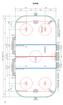 ICE RINK 1500 1500 800 700 700 800 Goal Judge Length = 5600 to 61 00 1/ 3 1/ 3 1/ 3 400 min. 1000 200 200 min. 1000 1000 150 400 1000 150 400 400 Player's Bench Team A Player's Bench Team B min. 150 min.
Official League Rules
 Official League Rules 210 Hegenberger Loop Oakland, CA 94621 (510) 638-9097 [email protected] www.dryicehockey.com Updated: 7/20/2010 This rule book is based on the Official Rules of USA Inline
Differences Between Box Lacrosse and Hockey
 Differences Between Box Lacrosse and Hockey Referees on the Floor Both referees on the floor have the same level of authority. o The more senior of the 2 officials will face off the ball at the beginning
Tab Ramos Sports Center Adult Roller Hockey Rules & Regulations
 Tab Ramos Sports Center Adult Roller Hockey Rules & Regulations 1) Leagues / Format: Sunday/Monday/Wednesday Men s Open will play 4v4 w/goalie & two 24 minute halves Tuesday Men s Over 30 will play 4v4
FLOOR HOCKEY RULES. Rule 1: Eligibility
 INTRAMURAL SPORTS Mission Statement The mission of the Department of Campus Recreation is to develop and provide high quality innovative fitness, recreation, and leadership programming to promote retention
NORTH AMERICAN ROLLER HOCKEY CHAMPIONSHIPS OFFICIAL PLAYING RULES
 NORTH AMERICAN ROLLER HOCKEY CHAMPIONSHIPS OFFICIAL PLAYING RULES Effective :April 1st, 2008 1 Table of Contents SECTION I - THE RINK... 5 RULE 101 - RINK...5 RULE 102 - GOAL POSTS AND NETS...5 RULE 103
b. The playing surface shall be free from any projections which a player could encounter in the course of play.
 1 The Official Special Olympics Rules shall govern all Special Olympics Floor Hockey competitions. Special Olympics, Inc. is the International Governing Body for Floor Hockey. SECTION A - OFFICIAL EVENTS
POLY HOCKEY. SOMI-Specific Information Sport season: September- November
 POLY HOCKEY Culminating State Event State Poly Hockey Events Offered Team Competition Individual Skills Contest Unified Team Competition SOMI-Specific Information Sport season: September- November Team
IIHF CASE BOOK. Copyright 2014 by the International Ice Hockey Federation (IIHF). All rights reserved.
 IIHF CASE BOOK Copyright 2014 by the International Ice Hockey Federation (IIHF). All rights reserved. Contents RULE 34 - HELMET... 3 RULE 41 MEASUREMENT OF A PLAYER S EQUIPMENT... 3 RULE 49 PUCK IN PLAY...
PART 8: FLOOR HOCKEY TECHNICAL RULES
 2013 IDAF Rules 32 7.8 OFFICIALS 7.8.1 Minimum number. There shall be one head referee for the overall boccia tournament, one match referee for each match, and one scorekeeper for each match. The head
Elite Street Hockey Manual
 Table of Contents Foreword.. 2 Introduction.. 3 Offsides and Floating Blue-Line System.. 4 Summary of ISBHF Playing Rules. 5 ISBHF International Competitions and Qualifications. 9 ISBHF Application. 11
IIHF COACH DEVELOPMENT PROGRAM LEVEL I RULES AND REGULATIONS
 IIHF COACH DEVELOPMENT PROGRAM LEVEL I RULES AND REGULATIONS 24. RULES 24. Rules Like most organized sports, hockey is governed by a set of rules designed to ensure equality for all participants. As a
Michigan Technological University Intramural-Recreational Sports Services Women s and Men s Floor Hockey Rules
 Michigan Technological University Intramural-Recreational Sports Services Women s and Men s Floor Hockey Rules I. The Game A. Five players on the floor 4 players and a dressed goalie. Four players (3 players
17 Laws of Soccer. LAW 5 The Referee The referee enforces the 17 laws.
 17 Laws of Soccer The 17 laws explained below are the basic laws of soccer accepted throughout the world. These laws are usually altered slightly so the game is more fun and beneficial for young players.
Floor Hockey. Playing Area
 ARTICLE XIII Floor Hockey The following Special Olympics Canada (SOC) Sports Rules shall govern all CSO floor hockey competitions. The Floor Hockey Rules have been broken into the following sections: Section
2012-2013 Ice Hockey Manual For Coaches and Officials
 2012-2013 Ice Hockey Manual For Coaches and Officials OHSAA 4080 Roselea Place Columbus, Ohio 43124 (p) 614.267.2502 (f) 614.267.1677 www.ohsaa.org Ohio High School Athletic Association 4080 Roselea Place
FIFA Laws of the Game U10-18
 FIFA Laws of the Game U10-18 Law 1: Field of Play Law 2: The Ball Field size for U6-U12 players is reduced for small- sided play. U14 U19 play on regulation size fields. U6 & U8 play with size 3 soccer
2012 RULE COMPARISON TABLE Side-by-side comparison of the Rules of Hockey and NCAA & NFHS modifications
 2012 RULE COMPARISON TABLE Side-by-side comparison of the Rules of Hockey and NCAA & NFHS modifications This comparison chart is meant to serve as a helpful reference for umpires officiating competitions
YOUTH 3ON3 HOCKEY LEAGUE
 CANLAN ICE SPORTS YOUTH 3ON3 HOCKEY LEAGUE RULE BOOK 2016 The following rules are for the benefit of all 3on3 participants Section I: Game Play Rules 1. NO intentional body contact allowed 2. All 3on3
17 Basic Rules of Soccer
 17 Basic Rules of Soccer Soccer has 17 laws or rules by which the game is played. Most of these laws are easy to understand. The laws are designed to make soccer fun, safe, and fair for all participants.
2013 RULE COMPARISON TABLE Side-by-side comparison of the Rules of Hockey and NCAA & NFHS modifications
 2013 RULE COMPARISON TABLE Side-by-side comparison of the Rules of Hockey and NCAA & NFHS modifications This comparison chart is meant to serve as a helpful reference for umpires officiating competitions
Player Information eligible to play on only one intramural soccer team per season. Illegal or Ineligible Penalty: Penalty: poor weather conditions
 Soccer Rules The following rules will govern play in Intramural Soccer. Rules not covered below are governed by FIFA (Federation International of Football Association) Rules. I. Player Information A. Player
NHSOA 2013 SOCCER EXAM
 NHSOA 2013 SOCCER EXAM 1. During their inspection of the field, the referees note that the portable goals are not secured, anchored or counterweighted. The home team s head coach says that this is the
Play is governed by NFHS Soccer rules with the following modifications:
 Play is governed by NFHS Soccer rules with the following modifications: 1. AREA OF PLAY All Soccer matches will be played at the Intramural Fields with the below modifications to a regulation pitch. The
2011 Part II Soccer Exam. Question #1. Question #2. Question #3. Question #4. Question #5. Question #6
 2011 Part II Soccer Exam Question #1 The Team A goalkeeper is dribbling the ball with his feet in his own penalty area when opponent B1 fairly charges and steals the ball. The referee penalizes B1 and
Chapter Three Laws of the Game Of the Greater Longview Soccer Association
 Chapter Three Laws of the Game Of the Greater Longview Soccer Association 3.1 General FIFA Laws of the Game as Modified (recommended 2016/2017, mandatory 2017/2018). The Rules of play for Adult and Youth
Each player must present a Rowan ID card before each contest to be eligible to participate.
 5 on 5 Basketball Rules Each player must present a Rowan ID card before each contest to be eligible to participate. All intramural participants are responsible for their own medical expenses. Any student
headed toward the goal. Violation - Major Penalty to be served by a team member on the floor. 2. Goalies may only be substituted for during a
 Floor Hockey 1. AREA OF PLAY A. All Floor Hockey matches will be played on the Multi-Activity Courts. B. The active playing area is designated as the entire court surface within the walled perimeter. C.
Floor Hockey Rules and Regulations
 Floor Hockey Rules and Regulations Eligibility Below are the guidelines that participants must follow in order to be eligible to enroll or play in UREC intramurals. 1. Undergraduates/Graduate Students
(updated 10/21/2015 with 2013-17 USA Hockey, 2015-16 NFHS and 2014-16 NCAA Rule (Situation) Dif USA Hockey (HS & Below) N F H S N C A A
 SA Hockey Playing Rules Committee (updated 10/21/2015 with 2013-17 SA Hockey, 2015-16 FHS and 2014-16 CAA Rule (Situation) Dif SA Hockey (HS & Below) F H S C A A SECTIO 1 - RIK Goalkeeper warm-up area
WARWICK. Official DEK Hockey Rules
 WARWICK Official DEK Hockey Rules House Rules 1. Ref Card, Start of game 2. Abuse to Official 3. Jerseys 4. Basic Rules 5. 8 Penalty Rule 6. Forfeits 1. Referee Card If a team does not supply the referee
NFHS 2013-14 FOOTBALL EXAM PART 2 (Answers)
 NFHS 2013-14 FOOTBALL EXAM PART 2 (Answers) 1) Football gloves must meet the NOCSAE test standard at the time of manufacture, unless made of unaltered plain cloth. [Rule 1-5-2b] 2) The field of play is
Ice Sledge Hockey Rules
 IPC ICE SLEDGE HOCKEY International Paralympic Committee Ice Sledge Hockey Rules 2011-2014 SECTION 1: INTRODUCTION... 7 SECTION 2: FIELD OF PLAY SPECIFICATIONS... 8 200 Definition of the Field of Play...
GENERAL RULES OF PLAY ALL LEVELS AND AGES EXCEPTIONS AND ADDITIONS TO FIFA LAWS Updated 8.6.15 with changes from July 19, 2015 GBM
 GENERAL RULES OF PLAY ALL LEVELS AND AGES EXCEPTIONS AND ADDITIONS TO FIFA LAWS Updated 8.6.15 with changes from July 19, 2015 GBM Except as otherwise noted in these rules, FIFA Laws will govern the play
Rules 2012/13. www.englandhockey.co.uk/in2hockey. The Rules of In2Hockey. are published by the EHB
 Rules 2012/13 The Rules of In2Hockey www.englandhockey.co.uk/in2hockey are published by the EHB in2hockey 7-A-Side Rules 2012/13 RULE 1 TEAMS a. The game is played between two teams. They shall each have
SECTION A OFFICIAL EVENTS
 1 The Official Special Olympics Sports Rules for Football (Soccer) shall govern all Special Olympics competitions. As an international sports program, Special Olympics has created these rules based upon
FUTSAL RULES Below are additions and/or highlights to FIFA Futsal Rules For details on FIFA Rules, see Rules PDF.
 FUTSAL RULES Below are additions and/or highlights to FIFA Futsal Rules For details on FIFA Rules, see Rules PDF. Equipment & Uniforms Game balls are to be provided. Personal Futsal balls are allowed,
Richmond Cosom Floor Hockey Rules and Regulations
 Cosom Floor Hockey: A regular season cosom hockey game consists of three (3) fifteen (15) minute periods with a two (2) minute rest break between periods. Teams play with a maximum of six (6) players on
F. CONDUCT OF SPECTATORS
 RULES OF THE GAME A. SISTAS RULES: In general, our rules are governed by F.I.F.A. Please see our rules below for exceptions and clarification. A substitution may be requested after goals, goal kicks, during
2012-13 Volleyball Exam Part I
 2012-13 Volleyball Exam Part I Note: This exam is for study purposes only. Do not mail to the League Office-exams submitted on this form will not be accepted. Exams must be submitted online through Officials
Officiating Program. Off-Ice Officials Handbook
 Hockey Canada Officiating Program Off-Ice Officials Handbook Table of Contents Introduction...ii Responsibilities of the Off Ice Officials... 1 General... 1 Responsibilities of the Official Scorer... 2
OFFICIAL RULE BOOK 2010 2014 ENGLISH VERSION
 INTERNATIONAL ICE HOCKEY FEDERATION OFFICIAL RULE BOOK 2010 2014 ENGLISH VERSION July 2010 International Ice Hockey Federation No part of this publication may be reproduced in the English language translated
MEMORANDUM. Stefanie Sparks Smith Secretary-Rules Editor, NCAA Women s Lacrosse Rules Committee.
 MEMORANDUM September 25, 2015 VIA EMAIL TO: Head Women s Lacrosse Coaches and Officials. FROM: Julie Myers Chair, NCAA Women s Lacrosse Rules Committee. Stefanie Sparks Smith Secretary-Rules Editor, NCAA
RULE 1. The Field of Play
 RULE 1 The Field of Play 1.1 Dimensions 1.1.1 The field of play shall be rectangular, the width of which shall not be more than 75 yards [68.58 m] or less than 70 yards [64.01 m] and shall not exceed the
NFHS WRESTLING EXAM PART II (ANSWERS)
 NFHS WRESTLING EXAM PART II (ANSWERS) 1) All scoring errors can be corrected if they are detected within 48 hours. [Rule 6-6-4, 5] (Correct) 2) The only way a wrestler can lose a match when ahead by 15
SUFFOLK SOCCER INTERLEAGUE LAWS OF THE GAME MODIFIED FIFA RULES
 LAW I THE FIELD OF PLAY The field of play must be rectangular. The length of the touch line must be greater than the length of the goal line. Length: minimum = 100yds, maximum = 130 yds Width: minimum
Floor Hockey Rules and Regulations of Play
 Floor Hockey Rules and Regulations of Play RINK All games will be played at the Floor/Roller Hockey Rink 2 at Central Park in Morris Plains. EQUIPMENT Ø Sticks: NIS will provide sticks each night. Players
Laws of the Game. All full field divisions U19 and below.
 OBJECT OF THE GAME: To score more goals than your opponent. METHOD OF SCORING: A goal is scored when the entire ball, while in play, has passed completely over the goal line, between the goal posts and
Summary of FUTSAL Laws of the Gamel. A summary of FIFA's Futsal Laws of the Game
 Summary of FUTSAL Laws of the Gamel A summary of FIFA's Futsal Laws of the Game This is a summary of FIFA's "Laws of the Game for Futsal (Indoor Football)" Click the hypertext in the above sentence for
7 v 7 Outdoor Soccer - Rules
 G e o r g e M a s o n U n i v e r s i t y 7 v 7 Outdoor Soccer - Rules Each player must present a valid Mason G Card before each contest to be eligible to participate. No ID No Play No Exceptions! *Note:
Law 12 Fouls and Misconduct (Part 1 - Fouls)
 Law 12 Fouls and Misconduct (Part 1 - Fouls) Topics 2 Fouls Basis requirements for a foul Direct Free Kick Indirect Free kick Careless, reckless, using excessive force Charging an opponent Holding an opponent
Delaware Sports League Flag Football Rules
 1 Field Delaware Sports League Flag Football Rules A. The field will be 80 yards long from goal line to goal line with the end zones being 10 yards each. B. The field will be divided into four (4) zones
The Laws of the Game Questions and Answers 2005
 The Laws of the Game Questions and Answers 2005 CONTENTS Questions and Answer 2005 Laws of the Game Law Answers Page 1 The Field of Play 1 7 4 2 The Ball 1 3 6 3 The Number of Players 1 29 7 4 The Players
US INDOOR SOCCER RULES THE OFFICIAL RULES OF INDOOR SOCCER Youth and Amateur Edition
 US INDOOR SOCCER RULES THE OFFICIAL RULES OF INDOOR SOCCER Youth and Amateur Edition The Rules Rule 1 - The Field Of Play Due to structural differences among indoor soccer facilities, The Field of Play
RULES OF THE GAME FOR INTRAMURAL VOLLEYBALL Revised July 10, 2013
 RULES OF THE GAME FOR INTRAMURAL VOLLEYBALL Revised July 10, 2013 OFFICE OF INTRAMURAL SPORTS DEPARTMENT OF UNIVERSITY RECREATION DIVISION OF STUDENT AFFAIRS MISSISSIPPI STATE UNIVERSITY General Information
IIHF OFFICIAL INLINE RULE BOOK
 IIHF OFFICIAL INLINE RULE BOOK 2015 2018 No part of this publication may be reproduced in the English language or translated and reproduced in any other language or transmitted in any form or by any means
Washington State Youth Soccer Association. Small-Sided Program Format Summary
 Washington State Youth Soccer Association Small-Sided Program Format Summary Field Size Goal Size Ball Size Field Players Roster Size Game Length Year of (w x l in yds) (max feet) (maximum) (maximum) Implementation
2013 SCFOA Football Rules & Mechanics Examination
 2013 SCFOA Football Rules & Mechanics Examination Use a #2 pencil to COMPLETELY fill in the correct answer. To change your answer ERASE COMPETELY & CLEANLY and mark again. Make no extra marks on the answer
c. should request the tournament director mark the court so that servers will have 6 feet of space to serve 8 The substitution zone is the area: a.
 1 What should be done if a group of people in the stands are shaking bottles full of rocks while the opposing team is serving and during play? a. The administrator should be made aware of the situation
III. TEAM COMPOSITION
 Volleyball Rules I. GAME CHARACTERISTICS 1. Volleyball is a sport played by two teams on a playing court divided by a net. There are different, versions available for specific circumstances in order to
OFFICIAL RULES OF THE NATIONAL SHUFFLEBOARD ASSOCIATION, INC. Revised 1997 Updated January 2005
 OFFICIAL RULES OF THE NATIONAL SHUFFLEBOARD ASSOCIATION, INC. Revised 1997 Updated January 2005 A - GAME 1. The game of shuffleboard is played by: two (2) persons (called singles), or by four (4) persons
ANDY S SOFTBALL LEAGUE 2015 OFFICIAL RULES
 ANDY S SOFTBALL LEAGUE 2015 OFFICIAL RULES American Softball Association Rules are the official rules for this league. The following are highlights of these rules and special modifications for this league.
Updated October 2015 Copyright Wrestlingref.Com 2016
 High School Wrestling Rules Illustrations Updated October 2015 Copyright Wrestlingref.Com 2016 This presentation is intended for officials, coaches and fans as a tool to better view the illustrations found
BASC Recreational Youth Soccer 11v11 U13 to U19 Program Official Rules and Policies (FIFA/USYS/OSA Laws and Policies as amended by BASC 3/2014)
 BASC Recreational Youth Soccer 11v11 U13 to U19 Program Official Rules and Policies (FIFA/USYS/OSA Laws and Policies as amended by BASC 3/2014) All rules herein are for BASC Closed League matches and supersede
Emerald Isle Parks & Recreation Adult Soccer Rules
 RULE I GENERAL RULES a. No profanity, regardless if you are playing in a game or not. Profanity will not be tolerated. You will get ONE WARNING then a YELLOW card and then a RED card. b. No fighting. Fighting
Futures Hockey Championship Series Rules & Regulations
 Series Format: 1. Each team will receive a minimum of four games and a maximum of five games. The teams that make the championship game at both divisions will receive five games. 2. There will be two divisions
Men s 7 on 7 Flag Football Rules
 Men s 7 on 7 Flag Football Rules THE CLOCK: Game Length: Games consist of two (2) twenty five (25)-minute halves with a running clock and two-minute warning at the end of the second half. Two-Minute Warning:
ICE HOCKEY FOR NAIRABET
 ICE HOCKEY FOR NAIRABET Ice hockey is a team sport played on ice in which skaters use sticks to shoot a hard rubber hockey called puck into their opponent's net to score points. A team consists of four
ANN ARBOR ICE CUBE ADULT HOCKEY LEAGUE RULES
 ANN ARBOR ICE CUBE ADULT HOCKEY LEAGUE RULES I. PURPOSE (January 2013) The Ann Arbor Ice Cube s Adult Hockey Leagues have been established to provide an enjoyable recreational experience with emphasis
Rules for the IEEE Very Small Competition Version 1.0
 7th LATIN AMERICAN IEEE STUDENT ROBOTICS COMPETITION Joint with JRI 2008 (Brazilian Intelligent Robotic Journey) and SBIA 2008 (19 th Brazilian Symposium on Artificial Intelligence) Rules for the IEEE
How to Buy Skates. How to Buy Sticks
 How To Fit Ice Hockey Products Today's hockey equipment helps protect you from head to toe. Most of the gear is specifically designed to help maximize your performance while still helping to reduce the
2011-2013 DOMESTIC COMPETITION REGULATIONS SIGNIFICANT VOLLEYBALL (INDOOR) RULE CHANGES AND CLARIFICATIONS
 2011-2013 DOMESTIC COMPETITION REGULATIONS SIGNIFICANT VOLLEYBALL (INDOOR) RULE CHANGES AND CLARIFICATIONS Add USAV 1.3.1: Lines are not required to be of a light color as long as they contrast with the
2015 FFA Laws Of The Game Certificate Help File
 2015 FFA Laws Of The Game Certificate Help File Field Of Play 1. Move sections of the pitch to correct positions 2. 2.44m x 7.32m (8 feet x 8 yards) 3. 1.5m (5 feet) 4. Correct Field Markings Corner Flags
UMPIRE S PROCEDURES AND SIGNALS
 UMPIRE S PROCEDURES AND SIGNALS The following document documents and illustrates the official ITF Procedures and Hand Signals to be used by all Officials when conducting competitions. It is important to
IIHF OFFICIAL RULE BOOK
 IIHF OFFICIAL RULE BOOK 2014 2018 No part of this publication may be reproduced in the English language or translated and reproduced in any other language or transmitted in any form or by any means electronically
The Technical Committee of the Alberta Soccer Association wishes to thank
 The Technical Committee of the Alberta Soccer Association wishes to thank The St. Albert Soccer Association and Sherwood Park Soccer Association for their assistance with the development of the RULES for
1.1 A team shall consist of seven players. A team can play with a minimum of 6 players.
 Flag Football Rules Divisions Men s and Women s Leagues are offered Sub divisions may be created upon need of skill level 1. Team Requirements 1.1 A team shall consist of seven players. A team can play
INTER-CROSSE RULEBOOK
 INTER-CROSSE RULEBOOK VERSION 4.0 (2007.07) TABLE OF CONTENTS SECTION 1 THE GAME...4 SECTION 2 PLAYING AREA... 5 SECTION 3 EQUIPMENT... 7 3.1GOALS...7 3.2STICK...7 3.3BALL...8 3.4JERSEY...8 3.5FIELD PLAYER...
a. COREC MODIFICATIONS CoRec teams must have at least 2 males and 2 females to start and continue a game.
 -Texas A&M University- Department of Recreational Sports INTRAMURAL SPORTS INDOOR SOCCER Regulations published in the Texas A&M Rec Sports Handbook will be the governing policies for all intramural sports.
The offensive team takes possession of the ball at its 5 yard line and has four
 RULES Scoring Touchdown: 6 Points PAT: 1 point from 3 yard line; 2 points from 10 yard line Team scoring a TD must declare 1 or 2 point decision immediately. The first declaration to the official will
SUBURBAN FRIENDSHIP LEAGUE. Guide to Referees
 SUBURBAN FRIENDSHIP LEAGUE Guide to Referees SFL Guide to Referees - 1 - October 20, 2014 SFL Guide to Referees Contents SFL MODIFICATIONS TO FIFA LAWS 3 Law 3 The Number of Players 3 SFL Play-Down Rule
Futsal Laws of the Game Questions and Answers 2006
 Futsal Laws of the Game Questions and Answers 2006 CONTENTS Questions and Answers 2006 Futsal Laws of the Game Law Page 1 THE PITCH 4 2 THE BALL 6 3 THE NUMBER OF PLAYERS 7 4 THE PLAYERS EQUIPMENT 16 5
OFF ICE CONSIDERATIONS
 The Coed Adult League of Central Park Ice Hockey played at Lasker Rink uses USA Hockey rules and regulations. Some rules may be modified for the in-house league use listed below. All in-house rules are
2016/ 2017 Laws of the Game for Indoor Soccer
 2016/ 2017 Laws of the Game for Indoor Soccer All basic rules of play as described by FIFA, USSF and USYSA will be used by TEAMWORKS and Indoor Sports with adaptations and exceptions as noted below. Law
SECTION A OFFICIAL EVENTS
 1 The Official Special Olympics Sports Rules for Beach Volleyball shall govern all Special Olympics competitions. As an international sports program, Special Olympics has created these rules based upon
West Chester University Department of Campus Recreation Intramural Table Tennis Rules
 West Chester University Department of Campus Recreation Intramural Table Tennis Rules West Chester University Intramural Table Tennis will follow the current rules of USATT (USA Table Tennis) and NIRSA
YOUTH SOFTBALL RULES. *** Archer Lodge, Knightdale, Louisburg, Rolesville, Wendell, Zebulon ***
 *** Archer Lodge, Knightdale, Louisburg, Rolesville, Wendell, Zebulon *** The East Wake Fast Pitch Softball Area Representatives Board has approved these rules and regulations. They are in effect for the
RECREATIONAL RULES AND MODIFICATIONS TABLE OF CONTENTS. 1. Applicable to all Age Brackets 2. 2. Under 7...4. 3. Under 8...6. 4. Under 9...
 RECREATIONAL RULES AND MODIFICATIONS TABLE OF CONTENTS Club-Specific League Policies 1. Applicable to all Age Brackets 2 Age-Specific League Policies: 2. Under 7...4 3. Under 8...6 4. Under 9...8 5. Under
The referee acts on the advice of assistant referees regarding incidents that he has not seen
 Law 5 The Referee Topics 2 Powers and Duties Advantage Injuries Cooperation with Assistant Referees Cooperation with Fourth Official Team officials Trifling (minor) offences More than one offence occurring
IOWA HIGH SCHOOL ATHLETIC ASSOCIATION RULES ON WEARING SPECIAL EQUIPMENT, BRACES & CASTS FOR 2016-17
 IOWA HIGH SCHOOL ATHLETIC ASSOCIATION RULES ON WEARING SPECIAL EQUIPMENT, BRACES & CASTS FOR 2016-17 There are provisions in the National Federation rule books that pertain to the wearing of special equipment
Marion County Girls Softball. 2014 Rule Book
 Marion County Girls Softball 2014 Rule Book Revised Mar 2, 2014 2 General Rules PLAYING TIME: Regular season and Tournament All players will get 1 time at-bat and 2 innings in the field. Any violation
PART VI WATER POLO RULES 2015-2017
 PART VI WATER POLO RULES 2015-2017 WP 1 WP 2 WP 3 WP 4 WP 5 WP 6 WP 7 WP 8 WP 9 WP 10 WP 11 WP 12 WP 13 WP 14 WP 15 WP 16 WP 17 WP 18 WP 19 WP 20 WP 21 WP 22 WP 23 WP 24 WP 25 WPAG Appendix A Appendix
NATIONAL PADDLEBALL ASSOCIATION FOUR-WALL / INDOOR PADDLEBALL OFFICIAL FOUR WALL RULES
 NATIONAL PADDLEBALL ASSOCIATION FOUR-WALL / INDOOR PADDLEBALL OFFICIAL FOUR WALL RULES REVISED APRIL 2016 &CONSISTS OF 10 PAGES (POLICIES, RECOMMENDATIONS, & OUTDOOR PROVISIONS ARE PAGES 11 & 12) RULE
Team Handball Study Guide
 Team Handball Study Guide Grotthuss History Team Handball originated in northern Europe (Denmark, Germany, Norway and Sweden) in the end of the 19 th century. The Dane Holger Nielsen drew up the rules