
State and Local Law Enforcement Training Academies, 2002
|
|
|
- Eileen Manning
- 10 years ago
- Views:
Transcription
1 U.S. Department of Justice Office of Justice Programs Bureau of Justice Statistics State and Local Law Enforcement Training Academies, 2002 Personnel Expenditures Facilities and equipment Trainees Training curricula

2

3 U.S. Department of Justice Office of Justice Programs Bureau of Justice Statistics State and Local Law Enforcement Training Academies, 2002 Matthew J. Hickman BJS Statistician January 2005, NCJ

4 U.S. Department of Justice Bureau of Justice Statistics Lawrence A. Greenfeld Director Matthew J. Hickman prepared this report. Brian A. Reaves and Steven K. Smith reviewed the report. Thomas Cohen provided statistical review. Carolyn C. Williams edited the report and provided production assistance. Jayne Robinson prepared the report for printing. The Office of Community Oriented Policing Services (COPS) provided partial funding for the 2002 Census of Law Enforcement Training Academies (CLETA). Debra Cohen and Matthew Scheider of COPS assisted with questionnaire development. Additional information on the COPS Office is available on the Internet at < The 2002 CLETA data were collected and processed by the Police Executive Research Forum (PERF) under the supervision of Lorie Fridell. PERF project staff included Bruce Kubu and Nathan Ballard. Additional information on PERF is available on the Internet at < The International Association of Directors of Law Enforcement Standards and Training (IADLEST) provided review and comment on the draft CLETA survey instrument, as well as letters of support, assistance with non-response follow-up, and review and comment on this report. Additional information on IADLEST is available on the Internet at < Data presented in this report may be obtained from the National Archive of Criminal Justice Data at the University of Michigan, The archive is on the Internet at < index.html>. The report and data are available on the Internet at < gov/bjs/>. The Bureau of Justice Statistics is part of the Office of Justice Programs, Partnerships for Safer Communities, on the Internet at < usdoj.gov>. Highlights iii General characteristics 1 Personnel 2 Resources 5 Trainees 7 Core curriculum 9 Force and defensive tactics 12 Community policing 15 Special topics 18 Methodology 21 ii Law Enforcement Training Academies, 2002

5 Highlights General characteristics As of yearend 2002 a total of 626 State and local law enforcement academies operating in the United States offered basic law enforcement training to individuals recruited or seeking to become law enforcement officers. Academies that only provide in-service training, corrections/detention training, or other special types of training were not included in this total. Included in the 626 academies were 274 county, regional, or State academies; 249 college, university, or technical school academies; and 103 city or municipal academies. In addition to basic recruit training, 88% of the academies provided in-service training for active duty, certified officers. Less than half (44%) provided training for individuals not sponsored by a law enforcement agency. Academy personnel Academies in 2002 employed about 12,200 full-time and 25,700 part-time trainers or instructors. About three-quarters of academies employed fewer than 50 full-time equivalent (FTE). Just 8% of academies had 100 or more FTE trainers, but these large academies employed nearly half (47%) of all full-time trainers. About two-thirds of academies had a minimum education requirement for full-time trainers. The most common requirement was a high school degree or GED (33%), followed by a 2-year (12%) or 4-year (11%) degree. Eleven percent of the academies specifying minimum education had requirements other than degrees. Just over two-thirds of academies required their full-time trainers to have a minimum number of years of law enforcement experience, ranging from Female and minority academy graduates, to 10 years. Three and 5 years were the most common requirements. Academy resources Percent of all recruits who completed training 30% 25% 20% 15% 10% 5% 0% Female All Hispanic Black Other* minorities *Includes Asian, Native Hawaiian or Pacific Islander, American Indian/Alaska Native, and any other race. The total expenditures of training academies during fiscal 2002 was an estimated $725.6 million, including $351.2 million among county, regional, or State academies, $299.4 million among city or municipal academies, and $75.1 million among college, university, or technical school academies. On a per academy basis, total expenditures were about $1.2 million overall, ranging from $261,000 among the smallest academies to $6.3 million among the largest. Expenditures per basic trainee were about $13,100 overall, ranging from $5,400 among the smallest academies to $18,800 among the largest. Per trainee expenditures were much higher in city or municipal academies (about $36,200 per trainee) compared to county, regional, or state academies (about $11,200 per trainee) and college, university, or technical school academies (about $4,600 per trainee). Academy trainees Among basic law enforcement academy classes that completed training during 2002, an estimated 61,354 recruits started training and 53,302 (or 87%) successfully completed or graduated from their training program. Fifty-five percent or 29,519 of recruits who completed training in 2002 graduated from county, regional, or State academies. Twenty-nine percent (or 15,606 recruits) graduated from college, university, or technical school academies, and 15% (or 8,177 recruits) from city or municipal academies. An estimated 17% of recruits who completed training in 2002 were female, and 27% were members of a racial or ethnic minority. Overall academy completion rates were somewhat higher among males (88%) than females (81%). Males had higher completion rates within all race/ethnicity categories. Law Enforcement Training Academies, 2002 iii

6 Core curriculum The median number of hours in basic recruit training C excluding any field training component C was 720 hours across all academies. The median number of hours above any State requirement was 100 hours. Among academies conducting field training, the median number of hours in the field training segment was 180 hours. The greatest amount of required instruction time was in firearms skills (median 60 hours), followed by health and fitness (50 hours), investigations (45 hours), self-defense (44 hours), criminal law (40 hours), patrol procedures and techniques (40 hours), emergency vehicle operations (36 hours), and basic first-aid/cpr (24 hours). Thirty-five percent of academies provided instruction in basic foreign languages (for example, survival Spanish), with a median of 16 hours of instruction in this area. Force and defensive tactics Nearly all academies (99%) used semi-automatic pistols in their basic firearms training. The median qualification score was 75%. Sixty-four percent of academies, training 78% of recruits, used computerized firearms training systems as part of their basic firearms training. Seventy-seven percent of academies, training 75% of recruits, provided training on use of chemical agents (for example, pepper spray). Most academies provided training on pressure-point control techniques (90% of academies, training 77% of recruits), ground fighting techniques (85%, training 87% of recruits), and speed cuffing (78%, training 78% of recruits). Nine percent of academies, including 17% of those employing FTE trainers, reported having a mock use-of-force review board as part of their basic use-of-force training. Community policing Eighty-three percent of academies, training 87% of recruits, provided training on identifying community problems. Eighty percent, training 85% of recruits, provided training on the history of community-oriented policing. Nearly 6 in 10 academies, training half of recruits, provided training on the use of problem-solving models such as SARA or CAPRA (discussed on page 9). In the prior 2 years, 57% of academies made changes to their basic recruit curriculum related to community policing. A third of academies increased the number of hours devoted to community policing training. About 8 in 10 academies, training 85% of recruits, involved members of the community in various aspects of training. Nearly all academies (99%) provided training on the development of partnerships with culturally diverse communities. Special topics About 4 in 5 academies, training 83% of recruits, provided some type of training related to terrorism and responding to terrorist incidents. The most common types of terrorism training were the following: response to weapons of mass destruction (57%), understanding the nature of terrorism (48%), and overview of relevant Federal, State, and local agencies (for example, FEMA and FBI) (44%). Ninety-six percent of academies addressed racially-biased policing as part of their basic training program. Ninety-three percent addressed this topic during academic training, 40% during practical skills training, and 31% during field training. Ninety-seven percent of academies addressed disengagement techniques (that is, how to withdraw tactfully from a stop or arrest). Eighty-seven percent addressed this topic during academic training, 79% during practical skills training, and 35% during field training. Forty-one percent of academies, training 47% of recruits, provided training or orientation for their family members (such as preparing for possible lifestyle changes when the recruit begins work as a law enforcement officer). Basic instruction related to terrorism and responding to terrorist incidents, 2002 Type of training Response to weapons of mass destruction Understanding the nature of terrorism Relevant Federal, State, and local agencies Interagency information sharing Intelligence gathering Overview of related technology/equipment Role of anti-terrorist task forces Post-incident stabilization of community Intelligence analysis Other terrorism training 0% 10% 20% 30% 40% 50% 60% Percent of academies providing training in listed area iv State and Local Law Enforcement Training Academies, 2002

7 The 2002 Census of Law Enforcement Training Academies During the Bureau of Justice Statistics (BJS) conducted its first Census of Law Enforcement Training Academies (CLETA) in the United States. The CLETA included all currently operating academies that provided basic law enforcement training. Academies that provided only in-service training, corrections/detention training, or other special types of training were excluded. See the Methodology section on page 21 for additional detail. As of yearend 2002 a total of 626 law enforcement academies operating in the United States offered basic law enforcement training to individuals recruited or seeking to become law enforcement officers. This includes 274 county, regional, or State academies, 249 college, university, or technical school academies, and 103 city or municipal academies. Type of academy All academies County/regional/State College/university/technical City/municipal Number of academies This report describes these academies in terms of their personnel, expenditures, facilities and equipment, trainees, training curricula, and a variety of special topic areas including community policing, racially-biased policing, and terrorism. General characteristics Types of training In addition to basic recruit training, many academies provided additional types of training. For example, 88% of academies provided in-service training for active duty, certified officers (figure 1). Likewise, 84% of academies provided specialized training of some type (for example, K-9 and SWAT). Types of training provided by academies, in addition to basic recruit training, 2002 Over two-thirds (70%) provided firstline or higher supervisor training, and over half (54%) provided training for field training instructors. Less common was training for individuals not sponsored by a law enforcement agency (44%) and field training for recruits (36%). Academies in 2002 provided training and/or certification for a wide variety of law enforcement positions. The most common positions were local police officer (93%) and sheriff s deputy Figure 2 Type of training In-service Specialized Supervisors Field training instructors Persons not sponsored by a law enforcement agency Figure 1 Field training for recruits Percent of academies providing training type (75%) (figure 2). Fifty-four percent of academies provided training for campus police officers, and 37% provided training for corrections officers. Less than a third of academies provided training for school resource officers (29%), State police/patrol officers (27%), parole/probation officers (23%), firefighters (14%), private security officers (14%), tribal officers (13%), and emergency medical technicians (13%). Positions for which academies provided training and/or certification, 2002 Type of position Local police officer Sheriffs' deputy Campus police officer Corrections officer School resource officer State police/patrol Parole/probation officer Firefighter Private security officer Tribal officer Emergency Medical Technician Percent of academies providing training and/or certification State and Local Law Enforcement Training Academies,

8 Academy personnel Academies in 2002 employed about 12,200 full-time trainers or instructors and over twice as many part-time trainers or instructors (table 1). About three-quarters of the academies employed fewer than 50 full-time equivalent ; about half had fewer than 25 full-time trainers. Eight percent of academies that had full-time equivalent trainers employed nearly half (47%) of all full-time trainers. About a quarter of all academies had 50 or more full-time equivalent trainers, and these academies employed 70% of all full-time trainers. Academies employing fewer than 10 full-time equivalent trainers accounted for 12% of academies and 2% of all full-time trainers. About 23% of all part-time trainers were employed by an academy with full-time equivalent training personnel, and 52% were employed by an academy with 50 or more. Academies employing fewer than 10 full-time equivalent trainers accounted for less than 2% of all parttime trainers. County, regional, and State academies were fairly equally distributed across categories of full-time equivalent trainers. In contrast, about threefifths of college, university, and technical school academies and about half of city/municipal academies had fewer than 25 full-time equivalent trainers. Number of FTE training personnel 50 or more Fewer than 25 County, regional, state 100% Type of academy College, university, technical 100% City or municipal 100% Note: Percentages may not sum to 100 because of rounding. Table 1. Law enforcement training academies and personnel, by number of full-time equivalent, 2002 * Academies Number Percent % 7.6% Note: Percentages may not sum to total due to rounding. *Includes both full-time and part-time employees (a part-time employee equaling half a full-time employee). Type of academy full-time County/regional/State 2-yr/4-yr/technical City/municipal part-time County/regional/State 2-yr/4-yr/technical City/municipal 12,227 7,798 1,042 3,387 25,700 12,407 10,477 2,816 Permanent sworn 4,315 2, ,922 1, The largest full-time employment category was comprised of sworn officers permanently employed by or assigned to the academy, with over 4,300 such personnel (or 35% of all full-time ) overall (table 2). The next largest full-time employment category was on-duty sworn officers temporarily assigned to the academy, with about 2,800 such personnel (or 23% of full-time trainers). Nearly 12,700 off-duty officers comprised the largest part-time employment category, accounting for 49% of all paid, part-time trainers. The next largest part-time employment category consisted of on-duty sworn officers temporarily assigned part-time to the academy, with about 4,000 such personnel (or 16% of part-time trainers). On-duty sworn 2,846 2, ,034 3, Full-time Number Percent 12,227 5,732 2,768 2,235 1, Off-duty sworn 1,711 1, ,693 3,871 7, % 46.9% Number of trainers or instructors Civilian 1,903 1, , Part-time Number Percent 25,700 5,824 7,610 7,435 4, Table 2. Employment by law enforcement training academies in the United States, by type of academy, 2002 Contractor , % 22.7% ,547 2, Note: Detail may not sum to totals because some academies provided total employment figures only. 488 Other 963 College, university, and technical school academies were staffed primarily with part-time. About 9 in 10 trainers were identified as part-time employees at these academies. The majority of these parttime trainers (75%) were off-duty officers compensated to teach. Fifteen percent of academies had parttime only. Threefourths of these academies were 2-year, 4-year, and technical school academies, and 24% were county, regional, or State academies. Sixty-seven percent of academies having only part-time employed fewer than 25 full-time equivalent trainers, and 90% employed fewer than 50. Overall, these academies accounted for nearly 4,300 (or 17%) of all part-time in State and Local Law Enforcement Training Academies, 2002

9 Minimum education and experience About two-thirds of academies with fulltime trainers or instructors in 2002 maintained a minimum education requirement (table 3). The most common type of requirement was a high school degree or GED (33%), followed by a 2-year (12%) or 4-year (11%) degree. Larger academies C those having 100 or more full-time equivalent trainers C were the most likely to have a college degree requirement (about 1 in 3) but were the least likely to require a 4-year degree (about 1 in 20). Eleven percent of academies indicated that some other type of minimum education requirement applied to their full-time trainers or instructors. Just over two-thirds of all training academies required their full-time trainers or instructors to have a minimum number of years of law enforcement experience (table 4). Among those academies having a minimum experience requirement, the actual requirement ranged from a low of 1 year to a high of 10 years. Three and 5 years were the most frequently reported requirements. The average requirement was about 4 years across all academies. The median requirement was 3 years. Instructor certifications Among academies having full-time training staff, 89% required their fulltime trainers or instructors to have a State-level certification as a trainer (figure 3). Sixty-one percent of academies required their full-time trainers to have certification as a subject matter expert, and 26% required an academy certification as a trainer. Twenty percent of academies indicated other certification requirements, and 1% had no certification requirement for their full-time trainers or instructors. Table 3. Minimum education requirement for instructors, by number of full-time equivalent, 2002 Any minimum education requirement 67% 68% % 24% Note: Detail may not add to total due to rounding. 67% High School or GED Minimum education requirement 2-yr 4-yr degree degree 12% 27% % 5% Other requirement 11% 12% Table 4. Minimum years of law enforcement experience required for instructors, by number of full-time equivalent, 2002 Percent of academies having minimum requirement 69% Average number of years experience required Note: Required years of experience data are imputed for some academies (see Methodology section) Certifications required of full-time trainers or instructors, 2002 Other certification requirement Figure 3 Type of certification State-level Subject matter expert Academy Percent of academies requiring certification type State and Local Law Enforcement Training Academies,

10 Refresher training Seventy-three percent of academies provided ongoing or refresher training for their trainers or instructors (table 5). Academies having fulltime equivalent were the most likely to provide refresher training (86%). Academies having fewer than 10 full-time equivalent training personnel were least likely to provide this training, although 67% did so. Among those academies providing refresher training, 56% relied on subject matter experts to develop the content of the training (figure 4). About half (51%) used State commissions and/or conducted a job task analysis/ needs analysis (49%). About 3 in 10 academies used a law enforcement advisory board to develop refresher training. Fourteen percent used some other method to develop this training. Performance evaluations Ninety-three percent of training academies used student evaluations as part of the overall performance evaluation of academy (table 6). Supervisory evaluations were also common, with 79% of academies using this type of evaluation. Less common were peer evaluations (that is, trainers evaluated by other trainers), with 31% of academies using this type of evaluation. Peer evaluations were more likely to be used in academies with greater numbers of full-time equivalent. Thirty-eight percent of those having trainers used them, compared to 23% of academies having fewer than 10 full-time equivalent trainers. Table 5. Academies providing refresher training for instructors, by number of full-time equivalent, 2002 Percent of academies providing ongoing and/or refresher training for instructors 73% 86% Methods used to develop content of refresher training for academy, 2002 Refresher methods used Subject matter expert State commission Job task analysis / needs analysis Figure 4 Law enforcement advisory board Other method 91% % 10% 20% 30% 40% 50% 60% 81% Percent of academies Table 6. Methods used for evaluating performance of instructors, by number of full-time equivalent, 2002 Student evaluations 93% Supervisor evaluations 79% Peer evaluations 31% 38% Other evaluation methods 10% 14% Ten percent of academies used other methods to evaluate the performance of instructors. 4 State and Local Law Enforcement Training Academies, 2002

11 Academy resources Training funds and equipment State funding was the most common source of training funds or equipment for academies in 2002, with 68% of academies receiving this type of funding (figure 5). Other government funding came from city/county governments (47% of academies) and Federal sources (19% of academies). The percentage of academies receiving other sources of training funds or equipment in 2002 were as follows: tuition, 50%; police departments sponsoring recruits, 34%; student fees (other than tuition), 29%; financial and equipment donations from private vendors, corporations, and universities, 17%; surplus government equipment, 10%; and other funding sources, 7%. Expenditures During fiscal 2002, training academies expended an estimated $725.6 million (table 7). County, regional, and State academies accounted for an estimated $351.2 million, or 48% of the total expenditures. City/municipal academies accounted for an estimated $299.4 million, or 41% of the total. Two-year, 4-year, and technical school academies had expenditures estimated at $75.1 million, or 10% of the total. Type of academy All academies County/regional/State College/university/technical City/municipal Expenditures (in millions), FY 2002 $725.6 $ Sources of training funds or equipment, 2002 Figure 5 Source of funds State funding Tuition City/county funding Sponsoring agencies Student fees (other than tuition) Federal funding Donations from private entities Surplus government equipment Other funding sources $725,633,000 $287,663, ,509, ,963, ,959,000 18,539,000 Expenditures averaged about $1.2 million per academy during fiscal 2002, ranging from about $6.3 million for academies having fulltime equivalent, to about $261,000 for academies having less than 10 full-time equivalent trainers. On a per trainer basis expenditures averaged about $28,900, ranging from $17,900 in academies with 50 to 99 full-time equivalent trainers to $41,800 in those with fewer than 10 full-time trainers. Percent of academies receiving funds or equipment Table 7. Training academy expenditures, by number of full-time equivalent, FY 2002 * expenditures, FY 2002 Per full-time equivalent Per academy trainer $1,205,000 $6,254,000 1,237, , , ,000 $28,900 $33,300 17,900 27,400 40,100 41,800 Per basic trainee $13,100 $18,800 12,600 10,900 10,900 5,400 Note: expenditure includes gross salaries and wages, employer contributions to employee benefits, and other operating expenditures. Expenditure and trainee data are imputed for some academies (see Methodology section). Per trainee cost is based on total basic recruits completing training in 2002, and excludes academies that did not have any basic recruits that completed training in that year. *Includes both full-time and part-time employees (a part-time employee equaling half a full-time employee). Overall expenditures averaged about $13,100 per trainee, ranging from $5,400 in academies having less than 10 full-time equivalent trainers to $18,800 in those having. Expenditures per trainee were much higher in city or municipal academies (about $36,200 per trainee) as compared to costs in county, regional, and State academies (about $11,200 per trainee) and college, university, and technical school academies (about $4,600 per trainee). State and Local Law Enforcement Training Academies,

12 Academy facilities Table 8. Law enforcement training academy facilities, 2002 At least 90% of academies had access to an outdoor firearms range (96%), a vehicle operation range (95%), a weight room (93%), or a defensive tactics room (92%) (table 8). At least three-quarters of academies had access to desktop computers (89%), a library (88%), a gymnasium (87%), a scenario training facility (79%), or a firearms training simulator (77%). Outdoor firearms range Vehicle operation range Weight room Defensive tactics room Desktop computers Library Gymnasium Scenario training facility Firearms training simulator Media lab/video production facility 96% % Have access Part of academy facility 47% % Not part of academy facility 49% % No access 4% % At least half of academies had access to a media lab/video production facility (71%), an obstacle course (68%), a mock courtroom (66%), laptop computers (65%), Internet/online classes (53%), or mobile data terminals or computers (50%). At least a quarter of academies had access to a swimming pool (44%), video conferencing classes (43%), a satellite downlink for training modules (for example, LETN) (37%), an indoor firearms range (35%), or dormitory/ residential facilities (31%). Obstacle course Mock courtroom Laptop computers Internet/online classes Mobile data terminals/computers Swimming pool Video conferencing classes Subscription to satellite downlink information service* Indoor firearms range Dormitory/residential facilities Driving simulator Mail correspondence courses *For example, LETN. 68% % % 16 42% % % 4 26% % % 13 32% % % 84 Less than a quarter of all academies had access to a driving simulator (22%) or mail correspondence classes (16%). 6 State and Local Law Enforcement Training Academies, 2002

13 Academy trainees Academy class characteristics In 2002 training academies held two basic recruit academy classes during the year on average (table 9). The average number of academy classes was higher in larger academies, with about 4 basic recruit classes among those with full-time equivalent. Average class sizes among all academies ranged from 21 to 32 recruits. Larger academies generally had larger class sizes, ranging from 27 to 50 recruits among academies having 100 or more FTE. In comparison, class sizes ranged from 17 to 25 recruits among academies having fewer than 10 FTE training personnel. number of recruits Among basic law enforcement academy classes that completed training during 2002, an estimated 61,354 individuals started training, and 53,302 (or 87%) successfully completed their training program (table 10). The largest proportion of recruits who completed training (29% or 15,283 recruits) came from academies having FTE. About 6% (or 3,122 recruits) came from academies having fewer than 10 FTE trainers. The distribution of trainees starting and completing training was similar across academies, with the percentage completing ranging from 86% to 88% across FTE categories. Fifty-five percent (or 29,519) recruits who completed training in 2002 graduated from county, regional, or State academies (table 11). Twenty-nine percent (or 15,606 recruits) graduated from college, university, or technical school academies, and 15% (or 8,177 recruits) from city or municipal academies. The distribution of trainees starting and completing training was similar across types of academies, with the percentage of students completing their study ranging from 84% among city or municipal academies to 88% among county, regional, or State academies. Number of FTE training personnel starting training Number Percent 61,354 17,499 10,535 15,600 14,190 3, % 29% Table 9. Average number of basic recruit classes and class size, by number of FTE, 2002 Number of FTE training personnel Median number of basic Median class size recruit classes Smallest class Largest class Note: Academies that did not hold a basic recruit class during 2002 (although they were in operation for other training responsibilities) and those that did not use a class structure are not included. Table 10. Number of basic recruits starting and completing training, by number of FTE, among academy classes that completed training during 2002 completing training Number Percent 53,302 15,283 9,297 13,354 12,246 3, % 29% Recruit attrition 13% Note: Table based on data for 584 academies. Trainee data are imputed for some academies (see Methodology section). Table 11. Number of basic recruits starting and completing training, by type of academy, among all academy classes that completed training during 2002 Type of academy County/regional/State College/university/technical City/municipal starting training Number Percent 61,354 33,595 18,006 9, % 55% completing training Number Percent 53,302 29,519 15,606 8, % 55% Note: Table based on data for 584 academies. Trainee data are imputed for some academies (see Methodology section). Detail may not sum to total due to rounding. 13% Recruit attrition 13% 12% State and Local Law Enforcement Training Academies,

14 Race and gender of recruits An estimated 17% of recruits who completed training in 2002 were female, and 27% were members of a racial or ethnic minority (table 12). Hispanic or Latino recruits accounted for 12% of those who completed training. Black or African American recruits accounted for 12%, and recruits of other racial backgrounds were 3%. While the overall distribution of recruits by race and gender was fairly similar among recruits who started and completed training, there were differences in completion rates (figure 6). White males, comprising 63% of recruits who completed training, had the highest rate of completion (89%). Females in the other race/ethnicity category, comprising less than half a percent of recruits who completed training, had the lowest rate of completion (74%). Overall academy completion rates were higher among males (88%) than among females (81%). With regard to race/ethnicity, whites had the highest overall rate (88%), followed by Hispanics or Latinos (83%), blacks or African- Americans (81%), and persons in other racial categories (78%). Table 12. Race and gender distributions for recruits who started and completed training, among academy classes that completed training during 2002 Race/ethnic category White Black/African American Hispanic/Latino Other* Recruits who started training Male Female 100.0% 71.9% % 61.2% % 10.7% Recruits who completed training Male Female 100.0% 73.4% % 63.0% % 10.5% Note: Table based on data for 411 academies that reported complete race and gender data for both recruits starting and completing training. *Includes American Indian/Alaska Native, Asian, Hawaiian or Pacific Islander, and any other race. Recruits completing training, by race and gender, 2002 White Hispanic/Latino Black/African-American Other* Male Female Percent of recruits *Includes American Indian/Alaska Native, Asian, Hawaiian or Pacific Islander, and any other race In-service trainees Among the 88% of academies that conducted in-service training, such training was delivered to an estimated 1,000 officers on average during 2002 (figure 1, table 13). The median number of in-service trainees was highest among academies having 100 or more FTE (about 3,670 trainees), and lowest among academies having fewer than 10 FTE trainers (about 200 trainees). Figure 6 In-service training was more common among city or municipal academies (96%) and county, regional, or State academies (94%), compared to college, university, or technical school academies (77%). The median number of in-service trainees among city or municipal academies was 1,260; among county, regional, or State academies, 1,200; and among college, university, or technical school academies, 400. Table 13. Average number of inservice trainees, by number of FTE, 2002 Number of FTE training personnel Percent of academies conducting in-service training 88% 94% Median number of trainees 1,000 3,670 2, Note: Academies were allowed to count in-service trainees multiple times. Values for median trainees are rounded to nearest 10, and are based on data for 431 academies. 8 State and Local Law Enforcement Training Academies, 2002

15 Core curriculum The median number of hours in basic recruit training programs C excluding any field training component C was 720 hours across all academies (table 14). Basic training ranged from 620 hours among academies with fewer than 10 full-time equivalent training personnel to 840 hours among those with full-time trainers. Many academies provide basic recruits with a level of training that exceeds State requirements. The median number of hours above any State requirement was 100 hours, ranging from 70 among academies with fewer than 10 full-time equivalent training personnel to 250 among academies with full-time trainers. Field training Thirty-eight percent of academies, training 31% of recruits, conducted field training within their basic recruit training program (table 15). Among those academies conducting field training, the median number of hours in the field training segment was 180 hours. Eighty-four percent of those conducting field training required recruits to complete the field training segment in order to complete the academy. Curriculum content A variety of training areas were common to nearly all basic academy curricula (table 16). In terms of instruction time required in each area, firearms skills (60 hours) was the longest training, followed by health and fitness (50 hours), investigations (45 hours), self-defense (44 hours), criminal law (40 hours), patrol procedures/ techniques (40 hours), emergency vehicle operations (36 hours), and basic first-aid/ CPR (24 hours). Although 90% of academies indicated they provided instruction on community policing (8 hours, on average), training on its more specific elements, such as problem-solving methods (for example, SARA, CAPRA) was less common. Table 14. Duration of basic recruit training, by number of full-time equivalent, 2002 Number of FTE training personnel Median number of hours - Basic recruit Above any program State (total) requirement Firearms skills Basic first-aid/cpr Emergency vehicle operations Self-defense Criminal law Domestic violence Ethics and integrity Investigations Patrol procedures/techniques Juvenile law and procedures Constitutional law Cultural diversity Health and fitness Officer civil/criminal liability Human relations Use of non-lethal weapons Community policing Stress prevention/management Hate crimes/bias crimes Mediation skills/conflict management Domestic preparedness Problem solving (for example, SARA, CAPRA) Computers/information systems Basic foreign language (such as, survival Spanish) About two-thirds (65%) provided instruction on problem-solving methods (6 hours, on average). (See the Community Policing section on page 15 for additional detail on this type of training.) Sixty percent of academies provided instruction on computers and information systems (8 hours, on average). Table 15. Field training programs and duration, by number of full-time equivalent, 2002 Number of FTE training personnel 99% % % % % Percent of academies having a field training program 38% 36% Median number of hours in field training program Table 16. Academies providing basic instruction on various topics, and number of hours of instruction required, 2002 Training topic Percent of academies providing training in topic area Median number of hours of instruction required 60 hrs hrs hrs hrs hrs Note: SARA stands for Scanning, Analysis, Response, Assessment. CAPRA stands for Clients, Acquiring and analyzing information, Partnerships, Response, Assessment. A third (35%) of all academies provided instruction on basic foreign language skills (for example survival Spanish), with an average of 16 hours in this area. State and Local Law Enforcement Training Academies,

16 Curriculum development Academies reported a variety of methods for developing the content of their basic recruit training curricula. The most common method (88% of academies) was development pursuant to the mandates of a State commission or similar body (figure 7). Fifty-six percent of academies reported use of a job task analysis or needs analysis, 51% relied on subject matter experts, and 50% used departmental objectives to develop curricula. Slightly less than half reported content development stemming from legislative/regulatory mandates (47%), or use of a law enforcement advisory board (44%). Fifteen percent of academies used national experts in community policing. Testing and evaluation All but 1% of the academies used written tests and skills/proficiency tests to evaluate recruits (figure 8). The median number of written tests was 15 across all academies using such tests, while the median number of skills/proficiency tests was 5. Eighty-five percent of academies (training 75% of recruits) used physical fitness tests, with a median of three such tests used. Scenario-based tests were used by 73% of academies (training 69% of recruits), and the median number of such tests was eight across all academies using these tests. Just over half of all academies used State competency exams (55%, training 43% of recruits) or POST/Stateconstructed tests (51%, training 52% of recruits). The median number of such tests was one. Methods used to develop content of basic recruit training curriculum, 2002 Figure 7 Methods used State commission mandates Job task analysis / needs analysis Subject matter experts Departmental objectives Legislative/regulatory mandate Law enforcement advisory board National experts in community policing About a quarter of all academies (training 19% of recruits) used oral tests, and the median number of such tests was two. Among those academies conducting field training as part of the basic recruit program, the most common method for evaluating recruits during field training was the use of standard scales or checklists to rate recruit performance, with 81% using this method (table 15). Percent of academies using listed methods to develop basic recruit training curriculum Seventy-two percent of academies conducting field training used narrative reports to evaluate recruits. Just over half (54%) used oral evaluations or interviews to evaluate recruits. Tests used to evaluate recruits in basic training program, 2002 Written tests Skills/proficiency tests Physical fitness tests Scenario-based tests State competency exams POST/State-constructed tests Oral tests Field-training evaluation methods Scales/checklists Narrative report Oral evaluation/interview Other method Percent of academies using type of test Percent of academies using method 81% Figure 8 10 State and Local Law Enforcement Training Academies, 2002

17 College credit for training College credit could be awarded for basic training conducted by or through 77% of academies (training 83% of recruits). This included 86% of 2-year, 4-year, and technical school academies (table 17). College credit could be awarded for in-service training conducted by or through 28% of the academies, including 35% of 2-year, 4-year, and technical school academies. Table 17. College credit for basic and in-service training, by type of academy, 2002 Type of academy All academies County/regional/State 2-yr/4-yr/technical City/municipal Percent of academies in which college credit could be awarded for C Basic recruit In-service training training 77% 75% % 29% Training environment in law enforcement academies, 2002 Percent of academies in which an academic degree is offered 29% 12% 58 4 An academic degree (for example, associate s degree) was offered by or through 29% of academies (training 22% of recruits), including 58% of 2-year, 4-year, and technical school academies. Training environment The training environment in some academies can be described as a stress military-style model, while others are described as a non-stress academic model. Just over half (54%) of academies, training 49% of recruits, indicated that their training environment was best described as following some type of stress model, with 41% (training 39% of recruits) indicating more stress than non-stress and 13% (training 10% of recruits) indicating a predominantly stress model (figure 9). The remaining 46% of academies (training 51% of recruits) indicated that their training environment was best described as following some type of non-stress model, with 35% (training 43% of recruits) indicating more non-stress than stress and 11% (training 8% of recruits) indicating predominantly non-stress. Predominately non-stress model Figure 9 More non-stress than stress More stress than non-stress Predominately stress model County/regional/State 2-yr/4-yr/technical City/municipal 18% 9 12 Training environments varied somewhat by type of academy (table 18). A majority of city/municipal (68%) and county, regional, and state academies (62%) had some type of stress model, while most college, university, and technical school academies (62%) had some type of non-stress model. 0% 10% 20% 30% 40% 50% 44% Percent of academies Table 18. Training environment in law enforcement academies, by type of academy, 2002 Type of academy All academies Predominantly stress model 13% Type of training environment More stress More non-stress than non-stress than stress 41% 35% 32% Predominantly non-stress model 11% 7% 19 3 State and Local Law Enforcement Training Academies,

18 Discipline Nearly all (99%) academies had a set of formal rules concerning recruit behavior, such as a disciplinary code or code of conduct. Termination, dismissal, or expulsion from the academy was the most common type of action that could be taken in response to violations, with 95% of academies indicating this possible consequence (figure 10). About 6 in 10 academies had recruits perform extra duty tasks, such as writing assignments, and roughly the same proportion of academies used motivational physical training. Less common was the revocation of leave privileges (16%) and lowering of course grades (15%). Disciplinary actions that may be taken in response to violations of academy disciplinary code or code of conduct, 2002 Actions taken Termination/dismissal/expulsion Perform "extra duty" tasks Motivational physical training Negative impact on overall evaluation Figure 10 Loss of leave priviliges Lowering of course grades Percent of academies Force and defensive tactics Firearms training Nearly two-thirds of academies, training 78% of recruits, used computerized firearms training systems. About a third (34%) of academies, training 33% of recruits, provided training with off-duty weapons. Nearly all academies (99%) used semiautomatic pistols in their basic firearms training (table 19). Ninety-two percent of academies, training 79% of recruits, included shotgun training in their basic firearms training, and 36% of academies, training 43% of recruits, included revolver training. The median minimum qualification score for each of these weapon types was 75%. Less than a fifth of academies used less-than-lethal weapons such as bean bag guns and rubber bullets (18% of academies, training 16% of recruits), rifles (17%, training 18% of recruits), or automatic weapons (5%, training 4% of recruits) in their basic training program. The median minimum qualification score for each of these weapon types was 80%. Almost all academies (99%) conducted firearms training under nighttime or reduced lighting conditions (table 20). About 9 in 10 academies, training 92% of recruits, conducted firearms training under simulated stressful conditions. Less than half (44%) of academies, training 58% of recruits, conducted training with nonlethal live fire (for example, simunitions). Table 19. Basic firearms training, by type of academy, 2002 Semiautomatic Type of academy All academies 99% County/regional/state 100% 2-yr/4-yr/technical 99 City/municipal 98 *Such as bean-bag guns and others. *Such as simunitions. 100% Shotgun 92% 94% % Each of the various firearms training conditions were more likely to be found among larger academies. Type of weapon Less-than Revolver -lethal* 36% 39% Table 20. Basic firearms training conditions, by number of full-time equivalent, 2002 Night-time or reduced light conditions 99% Simulated stressful conditions 90% 88% % 18% Type of training condition Computerized firearms training systems 64% 44% 62% Rifle 17% 20% Non-lethal live fire* Automatic 5% 6% 5 4 Training with off-duty weapons 34% 45% State and Local Law Enforcement Training Academies, 2002

19 Defensive weapons/tactics Ninety-six percent of academies, training 96% of recruits, provided training with batons as part of their basic defensive weapons training (figure 11). Just over three-quarters (77%) of academies, training 75% of recruits, provided defensive training with chemical agents. Less than half (44%) of academies, training 50% of recruits, provided defensive training with flashlights. About 12% of academies, training 9% of recruits, provided Taser training. About 3% of academies provided training with rubber bullets, 2% with stun guns, and less than 1% with slapjacks or nunchakus. Nearly all academies (99%) provided instruction on weapon retention as part of their basic control/defensive tactics training (figure 12). More than 3 in 4 academies also provided instruction on pressure-point control techniques (90% of academies, training 77% of recruits), ground fighting techniques (84%, training 87% of recruits), and speed cuffing (78%, training 78% of recruits). Nearly 3 in 10 academies, training 25% of recruits, provided instruction on neck restraints. About 2 in 10 academies, training 16% of recruits, provided instruction on full body restraints. Basic defensive weapons training, 2002 Type of weapon Chemical agents Flashlight Taser Rubber bullets Figure 11 Baton Stun gun Percent of academies providing defensive weapons training Basic control/defensive tactics training, 2002 Control/defensive tactic Weapon retention Pressure-point control Ground fighting Speed cuffing Neck restraints Full body restraints Percent of academies providing control/defensive tactics training Figure 12 State and Local Law Enforcement Training Academies,

20 Scenario training Academies used reality-based scenarios for a variety of weapons and tactics training (figure 13). Roughly 9 in 10 used reality-based scenario training to teach arrest control tactics (93% of academies, training 90% of recruits), self-defense techniques (92%, training 88% of recruits), use of firearms (88%, training 89% of recruits), and verbal tactics (88%, training 85% of recruits). Eighty-six percent of academies, training 85% of recruits, used scenario training to teach the force continuum. Three-quarters of academies, training 73% of recruits, used scenario training to teach use of non-lethal weapons. About two-thirds (65%), training 67% of recruits, used scenarios to teach threat assessment. Liability for excessive force Almost all (96%) academies, training 97% of recruits, provided instruction on potential civil or criminal liability for excessive use of force. Academies using reality-based (mock) scenario training instruction Figure 13 Arrest control tactics Self-defense Firearms Verbal tactics Force continuum Non-lethal weapon Threat assessment Mock use of force review boards Just 9% of academies, training 14% of recruits, had a mock use-of-force review board as part of their basic use-of-force training. Use of mock review boards was most common among academies having full-time equivalent (17%) and least common among those having fewer than 10 (5%). Number of FTE training personnel Percent of academies using a mock use-of-force review board 17% % Percent of academies Responding to excessive force Seventy-three percent of academies, training 79% of recruits, provided instruction on identifying and responding to use of excessive force by peer officers. A slightly smaller percentage provided instruction on responding to excessive force used by superior officers (65%). Number of FTE training personnel Academies providing training on response to excessive force by C Peers Superiors 73% 79% % 71% State and Local Law Enforcement Training Academies, 2002

21 Community policing Basic training A majority of academies provided community policing training to basic recruits in the following areas: identifying community problems (83% of academies, training 87% of recruits); history of community-oriented policing (80%, training 85% of recruits); environmental causes of crime (61%, training 70% of recruits); using problem-solving models (57%, training 50% of recruits); and prioritizing crime and disorder problems (53%, training 55% of recruits) (table 21). Less than half of academies provided community policing training in the following areas: organizing/mobilizing the community (46% of academies, training 53% of recruits); assessing the effectiveness of responses (42%, training 36% of recruits); creating problemsolving teams (38%, training 32% of recruits); and analyzing crime/calls for service data (29%, training 24% of recruits) (table 22). A quarter of academies provided training on using crime mapping to analyze community problems (25% of academies, training 20% of recruits) and applying research methods to study crime and disorder (21%, training 18% of recruits). Nearly all (99%) academies provided training on the development of partnerships with culturally diverse communities. About 4 in 10 academies (38%) both integrated this topic throughout their curriculum and provided a distinct course. Thirty-two percent of academies provided this type of training through a distinct course only, and 27% integrated this type of training throughout their curriculum without providing a distinct course. Changes to basic curriculum Fifty-seven percent of academies, training 52% of recruits, made changes to their basic curriculum in the prior two years related to community policing (table 23). Table 21. Types of community policing training for basic recruits provided by a majority of training academies, by number of full-time equivalent training personnel, % 91% % 88% A third of academies, training 25% of recruits, increased the number of hours devoted to community policing training, and just under a third integrated a community policing philosophy or strategy into their entire curriculum. Types of community policing training provided by training academies Using History of communityoriented policing Environmental causes of crime problem solving models Identifying community problems 46% 52% % 48% % 38% % 76% % 26% % 71% Table 22. Types of community policing training for basic recruits provided by academies, by number of full-time equivalent, % 21% Prioritizing crime and disorder problems 53% 62% Types of community policing training provided bytraining academies Using crime Assessing effectiveness of responses Creating problemsolving teams Analyzing crime/calls for service data mapping to analyze community problems Organizing/ mobilizing the community 34% 33% % 43% % 12% % 14% Applying research methods to study crime 21% 26% Table 23. Changes to basic curriculum since January 2000 related to community policing, by number of full-time equivalent, 2002 Type of change to basic curriculum Number of hours devoted to community policing expanded Community policing philosophy / strategy integrated into entire curriculum Special community policing training block developed More community policing courses added No changes related to community policing 43% 43% Integration of community policing throughout the curriculum was most common among academies having full-time equivalent training personnel (43%), and least common among those having fewer than 10 (23%). State and Local Law Enforcement Training Academies,
22 Seventeen percent of academies, training 14% of recruits, had developed a community policing training block during the previous 2 years. Fifteen percent of academies, training 12% of recruits, had added more community policing courses to their curriculum. Among those academies reporting some type of change related to community policing since January 2000, 38% indicated that the changes were required by a State or Federal agency. In-service training Fifty-two percent of academies provided in-service training on identifying community problems (figure 14). About 4 in 10 provided in-service training on the environmental causes of crime (39%), history of communityoriented policing (39%), use of problem-solving models (39%), prioritizing crime and disorder problems (38%), and organizing and mobilizing the community (38%). Academies providing in-service training on community policing topics, 2002 Community policing topic Identifying community problems Environmental causes of crime History of community policing Using problem-solving models Prioritizing problems Organizing/mobilizing community Assessing effectiveness Creating problem-solving teams Analyzing calls for service Using crime mapping Applying research methods 0% 10% 20% 30% 40% 50% 60% Percent of academies Figure 14 About a third of academies provided in-service training on assessing the effectiveness of responses to community problems (36%), creating problemsolving teams (35%), and analyzing calls for service data (32%). Thirty percent of academies provided in-service training on using crime mapping to analyze community problems, and 27% on applying research methods to the study of crime. 16 State and Local Law Enforcement Training Academies, 2002
23 Community policing training methods Sixty percent of academies, training 54% of recruits, used a variety of training methods related to community policing. The most common method, used by 46% of academies (training 41% of recruits), had recruits participate in mock scenarios to learn about community policing (figure 15). In about a quarter of academies, training 21% of recruits, experienced community policing officers taught recruits about community policing. In 9% of academies, training 9% of all recruits, recruits developed a community-based project and worked on the project throughout their training. In 7% of academies, training 5% of all recruits, recruits conducted community surveys as part of their training. The same proportion of academies and recruits worked on a problem-solving project as part of their training (that is, identified a problem within the community, conducted research, developed a solution, and presented results). Community involvement in training About 8 in 10 academies, training 85% of recruits, involved members of the community in various aspects of training. The most common type of involvement, used by 61% of academies (training 52% of recruits), was the use of community members as trainers or speakers (figure 16). Training methods related to community policing, 2002 Develop community project Conduct community surveys Figure 15 Training method Any Mock scenarios Work with community policing officer Problem-solving project About a third sponsored citizen police academies. Twenty-eight percent used citizen volunteers. In 24% of academies, training 18% of recruits, recruits were sent to interact in community locales. Percent of academies Community involvement in academy training, 2002 Community involvement Figure 16 Any Instruction Citizen academy Citizen volunteers Recruit interaction Curriculum development Oversight Percent of academies involving community Members of the community were involved in curriculum development in 22% of academies and served in an oversight capacity in 17% of academies. State and Local Law Enforcement Training Academies,
24 Basic instruction related to terrorism and responding to terrorist incidents, 2002 Type of training Response to weapons of mass destruction Understanding the nature of terrorism Relevant Federal, State, and local agencies Inter-agency information sharing Intelligence gathering Overview of related technology/equipment Role of anti-terrorist task forces Post-incident stabilization of community Intelligence analysis Other terrorism training 0% 10% 20% 30% 40% 50% 60% Percent of academies providing training in listed area Figure 17 Special topics Basic training related to terrorism Fifty-seven percent of academies, training 56% of recruits, provided instruction on responding to weapons of mass destruction (nuclear, biological, or chemical weapons) as part of their basic training program (figure 17). Forty-eight percent of academies, training 57% of recruits, provided instruction on understanding the nature of terrorism as part of their basic training program. Forty-four percent of academies, training 50% of recruits, provided an overview of relevant Federal, State, and local agencies (for example, FEMA and FBI). A third of academies, training 28% of recruits, provided instruction on interagency information sharing as part of their basic training program. Twentyeight percent of academies, training 29% of recruits, provided instruction on intelligence gathering as part of their basic training program. Less than a quarter of all academies in 2002 provided instruction on related technology and/or equipment (21% of Table 24. Terrorism-related training (other than in basic training), by number of full-time equivalent, 2002 Weapons of mass destruction 52% 74% % 71% academies, training 20% of recruits), the role of anti-terrorist task forces (15%, training 15% of recruits), postincident stabilization of the community (13%, training 14% of recruits), or intelligence analysis (11%, training 8% of recruits). About 1 in 5 academies, training 17% of recruits, did not provide any basic training on the above topics related to terrorism and responding to terrorist incidents. Additional training related to terrorism Several academies provided terrorism training other than in their basic training program. Just over half (52%) provided training on weapons of mass Percent of academies providing training on C First response to terrorist Intelligence incidents gathering 22% 48% Intelligence analysis 15% 29% destruction (nuclear, biological, and chemical weapons) (table 24). Forty-seven percent of academies provided training on first response to terrorist incidents. Less than a quarter of academies provided training on intelligence gathering (22%) or intelligence analysis (15%). In all categories of terrorism training, larger academies were more likely to provide these types of training than smaller academies. 18 State and Local Law Enforcement Training Academies, 2002
25 Basic training related to racially-biased policing Ninety-six percent of academies, training 96% of recruits, addressed the topic of racially-biased policing as part of their basic training program. Ninety-three percent of academies addressed racially-biased policing during the academic training component of their basic training program (figure 18). In addition, 40% addressed this topic during practical skills training, and 31% during field training. Basic training related to disengagement techniques Ninety-seven percent of academies, training 97% of recruits, addressed disengagement techniques (that is, how to tactfully disengage or withdraw from a stop or arrest) as part of their basic training program. Eighty-seven percent of academies addressed disengagement techniques as part of the academic training component of their basic program (figure 19). About 79% addressed this topic during practical skills training, and 35% during field training. Responding to misconduct Ninety-four percent of academies, training 96% of recruits, provided formal instruction on identifying and responding to misconduct committed by peer officers. Eighty-three percent of academies, training 86% of recruits, provided instruction on identifying and responding to misconduct committed by superior officers. Number of FTE training personnel Academies providing training on response to misconduct by C Peers Superiors 94% 98% % 86% Training related to racially-biased policing, by methods of instruction, 2002 Method of instruction Not addressed Field training Practical skills training Figure 18 Academic training Training for families of recruits Forty-one percent of academies, training 47% of recruits, provided training for the family members of recruits (for example, preparing family members for changes in lifestyle they may encounter when the recruit begins work as a law enforcement officer) (table 25). Training for family members of recruits was more common among larger academies. More than 60% of academies having 50 or more FTE trainers provided such training, compared with about 30% among those having fewer than 25 full-time. Percent of academies providing instruction on racially-biased policing Training related to disengagement techniques, by methods of instruction, 2002 Method of instruction Not addressed Field training Practical skills training Figure 19 Academic training Percent of academies providing instruction on disengagement techniques Table 25. Training or orientation for families of recruits, by number of fulltime equivalent, 2002 Number of FTE training personnel Percent of academies providing training to families of recruits 41% 64% State and Local Law Enforcement Training Academies,
26 Training for family members of recruits was also most common among city or municipal academies (66%) and least common among 2-year, 4-year, and technical school academies (18%). Special patrol operations About 4 in 10 academies provided specialized training for bicycle patrol operations (table 26). About a quarter (27%) provided training for motorcycle patrol operations. Less common was training for mounted (horse) operations (11%) and marine operations (10%). In all categories of special patrol operations, larger academies were more likely to provide these types of training than smaller academies. Other special topics Sixty percent of academies provided training for field training officers (FTO s) (table 27). About 59% of academies provided training related to the handling of hazardous materials (HAZMAT). Special Weapons and Tactics (SWAT) training was provided by 48% of academies in Training on use of dogs in law enforcement (K-9 training) was provided by 32% of academies in About 18% of academies provided training related to court security (table 28), including 38% of academies having FTE training personnel. Five percent provided training on airport security, including about a quarter of academies having 100 or more FTE. Table 26. Special patrol operations training, by number of full-time equivalent, 2002 Bicycle patrol Percent of academies providing training for C 41% 81% Field training officer 60% 88% Motorcycle patrol 27% 57% % 79% Mounted (horse) 11% 31% Percent of academies providing training for C Hazardous Special materials Weapons and (HAZMAT) Tactics (SWAT) 48% 64% Marine operations 10% 19% Table 27. Other special training, by number of full-time equivalent, 2002 Table 28. Training on court security and airport security, by number of FTE, 2002 Academies providing training on C Court security 18% 38% Airport security 5% 24% Dog handling (K9) 32% 45% State and Local Law Enforcement Training Academies, 2002
27 Methodology The 2002 Census of Law Enforcement Training Academies (CLETA) was the first effort by the Bureau of Justice Statistics (BJS) to collect information from training academies across the United States. This report describes these academies in terms of their personnel, expenditures, facilities, equipment, trainees, training curricula, and a variety of special topic areas. A master list of 861 law enforcement training academies within the Untied States was compiled from a variety of sources, including professional associations, State law enforcement training organizations, and existing law enforcement data collections. Initial screening verified telephone number, mailing address and other academy contact information, and eliminated duplicate listings. The survey instrument was subsequently mailed to 819 academies. In the course of survey administration, 183 academies were determined to be out of scope because they did not conduct basic law enforcement training, no longer operated a basic academy, conducted in-service training only, corrections or detention training only, or some special category of training only (for example, conservation police). During data collection eight additional duplicate academy listings and three academies that had merged with other academies were identified. One additional academy not on the master list was identified and added to the mail-out. Of the remaining 626 in-scope academies, 528 (84%) returned the survey instrument. Following extensive mail, , fax, and telephone follow-up efforts, a reduced-length survey was sent to all non-responding academies. Seventy-five (12%) responded using the reduced-length survey. These additional surveys resulted in an overall 96.3% response rate. Follow-up telephone calls to the remaining 23 academies verified their existence and current operating status, type, and basic functions so that these academies could be included in the total count. Among the 23 nonresponding academies were 10 community college academies, 8 regional academies, 3 technical school academies, and 2 city/municipal academies. For agencies returning the reducedlength survey, imputations were made for additional numerical data elements contained in the full-length survey. Specifically, imputations were made for expenditures, number of trainees, and required years experience for full-time instructors. Imputation cells for expenditure and trainee data were based on the type of academy and the number of full-time equivalent. For expenditure data, the ratio of expenditures per FTE was calculated within each imputation cell. Within cells the median ratio was multiplied by the number of FTE s in non-responding academies to produce the imputed expenditure values. For trainee data the percentage of trainees completing training was calculated within each imputation cell. Within cells the median percentage was multiplied by the number of trainees who started training to produce the imputed value for those completing training. If the number who started training was missing, this value was estimated using the number of academy classes and range of class sizes. The smallest and largest class sizes for an academy were added to the product of the average class size and the number of additional classes. This value was multiplied by the median percentage of trainees completing within the imputation cell to produce the imputed value for those completing training. Imputation cells for required years experience were based on the State in which an academy is located and the number of full-time equivalent training personnel. If the response rate within a State was less than 75%, all imputation cells were collapsed. If the response rate within a cell was less than 75%, the cell was collapsed with the nearest two imputation cells. Imputed values were the median values within imputation cells. State and Local Law Enforcement Training Academies,
Special Report. State and Local Law Enforcement Training Academies, 2006. Bureau of Justice Statistics
 U.S. Department of Justice Office of Justice Programs Revised 4/14/09 Bureau of Justice Statistics Special Report State and Local Law Enforcement Training Academies, 2006 By Brian A. Reaves, Ph.D. BJS
Local Police Departments, 2007
 U.S. Department of Justice Office of Justice Programs Bureau of Justice Statistics Local Police Departments, 2007 2007 250,000 or more 2000 2003 50,000-249,999 10,000-49,999 Under 10,000 0% 20% 40% 60%
Local Police Departments, 2003
 U.S. Department of Justice Office of Justice Programs Bureau of Justice Statistics Law Enforcement Management and Administrative Statistics Local Police Departments, 00 In 00 about 0% of local police departments
As of January 1, 2013, the more than 12,000
 U.S. Department of Justice Office of Justice Programs Bureau of Justice Statistics Local Police Departments, 2013: Personnel, Policies, and Practices Brian A. Reaves, Ph.D., BJS Statistician As of January
Violent Victimization of College Students, 1995-2002
 U.S. Department of Justice Office of Justice Programs Bureau of Justice Statistics Special Report National Crime Victimization Survey January 25, NCJ 26836 Violent Victimization of College Students, By
Prosecutors in State Courts, 2007 - Statistical Tables
 U.S. Department of Justice Office of Justice Programs Bureau of Justice Statistics 2007 National Census of State Court Prosecutors December 2011, NCJ 234211 Prosecutors in State Courts, 2007 - Statistical
BUREAU OF SECURITY AND INVESTIGATIVE SERVICES Title 16, Division 7 of the California Code of Regulations
 BUREAU OF SECURITY AND INVESTIGATIVE SERVICES Title 16, Division 7 of the California Code of Regulations ARTICLE 9. SKILLS TRAINING COURSE FOR SECURITY GUARDS 643. SKILLS TRAINING COURSE FOR SECURITY GUARDS
MEDICAL UNIVERSITY OF SOUTH CAROLINA DEPARTMENT OF PUBLIC SAFETY
 MEDICAL UNIVERSITY OF SOUTH CAROLINA DEPARTMENT OF PUBLIC SAFETY SUBJECT: Training EFFECTIVE DATE: 1 January 1999 PAGE 1 OF 14 REVIEW DATE: 30 November 2015 APPROVED: CHANGE DATE: 20 May 2013 THE POLICIES
Rhode Island Municipal Police Training Academy. Annual Report 2005 Glenford J. Shibley Acting Director
 Rhode Island Municipal Police Training Academy Annual Report 2005 Glenford J. Shibley Acting Director Community College of Rhode Island Flanagan Campus Lincoln, RI Table of Contents I Introduction to Report
Contacts between Police and the Public, 2008
 U.S. Department of Justice Office of Justice Programs Bureau of Justice Statistics Special Report october 2011 ncj 234599 Contacts between Police and the Public, 2008 Christine Eith and Matthew R. Durose,
In 2014, U.S. residents age 12 or older experienced
 U.S. Department of Justice Office of Justice Programs Bureau of Justice Statistics Revised September 29, 2015 Criminal Victimization, 2014 Jennifer L. Truman, Ph.D., and Lynn Langton, Ph.D., BJS Statisticians
Overall, 67.8% of the 404,638 state
 U.S. Department of Justice Office of Justice Programs Bureau of Justice Statistics Special Report April 2014 ncj 244205 Recidivism of Prisoners Released in 30 States in 2005: Patterns from 2005 to 2010
Online TCOLE Law Enforcement, Jailer & Telecommunicators Courses
 Online TCOLE Law Enforcement, Jailer & Telecommunicators Courses OSS Academy, with our strategic partner, Relias Learning, provides the largest selection of law enforcement, jailer, and telecommunications
GENERAL ORDER DISTRICT OF COLUMBIA I. BACKGROUND
 GENERAL ORDER DISTRICT OF COLUMBIA Subject Police Officer Initial Training Program Topic Series Number PER 201 29 Effective Date March 19, 2008 Replaces: General Order 201.29 (Recruit Training Program),
Tactical Range Facility. Criminal Justice. Sgt. Major James Massey Range
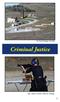 Tactical Range Facility Criminal Sgt. Major James Massey Range 11 Classes Offered Officer Safety & Field Tactics Officer Safety & Field Tactics in a Terrorism Environment Officer Safety & Field Tactics
Drug Use, Testing, and Treatment in Jails By Doris James Wilson BJS Statistician
 U.S. Department of Justice Office of Justice Programs Revised 9/29/00 Bureau of Justice Statistics Special Report May 2000, NCJ 179999 Drug Use, Testing, and Treatment in Jails By Doris James Wilson BJS
TABLE OF CONTENTS. Introduction... 1 Legislative History... 2 History of Correctional Regulations by Category:
 MARYLAND POLICE AND CORRECTIONAL TRAINING COMMISSIONS LEGISLATIVE AND REGULATORY HISTORY CORRECTIONAL TRAINING COMMISSION (With Changes Through 5/23/2005) TABLE OF CONTENTS Introduction... 1 Legislative
Identity Theft Reported by Households, 2005-2010
 U.S. Department of Justice Office of Justice Programs Bureau of Justice Statistics November 2011 Crime data brief NCJ 236245 Identity Theft Reported by Households, 2005-2010 Lynn Langton, BJS Statistician
This report provides the executive summary for Indicators of School Crime and Safety: 2014.
 1 Liability Report Number: LB-10-66 Release Date: August 6, 2015 Section Title: General Information Abstract School violence not only has a direct impact on students, but also on educators, parents, and
Rules of Department of Public Safety Division 75 Peace Officer Standards and Training Program Chapter 14 Basic Training Centers
 Rules of Department of Public Safety Division 75 Peace Officer Standards and Training Program Chapter 14 Basic Training Centers Title Page 11 CSR 75-14.010 Procedure to Obtain a Basic Training Center License...3
Iowa Law Enforcement Academy PERFORMANCE REPORT
 Iowa Law Enforcement Academy PERFORMANCE REPORT Performance results Achieved for Fiscal Year 2011 TABLE OF CONTENTS SECTION PAGE INTRODUCTION......................................... 3 AGENCY OVERVIEW......................................
3. The watchman style of policing involves the officer as: a. "observer" b. "soldier" c. "neighbor" d. "teacher"
 1. Desirable psychological qualities of police officers include: a. no emotional reactions, subservient, a service orientation b. logical skills, a people orientation, incorruptible c. quick to show emotion,
SPECIFICATION S-15 CERTIFICATION OF LAW ENFORCEMENT OFFICERS
 SPECIFICATION S-15 S-15 TITLE: CERTIFICATION OF LAW ENFORCEMENT OFFICERS This specification supplements Section 1010, 1011, and 1012 of the Regulations which provides for the issue of Basic, General, Intermediate,
For the 10-year aggregate period 2003 12, domestic violence
 U.S. Department of Justice Office of Justice Programs Bureau of Justice Statistics Special Report APRIL 2014 NCJ 244697 Nonfatal Domestic Violence, 2003 2012 Jennifer L. Truman, Ph.D., and Rachel E. Morgan,
Approximately 16.6 million persons or 7%
 U.S. Department of Justice Office of Justice Programs Bureau of Justice Statistics December 2013, NCJ 243779 Victims of Identity Theft, 2012 Erika Harrell, Ph.D. and Lynn Langton, Ph.D., BJS Statisticians
Larry (Chip) H. Monts Jr.
 Larry (Chip) H. Monts Jr. STRENGTHS: Twenty-two Year Law Enforcement Experience Analytical and problem solving skills Multitasking Organizational Skills Grant, Course, and Proposal Development Self-Motivated
Bail Agent Application General Liability Insurance
 Company Overview Company Name(s): Mailing Address: Physical Address(es): Telephone: Fax: Email: Contact Person: Total # Of Employees: Date Business Established: Federal ID Number (FEIN): License #: Business
SUBCHAPTER 9E - IN-SERVICE TRAINING PROGRAMS SECTION.0100 - LAW ENFORCEMENT OFFICER'S IN-SERVICE TRAINING PROGRAM
 SUBCHAPTER 9E - IN-SERVICE TRAINING PROGRAMS SECTION.0100 - LAW ENFORCEMENT OFFICER'S IN-SERVICE TRAINING PROGRAM 12 NCAC 09E.0101 PURPOSE In order to ensure a minimum level of proficiency in specific
POLICE SERIES. Promotional Line: 144
 POLICE SERIES Occ. Work Prob. Effective Last Code No. Class Title Area Area Period Date Action 3086 Police Officer 13 069 12 mo. 06/01/10 Rev. 2787 Police Corporal 13 069 12 mo. 06/01/10 Rev. 3081 Police
Application Trends Survey
 The premier provider of market intelligence Application Trends Survey SURVEY REPORT About This Study The Application Trends Survey is a product of the Graduate Management Admission Council (GMAC ), a global
JEFFERSON COUNTY EMERGENCY SERVICES AGENCY 419 Sixteenth Avenue Ranson, WV 25438 E-mail [email protected] Telephone 304-728-3287 Fax 304-728-6221
 419 Sixteenth Avenue Ranson, WV 25438 E-mail [email protected] Telephone 304-728-3287 Fax 304-728-6221 Emergency Medical Technician / Firefighter & Paramedic / Firefighter Applicants: To be eligible for
An estimated 17.6 million persons, or 7% of all
 U.S. Department of Justice Office of Justice Programs Bureau of Justice Statistics September 2015, NCJ 248991 Victims of Identity Theft, 2014 Erika Harrell, Ph.D., BJS Statistician An estimated 17.6 million
Temple University Police Academy
 Temple University Police Academy ACT 120 Information INFORMATION PACKET AND GUIDE TO APPLYING Temple University Police Academy Criminal Justice Training Programs Haines House, 2nd Floor 580 Meetinghouse
Sul Ross State University Rio Grande College. Accountability Report
 Sul Ross State University Rio Grande College Accountability Report January 2013 Accountability System, January 2013 1 of 20 Participation - Key Measures Enrollment 1. Fall headcount (unduplicated) Fall
In 2009, approximately 572,000 nonfatal violent crimes
 U.S. Department of Justice Office of Justice Programs Bureau of Justice Statistics Special Report March 2011 ncj 233231 Workplace Violence, 1993-2009 National Crime Victimization Survey and the Census
COMMUNITY ORIENTED POLICING SERVICES U.S. DEPARTMENT OF JUSTICE
 JULY 04 U.S. Department of Justice Office of Justice Programs National Institute of Justice Research for Practice Hiring and Keeping Police Officers COMMUNITY ORIENTED POLICING SERVICES U.S. DEPARTMENT
Criminal Justice Institute
 May 22, 2014 Dear Student: Thank you for your interest in obtaining your Florida certification as a law enforcement or correctional officer. The Equivalency-of-Training process enables one to become exempt
Irene Barath Ontario Police College Criminal Investigations Training Unit (519) 773-4458 [email protected].
 Ontario Police College: Present Responsibilities- Irene Barath Ontario Police College Criminal Investigations Training Unit (519) 773-4458 [email protected] Curriculum Vitae Full-time Instructor,
South Carolina Criminal Justice Academy - PoliceOne Academy Course Guide
 South Carolina Criminal Justice Academy - Course Guide Provider Course Title Hours Active Shooter 1 1 Active Shooter 2 1 Active Shooter 3 1 Active Shooter: Phases and Prevention 1 Active Shooter: Recognition
STATE OF OKLAHOMA COUNCIL ON LAW ENFORCEMENT EDUCATION AND TRAINING
 STATE OF OKLAHOMA COUNCIL ON LAW ENFORCEMENT EDUCATION AND TRAINING APPLICATION FOR INTERMEDIATE OR ADVANCED LAW ENFORCEMENT CERTIFICATION Law Enforcement Professional's Certification Program In order
LICENSED SOCIAL WORKERS IN THE UNITED STATES, 2004 SUPPLEMENT. Chapter 2 of 5. Who Are Licensed Social Workers?
 LICENSED SOCIAL WORKERS IN THE UNITED STATES, 2004 SUPPLEMENT Chapter 2 of 5 Who Are Licensed Social Workers? Prepared by Center for Health Workforce Studies School of Public Health, University at Albany
TITLE 79 - LAW ENFORCEMENT - POLICE STANDARDS ADVISORY COUNCIL
 - LAW ENFORCEMENT - POLICE STANDARDS ADVISORY COUNCIL - DEFINITIONS 001 Purpose - To clarify the language and intent of the mandatory training statutes in terms contained in Rules and Regulations and Operating
Temple University Municipal Police Academy
 Temple University Municipal Police Academy ACT 120 Information INFORMATION PACKET AND GUIDE TO APPLICATION Temple University Police Academy Criminal Justice Training Programs Bright Hall, Room #204 580
How To Get A Police Degree
 Police in America Chapter Five Police Officers I: Entering Police Work 2011 The McGraw-Hill Companies, Inc. All rights reserved. The Changing American Police Officer 40 years ago Most officers were white,
DEPARTMENT OF POLICE
 DEPARTMENT OF POLICE Mission Statement: The mission of the Department of Police is to consistently seek and find ways to affirmatively promote, preserve, and deliver a feeling of security, safety, and
Diablo Valley College Catalog 2014-2015
 ADJUS Obed Vazquez, Dean Social Sciences Division Faculty Office Building, Room 136 Possible career opportunities Law enforcement study prepares students for a career as a police officer, sheriff s deputy,
STATE OF NEVADA Department of Administration Division of Human Resource Management CLASS SPECIFICATION
 STATE OF NEVADA Department of Administration Division of Human Resource Management CLASS SPECIFICATION TITLE GRADE EEO-4 CODE SUPERVISORY CRIMINAL INVESTIGATOR II 43* D 13.241 SUPERVISORY CRIMINAL INVESTIGATOR
Atkinson Graduate School of Management
 Application for Admission Salem, Oregon Atkinson Graduate School of Management You may use this application form to apply for admission or you may apply online at www.willamette.edu/mba Note: We encourage
In 2013, U.S. residents age 12 or older experienced
 U.S. Department of Justice Office of Justice Programs Bureau of Justice Statistics Revised 9/19/2014 Criminal Victimization, 2013 Jennifer L. Truman, Ph.D., and Lynn Langton, Ph.D., BJS Statisticians In
Applications packets are available at the Newberg Public Safety Building 401 E. Third Street, Newberg, OR. 97132
 Newberg-Dundee Police Department P. O. Box 970 401 E. Third Street Newberg, OR 97132 503-538-8321 Brian T. Casey Chief of Police The Newberg-Dundee Police Department is currently recruiting for two, regular,
UNH Graduate Education Department. Quarterly Assessment Report
 First Quarter Assessment Report UNH Graduate Education Department Quarterly Assessment Report First Quarter i First Quarter Assessment Report Table of Contents Introduction... Section - Purpose of the
Homeland Security and Protective Services CIP 43.9999 Task Grid
 1 Secondary Task List 100 EXPLAIN AND PERFORM SAFETY PROCEDURES 101 Demonstrate knowledge of the rules of conduct for the school and classroom. 102 Identify safety and standard operation procedures. 103
Revised 4/15/03 th. Highlights. 68% of State prison inmates did not receive a high school diploma. and 53% of Hispanics
 U.S. Department of Justice Office of Justice Programs Revised 4/15/03 th Bureau of Justice Statistics Special Report January 2003, NCJ 195670 Education and Correctional Populations By Caroline Wolf Harlow,
TENNESSEE BUREAU OF INVESTIGATION 901 R.S. Gass Boulevard Nashville, Tennessee 37216-2639 (615) 744-4000 TDD (615) 744-4001
 Bill Haslam Governor TENNESSEE BUREAU OF INVESTIGATION 901 R.S. Gass Boulevard Nashville, Tennessee 37216-2639 (615) 744-4000 TDD (615) 744-4001 Mark Gwyn Director June 22, 2015 Ladies and Gentlemen: The
IACP Smaller Law Enforcement Agency Technical Assistance Program. Smaller Agency Conference Track 2015
 IACP Smaller Law Enforcement Agency Technical Assistance Program Smaller Agency Conference Track 2015 Academy to Promotion: Encouraging Officers to Train in Smaller Agencies Presented By: Chief Christopher
Florida Department of Education Curriculum Framework PSAV
 Florida Department of Education Curriculum Framework 2014 2015 Program Title: Program Type: Career Cluster: Florida Law Enforcement Academy Career Preparatory Law, Public Safety & Security Program Number
How To Write A National Police Task Force Report
 Testimony National Organization of Black Law Enforcement Executives (NOBLE) Before the President Barack H. Obama Task Force on 21 st Century Policing January 28, 2015 Co-Chairperson Charles H. Ramsey,
OCCUPATIONAL AND PROFESSIONAL LICENSING PRIVATE LAW ENFORCEMENT PRACTITIONERS REQUIREMENTS FOR LICENSURE
 TITLE 16 CHAPTER 48 PART 2 OCCUPATIONAL AND PROFESSIONAL LICENSING PRIVATE LAW ENFORCEMENT PRACTITIONERS REQUIREMENTS FOR LICENSURE 16.48.2.1 ISSUING AGENCY: Regulation and Licensing Department, Private
BILL J. PRIEST BUILDING 1402 CORINTH ST. DALLAS, TX 75215 214 565-1184 COURSE # DATE TIMES ROOM # COST WHO CAN ATTEND?
 DALLAS COUNTY SHERIFF'S TRAINING ACADEMY TRAINING SCHEDULE JANUARY, FEBRUARY, MARCH, 2012 TCLEOSE TRAINING UNIT 09/1/2011-08/31/2013 Please refer to www.tcleose.state.tx.us for the most up to date rules
REQUEST FOR TECHNICAL CHANGE. Criminal Justice Education and Training Standards Commission
 REQUEST FOR TECHNICAL CHANGE AGENCY: Criminal Justice Education and Training Standards Commission RULE CITATION: ALL RULES DEADLINE FOR RECEIPT: October, 0 NOTE WELL: This request when viewed on computer
In 2009, the nation s 411 publicly funded crime
 U.S. Department of Justice Office of Justice Programs Bureau of Justice Statistics Census of Publicly Funded Forensic Crime Laboratories, Matthew R. Durose, BJS Statistician Kelly A. Walsh, Research Associate,
Characteristics of Public and Private Elementary and Secondary School Teachers in the United States:
 NCES 2013-314 U.S. DEPARTMENT OF EDUCATION Characteristics of Public and Private Elementary and Secondary School Teachers in the United States: Results From the 2011 12 Schools and Staffing Survey First
New Horizons Regional Education Centers (C&T) Pacing Guide
 New Horizons Regional Education Centers (C&T) 1 st /Marking Period Course Introduction/ Introduction to New Horizons Handout & Lecture Safety and Safe Practices TDI8702-04.001; TDI8702-04.002; TDI8702-04.003
Certified Nursing Assistant Instructor/Program Coordinator
 V A C A N C Y A N N O U N C E M E N T Certified Nursing Assistant Instructor/Program Coordinator Position Description: Duties & Responsibilities: Helena College University of Montana, a comprehensive two-year
State of North Carolina Department of Correction Division of Prisons POLICY & PROCEDURES
 State of North Carolina Department of Correction Division of Prisons POLICY & PROCEDURES Chapter: A Section:.0900 Title: Employee Training Issue Date: 03/07/08 Supersedes: 10/05/07.0901 GENERAL It is the
PUBLIC SAFETY. Contract Partnerships. Technical/Professional Development (In-Service) courses. Program Costs and Registration
 PUBLIC SAFETY Area: Sacramento Regional Public Safety Training Center 5146 Arnold Avenue McClellan, CA 95652 Dean: Steven Segura Phone: (916) 570-5000 Counseling: (916) 484-8572 Website: www.arc.losrios.edu/safety
Student Demographics Table P.10 Academic Year 2010-2015. Johnson County Community College Headcount and FTE 2010-2015
 With more than 44,000 students enrolled in credit and continuing education classes each year, Johnson County Community College is the state's largest institution of higher education. Nationally known for
During 2010, U.S. residents age 12 or
 U.S. Department of Justice Office of Justice Programs Bureau of Justice Statistics National Crime Victimization Survey Criminal Victimization, 2010 Jennifer l. truman, Ph.D., BJS Statistician During 2010,
CRIMINAL JUSTICE PROGRAM REVIEW 08-09 ONE COLLEGE WAY BLYTHE, CA 92225
 CRIMINAL JUSTICE PROGRAM REVIEW 08-09 ONE COLLEGE WAY BLYTHE, CA 92225 EXECUTIVE SUMMARY CRIMINAL JUSTICE The Criminal Justice program services a critical community and student need in providing basic
DIABLO VALLEY COLLEGE CATALOG 2015-2016
 ADMINISTRATION OF JUSTICE ADJUS Obed Vazquez, Dean Social Sciences Division Faculty Office Building, Room 136 Possible career opportunities Law enforcement study prepares students for a career as a police
Identity Theft Trends
 PERSONAL PRIVACY Identity Theft Trends Privacy TouchPoint Services GIS CONTEMPORARY IDENTITY THEFT TRENDS Powered by Victims of Identity Theft, 2012 Erika Harrell, Ph.D. and Lynn Langton, Ph.D., BJS Statisticians
2014-2015 School Accountability Report
 Northwest Career and Technical Academy Clark County School District 8200 W. Tropical Parkway Kimberly S. Mangino, Principal Las Vegas, NV 89149 Grade Levels: 9-12 Ph: 702-799-4640, Fax: 702-799-4644 Website:
Executive Protection Course Fees = $5,995 (100% of costs due upon enrolment)
 Executive Protection Course Fees = $5,995 (100% of costs due upon enrolment) Description of Educational Program Executive protection is its own highly specialized field within the private security industry.
Basic Peace Officer Course (BPOC)
 Regional Training Academy The Capital Area Council of Governments Regional Training Academy, or CAPCOG RTA, provides In- Service training courses for licensed Peace Officers and the Basic Peace Officer
Department of Justice Training and Standards Bureau Update
 Department of Justice Training and Standards Bureau Update Michael Akselrud Compliance Officer Training and Standards [email protected] 608.266.7380 21 Jan 2015 Purpose To update law enforcement
550 CMR: MUNICIPAL POLICE TRAINING COMMITTEE
 550 CMR: MUNICIPAL POLICE TRAINING COMMITTEE 550 CMR 3.00: MASSACHUSETTS POLICE RECRUIT TRAINING REQUIREMENTS Section 3.01: Purpose and Scope 3.02: Definitions 3.03: Entry Level Training for Police Officers/Exemptions/Waivers/Expirations
ASSISTANT SCHOOL SAFETY AND EMERGENCY PREPAREDNESS DIRECTOR
 PERSONNEL COMMISSION Class Code: 5048 Salary Range: 46 (M2) ASSISTANT SCHOOL SAFETY AND EMERGENCY PREPAREDNESS DIRECTOR JOB SUMMARY Under the direction of the Chief of School Safety and Emergency Preparedness,
HEALTH INSURANCE COVERAGE STATUS. 2009-2013 American Community Survey 5-Year Estimates
 S2701 HEALTH INSURANCE COVERAGE STATUS 2009-2013 American Community Survey 5-Year Estimates Supporting documentation on code lists, subject definitions, data accuracy, and statistical testing can be found
$90,836- $107,648 Annual Salary (Range M20: Management 2014-2015 Salary Schedule). Starting placement is generally at Step 1.
 San Jose/Evergreen Community College District POLICE SERVICES LIEUTENANT Position #: 1600003 Required Documents: Associate's degree or coursework or training or education equivalent to an Associate's degree.,
Demographic Profile of Wichita Unemployment Insurance Beneficiaries Q3 2015
 Demographic Profile of Wichita Unemployment Insurance Beneficiaries Q3 2015 The Bureau of Labor Statistics defines an unemployed person as one 16 years and older having no employment and having made specific
The Instructional Program Review Narrative Report
 The Instructional Program Review Narrative Report 1. College: MERRITT COLLEGE Discipline, Department or Program: ADMINISTRATION OF JUSTICE Date: 10/9/12 Members of the Instructional Program Review Team: