
CURRICULUM AND INSTRUCTION
|
|
|
- Norman Palmer
- 10 years ago
- Views:
Transcription
1 CURRICULUM AND INSTRUCTION DOCTOR OF PHILOSOPHY Student Handbook

2 The University of Denver Curriculum and Instruction (CUI) Student Handbook provides prospective and admitted students with policies and procedures to assist them as they progress through the requirements of the PhD degree. In addition to this handbook, the student should also refer to the Morgridge College of Education Bulletin available at and the University of Denver Graduate Studies Policies available at and click on the green student tab. In some cases, college and university policies take precedence over the regulations of the CUI Student Handbook. It is the student's responsibility to read and understand University, College, and program norms relating to the degree programs, and to complete LIS Program requirements in a timely fashion. The University of Denver reserves the right to make changes in the regulations, courses, rules, fees or other changes in this handbook without advance notice. Inquiries concerning the Curriculum and Instruction Program should be directed to the Morgridge Office of Admissions, 1999 E Evans Ave., Denver, CO ; Phone and [email protected]. The University of Denver (Colorado Seminary) is an Equal Opportunity Institution. It is the policy of the University not to discriminate in the admission of students, in the provision of services, or in employment, on the basis of race, color, religion, sex, national origin, age, marital or veteran status, sexual orientation, or physical or mental disability. Inquiries concerning allegations of discrimination based on any of the above matters may be referred to the University of Denver Affirmative Action Office, 2020 E. Evans Ave., Room 104, Denver, CO , , or the U.S. Department of Education, Office of Civil Rights, 1244 Speer Blvd., Denver, CO

3 TABLE OF CONTENTS General Information Welcome... 4 Morgridge College of Education Mission and Vision... 5 Morgridge College of Education Affiliated Programs... 6 Curriculum and Instruction Overview Dispositions... 7 Doctor of Philosophy... 7 Cognate... 7 Course Requirements... 9 Course Descriptions Plan of Study Program Advisor Orientation Course Work Plan Course Work Plan Form Doctor Qualifying Portfolio Doctoral Comprehensive Examination Dissertation Guidelines Continuous Enrollment Policy Graduation Policies and Procedures University and Morgridge College of Education Policies and Procedures Professionalism in C&I University Honor Code Student Support and Dismissal Protocol DU C&I Portfolio Community Student Mailboxes Program Facilitators and Resources C&I Faculty and Staff Curriculum and Instruction Student Association MCE Office of Academic Services Professional Organizations Journals

4 WELCOME Welcome to graduate studies in Curriculum and Instruction (C&I) at the Morgridge College of Education (MCE). In addition to our nationally-renown faculty, we aim to provide you with cutting edge courses, research-based instructional strategies, and practical field experiences to realize your dream of becoming a highly effective scholar and educator. Throughout your career as a student in C&I, you will likely encounter many intellectual and professional challenges to your views on education. And we expect to be challenged and changed, as well, by your questions, insights, and lived experiences. Together, we will work toward the development of the most effective pedagogy, curriculum, scholarship, and care for students that is needed to address the current state of education in both private and public, formal and informal, educational settings. P. Bruce Uhrmacher, Ph.D. Professor Program Coordinator Curriculum and Instruction 344 Ruffatto Hall [email protected] 4

5 MORGRIDGE COLLEGE OF EDUCATION MISSION STATEMENT The Morgridge College of Education s mission is to be a force for positive change in the lives of individuals, organizations and communities through unleashing the power of learning. We accomplish our mission in four ways: through preparing highly competent, socially responsible, ethical and caring professionals to promote learning in diverse settings; through actively reaching out beyond our college to engage in learning partnerships with others; through contributing high-quality research to our respective fields, and through modeling excellence in all of our own educational programs. CURRICULUM AND INSTRUCTION MISSION Curriculum and Instruction (C&I) will help you develop into a bold leader and innovator equipped with cutting-edge research and technology skills, and creative educational visions based on established academic disciplines, moral imagination, and social responsibility. C&I will prepare you with the theoretical understanding and practical skills necessary to design, implement and evaluate all types of educational programs, including, but not limited to public and private schools, museums, zoos, and other formal and informal institutions. In keeping with the Morgridge College of Education P-20 mission, coursework and fieldwork opportunities are built around the themes of inclusive excellence, evidence-based reflective practice, 21st Century Teaching, Curriculum, and Technology, and 21st century learning and development, and policy and leadership. MORGRIDGE COLLEGE OF EDUCATION VISION The Morgridge College of Education at the University of Denver will be a global leader in innovative and effective approaches for promoting learning throughout the lifespan. Transcending traditional ideas about education and schooling, we will embrace a new, comprehensive vision of learning as a lifelong activity that involves the whole person and can occur through a variety of methods, anywhere and at any time. We will promote educational change and social equity and will provide leadership for the improvement of education, mental health, and information services and systems. 5

6 MORGRIDGE COLLEGE OF EDUCATION AFFILIATED PROGRAMS The Aesthetic Education Institute of Colorado (AEIC) Co-sponsored by Think 360 Arts Complete Education, Inc. and the Morgridge College of Education, this Institute is an intensive, hands-on workshop with interactive lectures led by professional artists and educators. During the institute, works of visual and performing art become the text for the exploration of dance, music, creative writing, theater, and the visual arts presented within a unifying theme. Contact Dr. Bruce Uhrmacher at or at [email protected] for more information. The Colorado Community-Based Research Network (CCBRN) This network connects university students and faculty with community organizations needing research and information. Since 1997, DU students have helped address pressing issues within our local communities such as environmental threats, school and educational decline, growing crime rates, immigrant issues and economic inequality. Community-based research is a unique tool for preparing students for lives of civic engagement and social responsibility. It allows them to apply the skills and knowledge gained in the classroom in situations that expand their understanding of the world, increasing their commitment to our democratic society. If you are interested in joining the network, please contact Dr. Nick Cutforth at or at [email protected]. 6

7 CURRICULUM AND INSTRUCTION OVERVIEW In Curriculum and Instruction (C&I), we are educators dedicated to helping you become the best leader and change agent possible. Whether you intend to become a professor, a master teacher, curriculum developer, or consultant, C&I can help you develop into a bold leader and innovator equipped with cutting-edge research skills, creative educational visions based on established academic disciplines, moral imagination, and social responsibility. We are committed to shaping a safe, sustainable, democratic, accessible, and socially just learning experience for all students in all educational settings. We are pleased to have you join us in this venture. A Curriculum and Instruction doctoral (PhD) degree is individually planned around the student s professional background and career goals. Many C&I students prepare for positions that require planning, consulting, research, materials development, policy-making, and teacher education and supervision. The program is also designed for classroom teachers and curriculum specialists who want to improve their knowledge and skills in making sound and justifiable instructional decisions for all students. Small seminars, group projects, discussions, independent projects, and practicums offer additional opportunities for an individualized and well-rounded program. Additionally, we encourage C&I students to consider enrolling in courses in other academic units in the Morgridge College of Education and across the wider university. Students in our program value a rigorous, challenging, and collegial learning environment. Our students are hard-working, determined, and reflective with an interest in serving the public good. These norms of behavior support the wider set of dispositions set out in the University Honor Code and help to maintain a learning environment of mutual respect, personal safety, and individual rights. A description of the University Honor Code can be found in the MCE Bulletin. Doctor of Philosophy The 90 quarter-hour doctoral program in C&I is designed for students who want to further their knowledge of teaching, learning, schools, and communities from academically grounded frameworks.. All PhD students take a wide range of courses in the areas of Curriculum, Instruction, Foundations, Diversity, and Research. Dissertation topics cover a broad assortment of theoretical and practical topics in domestic, as well as, international contexts. Many of our PhD students take faculty positions in upper level research institutions, while other graduates enjoy highly successful careers in the public school environment designing, implementing, and evaluating curriculum. We are proud of all of our graduates and welcome the opportunity to help all C&I students achieve their personal and professional goals. Cognate All PhD students select a cognate that is intended to add to their breadth and depth of knowledge in education. A well-designed cognate is organized around a student s professional interests and will add a unique academic and professional quality to the student s Curriculum 7

8 and Instruction degree. Graduate-level classes chosen in consultation with an academic advisor can be taken from (1) Curriculum and Instruction; (2) other divisions within the Morgridge College of Education; or (3) other departments/programs at the University of Denver. Students can develop a cognate around more traditional themes in curriculum and instruction, such as, but not limited to: diversity, teacher education, aesthetics, technology, urban education, and gifted education. Students are also encouraged to consider less traditional themes in curriculum and instruction, such as, but limited to: family studies, social work, library and information services, business, zoo/museum education, spirituality in education, and international education. Other students may prefer to take courses in an eclectic or liberal studies manner. The PhD cognate is 18 credit hours. 8

9 CURRICULUM AND INSTRUCTION DOCTOR OF PHILOSOPHY COURSE REQUIREMENTS (Students Entering ) All students are required to complete a course work plan with their program advisor. Doctoral students will take courses in Curriculum, Instruction, Diversity, Foundations, Research, and Dissertation credits. Students are also required to take courses in related studies or a cognate field. The minimum credit requirement for the program is 90 quarter hours. Courses marked with an asterisk (*) are required unless previously taken. Students may request the transfer of a maximum of 15 quarter hours (10 semester hours) above the master s degree. Please see the requirements and paper work for transferring credits at Transfers must be requested, approved, and paperwork completed in your first quarter of enrollment. All waived courses must be approved by your program advisor, and no reduction of credit hours results from waived, required courses. Substitutions are permitted with the consent of your program advisor. A. Curriculum (minimum 9 credits required) Qtr. Hrs. *CUI 4020 Introduction to Curriculum... 3 *CUI 4021 Models of Curriculum... 3 CUI 3995 Urban Education... 5 CUI 4022 Curriculum Theory into Practice... 3 CUI 4027 Implementing Curriculum: A Practicum... 3 CUI 4034 Curriculum and Cultural Context... 3 (CUI 4034 may be taken to fulfill Curriculum or Diversity ) CUI 4161 Ethnicity, Gender, and Diversity in the Curriculum... 3 (CUI 4161 may be taken to fulfill Curriculum or Diversity ) CUI 4170 The Arts in Education... 3 (CUI 4170 may be taken to fulfill Curriculum or Instruction ) B. Instruction (minimum 9 credits required) CUI 3995 Urban Education... 5 (CUI 3995 may be taken to fulfill Curriculum or Instruction ) CUI 4028 Literacy Instruction & Assessment... 3 CUI 4029 Issues in Literacy... 3 CUI 4031 Teaching and Learning Environments... 3 CUI 4032 Analysis of Teaching... 3 CUI 4033 The Practice of Teaching... 3 CUI 4035 Urban Education: Problems and Perspectives... 3 CUI 4038 Urban Youth Development... 3 CUI 4040 Teaching with Technology: Introduction to Theory and Practice

10 CUI 4042 Instructional Design & Web Development for Educators... 3 CUI xxxx Special Topics: Spirituality in Education and Psychology... 3 (This course may be taken to fulfill Instruction or Foundations ) CUI 4159 Educating Multiethnic Populations in the 21st Century... 3 (CUI 4159 may be taken to fulfill Instruction or Diversity ) CUI 4170 The Arts in Education... 3 (CUI 4170 may be taken to fulfill Curriculum or Instruction ) CUI 4403 Instructional Strategies for Gifted Learners... 3 CUI 4532 Culturally Responsive Pedagogy... 3 (CUI 4532 may be taken to fulfill Diversity or Instruction ) CUI 4870 Education in International Settings... 3 C. Diversity (minimum 6 credits required) CUI 4034 Curriculum and Cultural Context... 3 (CUI 4034 may be taken to fulfill Curriculum or Diversity ) CUI 4055 Human Rights and Education... 3 (CUI 4055 may be taken to fulfill Instruction or Diversity ) CUI 4159 Educating Multiethnic Populations in the 21st Century... 3 (CUI 4159 may be taken to fulfill Instruction or Diversity ) CUI 4160 Ethnicity, Class & Gender in Education... 3 CUI 4161 Ethnicity, Gender, and Diversity in the Curriculum... 3 (CUI 4161 may be taken to fulfill Curriculum or Diversity ) CUI 4532 Culturally Responsive Pedagogy... 3 (CUI 4532 may be taken to fulfill Diversity or Instruction ) (Some diversity courses can be found in the Higher Education Program) D. Foundations (minimum 6 credits required) CUI 4100 Sociocultural Foundations of Education... 3 CUI 4130 Philosophy of Education... 3 CUI xxxx Special Topics: Spirituality in Education and Psychology... 3 (This course may be taken to fulfill Instruction or Foundations ) CUI 4172 Aesthetic Foundations of Education... 3 CUI 4180 History of Education in the United States... 3 E. Research (19-33 credits required) Introductory Level (**May test out see MCE Bulletin for details) RMS 4910: Introductory Statistics**...5 RMS 4930: Empirical Research Methods** 3 RMS 4940: Structural Foundations of Research in Social Sciences...3 RMS 4941: Introduction to Qualitative Research**.4 MINIMUM REQUIRED.3-14 Intermediate Level Select from these courses: RMS 4945: Community Based Research in Urban Settings 3 RMS 4947: Arts-Based Research

11 RMS 4946: Ethnographic Research. 4 RMS 4921: Psychometric Theory.. 3 RMS 4932: Meta Analysis in Social Science Research 2 RMS 4931: Survey Design and Analysis 3 RMS 4911: Correlation and Regression [or PSYC 4300 (5hrs)]. 4 RMS 4912: Analysis of Variance (ANOVA) [or PSYC 4330 (5 hrs)]. 5 RMS 4959: Topics in Research Design SOWK 5402: Qualitative Research Methods. 4 SOWK 5405: Qualitative Data Analysis. 4 STAT 4680: Sampling Theory and Applications. 4 STAT 4810 Nonparametric Statistics 4 MINIMUM REQUIRED Advanced Level Select from these courses: RMS 4929: Topics in Psychometrics RMS 4914: Structural Equation Modeling. 5 RMS 4913: Multivariate Analysis 5 RMS 4919: Topics in Statistics 1-5 RMS 4915: Hierarchical Linear Modeling.. 4 MINIMUM REQUIRED Program Requirement Select from these courses or other research courses approved by program advisor: CUI 4050 Curriculum and Instruction Research Seminar... 3 CUI 5994 Seminar in Dissertation Organization and Design MINIMUM REQUIRED... 5 F. Cognate (minimum 18 credits) A cognate in Curriculum and Instruction should add to your breadth and depth of knowledge in education. A well designed cognate is organized around a student s professional interests and will add a unique academic and professional quality to your Curriculum and Instruction degree. See page 7 of this handbook for more information. G. Dissertation Credits (minimum of 10 credits required) Dissertation hours cannot be taken until the Comp Exam has been passed. CUI 5995 Dissertation Research Students must be registered for at least 1 dissertation credit per quarter (fall, winter, and spring) until graduation. May exceed the minimum requirement of 10 credits. (See MCE Dissertation Credit Policy and DU Continuous Enrollment policy). 11
![4 RMS 4912: Analysis of Variance (ANOVA) [or PSYC 4330 (5 hrs)]. 5 RMS 4959: Topics in Research Design.. 1-5 SOWK 5402: Qualitative Research Methods. 4 SOWK 5405: Qualitative Data Analysis.](/docs-images/43/2959342/images/page_11.jpg "4 STAT 4680: Sampling Theory and Applications. 4 STAT 4810 Nonparametric Statistics 4 MINIMUM REQUIRED... 8-9 Advanced Level Select from these courses: RMS 4929: Topics in Psychometrics.")
12 SUMMARY OF CREDITS A. Curriculum... 9 B. Instruction... 9 C. Diversity... 6 D. Foundations... 6 E. Research F. Cognate G. Dissertation... min 10 H. Electives Minimum Total Hours

13 COURSE DESCRIPTIONS The following are descriptions of Curriculum and Instruction, and other Morgridge College of Education courses you might take as part of your degree program. Some of the classes are offered only certain quarters and/or years. Check the DU website under course schedules to find current offerings. CUI 3995 CUI 4020 CUI 4021 CUI 4022 CUI 4027 CUI 4028 Urban Education 5 qtr. hrs. Historical, political and sociological influences that shape and socially construct urban schools. Characteristics, opportunities, and needs of students in urban schools and examples of current effective practice. Generally offered every other year in spring quarter. Introduction to Curriculum 3 qtr. hrs. Introduces curriculum theory and curriculum as a field of study; includes study of issues such as standards, cognition, diversity, ecology, and social justice, among others. Generally offered in fall quarter. Models of Curriculum 3 qtr. hrs. Reflects on ways various curriculum orientations may resolve modern issues or problems, with students independent pursuit of one or two orientations in depth; orientations examined include cognitive pluralism, developmentalism, rational humanism, and reconceptualism, among others. Recommended prerequisite: CUI Generally offered in winter quarter. Curriculum Theory into Practice 3 qtr. hrs. Helps students move from theoretical concepts and decisions involved in curriculum development to actual construction of curricula; survey of potential components encompassed in a variety of curricula followed by participation in designing a curriculum as a member of a student team; final facet requires students to develop a curriculum. Prerequisites: CUI 4020 and 4021 or instructor s permission. Generally offered in spring quarter. Implementing Curriculum: A Practicum 3 qtr. hrs. Opportunity to experience authentic role of curriculum on site; work at the Denver Zoo, the Denver Museum of Nature and Science, other museums and school sites to develop and implement curriculum. Generally offered every other year in spring quarter. Literacy Instruction and Assessment 3 qtr. hrs. Organized around a developmental continuum for literacy acquisition. Addresses best research-based practices that allow teachers to assess students abilities and to select appropriate instructional strategies leading to 13

14 communicative competence for all children. Generally offered in summer quarter. CUI 4029 CUI 4031 CUI 4032 CUI 4033 CUI 4034 CUI 4035 Issues in Literacy 3 qtr. hrs. Prepares educators to participate thoughtfully and critically in often-contentious discourse about literacy. Examines the research base that supports sound policy and practice regarding literacy instruction for all children. Generally offered in summer quarter. Teaching and Learning Environments 3 qtr. hrs. Takes a disciplinary approach (e.g. sociological, historical, philosophical, anthropological) to the analysis of teaching and learning environments in response to broad questions such as: What are effective teaching and learning environments? For whom and under what circumstances? How can we create such environments? Generally offered selected years in spring quarter. Analysis of Teaching 3 qtr. hrs. Provides a systematic introduction to the research base that characterizes effective practice and to the array of research methods that can be employed to study teaching and teacher development. Generally offered selected years in spring quarter. The Practice of Teaching 3 qtr. hrs. Course explores personal, conceptual, and empirical understanding of teaching practice. Topics addressed have included: metaphors for teaching practice, best practices for equity and social justice, and professional development practices. Generally offered selected years in spring quarter. Curriculum and Cultural Context 3 qtr. hrs. This course will address the influence of cultural, political, sociological, and economic factors on curriculum at the instructional, situational, societal, and idealogical levels. Students should be interested and willing to explore these issues through readings and discussion. We will be exploring various perspectives, including our own, which inform the discussion on this critical area of education. Generally offered in summer quarter. Urban Education: Problems and Perspectives 3 qtr. hrs. Focuses on the complex problems and unique possibilities that face teachers in culturally diverse urban schools. Students will consider both theoretical perspectives and practical, applied approaches as they explore the family, community and school environments, as well as their relationships to the academic success of children and youth in urban schools. Generally offered in summer quarter. 14

15 CUI 4038 CUI 4040 CUI 4041 CUI 4042 CUI 4043 CUI 4044 CUI 4045 Urban Youth Development 3 qtr. hrs. This course examines urban youth development from several perspectives, including the social-psychological, the cognitive/creative, the physical and health-related, and the philosophical. We will explore the emerging field of youth development in an urban context, integrate theory and practice, and analyze youth policies and their implications. Generally offered every other year in spring quarter. Teaching with Technology: Intro to Theories and Practices 4 qtr. hrs. This course will provide resources, practice, and guidance to teachers who wish to improve their ability to use technology effectively. The objective is to give the students experience with hardware, software, teaching techniques, and technology management strategies. Generally offered in summer quarter. School and Curricular Reform 3 qtr. hrs. A look into school reform movements, why most fail and only a few succeed. Instructional Design & Web Development for Educators 3 qtr. hrs. Introduces presentation software, basic HTML, and web page development software. Focuses on various Learning, Instructional Design, and Learning Style Theories and how they relate to the development of technology supported pedagogy. Students will create individualized instructional web pages for use in practice. Development of Technology Enhanced Educational Environments 3 qtr. hrs Utilizing emerging Learning Theories and complex Instructional Design Theories, students will move into advanced educational web page development including designing with style sheets and layers. Several customized technology mediated lessons or professional projects will be created for use in practice. Various tools, designed to enhance learning environments, will be explored. Technology in Assessment 3 qtr. hrs. Applies a variety of evaluation criteria to technology mediated assessments created by students. Students will reflect on and appraise the use of electronic portfolios in education. They will design professional electronic portfolios of their work. Technology Practicum 2 qtr. hrs. Under the supervision of the professor, students will generate technological applications relevant to their own work settings using ideas and concepts learned in CUI Generally offered in summer quarter. 15

16 CUI 4046 CUI 4050 CUI 4054 CUI 4058 CUI 4100 CUI 4130 Technology Leadership 3 qtr. hrs. Explores the role of ethics, values, social, legal, and power issues associated with technology in education. Analyzes how technology is transforming learning, equitable distribution of information, and the implications for providing optimal education to diverse learning populations. Curriculum & Instruction Research Seminar 0-3 qtr. hrs. Students write proposals and learn about current relevant research in curriculum. Students learn about the proposal and dissertation process as well as current research in curriculum. Generally offered in winter quarters. Teaching About the Holocaust: K-12 3 qtr. hrs. An introductory course for K-12 teachers who want to learn about and teach aspects of the Holocaust. This course will examine the Holocaust from the standpoint of each of the players involved: perpetrators, victims, bystanders, resisters, survivors, rescuers, liberators, revisionists, and deniers. Generally offered only in selected years. Consult your advisor for availability. Teacher as Researcher 3 qtr. hrs. Emerging philosophical and methodological issues that arise when school practitioners undertake research within their own sites; range of research traditions including quantitative, statistical research and qualitative methodologies; mastering relevant skills and accessing resources for students to be better prepared to conduct their own inquiries and understand and solve problems. Generally offered in winter quarter. Sociocultural Foundation of Education 3 qtr. hrs. Examination of the expanded conceptions of diversity to include differences based on ethnicity, biethnicity, and multiethnic identity; social class, differentlyabled, age, gender, and sexual orientation; implications of terrorism on America for ethnically diverse populations in our schools and on educational establishments around the world; attention to the interactions of ethnicity with social class and gender identifications in the school setting; implications of the learning of another language as well as the impact of language diversity in our schools; consideration of new conceptual frameworks for multicultural and diversity education for educators for the 21 st century. Philosophy of Education 3 qtr. hrs. Focuses on 3-4 philosophers and examines the contributions their philosophical ideas have on education. Philosophers studied have included John Dewey, Cornel West, Nel Noddings, and Maxine Greene. Generally offered every other year in spring quarter. 16

17 CUI 4153 CUI 4155 CUI 4159 CUI 4160 CUI 4161 CUI 4162 Practicum in Curriculum and Instruction 2-5 qtr. hrs. Designed to fit the educational needs of the individual student who may choose from a wide variety of practicum (internship) experiences, including teaching, curriculum development, museum internships or research projects in curriculum and instruction. Special Topics 1-10 qtr. hrs. Special topics in the field of education. Educating Multiethnic Populations for the 21 st Century 3 qtr. hrs. Emphasizing a worldwide view in considering how education should be delivered to children and youth for life in the 21 st century, especially since the World Trade Center Disaster of September, It is incumbent on those in teaching to find creative policies for working together with those in government and business, strategies that acknowledge our human diversity within and overall context of equality and peacefulness. This begins with raising social justice issues in the classroom in ways that encourage students to openly examine difficult and personally challenging materials, facilitating communication and understanding between members of diverse and unequal social groups. Ethnicity, Class & Gender in Education 3 qtr. hrs. Ethnicity, Class & Gender in Education applies the concepts and theories of social science disciplines - sociology, social psychology, anthropology, historical perspectives and philosophical orientations - to the inclusive examination of the issues of racism, classism, sexism, and homophobia in education. This course seeks to conceptualize ethnicity, gender and social class as interactive systems, not as separate and independent variables, that impact students, teachers, school systems and the educational enterprise. We examine educational systems and practices that historically have disadvantaged women and peoples of color and discuss strategies and techniques for empowerment of the members of these groups. Ethnicity, Gender & Diversity in the Curriculum 3 qtr. hrs. The focus of this course is to examine and explore the complexities of teaching in contemporary educational settings in which the forces of sexism, racism and classism are found. In our society where wide diversity characterizes our student population, it has become an imperative to recognize difference and relate effective teaching to these conditions. Major trends and influences that are impacting the school curriculum are explored. Teaching in an Era of Terrorism 3 qtr. hrs. Emphasizes a worldview for educating children growing up in the climate of worldwide terrorism and uncertainty. Creative strategies that acknowledge out human diversity within an overall context of equity and peacefulness can be the 17

18 basis for the educational enterprise to combat the stresses that global terrorism poses. Guiding this course are three over-arching positions: a worldwide view of children, families, and education; a socio-cultural perspective; and qualitative approaches to research designs and methods used to support the social scientific rationale advocated. We will examine examples, accounts and vignettes about children's lives in communities all over the world, to underscore that the presence of terrorism exists all over the globe. CUI 4170 CUI 4172 CUI 4180 CUI 4181 CUI 4182 The Arts in Education 3-5 qtr. hrs. This seven day institute is designed to engage participants in a challenging exploration of the creative process through workshops with professional artists in the disciplines of dance, visual arts, creative writing, music, and theatre, and to provide a greater understanding of the theory and practical applications of school reform. Generally offered in summer quarter. Aesthetic Foundations of Education 3 qtr. hrs. Educational enterprise from aesthetic viewpoints; examination of a number of aesthetic theories and exploration of implications for curriculum, teaching, and evaluation. Generally offered in summer quarter. History of Education in the United States 3 qtr. hrs. Traces historical context and development of K-12 schools in the United States from initial discovery of North and South America by Europeans to the present; understanding through examination of central issues that strongly influenced our current educational systems evolution of schools, religion, social and political reform, women s issues, nationalism and ethnicity, and industrialization of the nation and world. Generally offered every other year in fall quarter. Reggio Emilia: Philosophy/Approach and Applications 3 qtr. hrs. The concept of One Hundred Languages of Children provides the philosophical basis for the Early Childhood approach of Reggio Emilia. Grounded in the belief of valuing the child, this distinctive, innovative approach fosters children s intellectual development through a systematic focus on symbolic representation. Young children are encouraged to explore their environment and express themselves through many languages, or modes of expression including words, movement, drawing, painting, sculpture, shadow play, collage, and music. This course will examine the philosophical underpinnings of the approach then support student application of concepts in classrooms for young children through field experience and projects. Generally offered only in selected years. Consult your advisor for availability. Reggio Emilia: Documentation & Projects 3 qtr. hrs. The Reggio Emilia philosophy and practice provides a foundation for children s development, which emphasizes the whole child. Documentation is a process 18

19 which enables teachers and children to reflect upon their experiences and to communicate to others what they have been engaged in learning. In emergent or negotiated learning, the project, which incorporates symbolic languages, promotes intellectual and social development through the co-construction of knowledge. This course will examine the theoretical structures of these two aspects of the Reggio approach and promote student application of concepts through field experiences and a workshop approach. Generally offered only in selected years. Consult your advisor for availability. CUI 4183 Reggio Emilia: Observation and the Environment: Preparing for Possibilities 3 qtr. hrs. Explore the role of the environment and the power of observation in an intensive workshop format. Discover how the environment can become not just a beautiful backdrop, but also an active component of the learning triad. The design and use of space encourages encounters, communication, and relationships. Each bit of space has both an identity and purpose and creates the potential for meaningful learning experiences. Develop skills in the art of observation as you examine the play of children. These observations enable educators to guide children to new discoveries and the formation of theories. This course will focus on the ideas of the schools of Reggio Emilia while examining applications in a variety of settings. Generally offered only in selected years. Consult your advisor for availability. CUI 4184 CUI 4185 CUI 4400 Reggio Emilia: Special Topics 3 qtr. hrs. In-depth analysis and discussion of special topics in the philosophies and practices of Reggio Emilia. Generally offered only in selected years. Consult your advisor for availability. Reggio Emilia: Action Research 3 qtr. hrs. For this course students will explore how on-going teacher led research influences the teaching and learning in the schools of Reggio Emilia, Italy. Students will experience how Action Research questions can lead to more effective teaching. Students will also explore how teachers in Reggio Emilia connect their on-going research to documentation and communication of student learning. Generally offered only in selected years. Consult your advisor for availability. The Nature and Needs of Gifted Learners 3 qtr. hrs. This course is designed to provide participants with an understanding of 1) conceptual foundations and definitions of giftedness, 2) how intelligence, creativity, and non-intelligence factors are related to giftedness, 3) the nature, development, types, and needs of gifted individuals, 4) principles and issues in the identification of gifted individuals, and 5) the major issues and tensions in the education of gifted and talented individuals. Lectures, discussions, and other 19

20 class activities and assigned readings and projects will include topics such as the history and nature of the giftedness construct; theories of intelligence and creativity and their relationship to conceptions of giftedness; types of giftedness; the diversity of gifted individuals and their personal and educational needs; the role of identification in the education and development of gifted children and youth; and purposes and perspectives in gifted education. CUI 4401 CUI 4402 CUI 4403 Psychological Aspects of Giftedness 3 qtr. hrs. The psychological development of gifted children is examined through a study of current theories, models, research, and case histories. Understanding of psychological development creates a foundation for applications and practices that nurture the psycho-social-emotional development of gifted individuals. Specific topics include the psychological nature and needs of the gifted; perfectionism, stress, and underachievement; special issues for gifted boys and gifted girls; highly gifted; and pertinent theories of psychological development. Emphasis is placed on synthesis of theories and application to specific situations. Curriculum for Gifted Learners 3 qtr. hrs. This course is designed to provide participants with an understanding of the conceptual foundations in the design and development of curriculum for gifted and talented students. Includes theories, models and processes for curriculum modification and curriculum design; strategies for adapting educational content, process, product, and learning environment based on the educational characteristics and needs of gifted learners; and curriculum design and development approaches that are effective in the intellectual and personal growth of gifted and talented learners. Content in this course is aligned with appropriate instructional strategies and techniques recommended for use with gifted and talented learners. Lectures, discussions, class activities, assigned reading and projects include topics such as a general overview of curricular principles and perspectives; critical analysis of general curriculum; issues of diversity in curriculum development and modification including cultural congruence; recommended models of curriculum development for gifted and talented learners; and national trends in gifted education. Prerequisite: CUI 4400 and CUI 4401 or instructor s permission. Instructional Strategies for Gifted Learners 3 qtr. hrs. This course provides a basic understanding of how to adapt curriculum for gifted learners through various instructional strategies. Strategies studied include: acceleration, enrichment, differentiation, compacting, grouping, independent study, and service learning. By selecting instructional strategies based on assessed learner needs, educators can reach many types of gifted learners in their classrooms including gifted students of poverty and gifted learners of cultural and ethnic diversity. The objectives of this class are that participants: know about and be able to define instructional strategies that meet assessed 20

21 academic and affective needs of gifted learners and be able to adapt curriculum for gifted learners using learned instructional strategies. Prerequisite: CUI 4400 and CUI 4401 or instructor s permission. CUI 4404 CUI 4405 CUI 4406 CUI 4407 Twice-Exceptional Students 3 qtr. hrs. The purpose of this course is to acquaint the student with the various areas of exceptionalities typically encountered with gifted students and to provide classroom related techniques to assist the teacher in identifying and working with twice-exceptional children in an effective manner. Environmental, behavioral, motivational, emotional and educational needs are addressed. Legal responsibilities, parent communication and staff development will be emphasized. Prerequisite: CUI 4400 and CUI 4401 or instructor s permission. Practicum in Gifted Education 1-3 qtr. hrs. Students wishing to earn credit for the Practicum in Gifted Education must complete an experience in three of the five areas (Teaching, Assessment, Administration, Research, or Policy). Students must submit a Practicum Proposal outlining the intended practicum experiences. This Proposal must be approved by the practicum faculty supervisor when the practicum experiences are begun. Prerequisite: CUI 4400 and CUI 4401 or instructor s permission. The Young Gifted Child 3 qtr. hrs. Emphasis on the developmental and early education of gifted children under age 8. Specific topics include differences in the cognitive, social, and emotional development of young gifted children compared to their age peers; issues related to uneven development; socialization of young gifted children; maintenance of fluid abilities through educational program design; and parenting young gifted children. Prerequisite: CUI 4400 and CUI 4401 or instructor s permission. Current Issues in Gifted Education 3 qtr. hrs. This course focuses on the screening and selecting of gifted and talented students. It is designed for practicing professionals - teachers, counselors, psychologists, and administrators - who must make decisions about the identification and serving of gifted and talented students. Course uses multiple assessments, both quantitative and qualitative, to identify gifted students within an increasingly diverse population (including culturally- and ethically-diverse, high-potential, linguistically-different students with unique affective needs as well as high-potential economically-disadvantaged students). Students will use data to diagnose educational needs, prescribe appropriate educational strategies and to incorporate appropriate identification strategies for identifying gifted and talented students. Legal responsibilities and parent communication as well as staff development are emphasized. Students are required to develop an identification model based on relevant theory and current practices to be used in 21
22 their particular setting. Prerequisite: CUI 4400 and CUI 4401 or instructor s permission. CUI 4408 Creativity: Theory and Practice 3 qtr. hrs. The essence of innovation is creativity, in thought, process and outcome. Classic and current theories provide a foundation for analysis of the concept of creativity. This course is designed to provide participants with an understanding of 1) the conceptual foundations and definitions of creativity; 2) how intelligence, creativity, and non-intellective factors are related to the constructs of giftedness; 3) documented brain research underlying exceptional cognition and/or creativity; 4) principles and issues in the identification and appropriate programming for creative individuals; and 5) the multiple perspectives and manifestations of creativity. Salon discussion groups, lectures, class activities and assigned readings and projects focu on the history and nature of the construct of creativity, theories of creativity, the role of innovation and transformation, assessment and measurement tools, environmental support of the creative process and creativity, and teaching and learning applications. Prerequisite: CUI 4400 and CUI 4401 or instructor s permission. CUI 4410 Program Development, Leadership, and Communication in Gifted Education 3 qtr. hrs. This course emphasizes the concepts and practices involved in development and management of school- and district-based programs for the special education of gifted and talented children and youth. The course leads to in-depth understanding of program components and systems, program planning and evaluation, program leadership, advocacy in gifted education, and communications. In addition, emphasis is placed on planning and development of staff development in relation to gifted children. This course will include extensive in-class discussion and field applications. CUI 4411 CUI 4417 CUI 4532 Workshop: Gifted and Talented Education 1-2 qtr. hrs. Designed to provide an overview of the education of gifted and talented students, including definitions of gifted and talented students, characteristics and educational needs, common identification methods, and concepts and common practices in curriculum and instructional differentiation. Independent Study: Gifted Education 1-3 qtr. hrs. Prerequisite: Instructor s permission Culturally Responsive Pedagogy 3 qtr. hrs. This course will examine the intricate web of variables that interact in the effort to create culturally responsive pedagogy. It will examine the need and establish a definition for culturally responsive pedagogy; and will include an examination of one s conception of self and others, conception of social relations, and 22
23 conception of knowledge teaching and learning in a culturally diverse context. Furthermore, it will cultivate the practice of culturally responsive teaching as well as explore the reality of implementing cultural responsive pedagogy in an era of standardization. In sum, this course will help practicing teachers acquire the dispositions, cultural knowledge, and competencies to adapt their curriculum and instructional skills for culturally responsive classroom practice. CUI 4870 CUI 5991 CUI 5994 CUI 5995 RMS COURSES Education in International Settings 3 qtr. hrs. Objectives of this course include: viewing education in the 21st century as crosscultural and international; examining the role of schooling in shaping national identity and citizenship in nation-states around the globe; and identifying promising practices and exemplary curriculum material for teaching crosscultural perspectives and world awareness. Independent Study Arr Special projects in the field of education for the PhD students. Prerequisite: permission of instructor and program advisor. Seminar in Dissertation Organization and Design 2-5 qtr. hrs. Individualized assistance in developing the dissertation topic, issue, problem; guidance in preparation for proposal orals and application to the Institution Review Board (IRB), direction for dissertation chapter organization, writing and completion. This seminar is targeted for the student who needs support in completing the dissertation. Dissertation Research Arr A minimum of 10 hours are required, depending on the length of time it takes the student to complete his/her dissertation. The latest course descriptions can be found on the registrar s website under Courses & Schedules/Course Descriptions. Enter the current quarter and choose Research Methods and Stats from the Subject drop-down menu. 23
24 PROGRAM ADVISOR When a student is admitted to the program, a faculty advisor is assigned. Students should consult with their advisor to determine which courses and options are most appropriate for the student's interest and future career goals. It is the responsibility of the student to make appointments to see his or her advisor at least once per academic year. Generally, faculty professional responsibilities include teaching, research, and service. Most faculty are on a nine-month contract during the regular academic year. They may be available to work with students during the summer at their discretion, but this time period is normally reserved for their own research and related activities. ORIENTATION Before the beginning of the fall quarter, students are strongly encouraged to attend the Morgridge College of Education and the C&I orientation. These sessions provide vital information regarding policies and procedures in relation to your program and your responsibilities as a University of Denver graduate student. It also gives you an opportunity to meet other students, faculty and staff members. COURSE WORK PLAN Completing a graduate degree requires a plan of study that enables one to achieve success in a timely fashion. The student is responsible for working with a program advisor to develop a course work plan to complete the student s specific program. The deadline for completion of the doctoral degree is seven years. The Course Work Plan provides students with an opportunity to design their course of study to meet the degree requirements of the C&I doctoral program. This plan enables the student to develop a schedule for taking courses and practicum experiences. By looking at the annual University of Denver class schedule on-line through the Registrar s website ( each student should be able to work with his/her program advisor to devise a course plan to complete the degree requirements. It is the student s responsibility to meet with a program advisor during the student s first quarter of study to ensure that the student understands the degree requirements and secures the program advisor s signature on the form. It is strongly recommended that the student meet with his/her advisor at least once during the academic year. The original course work plan will remain in the student s file in Curriculum and Instruction. The student s program advisor must approve changes to the course work plan. The course work plan must be completed, approved, and on file in Curriculum and Instruction by the end of the second quarter of enrollment. However, the request to transfer credits must be approved in the student s first quarter of enrollment. 24
25 CURRICULUM AND INSTRUCTION DOCTOR OF PHILOSOPHY COURSE WORK PLAN (Students Entering ) NAME STUDENT # ADDRESS PHONE DATE Please discuss with your advisor the course plan most appropriate for your schedule. Substitutions are acceptable with advisor approval. Students must receive a C+ in coursework to be counted toward the degree (and a grade-point average of 3.0 or better). A. CURRICULUM (9 credits) Course Number Credit Hours Expected Term of Completion Introduction to Curriculum CUI Models of Curriculum CUI B. INSTRUCTION (9 credits) C. DIVERSITY (6 credits) 25
26 D. FOUNDATIONS (6 credits) Course Number Credit Hours Expected Term of Completion E. RESEARCH INTRODUCTORY (3-14 credits) ** may test out RMS 4910: Introductory Statistics** RMS 4930: Empirical Research Methods** RMS 4940: Structural Foundations of Research in Social Sciences RMS 4941: Introduction to Qualitative Research** 5 hrs. 3 hrs. 3 hrs 4 hrs. E. RESEARCH INTERMEDIATE (8-9 credits) E. RESEARCH ADVANCED (3-5 credits) 26
27 E. PROGRAM REQUIREMENT (5 credits) Course Number Credit Hours Expected Term of Completion F. COGNATE (18 credits) G. DISSERTATION (10 credits) Dissertation Research CUI 5995 H. ELECTIVE (2-16 credits) 27
28 SUMMARY A. CURRICULUM (9) B. INSTRUCTION (9) C. DIVERSITY (6) D. FOUNDATIONS (6) E. RESEARCH (19-33) F. COGNATE (18) G. DISSERTATION (min 10) H. ELECTIVE (2-16) TOTAL (90)* *Please note: the numbers in each category above are either a minimum or range of credit hours required. As noted in the C&I handbook, students must also pass other components as part of their degree requirements. Student s Signature Advisor s Signature Cognate Advisor s Signature (if applicable) Credit Hours 28
29 DOCTORAL QUALIFYING PORTFOLIO Portfolios have been adopted as formative and summative assessments for K-12 classrooms, academic and professional programs, and even state licensure programs. Curriculum and Instruction faculty have chosen to implement portfolios as an occasion to assess student progress (not just knowledge) and to assess program and career goals. The portfolio is discussed with your program faculty at an oral presentation and this procedure takes the place of the qualifying exam. Your portfolio should represent your best professional effort. Begin early, and feel free to work with peers in composing all portions. Also, consult with your advisor with questions about the process or content of your portfolio. Portfolio Process Your portfolio is due after your first calendar year in the program. Some exceptions are allowed; please consult with your advisor. The Portfolio Cover Sheet and Academic Paper Caption Forms are necessary for your portfolio presentation. They are available online here, under Curriculum & Instruction Portfolio Forms. Begin compiling your portfolio as soon as possible, in consultation with an advisor. Your portfolio is due one week in advance of your portfolio defense. Your portfolio contents will be reviewed by C&I professors, and feedback will be provided at the portfolio defense. Your overall progress will be summarized as: Excellent, Very Good, Adequate, or Unsatisfactory. If you receive an Unsatisfactory recommendation, you will either construct a plan leading to Adequate performance, or be counseled out of the program. After grading, return the Portfolio Cover Sheet to the Office of Admissions and Enrollment Services. You are responsible for scheduling your oral and for reserving a room. Oftentimes, a defense is conducted in a professor s office. Portfolio Contents Use the Qualifying Portfolio Cover Sheet and Academic Paper Caption Forms, and follow the correct format. Your portfolio will consist of your curriculum vitae, a statement of purpose, and two academic papers. Curriculum Vitae. A curriculum vitae (CV) is like a fully-elaborated resume. It lists all the relevant professional activities in which you have engaged. As with a resume, it is up to you to choose a format that best represents your experiences. Some samples of section 29
30 headings include: Research Interests, Program Development, Administration, Teaching, Grants, Publications, Presentations, and Honors/Awards. See your program advisor for help or examples. Statement of Purpose. In five pages or less (double-spaced, 12-point font), write a statement of purpose that includes your philosophy of education and your research interests. Your research interests should relate to your philosophy of education, and should take into account your current educational concerns, your cognate, and what you have learned in your C&I courses that has shaped your thinking about the topic. The statement of purpose may also include your most current thinking about your dissertation. Academic Papers. You will submit two of your strongest papers for review. Papers should be chosen from courses you have taken, but should be revised/revisited with a different audience in mind. Paper length is not important. You should choose those which demonstrate your grasp of curricular and instructional issues and which reflect your ability to conceptualize, analyze, and synthesize well. Each paper must be accompanied by a Caption Form. In discussing your reasons for submitting the paper, highlight strengths the paper reveals, as well as its relevance to your intellectual interests and your program progress. Further Advice Begin your portfolio early, so you do not have to submit a document that is rushed or incomplete. Your portfolio should represent your best professional effort. We encourage you to work with peers in composing all portions of the portfolio. You might find it especially helpful to work with others on your statement of purpose. Also, you should consult your advisor about any questions you have about the process, or about which papers to submit. You should not expect professors to proofread your papers before you submit them. The portfolio is as much a process as it is a product. We hope that you find it a valuable process that will help you summarize your experiences and will provide direction as you move toward your dissertation. 30
31 DOCTORAL COMPREHENSIVE EXAMINATION Purpose The purpose of the Doctoral Comprehensive Examination is to allow students to demonstrate ability to integrate the information and knowledge of curriculum theory and practice (including research design and methods) acquired during the degree program. The exam occurs near or at the end of the course work. Comprehensive exams for C&I students are offered in the fall, spring and summer quarters. Each student must register in advance for the comprehensive exam according to Office of Academic Services. Details can be found at Format The test will be taken over a two-day time period with a different set of essay style questions for each day. You are expected to organize your writing to give equal time to each question and to include time to proof your answers. Some questions will be required and there will be some choice among others. Generally, you will answer three essay questions each day. Criteria Accuracy in addressing the questions without omitting parts of the question and without answering questions that were not asked. Skill in defining issues presented in the questions that will relate to a particular problem area in higher education. In order to give focus to your response, you must be able to identify the particular issue or issues you are addressing. (Caution: a topic such as finance is not an issue; however, certain propositions or statements about methods of financing institutions and about which differences of opinion are expressed may constitute issues. Issues are embodied in statements about which persons are prepared to take different positions). Clarity in stating your position beyond simply yes and no. As an administrator or teacher involved in policy-making, you are often required to take what seems to be the best and/or most responsible position in terms of the evidence you have available at that time. In writing your responses in this examination, ask yourself if a reader is able to identify clearly and directly the point of view you are developing. Competence in applying information to a position on an issue beyond just restating your own biases. You need to provide evidence in the form of bibliographic references, specific data, and quotations (direct or indirect) from authorities to substantiate the points you make. As a scholar in the field, you are expected to be able to demonstrate that your opinions are well-informed. 31
32 Clarity in writing that is appropriate to your level of study in clear and direct prose. Are you developing your responses logically and coherently? Poorly stated and illogically presented responses obscure rather than illuminate. Can a reader follow the structure of your argument? Do you use correct grammar construction and form? Overall adequacy in addressing the issues, revealing insight into problems, and documenting your position adequately. Examples of Comprehensive Exam Essay Questions for Doctoral Students Discuss what American educators mean when they call for equal educational opportunity. In your opinion, is it possible or desirable for our society to provide equal educational opportunities to all students? Describe the procedures you would follow if you were responsible for planning and implementing a change in the curriculum. You may select the grade level(s) and subject field(s). Many professional educators hold that public education is a reactive institution. What is your position on this issue? Give curricular examples to support your view. Synthesize and analyze what you have learned thus far in graduate studies. How do the ideas and theories and research methods that you have learned contribute (or not contribute) to your professional and intellectual life? Why do you think some works of curriculum theory are generally regarded as more important than others? Is it because of the intrinsic qualities of the works, does it reflect the fit between the works and our shared values, or is there some other reason? 32
33 DISSERTATION GUIDELINES Students should refer to Graduate Studies for the most current instructions on completing the dissertation. Information is available at: In addition, the MCE Handbook: Completing the Doctoral Dissertation: Guidelines for Students is an excellent resource that ALL students should consult at the beginning of their program. It can be found at: An oral examination is required in defense of the dissertation. The dissertation committee consists of no fewer than three members chosen from the faculty of the Morgridge College of Education (MCE). In addition, the Oral Defense Committee Chair, who serves in addition to the faculty members, is a tenured, full-time faculty member outside the MCE. The examination is concerned primarily with the dissertation or research project but may include other information in the major field as is pertinent. Arrangements for appointing the examining committee and for the date and time of the oral examination must be made by the student with the MCE. Copies of the Proposal/Final Thesis must be provided to the committee at least four weeks prior to the scheduled defense. The student must work with his/her advisor closely to follow the MCE Dissertation Guidelines. A dissertation defense may not be scheduled during the same term as the comprehensive examination. An oral examination may also be attended by interested students and faculty members from the MCE and academic program in which it is conducted, faculty members from other programs within the University and by graduate students currently enrolled in graduate studies. Students must check notices of doctoral defense dates. (See MCE Bulletin for additional details and information on writing your dissertation). CONTINUOUS ENROLLMENT POLICY AND DISSERTATION CREDIT POLICY (updated 2/1/2011) Please note there is a Continuous Enrollment Policy for the University and a Dissertation Credit Policy for the Morgridge College of Education. Students MUST adhere to both policies at all times. Morgridge College of Education Dissertation Credit Policy Once the student has completed successfully all required courses and the required comprehensive exam, the student must register for dissertation credits. The faculty support students in the dissertation process by providing advising during this phase of the Ph.D. It is the expectation of the faculty that each student will successfully complete the required dissertation with quality work. In order to encourage the completion of the dissertation, the policy requiring dissertation credits is as follows: A student is required to remain continuously registered for dissertation credit at the minimum rate of one credit per quarter (Academic Year of Fall, Winter, and Spring quarters), until the 33
34 student has completed the minimum necessary number of dissertation hours required by the student s program AND until a successful dissertation defense has occurred. Therefore, depending on the time a student takes to successfully complete the dissertation, registration for additional dissertation credits may be necessary beyond the required minimum. University Continuous Enrollment Policy All graduate degree-seeking students must be in active status and continuously enrolled. Enrollment may consist of registration for courses, thesis, or dissertation credits, or Continuous Enrollment registration. The University Continuous Enrollment Policy is ideal for students who need to defer loan repayment while completing the dissertation, though you must consult with the appropriate DU Financial Aid Office for more specific information. Keep in mind you must also register for one credit hour of dissertation research (XXXX 5995) each quarter until you graduate per the MCE Dissertation Credit Policy (noted above). If a student is on a full-time, year-long internship required by your program, this generally applies to Counseling Psychology and Child, Family, and School Psychology students only, please see your program handbook for specific instructions on meeting MCE and DU requirements. If a student is registering for XXXX 5995 for less than four (4) credits in a given quarter AND you are attempting to defer student loan repayments, the University Continuous Enrollment Policy should be utilized in addition to the MCE Dissertation Credit Policy. You are advised to always contact the DU Office of Financial Aid to clarify any financial aid requirements. The MCE does not provide financial aid policy interpretation so please consult the appropriate office for support on any financial aid policy. To register for University Continuous Enrollment, a form must be completed and approved by the Morgridge College of Education, who will submit it to the Associate Provost for Graduate Studies for final approval. For the complete DU Graduate Studies Continuous Enrollment Policy, please go to: For the University Continuous Enrollment form and instructions, please go to: Please note that completing the University Continuous Enrollment form DOES NOT register you for continuous enrollment. Permission to enroll for Continuous Enrollment is granted for one academic year beginning in the fall quarter. Students requiring Continuous Enrollment after fall quarter registration must complete and submit a new form prior to the beginning of the fall quarter of the subsequent academic year. Continuous Enrollment permission is granted for one (1) full academic year. REGISTRATION must be completed QUARTERLY. Students are responsible to register for Continuous Enrollment each quarter, and for payment of the $50.00 registration fee and the associated technology fee, $4 per credit hour. Students should register for CENR
35 (Doctoral, 8 credit hours). Doctoral students working on a dissertation CENR 5600 registrations will confer loan eligibility or loan deferment if the student is eligible to receive financial aid Students with an approved time extension for completion of their degree program, but who are no longer eligible for Financial Aid because they are past the aid eligibility time limit (10 years Doctoral) register for: CENR 5700 (Doctoral Level, Non Financial Aid Eligible, 0 credit hours). CENR 5700 registrations do not confer loan eligibility or loan deferment. Some examples of how to use these two policies: 1. If you are not concerned about loan repayment issues or not currently receiving some form of financial aid, you may only need to register for the MCE Dissertation Credit Policy. Please consult the DU Office of Financial Aid for specific requirements. 2. If you are receiving some form of financial aid and/or you need to defer loan repayment while you are working on your dissertation, the University Continuous Enrollment Policy would be necessary in addition to the MCE Dissertation Credit Policy. Please consult the DU Office of Financial Aid for specific requirements. GRADUATION Completing a doctoral degree in the Morgridge College of Education (MCE) deserves celebration. The University of Denver and the Morgridge College of Education applaud your hard work and great accomplishment. Please follow the appropriate guidelines so that you are able to graduate when you intend to do so. Students should check with the MCE Office of Admissions and Enrollment Services to verify that all paperwork is complete. An application for graduation must be turned in to the Office of Graduate Studies two quarters prior to the quarter you plan to graduate. Failure to file this application will automatically delay the date of graduation to a subsequent quarter. Official deadlines are on-line at UNIVERSITY OF DENVER AND MORGRIDGE COLLEGE OF EDUCATION POLICIES AND PROCEDURES Students should refer to the Morgridge College of Education (MCE) Bulletin for specific policies and procedures on academic matters such as transferring credit, time limits, incomplete grade policies, registration, academic appeals procedures, continuous enrollment, and other information. The Bulletin is available on the handbook CD, in the MCE Office of Admission and Enrollment Services, and online at PROFESSIONALISM IN C&I Examples of the kinds of professional principles we hold in Curriculum and Instruction include: hard working, determined, sense of purpose, life-long learning, community, serving the public 35
36 good, intellectual and personal flexibility, caring, creative, open minded, willing to receive and give reasoned criticism, and a willingness to push oneself intellectually. These norms of behavior support the wider set of dispositions set out in the University Honor Code stated below and help to maintain a learning environment of mutual respect, personal safety, and individual rights. The C&I program supports professional ethical standards and behavior. If necessary, students may be dismissed for not adhering to the accepted professional codes of conduct/behavior. UNIVERSITY HONOR CODE All members of the University community are entrusted with the responsibility of observing certain ethical goals and values as they relate to academic integrity. Essential to the fundamental purpose of the University is the commitment to the principles of truth and honesty. The Honor Code is designed so that responsibility for upholding these principles lies with the individual as well as the entire community. The Honor Code fosters and advances an environment of ethical conduct in the academic community of the University, the foundation of which includes the pursuit of academic honesty and integrity. Through an atmosphere of mutual respect we enhance the value of our education and bring forth the highest standard of academic excellence. Members of the University community, including students, faculty, staff, administrators and trustees, must not commit any intentional misrepresentation or deception in academic or professional matters. (See for complete statement). STUDENT SUPPORT AND DISMISSAL PROTOCOL Curriculum and Instruction faculty have the responsibility to monitor the academic and professional development of students they advise as well as the students in their classes. If a student appears to be performing substantially below academic and professional expectations, the faculty member should consider one of the following steps. 1. Arrange a one-on-one meeting with the student to discuss the faculty member s concerns and to seek the student s input on how to address the concern. The goal of this meeting is to work toward an agreement that will allow the student to remain in the program and come up to speed on program academic or professional expectations; 2. Meet with the C&I Program Chair for coaching on how to most effectively address the faculty member s concerns; or 3. Consult with units across campus regarding support resources such as writing, peer counseling, or academic counseling. A list of services is available in the MCE Bulletin under the section titled: Personal Support. 36
37 If the issues persist, the program director, faculty member, and student will meet to review the case. The program chair, in consultation with other C&I faculty, will determine whether or not to develop a formal remediation plan or dismiss the student from the program. Dismissal protocol and appeals process is outlined in the MCE Bulletin under the section titled: Disruptive Classroom Behavior Policy. Curriculum and Instruction students may be dismissed from the program when their academic or professional performance falls below accepted standards for a graduate student. Academic standards are principally defined in the Morgridge College of Education Bulletin which states that any student with a GPA lower than 3.0 will be warned, put on probation, suspended, or dismissed from a program. If a student s GPA stays lower than 3.0 for three consecutive quarters the student will be dismissed from the program. Grades below a C+ will NOT be counted toward the degree. Where appropriate, C&I faculty should direct students to University resources designed to provide students with academic support, such as the writing center, academic counseling, or disability services. Professionalism standards cover a wide range of student attributes including but not limited to student/faculty interactions, student/student interactions, student dispositions toward public school students or teacher, and learning the program curriculum. In cases involving student/faculty conflicts, the program chair should follow the procedures outlined in the Morgridge College of Education Bulletin. Typically this entails conversations with the student, which may or may not include a student advocate, regarding his/her behavior. Issues of professionalism around dispositions, attire, or language should also be initially handled with one-on-one communication with the student. UNIVERSITY OF DENVER (DU) DU provides forwarding to off-campus service providers. Students will maintain their [email protected] mailing address but must set up a "preferred" off-campus address to which their mail automatically will be forwarded. Instructions on how to forward your DU are found at: [email protected] addresses will be used in campus applications such as Blackboard, Portfolio and the online student directory. Official University communications will be sent to the [email protected] address. It is important that students maintain their "preferred" off-campus address and account to insure that important information from University offices, faculty and colleagues is received. The University sends much of its correspondence solely through . This includes policy announcements, emergency notices, financial aid notifications, meeting and event 37
38 notifications, course syllabi and requirements, and correspondence between faculty, staff, and students. Such correspondence is mailed only to the University Official address. Faculty, staff, and students are expected to check their on a frequent and consistent basis in order to stay current with University-related communications. Faculty, staff, and students have the responsibility to recognize that certain communications may be time-critical. C&I PORTFOLIO COMMUNITY Curriculum & Instruction maintains a portfolio site on the University of Denver s Portfolio Community at Its purpose is to provide a central location for job/internship postings, program information and forms, and announcements for proposals or research opportunities. Students are encouraged to visit the site regularly for updated information. STUDENT MAILBOXES Each C&I student has a student mailbox (hanging folder) located in the file cabinet on the third floor of Ruffatto Hall outside the C&I faculty offices. This cabinet is inter-department mail only and is often where faculty members will return papers or projects. It is the student s responsibility to check his/her mailbox on a regular basis. Space is limited. CURRICULUM AND INSTRUCTION FACULTY AND STAFF Bruce Uhrmacher, Ph.D. Professor Program Coordinator Ruffatto Hall 344 Phone: [email protected] Nicole Russell, Ph.D. Assistant Professor Ruffatto Hall 355 Phone: [email protected] Norma Hafenstein, Ph.D. Clinical Assistant Professor Director Ricks Center for Gifted Children Phone: [email protected] Maria del Carmen Salazar, Ph.D. Assistant Professor Ruffatto Hall 348 Phone: [email protected] Paul Michalec, Ph.D. Clinical Associate Professor Ruffatto Hall 343 Phone: [email protected] Karen Paul-Masaoka Academic Services Associate Ruffatto Hall 311 Phone: [email protected] 38
39 CURRICULUM & INSTRUCTION STUDENT ASSOCIATION The Curriculum and Instruction Student Association (CISA) provides an avenue for C&I students to connect and interact with other members of the Morgridge College of Education community; attend presentations on topics of interest; participate in mentoring; and gain assistance in all phases of their academic program. Being part of a supportive network of individuals contributes to a successful, satisfying graduate student experience. We encourage you to make the most of your time at the University of Denver by participating in CISA. OFFICE OF ACADEMIC SERVICES The Office of Academic Services (OAS) provides essential assistance in submitting forms related to coursework and in understanding college and university academic policies. However, the faculty member assigned as the Academic Advisor should be the primary resource for decisions related to choice of courses. For any questions related to academic requirements, including the comprehensive exam and graduation application, contact the Office of Academic Services, located in Suite 310 of Ruffatto Hall. OAS also sends out a weekly e-newsletter every Friday which will keep you up to date on deadlines and events happening at MCE. OAS can be reached at or [email protected]. PROFESSIONAL ORGANIZATIONS General organizations o American Educational Research Association (AERA): also join divisions and SIGs (Special Interest Groups) o American Association for Teaching and Curriculum (AATC) o Association for Supervision and Curriculum Development (ASCD) Interest based organizations o National Association of Multicultural Education (NAME) o National Art Education Association (NAEA) o National Council on Family Relations (NCFR) o National Association for Bilingual Education (NABE) JOURNALS Usually each of the major professional organizations publishes its own journals o AERA: American Educational Research Journal, Educational Researcher o AATC: Curriculum and Teaching Dialogue Chronicle of Higher Education 39
Curriculum & Instruction Student Handbook. Master s Program 2015-2016
 Curriculum & Instruction Student Handbook Master s Program 2015-2016 Table of Contents WELCOME TO CURRICULUM & INSTRUCTION... 4 Vision Statement... 5 Curriculum and Instruction (C&I) Program Overview...
Curriculum and Instruction Student Handbook. PhD Program 2015-2016
 Curriculum and Instruction Student Handbook PhD Program 2015-2016 WELCOME TO CURRICULUM & INSTRUCTION... 4 Vision Statement... 5 Curriculum and Instruction (C&I) Program Overview... 5 Morgridge College
Childhood and Special Education/Inclusive Education
 Master of Science in Education: Childhood and Special Education/Inclusive Education Dual Initial Certification Program Childhood 1-6 and Students with Disabilities 1-6 Program Overview The Master of Science
Doctoral Programs (Ed.D. and Ph.D.)
 Contact: Susan Korach [email protected] Morgridge Office of Admissions [email protected] http://morgridge.du.ed / Educational Leadership and Policy Studies Doctoral Programs (Ed.D. and Ph.D.) Doctoral (Ed.D.
OKLAHOMA STATE UNIVERSITY School of Applied Health and Educational Psychology
 OKLAHOMA STATE UNIVERSITY School of Applied Health and Educational Psychology Ph.D. Program in Educational Psychology Program Description for Educational Psychology Option School Mission The mission of
NEW YORK STATE TEACHER CERTIFICATION EXAMINATIONS
 NEW YORK STATE TEACHER CERTIFICATION EXAMINATIONS TEST DESIGN AND FRAMEWORK September 2014 Authorized for Distribution by the New York State Education Department This test design and framework document
SECTION 4: MASTER OF EDUCATION DEGREE
 SECTION 4: MASTER OF EDUCATION DEGREE Beginning with the summer session in 1954, a fifthyear program of teacher education leading to the degree Master of Teaching was instituted at Northwestern Oklahoma
Ph.D. Counselor Education and Supervision 2014 2015 Program Guidebook
 Ph.D. Counselor Education and Supervision 2014 2015 Program Guidebook NOTE: 1) This guidebook is subject to change. If it does, students will be notified via email and will be provided with the revised
Executive Leadership for Successful Schools
 Program Contact: Susan Korach Email: [email protected] Morgridge Office of Admissions: [email protected] http://www.du.edu/education Executive Leadership for Successful Schools at DPS A Partnership between
Council on Social Work Education. Curriculum Policy Statement for Baccalaureate Degree Programs in Social Work Education
 Council on Social Work Education Curriculum Policy Statement for Baccalaureate Degree Programs in Social Work Education B1.0 SCOPE AND INTENT OF THE CURRICULUM POLICY STATEMENT B1.1 This document sets
Education and Counseling (M.A.Ed.)
 III: Influencing Literacy Instruction and Leadership RDG 5320 Diversity and Multicultural Education RDG 5330 Leadership in Reading RDG 5610 Diagnosis, Assessment, Instruction, and Practicum in Reading
Ph.D. in Educational Theory and Practice. Emphasis Areas
 In addition to the shared core courses, doctoral students in ETAP choose an emphasis area. Emphasis areas are overlapping, of course, and should not be considered as exclusive. While the ETAP core provides
SOUTHERN UNIVERSITY AND A&M COLLEGE BATON ROUGE, LOUISIANA
 MASTER OF SCIENCE IN NURSING (MSN) COURSE DESCRIPTIONS 600. THEORETICAL FOUNDATIONS OF ADVANCED NURSING (Credit, 3 hours). A systematic examination of the concepts of nursing, human beings, health, and
Elementary MEd I. The Relationship of the Program with the Unit s Conceptual Framework
 Elementary MEd I. The Relationship of the Program with the Unit s Conceptual Framework Shaping Tomorrow: Ideas to Action The Early Elementary Education program for prospective elementary education candidates
A. The master of arts, educational studies program will allow students to do the following.
 PROGRAM OBJECTIVES DEPARTMENT OF EDUCATION DEGREES OFFERED MASTER OF ARTS, EDUCATIONAL STUDIES (M.A.); MASTER OF ARTS, SCIENCE EDUCATION (M.S.); MASTER OF ARTS IN GERMAN WITH TEACHING LICENSURE (M.A.);
University of Kentucky 2004-2005 Undergraduate Bulletin 1
 317 INTRODUCTION TO INSTRUCTIONAL MEDIA. (1) An introductory instructional media experience including basic production and utilization techniques for media materials and operation of commonly used educational
National Standards. Council for Standards in Human Service Education. http://www.cshse.org 2013 (2010, 1980, 2005, 2009)
 Council for Standards in Human Service Education National Standards ASSOCIATE DEGREE IN HUMAN SERVICES http://www.cshse.org 2013 (2010, 1980, 2005, 2009) I. GENERAL PROGRAM CHARACTERISTICS A. Institutional
Educational Leadership and Policy Studies Ritchie Program for School Leaders & Executive Leadership for Successful Schools (ELSS)
 Contact: Susan Korach [email protected] Morgridge Office of Admissions [email protected] Lead in Denver www.leadindenver.com Educational Leadership and Policy Studies Ritchie Program for School Leaders &
Graduate Program Goals Statements School of Social Work College of Education and Human Development
 Graduate Program Goals Statements School of Social Work College of Education and Human Development December 12, 2014 Program Youth Development Leadership (MEd) Master of Social Work (MSW) Doctorate in
Master of Arts, Counseling Psychology Course Descriptions
 Master of Arts, Counseling Psychology Course Descriptions Advanced Theories of Counseling & Intervention (3 credits) This course addresses the theoretical approaches used in counseling, therapy and intervention.
School of Advanced Studies Doctor Of Education In Educational Leadership With A Specialization In Educational Technology. EDD/ET 003 Requirements
 School of Advanced Studies Doctor Of Education In Educational Leadership With A Specialization In Educational Technology The mission of the Doctor of Education in Educational Leadership degree program
Candidates seeking admission to the Ed.D. program must fulfill the following requirements:
 Doctoral Program Dear Prospective Student, Thank you for your interest in Lewis University s Doctoral Program (Ed.D.) in Educational Leadership for Teaching and Learning. In response to your inquiry, enclosed
Graduate Handbook EDUCATIONAL PSYCHOLOGY
 Graduate Handbook EDUCATIONAL PSYCHOLOGY IFCE /Simpson Hall Phone 505-277-4535 MSC05 3040 Fax 505-277-8361 1 University of New Mexico E-Mail [email protected] Albuquerque, NM 87131-1246 Program Website: http://coe.unm.edu/departments/ifce/educational-psychology.html
SPECIAL EDUCATION AND DISABILITY STUDIES
 SPECIAL EDUCATION AND DISABILITY STUDIES GRADUATE Master's programs Master of Arts in Education and Human Development in the field of early childhood special education (http:// bulletin.gwu.edu/education-human-development/mastersprogram/education-human-development-early-childhoodspecial-education)
Urban Education: School, Student, Family, Community Influences on Student Learning
 MA Degree: Core Curriculum and Specializations Coursework Overview: Elementary and Special Education DTR Course Work Plan 2012-2013 Degree Plan: Master s Degree in Curriculum and Instruction to begin June,
MA/MS in Education: Educational Leadership & Policy PACE. Postsecondary, Adult & Continuing Education
 MA/MS in Education: Educational Leadership & Policy PACE Postsecondary, Adult & Continuing Education A specialty for those interested in the facilitation of adult learning in college and workplace settings.
Crosswalk of the New Colorado Principal Standards (proposed by State Council on Educator Effectiveness) with the
 Crosswalk of the New Colorado Principal Standards (proposed by State Council on Educator Effectiveness) with the Equivalent in the Performance Based Principal Licensure Standards (current principal standards)
Master s in Educational Psychology. School Counseling Track
 Master s in Educational Psychology School Counseling Track Student Handbook Summer 2013 Table of Contents Introduction 3 TAMU School Counseling Mission 3 Student Contract 4 School Counseling Track Faculty
DOCTOR OF PHILOSOPHY IN EDUCATIONAL PSYCHOLOGY
 DOCTOR OF PHILOSOPHY IN EDUCATIONAL PSYCHOLOGY Program Description The PhD in Educational Psychology is designed for individuals who wish to pursue advanced scholarship and professional practice in a specific
DOCTOR OF EDUCATION (Ed. D.) DEGREE PROGRAM
 DOCTOR OF EDUCATION (Ed. D.) DEGREE PROGRAM IN CURRICULUM AND INSTRUCTION WITH EMPASIS IN CURRICULUM STUDIES Department of Instruction and Teacher Education College of Education University of South Carolina
Assessment Coordinator: Bill Freese 214 Reid Hall 994 3072
 MSU Departmental Assessment Plan 2009 2010 Department: Education Department Head: Dr. Joanne Erickson Assessment Coordinator: Bill Freese 214 Reid Hall 994 3072 Degrees/Majors/Options Offered by Department
HAMPTON UNIVERSITY ONLINE College of Education and Continuing Studies PhD in Educational Management
 Program Overview The accelerated program provides candidates with an opportunity to develop the critical leadership skills and knowledge that are required in today s increasingly complex, diverse, and
Graduate Student HANDBOOK. Rehabilitation Counseling Program
 Graduate Student HANDBOOK Rehabilitation Counseling Program 2014-2015 Dear Rehabilitation Counseling Students, On behalf of the Rehabilitation Counseling faculty, staff, and second year students, I would
2. Educational Policy and Accreditation Standards
 2. Educational Policy and Accreditation Standards Preamble Social work practice promotes human well-being by strengthening opportunities, resources, and capacities of people in their environments and by
How To Get A Teaching License In Wisconsin
 Wisconsin Requirements for School Social Workers In order to work in Wisconsin public schools as a school social worker, it is necessary for the individual to be certified as a school social worker by
Special Education Program Guidelines for Graduate Students 2013
 Special Education Program Guidelines for Graduate Students 2013 The Special Education Program (SpEd) at Indiana University is based upon an inquirydriven approach to education. Students are encouraged
HAMPTON UNIVERSITY ONLINE School of Education and Human Development PhD in Educational Management
 Program Overview This accelerated program provides candidates with an opportunity to develop the critical leadership skills and knowledge that are required in today s increasingly complex, diverse, and
Metropolitan State University of Denver Master of Social Work Program Field Evaluation
 Metropolitan State University of Denver Master of Social Work Program Evaluation Date: Agency/Program Task Supervisor Faculty Liaison Total Hours Completed To Date for this semester: s will not receive
GRADUATE PROGRAMS IN EDUCATIONAL PSYCHOLOGY STUDENT HANDBOOK (REVISED 02/2009)
 GRADUATE PROGRAMS IN EDUCATIONAL PSYCHOLOGY STUDENT HANDBOOK (REVISED 02/2009) Division of Educational Psychology School of Education University of Colorado Denver Campus Box 106 PO Box 173364 Denver,
PHD NURSING PROGRAM INFORMATION
 PHD NURSING PROGRAM INFORMATION INTRODUCTION The PhD Program is designed for MSN or BSN graduates who are interested in earning a doctoral degree in nursing. The primary focus of the PhD Program is scientific
National Standards. Council for Standards in Human Service Education. http://www.cshse.org 2013 (2010, 1980, 2005, 2009)
 Council for Standards in Human Service Education National Standards BACCALAUREATE DEGREE IN HUMAN SERVICES http://www.cshse.org 2013 (2010, 1980, 2005, 2009) I. GENERAL PROGRAM CHARACTERISTICS A. Institutional
Master of Arts in Higher Education (both concentrations)
 Higher Education Dickinson Hall, Room 419 (501) 569-3267 Master of Arts and Doctor of Education The Master of Arts in Higher Education is designed for those individuals who are interested in entering or
Appendix A. Educational Policy and Accreditation Standards
 Appendix A Educational Policy and Accreditation Standards A new Educational Policy and Accreditation Standards has been approved by the CSWE Board of Directors in April 2008. Preamble Social work practice
The Ph.D. in Early Childhood Education
 The Ph.D. in Early Childhood Education Student Information Booklet Fall 2008 Updated May 2010 Department of Instruction & Teacher Education College of Education University of South Carolina Columbia, South
Southern Illinois University At Carbondale
 Southern Illinois University At Carbondale School of Social Work Graduate Program Handbook of Field Instruction Dr. Mizan Miah, Director Judith McFadden Graduate Field Practicum Coordinator School of Social
STUDENT HANDBOOK Graduate Programs in Special Education
 STUDENT HANDBOOK Graduate Programs in Special Education Masters Degree Programs Leading to Initial/Professional Certification & Post-Masters Advanced Certification Programs Graduate Programs in Special
Department of. Curriculum, Foundations, and Reading. Curriculum, Foundations, and Reading. Degrees. Endorsement. Doctoral Degrees
 Georgia Southern University 1 Department of Curriculum, Foundations, and Reading The Department of Curriculum, Foundations, and Reading provides a service function to all other programs in the College.
Curriculum Proposal Training Assessment Forms Center for Teaching and Learning
 Curriculum Proposal Training Assessment Forms Center for Teaching and Learning Monica Varner, Ph.D. Director of Assessment and Institutional Effectiveness and Center for Teaching and Learning Associate
ASU College of Education Course Syllabus ED 4972, ED 4973, ED 4974, ED 4975 or EDG 5660 Clinical Teaching
 ASU College of Education Course Syllabus ED 4972, ED 4973, ED 4974, ED 4975 or EDG 5660 Clinical Teaching Course: ED 4972, ED 4973, ED 4974, ED 4975 or EDG 5660 Credit: 9 Semester Credit Hours (Undergraduate),
Masters Comprehensive Exam and Rubric (Rev. July 17, 2014)
 1 Educational Leadership & Policy Studies Masters Comprehensive Exam and Rubric (Rev. July 17, 2014) The comprehensive exam is intended as a final assessment of a student s ability to integrate important
Administration and Supervision
 Educational Administration and Supervision Dickenson Hall, Room 419 (501) 569-3267 The Educational Administration and Supervision program at UALR includes three graduate degree programs (e.g., Master s,
Discuss DIVERSITY AND PROFESSIONAL DISPOSITIONS 1 SECTION I CONTEXT
 Discuss DIVERSITY AND PROFESSIONAL DISPOSITIONS 1 SECTION I CONTEXT Provide the following contextual information: 1. Description of any state or institutional policies that may influence the application
Educational Policy and Accreditation Standards
 Educational Policy and Accreditation Standards Copyright 2001, Council on Social Work Education, Inc. All rights reserved. Sections renumbered December 2001, released April 2002, corrected May 2002, July
LLED Doctoral Program Requirements
 LLED Doctoral Program Requirements Students are responsible for information on the Graduate School website. See, especially the Graduate Bulletin and the Graduate School s Academic Regulations & Procedures
The Framework for Gifted Endorsement Guidelines
 The Framework for Gifted Endorsement Guidelines March/2015 COMMONWEALTH OF PENNSYLVANIA DEPARTMENT OF EDUCATION 333 Market Street Harrisburg, PA 17126-0333 www.education.state.pa.us Commonwealth of Pennsylvania
Arkansas Teaching Standards
 Arkansas Teaching Standards The Arkansas Department of Education has adopted the 2011 Model Core Teaching Standards developed by Interstate Teacher Assessment and Support Consortium (InTASC) to replace
Metropolitan State University of Denver Master of Social Work Program Field Evaluation
 Metropolitan State University of Denver Master of Social Work Program Evaluation Date: Agency/Program Task Supervisor Faculty Liaison Total Hours Completed To Date for this semester: s will not receive
Psychology. Forensic Psychology Master of Science (M.S.)
 University of North Dakota 1 Psychology http://www.und.edu/dept/psych/ Bradley, Derenne, De Young, Ferraro, Grabe, Holm, Kehn, Kelly, King, Legerski, Looby, McDonald, Miller, Peters, Petros, Plumm, Poltavski,
Walden University Catalog
 Walden University Catalog 2005 2006 vii School of Education M.S. in Education The M.S. in Education program is designed to develop educators serving students in K 12 classrooms as scholar-practitioners
The University of North Carolina at Pembroke 2015-2016 Academic Catalog
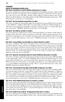 338 The University of North Carolina at Pembroke 2015-2016 Academic Catalog COURSES BIRTH TO KINDERGARTEN (ECE) ECE 2020. Foundations of Early Childhood (3 credits) This course is designed to introduce
Master of Library and Information Science (MLIS)
 St. Catherine University 1 Master of Library and Information Science (MLIS) Mission The Master of Library and Information Science (MLIS) program at St. Catherine educates students in the principles, practices
Department of Sociology and Social Work
 Department of Sociology and Social Work 143 Department of Sociology and Social Work Chair: James L. Williams, Professor Location: CFO 305 Phone: 940-898-2052 Fax: 940-898-2067 E-mail:[email protected]
SCHOOL PSYCHOLOGY PROGRAM
 SCHOOL PSYCHOLOGY PROGRAM THE UNIVERSITY OF ALABAMA Handbook of General Program Policies and Procedures ON-CAMPUS PROGRAM ONLY * For new students entering the on-campus program in 2015 School Psychology
MILLIKIN TEACHING STANDARDS
 MILLIKIN TEACHING STANDARDS Millikin Teaching Standards are correlated to and modifications of Illinois Professional Teaching Standards. Modifications reflect Millikin s mission and the education unit
Academic Program: Doctoral Program in Clinical Psychology. Graduate or Undergraduate: Graduate Date: October 10, 2003
 Academic Program: Doctoral Program in Clinical Psychology Graduate or Undergraduate: Graduate Date: October 10, 2003 Coordinator of the Program: Kenneth W. Sewell Person completing this form: Kenneth W.
College of Education. Rehabilitation Counseling
 * 515 MEDICAL AND PSYCHOSOCIAL ASPECTS OF DISABILITIES I. (3) This course is designed to prepare rehabilitation and mental health counselors, social works and students in related fields with a working
Commission on Teacher Credentialing (CTC) and Council on Social Work Education Educational Policy Standards and Accreditation Standards (CSWE-EPAS)
 (CTC) and Educational Policy Standards and Accreditation Standards (CSWE-) Standards Crosswalk June 2013 An institution that is offering a nationally accredited Pupil Personnel Services: School Social
Literacy Education. Master of Science in Education: Program Overview. Program Highlights
 Master of Science in Education: Literacy Education Program Overview The Ralph C. Wilson, Jr., School of Education offers a Master of Science in Literacy Education. The Literacy Education programs lead
Higher Education & Student Affairs
 Higher Education & Student Affairs The Ph.D. program prepares students for careers in higher education emphasizing research and related scholarly activities. Toward this end, coursework emphasizes research
1. List proposed program changes related to merging, splitting, renaming or modifying a program. Community Counseling and School Counseling.
 Proposal to Modify the MA in School Counseling Department of Counseling Prepared and Submitted by Department of Counseling DATE: November, 2013 SEHS COI Approved: December 3, 2013 1. List proposed program
The University of Mississippi School of Education
 The University of Mississippi School of Education Master s Degree in Literacy Education Department of Teacher Education Educators as Reflective Professionals Graduate Handbook Revised Fall 2012 1 Table
GRADUATE EDUCATION COURSE DESCRIPTIONS EDUC 5003 Introduction to Statistics
 GRADUATE EDUCATION COURSE DESCRIPTIONS EDUC 5003 Introduction to Statistics Designed to provide the student with a basic understanding and use of statistical methods in the analysis of their practical
PH.D. PROGRAM IN PSYCHOLOGY: CONSCIOUSNESS & SOCIETY
 PH.D. PROGRAM IN PSYCHOLOGY: CONSCIOUSNESS & SOCIETY A program grounded in Critical, Transpersonal & Humanistic Psychologies Department of Psychology University of West Georgia Policies and Procedures
Programme Specification. BA (Hons) Religion and Theology. Valid from: September 2012 Faculty of Humanities and Social Sciences
 Programme Specification BA (Hons) Religion and Valid from: September 2012 Faculty of Humanities and Social Sciences SECTION 1: GENERAL INFORMATION Awarding body: Teaching institution and location: Final
Section 2: Program Summary Economics (CA): Secondary Major and Minor
 Section 2: Program Summary Economics (CA): Secondary Major and Minor The University Detroit Mercy (UDM), a Catholic institution whose mission flows from the educational traditions of the Sisters of Mercy
M.A. in School Counseling / 2015 2016
 M.A. in School Counseling / 2015 2016 Course of Study for the Master of Arts in School Counseling Initial License (Pre K 8 or 5 12) Candidates for the degree of Master of Arts in School Counseling are
The University of Tennessee College of Social Work Ph.D. Program Fall 2015. Social Work 675 Teaching Methods in Social Work (2 credits)
 SWK 675 Fall 2015 The University of Tennessee College of Social Work Ph.D. Program Fall 2015 Social Work 675 Teaching Methods in Social Work (2 credits) Instructor: Matthew T. Theriot, Ph.D. Time: M 1:25-3:20pm
OKLAHOMA STATE UNIVERSITY. School of Applied Health and Educational Psychology
 OKLAHOMA STATE UNIVERSITY School of Applied Health and Educational Psychology Doctorate in Educational Psychology Option: Counseling Psychology Overview The Counseling Psychology Program leading to the
Draft Policy on Graduate Education
 Draft Policy on Graduate Education Preface/Introduction Over the past two decades, the number and types of graduate programs have increased dramatically. In particular, the development of clinical master
SECTION 4: MASTER OF EDUCATION DEGREE
 SECTION 4: MASTER OF EDUCATION DEGREE Beginning with the summer session in 1954, a fi fth-year program of teacher education leading to the degree Master of Teaching was instituted at Northwestern Oklahoma
Psychology. Forensic Psychology Master of Science (M.S.)
 University of North Dakota 1 Psychology http://www.und.edu/dept/psych/ Bradley, Derenne, De Young, Ferraro, Grabe, Holm, Kehn, Kelly, King, Legerski, Looby, McDonald, Miller, Peters, Petros, Plumm, Poltavski,
College of Arts and Sciences
 Stetson University College of Arts and Sciences From its founding in 883, the College of Arts and Sciences has offered an energetic and imaginative approach to education in the liberal arts and sciences.
Doctor of Philosophy in Counseling Psychology
 Doctor of Philosophy in Counseling Psychology Program Description Objectives The program aims to develop competent and effective academicians and practitioners in counseling psychology by: a. Exposing
HAMPTON UNIVERSITY ONLINE Hampton University School of Business PhD in Business Administration
 Program Overview The PhD in Business Leadership and Administration is designed for professionals located nation wide who desire an advanced degree in business to excel in their careers. In addition, the
Master of Education School Counseling Degree Program
 Advanced Certificate Portfolio Guidelines Master of Education School Counseling Degree Program Revised Spring 2008 Southeastern Oklahoma State University Durant, Oklahoma 1 TABLE OF CONTENTS Introduction...page
EXHIBIT 4.1 Curriculum Components & Experiences that Address Diversity Proficiencies
 EXHIBIT 4.1 Curriculum Components & Experiences that Address Diversity Proficiencies Course # & Title MUSIC ED 191A Introduction to Music Education MUSIC ED 323 Elementary Classroom Music Course Description
UNIVERSITY OF CALIFORNIA, SANTA CRUZ. Education Department, Ph.D. Program. Ph.D. Program in Education. Program Features.
 UNIVERSITY OF CALIFORNIA, SANTA CRUZ Education Department, Ph.D. Program Ph.D. Program in Education We prepare leading scholars and educators who engage in research focused on needs of students from linguistic
School of Advanced Studies Doctor Of Management In Organizational Leadership. DM 004 Requirements
 School of Advanced Studies Doctor Of Management In Organizational Leadership The mission of the Doctor of Management in Organizational Leadership degree program is to develop the critical and creative
UAF-UAA Joint PhD Program in Clinical-Community Psychology with Rural, Indigenous Emphasis Outcomes Assessment Goals, Objectives, and Benchmarks
 Page 1 of 16 UAF-UAA Joint PhD Program in Clinical-Community Psychology with Rural, Indigenous Emphasis Outcomes Assessment Goals,, and Benchmarks Mission The PhD Program in Clinical-Community Psychology
Applied Behavior Analysis, M.S.Ed.
 Applied Behavior Analysis, M.S.Ed. 1 Applied Behavior Analysis, M.S.Ed. COLLEGE OF EDUCATION (http://education.temple.edu) About the Program The mission of the Master of Science in Education program in
DOCTORAL DEGREE IN EDUCATION. Ed.D. Leadership in Schooling
 DOCTORAL DEGREE IN EDUCATION Ed.D. Leadership in Schooling Option: STEM Education ADMITTING FOR SUMMER 2016 ONWARDS Ed.D. Leadership in Schooling 42 credits 3-4 years Leadership in Schooling Faculty Michaela
Doctorate of Education (Ed.D.) in Counselor Education and Supervision. Admission to the Program
 Minnesota State University, Mankato Department of Counseling and Student Personnel Doctorate of Education (Ed.D.) in Counselor Education and Supervision ADMISSIONS INFORMATION AND FORMS The Doctorate of