
A. Executive Order 12829, National Industrial Security Program. B. Executive Order 12958, as amended, Classified National Security Information.
|
|
|
- Silas McKinney
- 10 years ago
- Views:
Transcription
1 Department of Homeland Security Management Directive System MD Number: Issue Date: 2/22/2005 OPEN STORAGE AREA STANDARDS FOR COLLATERAL CLASSIFIED INFORMATION I. Purpose This directive establishes DHS policy for open storage of collateral-level classified material, and provides the requirements for constructing and operating open storage areas within the Department of Homeland Security (DHS). II. Scope This directive applies to all persons who are permanently or temporarily assigned, attached, detailed to, or under contract with DHS. It also applies to other officials outside the Federal government that have been provided access to classified information within the continental United States. III. Authority A. Executive Order 12829, National Industrial Security Program. B. Executive Order 12958, as amended, Classified National Security Information. C. 6 CFR, Part 7, Department of Homeland Security, Classified National Security Information. D. 32 CFR, Part 2001/2004, Implementing Directive for EO 12958, as amended. E. Underwriters Laboratories Standard 634, Standard for Connectors & Switches for Use with Burglar-Alarm Systems. F. Underwriters Laboratories Standard 2050, Standard for Safety of National Industrial Security Systems

2 IV. Definitions A. Classified National Security Information ( Classified Information ): Information that has been determined, pursuant to Executive Order 12958, as amended, or any predecessor order, to require protection against unauthorized disclosure and is marked to indicate its classified status when in documentary form. B. Open Storage Area: A room or area constructed and operated pursuant to this directive, for the purpose of safeguarding national security information that, because of its size or nature, or operational necessity, cannot be adequately protected by the normal safeguards or stored during nonworking hours in approved containers. C. Organizational Element (OE): As used in this directive, Organizational Element is as defined in DHS MD Number , Management Directive System and DHS Announcements. D. Portable Electronic Device (PED): Any non-stationary electronic apparatus with singular or multiple capabilities of recording, storing, processing, and/or transmitting data, video/photo images, and/or voice emanations. This definition generally includes, but is not limited to, laptops, PDAs, pocket PCs, palmtops, Media Players (MP3s), memory sticks (thumb drives), cellular telephones, PEDs with cellular phone capability, and pagers. E. Security Liaison: An official who is assigned responsibility for implementing and managing an Organizational Element s security program as a secondary or additional duty. F. Security Officer: Authorized position within an Organizational Element whose primary duty is to serve as the lead official for developing, implementing, and managing security programs within the Organizational Element. G. Security-in-Depth: A security principal of layered and complementary security controls sufficient to deter and detect unauthorized entry and movement within the facility. V. Responsibilities A. The Secretary of Homeland Security has designated the Chief Security Officer (CSO) as the Senior Agency Official (SAO). As the SAO, the CSO shall: 1. Direct and administer the DHS's program under which information is classified, safeguarded, and declassified

3 2. Coordinate the DHS's classification management program and serve as the DHS point of contact on matters associated with the Information Security Oversight Office (ISOO). 3. Promulgate and publish directives, as necessary, for program implementation, and ensure procedures are established and implemented to prevent unauthorized and unnecessary access to classified information. 4. Promulgate implementing regulations, which shall be published in the Federal Register to the extent that they affect members of the public. 5. Establish and maintain security education and training programs. 6. Establish and maintain a self-inspection and periodic review program to assess the management and safeguarding of classified information created and/or possessed by DHS OEs. 7. Develop special contingency plans for the safeguarding of classified information used in or near hostile or potentially hostile areas. 8. Ensure the performance contract or other system used to rate civilian or military personnel performance includes the management of classified information as a critical element to be evaluated in the rating of: a. Original Classification Authorities b. Security Managers, security specialists, or other officials performing security functions involving the safeguarding of classified information c. Other personnel whose duties involve the creation or handling of classified information. 9. Account for costs associated with the implementation of programs to protect classified information. Report such costs to the Information Security Oversight Office (ISOO) upon request. 10. Assign promptly personnel to respond to any request, appeal, challenge, complaint, or suggestion arising out of Executive Order 12958, as amended, that pertains to classified information that originated in an organizational element of DHS that no longer exists and for which there is no clear successor in function. 11. Report violations, take corrective measures, and assess appropriate sanctions as warranted, in accordance with Executive Order 12958, as amended

4 12. Oversee DHS participation in special access programs authorized under Executive Order 12958, as amended. 13. Establish procedures to prevent unnecessary access to classified information, including procedures that: a. Require that a need for access to classified information is established before initiating administrative clearance procedures; and b. Ensure that the number of persons granted access to classified information is limited to the minimum consistent with operational and security requirements and needs. 14. Perform other management duties as required by the position of Senior Agency Official that the Secretary may designate. B. The Chief, Administrative Security Division shall, under the direction and authority of the SAO/CSO, administer, manage, and provide oversight for all programs related to safeguarding classified information, as cited in this directive. C. The Heads of Organizational Elements shall: 1. Ensure sufficient resources are in place to implement and manage the Information Security Program and the requirements of this directive. 2. Appoint a senior official within the OE to serve as the organizational element Security Officer/Security Liaison. 3. Issue additional written procedures as necessary for the effective implementation of this directive. Procedures written to augment or supplement this directive may exceed the requirements cited in this directive but shall not lessen them. When an OE chooses to exceed the standards as cited herein, sufficient justification must exist to warrant any increased expenditures. D. The Organizational Element Security Officer/Security Liaison shall: 1. Serve as the advisor to the head of the OE for all matters relating to implementation of and compliance with the provisions of this directive. 2. Implement, monitor, manage, and oversee the provisions of this directive within his/her respective OE

5 3. Act as liaison between the OE, OE counterparts, DHS headquarters security staff, and other security officials both inside and outside of government. 4. Implement a viable and robust security education and training program. E. Supervisors and Managers shall: 1. Ensure that they are aware of and comply with the applicable provisions of this directive, and promote and ensure compliance by staff members. 2. Begin security education and awareness training upon initial assignment of an employee, and reinforce training periodically thereafter through routine office interaction, reminders, staff meetings and other office gatherings, or any other method or media contributing to an informed workforce. F. All DHS personnel shall: 1. Be responsible for protecting classified information from unauthorized disclosure. 2. Be aware of and comply with the applicable provisions of this directive and report to appropriate officials infractions or violations that affect the safeguarding of classified information. VI. Policy & Procedures Policy. 1. Construction and accreditation of a collateral-level, open-storage facility shall be considered only when the volume or bulk of classified material, or the functions associated with processing the classified material, make the use of GSA-approved security containers impractical. 2. This directive prescribes the standards for openly storing classified national security information. OEs may exceed the standards cited in this directive, but may not lessen them. If an OE chooses to exceed the standards cited herein, sufficient justification must exist to warrant any increased expenditures

6 3. Requests to waive requirements cited in this directive will be submitted, in writing, through the Security Officer/Security Liaison of the requesting OE to the DHS Chief Security Officer. Waiver requests shall include sufficient justification to support the request and identification of compensatory measures that will be implemented to mitigate deficiencies. 4. OEs that have open storage areas that were approved prior to the publication of this directive, will not need to have their areas re-certified unless a change has been made that affects the structure and measures in place at the time of the original certification, or the standards used for approval of the area are less than those required by this directive. In the latter instance, OE s shall bring the area(s) up to the standards cited herein within one year of publication of this directive, and the area shall be recertified in accordance with this directive. B. Procedure. 1. When an OE determines that an open storage area is appropriate, the OE shall submit a request and justification for an open storage area, as follows: a. DHS Headquarters elements will submit requests through the OE s Security Officer/Liaison (if applicable) to the DHS Office of Security. b. For OEs, other than DHS Headquarters, with a permanent Security Officer assigned, the request will be submitted to the Security Officer having jurisdiction over the requesting organization. c. For OEs, other than DHS Headquarters, with no permanent Security Officer is assigned, requests will be submitted through the OE s Security Officer/Liaison (if applicable) to the DHS Office of Security. 2. Open storage areas shall be approved based on: a. Operational justification. Open storage areas shall only be approved for operational reasons, not for convenience. Where open storage is requested to satisfy the installation of a classified information system, unless otherwise justified and approved, the open storage authorization shall be limited to the system only. All documents and removable media will require closed storage in an appropriate security container

7 b. Compliance with construction standards cited in this directive. An Open Storage Survey Checklist (Attachment A) shall be used to verify that the open storage area meets required standards. c. Completion of a Standard Operating Procedures (SOP) Guide for operating the area. A sample SOP is provided as Attachment B. This sample shall be modified and tailored to suit the specific open storage area. d. Receipt of a Facility Approval Memo. The memo must be signed by the authorized approval authority (see section VI.B.3) for the area being approved, must specify the facility being approved, and must specify the maximum level of material authorized for open storage. A sample memorandum is provided as Attachment C. 3. Approval Authority: a. The Chief of Administrative Security Division, DHS Office of Security, is the approval authority for DHS Headquarters open storage areas and any other open storage area requests not under the jurisdiction of an OE Security Officer. b. The OE Security Officer is the approval authority for open storage areas within his/her respective jurisdiction. c. Upon approval of an area for open storage of collateral classified information, the approval authority shall issue a memorandum to the requesting OE, citing the specific location, building, room number, etc.; level of classified information authorized for open storage; any restrictions; and any other information deemed appropriate. d. A copy of the approval memorandum, Open Storage Survey Checklist, and SOP shall be maintained by the approving authority and within the approved open storage area

8 4. Level of Storage. a. TOP SECRET Storage. An open storage area for TOP SECRET material will meet the construction standards and intrusion detection alarm system (IDS) requirements cited in this directive, Section VI.I. Arrival on-scene to unannounced alarm activations shall be within five minutes from the time the alarm is received at the monitoring station. Arrival time may be extended to fifteen minutes when the facility employs a security-in-depth concept and such extension has been approved by the open storage area approval authority. b. SECRET Storage. An open storage area for SECRET material will meet the construction standards cited in this directive. In addition, one or more of the following supplemental controls shall be in place: (1) The location that houses the open storage area is subject to continuous protection by cleared guard or onduty personnel; (2) Cleared guard or on-duty personnel inspect the perimeter of the open storage area at least once every four hours (ensure facility is secured and sign SF-702); (3) An intrusion detection alarm system (IDS) is installed that meets the standards cited in this directive. Arrival onscene to unannounced alarm activations shall be within thirty minutes from the time the alarm is received at the monitoring station. (4) In addition to one or more of the supplemental controls listed above, the area shall be supported by security-in-depth consisting of a minimum of two additional layers of security. Examples of methods for achieving security-in-depth are fencing, walls, and other perimeter barriers; video surveillance and monitoring; employee and visitor facility access controls; facility IDS; and random facility guard patrols. Where an IDS is not present, the two layers shall include, at a minimum, physical perimeter barriers through which personnel must pass and access is controlled prior to reaching the open storage area

9 c. CONFIDENTIAL Storage. An open storage area for CONFIDENTIAL material will meet the construction requirements of this directive. However, supplemental protection is not required. d. Portable Electronic Devices (PEDs). Portable Electronic Devices (PEDs) shall not be introduced into an open storage area without written approval from the Designated Approval Authority in consultation with the cognizant Information Systems Security Manager and Security Officer/Liaison. Approvals will be considered only when the risks associated with the use of such equipment are clearly identified and sufficiently mitigated. Restrictions on the introduction of PEDs into open storage areas shall be prominently posted and included in the Standard Operating Procedures. 5. General Construction Requirements. a. These criteria and standards apply to all new construction, reconstruction, alterations, modifications, and repairs of existing areas. They will also be used in evaluating existing areas. b. Only heavy-duty builder s hardware shall be used in construction. Hardware accessible from outside the area shall be pinned, brazed, or spot-welded to preclude removal. c. When ducts, pipes, registers, sewers, and tunnels are of such size and shape as to permit unauthorized entry (in excess of 96 square inches in area and over 6 inches in its smallest dimension), they shall be secured by 18-gauge expanded metal or wire mesh, or, by rigid metal bars, steel welded vertically and horizontally six inches on center. The rigid metal bars shall be securely fastened at both ends to preclude removal. When wire mesh, expanded metal, or rigid metal bars are used, they must ensure that classified material cannot be removed through the openings with the aid of any type of instrument. Expanded metal, wire mesh, or rigid metal bars may be substituted by an intrusion detection system. d. Doors (1) Routine entrance/exit doors shall be kept to an absolute minimum. Where possible, only one single door shall be used for routine entry/exit

10 (2) Doors shall be substantially constructed of wood or metal. When windows, louvers, baffle plates, or similar openings are used, they shall be secured with 18-gauge expanded metal or wire mesh securely fastened on the inside. If visual access is a factor, the windows shall be covered. When doors are used in pairs or a gap exposes the latching mechanism, an astragal (overlapping molding) shall be installed where the doors meet or exposure occurs. Hinge pins that are exposed to the outer perimeter of the area shall be peened, brazed, or spot-welded to preclude removal. (3) Doors shall be equipped with a heavy-duty automatic door closer. (4) For new construction or renovation, entrance doors shall be secured with a GSA-approved, built-in combination lock meeting Federal Specification FF-L-2740-A. The use of a GSA-approved, built-in combination lock not meeting Federal Specification FF-L-2740-A is approved for existing locations until October 2012, at which time such locks must be replaced with one meeting the proper specification. Other high security locks may be used on a case-by-case basis with the approval of DHS Office of Security. Other doors shall be secured from the inside with a panic bolt (which can be actuated by an alarmed panic bar); a dead bolt; a rigid wood or metal bar (that shall preclude springing ), which shall extend across the width of the door and be held in position by solid clamps, preferably on the door casing; or by other means approved by the DHS Office of Security, consistent with relevant fire and safety codes. (5) Routine entrance doors shall be additionally equipped with a supplemental access control device (e.g., storage room key lock lever, card reader, cipher lock, etc.,) to control access into the area during working hours. Supplemental access control devices are for access control purposes only and do not provide sufficient security for an unattended open storage area

11 e. Windows. Every effort should be made to construct open storage areas without windows. However, windows that open, which are less than 18 feet from an access point (for example, a fire escape, roof, ledge, door, or the ground), shall be protected from forced entry by metal bars (separated by no more than 6 inches), plus crossbars to prevent spreading, or 18-gauge expanded metal mesh securely fastened on the inside. When visual access of classified information is a factor, the windows shall be covered by any practical method, such as drapes, blinds, painting, or covering the inside of the glass. The ability to easily open the window should be eliminated by either permanently sealing it or installing a locking mechanism on the inside. During classified discussion and non-working hours, the windows shall be closed and securely fastened to preclude surreptitious entry. f. Walls. (1) Construction shall be of plaster, gypsum wallboard, metal panels, hardboard, wood, plywood, glass, wire mesh, expanded metal, or other materials offering resistance to, and evidence of, unauthorized entry into the area. If inserttype panels are used, a method shall be devised to prevent the removal of such panels without leaving visual evidence of tampering. If visual access is a factor, area barrier walls up to a height of 8 feet shall be of opaque or translucent construction. (2) Ceilings shall be constructed of plaster, gypsum wallboard material, panels, hardboard, wood, plywood, ceiling tile, or other material offering similar resistance to and detection of unauthorized entry. 18-gague wire mesh, or other non-opaque material offering similar resistance to, and evidence of, unauthorized entry into the area shall be used if visual access to classified material is not a factor

12 (3) The perimeter walls of the open storage area shall be true floor to ceiling (slab to slab), or, sufficiently modified to represent a secure enclosure. When wall barriers do not extend to the true ceiling and a false ceiling is created, walls shall be permanently constructed to extend above the false ceiling to the true ceiling using similar building materials as the existing walls or 18 gauge expanded metal mesh, or, the false ceiling shall be reinforced with 18-gauge expanded metal mesh to serve as the true ceiling. When expanded metal mesh is used, it must overlap the adjoining walls and be secured in a manner that precludes removal without leaving evidence of tampering. When there is a valid justification for not erecting a solid ceiling as part of the area, such as the use of overhead cranes for the movement of bulky equipment within the area, the approval authority shall ensure that surreptitious entry cannot be obtained by entering the area over the top of the barrier walls. g. Sound Attenuation. (1) Where classified discussions will be taking place, conduct a sound attenuation test to ensure normal conversational tone from inside the room cannot be heard intelligibly from outside the room, paying particular attention to vents, ducts, and other openings. If public address or other amplification systems are used in conjunction with classified information, conduct the test with these systems actively operating. Where sound from inside the room can be easily overheard from outside the room, acoustical security shall be incorporated in the form of sound masking or structural enhancements. (2) Examples of sound masking include installation of a CD or audio tape player with separate speakers; white noise generators; or other vibrating or noise generating systems that can be installed along the inside perimeter of the area. Where sound traverses through vents, ducts, and other similar openings, install music speakers in or near the opening; or white noise generators in or near the opening

13 (3) Examples of structural enhancements include the use of sound deadening high-density materials in wall construction; use of extra layers of drywall for wall construction; and use of door gaskets for doorframes. Where sound traverses through vents, ducts, and other similar openings, consider installing commercial sound baffles or waveforms. h. Intrusion Detection Systems (IDS). (1) The IDS shall be connected to, and monitored by, a central monitoring station. Alarm system installation shall conform to the requirements of this directive or to the standards set forth by Underwriters Laboratory (UL) Standard The OE Security Officer/Liaison will approve contingency protection procedures in the event of IDS malfunction. (2) Central Monitoring Station. (a) The central monitoring station may be located at the facility of a UL-listed: i. Contractor Monitoring Station, formerly called a proprietary central station; ii. Cleared commercial central station; iii. Cleared protective signal service station (e.g., fire alarm monitor); or iv. Cleared residential monitoring station. NOTE: For the purpose of monitoring alarms, all provide an equivalent level of monitoring service. (b) Trained alarm monitors shall be in attendance at the alarm monitoring station at all times when the IDS is in operation

14 (c) The central monitoring station is required to indicate whether or not the system is in working order and to indicate tampering with any element of the systems. Necessary repairs will be made as soon as practical. Until repairs are completed, periodic patrols shall be conducted during non-working hours, unless an appropriately cleared employee is stationed at the alarmed site. (d) When an IDS is used, it shall be activated immediately at the close of business at the alarmed area or container. A record shall be maintained to identify the person responsible for setting and deactivating the IDS. Each failure to activate or deactivate shall be reviewed by the central monitoring station and, upon appropriate determination, be referred to the appropriate security official for investigation. Such records shall be maintained for one year. (e) Records shall be maintained for one year indicating time of receipt of alarm; name(s) of security force personnel responding; time dispatched to facility area; time security force personnel arrived; nature of alarm; and what follow-up actions were accomplished. (3) Investigative Response to Alarms (a) The following resources may be used to investigate alarms: proprietary security force personnel, central station guards, and subcontracted guard services. (b) When the IDS is in operation, a sufficient number of properly trained proprietary security force personnel, cleared to the appropriate level of the area, shall be available at all times to be immediately dispatched to investigate each alarm

15 (c) For a commercial central station, protective signaling service station, or residential monitoring station, response personnel dispatched shall be cleared only if they have the ability and responsibility to access the area or container(s) housing the classified material; i.e., keys to the facility have been provided or the personnel are authorized to enter the building or check the container or area that contains classified material. (d) Uncleared guards may be dispatched by a signaling service station, or residential monitoring station to an alarm. However, OE developed response plans shall include notification to a cleared representative of the affected facility for each alarm annunciation. If an alarm activation resets in a reasonable amount of time and no physical penetration of the area or container is visible, then entrance into the area or container is not required. The uncleared guards shall remain on the premises until a designated, cleared representative of the facility arrives, or as instructed by the cleared facility representative. (e) If the alarm activation does not reset or physical penetration is observed, then a cleared response team must be dispatched. The initial uncleared response team must stay on station until relieved by the cleared response team. (f) Subcontracted guards must be under contract with either the central monitoring station or the cleared facility. (g) The OE shall require a 15-minute response time for TOP SECRET-level open-storage areas, and a 30-minute response time for SECRET-level openstorage areas. Arrangements shall be made with the monitoring station to immediately notify a cleared representative of the facility on receipt of the alarm. The representative is required to go immediately to the facility to investigate the alarm, and to take appropriate measures to secure the classified material

16 (4) Installation. The IDS at the facility, area, or container shall be installed by a UL listed alarm installing company or by a company approved by the OE s security office. When connected to a commercial central station, Contractor Monitoring Station protective signaling service, or residential monitoring station, the service provided shall include line security (i.e., the connecting lines are electronically supervised to detect evidence of tampering or malfunction). If line security is not available, then two independent means of transmitting the alarm signal from the alarmed area to the monitoring station must be provided. (5) Certificate of Compliance. Evidence of compliance with the requirements of this directive will consist of a valid UL certificate for the appropriate category of service. This certificate will have been issued to the protected facility by UL, through the alarm installing company. The certificate serves as evidence that the alarm installing company: (a) is listed as furnishing security systems of the category indicated; (b) is authorized to issue the certificate of installation as representation that the equipment is in compliance with requirements established by UL for the category of service; and (c) is subject to the UL Field Counter Check Program, whereby periodic inspections are made of representative alarm installations by UL-certified personnel to verify the correctness of installation practices. (6) Exceptional Cases. (a) If the requirements set forth above cannot be met due to extenuating circumstances, the OE may request approval for an alarm system that is: i. Monitored by a central control station but responded to by a local (municipal, county, state) law enforcement organization

17 ii. Connected by direct wire to alarm receiving equipment located in a local (municipal, county, state) police station or public emergency service dispatch center. This alarm system is activated and deactivated by employees of the OE, but the alarm is monitored and responded to by personnel of the monitoring police or emergency service dispatch organization. Police department response systems may be requested only when: (i.) The OE facility is located in an area where central control station services are not available with line security and/or proprietary security force personnel, or a contractually dispatched response to an alarm signal cannot be achieved within the time limits required; and (ii.) It is impractical for the OE to establish a proprietary guard force at the location. iii. Installation of these type systems must use UL listed equipment and be accomplished by an alarm installation company that is certified by UL for any of the following categories: Defense Industrial Security Systems; Proprietary Alarm Systems; Central Station Burglar Alarm Systems; or Police Station Connected Burglar Alarm Systems. (b) An installation proposal, explaining how the system would operate, shall be submitted to the OE Security Officer/Liaison. The proposal must include sufficient justification for granting an exception and the full name and address of the police department that will monitor the system and provide the required response. The name and address of the UL-listed/ UL-certified company that will install the system and inspect, maintain, and repair the equipment shall also be furnished

18 (c) The OE shall require a 15-minute response time from the police department for TOP SECRETlevel open-storage areas, and a 30-minute response time for SECRET-level open-storage areas. Arrangements shall be made with the police to immediately notify an cleared representative of the facility on receipt of the alarm. The representative is required to go immediately to the facility to investigate the alarm, and to take appropriate measures to secure the classified material. (d) In exceptional cases where central station monitoring service is available, but no proprietary security force of central station or subcontracted guard response is available, and where the police department does not agree to respond to alarms, and no other manner of investigative response is available, the OE Security Officer may approve cleared employees as the sole means of response. i. System Requirements. (1) Independent Equipment. When many alarmed areas are protected by one monitoring station, secure room zones must be clearly distinguishable from the other zones to facilitate a priority response. All sensors shall be installed within the protected area. (2) Access and/or Secure Switch and Premise Control Unit (PCU). No capability should exist to allow changing the access status of the IDS from a location outside the protected area without prior approval of the OE Security Officer. All PCUs (alarm panel) must be located inside the secure area. All alarm keypads should be located near the entrance. Assigned personnel should initiate all changes in access and secure status. Operation of the PCU will be restricted by use of a keypad and or procedure that verifies authorized use. In the secure mode, any unauthorized entry into the space shall cause an alarm to be transmitted to the monitor station

19 VII. QUESTIONS. (3) Motion Detection Protection. Secure areas that reasonably afford access to the container or area where classified data is stored, shall be protected with motion detection sensors (i.e., ultrasonic, passive infrared, etc.) Use of dual technology is authorized when one technology transmits an alarm condition independently from the other technology. A failed detector shall cause an immediate and continuous alarm condition. (4) Protection of Perimeter Doors. Each perimeter door shall be protected by a balanced magnetic switch (BMS) that meets the standards of UL 634. (5) Windows. All readily accessible windows shall be protected by an IDS, either independently or by the motion detection sensors inside the space/facility. (6) IDS Requirements for Continuous Operations Facilities. A facility that operates continuously may not require an IDS. This type of secure area should be equipped with an alerting system if occupants cannot observe all potential entrances into the room. Duress devices may also be required. (7) False and/or Nuisance Alarm. Any alarm signal transmitted in the absence of a detected intrusion, or identified as a nuisance alarm, is a false alarm. A nuisance alarm is the activation of an alarm sensor by some influence for which the sensor was designed but which is not related to an intrusion attempt. All alarms shall be investigated and the results documented. The maintenance program for the IDS should ensure that incidents of false alarms should not exceed one (1) in a period of thirty (30) days per zone. Questions regarding this directive should be addressed to the DHS Office of Security

20 ATTACHMENT A DEPARTMENT OF HOMELAND SECURITY OPEN STORAGE SURVEY REPORT Survey Conducted By: (Name, Position/Title and Phone Number) Program Office of Surveying Official: Date of Survey: Address of Room/Area Surveyed: (Full Mailing Address --Must include a geographical/street location; P.O. Box, will not suffice.) Room Name and/or Number(s) Surveyed: (Identify specific number(s) and/or name of the room(s) requested for open storage) Program Office Responsible for Surveyed Room: Designated Responsible Official for Open Storage Area: (Name, Position/Title and Phone Number) Purpose of Open Storage: (Circle One) Classified Computer Connectivity ONLY Documents/Materials ONLY Both (NOTE: Justification for classified computer connectivity is self-evident. However, justification for Open Storage of documents/materials must be provided prior to approval). Highest Classification Level to be Openly Stored in the Area: (Circle One) CONFIDENTIAL SECRET TOP SECRET Completion of this survey does not constitute approval for open storage of classified materials. The survey results, as recorded on this form, the Standard Operating Procedures (SOP) guide developed for operation of the specific area, and a memorandum from the program office citing the request for open storage, the classification level of the materials to be stored in the area, and the justification for open storage will be forwarded to the approval authority, as cited in DHS MD The approval authority will evaluate the request, the survey results, and the justification and will either approve or disapprove the request. Approval/disapproval will be in writing and will be forwarded to the requester. No. Description Yes No N/A A Wall Construction 1 Walls that serve as the perimeter of the room shall be of permanent construction consisting of: (Circle appropriate construction materials) Plaster Gypsum Wallboard Metal Panels Hardboard Wood Plywood Glass Expanded Metal Mesh Concrete Masonry Unit Other (Explain): 2 Walls that serve as the perimeter of the room extend true floor to true ceiling. (If No, see Items 3 and 4) A-1

21 ATTACHMENT A No. Description Yes No N/A 3 Where the perimeter walls of the room do not extend true-floor to true-ceiling, a barrier extension has been constructed of 18-gauge expanded metal mesh from the top of the rooms perimeter wall to the true-ceiling, or The false ceiling has been reinforced with 18-gauge expanded metal mesh to serve as a true-ceiling. 4 Wire mesh or expanded metal overlaps adjoining walls, which are secured in a manner to prevent removal without leaving evidence of tampering. B 1 a. Doors Only one door is used for routine entrance/exit. The door is substantially constructed of: (Circle one) Wood Metal Other (Explain) b. c. d. e. f. g. The door is equipped with a GSA Approved, Group 1R, built-in, dial type, three position combination lock (for existing facilities), or a built-in dial-type, combination lock meeting Federal Specification FF-L-2740, for example the Kaba-Mas X-09 (for new construction). If the door hinge pins are located on the exterior they have been peened, pinned, brazed, spot-welded, equipped with non-removable pins, or otherwise made impervious to removal. If vertical space exists between the door stiles (edge of door where two doors meet) or between the door and frame, the gap is protected by an astragal on the working door to cover the space between doors and prevent introduction of devices to forcibly separate the doors and unseat the deadbolt. If a double door is used, the inactive door is equipped with manual deadbolts with a minimum one inch throw on the top and bottom of the door. The door is equipped with a card reader, electric or mechanical cipher lock, or key lock for supplemental access control. The door is equipped with an automatic door closer. A-2
22 ATTACHMENT A No. Description Yes No N/A 2 Does the room have other perimeter doors? a. b. c. d. Other perimeter doors are for emergency use only. Emergency use only doors are of similar construction as the primary entrance/exit door. If the door hinge pins are located on the exterior they have been peened, pinned, brazed, spot-welded, equipped with non-removable pins, or otherwise made impervious to removal. Emergency use only doors are equipped with panic hardware for emergency exit, a manual deadbolt lock with a minimum one inch throw, or a rigid metal or wood bar extending across the width of the door and held in position by solid clamps. The door(s) have no hardware on the exterior. If local fire codes prohibit such hardware, explain alternatives. C Ceilings The ceiling shall be of permanent construction consisting of: (Circle appropriate construction materials) Plaster Gypsum Wallboard Metal Panels Hardboard Wood Plywood Ceiling Tile Concrete Masonry Unit Other (Explain) D Windows 1 The room is equipped with windows along the perimeter walls. (If NO, go to Section E) Comments: A-3
23 ATTACHMENT A No. Description Yes No N/A 2 Windows which open, that are less than 18 feet from an access point (for example, another window outside the area, roof, ledge, or door) shall be protected from forced entry by means no greater than the contiguous wall. When visual access of classified information is a factor, the windows shall be covered by any practical method, such as drapes, blinds, or painting or covering the inside of the glass. The ability to open the window should be rendered inoperable by either permanently sealing it or installing a locking mechanism on the inside during nonworking hours, the windows shall be closed and securely fastened to preclude surreptitious entry 3 Windows are equipped with blinds, drapes, or similar covering to prevent observation. E Other Openings 1 There are vents, ducts, pipes, registers, sewers, or similar openings penetrating the rooms perimeter wall, ceiling or floor that are in excess of 96 square inches. (If NO, go to Section F.) 2 a. b. c. Vents, ducts, pipes, registers, sewers, or similar openings in excess of 96 square inches are secured by: 18 gauge expanded metal, Wire mesh securely fastened from the inside, or Rigid metal bars extending across the width with a maximum space of 6 inches between bars. A-4
24 ATTACHMENT A No. Description Yes No N/A F Intrusion Detection System (IDS) 1 The room is equipped with a UL-approved Intrusion Detection Alarm System (IDS). If there is no IDS, TOP SECRET Open Storage WILL NOT BE APPROVED. SECRET Open Storage may be approved without an IDS if Section H (Guard Services) is complied with, or the room is occupied 24 hours a day, 7 days a week by a cleared employee(s), and, the room is protected by security in-depth consisting of a minimum of two external layers of perimeter security through which personnel must pass and through which access is controlled to reach the open storage area. 2 As a minimum, the IDS consists of balanced magnetic switches on all door openings, and motion detectors that provide sufficient coverage of the internal room space. 3 The IDS is monitored by an authorized central monitoring station 24 hours a day, 7 days a week. Identify IDS monitoring activity: 4 On-site response to unannounced alarms does not exceed 30 minutes for rooms storing SECRET materials and 5 (or 15 minutes if approved by the approval authority) for rooms storing TOP SECRET materials. G Acoustical Protection 1 For areas where classified discussions will take place, conversational tone from inside the room is unintelligible from outside the room. Where public address or other amplification systems are in use, ensure a sound attenuation test is conducted with equipment in the ON position. Pay particular attention to vents, ducts, and other openings that may carry sound to areas outside of the room. A-5
25 ATTACHMENT A No. Description Yes No N/A H Guard Services 1 The location housing the room is subject to continuous, 24 hour a day, 7 day a week protection by cleared guard personnel. 2 Cleared guard or duty personnel inspect the room perimeter at least once every 4 hours. I Standard Operating Procedures (SOP) An SOP has been developed to provide procedures for security of the area. (Include a copy of the SOP when submitting this survey.) Other comments affecting the security of the proposed Open Storage Area that should be considered in the approval process: NOTE: In some instances, the existence of an IDS system may substitute for structural deficiencies. For example, the need for supplemental protective barriers for vents, ducts, pipes, and other openings in excess of 96 square inches may not be required depending on the actual size of the opening and IDS coverage. Fully explain any such circumstances to include size of openings and degree of IDS coverage. A-6
26 ATTACHMENT B STANDARD OPERATING PROCEDURES OPEN STORAGE OF CLASSIFIED NATIONAL SECURITY INFORMATION 1. Purpose. This Standard Operating Procedure (SOP) provides guidance on the security measures that will be implemented and adhered to for the operation and maintenance of the DHS designated Classified National Security Information (NSI) Open Storage Area identified in paragraph 4, below. 2. Applicability. This SOP applies to all personnel working in or around the designated Open Storage Area. 3. General. a. All persons authorized unescorted access to the designated area will read and be familiar with the requirements of this SOP. b. An Open Storage Area is established when the volume or bulk of classified materials, or the functions associated with the processing of classified information, make the use of security containers impractical. The area designated for open storage serves as the container for the storage of classified materials and security measures must be in place and maintained in order to ensure the integrity of the materials stored therein. c. The local Security Official will be contacted prior to any modifications being made to the structure or security devices that were in place at the time open storage was approved. d. Under no circumstances will the level of classified materials openly stored in the area exceed the level of open storage authorized per paragraph 4, below. e. A copy of the Open Storage Approval Memorandum and the Open Storage Survey Report will be maintained as attachments to this SOP. 4. Identifying Data. Program Office Responsible for Area Position/Title of Responsible Official Room Number(s) of Designated Area Address (Self Explanatory) (Enter the position and or title of the person designated as a point of contact for the designated area) (Enter the specific room number(s) of the area designated for open storage) (Enter the full address of the facility that houses the open storage area) Highest Level of OPEN Storage Authorized (Circle One) CONFIDENTIAL SECRET TOP SECRET B-1
27 ATTACHMENT B 5. Procedures. a. Security Controls. (1) Key locks, cipher locks, and card readers are supplemental access control devices only and do not provide sufficient security for an unattended open storage area. Therefore, whenever the designated area is unattended, all locking devices (built-in dial type combination lock, key/cipher lock, electric strike, electric knob, magnetic lock) will be in the locked position. The dial on the combination lock will be spun at least four times to ensure the combination is cleared. The area will never be left open or unlocked when not occupied by an authorized person. (2) The combination for the built-in, dial-type, combination lock is classified at the same level as the highest classification of materials stored therein. It will not be provided to any person that does not have the appropriate security clearance and need-to-know. The combination will be recorded on a Standard Form 700, Security Container Information, and appropriately stored by the local Security Official. (3) At a minimum, the combination to the built-in dial type combination lock will be changed every two years, or immediately when the lock is first placed in service; when someone having knowledge of the combination terminates employment or is reassigned; if it is suspected that the combination was compromised; or if the area is found unattended and unlocked. Contact the local Security Official for information on changing combinations. (4) The combination to a cipher lock and/or keys to a key lock will be handled as sensitive information/materials and provided only to persons with a need-to-know. (5) The combination to a cipher lock or the key lock will be changed/rekeyed as determined by the local Security Official or responsible official. (6) When a card reader is used for supplemental access control, the reader will be programmed with its own distinct access level. Only persons who are authorized access to the area will have their key cards programmed to access the area. (7) (Add guidance on restrictions on the introduction and/or use of personal electronic devices (PED s) and other audio/video recording devices within the open storage area). B-2
28 ATTACHMENT B b. Intrusion Detection Systems (IDS). (If applicable) (As IDS designs, specifications, and reporting procedures vary widely the procedures for its operation will be prepared locally. Procedures should include as a minimum; Opening (disarming the IDS); Closing (arming the IDS); Alarm Response; IDS Maintenance; IDS Operations Checks; and procedures during a power outage.) c. Access Control. (1) Only persons who have been granted a security clearance equal to or higher than the level of classified material stored in the facility, and who have a need-to-know, will be authorized unescorted access to the area. (2) Persons who do not have a security clearance equal to or higher than the level of classified material stored, and/or do not have a need-toknow, will not be allowed unescorted access to the area. Should the need arise to allow such visitors access to the area, the area will first be sanitized by a cleared person to ensure that no classified information is exposed or could otherwise be subjected to compromise. The visitor will then be escorted by a cleared person and will remain under visual escort for the duration of the visit. (3) When uncleared visitors are escorted into the area, the escort will announce to all persons working in the area that a visitor is present. In larger areas, if a strobe light is installed as a means for announcing visitors, it will be activated. d. End-of-Day Security Checks. (1) At the end of each duty day the area will be checked to ensure that it is secure. The Standard Form 701, Activity Security Checklist, will be used to record the end-of-day check. (2) The end-of-day check will be conducted by a cleared person designated by the responsible official identified in paragraph 4 of this SOP. (3) The end-of-day check will consist of physically spinning the dial of the built-in combination lock at least four times in one direction. The supplemental access control device, i.e., key lock, cipher lock, card reader, will then be unlocked and the checker will physically tug on the door to make sure the dial-type combination lock is locked. The checker will also ensure that the IDS (if applicable) is armed. (4) Any discrepancies noted in the end-of-day check will be reported to the responsible official and/or the local security official. B-3
29 ATTACHMENT B e. Emergency Procedures. (1) In the event an emergency arises that causes the immediate evacuation of the area, every reasonable effort will be made to properly secure the area prior to departure. However, personal safety will not be jeopardized in order to secure the area. (2) Should immediate evacuation prohibit the area from being properly secured then, upon termination of the emergency, a reasonable effort will be made to verify that the integrity of the materials stored therein has not been compromised. This will include a visual inspection of the stored materials to determine if any items may be missing or tampered with. In addition, the combination to the built-in dial type combination lock will be changed. 6. Any situation that is observed that affects the security integrity of the designated area, or the materials stored therein, will be reported immediately to (name or position/title of responsible official and phone number) and/or (name and phone number of the local security official). 7. Any questions regarding this SOP should be referred to (name or position/title of responsible official and phone number). B-4
30 ATTACHMENT C U.S. Department of Homeland Security Washington, D.C Homeland Security Office of Security (Use organizational element s letterhead where appropriate) MEMORANDUM FOR (Insert Addressee Information) FROM: SUBJECT: DATE: (Insert Approval Authority s Information) Open Storage of Classified Information (Insert Date) This memorandum serves as approval for the open storage of classified information, not to exceed the (CONFIDENTIAL, SECRET, or TOP SECRET) level, within (Insert physical address and room number of area being approved). This approval is based on the Open Storage Survey and Report conducted and prepared by (Insert name of security specialist who completed the survey) and the Open Storage Area Standard Operating Procedures submitted by (Insert organizational element information). This open storage approval is limited to information technology systems connectivity only. All media, i.e., discs, documents, etc., that contain classified information will be secured in an appropriate security container whenever the room is unattended and at the end of each duty day. (Remove this paragraph if area is being approved for all classified material) This open storage approval applies to all systems and media (i.e. discs, documents, etc.) that contain classified information. (Remove this paragraph if area is being approved for information technology systems only) Any modifications to the structure or procedures on which this approval was based shall be coordinated through the approval authority prior to implementation. A copy of this approval memo, the Open Storage Survey Report, and the Standard Operating Procedures shall be maintained within the approved room. If you have any questions please contact me at (Insert contact information). C-1
This directive establishes Department of Homeland Security (DHS) policy regarding the physical protection of facilities and real property.
 Department of Homeland Security Management Directives System MD Number: 11030.1 Issue Date: 04/21/2003 PHYSICAL PROTECTION OF FACILITIES AND REAL PROPERTY I. Purpose This directive establishes Department
A. Executive Order 12333, United States Intelligence Activities. B. Executive Order 12829, National Industrial Security Program.
 1. Purpose Department of Homeland Security Management Directive System MD Number: 11045 Issue Date: 10/04/2004 PROTECTION OF CLASSIFIED NATIONAL SECURITY INFORMATION: ACCOUNTABILITY, CONTROL, AND STORAGE
ORDINANCE RELATIVE TO FALSE ALARMS
 ORDINANCE RELATIVE TO FALSE ALARMS BE IT ORDAINED by the Municipal Council of the City of Attleboro as follows: That Section 15-3 Alarm Regulations of Chapter 15 Police, of the Revised Ordinances of the
This directive applies to all DHS organizational elements with access to information designated Sensitive Compartmented Information.
 Department of Homeland Security Management Directives System MD Number: 11043 Issue Date: 09/17/2004 SENSITIVE COMPARTMENTED INFORMATION PROGRAM MANAGEMENT I. Purpose This directive establishes Department
Rolling Meadows, Illinois: Code of Ordinances
 ARTICLE II. ALARM SYSTEMS DIVISION 1. GENERALLY Sec. 34-26. Definitions. The following words, terms and phrases, when used in this article, shall have the meanings ascribed to them in this section, except
ALARM SYSTEM REGULATIONS. BE IT ENACTED by the County Legislature of the County of Cattaraugus as follows:
 ALARM SYSTEM REGULATIONS BE IT ENACTED by the County Legislature of the County of Cattaraugus as follows: SECTION 1. Legislative Intent. 1.1. It is the intent of this Local Law to regulate and control,
ARTICLE 735. Emergency Alarm System
 ARTICLE 735 Emergency Alarm System 735.01 Definitions 735.02 Approved Alarm Companies 735.03 Registration Required; Transferability; False Statements; And Registration for Apartment Complexes 735.04 Alarm
Physical Security. Paul Troncone CS 996
 Physical Security Paul Troncone CS 996 NSTISSI 4011 Building Construction Alarms Access Controls Information Systems Centers Personnel Security Tamper Resistance Goals of Physical Security Safeguard personnel
BARNSTABLE POLICE DEPARTMENT
 BARNSTABLE POLICE DEPARTMENT ALARM REGULATIONS Effective Date: January 2011 Per the Authority of: Paul B. MacDonald, Chief of Police Introduction Pursuant to Chapter 17 of the General Ordinances of the
Office of the State Fire Marshal. Fire Rated Doors
 Office of the State Fire Marshal Fire Rated Doors Fire Rated Doors These doors serve a purpose. They are manufactured in a way that is to help reduce the spread of fire and smoke. Fire rated doors allow
For the purpose of this chapter the following definitions shall apply:
 CHAPTER 110. ALARM SYSTEMS GENERAL PROVISIONS Sec. 110.01. Definitions. Secs. 110.02 110.14. Reserved. Sec. 110.01. - Definitions. For the purpose of this chapter the following definitions shall apply:
The ABC Of Security Systems - A Primer
 1 of 8 7/10/2012 8:38 AM HOME > TITLE 24 > CHAPTER 12 1221 1222 1223 1224 1225 1226 1227 1228 1229 1230 TITLE 24 Professions and Occupations CHAPTER 12. SECURITY SYSTEMS AND PROTECTIVE SERVICES Subchapter
FARA/NBFAA Model Burglar Alarm Ordinance
 FARA/NBFAA Model Burglar Alarm Ordinance False Alarm Reduction Association National Burglar & Fire Alarm Association 255 N. Washington St. #303 8300 Colesville Road #750 Rockville, MD 20850 Silver Spring,
Palm Beach County Sheriff s Office
 Palm Beach County Sheriff s Office Business Security Self Survey Since 1909, the deputies of Palm Beach County have provided a safe environment for hundreds of thousands of people who live, work and visit
ORDINANCE NO. 2124 BE IT ORDAINED BY THE MAYOR AND CITY COUNCIL OF THE CITY OF YORK, NEBRASKA:
 ORDINANCE NO. 2124 AN ORDINANCE OF THE CITY OF YORK, NEBRASKA TO ENACT A SECTION TO REGULATE ALARM SYSTEMS, TO PROVIDE FOR THE ISSUANCE OF PERMITS, AND TO IMPOSE A PENALTY FOR THE VIOLATION OF THIS SECTION;
Article 3. ALARM SYSTEMS. (08-08)
 (c) Any member who is assigned to the Fire Investigation Unit shall attend and successfully complete an in-service training program as required by the Division of Criminal Justice. (d) Any member who is
ORDINANCE REGARDING ALARMS IN THE TOWN OF PLAINVILLE
 ORDINANCE REGARDING ALARMS IN THE TOWN OF PLAINVILLE SECTION I. PURPOSE AND INTENT. The purpose of this ordinance is to encourage Alarm Users and Alarm Businesses to maintain the operational reliability
Agenda Cover Memorandum
 Agenda Cover Memorandum Meeting Date: January 19, 2015 Meeting Type: COW (Committee of the Whole) City Council Budget Workshop Item Title: Approve first reading of Ordinance amending Municipal Code Article
ARTICLE III. FIRE ALARMS. Sec. 6-56. Purpose. Sec. 6-57. Definitions.
 ARTICLE III. FIRE ALARMS Sec. 6-56. Purpose. It is the intent of this article to reduce the number of false alarms occurring within the city and the resultant waste of fire department resources. Through
SPECIAL RESIDENCE (ASSISTED SELF-PRESERVATION) OCCUPANCIES (Adopted by the State of Oregon)
 SPECIAL RESIDENCE (ASSISTED SELF-PRESERVATION) OCCUPANCIES (Adopted by the State of Oregon) SECTION SR101 GENERAL SR101.1 General. Group SR occupancies shall comply with the provisions of this appendix
Commercial or Business Security Survey
 Exterior Grounds Commercial or Business Security Survey Is there a fence around the property or a clear definition of Territoriality? If there is a fence, is it tall enough and maintained in good repair?
Boise Municipal Code. Chapter 6-15 FALSE SECURITY ALARMS
 Chapter 6-15 FALSE SECURITY ALARMS Sections: 6-15-01 PURPOSE 6-15-02 DEFINITIONS 6-15-03 DUTIES OF ALARM INSTALLATION AND MONITORING COMPANIES 6-15-04 RESPONSIBILITIES OF ALARM USERS 6-15-05 MAINTAINING
CREATIVE SOLUTIONS IN HEALTHCARE, INC. Privacy Policy
 CREATIVE SOLUTIONS IN HEALTHCARE, INC. Privacy Policy Amended as of February 12, 2010 on the authority of the HIPAA Privacy Officer for Creative Solutions in Healthcare, Inc. TABLE OF CONTENTS ARTICLE
City of Temple Burglar Alarm Permit Process Information Sheet
 City of Temple Burglar Alarm Permit Process Information Sheet Initial Permit FREE Renewal Permit Fee $ 10.00 -EVERY TWO YEARS Make checks / money orders payable to: The City of Temple, FARP Mail to: Temple
ARTICLE 26 5/07/07 Annual Town Meeting Public Safety Chapter 9 Section 30
 Section 1. Title and Purpose ARTICLE 26 5/07/07 Annual Town Meeting Public Safety Chapter 9 Section 30 TOWN OF LEICESTER, MASSACHUSETTS ALARM SYSTEM BY-LAW This by-law shall be known as the Alarm System
Alachua County False Alarm Ordinance
 Alachua County False Alarm Ordinance CHAPTER 121. ALARM SYSTEMS *Cross references: Business licenses and regulations, tit. 6; noise control, ch. 110; sheriff, ch. 271; construction codes, ch. 331; fire
Chapter 5.56 EMERGENCY ALARM SYSTEMS
 Chapter 5.56 EMERGENCY ALARM SYSTEMS Sections: 5.56.010 Definitions. 5.56.020 Permit Required. 5.56.025 Permit; Alarm Business. 5.56.030 Permit; Alarm User. 5.56.040 Alarm User Response. 5.56.050 Fees;
HIPAA Security. assistance with implementation of the. security standards. This series aims to
 HIPAA Security SERIES Security Topics 1. Security 101 for Covered Entities 2. Security Standards - Administrative Safeguards 3. Security Standards - Physical Safeguards 4. Security Standards - Technical
THIS ORDINANCE IS EFFECTIVE FEBRUARY 1, 2008. Sec. 8.06.055. Alarm systems; regulation and response.
 THIS ORDINANCE IS EFFECTIVE FEBRUARY 1, 2008 AN ORDINANCE AMENDING THE RENO MUNICIPAL CODE, TITLE 8, ENTITLED PUBLIC PEACE, SAFETY AND MORALS, CHAPTER 8.06, OFFENSES AGAINST PUBLIC ADMINISTRATION, SECTION
HIPAA Security Alert
 Shipman & Goodwin LLP HIPAA Security Alert July 2008 EXECUTIVE GUIDANCE HIPAA SECURITY COMPLIANCE How would your organization s senior management respond to CMS or OIG inquiries about health information
General Fire Code Requirements Within Commercial Tenant Spaces
 FIRE DEPARTMENT in cooperation with Scope: General Fire Code Requirements Within Commercial Tenant Spaces This handout is designed to assist owners, architects, contractors and others in understanding
Administrative Procedure
 Administrative Procedure Effective: 12/21/2012 Supersedes: N/A Page: 1 of 5 Subject: SECURITY ALARMS 1.0. PURPOSE: The purpose of this procedure is to coordinate and control the installation, monitoring,
Chapter 4. Regulation of Alarm Systems
 Chapter 4 Regulation of Alarm Systems 5-4-1 Title 5-4-2 Declaration of Purpose 5-4-3 Definitions 5-4-4 Administrative Rules 5-4-5 Automatic Dialing Devices 5-4-6 Direct Connections to the Police Department
Chapter 5.58 SECURITY ALARM SYSTEMS
 Chapter 5.58 SECURITY ALARM SYSTEMS Sections: 5.58.010 Purpose. 5.58.020 Definitions. 5.58.030 Non-applicability. 5.58.040 Government Immunity. 5.58.050 Duties of Alarm Business, Alarm Agent, and Alarm
City of Bettendorf Fire Alarm System Requirements
 City of Bettendorf Fire Alarm System Requirements Section 907 of the 2009 Edition of the International Fire Code (IFC) and Section 10-7-3 of the Municipal Code provide fire alarm requirements. IFC Section
CHAPTER 6.60 SECURITY SYSTEMS SECTION:
 CHAPTER 6.60 SECURITY SYSTEMS SECTION: 6.60.010: Scope 6.60.020: Class 6.60.025: Fee 6.60.030: Definitions 6.60.040: License Required 6.60.041: Limitations 6.60.042: Identification Required 6.60.045: Regulations
Home Security Assessment Checklist DATE
 Home Security Assessment Checklist DATE PREFACE The Home Security Assessment Checklist is designed to assist justices, judges, and other court officials in determining their level of security at home.
Department of Homeland Security DHS Directives System Directive Number: 140-04 Revision Number: 00 Issue Date: SPECIAL ACCESS PROGRAM MANAGEMENT
 I. Purpose Department of Homeland Security DHS Directives System Directive Number: 140-04 Revision Number: 00 Issue Date: 08/12/2009 SPECIAL ACCESS PROGRAM MANAGEMENT This Directive establishes the Department
1. Perimeter fencing or walls should enclose the vicinity around cargo handling and loading areas, as well as storage facilities.
 2. Physical Security Cargo handling and storage facilities in domestic and foreign locations must have physical barriers and deterrents that guard against unauthorized access. Where applicable, there must
Mansfield False Alarm Reduction Program Ordinance
 Mansfield False Alarm Reduction Program Ordinance ORDINANCE NO. OR-1790-10 AN ORDINANCE AMENDING THE CODE OF ORDINANCES OF THE CITY OF MANSFIELD, SECTION 97.02 OF ORDINANCE 1775-10, PROVIDING FOR AN EXEMPTION
SECURITY & MONITORING QUICK GUIDE
 SECURITY & MONITORING QUICK GUIDE Now that you have your security system installed, use it regularly. Regular usage will increase your comfort with operating the system and reduce the likelihood of false
Rancho Cucamonga Fire Protection District Prevention Bureau Standard
 Rancho Cucamonga Fire Protection District Prevention Bureau Standard Title: Fire Alarm and Monitoring Systems Standard # 9-3 Effective: May 2002 Number of Pages: 7 Revised: January 2014 INTENT The intent
Security Tools. Forms. Physical Security Assessment Security Plan Template Traffic Control Plan Template
 Security Tools Forms Physical Security Assessment Security Plan Template Traffic Control Plan Template 1 Physical Security Assessment (PSA) Date: I. PHYSICAL SECURITY ASSESSMENT (PSA): EXTERIOR OF THE
ALARM SYSTEMS INFORMATION & REQUIREMENTS
 Revised 9/14/2011 ALARM SYSTEM FEES Alarm system permit fee (annually) $50 Alarm system service fee $50 if in excess of 5 alarms per year (12 alarms for apartments) ARTICLE 4.500 ALARM SYSTEM BUSINESSES
Model Burglar Alarm Ordinance
 Model Burglar Alarm Ordinance A Joint Document of NBFAA / FARA National Burglar & Fire Alarm Association False Alarm Reduction Association 8300 Colesville Road #750 255 N. Washington St. #303 Silver Spring,
COLORADO MODEL ALARM ORDINANCE
 COLORADO MODEL ALARM ORDINANCE BILL NO. ORDINANCE NO. AN ORDINANCE AMENDING THE CITY NAME MUNICIPAL CODE, TITLE --, ENTITLED ----------------------, CHAPTER --, -------------------, SECTION ---, TO ESTABLISH
CHAPTER 67.2 RESIDENTIAL BUILDING CODE
 CHAPTER 67.2 RESIDENTIAL BUILDING CODE 1. APPLICABILITY. This Chapter shall have, along with the Code adopted hereby, the scope and applicability set out in said code except as modified by the provisions
Bold items are particular to the City of Euless
 EULESS FIRE DEPARTMENT FIRE MARSHAL S OFFICE INFORMATION LINE: Revised 2/12 Fire Chief Wes Rhodes Fire Marshal Paul Smith EFD-FMO 3-2 2009 International Fire & Building Code as Amended NFPA Standards Adopted
Does a fence or other type physical barrier define the perimeter of the facility?
 PHYSCIAL SECURITY SURVEY CHECKLIST PERIMETER BARRIERS TRANSIT FACILITIES Does a fence or other type physical barrier define the perimeter of the facility? (1) Specify type and height of physical barrier
NetworX Series. NX- 4/8 Code Pad. User Manual (Australian Version)
 NetworX Series NX- 4/8 Code Pad User Manual (Australian Version) Table Of Contents Code Pad Diagram... Inside Front Glossary of Terms...2 Understanding the Code Pad lights...3 Code Pad Tones...4 Fully
SPECIAL CODES AUXILIARY CODES SYSTEM NOTES
 Installing/Service Company Monitoring Center SPECIAL CODES Master Code Duress Code AUXILIARY CODES "Quick Arm" " Chime" 08 02 09 03 10 04 11 05 12 06 13 07 14 SYSTEM NOTES Exit Delay Time Entry Delay Time
SECURITY SYSTEM NOTES. EMERGENCY ACTIVATION KEYS (check if enabled) PROGRAMMED FUNCTIONS
 SECURITY SYSTEM NOTES Installing/Service Company For Service Call Installation Date / / Central Station Duress Code EMERGENCY ACTIVATION KEYS (check if enabled) Fire Auxiliary Emergency Police PROGRAMMED
SECURITY SYSTEM NOTES. Security System Configuration
 Installing / Service Company: For Service Call: SECURITY SYSTEM NOTES Security System Configuration Master Code: Auxiliary Code(s) 2 3 4 5 6 "Quick Arm" Digit: Exit Delay Time Auxiliary Exit Delay Time
SARATOGA FIRE DISTRICT EARLY WARNING FIRE ALARM SYSTEM STANDARDS AND REQUIRMENTS CONTENTS
 SARATOGA FIRE DISTRICT EARLY WARNING FIRE ALARM SYSTEM STANDARDS AND REQUIRMENTS CONTENTS I. APPLICATION AND DEFINITIONS 1.01 Authorization for Standards 1.02 Application of Standards 1.03 Definitions
Madison Police Department
 Madison Police Department APPLICATION FOR ALARM PERMIT Name: (Business) Address: Date: / / 200 Apt.: City: State: Zip: Telephone number: ( ) - Name: (Responsible Person) Drivers License Number: State:
TPCA Model Alarm Ordinance Revision 3.1.2
 TPCA Model Alarm Ordinance Revision 3.1.2 PLEASE NOTE: The Ordinance is intended to serve as a BASE FRAMEWORK for municipal officials, law enforcement officials and the alarm industry. It contains features
ALARMS. Chapter 32 ALARMS
 ALARMS Chapter 32 ALARMS 32-1. Short title. 32-2. Purpose. 32-3. Definitions. 32-4. Compliance required. 32-5. Fees. 32-6. Permit required; fee exemptions. 32-7. Possession or use without permit prohibited.
DENVER PUBLIC SCHOOLS DESIGN AND CONSTRUCTION STANDARDS This Standard is for guidance only. SECTION 17650 SECURITY SYSTEMS
 PART 0 DESIGN STANDARDS 0.01 GENERAL DESIGN GUIDELINES A. Inspections and observations by the Owner do not relieve the A/E of contract responsibilities. B. Chain of command 1. The DPS Project Manager is
JOINT AIR FORCE - ARMY NAVY
 JOINT AIR FORCE - ARMY NAVY Manual Physical Security Standards for Special Access Program Facilities 23 March 2004 TABLE OF CONTENTS FOREWORD... 3 1. POLICY AND CONCEPT... 4 1.1 Policy Statement... 4 1.2
ARTICLE III. - FALSE FIRE ALARMS
 Sec. 121.50. - Short title. Sec. 121.51. - Definitions. Sec. 121.52. - Alarm permit and fee. Sec. 121.53. - False fire alarm fees and fines. Sec. 121.54. - Suspension, revocation, or reinstatement of alarm
Section 1: Definitions
 ARTICLE XIV: REGISTRATION AND ENFORCEMENT OF ALARM SYSTEMS Section 1: Definitions A. Alarm Company is a person or business that sells, provides, monitors, maintains, services, repairs, alters, replaces,
HILLS Series LED Code Pad User Manual
 HILLS Series LED Code Pad User Manual Not all features may be available on your system Check with your installer to find out which features are programmed Page 2 TABLE OF CONTENTS Code Pad Diagrams...2
WINDOW AND DOOR REPLACEMENT REQUIREMENTS
 WINDOW AND DOOR REPLACEMENT REQUIREMENTS Should you have any questions after reading the following information, please call the Building Inspection Department at 651-439-4439 to discuss the topics of concern.
Supply Chain Security Audit Tool - Warehousing/Distribution
 Supply Chain Security Audit Tool - Warehousing/Distribution This audit tool was developed to assist manufacturer clients with the application of the concepts in the Rx-360 Supply Chain Security White Paper:
CITY OF BLAINE ORDINANCE NO. 04-2015 AMENDING ARTICLE XI. ALARM SYSTEMS OF THE ZONING ORDINANCE OF THE CITY OF BLAINE
 CITY OF BLAINE ORDINANCE NO. 04-2015 AMENDING ARTICLE XI. ALARM SYSTEMS OF THE ZONING ORDINANCE OF THE CITY OF BLAINE THE CITY OF BLAINE DOES ORDAIN: (Added portions are underscored and deleted portions
SECURITY SYSTEM NOTES SPECIAL CODES. Security System Configuration
 Installing / Service Company: SECURITY SYSTEM NOTES For Service Call: Master Code SPECIAL CODES Duress Code Security System Configuration Auxiliary Code(s) Quick Arm" Digit: 2 9 3 10 4 11 5 12 6 13 7 14
Chapter 3. Automatic Protection Devices
 Chapter 3 Automatic Protection Devices Part 1 Automatic Protection Devices 3-101. Short Title 3-102. Definitions 3-103. Audible Alarm Restrictions 3-104. Testing 3-105. False Alarms; Responsibility for
General Safety & Health Standards Published by the Division of Building Safety In Cooperation with the Idaho Industrial Commission
 General Safety & Health Standards Published by the Division of Building Safety In Cooperation with the Idaho Industrial Commission Local Fire Alarm 064. FIRE ALARM SYSTEMS 01. Scope 02. Definitions 03.
Crime Central Station Burglary Alarm Systems
 Page 1 of 10 Scope Crime Central Station Burglary Alarm Systems This criteria is intended to provide Loss Control Representatives with specific guidelines and information for evaluating central station
White Paper FIRE DOOR INSPECTIONS, REPAIRS AND LABELING
 INTRODUCTION When the 2012 edition of the Life Safety Code is adopted by the Centers for Medicare Services (CMS) the following accreditation organizations The Joint Commission, AOA Healthcare Facilities
ARTICLE IV: SECURITY ALARM SYSTEMS
 Greenville County, SC Code of Ordinances ARTICLE IV: SECURITY ALARM SYSTEMS Section 11-41 Purpose and findings 11-42 Definitions 11-43 Audible alarm standards 11-44 Violation of audible alarm standard
UBC Technical Guidelines Section 17900 2015 Edition Secure Access: General Standards Page 1 of 7
 Page 1 of 7 1.0 GENERAL 1.1 Related UBC Guidelines.1 Section 17910, 17920 and 17930.2 Section 17100 Cable Infrastructure Overview, sub sections 1.4.9 and 1.5.3 Section 17110 Communication Rooms, sub section
Legislative Language
 Legislative Language SEC. 1. COORDINATION OF FEDERAL INFORMATION SECURITY POLICY. (a) IN GENERAL. Chapter 35 of title 44, United States Code, is amended by striking subchapters II and III and inserting
ARTICLE XI ALARM SYSTEMS
 ARTICLE XI ALARM SYSTEMS Section 15-232. DEFINITIONS ALARM SYSTEM means a device or system that emits, transmits, or relays a signal that is intended to notify the public safety department of an unauthorized
Chapter 3.5 - ALARM SYSTEMS. Sec. 3.5-1. - Intent and purpose of chapter. Sec. 3.5-2. - Definitions. Page 1 FOOTNOTE(S):
 Chapter 3.5 - ALARM SYSTEMS FOOTNOTE(S): --- (1) --- Editor's note Ord. of Dec. 28, 2010, repealed the former Ch. 3.5, 3.5-1 3.5-11, and enacted a new Ch. 3.5 as set out herein. The former Ch. 3.5 pertained
Fire-Rated Doors and Hardware. A Guide to Field Inspection
 Fire-Rated Doors and Hardware A Guide to Field Inspection Foundation s Mission To promote secure and safe openings that enhance life safety Awareness To be a source of information through awareness campaign
WESTERVILLE DIVISION OF POLICE Security Survey Checklist: Business
 Business Name: Owner Name: Business Address: Officer: Survey No.: WESTERVILLE DIVISION OF POLICE Security Survey Checklist: Business "Being There When Needed" DOORS 1. Is the exterior doors solid core
Security Systems Intrusion Alarm
 Dufferin-Peel Catholic District School Board STANDARD TEXT GUIDELINE FOR Security Systems for SECONDARY AND ELEMENTARY SCHOOLS Prepared by the Plant Department With Assistance from Vision Dynamics Formatted
SECURITY SYSTEM NOTES
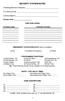 SECURITY SYSTEM NOTES Installing/Service Company For Service Call Central Station Duress Code FUNCTION CODES Function Code Controls Function EMERGENCY ACTIVATION KEYS (check if enabled) Fire Auxiliary
WILLIAMSON COUNTY SECURITY ALARMS RESOLUTION
 1 WILLIAMSON COUNTY SECURITY ALARMS RESOLUTION 2 WILLIAMSON COUNTY SECURITY ALARMS RESOLUTION TABLE OF CONTENTS Sec. 1 Purpose Page 3 Sec. 2 Definitions Page 3-6 Sec. 3 Registration, Fee, Transferability,
Users Guide to Keypad Functions
 Users Guide to Keypad Functions MANUAL NO. 700-175-01J ISSUED JAN 2002 VERSION 1.41 Summary of Operation A rm/ disarm [#] + [USER CODE] Quick Quick Quick Panic Fire Medical Away Arm Stay Arm Stay Arm &
SECURITY OF BUILDINGS, GROUNDS AND OTHER ASSETS
 500-54 Administrative Procedure 542 SECURITY OF BUILDINGS, GROUNDS AND OTHER ASSETS Background Recognizing the significant investment in buildings, grounds, supplies and equipment, the District has a responsibility
Guidance Notes FSR 2014
 Definition (page 13) TERM DEFINITION GUIDANCE/ AMENDMENT BACKED UP To make a copy of a data file which is stored securely in a separate location and can be used as a security copy. To make a copy of a
THE UNIVERSITY OF TEXAS AT AUSTIN HANDBOOK OF OPERATING PROCEDURES SECURITY SYSTEMS ALARM POLICY
 THE UNIVERSITY OF TEXAS AT AUSTIN HANDBOOK OF OPERATING PROCEDURES Section I. General Policy Guidelines A. Policy Statement SECURITY SYSTEMS ALARM POLICY Part 2. Campus Services Section A. General Campus
HILLS Series LED Code Pad User Manual
 HILLS Series LED Code Pad User Manual Not all features may be available on your system Check with your installer to find out which features are programmed Page 2 TABLE OF CONTENTS Code Pad Diagrams...2
ALARM SYSTEMS Ord. No. 08-02 Adoption Date: September 9, 2008 Publication Date: September 17, 2008 Effective Date: October 16, 2008
 An ordinance relating to Alarm Systems THE TOWNSHIPOF BIRCH RUN ORDAINS: ALARM SYSTEMS Ord. No. 08-02 Adoption Date: September 9, 2008 Publication Date: September 17, 2008 Effective Date: October 16, 2008
NetworX NX-6V2. LED Keypad User Manual
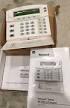 NetworX NX-6V2 LED Keypad User Manual POWER Light is on when AC power is present; flashes to indicate a low battery condition. ARMED Light is on when armed; off when disarmed; flashes to indicate a previous
Chapter 9.16 EMERGENCY ALARMS
 Chapter 9.16 EMERGENCY ALARMS Sections: 9.16.010 Purpose and authority 9.16.020 Definitions 9.16.030 Permit required 9.16.040 Alarm application permit and fee 9.16.050 Renewals, reapplications and information
Understanding Alarm Systems
 Understanding Alarm Systems A false alarm occurs when an alarm signal designed to elicit an immediate emergency Law Enforcement, Fire, or Medical response is activated, when in fact no emergency exists.
CITY OF LYNN In City Council
 February 17, 2009 IN THE YEAR TWO THOUSAND AND NINE, AN ORDINANCE REGULATING ALARMS - FALSE ALARMS WITHIN THE CITY OF LYNN SECTION ENTITLED ALARM SYSTEMS WHEREAS, the purpose of this ordinance, finds that
Building Code Clarifications - 7. Fire Resistance
 Building Code Clarifications - 7. Fire Resistance 7.1 (15-12-030) Use of combustibles in Type III construction roof assemblies Code Section (15-12-030) Use of Combustibles was revised on May 17, 2000,