
UNC ADULT COCHLEAR IMPLANT PROGRAM COCHLEAR IMPLANT JOURNAL - 0 -
|
|
|
- Cecily Morgan
- 10 years ago
- Views:
Transcription
1 UNC ADULT COCHLEAR IMPLANT PROGRAM COCHLEAR IMPLANT JOURNAL - 0 -

2 TABLE OF CONTENTS CONTACT & CLINIC INFORMATION Welcome Letter Page 3 Adult Cochlear Implant Team Reference Page 4 Clinic Contact Information Page 5 Parking Information Page 6 Driving Directions Page 7 GETTING STARTED Evaluation Process Page 10 Audiology Evaluation Checklist Page 11 The Audiogram Page 12 ALL ABOUT SURGERY Pre-Surgery Information Page 13 Day of Surgery Page 15 Risks with Surgery Page 16 AFTER SURGERY Post-Surgery Information Page 17 Warnings with a Cochlear Implant Page 19 Personal Record of Cochlear Implant Information Page 20 What to Expect at Initial Activation Page 21 Initial Activation Checklist Page 23 External Equipment Reference Page 24 Initial Activation Page 25 Routine Follow-up Appointments Page 26 Two Week Appointment Page 27 One Month Appointment Page

3 Three Month Appointment Page 29 Six Month Appointment Page 30 One Year Appointment Page 31 Two Year Appointment Page 32 Three Year Appointment Page 33 FUTURE REFERENCE What to do if your Equipment Breaks Page 34 Bilateral Cochlear Implantation Page 37 Tips for Traveling with a Cochlear Implant Page 38 Cochlear Implant Companies Page 40 Device Warranty Information Page 41 MENINGITIS VACCINATION Meningitis Vaccination Information Page 42 AURAL REHABILITATION Aural Rehabilitation Page 43 NOTES Notes Page

4 WELCOME TO UNC Welcome to the adult cochlear (kō-klē-ər) implant program at UNC! We made this journal to help you through the steps of getting a cochlear implant. Many people with hearing loss have lived in quiet for a long time. People with a cochlear implant may hear sounds they have not heard in years. We know getting a cochlear implant is a big choice. Our goal is to help you make this choice and provide as much information as possible. The UNC cochlear implant program started more than thirty years ago. We are one of the biggest cochlear implant programs in the United States. Many people come to us from other states. We do about one hundred adult cochlear implant surgeries every year. We work with all three cochlear implant companies. These companies are Advanced Bionics, Cochlear and Med-El. There are steps to getting and doing well with a cochlear implant. The steps involve a team approach. This team includes you, your family, audiologists, speech language pathologists, nurses and doctors. The goal of this team is to help you do your best with a cochlear implant. Getting a cochlear implant is a journey to hearing better. We will work as a team to help make this journey as smooth as possible. Patients often ask how much better they will hear with a cochlear implant. This is a good question. Results can range from hearing sound (simple detection) to understanding speech in a noisy background. Results depend on a number of things. Some of these are a person s hearing history, history of hearing aid use, and access to spoken language. For all patients, success with a cochlear implant requires wearing the device, practice, and returning for follow up visits. Thank you for choosing UNC to help you through this journey to better hearing. We look forward to working with you in the future. Let s begin! - 3 -

5 ADULT COCHLEAR IMPLANT TEAM DOCTORS Harold C. Pillsbury III, MD, FACS Professor & Chair, Department of Otolaryngology/Head and Neck Surgery Craig A. Buchman, MD, FACS Professor & Chief, Department of Otolaryngology/Head and Neck Surgery Kevin D. Brown, MD, PhD Associate Professor, Department of Otolaryngology/Head and Neck Surgery NURSES Kathy Tommerdahl, RN Clinical Nurse, Dr. Pillsbury Kristen Jewell, RN Clinical Nurse, Dr. Buchman BJ Squires, RN Clinical Nurse, Dr. Brown CLINICAL AUDIOLOGISTS English R. King, AuD Clinical Coordinator of Adult Cochlear Implant Program Clinical Audiologist Ellen J. Pearce, AuD Clinical Audiologist Andrea L. Bucker, AuD Clinical Audiologist Sarah McCarthy, AuD Clinical Audiologist RESEARCH AUDIOLOGISTS Margaret T. Dillon, AuD Assistant Professor, Department of Otolaryngology/Head and Neck Surgery Meredith Anderson, AuD Research Instructor, Department of Otolaryngology/Head and Neck Surgery - 4 -

6 CLINIC INFORMATION UNC HOSPITALS HEARING & VOICE CENTER AT CAROLINA CROSSING 2226 Nelson Highway Suite 102 Chapel Hill, NC Audiology Appointments: (919) Audiology Fax: (919) UNC DEPARTMENT OF OTOLARYNGOLOGY/HEAD AND NECK SURGERY Two Clinic Locations: NC NEUROSCIENCES HOSPITAL Ground Floor 101 Manning Drive Chapel Hill, NC CAROLINA CROSSING 2226 Nelson Highway Suite 101 Chapel Hill, NC ENT Appointments: (919) (for both locations) / (919) (Carolina Crossing) ENT Fax: (919) (Neurosciences) / (919) (Carolina Crossing) - 5 -

7 PARKING AT UNC HOSPITALS MAIN CAMPUS Patients and visitors may park in the Dogwood Parking Decks or the Ambulatory Care Center parking lot at a cost of $1.50 an hour or part of an hour, to a maximum of $8 to park your vehicle for a full day. Coupons are available to Patients and Visitors in the Hospitals Parking Office for $8 each. These coupons will allow Patients or Visitors to enter and leave the deck multiple times during the day without acquiring extra charges. The Hospitals Parking Office is located in the building in front of N.C. Children s Hospital. Valet Parking is available to all patients and visitors to any of the Hospitals and the Clinical Cancer Center. Valet is located in the building in front of the N.C. Hospitals. The cost for valet parking is $10. Valet coupons can be purchased from the Valet Cashier and come in books of five and cost $45. Payment for the Dogwood Deck or Valet can be made by cash, credit or debit card. Visitors and Patients may contact the Hospitals Parking Office for long term parking options at Handicapped Parking is available for up to four hours in any of the Handicapped Parking spaces located directly in front of the Memorial Hospital entrance. Additional handicapped spaces are located in the Dogwood Parking Deck. Handicappedaccessible shuttles service these spaces. If you need assistance from the parking deck, please contact the attendant via the call box phones. rking AT SATELLITE CLINIC Patients and visitors may park in lot outside of clinic. There is no cost to park at this location UNC Hospitals Hearing & Voice Center at Carolina Crossing

8 DIRECTIONS UNC HOSPITALS HEARING & VOICE CENTER AT CAROLINA CROSSING PHONE: (919) From I-40 West, take exit 273A You will merge onto 54 West (Will cross over I-40) Get in right lane. Stay straight through first light (Farrington Road) Stay in right lane (lane will end making you turn right) Turn right onto Nelson Highway (Hwy 54 Access/Service Road) Clinic will be on the LEFT (3-story light red brick building) From I-40 East, take exit 273 Turn right onto 54 West Get in right lane. Stay straight through first light (Farrington Road) Stay in right lane (lane will end making you turn right) Turn right onto Nelson Highway (Hwy 54 Access/Service Road) Clinic will be on the LEFT (3-story light red brick building) - 7 -

9 DIRECTIONS UNC HOSPITALS DIRECTIONS FROM THE SOUTH: Take US North to Chapel Hill. US turns into South Columbia Street. Turn right on Manning Drive. Parking for the Hospital is in the Dogwood Deck garage. The Dogwood deck garage is 3/10 of a mile on the right. DIRECTIONS FROM THE NORTH: Take NC 86 South. NC 86 turns into Martin Luther King Jr. Boulevard. Turn right onto Cameron Avenue (2nd light after Franklin Street). Turn left right away onto Pittsboro Street. Go left when the road splits. Go across South Columbia Street to be on Manning Drive. Parking for the Hospitals is in the Dogwood Deck garage. The Dogwood deck garage is 3/10 of a mile on the right. DIRECTIONS FROM THE EAST: Take I-40 West to exit #273A. Take NC 54 West to Chapel Hill. Take US South to Manning Drive. Turn right on Manning Drive. Parking for the Hospitals is in the Dogwood Deck garage. The Dogwood Deck is 9/10 of a mile from US on the left. DIRECTIONS FROM THE WEST: Take NC 54 East to Chapel Hill. Exit at Columbia Street/US Turn left onto South Columbia Street. Turn right on Manning Drive. Parking for the Hospitals is in the Dogwood Deck garage. The Dogwood Deck garage is 9/10 of a mile from US

10 DIRECTIONS AMBULATORY CARE CENTER (ACC) DIRECTIONS FROM THE SOUTH: Take US North to Chapel Hill. US turns into South Columbia Street. Turn right on Manning Drive. Turn right on West Drive. Turn right on Mason Farm Road. The ACC entrance is ¼ miles on the left. The parking lot is around the building. DIRECTIONS FROM THE EAST: Take I-40 West to exit #273A. Take NC 54 West to Chapel Hill. Take US South to Manning Drive. Turn right on Manning Drive. Turn left on West Drive. Turn right on Mason Farm Road. The ACC entrance is ¼ miles on the left. The parking lot is around the building. DIRECTIONS FROM THE NORTH: Take NC 86 South. NC 86 turns into Martin Luther King Jr. Boulevard. Turn right onto Cameron Avenue (2nd light after Franklin Street). Turn left right away onto Pittsboro Street. Go left when the road splits. Go straight across South Columbia Street to be on Manning Drive. Turn right on West Drive. Turn right again on Mason Farm Road. The ACC entrance is ¼ mile on the left. The parking lot is around the building. DIRECTIONS FROM THE WEST: Take NC 54 East to Chapel Hill. Exit at Columbia Street/US Turn left onto South Columbia Street. Turn right on Manning Drive. Turn right on West Drive. Turn right again on Mason Farm Road. The ACC entrance is ¼ miles on the left. The parking lot is around the building

11 EVALUATION PROCESS THE GOAL OF A COCHLEAR IMPLANT EVALUATION: Decide if getting a cochlear implant is a good option for you Go over test results Make suggestions based on results Give information about cochlear implant technology Answer questions THE EVALUATION PROCESS: Hearing Test o Audiologist (hearing specialist) will go over your hearing history o Test your hearing with and without hearing aids o Test your speech understanding with and without hearing aids Medical Check o A doctor who specializes in ears will go over your medications and health history o A scan or x-ray will most likely be done to look at the inside of your ear o The doctor will talk about surgery, procedure, and risks WHO IS A COCHLEAR IMPLANT CANDIDATE? Moderate to profound sensorineural hearing loss (sensory-neural, when there is damage to the inner ear or to the nerve pathways from the inner ear to the brain) in both ears Little or no benefit with hearing aids Clear understanding of cochlear implantation and end results Commitment to process and follow-up appointments

12 COCHLEAR IMPLANT AUDIOLOGY EVALUATION CHECKLIST Case History Unaided Audiogram Unaided Speech Reception Threshold Unaided Word Recognition Score Aided Audiogram Aided Speech Reception Threshold Aided Speech Perception Testing Review of Test Results Cochlear Implantation Discussion o Devices o Processor/Wearing Options o Battery Options o Color Options o Warranty Follow-Up Schedule Use of Hearing Aid in other Ear MRI Compatibility (differs between manufacturers) Meningitis Vaccination Recommendation Auditory Rehabilitation Therapy Options

13 THE AUDIOGRAM Audiogram Source: An audiogram is a picture which shows the softest levels you can hear. The tones that you listen for during a hearing test range from low-pitch to high-pitch. The loudness of the sound is measured in decibels (db). The pitch or frequency of the sound is referred to in Hertz (Hz). This picture shows how your hearing differs from normal hearing and the degree of hearing loss that you have in each ear

14 PRE-SURGERY SCHEDULING An ENT surgery scheduler will set-up these visits for you: o Pre-op with ENT doctor o Surgery o Post-op with ENT doctor An audiology scheduler will set-up your initial activation. This is when you get the outside part and start to hear sound with the implant. o You will get a call after you get home from hospital. o This is normally scheduled two to three weeks after surgery. o You may wear your hearing aid in the opposite ear. Please make sure your phone number, , and address are correct in hospital system. Hospital staff may need to contact you. PRE-OP VISIT Your pre-op visit will start in the ENT Clinic. The doctor will check your medical history. The doctor will talk about risks of surgery. Consent forms will need to be signed. Your questions will be answered. You will also be seen in PRE-CARE for further testing, if needed. o Blood work, Electro-cardiogram (EKG) and chest X-Ray (CXR), if needed o Results are looked at before surgery You may have visits with other doctors. This will be needed if you have a medical problem that may be complicated by being put to sleep for surgery. Imaging of temporal bone will be taken (if not already done). The temporal bone is the part of your head where your organ of hearing is located. Be ready to be at UNC Hospitals for several hours

15 PRE-SURGERY INFORMATION PRE-CARE will call the last day before your surgery. o If your surgery is on a Monday, they will normally call on the Friday before. PRE-CARE will tell you what time you should come for surgery. o The call will not be before 3:00 PM. Adult cochlear implant surgeries happen in the Ambulatory Care Center (ACC) or Main operating room on UNC s hospital grounds. Tell us if you are sick or have a fever within three days of surgery. o You can reach the ENT clinic at (919) Do not take aspirin (or medications that have aspirin) within 2 weeks before your surgery day. Do not eat after midnight before your surgery. You may drink small amounts of clear liquids up to 2 hours before your arrival time

16 DAY OF SURGERY Report to your surgery location. You will be taken to the pre-op area. Your family will be taken to a waiting area. The outpatient surgery will last about 2-3 hours. The doctor will talk to your family after the surgery. After you wake up, you will be taken to the recovery area. Your family will be able to come to your bedside. The nurse will be watching you as you continue to wake up. o Checking your vital signs, level of consciousness, bandage. Recovery times can vary. Plan to spend 23-hours in the hospital. This means an overnight stay. You will leave with a bandage/dressing over your ear. o The nurse will give you instructions on how to care for your ear at home. A prescription for an antibiotic and pain medication will be given to you. Please tell the doctor any medications you cannot take

17 RISKS WITH SURGERY RISKS WITH COCHLEAR IMPLANT SURGERY: Loss of natural (or residual) hearing in implanted ear Greater chance for infection in the fluid around the brain and spinal cord (known as meningitis) Facial nerve stimulation / involuntary facial twitching Swelling (Inflammation)/Pushing or thrusting out (Extrusion) o Soreness, redness, breakdown of skin in area around device Failure of implanted device Greater chance for infection in the fluid around the brain and spinal cord (Meningitis) Please find full information regarding meningitis vaccination on last pages of CI journal RISKS WITH ANY EAR SURGERY: Numbness/tenderness around the ear Neck pain Injury to the facial nerve Taste change (dry mouth or a metal taste in mouth) Leak of inner ear fluid (Perilymph) or fluid that surrounds the brain (Cerebrospinal) Dizziness / Vertigo Ringing in the ears (Tinnitus) Local complications such as blood, fluid or infection at or near surgery site Rashes (skin reactions) GENERAL RISKS: Post-surgery pain, scarring, bleeding and infection Risks associated with being put to sleep (problems with the heart, lungs, kidneys, liver and brain due to general anesthesia)

18 POST-SURGERY Please call the doctor s nurse or the triage nurse if you have questions once you are home. If you have questions after clinic hours (8:30-4:30 M-F), please call o This is the UNC Hospital main telephone number. o Ask to speak to the ENT doctor-on-call. You may have a sore throat for a few days. You may have dry mouth or a metal taste for a few weeks after surgery. But, this may last longer. Start with clear liquids at first. Then try to eat solid food. Try not to eat hard or crunchy foods the first week. A stiff neck or pain in your neck can last for a few weeks after the surgery. Lack of feeling/numbness or stiffness around your ear is normal. This can last for a few months. Your ear may stick out for a few days from swelling. It should go back to normal as your ear heals. Call right away if clear liquid starts dripping from your nose. Dizziness can be normal for a little while after surgery. Do not take off the bandage (unless told by the doctor). Do not get the bandage wet. The bandage will catch any drainage and help stop buildup of fluid. Pinkish drainage is normal. Call right away if bright red drainage is found. The doctor will take off the bandage at your first post-op visit to look at the site

19 POST-OP VISIT You will come back about one week after surgery to have your bandage taken off by the doctor. The doctor will make sure site is healing well and there is no sign of infection. The audiologist may check the inside piece to make sure it is working. o Also done in the operating room at time of surgery. o This only takes a few minutes

20 WARNINGS WITH A COCHLEAR IMPLANT Be careful when playing sports and in certain activities (contact sports, bicycling, and rollerblading) without a helmet. Try not to hit head during activity (football, soccer, etc.). Wear a helmet for sports like riding a bicycle. If the inside piece is not working, then you may need another surgery. This is called a revision surgery. The US Food and Drug Administration (FDA) does not allow or limits certain imaging (MRI = magnetic resonance imaging) with a cochlear implant. This differs between manufacturers. Please check with your doctor or audiologist. The use of high-frequency electric current to cut tissue during surgery (Electrosurgery) and electroshock therapy can permanently hurt the device. Electrically induced heat (Diathermy) or spinal cord stimulation (neurostimulation) cannot be used over the implant. This can hurt the cochlear tissue and the inside piece. A treatment for some types of cancer (Ionizing radiation) will hurt the inside piece. If you have a medical problem or question, please contact your cochlear implant doctor

21 COCHLEAR IMPLANT INFORMATION Date Implanted: CI Company: Ear Implanted: Processor Type: Speech Processor Serial Number(s): Warranty ends: Doctor: Contact Number: Nurse: Contact Number: Audiologist(s): Contact Number: Contact Fax Number:
22 WHAT TO EXPECT AT INITIAL ACTIVATION You can keep using your hearing aid in the other ear until you come to your initial activation visit. This is when you get the outside part of your implant and start to hear sound. At this visit, we will ask that you not wear your hearing aid in the other ear. After several months with your new implant, you may go back to wearing your old hearing aid also. For some patients, we may talk about getting a second cochlear implant. About two to four weeks after surgery, you will be fit with the outside part of the cochlear implant. This time allows your ear to heal. The main outside piece is called the speech processor. It has to be mapped or programmed for you to hear sound through the cochlear implant. During the first six months of hearing with your implant, reprogramming or remapping is done about five times. As your hearing and understanding with the cochlear implant gets better, less reprogramming visits are needed. To begin, the speech processor is put behind your ear. The outside magnet (coil) is put on your head. The outside magnet and the inside magnet connect to each other. The coil is connected to the speech processor by a transmitting cable. Next, the programming or mapping of the speech processor begins. The speech processor is connected to the audiologist s computer. Individual electrodes of the implant are stimulated. You will hear a series of beeps. You will hear different pitches or tones. The audiologist will measure your response to these sounds. We are trying to figure out the levels that are loud but comfortable. We may also measure sounds that are very soft. After measuring these sounds, the speech processor microphone is turned on. This will let you hear sounds that are around you, including speech. The volume will be turned up slowly. Hearing speech through your cochlear implant may sound unnatural at first. The sound you hear on the first day of listening is different for every patient
23 For some, speech may sound like beeps. For others, speech may sound like a voice. Typically if it sounds like a voice, it is not a normal voice. Patients often describe speech as sounding mechanical, cartoonish, Mickey Mouse, Donald Duck. The quality of sound will get better with time and practice. Finally, your map is saved to the speech processor. We will counsel on how to use, troubleshoot, care for and maintain your outside equipment. With each day, with each week, you will hear and make out more sounds as you listen. Learning to listen again and understand what you are hearing takes time and practice. Be patient. Your family and friends should speak to you normally. They do not need to raise their voices. Having others read books, magazines, and newspapers aloud are good ways to practice listening. Listening to books on tape, while you follow along in reading is a good way to practice on your own. Please ask your audiologist for other ways or ideas that you can learn and practice at home
24 COCHLEAR IMPLANT INITIAL ACTIVATION ORIENTATION CHECKLIST EQUIPMENT: Identification of external parts o Processor/Control Unit, cable, headpiece/coil, battery pack Device operation & troubleshooting Equipment care & maintenance Batteries DOCUMENTS: Accessories Use of remote control (if applicable) Ordering parts & batteries o Manufacturer versus online ( Manufacturer registration User manual ID card o Warnings & Precautions; Caution of MRI (differs between manufacturers) Manufacturer patient information/insurance forms RECOMMENDATIONS: Read user manual before next visit Wear device all waking hours Check magnet site. If redness or swelling occurs, call your ENT surgeon Try to work through all programs
25 EXTERNAL EQUIPMENT Please refer to your Company s User Manual for instructions on how to use your remote (if applicable) as well as care and maintenance of your external unit. AB Naida CI Q70 Sound Processor Universal Headpiece Battery Module Cable COCHLEAR CP910 (Nucleus 6) Coil & Magnet Sound Processor MED-EL SONNET Sound Processor Cable Coil & Magnet Battery Module Cable Battery Module
26 INITIAL ACTIVATION DATE: This visit is 2-3 weeks after surgery. It will be about two hours long. Today you will hear through the cochlear implant. At this visit, we will ask that you not wear your hearing aid in the other ear You will be fit with your outside equipment (speech processor, battery pack, transmitting cable and coil / headpiece). A program or MAP is made by measuring sounds that you hear through the cochlear implant. This is done while connected to audiologist s computer. You will hear different pitches or tones as each electrode is stimulated. We will increase the volume of each tone until it is a loud but comfortable level. You may also listen for sounds that are very soft. We will turn on the microphone. We will ask you to tell us what you are hearing. You may hear anything from bells to speech. This is normal. We will talk about many things today. We will teach you how to use, troubleshoot, care for and maintain your equipment. We know that you may not remember everything. We will complete product registration and talk about warranty information. Please read your user manual and bring any questions you have to your next appointment. You will return for your next follow-up appointment in 2-3 weeks. NEW PROGRAMS: PROGRAM 1: PROGRAM 2: PROGRAM 3: PROGRAM 4:
27 AUDIOLOGY FOLLOW-UP VISITS You will learn and adjust with the cochlear implant more quickly in the beginning. For this reason, a lot of mapping changes are needed in the first year. We will see you for multiple follow-up testing and mapping sessions in the first year. o (2-weeks after initial activation dependent on schedule) o 1-month after initial activation o 3-months after initial activation o 6-months after initial activation o 12-months after initial activation After one year, patients are normally seen once a year. These yearly visits are important. We want to make sure you continue to do well with your cochlear implant
28 TWO WEEK APPOINTMENT DATE: You have now heard many new sounds. You may have many questions. It may help to write all of these down. That way we can make sure to answer them during your appointment. We will start in the test booth. You will listen for some soft sounds and speech. We will then check the inside piece. We will also reprogram the speech processor. Changes are made to the programs at every appointment. This helps you hear more sound as you learn to listen with the cochlear implant. NEW PROGRAMS: PROGRAM 1: PROGRAM 2: PROGRAM 3: PROGRAM 4:
29 ONE MONTH APPOINTMENT DATE: We start this appointment in the test booth. We will test you with your cochlear implant. You will listen to soft sounds and speech. These scores will be compared to your past scores. Testing gets harder as you progress. We will then check the inside piece. We will reprogram the speech processor. NEW PROGRAMS: PROGRAM 1: PROGRAM 2: PROGRAM 3: PROGRAM 4:
30 THREE MONTH APPOINTMENT DATE: We will begin this appointment in the test booth. We will test you with your cochlear implant. You will listen to soft sounds and speech. These scores will be compared to your old scores. We will then check the inside piece. We will reprogram the speech processor. NEW PROGRAMS: PROGRAM 1: PROGRAM 2: PROGRAM 3: PROGRAM 4:
31 SIX MONTH APPOINTMENT DATE: We will begin this appointment in the test booth. We will test you with your cochlear implant. You will listen to soft sounds and speech. These scores will be compared to your old scores. We will then check the inside piece. We will reprogram the speech processor. NEW PROGRAMS: PROGRAM 1: PROGRAM 2: PROGRAM 3: PROGRAM 4:
32 ONE YEAR APPOINTMENT DATE: Congratulations! You have now had your cochlear implant for one year. From now on, you will only need to schedule follow-up visits for once a year. But you can make an appointment before that if needed. We will begin this appointment in the test booth. We will test you with your cochlear implant. You will listen to soft sounds and speech. These scores will be compared to your old scores. We will then check the inside piece. We may reprogram the speech processor. NEW PROGRAMS: PROGRAM 1: PROGRAM 2: PROGRAM 3: PROGRAM 4:
33 TWO YEAR APPOINTMENT DATE: We will begin this appointment in the test booth. We will test you with your cochlear implant. You will listen to soft sounds and speech. These scores will be compared to your old scores. We will then check the inside piece. We may reprogram the speech processor. NEW PROGRAMS: PROGRAM 1: PROGRAM 2: PROGRAM 3: PROGRAM 4:
34 THREE YEAR APPOINTMENT DATE: Today s appointment should be scheduled just before the end of your warranty (if applicable). Your warranty may be three years or five years. This depends on your cochlear implant company. We will look at all of your equipment to make sure it is working properly. The equipment that is not working it will be replaced through the company. We will begin this appointment in the test booth. We will test you with your cochlear implant. You will listen to soft sounds and speech. These scores will be compared to your old scores. We will then check the inside piece. We may reprogram the speech processor. NEW PROGRAMS: PROGRAM 1: PROGRAM 2: PROGRAM 3: PROGRAM 4:
35 WHAT TO DO IF YOUR EQUIPMENT BREAKS At some point your outside equipment may stop working. When this happens, your equipment may need to be repaired or replaced. Please keep in mind that you should have back up equipment that you can use. You received this back up equipment at your initial activation. It should be in your kit. So hopefully you will never have to be off the air. Please take the following steps: 1) Remember that you have a back-up unit or cochlear implant parts. 2) Pull out your user manual. Look over the troubleshooting section. 3) Visit your cochlear implant company s website. They have troubleshooting tips, guides and/or videos. 4) If you cannot fix the problem yourself, call or your cochlear implant company. They can help you troubleshoot the problem and workout what parts need to be replaced. All companies have audiologists who can respond quickly. Please note that you can order replacement cochlear parts or batteries directly from your cochlear implant company. 5) If you are still having a problem, call the clinic at (984) during business hours. It is an automated phone system. You will need to select #2 for adult services and then #3 to get to the front desk. Ask for a cochlear implant audiologist. If we are not available, please ask to leave a message. Tell us what is happening and which parts (and serial numbers) you are having problems with. We will contact you as soon as possible. **We ask that you call your company first before calling the clinic. This will likely save you time and help in getting you back to hearing more quickly. ADVANCED BIONICS (MONDAY THROUGH FRIDAY, 8AM 8PM EST) PHONE: [email protected]
36 ONLINE TROUBLESHOOTING: ESHOOTING_GUIDES.HTML COCHLEAR AMERICAS (OPEN MONDAY THROUGH FRIDAY, 8AM 8PM AND SATURDAYS 10AM 2PM EST) PHONE: ONLINE TROUBLESHOOTING: S/NUCLEUS-6/NUCLEUS-6-SUPPORT-AND-COMMUNITY/SELF- SUPPORT MED-EL CORPORATION (AVAILABLE 24 HRS/DAY, 7 DAYS/WEEK, 365 DAYS/YEAR; IF CALLING AFTER 5:30 EST, PRESS 1 FOR CUSTOMER SERVICE OR 2 FOR AUDIOLOGY) PHONE: OR (DIRECT LINE FOR JOSH SHRINER) [email protected] OR [email protected] ONLINE TROUBLESHOOTING: TROUBLESHOOTING/?TITEL=TROUBLESHOOTING-GUIDE& IF YOU ARE IN WARRANTY The company can send replacement parts to your home. If you are in warranty, there should be no cost to repair/replace external parts (does not apply to accessories). These parts are normally shipped via Fed-Ex. DO NOT throw the bad parts away. The company will want the bad parts back. Your replacement equipment will come with a pre-paid, pre-addressed Fed-Ex label. Use this label to ship the broken parts back to the company
37 IF YOU ARE OUT OF WARRANTY If you are out of warranty, there will most likely be a cost to you to replace or repair parts. In some cases, insurance plans may cover some of this cost. Requests normally have to be approved through insurance first. This means the process of repairing or replacing equipment may take longer. If you have Medicare: Contact the company to figure out what parts need to be replaced. You can order these parts from the company. The company should contact you when insurance approval has been received. They will let you know if and how much money you owe. Medicare normally covers 80% of the cost of a repair or replacement. Parts can normally be shipped to your home. Again, you will need to ship the broken equipment back to the company. If you have Private Insurance: The company may be able to ask for approval from your insurance provider, but you may have to pay up front. If your insurance approves, you may get repaid from the insurance provider. All three companies offer extended warranty. The price of these service contracts varies. It is in your best interest to buy an extended warranty when the original warranty ends. Please contact your cochlear implant company for more information
38 BILATERAL COCHLEAR IMPLANTATION Views on having a cochlear implant in both ears (bilateral cochlear implantation) have changed a lot in recent years. It is more common to implant both ears. If a patient has limited benefit from a hearing aid in the other ear, we may talk about the option of a second cochlear implant. If a patient still has usable hearing in the other ear, we may recommend a hearing aid in this ear along with the cochlear implant. This decision is unique to each patient. Research shows that two ears are better than one. In order for a patient to do his/her best, bilateral cochlear implantation may be recommended. There are several benefits of having two cochlear implants: Better speech understanding in noise Being able to know where sounds come from (localization) Never being without sound. If the internal or external parts from one cochlear implant side need repair or replacement, patient can still hear with the other side. Most insurance providers support bilateral cochlear implantation. Determining candidacy for bilateral cochlear implantation would be made by the CI team CI audiologist, surgeon, and patient/family. Certain criteria must be met in order to be considered a candidate for a second side implant: Successful and consistent use of the first device Active participation in follow-up care No physical contraindications for placement of the implant (any medical reason for not getting implant, i.e., CT scan results) Medically cleared for surgery Realistic expectations and commitment to follow-up appointments
39 TIPS FOR TRAVELING Take extra parts (like a back-up speech processor, battery pack, coil, and cables) with you in case of emergency. Take plenty of batteries (disposable or rechargeable). If you use rechargeable, do not forget your battery charger (and adapter if needed). Remember to take your drying jar or Dry & Store box with you so you can put your processor in it overnight. This is important if you will be somewhere with high humidity. Will anything happen to my cochlear implant when I walk through airport security? Not normally. You should leave your speech processor on so you can hear what is going on around you. If your processor is set on the telecoil T setting, you may hear some buzzing. This is normal. If the metal detector alarm goes off, what should I do? Metal detectors and scanners will not hurt the inside piece or outside speech processor. If you pass through the security metal detector, your cochlear implant may set the alarm off. If the alarm goes off, security may use a handheld wand to screen you. The wand will not harm your cochlear implant, but it will beep when it passes over your implant. Show your patient ID card and explain that you have a hearing implant. Tell them that the speech processor is a hearing device that you must wear in order to hear through the implant. What should I do with my back-up speech processor when I fly? Turn your spare speech processor OFF and keep it inside a carry-on bag. Place the bag onto the conveyer belt at airport security. Never place your processor right onto a conveyer belt. Static electricity may build up and harm your MAP or program. The x- ray machine should not affect your MAP if the processor is turned off
40 Note: A low-level x-ray is used to screen carry-on luggage. The x-ray will not harm your processor or the MAP. Never put your spare processor into checked baggage as this could expose it to damaging x-rays. Will my implant send signals that can interfere with the plane's navigational instruments? Your implant cannot get in the way of the plane s systems. Your implant sends out radio frequency (RF) signals. They are very short range (less than five feet from the outside coil). Your remote assistant or Fine Tuner (if applicable) does send out high frequency radio waves and should be turned off during take-off and landing. If your remote does not have an off switch, do not use it. Like other electronic devices, should I turn off my speech processor during take-off and landing? No. Cochlear implant patients DO NOT have to turn off their speech processors when instructions are given to turn off cell phones, music players or anything with an on/off switch. The FAA views a cochlear implant in the Hearing Aid category. If you have a remote control for your speech processor, this should be turned off or not used during this time. How can I listen to the in-flight music or watch a movie? You can plug your speech processor into the plane s audio system. You would need to use your audio cable accessory. (See your user manual on how to connect the Audio Adaptor Cable to your speech processor.). Further questions regarding the TSA s guidelines for airport screening and how it relates to your hearing loss and cochlear implant, may be found at: Resource:
41 COCHLEAR IMPLANT COMPANIES Advanced Bionics Corporation Westinghouse Place Valencia, CA Cochlear Corporation E. Peakview Avenue Centennial, CO MED-EL Corporation 2511 Old Cornwallis Road, Suit 100 Durham, NC
42 DEVICE WARRANTY INFORMATION In warranty means there is no cost to repair or replace broken parts. Advanced Bionics offers a 5-year warranty for the sound processor, headpiece/magnet, transmitting cable, T-mic and charger. The rechargeable batteries are covered for 1 year. Cochlear Corporation offers a 5-year warranty for the sound processor, coil, transmitting cable, and Remote Assistant. The battery holder (for disposable batteries) and the rechargeable batteries are covered for 1 year. MED-EL offers a 5-year warranty for the external sound processor, coil, transmitting cable, battery packs (all types), rechargeable batteries (if applicable), and Fine Tuner. *** Parts are replaced due to normal wear and tear only. The warranty for the outside parts starts the day you get your equipment. A one-time replacement for loss and damage (beyond repair) is offered during this warranty period. You can buy extended coverage through the company for after the initial warranty ends. The warranty for the inside part starts the day of your surgery. Cochlear implants are man-made medical electronic devices. The internal devices are made to last a long time, but they may not last a lifetime. All three CI companies offer a 10-year warranty for the inside piece
43 MENINGITIS VACCINATION Dear Cochlear Implant Candidate: We are writing to tell you about getting a vaccination (shot) for an infection called meningitis. Shots can help protect you from pneumococcal infections. This infection may become meningitis. It is an infection in the fluid around the brain and spinal cord. Meningitis is serious and life threatening. The Food and Drug Administration, Centers for Disease Control and health departments looked at meningitis rates with children with cochlear implants. They found children with cochlear implants at a higher risk for getting meningitis than those without. We believe this is important for adults as well. That is why it is suggested that adults with cochlear implants get the recommended shots to help reduce their chance of getting meningitis. There are two main types of meningitis: viral and bacterial. Bacterial is the more serious type. Two types of bacterial meningitis have been found in people with cochlear implants. These types are Streptococcus pneumonia ( Pneumococcus ) and Haemophilus influenzae type B. The symptoms, treatment and results depend on the cause of the infection. The Center for Disease Control recently changed the guide for meningitis shots for adults with cochlear implants. The new guide is for users to get both the 23-valent pneumococcal polysaccharide vaccine (Pneumovax 23, PPSV23) and the 13-valent pneumococcal conjugate vaccine (Prevnar 13, PCV 13). Please talk to your doctor about the shot and your case. Keeping this infection from happening is important. Please get this shot before your surgery. You can get this shot from your general doctor or your local county health department. For more information, please visit the Center for Disease Control s website at:
44 AURAL REHABILITATION You got a cochlear implant and had it turned on. Now you need to learn how to listen and understand all of the new sounds coming from your implant. Research has shown that adults make faster progress in their understanding of speech and sounds using a treatment called Aural Rehabilitation (Aural Rehab). What is Aural Rehab (also called Auditory Therapy)? In Aural Rehab, you will learn how to listen and understand the new sounds that come from your cochlear implant. Aural Rehab can improve your skills when talking with others. Improving these skills may help you feel more secure with your implant. Aural Rehab includes exercises that help you: Understand the difference between sounds and whole words Understand new sounds that have not been heard before Read along and follow someone else s speech while they read aloud Notice when you or someone you are talking to does not understand what is said. Learn when to change your setting to improve your understanding. Learn how to set up the phone to work with your implant Enjoy music Learn how your implant affects the people around you, and help your family and friends learn about your implant Make your speech more clear. Learn and practice skills that will make you more comfortable when talking UNC Health Care has a great staff of speech language pathologist (SLPs) that offer Aural Rehab to our patients with cochlear implants. The first step is to meet with the SLP for an evaluation. At this appointment, the SLP will check what skills you have and what skills you need help with by testing: How you make speech sounds
45 How you understand speech Your memory Your reading and writing skills Your listening skills How well you can understand someone talking without being able to see their lips We encourage all patients to make an Aural Rehab evaluation appointment with one of our speech language pathologists to learn what this therapy can offer you. You can make an appointment at UNC Hospitals Hearing & Voice Center by calling (919) There are also some free resources available online which you can listen and practice with at home. Some of these programs include: Angel Sound TM is a free, upgraded version of Sound and WAY Beyond, an auditory rehabilitation program based on CAST technology and distributed by Cochlear Americas. Available at: The Listening Room sponsored by Advanced Bionics has free activities and resources to support the development of speech, language and listening. Available at: SoundScape sponsored by MED-EL has interactive listening activities for various age groups. Available at:
46 NOTES DATE: DATE: DATE:
47 NOTES DATE: DATE: DATE:
48 NOTES DATE: DATE: DATE:
49 NOTES DATE: DATE: DATE:
50 Approved by UNCH Pt. Education Committee 10/1/2013 FK:5.1 HDF #
USER GROUP MEETING. April 2015
 USER GROUP MEETING April 2015 EQUIPMENT YOU NEED TO BRING WITH YOU TO EVERY APPOINTMENT: REMOTE CONTROL(S) ALL PROCESSORS N5 Processor Parts Correct Terminology Magnet Telecoil Coil Ear Hook Cable Processing
Fine jewelry is rarely reactive, but cheaper watches, bracelets, rings, earrings and necklaces often contain nickel.
 BEFORE SURGERY What should I do to prepare for my surgery? Arrange for a family member or friend to accompany you to the hospital on the day of your surgery. Cancel any dental appointments that fall within
Why does my child have a hearing loss?
 Introduction This factsheet will tell you about the range of tests that can be carried out to try to find the cause of your child s hearing loss. The process to find out why a child is deaf is sometimes
Using FM. A guide for children and their families on how to use an FM solution with hearing aids
 Using FM A guide for children and their families on how to use an FM solution with hearing aids Congratulations on your new FM solution!! This booklet tells you how to use your FM solution, where to use
After Your Hearing Aid Fitting
 Who is on the UofM Hearing Team?: Otolaryngologist: A medical doctor (M.D.) specializing in diseases of the ear. Your otolaryngologist will ensure that there are no medical issues preventing you from using
Cochlear Implant Program
 Cochlear Implant Program Medical Center East, South Tower 1215 21 st Avenue South, Room 9302 Nashville, TN 37232-8025 (615) 936-8623 (615) 875-1410 (fax) Thank you for your interest in the Vanderbilt Bill
Spinal cord stimulation
 Spinal cord stimulation This leaflet aims to answer your questions about having spinal cord stimulation. It explains the benefits, risks and alternatives, as well as what you can expect when you come to
Living With Your Pacemaker
 2012 Living With Your Pacemaker Living With Your Pacemaker The pamphlet will help you learn what your new pacemaker can do for you. The heart s natural pacemaker Your heart s natural pacemaker controls
Presbycusis. What is presbycusis? What are the symptoms of presbycusis?
 Presbycusis What is presbycusis? Presbycusis is the loss of hearing that gradually occurs in most individuals as they grow older. Hearing loss is a common disorder associated with aging. About 30-35 percent
VNS Therapy for Epilepsy
 VNS Therapy for Epilepsy This pamphlet provides general information for the public. It is not intended to cover all possible uses, directions, precautions, interactions or adverse effects involving any
Harold C. Pillsbury III, MD, FACS
 Harold C. Pillsbury III, MD, FACS University of North Carolina Ear & Hearing Center Department of Otolaryngology / Head & Neck Surgery, University of North Carolina Chapel Hill, USA Audiologists: Erika
A Preop Nurse will attempt to call you to review your medical history and instructions.
 Pre-Operative Instructions A Preop Nurse will attempt to call you to review your medical history and instructions. What to bring to SDS: Identification and insurance information Arrival time: In order
Questions and Answers for Parents
 Questions and Answers for Parents There are simple, inexpensive tests available to detect hearing impairment in infants during the first days of life. In the past, most hearing deficits in children were
X-Plain Preparing For Surgery Reference Summary
 X-Plain Preparing For Surgery Reference Summary Introduction More than 25 million surgical procedures are performed each year in the US. This reference summary will help you prepare for surgery. By understanding
Colon Cancer Surgery and Recovery. A Guide for Patients and Families
 Colon Cancer Surgery and Recovery A Guide for Patients and Families This Booklet You are receiving this booklet because you will be having surgery shortly. This booklet tells you what to do before, during,
Cochlear Implants: A Communication Choice. Cochlear Implants: A Communication Tool. www.cochlear.com
 Cochlear Ltd ABN 96 002 618 073 14 Mars Road, PO Box 629 Lane Cove NSW 2066 Australia Tel: 61 2 9428 6555 Fax: 61 2 9428 6353 Cochlear Americas 400 Inverness Parkway Suite 400 Englewood CO 80112 USA Tel:
Spinal Cord Stimulation
 Spinal Cord Stimulation Relieving Chronic Pain If chronic pain restricts your life, you may have tried many ways to find relief. This may include medications, nerve blocks, physical therapy, and surgery.
Cheekbone (zygoma) and/or eye socket (orbit) fracture surgery
 Ambulatory Care & Local Networks Cheekbone (zygoma) and/or eye socket (orbit) fracture surgery Information for patients You have been treated in the Emergency Department for a broken (fractured) cheekbone
Staff, please note that the Head Injury Routine is included on page 3.
 Staff, please note that the Head Injury Routine is included on page 3. This booklet explains what can happen after a concussion, how to get better and where to go for more information and help if needed.
User Guide SmartAid and SmartAid Digital BTE Hearing Aids
 Clear Hearing Delivered To Your Door From Hearing Care Experts User Guide SmartAid and SmartAid Digital BTE Hearing Aids www.clearlyhearing.com Thank You for choosing Clearly Hearing on your journey to
Nucleus CP810 Sound Processor and Nucleus CR110 Remote Assistant Troubleshooting Guide
 Nucleus CP810 Sound Processor and Nucleus CR110 Remote Assistant Troubleshooting Guide Symbols Contents Note Important information or advice. Can save inconvenience. Tip Time saving hint or saves inconvenience.
Hearing Aid User Guide. Don t Just Hear.
 Hearing Aid User Guide Don t Just Hear. Congratulations!!! YOU VE JUST TAKEN YOUR FIRST STEP BACK TOWARD THE CENTER OF THE CONVERSATION. The next steps are simple, but they re important. In fact, with
Stapedectomy / Stapedotomy / Surgery for Otosclerosis
 Patient information Stapedectomy / Stapedotomy / Surgery for Otosclerosis Ear, Nose and Throat Directorate PIF 230 V6 Your Consultant / Doctor has advised you to have a Stapedectomy / Stapedotomy / Surgery
Hearing Tests And Your Child
 HOW EARLY CAN A CHILD S HEARING BE TESTED? Most parents can remember the moment they first realized that their child could not hear. Louise Tracy has often told other parents of the time she went onto
For patients of Crittenton Hospital Medical Center Surgery Guide
 For patients of Crittenton Hospital Medical Center Surgery Guide Dear Patient, Thank you for choosing Crittenton Hospital Medical Center for your upcoming procedure. We value your confi dence and will
Pure Tone Hearing Screening in Schools: Revised Notes on Main Video. IMPORTANT: A hearing screening does not diagnose a hearing loss.
 Pure Tone Hearing Screening in Schools: Revised Notes on Main Video (Notes are also available for Video segments: Common Mistakes and FAQs) IMPORTANT: A hearing screening does not diagnose a hearing loss.
Tuberculosis and You A Guide to Tuberculosis Treatment and Services
 Tuberculosis and You A Guide to Tuberculosis Treatment and Services Tuberculosis (TB) is a serious disease that can damage the lungs or other parts of the body like the brain, kidneys or spine. There are
Radiation Therapy for Palliative Treatment at The Carlo Fidani Peel Regional Cancer Centre
 Radiation Therapy for Palliative Treatment at The Carlo Fidani Peel Regional Cancer Centre Introduction...2 Patient Education and Information...2&3 Treatment Planning...3&4 Your Appointments...5 Radiation
Percutaneous Abscess Drainage
 Scan for mobile link. Percutaneous Abscess Drainage An abscess is an infected fluid collection within the body. Percutaneous abscess drainage uses imaging guidance to place a thin needle through the skin
Hearing Loss and Older Adults
 Hearing Loss and Older Adults Hearing loss is one of the most common conditions affecting older adults. One in three people older than 60 and half of those older than 85 have hearing loss. Hearing problems
Hearing Tests And Your Child
 How Early Can A Child s Hearing Be Tested? Most parents can remember the moment they first realized that their child could not hear. Louise Tracy has often told other parents of the time she went onto
So, how do we hear? outer middle ear inner ear
 The ability to hear is critical to understanding the world around us. The human ear is a fully developed part of our bodies at birth and responds to sounds that are very faint as well as sounds that are
Lumbar Laminectomy and Interspinous Process Fusion
 Lumbar Laminectomy and Interspinous Process Fusion Introduction Low back and leg pain caused by pinched nerves in the back is a common condition that limits your ability to move, walk, and work. This condition
Going Home after Rehab: A Family Caregiver s Guide
 Family Caregiver Guide Going Home after Rehab: A Family Caregiver s Guide Discharge from a rehabilitation (rehab) facility to home can be hard for all involved. Your family member may still need a lot
Inferior Vena Cava filter and removal
 Inferior Vena Cava filter and removal What is Inferior Vena Cava Filter Placement and Removal? An inferior vena cava filter placement procedure involves an interventional radiologist (a specialist doctor)
Vagus Nerve Stimulator (VNS)
 Directorate of Children s Services Vagus Nerve Stimulator (VNS) Information booklet for parents/carers This is an information booklet for families and carers of young people who have, or are considering
Having Surgery? What you need to know. Questions to ask your doctor and your surgeon
 Having Surgery? What you need to know Questions to ask your doctor and your surgeon Agency for Healthcare Research and Quality Advancing Excellence in Health Care www.ahrq.gov This booklet was developed
Understanding Dental Implants
 Understanding Dental Implants Comfort and Confidence Again A new smile It s no fun when you re missing teeth. You may not feel comfortable eating or speaking. You might even avoid smiling in public. Fortunately,
THORACIC DIAGNOSTIC ASSESMENT PROGRAM (DAP) PATIENT INFORMATION FOR:
 central east regional cancer program in partnership with cancer care ontario THORACIC DIAGNOSTIC ASSESMENT PROGRAM (DAP) PATIENT INFORMATION FOR: Thoracic dap booklet March2012.indd 1 SCHEDULED TESTS YOUR
X-Plain Perforated Ear Drum Reference Summary
 X-Plain Perforated Ear Drum Reference Summary Introduction Perforated eardrum is a common condition. The eardrum is a thin layer of tissue at the end of the ear canal inside the ear. Eardrum perforations
Getting a Cochlear Implant
 Cochlear Implants Getting a Cochlear Implant the journey to better hearing 1 All of life s journeys depend on taking the first step determining how to get from where you are to where you want to go. This
Endoscopic Third Ventriculostomy (ETV)
 Endoscopic Third Ventriculostomy (ETV) Information for Patients, Parents and Carers Joanne Kehoe Neurosurgical Nurse Co-ordinator 01 892 1753 Monday to Thursday 8am and 4pm Friday 8am -12pm Main Hospital
Understanding Hearing Loss 404.591.1884. www.childrensent.com
 Understanding Hearing Loss 404.591.1884 www.childrensent.com You just found out your child has a hearing loss. You know what the Audiologist explained to you, but it is hard to keep track of all the new
Veterans UK Leaflet 10. Notes about War Pension claims for deafness
 Veterans UK Leaflet 10 Notes about War Pension claims for deafness 1 About this leaflet About this leaflet This leaflet tells you how claims for deafness are decided and gives you some information about
Diuretics: You may get diuretic medicine to help decrease swelling in your brain. This may help your brain get better blood flow.
 Hemorrhagic Stroke GENERAL INFORMATION: What is a hemorrhagic stroke? A hemorrhagic stroke happens when a blood vessel in the brain bursts. This may happen if the blood vessel wall is weak, or sometimes
Your Guide to Outpatient Surgery
 Your Guide to Outpatient Surgery An entire team of professionals will be involved in preparing you for your surgery. Welcome Memorial s mission is to provide you, the patient, with the highest quality
You. guide to tuberculosis treatment and services
 Adapted from TB and You: A Guide to Tuberculosis Treatment and Services with permission from Division of Public Health TB Control Program State of North Carolina Department of Health and Human Services
Vagus Nerve Stimulation (VNS)
 Vagus Nerve Stimulation (VNS) Your doctor has suggested Vagus Nerve Stimulation (VNS) as an extra treatment to reduce the number of seizures you or your child has as well as how long they last. Either
2 months Diptheria; Tetanus; Whooping Cough; Hib & Polio 1st dose Pneumococcal Conjugate Vaccination
 IMMUNISATIONS You may want to know if your child should have routine immunisations and whether there could be an increased risk of complications because of the heart condition. We have sought the opinions
PERIPHERAL STEM CELL TRANSPLANT INTRODUCTION
 PERIPHERAL STEM CELL TRANSPLANT INTRODUCTION This booklet was designed to help you and the important people in your life understand the treatment of high dose chemotherapy with stem cell support: a procedure
MDwise Right Choices Program
 Welcome to the MDwise Right Choices Program Helping you get the right care at the right time at the right place. MDwise Right Choices Program What is the Right Choices program? The Right Choices program
Hospital-to-Home Discharge Guide
 Family Caregiver Guide Hospital-to-Home Discharge Guide In the Hospital: Planning for Discharge The best time to start planning for discharge is just after your family member is admitted. While it may
ANESTHESIA. Anesthesia for Ambulatory Surgery
 ANESTHESIA & YOU Anesthesia for Ambulatory Surgery T oday the majority of patients who undergo surgery or diagnostic tests do not need to stay overnight in the hospital. In most cases, you will be well
EVIDENCE OF COVERAGE. A complete explanation of your plan. Health Net Green (HMO) January 1, 2010 December 31, 2010
 EVIDENCE OF COVERAGE A complete explanation of your plan Health Net Green (HMO) January 1, 2010 December 31, 2010 Important benefit information please read H0755_2010_0389 10/2009 January 1 December 31,
Total Knee Replacement
 Total Knee Replacement Contents Introduction Total Knee Replacement Preparing for surgery Pre-op visit Day of surgery After surgery (In Hospital) After surgery (In Rehab) Exercise Program and Physical
Total Hip Replacement Surgery Home Care Instructions
 Total Hip Replacement Surgery Home Care Instructions Surgery: Date: Doctor: This handout will review the care you need to follow once you are home. If you have any questions or concerns, please ask your
Welcome to 5 South Geriatric Psychiatry
 Welcome to 5 South Geriatric Psychiatry Toronto Rehab For patients, families and caregivers Welcome to 5 South, the Geriatric Psychiatry Program at Toronto Rehab. This booklet will give you more information
SO, YOU ARE HAVING DBS SURGERY?
 SO, YOU ARE HAVING DBS SURGERY? This resource is for Awake Deep Brain Stimulation (DBS) patients. Welcome to Brigham and Women s Hospital and the Deep Brain Stimulation (DBS) Program Serving patients in
Pneumonia Education and Discharge Instructions
 Pneumonia Education and Discharge Instructions Pneumonia Education and Discharge Instructions Definition: Pneumonia is an infection of the lungs. Many different organisms can cause it, including bacteria,
PATIENT INFORMATION ABOUT ADJUVANT THERAPY AFTER THE WHIPPLE OPERATION FOR ADENOCARCINOMA ( CANCER ) OF THE PANCREAS AND RELATED SITES.
 PATIENT INFORMATION ABOUT ADJUVANT THERAPY AFTER THE WHIPPLE OPERATION FOR ADENOCARCINOMA ( CANCER ) OF THE PANCREAS AND RELATED SITES. Radiation Oncology Sidney Kimmel Cancer Center at Johns Hopkins Last
Orthopaedic Spine Center. Anterior Cervical Discectomy and Fusion (ACDF) Normal Discs
 Orthopaedic Spine Center Graham Calvert MD James Woodall MD PhD Anterior Cervical Discectomy and Fusion (ACDF) Normal Discs The cervical spine consists of the bony vertebrae, discs, nerves and other structures.
Facial Sports Injuries
 Facial Sports Injuries Playing catch, shooting hoops, bicycling on a scenic path or just kicking around a soccer ball have more in common than you may think. On the up side, these activities are good exercise
Preparing for surgery HealthPartners Same Day Surgery Center
 Preparing for surgery HealthPartners Same Day Surgery Center Welcome to the HealthPartners Same Day Surgery Center. We offer convenient, high-quality care in a state-of-the-art outpatient surgical facility.
How can you protect yourself from infections?
 How can you protect yourself from infections? Your Infection Prevention Guide www.esrdncc.org Table of Contents Preventing an infection is an important part of your kidney care...3 Things you can do...4
How To Plan For A Hospital Discharge
 Family Caregiver Guide Rehab-to-Home Discharge Guide In Rehab: Planning for Discharge The best time to start planning for discharge is just after your family member is admitted. While it may seem too soon
Excision of Vaginal Mesh
 What is excision of vaginal mesh? This procedure is done to remove mesh from the vagina. When is this surgery used? If mesh has eroded into the vagina, bladder, urethra, or bowel If there is pain associated
Counseling parents for the use of hearing aids
 Counseling parents for the use of hearing aids AUTHORS NACHIKETA ROUT ANIKET PANDIT (Under Revision) Kindly Post your Suggestions/ comments which can be incorporated for necessary modification at [email protected]
Audiology Services. Carolyn Dando Audiology Services Manager South Warwickshire NHS
 Audiology Services Carolyn Dando Audiology Services Manager South Warwickshire NHS What are we going to cover today? General overview of the ear Hearing loss Hearing assessments, results Hearing aids Paediatric
What If I Have a Spot on My Lung? Do I Have Cancer? Patient Education Guide
 What If I Have a Spot on My Lung? Do I Have Cancer? Patient Education Guide A M E R I C A N C O L L E G E O F C H E S T P H Y S I C I A N S Lung cancer is one of the most common cancers. About 170,000
What is the Spasticity Clinic?
 The Spasticity Clinic This booklet can help you learn about: the Spasticity Clinic at McMaster Children s Hospital spasticity and how it may be treated Your therapist will give you more information and
Wireless Home Security System Product Manual (Model #80355)
 Wireless Home Security System Product Manual (Model #80355) Installation Instructions During set-up, if no key is pressed for 15 seconds it will come out of the setup mode and you will have to start over.
Endoscopic Plantar Fasciotomy
 Endoscopic Plantar Fasciotomy Introduction Plantar fasciitis is a common condition that causes pain centralized around the heel. It may be severe enough to affect regular activities. Health care providers
What are the causes of presbycusis? What can be done? How can I communicate with someone who has a hearing loss? How does hearing work?
 This e-book will answer the following questions: What is presbycusis? What are the symptoms of presbycusis? What are the causes of presbycusis? What can be done? How can I communicate with someone who
Spinal Injections. North American Spine Society Public Education Series
 Spinal Injections North American Spine Society Public Education Series What Is a Spinal Injection? Your doctor has suggested that you have a spinal injection to help reduce pain and improve function. This
Vagus nerve stimulation therapy in epilepsy
 Published on Epilepsy Action (http://www.epilepsy.org.uk/) Page generated on 15/05/2013 Vagus nerve stimulation therapy in epilepsy In this section Introduction About VNS therapy How VNS therapy works
Hearing Aids. What Is a Hearing Aid? How Common Is Hearing Loss and What Causes It? How Do We Hear?
 Hearing Aids What Is a Hearing Aid? A hearing aid is an electronic, battery-operated device that amplifies and changes sound to allow for improved communication. Hearing aids receive sound through a microphone,
Cochlear Implant and Associated Technologies for Hearing
 Cochlear Implant and Associated Technologies for Hearing Mada Assistive Technology Center Tel: 00 974 44594050 Fax: 00 974 44594051 Email: [email protected] What is a cochlear implant? Cochlear implants
FM-CI Cochlear Implant Adaptor Instructions for Use
 FM-CI Cochlear Implant Adaptor Instructions for Use Contents FM-CI adaptor features 4 Amigo receiver features 5 Adaptor cords 6-7 System setup 8-9 Inserting batteries 10 Wearing instructions 11-14 FM system
Information for Patients Receiving Radiation Therapy: Breast Cancer or Ductal Carcinoma in Situ (DCIS) of the Breast
 Information for Patients Receiving Radiation Therapy: Breast Cancer or Ductal Carcinoma in Situ (DCIS) of the Breast Why is radiation therapy used to treat breast cancer or DCIS? Breast cancer or DCIS
Colon and Rectal Cancer
 Colon and Rectal Cancer What is colon or rectal cancer? Colon or rectal cancer is the growth of abnormal cells in your large intestine, which is also called the large bowel. The colon is the last 5 feet
QMC campus Virtual Tour Script for DVD
 QMC campus Virtual Tour Script for DVD Welcome to the Nottingham University Hospital NHS Trust maternity unit at Queen s Medical Centre Hospital campus This film has been made to provide you with information
Therapies for Treatment- Resistant Depression. A Review of the Research
 Therapies for Treatment- Resistant Depression A Review of the Research Is This Information Right for Me or Someone I Care For? Yes, if: A doctor or health care professional has told you that you have major
SPINAL STENOSIS Information for Patients WHAT IS SPINAL STENOSIS?
 SPINAL STENOSIS Information for Patients WHAT IS SPINAL STENOSIS? The spinal canal is best imagined as a bony tube through which nerve fibres pass. The tube is interrupted between each pair of adjacent
Brain Injury Association National Help Line: 1-800-444-6443 Brain Injury Association Web site: www.biausa.org Centers for Disease Control and
 Brain Injury Association National Help Line: 1-800-444-6443 Brain Injury Association Web site: www.biausa.org Centers for Disease Control and Prevention Web site: www.cdc.gov/ncipc/tbi Contents About Brain
Laparoscopic Cholecystectomy
 Laparoscopic Cholecystectomy Gallbladder removal is one of the most commonly performed surgical procedures in the United States. Today,gallbladder surgery is performed laparoscopically. The medical name
Venous Thrombosis and Pulmonary Embolism Treatment with Rivaroxaban
 Venous Thrombosis and Pulmonary Embolism Treatment with Rivaroxaban Information for patients and families Read this booklet to learn: about venous thrombosis and pulmonary embolism how the medicine Rivaroxaban
ARTHROSCOPIC HIP SURGERY
 ARTHROSCOPIC HIP SURGERY Hip Arthroscopy is a relatively simple procedure whereby common disorders of the hip can be diagnosed and treated using keyhole surgery. Some conditions, which previously were
Department of Neurosciences Dorsal Root Ganglion (DRG) Stimulation Information for patients
 Oxford University Hospitals NHS Trust Department of Neurosciences Dorsal Root Ganglion (DRG) Stimulation Information for patients We have recently seen you in clinic as you have had pain for a long period
Contents. Product Code -------------------------------------------------------15. Page 1
 Contents Important Safety Instructions -------------------------------------2 BT HP01 --------------------------------------------------------------4 BT HP01 Anatomy ---------------------------------------------------5
What to Expect While Receiving Radiation Therapy for Breast Cancer
 What to Expect While Receiving Radiation Therapy for Breast Cancer Princess Margaret Information for patients who are having radiation therapy Read this pamphlet to learn about: The main steps in planning
.org. Fractures of the Thoracic and Lumbar Spine. Cause. Description
 Fractures of the Thoracic and Lumbar Spine Page ( 1 ) Spinal fractures can vary widely in severity. While some fractures are very serious injuries that require emergency treatment, other fractures can
Staying on Track with TUBERCULOSIS. Medicine
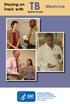 Staying on Track with TB TUBERCULOSIS Medicine What s Inside: Read this brochure to learn about TB and what you can do to get healthy. Put it in a familiar place to pull out and read when you have questions.
My child has a hearing loss
 My child has a hearing loss A guide for parents Content You are not alone 3 Hearing impairment 5 Methods of testing hearing 6 Audiogram 7 Types and causes of hearing loss 8 Degree of hearing loss 10 Where
Tympanoplasty. Tympanoplasty is an elective procedure. If your doctor recommends it, it is still your decision whether or not to have this surgery.
 Tympanoplasty Introduction Tympanoplasty is a surgical procedure to repair a perforated eardrum. The eardrum is a thin membrane inside the ear at the end of the ear canal. Eardrum perforations are not
LOW BACK PAIN: SHOULD I HAVE AN MRI?
 DATE: / / HG SY EH CQ RL AS JZ Name: (Last, First, M.I.) M F DOB: / / Decision Point LOW BACK PAIN: SHOULD I HAVE AN MRI? You may want to have a say in this decision, or you may simply want to follow your
Iodine-131 Treatment of Thyroid Cancer Information about your treatment November 2011 Great Staff Great Care Great Future
 Department of Nuclear Medicine Iodine-131 Treatment of Thyroid Cancer Information about your treatment November 2011 Great Staff Great Care Great Future INTRODUCTION This leaflet has been produced to give
Preparing for your Ultrasound-Guided Core Biopsy
 Preparing for your Ultrasound-Guided Core Biopsy UHN For patients at the Rapid Diagnostic Centre Read this resource to learn: How to prepare What to expect during the biopsy What you need to do after When