
Physical activity of infants and young children in the water environment
|
|
|
- Janice Freeman
- 10 years ago
- Views:
Transcription
1 CHAPTER V HEALTH AND WELLNESS 1/2015 WELLNESS AND HEALTH 1 Academy of Physical Education in Krakow, Poland Institute of Sport - Department of Sports and Recreational Games Akademia Wychowania Fizycznego w Krakowie Instytut Sportu - Zakład Gier Sportowych i Rekreacyjnych 2 Academy of Physical Education in Katowice Department of Swimming and Water Rescue Akademia Wychowani Fizycznego w Katowicach Zakład Pływania i Ratownictwa Wodnego 3 Academy of Physical Education in Krakow, Poland Theory of Recreation and Tourism Department Faculty of Tourism and Recreation Akademia Wychowania Fizycznego w Krakowie Zakład Teorii Rekreacji i Turystyki Wydział Turystyki i Rekreacji 4 Academy of Physical Education in Krakow, Poland Institute of Sport - Department of Sports and Recreational Games Akademia Wychowania Fizycznego w Krakowie, Poland Instytut Sportu - Zakład Gier Sportowych i Rekreacyjnych 5 Academy of Physical Education in Krakow, Doctoral Studies Akademia Wychowania Fizycznego w Krakowie, Studia Doktoranckie HENRYK DUDA 1, ŁUCJA PŁATEK 2, ALICJA STACHURA 2, PAWEŁ RÓŻYCKI 3, LUCYNA STANEK 4, PAWEŁ KUBIENIEC 5 Physical activity of infants and young children in the water environment Aktywność ruchowa niemowląt i małych dzieci w środowisku wodnym Key words: physical activity, swimming, physical development Słowa kluczowe: aktywność ruchowa, pływanie, rozwój fizyczny INTRODUCTION Physical activity is an essential component and integrating healthy lifestyle. Without it difficult or even impossible to hold the health and well-being of people of all

2 90 HEALTH AND WELLNESS 1/2015 Wellness and health ages. Insufficiency can cause many disorders and increased risk of disease. In order to maintain or improve the health of systematic activity is required and optimal for all its level. This is especially important for children and adolescents with an appropriate level of physical activity stimulates their growth. Swimming infants and young children is an increasingly popular form of physical activity. It ceases to be just a fashion and becomes a conscious choice of parents in order to stimulate the psychomotor development of the young child. In the case of swimming, there are no age restrictions on activities in the water environment a child can attend with their parents from 3-4 months of age starting to adapt to the aquatic environment forms the basis for teaching swimming motor function in the future in order to then be able to use other forms of physical activity in the environment participating in swimming aquatic sports, recreational or therapeutic. In the opinion of experts participating children in infancy in organized activities in the water has a very positive impact on their physical, mental, intellectual and social. [1,2,3,4,7,14,15]. Aquatic environment is different from that in which man lives every day. Due to displacement, weight reduction is a sham and body movements are easier to make. The higher density of water compared to air resistance reflected, which is traversed by involving large muscle groups. The hydrostatic pressure causes the inspiratory muscles are activated for more work, heat conduction through the water causes a noticeable change in temperature relative to air. [5]. Activities in the aquatic environment positively affect the development of motor skills, coordination, neuromuscular, cardiopulmonary system activation - respiratory stimulation of the bone-muscle-joint, and strengthen immunity. The water by its physical properties (density, hydrostatic pressure, viscosity) affects receptors in the skin of the child, following which stimulates the development of proprioception. Muscle fibers lying directly under the skin are activated by the touch of a parent intensively and water, increasing the effect of relaxation and muscle tension adjusting [12,13]. Development of the child is also possible by stimulating visual and auditory. Splash, the sound of water, the commands to perform actions having fun with singing, observing their behavior and companions and the reaction of water into individual movements, give your child the opportunity to learn a causal relationship, new sounds, associate and analyze movement needed. Introduction of an additional object such as a toy encourages your child to perform more complex movements, which constantly stimulated to develop, among others, cognitive [1]. It is also important to deepen the emotional bond between the child and the parent, due to joint participation in the activities. Parent body is still close to the child's body is maintained visual contact. Amusements and exercises performed by the child complemented by a parent's approval and acceptance. Regular participation in activities the child gets used to the active leisure and is a great way to relax physically and mentally [7,9,14]. By being in a group of peers develop children's social abilities and also develop their personality. The importance of educational tasks, especially movement, where children take part individually or in groups, it is huge and is not limited to the positive

3 Henryk Duda, Łucja Płatek, Alicja Stachura, Paweł Różycki, Lucyna Stanek, Paweł Kubieniec Physical activity of infants and young children in the water environment impact on the child's motor development [7]. Learns regularity, helps in overcoming difficulties and gaining success, educates strong will and courage. PURPOSE OF THE STUDY The aim of the study was to learn how to implement the curriculum swimming lessons for infants and young children and to assess the impact of physical activity in the water on a physical and psychomotor development of children in infancy and the baby. Formulated the following research questions: 1. Is the swimming classes for infants and young children have a positive effect on their development? 2. What kind of exercise (game) and the accessories used during the teaching swimming lessons? 3. Is there a relationship between physical activity and participation of parents in their children's swimming lessons? 4. What is the opinion of parents about swimming lessons? MATERIALS AND METHODS The study used a diagnostic survey form (questionnaire) addressed to the parents of children attending swimming. The study included 60 children attending swimming classes for infants and young children in the province of Silesia in 2013/2014 year. Size of the group depended on the number of tutors, but does not exceed 20 people, including 10 children and 10 caregivers. A single unit classes lasted minutes. The water temperature was C. The questionnaire was anonymous and contained 25 questions about swimming lessons infants and young children. Consisted of closed questions, open-ended questions with the possibility of issuing its own response, in a few cases it was possible to select more than one answer. People participating in the survey were informed of the purpose of testing and were given instructions on how to complete the questionnaire. The study focused on the evaluation of the selection of games and exercises used in teaching swimming lessons, the type of gear used in teaching, age of children involved in activities, the impact of participation in activities on the health of the child and its development and parent opinion about classes. The collected data obtained during the survey are organized thematically and subjected to statistical analysis and descriptive. Basis for the development the research material was to determine the frequency of responses to the question expressed by means of numerical values and rates. RESULTS OF RESEARCH An analysis of research suggests that In the classes were the largest group of children under one year of age (55%), 8 children (13.33%) were between the ages of 1 to 2 years, and the group of children aged 2 to 4 years accounted for 31.66% of the participants (table 1). 91

4 HEALTH AND WELLNESS 1/2015 Wellness and health Table 1. Age of children attending classes Age of the child N - 60 % Less than 6 months 17 28, months 16 26, years 8 13, years 8 13,33 Over 3 years 11 18,33 A large group of children under 1 year of age who participated in activities probably indicates the awareness of parents related to the knowledge of the beneficial effects of swimming classes on child development, as well as the fact that for several months of the child's activities in the aquatic environment is the only way to participate in the activities organized. Small children can no longer participate in other physical activities. Table 2. The duration of participation in classes 92 Time N - 60 % Since a month 5 8,33 Since 6 months Since the year 16 26,66 Over the year 6 10 Another question asked respondents related to the length of the regular participation in the classes. The majority (55%) of parents with a child involved in the activities of a few months, 22 patients (36.66%) of the year, 5 people (8.33%) of the month. Such a high percentage of children (92%) attending for at least six months reflects the continuation of the course, the observation of which could confirm the beneficial effects of parents' activities in the aquatic environment on health, well-being and development of the child (table 2). Table 3. Frequency of participation in swimming lessons Frequency N - 60 % Raz w miesiącu 3 5 Once per month 13 21,66 Once per week 41 68,33 More than once per week 3 5 Most of the respondents (68.33%) participate in the activities of swimming with infants and young children once per week. The most popular are swimming lessons for babies and young children take place at once a week, usually on weekends, so that professionals working parents to participate in them with their children (table 3). Most of the parents (73%) participating in swimming classes could swim. The rest of the respondents confirmed their inability to swim. Swimming classes for infants

5 Henryk Duda, Łucja Płatek, Alicja Stachura, Paweł Różycki, Lucyna Stanek, Paweł Kubieniec Physical activity of infants and young children in the water environment and young children do not require swimming skills from their parents because of all the fun and exercise are executed at a depth of 90 to 140 cm. However, on the basis of the answers showed that these programs often decide to parents who can swim. Perhaps because they feel more confident knowing how to swim in the water, are aware of the potential risks arising from the presence in the aquatic environment and its assessment can also ensure the safety of their swimming child. The survey is also being asked whether parents have information about the permissions of the person established classes. It is important that a person who is empowered class instructor or trainer, which guarantees competence in the implementation of the program of the course, the selection of games and exercises, but also the proper use of safety rules during class. It was found that most parents know that the training instructors are swimming instructors or trainers, 5 parents did not know what permissions is a person who exercises. Infants and young children can be prepared to participate in activities at the swimming pool through the early application of adaptive exercises at home, involving the watering of the body and face of the child during the bath, the baby's face dipping under water, increasing the noise through the use of a shower (creating conditions similar to those of the acoustic at the swimming pool), increasing the water space through shared bath child and parent in a large tub [8]. Treatments used before the course starts may accelerate the adaptation of the child to the aquatic environment involving the elimination of obstacles to the establishment of proper contact between the leading teaching and participant activities and strengthen the body's resistance to thermal and mechanical stimulus [8]. Therefore, the question addressed to the parents is the adaptive and applied exercises at home before the start of the course. The majority (80%) of parents surveyed did not use before exercise classes at the swimming pool with water to prepare a child because they do not have knowledge related to the initial adaptation of the child for classes at the swimming pool at home. In contrast, 17 patients (28%), after being informed at the first meeting in the classroom with the introduction of adaptive exercise, decided to apply additional exercises to prepare at home, in parallel with the start of the course, have adopted the child quickly to a new place and aquatic environments. Another question asked related to surveyed pre-adaptation to the aquatic environment of the child during class. In the opinion of the majority of parents in children observed the situation of anxiety associated with the arrival of a new environment (indoor swimming pool, foreign persons) as well as from being in the water. Several parents said their children need time to adapt to the new environment, because react crying and showed interest in participating in the activities. However, this situation changed after 2-3 meetings did not result in cancellation of the participation in the course swimming. 93

6 HEALTH AND WELLNESS 1/2015 Wellness and health Table 4. Reasons for the participation of children in swimming lessons Motivations Number of answers * Disease entity 0 Increase the resilience of the child 11 Active spending free time 11 Strengthening the parent-child relationship 13 Acclimatization child with peer group 18 Improvement of motor skills and coordination of the child 15 Having fun 14 Others 0 * The sum of the answers is not equal to the number of respondents because respondents could give more than one answer Surveyed were asked about the reasons to enroll your child swimming course. Respondents from the proposed answers can select up to 3. It was found that the most common reason enroll your child in the class was to get familiar the child to swim with the peer group and to improve movement and neuromuscular coordination of the child. Marked the minimum active parents to spend time and increase the resilience of the child (table 4). Table 5. Use of supplies during classes teaching swimming Types of educational supplies Number of answers * Mats 5 Balls 8 Sleeves 12 Balloons 10 Boards 7 Pool noodles 15 Inflatable toys 13 Submersible toys 5 Floating toys 8 others 0 *The sum of the answers is not equal to the number of respondents because respondents could give more than one answer 94

7 Henryk Duda, Łucja Płatek, Alicja Stachura, Paweł Różycki, Lucyna Stanek, Paweł Kubieniec Physical activity of infants and young children in the water environment In the survey were asked about the use of educational supplies used most frequently during the course and exercises and games for use during classes. In each of the questions, respondents were allowed to select up to 3 answers. The most frequently used utensils during class were pool noodles, inflatable toys, swimming sleeves, balloons, floating toys, balls and boards. The least frequently used utensils were submersible toys and mats (table 5). Attractive, colorful accessories used in classes in the aquatic environment allow you to improve both muscle coordination and visual-motor. Occasional use of toys submersible was probably related to age most children, infants and young children aged 1-2 years are not yet able to dive into the depths, in order to take the object from the bottom of the pool. The opinion swimming specialists in infants and young children related to the use of swimming sleeves are divided. Some recommend the use of this utensil, others strongly emphasize the negative effects of the sleeves. Swimming sleeves serve mainly as a utensil increasing buoyancy, allowing the child to safely maintain the surface of the water, but it also restricts the freedom of the child's movements during locomotion and hinder immersion of the body below the surface of the water. Wonders as the frequent use of the gear in the class, which is also involved carers to belay and sustain the child's body on the surface of the water. Table 6. Types of exercises and activities used in swimming classes Type of exercise Holding a child in a vertical position in a place / in walking / the toss Precipitation / jumping into the water from standing or sitting position Slides on the surface of the water on the chest / ridge / Side Towing a child by a parent with continued chest / back of Dipping in water The movement of the chest / back of the activation upper limb / lower limbs Active break resting Independent movement of the child in position in the back / chest The frequency of use very often often often often rarely often rarely / never sometimes During the course the most commonly used exercises was towing a child on the breast and the back using all sorts of grips in order to maintain the child. Also used in the vertical position (child set on front or back of the parent), during exercise in place and march, tossing grip protective against accidental immersion, all kinds of jumps (the sitting position on the edge of the swimming pool, from a standing position), slides on the chest and on the back or side (table 6). In many games and exercises used 95

8 HEALTH AND WELLNESS 1/2015 Wellness and health footwork and activation of the child's shoulders, striving to produce the skills of independent movement, using a utensil or grip the increasing displacement of the support. The other hand less frequently used exercise and have fun with your baby's head submerged under water, the answer 50% of respondents reported. Immersion child's head under water are used depending on the level of the group. Usually the first attempt of immersion in water is introduced into the classroom the first lesson course swimming, after having gradually preparing participants to complete this item. [10,11,15]. Since most children attend classes from 6 months, it is striking that the lack or the occasional use of this exercise classes. Perhaps it results from the frequent use of swimming sleeves that make it difficult to perform exercises with submerged under water. The question gave the opportunity to select the nature of the ways dives. The most common way submergence with the parent of the front position and in reflection from the wall in the form of a slip. Another question concerned the form of classes used during the course. The most common form of during class swimming infants and young children were group exercises and playing with singing. Less frequently individual exercises performed with the parent, and the least forms of competition, stories movement (table 7). Table 7. Types of play / exercise classes used in swimming Types of play / exercise Number of replies * With singing 34 Movement story 3 Individual with a parent 10 Form of competition 5 Group 33 Other 2 *The sum of the answers is not equal to the number of respondents because respondents could give more than one answer Seems very significant information about the impact of participation in activities for the development of a small child. Most parents of children attending noticed positive changes in the development and behavior of the child. Frequently parents served in the survey responses increase immunity, physical activity and longer, more peaceful sleep. The least improvement in appetite declared carers of the child. Two parents have not noticed any positive changes in a child under the influence of water courses and five noted adverse changes - increased susceptibility to infection. The vast majority - 55 parents (92%) answered that classes meet their expectations. Very important for the parents of the ability of the common active leisure with the child, which brings about the pleasure of both the child and parents. Only 2 people (3%) is not satisfied with the lessons. Continuation of participation in the next course swimming infants and young children declared 50 parents (83%). 96

9 Henryk Duda, Łucja Płatek, Alicja Stachura, Paweł Różycki, Lucyna Stanek, Paweł Kubieniec Physical activity of infants and young children in the water environment SUMMARY AND CONCLUSIONS Based on the analysis of the responses to questionnaires sent to parents of young children participating in swimming courses, it was found that the majority of children (92%) attend swimming lessons systematically, from 6 months or longer. Prior to their participation in class, except for a few cases, the adults did not use exercises familiarize the child with the water in the home. The main reason for participation in the class was mostly tame a child with a peer group, a desire to improve motor skills and coordination of the child and strengthen the ties parent - child. Exercise and games are conducted in a groups, usually combined with singing. During the course, an important role is played by toys and swimming utensils increasing displacement, facilitating the maintenance of the child's body on the water surface, or activating a child to perform physical activities. Most instructors using pool noodles, swimming sleeves, balls, inflatable floating toys and using them in a number of exercises and games. The use of different types of games and exercises and colorful, various utensils influences on cognitive development of the child and to exercise stimulates locomotor movements [8,10,15]. The vast majority of parents surveyed believe that there have been positive changes in a child under the influence of classes at the swimming pool. The most frequently mentioned benefits should increase resistance, longer sleep and increase the physical activity of the child. Classes in the aquatic environment impact on harmonious development of the child primarily by stimulating the circulatory and respiratory system, and nervous movement, and their specific causes that despite the high physical activity after school child is mentally relaxed and happy to take a new tasks at the next lesson [8,15]. Receive tactile and proprioceptive when in an aqueous environment is essential for the development of perception, affecting motor function: physical coordination, manual dexterity and lateralization, planning the sequence of movements, which in the future is reflected in the development of self-service, assimilation techniques, drawing and writing, handling tools and also affects the emotional stability and concentration of attention [12]. There was no association between physical activity parents and their children attending swimming classes. Most parents do not take regular physical activity and has not cultivated in the past any sport. Few people take recreational physical activity choosing swimming, cycling or running. Despite thismost of people declared continue participation in the classes. The task of parents in the education of recreation is skillful directing interests and the child's physical activity. Is why joint participation in physical activities of children with their parents is the best way of education for recreation and activity. Regular physical activity causes the body to series of positive changes. Education in the child the desire to attend regular classes depends on the processes of teaching and education, so it's important that parents, family-friendly environment, kindergarten and school aroused interest in sport and active leisure products. 97

10 HEALTH AND WELLNESS 1/2015 Wellness and health CONCLUSIONS 1. Participation of children in swimming lessons has a positive effect on their health and acts as a stimulant on their psychomotor development. 2. Water activities develop personality and social abilities of children by being in a group of peers. 3. Social activities at the swimming pool parent with child strengthen emotional bonds between them. 4. The swimming classes used a variety of games, exercise and utensils teaching affecting the child's senses and activating to actively participate in the classes. REFERENCES 1. Ahrendt L. Baby Swimming. Meyer und Meyer Sport (UK) Ltd., Oxford, Ahrendt L. Toddler Swimming. Meyer und Meyer Sport (UK) Ltd., Oxford, Antoniak - Lewandowska K., Konieczny G. Proces oswojenia z wodą niemowląt i małych dzieci jako działanie prozdrowotne. Medycyna Manualna, Kwartalnik PTMM, XIII, nr 1-4, Cherek R.. Säuglings und Kleinkinderschwimmen. Ein Elternratgeber. Verlag Modernes Lernen, Dortmund, Czabański B., Fiłon M., Zatoń K.. Elementy teorii pływania. AWF, Wrocław, Duda H., Żak M., Ambroży T : Preparation of the motor as an important aspect of sports training in health (on the basis of organized forms of recreation and physical activity of young people). Monografia: Lifestyle education and Welles, Dybińska E., Duda H. (red.), NeuroCentrum, Lublin, s Dybińska E. Adaptacja wstępna do środowiska wodnego w procesie nauczania pływackich czynności ruchowych. Kultura Fizyczna 1997, nr Dybińska E.. Nauczanie pływania dzieci w wieku od 1 do 4 lat. Kasper, Kraków, Franus E., Franus-Urbańczyk B. Treningi niemowlęcia. Nasza Księgarnia, Warszawa Krawczyk Z., Czekalska J. 10-lekcyjny kurs nauki pływania dzieci w wieku 1-3 lat. Kultura Fizyczna 1995, nr Krawczyk Z., Krawczyk J. Kurs nauczania pływania niemowląt trzydzieści lekcji. Wychowanie Fizyczne i Zdrowotne, 2008, nr Mass V.F. Uczenie się przez zmysły. Wprowadzenie do integracji sensorycznej.. WSiP, Warszawa

11 Henryk Duda, Łucja Płatek, Alicja Stachura, Paweł Różycki, Lucyna Stanek, Paweł Kubieniec Physical activity of infants and young children in the water environment 13. Matyja M., Gogola A. Edukacja sensomotoryczna niemowląt. AWF, Katowice, Pietrusik K.. Pływanie dzieci w wieku niemowlęcym. Medycyna sportowa, Polish Journal of Sport Medicine, vol.20, supplement 1, Pietrusik K.. Pływanie niemowląt. Wydawnictwo WSEiT, Poznań, Zeiss G.. Gimnastyka dla maluchów. Kalliope, Warszawa, Zelazo F.R., Weiss M. Infant Swimming Behaviors: Cognitive Control and the Influence of Experience. Journal of Cognition and Development 7 (1), ABSTRACT The aim of the study was to learn how to implement the program of activities swimming lessons for infants and young children and assessment of the impact of physical activity in the water on a physical and psychomotor development of children in infancy and the baby. The study used a diagnostic survey form (questionnaire) addressed to the parents of children participating in swimming classes. The study involved 60 children attending swimming classes for infants and young children in the province of Silesia in 2013/2014 year. The study focused on the evaluation of the selection of games and exercises used in the course of teaching swimming, type of utensils used in teaching, age of children involved in activities, the impact of participation in activities on the health of the child and its development and parent opinion about classes. Based on the analysis of the answers given by the respondents stated that children's participation in swimming lessons has a positive effect on their health, acts as a stimulant on their psychomotor development and strengthens the emotional bond between parents and children. STRESZCZENIE Celem pracy było poznanie sposobu realizacji programu zajęć nauki pływania dla niemowląt i małych dzieci oraz ocena wpływu aktywności ruchowej w wodzie na rozwój fizyczny i psychomotoryczny dzieci w wieku niemowlęcym i po niemowlęcym.w badania zastosowano formę sondażu diagnostycznego (ankiety) skierowanego do rodziców dzieci biorących udział w zajęciach pływania. Badaniami objęto 60 dzieci uczęszczających na zajęcia pływania dla niemowląt i małych dzieci w województwie śląskim w 2013/2014 roku Badanie dotyczyło przede wszystkim oceny doboru zabaw i ćwiczeń zastosowanych w kursie nauczania pływania, rodzaju wykorzystywanych przyborów dydaktycznych, wieku dzieci uczestniczących w zajęciach, wpływu uczestnictwa w zajęciach na stan zdrowia dziecka i jego rozwój oraz opinii rodzica na temat zajęć. Na podstawie analizy odpowiedzi udzielonych przez respondentów stwierdzono, iż udział dzieci w zajęciach pływania pozytywnie wpływa na ich zdrowie, działa stymulująco na ich rozwój psychomotoryczny a także wzmacnia więzi emocjonalne pomiędzy rodzicami i dziećmi. Artykuł zawiera znaków ze spacjami 99

CITY OF PEMBROKE RECREATION & TOURISM DEPARTMENT KINSMEN SWIMMING POOL INFORMATION 613-735-6821 x 1506
 CITY OF PEMBROKE RECREATION & TOURISM DEPARTMENT KINSMEN SWIMMING POOL INFORMATION 613-735-6821 x 1506 2016 Swim Lesson Registration Dates January 04-09 8 week program Registration will be accepted during
YMCA of Greater Providence [Input your Branch name here if desired] Swim Lessons Guide
![YMCA of Greater Providence [Input your Branch name here if desired] Swim Lessons Guide](/thumbs/40/21128593.jpg "YMCA of Greater Providence [Input your Branch name here if desired] Swim Lessons Guide") YMCA of Greater Providence [Input your Branch name here if desired] Swim Lessons Guide A Great Place To Learn To Swim The YMCA Swim Lessons program was created by aquatic experts and field-tested at YMCAs
YMCA of Greater Providence [Input your Branch name here if desired] Swim Lessons Guide A Great Place To Learn To Swim The YMCA Swim Lessons program was created by aquatic experts and field-tested at YMCAs
CHAPTER 7: PHYSICAL ACTIVITY IN INFANCY
 CHAPTER 7: PHYSICAL ACTIVITY IN INFANCY Physical activity, defined as any bodily movement produced by skeletal muscles resulting in energy expenditure, is an important part of overall health and maintenance
About Us & Why Aquatic Therapy
 Jeff Bartley, P.E., LEED AP Waters Edge Aquatic Design Janette Foster, M.S. Ed., OTR/L Lee Ann Britain Infant Development Center About Us & Why Aquatic Therapy Leann Britain Infant Development Center has
Therapeutic Canine Massage
 Meet our Certified Canine Massage Therapist, Stevi Quick After years of competitive grooming and handling several breeds in conformation, I became interested in training and competing with my dogs in the
Holly Hill Methodist/Church of England (Aided) Infant and Nursery School. Vision
 Holly Hill Methodist/Church of England (Aided) Infant and Nursery School Physical Education Policy, January 2015 (Miss Allen, Physical Education Coordinator) Vision Physical Education (PE) at Holly Hill
ANNALES UNIVERSITATIS MARIAE CURIE-SKŁODOWSKA LUBLIN - POLONIA VOL.LX, SUPPL. XVI, 519 SECTIO D 2005
 ANNALES UNIVERSITATIS MARIAE CURIE-SKŁODOWSKA LUBLIN - POLONIA VOL.LX, SUPPL. XVI, 519 SECTIO D 2005 Akademia Wychowania Fizycznego Wrocław University School of Physical Education Wrocław AGNIESZKA SURYNT,
One Stop Shop For Educators. Georgia Performance Standards Framework for Physical Education
 PEK.1: Demonstrates competency in motor skills and movement patterns needed to perform a variety of activities. Description: Students will experience all locomotor movement patterns (e.g., hop, jump, and
FACULTY OF SPECIAL EDUCATION
 FACULTY OF SPECIAL EDUCATION Malaya Posadskaya Street., 26. 197046, St. Petersburg, Russia Tel.: (812)232-32-92. Fax: (812) 233-50-32. E-mail: [email protected] Dean: Alexander Petrovich Antropov, Ph.D.,
In structured sports programs, participation and enjoyment should be emphasized rather than competition and winning.
 Preschool Children The California Department of Health Services Physical Activity for Children, Youth, and Adults All preschool children should participate every in a form of physical activity appropriate
Glossary of commonly used Occupational Therapy terms
 Glossary of commonly used Occupational Therapy terms Adaptive Response: An action that is appropriate and successful in meeting some environmental demand. Adaptive responses demonstrate adequate sensory
FITNESS AS A HEALTHY LIFESTYLE AMONG INHABITANTS FROM RZESZOW
 FITNESS AS A HEALTHY LIFESTYLE AMONG INHABITANTS FROM RZESZOW Łukasz GODEK, Jarosław HERBERT, Maciej ŚLIŻ Faculty of Physical Education, University of Rzeszow, Rzeszow, Poland Key words: fitness, health,
Develop reductive argumentation with the help of didactic games
 Develop reductive argumentation with the help of didactic games Tadeusz Ratusiński Abstract Computer sometimes helps pupils with their homework. But usually at home is being used as game machine. Pupils
ABOUT US. Why train using the ACTIV8 Program? - Restoration of movement. Performance Enhancement & Injury Prevention
 ABOUT US Mission Statement - ACTIV8 Strength and Conditioning Program is committed to providing training experience for each participant. Our focus is on building a strong and functionally fit human being
Swim Lessons. 2Y to 4Y & adult $40(R) / $52(N) Vaughan Athletic Center Barcode Day Date Time Class Size Pool
 Calling all volunteers! Look for this icon for Fox Force Volunteer Opportunities. Volunteering at our special events is a perfect way to connect with your community! Section Heading Ready, set, splash!
Water is it good for your Lymphedema?
 Water is it good for your Lymphedema? Mrs. G's birthday is coming up and her husband decided to surprise her with a gift a pampering day in a spa. His wife was pleased, yet concerned. She did not know
Universal Exercise Unit (UEU)
 -- www.genius4kids.com -- Universal Exercise Unit (UEU) I. The History of Universal Exercise Unit (UEU): The Universal Exercise Unit was designed and developed in the 1940s by a well-known orthopedic surgeon,
The type of cancer Your specific treatment Your pre training levels before diagnose (your current strength and fitness levels)
 Exercise and Breast Cancer: Things you can do! Cancer within the fire service is one of the most dangerous threats to our firefighter s health & wellness. According to the latest studies firefighters are
Adapted Aquatic Activities. Water Adjustment Activities
 Water Adjustment Activities 1 Activity: Super Flutter Kicks Objectives: To introduce the students to kicking in the pool Students sit next to each other around the edge of the pool. The students sit on
School Age 6 to 12 years
 Starfish: (4 to 18 months) An introductory class for babies and their parent or caregiver. To enter this level, babies must be able to hold their head up. The goal of this orientation to water class is
Health and wellbeing 1 Experiences and outcomes
 Health and wellbeing 1 Experiences and outcomes Learning in health and wellbeing ensures that children and young people develop the knowledge and understanding, skills, capabilities and attributes which
Program of Studies. Preschool 2015-16
 Program of Studies Preschool 2015-16 PRESCHOOL BCD s preschool program provides a nurturing and stimulating educational environment for young children. Self-confidence and the ability to work with others
University Recreation Aquatics Bama Swim School Registration Information Packet Summer 2016
 Bama Swim School Registration Information Packet Summer 2016 Welcome to University Recreation Aquatics. We are excited to have you participate in our Aquatics Instructional Programs. We hope that you and
Parents as Teachers Foundational Curriculum & PAT Approach. PA Early Learning Standards Infants- Toddlers
 PA Early Learning Standards Infants- Toddlers Parents as Teachers Foundational Curriculum & PAT Approach Social and Emotional Development Goals for Infants and Toddlers General Developmental Information
The Georgia Early Care and Education Professional Development Competencies
 Page 1 The Georgia Early Care and Education Professional Development Competencies Early Care and Education Professional School-Age Care Professional Program Administrator Trainer Technical Assistance Provider
Contents. Before you begin
 Contents Contents Before you begin What you will learn Competency standard What is expected of a Certificate III learner Assessment Employability skills How to work through this unit Resources v v vi vi
North Stainley Primary School. Policy for PE. The importance of Physical Education to the curriculum
 North Stainley Primary School Policy for PE The importance of Physical Education to the curriculum Physical Education (P.E.) develops pupils' physical competence and confidence, and their ability to use
ASA LEVEL 1 CERTIFICATE FOR TEACHING (SWIMMING FOR PEOPLE WITH DISABILITIES)
 ASA LEVEL 1 CERTIFICATE FOR TEACHING (SWIMMING FOR PEOPLE WITH DISABILITIES) GENERAL INFORMATION 1. INTRODUCTION The ASA Level 1 Certificate for Teaching (Disabilities) comprises 3 units: Unit 1 (core
Exercise Principles and Guidelines for Persons with Cerebral Palsy and Neuromuscular Disorders
 Exercise Principles and Guidelines for Persons with Cerebral Palsy and Neuromuscular Disorders INTRODUCTION: Health and well being are the result of many factors: Physical activity is one of these factors.
MODULE 1.3 WHAT IS MENTAL HEALTH?
 MODULE 1.3 WHAT IS MENTAL HEALTH? Why improve mental health in secondary school? The importance of mental health in all our lives Mental health is a positive and productive state of mind that allows an
PHYSICAL EDUCATION LESSONS AND PRIMARY SCHOOL STUDENTS FREE TIME
 Central European Journal of Sport Sciences and Medicine Vol. 10, No. 2/2015: 79 86 PHYSICAL EDUCATION LESSONS AND PRIMARY SCHOOL STUDENTS FREE TIME Iwona Bonisławska, A, B, C, D Tomasz Frołowicz, A, C,
PHYSICAL EDUCATION A. PROGRAM RATIONALE AND PHILOSOPHY
 PHYSICAL EDUCATION A. PROGRAM RATIONALE AND PHILOSOPHY The aim of the Kindergarten to Grade 12 physical education program is to enable individuals to develop the knowledge, skills and attitudes necessary
Kinesiology Graduate Course Descriptions
 Kinesiology Graduate Course Descriptions KIN 601 History of Exercise and Sport Science 3 credits Historical concepts, systems, patterns, and traditions that have influenced American physical activity and
Personal Training Health Screening Questionnaire
 Personal Training Health Screening Questionnaire Personal Information Today s date: Title: Dr. Mr. Mrs. Ms. Name: / Birth date: Last name First name Age: Address: Phone: (home) City: Phone: (work) Province:
Comprehensive Resilience Module
 Resilience And Risk Reduction Comprehensive Resilience Module Spiritual Dimension Meditation Meditation Overview There are many types of meditation that can help you develop your human spirit and build
TECHNICAL STANDARDS Physician Assistant Program Charles R. Drew University of Medicine and Science
 Medical education requires the accumulation of medical knowledge, acquisition of clinical skills, professional attitudes and behaviors. Successful completion of the program relies on the students ability
Physical education teachers ratings of extracurricular sports activities and services of the Polish School Sports Association
 PART II PHYSICAL EDUCATION Vol. 19, No. 4, 2012, 179-184 ISSN 0867-1079 Copyright 2012 Akademia Wychowania Fizycznego w Poznaniu Copyright 2012 Cornetis Physical education teachers ratings of extracurricular
Lac du Flambeau Tribal Early Childhood Education Program for Expectant Families, Infants, Toddlers and Preschoolers
 Lac du Flambeau Tribal Early Childhood Education Program for Expectant Families, Infants, Toddlers and Preschoolers Each One, Honor One P.O. Box 67 * 2899 Hwy. 47 S. Lac du Flambeau, WI 54538 (715) 588-9291
THE BIG SIX. Six Best Volleyball Strength Training Exercises. By Dennis Jackson, CSCS www.strength-and
 THE BIG SIX Six Best Volleyball Strength Training Exercises By Dennis Jackson, CSCS www.strength-and and-power power-for for-volleyball.com THE SQUAT What it is The two most common squatting exercises
Archery: Coaching Young Athletes. Developing Fundamental Movement Skills
 Archery: Coaching Young Athletes Developing Fundamental Movement Skills Make a long term commitment Long Term Athlete Development Long Term Athlete Development (LTAD) is a strategy for helping youngsters
Psychology. Academic Requirements. Academic Requirements. Career Opportunities. Minor. Major. Mount Mercy University 1
 Mount Mercy University 1 Psychology The psychology major presents a scientific approach to the study of individual behavior and experience. The goal of the major is to provide an empirical and theoretical
5TH GRADE FITNESS STUDY GUIDE
 PHYSICAL EDUCATION 5 TH GRADE FITNESS STUDY GUIDE PART I. Revised 5-13 DIRECTIONS: Review the following terms and concepts. Do not try to memorize the definitions, rather think about and understand: 1)
Psychology Professor Joe W. Hatcher; Associate Professor Kristine A. Kovack-Lesh (Chair) Visiting Professor Jason M. Cowell
 Psychology Professor Joe W. Hatcher; Associate Professor Kristine A. Kovack-Lesh (Chair) Visiting Professor Jason M. Cowell Departmental Mission Statement: The Department of Psychology seeks for its students
KHP 100-KHP 135 SERVICE COURSES.
 KINESIOLOGY 100-135 SERVICE COURSES. (1) Instruction in a variety of motor skills activities. Courses are designed for students at a beginner level. Up to six hours credit may be earned in service courses;
Play helps children feel good about themselves
 Play helps children feel good about themselves Contents Children develop their social and emotional skills through play How do young children play? Play helps children develop a positive sense of self
Physical Education is Critical to a Complete Education
 Physical Education is Critical to a Complete Education A Position Paper from the National Association for Sport and Physical Education Overview Physical education plays a critical role in educating the
Irish Water Safety s School Swimming Guidelines
 Irish Water Safety s School Swimming Guidelines Contents 1. Introduction 4 2. Responsibilities 4 School 4 School Teachers 4 Special Needs Assistants 5 Qualified Swimming Teachers, Instructors or Examiners
Child Development. Caseworker Core Training Module VII: Child Development: Implications for Family-Centered Child Protective Services
 Child Development P R E - T R A I N I N G A S S I G N M E N T Caseworker Core Training Module VII: Child Development: Implications for Family-Centered Child Protective Services Developed by the Institute
School Age Services INTERVENTION SERVICES FOR CHILDREN WITH DEVELOPMENTAL DELAYS
 INTERVENTION SERVICES FOR CHILDREN WITH DEVELOPMENTAL DELAYS Feel Good About Giving School Age Services EASTER SEALS SUPERIOR CALIFORNIA 3205 Hurley Way Sacramento, CA 95864 (916) 679-3155 www.myeasterseals.org
Arkansas Early Childhood Education Framework Benchmarks
 Arkansas Early Childhood Education Framework BRIGANCE Diagnostic Inventory of Early Development II (IED II) CURRICULUM ASSOCIATES, Inc. Arkansas Early Childhood Education Framework DEVELOPMENTAL LEARNING
Overview. Benefits and Features
 Overview...1 Benefits and Features...1 Profile Components...2 Description of Item Categories...2 Scores Provided...3 Research...4 Reliability and Validity...5 Clinical Group Findings...5 Summary...5 Overview
Putting the Head Start Parent, Family, and Community Engagement Framework to Work in Your Program: Integrating Strategies for Program Progress (ISPP)
 Putting the Head Start Parent, Family, and Community Engagement Framework to Work in Your Program: Integrating Strategies for Program Progress (ISPP) This document was prepared under Grant #90HC0003 for
CHAPTER 5 - ADAPTED PHYSICAL EDUCATION, OT, AND PT
 CHAPTER 5 - ADAPTED PHYSICAL EDUCATION, OT, AND PT 5.1 KEY PROVISION: Adapted physical education, occupational therapy and physical therapy are all related services but serve different functions. Legal
Tablet Computers and Apps as Informal Assessment Tools. by Gloria Rodriguez-Gil CDBS Educational Specialist
 resources Spring 2014 (Vol. 19 No. 1) Tablet Computers and Apps as Informal Assessment Tools by Gloria Rodriguez-Gil CDBS Educational Specialist *The contents herein are mostly based upon a previous article
CACHE Diploma in Caring for Children Level 1
 Unit 1 : CFC 13: Sharing learning experiences with children Understanding of types of learning experiences, which could be shared with children, and the importance of these experiences to promote learning.
The Role of Occupational Therapy for Children with ACC
 These articles were originally published in The Callosal Connection, Fall 2007. The Callosal Connection is a publication of the ACC Network The Role of Occupational Therapy for Children with ACC By Erin
Level Age In this level
 Level Age In this level Starfish 4-12 months Requirement: babies must be able to hold their head up Orientation to water for babies and their parent/caregiver. The goals are to help babies experience buoyancy
12. Physical Therapy (PT)
 1 2. P H Y S I C A L T H E R A P Y ( P T ) 12. Physical Therapy (PT) Clinical presentation Interventions Precautions Activity guidelines Swimming Generally, physical therapy (PT) promotes health with a
Lesson 1. Foundations of a Healthy Lifestyle INTRODUCTION
 Foundations of a Healthy Lifestyle INTRODUCTION As you read, leading health indicators in the United States are trending downward. One of the fundamental goals of early childhood education is to reverse
Position Classification Standard for Rehabilitation Therapy Assistant Series, GS-0636
 Position Classification Standard for Rehabilitation Therapy Assistant Series, GS-0636 TABLE OF CONTENTS SERIES DEFINITION... 2 EXCLUSIONS... 2 OCCUPATIONAL INFORMATION... 3 SPECIALIZATIONS AND TITLES...
Career Options. Associate Degree. Associate in Science Degree in. Child Development Emphases: Infant/Toddler
 human development School of Social and Behavioral Sciences Dean: Karima Feldhus, PhD Academic Chair: Kari Tucker, PhD Faculty: Julie Bookwalter, Marilee Cosgrove, Donna Gray, Wenli Gau Lin, Susan McClintic,
BABIES BORN TO ADDICTED MOTHERS
 BABIES BORN TO ADDICTED MOTHERS PATRICA M. MESSERLE LICENSED CLINICAL PSYCHOLOGIST, M.A., ABSNP LICENSED SCHOOL PSYCHOLOGIST DIPLOMATE OF THE AMERICAN BOARD OF SCHOOL- NEUROPSYCHOLOGY 1 Signs and Symptoms
HEALTH AND SOCIAL CARE
 Cambridge TECHNICALS OCR LEVEL 2 CAMBRIDGE TECHNICAL CERTIFICATE/DIPLOMA IN HEALTH AND SOCIAL CARE CREATIVE AND THERAPEUTIC ACTIVITIES IN HEALTH AND SOCIAL CARE D/600/6885 LEVEL 2 UNIT 9 GUIDED LEARNING
Indiana Association for Infant and Toddler Mental Health DC 0-3 R Crosswalk to DSM and ICD Systems
 Indiana Association for Infant and Toddler Mental Health DC 0-3 R Crosswalk to DSM and ICD Systems Although the benefits of early identification and treatment of developmental and behavioral problems are
St Joseph s Catholic Primary School
 St Joseph s Catholic Primary School CRC Article 29(goals of education) Education must develop every child s personality, talents and abilities to the full. It must encourage the child s respect for human
INTRODUCTION TO POSITIONING. MODULE 3: Positioning and Carrying
 MODULE 3: Positioning and Carrying Blankets, pillows and towels, sandbags, carpet on the floor, a doll with floppy limbs that can be positioned i.e. not a hard plastic doll, display materials. Icebreaker
School of Social and Behavioral Sciences
 human development School of Social and Behavioral Sciences Acting Dean: Daniel E. Rivas, Ph.D. Academic Chair: Kari Tucker, Ph.D. Faculty: Ingrid Anderson, Julie Bookwalter, Marilee Cosgrove, Donna Gray,
Introduction to Motor Development, Control, & Motor Learning. Chapter 1
 Introduction to Motor Development, Control, & Motor Learning Chapter 1 What is motor learning? Emphasizes the acquisition of motor skills, the performance enhancement of learned or highly experienced motor
ASTHMA IN INFANTS AND YOUNG CHILDREN
 ASTHMA IN INFANTS AND YOUNG CHILDREN What is Asthma? Asthma is a chronic inflammatory disease of the airways. Symptoms of asthma are variable. That means that they can be mild to severe, intermittent to
Premier patient information. Whiplash. Whiplash Exercises
 Premier patient information Whiplash Whiplash Exercises Keep moving! It may be painful but you ll get back to normal much quicker. Moving forward (in fact - moving in any direction!) Movement is the key
HOLISTIC HEALTH MALDIVES RANGALI ISLAND
 HOLISTIC HEALTH MALDIVES RANGALI ISLAND NATUROPATHY SERVICES MALDIVES RANGALI ISLAND Holistic Health incorporates the principles of Naturopathy or Natural Healing and combines modern science with nature
Plyometric Training. Plyometric Training. chapter
 chapter 16 Plyometric Training Plyometric Training David H. Potach, PT; MS; CSCS,*D; NSCA-CPT,*D Donald A. Chu, PhD; PT; ATC; CSCS,*D; NSCA-CPT,*D; FNSCA Chapter Objectives Explain the physiology of plyometric
JTF 2 Pre-Selection Physical Fitness Testing
 JTF 2 Pre-Selection Physical Fitness Testing 1. General. This evaluation is used to predict a member s physical capability and their readiness to apply for JTF 2. 2. On top of these physical standards,
How To Teach Your Children To Be Healthy
 PHYSICAL EDUCATION/HEALTH COURSES PHYSICAL EDUCATION/HEALTH KINDERGARTEN GRADE 2 The Kindergarten through Grade 2 Physical Education program is designed to develop a positive attitude in children toward
Quality of Life The Priorities of Older People with a Cognitive Impairment
 Living in a Nursing Home Quality of Life The Priorities of Older People with a Cognitive Impairment Compiled by Suzanne Cahill PhD and Ana Diaz in association with Dementia Services Information and Development
Objective: Identify effects of stress on everyday issues and strategies to reduce or control stress.
 Lesson Plan: Dealing with Stress Objective: Identify effects of stress on everyday issues and strategies to reduce or control stress. Time: 45-60 minutes Structure: On-line homework before class (Stress
CHILD, HEALTH, WELFARE & DEVELOPMENT ASSESSMENT GUIDE
 CHILD, HEALTH, WELFARE & DEVELOPMENT ASSESSMENT GUIDE REGULATION 5 Reference: R5, Version: 1 [8 th March 2011] 1 This assessment guide is divided into four sections as follows: Section 1 Section 2: Section
CHAPTER 4 MOTOR CONTROL THEORIES. Chapter 4 1
 CHAPTER 4 MOTOR CONTROL THEORIES Chapter 4 1 THIS CHAPTER S CONCEPT Theories about how we control coordinated movement differ in terms of the roles of central and environmental features of a control system
Early Childhood Education- Distance Prior Learning Assessment Recognition (PLAR) - Comprehensive. Course Descriptions 2012 Program
 School of Academics, Applied Arts and Tourism Early Childhood Education- Distance Prior Learning Assessment Recognition (PLAR) - Comprehensive Course Descriptions 2012 Program EE1290 Positive Behaviour
Get a move on The importance of school-based initiatives to increase children s physical activity
 Get a move on The importance of school-based initiatives to increase children s physical activity Andrew Barr MLA Minister for Education and Training Minister for Sport and Recreation 1 Message from the
Cerebral Palsy. In order to function, the brain needs a continuous supply of oxygen.
 Cerebral Palsy Introduction Cerebral palsy, or CP, can cause serious neurological symptoms in children. Up to 5000 children in the United States are diagnosed with cerebral palsy every year. This reference
How to treat your injured neck
 How to treat your injured neck Exceptional healthcare, personally delivered Your neck is made up of a number of bones bound together by strong discs and ligaments. It is also protected by strong muscles.
GUIDELINES AND SERVICES FOR OCCUPATIONAL THERAPY AND PHYSICAL THERAPY
 GUIDELINES AND SERVICES FOR OCCUPATIONAL THERAPY AND PHYSICAL THERAPY Linda Paule, Coordinator San Bernardino City Unified School District Dr. Patty Imbiorski, Director Special Education TABLE OF CONTENTS
Child Life Services. A child s work is play
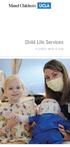 Child Life Services A child s work is play Chase Child Life Program Hospitals can be confusing environments. The Chase Child Life Program seeks to ease that fear by familiarizing young children, adolescents
Corporate Wellness Program
 Corporate Wellness Program Why Corporate Wellness? Corporate fitness programs are an inexpensive way to boost productivity, lower healthcare costs, and increase employees morale. o Exercise helps employees
TAXONOMY OF EDUCATIONAL OBJECTIVES (Excerpts from Linn and Miller Measurement and Assessment in Teaching, 9 th ed)
 TAXONOMY OF EDUCATIONAL OBJECTIVES (Excerpts from Linn and Miller Measurement and Assessment in Teaching, 9 th ed) Table 1 Major categories in the cognitive domain of the taxonomy of educational objectives
Study in psychology provides multiple perspectives
 Psychology Faculty: Kim G. Brenneman (chair) Gregory Koop Judy H. Mullet Major: Psychology Minor: Psychology Study in psychology provides multiple perspectives on understanding persons as individuals and
How Our Early Childhood Products. help strengthen
 How Our Early Childhood Products help strengthen Program Quality & School Readiness With these high-quality, research-based books and assessment tools from Brookes Publishing, you ll strengthen the quality
My Family FREE SAMPLE. This unit focuses on sequencing. These extension
 Unit 5 This unit focuses on sequencing. These extension Unit Objectives activities give the children practice with sequencing beginning, middle, and end. As the learn to name family members and rooms children
EARLY CHILDHOOD ENVIRONMENT RATING SCALE REVISED (ECERS-R) Statements of Developmentally Appropriate Practice
 EARLY CHILDHOOD ENVIRONMENT RATING SCALE REVISED (ECERS-R) Statements of Developmentally Appropriate Practice SPACE AND FURNISHINGS 1. Indoor space Children need sufficient space that is well lit and has