
ANAPORKDSS: A DECISION SUPPORT SYSTEM TO EVALUATE PIG PRODUCTION ECONOMICS
|
|
|
- Laurence Cox
- 10 years ago
- Views:
Transcription
1 ANAPORKDSS: A DECISION SUPPORT SYSTEM TO EVALUATE PIG PRODUCTION ECONOMICS Xavier Ezcurra-Ciaurriz University of Lleida 1 [email protected] Lluís M. Plà-Aragonès University of Lleida [email protected] ABSTRACT A decision support system to evaluate pig production economics (AnaPorkDSS) based on a spreadsheet model has been developed to estimate net present value and costs associated with the pig production activity under Spanish conditions. This article describes the model structure, input data requirements, and summarizes basic reports generated by the model. The model is capable of estimating net present value for a farrowing-to-finish farm producing pigs that are sold to the slaughterhouse. Incomes from sales are estimated for both fattened pigs and culled sows and boars. The 1 Department of Mathematics. University of Lleida Lleida, 73 Jaume II, Lleida. Spain. Tel.: ; Fax:

2 AnaPorkDSS is written as a multipage spreadsheet model and is operated on a PC in a windows environment. Different macros are included in the model which assure the consistency of input parameters and the management of menus. The analysis of the starting up of the activity is used to illustrate the usefulness of the AnaPorkDSS. KEYWORDS Decision Support System, Pig Production, Net present value estimation, Pig production SUMMARY I. INTRODUCTION. II. DESCRIPTION OF DIFFERENT FARROWING -TO- FINISH FARM SYSTEMS. III. MODEL STRUCTURE AND FORMAT. IV. A CASE STUDY. V. CONCLUSIONS. I. INTRODUCTION During past decades the Spanish census of pigs has been increased little by little whilst in other European countries has stabilized and even decreased. The importance of pig production for the Spanish economy is reflected by recent agricultural statistics for Spain s swine industry. In 2003, the sector contributed 10.4% of the Final Agricultural Product 2 and accounted for 30% of the total economic value of the country s livestock production 3. Pork is the main meat consumed in Spain (66.1 kg/person/ year); 55% of total meat consumption. Moreover, after Germany, Spain is the second largest pig producer in the European Union. Traditional pig production in Spain was based on small familiar sow farrowing - to finish farms, but this is undergoing a rapid change. For instance, vertical integration of production and processing companies, contract production of piglets and fattening pigs, and associations of growers purchasing inputs and selling pigs are a few examples of that. Thus, pig production in Spain tends to be divided in three different stages according to the final product of each one and activities involved. The first relates to farms producing piglets, the second those producing feeder pigs and the third those producing fattened pigs. This specialisation gives additional efficiency gains as Rowland et al. (1998) pointed out and it is becoming widely extended within the

3 Spanish pig industry. In this context, existing or future farrowing to finish farms have to decide whether adopting new technology or entering into production contracts or cooperatives is or not convenient, i.e., profitable for their own interest. A final decision should be based on sound economic analyses. On the other hand, the existence of an official record keeping system (the BDporcÒ, 2000), which registers the main controllable variables on a farm, is available to detect main inputs and best outcomes registered by farm basis in Spain. Other public data sources on produce prices and concentrates costs are included in the model. Furthermore, reliable scenarios based on past data are build and used in a extended economic analysis. This information is important for a decision maker or swine specialist involved in the setting up of a new farrowing to finish farm. A decision support system to evaluate farrowing to finish production economics is presented in this paper. The methodological framework chosen to assess economic farm efficiency was by spreadsheet simulation. Therefore the development of a simulation model allowing to measure and determine economic analyses of farrowing to finish farms is presented. Spreadsheets were the computer tool selected to develop the simulation model given the environment where the DSS is intended to be applied and expected background of potential users. The work also includes a discussion about the availability of information required for solving the model and examines a few practical considerations for applying these results. The description of classical operation in sow farms is presented in section 2. This is followed by the formulation and implementation of the models and their different parts and an illustrative example of use, in sections 3 and 4 respectively. Conclusions are derived in section 5. II. DESCRIPTION OF DIFFERENT FARROWING TO FINISH FARM SYSTEMS Nowadays, individual pig farms are split into different systems depending on the input and output. Elementary division of pig production is in three stages where the first one is related to farms producing piglets, the second one producing feeder pigs and the third one producing fattened pigs (see Figure 1). Farms from these stages can be observed separately or combined with other farms belonging the same, upper or lower stages. 25

4 Figure 1. Representation of a three-site pig production system Piglet production Nursery Finishig The piglet production system results in a specialization of the swine production industry characterized by a herd of sows in a continuous process of reproduction. The commercial product are the piglets, which after weaning are sold or transferred to rearing-fattening farms. This specialisation gives additional efficiency gains as Rowland et al. (1998) pointed out and it is widely extended within the modern Spanish swine industry. An example of this specialisation is observed in confinement facilities of sow farms which consist of a service facility, a gestation facility and a farrowing facility with multiple farrowing rooms. All these facilities may be in one or in several buildings. The service facility houses breeding sows, gilts (young sows) and boars. Different management strategies in reproduction can be implemented, for instance, group weaning of all litters from a farrowing room, i.e. a batch, is practised to synchronise breeding and farrowing. During the reproductive cycle sows are culled for different reasons and replaced by new gilts. Replacement strategies may prescribe culled sows can remain on the farm until they are sent to the slaughterhouse or replaced immediately (usually after some farm specific delay). Replacement gilts and sows are generally kept in the service facility to be inseminated. They are moved from service to gestation facility when pregnancy is confirmed, if not, they remain to be reinseminated. Gilts and sows in the gestation facility are moved into the farrowing room approximately one week before parturition. To synchronise the breeding and farrowing of a group of sows, all litters from a farrowing room are weaned simultaneously and sent to the nursery or sold. After weaning the sows are sent back to the service facility. The farrowing room is cleaned, sterilised and closed for a drying period. After the drying period, the room is ready to receive the next batch of sows. The operation of a sow farm is the more complex activity in pig production and the flow of pigs through rearing and fattening stages depends on that. Furthermore, technical and economic impact on facilities is different depending on the way production 26

5 is organized. Although there are many computerized tools to capture data, record and process data in information at farm level, few systems are developed giving insight into the economic analysis of the activity. When starting up the activity or introducing management changes, farmers need information about the expected profit of each alternative. Thus, the analysis and comparison of different strategies in the long term is of great value for strategic decision-making. III. MODEL STRUCTURE AND FORMAT The AnaPorkDSS is written as a multipage spreadsheet model in MSExcel for Windows ( Microsoft). The model is contained in one file and is distributed over ten spreadsheet pages labelled according its content. The model structure is divided in four main parts or sections as described below: Input data, Results over five years, Economical results and Production cost estimation. This structure is controlled by macros just to make easier the use and structuring the access to all spreadsheet avoiding internal complexity. The commercial add-in Crystal Ball 4 was used in the simulation study, basically in the sensitivity analysis of several parameters in different Input data required by the model Simple menus are used (see Assistant of Users in Figure 1) to guide users in the introduction of input data. When input data is lacking the model cannot work properly because a zero value is assumed by default. The main menu is organized as a table of contents giving access to all sheets in the model. The main menu of input data includes four submenus corresponding to different pages of the spreadsheet that are: Page Introduction Technical Information (I) Page Introduction Technical Information (II) Page Introduction Economics Information Page User Level Introduction Technical Information (I) Information entered in this section represents the basic input data describing housing facilities needed to host the whole activity process (Figure 2). It is assumed batch


6 management of sows in cycles of one or more weeks introduced as parameter. Room needs for sows in the service, gestation and lactation sections as well as number of batches are derived. Drying period in days per facility and number of boar crates have to be specified. Figure 2. Page: Introduction Technical Information (I) Introduction of Technical Information (II) Data to be entered here includes basically five general sections (see Figure 3). The first one devoted to the herd size, number of sows and boars and also annual replacement rate. The second one is related to different intervals conforming the reproductive cycle of sows. The third one is used for parameters controlling the growth of piglets and potential pig meat production of the farm. Weights at the end of each growing stage, the daily weight gain and mortality have to be introduced here. The fourth section concerns weights of animals sold to the slaughterhouse: fattened pigs and sows and boars culled. In the last section, several indexes affecting productivity can be fixed: litter size, fertility and percent of piglets fattened (commercial products are piglets or fattened pigs in a proportion given by this rate). 28


7 Figure 3. Page: Introduction Technical Information (II) Introduction of Economics Information This page includes economics information required for economics calculation related to the farming activity. Parameters are organised in five tables (Figure 4) all of them with five columns corresponding to each of the five years the model simulates 29


8 the pig production. These tables contain respectively sold prices for different elements contributing to incomes, concentrate prices to calculate feed cost, estimation of veterinary expenses per sow and piglets, taxes rates under Spanish Finances Ministry and official loan rates. Figure 4. Page: Introduction of Economics Informat 30


9 Outcomes under different levels of access This page filters the access to different outcomes of the model (Figure 5). This implementation intends to make easier the inspection of different outcomes. On the other hand, users can select outcomes according their corresponding background or personal interests. Therefore, results can be accessed by groups represented by levels in the menu going from one up to six, from the simplest to the more complex results. Results available at each level are presented in several spreadsheets and discussed below in next section. Figure 5. Different Levels of access to outcomes 3.2. Economic results and information Once all parameters are set and after selecting the level of access, several results are available. All results are available selecting the sixth level shown in Figure 5. These are calculated assuming five years of operation in a three-site farm producing, rearing and fattening piglets. Outcomes for each year are stored in corresponding pages and they represent intermediate results from which other economic results and rates are obtained. Derived results are linked and organised in different pages, ten in total: Page Economic Analysis Page Cost analysis of Pig production Pages Estimation of operational results during five years (five pages) 31

10 Page Accounting reports Page Gain and losses Page Cash Flow: Estimation of Financial resources Economic Analysis The AnaPorkDSS allow the user to perform an economic analysis. The economic criterion considered for performing the investment analysis is the Net Present Value criterion (NPV). NPV is defined as a sum of present values of future cash flows during part of the lifespan of the project exploitation (1). n CF NPV = k = (1 + i K k 0 ) (1) where: CFk it is the net cash flow for the kth year of the investment project i the discount rate n time horizon of the investment project The use of AnaPorkDSS is based on a time horizon of five years, the firsts of the project lifespan which are used to calculate the NPV. Additional criteria common in economic analysis are calculated as for example the leverage point and Internal return rate among other indexes are calculated Pig production cost analysis Individual pig producers have few capacity to modify the marked trend concerning expected incomes, thus the control of production cost offer them a major source of improvement for their own economical results. For such purpose was built this page useful to display and analyse different sources of cost in pig production Estimation of operational results during five years The model represents the operation of a farm during five years from the beginning of the activity. One page is devoted for each year and they are linked conveniently in the way that results of a year affect the following ones. These pages include the estimation of incomes and expenses from input parameters. When considering the 32


11 initial settlement of the activity, the first two years of production are affected by a progressive starting up till the plain capacity operation Accounting reports The outcomes of the activity for the five years are presented here organized depending on the Spanish accounting system taking into account the different chapters and concepts involved Gain and losses This section includes the summary of gain and losses expected from the first five years of the activity Cash Flow: Estimation of Financial resources This section includes the financial budget expected from the first five years of the activity. The sheet allows the user to consider different financial sources and combinations of own or external financial resources. Figure 6. Page: Cash Flow 33

12 IV. A CASE STUDY 4.1. Basic parameters The AnaPorkDSS is applied to analyze the response variables that are affecting the future operation of a farrow to finish farm (technical and economic). Depending on the control of the farmer over the variables included in the model these are classified in controllable decision variables, and uncontrollable. Most farms can be characterized a small business firms that have to act as price takers. An individual farmer has few possibilities of influencing his environment, making it more important to anticipate changes in the environment of the farm correctly and in time. This makes information about external conditions important for strategic planning. Distinct aspects of the relevant farm environment are related with uncontrollable variables: 1. The economic environment: a. Sale price of the pigs b. Feed cost 2. Monetary environment: a. Cost of capital b. Discount rate 3. Legislative environment: a. Taxes There are the variables that we can be controlled inside of the operation: 1. Economic variables: a. Level of indebtedness 2. Technical variables: a. Prolificity b. Mortality c. Number of sows In Table 1 all the analyzed variables are presented. They are classified in economic and technical parameters. These variables are selected because they represent major factors affecting environment and economic performance of the farm. Under decision 34


13 maker point of view inputs are either controllable (e.g. number of sows) or uncontrollable (e.g. taxes). As output variable was selected the NPV. Biological parameters used in the analysis of sows boars and piglets come from the BD-porc data bank which is an official databank supported by the Spanish Ministry of Agriculture. This data source was considered suitable for the scope of the study. These data reflected the pig operation under Spanish conditions that is different from other countries as it is remarked by several authors (e.g. Chavez and Babot, 2001 ). 5 Table 1. Variables analyzed 6 The Sale price of pigs is the average price extracted from annual series for piglets and feeder pigs from the auction market of Mercolleida and available at the Catalan Department of Agriculture (Generalitat of Catalonia: accessed cat/portal/site/dar). In the model, only direct taxes (Taxes) are considered. This means that taxes are derived from the benefits generated by the economic activity. The Level of indebtedness 7 is the degree of indebtedness of the farm and stays constant during the period of analysis. It depends on the own resources of the farmer. The variable Cost of capital shown in Table 1, is the cost of repayment of other people s resources that uses the farm (as much of the indebtedness to length as short term). The evolution of the average price from annual series of Madrid Interbanking Offered Rate (Mibor: accessed % is used to fix its value 8. 5 The Catalan Department of Agriculture. 6 It is the expected productivity. 7 We have to consider that: Long term debt =amount/liabilities. 8 The period ( ) in Spain is characterized by the indebtedness in the majority of the cases to a variable type of interest. The preferential reference is the Mibor or Euribor (Euro Interbank Offered 35

14 The average price from annual series of the feed cost ( eu and the 5/04/2007) is classified by type of animal as it can be seen in the previous table. Within the economic domain, it is well known the difficulty and the importance of the determination of Discount rate to be applied in an investment. In fact, the necessity to determine a reliable discount rate by the analyst of the investment constitutes one of the weaknesses of NPV. The Mibor by 3 months (average price from annual series) was selected because it is an indicator commonly used in many financial operations (Discount rate= Mibor + 0.5%). As stated, the output is summarised through the NPV of the cash flow over the first five years. In Table 2, inputs for the basic situation are presented. Available data run from year 1995 to year The values in the basic situation are values standard (not extreme values of the series of data or assumed). It is considered as basic a series of five consecutive years for the Sale price, Feed cost, Cost of capital and Discount rate. When the analysis considers the Taxes and the Level of indebtedness, the values are taken constant in the basic situation during the all five years of the analysis. The taxes changes are not frequent and the level of indebtedness is a strategic decision. The technical parameters are constant because they change slowly. In addition they determine the structure of the sow farm, and if we change them sharply it would be another sow farm. Rate). increased in a percentage. The percentage varies depending on the client, year in individual or organization. To simplify we have generalized it to a 0.5%. In addition, we have chosen by the Mibor to 3 months, being one more a more dynamic reference, and very used. As the Euribor did not exist during all the period of analysis, we have used the Mibor that yes has existed all the period. In addition, the difference between the value of the Euribor and the Mibor is despicable with the object of calculation. 9 The series of data ranges from years 1995 to We have made annual averages for the different calculations. 36

15 Table 2. Values of the variables in the basic situation Scenario Analysis In Table 3 the two scenarios generated are presented. The scenarios generated are the better and the worse. Table 3. Values of the variables in the better and worse scenario. 37

16 The better scenario have been generated with the values of all most favourable variables and the worse scenario was generated with the values of all the most unfavourable variables. In order to generate the better and worse scenarios, five consecutive years with low or high values from the series of data have been selected to build the corresponding series of values by scenario (Sale price, Feed cost, Cost of capital and Discount rate). In the Taxes, Level of indebtedness and technical variables the better and worse values are constant during the five years. The better and the worse values are good or bad values reasonable that can take the variables on the basis of the series of date or the experience. In this study a better value in the Level of indebtedness is a low value (30%) and a worse value is a high value (70%). As observed in Table 3, a better value in the Number of sows is a high value (265) and a low value is worse (215). As observed in Table 4, a positive NPV is obtained for any scenario. Then, the activity is always viable. In addition, it is observed the great variability of the NPV based on scenarios. So depending on the parameters used varies greatly NPV, regardless the viability of the operation. Table 4. NPV in the worst scenario (values of all the most unfavourable variables), basic (values considered like basic) and in the best (values of all the most favourable variables) Sensitivity Analysis A sensitivity analysis was carried out to analyze the impact of various input values on the net present value (NPV) and production of the farm under study. Only one variable is modified at a time, while for the other variables the basic, better or worse values are used. Results of the sensitivity analysis are presented in Table 5. In Table 5 it can be seen that the NPV is much more sensitive to changes in the different variables in the worse situation. Likewise there is a greater sensitivity of the NPV compared with variations of the variables in the basic situation that in the best situation. As shown in Table 5 the variables that have a high impact in NPV are: 1. Sale price of the pigs: given the main source of income depends on this variable. The economic environment: 2. Feed cost (Pigs): given the main production cost is related with animal feeding. 38

17 3. Litter size per sow: when prolificity increases the productivity in creases as well, generating more sales and income. 4. Mortality rate of Piglets: it affects reducing litter size, then it reduces productivity, production, and incomes. The rest of technical variables have a very small impact in the production. 5. Number of sows: when herd size varies the production does the same in the same sense, e.g. generating more sales and income when increasing. These variables as shown in Table 5 have an impact much more than proportional. For example, an increment of 1% of Sale price of the pigs supposes an increase of 5% of the NPV in the basic situation. Therefore, they are variable to control, because small fluctuations generate great variations in the NPV. The NPV is not elastic to variations of the other variables. Table 5. Results of the sensitivity analysis in the NPV and the production of variations of 1% in the variables in the better, basic, and worse situation. Table 6 contents values of the different parameters that cause a NPV=0. The Sale price of the pigs has a value that question the economic viability of the operation ( /kg) that can fall into the range of values that have been taken as basic for that variable ( /kg). Feed cost (Feeder pigs and Pigs) may affect the viability of the operation because the value that question the economic viability of the operation (0.26 /kg for Feeder pigs and 0.22 /kg for Pigs in the worse situation) is not in the range of values considered as basic ( /kg for Feeder pigs and pigs), but it is near in the worse situation. A scenario where the combination of drought and the utilization of cereals for the production of bio fuels, provokes an important increment in feed cost (increases near the 100%). Some producers have pointed this possibility this year (2008), and in this case, they arrive at the levels that conditioned the viability of the sow farm. This 39

18 fact would introduce to new exogenous variable in the model that should be an object of study because our series of data finalizes year The rest of values of variables that may affect the viability of the operation are very unlikely, and consequently they are theoretical, but not feasible values in normal conditions. This would only be possible if diseases leading an increase of mortality rates of the animals (including the sows) in a very important form. Table 6. Value of the parameters that cause a NPV = 0 (in the better, basic and worse situation), basic values and possibility that occur Stochastic Simulation In order to make the analysis with Cristall Ball; all distribution of variables are considered as normal (normal distribution). The expectation is the value considered in the basic situation (determined in section 4.1). The standard deviation, the minimum and maximum, is the value of the standard deviation, minimum and maximum of the series of data. In the case of the Taxes, Level of indebtedness and Number of sows we have not a series of data. Then we have selected of average the basic value, an standard deviation of 10% and the minimum and maximum are the values that we have determined in Table 3 as better or worse (e.g. in the Number of sows the minimum is the worst, but in the Taxes the minimum is the better). The variables more positively (influences positive) and negatively correlated (influences negative) with the NPV are shown in Figure 7. It emphasizes that the result is consistent with the variables are more influencing to the NPV determined in section 4.3 (Sale price pigs, % Mortality Piglets and Prolific ness/sow/parturition). It is only possible to emphasize that in this analysis of with an elevated negative correlation appears Cost of capital but in the sensitivity analysis it did not appear. 40


19 The consistency of results is logical, since in section 4.3 the variables selected with a more sensible NPV, were highly correlated with the NPV. At heart, there are two approaches different from the same idea. Figure 7. Analysis with Cristall Ball: more correlated variables with the NPV. Observing the percentiles since there is more of a 90% of possibilities that NPV is positive, and by as much the operation it is viable. Table 7. Value of NPV with an analysis with Cristall Ball. 41

20 Table 7 shows the NPV average and maximum similar to NPV in the basic and best scenario that it is obtained in the previous section (see Table 4) analysis with Cristall Ball can be performed. On the other hand, the NPV minimum (comparable to the NPV in the worst scenario of the previous section) is quite lower. This negative value of the minimum NPV did not happen in the case of the sensitivity analysis. This is because when defining the variables in this simulation extreme values like the lowest and highest of the data series have been used. There are extreme values (more extreme than the low and high value of the Table 3, because in Table 3 annual averages are used) that generate scenarios more extreme than in section 4.2. For example, in the variable of Sale price of the pigs we have a minimum value of the historical series of 0.54 /kg that has been used of minimum value of the variable, but when generating the pessimistic scenario we used values of five years consecutive that in no case (as it is possible to be seen in Table 3) are so low. Therefore, the analysis with Cristall Ball operates with more extreme values (than they are not possible to be given habitually consecutively in the years), generating more variability. Finally, in this analysis with Cristall Ball, the results are calculated using the values of the basic, worse and better situation (the three scenarios generated) as well as the expectation. Other parameters (the distribution, the standard deviation, the minimum and the maximum) are kept since it has been described before in this section. The results show that the mean of the NPV of the three scenarios are statistically different, confirming the validity and the impact of the scenario. For the same level of confidence, the variability of the NPV in the better situation is higher that in the basic and worse situation. This high variability is generated because in this scenario the farm has a big total production (great prolificity, high number of sows and low mortality) and therefore the variations in the sales prices affect more to the NPV, and generates more variability. In consequence, it is necessary to emphasize the strong impact of the scenario to perform the economic analysis of the sow farm. V. CONCLUSIONS Modern pig production is a multiphase operation: piglet production, rearing pigs and fattening pigs. Different facilities can be involved and final product for each phase may vary from firm to firm according to internal organization. Practical tools for analyzing different alternatives are needed. Different outputs have to be obtained for different purposes when starting the activity. All aspects of planned activity have to be analyzed. These are financial analysis, cost production, technical rates, economic analysis, accounting analysis, etc. Spreadsheet models are usually deterministic what is an inconvenient, but the use of simulation add-ins can improve the sort of analyses 42

21 that can be performed. The use of this software is advantageous since it is available for any user. This model will help us to the decision making on the creation of a new operation, the decision of a new investment or the extension of the operation. The model will obtain the NPV of that decision, but since it has been explained previously, it will show one detailed to economic and financial information based on our level (see Section 3) and necessities to us. The AnaPorkDSS was written in MS Excel for Windows. The model was designed as a DSS tool to be used in analyzing complex pig production systems. Although it was initially developed to analyze pig farms systems found in Spain and using national accounting system, the model can be easily adapted to handle situations in other production regions where pig production is important. The model as used in the previous sections to analyze a particular case is useful. The analysis of this particular case, based on relevant variables, and starting off of a basic situation, has become from the analysis of sensitivity and the scenarios. The results of this analysis have determined as the variables (controllable variables and uncontrollable variables) affect to the viability of our operation, analyzed through the NPV. We have been able determined quantitatively as they affect the Prolificity, the Number of sows, and the %Mortality Piglets to the NPV, within the controllable variables. These variables are determining, and therefore object to pursuit. Also we have quantified as three non controllable variables as they are Sale price and Feed cost Pigs can put in danger the viability of the operation, with the aggravating one of which we cannot control them (we are price accepting). Finally, we have determined the consistency of the operation in viability terms, with the peculiarity of the great variability of the NPV. REFERENCES ANDERSON, E.E., CHEN, Y.M Microcomputer software evaluation: an econometric model. Decision Support Systems. 19, BORGONOVO, E. AND PECCATI, L., Sensitivity analysis in investment project evaluation. Int. J. Production Eonomics 90 (2004) BYERS, S.S., GROTH, J.C., RICHARDS, R.M., WILEY, M. K., Capital investment analysis for managers. Management decision. 35(3), CAMPBELL, H.F., BROWN, R.P.C., A multiple account framework for cost-benefit analysis. Evaluation and program planning. 28, CHAVEZ, E.R. AND BABOT, D., Evolución de la producción porcina en España en la última década ( ) y análisis comparativo dentro de Europa. Anaporc XXI (216): GASS, S.I., HIRSHFELD, D.S., WASIL, E.A., Model world: The spreadsheeting of OR/MS. Management Science. 30,
22 HALEY, G.T. AND GOLDBERG, S.M., Net Present Value Techniques and Their Effects on New Product Research. Industrial Marketing Management 24, (1995) JOVANOVIC, P., Application of sensitivity analysis in investment project evaluation under uncertainty and risk. International Journal of Project Management Vol. 17, No. 4, pp , 1999 MCGILL, T.J., KLOBAS, J.E The role of spreadsheet knowledge in user-developed application success. Decision Support Systems. 39, OLPHERT, C.W. WILSON, J.M Validation of decision-aids spreadsheets: the influency of contingency factors. Journal of Operational Research Society. 55, Pérez Gorostegui, E.: Introducción a la Economía de Empresas. Centro de Estudios Ramón Areces (C.E.R.A.) Madrid, 2002 PÉREZ GOROSTEGUI, E.: Prácticas de Administración de Empresas, Editorial Pirámide, Madrid, ed. revisada de 1998 PETRELL, R.J., ALIE, S.Y., Integrated cultivation of salmonids and seaweeds in open systems. Hydrobiologia. 326/327, SALASSI, M.E., CHAMPAGNE, L.P., A spreadsheet-based cost model for sugar cane harvesting systems. Computer and electronics in agriculture. 20, TOGO, D.F Risk analysis for accounting models: A spreadsheet simulation approach. Journal of accounting Education. 22, CURRICULUM VITAE Xavier Ezcurra-Ciaurriz is an Associate Professor in the Department of Mathematics at the University of Lleida (UdL) and Economist of the town hall of Lleida. His research interests include operational research methods applied in agriculture and forest management. He is member of the Col.legi d Economistes de Catalunya (the College of Economists of Catalonia). Lluís M. Plà-Aragonès is an Associate Professor in the Department of Mathematics at the University of Lleida (UdL) and a Senior Researcher in the Animal Production Area at the UdL-IRTA Center. His research interests include operational research methods applied in agriculture and forest management, with special reference to simulation, dynamic programming, plan-ning, Markov decision processes and production planning. He coordinates the EURO working group called Operational Re-search in Agriculture and Forest management. He is also a member of INFORMS and EURO. Enviado 02/07/2010 Aceptado 23/08/
ADVANCED PORK REPRODUCTIVE RECORDS. 25 Years of Proven Aid to Progressive Producers
 Smart Breeder ADVANCED PORK REPRODUCTIVE RECORDS 25 Years of Proven Aid to Progressive Producers More than just breeding records, Smart Breeder has earned its distinction as a production management system.
EXAMINATION OF PIG FARM TECHNOLOGY BY COMPUTER SIMULATION
 EXAMINATION OF PIG FARM TECHNOLOGY BY COMPUTER SIMULATION Szilvia Szke Lajos Nagy Sándor Kovács Péter Balogh University of Debrecen, Centre for Agricultural Sciences and Engineering Department of Economic
Pig Farming 1. Introduction
 Pig Farming 1. Introduction The challenges faced by our country in securing the food as well as nutritional security to fast growing population need an integrated approach in livestock farming. Among the
Sheep Farming. 1. Introduction. 2. Scope for Sheep Farming and its National Importance
 Sheep Farming 1. Introduction Sheep with its multi-facet utility for wool, meat, milk, skins and manure, form an important component of rural economy particularly in the arid, semi-arid and mountainous
How much financing will your farm business
 Twelve Steps to Ag Decision Maker Cash Flow Budgeting File C3-15 How much financing will your farm business require this year? When will money be needed and from where will it come? A little advance planning
Risk Analysis and Quantification
 Risk Analysis and Quantification 1 What is Risk Analysis? 2. Risk Analysis Methods 3. The Monte Carlo Method 4. Risk Model 5. What steps must be taken for the development of a Risk Model? 1.What is Risk
Factors Impacting Dairy Profitability: An Analysis of Kansas Farm Management Association Dairy Enterprise Data
 www.agmanager.info Factors Impacting Dairy Profitability: An Analysis of Kansas Farm Management Association Dairy Enterprise Data August 2011 (available at www.agmanager.info) Kevin Dhuyvetter, (785) 532-3527,
Sponsors. w. Christopher Scruton Stephen Claas. Editors. Layout David Brown
 Sponsors University of Minnesota College of Veterinary Medicine College of Agricultural, Food and Environmental Sciences Extension Service Swine Center Editors w. Christopher Scruton Stephen Claas Layout
BLUP Breeding Value Estimation. Using BLUP Technology on Swine Farms. Traits of Economic Importance. Traits of Economic Importance
 Using BLUP Technology on Swine Farms Dr. John W. Mabry Iowa State University BLUP Breeding Value Estimation BLUP = Best Linear Unbiased Prediction Prediction of an animals genetic merit (BV) Unbiased means
Selecting for Robustness in Pigs
 Selecting for Robustness in Pigs Pramod Mathur, Saskia Bloemhof, Hamed Rashidi, Egbert Knol NSIF: Nov 2012 Why robustness? Globalization of pork production Global warming Easier spread of diseases and
SOURCES AND USES OF FUNDS ON KFMA FARMS
 KANSAS FARM MANAGEMENT ASSOCIATION Your Farm - Your Information - Your Decision N E W S L E T T E R Volume 6, Issue 3 March 2012 SOURCES AND USES OF FUNDS ON KFMA FARMS A flow of funds report, often referred
Agriculture & Business Management Notes...
 Agriculture & Business Management Notes... Preparing and Analyzing a Cash Flow Statement Quick Notes... Cash Flow Statements summarize cash inflows and cash outflows over a period of time. Uses of a Cash
Third International Scientific Symposium "Agrosym Jahorina 2012"
 10.7251/AGSY1203499B UDK 636.39.087.7(496.5) PRELIMINARY DATA ON COMPARISON OF SMALL AND MEDIUM DAIRY FARMS IN ALBANIA Ylli BIÇOKU 1, Enkelejda SALLAKU 1, Kujtim GJONI 2, Agron KALO 3 1 Agricultural University
Cost and benefit of investment in integrated broiler farming study
 ISSN: 2347-3215 Volume 2 Number 4 (April-2014) pp. 114-123 www.ijcrar.com Cost and benefit of investment in integrated broiler farming study A case V.Balamurugan* and M.Manoharan Full Time Research Scholar,
Building a financial perspective into an engineering program
 Building a financial perspective into an engineering program P.J.Gregory Department of Mechanical Engineering, Monash University, Clayton Campus, Victoria, Australia ([email protected]) Abstract
Poultry Broiler Farming
 Poultry Broiler Farming 1. Introduction Poultry meat is an important source of high quality proteins, minerals and vitamins to balance the human diet. Specially developed varieties of chicken (broilers)
Replacement Policy and Management Michael McHugh Chief Sheep Specialist, Teagasc, Ballyhaise, Co. Cavan
 Replacement Policy and Management Michael McHugh Chief Sheep Specialist, Teagasc, Ballyhaise, Co. Cavan On average 20% of the ewe flock is replaced annually.replacement cost is a substantial cost in sheep
Farm and stock valuation
 Helpsheet 232 Tax year 6 April 2013 to 5 April 2014 Farm and stock valuation A Contacts Please phone: the number printed on page TR 1 of your tax return the SA Helpline on 0300 200 3310 the SA Orderline
Replacement Heifers Costs and Return on Investment Calculation Decision Aids
 Replacement Heifers Costs and Return on Investment Calculation Decision Aids The purpose of this replacement heifer cost decision aid is to calculate total production costs and return on investment (ROI)
Simulating Chi-Square Test Using Excel
 Simulating Chi-Square Test Using Excel Leslie Chandrakantha John Jay College of Criminal Justice of CUNY Mathematics and Computer Science Department 524 West 59 th Street, New York, NY 10019 [email protected]
Computerized Farm Records
 Computerized Farm Records Peg Brune ~ Dodge, NE 402-693-2801 Email: [email protected] Agricultural Bookkeeping: Quickbooks or Quicken???? Accounting: Accountants prefer Quickbooks, mostly because a lot of
How Pigs are. Raised
 How Pigs are Raised This little piggy went to market. Pig farmers care for their animals 365 days a year. Farmers know that responsible and humane care is important to the well-being of pigs. They know
Business Plans for Agricultural Producers
 E-492 RM3-1.0 10-08 Risk Management Business Plans for Agricultural Producers Dean McCorkle and Stan Bevers* A business plan is a road map for a business. It describes the key functions of the business
Beef - Key performance indicators. Mary Vickers
 Beef - Key performance indicators Mary Vickers Today Suckler herd KPIs Update on new project Responses KPIs for finishing systems What is a KPI? a business metric used to evaluate factors that are crucial
Health and welfare of Finnish pigs. Mari Heinonen Professor in swine medicine Department of Production Animal Medicine University of Helsinki
 Health and welfare of Finnish pigs Mari Heinonen Professor in swine medicine Department of Production Animal Medicine University of Helsinki FINLAND 60-70 latitude 338 000 sq.km 69 % forest 10 % water
Building and Using Spreadsheet Decision Models
 Chapter 9 Building and Using Spreadsheet Decision Models Models A model is an abstraction or representation of a real system, idea, or object. Models could be pictures, spreadsheets, or mathematical relationships
Calculating Your Milk Production Costs and Using the Results to Manage Your Expenses
 Calculating Your Milk Production Costs and Using the Results to Manage Your Expenses by Gary G. Frank 1 Introduction Dairy farms producing milk have numerous sources of income: milk, cull cows, calves,
Costs to Produce Hogs in IllinoisC2007
 Costs to Produce Hogs in IllinoisC2007 University of Illinois Farm Business Management Resources FBM-0150 Costs to Produce Hogs in IllinoisC2007 Dale H. Lattz Extension Specialist, Farm Management Department
Meat processing is a complicated business, with tight
 Meat processing is a complicated business, with tight margins and strong competition. Each year, the meat industry sees the loss of many new entrants who have failed to fully understand its intricacies.
Faculteit Diergeneeskunde. Prof. dr. G. Opsomer Faculty of Veterinary Medicine Ghent University.
 Faculteit Diergeneeskunde Integrated veterinary herd health management as the basis for sustainable animal production (dairy herd health as an example) Prof. dr. G. Opsomer Faculty of Veterinary Medicine
THESES OF DOCTORAL (Ph.D.) DISSERTATION
 THESES OF DOCTORAL (Ph.D.) DISSERTATION UNIVERSITY OF KAPOSVÁR FACULTY OF ANIMAL SCIENCE Department of Animal Physiology and Animal Hygiene Director of the Doctoral School: DR. PÉTER HORN Ordinary Member
How to Use the Cash Flow Template
 How to Use the Cash Flow Template When you fill in your cash flow you are trying to predict the timing of cash in and out of your bank account to show the affect and timing for each transaction when it
MULTI-CRITERIA PROJECT PORTFOLIO OPTIMIZATION UNDER RISK AND SPECIFIC LIMITATIONS
 Business Administration and Management MULTI-CRITERIA PROJECT PORTFOLIO OPTIMIZATION UNDER RISK AND SPECIFIC LIMITATIONS Jifií Fotr, Miroslav Plevn, Lenka vecová, Emil Vacík Introduction In reality we
Project Evaluation Guidelines
 Project Evaluation Guidelines Queensland Treasury February 1997 For further information, please contact: Budget Division Queensland Treasury Executive Building 100 George Street Brisbane Qld 4000 or telephone
Calculating the Probability of Returning a Loan with Binary Probability Models
 Calculating the Probability of Returning a Loan with Binary Probability Models Associate Professor PhD Julian VASILEV (e-mail: [email protected]) Varna University of Economics, Bulgaria ABSTRACT The
Credit Lectures 26 and 27
 Lectures 26 and 27 24 and 29 April 2014 Operation of the Market may not function smoothly 1. Costly/impossible to monitor exactly what s done with loan. Consumption? Production? Risky investment? Involuntary
SWINE QUIZ BOWL QUESTIONS
 SWINE QUIZ BOWL QUESTIONS Swine 1 Questions 1. Name this black bodied pig that has six white points, including their nose, tail and feet. They have erect ears and dished snouts. a. Berkshire 2. Name this
Proposed amendment to Part XV of the Health of Animals Regulations. July 2012. Presentation during comment period
 Proposed amendment to Part XV of the Health of Animals Regulations July 2012 Presentation during comment period 2011 Her Majesty the Queen in Right of Canada (Canadian Food Inspection Agency), all rights
Guidelines for Minimum Standards Property Management Planning. Financial Management Module
 Guidelines for Minimum Standards Property Management Planning Financial Management Module June 2011 June 2011 Acknowledgements All stakeholders who contributed to the development of the Financial Management
A STUDY OF FACTORS INFLUENCING PRODUCTIVITY, AND ECONOMICS OF INTERVENTIONS IN SMALLHOLDER PIG FARMS IN KIKUYU DIVISION, KIAMBU
 ( \ A STUDY OF FACTORS INFLUENCING PIG HEALTH, PRODUCTIVITY, AND ECONOMICS OF INTERVENTIONS IN SMALLHOLDER PIG FARMS IN KIKUYU DIVISION, KIAMBU DISTRICT, KENYA JAMES KIHANG'A WABACHA I' BVM (University
Effectiveness of Increasing Liquidity as a Response to Increased Repayment Risk: A Case Study
 Effectiveness of Increasing Liquidity as a Response to Increased Repayment Risk: A Case Study ABSTRACT Volatile net farm incomes and potential for higher interest rates has strengthened the importance
Poultry Layer Farming
 Poultry Layer Farming 1. Introduction Poultry egg and meat are important sources of high quality proteins, minerals and vitamins to balance the human diet. Commercial layer strains are now available with
Visual inspection of fattening pigs Using the legislative possibility for risk based meat inspection
 Visual inspection of fattening pigs Using the legislative possibility for risk based meat inspection Charlotte Vilstrup, senior veterinary officer, DVFA 854/2004 Annex I, section IV, chapter IV(domestic
Replacement Heifers Costs and Return Calculation Decision Aids
 Replacement Heifers Costs and Return Calculation Decision Aids The purpose of these replacement heifer cost decision aids is to calculate total production costs and return on investment (ROI) to evaluate
Swine Farm Business Analysis Workbook
 Swine Farm Business Analysis Workbook Swine AoE Team Michigan State University Lead author and editor: Roger Betz Section contributing authors: Sherrill Nott Gerry Schwab Janice Knuth Mike Staton Aug.
Assessing and Improving Your Farm Cash Flow
 Fact Sheet 541 Assessing and Improving Your Farm Cash Flow What Is Liquidity? Liquidity refers to the ability of your farm to generate enough cash to meet financial obligations as they come due without
SUPPLIER APPLICATION TO POOLED PRODUCT OPERATOR: FOR PIG OPERATIONS
 TO BE COMPLETED IN FULL SUPPLIER/FARM NAME: ON-FARM CONTACT SUPPLIER APPLICATION TO POOLED PRODUCT OPERATOR: FOR PIG OPERATIONS FARM ADDRESS MAILING ADDRESS (IF DIFFERENT) ORGANIZATIONAL STRUCTURE (ISO
Preventing CSF re-emergence: a continuous challenge
 Preventing CSF re-emergence: a continuous challenge Dr Frank Koenen CODA-CERVA-VAR CSF characteristics Virus characteristics Small enveloped RNA virus Member of Genus pestivirus with BVDV and BDV Disease
The Use of System Dynamics Models to evaluate the Credit Worthiness of firms
 The Use of System Dynamics Models to evaluate the Credit Worthiness of firms Alfredo Moscardini, Mohamed Loutfi and Raed Al-Qirem School of Computing and Technology, University of Sunderland SR60DD, Sunderland,
Swine EPD Terminology
 Swine EPD Terminology EPD- Expected Progeny Difference is the best estimate or indicator of a sire or dam s genetic potential. It is the actual differences in production a pork producer could expect from
EU Milk Margin Estimate up to 2014
 Ref. Ares(215)2882499-9/7/215 EU Agricultural and Farm Economics Briefs No 7 June 215 EU Milk Margin Estimate up to 214 An overview of estimates of of production and gross margins of milk production in
Welcome IFB. Danske Svineproducenter Mod til at mene Vilje til at handle
 Welcome IFB Danish Pigproduction Towards 2020 Hans Aarestrup Director, Association of Danish Pigproducers Pig production in Denmark Millions pr. year 30.0 29.0 28.0 27.0 26.0 25.0 24.0 23.0 22.0 2004
Capital Investment Analysis and Project Assessment
 PURDUE EXTENSION EC-731 Capital Investment Analysis and Project Assessment Michael Boehlje and Cole Ehmke Department of Agricultural Economics Capital investment decisions that involve the purchase of
Financial Planning with Your Retirement Portfolio
 Financial Planning with Your Retirement Portfolio Excel files used in this case: retirement.xlsx retirementrisk.xlsx retirementriskgoal.xlsx retirementtiaa.xlsx Today is January 1, 2014. After 35 years
Diversification of the marketing chains among organic producers
 Diversification of the marketing chains among organic producers Alessandro Corsi a Patrizia Borsotto b Ilaria Borri b Steinar Strøm a a Dept. of Economics, University of Torino, Italy; b INEA (National
Impact of Debt on Ontario Swine Farms
 Impact of Debt on Ontario Swine Farms Prepared by: Randy Duffy and Ken McEwan University of Guelph, Ridgetown Campus November 2011 Funding support for this project. This project is funded in part through
EIOPACP 13/011. Guidelines on PreApplication of Internal Models
 EIOPACP 13/011 Guidelines on PreApplication of Internal Models EIOPA Westhafen Tower, Westhafenplatz 1 60327 Frankfurt Germany Tel. + 49 6995111920; Fax. + 49 6995111919; site: www.eiopa.europa.eu Guidelines
A Programme Implementation of Several Inventory Control Algorithms
 BULGARIAN ACADEMY OF SCIENCES CYBERNETICS AND INFORMATION TECHNOLOGIES Volume, No Sofia 20 A Programme Implementation of Several Inventory Control Algorithms Vladimir Monov, Tasho Tashev Institute of Information
Farming at dairy farms (produktion på mælkelandbrug)
 Farming at dairy (produktion på mælkelandbrug) Process description The present data refer to production on eight typical Danish Dairy in 2000, which combines dairy and (cash) crop production in a mixed
Gary A. Hachfeld, David B. Bau, & C. Robert Holcomb, Extension Educators
 Balance Sheet Agricultural Business Management Gary A. Hachfeld, David B. Bau, & C. Robert Holcomb, Extension Educators Financial Management Series #1 7/2013 A complete set of financial statements for
A joint control framework for supply chain planning
 17 th European Symposium on Computer Aided Process Engineering ESCAPE17 V. Plesu and P.S. Agachi (Editors) 2007 Elsevier B.V. All rights reserved. 1 A joint control framework for supply chain planning
Business Planning for the Allocation of Milk Quota to New Entrants
 Business Planning for the Allocation of Milk Quota to New Entrants The business plan should start with a comment on where the farm is currently, what is planned over the next number of years and how it
Agricultural Production and Research in Heilongjiang Province, China. Jiang Enchen. Professor, Department of Agricultural Engineering, Northeast
 1 Agricultural Production and Research in Heilongjiang Province, China Jiang Enchen Professor, Department of Agricultural Engineering, Northeast Agricultural University, Harbin, China. Post code: 150030
Hedging: To buy or sell a futures contract on a commodity exchange as a temporary substitute for an intended later transaction in the cash market.
 Section I Learning objectives Register for Commodity Challenge and join an open game Understanding your challenge Ground rules for trading in Commodity Challenge Illustrate a simple hedge with futures
Capital budgeting & risk
 Capital budgeting & risk A reading prepared by Pamela Peterson Drake O U T L I N E 1. Introduction 2. Measurement of project risk 3. Incorporating risk in the capital budgeting decision 4. Assessment of
Using Excel for Statistics Tips and Warnings
 Using Excel for Statistics Tips and Warnings November 2000 University of Reading Statistical Services Centre Biometrics Advisory and Support Service to DFID Contents 1. Introduction 3 1.1 Data Entry and
High-Mix Low-Volume Flow Shop Manufacturing System Scheduling
 Proceedings of the 14th IAC Symposium on Information Control Problems in Manufacturing, May 23-25, 2012 High-Mix Low-Volume low Shop Manufacturing System Scheduling Juraj Svancara, Zdenka Kralova Institute
PORKPLANNER: A MICROCOMPUTER RECORD KEEPING SYSTEM FOR PORK PRODUCTION
 PORKPLANNER: A MICROCOMPUTER RECORD KEEPING SYSTEM FOR PORK PRODUCTION A. Ahmadi i, J. L. Farley ii and S. L. Berry i ABSTRACT PORKPLANNER is a computer program for recording and assessing the biological
STRATEGIC CAPACITY PLANNING USING STOCK CONTROL MODEL
 Session 6. Applications of Mathematical Methods to Logistics and Business Proceedings of the 9th International Conference Reliability and Statistics in Transportation and Communication (RelStat 09), 21
Instruction in this lesson should result in students achieving the following objectives: 1. Identify components of a record.
 Unit B: Understanding the Purpose of Record Keeping for Agribusinesses Lesson 2: Student Learning Objectives: Instruction in this lesson should result in students achieving the following objectives: 1.
Public Debt and Cash Management
 Federation of European Accountants Federation of European Accountants Fédération Fédération des Experts des Experts comptables comptables Européens Européens Public Sector Public Debt and Cash Management
Record Keeping in Farm Management
 ExEx 5054 May 2004 Economics COLLEGE OF AGRICULTURE & BIOLOGICAL SCIENCES / SOUTH DAKOTA STATE UNIVERSITY / USDA Record Keeping in Farm Management Agustin Arzeno Area Management Specialist Introduction
12. FINANCIAL MANAGEMENT
 12. FINANCIAL MANAGEMENT Financing the business The capital of a business consists of those funds used to start and run the business. Capital may be of two types: fixed and working. Fixed capital refers
Poverty and income growth: Measuring pro-poor growth in the case of Romania
 Poverty and income growth: Measuring pro-poor growth in the case of EVA MILITARU, CRISTINA STROE Social Indicators and Standard of Living Department National Scientific Research Institute for Labour and
Environmental Product Declaration (EPD) for Improvac. Joseph Robinson, PhD Pfizer Animal Health
 Environmental Product Declaration (EPD) for Improvac Joseph Robinson, PhD Pfizer Animal Health Outline Description of the product: Improvac What will not be presented today What will be presented today
Characterization Study of the Infomediary Sector
 Characterization Study of the Infomediary Sector June, 2011 PREPARED BY: A team of professionals from the Ministry of Territorial Policy and Public Administration, the State Secretariat of Telecommunications
2010 MTEF: Budgeting for infrastructure and capital expenditure guidelines
 2010 MTEF: Budgeting for infrastructure and capital expenditure guidelines Introduction The guidelines below provide departments and entities with information to make budget submissions for capital projects
Supply Chain Financing Model: Based on China s Agricultural Products Supply Chain Tingrui Wang 1, 2, a, Qinggao Lan 1, b, *, Yongze Chu 2, c
 Supply Chain Financing Model: Based on China s Agricultural Products Supply Chain Tingrui Wang 1, 2, a, Qinggao Lan 1, b, *, Yongze Chu 2, c 1 College of Economics and Management, Shenyang Agricultural
When to Refinance Mortgage Loans in a Stochastic Interest Rate Environment
 When to Refinance Mortgage Loans in a Stochastic Interest Rate Environment Siwei Gan, Jin Zheng, Xiaoxia Feng, and Dejun Xie Abstract Refinancing refers to the replacement of an existing debt obligation
ORSA and Economic Modeling Choices. Bert Kramer, André van Vliet, Wendy Montulet
 ORSA and Economic Modeling Choices Bert Kramer, André van Vliet, Wendy Montulet OFRC Applied Paper No. 2011-04 May 2011 OFRC WORKING PAPER SERIES ORSA and Economic Modeling Choices Bert Kramer, André van
Farm Financial Statements Net Worth Statement Statement of Cash Flows Net Income Statement Statement of Owner Equity
 Farm Financial Statements Net Worth Statement Statement of Cash Flows Net Income Statement Statement of Owner Equity Recording Transactions in the Date Cash Journal Description Value Amount (bu., lb.,
Livestock Budget Estimates for Kentucky - 2000
 Livestock Budget Estimates for Kentucky - 2000 Agricultural Economics Extension No. 2000-17 October 2000 By: RICHARD L. TRIMBLE, STEVE ISAACS, LAURA POWERS, AND A. LEE MEYER University of Kentucky Department
Application of sensitivity analysis in investment project evaluation under uncertainty and risk
 International Journal of Project Management Vol. 17, No. 4, pp. 217±222, 1999 # 1999 Elsevier Science Ltd and IPMA. All rights reserved Printed in Great Britain 0263-7863/99 $ - see front matter PII: S0263-7863(98)00035-0
How. are. raised. A guide offering clarity on the facts of pork production
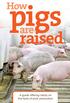 pigs How are raised A guide offering clarity on the facts of pork production Page 4 Page 6 Page 8 Page 10 Page 12 How Pigs Were Raised Until the 1950s, most farmers produced a little of everything, including
Using simulation to calculate the NPV of a project
 Using simulation to calculate the NPV of a project Marius Holtan Onward Inc. 5/31/2002 Monte Carlo simulation is fast becoming the technology of choice for evaluating and analyzing assets, be it pure financial
Cash Flow Budget: What Will It Tell Me? *
 Purdue Extension Knowledge to Go Cash Flow Budget: What Will It Tell Me? * How much financing will your farm business require this year? When will money be needed, and from where will it come? A little
6. FINANCIAL MANAGEMENT
 6. FINANCIAL MANAGEMENT Syllabus Financial Management: Investment-need, Appraisal and criteria, Financial analysis techniques-simple pay back period, Return on investment, Net present value, Internal rate
Winkler, D. T. "The Cost of Trade Credit: A Net Present Value Perspective." Journal of Business and Economic Studies, vol. 3, no. 1, 1996, pp. 53-63.
 The Cost of Trade Credit: A Net Present Value Perspective By: Daniel T Winkler Winkler, D. T. "The Cost of Trade Credit: A Net Present Value Perspective." Journal of Business and Economic Studies, vol.
FACULTY OF ECONOMICS AND BUSINESS SCIENCE Elviña Campus, A Coruña Updated: october 2005 GRADUATE IN BUSINESS ADMINISTRATION AND MANAGEMENT
 FACULTY OF ECONOMICS AND BUSINESS SCIENCE Elviña Campus, A Coruña Updated: october 2005 Address Campus de Elviña 15071 A Coruña Tel.: +34.981.167000 (Ext.: 2409) Fax.: +34. 981.167070 Webpage: www.udc.es
This Little Piggy Math in the Pig Barn
 Area This Little Piggy Math in the Pig Barn Math Background Math is very important in agriculture when determining weights of animals. It is neded for marketing; administration of vacines, determining
Biological assets Agricultural produce Products that are the result of processing after harvest
 International Accounting Standard 41 Agriculture Objective The objective of this Standard is to prescribe the accounting treatment and disclosures related to agricultural activity. Scope 1 This Standard
Cash to Accrual Income Approximation
 Cash to Accrual Income Approximation With this program, the user can estimate accrual income using the Schedule F from his/her federal income tax return. Fast Tools & Resources Farmers typically report
Management Accounting and Decision-Making
 Management Accounting 15 Management Accounting and Decision-Making Management accounting writers tend to present management accounting as a loosely connected set of decision making tools. Although the
Capacity planning for fossil fuel and renewable energy resources power plants
 Capacity planning for fossil fuel and renewable energy resources power plants S. F. Ghaderi *,Reza Tanha ** Ahmad Karimi *** *,** Research Institute of Energy Management and Planning and Department of
PROJECT RISK MANAGEMENT - ADVANTAGES AND PITFALLS
 1 PROJECT RISK MANAGEMENT - ADVANTAGES AND PITFALLS Kenneth K. Humphreys 1, PE CCE DIF 1 Past Secretary-Treasurer, ICEC, Granite Falls, NC, United States Abstract Proper project decision-making requires