
Descartes Proof of the External World Paul Sperring
|
|
|
- Michael Knight
- 9 years ago
- Views:
Transcription
1 Introduction Descartes Proof of the External World In order to fully overcome the doubts of Meditation I Descartes had to show, in Meditation VI, that he could be certain of the existence of the material world, despite the dreaming and demon arguments. His proof that there is such a world involved the following two moves: 1. Consider the alternative possible causes of our ideas of material objects and show that only material objects could actually be the cause. 2. Consider the essential nature of material objects and show that only real existent bodies could possess such attributes. In this essay, I shall examine both steps. 1: Material Objects Cause our Ideas of Material Objects Possible Causes of My Ideas of Material Objects Descartes considers four possible sources for my ideas of material objects: (i) (ii) (iii) (iv) I could be the cause of my ideas of the material world (much in the way that the solipsist sees things). God could have provided me with the ideas directly (perhaps in the way that Berkeley thought that all material objects are merely ideas in our minds, and the mind of God). Something other than me, but which possesses enough power to cause in me the ideas of material objects, but is distinct from the material objects and is not me or God (such as a deceiving demon or some such sceptical possibility). Material objects. One needs to pause here to introduce some technical notions to explain options (ii) and (iii) as understood by Descartes. In Meditation VI Descartes expresses the relationship between the cause of an idea and the idea itself in terms of the formal or eminent reality in the cause and the objective reality in the idea. 1 This terminology may be unfamiliar, and even confusing, to the modern reader, but the concepts are fairly straightforward. In essence a thing has objective reality, for Descartes, if it is a representation of something. Thus my idea of a horse is objectively real, and to say that the horse itself, as the cause of my idea, has formal reality, is to say that it has the apparent or represented properties that my idea has in actual fact (so the horse actually has legs, whereas the idea only has represented legs). 2 Something has eminent reality if it contains within it the properties required to bring about the representation, although in some higher form than something that merely has the literal properties. If we consider God, then it seems right to suppose that God could Page 1 of 5
2 cause my idea of a horse, and therefore God has certain properties which are at the root of my representation of the horse, but, of course, God obviously does not have the four-leggedness which forms part of my idea. So God has the eminent reality to bring about the objective reality in my idea. 3 Descartes job is to eliminate the first three possibilities and leave the fourth possibility alone as a source of our ideas of material objects. And if this is the only possible source then, obviously, if there are ideas of material objects (which seems undeniable) then there must be material objects. In short, the job is to show that the formal reality of tables is the true source of the objective reality of the ideas of tables. Let us begin with the self. Can I Be the Cause of My Ideas of Material Objects? I cannot create or avoid ideas of material objects at will. When I wish to have a fuller wallet, or the rock strikes my head, I may curse the way the world is fixed. I don t seem to be in charge of things in such cases. Secondly, my apparent sensory experiences are extremely vivid, in a way that my imagination cannot recreate. Both of these claims seem to point to the fact that I am but a passive observer of the material world, and do not actively construct the world of tables, persons, hedgehogs and bank balances. But, one might ask here, why couldn t there be something in me that is providing the active element in perception? It is because, says Descartes, this so-called active faculty presupposes no intellectual act on my part. 4 The idea here is that certain things exist only insofar as there is a mind already present ( presupposed ), whereas other things can exist independently of my mind. So my beliefs and judgements do presuppose an intellectual act on my part. That s to say, if I had no mind or understanding then I would have no beliefs, nor could I make any judgements. Beliefs and judgements are simply modes of thought and so require thinking substance in order to be. However, the cause of my sensory experiences is not itself a mode of thought, but whatever produces (i.e., the active part) the mode of thought. The only active part of my mind that could even conceivably be the cause of the sensory experiences is the will, but Descartes has established that these ideas arise independently of my will, so it follows that something other than me must be the cause of these ideas of sensible objects. Might God Directly Cause My Ideas of Material Objects? God is no deceiver, claims Descartes, since supremely perfect, and deception is always a consequence of imperfection. 5 It follows, therefore, that he would not have provided me with the ideas of material objects directly without also giving me some faculty for recognising their origin (i.e. some sort of extra sensory capacity to pick up on God s role in the production of these ideas). Further, God appears to have given me an extremely strong propensity to believe that material objects cause my ideas of them 6 if they didn t then this would be an instance of deception. To illustrate: Suppose as a small child I trod, barefoot, on an upturned drawing pin. Now, as I hopped about hooting and screeching what was I naturally led to believe? Was it that God had placed in my mind the ideas of things like feet and drawing pins directly, and Page 2 of 5
3 accompanied this with the idea of pain? Or was it that I had just encountered a real, extended object, which had attached itself to my real, extended foot, and it was because of this coupling that I felt pain? It seems impossible that the former could be the case unless we take God to be a deceiver. This point about our natural propensities (or inclinations) is important. Whatever is natural is God-given by nature or the natural Descartes means God himself, the laws of nature and also our own, human, nature. Now, with respect to my own nature, if I have a set of faculties which constantly lead me into error no matter how carefully I use them then it seems that this would ultimately redound to the discredit of the creator. If I think that there are material objects, with certain properties, existing, in certain respects, independently of me and just as they appear to, and I am wrong, then this looks obviously bad for the creator of me. To make use of one of Descartes analogies (found elsewhere in Meditation VI 7 ), if a clock is constructed in such a way so that it never tells the right time 8 then we rightly blame the clockmaker for having produced such a poor clock. If we suppose ourselves to be truthfully identifying mind-independent, extended objects when we have ordinary sensory experiences then we jolly well better be right at least some of the time if God is to be considered a good clockmaker. However, God needn t be impugned here if it were the case that we had some sort of faculty for recognising that sensory experiences are not of the mind-independent, extended items we take them to be of. Perhaps if they appeared with some sort of glow, reflecting their divine origin one might say, and triggering in us some epistemic revelation, then we wouldn t ever suppose them to be anything other than placed directly in the mind by God. Since this is not how things go, ordinarily, then it scarcely ever occurs to us think anything other than here is an item, existing in a mind independent realm of extended items. 9,10 Might a Deceiving Demon Be the Cause of My Ideas of Material Objects? For the same reasons, mutatis mutandis, we can reject some demon hypothesis since I have been given no capacity to recognise such deception. So the blame would lie with God in setting the world up in such a way that my most careful considerations and natural inclinations led me up the garden path, so to speak. So far then, we have been given reasons to reject options (i)-(iii) as sources for our ideas of material objects. Since (i)-(iv) are the only possible sources for our ideas, then if option (iv), that material objects cause our ideas of material objects, is the only option left to us, then it must be the case that material objects exist. Knowing that there are material objects, however, doesn t tell us what they are like (as Descartes points out earlier in the Meditations, questions of existence and essence are always separable regarding things other than God). Can we say, with any confidence, that material objects are in fact as they appear to be? What Descartes attempts to show is that material objects do indeed have the features that we take them to have at least in certain respects. Page 3 of 5
4 2: Material Objects Have (Some Of) the Properties They Appear to Have Having established that material objects exist Descartes points out that they may not all exist in a way that exactly corresponds with my sensory grasp of them. 11 It is important to establish, however, in which respects these objects resemble our ideas of them, otherwise we might continue to think false thoughts about what the external world is really like. So if an idea of some material object appears to us to be of something with properties X, Y and Z, then we want to know which of these apparent properties are actually found in the object itself. To illustrate, supposing my idea of the horse to be of something that is in motion, chestnut brown, and extended, we can ask whether any of these three properties belong to the horse itself. So, in general I have certain ideas of material objects as possessing extension, motion, location in space, and so on. I also have ideas of material objects as being coloured, textured, odorous, tasty, noisy, and so on. Now, as Descartes showed with his arguments for dualism, no idea itself could be extended. A thought cannot have a weight, nor be in motion, nor be put in a cooking pot with some onions. So, if our ideas of material things are about things which are actually movable, locatable, cookable, and so on, then there must in fact be objects such that they can be in motion, pinpointed in space and cooked. If there were not objects with these properties, and the properties simply belonged to ideas, then there wouldn t in fact be anything that the concept extended picked out (since, as we ve seen, no idea could itself fill space), and therefore would be an empty notion. Therefore, if these notions of extension, motion, change in position, are meaningful at all, it must be in virtue of there being things which are extended, moving, now here now there. As Descartes says: [I] recognize that there are [...] faculties (like those of changing position, of taking on various shapes, and so on) which [...] cannot be understood apart from some substance for them to inhere in, and hence cannot exist without it. But it is clear that these other faculties, if they exist, must be in a corporeal or extended substance and not an intellectual one; for the clear and distinct conception of them includes extension, but does not include any intellectual act whatsoever. 12 So once we know that there are material objects (and the previous section set out Descartes proof for that) then it must follow that such faculties must really belong to material objects, since they simply could not belong to intellectual items in any real sense. Our representations of material items as being extended really do have as their source extended material items (or to revert to Descartes terminology: the objective reality of the idea arises as a result of the formal reality of corporeal nature). These physical properties are the so called mathematical properties (which Locke termed primary properties ) which really exist in the objects, and are the proper object of scientific study. But what of the other properties which our ideas of material objects possess, such as the chestnut brownness of the horse? Does this sort of thing have to belong to the horse, that s to say, considered as something independent of me? Descartes thinks not. None of the sensible properties need be thought to exist independently of my mind (they all presuppose some intellectual substance, and can be understood as mere modes of thought, unlike the mathematical properties). So, although the objects that I perceive to be outside of my mind, do not have all of the Page 4 of 5
5 properties that my ideas attribute to them, at least they possess all the properties which I clearly and distinctly understand, that is, all those which, viewed in general terms, are comprised with the subject-matter of pure mathematics. 13 Therefore, the cautious meditator need no longer fear that she will fall into error with respect to the external world. Firstly, she now knows that there is one, and secondly she knows which properties it is appropriate to attribute to it, considered in itself, and which to herself. Humanities Brighton College [email protected] 1 AT VII, 79; CSM II, 55 (all references to Descartes text come from The Philosophical Writings of Descartes, translated by Cottingham, Stoothoff and Murdoch (CSM Vol. no, Page no.), which is translated from the Oeuvres de Descartes, edited by Adam and Tannery (AT Vol. no, Page no.)). 2 We can, of course, distinguish between the idea, considered as the carrier of the representational content, and also the idea considered as the content itself much in the same way that when we consider a painting we can think of it as canvas and paint, and also as a a painting of something (say, a horse). 3 Readers of the Meditations will be familiar with these notions from Descartes causal (or Trademark ) argument for God s existence found in Meditation III; there Descartes attempted to show that only God could have the formal or eminent reality required to cause the objective reality of our idea of God. 4 AT VII, 79; CSM II, 55 5 [God] cannot be a deceiver, since it is manifest from the natural light that all fraud and deception depend on some defect. (AT VII, 52; CSM II, 35) Again, this comes from Meditation III. This premise bears an awful lot of weight in Descartes argument for the proof of the external world. 6 AT VII, 80; CSM II, 55 7 AT VII, 84-85; CSM II, Supposing it to be in motion and always either too fast or slow, and not supposing it to have stopped where it might be thought to be correct twice a day. 9 Not, of course, that we usually have any such thoughts. We probably don t ever think here is a table, unless we are in a philosophy class, we just take it that there is a table in front of us when we have a sensory experience of it. 10 And so the Berkeleyan idealist is going to have to give an account of why God fixes things in the way that he does that makes it seem so evident to us that objects exist out there filling space, that avoids charging God with radical deceit. 11 AT VII, 80; CSM II, AT VII, 79-80; CSM II, AT VII, 80; CSM II, 55 Page 5 of 5
Reality in the Eyes of Descartes and Berkeley. By: Nada Shokry 5/21/2013 AUC - Philosophy
 Reality in the Eyes of Descartes and Berkeley By: Nada Shokry 5/21/2013 AUC - Philosophy Shokry, 2 One person's craziness is another person's reality. Tim Burton This quote best describes what one finds
1/9. Locke 1: Critique of Innate Ideas
 1/9 Locke 1: Critique of Innate Ideas This week we are going to begin looking at a new area by turning our attention to the work of John Locke, who is probably the most famous English philosopher of all
Primary and Secondary Qualities Charles Kaijo
 Primary and Secondary Qualities Charles Kaijo From examining John Locke s distinction between primary and secondary qualities in an object and Bishop George Berkeley s refutation to Locke s argument, it
Some key arguments from Meditations III-V
 Some key arguments from Meditations III-V I. THIRD MEDITATION: The existence of God A. Cosmological proof of the Existence of God In the 3rd Meditation, Descartes attempts to prove that God (i) exists,
The Slate Is Not Empty: Descartes and Locke on Innate Ideas
 The Slate Is Not Empty: Descartes and Locke on Innate Ideas René Descartes and John Locke, two of the principal philosophers who shaped modern philosophy, disagree on several topics; one of them concerns
ON EXTERNAL OBJECTS By Immanuel Kant From Critique of Pure Reason (1781)
 ON EXTERNAL OBJECTS By Immanuel Kant From Critique of Pure Reason (1781) General Observations on The Transcendental Aesthetic To avoid all misapprehension, it is necessary to explain, as clearly as possible,
Plato gives another argument for this claiming, relating to the nature of knowledge, which we will return to in the next section.
 Michael Lacewing Plato s theor y of Forms FROM SENSE EXPERIENCE TO THE FORMS In Book V (476f.) of The Republic, Plato argues that all objects we experience through our senses are particular things. We
Descartes Meditations. ? God exists I exist (as a thinking thing)
 Descartes Meditations Descartes Structure of Belief What does he know with absolute certainty?? God exists I exist (as a thinking thing) Why try to prove God exists? Intellectual interest. : Are any of
How should we think about the testimony of others? Is it reducible to other kinds of evidence?
 Subject: Title: Word count: Epistemology How should we think about the testimony of others? Is it reducible to other kinds of evidence? 2,707 1 How should we think about the testimony of others? Is it
RENE DESCARTES MEDITATIONS ON FIRST PHILOSOPHY A summary by Torrey Wang. Meditation One: Concerning those things that can be called into doubt
 RENE DESCARTES MEDITATIONS ON FIRST PHILOSOPHY A summary by Torrey Wang Meditation One: Concerning those things that can be called into doubt Descartes states that he has put off examining the foundations
3. Mathematical Induction
 3. MATHEMATICAL INDUCTION 83 3. Mathematical Induction 3.1. First Principle of Mathematical Induction. Let P (n) be a predicate with domain of discourse (over) the natural numbers N = {0, 1,,...}. If (1)
Fundamentals Explained
 Fundamentals Explained Purpose, values and method of Scouting Item Code FS140099 July 13 Edition no 2 (103297) 0845 300 1818 Fundamentals Explained This document contains detailed information on Fundamentals
You will by now not be surprised that a version of the teleological argument can be found in the writings of Thomas Aquinas.
 The design argument The different versions of the cosmological argument we discussed over the last few weeks were arguments for the existence of God based on extremely abstract and general features of
Skepticism about the external world & the problem of other minds
 Skepticism about the external world & the problem of other minds So far in this course we have, broadly speaking, discussed two different sorts of issues: issues connected with the nature of persons (a
Writing Thesis Defense Papers
 Writing Thesis Defense Papers The point of these papers is for you to explain and defend a thesis of your own critically analyzing the reasoning offered in support of a claim made by one of the philosophers
Reading Questions for Phil 412.200, Spring 2012 (Daniel)
 Reading Questions for Phil 412.200, Spring 2012 (Daniel) Questions on Descartes Meditations I & II (Jan. 19) 1. For Descartes, why can t knowledge gained through sense experience be trusted as the basis
How does the problem of relativity relate to Thomas Kuhn s concept of paradigm?
 How does the problem of relativity relate to Thomas Kuhn s concept of paradigm? Eli Bjørhusdal After having published The Structure of Scientific Revolutions in 1962, Kuhn was much criticised for the use
Cosmological Arguments for the Existence of God S. Clarke
 Cosmological Arguments for the Existence of God S. Clarke [Modified Fall 2009] 1. Large class of arguments. Sometimes they get very complex, as in Clarke s argument, but the basic idea is simple. Lets
Divine command theory
 Today we will be discussing divine command theory. But first I will give a (very) brief overview of the semester, and the discipline of philosophy. Why do this? One of the functions of an introductory
Descartes, Doubt and Divine Deception Paul Sperring
 Introduction Descartes, Doubt and Divine Deception In Issue 15 of the RJP I set out Descartes attempted proof of the existence of the material world. It was shown how Descartes proof rested on earlier
Time and Causation in Gödel s Universe.
 Time and Causation in Gödel s Universe. John L. Bell In 1949 the great logician Kurt Gödel constructed the first mathematical models of the universe in which travel into the past is, in theory at least,
Mind & Body Cartesian Dualism
 Blutner/Philosophy of Mind/Mind & Body/Cartesian dualism 1 Mind & Body Cartesian Dualism The great philosophical distinction between mind and body can be traced to the Greeks René Descartes (1596-1650),
P R I M A R Y A N D S E C O N D A R Y Q U A L I T I E S
 P R I M A R Y A N D S E C O N D A R Y Q U A L I T I E S W E E K 1 1. Overview Week 1: Introduction to the Primary/Secondary Quality Distinction. Week 2: Dispositionalist Views of Colour Week 3: Colour
Kant s Fundamental Principles of the Metaphysic of Morals
 Kant s Fundamental Principles of the Metaphysic of Morals G. J. Mattey Winter, 2015/ Philosophy 1 The Division of Philosophical Labor Kant generally endorses the ancient Greek division of philosophy into
Locke. Reading Questions Introduction to Locke An Essay Concerning Human Understanding Summary of Locke. Reading Questions
 Locke Reading Questions Introduction to Locke An Essay Concerning Human Understanding Summary of Locke Reading Questions. Was Locke a foundationalist? 2. What is empiricism? Was Locke an empiricist? 3.
Phil 420: Metaphysics Spring 2008. [Handout 4] Hilary Putnam: Why There Isn t A Ready-Made World
![Phil 420: Metaphysics Spring 2008. [Handout 4] Hilary Putnam: Why There Isn t A Ready-Made World](/thumbs/24/2354653.jpg "Phil 420: Metaphysics Spring 2008. [Handout 4] Hilary Putnam: Why There Isn t A Ready-Made World") 1 Putnam s Main Theses: 1. There is no ready-made world. Phil 420: Metaphysics Spring 2008 [Handout 4] Hilary Putnam: Why There Isn t A Ready-Made World * [A ready-made world]: The world itself has to
1 Putnam s Main Theses: 1. There is no ready-made world. Phil 420: Metaphysics Spring 2008 [Handout 4] Hilary Putnam: Why There Isn t A Ready-Made World * [A ready-made world]: The world itself has to
Slippery Slopes and Vagueness
 Slippery Slopes and Vagueness Slippery slope reasoning, typically taken as a fallacy. But what goes wrong? Is it always bad reasoning? How should we respond to a slippery slope argument and/or guard against
Sartre and Freedom. Leo Franchi. Human freedom is undoubtedly one of the most fundamental ideas that has driven the
 Sartre and Freedom Leo Franchi Human freedom is undoubtedly one of the most fundamental ideas that has driven the development of democratic politics in the last few hundred years. Freedom is taught in
Kant s deontological ethics
 Michael Lacewing Kant s deontological ethics DEONTOLOGY Deontologists believe that morality is a matter of duty. We have moral duties to do things which it is right to do and moral duties not to do things
CHAPTER 3. Methods of Proofs. 1. Logical Arguments and Formal Proofs
 CHAPTER 3 Methods of Proofs 1. Logical Arguments and Formal Proofs 1.1. Basic Terminology. An axiom is a statement that is given to be true. A rule of inference is a logical rule that is used to deduce
Arguments and Dialogues
 ONE Arguments and Dialogues The three goals of critical argumentation are to identify, analyze, and evaluate arguments. The term argument is used in a special sense, referring to the giving of reasons
Kant s Dialectic. Lecture 3 The Soul, part II John Filling [email protected]
 Kant s Dialectic Lecture 3 The Soul, part II John Filling [email protected] Overview 1. Re-cap 2. Second paralogism 3. Third paralogism 4. Fourth paralogism 5. Summing-up Critique of Pure Reason Transcendental
Philosophy 203 History of Modern Western Philosophy. Russell Marcus Hamilton College Spring 2010
 Philosophy 203 History of Modern Western Philosophy Russell Marcus Hamilton College Spring 2010 Class 2 - Meditation One Marcus, Modern Philosophy, Spring 2010, Slide 1 Five dogmas undermined by the new
Killing And Letting Die
 [This essay originally appeared in the Encyclopedia of Ethics, 2nd edition, ed. Lawrence Becker and Charlotte Becker (New York: Routledge, 2001), vol. 2, pp. 947-50.] Killing And Letting Die Is it worse
Invalidity in Predicate Logic
 Invalidity in Predicate Logic So far we ve got a method for establishing that a predicate logic argument is valid: do a derivation. But we ve got no method for establishing invalidity. In propositional
General Philosophy. Dr Peter Millican, Hertford College. Lecture 3: Induction
 General Philosophy Dr Peter Millican, Hertford College Lecture 3: Induction Hume s s Fork 2 Enquiry IV starts with a vital distinction between types of proposition: Relations of ideas can be known a priori
Last May, philosopher Thomas Nagel reviewed a book by Michael Sandel titled
 Fourth Quarter, 2006 Vol. 29, No. 4 Editor s Watch Sandel and Nagel on Abortion Last May, philosopher Thomas Nagel reviewed a book by Michael Sandel titled Public Philosophy in The New York Review of Books.
Practical Jealousy Management
 Florida Poly Retreat 2006 Practical Jealousy Management Part 1: On the Nature of Jealousy Jealousy is an unusual emotion in that it is an emotion rooted in other emotions. Often, the root of jealousy lies
Argument for a Distinction Between the Mind/Soul and the Body. This is a prose summary of the diagrammed argument on the previous page:
 Argument for a Distinction Between the Mind/Soul and the Body This is a prose summary of the diagrammed argument on the previous page: The goal of this argument is to show that there is a metaphysical
Read this syllabus very carefully. If there are any reasons why you cannot comply with what I am requiring, then talk with me about this at once.
 LOGIC AND CRITICAL THINKING PHIL 2020 Maymester Term, 2010 Daily, 9:30-12:15 Peabody Hall, room 105 Text: LOGIC AND RATIONAL THOUGHT by Frank R. Harrison, III Professor: Frank R. Harrison, III Office:
How To Understand The Moral Code Of A God (For Men)
 Summary of Kant s Groundwork of the Metaphysics of Morals Version 1.0 Richard Baron 27 February 2016 1 Contents 1 Introduction 3 1.1 Availability and licence............ 3 2 Definitions of key terms 4
Social & Political Philosophy. Karl Marx (1818-1883) Economic and Philosophic Manuscripts of 1844
 Marx 1 Karl Marx (1818-1883) Economic and Philosophic Manuscripts of 1844 Estranged Labor Marx lays out here his theory on the alienation of labor Marx s thesis would advance the view put forth by Rousseau
Responding to Arguments against the Existence of God Based on Evil
 Responding to Arguments against the Existence of God Based on Evil By INTRODUCTION Throughout the history of western thought, numerous philosophers and great thinkers have struggled with what is known
Gödel s Ontological Proof of the Existence of God
 Prof. Dr. Elke Brendel Institut für Philosophie Lehrstuhl für Logik und Grundlagenforschung g Rheinische Friedrich-Wilhelms-Universität Bonn [email protected] Gödel s Ontological Proof of the Existence
Metaphysics and the Question of Being
 Metaphysics and the Question of Being 1. Introduction The aim of this paper is to examine the relationship between Heidegger s account of metaphysics and the central topic of his work, the question of
Cultural Relativism. 1. What is Cultural Relativism? 2. Is Cultural Relativism true? 3. What can we learn from Cultural Relativism?
 1. What is Cultural Relativism? 2. Is Cultural Relativism true? 3. What can we learn from Cultural Relativism? What is it? Rough idea: There is no universal truth in ethics. There are only customary practices
EPISTEMOLOGY. PHILOSOPHY FOR AS.indb 23 16/07/2014 16:10
 EPISTEMOLOGY 2 What can we know? And how do we know what we know? These questions are central to the branch of philosophy called epistemology. At its heart are two very important, very interesting questions
How to Get Your Prayers Answered By Dr. Roger Sapp
 How to Get Your Prayers Answered By Dr. Roger Sapp There are many good Christians who pray daily with diligence and with discipline but seem to struggle to get their prayers answered by the Father. On
Locke s psychological theory of personal identity
 Locke s psychological theory of personal identity phil 20208 Jeff Speaks October 3, 2006 1 Identity, diversity, and kinds............................. 1 2 Personal identity...................................
Key Words Immortality: endless life or existence; life after death
 Key Words Immortality: endless life or existence; life after death Legacy: something handed down from an ancestor; a way of being remembered after death Resurrection: rising from the dead or returning
Kenken For Teachers. Tom Davis [email protected] http://www.geometer.org/mathcircles June 27, 2010. Abstract
 Kenken For Teachers Tom Davis [email protected] http://www.geometer.org/mathcircles June 7, 00 Abstract Kenken is a puzzle whose solution requires a combination of logic and simple arithmetic skills.
Full and Complete Binary Trees
 Full and Complete Binary Trees Binary Tree Theorems 1 Here are two important types of binary trees. Note that the definitions, while similar, are logically independent. Definition: a binary tree T is full
Reply to French and Genone Symposium on Naïve Realism and Illusion The Brains Blog, January 2016. Boyd Millar millar.boyd@gmail.
 Reply to French and Genone Symposium on Naïve Realism and Illusion The Brains Blog, January 2016 Boyd Millar [email protected] 1. Acknowledgements I would like to thank the managing editor of The Brains
Preparing for the IELTS test with Holmesglen Institute of TAFE
 Preparing for the IELTS test with Holmesglen Institute of TAFE The speaking component The IELTS speaking test takes around 15 minutes and is in the form of an interview. The interview will most probably
Inductive Reasoning Page 1 of 7. Inductive Reasoning
 Inductive Reasoning Page 1 of 7 Inductive Reasoning We learned that valid deductive thinking begins with at least one universal premise and leads to a conclusion that is believed to be contained in the
Preparing and Revising for your GCSE Exams
 Preparing and Revising for your GCSE Exams Preparing and Revising for GCSEs Page 2 Contents Introduction 3 Effective Learning and Revision 4 What you need to Revise 5 Revision Notes and Practice 6 Getting
One natural response would be to cite evidence of past mornings, and give something like the following argument:
 Hume on induction Suppose you were asked to give your reasons for believing that the sun will come up tomorrow, in the form of an argument for the claim that the sun will come up tomorrow. One natural
Kant on Time. Diana Mertz Hsieh ([email protected]) Kant (Phil 5010, Hanna) 28 September 2004
 Kant on Time Diana Mertz Hsieh ([email protected]) Kant (Phil 5010, Hanna) 28 September 2004 In the Transcendental Aesthetic of his Critique of Pure Reason, Immanuel Kant offers a series of dense arguments
Chapter 6: Probability
 Chapter 6: Probability In a more mathematically oriented statistics course, you would spend a lot of time talking about colored balls in urns. We will skip over such detailed examinations of probability,
Aristotle and citizenship: the responsibilities of the citizen in the Politics
 artificialhorizon.org Aristotle and citizenship: the responsibilities of the citizen in the Politics RALPH HARRINGTON Aristotle s Politics is an investigation of how people live in political communities.
FILMS AND BOOKS ADAPTATIONS
 FILMS AND BOOKS Reading a book is very different to watching a film. The way that we understand both is also different. We firstly need to think of the ways in which films and books tell their stories.
HOW TO CHANGE NEGATIVE THINKING
 HOW TO CHANGE NEGATIVE THINKING For there is nothing either good or bad, but thinking makes it so. William Shakespeare, Hamlet, Act 2, Scene 2, 239 251. Although you may not be fully aware of it, our minds
How to Get Your Prayers Answered. By Dr. Roger Sapp
 How to Get Your Prayers Answered By Dr. Roger Sapp There are many good Christians who pray daily with diligence and with discipline but seem to struggle to get their prayers answered by the Father. On
Science and Scientific Reasoning. Critical Thinking
 Science and Scientific Reasoning Critical Thinking Some Common Myths About Science Science: What it is and what it is not Science and Technology Science is not the same as technology The goal of science
Existence Is Not a Predicate by Immanuel Kant
 Existence Is Not a Predicate by Immanuel Kant Immanuel Kant, Thoemmes About the author.... Immanuel Kant (1724-1804) studied in Königsberg, East Prussia. Before he fully developed an interest in philosophy,
Embracing Our Destiny Understanding Our Biblical Destiny (Part 1)
 Mailing Address: PO Box 797 Molalla, OR 97038 Phone: 503-829-5101 Fax: 503-829-9502 Pastor Dale Satrum Embracing Our Destiny Understanding Our Biblical Destiny (Part 1) Intro: I believe God has a destiny
In Defense of Kantian Moral Theory Nader Shoaibi University of California, Berkeley
 In Defense of Kantian Moral Theory University of California, Berkeley In this paper, I will argue that Kant provides us with a plausible account of morality. To show that, I will first offer a major criticism
WRITING PROOFS. Christopher Heil Georgia Institute of Technology
 WRITING PROOFS Christopher Heil Georgia Institute of Technology A theorem is just a statement of fact A proof of the theorem is a logical explanation of why the theorem is true Many theorems have this
PATENTS ACT 1977. IN THE MATTER OF Application No. GB 9808661.4 in the name of Pintos Global Services Ltd DECISION. Introduction
 PATENTS ACT 1977 IN THE MATTER OF Application No. GB 9808661.4 in the name of Pintos Global Services Ltd DECISION Introduction 1. Patent application number GB 9808661.4 entitled, A system for exchanging
Regular Expressions and Automata using Haskell
 Regular Expressions and Automata using Haskell Simon Thompson Computing Laboratory University of Kent at Canterbury January 2000 Contents 1 Introduction 2 2 Regular Expressions 2 3 Matching regular expressions
What is Organizational Communication?
 What is Organizational Communication? By Matt Koschmann Department of Communication University of Colorado Boulder 2012 So what is organizational communication? And what are we doing when we study organizational
Philosophical argument
 Michael Lacewing Philosophical argument At the heart of philosophy is philosophical argument. Arguments are different from assertions. Assertions are simply stated; arguments always involve giving reasons.
Course Syllabus Department of Philosophy and Religion Skidmore College. PH 101: Introduction to Philosophy TUTH 3:40-5:30 Spring, 2011
 Course Syllabus Department of Philosophy and Religion Skidmore College PH 101: Introduction to Philosophy Reg Lilly TUTH 3:40-5:30 Spring, 2011 COURSE DESCRIPTION: This course is designed to introduce
Math 4310 Handout - Quotient Vector Spaces
 Math 4310 Handout - Quotient Vector Spaces Dan Collins The textbook defines a subspace of a vector space in Chapter 4, but it avoids ever discussing the notion of a quotient space. This is understandable
On the Paradox of the Question
 On the Paradox of the Question Theodore Sider Analysis 57 (1997): 97 101 Ned Markosian (1997) tells a story in which philosophers have an opportunity to ask an angel a single question. In order to circumvent
Introduction. Dear Leader,
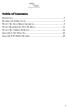 Table of Contents Introduction...4 Meeting and Setting Goals...6 Week 1: The Great Human Questions...9 Week 2: Examining the Ways We Know...15 Week 3: The Christian Worldview...24 Appendix A: The Divine
CRITICAL THINKING REASONS FOR BELIEF AND DOUBT (VAUGHN CH. 4)
 CRITICAL THINKING REASONS FOR BELIEF AND DOUBT (VAUGHN CH. 4) LECTURE PROFESSOR JULIE YOO Claims Without Arguments When Claims Conflict Conflicting Claims Conflict With Your Background Information Experts
Neutrality s Much Needed Place In Dewey s Two-Part Criterion For Democratic Education
 Neutrality s Much Needed Place In Dewey s Two-Part Criterion For Democratic Education Taylor Wisneski, Kansas State University Abstract This paper examines methods provided by both John Dewey and Amy Gutmann.
MOST FREQUENTLY ASKED INTERVIEW QUESTIONS. 1. Why don t you tell me about yourself? 2. Why should I hire you?
 MOST FREQUENTLY ASKED INTERVIEW QUESTIONS 1. Why don t you tell me about yourself? The interviewer does not want to know your life history! He or she wants you to tell how your background relates to doing
AN OPINION COMPOSITION
 1 AN OPINION COMPOSITION When you are writing an essay that asks you to discuss a topic or give your opinion on a question, it is important to organize your thoughts and present your arguments clearly
Set personal, academic, and career goals. Keep your expectations high.
 Chapter SIX Set personal, academic, and career goals. Keep your expectations high. It is today that we create the world of the future. Eleanor Roosevelt When seventy-one adults with specific learning disabilities
Last time we had arrived at the following provisional interpretation of Aquinas second way:
 Aquinas Third Way Last time we had arrived at the following provisional interpretation of Aquinas second way: 1. 2. 3. 4. At least one thing has an efficient cause. Every causal chain must either be circular,
NECESSARY AND SUFFICIENT CONDITIONS
 Michael Lacewing Personal identity: Physical and psychological continuity theories A FIRST DISTINCTION In order to understand what is at issue in personal identity, it is important to distinguish between
The dispute is about the sale of a payment protection insurance (PPI) policy in connection with a credit card account with the firm in April 2007.
 FINAL DECISION complaint by: Mr E complaint about: the firm complaint reference: date of decision: April 2009 This final decision is issued by me, Robert Short, an ombudsman with the Financial Ombudsman
Understanding Options: Calls and Puts
 2 Understanding Options: Calls and Puts Important: in their simplest forms, options trades sound like, and are, very high risk investments. If reading about options makes you think they are too risky for
WEALTH. The Great Secret of the Ages
 WEALTH The Great Secret of the Ages You can have anything you want: wealth, a loving relationship, radiant health, true happiness, a life of ease, anything your heart desires, once you know the Great Secret
Planning and Writing Essays
 Planning and Writing Essays Many of your coursework assignments will take the form of an essay. This leaflet will give you an overview of the basic stages of planning and writing an academic essay but
A Short Course in Logic Zeno s Paradox
 1 Grappling with Good Arguments A Short Course in Logic Zeno s Paradox We ve seen that if we decide that an argument is good then we should be inclined to believe that the ultimate conclusion is true.
Use Your Master s Thesis Supervisor
 Use Your Master s Thesis Supervisor This booklet was prepared in dialogue with the heads of studies at the faculty, and it was approved by the dean of the faculty. Thus, this leaflet expresses the faculty
ANOTHER GENERATION OF GENERAL EDUCATION
 ANOTHER GENERATION OF GENERAL EDUCATION Peter K. Bol Charles H. Carswell Professor of East Asian Languages and Civilizations I was asked to set forth some personal reflections rather than to summarize
CHAPTER 2. Logic. 1. Logic Definitions. Notation: Variables are used to represent propositions. The most common variables used are p, q, and r.
 CHAPTER 2 Logic 1. Logic Definitions 1.1. Propositions. Definition 1.1.1. A proposition is a declarative sentence that is either true (denoted either T or 1) or false (denoted either F or 0). Notation:
STEP 5: Giving Feedback
 STEP 5: Giving Feedback Introduction You are now aware of the responsibilities of workplace mentoring, the six step approach to teaching skills, the importance of identifying the point of the lesson, and
WHY DO WE GET ANGRY? EVERYONE FEELS ANGRY SOMETIMES
 FEELING ANGRY? WHY DO WE GET ANGRY? There are lots of things that can make us angry. Here are a few examples... EVERYONE FEELS ANGRY SOMETIMES It s normal and healthy to get angry when there is a good
26 Integers: Multiplication, Division, and Order
 26 Integers: Multiplication, Division, and Order Integer multiplication and division are extensions of whole number multiplication and division. In multiplying and dividing integers, the one new issue
Chapter 5: Fallacies. 23 February 2015
 Chapter 5: Fallacies 23 February 2015 Plan for today Talk a bit more about arguments notice that the function of arguments explains why there are lots of bad arguments Turn to the concept of fallacy and
Building a Better Argument
 Building a Better Argument Summary Whether it s an ad for burger chains, the closing scene of a Law & Order spinoff, a discussion with the parents about your social life or a coach disputing a close call,