
Strategic Use of Straw at Farrowing
|
|
|
- Suzan Hart
- 10 years ago
- Views:
Transcription
1 Strategic Use of Straw at Farrowing Effects on Behaviour, Health and Production in Sows and Piglets Rebecka Westin Faculty of Veterinary Medicine and Animal Science Department of Animal Environment and Health Skara Doctoral Thesis Swedish University of Agricultural Sciences Skara 2014

2 Acta Universitatis agriculturae Sueciae 2014:69 ISSN ISBN (print version) ISBN (electronic version) Rebecka Westin, Skara Print: SLU Service/Repro, Uppsala 2014

3 Strategic Use of Straw at Farrowing. Effects on Behaviour, Health and Production in Sows and Piglets Abstract According to EU-regulations, sows should be provided with suitable manipulable material, this in order to meet their behavioural needs. Strategic use of straw at farrowing means that loose housed sows are provided with kg of chopped straw once at 2 days prior to the calculated date of farrowing. This gives them increased access to nesting material and creates a more suitable environment with an improved micro-climate and increased comfort during farrowing and early lactation, compared to a limited use of straw. After farrowing, the straw is left to gradually drain through the slatted floor and is then replaced by a daily supply of kg straw in accordance with common Swedish management routines. The overall aim of this thesis was to evaluate if strategic use of straw at farrowing is technically feasible and to investigate its effect on behaviour, health and production in farrowing sows and suckling piglets by studying the sow s nest-building behaviour and farrowing duration, the prevalence of bruising, piglet weight gain and pre-weaning mortality. Two studies were conducted in six conventional piglet-producing farms in South- West Sweden. Study I shows that it is technically possible to achieve an efficient throughput of straw and to maintain good pen hygiene in partly slatted farrowing pens for loose housed sows. However, straw chop lengths need to be adjusted to the type and design of the slatted pen floor. Study II shows that strategic use of straw made sows spend more time nest-building pre-partum and less time during the first hour after birth of the first piglet, compared to limited straw access. The sows also gave birth to fewer stillborn piglets. In piglets, strategic use of straw reduced the development of skin abrasions and soft heel/sole erosions. It also increased the average daily weight gain and mean body weight at weaning. Under the conditions studied, the overall preweaning mortality was not affected; however, the distribution of post-mortem findings differed, with fewer piglets dying due to starvation and more due to crushing. In summary, this thesis provides knowledge about housing around farrowing and its interaction with biological and behavioural mechanisms of importance for sow welfare and piglet survival and health. Keywords: pig housing, nest-building, farrowing sow, bruising, lameness, piglet mortality, loose housing, piglet weight gain, bedding material Author s address: Rebecka Westin, SLU, Department of Animal Environment and Health, P.O. Box 234, SE Skara, Sweden [email protected]

4 Dedication To all the pigs out there Swinet har sitt nöye uti dynge pölen. Peter Hernquist ( )

5 Contents List of Publications 7 Abbreviations 8 1 Introduction Domestication and nest-building behaviour Nest-building and piglet survival Strategic use of straw at farrowing 12 2 Hypotheses 15 3 Aims 17 4 Material and Methods Study I (Paper I) Straw inventory Animals and housing Treatments Throughput capacity of straw Study II (Paper II IV) Farms, housing and management Studied animals Provision of straw Recordings Statistical analysis 26 5 Results Study I Straw inventory Throughput capacity of straw (Paper I) Study II Sow behaviour and health Piglet health and production 34

6 6 Discussion Increased access to nesting material Intensity and timing of nest-building Duration of farrowing Influence on milk production Influence on maternal behaviour Increased comfort during farrowing and early lactation Prevention of bruising Development of sow shoulder lesions Improved micro-climate at farrowing Throughput of straw Methodological considerations Practical implications Is strategic use of straw economically beneficial? Is strategic use of straw practically feasible? 47 7 Conclusions 49 8 Future research 51 9 Populärvetenskaplig sammanfattning 53 References 57 Acknowledgements 63

7 List of Publications This thesis is based on the work contained in the following papers, referred to by Roman numerals in the text: I II Westin, R., Holmgren, N., Mattsson, B., Algers, B. (2013). Throughput capacity of large quantities of chopped straw in partly slatted farrowing pens for loose housed sows. Acta Agrarica Scandinavica Section A - Animal Science 63, Westin, R., Holmgren, N., Hultgren, J., Algers, B. (2014). Large quantities of straw at farrowing prevents bruising and increases weight gain in piglets. Preventive Veterinary Medicine 115, III Westin, R., Hultgren, J., Algers, B. (2014). Strategic use of straw increases nest-building in loose housed farrowing sows. (Submitted manuscript) IV Westin, R., Holmgren, N., Hultgren, J., Ortman, K, Linder, A., Algers, B. (2014). Post-mortem findings and piglet mortality in relation to strategic use of straw at farrowing. (Submitted manuscript) Papers I-II are reproduced with the kind permission of the publishers. 7

8 Abbreviations ADG IRR L LSM MML NEFA NNPDS Y Average daily weight gain Incidence rate ratio Swedish Landrace Least-Squares Means Mass median length Non-esterified fatty acids New Neonatal Porcine Diarrhoea Syndrome Yorkshire 8

9 1 Introduction Once upon a time, the wild boar (Sus scrofa) walked the land of our ancestors. Originating from South-East Asia, it spread and ultimately colonised the whole Eurasia and North Africa (Scandura et al., 2011). As the wild boar conquered the world, so did mankind and wild pigs became important prey animals for early hunter-gatherers. Then, about 9000 years ago, man and wild boar found mutual interests in peaceful coexistence and in multiple places the first pigs were domesticated (Larson et al., 2005). Archaeological findings from Northern Europe suggest that, in this region, pigs were domesticated some 500 years before the first reliable evidence of domestic cattle, sheep and goats (Krause-Kyora et al., 2013). Man and pig share a long history together. 1.1 Domestication and nest-building behaviour In early domestication, pigs were allowed to roam freely in the woodlands surrounding human settlements. The Romans are known to have trained their pigs with food to return to the sound of a swineherd s horn, but they also kept pigs confined in sties (D Eath & Turner, 2009). As more and more land was cultivated during the Middle Ages, pigs were increasingly confined in order to prevent them from damaging the crops. During the 18 th century, the practice of indoor housing of pigs began and over the centuries the housing system has changed completely from free roaming into total confinement in many countries. With few exceptions, use of farrowing crates is today common practice worldwide (Barnett et al., 2001). The behaviour of the pig has however not changed. Domesticated pigs are still equipped with competent behaviour to adapt and survive in the wild and on numerous locations successful feral populations have established (D Eath & Turner, 2009). Behavioural studies of domestic sows and crosses between wild 9

10 boar and domestic sows reveal that nest-building and maternal behaviour characteristics have not been substantially modified by domestication (Špinka et al., 2000; Gustafsson et al., 1999). Under free-range conditions, domesticated sows build completely functional nests in the same way as their ancestors (described by Stolba & Wood-Gush, 1989; Jensen, 1986). First the sow seeks out a suitable nest site, away from the flock. Then she starts building her nest by digging a shallow hole in the ground. Next, grass and branches are collected in the mouth and carried to the hole where the gathered material is arranged into a nest. When completed, the sow lies down in the nest and awaits the arrival of the first piglet. Kept in pens, the same behavioural pattern is expressed (Jensen, 1993) (Fig. 1). In barren environment with no nesting material present, the behaviour is redirected to the bare floor (Jarvis et al., 2002). Based on such research the EU Council Directive 2008/120/EC states that in the week before the expected farrowing time sows and gilts must be given suitable nesting material in sufficient quantity. Yet, only a few farmers accomplish this. Figure 1. A sow collecting straw to her farrowing nest in a farrowing pen for loose housed sows. (Photo: Rebecka Westin) 10

11 1.2 Nest-building and piglet survival In nature, building of a proper nest is completely necessary in order for the offspring to survive. The piglet s ability to conserve heat at birth is very limited because the hair coat is sparse; it has very little subcutaneous fat and is wet with foetal fluids. Further, its thermoregulatory ability is not fully developed (Herpin et al., 2002). Without protection, the chance of survival is small, especially in cold and wet weather. In semi-natural conditions, farrowing nests of straw built by free-ranging domestic sows have been shown to withstand rather severe cold (Algers & Jensen, 1990). Although farrowing nowadays takes place indoors, the sudden decrease in ambient temperature at birth results in a rapid fall in body temperature, usually by about 2ºC within 20 minutes (Malmkvist et al., 2006; Newland et al., 1952). Then body temperature gradually rises to a value of 39 C, normally within 48 h. The extent of the drop and length of the recovery period are however highly variable depending on several factors such as environmental temperature, birth weight, hypoxia and ingestion of colostrum (reviewed by Herpin et al., 2002). Cold stress at birth reduces the vigour of the piglet, thereby predisposes it to crushing by the sow and makes it less competitive towards its littermates during nursing, resulting in reduced ingestion of colostrum (Herpin et al., 2002). The pig s reproductive strategy is to produce a large number of offspring. Preweaning mortality rates vary between 12 and 25% and even though there have been technological changes and improvements of husbandry, housing designs and preventive measures, piglet mortality remains a major economic and welfare problem (Alonso-Spilsbury et al., 2007). Commercial strategies have often focused on modifying the farrowing environment to affect sow behaviour and increase human intervention (Edwards, 2002), but higher numbers of piglets weaned are still being achieved by increasing prolificacy rather than reducing mortality (Kirkden et al., 2013). The majority of deaths occur within 3 days after birth (Marchant et al., 2000; Dyck & Swierstra, 1987) and starvation and crushing by the sow are reported as the most common ultimate causes of death in live-born piglets (reviewed by: Alonso-Spilsbury et al., 2007; Edwards, 2002; Herpin et al., 2002). However, underlying causes reducing viability such as hypothermia described earlier, or hypoxia as a result of asphyxia during delivery have a major influence on the chain of events leading to death. As proposed by Baxter et al. (2008), the key survival characteristics for a newborn piglet is to get to the udder, show vitality and vigour at acquiring and maintaining a functional teat and thus ingest vital colostrum to aid energy needs, preserve homeothermy and ultimately survive. 11

12 Unlike other mammals giving birth to large litters, piglets are born in a highly precocious state (Fraser, 1980) where each piglet immediately is able to walk, suckle and interact with its environment and littermates. Still, good maternal care is crucial for piglet survival. Examples of such behaviour traits are responsiveness towards signals from the offspring and the nursing behaviour (reviewed by Grandinson, 2005). Also in confinement, maternal abilities are important. In a study of loose housed sows, Andersen et al.(2005) found that sows that did not crush any of their piglets within the first 4 days after farrowing showed a more protective mothering style compared to sows that crushed two or more piglets. These sows responded sooner on piglet distress calls and nosed more on the piglets during posture change. They also performed more nest-building activity from 8 to 6 h before onset of farrowing. A possible association between increased nest-building and increased maternal abilities has also been proposed by Yun et al. (2013) who found higher carefulness scores in loose housed sows provided with abundant nesting material compared to loose housed and crated sows without access to nesting material. At the same time there are studies with lacking evidence for a clear association between nest-building and reduced mortality (Damm et al., 2005; Cronin & Smith, 1992; Edwards & Furniss, 1988). Damm et al. (2005) were not able to demonstrate an effect of 2.5 kg long-stemmed straw as an additional nesting material on the rate of crushing in loose housed sows on a commercial farm, but conclude that this could be because too little or too few materials were provided. The authors also emphasise the need for further studies of the amounts and types of nest materials that should be given in order to fulfil the intention of the EU requirement for nesting materials to periparturient sows. Such studies are still needed. 1.3 Strategic use of straw at farrowing Handwritten notes by Peter Hernquist ( ), the first Swedish veterinarian, mention the provision of straw to pigs to be important for improvement of pen hygiene (Hernquist, 1790). Today, use of perforated or slatted floors with liquid slurry systems are recommended instead (Baxter, 1984), and as a consequence, use of straw is limited within intensive pig production. In addition to hygiene, floor properties are important for the health of the animals, especially newborn piglets. Piglets born on slatted floor are at higher risk of suffering from prolonged hypothermia. In a study of loosehoused sows in partly slatted farrowing pens, 11% of the pigs were born on the slatted floor area. These had a greater decrease in rectal temperature during the 12

13 first 30 min post-partum compared to piglets born on the heated solid concrete floor (Pedersen et al., 2013). At the same time, rough floors such as solid concrete can easily cause traumatic injuries on claws and limbs during suckling shortly after birth (Mouttotou & Green, 1999; Penny et al., 1971). In Sweden, with few exceptions the floor of most farrowing pens consists of 50% solid concrete. Bruising of claws and limbs are therefore a serious problem in many piglet-producing herds and a common cause of lameness in young piglets. In a survey conducted by Holmgren et al. (2008), more than 50% of 5408 examined piglets in 20 herds had carpal joint skin abrasions and 10% had been medically treated for lameness within 10 days of age. Similar high numbers of injured piglets have been reported in the UK by Mouttotou et al. (1999) and KilBride et al. (2009). As a result of the survey (Holmgren et al., 2008), Holmgren developed a method for a strategic use of large quantities of straw at farrowing together with a few of the participating farmers. The goal was to provide a soft bedding on the whole floor area at farrowing, in order to protect the skin and claws of the newborn piglets. In these herds, they started to supply their sows with kg of chopped straw once at 2 days prior to the calculated date of farrowing. The straw was left to gradually drain through the slatted floor and was then replaced by a daily supply of kg straw in accordance with common Swedish management routines. The farmers soon reported that the number of medical treatments of lame piglets was substantially reduced but also that piglet weight gain increased and that the sows seemed calmer and more content (Fig. 2). Was this a result of the increased accesses to nest-building material? Figure 2. A sow and her newborn piglets in a farrowing pen where strategic use of straw is applied. (Photo: Rebecka Westin) 13

14 14

15 2 Hypotheses Strategic use of straw (15 20 kg given once, 2 days before calculated date of farrowing), as compared to limited amounts (0.5 1 kg daily) will trigger the sow to start nest-building earlier and to perform more nest-building before farrowing. The large amount of nest-building material will satisfy her behavioural needs and therefore she completes her nest before the onset of parturition, as a result less nest-building will be observed after birth of the first piglet. Her contentedness will make her less stressed during farrowing resulting in a shorter duration of parturition, hence fewer stillborn piglets. It will also have a positive influence on milk production and trigger the sow to express more maternal behaviour after farrowing. This will in turn reduce piglet mortality due to starvation and crushing. The soft bedding during farrowing and the first day of lactation resulting from strategic use of large quantities of straw will increase comfort and therefore prevent piglets from bruising their claws and limbs, and the sow from developing shoulder lesions. The bedding will also provide a suitable microclimate for the piglets and will reduce the risk of prolonged hypothermia, weakness and starvation. Strategic use of large quantities of straw is technically feasible in both plastic slatted pens and cast iron slatted pens. 15

16 16

17 3 Aims The overall aim of this thesis is to evaluate if strategic use of straw at farrowing is technically feasible and to investigate its effect on behaviour, health and production in farrowing sows and suckling piglets. The specific aims are to study the ability of slatted flooring to drain straw of different shop lengths i.e. throughput capacity, and the effects of strategic use of straw on: the intensity and timing of nest-building behaviour and the duration of farrowing; the number of stillborn piglets; the prevalence of piglet limb skin abrasions and soft heel/sole erosions at 5 days of age; the daily weight gain during the first 5 days of life, and on body weight at weaning; the post-mortem findings in piglets dying within 5 days after birth and the overall pre-weaning mortality; the prevalence of sow shoulder lesions at weaning. 17

18 18

19 4 Material and Methods This is an overview of the materials and methods used in the two field studies included in this thesis. Full descriptions of each study are found in Papers I IV. 4.1 Study I (Paper I) Straw inventory Thirty-four piglet-producing farmers were interviewed about what type of straw they used in their herds and their routines for chopping and collecting straw at harvest (type of cereal, type of baler, distances between cutter knives in baler, chopping conducted after harvest, etc.). In case the farmer did not perform baling him/herself, contact was made with the company or person in charge of the baling. Farmers were selected from the Swedish Animal Health Service farm record based on the following criteria: (a) slurry system based on liquid manure; (b) situated within 150 km from the university campus in Skara; (c) farmer willing to participate. Based on the interviews, three groups with different handling methods of straw during harvest were identified (long distance between knives in baler (4 8 cm); short distance between knives in baler (2 3 cm); chopping conducted with silage harvester or stationary chopper). Three samples of wheat straw within each group were collected from 9 of the original 34 farms. All samples were harvested during the same season. Assessment of chop length distribution was then performed at the Swedish Institute of Agricultural and Environmental Engineering in Uppsala, Sweden. This was achieved with a special instrument built in accordance with specifications from the Silsoe Research Institute, UK (Gale & O'Dogherty, 1982). With this instrument the chopped straw sample was divided into eight different fractions according to length (<4.5, 4.5 8, 8 12, 12 20, 20 33, 33 54, 54 90, >90 mm). Particles with a chop length exceeding 150 mm were sorted manually into two additional fractions (150 19

20 250, mm). Each fraction was weighed and the Mass Median Length (MML) of each sample was calculated, denoting the chop length which divided the sample in two equally heavy parts, one with particles shorter than the MML and the other with particles longer than the MML. Three straw qualities with MMLs of 130 mm (long), 70 mm (medium) and 39 mm (short) were selected for further use in the field trial that followed Animals and housing The field trial (Study I) was carried out as a controlled trial on two Swedish commercial piglet-producing farms with different flooring in 2007, using 45 and 51 Swedish Landrace x Yorkshire crossbreed sows on farm A and B, respectively. All sows were loose housed in partly slatted farrowing pens. On farm A the slatted floor consisted of a plastic material with 31% of drainage openings (slat width 15 mm, opening width 10 mm, opening lengths 36 and 84 mm). Farm B had a slatted floor of cast iron with 46% of drainage openings (slat width 11 mm, opening width 11 mm and opening length 200 mm). Solid concrete flooring covered approximately 50% (3.0 m 2 ) of the total pen floor area on both farms Treatments On each farm, sows were divided into three treatment groups, balanced with respect to parity (15 sows/group on farm A and 17 sows/group on farm B). All sows were provided with 15 kg of chopped wheat straw for nest-building from one of the three selected straw qualities (long, medium and short). For each sow, the straw was provided 2 days prior to the calculated date of farrowing. No more straw was given until day 4 after the actual day of farrowing (day 0). For unknown reasons, one bale of short straw had not been cut properly during baling. Eight pens on farm B provided with straw from this particular bale were therefore excluded from the study Throughput capacity of straw Floor throughput capacity and hygiene were assessed from the day straw was provided in the pen until day 4 after farrowing. For assessment of throughput capacity, the stockpersons visually estimated the total floor area covered with straw in the sow s available free space (range m 2 of totally 6 m 2 ). However, on farm B only the slatted part of the floor area was monitored (range m 2 ), not the total floor area available as intended. Pen hygiene was assessed by visual scoring of the sow s solid floor area (1.5 m 2 ) and scored on a 4-level scale: (0: whole solid floor area clean and dry; 1: one-third of the solid floor area dirty and/ or wet; 2: two-thirds of the solid floor area dirty 20

21 and/or wet; 3: whole solid floor area dirty and/or wet). After the assessment on day 4 after farrowing, all straw bedding remaining was taken out manually and weighed on a scale. 4.2 Study II (Paper II IV) Farms, housing and management Study II was carried out on four commercial piglet-producing farms (A D) in The farms were selected based on the following criteria: (a) farm situated within 50 km from the university campus in Skara; (b) liquid manure system capable of managing large quantities of straw; (c) piglet production based on batch-wise farrowing with at least 30 sows farrowing in the same batch; (d) all sows kept loose housed during farrowing and lactation; (e) the farmer and stockpersons willing to participate in the study. An overview of housing conditions and number of animals used on participating farms is shown in Table 1. In the farrowing units, all sows were loose housed in partly slatted farrowing pens (Fig. 3 and 4). Solid concrete flooring covered 50% of the total pen area. Feeding and management were in accordance with the farms regular routines. Male piglets were castrated within 7 days of age. Tail docking was not performed. The stockpersons were allowed to apply cross-fostering of piglets between litters within the same treatment group. All cross-fostered piglets were individually marked by making a small cut in one ear. All piglets were offered commercial piglet creep feed without antibiotics. Piglets were weaned at an average age of 5 weeks in accordance with current Swedish management practices. Table 1. Overview of animals and housing conditions on participating farms in Study II. Farm A Farm B Farm C Farm D Breeds of sows 1 L x Y L x Y L L x Y No. of sows in herd No. of sows entering study No. of litters entering study No. of piglets entering study Size of farrowing pen 6.4 m m m m 2 Available space for the sow 4.6 m m m m 2 Type of solid floor Concrete Concrete Concrete Concrete Type of slatted floor Cast iron Cast iron Plastic Cast iron Slat width 11mm 15 mm 18 mm 11mm Width and length of openings 11x200 mm 10x200 mm 11x95 mm 10x200 mm 1 L=Swedish Landrace; Y=Yorkshire 21
22 Figure 3. Overview of the types of farrowing pens used in farms A-D in study II when strategic use of straw at farrowing was applied (STRAW-treatment). (Photo: Rebecka Westin). Figure 4. Overview of the types of farrowing pens used in farms A-D in study II when limited amounts of straw were used (CONTROL-treatment). (Photo: Rebecka Westin) 22
23 4.2.2 Studied animals Before the sows entered the farrowing unit during the first study period, the researchers assigned pens to treatments; every second pen was decided to receive a large amount of straw (STRAW-treatment) while the adjacent pens were controls receiving limited amounts (CONTROL-treatment). The farmer was then asked to distribute the sows across pens, without knowledge about pen assignment. Therefore treatment was randomised and in each farrowing unit the sows were equally distributed between treatments. Each batch of sows was studied during two consecutive lactations, during the spring (farrowing between March 10 and June 6) and autumn (farrowing between August 10 and November 3). One hundred and twenty sows remaining in the batches during the second lactation switched treatment group. In total, 181 litters with access to large amounts of straw at birth (STRAW) and 182 litters with small amounts of straw (CONTROL) entered the study. Nest-building behaviour and farrowing duration was observed in 138 of these. At weaning, 177 STRAW and 173 CONTROL litters remained Provision of straw In treatment STRAW, sows were provided with kg of chopped wheat straw 2 days prior to their expected farrowing date (day -2; Fig. 5). The aim was to keep the floor of the pens, including the piglet corner, completely covered with straw bedding until at least one day after farrowing. If the straw drained too quickly through the slatted floor, making more than a third of the solid or slatted flooring visible before farrowing, the farmers were instructed to provide additional straw to cover the visible areas. Otherwise no additional straw was provided until 5 days after farrowing (day +5; Fig. 5). The stockpersons trimmed the bedding if needed. For instance, if a sow had pushed large amounts of straw into the piglet corner or the feed trough, the stockperson entered the pen and spread out the straw with a manure scraper. If any straw remained in the pen on day 5 the pen was cleaned by removing the remaining straw bedding manually. From this day onwards the pen was cleaned and kg of chopped straw was given daily according to the farms regular management practices. In treatment CONTROL, sows received kg chopped straw on a daily basis, plus about 2 kg extra to be used for nestbuilding when the stockperson judged the sow to be about to farrow (Fig. 5). Straw was also put in the piglet corner. At the onset of farrowing, the stockpersons put additionally 1 2 kg of chopped straw behind the sow and around the piglets for extra comfort according to the farms regular management routines. 23
24 STRAW = kg = 2 kg = kg - 2 CONTROL X Day etc. Time (days) Day 0 X etc. Time (days) Figure 5. Timeline of straw supply before expected farrowing (indicated by X) and after farrowing had occurred in treatments STRAW and CONTROL Recordings Sows When entering the farrowing unit, back-fat thickness was measured using ultrasound equipment (Krautkramer USM 22). On the same occasion, presence of shoulder lesions was visually scored on a 5-level scale proposed by Jensen (2009), (0: no lesion; 1: lesion limited to the epidermis, sometimes covered by a scab; 2: lesion including dermis, sometimes covered by a scab and usually a small amount of granulation tissue or fibrosis bordering the lesion; 3: lesion including the subcutaneous tissue, accompanied by a heavy surrounding formation of granulation tissue or fibrosis; 4: lesion with exposed bone (tuber spina scapula), accompanied by a heavy proliferation of new osseous tissue). Scoring of lesions and back-fat measurement were repeated at weaning, approximately 5 weeks after farrowing. The rectal body temperature of each sow was measured on day 1 and day 2. Body temperature was later categorised as a binary variable (0: <39.5 C on both occasions; 1: 39.5 C on day 1 and/or 2). Sow behaviour was recorded from the day sows entered the farrowing unit until parturition was completed using continuous time-lapse video recording (1 frame/second) in the digital MSH Video Server 4.5 software (M. Shafro & Co, Riga, Latvia). In total, 159 farrowings were recorded but 21 recordings were 24
25 excluded due to too poor image quality, leaving 138 recordings for behavioural observation. Continuous observation of nest-building behaviour started 18 h pre-partum and ended 1 h after birth of the first piglet (Paper III). For each sow (n=138), the sum of time spent nest-building was calculated by hour (including the first hour post-partum), and for the whole pre-partum period. In addition, the point in time where the sow had performed 50% of her nest-building prepartum was calculated. In addition, the time of birth of each piglet was recorded and the total duration of farrowing and the mean piglet birth interval was calculated. Piglets For each litter, sow identity, parity, expected farrowing date, actual farrowing date, number of piglets born alive, number of stillbirths, and number of piglets cross-fostered were recorded. Live piglets (n=4574 in 363 litters) were individually weighed within 36 h of birth (day 0 or 1), on day 3 7 and again at weaning (n=3604 in 339 litters) (Paper II and IV). Clinical examinations of all piglet limbs, feet and teats were also performed on day 3 7 (Fig 6). Presence and anatomic locations of lesions were scored on binary scales (Table 2, Paper II). The number of medical treatments was retrieved from the farm record. Figure 6. Traumatic injuries on forelimb, soft heels and teats in a 5 days old piglet. (Photo: Rebecka Westin) All live-born piglets that died within 5 days after birth were collected and transported to the Eurofins laboratory in Skara for post-mortem examination (n=798) (Fig. 7). All post-mortem examinations were performed by one of two pathologists to whom the history of the individual piglet was unknown. Diagnoses were based on macroscopic lesions only and piglets were assigned to one of the four primary diagnoses; starvation, crushing, enteritis and miscellaneous. The diagnose starvation was assigned if the piglet was emaciated and/or if the stomach and intestines were empty. Crushing was diagnosed if internal or external lacerations with bleedings were present. 25
26 Figure 7. Post-mortem examination was performed on 798 piglets dying within 5 days after birth. (Photo: Rebecka Westin) Diagnosis of enteritis included flaccid and dilated small intestine, congested mesentery vessels and/or fluid content of the large intestine. Piglets with other findings (congenital deformation, sepsis, pneumonia etc.) or with no specific lesions were assigned miscellaneous. If a piglet was both starved and crushed, starvation was regarded as predisposing for crushing and the piglet was assigned starvation as primary diagnose. 4.3 Statistical analysis All statistical analyses were performed using the Stata/IC 11.2 software (StatCorp, College Station, TX, USA). In study I (Paper I), sample sizes were small and thus non-parametric tests were used. Medians of daily records of floor area covered with straw and pen hygiene score during each day of observation were analysed as well as the amount of straw remaining at day 4. At first, overall comparison of the three straw qualities was conducted, using the Kruskal Wallis analysis of variance. In a second step, pairwise comparisons were performed where overall statistical significance was found (p<0.05), using the Mann Whitney U test for comparison of independent groups. Analyses were conducted separately for each type of slatted floor. In study II, linear regression models were used to study the effect of strategic use of straw on average daily weight gain (ADG) at 5 days of age and body 26
27 weight at weaning (Paper II), and on nest-building behaviour and farrowing duration (Paper III). Negative binomial regression models were used to study the number of piglets diagnosed with skin abrasions on their limbs, and with soft heel or sole erosions on their claws (Paper II). To analyse the number of stillbirths, starved and crushed piglets per litter until day 5 as well as the preweaning mortality, Poisson regression models were used (Paper IV). Even though different multivariable models were used, model building strategies were quite similar. Initially, empty models were tested to estimate the random effect of sow since a large part of the sows had records from two litters included in the data. If found significant (p<0.05), the random effect was forced into the model. ADG was measured on the piglet level so in the ADG model, the random effect of litter was also tested (Paper II). Potential risk factors were then screened in univariable analyses. Only variables with p 0.25 were considered eligible for further modelling. Multivariable models were constructed using manual backward stepwise elimination and keeping variables with p 0.05 in the model. Finally, previously excluded variables were forced into the model again and retained if p 0.05 or if they were judged to confound the treatment effect (changed its estimate by >15%). Biologically plausible one-way interactions were tested when they were deemed relevant. The fit of the models was evaluated using different approaches depending on model type, including visual inspection of plotted residuals and examination of outliers. 27
28 28
29 5 Results The most important results are summarized in the following section. More details can be found in each paper. Results regarding the straw inventory in study I and sow shoulder lesions and medical treatments of piglets in study II are not included in any of the four papers attached. 5.1 Study I Straw inventory The majority of interviewed farmers chopped their straw (91%, 31 of 34 farmers). This was mostly done during harvest by the baler or with a silage harvester (53%, 18 farmers). Thirteen farmers (38%) chopped their straw after harvesting with a stationary straw chopper on the farm. The remaining three farmers did not cut the straw. Table 2. Types of baler/chopping methods used in wheat straw samples from 9 selected farms. Sample no. Type of baler/chopping method Distances between cutter knives in baler, cm 1 Claas quadrant Claas quadrant Large square baler Claas quadrant New Holland BB Claas quadrant "Fine cut" Chopped on field with silage harvester Chopped in stationary straw chopper Chopped in stationary straw chopper Half of the sample mass amounts to particles shorter/longer than the mass median length. Mass median length 1, mm 29
30 Wheat was the most frequently used cereal for straw production (76%) followed by oats and barley. Rye was only used by one farmer. The distances between the cutter knives in the balers used varied between 2 and 8 cm. The MML:s of the 9 collected straw samples varied between 32 mm and 130 mm (Table 2). In seven samples, straw of all ten assessed chop length fractions were present (Fig. 8). The highest MML was found in the sample from the farm using the widest distance between the cutter knives in the baler (sample 1, Table 2). The shortest MML was found in straw chopped on field with a silage harvester (sample 7, Table 2). Straw from the same batch as sample number 1, 4 and 6 were chosen to represent the three straw qualities long (MML 130 mm), medium (MML 70 mm) and short (MML 39 mm) in the field trial. Chop length, mm Sample number Figure 8. Chop length distribution in 9 samples of chopped wheat straw. The horizontal line inside the boxes represents the mass median length. 30
31 5.1.2 Throughput capacity of straw (Paper I) The floor area covered with straw decreased with time for all straw qualities in both plastic slatted pens (farm A) and cast iron slatted pens (farm B) (Fig. 5 and 6, Paper I). A slower throughput of straw before farrowing was noticed in plastic slatted pens (Fig. 7, Paper I) but also in cast iron pens when long straw was used (Fig. 8, Paper I). A larger amount of long straw remained on day 4 in pens with plastic slats (median 9 kg; range 0 19 kg) and in pens with cast iron slats (median 3 kg; range 0 16 kg) compared to 0 kg of short and medium straw. The difference was statistically significant on both farms (p<0.001; Table II, Paper I). The pen hygiene was in general very good in pens with cast iron slats for all straw qualities during the whole study period (Table IV, Paper I). On day 4, 37 of 43 cast iron pens (86%) were completely dry and clean on the solid floor (score 0). However, in plastic slatted pens provided with bedding of the longest straw, hygiene deteriorated over time with increasing hygiene scores (Table IV, Paper I). On day 4 after farrowing, 10 of 15 plastic slatted pens with long straw (67%) received score 2 or Study II Sow behaviour and health Nest-building behaviour (Paper III) Nest-building gradually increased over time and in most sows peaked around 7 to 4 h before birth of the first piglet (Fig. 9). STRAW sows performed 19% more nest-building than CONTROL sows during 18 hours before birth of the first piglet (p=0.039). The multivariable model predicted the sum of time spent on nest-building activities to be 1.9±1.1 h (mean±se) in STRAW sows compared to 1.6±1.1 h in CONTROL sows (Table 4, Paper III). The individual median nest-building time occurred 1.0 h earlier in STRAW than in CONTROL sows (p=0.012). The predicted median (±SE) time was 6.3±0.3 h before start of parturition in STRAW and 5.3±0.3 h in CONTROL sows. CONTROL sows were observed to bite the pen equipment more frequently and often tried to reach for straw in the creep area. STRAW was negatively associated with nest-building post-partum (p=0.044; Table 5, Paper III). Eight STRAW sows (12%) and five CONTROL sows (7%) did not perform any nest-building during the first hour after onset of farrowing. 31
32 Figure 9. Mean time spent nest-building by hour from 18 h pre-partum until 1 h after birth of first piglet in treatment STRAW (, n=69) and CONTROL (, n=69). Error bars indicate one standard error from the mean. Duration of farrowing (Paper III) The total duration of farrowing (mean±sd) was 303±179 min (n=131), with a mean birth interval of 23±18 min. The average number of piglets born (live+ stillborn) was 14.9±3.5 in CONTROL litters (n=65) and 15.2±3.2 in STRAW litters (n=66). There was a numerical difference between treatments with a farrowing duration of 319±186 min in CONTROL versus 287±171 min in STRAW. However, in the multivariable analysis no significant effect of treatment on duration of farrowing was found. When time spent nest-building was tested as an explanatory variable instead of treatment, the model predicted a 1-h increase in time spent nest-building pre-partum to be associated with a 12% (95% CI=4 19%) reduction of farrowing duration (p=0.004; Table 6, Paper III). 32
33 Shoulder lesions Shoulder lesions were recorded in 328 sows at weaning, approximately 5 weeks after farrowing. The prevalence of lesions was 43% in both treatments and 20% of the sows had developed lesions on both shoulders. Severe lesions (grade 3-4) were found in 15% of the sows. At farrowing 38 sows were very lean (<12 mm back-fat). Of these, only 2 of 19 STRAW sows had developed severe lesions at weaning compared to 8 of 19 CONTROL sows (Fig. 10). In sows that were very lean at weaning (n=132) a similar distribution was observed. Within the STRAW treatment, 11% of the lean sows (n=67) had severe shoulder lesions at weaning compared to 29% of the lean CONTROL sows (n=65). 100% 90% Proportion of sows 80% 70% 60% 50% 40% 30% Grade 4 Grade 3 Grade 2 Grade 1 No lesion 20% % 0% STRAW CONTROL Figure 10. Distribution of shoulder lesions of different severity at weaning within very lean sows (<12 mm back-fat) at farrowing, in treatments STRAW (n=19) and CONTROL (n=19). The most severe lesion is included if lesions were present on both shoulders. 33
34 5.2.2 Piglet health and production Descriptive statistics of litter traits related to treatment are shown in Table 3 and a summary of predicted margins (Least-Squares Means) of studied outcomes in the different multivariable models analysed in Table 4. Table 1. Descriptive statistics of litter traits in treatment STRAW and CONTROL. STRAW CONTROL Trait N Mean ± SD (Range) n Mean ± SD (Range) Total born ± 3.8 (4 23) ± 3.4 (2 22) Live-born ± 3.7 (3 21) ± 3.3 (2 22) Stillborn ± 1.1 (0 7) ± 1.7 (0 11) Litter size after cross ± 2.6 (8 23) ± 2.1 (8 20) fostering Litter size on day ± 1.6 (6 15) ± 1.6 (6 15) Litter size at weaning ± 1.6 (6 14) ± 1.6 (6 15) Pre-weaning mortality,% ± 15.4 (0 70) ± 14.0 (0 61) Table 2. Summary of predicted margins (Least-Squares Means) at the two levels of treatments for dependent variables studied in different multivariable analyses. Dependent variable STRAW CONTROL N LSM LSM p-value No. of piglets with limb skin abrasions <0.001 No. of piglets with soft heel or sole erosions <0.001 Average daily weight gain until day 5, g <0.001 Body weight at weaning 3, kg <0.001 No. of stillbirths 1, Deaths due to starvation <0.001 Deaths due to crushing Pre-weaning mortality, % Per litter depending on farm. 3 Mean body weight within a litter. 4 Least-Squares Means of the fixed portion only. 5 Per litter within 5 days after birth. Skin abrasions and claw lesions at 5 days of age (Paper II) Of all examined piglets, 46% had skin or claw lesions (range 35 56% between farms). In the STRAW group (n=1776), 24% were affected, compared to 67% in the CONTROL group (n=1875). Carpal joint skin abrasions were the most common type of lesion observed (28% of examined piglets) followed by soft heel erosions (24%) and coronary band lesions (9%) (Fig. 2, Paper II). The prevalence of teat lesions was 9.5% in STRAW piglets (n=1532) compared to 23% in CONTROL piglets (n=1588). 34
35 STRAW was negatively associated with limb skin abrasions (IRR=0.38; p 0.001), reducing the expected number of affected piglets per litter by 62% (Table 5, Paper II). Due to a significant interaction between treatment and farm found in the claw model, the effect of STRAW on claw lesions differed between farms (IRR= , p<0.001) and reduced the expected count of affected individuals per litter by 65 to 92% (Table 6, Paper II). Daily weight gain and body weight at weaning (Paper II) Predicted ADG until 5 days of age was on average 25±4 g (±SE) higher in the STRAW than in the CONTROL group (Table 7, Paper II). Piglets were weaned at days of age with a mean (±SD) body weight of 9.56±1.3 kg. The multivariable model predicted a 0.33±0.09 kg (±SE) higher mean body weight of piglets in STRAW compared to CONTROL litters (Table 9, Paper II). In addition to treatment, the body weight at weaning was associated with farm, season, parity, sow body temperature, age and litter size at weaning and the interaction between farm and season. Litter size at weaning had a large influence on body weight with a reduction of up to 1.42 kg in litters of 13 piglets, compared to litters of 10 piglets. Stillbirths (Paper IV) Stillbirths accounted for 6.5% of all piglets born and occurred in 49.7% of the litters (n=362). The mean incidence rate (±SD) of stillbirths in STRAW litters was 5.2±8.2 per 100 born piglets, compared to 7.2±10.4 stillbirths per 100 born piglets in CONTROL. STRAW had a significant effect with a 27% reduction in the number of stillbirths per litter compared to CONTROL (p=0.007; Table 3, Paper IV). Post-mortem findings (Paper IV) Overall, the three major post-mortem findings were starvation (34%; n=260), crushing (28%; n=220), and enteritis (24%; n=182). Remaining deaths (14%; n=110) were due to miscellaneous causes (congenital abnormalities, pneumonia, etc., 7.6%; no specific lesion, 6.6%). Among starving piglets, 22% (n=56) also showed signs of crushing which accounted for 7% of all examined piglets. In addition, 3 piglets were stillborn, 14 had non-readable identities and 9 came from four litters that were omitted because all original piglets had been cross-fostered to other sows, leaving 772 of the original 798 examined piglets. 35
36 Figure 11. Mortality rate in live-born piglets during 5 days post-partum due to crushing ( ), enteritis (- - -), starvation ( ) and miscellaneous causes ( ) in STRAW (left; n=2428) and CONTROL treatment (right; n=2382), based on post-mortem findings in 772 piglets from 358 litters in 4 farms. Day 0=day of farrowing. In examined STRAW piglets (n=405), the main diagnose was crushing (34%) followed by enteritis (27%) and starvation (24%). In CONTROL litters nearly half of examined piglets (n=367) were instead starved (45%) and fewer piglets were crushed (23%) or suffered from enteritis (20%). Deaths related to crushing and enteritis peaked on day 1 in both treatments, while deaths diagnosed with starvation were most common on day 2 in the CONTROL treatment and in day 1 in the STRAW treatment (Fig. 11). The multivariable model predicted a 40% reduction in the number of piglets dying due to starvation with a predicted count of 0.89 starved piglets in CONTROL decreasing to 0.54 piglets in STRAW litters (p<0.001). In addition, the number of starved piglets increased with a low mean birth weight (<1400 g) and increasing parity (Table 5, Paper IV). Deaths due to crushing increased by 66% in STRAW litters (p=0.001) and the model predicted the number of crushed piglets to increase from 0.38 to 0.63 piglets per litter. Losses due to crushing were also influenced by season and parity with increasing counts of crushed piglets during autumn and in older sows (parity 5) (Table 6, Paper IV). Overall piglet mortality (Paper IV) The total mortality until weaning was 19.5±14.7%. There was a numerical difference between treatments with 18.8±15.4% mortality in STRAW versus 20.2±14.0% in CONTROL litters, but the effect was not statistically significant (Table 7, Paper IV). Pre-weaning mortality was however influenced by farm, 36
37 parity and mean birth weight. Mortality increased gradually with higher parities and was almost twice as high in parities 6 as in parity 1 (IRR=1.84, p<0.001). Mortality decreased with higher mean birth weights; at a mean weight of 1800g, mortality was reduced by 54% compared to if the piglets within the litter in general weighed <1400 g at birth (p<0.001). Medical treatments No instructions regarding recordings of medical treatments were given by the researchers before or during the study. Therefore all farms used different methods of recording and different criteria for when to start a treatment, according to their usual routines. As a result, the medical records retrieved from each farm were very different. All four farms recorded the kind of drugs used in specific treatments, but in one of the farms the person giving the treatment did not always specify the reason for treatment. Regarding lame piglets, only one farm used separate diagnoses for soft heel/sole erosions, claw abscesses and swollen joints/arthritis. Another farm used the diagnoses claw and joint in lame piglets. The remaining two farms stated just lameness and only occasionally wrote claw abscess or joint. In the 350 litters (177 STRAW and 173 CONTROL litters) followed until weaning, diarrhoea was the most common cause for medical treatment (33% of live-born piglets), followed by treatment due to any cause of lameness (19%) and small/weak piglets (6%). In 24 STRAW and 6 CONTROL litters, no piglets were treated at all. Fewer piglets were treated for lameness in STRAW than in CONTROL litters (Fig. 12). Proportion of treated piglets % STRAW CONTROL 0 Diarrhoea Lameness Small/Weak Other/ Not stated Figure 12. Causes of medical treatments in live-born piglets until weaning in STRAW (n=2385) and CONTROL piglets (n=2366) on 4 farms, retrieved from the farm records. 37
38 38
39 6 Discussion Strategic use of straw gives the sow increased access to nesting material and creates a more suitable environment with an improved micro-climate and increased comfort during farrowing and early lactation compared to a limited use of straw. The results support most but not all hypotheses put forward in this thesis (Fig. 13). Figure 5. Overview of expected (white and blue circles) and measured (blue circles) outcomes related to strategic use of straw and their hypothesised associations. Green arrows = expected outcome has been verified within this thesis. Question mark = expected outcome has not been verified. Red arrow = contradictory association was found. 39
40 6.1 Increased access to nesting material The amount of straw provided to STRAW sows before farrowing (15 20 kg) was substantial compared to what is normally given to farrowing sows. Worldwide, farrowing sows are often confined in crates or sometimes barren pens without any material for nest-building which does not allow performance of their natural nesting behaviour. In a study by Arey et al. (1991) loose housed sows with free access to straw used 8 25 kg for building their nests. The strategic use of kg of straw could therefore be supposed to be enough to satisfy the behavioural need of most sows Intensity and timing of nest-building Earlier studies within this field of research in general compare straw with no straw treatments. Associations between provision of straw and the timing (i.e. earlier start of the nest-building phase and termination more in advance to farrowing) and quantity of nesting behaviour (i.e. increasing the proportion of time spent nest-building) have previously been demonstrated by Cronin et al. (1994) and Thodberg et al. (1999). The result presented in Paper III confirms their findings but also indicates that nest-building is affected not only by the presence of straw, but also by the quantity of straw provided. CONTROL sows did perform nest-building behaviours to a quite large extent; however, they begun later and performed somewhat more nest-building after onset of farrowing. They also bit the pen equipment more frequently and often tried to reach for straw in the creep area. It has been proposed that the termination of nest-building depends on physiological changes associated with the onset of parturition (Algers & Uvnäs-Moberg, 2007) and feedback from the completed nest (Jensen, 1993; Arey et al., 1991). The daily amount of ~1 kg and additionally 2 kg on the day of farrowing given to CONTROL sows in study II, does not seem to be enough to give sufficient stimuli in order for the sow to terminate the nest-building well in advance of farrowing Duration of farrowing The increased access to straw was also hypothesised to reduce farrowing duration and as a result reduce the number of stillborn piglets. Numerically STRAW sows had a shorter farrowing (287 versus 319 minutes, Paper III) but the variation was large and the difference was not statistically significant. On the other hand, a strong association between increased nest-building and reduced farrowing duration regardless of treatment was found, i.e. sows that performed a lot of nest-building behaviour had a shorter farrowing compared to sows that were less engaged in nest-building. The number of stillbirths was 40
41 reduced in STRAW litters as hypothesised when records from all farrowings were included (Paper IV). Fewer piglets were also starving to death (Paper IV) which partly may be as a result of fewer piglets being weak at birth in STRAW pens. An association between prolonged farrowing and an increased probability of stillbirths has been demonstrated in several studies (Canario et al., 2006; Borges et al., 2005; van Dijk et al., 2005) and is explained by the higher risk of hypoxia due to occlusion or damage of the umbilical cord or placental detachment as farrowing progresses (van Dijk et al., 2006). It thus seems like strategic use of straw will positively affect the farrowing process with fewer piglets at risk of being stillborn or weak at birth although the effect on farrowing duration still needs to be verified Influence on milk production High colostrum and milk yields are essential for piglet growth and survival. At farrowing, the sow changes her metabolism from an anabolic to a catabolic state in order to make her body resources available for milk production and there is evidence that the ability of a sow to turn catabolic soon after parturition may reduce piglet mortality (Yun et al., 2014; Valros et al., 2003). Both nestbuilding, progress of parturition and milk output is influenced by hormonal regulation (Algers & Uvnäs-Moberg, 2007) and it has been speculated that alterations of the endocrine state of the sow during late pregnancy affecting the birth process might also affect the milk production and milk intake (Yun et al., 2014; Quesnel, 2011; Foisnet et al., 2010). In a recent study by Yun et al. (2013) access to abundant nest-building material (chopped straw, sawdust, branches, shredded newspaper and ropes) improved sow metabolic status with increased plasma oxytocin and prolactin concentrations and a tendency to higher non-esterified fatty acids (NEFA) concentrations. Low oxytocin concentration is associated with prolonged parturition (Castren et al., 1993) and prolactin is essential for lactose synthesis and for colostrum production by mammary epithelial cells (Foisnet et al., 2010). An elevated NEFA concentration is suggested as a sign of high capacity by the sow to effectively switch to the catabolic state after farrowing, improving the overall milk output (Valros et al., 2003). Access to abundant nesting material also resulted in a more successful colostrum intake with a tendency for higher piglet IgG and IgM concentrations during early lactation (Yun et al., 2014). The results in study II also suggest that increased access to nest-building material may positively influence the milk production. On all farms, fewer piglets died from starvation (Paper IV) and surviving piglets had a higher weight gain (Paper II) which may be due to a higher milk yield in STRAW sows. However, it may well be that part of the increased weight gain is explained by fewer piglets 41
42 suffering from bruising (Paper II) which is known to reduce weight gain (Johansen et al., 2004) Influence on maternal behaviour A possible association between access to nest-building material and increased maternal abilities have been proposed in several studies (Yun et al., 2013; Damm et al., 2010; Cronin & van Amerongen, 1991). Therefore it was hypothesised that strategic use of straw would result in fewer crushed piglets and a reduced overall piglet mortality. On the contrary, under the conditions studied more piglets died from crushing in STRAW pens. A common opinion is that piglets may get trapped when long, uncut straw is used. However, in study I and II only chopped straw was used and trapped piglets were not identified as a problem either by the staff or the researchers. A more probable explanation is poor pen design. Although sows in Study II were kept in large pens of m 2, the free space available for the sow was only m 2 which is just targeting the minimum space recommended ( m 2 ) to meet the behavioural need of the sow (Baxter et al., 2011; Weber et al., 2009). In addition, farrowing rails on the maximum three sides of the farrowing pen were only present on one farm (Fig. 3 and 4). Another possible reason is that the straw bedding present in STRAW pens may have reduced the piglets use of the creep area and consequently the piglets spent more time out in the pen close to the sow at risk of being crushed. Considering this possibility, a poor pen design may have had a larger impact on piglet mortality due to crushing in STRAW than in CONTROL pens, even if STRAW sows possibly were more careful. Further research needs to be performed before the hypotheses about influence on maternal behaviour and reduced pre-weaning mortality and deaths due to crushing can be rejected. The proportion of deaths diagnosed with enteritis (24%) and the number of piglets treated for diarrhoea (33%) was exceptionally high and is suspected to be due to a new type of diarrhoea by some authors referred to as the New Neonatal Porcine Diarrhoea Syndrome (NNPDS) (Kongsted et al., 2013; Melin et al., 2010). Presence of this disease could also have influenced the number of crushed piglets since many piglets were not healthy and perhaps not as alert as otherwise. More piglets were diagnosed with enteritis at post-mortem examination in STRAW-litters but at the same time fewer seem to have been medically treated for diarrhoea. Fewer treatments could perhaps explain the higher death rate due to enteritis in STRAW pens. 42
43 6.2 Increased comfort during farrowing and early lactation Prevention of bruising The straw bedding present during farrowing and early lactation strongly reduced the number of piglets with skin abrasions and soft heel/sole erosions in STRAW pens as expected (Paper II). Piglets with claw and skin abrasions are less active than healthy littermates (Mouttotou & Green, 1999) and the lesions are associated with lameness (Zoric et al., 2008), which indicates that they are painful. Poor claw health of suckling piglets is thus regarded as a major welfare issue in current pig production. At birth, the piglet s hoof horn is hyper-hydrated and therefore soft and vulnerable to abrasive flooring such as concrete (Gardner & Hird, 1994). It has been suggested that protecting the newborn piglets feet from coming in contact with hard surfaces such as concrete by providing sufficiently deep bedding during the first days after birth reduces the prevalence of lesions (KilBride et al., 2009; Mouttotou & Green, 1999). The result from study II clearly confirms this Development of sow shoulder lesions The increased comfort was also hypothesised to prevent development of shoulder lesions since soft bedding is present during the time period when the sow is laying down the most. Behavioural observations of part of the sows in study II (18 sows on farm C) shows that in general the sows spend 80% of their time in lateral recumbence during the day of farrowing and that they may lay down on the same side for up to 7 hours (Rolandsdotter et al., 2009). Unexpectedly, STRAW sows did develop shoulder lesions to the same extent as CONTROL sows why the results do not support this hypothesis. Either the soft bedding was not soft enough to reduce pressure or, perhaps more likely, it was provided in a too short time period. Sows were also often observed to push away straw with the snout before lying down so that the underlying floor was exposed. Development of decubital shoulder lesions in sows is considered a multifactorial problem connected to risk factors at both individual and herd levels, such as the body condition of the sows, their lying behaviour and the physical properties of the flooring. It may also be inheritable (reviewed by Herskin et al., 2011). Especially sows in poor body condition are at higher risk of developing shoulder lesions. When looking only at lean sows at farrowing and weaning (<12 mm back-fat) it seems as these are less likely to develop severe lesions (grade 3 4) in STRAW pens although further multivariable modelling is needed to fully evaluate the effect. Sows with a history of 43
44 previous shoulder lesions are predisposed to develop more lesions in subsequent lactations (Herskin et al., 2011). Prevention of severe lesions are therefore important in order to reduce pain and suffering for the animal itself but also from an economical point of view since these otherwise healthy animals are likely to be slaughtered or euthanized. 6.3 Improved micro-climate at farrowing Straw bedding has good qualities of thermal insulation suitable for pigs as demonstrated under experimental (Stephens, 1971) and out-door conditions (Algers & Jensen, 1990). Prolonged hypothermia predisposes piglets to mortality by other causes such as starvation, crushing and disease (Herpin et al., 2002). The body temperature at 24 h after birth has also recently been proven to be important for growth performance during the suckling period (Panzardi et al., 2013). The results from study II with reduced mortality due to starvation (Paper IV) and increased ADG until day 5 and body weight at weaning (Paper II) therefore indicate that the straw bedding present at farrowing as a result of the strategic use of straw indeed provides a suitable micro-climate for the newborn piglets, preventing prolonged hypothermia. 6.4 Throughput of straw The throughput capacity was clearly influenced by the chop length distribution since throughput of short and medium straw qualities (MMLs of 39 and 70 mm) drained quicker and to a larger extent compared to long straw (MML 130 mm). It is well known that drainage capacity of manure through slatted flooring is correlated with the floor properties (percentage and size of slat openings) (Vermeij et al., 2009). The results from study I also suggest that the design and percentage of slat openings may influence the drainage of straw as well since more straw bedding of the long quality remained at day 4 in plastic slatted pens with small openings (36/84 mm long) compared to cast iron pens with large openings (200 mm long). In fact, elimination of short and medium straw was perhaps too quick in the cast iron pens. In most of these pens, straw bedding did not cover the whole pen floor area at farrowing and prevention of bruising and prolonged hyperthermia can therefore not be expected. Use of straw with very short chop length on a slatted floor with large openings is thus not preferable. In order for strategic use of straw to be feasible and to utilise its full potential, straw chop lengths needs to be adjusted to the design of the slatted floor. 44
45 In most cases, the pen hygiene was good in spite of the large quantities of straw used. Under semi-natural conditions, the sow spends 90% of her time within the nest and only 10% out foraging during the first two days after farrowing (Stangel & Jensen, 1991). Also under commercial conditions the sow s feed intake is very low during early lactation (Schinckel et al., 2010). Consequently, low amounts of manure are produced during the short time period when straw bedding is present in the whole pen. Possibly the low production of manure also facilitates the throughput of straw since it is mainly pure straw passing through the slats. 6.5 Methodological considerations To carry out experimental trials on commercial farms is a challenge. Several employees have been involved on the different farms and there are many things that have been done differently due to different routines on each farm or due to different interpretation of the information given by the researchers. On the other hand, field experiments are robust and if an effect of a treatment is consistent over time and between farms, it is very likely that it really is a true effect not caused by chance. Assessment of several measures was done by visual scoring in both study I and II which gives some limitations to the studies. One obvious example is that the visual scoring of throughput capacity was unintentionally not done in the same way on farm A and B in study I (only slatted floor area instead of total floor area scored on farm B). This makes comparison of throughput capacity between farms difficult and was therefore not performed. Due to long distance, it was not possible for the researchers to visit the farm every day during the study period and scoring performed by the staff members was the only practical solution. The misinterpretation could however have been avoided if more information and feed-back were given at an early stage. To minimise bias, I myself performed all visual scoring of pen hygiene, piglet bruising and sow shoulder lesions in study II. Records from this study are therefore more consistent and comparable between farms. The results regarding medical treatment of piglets should be treated with great caution. Farm records of medical treatments were incomplete and not detailed enough to make any strong conclusions. Criteria for when to initiate a treatment also differed, making the results even more difficult to interpret. 45
46 The behavioural recordings of nest-building and farrowing in study II had many limitations. Although infrared cameras were used, night vision was often impaired. This led to the exclusion of many observations and additional light had to be turned on during night. Still the quality of the recordings during night time was often poor. It is also possible that many sows were disturbed by the presence of unknown people at farrowing. Fear of unknown humans may increase the duration of farrowing (Andersen et al., 2006) and has been demonstrated to increase the number of stillborn piglets (Hemsworth et al., 1999). In study II, one researcher and one assistant were present during most working hours, in addition to the regular working staff. The scientific staff did not directly interact with the sows during farrowing, but it is possible that the alarm arising when weighing piglets in adjacent pens were stressful for some sows. This could have compromised the farrowing process and eventually masked the effect of treatment on the duration of farrowing. 6.6 Practical implications The results from this study clearly show that applying the method of strategic use of straw at farrowing is beneficial for farrowing sows and their piglets. From the farmer s point of view, this alone is often not convincing enough. Practical and economic considerations must also be taken into account Is strategic use of straw economically beneficial? At first sight, additional use of straw will increase both cost and labour. According to Swedish animal welfare legislation (SFS 1988:539), bedding of straw or other equal material has to be provided in the farrowing pen and thus the use of straw in Swedish piglet-producing farms is already significant when the whole suckling period is included. Calculating the amounts used over the whole period in the farrowing unit, CONTROL pens were provided with at approximately 45 kg (1 kg daily in 40 days + 5 kg on the day of farrowing). The amount used in STRAW pens during the same period was kg. The price of straw varies depending on the conditions during harvest and the availability in the geographic area of interest. Calculations of direct costs will therefore differ between countries, regions and years. The current price used by advisors in Sweden is 0.08 per kg straw (Svenska Pig, 2014). Using this figure, the cost for the extra straw provided to STRAW sows in study II was per sow. On the other hand, the positive effects of the STRAW treatment on the animals health and production are likely to generate economic benefits. One 46
47 example is the increased body weight at weaning. The daily cost for raising a pig in Sweden during the post-weaning growth period has previously been estimated to 0.3 per day (Wallgren et al., 2011). To reduce the post-weaning growth period by one day due to a higher body weight at weaning (+0.3 kg per piglet) would then reduce the production-cost with about 3.6 per litter (0.3 x 11 piglets x 1 day). A heavier piglet will also get through the weaning process more easily. Another example is the fewer treatments of lame piglets that will decrease the direct cost for antibiotics and other drugs used. To treat a lame piglet also takes a lot of time since each individual has to be identified and repeatedly picked up to be treated. The labour time used for medical treatments will therefore decrease considerably. Average labour requirement within Swedish piglet production is 41 minutes per produced piglet (15 h per sow and year) and the time spent on health control and medical treatments contribute with as much as 8% (Mattsson et al., 2004). In herds with very high prevalences of lame piglets the time used for medical treatments will be even higher and in these herds, reduction of labour requirements is likely to be substantial if bruising can be prevented. The reduced number of stillborn piglets and eventually reduced removal of sows due to prevention of severe shoulder lesions is also likely to be economically beneficial. There may also be effects difficult to evaluate in economic terms, such as a greater job satisfaction and a more positive atmosphere among the employees. Two of the farms participating already applied the method of strategic use of straw in full scale before study II was conducted. The employees on these farms were complaining a lot about not being able to provide as much straw as they were used to in the CONTROL pens. They strongly pointed out that the sows were much more satisfied when they received large amounts of straw and that this generated a much quieter and nicer environment to work in. There is growing evidence showing that positive human-animal interactions may result in behavioural and physiological changes with consequences for the animal s performance (Hemsworth & Coleman, 2011) so also from this perspective, applying strategic use of straw could be a good investment Is strategic use of straw practically feasible? As mentioned earlier, EU Council Directive 2008/120/EC states that in the week before the expected farrowing time sows and gilts must be given suitable nesting material in sufficient quantity unless it is not technically feasible for the slurry system used in the establishment. The quantity that should be regarded as sufficient is however not defined. The results presented in this thesis indicate that it is possible to provide the sow with kg of chopped 47
48 straw around the time of farrowing in partly slatted pens with a sufficient throughput of straw, thus maintaining good pen hygiene. However, to overcome all technical obstacles with provision of straw in sufficient quantities, the slurry systems must also be adjusted to cope with equally large amounts of straw or other material. Both study I and II were carried out on farms with liquid slurry systems and with mechanically operated scrapers directly under the slats which worked sufficiently during the study period. However, there are several known problems that can arise such as straw piling up beneath the slats (Ohlsson et al., 2011). To design proper housing and slurry systems able to manage large quantities of straw is therefore a necessity and a future challenge. Outside Sweden and a few other countries, most farrowing sows within the conventional pig production are housed in crates and not given any straw or other nesting material at farrowing. Many present slurry systems are also not designed to cope with straw. Thoughts about implementation of strategic use of straw on a large scale are therefore perhaps ahead of its time since this requires that sows are loose housed in large pens. On the other hand, more and more consumers are concerned about the welfare of the farm animals and are therefore willing to pay a higher price for more animal-friendly food products (Eurobarometer, 2007). At the same time, alarming reports about the rapid increase of multi-resistant bacteria also indicate that the use of antibiotics within animal production must decrease significantly. To do this, the currently prevailing way of keeping animals and producing meat must change. Strategic use of straw at farrowing is both animal-friendly and reduces the need for medical treatments at the same time as piglet weigh gain increases. Under the conditions studied, it may also be economically profitable. Implementation is therefore a win-win situation, for the sow and her piglets, the farmer and the society. 48
49 7 Conclusions It is technically feasible to achieve efficient throughput of straw and to maintain good pen hygiene in partly slatted farrowing pens for loose housed sows provided with kg of chopped straw before farrowing. However, straw chop lengths need to be adjusted to the type and design of the slatted pen floor. Sows with access to large amounts of straw spend more time nest-building pre-partum and less time during the first hour after birth of the first piglet compared to sows with limited access. Strategic use of straw at farrowing reduces the number of stillborn piglets. Strategic use of straw at farrowing reduces the developing of skin abrasions and soft heel/sole erosions in piglets. Strategic use of straw at farrowing has a positive effect on the average daily weight gain in early lactation, increasing the mean body weight at weaning. Under the conditions studied, the overall pre-weaning mortality was not affected; however, the distribution of post-mortem findings varied, with fewer piglets dying due to starvation and more due to crushing when strategic use of straw was applied. The overall prevalence of shoulder lesions at weaning is not affected by strategic use of straw, but development of severe lesions in very lean sows seems to be reduced. 49
50 50
51 8 Future research Through the work in this thesis, several associations between strategic use of straw and the behaviour and health of the animals have been verified but more can be done and new questions to answer have emerged. Will strategic use of straw reduce overall piglet mortality in properly designed pens with enough space? Does increased nest-building influence colostrum yield and overall milk production, or is the increased weight gain found solely a result of more viable piglets able to ingest more milk due to reduced risk of prolonged hypothermia or bruising? Does strategic use of straw really reduce the prevalence of severe shoulder lesions in lean sows? Will teats that are completely worn off on a female piglet be able to function properly at her first lactation? How should the optimal farrowing pen for loose housed sows and the optimal liquid slurry system coping with large amounts of straw be designed? Can the level of noise emitted from the animals in the farrowing unit be used to indicate the sows contentedness? 51
52 52
53 9 Populärvetenskaplig sammanfattning Konceptet strategisk halmning innebär att en sugga, i en vanlig, konventionell grisningsbox, ges kg hackad halm vid ett och samma tillfälle, två dagar före beräknad grisning. Halmen får sedan passivt dräneras ut genom spaltgolvet under loppet av några dagar, varpå man övergår till traditionell halmtilldelning med en mindre daglig giva. Den strategiska halmningen erbjuder suggan goda möjligheter att få utlopp för sin naturliga instinkt att bygga bo till skydd för smågrisarna vid förlossningen. Grisen domesticerades för ca 9000 år sedan men trots att det var så länge sedan har många av dess beteenden inte förändrats. Även i väldigt torftig miljö uppvisar suggan sitt medfödda beteendemönster när förlossningen närmar sig, det så kallade bobyggnadsbeteendet. Tidigare studier har visat att när suggan hindras från att ge utlopp för sin vilja att bygga bo, t.ex. genom att hon fixeras (dvs. stängs in på mycket begränsad yta i en grisningsbur utan att kunna vända sig om) eller inte får tillgång till något bobyggnadsmaterial, påverkas förlossningsprocessen negativt genom längre förlossningstider med ökad risk för att smågrisarna får syrebrist och därför är svaga eller döda vid födseln. Den stora mängden halm gör också att en halmbädd bildas på boxgolvet som i Sverige vanligen utgörs av en fast liggyta i betong i kombination med dränerande spaltgolv av gjutjärn eller plast. Bädden utgör ett mjukt och isolerande underlag som skapar en god miljö för både suggan och smågrisarna. Nyfödda smågrisar är mycket känsliga för nedkylning då de inte har någon päls och nästan inget skyddande underhudsfett. En kraftig och långvarig nedkylning gör smågrisen svag, vilket i sin tur ökar risken för dödsfall på grund av svält eller klämning av suggan. Att tillfredsställa smågrisens behov av värme vid födseln är därför livsavgörande. Den nyfödda smågrisen får också mycket lätt förslitningsskador på klövar och ben i samband med digivningen under sina 53
54 första timmar i livet. Även här spelar golvets struktur en viktig roll och halmen gör golvet mjukare. Syftet med denna avhandling var att studera och försöka mäta effekterna av strategisk halmning på beteende, hälsa och produktion hos suggor och smågrisar. Syftet var också att undersöka om denna metod för halmtilldelning är genomförbar på vanliga gårdar. Kan halmen fås att passivt dräneras genom spaltgolvet så att lantbrukaren inte behöver lägga ner extra arbete på att få ut halmen ur boxen? Två fältstudier genomfördes. I den första undersöktes hur halm med olika genomsnittlig strålängd (130, 70 respektive 39 mm) passivt dränerades ut genom ett spaltgolv av plast med små öppningar (36/84x10mm) respektive ett spaltgolv av gjutjärn med stora öppningar (200x11 mm). I varje grisningsbox lades 15 kg halm in två dagar före beräknad förlossning. Personalen på gården bedömde dagligen hygienen och noterade hur stor golvyta de såg var täckt av halm. På fjärde dagen efter grisning vägdes den halm som eventuellt fanns kvar. Resultatet visar att halmen gradvis dränerades ut i mycket stor utsträckning på både plast och gjutjärnsspalt och att hygienen var genomgående tillfredställande. Enda undantaget var när den längsta halmen användes i boxar med plastspalt. I hälften av dessa boxar fanns då mer än 9 kg halm kvar 4 dagar efter grisning. Det visade sig också att när den korta och medellånga halmen användes i boxar med gjutjärnsspalt, dränerades den ut så fort så att väldigt lite av halmen fanns kvar vid grisningen. Strålängden måste därför noga anpassas till det golv man har i sin besättning om man vill utnyttja den strategiska halmningens fulla potential. Det är också viktigt att utgödslingssystemet är anpassat för att ta hand om den ökade mängden halm. I den andra studien studerades den strategiska halmningens biologiska effekter på fyra olika gårdar. Produktionsresultat och mätningar från totalt 363 kullar ingick i studien. Dessa var jämnt fördelade i en försöksgrupp som tilldelades kg halm två dagar före beräknad förlossning, och en kontrollgrupp som fick dagliga givor om ca 1 kg halm plus 2 kg extra inför förlossningen. Resultaten visar att strategisk halmning effektivt minskar förekomsten av förslitningsskador på hud och klövar hos 3-7 dagar gamla grisar. Bland 3651 undersökta smågrisar observerades någon typ av förslitningsskada hos 46%. Skador på framknän var vanligast och andelen grisar med denna typ av skada minskades med 62% i strategiskt halmade boxar. Smågrisar i försöksboxar växte också snabbare och vägde därför i genomsnitt 0.3 kg mer vid avvänjning jämfört med smågrisarna som växt upp i kontrollboxar. De smågrisar som dog 54
55 inom 5 dagar efter grisning obducerades och totalt sett var svält (34%), klämning (28%) och diarré (24%) de vanligaste fynden. I de strategiskt halmade boxarna var det dock en större andel av smågrisarna dog till följd av klämning (34%) och diarré (27%), jämfört med kontrollerna där nära hälften (45%) av smågrisarna istället hade svultit ihjäl. Däremot sågs ingen skillnad i smågrisdödlighet totalt sett fram till avvänjning. En del av suggorna filmades och observationer av 138 förlossningar visar att när suggor får tillgång till mycket halm börjar de bygga bo tidigare och gör det i större utsträckning innan förlossningen startar. Någon statistisk skillnad i förlossningens längd kunde inte visas mellan grupperna men suggor som ägnade en större del av tiden åt bobygnad hade en snabbare förlossning oavsett om de fick mycket eller lite halm. Likaså minskade andelen dödfödda smågrisar när resultaten från 362 förlossningar togs med i analysen. Statistiska beräkningar av resultaten från de undersökta kullarna där man tagit hänsyn till kullstorlek, suggans ålder osv. visar att effekten av strategisk halmning i försöket minskade antalet dödfödda med i genomsnitt 0.2 smågrisar per kull. De företagsekonomiska effekterna av strategisk halmning har inte utretts inom ramen för denna avhandling. Positiva effekter i form av färre dödfödda, samt friskare och tyngre smågrisar vid avvänjning kan dock förväntas medföra även ekonomiska vinster. Strategisk halmning kan således vara av värde för både sugga, smågris och lantbrukare. 55
56 56
57 References Algers, B. & Jensen, P. (1990). Thermal microclimate in winter farrowing nests of free-ranging domestic pigs. Livestock Production Science, 25(1 2), pp Algers, B. & Uvnäs-Moberg, K. (2007). Maternal behavior in pigs. Hormones and Behavior, 52(1), pp Alonso-Spilsbury, M., Ramirez-Necoechea, R., Gonzlez-Lozano, M., Mota-Rojas, D. & Trujillo-Ortega, M.E. (2007). Piglet Survival in Early Lactation: A Review Journal of Animal and Veterinary Advances, 6(1), pp Andersen, I.L., Berg, S. & Bøe, K.E. (2005). Crushing of piglets by the mother sow (Sus scrofa) purely accidental or a poor mother? Applied Animal Behaviour Science, 93(3 4), pp Andersen, I.L., Berg, S., Bøe, K.E. & Edwards, S. (2006). Positive handling in late pregnancy and the consequences for maternal behaviour and production in sows. Applied Animal Behaviour Science, 99(1 2), pp Arey, D.S., Petchey, A.M. & Fowler, V.R. (1991). The preparturient behaviour of sows in enriched pens and the effect of pre-formed nests. Applied Animal Behaviour Science, 31(1 2), pp Barnett, J.L., Hemsworth, P.H., Cronin, G.M., Jongman, E.C. & Hutson, G.D. (2001). A review of the welfare issues for sows and piglets in relation to housing. Australian Journal of Agricultural Research, 52(1), pp Baxter, E.M., Jarvis, S., D Eath, R.B., Ross, D.W., Robson, S.K., Farish, M., Nevison, I.M., Lawrence, A.B. & Edwards, S.A. (2008). Investigating the behavioural and physiological indicators of neonatal survival in pigs. Theriogenology, 69(6), pp Baxter, E.M., Lawrence, A.B. & Edwards, S.A. (2011). Alternative farrowing systems: design criteria for farrowing systems based on the biological needs of sows and piglets. animal, 5:4(4), pp Baxter, S.H. (1984). Intensive pig production: environmental management and design. London: Granada. Borges, V.F., Bernardi, M.L., Bortolozzo, F.P. & Wentz, I. (2005). Risk factors for stillbirth and foetal mummification in four Brazilian swine herds. Preventive Veterinary Medicine, 70(3 4), pp
58 Canario, L., Cantoni, E., Le Bihan, E., Caritez, J.C., Billon, Y., Bidanel, J.P. & Foulley, J.L. (2006). Between-breed variability of stillbirth and its relationship with sow and piglet characteristics. Journal of Animal Science, 84(12), pp Castrén, H., Algers, B., Depassille, A.M., Rushen, J. & Uvnäs-Moberg, K. (1993). Early Milk Ejection, Prolonged Parturition and Periparturient Oxytocin Release in the Pig. Animal Production, 57, pp Cronin, G.M. & Smith, J.A. (1992). Effects of accommodation type and straw bedding around parturition and during lactation on the behaviour of primiparous sows and survival and growth of piglets to weaning. Applied Animal Behaviour Science, 33(2 3), pp Cronin, G.M., Smith, J.A., Hodge, F.M. & Hemsworth, P.H. (1994). The behaviour of primiparous sows around farrowing in response to restraint and straw bedding. Applied Animal Behaviour Science, 39(3 4), pp Cronin, G.M. & van Amerongen, G. (1991). The effects of modifying the farrowing environment on sow behaviour and survival and growth of piglets. Applied Animal Behaviour Science, 30(3 4), pp D Eath, R. & Turner, S. (2009). The Natural Behaviour of the Pig. In: Marchant- Forde, J. (ed.) The Welfare of Pigs. Springer Netherlands, pp Damm, B.I., Heiskanen, T., Pedersen, L.J., Jørgensen, E. & Forkman, B. (2010). Sow preferences for farrowing under a cover with and without access to straw. Applied Animal Behaviour Science, 126(3 4), pp Damm, B.I., Pedersen, L.J., Heiskanen, T. & Nielsen, N.P. (2005). Long-stemmed straw as an additional nesting material in modified Schmid pens in a commercial breeding unit: effects on sow behaviour, and on piglet mortality and growth. Applied Animal Behaviour Science, 92(1 2), pp Dyck, G.W. & Swierstra, E.E. (1987). Causes of piglet death from birth to weaning. Canadian Journal of Animal Science, 67(2), pp Edwards, S.A. (2002). Perinatal mortality in the pig: environmental or physiological solutions? Livestock Production Science, 78(1), pp Edwards, S.A. & Furniss, S.J. (1988). The effects of straw in crated farrowing systems on peripartal behaviour of sows and piglets. British Veterinary Journal, 144(2), pp Eurobarometer (2007). Attitudes of EU citizens towards Animal Welfare, Special Eurobarometer 270. Available at: Foisnet, A., Farmer, C., David, C. & Quesnel, H. (2010). Relationships between colostrum production by primiparous sows and sow physiology around parturition. Journal of Animal Science, 88(5), pp Fraser, D. (1980). A review of the behavioural mechanism of milk ejection of the domestic pig. Applied Animal Ethology, 6(3), pp Gale, G.E. & O'Dogherty, M.J. (1982). An apparatus for the assessment of the length distribution of chopped forage. Journal of Agricultural Engineering Research, 27(1), pp
59 Gardner, I.A. & Hird, D.W. (1994). Risk factors for development of foot abscess in neonatal pigs. Journal of the American Veterinary Medical Association, 204(7), pp Grandinson, K. (2005). Genetic background of maternal behaviour and its relation to offspring survival. Livestock Production Science, 93(1), pp Gustafsson, M., Jensen, P., de Jonge, F.H., Illmann, G. & Spinka, M. (1999). Maternal behaviour of domestic sows and crosses between domestic sows and wild boar. Applied Animal Behaviour Science, 65(1), pp Hemsworth, P.H. & Coleman, G.J. (2011). Human-livestock interactions : the stockperson and the productivity and welfare of intensively farmed animals (Second ed). Wallingford: CAB International. Hemsworth, P.H., Pedersen, V., Cox, M., Cronin, G.M. & Coleman, G.J. (1999). A note on the relationship between the behavioural response of lactating sows to humans and the survival of their piglets. Applied Animal Behaviour Science, 65(1), pp Hernquist, P. (1790). Observationes circa Equorum, Ovium, Caprarum et Suum, educationem et Differentiam inter ossa et musculos animalium Domesticorum. Handwritten manuscript. Herpin, P., Damon, M. & Le Dividich, J. (2002). Development of thermoregulation and neonatal survival in pigs. Livestock Production Science, 78(1), pp Herskin, M.S., Bonde, M.K., Jørgensen, E. & Jensen, K.H. (2011). Decubital shoulder ulcers in sows: a review of classification, pain and welfare consequences. Animal, 5(05), pp Holmgren, N., Mattsson, B. & Lundeheim, N. (2008). Klöv- och benskador hos smågrisar i olika typer av besättningar [Foot and skin lesions among piglets in different types of farrowing pens]. Svensk Veterinärtidning, 1, pp Jarvis, S., Calvert, S.K., Stevenson, J., vanleeuwen, N. & Lawrence, A.B. (2002). Pituitary-adrenal activation in pre-parturient pigs (Sus scrofa) is associated with behavioural restriction due to lack of space rather than nesting substrate. Animal Welfare, 11(4), pp Jensen, H.E. (2009). Investigation into the pathology of shoulder ulcerations in sows. Veterinary Record, 165(6), pp Jensen, P. (1986). Observations on the maternal behaviour of free-ranging domestic pigs. Applied Animal Behaviour Science, 16(2), pp Jensen, P. (1993). Nest building in domestic sows: the role of external stimuli. Animal Behaviour, 45(2), pp Johansen, M., Alban, L., Kjærsgård, H.D. & Bækbo, P. (2004). Factors associated with suckling piglet average daily gain. Preventive Veterinary Medicine, 63(1 2), pp KilBride, A., Gillman, C., Ossent, P. & Green, L. (2009). A cross sectional study of prevalence, risk factors, population attributable fractions and pathology for foot and limb lesions in preweaning piglets on commercial farms in England. BMC Veterinary Research, 5(1), p
60 Kirkden, R.D., Broom, D.M. & Andersen, I.L. (2013). INVITED REVIEW: Piglet mortality: Management solutions. Journal of Animal Science, 91(7), pp Kongsted, H., Jonach, B., Haugegaard, S., Angen, O., Jorsal, S., Kokotovic, B., Larsen, L., Jensen, T. & Nielsen, J. (2013). Microbiological, pathological and histological findings in four Danish pig herds affected by a new neonatal diarrhoea syndrome. BMC Veterinary Research, 9(1), p Krause-Kyora, B., Makarewicz, C., Evin, A., Flink, L.G., Dobney, K., Larson, G., Hartz, S., Schreiber, S., von Carnap-Bornheim, C., von Wurmb-Schwark, N. & Nebel, A. (2013). Use of domesticated pigs by Mesolithic huntergatherers in northwestern Europe. Nature Communication, 4:3348. Larson, G., Dobney, K., Albarella, U., Fang, M., Matisoo-Smith, E., Robins, J., Lowden, S., Finlayson, H., Brand, T., Willerslev, E., Rowley-Conwy, P., Andersson, L. & Cooper, A. (2005). Worldwide Phylogeography of Wild Boar Reveals Multiple Centers of Pig Domestication. Science, 307(5715), pp Malmkvist, J., Pedersen, L.J., Damgaard, B.M., Thodberg, K., Jørgensen, E. & Labouriau, R. (2006). Does floor heating around parturition affect the vitality of piglets born to loose housed sows? Applied Animal Behaviour Science, 99(1 2), pp Marchant, J.N., Rudd, A.R., Mendl, M.T., Broom, D.M., Meredith, M.J., Corning, S. & Simmins, P.H. (2000). Timing and causes of piglet mortality in alternative and conventional farrowing systems. Veterinary Record, 147(8), pp Mattsson, B., Susic, Z. & Lundeheim, N. Time for care and comfort. In: T. G., B. & C., P. (eds) Proceedings of 18th IPVS Congress, Hamburg, Germany 2004, p Melin, L., Wallgren, P., Mattsson, S., Stampe, M. & Löfstedt, M. Neonatal diarrhoea in piglets from E. coli vaccinated sows in Sweden. In: D Allaire, S. & Friendship, R. (eds) Proceedings of 21st IPVS Congress, Vancouver, Canada, July , p Mouttotou, N. & Green, L.E. (1999). Incidence of foot and skin lesions in nursing piglets and their association with behavioural activities. Veterinary Record, 145(6), pp Mouttotou, N., Hatchell, F.M. & Green, L.E. (1999). The prevalence and risk factors associated with forelimb skin abrasions and sole bruising in preweaning piglets. Preventive Veterinary Medicine, 39(4), pp Newland, H.W., McMillen, W.N., Reineke, E.P., Thorp, F. & Laine, S. (1952). Temperature adaptation in the baby pig. Journal of Animal Science, 11(1), pp Ohlsson, G., Elmquist, H. & Westin, R. (2011). Praktiska lösningar för att få utgödslingen att fungera med riklig halmmängd vid grisning [Practical solutions for a functional slurry system when using large quantities of straw at farrowing] Stiftelsen Lantbruksforskning, Final report H , pp Panzardi, A., Bernardi, M.L., Mellagi, A.P., Bierhals, T., Bortolozzo, F.P. & Wentz, I. (2013). Newborn piglet traits associated with survival and 60
61 growth performance until weaning. Preventive Veterinary Medicine, 110(2), pp Pedersen, L.J., Malmkvist, J., Kammersgaard, T. & Jørgensen, E. (2013). Avoiding hypothermia in neonatal pigs: Effect of duration of floor heating at different room temperatures. Journal of Animal Science, 91(1), pp Penny, R.H.C., Edwards, M.J. & Mulley, R. (1971). Clinical observations of necrosis of the skin of suckling piglets. Australian Veterinary Journal, 47(11), pp Quesnel, H. (2011). Colostrum production by sows: variability of colostrum yield and immunoglobulin G concentrations. Animal, 5(10), pp Rolandsdotter, E., Westin, R. & Algers, B. (2009). Maximum lying bout duration affects the occurrence of shoulder lesions in sows. Acta Veterinaria Scandinavica, 51:44. Scandura, M., Iacolina, L. & Apollonio, M. (2011). Genetic diversity in the European wild boar Sus scrofa: phylogeography, population structure and wild x domestic hybridization. Mammal Review, 41(2), pp Schinckel, A.P., Schwab, C.R., Duttlinger, V.M. & Einstein, M.E. (2010). Analyses of Feed and Energy Intakes During Lactation for Three Breeds of Sows. The Professional Animal Scientist, 26(1), pp Špinka, M., Illmann, G., de Jonge, F., Andersson, M., Schuurman, T. & Jensen, P. (2000). Dimensions of maternal behaviour characteristics in domestic and wild domestic crossbred sows. Applied Animal Behaviour Science, 70(2), pp Stangel, G. & Jensen, P. (1991). Behaviour of semi-naturally kept sows and piglets (except suckling) during 10 days postpartum. Applied Animal Behaviour Science, 31, pp Stephens, D.B. (1971). The metabolic rates of newborn pigs in relation to floor insulation and ambient temperatures. Animal Production, 13(2), pp Stolba, A. & Wood-Gush, D.G.M. (1989). The behaviour of pigs in a semi-natural environment. Animal Science, 48(02), pp Svenska Pig. (2014) Kalkyler. [Cost calculations] Available at web page: [Date of access ]. Thodberg, K., Jensen, K.H., Herskin, M.S. & Jørgensen, E. (1999). Influence of environmental stimuli on nest building and farrowing behaviour in domestic sows. Applied Animal Behaviour Science, 63(2), pp Wallgren, P., Lundeheim, N. & Ehlorsson, C.-J. (2011). Friska grisar - lönsamma och miljövänliga [Healthy pigs environmentally smart and profitable]. Svensk Veterinärtidning, 5, pp Valros, A., Rundgren, M., Špinka, M., Saloniemi, H., Rydhmer, L., Hultén, F., Uvnäs-Moberg, K., Tománek, M., Krejcı, P. & Algers, B. (2003). Metabolic state of the sow, nursing behaviour and milk production. Livestock Production Science, 79(2 3), pp van Dijk, A.J., van der Lende, T. & Taverne, M.A.M. (2006). Acid base balance of umbilical artery blood of liveborn piglets at birth and its relation with 61
62 factors affecting delivery of individual piglets. Theriogenology, 66(8), pp van Dijk, A.J., van Rens, B.T.T.M., van der Lende, T. & Taverne, M.A.M. (2005). Factors affecting duration of the expulsive stage of parturition and piglet birth intervals in sows with uncomplicated, spontaneous farrowings. Theriogenology, 64(7), pp Weber, R., Keil, N.M., Fehr, M. & Horat, R. (2009). Factors affecting piglet mortality in loose farrowing systems on commercial farms. Livestock Science, 124(1 3), pp Vermeij, I., Enting, J. & Spoolder, H.A.M. (2009). Effect of slatted and solid floors and permeability of floors in pig houses on environment, animal welfare and health and food safety; a review of literature: Animal Science Group, Wageningen University & Research centre. Report 186, pp Yun, J., Swan, K.-M., Vienola, K., Farmer, C., Oliviero, C., Peltoniemi, O. & Valros, A. (2013). Nest-building in sows: Effects of farrowing housing on hormonal modulation of maternal characteristics. Applied Animal Behaviour Science, 148(1 2), pp Yun, J., Swan, K.M., Vienola, K., Kim, Y.Y., Oliviero, C., Peltoniemi, O.A.T. & Valros, A. (2014). Farrowing environment has an impact on sow metabolic status and piglet colostrum intake in early lactation. Livestock Science, 163(0), pp Zoric, M., Nilsson, E., Mattsson, S., Lundeheim, N. & Wallgren, P. (2008). Abrasions and lameness in piglets born in different farrowing systems with different types of floor. Acta Veterinaria Scandinavica, 50(1), p
63 Acknowledgements The projects in this thesis have been carried out in close collaboration between the Department of Animal Environment and Health at the Swedish University of Agricultural Sciences (SLU) in Skara, the Swedish Animal Health Service, Svenska Pig and the participating farmers. Additional funding has been received from the Swedish Farmers Foundation for Agricultural Research (SLF). I am so grateful to have been able to work in the middle of all this, close to both researchers, farmers, veterinarians, advisors, and above all, the pigs. Thank you for making this thesis possible! There are many people who have helped and supported me during these years and I wish to express my sincere gratitude to all of you. Herby I want to give special thanks to some of my colleagues and friends. STORT VARMT TACK TILL: Mina handledare. Ni är alla tre stora förebilder för mig. Det är få förunnat att få chansen att jobba med sina idoler men jag kan med glädje och stolthet säga att jag har det. Det gjorde vi bra! Bosse, tack för att du fick mig att inse hur fascinerande grisarna är. Tack också för intressanta inblickar i maktens korridorer, för alla samtal om stort och smått här i livet och för att du vågar stå på barrikaderna hur hårt det än blåser. Jag hoppas du blir färdig med din egen bok snart! Nisse, du har visat mig att forskning verkligen kan göra stor skillnad ute på stallgolvet. Du har en enastående förmåga att observera det du ser och att utnyttja det. Jag önskar jag vore lika klurig som du! Tack för alla intressanta samtal om allt som rör grisars väl och ve. Tack också för dina jakt- och fiskehistorier. Jag och familjen ser fram emot att få gästa din ö även framöver. Janne, tack för att du lärt mig vikten av att göra saker noggrant. Utan dig hade denna avhandling inte blivit hälften så bra. Jag gläds också över alla våra 63
64 diskussioner i epidemiologins tecken. Tänk att siffror och statistik kan vara så spännande! Jag hoppas inte denna avhandling blir det sista vi gör tillsammans utan att den är en början. Tack till all personal vid HMH och övriga anställda på SLU i Skara. Det ska vara roligt att gå till jobbet och så känns det, varje dag, tack vare er. Skaraandan är unik. Tack alla för att ni bidrar till den och för alla stimulerande samtal runt fikaborden. Ett särskilt tack vill jag rikta till HMH:s försökstekniker, Gunilla Jacobsson och Anne Larsen samt Alf Blomkvist. Utan er hjälp, hade jag nog fortfarande stått och vägt smågrisar. Särskilt tack även till HMH:s sekreterare Gudrun Norrman, som outtröttligt och med ett stort leende hjälpt mig att hålla ordning på detta virrvarr av tjänstledigheter och föräldradagar som kantat min doktorandtid. Tack också till administratörer, ekonomer och IT-tekniker. Ni får sällan det tack ni förtjänar men finns alltid där när man behöver er. Stort tack till alla fantastiska kollegor på Svenska Djurhälsovården. Jag har haft stor nytta och glädje av att få jobba med er. Hoppas ni nu får lika stor nytta av mitt arbete ute i era besättningar. Jag vill särskilt tacka mina närmaste arbetskamrater på Skara-Udevalla kontoret. Ni har verkligen fått mig att känna mig som en i gänget. Jag hoppas mina vägar korsar era även framöver. Anna- Greta, vad hade jag gjort utan dig? Du är en klippa! Tack också till före detta VD Jan-Åke Robertsson. Utan dina väl valda ord inför en kanske inte helt lättövertalad styrelse hade denna avhandling förmodligen inte blivit verklighet. Stort tack till djurägare och personal på alla försöksgårdar. Tack för allt ni bidragit med under försökens gång och det vill inte säga lite. Hoppas ni fortsätter att sprida budskapet om strategisk halmning. Ni är halmens främsta ambassadörer. Tack till Barbro Mattsson på Svenska Pig för allt du hjälpt mig med i mina projekt och för gott medförfattarskap i artikel I. Ser fram emot att få skriva fler Pig-rapporter framöver. Tack också för trevliga samtal om annat mellan himmel och jord. Tack till Kerstin Ortman och Anders Linder på Eurofins för att jag fått hänga över axeln på er när ni obducerat alla smågrisar och för gott medförfattarskap i artikel IV. Dyker det upp fler spännande fall på obduktionsbordet så ring gärna mig! 64
65 Kära Nicholle Mynett, tack för att du hjälpte mig med det engelska språket i min första artikel. Tack till alla före detta och nuvarande doktorander i Skara och vid HMH i Uppsala, ingen nämnd och ingen glömd. Ni förgyller ständigt tillvaron och är det perfekta bollplanket när handledarnas visdomsord inte känns så visa eller när man blir galen på sitt referenshanteringsprogram. Tack också för att ni frågar Hur är det? och verkligen menar det. Ni är guld värda Ett extra stort tack till min närmaste doktorandkollega Elin Weber. Tänk att vi båda blir klara tillslut! Du har fått mig att hålla mungiporna uppe hela slutspurten. Jag uppskattar så alla mejl och stöttande ord och den ständigt pågående diskussionen om hur man egentligen skriver den perfekta avhandlingen. Ser verkligen fram emot att snart få läsa din! Tack också till före detta och nuvarande grisdoktoranderna vid SLU som jag haft mycket utbyte med, Frida Karlsson, Ola Thomson, Jenny Larsson, Axel Sannö, Emma Andersson och Anne-Charlotte Ohlsson. Det är alltid lika roligt att språka med er. Vi är få som doktorerar med fokus på grisar men naggande goda. Jag skall heja på er ända in i mål. Tack till Nils Lundeheim, Jenny Frössling, Hanna Lomander och Mia Torsein för delad fascination över statistikens fantastiska värd och för värdefull hjälp på traven när jag kört fast. Tack till Pernilla Nilsson på Avelspoolen och Ulla Schmidt vid SLU i Uppsala för god utbildning i den ädla konsten att ekoloda suggor. Tack till de examensarbetare och studenter som jag handlett genom åren. Ni har gett mig lärorika erfarenheter i konsten att handleda. Tack för att ni ställde upp som försökskaniner. Tack till Ljudhållningssällskapet. Att sjunga med er är att leva. Ett sant nöje för själen. Jam ti du dej da Mina nära spelmans- och musikervänner, tack för att ni ger mig möjligheten att få vara ett med musiken om än bara för en liten stund. Det är ett privilegium att få spela tillsammans och vara vän med er. 65
66 Familjen Irwe, ingen kan som ni förvandla den grå vardagen till en fest när man kommer hem trött och hungrig efter jobbet. Tack för gott umgänge och all god mat ni ständigt förser mig och min familj med! Dag, vänner som du växer inte på träd. Du har ett stort hjärta. Får jag lov? Linda Lyttkens, Lotta Ostwald och Ulrica Widén, sann lycka är att få njuta av livets goda med er. Jag vill ha mer! När åker vi nästa gång? Mamma och pappa, tack för att ni är dem ni är och för att ni alltid står vid min sida och ställer upp i alla lägen. Ni kommer alltid att vara mina största förebilder. Baltzar och Hanna, Alexander och Juni, Waldemar och Rebeqah, mina bröder och svägerskor, tack för allt ni gör för mig och min familj. Ni ritar och bygger på vårt hus, kommenterar engelskan i mina artiklar, får mig att vara med på Triathlon osv. osv. Jag kommer aldrig att kunna betala tillbaka. Jag älskar er. Klanen Westin, nu får ni ytterligare en doktorshatt att lägga till samlingen. Det är fantastiskt att få vara en del av er fina, fina familj. Elisabeth, stort tack för doktorsringen. Den och du kommer alltid att finnas med mig. Daniel, min make, vän och livskamrat. Livet är inte alltid lätt men du gör det lättare att leva. Tack för att du helt och fullt skött markservicen hela slutspurten och tack för alla kilometer av text du har läst och ifrågasatt. Tack för att du finns. Jag älskar dig av hela mitt hjärta. Liv, Efraim och Gideon, mina älskade barn. Nu har mamma äntligen skrivit klart sin bok. Tänk att ingen av er fanns när jag började. Ni är meningen med livet. Nu börjar vi på ett nytt kapitel 66
Four more traditional breed systems
 Animal Welfare Aspects of Good Agricultural Practice: pig production - ciwf.org/gap 135 Pig Case Study Hungary 2 Four more traditional breed systems Extensive rare breed Mangalica systems (see also Pig
SWINE QUIZ BOWL QUESTIONS
 SWINE QUIZ BOWL QUESTIONS Swine 1 Questions 1. Name this black bodied pig that has six white points, including their nose, tail and feet. They have erect ears and dished snouts. a. Berkshire 2. Name this
A STUDY OF FACTORS INFLUENCING PRODUCTIVITY, AND ECONOMICS OF INTERVENTIONS IN SMALLHOLDER PIG FARMS IN KIKUYU DIVISION, KIAMBU
 ( \ A STUDY OF FACTORS INFLUENCING PIG HEALTH, PRODUCTIVITY, AND ECONOMICS OF INTERVENTIONS IN SMALLHOLDER PIG FARMS IN KIKUYU DIVISION, KIAMBU DISTRICT, KENYA JAMES KIHANG'A WABACHA I' BVM (University
PIG WELFARE REQUIREMENTS. On Farm and In Transit
 PIG WELFARE REQUIREMENTS On Farm and In Transit European Communities (Welfare of Calves and Pigs) Regulations, 2003. (S.I. No. 48 of 2003). European Communities (Protection of Animals kept for Farming
COLD STRESS IN COWS. Brian Tarr, Ruminant Nutritionist Shur Gain, Nutreco Canada Inc.
 COLD STRESS IN COWS Brian Tarr, Ruminant Nutritionist Shur Gain, Nutreco Canada Inc. Cold Stress in Cows Brian Tarr, Ruminant Nutritionist Shur Gain, Nutreco Canada Inc. Getting cows through the winter
Faculteit Diergeneeskunde. Prof. dr. G. Opsomer Faculty of Veterinary Medicine Ghent University.
 Faculteit Diergeneeskunde Integrated veterinary herd health management as the basis for sustainable animal production (dairy herd health as an example) Prof. dr. G. Opsomer Faculty of Veterinary Medicine
SKIN CONDITIONS IN PIGS
 DEPARTMENT: AGRICULTURE SKIN CONDITIONS IN PIGS Jenny Turton 2001 Compiled by Directorate Communication, Department of Agriculture in cooperation with the ARC-Onderstepoort Veterinary Institute Printed
The evaluation of Stalosan F in farrowing accommodation 07B010C
 The evaluation of Stalosan F in farrowing accommodation 07B010C A report on a research project conducted by QAF Meat Industries Pty Ltd Rebecca Morrison 10 December 2007 Page 1 Summary Stalosan F is a
How Pigs are. Raised
 How Pigs are Raised This little piggy went to market. Pig farmers care for their animals 365 days a year. Farmers know that responsible and humane care is important to the well-being of pigs. They know
Increasing Profitability Through an Accelerated Heifer Replacement Program
 Increasing Profitability Through an Accelerated Heifer Replacement Program Robert B. Corbett, D.V.M Dairy Health Consultation Accelerating heifer growth has been a very controversial subject in recent
Swine EPD Terminology
 Swine EPD Terminology EPD- Expected Progeny Difference is the best estimate or indicator of a sire or dam s genetic potential. It is the actual differences in production a pork producer could expect from
Replacement Policy and Management Michael McHugh Chief Sheep Specialist, Teagasc, Ballyhaise, Co. Cavan
 Replacement Policy and Management Michael McHugh Chief Sheep Specialist, Teagasc, Ballyhaise, Co. Cavan On average 20% of the ewe flock is replaced annually.replacement cost is a substantial cost in sheep
Science of Life Explorations
 Science of Life Explorations Celebrate the Growing Year: The Farmer s Year A Farmer s Year While you are in school or on a vacation, farmers are working hard to provide us with the foods we eat and the
1. About dairy cows. Breed of dairy cows
 1. About dairy cows Breed of dairy cows Holstein Holstein is a typical dairy cow, and 99% of dairy cows in Japan are Holsteins. They are originally from the Netherlands and Holstein region of Germany.
TEMPERATURE REQUIREMENTS FOR PIGS
 TEMPERATURE REQUIREMENTS FOR PIGS DEFINITIONS OF AMBIENT TEMPERATURE REQUIREMENTS FOR PIGS: A REVIEW Mark L. Lorschy SUMMARY Pigs, like all animals, have an ability to live in a variety of thermal environments.
How. are. raised. A guide offering clarity on the facts of pork production
 pigs How are raised A guide offering clarity on the facts of pork production Page 4 Page 6 Page 8 Page 10 Page 12 How Pigs Were Raised Until the 1950s, most farmers produced a little of everything, including
Records and record keeping on sheep and goat farms
 MoARD TECHNICAL BULLETIN No.30 Records and record keeping on sheep and goat farms Further information: Ethiopia Sheep and Goat Productivity Improvement Program (ESGPIP) Tel. +251 011 416 6962/3 Fax: +251
THESES OF DOCTORAL (Ph.D.) DISSERTATION
 THESES OF DOCTORAL (Ph.D.) DISSERTATION UNIVERSITY OF KAPOSVÁR FACULTY OF ANIMAL SCIENCE Department of Animal Physiology and Animal Hygiene Director of the Doctoral School: DR. PÉTER HORN Ordinary Member
Colostral Management: Enhancing Dairy Calf Health Franklyn B Garry, DVM, ILM
 Colostral Management: Enhancing Dairy Calf Health Franklyn B Garry, DVM, ILM For our Colorado Dairy News readership, focusing a Standard Operating Procedures (SOP) protocol on colostral management seemed
This Little Piggy Math in the Pig Barn
 Area This Little Piggy Math in the Pig Barn Math Background Math is very important in agriculture when determining weights of animals. It is neded for marketing; administration of vacines, determining
Swine Health. Beth Ferry MSU Extension Pork Educator
 Swine Health Beth Ferry MSU Extension Pork Educator What Affects Pig Health? Resources Environment Nutrition Management Animal Care What is your job? Good Observation Key to managing health, production
RAISING LAMBS ON MILK REPLACER
 RAISING LAMBS ON MILK REPLACER Yves M. Berger and Richard A. Schlapper Spooner Agricultural Research Station University of Wisconsin-Madison Introduction It is well known that the number of lambs born
Leaving Certificate Higher Level Sheep Production Questions
 Leaving Certificate Higher Level Sheep Production Questions 2010 5. (a) Discuss the role of the following in sheep production: (i) a raddling harness (ii) footrot 8. (a) In the context of fat lamb production,
Breeds of Swine. Berkshire. Chester White
 Breeds of Swine Picture Provided by Prairie State Berkshire The Berkshire breed has long been known for its efficiency in gaining weight. Berkshire hogs have possessed their excellent carcass quality since
ADVANCED PORK REPRODUCTIVE RECORDS. 25 Years of Proven Aid to Progressive Producers
 Smart Breeder ADVANCED PORK REPRODUCTIVE RECORDS 25 Years of Proven Aid to Progressive Producers More than just breeding records, Smart Breeder has earned its distinction as a production management system.
Management of goats at pasture. Barry W Norton School of Land and Food, University of Queensland, Australia
 Management of goats at pasture Barry W Norton School of Land and Food, University of Queensland, Australia Introduction In Australian and most Asian production systems, goats are held continuously at pasture
Lameness in Cattle: Rules of Thumb David C. Van Metre, DVM, DACVIM College of Veterinary Medicine and Biomedical Sciences Colorado State University
 Lameness in Cattle: Rules of Thumb David C. Van Metre, DVM, DACVIM College of Veterinary Medicine and Biomedical Sciences Colorado State University Introduction Lameness remains a major cause of disease
Fran Fr k Aherne Alberta Pig Company Canada
 Frank Aherne Alberta Pig Company Canada Maximize milk production to ensure maximum litter growth rate. Limit sow weight loss to ensure optimum postweaning reproductive performance. Keep feed wastage and
Sponsors. w. Christopher Scruton Stephen Claas. Editors. Layout David Brown
 Sponsors University of Minnesota College of Veterinary Medicine College of Agricultural, Food and Environmental Sciences Extension Service Swine Center Editors w. Christopher Scruton Stephen Claas Layout
SUPPLIER APPLICATION TO POOLED PRODUCT OPERATOR: FOR PIG OPERATIONS
 TO BE COMPLETED IN FULL SUPPLIER/FARM NAME: ON-FARM CONTACT SUPPLIER APPLICATION TO POOLED PRODUCT OPERATOR: FOR PIG OPERATIONS FARM ADDRESS MAILING ADDRESS (IF DIFFERENT) ORGANIZATIONAL STRUCTURE (ISO
Selecting 4-H pigs. By: Ryan Harrell
 By: Ryan Harrell Selecting 4-H pigs There are several things to consider when selecting a 4-H pig project. You need to consider the health of the pig, the breed you want to show, your housing and feeding
ULTRAFLEX Slatted-floor system for farrowing and piglet pens. Innovative solutions for the future, world wide...
 ULTRAFLEX Slatted-floor system for farrowing and piglet pens w w w. i k a 2 New times new requirements Drained floors are the system of the future but at the same time new and very different requirements
BLUP Breeding Value Estimation. Using BLUP Technology on Swine Farms. Traits of Economic Importance. Traits of Economic Importance
 Using BLUP Technology on Swine Farms Dr. John W. Mabry Iowa State University BLUP Breeding Value Estimation BLUP = Best Linear Unbiased Prediction Prediction of an animals genetic merit (BV) Unbiased means
Preface SWINE CARE HANDBOOK
 Preface Animal husbandry is traditionally understood as a blend of the producer s self-interest and duties of humane treatment for the animals on which we depend. A livestock operation cannot prosper without
Eat like a pig for better health?
 Eat like a pig for better health? Theo van Kempen Senior Researcher, Nutreco Adjunct professor in Nutrition, North Carolina State University Ph.D., Human Nutrition, University of Illinois Pigging out,
A diet fit for a pig: seven basic rules
 A diet fit for a pig: seven basic rules June 2013 Primefact 1292 1 st edition Jayce Morgan, Livestock Officer Pigs, Tamworth NSW Introduction When a pig is fed a proper diet there are benefits to the pig
Gastroschisis and My Baby
 Patient and Family Education Gastroschisis and My Baby Gastroschisis is a condition where a baby is born with the intestine outside the body. Learning about the diagnosis What is gastroschisis? (pronounced
Organic Pig Production in Europe
 GUIDE Organic Pig Production in Europe Health Management in Common Organic Pig Farming 2011 European Edition TECHNICAL Organic farmers in Europe have developed different housing systems for pigs based
MINISTRY OF LIVESTOCK DEVELOPMENT SMALLHOLDER DAIRY COMMERCIALIZATION PROGRAMME. Artificial Insemination (AI) Service
 MINISTRY OF LIVESTOCK DEVELOPMENT SMALLHOLDER DAIRY COMMERCIALIZATION PROGRAMME Artificial Insemination (AI) Service 1 1.0 Introduction The fertility of a dairy cattle is very important for a dairy farmer
How To Make Money From Farming
 Limited Versus Intensive Management of Sheep & Goats Jodie Pennington and Helen Swartz Lincoln University, Neosho and Jefferson City, MO Husbandry defined--- varies with management level The cultivation
Corn Stalks and Drought-Damaged Corn Hay as Emergency Feeds for Beef Cattle
 Contacts: Matt Poore, Science, 919.515.7798 Jim Turner, Science, 828.246.4466 North Carolina Cooperative Extension College of Agriculture and Life Sciences North Carolina State University or contact your
Ewe efficiency the driver of profitable sheep systems. Dr. John Vipond 5th Nov 2011 Sheep Breeders Round Table
 Ewe efficiency the driver of profitable sheep systems Dr. John Vipond 5th Nov 2011 Sheep Breeders Round Table 11 Efficient sheep Efficient sheep are the starting point for an efficient and profitable farm
Figure 1: Use a stethoscope to check heart, lungs and rumen for abnormalities.
 The Basic Clinical Exam: Key to Early Identification of Sick Animals Ralph Bruno, DVM, MS; Ellen Jordan, PhD; Juan Hernandez-Rivera, PhD; and Kevin Lager, MS Texas AgriLife Extension Service Finding and
Accelerated Replacement Heifer Feeding Programs
 Accelerated Replacement Heifer Feeding Programs Michael F. Hutjens Department of Animal Sciences, University of Illinois, 232 ASL, 1207 W. Gregory Drive, Urbana, Illinois 61801 Email: [email protected]
Dr. G van der Veen (BVSc) Technical manager: Ruminants [email protected]
 Dr. G van der Veen (BVSc) Technical manager: Ruminants [email protected] GENETICS NUTRITION MANAGEMENT Improved productivity and quality GENETICS Breeding programs are: Optimize genetic progress
Sheep Farming. 1. Introduction. 2. Scope for Sheep Farming and its National Importance
 Sheep Farming 1. Introduction Sheep with its multi-facet utility for wool, meat, milk, skins and manure, form an important component of rural economy particularly in the arid, semi-arid and mountainous
Danish Pig Production
 2010 Danish Pig Production By Henrik Boholm Area manager DanBred International Axelborg, Axeltorv 3, Copenhagen V, Denmark Phone+ 4533394429, Fax+ 4533916015 E-mail: [email protected] Web: www.danbredint.dk
Selecting for Robustness in Pigs
 Selecting for Robustness in Pigs Pramod Mathur, Saskia Bloemhof, Hamed Rashidi, Egbert Knol NSIF: Nov 2012 Why robustness? Globalization of pork production Global warming Easier spread of diseases and
USER GUIDE ON PIG HUS- BANDRY
 Ministry of Agriculture, Animal Industry and Fisheries August 2011 USER GUIDE ON PIG HUS- BANDRY National Agricultural Advisory Services Pig Husbandry NAADS - July 2011 PIG HUSBANDRY Pigs are kept for
PRACTICAL ECONOMICS OF "ACCELERATED" CALF FEEDING PROGRAMS
 PRACTICAL ECONOMICS OF "ACCELERATED" CALF FEEDING PROGRAMS Howard Tyler Department of Animal Science Iowa State University Labor costs per animal and costs per unit of gain are higher in the preweaned
Welcome IFB. Danske Svineproducenter Mod til at mene Vilje til at handle
 Welcome IFB Danish Pigproduction Towards 2020 Hans Aarestrup Director, Association of Danish Pigproducers Pig production in Denmark Millions pr. year 30.0 29.0 28.0 27.0 26.0 25.0 24.0 23.0 22.0 2004
How to Raise and Show Pigs
 How to Raise and Show Pigs Producing a champion show pig requires a lot of hard work, careful selection, a good home and feeding program, and effective fitting and showing. All six steps must be followed
Background (cont) World Health Organisation (WHO) and IDF predict that this number will increase to more than 1,3 million in the next 25 years.
 Diabetes Overview Background What is diabetes Non-modifiable risk factors Modifiable risk factors Common symptoms of diabetes Early diagnosis and management of diabetes Non-medical management of diabetes
PORKPLANNER: A MICROCOMPUTER RECORD KEEPING SYSTEM FOR PORK PRODUCTION
 PORKPLANNER: A MICROCOMPUTER RECORD KEEPING SYSTEM FOR PORK PRODUCTION A. Ahmadi i, J. L. Farley ii and S. L. Berry i ABSTRACT PORKPLANNER is a computer program for recording and assessing the biological
Reducing methane emissions through improved lamb production
 Reducing methane emissions through improved lamb production www.hccmpw.org.uk Hybu Cig Cymru / Meat Promotion Wales Tŷ Rheidol, Parc Merlin, Aberystwyth SY23 3FF Tel: 01970 625050 Fax: 01970 615148 Email:
Report of the Veal Calf Vaccination Study with Rispoval IntraNasal (Zoetis)
 Report of the Veal Calf Vaccination Study with Rispoval IntraNasal (Zoetis) Date: February 18, 2014 H. A. Vahl, H. Bekman and J. van Riel Introduction: Substantial percentages of antibiotics applied in
Animal Life Cycles. Background. Procedure
 Purpose: This lesson introduces students to the six major livestock species raised in Minnesota. Students will learn terms for mothers, fathers, and young and explore the life cycle of a typical farm animal.
Health and welfare of Finnish pigs. Mari Heinonen Professor in swine medicine Department of Production Animal Medicine University of Helsinki
 Health and welfare of Finnish pigs Mari Heinonen Professor in swine medicine Department of Production Animal Medicine University of Helsinki FINLAND 60-70 latitude 338 000 sq.km 69 % forest 10 % water
Genetic Parameters for Productive and Reproductive Traits of Sows in Multiplier Farms
 Institute of Animal Breeding and Genetics Georg-August-University of Göttingen Genetic Parameters for Productive and Reproductive Traits of Sows in Multiplier Farms Doctoral Dissertation submitted for
C H A P T E R 7. 1 0.
 1 C H A P T E R 7. 1 0. A N I M A L W E L F A R E A N D B R O I L E R C H I C K E N P R O D U C T I O N S Y S T E M S [Article 7.10.1.] [Article 7.10.2.] [Article 7.10.3.] Article 7.10.4. Recommendations
Overview of the Cattle Immune System 1
 Oregon State University BEEF043 Beef Cattle Library Beef Cattle Sciences Overview of the Cattle Immune System 1 Reinaldo F. Cooke 2 Introduction On average, the U.S. cattle industry loses more than $1
Beef - Key performance indicators. Mary Vickers
 Beef - Key performance indicators Mary Vickers Today Suckler herd KPIs Update on new project Responses KPIs for finishing systems What is a KPI? a business metric used to evaluate factors that are crucial
Level II Agricultural Business Operations - Assessment Booklet
 Level II Agricultural Business Operations - Assessment Booklet Sector Unit Level 2 Unit No Credit Value 5 Sheep Livestock Production Name: Student No Tutor: Centre I certify that all the work in this booklet
GCSE BITESIZE Examinations
 GCSE BITESIZE Examinations General Certificate of Secondary Education AQA SCIENCE A BLY1B Unit Biology B1b (Evolution and Environment) AQA BIOLOGY Unit Biology B1b (Evolution and Environment) FOUNDATION
Optimizing Herd Health in Niche Production. Ines Rodriguez, V.M.D., M.S. New Bolton Center University of Pennsylvania School of Veterinary Medicine
 Optimizing Herd Health in Niche Production Ines Rodriguez, V.M.D., M.S. New Bolton Center University of Pennsylvania School of Veterinary Medicine My goals Encourage a relationship with a veterinarian
CHANGES IN FAMILY HEALTH AND EDUCATION. The Effects Of Funding Women s Community Organizations In Senegal
 CHANGES IN FAMILY HEALTH AND EDUCATION The Effects Of Funding Women s Community Organizations In Senegal CHANGES IN FAMILY HEALTH AND EDUCATION The Effects Of Funding Women s Community Organizations In
Introduction. Introduction Nutritional Requirements. Six Major Classes of Nutrients. Water 12/1/2011. Regional Hay School -- Bolivar, MO 1
 Cattle and Horse Nutrition Dona Goede Livestock Specialist Introduction Many health, reproductive and production problems can be prevented with good nutrition. Poor nutrition results in: Poor conception
Urban CalfMom PAULA. Calf feeding? That s Mom s job! FEEDING TECHNOLOGY specialized in calves
 Urban CalfMom PAULA Calf feeding? That s Mom s job! FEEDING TECHNOLOGY specialized in calves FEEDING TECHNOLOGY specialized in calves Stress-free calf feeding! The Urban CalfMom enables the fully automatic
Electronic identification (EID) in sheep Your technical guide
 Electronic identification (EID) in sheep Your technical guide Who this leaflet is for and what it tells you This leaflet has been produced for sheep farmers in England to explain why some sheep need to
Welfare of Animals During Transport. Advice for transporters of horses, ponies and other domestic equines
 Welfare of Animals During Transport Advice for transporters of horses, ponies and other domestic equines Further copies of this leaflet, and others in the series, are available free of charge from: Defra
Overmilking and Teat Condition
 Overmilking and Teat Condition Morten Dam Rasmussen Summary Overmilking prolong machine-on time and may have negative effects on teat condition and udder health There is no real benefit of overmilking
Updated Guidance for Farmers on Requirements for the Storage and Spreading of Poultry Litter to 31 December 2014
 Updated Guidance for Farmers on Requirements for the Storage and Spreading of Poultry Litter to 31 December 2014 This publication can be made available in alternative formats. To request it in an alternative
FUNCTIONS OF THE SKIN
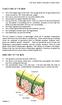 FUNCTIONS OF THE SKIN Skin is the largest organ of the body. The average adult has 18 square feet of skin which account for 16% of the total body weight. Skin acts as a physical barrier for you to the
Effects of Cage Stocking Density on Feeding Behaviors of Group-Housed Laying Hens
 Animal Industry Report AS 651 ASL R2018 2005 Effects of Cage Stocking Density on Feeding Behaviors of Group-Housed Laying Hens R. N. Cook Iowa State University Hongwei Xin Iowa State University, [email protected]
Breeding and feeding for sustainable pig production
 Breeding and feeding for sustainable pig production Anna Wallenbeck Department for Animal Breeding and Genetics Department for Animal Environment and Health Photos: Linda Engblom and Maria Alarik Breeding
An introduction to the camel
 15 Z. Farah Present distribution and economic potential According to FAO statistics there are about 19 million camels in the world, of which 15 million are found in Africa and 4 million in Asia. Of this
Loose housing or temporary confinement of sows in designed farrowing pens
 FACULT Y OF HEALTH AND MEDICAL SCIENCES PHD THESIS 2015 ISBN 978-87-7611-871-6 JA N NI H A L E S PEDER SEN DEPARTMENT OF LARGE ANIMAL SCIENCES university of copenhagen f a c u lt y o f h e a lt h a n d
THE UDDER OF THE COW
 THE UDDER OF THE COW HOW IS IT INSIDE? Fore Quarters (40-45 %) Rear Quarters (55-60 %) Suspensory Lateral Laminas of Lateral Lobule with Alveoli Gland Cistern Udder Suspensory Lactiferous ducts Udder Lateral
14/11/2014. Copper supply affects growth performance and health in growing pigs. Outline. Copper as essential trace elements
 Copper supply affects growth performance and health in growing pigs Themamiddag 4 november 2014 Outline Introduction Copper as essential trace element Paul Bikker, Jurgen van Baal, Roselinde Goselink Presence:
WORLD BANK STUDY Livestock and Slaughter Waste Management. Presentation 2 Conditions at Slaughterhouses
 WORLD BANK STUDY Livestock and Slaughter Waste Management Workshop at World Bank H.Q. 27 February 2008 Presentation 2 Conditions at Slaughterhouses NIPPON KOEI Co. Ltd. in association with ProAnd Associates
Frequently asked questions about whooping cough (pertussis)
 Frequently asked questions about whooping cough (pertussis) About whooping cough What is whooping cough? Whooping cough is a highly contagious illness caused by bacteria. It mainly affects the respiratory
The role of new on-farm technologies in sustainable farm management and dairy herd improvement (DHI)
 The role of new on-farm technologies in sustainable farm management and dairy herd improvement (DHI) October 16, 2011 Kees de Koning, Pieter Hogewerf New on-farm technologies & farm management Use of
Keeping Show Pigs Healthy
 L-5392 10-02 Keeping Show Pigs Healthy Bruce Lawhorn Associate Professor and Extension Swine Veterinarian The Texas A&M University System Show pigs can bring many disease organisms into a farm and spread
Harvesting energy with fertilizers
 Harvesting energy with fertilizers Sustainable agriculture in Europe 1 Harvesting energy with fertilizers The reason for agriculture s existence is to supply energy to mankind. Agriculture converts solar
HUMANE CHOICE True Free Range STANDARDS - PIGS
 HUMANE CHOICE True Free Range STANDARDS - PIGS 2011 Version 1.1 The purpose of the Humane Choice True Free Range (Humane C hoice) program is to provide a credible, monitored and verified for the humane
Pig Farming 1. Introduction
 Pig Farming 1. Introduction The challenges faced by our country in securing the food as well as nutritional security to fast growing population need an integrated approach in livestock farming. Among the
2. Simple Linear Regression
 Research methods - II 3 2. Simple Linear Regression Simple linear regression is a technique in parametric statistics that is commonly used for analyzing mean response of a variable Y which changes according
Visit of pig farmers from ILLINOIS, USA at the GAEC LEY SOCX France on June 27th
 Visit of pig farmers from ILLINOIS, USA at the GAEC LEY SOCX France on June 27th Purpose of the visit : Application of the European animal welfare (AWF) regulations : managing gestating sows in groups
Farming at dairy farms (produktion på mælkelandbrug)
 Farming at dairy (produktion på mælkelandbrug) Process description The present data refer to production on eight typical Danish Dairy in 2000, which combines dairy and (cash) crop production in a mixed
ANIMAL WELFARE AND BEEF CATTLE PRODUCTION SYSTEMS
 CHAPTER 7.9. ANIMAL WELFARE AND BEEF CATTLE PRODUCTION SYSTEMS Definitions Article 7.9.1. Beef cattle production systems are defined as all commercial cattle production systems where the purpose of the
Wound and Skin Assessment. Mary Carvalho RN, BSN, MBA Clinical Coordinator Johnson Creek Wound and Edema Center
 Wound and Skin Assessment Mary Carvalho RN, BSN, MBA Clinical Coordinator Johnson Creek Wound and Edema Center Skin The largest Organ Weighs between 6 and 8 pounds Covers over 20 square feet Thickness
ORGANIC PIG FARMING. Guidelines no. 22: Rules for organic pig production in accordance with EU Regulations (EC) no. 834/2007 and (EC) no.
 TS22(EC)V02en_Pig farming 06/07/2012 ORGANIC PIG FARMING Guidelines no. 22: Rules for organic pig production in accordance with EU Regulations (EC) no. 834/2007 and (EC) no. 889/2008 1 I. Scope Organic