
Chapter 8 AGRICULTURE
|
|
|
- Kory Carson
- 9 years ago
- Views:
Transcription
1 Chapter 8 AGRICULTURE 8.1 Background: With the growth of Indian economy the share of Agriculture in GDP has declined over the years and even today productivity of some agricultural products is lower compared to countries like USA & China. The growth in Indian agricultural sector has had its moments of glory, nonetheless. Green Revolution (Pioneering work by agriculture scientists and the efforts of farmers, popularly known as the Green Revolution', had helped achieve a breakthrough in the agriculture sector in the 1960 ) has been the major success story of free India. The nation that was frequently plagued by famines and chronic food shortage before green revolution, today faces surplus. From a food grain production around 55 million tons at the time of independence, we now boost of production of about 260 million tons of food grain ( ). Unlike developed nations, agriculture still remains the backbone of our country. 8.2 Significance of Agriculture Sector: The Agriculture Sector occupies centre stage in Indian economy embodying three thrust areas as (1) to promote inclusive growth, (2) to enhance rural income, and (3) to sustain food security. It accounts for nearly 14% of GDP, about 13 % of exports and supports half of the country s population as its principal source of income (58% of workforce). As per Census 2011, the total number of agricultural cultivators and agricultural laborers increased from million in 2001 to 263.o million in The share of agri-exports in total exports increased from 12.81% in to 13.08% ( Rs 231,992 Cr) in , a record level. 8.3 Historical Growth Trends in Agriculture 1 : Indian agriculture has witnessed wide variations in growth performance during a span of six decades after independence. The variability was particularly pronounced due to the subsistence nature of farming in India and the sector s heavy dependence on monsoon and other climatic parameters. In the initial years after the inception of planned development, it was the green revolution technologies that fired up growth in the sector for nearly three decades. The impact of green revolution tapered off gradually towards the later years of the last century. Economic reforms initiated in early nineties had a significant impact on agricultural sector, primarily due to the opening up of economy to external competition, liberalization of trade and deregulation of input and other sub-sectors. (to overcome difficulties in identifying structural breaks or secular acceleration etc due to inter year fluctuations and to capture the effects of major changes in technologies and policies on the sector in various phases, an analysis based on decadal trend growth rates was carried out 1. The GDP-Agriculture series ( to ) was first smoothened by taking 2- year moving averages to remove the effects of abrupt weather variations and other shocks. Further, trend growth rates were estimated by fitting semi-log trend to the smoothened data).five distinct phases of growth were identified: (i) Phase I: Pre-green revolution Period ( to ) (ii) Phase II: Early green revolution period ( to ) (iii) Phase III: Period of wider dissemination ( to ) (iv) Phase IV: Post-Reform Period ( to ) (v) Phase V: Period of Recovery ( to / ) 1 : Historical and Spatial Trends in Agriculture: Growth Analysis at National and State level in India- Ramesh Chand and Shinoj Parappurathu,National Centre for Agricultural Economics and Policy Research, New Delhi.
2 8.4 The pre-green revolution period ( to ) was characterized by steep decline in growth in GDP agriculture, with decadal growth rates found to plummet sharply from 2.78 per cent to 1.06 per cent between the period and The green revolution was kick-started from the year 1966 and the effects of adoption of superior technology and institutional reforms were found to manifest from onwards. The subsequent period is classified as early green revolution period and a visible reversal of growth in GDP agriculture was observed. The decadal growth rate reached near 3 per cent by the decade ending with The period of wider dissemination of technology was characterized by sustained growth in the sector for over a decade peaking at the year The deceleration of growth was started from onwards and a clear indication of slumping of the agricultural sector was visible till the year This slump is widely perceived as an outcome of substantial diversion of resources away from agriculture to other sectors of the economy. However, a significant recovery of growth was observed in the last few years that has pushed the decadal growth rates above 3 per cent. In nutshell, the growth series reflects sharp deceleration of the agricultural sector in the post-reforms period and an unambiguous turnaround in the last five years, which also happens to be the 11th five year plan period. Trend Growth rates in GDP of various sub-sectors in India at prices, to (Per cent/year) Phase All sectors Agriculture and allied Agriculture Non- Agriculture Pre-Green Revolution Green Revolution Period of Wider Dissemination Post-Reforms Recovery ( Different studies have categroized the phases of growth slightly differently e.g. another study by Elumalai Kannan and Sujata Sundaram, Institute for Social & Economic Change (ISEC) titled Analysis of Trends in India s Agricultural Growth Working paper 276 categorizes the phases as : early green revolution ( to ), mature green revolution ( to ), early economic reforms ( to ) & economic reforms ( to ). The study uses three years average of different variables to even out the inter-year fluctuation(in contrast to two year averages used above) The Paper may be seen at Recent Trends, Initiatives & Challenges Decreasing size of operational holdings : 8.5 The average size of holdings for all operational classes (small & marginal, medium and large) have declined over the years and the same for all classes put together has come down to 1.16 hectare in from 2.82 hectare in
3 Increasing pressure on agricultural land : 8.6 Increasing demand for industrialization, urbanization, housing and infrastructure is forcing conversion of agricultural land to non agricultural uses; the scope for expansion of the area available for cultivation is limited. This is reflected in decrease in net sown area from 143 million hectares in to million hectares in However, the gross cropped area has gone up by 6 million hectare, from 186 to 199 million hectare during the same period due to increase in the cropping intensity from 130 to 140 per cent. Diversification & Commercialization of Agriculture: 8.7 Departing from the traditional subsistence nature of agriculture, the farmers, in the post green revolution scenario, are increasingly growing crops with an eye on the market. Non remunerative or low yield crops are being replaced by non-food crops that fetch higher remunerative prices and the farmers are increasingly resorting to horticulture, floriculture, sericulture, viniculture, apiculture and other similar activities. As a result of which area under food crops is declining in some areas, specially in case of coarse grains. Organic farming is also picking up due to increase in demands for healthy products. Shift towards High Value Agriculture: 8.8 Structural shift in consumption pattern away from cereals to high value agricultural commodities, both in rural and urban areas, has been observed in the last two decades. This relatively strong and growing domestic demand for livestock products and fruits and vegetables in both rural and urban areas and increased trade in these commodities has spurred a shift towards production of high value commodities in agriculture. During the 2000s, the growth rate in value of exports of rice, sugar, marine products, tea, etc. declined, while high-value exports (fruits and vegetables, floriculture, meat, processed fruit juices) grew by about 18 percent annually. March towards ICT Revolution: 8.9 Since Independence, India has witnessed significant increase in foodgrain production (green revolution), oilseeds (yellow revolution), milk (white revolution), fish (blue revolution), and fruits and vegetables (golden revolution). Now, India is marching towards what is called as ICT Revolution in agriculture. Most of the earlier revolutions were with the single objective of increasing production. The extensions activity was limited to providing physical inputs viz. fertilizers, seed, pesticides, among others. However all this is undergoing a change. The extension efforts are now directed towards providing farmers with the knowledge of the market conditions, so as to enable them to decide what to produce, how and, how much to produce, when and where to sell. Farmers can now also avail information regarding the weather conditions and decide their farm operations. The use of GIS is also being promoted in a big way. Growth in Area, production and yield : 8.10 During , there was record production of foodgrains at million tonnes, of which million tonnes was during Kharif season and million
4 tonnes during the Rabi season. Of the total foodgrains production, production of cereals was million tonnes and pulses million tonnes As per Final Estimates for , total production of rice in the country is estimated at million tonnes which is lower by 0.06 million tonnes than record production of rice during Production of wheat estimated at million tonnes is lower than its record production of million tonnes during The production of Coarse Cereals is estimated at million tonnes which is lower than the production of Coarse Cereals during Total food grains production estimated at million tonnes is lower by 2.16 million tonnes than the record production of million tonnes achieved during However, total production of pulses and oilseeds estimated at million tonnes and million tonnes respectively are higher than their production levels during Production of sugarcane estimated at million tonnes is lower by million tonnes than its record production of million tonnes during Production of cotton is estimated at million bales (of 170 kg each) which is marginally lower than its production of million bales during As per fourth advance estimate, in production of food grains is expected to grow by 2.3% as compared to decline of 0.8% in the previous agricultural year as India is likely to produce million tons of food grains, an increase of more than 7 million tons in a year. Record production is expected in case of rice, wheat, tur and all pulses put together, besides cotton. Production of major crops during the recent years (million tonnes/bales) Crop Final 4 th Adv Estimates Est. Rice Wheat Coarse Cereals total Cereals Pulses oilseeds Sugarcane Cotton* Jute & Mesta** * (million bales of 170 kg each), ** (million bales of 180 kg each)
5 8.13 During the 11th Plan, the area under jowar, bajra, small millets, ground nuts, rapeseed and mustard, sunflower and mesta has witnessed a negative growth while the yields of all the major crops have recorded positive growth. Impressive rates of growth (more than 4 percent per annum) in production were observed in the case of wheat, bajra, maize, coarse cereals, gram, tur, total pulses, groundnut, sesamum, soyabean, total oilseeds and cotton. The increases in production in the case of wheat, bajra, maize, groundnut and total oilseeds can mainly be attributed to increase in yields, whereas the growth in production in the case of gram, tur, total pulses, soyabean and cotton was driven by a combination of both expansion in area and increase in productivity/yield. A perusal of the rates of growth in yield reveals that most of the crops have recorded higher growth during the 11th Plan than that during the 10th Plan. However, sugarcane, and rapeseed & mustard, soybean and cotton recorded lower rates of growth in yield during the 11th plan than that of the 10th Plan. Growth in yields of sugarcane and rapeseed & mustard suggest that their yields seem to have attained the plateau and need renewed research to boost their productivity levels. All India Average Annual Growth Rates of Area, Production and Yield of Principal Crops Crops Average Annual Growth (%) Average Annual Growth (%) 10th Plan ( to ) 11th Plan ( to ) Area Production Yield Area Production Yield Rice Wheat Coarse Cereals Total Cereals Total Pulses Sugarcane Groundnut Total Nine Oilseeds Cotton Government Initiatives : 8.14 Acknowledging the importance of growth in agriculture, the outlay for agriculture & allied activities has been increased from 4.4 per cent ( realized, Rs Cr at current prices) during eleventh Plan ( )to 4.7 per cent (projected, Rs Cr at current prices ) in twelfth plan ( ). The schemes in vogue during eleventh Plan have been suitably modified/strengthened Agricultural Credit : The target of doubling of the flow of agricultural credit in three years with base year as was achieved in two years. Agricultural credit flow has increased consistently and it reached Rs. 5,11,029 crore during forming 108% of the target and in at Rs.6,07,375 crore (provisional)against
6 target of Rs.5,75,000 crore forming 106% of the target. Against the target Rs.7,00,000 crore during , achievement is Rs.4,33,341 crore upto 31st December, Rashtriya Krishi Vikas Yojana (RKVY): Rashtriya Krishi Vikas Yojana (RKVY) was launched in the XIth Plan against a backdrop of faltering agriculture growth in the previous decades. It was designed as a State Plan Scheme with complete flexibility to the States to choose projects specifically tailored to their conditions for generating growth in agriculture and allied sectors. In the XI Five year Plan, Rs crores were sanctioned under RKVY for taking up 5768 projects across various sectors. In the XII Plan, the entire RKVY budget is proposed to be divided in three streams viz. Production Growth, Infrastructure & Assets, and Special schemes of national importance in the ratio of 40:40:20. RKVY model has received tremendous response from the States and for the XII Plan period, an allocation of Rs crore has been made for RKVY which is nearly 50% of the total allocation of Department of Agriculture Macro Management of Agriculture (MMA) : The Macro Management of Agriculture (MMA) Scheme, a Centrally Sponsored Scheme, was formulated in with the objective to propagate specific interventions for uniform development of agriculture in the States. Initially, MMA consisted of 27 Centrally Sponsored Schemes covering Cooperatives, Crop Production, Watershed Development, Horticulture, Fertilizers, Mechanization and Seeds Production Programmes. At present, the revised MMA scheme comprises 11 sub-schemes relating to crop production and natural resource management. In the XI Plan under Macro Management Scheme lakh ha in watershed areas, lakh ha in river valleys and flood prone rivers, and 0.79 lakh ha of alkali/acidic soils were developed and lakh agricultural implements were distributed. The scheme is proposed to be merged with RKVY during XII Five Year Plan Minimum Support Prices (MSPs) : MSPs are instruments introduced by government for providing protection to farmers in the event of adverse market conditions. These are based on recommendations of Commission for Agricultural Cost and Prices (CACP) which in turn uses Cost of Cultivation studies (initiated during the year as a 100% Central Sector Plan Scheme) undertaken through 16 Agricultural/General Universities/Colleges, besides special study on VFC tobacco in the State of Andhra Pradesh undertaken by Directorate of Tobacco Development. Over the years, the scope of these studies has been increased from two (wheat & bajra) to 27 crops presently, for which estimates of cost of cultivation and production are generated National Agricultural Insurance Scheme : National Agricultural Insurance Scheme (NAIS) has been introduced in the country from Rabi season. Under the scheme, at present, 10% subsidy in premium is available to small & marginal farmers which is shared by the Central and respective State Government on 50 : 50 basis along with claims for normal sum insured & indemnity level for food and oilseed crops. To improve further and make the NAIS easier & more farmer friendly, Modified National Agricultural Insurance Scheme (MNAIS) has been implemented on pilot basis
7 in 50 districts from Rabi season. Besides the NAIS and MNAIS, Pilot Weather Based Crop Insurance Scheme (WBCIS) and Pilot Coconut Palm Insurance Scheme (CPIS) are being implemented by the government. Despite the various schemes launched by the government from time to time, agriculture insurance coverage in terms of area, number of farmers and value of agricultural output insured is very small as compared to the total number of holdings/farmers (137.8 million as per agriculture census ), the total cultivated area (159.2 million hectares) and the value of agricultural output Accelerated Irrigation Benefit Programme (AIBP): Accelerated Irrigation Benefits Programme (AIBP) was launched by MoWR, Government of India during to provide financial assistance to State Governments for accelerating the pace of irrigation development in the country. So far Irrigation potential created from major/medium projects and minor irrigation schemes is about 8 million hectare Command Area Development Programme (CADP): the Centrally Sponsored Command Area Development (CAD) Programme was launched in by MoWR for development of adequate delivery system of irrigation water up to farmers field with an objective to bridge the gap between potential created and utilised and to enhance water use efficiency and production and productivity of crops per unit of land and water for improving socio-economic condition of farmers. So far 314 projects with a CCA of Million ha have been included under the programme A range of area specific and crop specific interventions to boost productivity have been introduced by the government. Some of them are listed as under: National Food Security Mission : The National Food Security Mission is presently under implementation in 482 Districts of 19 States of the country with a view to enhance the production of Rice, Wheat and Pulses through area expansion and productivity enhancement; restoring soil fertility and productivity; creating employment opportunities; and enhancing farm level economy to restore confidence of farmers. During the 12th Plan, it is proposed to include coarse cereals as well in the Mission. Initiative for Nutritional Security through Intensive Millet Promotion (INSIMP) Bringing Green Revolution in Eastern India (BGREI) under operation in seven states of UP, Jharkhand, Bihar, West Bengal, Assam, orissa and Chhattisgarh Accelerated Pulses Production Programme (A3P), Sugarcane Based Cropping Systems (SUBACS), Jute Technology Mission (JTM), Technology Mission on Cotton (TMC), Integrated Scheme of Oilseeds, Pulses, Oilpalm and Maize (ISOPOM), Oil Palm Development Programme (OPDP) etc Challenges: The declining land-base for agricultural operations, diminishing water tables, shortage of farm-labour, increasing costs of inputs and uncertainties associated with prices/realisation which impact the viability of farming are some of the formidable
8 challenges the agriculture sector faces. Resource use efficiency to improve factor productivity and ensuring natural resources sustainability are necessary to reconcile the conflicting demands of farmers and consumer. While the country is presently selfsufficient in cereals, it meets its domestic requirements for pulses and edible oils through imports. The working group for the 12th Five Year Plan has also projected that the deficit between the domestic demand and supply in the cases of pulses and edible oils would continue even by the end of the 12th Plan. Despite the various efforts being made, there is no technological breakthrough in pulses, the yields are still hovering around Kg per hectare. Pulses continue to be grown by small and marginal farmers on marginal lands under rainfed conditions. Even though substantial increases have been made in the MSP, due to weak procurement/price support mechanism, farmers response in terms of increase in acreage under pulses is lukewarm. Nearly half of our domestic requirement of edible oils is met through imports. Developing oil palm, which have high oil contents, on large track of lands suitable for its cultivation, can bridge the gap between demand and supply of edible oils. Comparison in yields of different crops (tonnes/ha) during Wheat Rice Corase Cereals Pulses Oilseeds 8.24 Leaving aside the lower productivity of some crops as compared to others, the agricultural productivity in India in general is lower than some other countries like USA & China and it is even below the world average in some cases. Comparative Yield: India and World (2012) Paddy Wheat Maize Groundnut India United States China World
9 8.25 The food safety net for each and every of the over a billion citizens - a number that is growing - requires enhanced agricultural production and productivity in the form of a Second Green Revolution. Further, special attention is required for achieving higher production and productivity levels in pulses, oilseeds, fruits, and vegetables, which had remained untouched in the First Green Revolution but are essential for nutritional security. In this regard, achieving high production of poultry, meat and fisheries is also essential. Data Source : 8.26 Directorate of Economics & Statistics (DES) in the Department of Agriculture & Cooperation, Ministry of Agriculture brings out various publications like State of Indian Agriculture, Agriculture Statistics at a Glance, Agricultural Prices in India, Land Use Statistics at a Glance, Agricultural wages in India, Cost of cultivation of Principal Crops etc. The website of the directorate ( hosts a lot of cross sectional & time series data on variety of items. However, the agriculture statistics system in India is a decentralized one where the State Governments State Agricultural Statistics Authorities (SASAs) to be more specific, play a major role in collection and compilation of agriculture statistics at the State level & DES, M/0 Agriculture is the pivotal agency for such a compilation at All India Level. The other data gathering agencies involved are National Sample Survey Office (NSSO )& State DESs.The estimate of crop production are based on area through field estimation and yield rate through crop cutting experiments Crop Area Statistics : From the point of view of crop area statistics, the States and Union Territories can be classified into three broad groups: (a) States and Union Territories (18 in number) which have been cadastrally surveyed and where area and land use statistics form a part of the land records maintained by the revenue agency (referred to as temporarily settled States ) (b) Kerala, Orissa and West Bengal known as permanently settled States, where there is no land revenue agency at the village level and crop area and land use statistics are collected through a scheme of sample surveys. (c) Part of Assam (hill districts), Arunachal Pradesh, Manipur, Meghalaya, Mizoram, Nagaland, Sikkim and Tripura, and the two Union Territories of Andaman and Nicobar Islands and Lakshadweep, for which only conventional estimates are available Statistics of crop area are compiled with the help of the village revenue agency (commonly known as patwari agency) in the temporarily settled parts of the country and by specially appointed field staff in the permanently settled States under a scheme known as Establishment of an Agency for Reporting Agricultural Statistics (EARAS). Conventional crop estimates for the states in third category are based on personal assessment of the village chowkidars. The three categories of States and Union Territories account for eighty-six, nine and five per cent, respectively of the total reporting area whereas about 7 per cent of total geographical area is not reported upon.
10 8.29 In the States that have a patwari agency, a complete enumeration of all fields (survey numbers) called girdawari is made in every village during each crop season to compile land use, irrigation and crop area statistics. In the States covered by EARAS, the girdawari is limited to a random sample of 20 per cent villages of the State, which are selected in such a way that during a period of five years, the entire State is covered. However in view of increasing range of functions assigned to patwaris in temporary settled states, in order to improve the timeliness and quality of crop area statistics, two schemes are in operation since early seventies namely, the Timely Reporting Scheme (TRS) and the scheme for Improvement of Crop Statistics (ICS). Under the TRS, the patwari is required to complete the girdawari on a priority basis in a 20 per cent random sample of villages ( in such a way that the entire temporarily settled parts of the country are covered over a period of five years) and to submit the village crop statements to higher authorities by a stipulated date for the preparation of advance estimates of the area under major crops. Under the ICS scheme, an independent agency of supervisors carries out a physical verification of the patwari s girdawari in a sub-sample of the TRS sample villages & in a sub-sample of EARAS sample villages. The National Sample Survey Organisation is responsible for the planning and operations of the ICS and employs full-time staff for field supervision. It shares the fieldwork with the designated State agencies, which carry out the field supervision in about half the number of sample villages Crop Production Statistics : Estimates of crop production are obtained by multiplying the area under crop and the yield rate. The yield rate estimates are based on scientifically designed crop cutting experiments conducted under the General Crop Estimation Survey (GCES). The Improvement of Crop Statistics (ICS) scheme carries out a quality check on the field operations of GCES under which around 30,000 experiments are supervised by the ICS staff at the harvesting stage, one half by the Assistant Superintendents of the Field Operations Division (FOD) of NSSO and the remaining half by the staff of the State Agricultural Statistics Authority (SASA). Terms & Definitions : 8.31 Classification of Land: Data are taken from latest Forestry Statistics Publication, Agriculture Census or are estimated based on latest available year data received from the States/Uts respectively. The nine-fold classification land uses are as under: (i) Forest Area: This includes all land classified either as forest under any legal enactment, or administered as forest, whether State-owned or pr ivate, and whether wooded or maintained as potential forest land. The area of crops rose in the forest and grazing lands or areas open for grazing within the forests remain included under the forest area.
11 (ii) Area under Non-agricultural Uses: This includes all land occupied by buildings, roads and railways or under water, e.g. rivers and canals, and other land put to uses other than agriculture. (iii) Barren and Unculturable Land: This includes all land covered by mountains, deserts, etc. Land, which cannot be brought under cultivation except at an exorbitant cost is classified as unculturable whether such land is in isolated blocks or within cultivated holdings. (iv) Permanent Pasture and other Grazing Land: This includes all grazing land whether it is permanent pasture/meadows or not. Village common grazing land is included under this category. (v) Land under Miscellaneous Tree Crops, etc.: This includes all cultivable land, which is not included in 'Net area sown'but is put to some agricultural use. Land under casurina trees, thatching grasses, bamboo bushes and other groves for fuel, etc. which are not included under 'Orchards' are classified under this category. (vi) Culturable Waste Land: This includes land available for cultivation, whether taken up or not taken up for cultivation once, but not cultivated during the last five years or more in succession including the current year for some reason or the other. Such land may be either fallow or covered with shrubs and jungles, which are not put to any use. They may be accessible or inaccessible and may lie in isolated blocks or within cultivated holdings. (vii) Fallow Lands other than Current Fallows: This includes all land, which was taken up for cultivation but is temporarily out of cultivation for a period of not less than one year and not more than five years. "Fallow land" has been split up into (i) "current fallow land"; and (ii) "other fallow land". Land lying fallow for a period of one year, are included under "current fallows", those lying fallow for more than one year but less than five years, are included under "other fallow land" while those fallow beyond a period of five years, are included under "culturable wastes" or under "miscellaneous tree crops and groves" (not included under net area sown) as the case may be. (viii) Current Fallows: This represents cropped area, which are kept fallow during the current year. For example, if any seeding area is not cropped against the same year it may be treated as current fallow. (ix) Net Area Sown: This represents the total area sown with crops and orchards. Area sowed more than once in the same year is counted only once. Area under Crops: The figures related to Total Cropped Area are either estimated based on the latest available data received from States/UTs or are based on advance/forecast estimates received from the States/UTs. Gross Cropped Area: This represents the total area sown once and/or more than once in a particular year, i.e. the area is counted as many times as there are sowings in year. This total area is also known as total cropped area or total area sown. Area Sown more than once: This represents the areas on which crops cultivated more than once during the agricultural year. This is obtained by deducting Net Area Sown from Gross Cropped Area. Irrigated Area: The figures used in this chapter related to irrigate area are either estimated based on the data for the latest available year received from the States/UTs or are estimated/taken from Agriculture Census. The area is assumed to
12 be irrigated for cultivation through such sources as canals (Govt. & Private), tanks, tube-wells, other wells and other sources. It is divided into two categories as (a) Net Irrigated Area: It is the area irrigated through any source once in a year for a particular crop. (b) Total Net Un-irrigated Area: It is the area arrived at by deducting the net irrigated area from net sown area. Gross Irrigated Area: It is the total area under crops, irrigated once and/or more than once in a year. It is counted as many times as the number of times the areas are cropped and irrigated in a year Total/Gross Un-Irrigated Area: It is the area arrived at by deducting the gross irrigated area from the gross sown area. Average Yield of Crops: Average yields per hectare of principal crops have been obtained by dividing the total production by the corresponding total area under each crop. All India and State average yield per hectare has generally been calculated on the basis of area and production figures rounded up to hundreds. In the case of tea, rubber and minor crops, average yield has been calculated on the basis of area and production figures upto the unit place. In the case of coffee, yields per hectare relate to sowing or plucked area and in the case of rubber to tapped area. References : The State of Indian Agriculture , Department of Agriculture & Cooperation, Ministry of Agriculture, Government of India. Historical and Spatial Trends in Agriculture: Growth Analysis at National and State level in India- Ramesh Chand and Shinoj Parappurathu,National Centre for Agricultural Economics and Policy Research, New Delhi Emerging Trends in Indian Agriculture: A Review Singh Rajvir, Shahi Sudhir Kumar, Mishra D.J. and Mishra U.K. Research Journal of Recent Sciences, Vol. 2(ISC-2012), (2013) High-Value Agriculture in India: Past Trends and Future Prospects- Vijay Paul Sharma and Dinesh Jain, Indian Institute of Management, Ahemdabad
13
Sustainability and Trends in Profitability of Indian Agriculture
 Agricultural Economics Research Review Vol. 19 (Conference No.) 2006 pp 89-100 Sustainability and Trends in Profitability of Indian Agriculture M.S. Bhatia* Abstract The pattern of development and trends
A review of agricultural and monsoon conditions
 For the past 2 years India has experienced drought like conditions. This year the Indian Meteorological Department (IMD) has predicted that there will above normal monsoon. If monsoons this year are good,
CROP INSURANCE IN INDIA
 LOK SABHA SECRETARIAT PARLIAMENT LIBRARY AND REFERENCE, RESEARCH, DOCUMENTATION AND INFORMATION SERVICE (LARRDIS) MEMBERS REFERENCE SERVICE REFERENCE NOTE. No. 17 /RN/Ref./ November /2014 For the use of
Concept Note on Farm Income Insurance: Issues and Way Forward
 Farm Income Insurance India, an agrarian economy with 1/3 rd population depending on the agriculture sector directly or indirectly has ~ 116 million farm holdings covering an area of 163 million hectares
4. EVOLUTION OF CROP INSURANCE SCHEMES IN INDIA
 4. EVOLUTION OF CROP INSURANCE SCHEMES IN INDIA 4.1 GENESIS OF CROP INSURANCE SCHEMES IN INDIA What a great achievement for Crop Insurance in India i.e. 250 farmers covered in first ever scheme in 1972
Agricultural Mechanization Strategies in India
 050 India Agricultural Mechanization Strategies in India Dr. Champat Raj Mehta Project Coordinator, All India Co-ordinated Research Project (AICRP) on Farm Implements and Machinery (FIM), Central Institute
NATIONAL AGRICULTURAL INSURANCE SCHEME (NAIS) - A NOVEL CROP INSURANCE SCHEME
 NATIONAL AGRICULTURAL INSURANCE SCHEME (NAIS) - A NOVEL CROP INSURANCE SCHEME Q 1 : What is insurance? Ans: Insurance is a fiancial arrangement whereby losses suffered by a few are met from the funds accumulated
INDEX. Sr.No. Content Page. 1 State Domestic Product - An overview 1. 1.1 Introduction 1. 1.2 The State Economy 2
 STATE DOMESTIC PRODUCT GUJARAT STATE 2009-10 (With Base Year 2004-05) DIRECTORATE OF ECONOMICS AND STATISTICS GOVERNMENT OF GUJARAT GANDHINAGAR PREFACE Directorate of Economics & Statistics, Gujarat State
Presentation on Crop Insurance by P. Nagarjun Ex. General Manager AIC Technical Consultant / OSD, Department of Agri. Govt. of A.P.
 Presentation on Crop Insurance by P. Nagarjun Ex. General Manager AIC Technical Consultant / OSD, Department of Agri. Govt. of A.P. Indian Agriculture Major causes of Damage Drought / Dry Spell Heavy Rains
A brief and Developments. Pankaj Kumar Tewari Deputy Director, IRDA
 A brief and Developments Pankaj Kumar Tewari Deputy Director, IRDA 1 Disclaimer The views expressed in this presentation are my own views and do not in any way reflect the views of the Authority on any
VISIONIAS
 VISIONIAS www.visionias.in Indian Agriculture Problems and Solutions Table of Content 1. Indian Agriculture Industry: Overview... 2 2. Comparison with China... 2 3. Problems in the Indian Agriculture Sector...
Trends in Private and Public Investments in Agricultural Marketing Infrastructure in India
 Agricultural Economics Research Review Vol. 21 (Conference Number) 2008 pp 371-376 Trends in Private and Public Investments in Agricultural Marketing Infrastructure in India M.S. Jairath* National Institute
THE AGRICULTURAL PRODUCE (REMUNERATIVE SUPPORT PRICES AND MISCELLANEOUS PROVISIONS) BILL, 2012
 1 AS INTRODUCED IN LOK SABHA 5 THE AGRICULTURAL PRODUCE (REMUNERATIVE SUPPORT PRICES AND MISCELLANEOUS PROVISIONS) BILL, 2012 By DR. MAHENDRASINH P. CHAUHAN, M.P. A Bill No. 128 of 2012 BILL to provide
REFERENCE NOTE. No.15/RN/Ref./August/2013
 LOK SABHA SECRETARIAT PARLIAMENT LIBRARY AND REFERENCE, RESEARCH, DOCUMENTATION AND INFORMATION SERVICE (LARRDIS) MEMBERS REFERENCE SERVICE REFERENCE NOTE. No.15/RN/Ref./August/2013 For the use of Members
NREGA for Water Management
 National Rural Employment Guarantee Act NREGA for Water Management 30 th October, 2009 Dr. Rita Sharma Secretary to Government of India Ministry of Rural Development NREGA objective supplement wage-employment
PREFACE. Directorate of Economics and Statistics Department of Agriculture and Cooperation Ministry of Agriculture Government of India
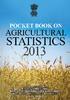 Directorate of Economics and Statistics Department of Agriculture and Cooperation Ministry of Agriculture Government of India PREFACE The Pocket book on Agricultural Statistics 2013 is intended as a quick
Piloting innovation led transformation in Indian agriculture insurance
 Piloting innovation led transformation in Indian agriculture insurance 13/11/2014 Agenda Indian Agriculture Landscape Indian Agriculture Insurance Schemes Implementation Stake Holders View Overall Challenges
Press Note on Poverty Estimates, 2011-12
 Press Note on Poverty Estimates, 2011-12 Government of India Planning Commission July 2013 GOVERNMENT OF INDIA PRESS INFORMATION BUREAU ***** POVERTY ESTIMATES FOR 2011-12 New Delhi: 22 July, 2013 The
Long-term Agricultural Growth in India, Pakistan, and Bangladesh from 1901/02 to 2001/02
 Long-term Agricultural Growth in India, Pakistan, and Bangladesh from 1901/02 to 2001/02 PIDE Seminar, Nov 28, 2011 Takashi Kurosaki (Hitotsubashi University) [email protected] 1 Background of
Deficit Rainfall Insurance Payouts in Most Vulnerable Agro Climatic Zones of Tamil Nadu, India
 Deficit Rainfall Insurance Payouts in Most Vulnerable Agro Climatic Zones of Tamil Nadu, India S.Senthilnathan, K.Palanisami, C.R.Ranganathan and Chieko Umetsu 2 Tamil Nadu Agricultural University, Coimbatore,
Agriculture Insurance Company of India Limited (AIC)
 Q1: What is Insurance? WEATHER BASED CROP INSURANCE SCHEME FREQUENTLY ASKED QUESTIONS (FAQS) Insurance is a tool to protect you against a small probability of a large unexpected loss. It is a technique
IMPACT OF MINIMUM SUPPORT PRICES ON THE AGRICULTURAL ECONOMY OF MADHYA PRADESH
 Study No. 87 IMPACT OF MINIMUM SUPPORT PRICES ON THE AGRICULTURAL ECONOMY OF MADHYA PRADESH S.J. SINGH AGRO - ECONOMIC RESEARCH CENTRE FOR MADHYA PRADESH AND CHHATTISGARH J.N.K.V.V., JABALPUR (M.P.) September,
Farmers Cultural Practices. Availability of Planting Material
 Identification of Appropriate Postharvest Technologies for Improving Market Access and Incomes for Small Farmers in Sub Saharan Africa and South Asia Commodity Systems Assessment Sunil Saran Amity International
(www.agmarknet.nic.in) NICNET based Agricultural Marketing Information System
 (www.agmarknet.nic.in) NICNET based Agricultural Marketing Information System Marketing Research & Information Network AGMARKNET Project Directorate, Directorate of Marketing and Inspection, National Informatics
Total Income from Farming in the United Kingdom. First estimate for 2015
 28 April 2016 Total Income from Farming in the United Kingdom First estimate for 2015 This release presents the first estimate of Total Income from Farming for the United Kingdom for 2015. Total Income
GOVERNMENT OF INDIA PRESS INFORMATION BUREAU *****
 GOVERNMENT OF INDIA PRESS INFORMATION BUREAU ***** POVERTY ESTIMATES FOR 2004-05 New Delhi, March, 2007 The Planning Commission as the Nodal agency in the Government of India for estimation of poverty
Web Edition: PROVISIONAL POPULATION TOTALS. Chapter 5. Census of India 2001 Series 1, India, Paper 1 of 2001. Chapter 5
 Web Edition: PROVISIONAL POPULATION TOTALS Chapter 5 Census of India 2001 Series 1, India, Paper 1 of 2001 Chapter 5 Density of Population 1 D e n s i t y o f P o p u l a t i o n One of the important indices
National Agricultural Insurance Scheme (NAIS) (Rashtriya Krishi Bima Yojana - RKBY)
 National Agricultural Insurance Scheme (NAIS) (Rashtriya Krishi Bima Yojana - RKBY) Objectives The objectives of the NAIS are as under:- 1. To provide insurance coverage and financial support to the farmers
Changing Energy-use Pattern and the Demand Projection for Indian Agriculture
 Agricultural Economics Research Review Vol. 25(No.1) January-June 2012 pp 61-68 Changing Energy-use Pattern and the Demand Projection for Indian Agriculture Girish Kumar Jha *, Suresh Pal and Alka Singh
Press Note on Poverty Estimates, 2009-10
 Press Note on Poverty Estimates, 2009-10 Government of India Planning Commission March 2012 GOVERNMENT OF INDIA PRESS INFORMATION BUREAU ***** POVERTY ESTIMATES FOR 2009-10 New Delhi, 19 th March, 2012
METHODOLOGY FOR ESTIMATING QUARTERLY GDP BY PRODUCTION APPROACH
 METHODOLOGY FOR ESTIMATING QUARTERLY GDP BY PRODUCTION APPROACH 3 QUARTERLY ESTIMATES OF GDP BY PRODUCTION APPROACH 1. Introduction 1.1 The Central Statistical Organisation (CSO) introduced the quarterly
CHAPTER 5 FERTILIZER AND PESTICIDES CONSUMPTION IN INDIAN AGRICULTURE
 CHAPTER 5 FERTILIZER AND PESTICIDES CONSUMPTION IN INDIAN AGRICULTURE 5.0 INTRODUCTION: Fertilizers play a vital role in the modern agriculture technology. Increased use of fertilizers has increased food
Index Insurance in India
 Index Insurance in India Kolli N Rao, PhD Aon Benfield, India Indian Agriculture & Risks What s Index Insurance? Why Index Insurance? The Outline Architecture of Indian Crop Insurance Coverage: The Numbers
Sectors of the Indian Economy
 CLASS : X SUBJECT : ECONOMICS TOPIC :SECTOR OF INDIAN ECONOMY MONTH : JULY, 2012 TEACHER S NAME: MRS. ASHIMA SHARMA Sectors of the Indian Economy Economic activities are activities that result in the production
Crop Insurance in India
 Crop Insurance in India - Agriculture Insurance Company of India Limited (AIC) Crop Insurance - Earlier attempts: The idea of crop insurance emerged in India during the early part of the twentieth century.
DENSITY OF POPULATION. Figures Map Table/Statements Notes
 7 DENSITY OF POPULATION Figures Map Table/Statements Notes 7 Density of population Experience shows that a very populous city can rarely, if ever, be well governed. To the size of states there is a limit,
Agriculture. Chapter 1. 1.1 Introduction. 1.2. Agricultural Performance. 1.2.1 Land Use Pattern
 UTTAR PRADESH Chapter 1 Agriculture 1.1 Introduction Agriculture sector is the prime mover of economic growth in Uttar Pradesh. A vast majority of the population in the state virtually relies on agriculture
AGRICULTURAL PROBLEMS OF JAPAN
 AGRICULTURAL PROBLEMS OF JAPAN Takeshi Kimura, Agricultural Counselor Embassy of Japan, Washington, D. C. I would like, first, to sketch the Japanese agricultural situation and, second, to review Japan's
SHANGHAI: TRENDS TOWARDS SPECIALISED AND CAPITAL-INTENSIVE URBAN AGRICULTURE
 SHANGHAI: TRENDS TOWARDS SPECIALISED AND CAPITAL-INTENSIVE URBAN AGRICULTURE Cai Yi-Zhong and Zhang Zhangen 1. Introduction The Chinese are famous for their highly intensive urban cropping systems and
A Comparative Study between Organised and Unorganised Manufacturing Sectors in India
 The Journal of Industrial Statistics (2012), 1 (2), 222-240 222 A Comparative Study between Organised and Unorganised Sectors in India Ruchika Gupta 1, Department of Higher Education, New Delhi, India
An Analytical Study on Production and Export of Fresh and Dry Fruits in Jammu and Kashmir
 International Journal of Scientific and Research Publications, Volume 3, Issue 2, February 213 1 An Analytical Study on Production and Export of Fresh and Dry Fruits in Jammu and Kashmir Naseer Ahmad Rather*,
China s experiences in domestic agricultural support. Tian Weiming China Agricultural University
 China s experiences in domestic agricultural support Tian Weiming China Agricultural University Contents Background The policy system Major measures and their implementation Empirical assessment of the
Consumer Price Index Numbers - Separately for Rural and Urban Areas and also Combined (Rural plus Urban)
 Consumer Price Index Numbers - Separately for Rural and Urban Areas and also Combined (Rural plus Urban) Central Statistics Office Ministry of Statistics and Programme Implementation Government of India
AIC Farm Bill Brief #1
 University of California July 2007 Agricultural Issues Center AIC Farm Bill Brief #1 The Farm Bill and California Food and Agriculture* Daniel A. Sumner** Every five years or so the United States reconsiders
GROWTH, DEVELOPMENT AND POVERTY IN INDIA AND NEPAL
 GROWTH, DEVELOPMENT AND POVERTY IN INDIA AND NEPAL BY DR. P. ABDUL KAREEM SENIOR LECTURER DEPARTMENT OF ECONOMICS, UNIVERSITY OF CALICUT, KERALA, INDIA 680 618 2 ABSTRACT Economic growth and development
Report on Assessment of Funding support for Biodiversity Conservation in India
 Report on Assessment of Funding support for Biodiversity Conservation in India INTRODUCTION Biodiversity conservation is ingrained in Indian ethos. Strategies and p l a n s for conservation and sustainable
Agricultural Production and Research in Heilongjiang Province, China. Jiang Enchen. Professor, Department of Agricultural Engineering, Northeast
 1 Agricultural Production and Research in Heilongjiang Province, China Jiang Enchen Professor, Department of Agricultural Engineering, Northeast Agricultural University, Harbin, China. Post code: 150030
ANALYSIS OF LEBANON S FOOD MARKET
 ANALYSIS OF LEBANON S FOOD MARKET Table of Contents World Food Market 3 Lebanon s Food Production 8 Lebanon s Food Imports and Exports 11 Evolution of Food Imports 11 Food Imports by Type 12 Food Imports
National Iodine Deficiency Disorders Control Programme
 National Iodine Deficiency Disorders Control Programme Introduction Iodine is essential micronutrient with an average daily requirement of 100-150 micrograms for normal human growth and development. There
FINANCING OF AGRICULTURE BY COMMERCIAL BANKS PROBLEMS FACED BY FARMERS (An Empirical Study)
 FINANCING OF AGRICULTURE BY COMMERCIAL BANKS PROBLEMS FACED BY FARMERS (An Empirical Study) Dr. Kewal Kumar 1 and Atul Gambhir 2 1 Principal, Institute of Management and Technology, Kashipur, Uttarakhand
An analysis of production and marketing of coconut in Tumkur District, India
 ISSN: 2347-3215 Volume 2 Number 10 (October-2014) pp. 167-175 www.ijcrar.com An analysis of production and marketing of coconut in Tumkur District, India S.Shashikumar* and H.M.Chandrashekar Department
Crop Insurance in India
 INDIAN INSTITUTE OF MANAGEMENT AHMEDABAD INDIA Crop Insurance in India Gurdev Singh W.P. No. 2010-06-01 June 2010 The main objective of the working paper series of the IIMA is to help faculty members,
PRICE DISSEMINATION PROJECT
 PRICE DISSEMINATION PROJECT A X I th F i v e Y e a r P l a n P r o j e c t An initiative by: FMC AGMARKNET NIC MCX NCDEX NMCE ICEX ACE Introduction: The dissemination of spot and futures prices of agricultural
Rwanda Agricultural Sector and its Impact on Food Security and Economy
 Rwanda Agricultural Sector and its Impact on Food Security and Economy Workshop on Asian Lessons and Agriculture Transformation in Rwanda J.J. Mbonigaba Muhinda Rwanda Agriculture Board [email protected]
Agriculture Insurance in India
 June 2007 Centre for Insurance and Risk Management Working Paper Series Agriculture Insurance in India Sidharth Sinha 2 / SIDDHARTH SINHA DISCLAIMER The view, opinions, theories as may be contained herein
Farming. In the Standard Grade Geography exam there are three types of farming you need to know about arable, livestock and mixed.
 Types of Farming In the Standard Grade Geography exam there are three types of farming you need to know about arable, livestock and mixed. Arable farms are ones where the main way of making money is by
SOURCES OF FARM POWER
 SOURCES OF FARM POWER A farm power for various agricultural operations can be broadly classified as: (1) Tractive work such as seed bed preparation, cultivation, harvesting and transportation, and (2)
Corporate stewardship Partnering to Improve Agricultural practices. Mumbai Randhir Chauhan
 Corporate stewardship Partnering to Improve Agricultural practices Mumbai Randhir Chauhan Flow of Presentation Agriculture in India Overview Present Challenges Why Sustainability? The Way Out Ensuring
COMPARISON BETWEEN NATIONAL AGRICULTURAL INSURANCE SCHEME (NAIS), MODIFIED NAIS AND WBCIS PARAMETER NAIS MNAIS WBCIS
 REVISED COMPARISON BETWEEN NATIONAL AGRICULTURAL INSURANCE SCHEME (NAIS), MODIFIED NAIS AND WBCIS S. No. PARAMETER NAIS MNAIS WBCIS 1 Insurance Unit Scheme provided for reduction of unit to Village Panchayat
Cost and benefit of investment in integrated broiler farming study
 ISSN: 2347-3215 Volume 2 Number 4 (April-2014) pp. 114-123 www.ijcrar.com Cost and benefit of investment in integrated broiler farming study A case V.Balamurugan* and M.Manoharan Full Time Research Scholar,
OILSEEDS AND OILSEED PRODUCTS
 3. COMMODITY SNAPSHOTS OILSEEDS AND OILSEED PRODUCTS Market situation Global oilseeds production in the 214 marketing year (see glossary for a definition of marketing year) reached record levels for the
Development of agricultural insurance in Russia
 Development of agricultural insurance in Russia International Conference Managing risks and crises in agricultural insurance 15th, 16th and 17th of March 2010 Liudmila Kosholkina Director of the Department
PROFITABILITY ANALYSIS OF SELECTED COMPANIES IN SUGAR INDUSTRY BASED ON THEIR MARGIN ON SALES
 Volume 3, Issue 6 (June, 2014) Online ISSN-2277-1166 Published by: Abhinav Publication Abhinav National Monthly Refereed Journal of Research in PROFITABILITY ANALYSIS OF SELECTED COMPANIES IN SUGAR INDUSTRY
Liquid Biofuels for Transport
 page 1/11 Scientific Facts on Liquid Biofuels for Transport Prospects, risks and opportunities Source document: FAO (2008) Summary & Details: GreenFacts Context - Serious questions are being raised about
3.2 Extent of food losses and waste
 4 3. Extent of food losses and waste 3.1 Food volumes produced Figure 1 illustrates the 2007 production volumes of all commodity groups in their primary form, including animal feed products (which are
(14-3238) Page: 1/7 TRENDS IN DOMESTIC SUPPORT MARKET PRICE SUPPORT COMMUNICATION FROM THE UNITED STATES OF AMERICA
 3 June 2014 (14-3238) Page: 1/7 Committee on Agriculture Original: English TRENDS IN DOMESTIC SUPPORT MARKET PRICE SUPPORT COMMUNICATION FROM THE UNITED STATES OF AMERICA 1 OVERVIEW 1.1. WTO Members have
300431 Timişoara, Romania, Str. Agricultorilor nr. 40 Tel: 0747-047.800 Fax: 0356-414.175 [email protected]
 300431 Timişoara, Romania, Str. Agricultorilor nr. 40 Tel: 0747-047.800 Fax: 0356-414.175 [email protected] Pagina1 Pagina2 INVEST IN ROMANIA 300431 Timişoara, Romania, Str. Agricultorilor nr. 40
growing sources of employment in the country. In
 SRI LANKA 8,000 7,000 6,000 5,000 Fig. 1: Employment by Major Economic Activity ('000s), 2002-2008 Agriculture, Hunting, Forestry, Mining and Wholesale and Retail Trade Hotels and Restaurants Agriculture,
CROP INSURANCE IN INDIA - A BRIEF REVIEW
 Pinnacle Research Journals 20 CROP INSURANCE IN INDIA - A BRIEF REVIEW VISHITA KHANNA*; KEYUR UPADHYAY**; HARSHIL GANDHI*** ABSTRACT *International Agribusiness Management Institute, **International Agribusiness
FARMER S ACCESS TO AGRICULTURAL CREDIT
 FARMER S ACCESS TO AGRICULTURAL CREDIT I. INTRODUCTION Agriculture is a dominant sector of our economy and credit plays an important role in increasing agriculture production. Availability and access to
A STUDY ON OWN FUND REVENUE GENERATION THROUGH COMMON PROPERTY RESOURCE MANAGEMENT IN MADANMOHANPUR GRAM PANCHAYAT, WEST BENGAL
 A STUDY ON OWN FUND REVENUE GENERATION THROUGH COMMON PROPERTY RESOURCE MANAGEMENT IN MADANMOHANPUR GRAM PANCHAYAT, WEST BENGAL INTRODUCTION:- Self-Governing Institutions are an integral part of the Indian
EU Milk Margin Estimate up to 2014
 Ref. Ares(215)2882499-9/7/215 EU Agricultural and Farm Economics Briefs No 7 June 215 EU Milk Margin Estimate up to 214 An overview of estimates of of production and gross margins of milk production in
Draft. Manual on. Agricultural Prices and Marketing
 Draft Manual on Agricultural Prices and Marketing CONTENTS CHAPTER NO. TITLE PAGE NO. I INTRODUCTION 01-08 II III MEASUREMENT NEEDS OF THE SECTOR CONCEPTS, DEFINITIONS AND CLASSIFICATIONS 09-19 20-53 IV
Contract Farming: Problems, Prospects and its Effect on Income and Employment
 Agricultural Economics Research Review Vol. 21 July-December 2008 pp 243-250 Contract Farming: Problems, Prospects and its Effect on Income and Employment Jagdish Kumar* and Prakash Kumar K. Department
Presentation Outline. Introduction. Declining trend is largely due to: 11/15/08
 State of the Cotton Industry and Prospects for the Future in Ghana Presented By Mr. Kwaku Amoo-Baffoe November, 2008 Presentation Outline Introduction Institutional Arrangement for Cotton Production in
The EU India FTA in Agriculture and Likely Impact on Indian Women
 The EU India FTA in Agriculture and Likely Impact on Indian Women Executive Summary Roopam Singh and Ranja Sengupta Centre for Trade and Development and Heinrich Boell Foundation, New Delhi, December,
Small Farm Modernization & the Quiet Revolution in Asia s Food Supply Chains. Thomas Reardon
 Small Farm Modernization & the Quiet Revolution in Asia s Food Supply Chains Thomas Reardon Part 1 of Talk: Introduction to research issues and method 1. Introduction to Research Issues 1. Research past
India's Foreign Trade Statistics
 India's Foreign Trade Statistics Each country tries to increase the availability of goods and services to its people through purchase from other countries. Similarly it tries to sell its surplus production
Role of Government in Agriculture Risk Mitigation & Expansion of Insurance in India
 Role of Government in Agriculture Risk Mitigation & Expansion of Insurance in India Kolli N Rao 4 th October 2015 0 OVERVIEW India: The Agriculture Setting India: Agriculture Insurance Architecture Agriculture
Indian Agrochemical Industry
 Indian Agrochemical Industry Introduction. India is the fourth largest producer of agrochemicals globally, after United States, Japan and China. The agrochemicals industry is a significant industry for
Speech at the High-Level Conference on World Food Security
 Speech at the High-Level Conference on World Food Security SUN Zhengcai Minister of Agriculture People s Republic of China Rome, June 2008 Distinguished Chairperson, Excellencies, Ladies and Gentlemen,
AGRICULTURAL SCIENCES Vol. II - Crop Production Capacity In North America - G.K. Pompelli CROP PRODUCTION CAPACITY IN NORTH AMERICA
 CROP PRODUCTION CAPACITY IN NORTH AMERICA G.K. Pompelli Economic Research Service, U. S. Department of Agriculture, USA Keywords: Supply, policy, yields. Contents 1. Introduction 2. Past Trends in Demand
Water Resource. 1 Initiating and Sustaining Water Sector Reforms : A Synthesis World Bank in collaboration with the Government of India, Ministry of
 WATER RESOURCES OF INDIA by Kalipada Chatterjee Climate Change Centre Development Alternatives Introduction Water is essential for human civilisation, living organisms, and natural habitat. It is used
Rising Food Prices CAUSES AND CONSEQUENCES
 Rising Food Prices CAUSES AND CONSEQUENCES EXECUTIVE SUMMARY Recent steep price increases of major crops (cereals, oilseeds) were triggered by a combination of production remaining somewhat below trend
BASEL DISCLOSURES DOCUMENT AS ON 31 st December 2014 TABLE DF-3 CAPITAL ADEQUACY
 BASEL DISCLOSURES DOCUMENT AS ON 31 st December 2014 Qualitative Disclosures (a) A summary discussion of the Bank s approach to assessing the adequacy of its capital to support current and future activities.
Economic Development and Agriculture in India
 Economic Development and Agriculture in India Adam Cagliarini and Anthony Rush* This article discusses the key developments in the agricultural sector in India including productivity gains and integration
Agricultural Insurance in India Problems and Prospects
 NCAP Working Paper No. 8 Agricultural Insurance in India Problems and Prospects S.S. Raju and Ramesh Chand National Centre for Agricultural Economics and Policy Research (Indian Council of Agricultural
COLLABORATIONS FOR FOREST LAND TREATMENT IN FOREST FRINGE WATERSHEDS
 COLLABORATIONS FOR FOREST LAND TREATMENT IN FOREST FRINGE WATERSHEDS Towards enhancing ecosystem services of watershed projects C. Vasu and Dr D. Suryakumari Centre for People s Forestry March 2014 Supported
Chapter 3 LITERACY AND EDUCATION
 Chapter 3 LITERACY AND EDUCATION Coverage Literacy Rates in Post-Independence India Literacy Rates of SC/ST by Sex and Urban-Rural Distribution State-wise Literacy Rates in last 3 decades State-wise Gap
2. Mahatma Gandhi National Rural Employment Guarantee Act (MGNREGA)
 2. Mahatma Gandhi National Rural Employment Guarantee Act (MGNREGA) I. Background Evolving the design of the wage employment programmes to more effectively fight poverty, the Central Government formulated
Maharashtra Budget Analysis 2016-17
 The Minister of Finance of Maharashtra, Mr. Sudhir Mungantiwar, presented the Budget for Maharashtra for the financial year on March 18, 2016. Budget Highlights The Gross State Domestic Product of Maharashtra
Contract Farming. One Option For Creating A Role For The Private Sector In Agriculture Development? By N. Ajjan. What Is Contract Farming?
 Contract Farming One Option For Creating A Role For The Private Sector In Agriculture Development? By N. Ajjan What Is Contract Farming? ESSENTIALLY The Farmer Is Contracted to Plant the Contractor s Crop
STATISTICAL PROFILE OF CAPE BRETON. Prepared By: Nova Scotia Federation of Agriculture
 STATISTICAL PROFILE OF CAPE BRETON Prepared By: Nova Scotia Federation of Agriculture 1.0 Introduction Agriculture in the Local Economy Agriculture in Cape Breton is characterized by a diversity of farm