
Your Winter Birds: Who They Are, and What to Feed Them
|
|
|
- Winfred Little
- 9 years ago
- Views:
Transcription
1 Norma Venable Program Specialist - Retired May 2000 Your Winter Birds: Who They Are, and What to Feed Them Winter winds whistle around your house and temperatures drop. Many folks move south for the winter to live in milder weather. Many West Virginia birds migrate south, too, taking advantage of warmer temperatures and a southern cuisine with more abundant insects and seeds. Virginia. The tree sparrow, which nests as far north as Alaska, is another northern bird that may be seen in West Virginia during the winter. Flocks of robins that are seen in the woods, and sometimes in the yard, may also be northern birds that are spending the winter in warmer West Virginia. When you see a winter bird, it is nice to know not only which bird it is, but also where it lives and nests, and whether it is a West Virginia native or a visitor. It is always exciting to see a white-throated sparrow a common visiting winter bird in West Virginia that nests in Canada. Many familiar summer birds - such as the yellow warbler, red-eyed vireo, northern oriole, chimney swift, barn swallow, crested flycatcher, and even some birds of prey such as the broad-winged hawk-fly south for the winter. Birds that remain in West Virginia for the winter include many year-round residents such as the red-bellied, downy, and pileated woodpeckers; the barred, screech, and horned owls; and other familiar birds including the northern cardinal, tufted titmouse, bluejay, chickadee, white-breasted nuthatch, and Carolina wren. These yearround residents often are joined during the winter by other birds, such as evening grosbeaks that live in New England during the summer, but may winter in West Ducks, swans, and waterfowl not usually found in West Virginia during the summer can be seen here during the winter. This includes the pied-billed grebe, hooded merganser, scaup duck, and cormorant - birds that are attracted to winter fishing in some of the state s rivers and lakes. Many people like to attract and feed winter birds and want to know what kinds are at their feeders. The following birds are frequent visitors to your winter feeders. Red-bellied Woodpecker This common large woodpecker has a blackand-white barred back, a gray face, and gray 1

2 underparts. The red belly patch, for which the bird is named, varies in size and color intensity and sometimes is difficult to see. In the male, the entire top of the head is red. The female has a red nape and gray crown. Red-bellied woodpeckers live around woods with groves of large trees and eat ants, beetles, berries, grapes, and cherries. These birds are very vocal and can be heard around feeders. They are especially attracted to suet. Downy Woodpecker These familiar woodpeckers are patterned in black and white. They have a black cap, black eye stripe, and a small black moustache. Male birds have a red patch on the nape, but females do not. Downy woodpeckers have a call note that sounds like pik and a series of ki ki notes. They live around woods, gardens, and urban areas. Downy woodpeckers are useful birds because they eat pests such as aphids and insect eggs, as well as spiders, acorns, sap, and berries. They will come to your feeder for suet, cornbread, and peanut butter. Mourning Dove Mourning doves are gray-brown. They have small heads and bills, and long, pointed wings. Their tails are long and tapered. There is a black spot on each side of the head, which is visible at close range. The distinctive call is a mournful whoo, whoo, whoo. Mourning doves fly swiftly, with a musical whistling of their wings. They live in many different places including woods, rural places and urban areas. They are primarily seedeaters and consume many weed seeds. Mourning doves usually stay in flocks and may feed on seeds on the ground near your feeders. Blue jay The blue jay is easy to recognize with its prominent blue crest, black-and-white necklace, blue back, and long blue tail. Blue jays are well-known for their repertoire of calls from cries to lisping notes. Blue jays can even imitate hawks. Blue jays live in many places including woods, suburban areas, and backyards. They are eager eaters and consume such items as beetles, spiders, insects, acorns, blueberries, and currants. They will visit your feeder for suet and peanuts. Chickadee These friendly little birds are easily recognized by their black caps, white bibs, and white cheeks. The chick-a-dee call is quite distinct. Chickadees live quite happily either in forests or residential areas where they can become quite tame as feeder birds. They forage on caterpillars, insects eggs, beetles, ants, aphids, and fruit and seeds. Chickadees visit feeders for suet, sunflower seeds, and peanut butter. Two kinds of chickadees, the black-capped and the Carolina chickadee, live in West Virginia. Carolina chickadees live yearround in the state and are a more southern species than the black-capped ones, which nest as far north as Alaska. Tufted Titmouse This is one of the most commonly seen birds at feeders. The tufted titmouse has a gray back, white front, and rusty flanks. The crest is large and prominent. Tufted titmice live in 2

3 woodlands, city parks, and residential areas. Their loud, distinctive whistle sounds like peter, peter. Their varied diet includes caterpillars, beetles, blackberries, cherries, acorns, and beechnuts. Titmice hold nuts under their feet on a branch and open them with blows of their bill. Titmice come to feeders for suet and bread, and they will store sunflower seed in their own favorite hiding places, such as a tree cavity. White-breasted Nuthatch The white-breasted nuthatch is easy to identify, especially since this stubby-tailed bird often walks down a tree headfirst as it searches bark for insects. This white-breasted bird has a black cap and nape that contrast with the white sides of the face and chest. The call is a loud nasal yank, yank. These birds live around woodlands, parks, and suburban areas. They eat acorns, moths, tent caterpillars, and other insects. Easily tamed, they can be handfed foods such as peanuts and sunflower seeds. Carolina Wren Most wrens are quick, active little birds with pointed bills. They often carry their tails cocked over their backs. The Carolina wren is rich red-brown on its back, with a white chin, buffy underparts, and a distinct white eyestripe. The male may sing throughout the year, and the song sounds like teakettle, teakettle. Carolina wrens live in undergrowth near water, woodpiles, and around houses. These wrens eat beetles, moths, cockroaches, spiders, and some berries and seeds. Carolina wrens are a southern species of bird and can be killed off during especially severe West Virginia winters. These bustling, bright little wrens will come to feeders for seeds. Northern Cardinal West Virginia s state bird is unmistakable with his brilliant scarlet color, red crest, and black patch of feathers at the base of his thick red bill. The olive-gray female has a pink bill and reddish tinge on her wings, face, tail, and crest. Cardinals have a variety of songs and sing throughout the year; even the female sings. Cardinals live in residential areas and places where there are thickets and bushy cover. Cardinals eat aphids, beetles, cutworms, corn, oats, and weed seeds. They readily come to feeders for sunflower seeds. Song Sparrow This is one of the most common sparrows in West Virginia. Adults have brown backs and tails, with heavily streaked whitish underparts. There is a noticeable dark central spot on the breast. Song sparrows prefer places with brushy cover and streams, but they frequently visit yards and gardens. They eat beetles, flies, ants, weed seeds, grain, and fruit. They will come to a feeder for seeds. White-throated Sparrow This very distinctive looking sparrow has a gray breast with a prominent white throat patch and a prominent yellow patch between the bill and the eyes. There are stripes on the head, which may be black and white or brown and tan. The white-throated sparrow actually nests from Canada to the Yukon 3

4 and is a winter visitor in West Virginia. This sparrow can be heard singing its familiar old sam peabody song into April before the bird migrates north. These sparrows eat fruit, weed seeds, and insects. They are common visitors at feeders, especially if the weather is bad. They like sunflower seeds. Dark-eyed Junco Sometimes called a snowbird, the junco is overall slate gray, with a very conspicuous white bill, belly, and outer tail feathers. Juncos live in woods and clearings during winter and may visit gardens, parks, and feeders. Juncos, which usually live in flocks, feed mostly on the ground, scratching for seeds and insects. Juncos are not considered migratory in West Virginia where they nest at higher elevations including Canaan Valley, but move to warmer areas of the state during the winter. Purple Finch The male purple finch has a raspberrycolored head, throat, and breast with whitish underparts. The back is streaked with brown and red. The female is brown with white streaked underparts. These finches are often seen in small flocks in the tops of evergreen trees such as Norway spruce. Purple finches eat mostly seeds, but they also eat fruit, beetles, and birch and maple buds. They will visit your feeder for seeds. Another common finch that visits the feeder is the house finch. It looks like the purple finch, except the purple color on the house finch is brighter than the raspberry of the purple finch. House finches, which now live throughout West Virginia, originally came from California. American Goldfinch In winter, goldfinches have a much more muted plumage than their familiar summer yellow. Winter birds are olive brown with yellowish heads and black wings. Goldfinches live along streams, and in woods and parklike areas. They like seeds of thistle, conifers, asters, and dandelions. These communal birds are often seen in flocks. They will come to feeders for sunflower seeds. Evening Grosbeak The evening grosbeak is unmistakable with its conical, chalky yellow bill, black wings with a large conspicuous white wing patch, yellow forehead, and brown rump and belly. These birds nest from Canada to New England and winter in the southern states. They may be found anywhere in West Virginia during the winter months in flocks from a dozen to a hundred birds. Evening grosbeaks will gobble up sunflower seeds. House Sparrow This bird was introduced into America from Europe. It is not a sparrow, but belongs to a bird family called weavers, because some members of this bird group weave complex nests. House sparrows are highly adaptable, thrive in urban areas and often compete with our native bluebirds for nesting sites. The male house sparrow has a 4

5 black throat and upper breast. Females are brown. House sparrows often come to feeders in flocks. They are especially attracted to bread. European Starling The starling is another bird introduced from Europe. In winter, the bird is streaked black. By spring the bird has acquired its spring plumage, which is iridescent black. In spring, the starling s bill is bright yellow. Starlings are so named because they somewhat resembles the outline of a star in flight. In winter, flocks of starlings may number in the hundreds. Starlings are frequent visitors at feeders, especially in urban areas. They are attracted to cracked corn. Banquets for Your Winter Birds Whether the winter birds you see are West Virginia residents or guests from far away, you want to provide the right food for the birds at the right time and serve it in a safe place at a suitable location. Here are some frequently asked questions and answers about feeding your winter birds. When s the best time to start feeding birds? There isn t any best time, as birds appreciate a handout throughout the year, especially during severe weather. However, the sooner the winter feeders are out - September is not too early - the sooner the birds can find them and you can enjoy watching the birds. Don t forget that it may take a while for birds to find the feeders. You must take the time to select appropriate feeders for the birds and not just throw feed on the ground, where it can be contaminated by dampness, mold, and pesticides, and attract unwanted pests and rodents. What s the best feeder location? That depends on where you want to watch your birds - from your window, the patio, or other places. Pick a location that has easy access for you so the feeders can be refilled in cold weather. Select a place where discarded seed shells and bird droppings won t be a cleanup problem. Place your feeders out of reach of the neighborhood cats. What kind of feeders should I get? As the following illustrations show, there are many types of feeders you can use, from a tube feeder to a simple platform feeder: a. starling-resistant suet feeder b. house feeder for sunflower seeds c. bluebird feeder (bluebirds live in West Virginia all year-round but you need to live where the bluebirds do - around meadows and wooded areas - or you won t see the birds.) d. wire mesh cage feeder for peanuts e. tube feeder for thistle or black sunflower seed f. tray fruit feeder g. platform feeder Different feeders and the type of food you put in them attract different kinds of birds. The most effective way to attract a large variety of birds to your yard is to put out separate feeders for each of your banquets for the birds. 5

6 Suet feeders attract: woodpeckers wrens goldfinches Peanut butter suet attracts: woodpeckers goldfinches chickadees nuthatches doves juncos jays bluebirds House feeders (or similar feeders) with sunflower seeds attract many kinds of seedeating birds including: nuthatches grosbeaks chickadees Peanut feeders attract: woodpeckers titmice finches titmice sparrows chickadees A tube feeder (which provides a space so the smaller birds can get at the feed) with thistle (niger seed) or black sunflower seed will attract: woodpeckers finches sparrows A tray feeder with fruit will attract: titmice nuthatches juncos woodpeckers starlings bluebirds jays cedar waxings - They are year-round residents in West Virginia, but count yourself lucky if you see them at your feeders. Mockingbirds - These birds also live in West Virginia during the winter, but are not always as commonly seen other feeder birds. Platform feeders with sunflower seed attract: nuthatches mourning doves woodpeckers purple finches titmice house finches chickadees song sparrows goldfinches evening grosbeaks jays white-throated sparrows They also attract other seed-eating birds in the neighborhood, including crossbills, pine siskins, and white-crowned sparrows, which are more unusual birds to find at your feeders. Different species of birds will feed together at a platform feeder, although the larger birds such as blue jays and may chase the smaller chickadees and goldfinches. Providing several types of feeders should suffice to keep your birds well-fed. Removing perches from tube feeders means only those birds that can cling - such as finches, chickadees, titmice, and woodpeckers - can feed. If you don t want to buy feeders, you can make your own. You can also make inexpensive feeders by cutting out the sides of plastic jugs and bottles and using them for feeders. Remember the feeders should be durable and easy to clean. What s for Dinner? The kind of banquet you offer the birds determines what kinds of birds you get. As a general rule, black oil sunflower seeds are the preference of birds that visit tube and platform feeders. The following are the most common kinds of seeds used in feeders: Black oil sunflower seed: These seeds are rich in oil, and their small size makes them easier for small birds such as chickadees to 6

7 eat. They are readily devoured by most seedeating birds that visit feeders. Striped sunflower seed: This is a nutritionally rich seed for birds with heavy bills such as the cardinal and evening grosbeak. Hulled sunflower seed: This seed is attractive to smaller birds and avoids waste because of the discarded hulls. However, these seeds can rot in wet weather. Birdseed mix: There are many birdseed mixes available. They include sunflower seeds and other grains such as milo, rice, oats, corn, and wheat. Starlings, often a nuisance at your feeder, prefer milo, hulled oats, and corn, so you may not want to use them. White proso millet: Red and white millet are available, but birds often prefer the white kind. Because of its hard seed coat, millet is less likely to swell and rot than other birdseeds. Safflower seed: This is best known as seed for. It has one advantage in that gray squirrels, often a nuisance at feeders, usually don t eat it. Shelled peanuts: Shelled peanuts attract birds. Since starlings especially like them, so the peanuts may attract starlings to your feeder. Fresh and dried corn: Cracked corn attracts ground-feeding birds and ducks, but it rots quickly if it gets wet. It attracts squirrels, pigeons, blackbirds, and house sparrows. Thistle or niger seed: This seed from Africa is a favorite of small finches. The small seeds are often placed in a tube feeder to prevent spillage. These seeds are high in protein. They are not related to the familiar weed known as thistle. Suet cakes: Suet and suet cakes are favorite winter treats that provide an important source of fat for winter birds. Suet is hard beef fat - the best is from beef kidneys. You can purchase this at your meat market, then cut it into small chunks, melt it in a heavy pan over low heat, and pour the rendered suet into a small mold and put it in your refrigerator to harden. The cooking or rendering kills bacteria in the suet, which can then hang in your suet feeders. In cold weather, and if there is no danger of fresh suet becoming rancid, you can hang it out without rendering. Birds will devour it. You can also purchase rendered suet cakes from a birdseed store. Cleanliness To reduce the possibility of spreading avian disease, you should keep the feeders clean and always dispose of moldy food. Clean feeders with soap and water before you set them out. Clean feeders when they become wet and seeds stick to them. Clean any feeder when you suspect the food has spoiled. If you notice sick birds around your feeders, discontinue feeding for a few days. Piles of discarded husks under the feeders may attract small mammals such as mice and rats. Keep areas around feeders clean. Unwanted Guests at Your Feeders Once you supply regular banquets to your birds, you may run into problems with uninvited visitors. These visitors fall into two categories - those interested in the food, such as squirrels, raccoons, opossums, rats, and those interested in a bird for dinner - cats and hawks. To discourage climbers such as squirrels, you may need to mount feeders on a slippery pole the critters can t climb. Feeders hung in trees provide ready 7

8 access for agile climbers such as squirrels and raccoons. Pests such as rats and mice can be discouraged by cleaning up food waste and storing feed in metal cans. Cats are a problem around feeders. Groundfeeding birds such as juncos and sparrows are especially vulnerable to cat predation. Hawks, especially Cooper s hawks, sometimes find that feeders provide a ready meal. Hawks are a part of nature, so you don t want to do anything about a hawk. If you have a problem with too many local pigeons or rock doves, remember that Cooper s hawks find rock doves an especially tasty meal. Enjoying Your Birds You may want to keep a bird guide handy to help identify birds that come to winter feeders. It is quite possible that your feeders could attract other kinds of winter birds not often seen, including white-winged crossbills, redpolls, pine siskins, and whitecrowned sparrows. Don t forget that even in winter, birds need water. A birdbath with fresh unfrozen water will prove attractive to many of your winter visitors. If you live in a place where you can construct a small pond, you may even attract waterfowl including the ring-necked duck, black duck, wood duck, hooded merganser, and perhaps migrating green-and bluewinged teals. References: Common Birds of West Virginia Norma Venable WVU Extension Service West Virginia Birds George Hall Carnegie Museum of Natural History Field Guide to the Birds of North America National Geographic Society Banquets for Your Winter Birds Norma Venable Program Specialist, Retired Shelves, Houses and Feeders for Birds and Mammals G. Barquest, S. Craven, and R. Ellarson North Central Regional Extension Publication No. 338 How to Attract Birds Ortho Books Winter Birds of West Virginia Norma Venable WVU Extension Service How to Attract, Feed, and House Birds Walter Schutz Collier Books Programs and activities offered by the West Virginia University Extension Service are available to all persons without regard to race, color, sex, disability, religion, age, veteran status, political beliefs, sexual orientation, national origin, and marital or family status. Issued in furtherance of Cooperative Extension work, Acts of May 8 and June 30, 1914, in cooperation with the U.S. Department of Agriculture. Director, Cooperative Extension Service, West Virginia University. West Virginia University is governed by the Board of Trustees of the University System of West Virginia. 8

Common Backyard Birds of Alabama
 Common Backyard Birds of Alabama Alabama Ornithological Society (AOS) state list includes 420 species: 158 species regularly breed in Alabama 174 species regularly winter 80 species migrate through Alabama
Seattle is -- FOR THE BIRDS. How to Identify Common Seattle Birds
 Seattle is -- FOR THE BIRDS How to Identify Common Seattle Birds Want to learn more about birds? Join Seattle Audubon s Family and Youth Programs Mailing List to hear about upcoming opportunities. Name:
Wild Bird Division. BIRD SEED Information, References & Tips
 Wild Bird Division BIRD SEED Information, References & Tips Getting Started No matter where you live, you can put food outside your door, and some creature, feathered or furred, will show its appreciation
Owls. Choose words from the list at the end of the page to fill in the blank spaces.
 Owls Choose words from the list at the end of the page to fill in the blank spaces. Owls are _ of prey. A bird of prey is one that catches its food in its Owls hunt for their at night. A bird that hunts
Bird Nature Study. This pdf file contains nature study printables to use with your children for a bird study. The set contains:
 Bird Nature Study This pdf file contains nature study printables to use with your children for a bird study. The set contains: Nature walk counting sheet - mark a tally every time you see one of the birds
Where Do Birds Live?
 Objectives You will learn about 1) where birds build nests, 2) the materials they use, 3) different nest characteristics and 4) how to observe nesting activity. Introduction Birds hatch their young in
JANUARY 1 JANUARY 2 JANUARY 3. Possible First Occurrences Today. Possible First Occurrences Today. Possible First Occurrences Today
 JANUARY 1 Black-capped Chickadee Two-note Song Canada Goose Sandhill Cranes Last Seen Wisconsin River Open JANUARY 2 Black-capped Chickadee Two-note Song Sandhill Cranes Last Seen Wisconsin River Open
Small Scale Poultry Housing
 Small Scale Poultry Housing Phillip J. Clauer, Poultry Extension Specialist, Animal and Poultry Sciences Small scale poultry coops seem to be built in almost every possible shape and size. Those building
Who Eats What in the Woods?
 Who Eats What in the Woods? Developed with teachers at Tolworth Junior School in Kingston upon Thames in 2000. The webaddress for this activity is; Last updated 26th February 2008 This activity has now
The Wonderful World of Wetlands BINGO
 The Wonderful World of Wetlands BINGO Time: 10-15 minutes to create Bingo board; 5-10 minutes to play one-round of Bingo Scituate Reservoir Watershed Education Program 17 Smith Ave Greenville, RI 02828
What to Do About Rats or Mice in Your Home or Business
 Janel Heinrich, MPH, MA, Director City-County Building, Room 507 608 266-4821 210 Martin Luther King, Jr. Boulevard 608 266-4858 fax Madison, WI 53703 www.publichealthmdc.com What to Do About Rats or Mice
KNOW THE BEAR FACTS FOR KIDS
 KNOW THE BEAR FACTS FOR KIDS New Jersey Department of Environmental Protection Black Bears in New Jersey Activity Guide Black bears live in New Jersey. They were here long before people were. About 100
Integrating Bird Conservation and Natural Resources Management: Best Management Practices. Jennifer Devlin, City of Portland, Environmental Services
 Integrating Bird Conservation and Natural Resources Management: Best Management Practices Jennifer Devlin, City of Portland, Environmental Services When to Plan Disturbance: August 1 January 31 best time
A guide to living with Urban Coyotes
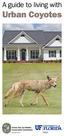 A guide to living with Urban Coyotes Living with coyotes ThinkStock Coyotes are found throughout Florida. This adaptable animal belongs to the dog family and resembles a small German shepherd. In Florida,
Proper Handling of Eggs: From Hen to Consumption
 Proper Handling of Eggs: From Hen to Consumption Phillip J. Clauer, Poultry Extension Specialist, Animal and Poultry Sciences To insure egg quality in small flocks, egg producers must learn to properly
Birding Certificate Program
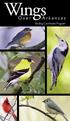 Birding Certificate Program Passerine Bird Program Coordinator Catherine Rideout Watchable Wildlife Coordinator Kirsten Bartlow Editor Randy Zellers Designer Angela Sanchez Cover photos by Tom Elliott
Protecting and Enhancing Shorelands for Wildlife
 Protecting and Enhancing Shorelands for Wildlife What is a shoreland area? Shorelands, often called riparian areas, refer to naturally vegetated areas bordering a lake, pond, stream, or other wetland.
Small-scale poultry keeping housing layers
 NOVEMBER 2007 PRIMEFACT 603 (REPLACES AGFACT A5.7.9) Small-scale poultry keeping housing layers Intensive Livestock Industries Development Introduction Poultry of all types require housing that will protect
Cycles of life. You will be visiting the museum to see some baby animals and their parents. Here are some of their stories.
 Cycles of life Some animals die of old age, some die of disease, some are killed and eaten by other animals. But the world does not run out of animals because more are being born or hatched all the time.
The Definitive Guide to Building Your Own Birdhouses
 The Definitive Guide to Building Your Own Birdhouses By Larry Jordan Copyright Notice All rights reserved. No part of this publication may be reproduced or transmitted in any form or by any means, electronic
Backyard Birds. in Texas
 Backyard Birds in Texas by Mark Klym In Memory of Rob Fleming Rob fleming October 27, 1941 March 30, 2003 Rob Fleming passed away on March 30, 2003 after a lengthy battle with cancer. Rob earned his art
Controlling Invasive Plants and Animals in our Community
 Controlling Invasive Plants and Animals in our Community PROVIDED BY THE WILDLIFE COMMITTEE What makes a plant or animal invasive? When a plant or animal from another region of the world (usually Europe
Let s Learn About Plants and Animals!
 Grade Two Pre-Visit Activities Let s Learn About Plants and Animals! i. Teacher Introduction ii. Standards Addressed iii. Pre-Visit Activities 1. Identifying Parts of a Plant 2. Plant a Seed 3. Life Cycles
Here Come the Sunflowers!
 Here Come the Sunflowers! Overview Students will have an opportunity to learn about sunflowers and plant sunflower seeds, a native plant of the North American prairie. Suggested Grade Level PreK - 1 Estimated
A Most Colorful Mammal by Guy Belleranti
 Name: In the tropical rainforests of western Africa lives a mammal with a most colorful face and rump. This mammal is the mandrill, the world's largest monkey. The skin on a male mandrill's face has a
Rabbitat. Gimme shelter. That s exactly what brush. Brush Piles for Wildlife
 Wildlife and Your Land a series about managing your land for wildlife Rabbitat Brush Piles for Wildlife Have you ever watched a startled rabbit dart across your yard and suddenly disappear as if by magic?
Fry Phrases Set 1. TeacherHelpForParents.com help for all areas of your child s education
 Set 1 The people Write it down By the water Who will make it? You and I What will they do? He called me. We had their dog. What did they say? When would you go? No way A number of people One or two How
Desert Communities Third Grade Core: Standard 2 Objective 2 Describe the interactions between living and nonliving things in a small environment.
 Desert Communities Third Grade Core: Standard 2 Objective 2 Describe the interactions between living and nonliving things in a small environment. (Discovering Deserts NatureScope: page 40, 43, 44) Objective:
Producers, Consumers, and Food Webs
 reflect Think about the last meal you ate. Where did the food come from? Maybe it came from the grocery store or a restaurant. Maybe it even came from your backyard. Now think of a lion living on the plains
Emerald Tree Boa: Emerald Tree Boas are bright green to blend in with their habitat. They are part of the boa family and are constrictors.
 Anaconda: The anaconda lives in the swamps and rivers. Anacondas can also climb trees. Adults can get as big as 20 feet long. Anacondas are good swimmers. They have scales and can swim quickly. They kill
Invasive Reptiles and Amphibians of Florida!
 1 Invasive Reptiles and Amphibians of Florida! 2 Created by: Thompson Antony Lauren Diaz Sean McKnight Alana Palau JoAnna Platzer Illustrated by Lauren Diaz Invasive Ecology of Reptiles and Amphibians
Karen J. English Graphic and Web Designer. Please click the thumbnails on the following pages to view larger versions of the images.
 Karen J. English Graphic and Web Designer Please click the thumbnails on the following pages to view larger versions of the images. graphic design: small pieces graphic design: large pieces web design
How To Plan A Buffer Zone
 Backyard Buffers Protecting Habitat and Water Quality What is a buffer? A buffer (also called a riparian buffer area or zone) is the strip of natural vegetation along the bank of a stream, lake or other
DECOY COMPETITION RULE BOOK
 34th Annual Havre de Grace Decoy & Wildlife Festival May 1, 2, 3, 2015 DECOY COMPETITION RULE BOOK GENERAL RULES AND REGULATIONS 1. All entrants must complete the entry form. Entry form must be signed.
Threatened, Endangered & Extinct Lesson Plan
 Threatened, Endangered & Extinct Lesson Plan Keywords: habitat, ecosystem, food,, shelter, space, basic needs, threatened, endangered, extinct Grade level: 3 rd & 4 th Grades Setting: classroom Subjects
Mason bee hosting workshop
 Mason bee hosting workshop Janet Gifford, Instructor Volunteer Technician, Backyard Habitat Certification Program Board Member, Columbia Land Trust Audubon Society of Portland & Columbia Land Trust Drawing
How to make a Solitary Bee Box
 How to make a Solitary Bee Box **Note: The following instructions include the use of tools that may be dangerous. Ensure there is adult supervision with children. Time: 1 hour People: 1-2+ Materials: Wood
Title: Create A New Animal. Grade Level: 3 rd -5 th. Subject: Biology. Time: 60-90 minutes
 Title: Create A New Animal Grade Level: 3 rd -5 th Subject: Biology Time: 60-90 minutes Objective: Students will better understand physical adaptations of certain animals, and how those adaptations increase
WEATHER, CLIMATE AND ADAPTATIONS OF ANIMALS TO CLIMATE
 7 WEATHER, CLIMATE AND ADAPTATIONS OF ANIMALS TO CLIMATE TEXTBOOK QUESTIONS AND ANSWERS Q.1. Why weather changes so frequently? Ans. All changes in the weather are caused by the sun. The movement of the
Making Healthy Food Choices. Section 2: Module 5
 Making Healthy Food Choices Section 2: Module 5 1 Nutrition For Health What is healthy Tips on planning meals Making a shopping list/ Bulk orders Using WIC foods Cook and freeze What foods to choose How
Great Horned Owl (Bubo virginianus)
 Great Horned Owl (Bubo virginianus) Range: The Great Horned Owl is found in North and South America from northern Alaska and Canada through Mexico to the tropical rainforest to Tierra del Fuego. It is
Let s see if I can convince you
 Chapter 33: Page 328 How many times have you been sick in the past year? Once, twice, three times? What if I told you there are ways to keep from getting sick so many times? Would you do it? Let s see
Use this diagram of a food web to answer questions 1 through 5.
 North arolina Testing Program EO iology Sample Items Goal 4 Use this diagram of a food web to answer questions 1 through 5. coyotes 3. If these organisms were arranged in a food pyramid, which organism
What is a food chain?
 3 What is a food chain? Learning Intention Understand that plants and animals in a habitat are dependent on each other. National Curriculum Skills Science Interdependence of living organisms in those 2
Wild About... Frogs and Frogspawn
 a Wild About... Rutland County Council Nature notes Frogs belong to a group of animals called amphibians, which also includes newts and toads. Amphibians live both on land and in water. Water is needed
Non-consumptive use of wildlife. Non-consumptive Use. Non-consumptive Use
 Non-consumptive use of wildlife Non-consumptive Use Any non-hunting or non-extractive use Examples: wildlife feeding & photography, bird watching, whale watching Non-consumptive Use Sources of information
The Ultimate Guide to Pigeon Feed
 The Ultimate Guide to Pigeon Feed Learn the champions secret winning formula, click the link below to learn more www.pigeonracingformula.com Table of Contents Ingredients... 3 Peas... 3 Corn... 3 Pop Corn...
www.irishseedsavers.ie Natural surface water on earth includes lakes, ponds, streams, rivers, estuaries, seas and oceans.
 www.irishseedsavers.ie POND LIFE FACT SHEET Natural surface water on earth includes lakes, ponds, streams, rivers, estuaries, seas and oceans. A pond is a small body of fresh water shallow enough for sunlight
Critter Condos Managing Dead Wood for Wildlife
 Wildlife and our Land a series about managing your land for wildlife Critter Condos Managing Dead Wood for Wildlife On a sunset stroll through your woods, you find a forest full of activity...full of life
Pond Vocabulary Words and Meanings
 Pond Vocabulary Words and Meanings Adapt: to adjust to a use or situation Aquatic: from or in the water Bacteria: tiny organisms, too small to be seen with the naked eye Carnivore: an animal that eats
The Fly. Quality Pest Management. Live Cleaner. Live Healthier. Cluster Fly. The weather is warming up and as if from no where the flies appear.
 The Fly The weather is warming up and as if from no where the flies appear. House Fly Flies will pitch and feed on just about anything including faeces to your lunch! They spread disease and are a generally
Insect identification sheet
 information leaflet Insect identification sheet To enable you to identify the insect you have in your home, we have provided some identification sheets. These depict the most common pest species that you
Snakes of Massachusetts
 Snakes of Massachusetts Of the roughly 3,000 known species of snake found worldwide, only 15% are considered dangerous to humans. Luckily here in Massachusetts we only have two types of dangerous venomous
ENVIRONMENTAL CHANGES
 reflect How do you respond to environmental changes? Maybe you wear different types of clothes in different seasons. Maybe you only ride your bike during certain times of the year. What if you moved to
Silent, Nighttime Hunters By Guy Belleranti
 By Guy Belleranti Owls are raptors, or birds of prey. They are carnivores who quickly and silently swoop down on their prey from above. Most raptors such as eagles, hawks and falcons are day hunters. They
Wildlife in My Backyard: Part 4. Nest Boxes and Shelves
 Contents: Wildlife in My Backyard: Part 4. Nest Boxes and Shelves by Sharon David Blue Bill (1996) Volume 43 No. 1 : 31-39. Revised December 1999. Sharon David. 1. Cavity Nesters and Nest Boxes...1 A.
Science. Year 7. Transition. Equipment allowed: calculator, pen, pencil, ruler, protractor or angle measurer, eraser. No other equipment allowed.
 Science Year 7 Transition Equipment allowed: calculator, pen, pencil, ruler, protractor or angle measurer, eraser. No other equipment allowed. Name Date WS: SA WS: ESI WS: AE 7 Year 7 1 The diagram below
Major Mitchell s cockatoo
 Major Mitchell s cockatoo Cacatua leadbeateri Australia Also known as Leadbeater s cockatoo, Pink Cockatoo. The Major Mitchell s cockatoo is a strikingly beautiful species. They are medium sized pink cockatoos
GUIDANCE: Avoiding Impacts on Nesting Birds During Construction and Revegetation Projects
 TERRESTRIAL ECOLOGY ENHANCEMENT STRATEGY GUIDANCE: Anna s Hummingbirds Photo by Phillip G.Engstrom Avoiding Impacts on Nesting Birds During Construction and Revegetation Projects Version 2 October 2010
First Grade Reading Street Unit 2.1: A Big Fish for Max - Taken from www.freidalewis.com
 1. Max Ruby s little brother 2. Ruby - Max s big sister who is sometimes a bit bossy 3. Grandma helps Max and Ruby solve their problems Segment and Count Phonemes Digraphs sh, th, and Vowel Sound in ball
6 WONDERFUL WEST VIRGINIA DECEMBER 2015. Wonderful West Virginia Magazine
 6 WONDERFUL WEST VIRGINIA DECEMBER 2015 Wonderful West Virginia Magazine LOVELY, DARK, AND DEEP Winters in West Virginia can be harsh, but some animals have an ingenious way of staying alive and well until
We have put together the following guidance on the different kinds of pests that we treat.
 Pest Control Guidance Document: We have put together the following guidance on the different kinds of pests that we treat. If you need advice or help with pests, please contact us on 01942 404364. Contents
honey bee By Henry Touray
 honey bee By Henry Touray Introduction For my project I have chosen to research Bees. I chose to find out about the bee because bees have been in the news lately. Lots of hives have died out and scientists
CHICKENS 101 INTRODUCTORY COURSE HOUSING AND PREDATOR CONTROL
 CHICKENS 101 INTRODUCTORY COURSE HOUSING AND PREDATOR CONTROL THE BASICS: HOUSING 1 3 THE BASICS: HOUSING 1 Protect from rain and cold when first outside. After about three weeks, chickens can tolerate
Wildlife Management Notes
 Wildlife Management Notes No 5. GRAY AND FOX SQUIRRELS The gray squirrel (Sciurus carolinensis) and the fox squirrel (Sciurus niger) are members of the order Rodentia and family Sciuridae. Both are arboreal
ELEMENTARY-LEVEL SCIENCE TEST
 4THE UNIVERSITY OF THE STATE OF NEW YORK SPRING 2008 GRADE 4 ELEMENTARY-LEVEL SCIENCE TEST WRITTEN TEST Student Name School Name Print your name and the name of your school on the lines above. The test
Zoo Activity Packet Grades 3-5. Thank you for choosing Reid Park Zoo for a field trip this year!
 Zoo Activity Packet Grades 3-5 Thank you for choosing Reid Park Zoo for a field trip this year! 22ND STREET AFRICAN ELEPHANT Expedition Tanzania Adaptation Zone S. RANDOLPH WAY ALDABRA TORTOISE LEE H.
Unit 4 Lesson 1: A Pest by Any Other Name
 Focus Areas: Pest Control: Biological; Environmental Science, Language Arts Focus Skills: critical thinking, conducting research, observing, graphing, interpreting data Objectives To explore human attitudes
Bluebonnet Bird Monitoring Project 2013 Annual Report. Photos by John Hartgerink and Eric Liffmann
 Bluebonnet Bird Monitoring Project 2013 Annual Report Photos by John Hartgerink and Eric Liffmann Introdu on to the Monitoring Project Begining in March 2010, the Bluebonnet Bird Monitoring Project (BBMP)
Composting is one of the healthiest means of Organic Gardening.
 Master Gardeners Nearly 30 years ago Washington State University began a program of training volunteers to help instruct members of their communities about proper gardening practices. That program has
INTEGRATED PEST MANAGEMENT
 INTEGRATED PEST MANAGEMENT Pests, such as insects and rodents, can be a serious problem in a restaurant. They can contaminate food supplies as well as damage facilities. More importantly, they can also
USA & CANADA WILD BIRD FEEDING INDUSTRY BENCHMARK RESEARCH 2013
 WILD BIRD FEEDING INDUSTRY RESEARCH FOUNDATION USA & CANADA WILD BIRD FEEDING INDUSTRY BENCHMARK RESEARCH By Ask Your Target Market - AYTM.com 1 PAST RESEARCH RESEARCH METHODOLOGY AND KNOWN FACTS WILD
Brownies. It s Your Planet Love It! WOW: Wonders of Water. Ice Cold (page 25) Extinct (page 39)
 Exhibit Guide WOW: Wonders of Water Ice Cold (page 25) The Earth has two poles, a North Pole and a South Pole. Both are extremely cold and covered in ice. Sometimes you might see huge masses of moving
Get ready to test your knowledge Nutrition Jeopardy!
 Week 3 Nutrition Get ready to test your knowledge Nutrition Jeopardy! You are going to be playing Jeopardy with your classmates. Your teacher is going to put you into groups of 4 or 5. Write your team
Dear Educator: Sincerely, Rachel Larimore Director of Education. o Vocabulary. o Food Chain Highs and Lows. o Rabbits and Foxes Story
 Dear Educator: Included in this packet are various materials to use before and after your Chippewa Nature Center (CNC) program. Some of these materials may not be appropriate for the grade level you teach,
Controlling rats and mice. A guide to preventing infestations and getting rid of them
 Controlling rats and mice A guide to preventing infestations and getting rid of them General information about rats and mice The house mouse and the brown rat are common rodent pests. We all have a responsibility
PEST CONTROL SYSTEMS
 HYGIENE MANAGEMENT PEST CONTROL SYSTEMS rodents birds Pest includes: numerous species of flying and crawling insects: cockroaches, flies, grain beetles, moths dogs, cats Pest control systems Pest pose
Maintaining Nutrition as We Age
 SS-207-06 For more information, visit the Ohio Department of Aging web site at: http://www.goldenbuckeye.com and Ohio State University Extension s Aging in Ohio web site at: http://www.hec.ohio-state.edu/famlife/aging
Conquer Pest Control Ltd. Mammal Control
 Mammal Control Effective Rodent Control to minimise risks and avoidable costs Rodents are the largest group of mammals with over 1500 representative species worldwide, but just 15 are known to reside in
PUSD High Frequency Word List
 PUSD High Frequency Word List For Reading and Spelling Grades K-5 High Frequency or instant words are important because: 1. You can t read a sentence or a paragraph without knowing at least the most common.
These Maps Are For The Birds
 These Maps Are For The Birds Students will study New York State Breeding Bird Atlas maps to learn where different bird species nest and how their distributions have changed over time. Objectives: Students
THE SCIENTIFIC METHOD
 THE SCIENTIFIC METHOD Introductory Activities Small Group Activity: Mary's T-Shirt Solution Individual Activity: Analyzing Elements of the Scientific Method Identifying the Question Small Group Activity:
Mountain Man Camping
 Shelters Mountain Man Camping Many different styles of lodging were used by the mountain man but most of it was quick to setup and easy to move. The replica shelters that we use today are usually made
DEVELOPMENT GUIDELINES OAK TREES CARE AND MAINTENANCE
 DEVELOPMENT GUIDELINES OAK TREES CARE AND MAINTENANCE This guide will offer basic information for the preservation and maintenance of oak trees as a part of an overall landscape use. Unfortunately, oak
Grade 5 Standard 5 Unit Test Heredity. 1. In what way will a kitten always be like its parents? The kitten will...
 Grade 5 Standard 5 Unit Test Heredity Multiple Choice 1. In what way will a kitten always be like its parents? The kitten will... A. be the same color. B. learn the same things. C. have the same body structures.
Fruits, seeds and their dispersal
 Introducing fruits, seeds and their dispersal After fertilisation, seeds will form. It is important for the seeds to be spread (dispersed) away from each other and from the parent plant. This helps to
Landfills-T27 20810 Vector & Bird Control
 These materials were developed under the auspices of CalRecycle for specific technical training presentations and are posted as reference documents for the local government and CalRecycle staff who attended
Woodman, Spare That Wolf Tree!
 Woodman, Spare That Wolf Tree! By Charles Elliott Originally published in 1945 in American Forests, Vol. 51, No. 10. In almost every sweep of woodland, there is a certain type of tree that foresters call
263 Turtle Dove. TURTLE DOVE (Streptopelia turtur)
 Collared Dove Turtle Dove. Adult. Female (22-VI). TURTLE DOVE (Streptopelia turtur) IDENTIFICATION 26-29 cm. Pale upperparts; grey and bluish underparts; wing coverts fringed rufous with black centre;
Integrated Pest Management
 Integrated Pest Management Many people do not mind encountering bugs outdoors. However, bugs indoors are usually considered pests. Even one insect may be considered too many. People use pesticides to control
Kindergarten Plants and Plant Growth Assessment
 Kindergarten Plants and Plant Growth Assessment 1a. Circle one thing that plants need to grow: 1b. Circle all of the things that plants need to grow: 1c. Name three things that plants need to grow: 2a.