
The Mandolin: Its Structure and Performance (Sixteenth to Twentieth Centuries)
|
|
|
- Mae Wright
- 9 years ago
- Views:
Transcription
1 Performance Practice Review Volume 9 Number 2 Fall Article 5 The Mandolin: Its Structure and Performance (Sixteenth to Twentieth Centuries) James Tyler Paul Sparks Follow this and additional works at: Part of the Music Practice Commons Tyler, James and Sparks, Paul (1996) "The Mandolin: Its Structure and Performance (Sixteenth to Twentieth Centuries)," Performance Practice Review: Vol. 9: No. 2, Article 5. DOI: /perfpr Available at: This Article is brought to you for free and open access by the Journals at Claremont at Claremont. It has been accepted for inclusion in Performance Practice Review by an authorized administrator of Claremont. For more information, please contact [email protected].

2 Performing Historical Instruments The Mandolin: Its Structure and Performance (Sixteenth to Twentieth Centuries) James Tyler and Paul Sparks From at least the middle of the 15th century a small pear-shaped, round-backed instrument (which would develop into the mandolin in the 16th century) was called chitarra and chitarino (Italy), guittara (Spain), quitare, quinterne, and guisterne (France), gyterne (England), and Quintern (Germany). By the 16th century most of these terms were applied to the small, four-course guitar, and it became customary to refer to the early mandolin type as the mandola (Italy) or mandore (France). The term mandolino was used in Italy from the mid-17th century, as was mandola, the latter by some writers (but by no means all), to indicate a slightly larger and lower pitched instrument of the same family. In Italy, mandolino continues to be used to the present day to refer to both the six-course "Milanese" mandolin (the modern descendant of the 17-18th century, gut-strung instrument), and the fourcourse, metal-strung "Neapolitan" mandolin (developed in the mid- 18th century). The term mandore continued to be used by the French until just after the middle of the 17th century, when the French style of instrument (with its variant tuning) became obsolete.

3 The Mandolin: Its Structure and Performance 167 Sixteenth Century From the 16th century onwards, the construction of the mandolin defines it as a small, treble member of the lute family. Like the lute, its back was rounded, its soundboard completely flat. Its neck had movable, tied-on, gut frets. An intricately patterned rosette is either carved into or separately constructed and glued into the soundboard. At first it had four courses of strings, but fifth and sixth courses were added in the 17th century. Gut strings were the norm, although occasional references to metal strings appear in the late 18th century. Seventeenth Century In Italy tuning indications first occurred in the mid-17th century, when e'e'- a'a'- d"d"- g"g" became standard, with bb and gg sometimes added for a fifth and sixth course. The six-course tuning continues to the present day as that of the "Milanese" mandolin. The typical tuning of the French counterpart (mandore) was c'c' - g'g' - c"c" - g"g" (sometimes with e"e" or/"/" instead of g"g"). Single courses were common for the French type, and there were other tunings, as well as models with lower pitches. 1 Eighteenth Century The technique for the early gut-strung mandolin was similar to that of the lute. The strings were plucked with the fingers of the right hand. Tablatures and other sources show that this was still the standard technique in the era of Vivaldi and his contemporaries. In the mid-18th century with the arrival of the new metal-strung "Neapolitan" type of mandolin, which was especially designed for plectrumplaying, players of the older type instrument began to employ a similar plectrum technique. 2 The finger-style mandolin of the baroque era not only has a considerable repertory of solo music with continuo accompaniment, but was used frequently in chamber music ensembles and in opera and oratorio orchestras. Many elaborate mandolin obbligato parts survive in 1 For further details see James Tyler, 'The Mandore in the 16th and 17th Centuries," Early Music 9 (1981), ^ James Tyler and Paul Sparks, The Early Mandolin (Oxford: Oxford Univ. Press, 1989),

4 168 James Tyler and Paul Sparks Figure 1. Mandolino by Antonio Stradivari Cremona, 1680 (Great Britain, Collection of Christopher Challen)

5 The Mandolin: Its Structure and Performance 169 Figure 2. An Eighteenth-Century Neapolitan mandolin, reproduced from the Methode... de mandoline by Sr. Leone de Naples (Paris, 1768) n dcubtant Us proportions ma'wen.eu faira une itdettj parfatiemenc r-epuli r& fpojiticn. n.-itttreltieifi J'*?n flute C Son nalurel A Son ar&entin

6 170 James Tyler and Paul Sparks such works as Carlo Cesarini's oratorio Ismaele (1695), A. Scarlatti's cantata A battaglia pensieri (1699), Francesco Conti's opera Galatea (1719), Vivaldi's oratorio Juditha triumphans (1716), Fux's opera Diana (1717), and Handel's oratorio Alexander Balus (1748), to name but a few. 3 The instrument is frequently suggested as an alternative to the violin, flute, or oboe in publications of solo sonatas- Gaetano Boni's Divertimenti... Op. 2 (cl725) and Roberto Valentini's Sonate... Op. 12 (1730) are two examples. Its most familiar role today is as a solo instrument in the popular and appealing concertos of Vivaldi and Hasse. 4 Since baroque composers employed the gut-strung, finger-style mandolin with surprising frequency, and in a wide variety of uses, it is important to understand the nature of this instrument, and not confuse it with the later, metal-strung, plectrum-style instrument, which, despite its very different character and timbre, is frequently used as a substitute for the original instrument in today's performances of this repertory. The Neapolitan instrument acquired a large repertory of its own during the later 18th century, including four pieces by Beethoven, a concerto by Hummel, and works by Barbella, Prota, de Majo, Piccinni, and Sacchini. 5 Nineteenth and Twentieth Centuries After 1815 both types of mandolin fell into disuse, except in Italy where they survived as street instruments. In Naples cl835 the indigenous four-course mandolin was extensively redesigned by Pasquale Vinaccia (with deeper bowl, larger resonating chamber, raised fingerboard, extension to 17 frets, machine heads, high-tension steel strings, and tortoise-shell plectrum). The instrument acquired a louder and much brighter tone than any previous mandolin. This new Neapolitan mandolin became the dominant type in Italy from the 1860s and achieved worldwide popularity by the 3 Tyler and Sparks, Early Mandolin, Ibid., Paul Sparks, The Classical Mandolin (Oxford: Oxford Univ. Press, 1995), and Tyler and Sparks, Early Mandolin.

7 The Mandolin: Its Structure and Performance 171 Figure 3. Edouard Mezzacapo (d. 1942) and his quartet, photographed during the 1890s (reproduced from Mandolin Memories by Samuel Adelstein, San Francisco, 1905).

8 172 James Tyler and Paul Sparks Figure 4. Silvio Ranieri ( ) playing an Embergher mandolin (photograph courtesy of Henri Gamblin).

9 The Mandolin: Its Structure and Performance s. Further modifications were introduced by Raffaele Calace of Naples and Luigi Embergher of Rome. In mandolin music composed between 1870 and 1940 the idiomatic Italian style of tremolo playing alternate down A and up v strokes, performed as rapidly as possible with the plectrum to produce sustained notes was almost universally used, although rarely notated in full. In the works of Carlo Munier, Raffaele Calace, Silvio Ranieri, and their contemporaries, all slurred passages and single notes of medium or long duration (such as quarter notes in an allegro movement, or 8th notes in an andante) are intended to be played tremolo, unless marked with a staccato dot (see Example 1). Example 1. Andante written played ijullu tta.tt This means of sustaining enabled mandolinists to perform violin music, as well as their own compositions. In Germany and Austria, however, constant tremolo technique was deprecated by many musicians, who regarded the mandolin as a Teutonic relative of the lute, and played almost all notes with a single attack. This German style is appropriate for the mandolin parts in Mahler's symphonies, Schoenberg's Serenade and Variations for Orchestra, and Webern's Five Orchestral Pieces, where tremolo is specifically marked when required. In recent decades composers have usually given explicit instructions regarding tremolo to avoid ambiguity. Shortly before 1900 virtuoso Italian and American mandolinists (such as Leopoldo Francia and Samuel Siegel) developed more advanced playing techniques, especially "Duo Style," in which a slow tremolo melody was combined with a quicker plucked line, greatly increasing the potential of the unaccompanied mandolin (see Example 2).

10 174 James Tyler and Paul Sparks Figure 5. Raffaele Calace ( ) and members of the Orchestra sinfonica Takei in Tokyo, January 1925 (photograph courtesy of the Japan Mandolin Union)

11 The Mandolin: Its Structure and Performance 175 Example 2. written played "Trio" and "Quartet Style" required tremolo simultaneously on three or four courses, creating sustained homophonic textures similar to the vox humana stop on an organ. Scordatura was also used by many concert performers (a popular tuning being g b b d' f a' a' e" e"), enriching the mandolin's harmonic language with six-note chords on four courses. Because of the increased string tension, ornaments are difficult to articulate on a modern mandolin if attempted entirely with the left hand, as on the guitar; notes of very short duration can be hammered, pulled, or produced with a glissando, but most players give a plectrum stroke to each note of an ornament, in the interest of clarity. Plucked string orchestras (often called Zupforchesters or Estudian- Unas), which use all the members of the mandolin family, are popular throughout the world, especially in Japan and Germany. They consist of first and second mandolins, mandolas (either octave mandolas, tuned an octave below the mandolin, or tenor mandolas, tuned like the viola), and mandocellos (tuned like the cello), as well as guitars. These are also used in the two standard quartet forms: the "Classical Quartet" (two mandolins, tenor mandola, and mandocello, the plucked equivalent of the string quartet) and the "Romantic Quartet" (two mandolins, octave mandola, and guitar). The latter is more commonly adopted (e.g. three quartets by Munier). The liuto moderno a large Neapolitan mandolin similar to the mandocello, with an added fifth course tuned to e' often appears in works by Calace, indisputably the greatest virtuoso ever on this instrument. The mandolin frequently appears in an orchestral context, notably in works by Boulez (Pli selon pit, Eclat), Stravinsky (Le Rossignol, Agon), and some twenty compositions by Henze. It produces a small

12 176 James Tyler and Paul Sparks but penetrating sound which can be clearly heard in a symphonic context, provided that it is played with a stiff plectrum and advantageously situated on the platform, and that the orchestral scoring is sensitive. For general orchestral work, an instrument with 19 frets is sufficient, players rarely encountering anything above the b'" in Prokofiev's Romeo and Juliet and Gerhard's Concert for, although many pieces from the solo repertoire require up to 29 frets (to a""). The mandolin has also proven successful in non-classical music, especially since 1939, when it was introduced into American bluegrass by Bill Monroe. 6 Flat-back mandolins, above all the carved back and top models manufactured by the Gibson Company, have a crisp and punchy attack with few high harmonics (more amenable to electronic amplification than round back mandolins), and are especially suitable for this type of music. 6 Jack Tottle, Bluegrass Mandolin (New York, 1975).

13 The Mandolin: Its Structure and Performance 177 Figure 6. A Gibson F-5 mandolin, made in 1924 (photograph by Trip Savory, courtesy of Mandolin Central, Siler City, NC

STRINGS OF THE ORCHESTRA WORKSHEET
 STRINGS OF THE ORCHESTRA WORKSHEET THE VIOLIN The development of the modern violin stems from of instruments available in Europe during the middle Ages. Some historians even suggest that the origins of
Music, Grade 11, University/College Preparation (AMU3M)
 Music, Grade 11, University/College Preparation (AMU3M) This course emphasizes the appreciation, analysis, and performance of various kinds of music, including baroque and classical music, popular music,
22. Mozart Piano Sonata in B flat, K. 333: movement I
 22. Mozart Piano Sonata in B flat, K. 333: movement I (for Unit 3: Developing Musical Understanding) Background Information and Performance Circumstances Biography Mozart was born in Austria on the 27
Demonstrate technical proficiency on instrument or voice at a level appropriate for the corequisite
 MUS 101 MUS 111 MUS 121 MUS 122 MUS 135 MUS 137 MUS 152-1 MUS 152-2 MUS 161 MUS 180-1 MUS 180-2 Music History and Literature Identify and write basic music notation for pitch and Identify and write key
THE FIDDLE IN IRISH TRADITIONAL MUSIC
 THE FIDDLE IN IRISH TRADITIONAL MUSIC IRISH TRADITIONAL MUSIC ARCHIVE TAISCE CHEOL nuchais EIREANN THE FIDDLE IN IRISH TRADITIONAL MUSIC The fiddle nowadays used for playing Irish traditional music is
Higher Music Concepts Performing: Grade 4 and above What you need to be able to recognise and describe when hearing a piece of music:
 Higher Music Concepts Performing: Grade 4 and above What you need to be able to recognise and describe when hearing a piece of music: Melody/Harmony Rhythm/Tempo Texture/Structure/Form Timbre/Dynamics
MUSIC GLOSSARY. Accompaniment: A vocal or instrumental part that supports or is background for a principal part or parts.
 MUSIC GLOSSARY A cappella: Unaccompanied vocal music. Accompaniment: A vocal or instrumental part that supports or is background for a principal part or parts. Alla breve: A tempo marking indicating a
MUSIC. MU 100 Fundamentals of Music Theory (4) MU 101 Listen to the Music (4) MU 102 Music Appreciation (4) MU 109 Class Voice (2)
 MUSIC MU 100 Fundamentals of Music Theory (4) An introduction to notation, including a study of intervals, scales, modes, meters, basic triads and seventh chords. Intended for non-majors or students with
Students' guide: Area of study 1 (The Western classical tradition 1650-1910)
 Students' guide: Area of study 1 (The Western classical tradition 1650-1910) This resource gives students a breakdown of Haydn's Symphony 101 in D major 'The Clock' movt. 2. It also offers guidance on
National Standards for Music Education
 National Standards for Music Education 1. Singing, alone and with others, a varied repertoire of music. 2. Performing on instruments, alone and with others, a varied repertoire of music. 3. Improvising
1. interpret notational symbols for rhythm (26.A.1d) 2. recognize and respond to steady beat with movements, games and by chanting (25.A.
 FIRST GRADE CURRICULUM OBJECTIVES MUSIC I. Rhythm 1. interpret notational symbols for rhythm (26.A.1d) 2. recognize and respond to steady beat with movements, games and by chanting (25.A.1c) 3. respond
Test 3 (The Baroque Era)
 Test 3 (The Baroque Era) Student: 1. Baroque style flourished in music during the period: A. 1000-1250. C. 1450-1600. B. 1250-1450. D. 1600-1750. 2. Affections in baroque usage refers to A. the nobility's
Classical Era (1750 1820)
 Classical Era (1750 1820) European Musical Styles I. Transition period (1730 1770): overlaps with end of Baroque A. Development of style galant: rejection of complex polyphony in favor of lighter, homophonic
STRING AREA HANDBOOK
 WESTERN ILLINOIS UNIVERSITY SCHOOL OF MUSIC STRING AREA HANDBOOK Academic Year 2013 2014 For Applied Strings Violin, Viola, Violoncello, Bass and Guitar Undergraduate Study MUS 204/404; 205/405/; 206/406/;
Musical Literacy. Clarifying Objectives. Musical Response
 North Carolina s Kindergarten Music Note on Numbering/Strands: ML Musical Literacy, MR Musical Response, CR Contextual Relevancy Musical Literacy K.ML.1 Apply the elements of music and musical techniques
2012 Music Standards GRADES K-1-2
 Students will: Personal Choice and Vision: Students construct and solve problems of personal relevance and interest when expressing themselves through A. Demonstrate how musical elements communicate meaning
MUSIC THERAPY PROGRAM ADMISSIONS REQUIREMENTS
 MUSIC THERAPY PROGRAM ADMISSIONS REQUIREMENTS The Bachelor of Music degree prepares students for clinical careers in music therapy, working with a broad range of clinical populations. Applicants must first
BRASS OF THE ORCHESTRA WORKSHEET
 BRASS OF THE ORCHESTRA WORKSHEET THE TRUMPET The history of the trumpet can be traced back to when people used wood, and animal horns to their voice. These primitive instruments were mostly, and were also
Strings. Student Handbook 2012-2013. Manhattan School of Music
 Strings Student Handbook 2012-2013 Manhattan School of Music Table of Contents WELCOME I. INTRODUCTION TO THE STRING DEPARTMENT 3 1. Your Teacher 2. Change of Teacher 3. Contacting the String Department
TRADUZIONE IN INGLESE degli
 TRADUZIONE IN INGLESE degli ORDINAMENTI DIDATTICI DEI CORSI DI STUDIO DEI CONSERVATORI DI MUSICA DEPARTMENT OF STRINGS SCHOOL OF HARP HARP Students completing required courses for the first level Academic
SYMPHONY #9 ANTONIN DVORAK
 SYMPHONY #9 ANTONIN DVORAK Dvorak s Symphony #9 is one of the most beloved works in the symphonic repertoire. Having had the experience of conducting it many times, I have accumulated a list of ideas,
application for music major and worship leadership minor
 application for music major and worship leadership minor 2 audition procedure for bachelor of arts in music and bachelor of music degrees Students accepted into the Music Major Program at ORU are required
MUSC1 Set work study notes Haydn Symphony No 104 in D major
 MUSC1 Set work study notes Haydn Symphony No 104 in D major These study notes are intended to help teachers and students prepare for the new set work. It is not an examination board definitive, nor exhaustive,
Studio Orchestra Seating
 Studio Orchestra Seating September 008 Abstract This document presents the seating arrangement for a studio orchestra. Considerations and favourable aspects will be discussed. As an example, details will
Douglas Niedt's GUITAR TECHNIQUE TIP OF THE MONTH
 1 Douglas Niedt's GUITAR TECHNIQUE TIP OF THE MONTH Yes, it's "Doug's Dirty Little Secrets" I subtitled my Tech Tip "Doug's Dirty Little Secrets" after reading someone's posted message on a guitar web
AUDITION REQUIREMENTS Graduate Degree Non- Jazz, (Master of Music, M.M)
 AUDITION REQUIREMENTS Graduate Degree Non- Jazz, (Master of Music, M.M) In- person auditions include, when possible, an interview with faculty members of the respective division, the Graduate Advisor,
Chapter 6 Neapolitans & Other
 Chapter 6 Neapolitans & Other Italians The Neapolitan mandolin Sometime in the 1740s a new kind of mandolin was created in Naples. It took the basic shape of the gut-strung mandolin, and added depth to
Silver Burdett Making Music
 A Correlation of Silver Burdett Making Music Model Content Standards for Music INTRODUCTION This document shows how meets the Model Content Standards for Music. Page references are Teacher s Edition. Lessons
Introduction to Guzheng
 Introduction to Guzheng Guzheng is a Chinese musical instrument that has a history dating back to 500 BC It has many descendants all over Asia, such as the koto of Japan, the kayagum of Korea, and the
Opening the Symphonic Model:
 Opening the Symphonic Model: Changing Traditions in the Symphony Orchestra Kevin Shepherd Symphonic Music Literature (MUS 755) term paper Changes in history can have a profound effect on the ways in which
Piano Requirements LEVEL 3 & BELOW
 Piano Requirements LEVEL 3 & BELOW Technical Skills: Time limit: 5 minutes Play the following in the keys of F, C, G, D, A, E, B: 1. Five-note Major scales, ascending and descending, hands separate or
MUSIC A. PROGRAM RATIONALE AND PHILOSOPHY
 MUSIC A. PROGRAM RATIONALE AND PHILOSOPHY The systematic development of musical skills, knowledge and perception is fundamental to the total development of the individual. Music education should begin
Hit Makers of America
 George Gershwin 1898-1937 American 20th Century True music must repeat the thought and inspirations of the people and the time. My people are Americans and my time is today." Specialist Genres: Popular
ACADEMY. Application Brochure. 13 August 7 September 2016. www.lucernefestival.ch. Table of contents
 13 August 7 September 2016 ACADEMY Application Brochure Table of contents 2 Editorial 3 Program for 2016 5 Orchestra of the LUCERNE FESTIVAL ACADEMY 7 Conducting Fellowship / Master Class with Alan Gilbert
A series of music lessons for implementation in the classroom F-10.
 A series of music lessons for implementation in the classroom F-10. Conditions of Use The materials housed on this page are freely available for download and educational use. These resources were developed
Master's Degree Curriculum 2014-2015 Two years of full-time residence are required for master s degree candidates. Students in need of review study
 Master's Degree Curriculum 2014-2015 Two years of full-time residence are required for master s degree candidates. Students in need of review study may be required to extend their programs beyond two years.
2015 2016 VCE Music Performance
 2015 2016 VCE Music Performance Performance examination End of year Examination specifications Overall conditions The student will give a live performance in only one of the following contexts: as a member
Music Theory: Explanation and Basic Principles
 Music Theory: Explanation and Basic Principles Musical Scales Musical scales have developed in all cultures throughout the world to provide a basis for music to be played on instruments or sung by the
Music Study and Scholarship Information
 Music Study and Scholarship Information for 2015-16 BACHELOR OF ARTS IN MUSIC BACHELOR OF MUSIC MUSIC SCHOLARSHIPS st. olaf college This booklet contains information important to the music major and the
Standard 1: Skills and Techniques 1
 1 Standard 1: Skills and Techniques 1 CB.1.1 Instrument Knowledge Skills CB.1.1.1 Instrument in good playing condition- including proper assembly, reed care, and cleaning. CB.1.2 Playing Posture Skills
Admission Requirements to the Music Program
 Department of Humanities and Fine Arts / 111 THE BACHELOR OF ARTS DEGREE IN MUSIC (MUSI, MUAP, MUEN) The Music Program plays a vital role in the life of the University and the community. The training environment
Music Literacy for All
 Music Literacy for All Developing Musically Literate Individuals in Performance-Based Ensembles J. Steven Moore, DMA Research Data How Many Public Performances Does the Average H.S. Band Present Annually?
STUDY GUIDE. Illinois Licensure Testing System. Music (143) This test is now delivered as a computer-based test.
 Illinois Licensure Testing System STUDY GUIDE Music (143) This test is now delivered as a computer-based test. See www.il.nesinc.com for current program information. Illinois State Board of Education IL-SG-FLD143-05
Arizona Music Standards
 Introduction Music is a subject with its own unique skills and knowledge, a respected repertoire of quality literature, an advanced system of notation and literacy, and a challenging form of cognition.
Beginners Guide to the Walkingbass
 Beginners uide to the Walkingbass Learning to play a new instrument can open up a whole new world of creativity. It certainly has for me. The 3-string Walkingbass is an easy instrument to learn, yet it
The Tuning CD Using Drones to Improve Intonation By Tom Ball
 The Tuning CD Using Drones to Improve Intonation By Tom Ball A drone is a sustained tone on a fixed pitch. Practicing while a drone is sounding can help musicians improve intonation through pitch matching,
SYLLABUS. Cambridge International AS and A Level Music. For examination in June and November 2015. Cambridge International AS Level Music
 SYLLABUS Cambridge International AS and A Level Music 9703 For examination in June and November 2015 Cambridge International AS Level Music 8663 For examination in June and November 2015 Cambridge Advanced
Arlington Public Schools Secondary Vocal/Choral Music Curriculum INTRODUCTION
 Arlington Public Schools Secondary Vocal/Choral Music Curriculum INTRODUCTION The Secondary Vocal/Choral Curriculum is designed for the vocal development of the choral musician and sets sequential standards
HOWARD COUNTY PUBLIC SCHOOLS MUSIC TECHNOLOGY
 HOWARD COUNTY PUBLIC SCHOOLS MUSIC TECHNOLOGY GOALS AND OBJECTIVES GOAL I: PERCEIVING, PERFORMING, AND RESPONDING: AESTHETICS The student will demonstrate the ability to perceive, perform, and respond
126CSR44J TITLE 126 LEGISLATIVE RULE BOARD OF EDUCATION
 126CSR44J TITLE 126 LEGISLATIVE RULE BOARD OF EDUCATION SERIES 44J 21 ST CENTURY MUSIC EDUCATION CONTENT STANDARDS AND OBJECTIVES FOR WEST VIRGINIA SCHOOLS (2520.10) 126-44J-1. General. 1.1. Scope. --
Music Conservatory «G. Verdi» Como. Italy
 Music Conservatory «G. Verdi» Como Italy Bruno Raffaele Foti Head Master To all Musical Teaching Institutes, dear Students, the Music Conservatory of Como is certified by the Italian Ministry of Education,
Mathematical Harmonies Mark Petersen
 1 Mathematical Harmonies Mark Petersen What is music? When you hear a flutist, a signal is sent from her fingers to your ears. As the flute is played, it vibrates. The vibrations travel through the air
The Four Main Musical Style Periods Associated with the Piano Repertoire
 The Four Main Musical Style Periods Associated with the Piano Repertoire Baroque 1600-1750 Major and Minor scales. (Music before this style period was not based on Major and Minor Scales) Polyphonic approaches
Music (MUSC) Music MUSC 1110
 (MUSC) MUSC 1010 Introduction to Music, Summer A survey course designed to make music more meaningful. Studies melody, harmony, form, and rhythm together with historical and biographical information. May
Music 2 and Music Extension. Stage 6 Syllabuses
 Music 2 and Music Extension Stage 6 Syllabuses Original published version updated: April 2000 Board Bulletin/Official Notices Vol 9 No 2 (BOS 13/00) October 2009 Assessment and Reporting information updated
Course Outline of Record Curriculum Council Approval Date: 11/04/2013. Discipline, Number, Title: Music 101, Music Appreciation.
 Page 1 of 5 Course Outline of Record Curriculum Council Approval Date: 11/04/2013 Discipline, Number, Title: Music 101, Music Appreciation Units and Hours: Catalog Entry: Requisites: 3.00 Units 48.00 Hours
Baroque & Classical Repertoire by Chris Acquavella. Mandolin Solo
 Baroque & Classical Repertoire by Chris Acquavella Mandolin Solo Pietro Denis Notable pieces: Themes & Variations, De la Reine de Golconde, Capriccio No. 1 (Wilden-Husgen) Astute Music (UK) La Fustemberg
MUFHL, MUIVI, MUP, MUSM
 Music MUFHL, MUIVI, MUP, MUSM Degrees: A.A. Commercial Music, Audio Production Emphasis A.A. Commercial Music, Music Business Management Emphasis A.A. Commercial Music, Performance Emphasis A.A. Commercial
GCSE Music Unit 4 (42704) Guidance
 GCSE Music Unit 4 (42704) Guidance (There are recordings to accompany this document.) The Task Students will be required to compose one piece of music which explores two or more of the five areas of study.
BEGINNER GUITAR - LESSON 1
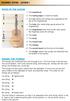 BEGINNER GUITAR - LESSON 1 PARTS OF THE GUITAR 1- The headstock. 2- The tuning pegs or machine heads. 3- The nut (where the strings are supported at the top of the fingerboard). 4- The frets (the metal
Portsmouth High School. Music Department
 Portsmouth High School Music Department What Courses Are Available as a Freshman? Piano I Guitar I Introduction to Music AP Music Theory Music Production & Engineering (Music Technology) Jazz Ensemble
PHIL S MANDOLIN WORKSHOP NOTEBOOK Phil Williams, [email protected] ROLE THE INSTRUMENT
 PHIL S MANDOLIN WORKSHOP NOTEBOOK Phil Williams, [email protected] ROLE The mandolinist in a traditional string band plays both lead and backup. In a band context, the mandolinist can play lead all
M a n u a l O R C H E S T R A L T O O L S. C O M. 2011 by OrchestralTools Schwarzer & Mantik GbR
 M a n u a l O R C H E S T R A L T O O L S. C O M 2011 by OrchestralTools Schwarzer & Mantik GbR About Symphonic Sphere (SSP) When dreams transform into possibilities There are some nice orchestrational
Viola Time Book 2. RGP (Release, Glide and Press) Shifting Method 2
 Viola Time Book RGP (Release, Glide and Press) Shifting Method st Finger shifting without accidentals Exercise : st-rd Position shifting in C major Scale and arpeggio of C major Kayaking Down the Tarwin
International Academic Year
 HAMBURGER KONSERVATORIUM AKADEMIE & MUSIKSCHULE STUDIES International Academic Year WELCOME TO MUSIC STUDIES AT THE HAMBURG CONSERVATORY Study Europe s music in Germany! Hamburg is the musical centre of
Antonín Dvořák Life Dates: 1841-1904 Nationality: Czech Period: Late Romantic
 Antonín Dvořák Life Dates: 1841-1904 Nationality: Czech Period: Late Romantic I should be glad if something occurred to me as a main idea that occurs to Dvořák only by the way. Johannes Brahms (1833-97)
East Sussex Music Summer School 2016. Course Information
 East Sussex Music Summer School 2016 Course Information 1a Junior Violin (2 days) This course is aimed at pupils in year 3 and above pupils should be between A and D major in Suzuki Violin Book 1 and have
MUSIC STUDIES (B.A.) Program Overview. Degree Offered. Music Studies Minor. Related Programs. Rider University 1. Contemp Music Experience
 Rider University 1 MUSIC STUDIES (B.A.) Program Overview The music studies major prepares students for professional careers in music. Students will work closely with renowned faculty and recognized professionals
Music. Adams Chair of Music and Worship, Professor M. Shasberger Professors G. Brothers, S. Butler (chair), S. Hodson Assistant Professor HS.
 Music Adams Chair of Music and Worship, Professor M. Shasberger Professors G. Brothers, S. Butler (chair), S. Hodson Assistant Professor HS. Kim Mission Statement. The Music Department equips students
NATIONAL STANDARDS for MUSIC EDUCATION
 NATIONAL STANDARDS for MUSIC EDUCATION 1. Singing, alone and with others, a varied repertoire of music. 2. Performing on instruments, alone and with others, a varied repertoire of music. 3. Improvising
DIGITAL MUSIC DAY 1 WHAT IS SOUND? ANALOG AND DIGITAL EARLY RECORDING WAX FOR YOUR EARS ROUND BUT FLAT WIRE AND TAPE PURE SOUND
 DIGITAL MUSIC DAY 1 WHAT IS SOUND? 1. Making a sound playing a musical instrument, moves the surrounding the instrument. 2. Making a sound sends out air which hit your ears. 3. Waves of changing air pressure
Music Standards of Learning
 Music Standards of Learning for Virginia Public Schools Board of Education Commonwealth of Virginia April 2006 Music Standards of Learning for Virginia Public Schools Adopted in April 2006 by the Board
5 Ways To A Monster Guitar Technique Bill Tyers - February 2015
 5 Ways To A Monster Guitar Technique Bill Tyers - February 2015 The age old saying 'practice makes perfect' is still the very best advice that any student of the guitar can follow. Unfortunately for some
Jim Hall Chords and Comping Techniques
 Jim Hall Chords and Comping Techniques Jazz guitar comping is an art form in its own right. The comping rhythms, melodies, and voicings of the greatest Jazz guitarists are delightful to listen to, with
MUS 173 THEORY I ELEMENTARY WRITTEN THEORY. (2) The continuation of the work of MUS 171. Lecture, three hours. Prereq: MUS 171.
 001 RECITAL ATTENDANCE. (0) The course will consist of attendance at recitals. Each freshman and sophomore student must attend a minimum of 16 concerts per semester (for a total of four semesters), to
Progression of Learning in Secondary School Music
 1 Progression of Learning in Secondary School Music August 20, 2010 2 Table of Contents Progression of Learning in Secondary School 3 Introduction 5 Knowledge 6 Applications of Knowledge 11 Competency
The Basic Jazz Guitar Chord Book
 The Basic Jazz Guitar Chord Book By Dirk Laukens / January 25, 2005 Hello and welcome to the basic jazz guitar chord book, brought to you by www.jazzguitar.be. How are guitar chords built? What makes a
Admission requirements for The Royal Academy of Music
 1 Admission requirements for The Royal Academy of Music Master's degree programmes 2014 2 Welcome to the Royal Academy of Music At the Royal Academy of Music, we place the individual musician and the development
Designing an Instrumental Music Program: Curriculum Guide
 Designing an Instrumental Music Program: Curriculum Guide A Guide for Developers of Learning Programs Department of Education, Queensland in association with Ministry of Education (Office of Schools Administration),
BACHELOR OF ARTS IN MUSIC
 UNIVERSITY OF EDUCATION, WINNEBA SCHOOL OF CREATIVE ARTS DEP. OF MUSIC EDUCATION BACHELOR OF ARTS IN MUSIC PROGRAMME TITLE Bachelor of Arts in Music Type of accreditation required Accreditation Brief historical
Table of Contents. Creating Simple Solos Dan Denley's
 Cr eat i ngsi mpl esol os T M byda ndenl ey TheQui c kandeas ywayt opl ay Gui t arsol osfr om Sc r at c h Table of Contents Read This First... 2 How To Use This Course... 3 Pentatonic MINOR Scale... 4
Music (MUS) Contact the Performing Arts Department for further information. (760) 744-1150, ext. 2316 Office: D-16
 Music Palomar College 2012-2013 Catalog Music (MUS) Contact the Performing Arts Department for further information. (760) 744-1150, ext. 2316 Office: D-16 Associate in Arts Degrees - AA Degree requirements
Analysis of an Acoustic Guitar
 I. Introduction Analysis of an Acoustic Guitar The acoustic guitar has been a common component in many genres of music for many years. Its versatile, rich tones and popularity with famous artists have
Music Standards of Learning
 Music Standards of Learning for Virginia Public Schools Board of Education Commonwealth of Virginia April 2006 Music Standards of Learning for Virginia Public Schools Adopted in April 2006 by the Board
Classical Music Ludwig Van Beethoven
 Non-fiction: Classical Music Ludwig Van Beethoven Classical Music Ludwig Van Beethoven When Beethoven met Mozart in Vienna in 1787, Mozart said, You will make a big noise in the world. Mozart was right.
Classical Composers & Instruments
 L-CCI Classical Composers & Instruments Lapbook Designed by Cyndi Kinney of Knowledge Box Central Classical Composers & Instruments Lapbook Copyright 2006, 2010 Knowledge Box Central www.knowledgeboxcentral.com
Classical Era 1750-1820
 Classical Era 1750-1820 Classical Ideas Aesthetic Proportion and Balance o Inspired by Classical Antiquity o Illustrated in the period s architecture Enlightenment Age of Reason o Pursuit of truth and
From the concert hall to the library portal
 The following is a written transcription of a presentation made at IASA 2006 conference in Mexico city by Marie-Hélène Serra and Rodolphe Bailly. From the concert hall to the library portal Since this
Chapter 117. Texas Essential Knowledge and Skills for Fine Arts. Subchapter E. Middle School, Adopted 2013
 Middle School, Adopted 2013 117.E. Chapter 117. Texas Essential Knowledge and Skills for Fine Arts Subchapter E. Middle School, Adopted 2013 Statutory Authority: The provisions of this Subchapter E issued
National 5 Music Course Assessment Specification (C750 75)
 National 5 Music Course Assessment Specification (C750 75) Valid from August 2013 This edition: April 2015, version 2.0 This specification may be reproduced in whole or in part for educational purposes
Mendelssohn, Cello Sonata No. 2 in D Major, Op. 58
 PROGRAM NOTES BY DR. MICHAEL FINK COPYRIGHT 2009. ALL RIGHTS RESERVED. Mendelssohn, Cello Sonata No. 2 in D Major, Op. 58 Among Romantic composers, Felix Mendelssohn (1809-1847) was one of the few interested
NMC MUSIC MAJOR STUDENT HANDBOOK
 NMC MUSIC MAJOR STUDENT HANDBOOK MUSIC Table of Contents PROGRAM SUMMARY... 2 GENERAL INFORMATION Accompanists... 3 Applied Music... 3 Convocations... 3 Ensembles... 3 Instrument Lockers... 3 Juries...
Southeastern University Music Department. Audition Information
 Southeastern University Music Department SEU Music Auditions Page 1 of 17 Audition Information An audition is required of all students applying to any music degree programs offered at Southeastern University.
Jazz Guitar Chord Construction Thelonious Monk Institute of Jazz Online Jazz Handbook
 Jazz Guitar Chord Construction Thelonious Monk Institute of Jazz Online Jazz Handbook welcome to the guitar chapter of the Thelonious Monk Institute of Jazz s Online Jazz Handbook! A guitarist in a jazz
Ukulele Music Theory Part 2 Keys & Chord Families By Pete Farrugia BA (Hons), Dip Mus, Dip LCM
 This lesson assumes that you are using a ukulele tuned to the notes G, C, E and A. Ukulele Notes In lesson 1, we introduced the sequence of 12 notes, which repeats up and down the full range of musical
Learning To Play The Guitar An Absolute Beginner s Guide By Anthony Pell
 Learning To Play The Guitar An Absolute Beginner s Guide By Anthony Pell http://www.learningtoplaytheguitar.net All Rights Reserved. No part of this publication may be reproduced in any form or by any
Basic Music Theory for Junior Cert.
 1 Reading Different Clefs Basic Music Theory for Junior Cert. The most commonly used clefs are the treble and bass. The ability to read both of these clefs proficiently is essential for Junior Cert. Music.
Sound and Music. Drum. Drum. Guitar. Flute. Guitar. Trumpet. Flute. Trumpet
 Sound and Music Look at the drawings above. Read the names of the parts of each instrument. Answer the following questions. 1. Which part creates the sound for each of these instruments? Drum Guitar Flute
At the piano; learning a natural hand position; the steady beat; pre-reading: two black keys Learning finger numbers, posture, and arm weight;
 PREPARATORY 0 1 At the piano; learning a natural hand position; the steady beat; pre-reading: two black keys Learning finger numbers, posture, and arm weight; pre-reading: three black keys; double bar
Get into music. with Havering Music School. Tuition from only 6.50 per week. www.havering.gov.uk. avering Music School
 Get into music with Havering Music School Tuition from only 6.50 per week www.havering.gov.uk avering Music School About Us Havering Music School is the preferred provider of instrumental tuition to schools