
No Dementia Stage 2: Very Mild Cognitive Decline
|
|
|
- Theodore Berry
- 9 years ago
- Views:
Transcription
1 Stages of Dementia Health professionals sometimes discuss dementia in "stages," which refers to how far a person's dementia has progressed. Defining a person's disease stage helps physicians determine the best treatment approach and aids communication between health providers and caregivers. Sometimes the stage is simply referred to as "early stage", "middle stage" or "late-stage" dementia, but often a more exact stage is assigned, based on a person's symptoms. One of the most commonly used staging scales is the Global Deterioration Scale Assessment of Primary Degenerative Dementia (GDS), which divides the disease process into seven stages based on the amount of cognitive decline. The GDS is most relevant people who have Alzheimer's disease, since some other types of dementia (i.e. frontotemporal dementia) do not always include memory loss. Global Deterioration Scale Assessment of Primary Degenerative Dementia (GDS) (also known as the Reisberg Scale) No Dementia Stage 1: No Cognitive Decline In this stage the person functions normally, has no memory loss, and is mentally healthy. People with NO dementia would be considered to be in No Dementia Stage 2: Very Mild No Dementia Stage 3: Mild Cognitive Decline This stage includes increased getfulness, slight difficulty concentrating, decreased work permance. People may get lost more often or have difficulty finding the right words. At this stage, a person's loved ones will begin Stage 1. This stage is used to describe normal getfulness associated with aging; example, getfulness of names and where familiar objects were left. Symptoms are not evident to loved ones or the physician. (Grant #R43AG026227). The site is currently maintained by the American Elder Care Research Organization. Page The 1 site of 6is

2 to notice a cognitive decline. Average duration: 7 years bee onset of dementia Early-stage Stage 4: Moderate This stage includes difficulty concentrating, decreased memory of recent events, and difficulties managing finances or traveling alone to new locations. People have trouble (Grant #R43AG026227). The site is currently maintained by the American Elder Care Research Organization. Page The 2 site of 6is

3 completing complex tasks efficiently or accurately and may be in denial about their symptoms. They may also start withdrawing from family or friends, because socialization becomes difficult. At this stage a physician can detect clear cognitive problems during a patient interview and exam. Average duration: 2 years Mid-Stage Stage 5: Moderately Severe People in this stage have major memory deficiencies and need some assistance to complete their daily activities (dressing, (Grant #R43AG026227). The site is currently maintained by the American Elder Care Research Organization. Page The 3 site of 6is

4 bathing, preparing meals). Memory loss is more prominent and may include major relevant aspects of current lives; example, people may not remember their address or phone number and may not know the time or day or where they are. Average duration: 1.5 years Mid-Stage Stage 6: Severe Cognitive Decline (Middle Dementia) People in Stage 6 require extensive assistance to carry (Grant #R43AG026227). The site is currently maintained by the American Elder Care Research Organization. Page The 4 site of 6is

5 out daily activities. They start to get names of close family members and have little memory of recent events. Many people can remember only some details of earlier life. They also have difficulty counting down from 10 and finishing tasks. Incontinence (loss of bladder or bowel control) is a problem in this stage. Ability to speak declines. Personality changes, such as delusions (believing something to be true that is not), compulsions (repeating a simple behavior, such as cleaning), or anxiety and agitation may occur. Average duration: 2.5 years Late-Stage Stage 7: Very Severe (Grant #R43AG026227). The site is currently maintained by the American Elder Care Research Organization. Page The 5 site of 6is

6 Powered by TCPDF ( Published on Dementia Care Central (Late Dementia) People in this stage have essentially no ability to speak or communicate. They require assistance with most activities (e.g., using the toilet, eating). They often lose psychomotor skills, example, the ability to walk. Average duration: 2.5 years (Reisberg, et al., 1982; DeLeon and Reisberg, 1999) Two other scales that are sometimes used to describe the progression of dementia are: Functional Assessment Staging (FAST): a seven stage system based on level of functioning and daily activities. View the FAST Functional Assessment Staging (FAST) Another staging method dementia, the Functional Assessment Staging (FAST), focuses more on an individual's level of functioning and activities of daily living versus cognitive decline. Note: A person may be at a different stage cognitively (GDS stage) and functionally (FAST stage). Functional Assessment Staging (FAST) (Grant #R43AG026227). The site is currently maintained by the American Elder Care Research Organization. Page The 6 site of 6is

DEMENTIA SEVERITY RATING SCALE (DSRS)
 PARTICIPANT S NAME: DATE: PERSON COMPLETING FORM: Please circle the most appropriate answer. Do you live with the participant? No Yes How much contact do you have with the participant? Less than 1 day
take care of yourself How to recognize and manage caregiver stress
 take care of yourself How to recognize and manage caregiver stress 10 ways to manage stress and be a healthier caregiver Are you so overwhelmed by taking care of someone else that you have neglected your
Long Term Care Insurance Claims Processes
 Long Term Care Insurance Claims Processes Presented by Randy Moses South Dakota Division of Insurance Long Term Care Insurance Benefit Standards Tax Qualified/Partnership ADL triggers Plan of Care Chronically
Progression MIDDLE STAGE. What is Alzheimer s disease?
 Progression MIDDLE STAGE This document is one in a five-part series on the stages of Alzheimer s disease and is written for the person with the disease, their family and caregivers. The middle stage of
Alzheimer s disease. What is Alzheimer s disease?
 Alzheimer s disease What is Alzheimer s disease? What we know about dementia and Alzheimer s disease Alzheimer s disease is the most common of a large group of disorders known as dementias. It is an irreversible
Progression EARLY STAGE. What is Alzheimer s disease? The early stage - what to expect
 Progression EARLY STAGE This document is one in a five-part series on the stages of Alzheimer s disease and is written for the person with the disease, their family and caregivers. The early stage of the
Hello. My name is: My Patient Passport. Please read if you are caring for my health.
 Hello. My name is: place photo of patient My Patient Passport. Please read if you are caring for my health. This passport gives hospital staff important information about me and my health conditions. It
APPENDIX D GLOSSARY OF COMMON LONG-TERM CARE TERMINOLOGY
 APPENDIX D GLOSSARY OF COMMON LONG-TERM CARE TERMINOLOGY Activities of Daily Living (ADLs) Everyday functions and activities individuals usually do without help. ADL functions include bathing, continence,
Financial Advisors and Alzheimer s Disease: What You Need to Know
 Financial Advisors and Alzheimer s Disease: What You Need to Know In today s aging society, with people living longer lives, chances are good that you ll be called upon to assist clients who have Alzheimer
Coping With Stress and Anxiety
 Coping With Stress and Anxiety Stress and anxiety are the fight-and-flight instincts that are your body s way of responding to emergencies. An intruder crawling through your bedroom window in the dark
Patients with dementia and other types of structural brain injury are predisposed to delirium (i.e., abrupt onset, temporary confusion caused by
 Dementia is the permanent loss of multiple intellectual functions resulting from neuronal death. Dementia afflicts 10% of individuals over the age of 65 and these patients survive approximately seven years
UNITED TEACHERS LOS ANGELES (the Policyholder)
 Unum Life Insurance Company of America 2211 Congress Street Portland, Maine 04122 (207) 575-2211 LONG TERM CARE INSURANCE - OUTLINE OF COVERAGE FOR THE EMPLOYEES OF UNITED TEACHERS LOS ANGELES (the Policyholder)
Alzheimer s and memory loss
 Alzheimer s and memory loss Introduction This introductory leaflet aims to help you understand about memory loss, Alzheimer s disease and other forms of dementia. You can also find out how to get more
J/601/2874. This unit must be assessed in accordance with Skills for Care and Development s QCF Assessment Principles.
 Unit 13: Dementia Awareness Unit code: DEM 201 Unit reference number: J/601/2874 QCF level: 2 Credit value: 2 Guided learning hours: 17 Unit summary The aim of the unit is to enable learners to gain knowledge
MY MEMORY BOOK. My Story IMPACT PROGRAM
 MY MEMORY BOOK My Story IMPACT PROGRAM MY MEMORY BOOK My Story TABLE OF CONTENTS What is memory loss?... 1 About me... 6 My family history... 7 My story Education... 9 Awards and Recognition... 10 Work
Choosing a Memory Care Provider Checklist (Part One: Comparing Communities)
 Choosing a Memory Care Provider Checklist (Part One: Comparing Communities) Before you choose a memory care community, it is helpful to have a tool to compare your options. We have created the chart below,
How To Write Long Term Care Insurance
 By Lori Boyce, AVP Risk Management and R&D Underwriting long term care insurance: a primer Every day Canadians die, are diagnosed with cancer, have heart attacks and become disabled and our insurance solutions
JACKSON NATIONAL LIFE INSURANCE COMPANY (the Policyholder)
 UNUM Life Insurance Company of America 2211 Congress Street Portland, Maine 04122 (207) 575-2211 LONG TERM CARE INSURANCE SUMMARY OF COVERAGE FOR THE EMPLOYEES OF JACKSON NATIONAL LIFE INSURANCE COMPANY
take care of yourself 10 ways to be a healthier caregiver
 take care of yourself 10 ways to be a healthier caregiver how to manage stress: 10 ways to be a healthier caregiver Are you so overwhelmed by taking care of someone else that you have neglected your own
Alzheimer s and. memory loss
 Alzheimer s and memory loss This leaflet aims to help you understand about memory loss, Alzheimer s disease and other forms of dementia. You can also find out how to get more information. It s for anyone
Delirium. The signs of delirium are managed by treating the underlying cause of the medical condition causing the delirium.
 Delirium Introduction Delirium is a complex symptom where a person becomes confused and shows significant changes in behavior and mental state. Signs of delirium include problems with attention and awareness,
How To Help Someone With Dementia
 Occupational therapy and Dementia Occupational therapy helping people to live with dementia Occupational therapy Helping people to live life their way Occupational therapy helping people to live with dementia
Pain and symptom management. For persons. Alzheimer s Disease and Hospice Care. What is Hospice Care? Hospice Can Help. Hospice
 Caregivers Guidance Pain management Hospice Can Help Assistance Compassion Support Hospice What is Hospice Care? Alzheimer s Disease and Hospice Care Presented by Hospice Foundation of America, in Partnership
Is It Time for In-Home Care?
 STEP-BY-STEP GUIDE Is It Time for In-Home Care? Helping Your Loved Ones Maintain Their Independence and Quality of Life 2015 CK Franchising, Inc. Welcome to the Comfort Keepers Guide to In-Home Care Introduction
ArlingtonHaus Assisted Living. Assisted Living Application
 ArlingtonHaus Assisted Living Assisted Living Application NAME: APPLICATION DATE:, 20 INTERVIEW DATE:, 20 DATE OF BIRTH: PHIN: PART A: GENERAL DATA INFORMANT FOR INTERVIEW: Self Spouse Child Home Care
MEMORY LOSS: WHAT IS NORMAL?
 MEMORY LOSS: WHAT IS NORMAL? When I was first unable to remember things like the names of my friend s children or an appointment, I felt scared. Robert, 73 years old lawyer Everyone forgets things. Who
You depend on others to assist you with one or several of these three areas. Long-Term Care
 ASSESSMENT GUIDE Is assisted living the right choice for you? Our easy-to-follow Assessment Guide is designed to provide you with a starting point as you determine whether or not assisted living or long-term
Changing the Trajectory of Alzheimer s Disease: How a Treatment by 2025 Saves Lives and Dollars
 Changing the Trajectory of Alzheimer s Disease: How a Treatment by 2025 Saves Lives and Dollars The appendices for this report including a detailed description of the model developed by The Lewin Group;
10 steps to planning for Alzheimer s disease & other dementias A guide for family caregivers
 10 steps to planning for Alzheimer s disease & other dementias A guide for family caregivers Caring for a person with memory loss or dementia can be challenging. The following ten steps can help caregivers
Traumatic brain injury (TBI)
 Traumatic brain injury (TBI) A topic in the Alzheimer s Association series on understanding dementia. About dementia Dementia is a condition in which a person has significant difficulty with daily functioning
How To Navigate Early-Stage Alzheimer s Disease
 How To Navigate Early-Stage Alzheimer s Disease PRODUCED BY What We Can Expect Unless there is a cure, over the next 20 years, as Baby Boomers turn 65, the age after which Alzheimer s disease becomes most
10 warning signs of Alzheimer s disease
 10 warning signs of Alzheimer s disease Memory loss that disrupts daily life Challenges in planning or solving problems Difficulty completing familiar tasks Confusion with time or place Trouble understanding
7/29/2014. Optometric Care in the Nursing Home setting- Is it worth it? Disclosure. Objectives of this lecture. James F. Hill III, OD, FAAO
 A little bit about me Charleston, SC Optometric Care in the Nursing Home setting- Is it worth it? James F. Hill III, OD, FAAO Please silence all mobile devices. Unauthorized recording of this session is
basics of alzheimer s disease What it is and what you can do
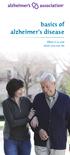 basics of alzheimer s disease What it is and what you can do What is Alzheimer s disease? Alzheimer s (AHLZ-high-merz) is a disease of the brain that causes problems with memory, thinking and behavior.
This Policy is intended to be a qualified long-term care insurance contract under section 7702B(b) of the Internal Revenue Code.
 Administrative Offices: 165 Court Street Rochester, NY 14647 1-800-544-0327 GROUP LONG-TERM CARE INSURANCE CERTIFICATE OUTLINE OF COVERAGE State of Tennessee Employee and Retiree Long-Term Care Insurance
2016 Programs & Information
 Mayo Alzheimer s Disease Research Clinic Education Center 2016 Programs & Information BROCHURE TITLE FLUSH RIGHT for Persons & Families impacted by Mild Cognitive Impairment Alzheimer s Disease Dementia
Objectives. Aging and Forgetfulness Define Dementia Types of Dementia Treatment
 Dementia David Lam, MD, FRCPC, Psychiatry Assistant Clinical Professor Department of Psychiatry and Behavioural Neurosciences McMaster University Hamilton, Ontario Objectives Aging and Forgetfulness Define
ASSESSMENT AND MANAGEMENT OF PSYCHOSIS IN PERSONS WITH DEMENTIA
 ASSESSMENT AND MANAGEMENT OF PSYCHOSIS IN PERSONS WITH DEMENTIA Overview: Psychosis is a common clinical feature of dementia. Hallucinations and delusions are the two most common types of psychotic symptoms
CLAIM. Desjardins Financial Security Life Assurance Company 200, rue des Commandeurs Lévis (Québec) G6V 6R2
 Total Long-term Care Independent Living Loss-of-independence Coverage Long-term Care Advance Accelerated Independence CLAIM INSTRUCTIONS FOR FILING A CLAIM Please use this form to file a claim. It must
WHODAS 2.0 World Health Organization Disability Assessment Schedule 2.0 36-item version, self-administered
 The APA is offering a number of emerging measures for further research and clinical evaluation. These patient assessment measures were developed to be administered at the initial patient interview and
Seniors Health Services
 Leading the way in care for seniors Seniors Health Services Capital Health offers a variety of services to support seniors in communities across the region. The following list highlights programs and services
Respite Care Guide. Finding What s Best for You
 Respite Care Guide Finding What s Best for You Everyone needs a break. If you are a caregiver, you may need a break from caregiving tasks. If you have dementia, you may want a break from the daily routine
10 warning signs of alzheimer s disease
 10 warning signs of alzheimer s disease the compassion to care, the leadership to conquer Your memory often changes as you grow older. But memory loss that disrupts daily life is not a typical part of
INDIVIDUAL PLAN OF CARE (IPC)
 State of California CMMUNITY-BASED ADULT SERVICES Department of Health Care Services INDIVIDUAL PLAN F CARE (IPC) Dates of Service (DS): From: To: NTE: Definitions of all key words in this IPC can be found
Lewy body dementia Referral for a Diagnosis
 THE Lewy Body society The more people who know, the fewer people who suffer Lewy body dementia Referral for a Diagnosis Lewy Body Dementias REFERRAL FOR A DIAGNOSIS In the UK people with all forms of dementia
CONSUMER INFORMATION GUIDE: ASSISTED LIVING RESIDENCE
 CONSUMER INFORMATION GUIDE: ASSISTED LIVING RESIDENCE 1 TABLE OF CONTENTS Introduction 3 What is an Assisted Living Residence? 3 Who Operates ALRs? 4 Paying for an ALR 4 Types of ALRs and Resident Qualifications
Progression LATE STAGE. What is Alzheimer s disease? The late stage - what to expect
 Progression LATE STAGE This document is one in a five-part series on the stages of Alzheimer s disease and is written for the person with the disease, their family and caregivers. The late stage of the
Intellectual Symptoms Amnesia: Loss of memory function
 Definition of Dementia (de mens) Latin for out of mind Permanent loss of multiple intellectual functions Alois Alzheimer first described this disease in 1906 in a brain specimen from an autopsy. Alzheimer
Adult Foster Home Screening and Assessment and General Information
 Office of Licensing and Regulatory Oversight Resident information Resident s name: Resident s current address: Resident s current living situation: Resident s current primary caregiver: Adult Foster Home
Continental Casualty Company
 Continental Casualty Company CNA A Stock Company 333 South Wabash Avenue Chicago, Illinois 60604 Continental Casualty Company Group Long Term Care 333 South Wabash Avenue Chicago, IL 60604 1-(800)-528-4582
Basics of Dementia Third Session: Progressive Memory Disorders (3rd edition, 3/27/07)
 Basics of Dementia Third Session: Progressive Memory Disorders (3rd edition, 3/27/07) Prepared by: Leilani Doty, PhD, Administrator University of Florida Memory Disorder Clinic McKnight Brain Institute,
APPROVED: Memory Care Requirements for Nursing Care Center Accreditation
 APPROVED: Memory Care Requirements for Nursing Care Center Accreditation Effective July 1, 2014, The Joint Commission will implement new memory care requirements designed to help accredited nursing care
LONG TERM CARE INSURANCE OUTLINE OF COVERAGE FOR EMPLOYEES OF. FLORIDA INSTITUTE OF TECHNOLOGY (the Sponsoring Organization)
 UNUM Life Insurance Company of America 2211 Congress Street Portland, Maine 04122 (207) 575-2211 LONG TERM CARE INSURANCE OUTLINE OF COVERAGE FOR EMPLOYEES OF FLORIDA INSTITUTE OF TECHNOLOGY (the Sponsoring
Recovery After Stroke: Bladder & Bowel Function
 Recovery After Stroke: Bladder & Bowel Function Problems with bladder and bowel function are common but distressing for stroke survivors. Going to the bathroom after suffering a stroke may be complicated
Alzheimer s disease and diabetes
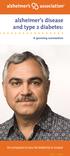 1007029 CM1053CS Alzheimer s disease and diabetes Nearly 21 million Americans in the United States have diabetes, a disease that makes the body less able to convert sugar to energy. More than 6 million
Understanding late stage dementia Understanding dementia
 Understanding late stage dementia About this factsheet This factsheet is for relatives of people diagnosed with dementia. It provides information about what to expect as dementia progresses to late stage.
Alzheimer s disease Guide for law enforcement
 Alzheimer s disease Guide for law enforcement Law enforcement and Alzheimer s disease As our population ages, the number of people with Alzheimer s continues to grow as does the likelihood that you will
Financial advisors and Alzheimer s disease: What you need to know
 Financial advisors and Alzheimer s disease: What you need to know In today s aging society, with people living longer lives, chances are high that you ll be called upon to assist clients who are caring
Continental Casualty Company
 Continental Casualty Company 333 S. Wabash Avenue A Stock Company Chicago, Illinois 60604 Continental Casualty Company Group Long-term Care 333 S. Wabash Avenue Chicago, IL 60604 1-(800)-528-4582 LONG-TERM
Care Team. Ministry Module
 Care Team This Mission Module is provided through a Partnership with The Care Communities, a registered DBA of The Interfaith Care Alliance, of Austin, TX and Caregiving Ministries, a division of FamilyCare
What is vascular dementia?
 alzheimers.org.uk What is vascular dementia? Vascular dementia is the second most common form of dementia after Alzheimer s disease. It is caused by problems in the supply of blood to the brain. This factsheet
Alzheimer s disease. Reducing caregiver stress
 Alzheimer s disease Reducing caregiver stress Supporting a person with Alzheimer s disease requires time and energy. While it can be a rewarding experience, it can also be demanding and stressful. Knowing
Depression in Older Persons
 Depression in Older Persons How common is depression in later life? Depression affects more than 6.5 million of the 35 million Americans aged 65 or older. Most people in this stage of life with depression
Alzheimer's: The Latest Assessment and Treatment Strategies
 Questions from chapter 1 Alzheimer's: The Latest Assessment and Treatment Strategies 1) What is a loss of cognitive and intellectual powers without changes in consciousness. a) dementia b) delusions c)
Continence in Dementia. Elizabeth Rand Manager, Cognitive Dementia & Memory Service (CDAMS) Caulfield Hospital
 Continence in Dementia. Elizabeth Rand Manager, Cognitive Dementia & Memory Service (CDAMS) Caulfield Hospital Continence Adequate stimulus to initiate voiding reflex Neuromuscular and structural integrity
October 2013 Family Choice: Best Practices in Care for Nursing Home Residents
 SNP Alliance Best Practices October 2013 Family Choice: Best Practices in Care for Nursing Home Residents Overview of Family Choice of New York I-SNP Independent Health s Medicare Advantage Family Choice
Meeting the Needs of Aging Persons. Aging in Individuals with a
 Meeting the Needs of Aging Persons with Developmental Disabilities Cross Network Collaboration for Florida Aging in Individuals with a Developmental Disability Module 3 Based on ADRC training developed
Restorative Nursing Teleconference Script
 Slide 1 Slide 2 Slide 3 Maintaining independence in ADLs and mobility is very important to most of us. In fact, functional decline can lead to depression, withdrawal, social isolation, and complications
PAIN JEOPARDY. I ll take INTERVENTIONS for 400 points, Alex!
 PAIN JEOPARDY I ll take INTERVENTIONS for 400 points, Alex! Fact/Myth Barriers Assessment Education Interventions 100 pt 100 pt 100 pt 100 pt 100 pt 200 pt 200 pt 200 pt 200 pt 200 pt 300 pt 300 pt 300
Emergency Room Treatment of Psychosis
 OVERVIEW The term Lewy body dementias (LBD) represents two clinical entities dementia with Lewy bodies (DLB) and Parkinson s disease dementia (PDD). While the temporal sequence of symptoms is different
The Pennsylvania Insurance Department s. Your Guide to Long-Term Care. Insurance
 Your Guide to Long-Term Care Insurance When you re in the prime of life, it s hard to imagine being unable to do the basic activities of daily living because of age or disability. But the reality is that
Mental health issues in the elderly. January 28th 2008 Presented by Éric R. Thériault [email protected]
 Mental health issues in the elderly January 28th 2008 Presented by Éric R. Thériault [email protected] Cognitive Disorders Outline Dementia (294.xx) Dementia of the Alzheimer's Type (early and late
State of Iowa. Dementia Training Requirements and the CARES Online Dementia Care Training Program and essentialz Certification Program
 State of Iowa Dementia Training Requirements and the CARES Online Dementia Care Training Program and essentialz Certification Program Elder Group Homes, Assisted Living Program, and Adult Day Services
1: Motor neurone disease (MND)
 1: Motor neurone disease (MND) This section provides basic facts about motor neurone disease (MND) and its diagnosis. The following information is an extracted section from our full guide Living with motor
Psychology and Aging. Psychologists Make a Significant Contribution. Contents. Addressing Mental Health Needs of Older Adults... What Is Psychology?
 AMERICAN PSYCHOLOGICAL ASSOCIATION Psychologists Make a Significant Contribution Psychology and Aging Addressing Mental Health Needs of Older Adults... People 65 years of age and older are the fastest
H3Assist/SCR Options in Care Presented by, Adam Kranson
 Any additional questions 888-818-9463 Adam s Cell 949-929-1135 H3Assist/SCR Options in Care Presented by, Adam Kranson 1. In Home Care 2. Assisted Living 3. Nursing Home Future for Seniors The population
activities at home Planning the day for a person with moderate or severe dementia
 activities at home Planning the day for a person with moderate or severe dementia Activities and a person with dementia Activities are the things we do, like getting dressed, doing chores, playing cards
Long-Term Care: Frequently Asked Questions About Long- Term Care Insurance
 FACT SHEET LTC: FAQ s About Long-Term Care Insurance (H-003) p. 1 of 5 Long-Term Care: Frequently Asked Questions About Long- Term Care Insurance Long-Term Care (LTC) insurance only pays for long-term
Presented By: Mark Kirby Senior Long-Term Care Insurance Specialist 888-532-8232 [email protected]
 Activities of Daily Living: Bathing Transferring Toileting Eating Dressing Continence Cognitive Impairment: Dementia / Alzheimer s Reasoning Orientation Services Personal Care Homemaker Services Skilled
LONG TERM CARE INSURANCE IS NOT FOR THE ELDERLY!
 LONG TERM CARE INSURANCE IS NOT FOR THE ELDERLY! What s that you say? Long Term Care insurance (LTCi) is NOT for the elderly?! Did you know that over 45% of all claims for Long Term Care are for people
Quality Measures for Long-stay Residents Percent of residents whose need for help with daily activities has increased.
 Quality Measures for Long-stay Residents Percent of residents whose need for help with daily activities has increased. This graph shows the percent of residents whose need for help doing basic daily tasks
LOUISIANA STATE UNIVERSITY SYSTEM (the Sponsoring Organization)
 UNUM Life Insurance Company of America 2211 Congress Street Portland, Maine 04122 (207) 575-2211 LONG TERM CARE INSURANCE OUTLINE OF COVERAGE For the Employees of LOUISIANA STATE UNIVERSITY SYSTEM (the
JASACare Home Care Services
 JASACare Home Care Services Opening the Door to your Independence www.jasa.org What is Home Care? Home Care encompasses a wide array of health and supportive services delivered in your own home. Home Care
Steps to getting a diagnosis: Finding out if it s Alzheimer s Disease.
 Steps to getting a diagnosis: Finding out if it s Alzheimer s Disease. Memory loss and changes in mood and behavior are some signs that you or a family member may have Alzheimer s disease. If you have
Activities of Daily Living F 311 Minnesota Department of Health Nursing Home Surveyor Training Resource
 2/2006 1 Objectives Activities of Daily Living F 311 Minnesota Department of Health Use To determine if the facility is providing maintenance and restorative programs that will not only maintain, but improve,
O: Gerontology Nursing
 O: Gerontology Nursing Alberta Licensed Practical Nurses Competency Profile 145 Competency: O-1 Aging Process and Health Problems O-1-1 O-1-2 O-1-3 O-1-4 O-1-5 O-1-6 Demonstrate knowledge of effects of
Hospice Care. To Make a No Obligation No Cost Referral Contact our Admissions office at: Phone: 541-512-5049 Fax: 888-611-8233
 To Make a No Obligation No Cost Referral Contact our Admissions office at: Compliments of: Phone: 541-512-5049 Fax: 888-611-8233 Office Locations 29984 Ellensburg Ave. Gold Beach, OR 97444 541-247-7084
Clinical Audit: Prescribing antipsychotic medication for people with dementia
 Clinical Audit: Prescribing antipsychotic medication for people with dementia Trust, team and patient information Q1. Patient's DIS number... Q2. Patient s residence: Home Residential Home Nursing Home