
arthritis 1 arthritisconnect.com
|
|
|
- Anissa Farmer
- 9 years ago
- Views:
Transcription
1

2 arthritis What is Arthritis? There are more than 100 forms of arthritis currently identified. The common thread among these 100-plus conditions is that they all affect the musculoskeletal system and specifically the joints. Arthritisrelated joint problems include pain, stiffness, inflammation and damage to joints. This damage often leads to joint pain, weakness, and instability that can interfere with the most basic daily tasks such as walking, climbing stairs, or brushing your teeth. Together, arthritis and related conditions are a major cause of disability in the United States, costing the U.S. economy more than $124 billion per year in medical care and indirect expenses such as lost wages and production - and costing millions of individuals their health, their physical abilities and, in many cases, their independence. But there is good news: advancing research has found many new ways to combat the pain and symptoms of arthritis. Many valuable support systems exist to help patients and their families deal with the pain and other symptoms and effects of this condition. Get the Facts About Arthritis Arthritis is a complex disorder with numerous different forms. It is the leading cause of disability in people age 55 or older, and it is estimated that more than 40 million Americans suffer from some form of arthritis. This guide is designed to give you information about arthritis its causes, its symptoms, and the treatments available to assist you in conversations with your health professional. You will also find information about where to get help and support, whether you have been diagnosed with arthritis or if someone you love is suffering from it. 1

3 Who is affected by arthritis? Arthritis sufferers include men and women, children and adults. Approximately 350 million people worldwide have arthritis. Nearly 40 million people in the United States are affected by arthritis, including over a quarter million children. More than 27 million Americans have osteoarthritis. Approximately 1.3 million Americans suffer from rheumatoid arthritis. Nearly 60% of Americans with arthritis are women. Causes and Risk Factors of Arthritis The cause of arthritis depends on the type of arthritis diagnosed. The two most common forms of arthritis are osteoarthritis and rheumatoid arthritis. Although there are many theories about what causes arthritis, for most forms the exact cause is still not known. Some forms of arthritis can be caused by injury to the joint affected, while others seem to be brought on by an infection. Still others seem to be caused purely by aging. What Are the Risk Factors of Arthritis? Some risk factors for arthritis are things that you can control, while other risk factors are things that you cannot change. Risk factors that you cannot control include: Age. The risk of developing most types of arthritis increases with age. Gender. Most types of arthritis are more common in women; 60% of all people with arthritis are women. Genetics. Specific genes are associated with a higher risk of certain types of arthritis, such as rheumatoid arthritis (RA), systemic lupus erythematous (SLE), and ankylosing spondylitis. Risk factors that are within your control include: Weight. Excess weight can contribute to both the onset and progression of knee osteoarthritis. Injury. Damage to a joint can contribute to the development of osteoarthritis in that joint. Infection. Many microbial agents can infect joints and potentially cause the development of various forms of arthritis. Occupation. Certain occupations involving repetitive knee bending and squatting are associated with osteoarthritis of the knee. 2

4 Is Your Joint Pain Arthritis? Have you had pain or stiffness in your joints for three or more days in a week in the last month? Have you experienced pain in a joint with a history of injury? Do your joints feel stiff, especially after you haven t moved for an extended period of time, such as first thing in the morning? Have you had swelling in your joints for three or more days in a week in the last month? If you answered yes to even one of the above questions, you may be experiencing symptoms of arthritis. Speak with your health care professional to discuss diagnosis and treatment options. Symptoms Of Arthritis The symptoms of arthritis can differ depending on the type of arthritis the patient is suffering from. Symptoms of arthritis include pain and limited function of joints. Inflammation of the joints from arthritis is characterized by joint stiffness, swelling, redness, and warmth. Tenderness of the inflamed joint is also common. Because some of the forms of arthritis are rheumatic diseases, they can cause symptoms affecting various organs of the body that do not directly involve the joints. Therefore, symptoms in some patients with certain forms of arthritis can also include fever, swelling of the glands, weight loss, fatigue, and even symptoms from abnormalities of organs such as the lungs, heart, or kidneys. How is Arthritis Diagnosed? There is no one single test to diagnose arthritis. If your doctor suspects you may be suffering from arthritis, he or she will perform a series of tests and assessments to diagnose the condition. Some tests your doctor may recommend are: Physical examination to check for tenderness, redness, warmth, stiffness or fluid in a joint Personal and family medical history Blood tests Urine tests X-rays and other imaging tests Removal of fluid from a swollen joint for examination (joint aspiration) If you have pain, stiffness, swelling, or difficulty moving a joint or doing everyday activities, talk with your healthcare professional. These may be signs and symptoms of arthritis, and there are a number of options available to treat your pain and other symptoms. 3

5 Treating Arthritis Although there is currently no cure for arthritis, there are several treatments available to treat the symptoms and chronic pain often found with the condition. These treatments can significantly improve quality of life for those suffering from arthritis. Depending on the type of arthritis, your treatment goals may differ. Some of the goals of treatment can include: Decreasing and managing the pain and other symptoms Slowing the progression of the condition Preserving mobility and range of motion Preventing or minimizing joint damage or physical deformities Some of the most common treatments for the symptoms of arthritis include: Medications. Often, individuals with early symptoms of arthritis will self-treat with over the counter medications such as ibuprofen or acetaminophen. Other over the counter options are available as well, including topical creams. Depending on the severity of the arthritis, your healthcare professional may choose to prescribe one or more medications. There are several drug classes for treating arthritis. Alternative Pain Management. Many patients prefer to manage their pain without the use of drugs. Alternative options exist that can help you to manage your pain as a replacement or supplement to a drug regimen. Some of the options available to you include muscle stimulators, which can help ease the pain of arthritis by sending small electrical impulses through the skin to the underlying motor units (nerves and muscles) to create an involuntary muscle contraction. Another category of alternative pain management options is heat and cold therapy. Systems are available that allow you to target specific areas of your body for pain relief by using hot or cold water to help relax tight muscles or ease the pain of arthritis. Complementary Medicine. There are many things you can do in addition to your other treatment options. Your healthcare professional can determine whether any complementary actions are right for you. Some of the complementary options available include: Regular exercise. Strongly recommended for arthritis patients. Exercise can reduce pain and improve physical function, muscle strength, and quality of life for people with arthritis. Staying active with osteoarthritis There is no cure for osteoarthritis but staying active helps sufferers to protect joints, reduce pain and maintain independence. Osteoarthritis will get worse over time but that does not mean that you cannot do things today that can protect your joints in the future. It can be difficult to use joints when they feel painful and are swollen and inflamed, but not using joints means they will become weak over time. Weakness of joints results in stiff muscles and that will make it even harder for you to get around. When you are not moving, the cycle of pain starts all over again. Discussing pain control with doctor can help you to stay active and to keep moving. Benefits of Exercise Exercise is the best way to remain active and to improve health. Exercise helps you with pain management and maintaining and improving balance, joint function, posture and overall energy levels. Moreover, exercise improves flexibility and promotes muscle and bone strength. Another benefit is the promotion of joint lubrication, which allows bones to move freely with less pain and stiffness. In addition, exercise, combined with a healthy diet, promotes weight loss, and less stress on joints means less pain. 4

6 Medications Type of Medication NSAIDs (nonsteroidal anti-inflammatory drugs) Information A large class of medications used to treat arthritis pain and inflammation. Three are three categories of NSAIDs - Salicylates (acetylated, such as aspirin, and nonacetylated), traditional NSAIDs, and COX-2 selective inhibitors. COX-2 Inhibitors COX-2 selective inhibitors are a subset of the NSAIDs (nonsteroidal anti-inflammatory drugs) that are used to treat the pain and inflammation of arthritis. Pain Medication (analgesics) Pain Medication (analgesics) Analgesics (also called painkillers, pain killers, pain medications, pain relievers) are drugs designed to suppress the pain mechanism. Pain relief is a significant part of arthritis treatment. Corticosteroids Corticosteroids, also called glucocorticoids or just steroids, are powerful drugs that can quickly reduce inflammation and pain. To maximize benefits, but minimize potential side effects, corticosteroids are usually prescribed in low doses or for short durations. DMARDs (disease - modifying anti-rheumatic drugs) DMARDs (disease-modifying anti-rheumatic drugs) and immunosuppressants are medications used to treat arthritis and other rheumatic conditions. DMARDs and immunosuppressants are drugs that help reduce inflammation and slow disease progression. 5

7 More Information and Support for Individuals Suffering from Arthritis Individuals diagnosed with arthritis face many challenges that may leave them feeling overwhelmed. Many resources exist to help you stay connected and informed. Contact the Arthritis Foundation the only national not-for-profit organization that supports the more than 100 types of arthritis and related conditions to find out about resources in your community, and get answers about your arthritis diagnosis and treatment. Contact the foundation via phone at or visit their website at When deciding on an exercise routine, consider exercises that put the least amount of stress on your joints. In addition, you can avoid injuries by exercising in short increments of time and resting in between. Less strenuous exercises include low impact activities such as walking, water exercises and light weight lifting. Walking Walking provides many benefits including the toning of muscles and joint protection of the spine, hips, knees, and feet. The benefits to the spine include providing back pain relief and strengthening the muscles of the back and abdomen to reduce back pain. Benefits to hips include the reduction of factures, the strengthening of muscles and bones, and the shifting of pressure on joints to strong muscles to reduce pain in the hip area. The knees benefit because movement increases production of synovial fluid to keep joints lubricated. When joints are properly lubricated, pain and stiffness decreases. Lastly, the feet benefit from walking because body weight is lowered thereby reducing the load on other joints and stress on the feet. Aquatic Exercise Water exercise can include activities such as water walking and swimming. For arthritis sufferers who are hesitant to exercise because of pain, water exercise offers a good starting point. In the water, your body is less stressed and it is easier to move when joints are less stressed. Many types of aquatic programs and water exercises can benefit people with osteoarthritis and you can check with your local YMCA or locate a program through your local Arthritis Foundation office. Water-walking offers an alternative to walking in particular during the summer months. In fact, it is an activity has been increasingly popular for those suffering from arthritis. Again, your local YMCA or Arthritis Foundation office is a good resource for locating a waterwalking program. Resistance Exercise/Weight Lifting Light weight lifting can help relieve pain from sore joints of the arms, hands, wrists, and fingers. Many people believe that strength training can make arthritis worse but this is not the case. In fact, lifting weights can help arthritis sufferers to function better and help to reduce pain, swelling and stiffness in your arms, hands, wrists and fingers. Lifting weights helps to strengthen muscles and strong muscles can take the burden off joints. It is best to check with your doctor before starting a strength-training program and to seek the guidance of a professional to learn proper strength training techniques. A trained professional can also teach correct positioning to avoid muscle tears and increased swelling and pain of joints. 6

8 Yoga Another well-liked and effective exercise option for people with arthritis is yoga. A popular misconception is that yoga focuses merely on increasing flexibility. Yoga also emphasizes postural alignment, strength, endurance and balance. Early scientific studies of patients with arthritis participating in yoga have shown promising results with some improvement in joint health, physical functioning, and mental/emotional well-being. If you want to try yoga to see if it will be a good fit for your exercise needs, here are a few key questions to ask: 1. What style of yoga is offered in the class? There are many styles of yoga and not all are appropriate for people with arthritis. Anusara, Integral, Iyengar, and Viniyoga are good options. 2. Is the instructor certified? Certification ensures that your instructor has a minimum level of training and practical experience. 3. Are beginner classes offered? It is most helpful to be grouped with students of similar experience and ability. 4. Does the instructor have experience teaching students with arthritis? If you can, find a teacher who is familiar with your condition and can help you make proper adjustments. Don t Overdo It Research has shown that staying active is vital to reducing joint pain and slowing the progression of arthritis. Your doctor can help you with pain management but you can help yourself by resting as necessary, by not overusing joints, losing weight, eating healthy, and making use of hot and cold compresses before and after exercises. You can also avoid foods that cause inflammation and contain high water content. Most importantly - stay positive and keep moving. Eating well. Eating a nutritious diet is important for maintaining ideal weight and for bone health too. There is no known diet which can cure arthritis, but eating well is important. What to Eat and NOT Eat If You Have Arthritis 1- Eat more omega 3 fatty acids. Studies suggest that you need to get 3 grams of omega-3 fatty acids per day. Eating fish twice a week is a good habit to get into because it is full of eicosapentaenoic and docosahexaenoic which are two very potent antiinflammatory omega 3 fatty acids. Fatty fish such as salmon, trout, and tuna are good sources for these acids. 2- Include more fruits and vegetables in your diet. Antioxidants found in many fruits and vegetables may protect against tissue damage around the joints. The brighter fruits and vegetables such as blueberries, spinach, and peppers have more antioxidants. 3- Cut back on foods that are high in saturated fats such as red meat, cheese and ice cream. Saturated fats can increase prostaglandin E2 which contributes to inflammation. 4- Avoid nightshade plants such as eggplant, tomatoes and potatoes. Those with arthritis, tend to be extra-sensitive to nightshade plants. Eliminating them from their diet may bring relief. Nightshades contain high levels of alkaloids which cause the bones to excrete various minerals from the body. 5- Consume more calcium and vitamin D. The lack of calcium can cause bone loss, muscle cramping and hypertension. Inflammatory arthritis tends to accelerate bone loss, and calcium needs vitamin D present in order to work correctly. Several studies suggest that adequate vitamin D intake may decrease the risk of autoimmune diseases such as Rheumatoid Arthritis. 7

Rheumatoid Arthritis www.arthritis.org.nz
 Rheumatoid Arthritis www.arthritis.org.nz Did you know? RA is the second most common form of arthritis Approximately 40,000 New Zealanders have RA RA can occur at any age, but most often appears between
X-Plain Rheumatoid Arthritis Reference Summary
 X-Plain Rheumatoid Arthritis Reference Summary Introduction Rheumatoid arthritis is a fairly common joint disease that affects up to 2 million Americans. Rheumatoid arthritis is one of the most debilitating
Understanding Rheumatoid Arthritis
 Understanding Rheumatoid Arthritis Understanding Rheumatoid Arthritis What Is Rheumatoid Arthritis? 1,2 Rheumatoid arthritis (RA) is a chronic autoimmune disease. It causes joints to swell and can result
Arthritis www.patientedu.org
 written by Harvard Medical School Arthritis www.patientedu.org Arthritis is the most common chronic disease in the world, and it s the leading cause of disability in the United States. There are more than
Facts About Aging and Bone Health
 Facts About Aging and Bone Health A Guide to Better Understanding and Well Being with the compliments of Division of Health Services Diocese of Camden Exercise as treatment Along with medication, proper
Therall. Arthritis. Living with. A guide to understanding and managing Arthritis
 Therall Arthritis PAin relief Living with Arthritis A guide to understanding and managing Arthritis Arthritis Facts There are currently 4.5 million persons suffering from arthritis in Canada This number
Osteoporosis and Arthritis: Two Common but Different Conditions
 and : Two Common but Different Conditions National Institutes of Health and Related Bone Diseases ~ National Resource Center 2 AMS Circle Bethesda, MD 20892 3676 Tel: 800 624 BONE or 202 223 0344 Fax:
Rheumatoid Arthritis: Symptoms, Causes, and Treatments of Rheumatoid Foot and Ankle
 Rheumatoid arthritis is the most common form of inflammatory arthritis, affecting about two to three million Americans. Rheumatoid arthritis is a symmetric disease, meaning that it will usually involve
Rheumatoid arthritis inadults
 Understanding NICE guidance Information for people who use NHS services Rheumatoid arthritis inadults NICE clinical guidelines advise the NHS on caring for people with specific conditions or diseases and
TAKING CARE OF YOUR RHEUMATOID ARTHRITIS
 TAKING CARE OF YOUR RHEUMATOID ARTHRITIS RHEUMATOID ARTHRITIS (RA) FAST FACTS What is Rheumatoid Arthritis? Rheumatoid arthritis (RA) is a chronic disease that can affect your ability to function and be
Information on Rheumatoid Arthritis
 Information on Rheumatoid Arthritis Table of Contents About Rheumatoid Arthritis 1 Definition 1 Signs and symptoms 1 Causes 1 Risk factors 1 Test and diagnosis 2 Treatment options 2 Lifestyle 3 References
Stickler Syndrome and Arthritis
 Stickler Syndrome and Arthritis Arthritis Foundation Pacific Region, Nevada Office Presented by: Crystal Schulz, MPH Community Development Manager Arthritis Foundation Improving lives through leadership
Rheumatoid Arthritis www.arthritis.org.nz
 Rheumatoid Arthritis www.arthritis.org.nz Did you know? Rheumatoid arthritis (RA) is the third most common form of arthritis Approximately 40,000 New Zealanders have RA RA can occur at any age, but most
Diet and Arthritis. Dr Áine O Connor Nutrition Scientist. British Nutrition Foundation. 2011 The British Nutrition Foundation
 Diet and Arthritis Dr Áine O Connor Nutrition Scientist British Nutrition Foundation Outline Background What is arthritis? What are the common forms? Body weight and arthritis Diet and arthritis Nutrients
ARTHRITIS INTRODUCTION
 ARTHRITIS INTRODUCTION Arthritis is the most common disease affecting the joints. There are various forms of arthritis but the two that are the most common are osteoarthritis (OA), and rheumatoid arthritis
Once the immune system is triggered, cells migrate from the blood into the joints and produce substances that cause inflammation.
 HealthExchange Points For Your Joints An Arthritis Talk Howard Epstein, MD Orthopaedic & Rheumatologic Institute Rheumatic & Immunologic Disease Cleveland Clinic Beachwood Family Health & Surgery Center
Arthritis in Children: Juvenile Rheumatoid Arthritis By Kerry V. Cooke
 Reading Comprehension Read the following essay on juvenile rheumatoid arthritis. Then use the information in the text to answer the questions that follow. Arthritis in Children: Juvenile Rheumatoid Arthritis
(Intro to Arthritis with a. Arthritis) Manager of Education & Services for the Vancouver Island Region of The Arthritis Society
 Arthritis 101 (Intro to Arthritis with a Focus on Rheumatoid Arthritis) by Cari Taylor by Cari Taylor Manager of Education & Services for the Vancouver Island Region of The Arthritis Society What You Will
Preventing & Treating Low Back Pain
 Preventing & Treating Low Back Pain An Introduction to Low Back Pain Low back pain is the number two reason that Americans see a health care practitioner second only to colds and flu. While most people
Rheumatoid Arthritis
 Rheumatoid Arthritis Rheumatoid arthritis (RA) is an autoimmune disease that causes chronic inflammation of the joints. Autoimmune diseases are illnesses that occur when the body's tissues are mistakenly
Arthritis: An Overview. Michael McKee, MD, MPH February 23, 2012
 Arthritis: An Overview Michael McKee, MD, MPH February 23, 2012 Supporters Deaf Health Talks is possible through the support of: Rochester Recreation Club for the Deaf ( REAP ) Deaf Health Community Committee
Elbow Injuries and Disorders
 Elbow Injuries and Disorders Introduction Your elbow joint is made up of bone, cartilage, ligaments and fluid. Muscles and tendons help the elbow joint move. There are many injuries and disorders that
Rheumatoid Arthritis. Disease RA Final.indd 2 15. 6. 10. 11:23
 Rheumatoid Arthritis Disease RA Final.indd 2 15. 6. 10. 11:23 Understanding what to expect can help you prepare for your transition into treatment. Rheumatoid Arthritis What You Need To Know About Rheumatoid
.org. Arthritis of the Hand. Description
 Arthritis of the Hand Page ( 1 ) The hand and wrist have multiple small joints that work together to produce motion, including the fine motion needed to thread a needle or tie a shoelace. When the joints
Rheumatoid Arthritis
 Rheumatoid Arthritis While rheumatoid arthritis (RA) has long been feared as one of the most disabling types of arthritis, the outlook has dramatically improved for many newly diagnosed patients. Certainly
Spine University s Guide to Transient Osteoporosis
 Spine University s Guide to Transient Osteoporosis 2 Introduction The word osteoporosis scares many people because they ve heard about brittle bone disease. They may know someone who has had it or seen
Polymyalgia Rheumatica www.arthritis.org.nz
 Polymyalgia Rheumatica www.arthritis.org.nz Did you know? Arthritis affects one in six New Zealanders over the age of 15 years. Polymyalgia rheumatica is a common rheumatic condition. It affects more women
Psoriatic Arthritis. What is psoriatic arthritis? Understanding joints. Who gets psoriatic arthritis? Page 1 of 5
 Page 1 of 5 Psoriatic Arthritis Psoriatic arthritis causes inflammation, pain, and swelling of joints in some people who have psoriasis. Other parts of the body may also be affected. For example, in many
Infl ectra for rheumatoid arthritis
 Infl ectra for rheumatoid arthritis Some important information to get you started with your treatment This booklet is intended only for use by patients who have been prescribed Inflectra. Introduction
Psoriatic Arthritis www.arthritis.org.nz
 Psoriatic Arthritis www.arthritis.org.nz Did you know? Arthritis affects one in six New Zealanders over the age of 15 years. Psoriatic arthritis usually appears in people between the ages of 30 to 50.
.org. Cervical Spondylosis (Arthritis of the Neck) Anatomy. Cause
 Cervical Spondylosis (Arthritis of the Neck) Page ( 1 ) Neck pain can be caused by many things but is most often related to getting older. Like the rest of the body, the disks and joints in the neck (cervical
What is Osteoarthritis? Who gets Osteoarthritis? What can I do when I am diagnosed with Osteoarthritis? What can my doctor do to help me?
 Knee Osteoarthritis What is Osteoarthritis? Osteoarthritis is a disease process that affects the cartilage within a joint. Cartilage exists at the surface of the ends of the bones and provides joints with
Rheumatoid Arthritis Information
 Rheumatoid Arthritis Information Definition Rheumatoid arthritis (RA) is a long-term disease that leads to inflammation of the joints and surrounding tissues. It can also affect other organs. Alternative
Shared Decision Making
 Deciding what to do about osteoarthritis of the knee This short decision aid is to help you decide what to do about your knee osteoarthritis. You can use it on your own, or with your doctor, to help you
arthritis.org Rheumatoid Arthritis Understanding Symptoms, Diagnosis and Treatments
 arthritis.org Rheumatoid Arthritis Understanding Symptoms, Diagnosis and Treatments About Rheumatoid Arthritis What Is Rheumatoid Arthritis? Arthritis is a general term for inflammation of the joints.
Physiotherapy in Rheumatoid Arthritis. Information for patients Gina Wall Senior Physiotherapist
 Physiotherapy in Rheumatoid Arthritis Information for patients Gina Wall Senior Physiotherapist What do Physiotherapists do? We conduct assessments by asking detailed questions about your symptoms, medical
.org. Achilles Tendinitis. Description. Cause. Achilles tendinitis is a common condition that causes pain along the back of the leg near the heel.
 Achilles Tendinitis Page ( 1 ) Achilles tendinitis is a common condition that causes pain along the back of the leg near the heel. The Achilles tendon is the largest tendon in the body. It connects your
Cervical Spondylosis (Arthritis of the Neck)
 Copyright 2009 American Academy of Orthopaedic Surgeons Cervical Spondylosis (Arthritis of the Neck) Neck pain is extremely common. It can be caused by many things, and is most often related to getting
.org. Posterior Tibial Tendon Dysfunction. Anatomy. Cause. Symptoms
 Posterior Tibial Tendon Dysfunction Page ( 1 ) Posterior tibial tendon dysfunction is one of the most common problems of the foot and ankle. It occurs when the posterior tibial tendon becomes inflamed
Rheumatology. Rheumatoid Arthritis
 Rheumatology Rheumatoid Arthritis The Rheumatology service specialises in the diagnosis and treatment of diseases affecting the musculoskeletal system. Other than providing inpatient and outpatient consultation,
Repetitive Strain Injury
 Page1 Repetitive Strain Injury Repetitive strain injury (RSI) is an injury caused by repetitive use of muscles. For the purpose of this article I will refer to repetitive strain injury as RSI. It usually
Do I need a physician referral? Yes, we see patients on referral from a health care provider.
 FAQS FOR OFFICE POLICIES How do I get an appointment? New appointments are made by physician referral only. Your referring health care provided will call for the appointment for you. What do I need to
Neck Pain Overview Causes, Diagnosis and Treatment Options
 Neck Pain Overview Causes, Diagnosis and Treatment Options Neck pain is one of the most common forms of pain for which people seek treatment. Most individuals experience neck pain at some point during
BuyNuezdelaIndia.com
 BuyNuezdelaIndia.com The information provided in this guide is intended for your general knowledge only and is not a substitute for professional medical advice or treatment for specific medical conditions.
.org. Cervical Radiculopathy (Pinched Nerve) Anatomy. Cause
 Cervical Radiculopathy (Pinched Nerve) Page ( 1 ) Cervical radiculopathy, commonly called a pinched nerve occurs when a nerve in the neck is compressed or irritated where it branches away from the spinal
Patient Guide. Sacroiliac Joint Pain
 Patient Guide Sacroiliac Joint Pain Anatomy Where is the Sacroiliac Joint? The sacroiliac joint (SIJ) is located at the bottom end of your spine, where the "tailbone" (sacrum) joins the pelvis (ilium).
A Patient s Guide to Diffuse Idiopathic Skeletal Hyperostosis (DISH)
 A Patient s Guide to Diffuse Idiopathic Skeletal Hyperostosis (DISH) Introduction Diffuse Idiopathic Skeletal Hyperostosis (DISH) is a phenomenon that more commonly affects older males. It is associated
Fatigue Beyond Tiredness
 Fatigue Beyond Tiredness The development and printing of this booklet was sponsored by Roche Products Ltd and Chugai Pharma UK Ltd. Editorial control remains with NRAS. Have you ever: Got all dressed up
Other Noninfectious Diseases. Chapter 31 Lesson 3
 Other Noninfectious Diseases Chapter 31 Lesson 3 Diabetes Diabetes- a chronic disease that affects the way body cells convert food into energy. Diabetes is the seventh leading cause of death by disease
Bone Basics National Osteoporosis Foundation 2013
 When you have osteoporosis, your bones become weak and are more likely to break (fracture). You can have osteoporosis without any symptoms. Because it can be prevented and treated, an early diagnosis is
Temple Physical Therapy
 Temple Physical Therapy A General Overview of Common Neck Injuries For current information on Temple Physical Therapy related news and for a healthy and safe return to work, sport and recreation Like Us
PHYSICAL ACTIVITY AND ARTHRITIS: YOU CAN DO IT! Frequently Asked Questions
 PHYSICAL ACTIVITY AND ARTHRITIS: YOU CAN DO IT! Frequently Asked Questions 1. What is the difference between exercise and physical activity? Physical Activity - any body movement beyond sitting or sleeping
Herniated Lumbar Disc
 Herniated Lumbar Disc North American Spine Society Public Education Series What Is a Herniated Disc? The spine is made up of a series of connected bones called vertebrae. The disc is a combination of strong
Am I likely to develop. rheumatoid Arthritis? A guide for people with joint symptoms
 Am I likely to develop Rheumatoid rheumatoid Arthritis? arthritis? A guide for people with joint symptoms At a glance Rheumatoid arthritis (RA) is a common disease that causes painful and swollen joints,
Get Rid of Elbow Pain
 Get Rid of Elbow Pain Self Regional Healthcare Optimum Life Center 115 Academy Avenue Greenwood, SC 29646 Office: (864) 725-7088 Self Regional Healthcare Physical Therapy Savannah Lakes 207 Holiday Road
Basal Joint Arthritis
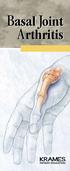 Basal Joint Arthritis What Is Basal Joint Arthritis? Arthritis is a disease that causes inflammation and stiffness in the joints. It often affects the joint at the base of the thumb, called the basal joint.
Identifying and treating long-term kidney problems (chronic kidney disease)
 Understanding NICE guidance Information for people who use NHS services Identifying and treating long-term kidney problems (chronic kidney disease) NICE clinical guidelines advise the NHS on caring for
Rheumatoid Arthritis Medicines. A Guide for Adults
 Rheumatoid Arthritis Medicines A Guide for Adults Fast Facts Medicines for rheumatoid arthritis (RA) can slow down the disease and reduce damage to joints. They can relieve pain and make it easier to do
Herniated Cervical Disc
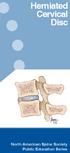 Herniated Cervical Disc North American Spine Society Public Education Series What Is a Herniated Disc? The backbone, or spine, is composed of a series of connected bones called vertebrae. The vertebrae
Plantar Fasciitis. Plantar Fascia
 Plantar Fasciitis Introduction Plantar fasciitis is an inflammation of the thick band of tissue that connects your heel bone to your toes. This thick band of tissue is called the plantar fascia. Plantar
Rheumatoid Arthritis. What is rheumatoid arthritis? Understanding joints. What causes rheumatoid arthritis?
 Page 1 of 6 Rheumatoid Arthritis Rheumatoid arthritis causes inflammation, pain, and swelling of joints. In time, affected joints typically become damaged. The severity can vary from mild to severe. Treatments
.org. Plantar Fasciitis and Bone Spurs. Anatomy. Cause
 Plantar Fasciitis and Bone Spurs Page ( 1 ) Plantar fasciitis (fashee-eye-tiss) is the most common cause of pain on the bottom of the heel. Approximately 2 million patients are treated for this condition
Back & Neck Pain Survival Guide
 Back & Neck Pain Survival Guide www.kleinpeterpt.com Zachary - 225-658-7751 Baton Rouge - 225-768-7676 Kleinpeter Physical Therapy - Spine Care Program Finally! A Proven Assessment & Treatment Program
.org. Shoulder Pain and Common Shoulder Problems. Anatomy. Cause
 Shoulder Pain and Common Shoulder Problems Page ( 1 ) What most people call the shoulder is really several joints that combine with tendons and muscles to allow a wide range of motion in the arm from scratching
Rheumatoid Arthritis
 What is Rheumatoid Arthritis? Rheumatoid Arthritis (RA) is a chronic and systemic disease that causes pain, stiffness, swelling, and limitation in the motion and function of multiple joints. Though joints
.org. Rotator Cuff Tears. Anatomy. Description
 Rotator Cuff Tears Page ( 1 ) A rotator cuff tear is a common cause of pain and disability among adults. In 2008, close to 2 million people in the United States went to their doctors because of a rotator
Herniated Disk. This reference summary explains herniated disks. It discusses symptoms and causes of the condition, as well as treatment options.
 Herniated Disk Introduction Your backbone, or spine, has 24 moveable vertebrae made of bone. Between the bones are soft disks filled with a jelly-like substance. These disks cushion the vertebrae and keep
Hand Injuries and Disorders
 Hand Injuries and Disorders Introduction Each of your hands has 27 bones, 15 joints and approximately 20 muscles. There are many common problems that can affect your hands. Hand problems can be caused
How To Treat Heel Pain
 Plantar Fasciitis, Heel Spurs, Heel Pain The Plantar Fasciitis Organization is dedicated to the understanding of Plantar Fasciitis, Heel Spurs, and all other forms of Heel Pain. Welcome to the Plantar
It is worth noting that people with psoriasis can also develop other forms of arthritis such as rheumatoid arthritis and osteoarthritis.
 Psoriatic Arthritis Main Colour - pantone 2597u Research - pantone 206u Children - pantone 123 4 What is psoriatic arthritis? Psoriatic arthritis is an inflammatory joint disease associated with psoriasis.
Platelet-Rich Plasma (PRP) Injections for Osteoarthritis and Chronic Tendinitis. How will you benefit from a PRP injection?
 Platelet-Rich Plasma (PRP) Injections for Osteoarthritis and Chronic Tendinitis How will you benefit from a PRP injection? Emory Healthcare patients can now benefit from a treatment called platelet-rich
Arthritis of the Shoulder
 Arthritis of the Shoulder In 2011, more than 50 million people in the United States reported that they had been diagnosed with some form of arthritis, according to the National Health Interview Survey.
If I eat certain foods, will my rheumatoid arthritis symptoms improve? Answer
 August 17, 2010 Rheumatoid arthritis Question Rheumatoid arthritis diet: Do certain foods reduce symptoms? If I eat certain foods, will my rheumatoid arthritis symptoms improve? Answer By April Chang-Miller,
PRACTICAL HELP FROM THE ARTHRITIS FOUNDATION. www.arthritis.org 800-283-7800. Psoriatic Arthritis
 Psoriatic Arthritis WHAT IS PSORIATIC ARTHRITIS? Psoriatic (sore-ee-aah-tick) arthritis is a condition that causes pain and swelling in joints and scaly patches on the skin. Psoriatic arthritis occurs
Adult Advisor: Plantar Fasciitis. Plantar Fasciitis
 Adult Advisor: Plantar Fasciitis Page 1 of 3 Plantar Fasciitis What is plantar fasciitis? Plantar fasciitis is a painful inflammation of the bottom of the foot between the ball of the foot and the heel.
Calcium. 1995-2013, The Patient Education Institute, Inc. www.x-plain.com nuf40101 Last reviewed: 02/19/2013 1
 Calcium Introduction Calcium is a mineral found in many foods. The body needs calcium to maintain strong bones and to carry out many important functions. Not having enough calcium can cause many health
Psoriatic Arthritis KNOW YOUR OPTIONS. www.arthritis.ca 1.800.321.1433
 Psoriatic Arthritis KNOW YOUR OPTIONS www.arthritis.ca 1.800.321.1433 Psoriatic Arthritis DID YOU KNOW? Psoriatic arthritis (sore-ee-aa-tic) is a type of inflammatory arthritis that usually appears in
A Patient's Guide to Arthritis of the Finger Joints
 Introduction A Patient's Guide to Arthritis of the Finger Joints When you stop to think about how much you use your hands, it's easy to see why the joints of the fingers are so important. Arthritis of
High Blood pressure and chronic kidney disease
 High Blood pressure and chronic kidney disease For People with CKD Stages 1 4 www.kidney.org National Kidney Foundation's Kidney Disease Outcomes Quality Initiative Did you know that the National Kidney
July 2012 Exercise Away Your Knee Pain It seems counterintuitive, but when it hurts to move
 Exercise Away Your Knee Pain It seems counterintuitive, but when it hurts to move your knee, the best thing you can do is move your knee. A 2009 study in the British Medical Journal found that supervised
What Are Bursitis and Tendinitis?
 Bursitis and tendinitis are both common conditions that cause swelling around muscles and bones. They occur most often in the shoulder, elbow, wrist, hip, knee, or ankle. A bursa is a small, fluid-filled
METASTASES TO THE BONE
 RADIATION THERAPY FOR METASTASES TO THE BONE Facts to Help Patients Make an Informed Decision TARGETING CANCER CARE AMERICAN SOCIETY FOR RADIATION ONCOLOGY WHAT ARE BONE METASTASES? Cancer that starts
Level 1, 131-135 Summer Street ORANGE NSW 2800 Ph: 02 63631688 Fax: 02 63631865
 Write questions or notes here: Level 1, 131-135 Summer Street ORANGE NSW 2800 Ph: 02 63631688 Fax: 02 63631865 Document Title: Total Knee Replacement Further Information and Feedback: Tell us how useful
A Genetic Analysis of Rheumatoid Arthritis
 A Genetic Analysis of Rheumatoid Arthritis Introduction to Rheumatoid Arthritis: Classification and Diagnosis Rheumatoid arthritis is a chronic inflammatory disorder that affects mainly synovial joints.
Psoriatic arthritis FACTSHEET
 1 What is psoriatic arthritis? Psoriatic arthritis (PsA) is a disease where joints around the body become inflamed and sore. It can make moving about difficult and painful. People who have PsA also have
Procedure Information Guide
 Procedure Information Guide Total hip replacement Brought to you in association with EIDO and endorsed by the The Royal College of Surgeons of England Discovery has made every effort to ensure that the
About High Blood Pressure
 About High Blood Pressure Your Treatment & You: working together to help manage your health Glaxo- Blood Pressure Booklet (ASK) EN.indd 1 10/7/2014 4:49:14 PM Glaxo- Blood Pressure Booklet (ASK) EN.indd