
King Arthur Freak the Mighty: Two Texts, One Story. Karlene McGowen Pershing Middle School
|
|
|
- April Lane
- 9 years ago
- Views:
Transcription
1 King Arthur Freak the Mighty: Two Texts, One Story Karlene McGowen Pershing Middle School INTRODUCTION As a sixth grade reading teacher, novels are an essential part of my curriculum. I usually find myself changing the novels I teach each year just to give myself some variety. One novel that I continually keep is Freak the Mighty by Rodman Philbrick. This is a great story about two very different boys who become best friends. The main character, Kevin (also known as Freak), is fascinated with King Arthur, knights, and quests. It is this aspect of the novel that I would like to expand upon. I want the students to understand what Kevin is referring to when he speaks of knights, the round table, Gwen, and quests. If the students have a deeper understanding of the subject matter then they can get a richer knowledge of why Kevin is so fascinated by this legend. This unit will be about character studies in the two stories of King Arthur and Freak the Mighty. There are several aspects that I would like to introduce through this unit. First is an introduction to the Medieval Era. This time period is so rich with history, stories and life. A brief introduction is essential to the understanding of the latter part of this unit. The second aspect I would like to explore is character development. The characters in King Arthur and the characters in Freak the Mighty are all very well developed and provide very different images of a character. It is important to teach King Arthur as a preface to Freak the Mighty because many aspects of Kevin s behavior are directly derived from King Arthur. Background knowledge in novels is so important to readers. This unit will give the students the background knowledge they need for reading Freak the Mighty on a deeper level. MEDIEVAL TIMES There are an abundance of books and resources to use for teaching this time period. It would not be feasible to go into all of them in this unit. For that reason I am focusing on one book as my main reference. The title is The Medieval World by Philip Steele. The reason I chose this book is because of the color illustrations and the abundance of knowledge it contains. However, I also like that the book keeps the topics very simple. My intention is not to require an intensive study on Medieval times but just to provide a basic background of the time period. From this book and its introduction, I would like the students to come away with a fundamental understanding of the following topics: timeline of the era, chivalry, heraldry, and weapons. Start by teaching the students that the Middle Ages are considered to be from 500 AD to 1500 AD. A brief timeline is provided in the book. Early Middle Ages are considered to be from 500 AD to 800 AD. Rise of the Mounted Warrior is 800 AD to 1096 AD. Age of the Crusaders is 1096 AD to 1291 AD. Knighthood Supreme is considered 1291 AD to 1453 AD. Finally the end of the Middle Ages is considered to be from 1453 AD to 1500 AD. Of course these are rough estimates, but it at least gives the students an idea of what time period we are discussing. This information can simply be presented on poster paper and hung in the room for the duration of the unit study. 88

2 Next we ll discuss chivalry. The book defines chivalry as, The ideals of knighthood, by which a knight is generous toward noble enemies and honorable toward women (Steele 90). The students will be asked to give examples of how a person could show chivalry. What actions might a person perform that would be considered chivalrous? Open discussion is all that is needed to make sure that the concept is understood. Heraldry is defined as, The system of signs and family badges used on shields and flags from the Middle Ages onward (Steele 90). I have a family crest that I show my students as an example of what heraldry is. Many students have probably never seen their family shield or any family shield for that matter. I explain what each symbol means in accordance with my family. To extend this activity you can do a variety of things. One thing that is nice is to have the students go home and ask their parents about their family shield. Some families may have it and the child might be unaware of it. If their family does not have one, then the next assignment can take its place. The students themselves can make a personal crest of things that are important to them using symbols to represent objects and values. A simple crest will do. Also the book provides illustrations of many crests of various degrees. A student could also pick one that they like and explain why they chose that particular one. It doesn t have to be related to what their actual family shield would be. It is just nice to give the students some ownership of their name and their belief system. Weapons seem to always be an area of interest with students of middle school. Many have probably seen movies where large armies fight on foot with swords and bows and arrows. Perhaps they have even read about these types of battles. As with any topic there will be students who have background knowledge and students that don t. This section of the unit will introduce weapons used in battle in the Middle Ages. This is important because of the reference to Excalibur in the King Arthur story. The book provides a nice overview of various weapons that were used in battle. These include swords, daggers, crossbows, lances, flails, and bows and arrows to name a few. Showing the various weapons to students gives them a sense of how personal and up close a battle can really be. It isn t always cannons and dropping bombs from airplanes. A knight was required to get very close to his enemy in order to defeat him. This is also a good place to introduce the typical armor a knight would wear into battle to protect himself from these weapons. Just visual images and brief explanations is all that is necessary for this section. These are the overall topics I like for the students to be introduced to. As with anything in this unit you can expand or decrease the amount of knowledge provided and time used for these topics. Again, the purpose is to give a simple introduction for the use of understanding the setting of that era. This will lead us into our study of King Arthur. THE LEGEND OF KING ARTHUR For this unit I would like the students to study the characters involved with King Arthur. I would like them to study the life they led and the reasons behind why they are such legends today. We can explore King Arthur through information from a variety of sources. Written texts and movies will be used. Before we read our novel, Freak the Mighty, the students will become acquainted with the characters in the King Arthur era. The goal is to give students background knowledge before we start our novel. We will begin this unit by discussing legends as a genre of text. At some point there should be an explanation to the students of genres of text. It is important for them to understand that all text can be categorized. When introducing King Arthur the students should understand that this story is a legend. It is somewhat based on truth but is not entirely factual. This will lead into our dialogue of King Arthur as a legend, discussing the origins from which he came. Karlene McGowen 89

3 Characters One theme that I would like to expand upon in this unit is characterization. As mentioned previous, all the characters in King Arthur and all the characters in Freak the Mighty are very rounded and great for studying characters as an element of literature. As a brief introduction to King Arthur I will read a picture book to the students. The goal is for the students to get a principle idea of the story of King Arthur. The title of the book is Merlin and the Making of the King by Margaret Hodges. Instead of my standing in front of the students and lecturing on each of the characters and what they mean to the story, I consider it would be more interesting and memorable for the students if they researched and learned about the characters on their own. Therefore, after reading the picture book I will divide the class into small groups and assign each group a character from the legend. I will also have resources of written text as well as earmarked websites for the students to begin their research on their assigned character. The idea is that each group will do an in-depth research and presentation about their character to the class. Each group will be teaching the class about the character. Beyond just standing and presenting information, I would like the students to actually teach the class. This would involve student created worksheets or activities to help the class learn about the assigned character. The latter part of this assignment might be reserved for advanced level students. For lower level students, an adjustment of assigning them a report with visuals may be the blend they need to achieve success. It is here I pause in the unit for a brief clarification to the teachers. The students should have a place designed for note taking specifically for this unit, be it a spiral, three ring notebook or brad folder with paper. On these notes they will be required to write character descriptions of each person associated with King Arthur. These notes should come from the teachings of each student presentation. The characters to be assigned are provided. I have also included a brief character description taken from The Illustrated Encyclopedia of Arthurian Legends by Ronan Coghlan: Arthur we are told of Arthur s conception when Uther approached Igraine who was made, by Merlin s sorcery, to resemble her husband. The child was given to Ector to be raised in secret. After Uther s death there was no king ruling all England. Merlin had placed a sword in a stone, saying that whoever drew it out would be king. Arthur did so and Merlin had him crowned. This led to a rebellion by eleven rulers which Arthur put down. He married Guinevere whose father gave him the Round Table as a dowry; it became the place where his knights sat, to avoid quarrels over precedence. A magnificent reign followed, Arthur s court becoming the focus for many heroes. In the war against the Romans, Arthur defeated the Emperor Lucius and became emperor himself. (Coghlan 40) Guinevere Wife of Arthur, daughter of King Leodegrance of Cameliard in Malory Mordred s sister Mordred abducted her and made himself king. In the later version of the Arthurian story she was the lover of Lancelot. Their intrigue discovered, Lancelot fled and Guinevere was duly sentenced to burning. Lancelot rescued her and war followed between him and Arthur. (Coghlan 126) Lancelot- Arthur s champion and right-hand man After his father s death, he was left near a lake by his mother and was taken by the Lady of the Lake, who raised him. He became Arthur s trusted companion and a Knight of the Round Table He fell in love with Guinevere and commenced to have an affair with her. (Coghlan 152) 90

4 Camelot Arthur s capital The city is first mentioned by Chrétien in his Lancelot. (Coghlan 67) Excalibur The sword given to Arthur by the Lady of the Lake. After Arthur s last battle he made Bedivere return it to the water where it was grasped by a hand and drawn underwater. (Coghlan 100) Gawain one of Arthur s most prominent knights. (Coghlan 110) Holy Grail a vessel sought by the Knights of the Round Table the cup used by Jesus at the Last Supper, the dish on the table at that event, or a stone. (Coghlan 118) Merlin Arthur s magician and counselor, in many ways the architect of his reign. (Coghlan 176) Mordred Arthur s nephew, the son of Arthur s sister Anna when Arthur was away on his Roman campaign, Mordred seized Guinevere and the throne, thus paving the way for their final battle. (Coghlan 184) This character is complex in that latter stories of King Arthur place Mordred as Arthur s son by his half sister. This is the reason for May Day murders. Morgan Le Fay Arthur s half sister She learned much of her magic from Merlin She tried unsuccessfully to have Arthur killed. (Coghlan 186) Each group will be assigned one of the above characters. They will create a presentation to teach the class about this portion of the story. For Arthur it might be prudent to assign two groups this task and see how each presents it differently. There is so much information about Arthur that it might be unreasonable to assign just one group for this task. In the presentation I expect the students to be prepared with visuals or handouts for the class. It needs to be as engaging as possible. Each group must create one activity for the class. This can be in the form of a worksheet or puzzle or short quiz. There must also be something visual to present. This will then be used to hang in the room for reference later during the study of the unit. The assignment here can be as complicated or as simple as desired. Modify for your students. After all presentations we can converse about the entire story as a class. Questions and realizations will be answered and discussed. The students should now have full character descriptions written in their notes. Taking all the information that has been learned, students will now write a King Arthur story of their own. Individuals or groups can be assigned. I require that it be 2-5 written pages. All characters studied must be included in the story. This is where the students can become creative. Although they must use all the characters and keep it somewhat based on the truth, they can also embellish or add events. The assignment is an assessment of application of knowledge. Did the students really learn something about King Arthur and can they retell the story in their own words? It can be started in class and then given as a homework assignment. A couple of days should be sufficient for completion. This homework will be ongoing while the next phase of the unit begins. In addition to reading several books and literature studying the Middle Ages and King Arthur, you can also show a movie for an added interest. The movie and/or parts of Camelot or The Sword in the Stone are great choices. The entire movie does not have to be presented if time is restrictive. Just give the students an idea of what the movies are. Including visuals such as media seems to always help concrete the lesson being taught. At the completion of the King Arthur study, I provide other resource books for the students to read if they are interested. Some students find that after learning about King Arthur they want Karlene McGowen 91

5 more. What could make a teacher happier than a student requesting more information to read! Many book titles are provided in the bibliography of this unit. They range from lower level reads to upper level reads. FREAK THE MIGHTY Once we start our novel the students will be well acquainted and familiar with the terminology that Kevin uses and to which he refers. This novel is so great; it stands on its own. However, I feel that giving the students background knowledge of King Arthur will make the novel much richer. The premise of this story is that a teenage boy named Kevin, also referred to as Freak, moves back into a town where he once lived as a small child. He moves right next door to a boy his age whose name is Max. The two boys are quite different in every way. Max is a very large boy for his age. He is unusually tall and quite hunky. He is in a learning disabled class because he has not done very well in school thus far. He lives with his grandparents because his father is in prison for the alleged murder of his mother. Kevin, on the other hand, is extremely small for his age. He has a physical disability where his body is growing at a much slower rate than his organs. He is very intelligent and absolutely loves to read. He reads the dictionary all the time. In addition, he loves to read about King Arthur. His style of speaking takes some phrases from the era of the Middle Ages. Kevin lives with his single mother. Max and Kevin become friends and they both complement each other very well. Their friendship becomes a strong bond that neither knew could exist. This unit includes a full novel study. This novel is great for teaching character development, vocabulary, and elements of friendship. In starting this part of the unit, I will have students continue with their note-taking efforts to help them process ideas and synthesize concepts while reading this novel. The students will create a new section in their notes specifically for this novel. Three sections will be needed: chapter questions, characters, and vocabulary. During each chapter reading the students answer questions in their notes. This task ensures students are following the story. These questions have been provided later in this unit. Kevin uses many difficult words in his speaking. I assign the students to keep notes of every word that Kevin uses that is unfamiliar to them. Many times Kevin will use a difficult word and then explain the meaning to Max. This is helpful to the reader to decipher his vocabulary. Other times the reader may need to use context clues to determine the meaning. The point is that by the end of the novel the students will create a notebook of the new vocabulary. This will later be a study source for them to review for the test. In addition to using the notebook for vocabulary, I also assign a section for use as a character study. There are not many characters in this novel, perhaps eight total. But each character is fully developed and it s important for students to see this development. Each character is very different, but after studying and discussing them, the students will see a common thread among many of them. This is a great venue for introduction of the terms dynamic and static characters. A brief character description follows. Kevin (Freak) A very intelligent teenager who has a physical disability. He is very small for his age because his body is growing at a slower rate than his organs. He loves to read and go on quests. He enjoys the company of Max and likes to teach him about King Arthur. He benefits from Max s large mobile body. He is very attached to his mother with whom he lives and calls her the Fair Gwen. Max He is very large for his age. He has been labeled as learning disabled and is therefore in L.D. class. He lives with his grandparents because his mother is dead and his father is in prison for her murder. He doesn t like to read and doesn t have any friends until he meets Freak. Max transforms himself throughout the novel and goes from being 92

6 someone who hates school and enjoys being alone to someone who develops a tight friendship with Freak and ends up writing a book. Grim He is Max s grandfather and is a father figure to him. He is quiet but cares for Max. He fears Max will turn out like Kenny who is Max s father and was once married to his daughter Annie. Gram She is Max s grandmother. She really loves Max and wants the best for him. She doesn t really know how to raise a teenage boy but is trying her best. Gwen She is Kevin s mother. She has a very special relationship with him and enjoys hearing him talk about the things that he is interested in. She knows that he is very sick and is trying to deal with his illness. Kenny He is Max s father who is in prison for killing his wife, Max s mother. He escapes prison and attempts to kidnap Max so they can be together. He tries to turn Max against Kevin and tells him that Grim and Gram have been lying to him while he was in prison. He is not a nice person and in the end admits that he killed Max s mother. Iggy He is married to Loretta and lives in the New Tenaments. He is friends with Kenny and isn t very nice to Loretta. He doesn t like Kevin or Max. Loretta She makes quite a transformation in the novel. When we meet her she is living in a rundown apartment with Iggy. She seems very unstable and is dealing with the verbally abusive Iggy. During the novel she ends up saving Kevin and Max s lives. In the end she turns out to be a decent person. As with most novel, there are several ways to read it. I generally like for the students to have a copy of the book that I read aloud. There are lots of funny moments in the book and the students usually laugh out loud at these moments. Because timing is important and because sometimes there are difficult words, I feel that the story flows nicely by having the teacher read it aloud while the students follow along. I usually read about two chapters a day, then we discuss and the students fill in their character and vocabulary notes as well as answer chapter questions. There are so many activities to do with this novel. I incorporate activities of cause and effect, sequencing, summarizing, fact and opinion and compare and contrast. I ll start with the chapter questions I use for the novel. As with anything in this unit, feel free to use all or part of what is presented according to your needs. Chapter questions are given for every two chapters. Present the questions before beginning the daily read aloud. The students answer them during and after the reading. For advanced level students, wait to give the questions until the reading is complete. This heightens their listening skills. These questions attain the three levels of thinking. These being: Level One right there, in the text questions; Level Two- in the text but must read between the lines; and Level Three read beyond the lines and apply to yourself. Chapters one and two What characters are introduced? What is the setting? Chapters three and four List three events that take place. List one unfamiliar word and give the best definition you can think of. Chapters five and six Summarize these chapters in three sentences. Chapters seven and eight How does Freak guide Max through the park? What does Blade and his gang throw at Freak and Max? How did Freak and Max come to be Freak the Mighty? What does Grim call Max for the first time and why is it significant? Chapters nine and ten Why do you think Freak makes up pretend names for the places they see? What secret does Freak tell Max? What does Freak wear on his quest? Why do you think Karlene McGowen 93

7 Max agrees to go on quests with Freak? Predict what you think they will do with the treasure. Chapters eleven and twelve Write one cause and its effect that happens in these chapters. Who is Kenny Kane? What happened at school? Predict what you think will happen in the next chapter and explain. Chapters thirteen and fourteen What does this chapter title, American Chop Suey, mean? What happens in Mrs. Addison s office? What topic are Gram and Grim discussing? Summarize these chapters in three sentences. Chapters fifteen and sixteen What is the mood of chapter fifteen? How does the author create that? What is the mood of chapter sixteen and how does it differ from chapter fifteen? Chapters seventeen and eighteen After reading chapter seventeen do you believe Kenny Kane is guilty or innocent? Explain. Why is chapter eighteen titled Never Trust a Cripple? Summarize both chapters in words. Chapters nineteen and twenty Write three questions from these chapters that could be used on a test. The questions may be matching, multiple choice, short answer or essay. You must answer the questions. Chapters twenty-one and twenty-two Explain the chapter titles Accident of Nature and Remembering Is Just an Invention of the Mind. Chapters twenty-four and twenty-five Complete three of the six reading process steps. (Predict, Visualize, Connect, Clarify, Question, Evaluate) The next three activities involve utilizing the three reading skills of cause and effect, context clues, and fact and opinion. These worksheets are a compilation of different sources with my own ideas added. One source that I would like to recognize for help in development of these ideas is Jeni Fowler from Pershing Middle School. She is the one who got me turned on to this fantastic novel. Many of her ideas are incorporated into the following activities. Cause and effect is a skill I teach with this novel. I provide the students with a simple worksheet that they complete. A statement is given being either cause or effect. The student then completes the other element. For example, if a cause statement is given the student completes the effect statement. The answers are provided in parenthesis for your benefit. The worksheet contains the following: 1. Cause: (Max kicked everything and everyone.) - Effect: The kids at day-care called Max Kicker. 2. Cause: Gwen saw Max and he looked like his father. Effect: (She got frightened and ran home with Kevin.) 3. Cause: Kevin couldn t see the fireworks. Effect: (Max put Kevin on his shoulders.) 4. Cause: (Kevin began whistling to attract the police when Blade and his gang were throwing rocks at them.) - Effect: The police heard a noise and came to rescue Kevin and Max from the pond. 5. Cause: (Grim was proud of Max for protecting Kevin.) - Effect: Grim gave Max a cup of coffee. 6. Cause: (Kevin sees Blade and his gang stuff a purse in the sewer. They plan on retrieving the purse.) - Effect: Kevin and Max dress in dark clothing and cover themselves with dirt. 7. Cause: Kevin and Max find Loretta Lee s purse. Effect: (They take it to the Tenaments and plan to give it back to Loretta.) The vocabulary is so rich in this book; it is a teacher s dream. Kevin uses many higher order words, but usually explains the meaning to Max. Sometimes the author uses higher-level words and the explanation must come from the context clues. The questions in the worksheet I provide 94

8 ask students to use their context clue knowledge to decipher the meaning of the underlined word in the quote. They must support their answer. Some of these words may be in the vocabulary section of the student s notebook and, therefore, will be familiar. Here are the questions that are asked. 1. They wore this metal armor to protect them and make them invincible (Philbrick 17). 2. There s no lock, but Gram has this thing about waiting until I say come in, she makes a big deal about not intruding (Philbrick 22). 3. Just give me a nanosecond to process the alternatives (Philbrick 36). 4. Now swear on your heart that the data you are about to receive will be divulged to no one (Philbrick 51). 5. Pledge to me your fealty Nevermind there s no time to look up fealty. Just promise you ll do what I say (Philbrick 58-59). 6. Iggy scowls and he goes, Give me a break, Loretta (Philbrick 70). 7. But Freak is riding me like he s the jockey and I m the horse, he s steering me around the class room, showing off (Philbrick 78). 8. I have an obligation A man has to protect his family (Philbrick 90). 9. He shakes his head real sorrowful. That s a crime, not giving a boy presents from his father (Philbrick 111). 10. Put your hands up, villain! (Philbrick 131). Another skill that I use with this book is fact and opinion. A simple worksheet is provided to the students at the completion of the novel with various quotes from the novel. The students simply write F or O beside the statement. It is a quick check to see that students understand the concept of fact and opinion. The statements follow: I m still living in the basement (Philbrick 5). she still looks like a movie star (Philbrick 7). he throws down the crutch and he gets down on his hands and knees and crawls back to his house (Philbrick 11). I eat upstairs with Grim and Gram (Philbrick 15). It s real easy, he doesn t weigh much (Philbrick 14). The mud is up over my knees (Philbrick 38). It turned out to be a cool summer (Philbrick 41). I hate the beach because the beach is stupid (Philbrick 44). You re quite right, he is a rather remarkable boy (Philbrick 54). The treasure is hidden in the storm drain (Philbrick 56). This unit focuses on the similarities and differences of the characters of King Arthur and the characters in Freak the Mighty. The students will choose any one character from each of the stories and compare and contrast them. The classic Venn diagram, VENN DIAGRAM would work, but for the advanced level students I require that they take it a bit farther by making the Venn diagram significant to the characters. For example, if the students were comparing and Karlene McGowen 95

9 contrasting Excalibur with Kevin s leg braces (this example being with objects instead of humans), the background could be a design of each object or even some mesh of the two objects. The advanced level students could choose their two characters on their own or even randomly choose two characters from a hat for an even stronger challenge. The lower level students could be given two characters chosen by the teacher, of which the similarities and differences are somewhat easier to reveal. At the completion of the novel I usually show them the movie The Mighty, which is adapted from this book. It is a great movie and really projects the strong friendship that Max and Kevin form. As with most movie adaptations of novels there are similarities and differences between the two. Here again I assign the students to create a Venn diagram comparing the movie and the novel. I have a set requirement for each level of class that I teach, ranging between three entries for each space to eight entries for each space. PROJECT AND ASSESSMENT At completion of Freak the Mighty I assess the student s comprehension of the two stories in three ways. One is with the notebook that contains the note taking, vocabulary and processing thoughts. The second is a project that includes aspects of King Arthur and Freak the Mighty and the third with a formal test. I provide a choice of several different projects and the students choose the project that they would enjoy doing. When assigning something like a project that will take some time to complete it is important to allow choices. Within these choices I try to cover a range of abilities such as writing, drawing, or acting. Each has an overall goal of creativity and individuality. The project choices I have for this unit are explained below. I always make sure to explain each project thoroughly and let the students know exactly what is expected of each project and what I am looking for when I grade it. I also try to provide a rubric at the start of the project to help the students focus on the important aspects for which I will be looking. 1. Write and illustrate a King Arthur story. For this project you will retell the story of King Arthur. You may tell the entire story or choose one particular aspect of the story such as his youth and the acquisition of Excalibur, the formation of the Knights, the relationship with Lancelot and Guinevere, or the end of his life and the legend that has continued. Get as much information as you can from the resources we have looked at in class. You may also do outside research of your own from the Internet or other source. You should keep the story as true to the original as possible. The book should have a minimum of one illustration for every two pages of written text. You may type it or handwrite it as long as the writing is legible. If you would like to partner with someone in the class and share the duties of writing and illustrating you may do so. Remember that the book must have a front cover, spine, and back cover. You may use a pre-made book with empty pages or create one yourself. 2. Create a personal dictionary similar to the one Freak made. In the back of the novel we see Freak s Dictionary. These are words that Freak used in his everyday vocabulary and most of them have an usual meaning in Freak s eyes. For this project you will create a dictionary of words that are frequently used by you. For example Freak used the word ornithopter and defined it as a big word for mechanical bird (Philbrick 166). You may also add other words that are simply a creation of your imagination. For example Freak included the word unicorn and defined it as a horse who makes a point (Philbrick 168). You must include at least 20 words in your dictionary. Be creative in the way you make the book. 3. In the 25 chapters of this novel, there are many events that take place. You must decide which events are the major events. You must then create a timeline of events that took 96

10 place in this novel. At least 25 events must be included. It must be presented large enough to show the class. Be creative in the design of the timeline. A straight rectangle would not be very creative. The background should reflect the theme or represent events from the novel. 4. Create a crossword puzzle using the words from Freak s Dictionary. It must contain at least 30 words. You may not use a computer-generated puzzle. 5. Create a pyramid shaped box like the one Freak made. It must work the same way and contain some sort of surprise inside. Freak s box was made of cardboard and rubber bands; yours can be made of the same, or of any other material you think will work. 6. Choose a scene from either the Legend of King Arthur or Freak the Mighty and act it out. You may collaborate with a partner. You must memorize your lines and they must be true to the story. The presentation should be no longer than 5 minutes. Get into the character as best you can; costumes and props are a good idea. You must write a script and submit it to me. The test has multiple choice, short answer and essay components. Questions from the test I created are provided below. Again, as with anything in this unit, you may use as much or as little as is appropriate for your class. Part A: Match the following underlined words with the correct definition using the context clues provided. I never had a brain until Freak came along and let me borrow his for a while, and that s the truth, the whole truth. The unvanquished truth, is how Freak would say it, and for a long time it was him who did the talking (Philbrick 1). There s this one scraggly tree behind the little freak s house, right? Like a stick in the ground with a few wimped-out branches (Philbrick 11). Grim gives me this long sorrowful look and then he clears his throat and says, You re quite right, he is a rather remarkable boy (Philbrick 54). A purse, I say. Looks like a grotty old purse (Philbrick 61). An actual incision is not necessary. It s the same thing if you just spit on your hand (Philbrick 51). He really does keep a dictionary in his knapsack, it s his favorite book (Philbrick 46). The choices for the definition are from the following: backpack, absolute, worn out, cut, thin, outstanding. Part B: Write a character analysis for four of the following characters: Max, Freak, Iggy, Kenny Kane, King Arthur, Guinevere, Lancelot. Part C: Answer the following questions in complete sentences using correct punctuation and grammar. Why is Freak s Christmas gift of the pyramid shaped box and handwritten dictionary so important to Max? How does the location of Max s room down under relate to how he feels about himself? Why does Loretta try to save Max? What does this tell us about her character? With whom is Max angry when he realizes that Freak is dead? Why? What special abilities did Max have that made up for Freak s disabilities? What special abilities did Freak have that made up for Max s disabilities? Describe the relationship between Merlin and Arthur. Describe the significance of the Round Table. CONCLUSION I consider this unit to be important for students for a variety of reasons. They will be exposed to cross curriculum information by combining reading and history and introducing them to the Karlene McGowen 97

11 Middle ages. I have found that many times our pop culture refers to elements of the Legend of King Arthur. After this unit the students will have background knowledge in this subject and will be more prepared for understanding cultural references to this time period. In addition, the students will gain an understanding of what true friendship is by examining at the actions of Freak and Max. In the end, I think the students will have a great time exploring history, legend and realistic fiction. LESSON PLANS Lesson Plan 1: The Medieval World Day 1 Materials Needed Book The Medieval World Notebook for each student spiral, brad, or three-ring Objective Students will be briefly introduced to the time period known as Medieval or Middle Ages. Using the book The Medieval World by Philip Steele, the teacher will introduce four main topics that are associated with the Middle Ages. These topics are: timeline of the era, chivalry, heraldry, and weapons. Each topic is introduced on a fundamental level. The purpose is to give students a background into the time of which King Arthur is associated. In summary the timeline will be displayed on the wall for the duration of the study of the unit. The students will give examples of chivalrous acts. Each student will become familiar with his or her coat-of-arms or make one that relates to his or her beliefs and personality. Finally students will be shown the various weapons used in battle. Handouts of all of the above may be copied from the book and given to students to place in their notebook for future reference. If no copies are provided students can also take notes to be able to refer to later in the unit. Lesson Plan 2: The Legend of King Arthur Day 2-5 Materials Needed Books Merlin and the Making of the King, several King Arthur resources (refer to bibliography) Student Notebook Objective Students will understand the text genre of legend and be introduced to the Legend of King Arthur. The textbook defines legend as, a story handed down from the past about a specific person usually someone of heroic accomplishments. Legends usually have some basis in historical fact (McDougal R13). The dictionary defines legend as, a widely-accepted but unverified story (Morehead 306). After discussing legend the teacher will read Merlin and the Making of the King by Margaret Hodges. It can be read in about 10 or 15 minutes. It is perfect for providing the students a brief introduction to the story. After the picture book is read students are assigned a section of the story for further research. The characters mentioned previously would be the main topics I will assign. The students will 98

12 work in small groups to research their topic. I will provide several book sources for them as well as recommend Internet websites. Each group will have two class periods plus any time they choose outside of school to create a presentation on their topic. The objective is to teach their classmates about one aspect of King Arthur. They should provide visuals and documentation of their findings. They may also provide handouts or worksheets for the class to complete. Any aspect of teaching they can provide will be welcomed and encouraged. As each group is presenting, the class should be creating character analysis descriptions in their notebook. By the end of the study, each student should have a brief character description of the main characters studied in the unit. This will be used later as a comparative text for the novel and for study notes for the exam. After all presentations have been made, the information will be displayed in class for future reference. The students will now be given a writing assignment. They are to write a story of King Arthur. The references they will use come from the books I provide, the visuals hanging in the room created by the students, and the character descriptions in their notebook. Partners or individuals are given the assignment to creatively write a King Arthur story aligning with the facts as much as possible but still maintaining creativity. Viewing Camelot or The Sword in the Stone at this point in the unit is advised. As mentioned, the entire movie does not necessarily need to be shown; you may choose parts, if time is restrictive. Lesson Plan 3: The Novel Freak the Mighty Day 6-18 Materials Needed Book Freak the Mighty (use a class set if available) Student Notebook Chapter questions (provided above in unit) Worksheets Fact/Opinion, Context Clues, Cause/Effect (provided) Objective Students will complete a novel study of Freak the Mighty. If you have a class set of books it is good for the students to follow along as you read aloud. It will also help for the project later if each student can look at their own book. If not, then a readaloud will do. In order to complete the novel in 10 days, 2-3 chapters must be read per day. Throughout the reading provide questions for the students to answer. Just simple comprehension questions to ensure they are paying attention. These questions have been included previous in this unit. You may take the ones that are of interest to you. In addition to answering daily chapter questions in their notes, the students will also be adding to their character analysis pages. The main characters have been provided earlier in this unit along with a brief description. As each character is introduced and developed, students should add to their character analysis paragraphs. By the end they should have something similar to what was provided earlier in this unit. As they are developing these analyses ask them to find similarities with characters from the King Arthur study. Along with the chapter questions and the character analysis, the students will also be creating a new word dictionary. This is a list of words and definitions that the student has discovered while reading the book. As mentioned, the language and vocabulary used in this novel is very rich and many times words are used that an average sixth grade student would not already know. Karlene McGowen 99

13 Therefore, I assign the students to create a New Word Dictionary. This will consist of words that are used in the novel that the student has not heard before or words they have heard of, but to which they don t know the definition. I explain that each student s list will be different because we all have different degrees of prior knowledge. The students must first use their context clues to determine the meaning of the unfamiliar word. After they have used this option, then they may refer to a dictionary. At the end of the novel study they should have a decent length list of unfamiliar words and their definitions. At the conclusion of the novel, the students should have notes on King Arthur characters, Freak the Mighty characters, chapter questions and answers as well as a New Word Dictionary. The students are now assigned to create a Venn diagram comparing one character from the Legend of King Arthur to one character in Freak the Mighty. It is at this point in the unit that I begin to give the handouts provided earlier in this unit. We talk about fact and opinion, cause and effect, and context clues. The worksheets are either assigned to partners or individuals, depending on the skill level of the class. The book may be used as a reference. The notes taken by the students and these worksheets will provide the students a study guide for the upcoming exam. Lesson Plan 4: The Project and Assessment Day Material Needed Project Handouts (provided) Exams (provided) Objective Students will demonstrate and apply the knowledge they have gained from this unit. It is now time to assign the project. The projects have been explained previous in this unit. Again, adapt them to the needs of your class. I provided two class periods to work on the project. If extra time is needed, it must be done at home, but I really try to have the entire project done in my class so I can see the students working and creating. On the third day all projects are presented. Each student shows their project to the class and explains how they created it. Just a brief few minutes presentation is all that is required. On the last day of the unit I give the exam. By this time the students are very familiar with every aspect of King Arthur and Freak the Mighty. On the day I present the project assignments and explain the instructions, I also inform them of the exam to come. They are to be preparing by reading the notes they have taken in the notebook and studying the worksheets that have now been graded and returned to them. It is with all these resources that the students prepare for the exam. The exam questions have been provided. It consists of matching, short answer, and essay. The class period following the exam, the movie The Mighty is shown. The students create a Venn diagram comparing and contrasting the novel with the movie. This is the conclusion to the unit. 100

14 Annotated Bibliography Works Cited Coghlan, Ronan. The Illustrated Encyclopedia of Arthurian Legends. New York: Barnes & Noble Books, This is a wonderful reference for seeing each of the many people and places of King Arthur at a glance. It is an alphabetical list of persons with detailed descriptions of their family heritage as well as their place in the legend. McDougal Littell. The Language of Literature: Texas Teacher s Edition: Grade 6. Evanston: McDougal Littell, This teacher s edition textbook is great for scholar definitions of literary terms as well as short stories for use as examples. Morehead, Albert and Loy, ed. The New American Webster Handy College Dictionary. New York: Penguin Group, A great dictionary that I have had for many, many years. Of course there are more updated dictionaries and of course everybody has one, but this just happens to be the one I have. Used for defining literary terms. Philbrick, Rodman. Freak the Mighty. New York: Scholastic Signature, A fiction novel about the friendship formed between two unlikely boys. They overcome many obstacles but truly find their need for one another when they must begin to deal with Kevin s illness. Steele, Philip. The Medieval World. Boston: Kingfisher, This colorfully illustrated book gives the students a nice introduction to the Middle Ages. Many of the terms associated with this time period are defined and explained. It is great for a brief overview of the era. Supplemental Barber, Richard. Introduction. The Arthurian Legends: An Illustrated Anthology. New York: Peter Bedrick Books, This anthology contains fourteen stories that have made the King Arthur tales famous. Barber gives a brief introduction before each story is told in its original verse. Barber, Richard. Legends of Arthur. New York: Barnes & Noble Books, The tales of King Arthur retold in Barber s words. Camelot. Dir. Joshua Logan. Perf. Richard Harris, Vanessa Redgrave. Warner Studios: A musical tell the story of the love triangle with Arthur, Lancelot and Guinevere. Crossley-Holland, Kevin. The World of King Arthur and His Court: People, Places, Legend and Love. New York: Dutton Children s Books, A wonderfully illustrated book about the Legend of King Arthur. It is quite extensive in its broad subject matter, but each subject is brief in its description. It is very appealing for children. Green, Roger Lancelyn. King Arthur and His Knights of the Round Table. London: Puffin Books, A classic tale of King Arthur retold. Great for middle to upper level readers. Greenberg, Martin H. and John Helfers, ed. Murder Most Medieval. New York: Grammercy Books, This is a compilation of thirteen short stories involving murder with the setting being the Middle Ages. It is great fun to read as an afterthought to this unit. Harrison, Robert, trans. The Song of Roland. New York: Signet Classic, This epic is a great supplemental reading for higher-level readers. The introduction is necessary to comprehend the text. The story is told of the battle of Roncesvals in 778. The character of Roland is the chivalric hero of the age. Hodges, Margaret. Merlin and the Making of the King. New York: Holiday House, This illustrated story is a great introduction to the Legend of King Arthur. It is used in this unit as a read aloud by the teacher. It gives the story of King Arthur in an overview that is easy to understand and perfect for the teacher to read. Kerven, Rosalind. King Arthur. New York: DK Publishing, A great illustrated tale of King Arthur. Along with the story there are small pictures on the sides of each page with additional information and explanation about various parts of the story. Lupack, Barbara Tepa. Adapting the Arthurian Legends for Children: Essays on Arthurian Juvenilia. New York: Palgrave Macmillan, This is a great collegial text for various ways to use Arthurian legends in the classroom. Malory, Sir Thomas. King Arthur and the Knights of the Round Table. Adapted by C. Louise March. New York: Modern Publishing, Karlene McGowen 101

15 A great readable version of the classic novel. Its purpose in this unit is to give lower level readers a sense of accomplishment in reading a King Arthur novel. For older students the original version would be best. The Mighty. Dir. Peter Chelsom. Miramax Films, This movie is a great ending to the novel study. It is closely tied to the book and makes for wonderful discussion of differences between novel and movie versions of stories. Nardo, Don. King Arthur. Farmington Hills: Lucent Books, This is a great book for students to read. It contains an introduction that explains all the sources from which King Arthur was derived. It then goes into a great story of King Arthur and all the characters and tales associated with this legend. Pyle, Howard. King Arthur and the Knights of the Round Table. Adapted by Joshua E. Hanft. New York: Baronet Books, This is a good King Arthur story for lower level readers. The language is easy to understand and it is also illustrated. Springer, Nancy. I Am Mordred: A Tale From Camelot. New York: Philomel Books, A novel about Mordred and the realization that his father tried to kill him as a baby. This is another tale of many that come from the Camelot stories. This is told through the perspective of Mordred. A good novel to suggest to students who are interested in reading more tales relating to King Arthur. Steinbeck, John. The Acts of King Arthur and His Noble Knights. Ed. Chase Horton. New York: Noonday Press, Steinbeck retells the stories of King Arthur in this eight act book. He has modernized the stories in a way only Steinbeck can do. This is generally for upper level readers but excerpts could work as a read aloud for lower level. The Sword in the Stone. Dir. Wolfgang Reitherman. Walt Disney: A cartoon roughly telling the story of King Arthur and the acquisition of Excalibur. Wilhelm, James J., ed. The Romance of Arthur: An Anthology of Medieval Texts in Translation. New York: Garland Publishing, This compilation is great for upper level readers. It contains nineteen stories classically related to the Medieval Era. Each story has an introduction that explains the origins of it and demystifies the dialect. 102

Freak the Mighty Discussion Questions. When did Freak and Kicker meet for the first time? What happens on the first day of July in Max s neighborhood?
 Freak the Mighty Discussion Questions Chapters 1-3 Who is telling the story? Why was the narrator called Kicker for a time? Who does Max live with? Who is Him? When did Freak and Kicker meet for the first
LESSON TITLE: Jesus Heals Blind Bartimaeus
 Devotion NT257 CHILDREN S DEVOTIONS FOR THE WEEK OF: LESSON TITLE: Jesus Heals Blind Bartimaeus THEME: Jesus always has time for us! SCRIPTURE: Mark 10:46-52 Dear Parents Welcome to Bible Time for Kids!
THEME: Jesus sent the Holy Spirit to indwell and empower us.
 Devotion NT285 CHILDREN S DEVOTIONS FOR THE WEEK OF: LESSON TITLE: The Day of Pentecost THEME: Jesus sent the Holy Spirit to indwell and empower us. Dear Parents SCRIPTURE: Acts 2:1-41 Dear Parents, Welcome
King Arthur and the Knights of the Round Table
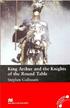 MACMILLAN READERS INTERMEDIATE LEVEL STEPHEN COLBOURN King Arthur and the Knights of the Round Table MACMILLAN Contents A Note About These Stories A Picture Dictionary The People in These Stories The Coming
Devotion NT347 CHILDREN S DEVOTIONS FOR THE WEEK OF: LESSON TITLE: The Hall of Faith. THEME: God wants us to trust Him. SCRIPTURE: Hebrews 11:1-40
 Devotion NT347 CHILDREN S DEVOTIONS FOR THE WEEK OF: LESSON TITLE: The Hall of Faith THEME: God wants us to trust Him. SCRIPTURE: Hebrews 11:1-40 Dear Parents Welcome to Bible Time for Kids! This is a
LESSON TITLE: Jesus Visits Mary and Martha THEME: Jesus wants us to spend time with \ Him. SCRIPTURE: Luke 10:38-42
 Devotion NT249 CHILDREN S DEVOTIONS FOR THE WEEK OF: LESSON TITLE: Jesus Visits Mary and Martha THEME: Jesus wants us to spend time with \ Him. SCRIPTURE: Luke 10:38-42 Dear Parents Welcome to Bible Time
them scarf it down is gross. They eat more than we do and were rich.
 Knights It is the time of ower lord 1066. I m Sterling the lll, and I m going to tell you a story of my great life, but very tough. It all starts out when I was a young boy running about our castle. My
Devotion NT273 CHILDREN S DEVOTIONS FOR THE WEEK OF: LESSON TITLE: The Garden of Gethsemane. THEME: We always need to pray! SCRIPTURE: Luke 22:39-53
 Devotion NT273 CHILDREN S DEVOTIONS FOR THE WEEK OF: LESSON TITLE: The Garden of Gethsemane THEME: We always need to pray! SCRIPTURE: Luke 22:39-53 Dear Parents Welcome to Bible Time for Kids. Bible Time
Joseph and the Coat of Many Colors
 Joseph and the Coat of Many Colors Teacher Pep Talk: Joseph was called a dreamer by his brothers. But are you really a dreamer just because God chooses to speak to you in a dream? Joseph s brothers hated
THEME: God desires for us to demonstrate His love!
 Devotion NT320 CHILDREN S DEVOTIONS FOR THE WEEK OF: LESSON TITLE: The Gift of Love THEME: God desires for us to demonstrate His love! SCRIPTURE: 1 Corinthians 13:1-13 Dear Parents Welcome to Bible Time
The Once and Future King
 Individual Learning Packet Teaching Unit The Once and Future King by T.H. White Copyright 2000 by Prestwick House Inc., P.O. Box 658, Clayton, DE 19938. 1-800-932-4593. www.prestwickhouse.com Permission
California Treasures High-Frequency Words Scope and Sequence K-3
 California Treasures High-Frequency Words Scope and Sequence K-3 Words were selected using the following established frequency lists: (1) Dolch 220 (2) Fry 100 (3) American Heritage Top 150 Words in English
LESSON TITLE: Our Chief Cornerstone. THEME: Jesus is our cornerstone! SCRIPTURE: Ephesians 2:19-22 CHILDREN S DEVOTIONS FOR THE WEEK OF: Dear Parents
 Devotion NT328 CHILDREN S DEVOTIONS FOR THE WEEK OF: LESSON TITLE: Our Chief Cornerstone THEME: Jesus is our cornerstone! SCRIPTURE: Ephesians 2:19-22 Dear Parents Welcome to Bible Time for Kids! This
1. Find a partner or a small team of three or four classmates to work on this lesson.
 Culture Inspiration for this lesson came from ESL Special Collection found at: http://www.literacynet.org/esl/tta5.html. Within that website, there is Building Bridges: A Peace Corps Guide to Cross-Cultural
LESSON TITLE: Spiritual Gifts. THEME: God gives us all different gifts to serve Him and to serve others! SCRIPTURE: 1 Corinthians 12:1-31; 14:1-40
 Devotion NT319 CHILDREN S DEVOTIONS FOR THE WEEK OF: LESSON TITLE: Spiritual Gifts THEME: God gives us all different gifts to serve Him and to serve others! SCRIPTURE: 1 Corinthians 12:1-31; 14:1-40 Dear
Jesus at the Temple (at age 12)
 Jesus at the Temple (at age 12) Teacher Pep Talk: Twelve sounds so grown up, especially when you are a Little Guy! But to us adults, 12 seems really young to be doing some of the things Jesus was doing
How to Win Against Sin Lesson One: Our Enemy, Our Hero
 How to Win Against Sin Lesson One: Our Enemy, Our Hero Scripture References: Ephesians :, Psalm Teacher Preparation: Read the lesson beforehand and familiarize yourself with it. You do not have to read
Compiled By: Pat Elliott, Resource Teacher & Dale Mays, Grade 4 Teacher Simcoe County District School Board Ontario Canada
 Compiled By: Pat Elliott, Resource Teacher & Dale Mays, Grade 4 Teacher Simcoe County District School Board Ontario Canada Literacy Circles There is no one right way to conduct literacy circles. The manner
WELCOME TO GOD S FAMILY
 WELCOME TO GOD S FAMILY To all who received him, to those who believed in his name, he gave the right to become children of God children born not of natural descent, nor of human decision or a husband
Using sentence fragments
 Lesson 8 Descriptive Essays Description is not a distinct mode of writing, like expository, narrative, and persuasive, but the ability to write descriptively is essential to a host of writing genres. Many
LESSON TITLE: Jesus is the Way, the Truth, and the Life
 Devotion NT271 CHILDREN S DEVOTIONS FOR THE WEEK OF: LESSON TITLE: Jesus is the Way, the Truth, and the Life THEME: We can always trust Jesus. SCRIPTURE: John 14:1-6 Dear Parents Welcome to Bible Time
THEME: God tells us how we can be leaders in His church.
 Devotion NT338 CHILDREN S DEVOTIONS FOR THE WEEK OF: LESSON TITLE: So You Want to Be a Leader? THEME: God tells us how we can be leaders in His church. SCRIPTURE: 1 Timothy 3:1-16 Dear Parents Welcome
Devotion NT267 CHILDREN S DEVOTIONS FOR THE WEEK OF: LESSON TITLE: The Second Coming. THEME: Jesus is coming again. SCRIPTURE: Matthew 24:27-31
 Devotion NT267 CHILDREN S DEVOTIONS FOR THE WEEK OF: LESSON TITLE: The Second Coming THEME: Jesus is coming again. SCRIPTURE: Matthew 24:27-31 Dear Parents Welcome to Bible Time for Kids. Bible Time for
Jesus is The Way. A copy of the activity sheet for each child A hole-punch Crayons, scissors, yarn, and double-sided tape Duct tape for one activity
 Jesus is The Way Teacher Pep Talk: How do we get to heaven? It seems like such a simple question, and it deserves a straightforward answer. Jesus gave that answer to His disciples on the night before His
THEME: Jesus wants us to grow in Him and be holy.
 Devotion NT350 CHILDREN S DEVOTIONS FOR THE WEEK OF: LESSON TITLE: Be Holy THEME: Jesus wants us to grow in Him and be holy. SCRIPTURE: 1 Peter 1:13-2:12 Dear Parents Welcome to Bible Time for Kids! This
LESSON TITLE: The Great Commandment. THEME: Love is the fulfillment of the Law. SCRIPTURE: Mark 12:28-34 CHILDREN S DEVOTIONS FOR THE WEEK OF:
 Devotion NT264 CHILDREN S DEVOTIONS FOR THE WEEK OF: LESSON TITLE: The Great Commandment THEME: Love is the fulfillment of the Law. SCRIPTURE: Mark 12:28-34 Dear Parents Welcome to Bible Time for Kids.
THEME: Jesus knows all about us and He loves us.
 Devotion NT224 CHILDREN S DEVOTIONS FOR THE WEEK OF: LESSON TITLE: The Woman at the Well THEME: Jesus knows all about us and He loves us. SCRIPTURE: John 4:1-42 Dear Parents Welcome to Bible Time for Kids!
THE FORGIVING FATHER
 BOOK 1, PART 3, LESSON 4 THE FORGIVING FATHER THE BIBLE: Luke 15:11-32 THEME: We can discover what Jesus wants us to do and be by hearing the parables Jesus told. PREPARING FOR THE LESSON MAIN IDEA: Jesus
THEME: We should take every opportunity to tell others about Jesus.
 Devotion NT307 CHILDREN S DEVOTIONS FOR THE WEEK OF: LESSON TITLE: Paul Goes Before Agrippa THEME: We should take every opportunity to tell others about Jesus. SCRIPTURE: Acts 25:13 26:32 Dear Parents
THEME: God has a calling on the lives of every one of His children!
 Devotion NT298 CHILDREN S DEVOTIONS FOR THE WEEK OF: LESSON TITLE: Paul s First Missionary Journey THEME: God has a calling on the lives of every one of His children! SCRIPTURE: Acts 12:25 13:52 Dear Parents
The Temptation of Jesus
 The Temptation of Jesus Jesus gave us an example of how to use God s Word when we are tempted. (Matthew 4:1-11) After being baptized, Jesus was led immediately into the wilderness by the Spirit of God
The Trinity is a mystery. Even great theologians don t completely understand it, and some scholars spend their whole lives studying it.
 Holy Trinity Sunday In the name of the Father, Son, and Holy Spirit Mathew 28:16-20 Sometimes when I m leading chapel for our preschoolers, I ask a question like: Who was born in Bethlehem? And one of
To Kill a Mockingbird Journal Prompts
 Chapters 1-3: Recall a first day of school when you were younger. How did you view school: with excitement, dread, or boredom? How did you react to teachers? How did you interact with classmates? What
PUSD High Frequency Word List
 PUSD High Frequency Word List For Reading and Spelling Grades K-5 High Frequency or instant words are important because: 1. You can t read a sentence or a paragraph without knowing at least the most common.
Joseph in Egypt. Genesis 39:2-3 the LORD was with Joseph and gave him success in everything he did.
 Joseph in Egypt Teacher Pep Talk: Joseph s brothers had seen their chance to get rid of him and they did. They sold him into slavery in Egypt. But the LORD was with Joseph in Egypt and gave him success
The Fruit of the Spirit is Love
 The Fruit of the Spirit is Love Pre-Session Warm Up (Galatians 5:22-23) Today we are going to learn more about the fruit of the Spirit called, Love. What do you think of when you hear the word love? A
Character Traits. Teacher Talk
 Character Traits Teacher Talk What: (What are character traits, emotions and motives?): Characters are the people or animals in a story. When looking at characters, notice details about how they look,
Mammon and the Archer
 O. H e n r y p Mammon and the Archer OLD ANTHONY ROCKWALL, WHO HAD MADE millions of dollars by making and selling Rockwall s soap, stood at a window of his large Fifth Avenue house. He was looking out
THE JOURNEY TO JERUSALEM
 BOOK 3, PART 1, LESSON 1 THE JOURNEY TO JERUSALEM THE BIBLE: Luke 19:29-40 THEME: We remember that Jesus taught about love and showed love in everything he did. During Lent and Easter, we remember and
Guidelines for Writing Critical Analyses of Screenplays
 Manuscript Guidelines: Guidelines for Writing Critical Analyses of Screenplays Your critical analysis papers should be: 1. Five to eight pages in length, no more than ten. (This paper length suggests you
To download the script for the listening go to: http://www.teachingenglish.org.uk/sites/teacheng/files/learning-stylesaudioscript.
 Learning styles Topic: Idioms Aims: - To apply listening skills to an audio extract of non-native speakers - To raise awareness of personal learning styles - To provide concrete learning aids to enable
Lesson 2: How to Give Compliments to Tutees
 Kids As Reading Helpers: A Peer Tutor Training Manual Copyright 2002 by Jim Wright www.interventioncentral.org L2-1 Lesson 2: How to Give Compliments to Tutees Introduction When correctly used, compliments
Guided Reading Level J
 An Inspiring Life Guided Reading Level J No part of this publication may be reproduced in whole or in part, or stored in a retrieval system, or transmitted in any form or by any means, electronic, mechanical,
Grammar Unit: Pronouns
 Name: Miss Phillips Period: Grammar Unit: Pronouns Unit Objectives: 1. Students will identify personal, indefinite, and possessive pronouns and recognize antecedents of pronouns. 2. Students will demonstrate
Step 1: Come Together
 THE STORY FOR LITTLE ONES: Preschool LESSON GUIDE: Lesson 2 5 ABRAHAM FOLLOWS GOD Bible Basis: Genesis 12:1 9, 17; 21:1 7 Bible Verse: Abram believed the Lord. The Lord accepted Abram because he believed.
Thank you for downloading these samples from the Teacher to Parent Workbooks for Fourth Grade.
 Thank you for downloading these samples from the Teacher to Parent Workbooks for Fourth Grade. We offer a variety of workbooks such as Reading, Math, Science and Social Studies, Grammar, Vocabulary and
xxx Lesson 11 1. Comprehend the writing process 2. Respond positively to the writing process
 xxx Lesson 11 The Writing Process Overview: This lesson will focus on the writing process and how it relates to communication. Learners will be taught what the writing process is, its parts, and how they
Benchmark C Describe the characteristics of feudal societies and the transition to the Renaissance and Reformation in Europe.
 Feudalism in Japan and Europe Connection: History Benchmark C Describe the characteristics of feudal societies and the transition to the Renaissance and Reformation in Europe. Indicator 3 Describe the
Learn How to Revise 1
 Learn How to Revise 1 SCHOOL EXAM DATES 2016 END OF YEAR EXAMS FOR YEARS 7-9 BEGIN ON MONDAY 6 TH JUNE THEY WILL TAKE PLACE IN LESSONS DURING THIS WEEK AND IF NECESSARY THE WEEK AFTER. Some subjects are
NO LONGER THE FIRST 2010 Josh Danz
 NO LONGER THE FIRST 2010 Josh Danz Free performance of this play for high school and college level competitive forensics is permitted. All other rights reserved. The Intriguing Interp Series is published
Monitoring for Meaning
 Monitoring for Meaning Grades 3-5 eeee Wwh Monitoring comprehension is above all engagement. When readers monitor their thinking, they have an inner conversation with the text. They listen to the voice
Old Testament. Part One. Created for use with young, unchurched learners Adaptable for all ages including adults
 Old Testament Part One Created for use with young, unchurched learners Adaptable for all ages including adults Mission Arlington Mission Metroplex Curriculum Lesson 9 Page 1 M ISSION ARLINGTON MISSION
Selection Review #1. Tuck Everlasting. Prologue and Chapters 1-5
 45 Selection Review #1 Prologue and Chapters 1-5 1. Tell how the descriptions of the road and the wood affect the mood or atmosphere of the story. The descriptions of the road and the wood create a suspenseful
PEER PRESSURE TEACHER S GUIDE:
 TEACHER S GUIDE: PEER PRESSURE LEARNING OBJECTIVES Students will be able to identify peer pressure as both a positive and negative force. Students will understand how peer pressure impacts everyone. Students
LESSON TITLE: Peter and John Arrested and Released
 Devotion NT288 CHILDREN S DEVOTIONS FOR THE WEEK OF: LESSON TITLE: Peter and John Arrested and Released THEME: The Holy Spirit will give us boldness to share the gospel with others. SCRIPTURE: Acts 4:1-31
Fry s Sight Word Phrases
 The people Write it down By the water Who will make it? You and I What will they do? He called me. We had their dog. What did they say? When would you go? No way A number of people One or two How long
GLENVIEW NEW CHURCH SUNDAY MORNING PROGRAM Preschool Lessons, Phase 2 Lesson 14 The Wise Men (Matthew 2:1-12)
 GLENVIEW NEW CHURCH SUNDAY MORNING PROGRAM Preschool Lessons, Phase 2 Lesson 14 The Wise Men (Matthew 2:1-12) Theme: Christmas - The Lord's Birth I. Underlying Ideas for the Teacher A. The Lord's corning
Tales of Hans Christian Andersen
 Tales of Hans Christian Andersen THE EMPEROR S NEW CLOTHES Adapted by Rob John A long time ago there was an Emperor who loved new clothes. He spent his whole life searching for new things to wear. He didn
Grade 8 English Language Arts 90 Reading and Responding, Lesson 9
 GRADE 8 English Language Arts Reading and Responding: Lesson 9 Read aloud to the students the material that is printed in boldface type inside the boxes. Information in regular type inside the boxes and
United Church of God An International Association. Level 2 Unit 4 Week 4 EIGHTH COMMANDMENT AND TENTH COMMANDMENT
 United Church of God An International Association SABBATH S CHOOL Preteen Sabbath Instruction Program Teacher s Outline Level 2 Unit 4 Week 4 EIGHTH COMMANDMENT AND TENTH COMMANDMENT OBJECTIVE: To show
LESSON 2: JESUS, THE LIGHT OF THE WORLD, IS BORN
 LESSON 2: JESUS, THE LIGHT OF THE WORLD, IS BORN Leader Guide for One Room Classroom: M y Classroom Luke 2:1-20 06/06/2016 Teachers Dig In Dig In to the Bible Read: Luke 2:1-20 In This Passage: Mary and
Self-Acceptance. A Frog Thing by E. Drachman (2005) California: Kidwick Books LLC. ISBN 0-9703809-3-3. Grade Level: Third grade
 Self-Acceptance A Frog Thing by E. Drachman (2005) California: Kidwick Books LLC. ISBN 0-9703809-3-3 This Book Kit was planned by Lindsay N. Graham Grade Level: Third grade Characteristic Trait: Self Acceptance
BIBLE LESSON # 18 1.
 BIBLE LESSON 1. Jacob was on a long journey going to his father's home. Jacob had his wives and children with him and he had many cows and donkeys and sheep and camels as well. Jacob's twin brother Esau,
12. Choose You This Day
 RWS #106, Our Mighty God... 12. Choose You This Day Joshua 23-24 Joshua was a good example. He put God first in his life. When Joshua died at the age of 110, he was called the servant of the Lord (Joshua
Parable of The Prodigal Son
 Parable of The Prodigal Son Teacher Pep Talk: Children need to know that they are loved unconditionally. In fact, we all need to know it! In the Parable of the Prodigal Son, Jesus assures us that God will
Isaac and Rebekah. (Genesis 24; 25:19-34; 27:1-40) Spark Resources: Spark Story Bibles. Supplies: None. Spark Resources: Spark Bibles
 BIBLE SKILLS & GAMES LEADER GUIDE Isaac and Rebekah (Genesis 24; 25:19-34; 27:1-40) Age-Level Overview Age-Level Overview Open the Bible Activate Faith Lower Elementary Workshop Focus: God s promises come
Why Can t We All Just Get Along?
 Why Can t We All Just Get Along? Why Can t We All Just Get Along? Key Faith Foundation: God s Plan for Handling Family Conflict Key Scriptures: Genesis 4:1-12; Psalm 133; Colossians 3:12-15 Bible basis
INDIVIDUAL POEMS. 2008 NCUSCR 71 West 23rd Street, Suite 1901 New York, NY 10010-4102 (212) 645-9677 www.ncuscr.org
 The following poems were composed by Teachers Exchange Program participants at the Mid- Year Conference for Chinese Teachers in January 2010. The teachers wrote the poems in a demonstration class during
Student Essays on NASA Project
 Student Essays on NASA Project The trip to Washington D.C. for the Quarterbacks of Life program was enlightening for various reasons; it goes without saying that being able to visit the nation's capital,
Classroom Drama From Classic Literature
 Classroom Drama From Classic Literature TABLE OF CONTENTS For the Teacher: Introduction ---------------------------------------------------------------------------------- 3 Skills and Knowledge Acquired
3 days Lifting the Qualities of Effective Fiction Writing. 3 4 days Stretching Out the Problem and Imagining Creative Solutions to Stories
 Grade 1, Unit 3 Realistic Fiction Adapted from Realistic Fiction (Unit 3) in A Curricular Plan for the Writing Workshop, Grade 1 by Calkins Section of the Unit of Study Minilesson Focus Points Time (approximate)
Reality 2: God Pursues a Continuing Love Relationship with You that is Real and Personal
 Reality 2: God Pursues a Continuing Love Relationship with You that is Real and Personal Reality 2: God Pursues a Continuing Love Relationship with You that is Real and Personal Created for a Love Relationship
A Writer s Workshop: Working in the Middle from Jennifer Alex, NNWP Consultant
 Structure of a Workshop: A Writer s Workshop: Working in the Middle from Jennifer Alex, NNWP Consultant For the last four years, writing and reading workshops have been the foundation of my classroom practice.
Oedipus and Troy Maxson: The Classic and Modern Tragic Heroes of Literature
 Carlson 1 Oedipus and Troy Maxson: The Classic and Modern Tragic Heroes of Literature What makes a hero? Many would think of modern day superheroes such as Super Man, Spider Man, and Wonder Woman. Fighting
Fry Phrases Set 1. TeacherHelpForParents.com help for all areas of your child s education
 Set 1 The people Write it down By the water Who will make it? You and I What will they do? He called me. We had their dog. What did they say? When would you go? No way A number of people One or two How
What does compassion look like?
 Lesson One: What does compassion look like? Learning Objectives: Students will: Demonstrate an understanding of the concept compassion. Identify elements of compassion shown in various images. Begin to
God Gives Moses the Ten Commandments
 Gospel Story Curriculum (OT) PRESCHOOL Lesson 34 God Gives Moses the Ten Commandments Exodus 20:1 24 24 Bible Truth God demands perfect obedience l e s s o n snapshot 1. Opening Activity and Introduction....
[i carry your heart with me(i carry it in] i carry your heart with me(i carry it in. my heart)i am never without it(anywhere
![[i carry your heart with me(i carry it in] i carry your heart with me(i carry it in. my heart)i am never without it(anywhere](/thumbs/40/21579009.jpg "[i carry your heart with me(i carry it in] i carry your heart with me(i carry it in. my heart)i am never without it(anywhere") 1 2 3 4 5 6 7 8 9 10 Edward Estlin Cummings (E.E. Cummings) was born in Cambridge, Massachusetts on October 14, 1894, to a well-known family. His father was a professor at Harvard University. His mother,
1 2 3 4 5 6 7 8 9 10 Edward Estlin Cummings (E.E. Cummings) was born in Cambridge, Massachusetts on October 14, 1894, to a well-known family. His father was a professor at Harvard University. His mother,
YEAR 1: Kings, Queens and Leaders (6 lessons)
 YEAR 1: Kings, Queens and Leaders (6 lessons) Contents Include: The United Kingdom and the Union Jack Kings and Queens The Magna Carta Charles I Parliament The Prime Minister Suggested Teacher Resources:
Haslingden High School RE HOMEWORK BOOKLET Year 8 Block A
 Haslingden High School RE HOMEWORK BOOKLET Year 8 Block A Name: Form: Subject Teacher: Date Given: Date to Hand in: Level: Effort: House Points: Comment: Target: Parent / Guardian Comment: 0 Year 8 Block
LESSON TITLE: Parable of the Workers in the Vineyard
 Devotion NT255 CHILDREN S DEVOTIONS FOR THE WEEK OF: LESSON TITLE: Parable of the Workers in the Vineyard THEME: God is more concerned with our heart s attitude than our service. SCRIPTURE: Matthew 20:1-16
A Student Response Journal for. The Invisible Man. by H. G. Wells
 Reflections: A Student Response Journal for The Invisible Man by H. G. Wells Copyright 2001 by Prestwick House, Inc., P.O. Box 658, Clayton, DE 19938. 1-800-932-4593. www.prestwickhouse.com Permission
THERE IS ONE DAY THAT IS OURS. THERE IS ONE
 p T w o T h a n k s g i v i n g D a y G e n t l e m e n THERE IS ONE DAY THAT IS OURS. THERE IS ONE day when all Americans go back to the old home and eat a big dinner. Bless the day. The President gives
Jesus Prays at Gethsemane
 Jesus Prays at Gethsemane Teacher Pep Talk: One of the most poignant and powerful stories in the Bible is the story of Jesus in the Garden of Gethsemane. It is there that Jesus prayed on the night before
Classroom Behavior Management Plan
 Haffner 1 Classroom Behavior Management Plan Daniel Haffner November 20, 2009 EDUC 348 Haffner 2 Philosophy of Classroom Management Classroom management is a course taught at every teacher college across
Catch Me If You Can. ESL Lesson Package. eslmovielesson.com 2012 1
 Catch Me If You Can ESL Lesson Package eslmovielesson.com 2012 1 Catch Me If You Can Sample Lesson Plan Note: The following is only an example. Instructors should feel free to add or remove activities
Objective: God is all Powerful! Bible Memory Verse: Matthew 19:26b With man this is impossible, but with God all things are THEME OVERVIEW
 Jesus the Magnificent Scripture: Luke 8:40-56 and Luke 18:35-43 Objective: God is all Powerful! Bible Memory Verse: Matthew 19:26b With man this is impossible, but with God all things are possible. THEME
OVERCOMING THE FEAR OF REJECTION Series: Freedom From Your Fears - Part 7 of 10
 Series: Freedom From Your Fears - Part 7 of 10 Proverbs 29:25 Fear of man is a dangerous trap, but to trust in God means safety. (Living Bible) INTRODUCTION Today we're looking at the Fear of Rejection.
A PRAYER IN THE GARDEN
 BOOK 3, PART I, LESSON 4 A PRAYER IN THE GARDEN THE BIBLE: Luke 22:39-53, Mark 14:32-50 THEME: We remember that Jesus taught about love and showed love in everything he did. During Lent and Easter we remember
The Heavenly Express By Sharon Kay Chatwell
 Skit The Heavenly Express The Heavenly Express By Sharon Kay Chatwell SKIT: Evangelical outreach skit written for 10 12 students. Youth (ages 10-18 years). LENGTH: 12-15 minutes SYNOPSIS: Newman comes
The Empty Tomb. (Easter Sunday)
 The Empty Tomb! (Easter Sunday) Teacher Pep Talk: Congratulations! You get to teach children the greatest Bible story of all: The Resurrection of Jesus Christ! EASTER!! There is no greater story of God
Romeo & Juliet. Student Worksheet 1 Reading task 1. shakespeare for life. www.macmillanreaders.com/shakespeare. ROMEO & JULIET: Student worksheet
 Student Worksheet 1 Reading task 1 Before reading the synopsis, read the quiz questions and try to predict the correct answers. Once you ve completed your answers read the play synopsis to check your answers
Language Arts Core, First Grade, Standard 8 Writing-Students write daily to communicate effectively for a variety of purposes and audiences.
 Genre Unit Reading and Writing Fables by Amy Kinney Language Arts Core, First Grade, Standard 7 Comprehension-Students understand, interpret, and analyze narrative and informational grade level text. Objective
LEAN ON ME. He took me to this gas station in Colorado Springs and dropped me off with all my stuff. I called my mom and she came and got me.
 You survived the streets for days or maybe months. Then a street outreach worker tells you about a safe place to go for food, clothes, and a hot shower. Tired and alone, you decide to check the place out.
Author Study: Edgar Allan Poe 8 th Grade Language Arts Summative Assessments
 Author Study: Edgar Allan Poe 8 th Grade Language Arts Summative Assessments The author study essay and project will be due December 10th and will include the following: 1 literary analysis essay Mandatory
Ep #19: Thought Management
 Full Episode Transcript With Your Host Brooke Castillo Welcome to The Life Coach School podcast, where it s all about real clients, real problems and real coaching. And now your host, Master Coach Instructor,
GOD S BIG STORY Week 1: Creation God Saw That It Was Good 1. LEADER PREPARATION
 This includes: 1. Leader Preparation 2. Lesson Guide GOD S BIG STORY Week 1: Creation God Saw That It Was Good 1. LEADER PREPARATION LESSON OVERVIEW Exploring the first two chapters of Genesis provides
BEFORE THE ROOSTER CROWS
 BOOK 3, PART I, LESSON 5 BEFORE THE ROOSTER CROWS THE BIBLE: Luke 22:54-62 THEME: We remember that Jesus taught about love and showed love in everything he did. During Lent and Easter we remember and celebrate
A Tale of Two Cities by Charles Dickens
 A Tale of Two Cities by Charles Dickens Charles Dickens Born in 1812 in Portsmouth, England He had very encouraging parents who supported his writing and acting His father was sent to debtor s prison At
Jesus and Nicodemus Lesson Aim: To know God loves the world.
 Teacher s Guide: Ages 4-5 Kings & Kingdoms Part 1: The Life of Jesus Unit 2, Lesson 8 Jesus and Nicodemus Lesson Aim: To know God loves the world. THE WORSHIP Who God is: The King Who Serves THE WORD Bible