
Active and Intelligent Packaging: Innovations for the Future
|
|
|
- Barry Flowers
- 9 years ago
- Views:
Transcription
1 1 Active and Intelligent Packaging: Innovations for the Future By Karleigh Huff Graduate Student Department of Food Science and Technology Virginia Polytechnic Institute and State University (Virginia Tech) Blacksburg, Va

2 2 Introduction Food packaging exists to make our lives easier. We need packaging to contain foods, protect foods from the outside environment, for convenience, and to communicate information to consumers about the food inside the package. Containment is the most basic function of a package. Even fresh produce, which is displayed unpackaged at the store, must be transported out of the store in some type of container. Packaging provides protection of food from adulteration by water, gases, microorganisms, dust, and punctures, to name a few. A food package communicates important information about the product, how to prepare it, and information about the nutritional content. Packaging also allows for consumers to enjoy food the way they want, at their convenience. Food packages can be geared toward a persons own lifestyle through designs like portability and single serving dishes. Although traditional packaging covers the basic needs of food containment, advances in food packaging are both anticipated and expected. Society is becoming increasingly complex and innovative packaging is the result of consumers' demand for packaging that is more advanced and creative than what is currently offered. Active packaging and intelligent packaging are the result of innovating thinking in packaging. Defining Active Packaging and Intelligent Packaging To understand what active and intelligent packaging have to offer the world of packaging, it is important to clarify what each phrase means. Active packaging is accurately defined as packaging in which subsidiary constituents have been deliberately included in or on either the packaging material or the package headspace to enhance the performance of the package system (Robertson, 2006). This phrase emphasizes the importance of deliberately including a substance with the intention of enhancing the food product. Active packaging is an extension of the protection function of a package and is

3 3 commonly used to protect against oxygen and moisture. Intelligent packaging can be defined as packaging that contains an external or internal indicator to provide information about aspects of the history of the package and/or the quality of the food (Robertson, 2006). Intelligent packaging is an extension of the communication function of traditional packaging, and communicates information to the consumer based on its ability to sense, detect, or record external or internal changes in the product's environment. Active Packaging: Packaging Gets Active Active packaging systems are developed with the goal of extending shelf life for foods and increasing the period of time that the food is high quality. Active packaging technologies include some physical, chemical, or biological action which changes interactions between a package, product, and/or headspace of the package in order to get a desired outcome (Yam et al., 2005). The most common active systems scavenge oxygen from the package or the product and may even be activated by an outside source such as UV light (Gander, 2007). Active packaging is typically found in two types of systems; sachets and pads which are placed inside of packages, and active ingredients that are incorporated directly into packaging materials. Active Packaging: Sachets and Pads In order to absorb or emit gases to a package or headspace, sachets and pads are very commonly used. Sachets were developed in the late 1970s in Japan. For oxygen scavenging, the sachets essentially utilize the process of rusting, or the oxidation of iron compounds in the presence of oxygen and water. Oxygen scavengers can also be made based on enzyme technology. Oxygen absorbers are usually made

4 4 of powdered iron or ascorbic acid. Iron based scavengers typically do not pass the metal detector inspections on most packaging lines, and in these incidences ascorbic acid is advantageous. Oxygen absorbers in sachets are commonly found in meat and poultry products, coffee, pizzas, baked goods and dried foods. Sachets that absorb carbon dioxide along with oxygen are also available and are most commonly found in roasted or ground coffee packages. Some sachets are capable of emitting ethanol as an antimicrobial agent to extend the shelf life of high moisture bakery products. Drip absorbent pads may be used in packages containing meats that are likely to leak after temperature fluctuations. These pads prevent the growth of molds or bacteria by absorbing water into super absorbent polymer granules placed between two layers of microporous non woven polymer. Although sachets work well in many applications, they are not appropriate for every situation. Sachets cannot be used in liquid foods. They may not be used in a package made of flexible film, as the film will cling to the sachet and prevent it from performing its function. Sachets have the risk of accidental ingestion by consumers and this may account for their limited commercial success in North America and Europe (Yam et al., 2005). Active Packaging: Materials Containing Active Components More recent attempts at active scavenging have focused on incorporating the scavenger into the packaging material itself. This methods has potential for use in polyethylene terephthalate (PETE) bottles and can be included in many plastic containers and closures. Adding scavengers to the plastic rather than a sachet can save many problems. For example, in a packaging film that is tight fitting such as a cheese pack, a sachet to absorb oxygen cannot be used because the tight fitting film would stifle its functionality. Incorporating oxygen absorbing materials into the plastic components of the packaging material could be more efficient. One way in which oxygen absorbers are being incorporated into

5 5 plastic materials is the use of a polymer based absorber that is coextruded in various packaging structures. The oxygen absorber is activated via UV light so that the scavenging capacity is not exhausted before the end of the product shelf life (Anonymous, 2007). Some systems developed thus far use iron based chemistry in their packaging material. Flavor absorbers are also being used in active packaging (Robertson, 2006). It has been known for decades that packaging materials can scalp or absorb flavors from foods such as fruit juices. Scalping is now being used in a positive way to absorb unwanted flavors and odors. Active Packaging: Anti microbial Systems for Food Packaging An exciting innovation in active packaging is the potential for the controlled release of antimicrobials from packaging materials. Antimicrobials incorporated in packaging materials could extend shelf live by preventing bacterial growth and spoilage. In one system, known as BioSwitch (de Jong et al., 2005), an antimicrobial is released on command when bacterial growth occurs. The basic concept is that a change in the environment such as ph, temperature, or UV light occurs and the antimicrobial responds accordingly. The external stimulus results in a release of the antimicrobial component of the package. In this system, the antimicrobial is released on command, and the system is active only at specific conditions. This system could potentially increase the stability and specificity of preservation and reduce the amount of chemicals needed in foods. A common example of release on command antimicrobials in food packaging is the inclusion of polysaccharide particles that encapsulate antimicrobial compounds. Many bacteria will digest polysaccharide when they grow, and so if a bacterial contamination occurs, the growth of bacteria will release the antimicrobial compounds and should inhibit subsequent microbial growth.

6 6 Intelligent Packaging Systems Intelligent packaging systems exist to monitor certain aspects of a food product and report information to the consumer. The purpose of the intelligent system could be to improve the quality or value of a product, to provide more convenience, or to provide tamper or theft resistance (Robertson, 2006). Intelligent packaging can report the conditions on the outside of the package, or directly measure the quality of the food product inside the package. In order to measure product quality within the package, there must be direct contact between the food product or headspace and the quality marker. In the end, an intelligent system should help the consumer in the decision making process to extend shelf life, enhance safety, improve quality, provide information, and warn of possible problems. Intelligent packaging is a great tool for monitoring possible abuse that has taken place during the food supply chain. Intelligent packaging may also be able to tell a consumer when a package has been tampered with. There is currently work being developed with labels or seals that are transparent until a package is opened. Once the package is tampered with, the label or seal will undergo a permanent color change and may even spell out opened or stop. Perhaps intelligent packaging will be able to inform a consumer of an event that occurred such as package tampering that may save their life. Intelligent Packaging: Time Temperature Indicators (TTIs) The intelligent packaging design that is leading the way in packaging technology is the timetemperature indicator (TTI). The TTI is useful because it can tell the consumer when foods have been temperature abused. If a food is exposed to a higher temperature recommended, the quality of the food can deteriorate much quicker. A TTI can be placed on shipping containers or individual packages as a small self adhesive label, and an irreversible change, like a color change, will result when the TTI

7 7 experiences abusive conditions. TTIs are particularly useful with chilled or frozen foods, where the cold storage during transportation and distribution are important for food quality and safety. TTIs are also used as freshness indicators for estimating the shelf life of perishable products. A TTI technology known as Timestrip is currently being employed by Nestle in their food service products in the UK (Anonymous, 2007). The Timestrip uses a steady diffusion of liquid through a membrane to measure the time that has elapsed at a particular temperature. This action can provide information about how long a product has been opened or in use. The Timestrip is very useful for products like sauces that have to be refrigerated and used within a specific time period. Intelligent Packaging: Gas Indicators Food is a complicated material to package because it is capable of respiration and therefore may change its own atmosphere when inside a package. The gas composition within a package can easily change due to the interaction of food with its environment. Gas indicators are a helpful means of monitoring the composition of gases inside a package by producing a change in the color of the indicator though a chemical or enzymatic reaction (de Jong et al., 2005). The indicators must be in direct contact with the gaseous environment directly surrounding the food in a package. Indicators are capable of signaling whether there is a gas leakage in the package, or they may be used to verify the efficiency of an oxygen scavenger. Gas indicators typically signal the presence or absence of oxygen and/or carbon dioxide. Oxygen in the air can cause oxidative rancidity, unwanted color changes in foods, and allow aerobic microbes to grow on foods. Oxygen indicators typically result in a color change when oxygen is present, and the presence of oxygen can indicate that the package has a leak or has been tampered with. Oxygen indicators can also indicate improper sealing of a package. Gas indicators are also being developed to detect water vapor, ethanol, and hydrogen sulfide.

8 8 Intelligent Packaging: Thermochromic Inks Inks are available that are temperature sensitive and can change colors based on temperature. These inks can be printed onto packages or labels such that a message can be conveyed to the consumer based on the color of the ink they are seeing. Thermochromic inks can let a consumer know whether a package is too hot to touch, or cold enough drink. Thermochromic inks are becoming a popular technology for beverages (Robertson, 2006). The inks used can be adversely affected by UV light and temperatures over 121 C, so consumers should not fully rely on the inks message when it comes to deciding the proper time to consume a food. Active and Intelligent Packaging of the Future As exciting as the prospect of active and intelligent packaging is, all packaging material must be approved for use, and the legislation that applies to traditional packaging also applies to active and intelligent packaging (Hurme et al., 2002). To date, no specific methods exist to determine whether or not active or intelligent packaging is suitable when in direct contact with foods (Robertson, 2006). A major issue is that most active and intelligent packaging systems require that food be in direct contact with a sensor of some kind, and substances from the sensor may migrate into foods. Whether these migrations are intentional or unintentional, the substance, amount of the substance, and possible health affects of the substance must be determined in order for the substances to be allowed and regulated. In addition, the cost of active and intelligent packaging limits its commercial use. Most active or intelligent systems add cost to the package, so innovations in packaging must have a final beneficial outcome that outweighs the extra expenses of adding the technology. In addition, systems must be reliable and effective. This requires that the system be validated to assure the information being

9 9 conveyed is true and the consumer is not let down when they trust these news technologies over the old ways. It is also important the the food producer, retailer, and consumer be in tuned with the active or intelligent system on a large scale. Attitudes must be willing to accept new technologies and those involved in each step of the food chain must be sure that the new system is safe and true for the user. Despite these hurdles, many developments are still on their way. The attitude toward active and intelligent packaging is positive and there is still much potential for exciting innovation to come. The following are some active or intelligent packaging idea that are in the works. Biosensors for Pathogen or Toxin Identification Foodborne pathogens are of great concern to the food industry and many consumers have become increasingly aware of this problem. The need to rapidly and accurately detect small amounts of pathogen or toxins in food is an essential step in keeping the consumer safe. A biosensor is an analytical device used to detect a substance, in this case a pathogen, and then transmit this information into some sort of signal that is quantifiable. An intelligent system in the works aims attach antibodies to a plastic packaging surface to detect pathogens or toxins (Yam et al., 2005). If the antibodies come into contact with the target pathogen, the packaging material would display a visual cue to alert the consumer. This intelligent system would only be useful when foods were contaminated with very high concentrations of pathogen or toxin. In reality, a consumer could get ill from just small concentrations of pathogen or toxin and this intelligent system could give the consumer a false sense of security. Also, this system would work only to detect pathogens or toxin on the surface of a food product, and would not alert consumers of the dangerous substances that could potentially be distributed throughout the product. This system has a long way to go before it becomes commercially available.

10 10 Microwave Doneness Indicators Producers of microwave ovenable foods are anxiously anticipating microwave doneness indicators (MDIs). These indicators would be able to detect the readiness of foods that are heating in microwave ovens and signal to consumers when foods are safe to eat. The biggest challenge in this field at the moment is the ability to evenly heat foods in the microwave so that there is a defined stage in which a food could be called safe to eat. Currently, foods heat nonuniformly, and hot spots occur throughout the food. These hot spots would trigger a doneness indicator while cooler regions would not have reached acceptable cooking temperatures. An ideal MDI would be located on the lid or dome of the microwave container so that the consumer could easily see the visual indicator for doneness (Robertson, 2006). This would be functional as a food is heated in the microwave and the space above the food would heat and transfer to the lid. The relationship between the temperature of the food and the temperature of the lid would be the basis of the indicator system. It would be important that the indicator not give false reading because the device itself heats in the microwave. The indicator must also be viewable by the consumer without having to open the microwave. As of yet, MDIs do not exist commercially, but their arrival is much anticipated. Radio Frequency Identification (RFID) It is believed that tomorrows food packages will certainly include radio frequency identification (RFID) tags (Gander, 2007). RFID tags are an advanced form of data information carrier that can identify and trace a product. They are currently used for tracking expensive items and livestock (Anonymous, 2007). In a typical system, a reader emits a radio signal to capture data from an RFID

11 11 tag. The data is then passed to a computer for analysis. RFID tags contain a microchip connected to a tiny antenna. This allows for the tags to be read for a range of 100 feet or more in more expensive tags, to 15 feet in less expensive tags (Yam et al., 2005). The RFID tag could offer much more than a conventional bar code. In contrast to a bar code, RFID does not need to be in a direct line of sight to be recognized by a scanner. This could revolutionize the way check out works at a grocery store. Many RFID tags can be read simultaneously at a rapid rate. RFID tags could also store information such as temperature and relative humidity data, nutritional information and cooking instructions. They could be integrated with a time temperature indicator or a biosensor to carry time temperature information or microbiological data (Yam et al., 2005). RFID technology in the food system is still in the early stages. Simple applications like tracking and identification are the focus of most food science matters, and these must be perfected before more complex applications can come to light. The Kitchen of the Future The use of data processors, scanners, voice recognition, and advances in the internet have innovators in food science and packaging technology thinking big. An idea has been proposed to integrate a convective/microwave oven with a microprocessor, a bar code scanner and an optional voice recognition device that is connected to a touch screen and the internet (Yam, 2000). The microprocessor would have information about oven characteristics and algorithms. A food item would have a bar code on its package and the information from a bar code could be scanned and passed on to the microprocessor in the oven. The microprocessor would then be able to control magnetron, heating elements and the turntable in the oven to ensure perfect cooking with practically zero interaction from the consumer. If the system works properly, the consumer would be left with a high quality food

12 12 product without consumer induced problems in cooking. The issue with this system would be that different ovens heat foods differently, different foods have different dielectric and thermal properties, different packages come in different shapes and designs, and cooking from one item to the next will never be perfectly replicated. Although this system is highly technical, it is not an impossibility. There are also several ways in which this system could be altered or simplified based on consumer demand. Although the idea has been planted, this is truly a vision of the future. Conclusions Active and intelligent systems are a branch of packaging that is truly innovative and offers exciting opportunities for food safety, quality and convenience. Many active and intelligent packaging concepts are commercially available in the United States. Some experts believe that the next round of technology in packaging will include nanotechnologies that will allow new compounds like novel antimicrobials and gas scavengers to be included in packaging films. The advancement of electronic devices that can be made cheaply will also help drive the innovate direction of active and intelligent packaging. As society continues to advance, the expectations of the consumer will continue to advance. The use of active and intelligent packaging will likely become more popular as more technologies make their way to the market, innovate packaging in active and intelligent systems will become more common place. Perhaps active and intelligent packaging will completely replace traditional packaging itself. And as Paul Gander of Food Manufacture Magazine states, the trend is towards less packaging, and what there is will be more interactive. Whether 2020 will see packs which literally walk off the shelf is quite another matter (Gander, 2007).

13 13 References: Anonymous Smart packaging: coming to a store near you. Food Engineering & Ingredients. 32:20 23 De Jong, A.R., Boumans, H., Slaghek, T., Van Veen, J., Rijk, R. and Van Zandvoort, M Active and intelligent packaging for food: is it the future?. Food Additives & Contaminants: Part A. 22: Gander, P The smart money is on intelligent design. Food Manufacture Feb: xv xvi Hurme, E., Sipilainen Malm, T., and Ahvenainen, R Active and intelligent packaging. In Minimal Processing Technologies in the Food Industry. Ohlsson, T. and Bengtsson, N. CRC Press, Boca Raton, Fl. Chap. 5 Robertson, G. L Active and intelligent packaging. In Food packaging: principles and practice 2nd ed. CRC Press, Boca Raton, Fl. Chap. 14. Yam, K.L Intelligent packaging for the future smart kitchen. Packaging Technology and Science. 13:83 85 Yam, K. L., Takhistov, P. T., and Miltz, J Intelligent packaging: concepts and applications. Journal of Food Science. 70: R1 R10

30) ACTIVE PACKAGING, INTELLIGENT PACKAGING
 1. Introduction 30) ACTIVE PACKAGING, INTELLIGENT PACKAGING Active packaging has been investigated for more than 40 years, or ever since passive packaging embracing oxygen and water vapour barriers became
Packaging supply chain s good practices to prevent food waste. September 2013
 Packaging supply chain s good practices to prevent food waste September 2013 Packaging prevents food waste Europeans waste 90 million tonnes of food every year. If we carry on using resources at the current
Orange Fruit Processing
 Orange Fruit Processing Luis Cisneros-Zevallos, Ph.D. Department of Horticultural Sciences Texas A&M University Commercially Important Orange Varieties Valencia - most widely grown, late maturing, good
Shelf life testing. Use-by dates for food safety NSW/FA/FI065/1002
 Shelf life testing Use-by dates for food safety NSW/FA/FI065/1002 Contents Contents... 2 Executive summary... 3 When is date marking required?... 4 How is shelf life determined?... 6 Product development...
Food Safety Act 1990. (as amended) Code of Practice No. 7: Sampling for Analysis or Examination (Revised October 2000)
 Food Safety Act 1990 (as amended) Code of Practice No. 7: Sampling for Analysis or Examination (Revised October 2000) Further copies may be obtained from: Local Authority Enforcement (Support) Division
INTRODUCTION. Such chemical substances which are added to food materials to prevent their spoilage are known as chemical preservatives.
 INTRODUCTION Growth of microorganisms in a food material can be inhibited by adding certain chemical substances. However the chemical substances should not be harmful to the human beings. Such chemical
MARCO DIRCETTI KEY ACCOUNT MANAGER CONSTANTIA FLEXIBLES
 MARCO DIRCETTI KEY ACCOUNT MANAGER CONSTANTIA FLEXIBLES Organization logo to appear here A way to innovate in Flexible Packaging Marco Dircetti Key Account Manager Constantia Flexibles Constantia Flexibles
A discussion of condensate removal systems for clarifier and thickener drives for water and wastewater facilities.
 A discussion of condensate removal systems for clarifier and thickener drives for water and wastewater facilities. Richard L. Dornfeld, BSME, P.E. Staff Engineer September 25, 2014 Moisture can be a problem
Introduction. The Function of Packaging
 21) PACKAGING: FUNCTIONS Introduction Packaging fresh fruits and vegetables is one of the more important steps in the long and complicated journey from grower to consumer. Bags, crates, hampers, baskets,
HYGIENE IN THE GALLEY
 HYGIENE IN THE GALLEY - good advice for self-assessment aboard Guidance for company and ship s management and galley crew Good hygiene is thinking twice about things when cooking for others. To limit the
EC 691 January 1996 HACCP AND MICROBREWERIES PRACTICAL GUIDELINES OF FOOD SAFETY FOR MICROBREWERIES, BREWPUBS AND THE BEER INDUSTRY
 EC 691 January 1996 HACCP AND MICROBREWERIES PRACTICAL GUIDELINES OF FOOD SAFETY FOR MICROBREWERIES, BREWPUBS AND THE BEER INDUSTRY TABLE OF CONTENTS I. Purpose of this publication... 3 II. Introduction...
Syllabus M.Tech. Food Technology DSC- FT- 1 A: FUNDAMENTALS OF FOOD SCIENCE AND TECHNOLOGY PART I
 Syllabus M.Tech. Food Technology DSC- FT- 1 A: FUNDAMENTALS OF FOOD SCIENCE AND TECHNOLOGY PART I Unit 1 Introduction to Food Science and Technology Definition, scope and current trends in food science
Vacuum Packaging Food Safety Principles
 Slide 1 Vacuum Packaging Food Safety Principles Retail Meat & Poultry Processing Training Modules Speaker Notes The Vacuum Packaging module focuses on the food safety hazards and risks associated with
CHEMICAL SENSORS 1. DEFINITION
 CHEMICAL SENSORS 1. DEFINITION A chemical sensor is a device that transforms chemical information (composition, presence of a particular element or ion, concentration, chemical activity, partial pressure
Olive polyphenols (encapsulated in maltodextrin) derive from olive fruits by physical treatments only.
 Fast-fermented dry sausage without chemical additives/preservatives enriched with natural extracts of antioxidant and antimicrobial olive polyphenols Brief Presentation of the Product This is a research
Scope. Definitionn. Food for. Children) 2006. children. 12 months. up to the. the age of. or for. Plumpy Doz. 35% fat), 1 of 5 Ref: Page
 Page 1 of 5 Ref: RUSF_Storage Version: 2.0 Revised: 04/06/2010 Storage of RUFC Scope Defining optimal storage conditions for RUFC (Ready-to-Use Children) Food for Reference material Nutriset: Storage conditions
Packaging Perishable Shipments
 Packaging Perishable Shipments To help prevent spoilage and maintain product integrity, follow these instructions for shipping your perishable items via FedEx Express services. Preparing Perishable Items
Extending Shelf Life and Preserving Quality in Fresh Fruit & Vegetable Storage and Transport. Product Performance and Market Benefits
 Extending Shelf Life and Preserving Quality in Fresh Fruit & Vegetable Storage and Transport Product Performance and Market Benefits Primaira s Bluezone technology preserves fresh fruit and vegetable (FF&V)
Packaging Perishable Shipments
 Packaging Perishable Shipments To help prevent spoilage and maintain product integrity, follow these instructions for shipping your perishable items via FedEx Express services. Preparing Perishable Items
Packaging Innovations
 Packaging Innovations Packaging has played an important role in protecting, preserving, containing, storing and delivering products since the earliest civilisations. Amphorae (pottery jars) were used to
Use of Chlorine in the Food Industry
 Use of Chlorine in the Food Industry Chlorine compounds are widely used in the food industry to kill bacteria and disinfect. Examples include treating pasteurizer cooling water, washing fruit and vegetables
Mixtures. reflect. How is seawater different from pure water? How is it different from rocky soil?
 reflect Everything around us is made out of tiny bits of matter. These particles may combine in different ways to produce new materials. Sometimes we need to separate the parts of a material. If we know
Lecture 35: Atmosphere in Furnaces
 Lecture 35: Atmosphere in Furnaces Contents: Selection of atmosphere: Gases and their behavior: Prepared atmospheres Protective atmospheres applications Atmosphere volume requirements Atmosphere sensors
The photoionization detector (PID) utilizes ultraviolet
 Chapter 6 Photoionization Detectors The photoionization detector (PID) utilizes ultraviolet light to ionize gas molecules, and is commonly employed in the detection of volatile organic compounds (VOCs).
19.1 Bonding and Molecules
 Most of the matter around you and inside of you is in the form of compounds. For example, your body is about 80 percent water. You learned in the last unit that water, H 2 O, is made up of hydrogen and
Food delivery & storage
 screen 1 Food delivery & storage 7. Rubbish bags in the way of deliveries This screen shows a delivery scene with a number of potential hazards to food safety. As a starting point students are encouraged
White Paper. Detecting Hydrogen Sulfide Gas and Understanding its Danger in the Field. Introduction
 White Paper PN FGD_TWP_H2S_Hydrogen_Sulfide_Gas_Understand_Danger January 2015 Detecting Hydrogen Sulfide Gas and Understanding its Danger in the Field Introduction Many oil fields, especially mature ones,
Acid, Acidified and Low-acid Foods
 EC 705 April 2000 Acid, Acidified and Low-acid Foods Canning Guidelines for Food Processors Department of Food Science and Human Nutrition College of Agriculture, Forestry & Life Sciences Clemson University
STANDARD OPERATING PROCEDURE S (SOP S) FOR HAZARDOUS ANALYSIS CRITICAL CONTROL POINT (HACCP) PLANS
 STANDARD OPERATING PROCEDURE S (SOP S) FOR HAZARDOUS ANALYSIS CRITICAL CONTROL POINT (HACCP) PLANS RECEIVING: All food must be from approved sources. Foods must be wholesome and not adulterated. No home-prepared
Technical Synopsis of Plasma Surface Treatments
 Technical Synopsis of Plasma Surface Treatments Wesley Taylor Advisor: Dr. Bruce Welt University of Florida, Gainesville, FL December, 2009 Abstract Surface treatment technology delves into some of the
KS3 Science: Chemistry Contents
 summary KS3 Science MyWorks Guide Chemistry KS3 Science: Chemistry Mini zes: 40 Super zes: 5 Extension zes: 4 Skills zes: 6 TOTAL 54 What are MyWorks zes? MyWorks zes are short individual learning tasks
RFID in Food & Beverage Industry
 RFID in Food & Beverage Industry WHITE PAPER Ver 1. (April 213) As the world continues to evolve, demand for profitability and expediency increases. It is difficult to maintain the food supply safer by
Emergency Guideline for Food Facilities during Boil Water Advisory or Other Public Notices
 Emergency Guideline for Food Facilities during Boil Water Advisory or Other Public Notices Water supply warnings are generally required when water suppliers need to provide consumers with immediate and
Nanotechnology for Food Processing and Packaging
 Nanotechnology for Food Processing and Packaging John D. Floros Professor & Head Department of Food Science Pennsylvania State University www.foodscience.psu.edu Information Sources Pennsylvania State
Teachers Notes BATH BOMB FACTORY
 Teachers Notes BATH BOMB FACTORY BATH BOMB FACTORY 2 BATH BOMB FACTORY INTRODUCTION BATH BOMB FACTORY is a fun activity that promotes scientific thinking. It allows children to explore materials and find
This quick guide provides a summary of food safety and labelling advice for small scale home producers of chutneys, pickles, flavoured oils and jams.
 This quick guide provides a summary of food safety and labelling advice for small scale home producers of chutneys, pickles, flavoured oils and jams. General Food Safety Advice Registration Food business
COMPOSITION / INFORMATION ON INGREDIENTS
 MATERIAL SAFETY DATA SHEET DAMTITE WATERPROOFER- WHITE 01071, 01211, 01451 DAMTITE POWDER FOUNDATION WATERPROOFER GRAY 02451 SECTION I. COMPANY & PRODUCT INFORMATION Product Identification Manufacturer
Development of a wireless sensor platform for quality control in the cold chain of the future
 Workshop & brainstorming 26 October 2012 Het Pand (Gent) Development of a wireless sensor platform for quality control in the cold chain of the future NVC Pasteur Seminar: consortium Verpakken meeting
Hygiene Standards for all Food Businesses
 Hygiene Standards for all Food Businesses Food hygiene laws are not simply a list of rules. They are intended to let food business operators assess the risks to food safety in their business and apply
Fresh Meat Processing. Objective
 Fresh Meat Processing Objective To show how carcasses and wholesale meat cuts are processed to provide us with a wide variety of retail meat products 1 Problem: We have a cooler of beef, what do we do
Radio Frequency Identification (RFID) An Overview
 Radio Frequency Identification (RFID) An Overview How RFID Is Changing the Business Environment Today Radio frequency identification (RFID) technology has been in use for several decades to track and identify
Leila Kakko Tampere University of Applied science TRADITIONAL FOOD IN COMBATING FOODBORNE PATHOGENS 2011
 Leila Kakko Tampere University of Applied science TRADITIONAL FOOD IN COMBATING FOODBORNE PATHOGENS 2011 World Food Programme Food quality control is necessary to ensure that food aid supplies are safe,
Get Ready For The One Tonne Action Challenge!
 Get Ready For The One Tonne Action Challenge! Read through the four elements of the one-tonne challenge - making a difference is easier than you think!! Watt's It All About? As our demand for electricity
ABU DHABI FOOD CONTROL AUTHORITY. Food Poisoning. www.facebook.com/adfca1. www.twitter.com/adfca. www.youtube.com/adfcamedia
 Food Poisoning جهاز أبوظبي للرقابة الغذائية ABU DHABI FOOD CONTROL AUTHORITY Food Poisoning www.facebook.com/adfca1 www.twitter.com/adfca www.youtube.com/adfcamedia Creating awareness among the consumers
Balancing chemical reaction equations (stoichiometry)
 Balancing chemical reaction equations (stoichiometry) This worksheet and all related files are licensed under the Creative Commons Attribution License, version 1.0. To view a copy of this license, visit
A Look at Accelerated Photostability Testing for Packaged Food and Drinks
 A Look at Accelerated Photostability Testing for Packaged Food and Drinks By Dr. Oliver Rahäuser and Dr. Artur Schönlein Atlas Material Testing Technology GmbH Vogelsbergstr. 22, 63589 Linsengericht-Altenhaßlau,
Working With Enzymes. a world of learning. Introduction. How Enzymes Work. Types and Sources of Enzymes
 Working With Enzymes a world of learning Presented by Peter J Ball, Southern Biological. For further information, please contact the author by phone (03) 9877-4597 or by email [email protected].
Chemical Basis of Life Module A Anchor 2
 Chemical Basis of Life Module A Anchor 2 Key Concepts: - Water is a polar molecule. Therefore, it is able to form multiple hydrogen bonds, which account for many of its special properties. - Water s polarity
SAFETY DATA SHEET 安 全 数 据 单
 SAFETY DATA SHEET 安 全 数 据 单 1. IDENTIFICATION OF THE SUBSTANCE/PREPARATION AND OF THE COMPANY/UNDERTAKING PRODUCT NAME: InnoPlus LDPE 2420D CHEMICAL NAME: Low Density Polyethylene MANUFACTURER: 14 Map
Sterilization methods and equipment Lab 1-2
 Sterilization methods and equipment Lab 1-2 PHT 434 Sterilization Sterilization a process that by which all viable M.O are removed or destroyed, based on a probability function. Sterilization concept Sterilization
Oxivir Tb and Accelerated Hydrogen Peroxide (AHP) Frequently Asked Questions
 Oxivir Tb and Accelerated Hydrogen Peroxide (AHP) Frequently Asked Questions What is Accelerated Hydrogen Peroxide (AHP)? AHP is a patented synergistic blend of commonly used, safe ingredients that when
23) MODIFIED ATMOSPHERE PACKAGING
 23) MODIFIED ATMOSPHERE PACKAGING The shelf-life of perishable foods as meat, poultry, fish, fruits and vegetables and bakery products is limited in the presence of normal air by two principal factors-the
Name of Business. Record 1- Approved Food Suppliers List
 Record 1- Approved Food Suppliers List Supplier No. Details of Supplier (Name, address, contact details) Product Description Approved Supplier Date approved Corrective Action Reject suppliers that do not
How does a microwave oven work?
 last lecture Electromagnetic waves oscillating electric and magnetic fields c = c = 3x10 8 m/s or 186,282 miles/sec Radios using the tank circuit to emit and receive electromagnetic waves of a specific
How clean is your kitchen?
 Learning Objectives - There can be harmful microbes found on raw food, especially raw meat - The best way to destroy harmful microbes on meat is to cook thoroughly - Always wash your hands after touching
Material Safety Data Sheet
 Material Safety Data Sheet 1. Product and Company Information Company: Ranger Industries, Inc. 15 Park Road Tinton Falls, N.J. 07724 Telephone: (732) 389-3535 Product Name: Adirondack Alcohol Ink (All
Physical and Chemical Properties of Matter
 Physical and Chemical Properties of Matter What is matter? Anything that has mass and takes up space Chemical or Physical Property? Physical properties of matter: characteristics that can be observed or
FHT Flour Heat Treatment.
 FHT Flour Heat Treatment. Flour Heat Treatment. Modification of grain product properties. Definition of FHT Flour Heat Treatment is a process designed to modify the properties of flour, germ, and bran.
SELECTING THE IDEAL PACKAGING FOR FRUIT BASED BEVERAGES*
 BEVERAGES CARTON FRUIT GLAS BOTTLES MARKETS PACKAGING SELECTING THE IDEAL PACKAGING FOR FRUIT BASED BEVERAGES* MSc Ulla Ringblom INTRODUCTION What is the ideal packaging for juices and fruit based drinks?
CONTROLLING MICROBIAL GROWTH IN WINE
 CONTROLLING MICROBIAL GROWTH IN WINE Learning Outcome. This chapter reviews the many practical features of importance involved in understanding wine microbiology. The student will gain an understanding
Separation of Amino Acids by Paper Chromatography
 Separation of Amino Acids by Paper Chromatography Chromatography is a common technique for separating chemical substances. The prefix chroma, which suggests color, comes from the fact that some of the
Applications and Benefits of Multi-Walled Carbon Nanotubes (MWCNT)
 I Applications and Benefits of Multi-Walled Carbon Nanotubes (MWCNT) Table of Content 1 Introduction...1 2 Improved Properties...1 3 Potential Applications...1 3.1 Current / short-term applications...3
Food Production Methods
 Food Production Methods Module- 28 Lec- 28 Dr. ShishirSinha Dept. of Chemical Engineering IIT Roorkee Objectives Describe the goal of production for foodservice operation Describe the obstacles to the
Food safety in non-profit organisations
 Food safety in non-profit organisations April 2015 Food safety in non-profit organisations Published by the State of Queensland (Queensland Health), April 2015 This document is licensed under a Creative
4. HOUSE RULES TEMPERATURE CONTROL
 4. HOUSE RULES TEMPERATURE CONTROL The House Rules Section contains 9 sub-sections each of which covers a particular subject of food safety management. Every House Rule sub-section begins with guidance
PHYSICAL AND CHEMICAL PROPERTIES AND CHANGES
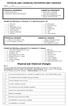 PHYSICAL AND CHEMICAL PROPERTIES AND CHANGES Name Key PHYSICAL PROPERTY CHEMICAL PROPERTY 1. observed with senses 1. indicates how a substance 2. determined without destroying matter reacts with something
Introduction. Preparing Fruits and Vegetables for Drying Many fruits and vegetables can be dried (Table 1). Use ripe foods only.
 Revised 2008 publication 348-597 Using Dehydration to Preserve Fruits,, and Meats Renee Boyer, Extension specialist and assistant professor, Virginia Tech; Karleigh Huff, graduate student, Virginia Tech
Safety data sheet for product
 Safety data sheet for product 1. PRODUCT AND COMPANY IDENTIFICATION Product name: Lithium ion rechargeable battery cell Product code: None (All cylindrical models Sanyo manufactured and whose capacity
Biology for Science Majors
 Biology for Science Majors Lab 10 AP BIOLOGY Concepts covered Respirometers Metabolism Glycolysis Respiration Anaerobic vs. aerobic respiration Fermentation Lab 5: Cellular Respiration ATP is the energy
The Advantages & Challenges of Phase Change Materials (PCMs) In Thermal Packaging. Author Richard M. Formato, R&D Manager Cold Chain Technologies
 The Advantages & Challenges of Phase Change Materials (PCMs) In Thermal Packaging Author Richard M. Formato, R&D Manager Cold Chain Technologies OVERVIEW Cold Chain Technologies, Inc. (CCT) designs and
Materials Needed: Time Needed: Adaptations: 2 flyswatters (optional) Vocabulary Definitions (below) Vocabulary Scramble Sheets (below)
 Vocabulary Slap Game ( Flyswatter Game ) Directions: Project a Vocabulary Scramble sheet on a projection screen or Smart Board. Divide the class into two teams. Each team sends one person up to the screen.
Top Ten Things You Must Know When Moving From Small To Large Scale Production
 Top Ten Things You Must Know When Moving From Small To Large Scale Production Eunkyeong (Esther) Lee Food Scientist Tel: 902 368 5238 Email: [email protected] Originally published by PEI Business Development,
1. The diagram below represents a biological process
 1. The diagram below represents a biological process 5. The chart below indicates the elements contained in four different molecules and the number of atoms of each element in those molecules. Which set
Material Safety Data Sheet
 Material Safety Data Sheet Conforms to ISO 11014:2009 DRAIN CLEANER 1. IDENTIFICATION OF THE SUBSTANCE/PREPARATION AND OF THE COMPANY Product name : DRAIN CLEANER Product code : KC7 Use/description of
Enzyme Lab. DEFINITIONS: 1. Enzyme: 2. Catalase: 3. Catalyze: 4. Hydrolysis: 5. Monomer: 6. Digestion: BACKGROUND INFORMATION
 Enzyme Lab DEFINITIONS: 1. Enzyme: 2. Catalase: 3. Catalyze: 4. Hydrolysis: 5. Monomer: 6. Digestion: BACKGROUND INFORMATION Many living tissues contain the enzyme catalase. This enzyme breaks down hydrogen
Postharvest Sample Questions
 What is the physical principle that allows mechanical refrigeration systems to remove heat from the storage environment? Draw or describe the basic components of a compression refrigeration system (=the
Maricopa County. Food Code References for Produce. Receiving. Storage
 Maricopa County Environmental Services Department 1001 N. Central. Avenue Suite 300 Phoenix, AZ 85004 esd.maricopa.gov Food for Produce This guidance document was developed for food establishments interested
SECOND GRADE 1 WEEK LESSON PLANS AND ACTIVITIES
 SECOND GRADE 1 WEEK LESSON PLANS AND ACTIVITIES WATER CYCLE OVERVIEW OF SECOND GRADE WATER WEEK 1. PRE: Exploring the properties of water. LAB: Experimenting with different soap mixtures. POST: Analyzing
TEACHER BACKGROUND INFORMATION THERMAL ENERGY
 TEACHER BACKGROUND INFORMATION THERMAL ENERGY In general, when an object performs work on another object, it does not transfer all of its energy to that object. Some of the energy is lost as heat due to
Spandrel Glass Types and Recommendations
 Spandrel Glass Types and Recommendations Introduction PPG has long offered recommendations regarding alternatives for glass spandrel applications. Over the years these recommendations were included in
Chapter 2. The Chemistry of Life Worksheets
 Chapter 2 The Chemistry of Life Worksheets (Opening image courtesy of David Iberri, http://en.wikipedia.org/wiki/file:camkii.png, and under the Creative Commons license CC-BY-SA 3.0.) Lesson 2.1: Matter
TEACHER ACTIVITY GUIDE
 Page 1/5 EXPECTED OUTCOMES TEACHER ACTIVITY GUIDE ROOT BEER PRODUCTION Taken from IFT Experiments in Food Science Series This activity will allow student an opportunity to explore yeast fermentation by
1.1.2. thebiotutor. AS Biology OCR. Unit F211: Cells, Exchange & Transport. Module 1.2 Cell Membranes. Notes & Questions.
 thebiotutor AS Biology OCR Unit F211: Cells, Exchange & Transport Module 1.2 Cell Membranes Notes & Questions Andy Todd 1 Outline the roles of membranes within cells and at the surface of cells. The main
Safety Data Sheet SOMAmer Reagent
 SECTION 1: Identification Safety Data Sheet SOMAmer Reagent 1.1 Product identifier Product name SOMAmer Reagent (aptamer) 1.2 Supplier s details Name Address Email SomaLogic, Inc. 2945 Wilderness Place
SAFETY DATA SHEET BOSTIK AQUAGRIP 536
 Revision Date November 2014 1 / 6 SAFETY DATA SHEET BOSTIK AQUAGRIP 536 According to Regulation (EC) No 1907/2006 SECTION 1: IDENTIFICATION OF THE SUBSTANCE/MIXTURE AND OF THE COMPANY/UNDERTAKING 1.1.
Yeast bread outline. Yeast. Functions of other yeast bread ingredients Yeast bread cookery Spoilage of baked goods. Compressed Dry active
 Yeast breads Food Guide Pyramid Yeast bread outline Yeast Compressed Dry active Functions of other yeast bread ingredients Yeast bread cookery Spoilage of baked goods Microbial Staling Prevention and unstaling
CARE OF PLASTICS. Odile Madden Research Scientist Head of Modern Materials Research
 JUNE 13, 2012 CARE OF PLASTICS Odile Madden Research Scientist Head of Modern Materials Research Christine Frohnert Conservator of Contemporary Art, Modern Materials and Media Webinar Plan o PLASTICS DEFINED
How Sensors Work. How Oxygen, Electrochemical Toxic, and Metal Oxide Semiconductor Sensors Work *
 How Oxygen, Electrochemical Toxic, and Metal Oxide Semiconductor Sensors Work * 1. Oxygen sensor detection principle Most portable or survey instruments used for workplace evaluation of oxygen concentrations
SAFETY DATA SHEET EVO-STIK PLUMBERS MAIT
 Revision Date November 2012 Revision 9 1 / 5 SAFETY DATA SHEET According to Regulation (EC) No 1907/2006 SECTION 1: IDENTIFICATION OF THE SUBSTANCE/MIXTURE AND OF THE COMPANY/UNDERTAKING 1.1. Product identifier
How To Monitor Toxicity In Water
 1 WORKSHOP AND OPEN TECHNICAL MEETING WITH A VERIFICATION EXERCISE: Towards a European ETV Environmental Technology Verification System. Barcelona. 20-22 February 2008 AUTOMATED MICROBIAL BIOSENSORS FOR
Color Changing Plastics for Food Packaging. Lizanel Feliciano Ohio State University, Columbus, Ohio
 Color Changing Plastics for Food Packaging By Lizanel Feliciano Ohio State University, Columbus, Ohio 1 INTRODUCTION Changes in consumer preferences and demand for safe and high quality food products have
Figure 5. Energy of activation with and without an enzyme.
 Biology 20 Laboratory ENZYMES & CELLULAR RESPIRATION OBJECTIVE To be able to list the general characteristics of enzymes. To study the effects of enzymes on the rate of chemical reactions. To demonstrate
Making a Terrarium. fairchild tropical botanic garden 1
 Making a Terrarium What is a Terrarium? A terrarium is a collection of small plants growing in a transparent, sealed container. A terrarium is a closed environment, and can actually be used to illustrate
FMI Listeria Action Plan for Retail Delis
 FMI Listeria Action Plan for Retail Delis November 2012 Listeria control at retail is an ongoing challenge. FMI and our members are committed to finding ways to control the growth and if possible, eliminate
SIX REASONS TO DRY BIOGAS To A LOW DEWPOINT BEFORE COMBUSTION IN A CHP ENGINE STEVEN SCOTT MARKET DEVELOPMENT MANAGER ALTERNATIVE ENERGIES
 SIX REASONS TO DRY BIOGAS To A LOW DEWPOINT BEFORE COMBUSTION IN A CHP ENGINE STEVEN SCOTT MARKET DEVELOPMENT MANAGER ALTERNATIVE ENERGIES Filippo Turra Product Manager Cooling Technology INTRODUCTION
Processi della Tecnologia Alimentare - Prof. Davide Barbanti. The frying process
 The frying process 1 Frying is a unit operation which is mainly used to alter the eating quality of a food. A secondary consideration is the preservative effect that results from thermal destruction of
What is a Terrarium? Supplies Choosing your container Choosing your plants Building Your Terrarium
 What is a Terrarium? A terrarium is a collection of small plants growing in a transparent, sealed container. A terrarium is a closed environment, and can actually be used to illustrate how an ecosystem
Material Safety Data Sheet
 Material Safety Data Sheet OASIS PRO 10 HEAVY DUTY ALL PURPOSE 1. Product and company identification Trade name of product Product use Product dilution information : OASIS PRO 10 HEAVY DUTY ALL PURPOSE
UTILIZATION of PLASMA ACTIVATED WATER in Biotechnology, Pharmacology and Medicine. JSC TECHNOSYSTEM-ECO Moscow, Russia April, 2009
 UTILIZATION of PLASMA ACTIVATED WATER in Biotechnology, Pharmacology and Medicine JSC TECHNOSYSTEM-ECO Moscow, Russia April, 2009 METHOD of WATER ACTIVATION with PLASMA of GAS DISCHARGE ANODE VACUUM WATER