
Foot disorders such as ulceration,
|
|
|
- Morgan Lindsey
- 9 years ago
- Views:
Transcription
1 COVER ARTICLE OFFICE PROCEDURES Diabetic Foot Ulcers: Pathogenesis and Management ROBERT G. FRYKBERG, D.P.M., M.P.H., Des Moines University, Des Moines, Iowa Foot ulcers are a significant complication of diabetes mellitus and often precede lowerextremity amputation. The most frequent underlying etiologies are neuropathy, trauma, deformity, high plantar pressures, and peripheral arterial disease. Thorough and systematic evaluation and categorization of foot ulcers help guide appropriate treatment. The Wagner and University of Texas systems are the ones most frequently used for classification of foot ulcers, and the stage is indicative of prognosis. Pressure relief using total contact casts, removable cast walkers, or half shoes is the mainstay of initial treatment. Sharp debridement and management of underlying infection and ischemia are also critical in the care of foot ulcers. Prompt and aggressive treatment of diabetic foot ulcers can often prevent exacerbation of the problem and eliminate the potential for amputation. The aim of therapy should be early intervention to allow prompt healing of the lesion and prevent recurrence once it is healed. Multidisciplinary management programs that focus on prevention, education, regular foot examinations, aggressive intervention, and optimal use of therapeutic footwear have demonstrated significant reductions in the incidence of lower-extremity amputations. (Am Fam Physician 2002;66: Copyright 2002 American Academy of Family Physicians.) This article is one in a series of Office Procedures articles coordinated by guest editors Robert M. Yoho, D.P.M., M.S., Dean and Associate Professor, and Vincent J. Mandracchia, D.P.M., M.S., Clinical Professor, College of Podiatric Medicine and Surgery, Des Moines University- Osteopathic Medical Center. Foot disorders such as ulceration, infection, and gangrene are the leading causes of hospitalization in patients with diabetes mellitus. 1,2 Approximately 15 to 20 percent of the estimated 16 million persons in the United States with diabetes mellitus will be hospitalized with a foot complication at some time during the course of their disease. 3 Unfortunately, many of these patients will require amputation within the foot or above the ankle as a consequence of severe infection or peripheral ischemia. Neuropathy is often a predisposing factor to ulceration and amputation. The diabetic foot and its sequelae account for billions of dollars in direct medical expenditures, as well as lengthy hospital stays and periods of disability. 3,4 The most characteristic lesion of the diabetic foot is a mal perforans ulceration See page 1591 for definitions of strength-of-evidence levels contained in this article. FIGURE 1. Typical diabetic foot ulcer caused by high plantar pressures at the second metatarsal head. (Figure 1), which consequently is one of the major risk factors for amputation. Approximately 85 percent of all diabetesrelated lower-extremity amputations are preceded by foot ulcers. 5,6 Etiology of Foot Ulceration The etiology of diabetic foot ulcers usually has many components. 4,7 A recent multicenter study 8 attributed 63 percent of diabetic foot ulcers to the critical triad of NOVEMBER 1, 2002 / VOLUME 66, NUMBER 9 AMERICAN FAMILY PHYSICIAN 1655

2 TABLE 1 Risk Factors for Diabetic Foot Ulceration peripheral sensory neuropathy, trauma, and deformity. Other factors in ulceration are ischemia, callus formation, and edema. Although infection is rarely implicated in the etiology of diabetic foot ulcers, the ulcers are susceptible to infection once the wound is present. Many of the risk factors for foot ulcer are also predisposing factors for amputation, because ulcers are primary causes leading to amputation. 5,7,9 Recognized risk factors for diabetic foot ulceration are listed in Table 1. 4 Ulcer Evaluation A thorough evaluation of any ulcer is critical and should direct management. 4 An adequate description of ulcer characteristics, such as size, depth, appearance, and location, also provides for the mapping of progress during treatment. 6 The evaluation should determine the etiology of the ulcer and ascertain whether the lesion is neuropathic, ischemic, or neuro-ischemic. Failure to perceive the pressure of a 10-g monofilament is a proven indicator of peripheral sensory neuropathy and loss of protective sensation. 9,10 Other common modalities that can detect insensitivity are a standard tuning fork (128 cycles per second) and a neurologic reflex hammer. After describing the dimensions and appearance of the ulcer, the physician should examine the ulcer with a blunt sterile probe. Gentle probing can detect sinus tract formation, undermining of ulcer margins, and dissection of the ulcer into tendon sheaths, bone, or joints. A positive probe-to-bone finding has a high predictive value for osteomyelitis. 11 Failure to diagnose underlying osteomyelitis often results in failure of wound healing. The existence of odor and exudate, and the presence and extent of cellulitis must be noted. 12 Generally, limb-threatening infections can be defined by cellulitis extending beyond 2 cm from the ulcer perimeter, as well as deep abscess, osteomyelitis, or critical ischemia. 4,6,13 Aerobic and anaerobic cultures should be taken when signs of infection, such as purulence or inflammation, are present. 6 Cultures are best taken from purulent drainage or curetted material from the ulcer base. Because all ulcers are contaminated, culture of noninfected wounds is generally not recommended. 6,14 Polymicrobial infections predominate in severe diabetic foot infections and include a variety of aerobic gram-positive cocci, gram-negative rods, and anaerobes. 14,15 Radiographs should be obtained in most patients with deep or longstanding ulcers to rule out osteomyelitis; however, radiographs are not a very sensitive indicator of acute bone infection. 6,16 When clinical suspicion indicates osteomyelitis but radiographs are negative, additional bone or leukocyte scanning is helpful in ascertaining bone involvement. However, in the neuropathic patient, bone scans are often falsely positive because of hyperemia or Charcot s arthropathy. Leukocyte scanning or magnetic resonance imaging offers better specificity in this situation. 16 Ultimately, bone biopsy is necessary to firmly establish the diagnosis of osteomyelitis. Vascular status must always be assessed because ischemia portends a poor prognosis for healing without vascular intervention. The simple palpation of both pedal pulses and popliteal pulses is the most reliable indication of arterial perfusion to the foot. The absence of 1656 AMERICAN FAMILY PHYSICIAN VOLUME 66, NUMBER 9 / NOVEMBER 1, 2002

3 Foot Ulcer TABLE 2 Wagner Ulcer Classification System Grade Lesion 0 No open lesions; may have deformity or cellulitis 1 Superficial diabetic ulcer (partial or full thickness) 2 Ulcer extension to ligament, tendon, joint capsule, or deep fascia without abscess or osteomyelitis 3 Deep ulcer with abscess, osteomyelitis, or joint sepsis 4 Gangrene localized to portion of forefoot or heel 5 Extensive gangrenous involvement of the entire foot Adapted with permission from Wagner FW Jr. The diabetic foot. Orthopedics 1987;10: pedal pulses in the presence of a palpable popliteal pulse is a classic finding in diabetic arterial disease because of the selective involvement of the tibial arteries below the knee. 6,13 Noninvasive Doppler studies should be used to augment the clinical examination as needed, although even with these tests, the severity of arterial insufficiency can be underestimated. 13 Vascular surgical consultation is warranted when there is significant suspicion of ischemia. Classification of ulcerations can facilitate a logical approach to treatment and aid in the prediction of outcome. 2,4,6 Several wound classification systems have been created, based on parameters such as extent of infection, neuropathy, ischemia, depth or extent of tissue loss, and location. The most widely accepted classification system for diabetic foot ulcers and lesions is the Wagner ulcer classification system, which is based on the depth of penetration, the presence of osteomyelitis or gangrene, and the extent of tissue necrosis (Table 2). 17 The drawback of the Wagner classification system is that it does not specifically address two critically important parameters: ischemia and infection. The University of Texas diabetic wound classification system assesses the depth of ulcer penetration, the presence of wound infection, and the presence of clinical signs of lower-extremity ischemia. 18 This system uses four grades of ulcer depth (0 to 3) and four stages (A to D), based on ischemia or infection, or both (Table 3). 19 The University of Texas system is generally predictive of outcome, because wounds of increasing grade and stage are less likely to heal without revascularization or amputation. TABLE 3 The University of Texas Health Science Center San Antonio Diabetic Wound Classification System NOVEMBER 1, 2002 / VOLUME 66, NUMBER 9 AMERICAN FAMILY PHYSICIAN 1657

4 TABLE 4 Treatment of Diabetic Foot Ulcers The Author Treatment The primary goal in the treatment of diabetic foot ulcers is to obtain wound closure. Management of the foot ulcer is largely determined by its severity (grade) and vascularity, and the presence of infection. 2,4,12 A systematic approach to treatment should be taken for all diabetic foot lesions, as indicated in Table 4. 4 A multidisciplinary approach should be employed because of the multifaceted nature of foot ulcers and the numerous comorbidities that can occur in these patients. 4,6 This approach has demonstrated significant improvements in outcomes, including reduction in the incidence of major amputation. 20,21 Rest, elevation of the affected foot, and ROBERT G. FRYKBERG, D.P.M., M.P.H., is associate professor of podiatric medicine at Des Moines University, Des Moines, Iowa. He also practices at the Iowa Methodist Medical Center s Wound Care Center and Mercy Medical Center, both in Des Moines. Dr. Frykberg received his medical degree from the California College of Podiatric Medicine, San Francisco, Calif., and a master s degree in public health from the Harvard School of Public Health, Boston. He completed a residency at Harvard Medical School, Boston. He is president of the American College of Foot and Ankle Surgeons and has served as the Foot Care Council Chair of the American Diabetes Association. relief of pressure are essential components of treatment and should be initiated at first presentation. Ill-fitting footwear should be replaced with a postoperative shoe or another type of pressure-relieving footwear. 4 Crutches or a wheelchair might also be recommended to totally off-load pressure from the foot. Although total contact casting (TCC) is considered the optimal method of management for neuropathic ulcers, it must be reapplied weekly and requires considerable experience to avoid iatrogenic lesions. 22 Acceptable alternatives to TCC are removable walking braces and the half shoe. 4,23,24 Table 5 4 lists several off-loading modalities that are useful in relieving pressure from foot ulcers. A mainstay of ulcer therapy is debridement of all necrotic, callus, and fibrous tissue. 6,9 Unhealthy tissue must be sharply debrided back to bleeding tissue to allow full visualization of the extent of the ulcer and detect underlying abscesses or sinuses. Topical enzymes have not been proved effective for this purpose and should only be considered as adjuncts to sharp debridement. Soaking ulcers is controversial and should be avoided be- TABLE 5 Modalities for Relieving Pressure in Foot Ulcers Address correspondence to Robert G. Frykberg, D.P.M., M.P.H., Des Moines University, 3200 Grand Ave., Des Moines, IA ( [email protected]). Reprints are not available from the author AMERICAN FAMILY PHYSICIAN VOLUME 66, NUMBER 9 / NOVEMBER 1, 2002

5 TABLE 6 Selected Empiric Antibiotic Regimens for Diabetic Foot Ulcers Scenario Drug of choice Alternatives* Mild to moderate, localized Dicloxacillin (Pathocil) Cephalexin (Keflex); amoxicillin/clavulanate potassium (Augmentin); oral cellulitis (outpatient) clindamycin (Cleocin) Moderate to severe Nafcillin (Unipen) or Cefazolin (Ancef); ampicillin/sulbactam (Unasyn); clindamycin IV; vancomycin cellulitis (inpatient) oxacillin (Vancocin) Moderate to severe Ampicillin/sulbactam Ticarcillin/clavulanate (Timentin); piperacillin/tazobactam (Zosyn); clindamycin cellulitis with ischemia plus ciprofloxacin (Cipro); ceftazidime (Fortaz) or cefepime (Maxipime) or or significant local cefotaxime (Claforan) or ceftriaxone (Rocephin) plus metronidazole (Flagyl); necrosis cefazolin (for Staphylococcus aureus); nafcillin (Unipen); oxacillin Life- or limb-threatening Ticarcillin/clavulanate or Clindamycin plus ciprofloxacin or tobramycin (Nebcin); clindamycin plus infection piperacillin/tazobactam, ceftazidime or cefepime or cefotaxime or ceftriaxone; imipenem/cilastin with or without an (Primaxin) or meropenem (Merrem); vancomycin plus aztreonam (Azactam) aminoglycoside plus metronidazole; vancomycin plus cefepime; ceftazidime plus metronidazole IV = intravenous. * Persons with serious beta-lactam allergy may be given alternative agents. Adapted with permission from Deery HG 2d, Sangeorzan JA. Saving the diabetic foot with special reference to the patient with chronic renal failure. Infect Dis Clin North Am 2001;15: cause the neuropathic patient can easily be scalded by hot water. 6 Although numerous topical medications and gels are promoted for ulcer care, relatively few have proved to be more efficacious than saline wet-to-dry dressings. 4,6,25 Topical antiseptics, such as povidone-iodine, are usually considered to be toxic to healing wounds. 6,12 Generally, a warm, moist environment that is protected from external contamination is most conducive to wound healing. This can be provided by a number of commercially available special dressings, including semipermeable films, foams, hydrocolloids, and calcium alginate swabs. 25 The genetically engineered platelet-derived growth factor becaplermin (Regranex gel) is approved for use on neuropathic diabetic foot ulcers and can expedite healing. 26 [Evidence level A: randomized controlled trial] Growth factors stimulate chemotaxis and mitogenesis of neutrophils, fibroblasts, and monocytes, as well as other components that form the cellular basis of wound healing. Bioengineered skin (Apligraf) and human dermis (Dermagraft) are new types of biologically active implants for ulcers that are derived from fibroblasts of neonatal foreskins. 25,27 These bioengineered products enhance healing by acting as delivery systems for growth factors and extracellular matrix components through the activity of live human fibroblasts contained in their dermal elements. Treatment of the underlying ischemia is critical in achieving a successful outcome, regardless of topical therapies. Vascular surgical consultation should be obtained when a patient presents with an ischemic wound and when ulcers show no sign of progress despite appropriate management. A major component of the limb salvage strategy in these patients is extreme distal arterial reconstruction to restore pulsatile flow to the foot. 13,20 The role of isolated distal endovascular procedures in this setting has not been determined. Vasodilator drugs have not been beneficial in promoting healing of ischemic lesions. 13 Hyperbaric oxygen therapy has been used as adjunctive treatment of foot ulcers; however, support for its use is limited by the small number of carefully controlled clinical trials. 28 When infection is present, aerobic and anaerobic cultures should be obtained, followed by initiation of appropriate broadspectrum antibiotic therapy 6,13,14 (Table 6 29 ). Rest, elevation of the affected foot, and relief of pressure are essential components of treatment and should be initiated at first presentation. NOVEMBER 1, 2002 / VOLUME 66, NUMBER 9 AMERICAN FAMILY PHYSICIAN 1659

6 The presence of deep infection with abscess, cellulitis, gangrene, or osteomyelitis is an indication for hospitalization and prompt surgical drainage. Antibiotic coverage should subsequently be tailored according to the clinical response of the patient, culture results, and sensitivity testing. Surgical drainage, deep debridement, or local partial foot amputations are necessary adjuncts to antibiotic therapy of infections that are deep or limb-threatening. 4,30 [Reference 30 Evidence level B: uncontrolled study] Underlying osteomyelitis is frequently present in patients with moderate to severe infections and requires aggressive bony resection of infected bone and joints followed by four to six weeks of culture-directed antibiotic therapy The presence of deep infection with abscess, cellulitis, gangrene, or osteomyelitis is an indication for hospitalization and prompt surgical drainage. Even in the absence of bone infection, foot-sparing reconstructive procedures might be necessary to achieve final healing of the foot ulcer, especially in areas subject TABLE 7 Clinical Practice Pathways for Diabetic Foot Ulcer and Infection 1660 AMERICAN FAMILY PHYSICIAN VOLUME 66, NUMBER 9 / NOVEMBER 1, 2002

7 TABLE 8 Diabetic Foot Amputation Prevention Program Foot Ulcer to exceedingly high plantar or shoe pressures. 2,4,13 Table 7 4 illustrates clinical practice pathways that incorporate various assessment and treatment parameters that should be considered in the management of a diabetic foot ulcer or infection. Prevention Prevention of an initial or subsequent foot lesion is crucial to avoiding amputation. 2,9,31 The best approach is to make use of a team of multidisciplinary professionals who are committed to limb salvage. Centers that have instituted teams specifically for this purpose have subsequently reported dramatic reductions in lower-extremity amputation and improved rates of primary-ulcer healing. 20,21 Patient education has a central role in treatment and should include instruction on foot hygiene, daily inspection, proper footwear, and the necessity of prompt treatment of new lesions. 2,9,31 Regular foot-care examinations, including debridement of calluses and ingrown toenails, provide an opportunity to reinforce appropriate self-care behaviors and allow for early detection of new or impending foot problems. 4,6 Therapeutic shoes with pressure-relieving insoles are an essential element of ulcer prevention and have been associated with significant reductions in their development. 12,22,31 Elective surgery to correct structural deformities that cannot be accommodated by therapeutic footwear can be performed as needed in certain patients. 5,13,32 Common procedures include hammertoe repair, metatarsal osteotomies, plantar exostectomies, and Achilles tendon lengthening. 4,32 In patients with neuropathy, these procedures can be easily performed under local anesthesia. Working in unison with a vascular surgeon, these foot-sparing reconstructive procedures can even be performed after revascularization in an ischemic patient who might otherwise have needed amputation. 13 Table 8 4 summarizes the important components of an amputation prevention program. Diabetic foot ulcers can be managed without amputation by following the principles discussed in this article and having a thorough understanding of the pathogenesis of these ulcers. The author indicates that he does not have any conflicts of interest. Sources of funding: none reported. REFERENCES 1. Boulton AJ. The diabetic foot: a global view. Diabetes Metab Res Rev 2000;16(suppl 1):S Frykberg RG. Diabetic foot ulcers: current concepts. J Foot Ankle Surg 1998;37: Reiber GE, Boyko EJ, Smith DG. Lower extremity foot ulcers and amputations in diabetes. In: National Diabetes Data Group (U.S.). Diabetes in America. 2d ed. Bethesda, Md.: National Institutes of Health, National Institute of Diabetes and Digestive and Kidney Diseases, 1995; NIH publication no Frykberg RG, Armstrong DG, Giurini J, Edwards A, Kravette M, Kravitz S, et al. Diabetic foot disorders: NOVEMBER 1, 2002 / VOLUME 66, NUMBER 9 AMERICAN FAMILY PHYSICIAN 1661

8 Foot Ulcer a clinical practice guideline. American College of Foot and Ankle Surgeons. J Foot Ankle Surg 2000;39(5 suppl):s Pecoraro RE, Reiber GE, Burgess EM. Pathways to diabetic limb amputation. Basis for prevention. Diabetes Care 1990;13: American Diabetes Association. Consensus Development Conference on Diabetic Foot Wound Care: 7-8 April 1999, Boston, Massachusetts. Diabetes Care 1999;22: Boyko EJ, Ahroni JH, Stensel V, Forsberg RC, Davignon DR, Smith DG. A prospective study of risk factors for diabetic foot ulcer: the Seattle Diabetic Foot Study. Diabetes Care 1999;22: Reiber GE, Vileikyte L, Boyko EJ, del Aguila M, Smith DG, Lavery LA, et al. Causal pathways for incident lower-extremity ulcers in patients with diabetes from two settings. Diabetes Care 1999; 22: Armstrong DG, Lavery LA. Diabetic foot ulcers: prevention, diagnosis and classification. Am Fam Physician 1998;57: McNeely MJ, Boyko EJ, Ahroni JH, Stensel VL, Reiber GE, Smith DG, et al. The independent contributions of diabetic neuropathy and vasculopathy in foot ulceration. How great are the risks? Diabetes Care 1995;18: Grayson ML, Gibbons GW, Balogh K, Levin E, Karchmer AW. Probing to bone in infected pedal ulcers: a clinical sign of underlying osteomyelitis in diabetic patients. JAMA 1995;273: Frykberg RG. Diabetic foot ulcerations. In: Frykberg RG, ed. The high risk foot in diabetes mellitus. New York: Churchill Livingstone, 1991: Caputo GM, Cavanagh PR, Ulbrecht JS, Gibbons GW, Karchmer AW. Assessment and management of foot disease in patients with diabetes. N Engl J Med 1994;331: Lipsky BA, Pecoraro RE, Wheat LJ. The diabetic foot. Soft tissue and bone infection. Infect Dis Clin North Am 1990;4: Caballero E, Frykberg RG. Diabetic foot infections. J Foot Ankle Surg 1998;37: Lipsky BA. Osteomyelitis of the foot in diabetic patients. Clin Infect Dis 1997;25: Wagner FW Jr. The diabetic foot. Orthopedics 1987;10: Oyibo SO, Jude EB, Tarawneh I, Nguyen HC, Harkless LB, Boulton AJ. A comparison of two diabetic foot ulcer classification systems: the Wagner and the University of Texas wound classification systems. Diabetes Care 2001;24: Lavery LA, Armstrong DG, Harkless LB. Classification of diabetic foot wounds. J Foot Ankle Surg 1996;35: Holstein PE, Sorensen S. Limb salvage experience in a multidisciplinary diabetic foot unit. Diabetes Care 1999;22(suppl 2):B Dargis V, Pantelejeva O, Jonushaite A, Vileikyte L, Boulton AJ. Benefits of a multidisciplinary approach in the management of recurrent diabetic foot ulceration in Lithuania: a prospective study. Diabetes Care 1999;22: Cavanagh PR, Ulbrecht JS, Caputo GM. New developments in the biomechanics of the diabetic foot. Diabetes Metab Res Rev 2000;16(suppl 1): S Hartsell HD, Fellner C, Saltzman CL. Pneumatic bracing and total contact casting have equivocal effects on plantar pressure relief. Foot Ankle Int 2001:22: Armstrong DG, Nguyen HC, Lavery LA, van Schie CH, Boulton AJ, Harkless LB. Off-loading the diabetic foot wound: a randomized clinical trial. Diabetes Care 2001;24: Hogge J, Krasner D, Nguyen H, Harkless LB, Armstrong DG. The potential benefits of advanced therapeutic modalities in the treatment of diabetic foot wounds. J Am Podiatr Med Assoc 2000;90: Wieman TJ, Smiell JM, Su Y. Efficacy and safety of a topical gel formulation of recombinant human platelet-derived growth factor BB (becaplermin) in patients with chronic neuropathic diabetic ulcers. A phase III randomized placebo-controlled doubleblind study. Diabetes Care 1998;21: Veves A, Falanga V, Armstrong DG, Sabolinski ML. Graftskin, a human skin equivalent, is effective in the management of noninfected neuropathic diabetic foot ulcers: a prospective randomized multicenter clinical trial. Diabetes Care 2001;24: Wunderlich RP, Peters EJ, Lavery LA. Systemic hyperbaric oxygen therapy: lower-extremity wound healing and the diabetic foot. Diabetes Care 2000;23: Deery HG 2d, Sangeorzan JA. Saving the diabetic foot with special reference to the patient with chronic renal failure. Infect Dis Clin North Am 2001;15: Eneroth M, Apelqvist J, Stenstrom A. Clinical characteristics and outcome in 223 diabetic patients with deep foot infections. Foot Ankle Int 1997; 18: Frykberg RG. Team approach toward lower extremity amputation prevention in diabetes. J Am Podiatr Med Assoc 1997;87: Catanzariti AR, Blitch EL, Karlock LG. Elective foot and ankle surgery in the diabetic patient. J Foot Ankle Surg 1995;34: AMERICAN FAMILY PHYSICIAN VOLUME 66, NUMBER 9 / NOVEMBER 1, 2002

Critically evaluate the organization of diabetic foot ulcer services and interdisciplinary team working
 Rationale of Module Accurate nursing assessment is the key to effective diabetic foot ulcer prevention, treatment and management. A comprehensive assessment identifies ulcer aetiology and the factors which
Diabetic Foot Ulcers and Pressure Ulcers. Laurie Duckett D.O. Plastic and Reconstructive Surgeon Oklahoma State University Center for Health Sciences
 Diabetic Foot Ulcers and Pressure Ulcers Laurie Duckett D.O. Plastic and Reconstructive Surgeon Oklahoma State University Center for Health Sciences Lecture Objectives Identify risk factors Initiate appropriate
An Essential Tool For The Care DFUs
 Adjunct HBO 2 Therapy: March 16, 2016 William Tettelbach, MD, FACP, FIDSA System Medical Director of Wound & Hyperbaric Medicine Services An Essential Tool For The Care DFUs Fedorko, L., et al., Hyperbaric
APPENDIX 1: INTERDISCIPLINARY APPROACH TO PREVENTION AND MANAGEMENT OF DIABETIC FOOT COMPLICATIONS
 APPENDIX 1: INTERDISCIPLINARY APPROACH TO PREVENTION AND MANAGEMENT OF DIABETIC FOOT COMPLICATIONS Template: Regional Foot Programs should develop a list of available health professionals in the following
Wound and Skin Assessment. Mary Carvalho RN, BSN, MBA Clinical Coordinator Johnson Creek Wound and Edema Center
 Wound and Skin Assessment Mary Carvalho RN, BSN, MBA Clinical Coordinator Johnson Creek Wound and Edema Center Skin The largest Organ Weighs between 6 and 8 pounds Covers over 20 square feet Thickness
Post-surgical V.A.C. VeraFlo Therapy with Prontosan Instillation on Inpatient Infected Wounds * COLLECTION OF CASE STUDIES
 COLLECTION OF CASE STUDIES Post-surgical V.A.C. VeraFlo Therapy with Prontosan Instillation on Inpatient Infected Wounds * *All patients were treated with systemic antibiotics Post-surgical V.A.C. VeraFlo
Plastic, Vascular & Podiatry the Georgetown Model
 Plastic, Vascular & Podiatry the Georgetown Model Christopher Attinger,, MD SVS June 15,2011 Chicago Disclosure: None for this talk Wound Center Financial Viability: outline Clinical success Team approach
Wound Classification Name That Wound Sheridan, WY June 8 th 2013
 Initial Wound Care Consult Sheridan, WY June 8 th, 2013 History Physical Examination Detailed examination of the wound Photographs Cultures Procedures TCOM ABI Debridement Management Decisions A Detailed
What Podiatrists Would Like Team Members to Know About Foot Health and Diabetes
 What Podiatrists Would Like Team Members to Know About Foot Health and Diabetes 48 In this section, you will find an overview of key medical issues related to foot health and diabetes to inform all members
Total Contact Casting for Neuropathic Ulcers: A Lost Art?
 Total Contact Casting for Neuropathic Ulcers: A Lost Art? Authors: Robert M. Greenhagen, DPM 1, Dane K. Wukich, MD 2 The Journal of Diabetic Foot Complications, Volume 1, Issue 4, No. 2, All rights reserved.
Wound Care: The Basics
 Wound Care: The Basics Suzann Williams-Rosenthal, RN, MSN, WOC, GNP Norma Branham, RN, MSN, WOC, GNP University of Virginia May, 2010 What Type of Wound is it? How long has it been there? Acute-generally
Using Amniotic Membrane Allografts in the Treatment of Neuropathic Foot Ulcers
 CLINICALLY SPEAKING Using Amniotic Membrane Allografts in the Treatment of Neuropathic Foot Ulcers Alap P. Shah, DPM, CWS* Neuropathic foot ulcers are a common complication in patients with diabetes. These
Therapeutic shoes (for individuals with diabetes) and foot (in-shoe) orthotics are reimbursable under Plans administered by QualCare, Inc.
 Subject: Foot Orthotics and Diabetic Shoes* Effective Date: October 1, 1999 Department(s): Utilization Management Policy: Objective: Procedure: Therapeutic shoes (for individuals with diabetes) and foot
Practice Guidelines. Updated Guideline on Diagnosis and Treatment of Intra-abdominal Infections
 Updated Guideline on Diagnosis and Treatment of Intra-abdominal Infections CARRIE ARMSTRONG Guideline source: Surgical Infection Society, Infectious Diseases Society of America Literature search described?
Summary of Recommendations
 Summary of Recommendations *LEVEL OF EVIDENCE Practice Recommendations Assessment 1.1 Conduct a history and focused physical assessment. IV 1.2 Conduct a psychosocial assessment to determine the client
Intra-abdominal abdominal Infections
 Intra-abdominal abdominal Infections Marnie Peterson, Pharm.D., BCPS Dept. of Pediatric Infectious Diseases Medical School University of Minnesota Intra-abdominal abdominal Infections Intra-abdominal abdominal
Benefit Criteria to Change for Hyperbaric Oxygen Therapy for the CSHCN Services Program Effective November 1, 2012
 Benefit Criteria to Change for Hyperbaric Oxygen Therapy for the CSHCN Services Program Effective November 1, 2012 Information posted September 14, 2012 Effective for dates of service on or after November
Case Report (online only) Charcot neuroarthropathy triggered and complicated by osteomyelitis. How limb salvage can be achieved
 1 1 1 1 1 1 0 1 0 0 1 0 1 Case Report (online only) Charcot neuroarthropathy triggered and complicated by osteomyelitis. How limb salvage can be achieved J. Aragon-Sanchez 1,J.L.Lazaro-Martınez, Y. Quintana-Marrero
Pressure Ulcers: Facility Assessment Checklists
 Pressure Ulcers: Facility Assessment Checklists This is a series of self-assessment checklists for nursing home staff to use to assess processes related to managing pressure ulcers in the facility, in
Medicare Podiatry Services: Information for Medicare Fee-For-Service Health Care Professionals
 R DEPARTMENT OF HEALTH AND HUMAN SERVICES Centers for Medicare & Medicaid Services FACT SHEET Medicare Podiatry Services: Information for Medicare Fee-For-Service Health Care Professionals Overview This
The 2015 IWGDF Guidance documents on prevention and management of foot problems in diabetes: development of an evidence-based global consensus
 Group Authors K. Bakker 1, J. Apelqvist 2, B. A. Lipsky 3, J. J. Van Netten 4, N. C. Schaper 5, on behalf of the International Working Group (IWGDF) Institutions 1 IWGDF, Heemsteedse Dreef 90, 2102 KN,
Model of Care for the Diabetic Foot
 Model of Care for the Diabetic Foot National Diabetes Programme Clinical Strategy and Programmes Directorate 2011 Document Control Revision number: 01 Document drafted by: National Diabetes Programme Working
CURRICULUM VITAE JAMES J. LONGOBARDI, DPM, MBA 450 4 TH AVENUE STE. 401 CHULA VISTA, CA 91910 (619) 425-5500
 CURRICULUM VITAE JAMES J. LONGOBARDI, DPM, MBA 450 4 TH AVENUE STE. 401 CHULA VISTA, CA 91910 (619) 425-5500 Work experience : July 1990- Private Practice, Absolute Foot Care, Chula Vista, CA Solo practice
Podiatric Medicine. What is a Podiatrist?
 Page 3 Podiatric Medicine Podiatric Medicine is the profession that strives to improve the overall health and wellbeing of patients by focusing on preventing, diagnosing, and treating conditions associated
CURRICULUM VITAE. James S. Chrzan, D.P.M. 15 Triphammer Road Hingham. MA 02043
 James S. Chrzan, D.P.M. 15 Triphammer Road Hingham. MA 02043 DOB: May 27, 1951 Place of Birth: Springfield, MA Citizenship: USA Education 1969-1971 Merrimack College, North Andover, MA 1973 B.S. Springfield
2012 Infectious Diseases Society of America Clinical Practice Guideline for the Diagnosis and Treatment of Diabetic Foot Infections a
 IDSA GUIDELINES 2012 Infectious Diseases Society of America Clinical Practice Guideline for the Diagnosis and Treatment of Diabetic Foot Infections a Benjamin A. Lipsky, 1 Anthony R. Berendt, 2 Paul B.
Novel Treatment for the Problem Diabetic Wound
 Novel Treatment for the Problem Diabetic Wound William J. Lindblad, Ph.D. Professor of Pharmacology Chair, Dept. of Basic Pharmaceutical Sciences Director, Office of Research & Scholarship Objectives Review
Diabetic foot infections, which
 FASSIL W. GEMECHU, MD, MetroHealth Medical Center, Cleveland, Ohio FNU SEEMANT, MD, State University of New York at Buffalo, Buffalo, New York CATHERINE A. CURLEY, MD, MetroHealth Medical Center, Cleveland,
NZSSD PodSIG Michele Garrett, Steve York, Claire O Shea, Leigh Shaw, Fiona Angus, Judy Clarke and Karyn Ballance
 Welcome to the Diabetes Foot Screening and Risk Stratification Tool. This tool is based on the work of the Scottish Foot Action Group (SFAG). It has been adapted (with SFAG permission) by the New Zealand
the Role of Patricia Turner BSN, RN, CWCN, CWS
 Understanding the Role of Outpatient Wound Centers Patricia Turner BSN, RN, CWCN, CWS Outpatient wound centers are somewhat of a specialty unto themselves within the world of wound care. The focus of the
Patients suffering from critical limb ischemia (CLI)
 Building a Successful Amputation Prevention Program Our single-center experience implementing an amputation prevention algorithm and how it has led to a trend in reduced amputation rates. By Jihad A. Mustapha,
Diabetes Foot Screening and Risk Stratification Tool
 Diabetes Foot Screening and Risk Stratification Tool Welcome to the Diabetes Foot Screening and Risk Stratification Tool This tool is based on the work of the Scottish Foot Action Group (SFAG). It has
Predislocation syndrome
 Predislocation syndrome Sky Ridge Medical Center, Aspen Building Pre-dislocation syndrome, capsulitis, and metatarsalgia are all similar problems usually at the ball of the foot near the second and third
Posttraumatic medial ankle instability
 Posttraumatic medial ankle instability Alexej Barg, Markus Knupp, Beat Hintermann Orthopaedic Department University Hospital of Basel, Switzerland Clinic of Orthopaedic Surgery, Kantonsspital Baselland
Chapter 7. Expose the Injured Area
 Chapter 7 GUNSHOT WOUNDS KEY FIGURES: Entrance/exit wounds This chapter describes how to treat the external, surface wounds caused by a bullet. The evaluation for underlying injury related to gunshot wounds
CLINICAL PROTOCOL FOR THE MANAGEMENT OF FOOT CARE FOR DIABETIC PATIENTS
 CLINICAL PROTOCOL FOR THE MANAGEMENT OF FOOT CARE FOR DIABETIC PATIENTS RATIONALE Clinical evidence suggests that there is considerable potential to improve the quality of foot care for people with diabetes.
WOUND MANAGEMENT PROTOCOLS WOUND CLEANSING: REMOVING WOUND DEBRIS FROM WOUND BASE
 WOUND MANAGEMENT PROTOCOLS PURPOSE: Provide nursing personnel with simple guidance regarding appropriate dressing selection in the absence of wound specialist expertise Identify appropriate interventions
Classification of diabetic foot ulcers. Dr Fran Game Consultant Diabetologist, Honorary Associate Professor Derby Hospitals NHS FT Derby UK
 Classification of diabetic foot ulcers Dr Fran Game Consultant Diabetologist, Honorary Associate Professor Derby Hospitals NHS FT Derby UK Disclosures No conflict of interest to declare Why classify? Risk
CURRICULUM VITAE RICHARD A. POLLAK, DPM, MS
 RICHARD A. POLLAK, DPM, MS ADDRESS: San Antonio Podiatry Associates, PC 8042 Wurzbach, Suite 450 San Antonio, TX 78229 (210) 692-0279 BIRTH DATE: July 20, 1951 Endeavor Clinical Trials, PA 8042 Wurzbach,
Hyperbaric Oxygen Therapy HYPERBARIC OXYGEN THERAPY HS-032. Policy Number: HS-032. Original Effective Date: 7/17/2008
 Easy Choice Health Plan, Inc. Harmony Health Plan of Illinois, Inc. M issouri Care, Inc. Ohana Health Plan, a plan offered by WellCare Health Insurance of Arizona, Inc. WellCare Health Insurance of Illinois,
Blue Team Teaching Module: Periorbital/Orbital Infections
 Blue Team Teaching Module: Periorbital/Orbital Infections Format: 1. Case 2. Topic Summary 3. Questions 4. References Case: A 3-year-old boy presents with 2 days of increasing redness, swelling, and pain
LOUIS J. GELLER, DPM, FACFAS, CWS, FAPWCA, FAAPPM E-mail: lgeller123gmail.com
 LOUIS J. GELLER, DPM, FACFAS, CWS, FAPWCA, FAAPPM E-mail: lgeller123gmail.com Geller Foot Clinic Family Footcare, PC 22972 Lahser Road 29355 Northwestern Hwy #110 Southfield, MI 48033 Southfield, MI 48034
DIABETIC FOOT ULCERS: CURRENT TRENDS IN MANAGEMENT
 DIABETIC FOOT ULCERS: CURRENT TRENDS IN MANAGEMENT *E. Igbinovia *Department of Orthopaedics and Trauma, University of Benin Teaching Hospital, Benin City, Correspondence: Dr Igbinovia E. Department of
WorryFree DME SM Diabetic Shoe Order Entry Form
 WorryFree DME SM Diabetic Shoe Order Entry Form Non-Physician Supplier Medicare Compliance Documentation Guide Shoe Fitter Responsibility/Actions 1. Complete Patient Evaluation Prior to Shoe Selection.
UNDERSTANDING FRACTURE BLISTERS: Management and Implications
 C H A P T E R 2 8 UNDERSTANDING FRACTURE BLISTERS: Management and Implications Thomas F. Smith, DPM Richard P. Bui, DPM Cathy O. Coker, DPM INTRODUCTION The overlying premise to understanding the etiology,
DIABETIC FOOT SEPSIS DR LYNNE TUDHOPE
 DIABETIC FOOT SEPSIS DR LYNNE TUDHOPE NUMBER OF PEOPLE WITH DIABETES GLOBALLY 2000 171 million 2030 366 million International Diabetes Federation. IDF Diabetes Atlas, 5th edn. Brussels, Belgium: International
The Journal of Foot & Ankle Surgery
 The Journal of Foot & Ankle Surgery 49 (2010) 517 522 Contents lists available at ScienceDirect The Journal of Foot & Ankle Surgery journal homepage: www.jfas.org A Two-Stage Percutaneous Approach to Charcot
CURRENT INDICATIONS FOR HYPERBARIC OXYGEN THERAPY. Homer C. Reyes MD Medical Director The Wound Healing Center at Baptist Medical Center
 CURRENT INDICATIONS FOR HYPERBARIC OXYGEN THERAPY Homer C. Reyes MD Medical Director The Wound Healing Center at Baptist Medical Center Current Indications for Hyperbaric Oxygen Therapy The Hyperbaric
Skin and Soft Tissue Infections
 Skin and Soft Tissue Infections Cellulitis Note: The most common etiology of cellulitis with purulent drainage is S. aureus, although Group A streptococci and other streptococcal species can also present
.org. Posterior Tibial Tendon Dysfunction. Anatomy. Cause. Symptoms
 Posterior Tibial Tendon Dysfunction Page ( 1 ) Posterior tibial tendon dysfunction is one of the most common problems of the foot and ankle. It occurs when the posterior tibial tendon becomes inflamed
Joint Pain: Wrist, Knee, Shoulder, Ankle, Elbow, TMJ
 Joint Pain: Wrist, Knee, Shoulder, Ankle, Elbow, TMJ 6 3333 N CALVERT ST, SUITE 370, BALTIMORE, MD 21218 T410 467 5400 F410 366 9826 delloninstitutes.com your complaints are Your wrist hurts when you bend
Urinary Tract Infections
 Urinary Tract Infections Overview A urine culture must ALWAYS be interpreted in the context of the urinalysis and patient symptoms. If a patient has no signs of infection on urinalysis, no symptoms of
Fungal Infection in Total Joint Arthroplasty. Dr.Wismer Dr.Al-Sahan
 Fungal Infection in Total Joint Arthroplasty Dr.Wismer Dr.Al-Sahan Delayed Reimplantation Arthroplasty for Candidal Prosthetic Joint Infection: A Report of 4 Cases and Review of the Literature David M.
Louisiana State Board of Nursing
 Louisiana State Board of Nursing DECLARATORY STATEMENT ON THE ROLE AND SCOPE OF PRACTICE OF THE REGISTERED NURSE IN PERFORMING FOOT CARE INTERVENTIONS Preamble The Louisiana State Board of Nursing believes
LOUIS J. GELLER, DPM, FACFAS, FASPS, CWS, FAPWCA E-mail: lgeller123gmail.com
 LOUIS J. GELLER, DPM, FACFAS, FASPS, CWS, FAPWCA E-mail: lgeller123gmail.com Geller Foot Clinic Family Footcare, PC 22972 Lahser Road 29355 Northwestern Hwy #110 Southfield, MI 48033 Southfield, MI 48034
Modifiers Q7, Q8, and Q9
 1-47 Modifiers Q7, Q8, and Q9 (Routine Foot Care) CPT Modifier Q7 One Class A finding Q8 Two Class B findings Q9 One Class B and two Class C findings General Information The Office of Inspector General
MODIFIED STRAYER GASTROCNEMIUS RECESSION: A Technique Guide for the Supine Positioned Patient
 C H A P T E R 4 5 MODIFIED STRAYER GASTROCNEMIUS RECESSION: A Technique Guide for the Supine Positioned Patient M. Jay Groves, IV, DPM Gastrosoleal equinus is a common deforming force on the foot and ankle.
Increasing Blood Flow Ultrasound and Electric Current fields (IBFUSEC) improves Clinical outcome of diabetic foot ulcers.
 BRH system Increasing Blood Flow Ultrasound and Electric Current fields (IBFUSEC) improves Clinical outcome of diabetic foot ulcers. Pilot clinical assessments performed by 4 doctors in 3 different countries:
An evaluation of the efficacy of Transdermal Continuous Oxygen Therapy in patients with recalcitrant diabetic foot ulcer.
 The Journal of Diabetic Foot Complications An evaluation of the efficacy of Transdermal Continuous Oxygen Therapy in patients with recalcitrant diabetic foot ulcer. Authors: Donald G. Kemp, M.D., Michel
AORTOENTERIC FISTULA. Mark H. Tseng MD Brooklyn VA Hospital February 11, 2005
 AORTOENTERIC FISTULA Mark H. Tseng MD Brooklyn VA Hospital February 11, 2005 AORTOENTERIC FISTULA diagnosis and management Mark H. Tseng MD Brooklyn VA Hospital February 11, 2005 AORTOENTERIC FISTULA Aortoenteric
Biomechanical Offloading
 Biomechanical Offloading Jeffrey D Lehrman, DPM, FACFAS, FASPS, FAPWH Fellow, American College of Foot & Ankle Surgeons Fellow, American Society of Podiatric Surgeons Fellow, Academy of Physicians in Wound
How does Diabetes Effect the Feet
 How does Diabetes Effect the Feet What Skin Changes May Occur? Diabetes can cause changes in the skin of your foot. At times your foot may become very dry. The skin may peel and crack. The problem is that
Hyperbaric and Topical Oxygen Wound Therapies HYPERBARIC AND TOPICAL OXYGEN WOUND THERAPIES HS-032. Policy Number: HS-032
 Easy Choice Health Plan, Inc. Harmony Health Plan of Illinois, Inc. Missouri Care, Inc. Ohana Health Plan, a plan offered by WellCare Health Insurance of Arizona, Inc. WellCare Health Insurance of Illinois,
Ankle Block. Indications The ankle block is suitable for the following: Orthopedic and podiatry surgical procedures of the distal foot.
 Ankle Block The ankle block is a common peripheral nerve block. It is useful for procedures of the foot and toes, as long as a tourniquet is not required above the ankle. It is a safe and effective technique.
WALKING BOOTS WALKING BOOTS. AFO s: Provider vs Prescriber? Provider. Prescriber
 Douglas H. Richie, Jr., D.P.M. 550 Pacific Coast Highway Suite 209 Seal Beach, California 90740 562.493.2451 phone 562.596.3157 fax [email protected] WALKING BOOTS Definitions: L 4360 (defined by HCPS):
Diabetic Foot Ulcers. Goals & Objectives
 Diabetic Foot Ulcers Goals & Objectives Course Description Diabetic Foot Ulcers is a text-based online continuing education program for physical therapists and physical therapist assistants. The course
Introduction to Wound Management
 EWMA Educational Development Programme Curriculum Development Project Education Module: Introduction to Wound Management Latest revision: October 2012 ABOUT THE EWMA EDUCATIONAL DEVELOPMENT PROGRAMME The
ABThera Open Abdomen Negative Pressure Therapy for Active Abdominal Therapy. Case Series
 ABThera Open Abdomen Negative Pressure Therapy for Active Abdominal Therapy Case Series Summary of Cases: USER EXPERIENCE The ABThera OA NPT system was found by surgeons to be a convenient and effective
Integumentary System Individual Exercises
 Integumentary System Individual Exercises 1. A physician performs an incision and drainage of a subcutaneous abscess in his office for a particularly uncooperative established patient. How should this
Diabetes : Foot Education
 Diabetes : Foot Education Dr. Naushira Pandya, M.D., CMD, Sweta Tewary, PhD, MSW Department of Geriatrics Nova Southeastern University Florida Coastal Geriatric Resources, Education, and Training Center
Improving the Compliance of the Annual Foot Examination and Monofilament Testing in
 Improving the Compliance of the Annual Foot Examination and Monofilament Testing in Diabetic Patients at Centromed Principal Investigator: Velen Tat, Physician Assistant Student 2016, University of Southern
How can DIABETES affect my FEET? Emma Howard Community Diabetes Lead Podiatrist, Oxford Health NHS Foundation Trust
 How can DIABETES affect my FEET? By: Emma Howard Community Diabetes Lead Podiatrist, Oxford Health NHS Foundation Trust HOW CAN DIABETES AFFECT MY FEET? What is neuropathy? This leaflet explains how diabetes
Use of Packing for Surgical Wounds. Maggie Benson Clinical Problem Solving II
 Use of Packing for Surgical Wounds Maggie Benson Clinical Problem Solving II Purpose Present patient management s/p Incision and Drainage in an outpatient setting Examine evidence for the use of wound
Name: (Please print/type name on all pages) QUALIFICATIONS FOR PODIATRY CORE PRIVILEGES
 QUALIFICATIONS FOR PODIATRY CORE PRIVILEGES Training requirements are based on American Podiatric Medical Association/Counsel on Podiatric Medical Educationapproved school and residency. All requests for
9th Annual International External Fixation Symposium (IEFS)
 9th Annual International External Fixation Symposium (IEFS) The Diabetic Foot and its Complications University of Texas Health Science Center San Antonio December 11-13, 2014 Éilan Hotel Resort & Spa San
Inflammation and Healing. Review of Normal Defenses. Review of Normal Capillary Exchange. BIO 375 Pathophysiology
 Inflammation and Healing BIO 375 Pathophysiology Review of Normal Defenses Review of Normal Capillary Exchange 1 Inflammation Inflammation is a biochemical and cellular process that occurs in vascularized
Chronic Wound Care Guidelines
 Chronic Wound Care Guidelines Abridged Version The Wound Healing Society Table of Contents Foreword...2 Venous Ulcer...4 Pressure Ulcer...10 Diabetic Ulcer...16 Arterial Insufficiency Ulcer...22 References...28
The true cost of wounds. And how to reduce it
 The true cost of wounds And how to reduce it Wounds are a growing challenge Wounds have been called the silent epidemic. In a typical hospital setting today, between 25% and 40% of beds will be occupied
Neglected Wound/Poor Wound Care
 Chapter 18 CHRONIC WOUNDS KEY FIGURES: Open wound Wound covered with skin graft Chronic wounds are open wounds that for some reason simply will not heal. They may be present for months or even years. Often,
ESC Guidelines on the diagnosis and treatment of peripheral artery diseases Lower extremity artery disease. Erich Minar Medical University Vienna
 ESC Guidelines on the diagnosis and treatment of peripheral artery diseases Lower extremity artery disease Erich Minar Medical University Vienna for the Task Force on the Diagnosis and Treatment of Peripheral
Establishing a Course of Excellence. Duvall, WA 98019 Or Complete This Form and Return. PH: 425.844.9019 to Gaffney Events
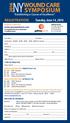 Office Phone: Mobile Phone: TYPE OF PRACTICE Please Specify REGISTRATION FEES: PRIOR TO 6/1/16 $150 DPM / Physician $50 Student $75 Nurse / PA / Technician / Resident $150 Industry Representative REGISTRATION
Local Coverage Determination (LCD): Surgical Treatment of Nails (L33833)
 Local Coverage Determination (LCD): Surgical Treatment of Nails (L33833) Contractor Information Contractor Name First Coast Service Options, Inc. LCD Information Document Information LCD ID L33833 Original
SURGICAL ANTIBIOTIC PROPHYLAXIS. Steve Johnson, PharmD, BCPS Prime Therapeutics, Inc
 SURGICAL ANTIBIOTIC PROPHYLAXIS Steve Johnson, PharmD, BCPS Prime Therapeutics, Inc OBJECTIVES Discuss antibiotic use as prophylaxis vs presumptive therapy vs treatment of infections. Discuss risk factors
Endoscopic Plantar Fasciotomy
 Endoscopic Plantar Fasciotomy Introduction Plantar fasciitis is a common condition that causes pain centralized around the heel. It may be severe enough to affect regular activities. Health care providers
Preventing Potential Claims of Negligence What Would You Do Settle or Go to Trial?
 Preventing Potential Claims of Negligence What Would You Do Settle or Go to Trial? Ross E. Taubman, DPM PICA President and Chief Medical Officer 2013 APMA YOUNG PHYSICIANS INSTITUTE April 12 14 PICA Headquarters
Highlights of the Revised Official ICD-9-CM Guidelines for Coding and Reporting Effective October 1, 2008
 Highlights of the Revised Official ICD-9-CM Guidelines for Coding and Reporting Effective October 1, 2008 Please refer to the complete ICD-9-CM Official Guidelines for Coding and Reporting posted on this
Podiatry Specialty ICD-10-CM Coding Tip Sheet Overview of Key Chapter Updates for Podiatry and Top 20 codes
 Podiatry Specialty ICD-10-CM Coding Tip Sheet Overview of Key Chapter Updates for Podiatry and Top 20 codes Chapter 1 Certain Infectious and Parasitic Diseases Terminology changes: The term sepsis (ICD-10-CM)
7/30/2012. Increased incidence of chronic diseases due
 Dianne Rudolph, DNP, GNP bc, CWOCN Discuss management of wound care in older adults with focus on lower extremity ulcers Identify key aspects of prevention Explain basic principles of wound management
THERAPY OF ANAEROBIC INFECTIONS LUNG ABSCESS BRAIN ABSCESS
 THERAPY OF ANAEROBIC INFECTIONS Douglas Black, Pharm.D. Associate Professor School of Pharmacy University of Washington [email protected] LUNG ABSCESS A lung abscess is a localized pus cavity in
Rheumatoid Arthritis of the Foot and Ankle
 Copyright 2011 American Academy of Orthopaedic Surgeons Rheumatoid Arthritis of the Foot and Ankle Rheumatoid arthritis is a chronic disease that attacks multiple joints throughout the body. It most often
Use of Vacuum Assisted Closure Therapy in the Treatment of Diabetic Foot Wounds
 Use of Vacuum Assisted Closure Therapy in the Treatment of Diabetic Foot Wounds Authors: Luca Dalla Paola 1, Anna Carone 2, Silvia Ricci 3, Andrea Russo 4, Tania Ceccacci 5, Sasa Ninkovic 6 The Journal
Hyperbaric Oxygen Therapy
 Harmony Behavioral Health, Inc. Harmony Behavioral Health of Florida, Inc. Harmony Health Plan of Illinois, Inc. HealthEase of Florida, Inc. Ohana Health Plan, a plan offered by WellCare Health Insurance
Y O U R S U R G E O N S. choice of. implants F O R Y O U R S U R G E R Y
 Y O U R S U R G E O N S choice of implants F O R Y O U R S U R G E R Y Y O U R S U R G E O N S choice of implants F O R Y O U R S U R G E R Y Your Surgeon Has Chosen the C 2 a-taper Acetabular System The