
Risk Factor Contributions in Portfolio Credit Risk Models
|
|
|
- Leslie Brown
- 9 years ago
- Views:
Transcription
1 Risk Factor s in Portfolio Credit Risk Models Dan Rosen David Saunders January 31, 29 Abstract Determining contributions to overall portfolio risk is an important topic in financial risk management. At the level of positions (instruments and subportfolios), this problem has been well studied, and a significant theory has been built, in particular around the calculation of marginal contributions. We consider the problem of determining the contributions to portfolio risk of risk factors, rather than positions. This problem cannot be addressed through an immediate extension of the techniques employed for position contributions, since, in general, the portfolio loss is not a linear function of the risk factors. We employ the Hoeffding decomposition of the loss random variable into a sum of terms depending on the factors. This decomposition restores linearity, at the cost of including terms that arise from the joint effect of more than one factor. The resulting cross-factor terms provide useful information to risk managers, since the terms in the Hoeffding decomposition can be viewed as best quadratic hedges of the portfolio loss involving instruments of increasing complexity. We illustrate the technique on multi-factor models of portfolio credit risk, where systematic factors may represent different industries, geographical sectors, etc. First version April 23, 28. Previous title: Risk s of Systematic Factors in Portfolio Credit Risk Models. Thanks to Dirk Tasche for helpful comments. D. Saunders is partially supported by an NSERC Discovery Grant. The authors are grateful to Fitch Solutions for financial support and data provided for this research. Fields Institute for Research in Mathematical Sciences and R 2 Financial Technologies, [email protected] Department of Statistics and Actuarial Science, University of Waterloo, [email protected]. 1

2 1 Introduction Decomposing portfolio risk into its different sources is a fundamental problem in financial risk management. Once a risk measure has been selected, and the risk of a portfolio has been calculated, a natural question to ask is: where does this risk come from? Specifically, the risk manager may be interested in understanding contributions to portfolio risk of two types: Positions: individual instruments, counterparties and sub-portfolios Risk Factors: various systematic or idiosyncratic factors affecting portfolio losses (e.g. market risk factors such as interest rates, exchange rates, equity volatilities etc., macro-economic, geographic, or industry factors affecting market or credit risk) The development of methodologies for the first type of risk contribution is of great importance for hedging, capital allocation, performance measurement and portfolio optimization. In this case, the portfolio losses can be written as the sum of losses of individual positions (instruments, counterparties, subportfolios). For such sums, there is an established theory for additive risk contributions based on the concept of marginal contributions, sometimes referred to as Euler allocation. The latter name derives from the fact that the formula for contributions to risk measures which are homogeneous functions of degree one of the portfolio weights (standard deviation, VaR, CVaR, etc.) follows directly from Euler s theorem (see Tasche (1999, 28)). Position risk contributions in general, and the Euler allocation in particular, have received much attention in the recent literature. Koyluoglu and Stoker (22) and Mausser and Rosen (27) survey different contribution measures, with the latter reference focusing on applications to portfolio credit risk management. Kalkbrener (25) considers a set of axioms for risk allocation methods, and demonstrates that they are only satisfied by the Euler allocation. Denault (21) relates the Euler allocation to cooperative game theory and notions of fairness in allocation, while Tasche (1999) gives an interpretation in terms of optimization and performance measurement. Numerous authors have also considered computational issues arising in the calculation of position risk contributions. See, for example Emmer and Tasche (25), Glasserman (25), Glasserman and Li (25), Huang et al. (27), Kalkbrener et al. (24), Merino and Nyfeler (24), Tchistiakov et 2

3 al. (24), and Mausser and Rosen (27) and the references therein. Just as fundamental for risk management, the development of methodologies for contributions of risk factors to portfolio risk has received comparatively little attention. In this case, portfolio losses cannot generally be written as a linear function of the individual risk factors. When each position depends (perhaps in a non-linear way) only on a single independent risk factor (or a small subset of risk factors), the problem can be addressed effectively by computing position contributions and transforming them to factor contributions. However, in many problems there are several factors which interact across large parts of the portfolio to drive potential losses, and the standard theory for deriving contributions cannot be directly applied. These factors might be systematic factors representing macro-economic variables, indices, or financial variables. Practical examples where such problems arise include: Portfolio credit risk, where multi-factor credit models are common. Portfolios with equity options (where equities are modeled using a multi-factor model), foreign exchange options or quanto options. Collateralized Debt Obligations and Asset Backed Securities. s of risk factors are important because they facilitate an understanding of the sources of risk in a portfolio; this is especially important for complex portfolios with many instruments, where individual instrument risk contributions may not be too enlightening, it is also useful in understanding the sources of risk for complicated derivative securities (e.g. portfolio credit derivatives). Furthermore, the current credit crisis has highlighted the need for tools that help us understand better the role of systematic risk factors in credit risk. Recent papers which consider the problem of factor contributions directly include the following. Tasche (28) shows how the Euler allocation can be extended to calculate contributions of individual names to CDO tranche losses in a consistent manner and proposes measures for the impact of risk factors in the nonlinear case; Cherny and Madan (27) study position contributions of conditional losses given the risk factors (see the discussion in section 4 below); Rosen and 3

4 Saunders (28) study the best hedge (in a quadratic sense) among linear combinations of the systematic factors in the context of the Vasicek model of portfolio credit risk; Bonti et al. (26) conceptualize the risk of credit concentrations as the impact of stress in one or more systematic risk factors on the loss distribution of a credit portfolio. In this paper, we develop an extension of the Euler allocation that applies to nonlinear functions of a set of risk factors. The technique is based on the Hoeffding decomposition, originally developed for statistical applications (see, for example, van de Vaart (1998) and Sobol (1993)). The intuition behind the methodology is simple: while we cannot write the portfolio loss function as a sum of functions of individual risk factors, the application of the Hoeffding decomposition allows us to express it as a sum of functions of all subsets of risk factors. The standard Euler allocation machinery can then be applied to the new loss decomposition. The price paid for this methodology is that we have to consider contributions not only from single risk factors, but also from the interaction of every possible collection of risk-factors. The terms in the Hoeffding decomposition also have an important risk management interpretation. They can be thought of as portfolios of increasing complexity which depend on an increasing number of factors. Each term in the decomposition gives the best (quadratic) hedge of the residual risk in the portfolio that can be constructed with derivative securities depending on a given collection of factors, and which cannot be hedged by any subset of that collection (i.e. any previous term in the decomposition). For a portfolio with k risk factors, the Hoeffding decomposition contains 2 k terms. For a small number of factors, we can compute the contributions of all of the terms explicitly, and then perhaps aggregate them in financially meaningful ways. When the number of factors is large, it may be more practical to compute the contributions for a smaller set, plus a residual contribution. It is often the case that only a handful of risk factors are significant. Alternatively, one may aggregate the factors into a smaller number of subsets and assess their contributions. While the technique is general and can be applied to portfolio loss contributions in various financial problems (market, credit or operational risk), we develop the methodology in the context of multi-factor 4

5 credit portfolio models and derive specific results for calculating systematic factor contributions. 1 In this case, one obtains analytical expressions for conditional expectations of losses given subsets of systematic factors. Thus, the computational complexity of the methodology is equivalent to that of calculating standard position contributions. While there may be analytical expressions for volatility contributions (although perhaps too complex for many practical applications), VaR/CVaR contributions present computational challenges. However, advanced methods developed for position contributions and cited above may be applicable to calculating factor contributions as well. Several papers have recently employed the Hoeffding decomposition in financial problems, although for different applications; Sobol (1993) has defined variance-based global sensitivity indices (see also Sobol and Kucherenko (25)); Kucherenko and Shah (27) consider applications to Monte-Carlo methods for options pricing; Lemieux and L Ecuyer (21) show how to use the decomposition to develop selection criteria for Quasi-Monte Carlo point sets, and present an application to derivatives pricing; Baur et al. (24) use the decomposition to consider the sensitivity of portfolio credit risk models to model risk (mis-specification of model parameters and dependence structure) in a variance-based context. The remainder of the paper is structured as follows. The second section discusses factor models for credit risk, setting notation and reviewing results that will be used in later sections. The third section briefly surveys the theory of risk contributions for positions, emphasizing marginal risk contributions and the Euler allocation principle. The fourth section presents Hoeffding decompositions and discusses their use to calculate factor contributions to portfolio credit risk, as well as various extensions and practical issues that arise when using the technique. The fifth section presents numerical examples applying the theory of factor contributions from section four to sample portfolios. The sixth section concludes. 1 In particular, we note that even in the context of credit risk, the methodology is not limited to so-called factor models, although this is the application on which we focus in this paper. The decomposition can be used to calculate the risk contribution of X n whenever losses can be written as L = L(X 1,..., X n,..., X N ). 5

6 2 Factor Models for Credit Risk We denote the portfolio loss function by L, and assume it can be written as the sum of losses due to individual positions, L = N n=1 w nl n. The random variable L arises from a factor model if there is a set of random variables Z = (Z 1,..., Z K ) T such that, conditional on Z, the random variables L 1,..., L N are independent. In practical models the number of factors is much smaller than the number of positions in the portfolio, K N. The factor structure can often be a significant computational advantage. First, in many cases when N is very large, and each term in the sum defining L is relatively small, we have that L is approximated well by (indeed converges to, as N ) L S = E[L Z], which is a random variable depending only on the joint distribution of the K systematic factors Z k, rather than the (often much larger) set of risk factors determining L. Additionally, the factor structure can be of great use in simulating the portfolio loss distribution. For example, when pricing credit derivatives, one often runs a separate simulation on scenarios for the systematic factors, and then computes the distribution of portfolio losses given the systematic factors using conditional independence and a technique for computing convolutions efficiently. 2 A review with many results on factor models for credit risk can be found in McNeil et al. (25). An example of a factor model is the market benchmark Gaussian copula model, which in its single factor variant forms the basis for the credit risk capital charge in the Basel II accord. We briefly review the model to set notation. The credit state of the nth obligor in the portfolio is modelled by a random variable referred to as its creditworthiness index: K Y n = β nk Z k + σ n ε n (1) k=1 Here, the variables Z k are i.i.d. standard normal random variables, referred to as the model s systematic factors, as they are common to all names in the portfolio. The random variables ε n, called the idiosyncratic factors, also have the standard normal distribution, and are independent of each other, and of the systematic factors Z k. The coefficients β nk are the factor loadings, and represent the sensitivity 2 Since the variables L n are conditionally independent given Z, the distribution of L given Z is simply a convolution of the conditional distributions of each of the L n. 6

7 of the nth obligor to the kth systematic factor. The residual standard deviations σ n satisfy: σ n = K 1 which guarantees that each random variable Y n has a standard normal distribution. The default probabilities are prescribed exogenously, with the probability of default over the time horizon for the nth name denoted by p n. Obligor n defaults if its creditworthiness index falls below a given level, i.e. if Y n H n. The threshold H n is set to match the obligor s default probability, H n = Φ 1 (p n ), where Φ is the standard cumulative normal distribution function and Φ 1 is its inverse. k=1 β 2 nk The total portfolio loss over the time horizon is therefore: L = N w n 1 {Yn Hn} n=1 where w n is the loss-given-default adjusted exposure of the nth instrument. In general, w n is a random variable, which may or may not be correlated with either the systematic or idiosyncratic factors, or both. In this paper, we generally assume that the coefficients w n are constant. The analytic results employed in calculating factor contributions immediately generalize if w n are random variables with known means that are independent of the systematic factors Z k. In the case of correlated exposures and creditworthiness indices, the exact assumptions regarding the joint distribution of defaults and losses given default will determine whether the conditional expectations used in this paper are analytically tractable. Conditional on a known value of the systematic factors Z = (Z 1,..., Z K ) T, the default indicators are independent Bernoulli random variables with default probabilities: ( H n ) K k=1 p n (Z) = E[1 {Yn Hn} Z] = Φ β nkz k σ n 7

8 So that the systematic part of the portfolio loss is defined to be: 3 L S = E[L Z] = N w n p n (Z) It is well known that for large portfolios, where each loan makes a relatively small contribution to overall portfolio risk, L S is a good approximation to the total portfolio loss L. For precise statements of this result, see, for example Gordy (23), or McNeil et al. (25). 3 Risk s of Instruments and Sub-Portfolios In this section, we briefly review the theory of risk contributions, with particular emphasis on marginal contributions (also known as the Euler allocation rule). For a more complete discussion of the theory of capital allocation, focusing in particular on credit risk management, see Mausser and Rosen (27). For a survey of results on the Euler allocation rule, see Tasche (28), or McNeil et al. (25). We consider the total portfolio loss as a sum of the losses of individual positions (instruments or sub-portfolios): L = n=1 N w n L n (2) n=1 where L n is the random variable giving the loss per dollar of exposure in instrument n, and w n is the amount of money invested in position n. The total risk of the portfolio is ρ(l), where ρ is a risk measure mapping random variables to real numbers. We are interested in defining a measure C n of the contribution of the nth position to the total portfolio risk. Different methods of calculating risk contributions have been studied for different purposes. We present a brief list of the alternatives that are popular in practice. Stand-Alone s: C n = ρ(w n L n ) 3 This equation relies on our assumption that loss-given-default adjusted exposures are constant. 8

9 The stand-alone contribution of a position is simply its risk if it were held as a portfolio in isolation. It ignores the distributions of all other positions, and as such does not take into account any diversifying or hedging effects resulting from its inclusion in the institution s portfolio. It can be useful in measuring the reduction in risk due to diversification, and in measuring diversification factors for portfolios (see Garcia-Cespedes et al. (26) and Tasche (26)). It can also be considered as an upper bound on the contribution to the risk for any reasonable allocation rule. That is, for any allocation rule, we would expect to have C n ρ(w n L n ). This condition features in axiomatizations of capital contributions, e.g. Kalkbrener (25), as well as the interpretation of the Euler allocation rule in terms of the theory of cooperative games, e.g. Denault (21) or Koyluoglu and Stoker (22). If the risk measure is subadditive 4, then the sum of the standalone contributions provides an upper bound for the total portfolio risk: ρ(l) N ρ(w n L n ) n=1 Coherent risk-measures such as expected shortfall are subadditive. It is well known that Value-at-Risk and Economic Capital are not subadditive risk measures, and for them the above inequality can be violated. Incremental s: The incremental risk contribution of a position is the change in total risk arising from including the position in the portfolio. C n = ρ(l) ρ w m L m m n This is a useful measure for traders considering adding the position L n to their portfolio. When w n is small, it may also be regarded as a finite difference approximation to the marginal risk contribution discussed below. It is typically not the case that incremental contributions of positions add up to the total portfolio risk (however, it should also be noted that this definition of risk contribution is motivated by applications where additivity is not necessarily desirable). 4 A risk measure ρ is subadditive if for all X, Y, ρ(x + Y ) ρ(x) + ρ(y ). 9

10 Marginal s (Euler Allocation): We consider a risk measure that is positive homogeneous (i.e. ρ(λ L) = λρ(l) for λ ). This includes measures such as standard deviation (σ L ), Value-at-Risk (VaR(L)), Economic Capital (EC(L)) and Conditional Value-at-Risk (CVaR(L), also known as expected shortfall), and any risk measure satisfying the coherence axioms of Artzner et al. (1999). Under technical differentiability assumptions on ρ, Euler s theorem for positive homogeneous functions immediately implies: where: ρ(l) = N n=1 C n C n = w n dρ dε (L + εl n) ε= = w n ρ(l) w n (w) (3) The nth term in the sum, C n is then interpreted as the contribution of the nth position s loss (L n ) to the overall portfolio risk ρ(l). Explicit formulas for marginal risk contributions are available for some of the most important risk measures. For standard deviation: C σ n = w n cov(l n, L) σ L (4) where σ L is the standard deviation of L. For Value-at-Risk at the confidence level α, subject to technical conditions, Gourieroux et al. (21) and Tasche (1999) showed that: C VaR n = w n E[L n L = VaR α (L)] (5) Finally, for CVaR, and again subject to technical conditions, Tasche (1999) showed that: C CVaR n = w n E[L n L VaR α (L)] (6) 4 Hoeffding Decompositions and Systematic Risk Factor s In this section, we review the definition and elementary properties of the Hoeffding decomposition of a random variable. We then proceed to discuss the application of the Hoeffding decomposition to computing 1

11 factor contributions in portfolio credit risk models. Finally, we outline various issues that arise in applying the decomposition in practice. In statistical applications, the term Hoeffding decomposition 5 is usually reserved for the situation where the factors are independent. However, the general formula ((9), see below) is valid for correlated factors as well. We begin by discussing the decomposition, the corresponding factor contributions and their financial interpretation in the case of independent factors, and then consider the generalization to correlated factors. 4.1 Hoeffding Decompositions In this section, we review the concept of the Hoeffding decomposition of a random variable, and give it a financial motivation. A more technical discussion of the decomposition is given in the appendix, and in van der Vaart (1998), sections We motivate the general decomposition by considering an example with a small number of factors. Suppose that the systematic credit loss L S of a portfolio is driven by two independent factors, Z 1 and Z 2. We can write the random variable L S in the following way: L S = + E[L Z 1 ] + E[L Z 2 ] + L S (E[L Z 1 ] ) (E[L Z 2 ] ) (7) This decomposition is a tautology, but it conveys important financial information. The first, constant, term gives the best hedge of the loss (in the sense of quadratic hedging) that can be constructed using only a risk-free instrument. The second term gives the best hedge of the remaining risk that can be constructed using only instruments that depend on Z 1, disregarding entirely the risk coming from Z The Hoeffding decomposition sometimes goes by other names, including the Moebius decomposition and the Sobol decomposition. The decomposition is an important tool in applied statistics. See Van der Vaart (1998) and the references therein for numerous applications. 6 We allow hedging using any instrument with a payoff of the form f(z 1 ). The problem with payoffs given by linear functions of the factors was considered in Rosen and Saunders (28). 11

12 A similar interpretation is given to the third term (involving Z 2 in isolation, while ignoring the risk coming from Z 1 ). The final term gives the residual risk that cannot be hedged away with instruments which depend only on an individual risk factor, but must instead be hedged with instruments that depend on factor co-movements. We now proceed to a more formal definition of the decomposition in the general multi-factor case. Let Z 1,..., Z K be independent systematic factors with finite variances, and let L = g(z 1,..., Z K ) have finite variance. The Hoeffding decomposition gives an unique, canonical way of writing L as a sum of uncorrelated terms involving conditional expectations of g given sets of the factors Z. In particular, we have: L = g A (Z j ; j A) (8) where A {1,...,K} g A (Z j ; j A) = B A( 1) A B E[L Z k, k B] (9) The sum (8) runs over all possible subsets A {1,..., K}, of the collection of factors. Each term in the decomposition has a financial interpretation. The term g A (Z j ; j A) gives the best hedge (in the quadratic sense) of the residual risk driven by co-movements of the systematic factors Z j, j A that cannot be hedged by considering any smaller subset B A of the factors. One can think of the decomposition as writing the total portfolio loss in terms of hedges involving instruments of increasing complexity. The first (constant) term, corresponding to the empty set of factors, gives the best hedge possible using only a risk-free instrument. The first-order terms g k = E[L Z k ] hedge the residual risk of the portfolio considering the kth factor in isolation. The second-order terms g k,j hedge the remaining residual risk from joint moves in the factors Z k and Z j, and so on. As noted above, the terms in the decomposition can be written more explicitly for small index sets: g = g k = E[L Z k ] g k,j = E[L Z k, Z j ] E[L Z k ] E[L Z j ] + 12

13 4.2 Systematic Risk Factor s In this section, we discuss the generalizations of the risk contribution measures presented for sub-portfolios in section 3 to risk factor contributions. In particular, we use Hoeffding decompositions to extend the theory of marginal risk contributions. Stand-Alone s: The natural extension of stand-alone contributions to the nonlinear case is: C k = ρ(e[l Z k ]) = ρ(e[g(z 1,..., Z K ) Z k ]) These measures were studied under the term factor risk contributions by Cherny and Madan (27). Under technical conditions, they show that for coherent, law-invariant risk measures ρ B A ρ(e[l Z k, k B]) ρ(e[l Z k, k A]) Intuitively, considering the risk driven by more factors results in a higher overall measure of portfolio risk. They also consider the case of a portfolio loss variable L = n L n, where each term in the sum L n depends on a (possibly multi-dimensional) factor Z n and suggest approximating portfolio risk by: ρ(l) n ρ(e[l n Z n ]) Incremental s: The natural generalization of incremental risk contributions to nonlinear functions L = g(z 1,..., Z K ) is: C k = ρ(l S ) ρ(e[l Z k ]) where Z k = {Z j, j k}. This is the difference between the portfolio risk calculated including the systematic factor Z k and the risk calculated when the kth factor is ignored. The results of Cherny and Madan (27) cited above imply that in most meaningful cases this incremental risk will be positive. Marginal s: The Hoeffding decomposition formula (8) writes the loss variable as a sum of a set of random variables. Marginal risk contributions of each of these random variables can then be calculated using the results on the Euler allocation. C A = dρ dε (L + εg A(Z k ; k A)) ε= 13
![Stand-Alone s: The natural extension of stand-alone contributions to the nonlinear case is: C k = ρ(e[l Z k ]) = ρ(e[g(z 1,.](/docs-images/46/21204776/images/page_13.jpg ".., Z K ) Z k ]) These measures were studied under the term factor risk contributions by Cherny and Madan (27).")
14 The interpretation of the contribution of the term g A to the overall portfolio risk is that it is the residual contribution to risk arising from the interaction of the factors Z k, k A that is not captured by the effects of any subset of these factors. For example, the contribution of g k (Z k ) measures the impact of the factor Z k that is not already accounted for in the expected loss. The contribution of g k,j (Z k, Z j ) is the residual contribution to losses of the joint effect of the factors Z k and Z j, that is not already captured by the expected loss and the conditional expectations E[L Z k ], E[L Z j ]. 4.3 Application to Portfolio Credit Risk We note that for the Gaussian copula credit risk model, one can compute each term in the Hoeffding decomposition explicitly. In order to do so, note that the expected loss in this model given a subset of the systematic factors can be computed explicitly. Indeed, simple analytical manipulations reveal that: E[L Z k, k A] = E[L S Z k, k A] N ( Hn k A = w n Φ β ) nkz k n=1 σ n,a (1) where σ n,a = 1 k A β 2 n,k When the decomposition (8) is applied to compute factor contributions to portfolio credit risk (see the examples below), the computations are greatly facilitated by the fact that the conditional expectations E[L Z k, k A] = h(z k, k A) are all known functions of Z with an explicit closed-form given by (1). This dramatically speeds up the calculation of contributions. For example, consider computing the first-order contribution of a factor Z k to CVaR. From the contribution formula (6), we have that this will be given by: C CVaR k = E[g k (Z k ) L ES α ] = E[h k (Z k ) L ES α ] Having an explicit formula for h k (Z k ) = E[L Z k ] makes computing the above conditional expectation much easier than if a numerical method had to be used each time h needed to be evaluated (for example when using a Monte-Carlo method to compute the conditional expectation). 14

15 Known analytical results (see, for example, Rosen and Saunders (28)) can be employed to calculate the contributions to standard deviation for each term in the Hoeffding decomposition analytically. The resulting formulas are straightforward to derive, but rather cumbersome, and perhaps of less interest than contributions to Value-at-Risk and Conditional Value-at-Risk. Consequently, in the remaining sections, we focus instead on computing VaR and CVaR contributions. It is interesting to note that not all factor models result in conditional expectations that are nonlinear functions of the systematic factors. For example, the CreditRisk+ model (see Credit Suisse Financial Products (1997)) assumes that losses for each counterparty have a Poisson mixture distribution with conditional mean given by a linear function of a set of systematic factors having gamma distributions. The conditional expectation of the portfolio loss is then a linear function of the systematic factors, and the standard theory of position contributions can be used to compute risk factor contributions. 4.4 Practical Issues There are several practical issues that arise with the use of the Hoeffding decomposition for marginal risk factor contributions. 1. It is important to recognize that the formula (8) gives a decomposition of the random variable L, rather than an expansion with an error estimate. In particular, truncating the decomposition by considering, for example, only the expected loss, and the first order effects g k (Z k ) may not result in a good approximation to the portfolio risk. This sum of first-order terms is called the Hájek projection (van der Vaart (1998), Hájek (1968)). It is the projection of L on the space of all (square-integrable) random variables of the form K k=1 g k(z k ). Whether or not it gives a good approximation to the loss random variable L depends on the particular choice of L and the nature of its dependence on the factors Z k. As a simple example, consider the case where all the factors Z k are independent and have mean zero, and L = K k=1 Z k. Then all conditional expectations of the form E[L Z k, k A] with A {1,..., K} are equal to zero. The Hoeffding decom- 15

16 position is trivial, with g A for all A except {1,..., K} and g {1,...,K} (Z) = L. 2. There are 2 K terms in the decomposition. This limits the applicability of the technique to models with a moderate number of systematic factors (or cases where the decomposition can be truncated after a small number of terms, see the previous point). This situation can be remedied somewhat because the Hoeffding decomposition still works if we consider collections of variables rather than single variables. 3. The contribution of the constant term in the Hoeffding decomposition (8) contains effects from all the factors, and it can be difficult to separate these effects out. For example, consider the case where the systematic loss actually is a linear function of the systematic factors (as is the case for CreditRisk+), or more generally any case where L equals its Hájek projection: 7 L = K g k (Z k ) = k=1 K k=1 It seems natural to take the risk contribution of factor k to be that given to Y k by the Euler allocation rule. However, the Hoeffding decomposition given above consists of K + 1 terms, the expected loss and the K residual factor terms g k (Z k ) = E[L Z k ] Y k = Y k + j k E[Y j ] = Y k E[Y k ] Risk contributions calculated using the Hoeffding rule thus give a contribution from the expected loss, and K contributions from the surprises in the transformed factors Y k. These contributions are different from those calculated for the variables Y k using the Euler allocation rule. We note that this issue only arises when the random variable L has non-zero mean and the risk-measure depends on the mean (for example, it occurs when considering 7 This situation may also arise when the portfolio can be divided into sub-portfolios which only depend on one of the systematic factors, see Cherny and Madan (27) for a related discussion. 16

17 risk contributions to VaR and CVaR but not when considering contributions to economic capital and standard deviation, or in general when working with unexpected losses). 4. The numerical difficulties that beset the computation of risk contributions for instruments and sub-portfolios (see, for example, Mausser and Rosen (27)) carry over to contributions of each term in the Hoeffding decomposition. Techniques that have been applied for calculating position risk contributions in factor models of portfolio credit risk (see Glasserman (25), Huang et al. (27), Merino and Nyfeler (24) and the other references given in the introduction) can potentially be used for computing factor risk contributions as defined here. However, to date we have not run any computational experiments to test this conjecture. 4.5 Interpreting Risk s for Correlated Factors The Hoeffding decomposition presented above is usually applied to independent factors, in which case the terms in the decomposition are orthogonal (see appendix) and straightforward to interpret as best hedges. The general decomposition formula (8) is still valid for dependent factors. 8 For example, any random variable L = g(z 1, Z 2 ) can be trivially decomposed as: L = + (E[L Z 1 ] ) + (E[L Z 2 ] ) + (L E[L Z 1 ] E[L Z 2 ] + ) Indeed, considering dependent factors may be more useful for risk management purposes, where financially meaningful factors are typically correlated and independent (uncorrelated) factors can only be achieved by transforming the data (for example using principal components). However, one must be careful when interpreting the above decomposition for correlated factors, as the following example illustrates. Let (Z 1, Z 2 ) have a joint normal distribution with standard normal 8 We note that, in general, each term in the sum (9) can depend on the joint distribution of the factors. 17

18 marginals and correlation ρ. Define the loss random variable: with Value-at-Risk: VaR α (L) = σ L N 1 (α) = L = w 1 Z 1 + w 2 Z 2 w w ρw 1w 2 N 1 (α) Marginal risk contributions calculated by treating Z 1 and Z 2 as subportfolios then give: C E 1 C E 2 VaR α (L) = w 1 = w2 1 + ρw 1w 2 N 1 (α) = w 1 E[Z 1 L = VaR α (L)] w 1 σ L VaR α (L) = w 2 = w2 2 + ρw 1w 2 N 1 (α) = w 2 E[Z 2 L = VaR α (L)] w 2 On the other hand, the Hoeffding decomposition gives: This gives: σ L L = E[L Z 1 ] + E[L Z 2 ] + (L E[L Z 1 ] E[L Z 2 ]) = (w 1 + w 2 ρ)z 1 + (w 1 ρ + w 2 )Z 2 ρ(w 2 Z 1 + w 1 Z 2 ) H = (w 1 + w 2 ρ)e[z 1 L = VaR α (L)] = (w 1 + w 2 ρ) 2 N 1 (α) H = (ρw 1 + w 2 )E[Z 2 L = VaR α (L)] = (ρw 1 + w 2 ) 2 N 1 (α) C H 12 = ρ(w 2 E[Z 1 L = VaR α (L)] + w 1 E[Z 2 L = VaR α (L)]) = ρ2 w ρw 1w 2 + ρ 2 w2 2 N 1 (α) σ L When Z 1 and Z 2 are independent, the Euler and Hoeffding contributions coincide. Otherwise, they are different. The Hoeffding decomposition results in terms driven by pure Z 1 risk and pure Z 2 risk, as well as a term that adjusts for the joint influence of Z 1 and Z 2. Notice that if w 1 w 2 > then 2ρ 2 w 1 w 2 < 2ρw 1 w 2 and ρ 2 w ρ 2 w ρw 1 w 2 > ρ 2 w ρ 2 w ρ 2 w 1 w 2 = ρ 2 (w 1 + w 2 ) 2 So in this case, there is a reduction due to risk-factor diversification. However, if w 1 w 2 < and σ L σ L ρ < (w 1 + w 2 ) 2 w w
![subportfolios then give: C E 1 C E 2 VaR α (L) = w 1 = w2 1 + ρw 1w 2 N 1 (α) = w 1 E[Z 1 L = VaR α (L)] w 1 σ L VaR α (L) = w 2 = w2 2 + ρw 1w 2 N 1 (α) = w 2 E[Z 2 L = VaR α (L)] w 2 On the other](/docs-images/46/21204776/images/page_18.jpg "hand, the Hoeffding decomposition gives: This gives: σ L L = E[L Z 1 ] + E[L Z 2 ] + (L E[L Z 1 ] E[L Z 2 ]) = (w 1 + w 2 ρ)z 1 + (w 1 ρ + w 2 )Z 2 ρ(w 2 Z 1 + w 1 Z 2 ) H = (w 1 + w 2 ρ)e[z 1 L =")
19 then there is an amplification of risk when both factors are considered. The financial interpretation of the decomposition clarifies the meaning of the above calculations. Recall that the term g 1 (Z 1 ) = E[L Z 1 ] = w 1 Z 1 +w 2 E[Z 2 Z 1 ] represents the best hedge possible with instruments depending solely on Z 1 (here we have simplified the decomposition using the fact that the means of both variables are zero). In the case of independence, E[Z 2 Z 1 ] =, and the Euler contributions are recovered. However, when Z 1 and Z 2 are not independent, the term E[Z 2 Z 1 ] gives the portion of the risk driven by Z 2 that can be hedged with instruments that depend on Z 1. A similar effect occurs in hedging Z 1 risk with instruments depending on Z 2 in the computation of the term g 2. This results in some over-hedging owing to the double counting (Z 2 risk is hedged by both g 1 and g 2, and Z 1 risk is hedged by both g 2 and g 1 ). The effect of this over-hedging is then removed by the term g Numerical Examples We consider two numerical examples calculating marginal systematic factor risk contributions using the Hoeffding decomposition in the Gaussian copula model. The first is a stylized example designed to illustrate important aspects of the method. The second is a systematic risk factor decomposition of the risk in the CDXIG index. 5.1 Two Factor Examples The examples in this section are based on those in Pykhtin (24) and Rosen and Saunders (28). Consider a simple credit risk model with two systematic factors and a portfolio with only two names. 9 The two names in the portfolio are A and B, their (loss-given-default weighted) exposures are w A and w B and their default probabilities are p A and p B, with corresponding default thresholds H A = Φ 1 (p A ) and H B = Φ 1 (p B ) respectively. The creditworthiness indices of A and B 9 Since we are ignoring idiosyncratic risk, we could equivalently consider two homogeneous sub-portfolios. 19
![fact that the means of both variables are zero). In the case of independence, E[Z 2 Z 1 ] =, and the Euler contributions are recovered.](/docs-images/46/21204776/images/page_19.jpg "However, when Z 1 and Z 2 are not independent, the term E[Z 2 Z 1 ] gives the portion of the risk driven by Z 2 that can be hedged with instruments that depend on Z 1.")
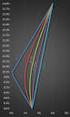
20 are given by: Y A = β A Z β 2 A ε A Y B = β B λz 1 + β B 1 λ 2 Z β 2 B ε B where Z 1, Z 2 are systematic factors and ε A, ε B are idiosyncratic factors; all factors are independent and have the standard normal distribution. The parameter λ [, 1] controls the degree to which name B depends on the first or second systematic factor, with λ = 1 corresponding to B (and thus the entire portfolio) only depending on the first systematic factor Z 1, and λ = corresponding to the creditworthiness index of name B depending solely on the second systematic factor (so that the creditworthiness indices of names A and B are independent). The parameters β A, β B give the relative importance of systematic risk and idiosyncratic risk for names A and B respectively. The total portfolio loss random variable thus becomes: L = w A 1 {YA Φ 1 (p A )} + w B 1 {YB Φ 1 (p B )} with the systematic loss variable being: 1 L S = E[L Z] = w A Φ Φ 1 (p A ) β A Z 1 1 β 2 A + w B Φ Φ 1 (p B ) β B (λz λ 2 Z 2 ) 1 β 2 B We consider risk contributions to both VaR and CVaR, at the confidence levels α =.9,.95,.99,.995, Base Case, p A = p B =.5, w A = w B =.5, β A = β B =.5 Assume the two names (sub-portfolios) have identical default probabilities, p A = p B =.5, (loss given default adjusted) exposures w A = w B =.5 and systematic risk factor loadings β A = β B =.5. Risk contributions for both VaR and CVaR as a function of λ for all confidence levels are given in figures a-j. 1 This is also the systematic loss if A and B are homogeneous sub-portfolios with weights w A and w B respectively. 2
![The parameter λ [, 1] controls the degree to which name B depends on the first or second systematic factor, with λ = 1 corresponding to B (and thus the entire portfolio) only depending on the first](/docs-images/46/21204776/images/page_20.jpg "systematic factor Z 1, and λ = corresponding to the creditworthiness index of name B depending solely on the second systematic factor (so that the creditworthiness indices of names A and B are")
21 x VaR lambda (a) Base Case VaR s: 9%.3 VaR.7 VaR lambda lambda (b) Base Case VaR s: 95% (c) Base Case VaR s: 99%.1.9 VaR.16 VaR lambda lambda (d) Base Case VaR s: 99.5% (e) Base Case VaR s: 99.9% 21
22 CVaR lambda (f) Base Case CVaR s: 9%.6 CVaR CVaR lambda lambda (g) Base Case CVaR s: 95% (h) Base Case CVaR s: 99%.14 CVaR.2 CVaR lambda lambda (i) Base Case CVaR s: 99.5% (j) Base Case CVaR s: 99.9% 22
23 s are calculated based on a Monte-Carlo simulation using ten million scenarios. 11 VaR contributions are calculated using a kernel estimator for the conditional expectation with equal weights. Observe that even with a large number of scenarios, VaR contributions are subject to significant estimation error, which could likely be reduced using importance sampling (e.g. Glasserman (25), Merino and Nyfeler (24)). For VaR, in all cases we observe the same general behaviour of increasing importance of the first factor and decreasing importance of the second factor as λ increases, which is expected from the specification of the loss variable. s from the expected loss term are more significant for lower confidence levels, whereas the unexpected loss terms corresponding to the two systematic factors, as well as their joint influence, become more prominent as confidence levels further in the tail are considered. The CVaR contributions follow the same basic pattern as the VaR contributions. However, certain effects that are observed further in the tail for VaR (increased importance of the factors compared to the expected loss term, increased importance of the joint effect term C 12 ) become apparent for lower confidence levels with CVaR. It is particularly interesting to study the behaviour of the joint factor contribution C 12. Near λ =.65 and especially for risk measures sensitive to the extreme tail of the loss distribution (CVaR, or VaR for high confidence levels), C 12 takes on additional importance. This is also illustrated in figures k-l, where we fix λ =.5, and consider CVaR contributions for different confidence levels Two Rating Case, p A =.1, p B =.2, β A =.5, β B =.2, λ =.5 We keep the same general two-factor specification. In this case, subportfolio A has a higher credit quality (p A =.1), and a greater weight on the systematic factor (β A =.5). It can be interpreted as representing the investment grade component of an institution s portfolio. In contrast, sub-portfolio B has lower credit quality (p B =.2) 11 We thank (name withheld) for pointing out to us that in this simple case Monte-Carlo simulation is, strictly speaking, not necessary, as the expectations can be computed using more efficient numerical methods. 23
24 Percentile (k) Base Case CVaR s: Different Confidence Levels Percentile (l) Base Case CVaR s: Different Confidence Levels
25 and a lower degree of systematic dependence (i.e. higher idiosyncratic risk, β B =.2), and can be interpreted as the high-yield component of the portfolio. We vary the weight w A placed on the investment grade portion of the portfolio w A =.2,.3,.5,.7, with w B = 1 w A, so that the weights may be interpreted as the (exposure-weighted) percentages of wealth invested in each asset class. CVaR contributions for different asset allocations and different confidence levels are given in figures m-v. 12 We observe that the contribution of Z 1 in isolation (C 1 ) grows quickly in the portfolio weight w A, principally at the expense of the contribution C 2, and that this effect is more pronounced at higher confidence levels. The residual contribution of factor co-movements C 12 also tends to decline as the weight w A is increased. This contribution is highest when w A is small (w A =.2), and the confidence level is high (e.g. 99.9%). 5.2 Multi-Factor Example We now consider as the underlying portfolio the CDXIG index, using data from March 31, 26. One year default probabilities are implied from credit default swap spreads. 13 We assume a multi-factor model with a single global factor Z G and a set of sector factors Z S representing the systematic risk of industry sectors which is not already captured by the global factor Z G. The creditworthiness index of a name in sector S is given by: Y = ρ G Z G + ρ S ρ G Z S + 1 ρ S ε where ρ G =.17 and ρ S =.23 are parameters that are the same for all instruments. This specification ensures a correlation of ρ G for the creditworthiness indices of two names not in the same sector (intersector correlation) and a correlation of ρ S for the creditworthiness indices of two names in the same sector (intra-sector correlation). These values are selected to match estimated correlations from Akhavein et al. (25). We use a total of seven industrial sectors, consolidated from 25 Fitch sectors. Each name in the index is mapped to one industry sector. 12 Again, contributions are calculated using Monte-Carlo without importance sampling, with ten million scenarios. 13 Technically then, we are using risk-neutral default probabilities. 25
26 wa (m) CVaR s: 9% w A (n) CVaR s: 9% 26
27 w A (o) CVaR s: 95% w A (p) CVaR s: 95%
28 w A (q) CVaR s: 99% w A (r) CVaR s: 99%
29 w A (s) CVaR s: 99.5% w A (t) CVaR s: 99.5%
30 w A (u) CVaR s: 99.9% w A (v) CVaR s: 99.9%
31 Aggregate Sector Weight (Exposure) Weight (EL) TECH 2.8% 2.4% SERVICE 9.6% 9.9% PHARMA 5.6% 3.7% RETAIL 2.% 27.8% FINANCE 19.2 % 15. % INDUSTRIAL 9.6% 9.8% ENERGY 15.2% 13.4% Table 1: CDXIG Index Sector Concentrations For the details of the mapping, see Rosen and Saunders (27). The industry concentrations for the index are given in Table 1, weighted both by notional and expected loss. The average one year default probability of the index is.19%. It is easy to see that for this specification of the Gaussian copula model, the only nonzero terms in the Hoeffding decomposition correspond to the expected loss term, the single factor terms (both global and sector), and the joint influence terms involving the global factor and one of the sector factors. Percentage CVaR contributions for these terms for several confidence levels are given in Table 2. s are calculated using Monte-Carlo simulation with one million scenarios. Notice that the global factor dominates the risk contributions. This is not surprising, given that it is the only factor that influences all of the names. Again, the contribution of the expected loss term is more significant for lower quantiles, and less significant as one moves further in the tail. In this region one also sees a higher contribution from the terms giving the joint influence of the global factor and one of the sectors. To examine the impact of the parameters on the risk contributions calculated by the model, we repeat the calculations with an intra-sector correlation of 7% and an inter-sector correlation of 2%. This leads to the results in Table 3. Observe that in this case we see substantially higher contributions for the industry factors (in particular TECH and RETAIL). 31
32 Factor CVaR-9% CVaR-95% CVaR-99% CVaR-99.5% CVaR-99.9% 19.13% 13.63% 7.19% 5.71% 3.59% GLOBAL 73.26% 76.99% 8.46% 81.13% 82.7% TECH.78%.67%.5%.44%.33% SERVICE.19%.15%.9%.7%.5% PHARMA.3%.3%.2%.1%. RETAIL 1.35% 1.1%.75%.64%.47% FINANCE.47%.41%.31%.26%.17% INDUSTRIAL.18%.16%.11%.1%.7% ENERGY.37%.32%.21%.19%.14% GLOBAL+TECH.95% 1.52% 2.6% 2.92% 3.44% GLOBAL+SERVICE.24%.35%.48%.45%.61% GLOBAL+PHARMA.4%.7%.1%.11% -.2% GLOBAL+RETAIL 1.53% 2.33% 3.59% 3.97% 4.43% GLOBAL+FINANCE.68% 1.6% 1.78% 1.95% 2.18% GLOBAL+INDUSTRIAL.29%.42%.64%.73%.85% GLOBAL+ENERGY.51%.79% 1.19% 1.34% 1.62% Table 2: CDXIG Systematic Factor CVaR s 32
33 Factor CVaR-9% CVaR-95% CVaR-99% CVaR-99.5% CVaR-99.9% 11.63% 6.99% 2.87% 2.17% 1.34% GLOBAL 32.76% 27.13% 19.27% 17.54% 16.15% TECH 8.42% 7.8% 7.4% 6.91% 7.95% SERVICE 3.9% 2.44% 1.29%.9%.15% PHARMA.79%.57%.15%.9%.5% RETAIL 11.94% 1.89% 9.47% 9.2% 9.11% FINANCE 5.69% 5.6% 4.37% 4.25% 4.4% INDUSTRIAL 3.6% 2.45% 1.33%.99%.23% ENERGY 4.65% 4.8% 3.16% 2.92% 1.88% GLOBAL+TECH 3.58% 7.2% 12.75% 14.74% 18.52% GLOBAL+SERVICE 1.97% 2.97% 2.88% 2.27%.91% GLOBAL+PHARMA.73%.92%.5%.36%.25% GLOBAL+RETAIL 4.41% 9.1% 16.2% 18.5% 21.29% GLOBAL+FINANCE 2.91% 5.38% 9.28% 1.27% 11.66% GLOBAL+INDUSTRIAL 1.94% 2.93% 3.7% 2.55% 1.15% GLOBAL+ENERGY 2.42% 4.36% 6.54% 6.8% 5.32% Table 3: CDXIG Systematic Factor CVaR s 33
34 6 Concluding Remarks This paper extends the techniques developed for marginal risk contributions of portfolio positions (instruments and sub-portfolios) to the calculation of risk contributions from risk factors, with a focus on applications in portfolio credit risk management. This enables a fuller risk analysis of any portfolio, where loss contributions can be calculated on both an instrument/sub-portfolio and a risk factor basis to give risk managers a better impression of the key drivers of potential portfolio losses. We employ the Hoeffding decomposition of the loss random variable and calculate contributions for each term in this decomposition. We further develop several examples of applications of this decomposition technique to factor models of portfolio credit risk. We demonstrate the financial interpretation of the risk contributions arising from the terms in the Hoeffding decomposition of portfolio losses. They represent the quadratic best hedges involving instruments of increasing complexity. The ideas and examples presented in this paper raise a number of questions that we believe are worthy of consideration in future research. Some of these include: From a practical perspective, the development of efficient algorithms for the calculation of factor contributions is important. For example, the application of importance sampling and other techniques used for position contributions (e.g. Glasserman (25), Huang et al. (27), and Merino and Nyfeler (24)) needs to be investigated. The development of efficient algorithms for computing the terms of the Hoeffding decomposition, conditional on realizations of the factor values, is necessary when explicit analytical formulas are not available. This is crucial to areas such as the risk management of structured credit portfolios, as well as other non-linear portfolios including equity, fixed-income and FX options. From a theoretical perspective, it is important to develop an axiomatic characterization of factor contribution measures in a manner similar to Kalkbrener et al. (24). Finally, we have related the Hoeffding decomposition to quadratic hedges involving instruments of increasing complexity. This technique may be extended to consider best hedges with respect to 34
35 other risk measures. In particular, it seems natural to consider best hedges defined by the risk measure ρ whose value for a particular portfolio we are seeking to allocate. Such hedges are unlikely to be analytically tractable and hence require the development of efficient numerical algorithms. 35
36 A Hoeffding Decompositions This appendix presents a more technical review of Hoeffding decompositions than that which appears in the main body of the text. For a fuller discussion, see van der Vaart (1998), sections , which we follow closely. Consider a fixed probability space (Ω, F, Q). Let L be a random variable with finite variance, and let Z 1,..., Z K be independent random variables with finite variances. For a given index set A {1,..., K}, define a closed subspace H A of L 2 (Q) in the following way. H A consists of all square-integrable random variables of the form g(z i ; i A) for some Borel measurable g (that is, all variables in L 2 (Q) that are measurable with respect to the σ-algebra F A = σ(z k, k A)) such that additionally: E[g(Z k, k A) Z j, j B] = (11) for every B such that B < A. Then we have the direct sum: L 2 (Ω, F A, Q) = B A H B (12) Denoting by P B the projection onto H B, we then obtain the (orthogonal) decomposition: E[L F A ] = E[L Z k, k A] = B A P B L (13) The projections P A can be evaluated more explicitly (for a proof, see van der Vaart (1998)): P A L = B A( 1) A B E[L Z k, k B] = g A (Z k ; k A) (14) In particular, if L = g(z 1,..., Z K ), then by taking A to be the full index set, A = {1,..., K} in (12) we obtain: L = g B (Z k ; k B) = B {1,...,K} B {1,...,K} B B ( 1) B B E[L Z k, k B ] (15) this is called the Hoeffding decomposition of the random variable L. 36
Monte Carlo Simulation
 1 Monte Carlo Simulation Stefan Weber Leibniz Universität Hannover email: [email protected] web: www.stochastik.uni-hannover.de/ sweber Monte Carlo Simulation 2 Quantifying and Hedging
Credit Risk Models: An Overview
 Credit Risk Models: An Overview Paul Embrechts, Rüdiger Frey, Alexander McNeil ETH Zürich c 2003 (Embrechts, Frey, McNeil) A. Multivariate Models for Portfolio Credit Risk 1. Modelling Dependent Defaults:
Regulatory and Economic Capital
 Regulatory and Economic Capital Measurement and Management Swati Agiwal November 18, 2011 What is Economic Capital? Capital available to the bank to absorb losses to stay solvent Probability Unexpected
Contents. List of Figures. List of Tables. List of Examples. Preface to Volume IV
 Contents List of Figures List of Tables List of Examples Foreword Preface to Volume IV xiii xvi xxi xxv xxix IV.1 Value at Risk and Other Risk Metrics 1 IV.1.1 Introduction 1 IV.1.2 An Overview of Market
arxiv:0708.2542v3 [q-fin.pm] 22 Jun 2008
![arxiv:0708.2542v3 [q-fin.pm] 22 Jun 2008](/thumbs/40/21204814.jpg "arxiv:0708.2542v3 [q-fin.pm] 22 Jun 2008") Capital Allocation to Business Units and Sub-Portfolios: the Euler Principle Dirk Tasche arxiv:0708.2542v3 [q-fin.pm] 22 Jun 2008 1 Introduction In many financial institutions, there is a well established
Capital Allocation to Business Units and Sub-Portfolios: the Euler Principle Dirk Tasche arxiv:0708.2542v3 [q-fin.pm] 22 Jun 2008 1 Introduction In many financial institutions, there is a well established
Portfolio Distribution Modelling and Computation. Harry Zheng Department of Mathematics Imperial College [email protected]
 Portfolio Distribution Modelling and Computation Harry Zheng Department of Mathematics Imperial College [email protected] Workshop on Fast Financial Algorithms Tanaka Business School Imperial College
Generating Random Numbers Variance Reduction Quasi-Monte Carlo. Simulation Methods. Leonid Kogan. MIT, Sloan. 15.450, Fall 2010
 Simulation Methods Leonid Kogan MIT, Sloan 15.450, Fall 2010 c Leonid Kogan ( MIT, Sloan ) Simulation Methods 15.450, Fall 2010 1 / 35 Outline 1 Generating Random Numbers 2 Variance Reduction 3 Quasi-Monte
Practical Calculation of Expected and Unexpected Losses in Operational Risk by Simulation Methods
 Practical Calculation of Expected and Unexpected Losses in Operational Risk by Simulation Methods Enrique Navarrete 1 Abstract: This paper surveys the main difficulties involved with the quantitative measurement
Risk Management at a Leading Canadian Bank An Actuarial Science Graduate's View
 at a Leading Canadian Bank An Actuarial Science Graduate's View Yu Zhou Quantitative Analytics, Group Risk Management TD Bank Financial Group at a Leading Canadian Bank: An Actuarial Science Graduate s
Statistics for Retail Finance. Chapter 8: Regulation and Capital Requirements
 Statistics for Retail Finance 1 Overview > We now consider regulatory requirements for managing risk on a portfolio of consumer loans. Regulators have two key duties: 1. Protect consumers in the financial
ECON20310 LECTURE SYNOPSIS REAL BUSINESS CYCLE
 ECON20310 LECTURE SYNOPSIS REAL BUSINESS CYCLE YUAN TIAN This synopsis is designed merely for keep a record of the materials covered in lectures. Please refer to your own lecture notes for all proofs.
Credit Risk Stress Testing
 1 Credit Risk Stress Testing Stress Testing Features of Risk Evaluator 1. 1. Introduction Risk Evaluator is a financial tool intended for evaluating market and credit risk of single positions or of large
1 The Brownian bridge construction
 The Brownian bridge construction The Brownian bridge construction is a way to build a Brownian motion path by successively adding finer scale detail. This construction leads to a relatively easy proof
Asymmetry and the Cost of Capital
 Asymmetry and the Cost of Capital Javier García Sánchez, IAE Business School Lorenzo Preve, IAE Business School Virginia Sarria Allende, IAE Business School Abstract The expected cost of capital is a crucial
FORWARDS AND EUROPEAN OPTIONS ON CDO TRANCHES. John Hull and Alan White. First Draft: December, 2006 This Draft: March 2007
 FORWARDS AND EUROPEAN OPTIONS ON CDO TRANCHES John Hull and Alan White First Draft: December, 006 This Draft: March 007 Joseph L. Rotman School of Management University of Toronto 105 St George Street
Covariance and Correlation
 Covariance and Correlation ( c Robert J. Serfling Not for reproduction or distribution) We have seen how to summarize a data-based relative frequency distribution by measures of location and spread, such
An axiomatic approach to capital allocation
 An axiomatic approach to capital allocation Michael Kalkbrener Deutsche Bank AG Abstract Capital allocation techniques are of central importance in portfolio management and risk-based performance measurement.
1 Portfolio mean and variance
 Copyright c 2005 by Karl Sigman Portfolio mean and variance Here we study the performance of a one-period investment X 0 > 0 (dollars) shared among several different assets. Our criterion for measuring
arxiv:1412.1183v1 [q-fin.rm] 3 Dec 2014
![arxiv:1412.1183v1 [q-fin.rm] 3 Dec 2014](/thumbs/38/18040492.jpg "arxiv:1412.1183v1 [q-fin.rm] 3 Dec 2014") Regulatory Capital Modelling for Credit Risk arxiv:1412.1183v1 [q-fin.rm] 3 Dec 2014 Marek Rutkowski a, Silvio Tarca a, a School of Mathematics and Statistics F07, University of Sydney, NSW 2006, Australia.
Regulatory Capital Modelling for Credit Risk arxiv:1412.1183v1 [q-fin.rm] 3 Dec 2014 Marek Rutkowski a, Silvio Tarca a, a School of Mathematics and Statistics F07, University of Sydney, NSW 2006, Australia.
Article from: Risk Management. June 2009 Issue 16
 Article from: Risk Management June 2009 Issue 16 CHAIRSPERSON S Risk quantification CORNER Structural Credit Risk Modeling: Merton and Beyond By Yu Wang The past two years have seen global financial markets
LDA at Work: Deutsche Bank s Approach to Quantifying Operational Risk
 LDA at Work: Deutsche Bank s Approach to Quantifying Operational Risk Workshop on Financial Risk and Banking Regulation Office of the Comptroller of the Currency, Washington DC, 5 Feb 2009 Michael Kalkbrener
Chapter 5 Financial Forwards and Futures
 Chapter 5 Financial Forwards and Futures Question 5.1. Four different ways to sell a share of stock that has a price S(0) at time 0. Question 5.2. Description Get Paid at Lose Ownership of Receive Payment
An introduction to Value-at-Risk Learning Curve September 2003
 An introduction to Value-at-Risk Learning Curve September 2003 Value-at-Risk The introduction of Value-at-Risk (VaR) as an accepted methodology for quantifying market risk is part of the evolution of risk
Systematic risk modelisation in credit risk insurance
 Systematic risk modelisation in credit risk insurance Frédéric Planchet Jean-François Decroocq Ψ Fabrice Magnin α ISFA - Laboratoire SAF β Université de Lyon - Université Claude Bernard Lyon 1 Groupe EULER
CAPM, Arbitrage, and Linear Factor Models
 CAPM, Arbitrage, and Linear Factor Models CAPM, Arbitrage, Linear Factor Models 1/ 41 Introduction We now assume all investors actually choose mean-variance e cient portfolios. By equating these investors
Market Risk Capital Disclosures Report. For the Quarter Ended March 31, 2013
 MARKET RISK CAPITAL DISCLOSURES REPORT For the quarter ended March 31, 2013 Table of Contents Section Page 1 Morgan Stanley... 1 2 Risk-based Capital Guidelines: Market Risk... 1 3 Market Risk... 1 3.1
Risk Decomposition of Investment Portfolios. Dan dibartolomeo Northfield Webinar January 2014
 Risk Decomposition of Investment Portfolios Dan dibartolomeo Northfield Webinar January 2014 Main Concepts for Today Investment practitioners rely on a decomposition of portfolio risk into factors to guide
by Maria Heiden, Berenberg Bank
 Dynamic hedging of equity price risk with an equity protect overlay: reduce losses and exploit opportunities by Maria Heiden, Berenberg Bank As part of the distortions on the international stock markets
Probability Models of Credit Risk
 Probability Models of Credit Risk In discussing financial risk, it is useful to distinguish between market risk and credit risk. Market risk refers to the possibility of losses due to changes in the prices
Equity Market Risk Premium Research Summary. 12 April 2016
 Equity Market Risk Premium Research Summary 12 April 2016 Introduction welcome If you are reading this, it is likely that you are in regular contact with KPMG on the topic of valuations. The goal of this
An Internal Model for Operational Risk Computation
 An Internal Model for Operational Risk Computation Seminarios de Matemática Financiera Instituto MEFF-RiskLab, Madrid http://www.risklab-madrid.uam.es/ Nicolas Baud, Antoine Frachot & Thierry Roncalli
Dr Christine Brown University of Melbourne
 Enhancing Risk Management and Governance in the Region s Banking System to Implement Basel II and to Meet Contemporary Risks and Challenges Arising from the Global Banking System Training Program ~ 8 12
CITIGROUP INC. BASEL II.5 MARKET RISK DISCLOSURES AS OF AND FOR THE PERIOD ENDED MARCH 31, 2013
 CITIGROUP INC. BASEL II.5 MARKET RISK DISCLOSURES AS OF AND FOR THE PERIOD ENDED MARCH 31, 2013 DATED AS OF MAY 15, 2013 Table of Contents Qualitative Disclosures Basis of Preparation and Review... 3 Risk
Recoveries on Defaulted Debt
 Recoveries on Defaulted Debt Michael B. Gordy Federal Reserve Board May 2008 The opinions expressed here are my own, and do not reflect the views of the Board of Governors or its
Review of Basic Options Concepts and Terminology
 Review of Basic Options Concepts and Terminology March 24, 2005 1 Introduction The purchase of an options contract gives the buyer the right to buy call options contract or sell put options contract some
Numerical Methods for Option Pricing
 Chapter 9 Numerical Methods for Option Pricing Equation (8.26) provides a way to evaluate option prices. For some simple options, such as the European call and put options, one can integrate (8.26) directly
CONTENTS. List of Figures List of Tables. List of Abbreviations
 List of Figures List of Tables Preface List of Abbreviations xiv xvi xviii xx 1 Introduction to Value at Risk (VaR) 1 1.1 Economics underlying VaR measurement 2 1.1.1 What is VaR? 4 1.1.2 Calculating VaR
5 Numerical Differentiation
 D. Levy 5 Numerical Differentiation 5. Basic Concepts This chapter deals with numerical approximations of derivatives. The first questions that comes up to mind is: why do we need to approximate derivatives
Counterparty Credit Risk for Insurance and Reinsurance Firms. Perry D. Mehta Enterprise Risk Management Symposium Chicago, March 2011
 Counterparty Credit Risk for Insurance and Reinsurance Firms Perry D. Mehta Enterprise Risk Management Symposium Chicago, March 2011 Outline What is counterparty credit risk Relevance of counterparty credit
FINANCIAL ECONOMICS OPTION PRICING
 OPTION PRICING Options are contingency contracts that specify payoffs if stock prices reach specified levels. A call option is the right to buy a stock at a specified price, X, called the strike price.
A Simple Model of Price Dispersion *
 Federal Reserve Bank of Dallas Globalization and Monetary Policy Institute Working Paper No. 112 http://www.dallasfed.org/assets/documents/institute/wpapers/2012/0112.pdf A Simple Model of Price Dispersion
Non-Bank Deposit Taker (NBDT) Capital Policy Paper
 Non-Bank Deposit Taker (NBDT) Capital Policy Paper Subject: The risk weighting structure of the NBDT capital adequacy regime Author: Ian Harrison Date: 3 November 2009 Introduction 1. This paper sets out,
Chapter 11, Risk and Return
 Chapter 11, Risk and Return 1. A portfolio is. A) a group of assets, such as stocks and bonds, held as a collective unit by an investor B) the expected return on a risky asset C) the expected return on
Bilateral Exposures and Systemic Solvency Risk
 Bilateral Exposures and Systemic Solvency Risk C., GOURIEROUX (1), J.C., HEAM (2), and A., MONFORT (3) (1) CREST, and University of Toronto (2) CREST, and Autorité de Contrôle Prudentiel et de Résolution
INTEREST RATES AND FX MODELS
 INTEREST RATES AND FX MODELS 8. Portfolio greeks Andrew Lesniewski Courant Institute of Mathematical Sciences New York University New York March 27, 2013 2 Interest Rates & FX Models Contents 1 Introduction
MATHEMATICAL METHODS OF STATISTICS
 MATHEMATICAL METHODS OF STATISTICS By HARALD CRAMER TROFESSOK IN THE UNIVERSITY OF STOCKHOLM Princeton PRINCETON UNIVERSITY PRESS 1946 TABLE OF CONTENTS. First Part. MATHEMATICAL INTRODUCTION. CHAPTERS
99.37, 99.38, 99.38, 99.39, 99.39, 99.39, 99.39, 99.40, 99.41, 99.42 cm
 Error Analysis and the Gaussian Distribution In experimental science theory lives or dies based on the results of experimental evidence and thus the analysis of this evidence is a critical part of the
MASSACHUSETTS INSTITUTE OF TECHNOLOGY 6.436J/15.085J Fall 2008 Lecture 5 9/17/2008 RANDOM VARIABLES
 MASSACHUSETTS INSTITUTE OF TECHNOLOGY 6.436J/15.085J Fall 2008 Lecture 5 9/17/2008 RANDOM VARIABLES Contents 1. Random variables and measurable functions 2. Cumulative distribution functions 3. Discrete
Models of Risk and Return
 Models of Risk and Return Aswath Damodaran Aswath Damodaran 1 First Principles Invest in projects that yield a return greater than the minimum acceptable hurdle rate. The hurdle rate should be higher for
Supplement to Call Centers with Delay Information: Models and Insights
 Supplement to Call Centers with Delay Information: Models and Insights Oualid Jouini 1 Zeynep Akşin 2 Yves Dallery 1 1 Laboratoire Genie Industriel, Ecole Centrale Paris, Grande Voie des Vignes, 92290
Some probability and statistics
 Appendix A Some probability and statistics A Probabilities, random variables and their distribution We summarize a few of the basic concepts of random variables, usually denoted by capital letters, X,Y,
Valuing double barrier options with time-dependent parameters by Fourier series expansion
 IAENG International Journal of Applied Mathematics, 36:1, IJAM_36_1_1 Valuing double barrier options with time-dependent parameters by Fourier series ansion C.F. Lo Institute of Theoretical Physics and
Master of Mathematical Finance: Course Descriptions
 Master of Mathematical Finance: Course Descriptions CS 522 Data Mining Computer Science This course provides continued exploration of data mining algorithms. More sophisticated algorithms such as support
Non Linear Dependence Structures: a Copula Opinion Approach in Portfolio Optimization
 Non Linear Dependence Structures: a Copula Opinion Approach in Portfolio Optimization Jean- Damien Villiers ESSEC Business School Master of Sciences in Management Grande Ecole September 2013 1 Non Linear
VI. Real Business Cycles Models
 VI. Real Business Cycles Models Introduction Business cycle research studies the causes and consequences of the recurrent expansions and contractions in aggregate economic activity that occur in most industrialized
Copula Simulation in Portfolio Allocation Decisions
 Copula Simulation in Portfolio Allocation Decisions Gyöngyi Bugár Gyöngyi Bugár and Máté Uzsoki University of Pécs Faculty of Business and Economics This presentation has been prepared for the Actuaries
CONTINUED FRACTIONS AND PELL S EQUATION. Contents 1. Continued Fractions 1 2. Solution to Pell s Equation 9 References 12
 CONTINUED FRACTIONS AND PELL S EQUATION SEUNG HYUN YANG Abstract. In this REU paper, I will use some important characteristics of continued fractions to give the complete set of solutions to Pell s equation.
Least-Squares Intersection of Lines
 Least-Squares Intersection of Lines Johannes Traa - UIUC 2013 This write-up derives the least-squares solution for the intersection of lines. In the general case, a set of lines will not intersect at a
ETF Specific Data Point Methodologies
 ETF Specific Data Point ethodologies orningstar ethodology Paper December 31 2010 2010 orningstar Inc. All rights reserved. The information in this document is the property of orningstar Inc. eproduction
Numerical methods for American options
 Lecture 9 Numerical methods for American options Lecture Notes by Andrzej Palczewski Computational Finance p. 1 American options The holder of an American option has the right to exercise it at any moment
Quantitative Operational Risk Management
 Quantitative Operational Risk Management Kaj Nyström and Jimmy Skoglund Swedbank, Group Financial Risk Control S-105 34 Stockholm, Sweden September 3, 2002 Abstract The New Basel Capital Accord presents
Section 1.3 P 1 = 1 2. = 1 4 2 8. P n = 1 P 3 = Continuing in this fashion, it should seem reasonable that, for any n = 1, 2, 3,..., = 1 2 4.
 Difference Equations to Differential Equations Section. The Sum of a Sequence This section considers the problem of adding together the terms of a sequence. Of course, this is a problem only if more than
Nonparametric adaptive age replacement with a one-cycle criterion
 Nonparametric adaptive age replacement with a one-cycle criterion P. Coolen-Schrijner, F.P.A. Coolen Department of Mathematical Sciences University of Durham, Durham, DH1 3LE, UK e-mail: [email protected]
Approximation of Aggregate Losses Using Simulation
 Journal of Mathematics and Statistics 6 (3): 233-239, 2010 ISSN 1549-3644 2010 Science Publications Approimation of Aggregate Losses Using Simulation Mohamed Amraja Mohamed, Ahmad Mahir Razali and Noriszura
Industry Technical Paper on Incremental Default Risk
 ISDA International Swaps and Derivatives Association, Inc. One Bishops Square London E1 6AO Tel: 44 (0) 20 3088 3550 Fax: 44 (0) 20 3088 3555 Email: [email protected] Website: www.isda.org IIF Institute
Moreover, under the risk neutral measure, it must be the case that (5) r t = µ t.
 LECTURE 7: BLACK SCHOLES THEORY 1. Introduction: The Black Scholes Model In 1973 Fisher Black and Myron Scholes ushered in the modern era of derivative securities with a seminal paper 1 on the pricing
Note 8: Derivative Instruments
 Note 8: Derivative Instruments Derivative instruments are financial contracts that derive their value from underlying changes in interest rates, foreign exchange rates or other financial or commodity prices
Spatial Statistics Chapter 3 Basics of areal data and areal data modeling
 Spatial Statistics Chapter 3 Basics of areal data and areal data modeling Recall areal data also known as lattice data are data Y (s), s D where D is a discrete index set. This usually corresponds to data
Basel Committee on Banking Supervision. An Explanatory Note on the Basel II IRB Risk Weight Functions
 Basel Committee on Banking Supervision An Explanatory Note on the Basel II IRB Risk Weight Functions July 2005 Requests for copies of publications, or for additions/changes to the mailing list, should
What Is a Good Risk Measure: Bridging the Gaps between Robustness, Subadditivity, Prospect Theory, and Insurance Risk Measures
 What Is a Good Risk Measure: Bridging the Gaps between Robustness, Subadditivity, Prospect Theory, and Insurance Risk Measures C.C. Heyde 1 S.G. Kou 2 X.H. Peng 2 1 Department of Statistics Columbia University
On the Efficiency of Competitive Stock Markets Where Traders Have Diverse Information
 Finance 400 A. Penati - G. Pennacchi Notes on On the Efficiency of Competitive Stock Markets Where Traders Have Diverse Information by Sanford Grossman This model shows how the heterogeneous information
RESP Investment Strategies
 RESP Investment Strategies Registered Education Savings Plans (RESP): Must Try Harder Graham Westmacott CFA Portfolio Manager PWL CAPITAL INC. Waterloo, Ontario August 2014 This report was written by Graham
State of the Art Virtual Portfolio Management: Building Skills that Matter
 State of the Art Virtual Portfolio Management: Building Skills that Matter There are many ways for students to play stock market games or more generally, participate in a virtual portfolio simulation:
3. Mathematical Induction
 3. MATHEMATICAL INDUCTION 83 3. Mathematical Induction 3.1. First Principle of Mathematical Induction. Let P (n) be a predicate with domain of discourse (over) the natural numbers N = {0, 1,,...}. If (1)
Risk Budgeting: Concept, Interpretation and Applications
 Risk Budgeting: Concept, Interpretation and Applications Northfield Research Conference 005 Eddie Qian, PhD, CFA Senior Portfolio Manager 60 Franklin Street Boston, MA 00 (67) 439-637 7538 8//005 The Concept
Choice under Uncertainty
 Choice under Uncertainty Part 1: Expected Utility Function, Attitudes towards Risk, Demand for Insurance Slide 1 Choice under Uncertainty We ll analyze the underlying assumptions of expected utility theory
CEIOPS-DOC-70/10 29 January 2010. (former Consultation Paper 74)
 CEIOPS-DOC-70/10 29 January 2010 CEIOPS Advice for Level 2 Implementing Measures on Solvency II: SCR STANDARD FORMULA Article 111(d) Correlations (former Consultation Paper 74) CEIOPS e.v. Westhafenplatz
RAROC framework, integration and stress testing
 RAROC framework, integration and stress testing Ludger Overbeck, University of Giessen Risk Management Workshop Colombia: From Theory to Implementation Agenda We will consider the following questions:
An Extension Model of Financially-balanced Bonus-Malus System
 An Extension Model of Financially-balanced Bonus-Malus System Other : Ratemaking, Experience Rating XIAO, Yugu Center for Applied Statistics, Renmin University of China, Beijing, 00872, P.R. China Phone:
Markovian projection for volatility calibration
 cutting edge. calibration Markovian projection for volatility calibration Vladimir Piterbarg looks at the Markovian projection method, a way of obtaining closed-form approximations of European-style option
Measuring operational risk in financial institutions: Contribution of credit risk modelling
 CAHIER DE RECHERCHE / WORKING PAPER Measuring operational risk in financial institutions: Contribution of credit risk modelling Georges Hübner, Jean-Philippe Peters and Séverine Plunus August 06 / N 200608/02
Risk Measures for the 21st Century
 Risk Measures for the 21st Century Edited by Giorgio Szego John Wiley & Sons, Ltd About the Contributors xiii 1 On the (Non)Acceptance of Innovations 1 Giorgio Szego 1.1 Introduction 1 1.2 The path towards
Reducing Active Return Variance by Increasing Betting Frequency
 Reducing Active Return Variance by Increasing Betting Frequency Newfound Research LLC February 2014 For more information about Newfound Research call us at +1-617-531-9773, visit us at www.thinknewfound.com
Third Edition. Philippe Jorion GARP. WILEY John Wiley & Sons, Inc.
 2008 AGI-Information Management Consultants May be used for personal purporses only or by libraries associated to dandelon.com network. Third Edition Philippe Jorion GARP WILEY John Wiley & Sons, Inc.
CHAPTER 11: ARBITRAGE PRICING THEORY
 CHAPTER 11: ARBITRAGE PRICING THEORY 1. The revised estimate of the expected rate of return on the stock would be the old estimate plus the sum of the products of the unexpected change in each factor times
Fairfield Public Schools
 Mathematics Fairfield Public Schools AP Statistics AP Statistics BOE Approved 04/08/2014 1 AP STATISTICS Critical Areas of Focus AP Statistics is a rigorous course that offers advanced students an opportunity
GN47: Stochastic Modelling of Economic Risks in Life Insurance
 GN47: Stochastic Modelling of Economic Risks in Life Insurance Classification Recommended Practice MEMBERS ARE REMINDED THAT THEY MUST ALWAYS COMPLY WITH THE PROFESSIONAL CONDUCT STANDARDS (PCS) AND THAT
SENSITIVITY ANALYSIS AND INFERENCE. Lecture 12
 This work is licensed under a Creative Commons Attribution-NonCommercial-ShareAlike License. Your use of this material constitutes acceptance of that license and the conditions of use of materials on this
IEOR 6711: Stochastic Models I Fall 2012, Professor Whitt, Tuesday, September 11 Normal Approximations and the Central Limit Theorem
 IEOR 6711: Stochastic Models I Fall 2012, Professor Whitt, Tuesday, September 11 Normal Approximations and the Central Limit Theorem Time on my hands: Coin tosses. Problem Formulation: Suppose that I have