
Abstract. Introduction
|
|
|
- Lee Rice
- 9 years ago
- Views:
Transcription
1 An HSUS Report: The Welfare of Animals in the Egg Industry Abstract Hundreds of millions of chickens in the egg industry suffer from poor welfare throughout their lives. Male chicks, considered a byproduct of commercial hatcheries, are killed soon after they hatch. The females are typically beak-trimmed, usually with a hot blade, to prevent them from developing the abnormal pecking behaviors that manifest in substandard environments. The overwhelming majority of hens are then confined in barren battery cages, enclosures so small that the birds are unable even to spread their wings without touching the cage sides or other hens. Battery cages prevent nearly all normal behavior, including nesting, perching, and dustbathing, all of which are critically important to the hen, as well as deny the birds normal movement to such an extent that the hens may suffer from physical ailments, including osteoporosis and reproductive and liver problems. Once their productivity wanes, typically after 1-2 years, the hens are depopulated, and many experience broken bones as they are removed from the cages. The birds are either killed by gassing on the farm or after long-distance transport to a slaughter plant, where they experience further stress and trauma associated with shackling, electrical water-bath stunning, and throat-cutting. Throughout the commercial egg industry, the welfare of birds is severely impaired. Introduction In the United States in 2007, more than 77.3 billion table eggs were produced by approximately 280 million hens, each laying an annual average of 263 eggs. 1 Most egg-laying hens (95%) 2 are confined in small, barren battery cages. The most commonly used cages hold 5-10 birds. 3 A typical U.S. egg farm contains thousands of cages, lined in multiple rows, stacked 3-5 tiers high. Industry guidelines stipulate that each caged hen may be afforded cm 2 (67 in 2 ) per bird, 2,4 an amount of floor space equivalent to less than a single sheet of lettersized paper. Hatching Chickens destined for the egg industry are artificially incubated and hatched by the thousands at commercial hatcheries. Male chicks will not mature to lay eggs and since they are not selectively bred for rapid growth and increased breast muscle (meat) as those in the broiler chicken meat industry, there is no market demand for them. As such, male chicks are considered a byproduct of egg production and are customarily killed upon hatching. In the United States, 260 million chicks are killed by the commercial egg industry annually. 5 Methods of chick disposal include maceration (wherein live, fully conscious, and unanesthetized chicks are inserted into high-speed grinders); exposure to carbon dioxide, argon, or a mixture of the two gases;, or by use of a highspeed vacuum system that sucks chicks through a series of pipes to an electrified kill plate. 4-6 Although there is little published research establishing that the vacuum system is effective and it is highly likely that the chicks experience considerable distress before they are killed, the majority of male chicks die by this method. 5 Beak-Trimming Most laying hens in North America are beak-trimmed as young chicks 7 in order to prevent potential outbreaks of injurious feather-pecking and cannibalistic behavior that can result from such intensive confinement in barren conditions, as well as to reduce feed wastage of adult birds. Beak-trimming generally involves removing 1/3-1/2 of the beak tip, 4,8 but in some cases, up to 2/3 9 may be cut off. The most common commercial method uses a An HSUS Report: The Welfare of Animals in the Egg Industry 1

2 heated blade both to cut and cauterize the beak tissue, 8,10 but newer technologies include infrared energy and laser procedures. 7,11,12 Beak-trimming using a hot blade causes tissue damage and nerve injury, including open wounds and bleeding, which results in inflammation, and acute and possibly chronic pain. 7,8,13-16 Beak amputation can also result in the formation of a painful neuroma, a tangled nerve mass, in the healed stump of the beak, 8,16,17 particularly if the procedure is delayed until the birds are older than five weeks of age or if a large, critical amount (2/3) of the beak is removed. 8,11,15 The beak is a highly innervated, complex organ containing free nerve endings that serve as nociceptors (receptors for painful or injurious stimuli) and sensory receptors that are concentrated in the area around the tip of the beak, innervated by branches from the trigeminal nerve. 8,18 Hence, beak-trimming removes many of the receptors important for touch, taste, pain, and temperature perception. Chickens use their beaks to explore their surroundings. The beak is their primary means of touching and feeling, as well as picking up and manipulating objects, and chickens use their beaks in much the same way that we use our hands. 19 Studies have shown that because birds need to adapt to a new beak form after this amputation procedure, their ability to consume feed is impaired following beak-trimming. 20 Beak-trimmed chicks also exhibit difficulty in grasping and swallowing feed. 13 Ian Duncan, Emeritus Chair in Animal Welfare at the University of Guelph, has asserted that it is possible to keep hens without de-beaking them, 21 and animal scientists David Fraser, Joy Mench, and Suzanne Millman have referred to practices such as beak-trimming as stop-gap measures masking basic inadequacies in environment or management. 4 Many factors present in today s commercial egg production industry heighten the risk of injurious pecking behavior, but important among these is the lack of environmental stimulation in monotonous, barren environments that restrict or severely limit important behavior, such as natural foraging (ground-pecking) activities Beak-trimming has been banned or is being phased out in some European countries including England, Norway, Finland, and Sweden, 26,27 due to the pain the mutilation causes and because adjustments to the environment and management practices can be used to mitigate the risks of injurious pecking and cannibalism outbreaks. Behavioral Restriction * Hens in battery cages cannot perform many of their important, natural behavior, including nesting, dustbathing, perching, and foraging. They are also so severely restricted in the movements they are able to perform that they suffer from physical abnormalities due to lack of exercise. Nesting Nesting behavior is so important to the laying hen that it is often used as a prime example of a behavioral need. 28 Under natural conditions, approximately 90 minutes before oviposition (egg laying), a hen locates a remote, private place in which she carefully scrapes out a shallow hollow in the ground and builds a nest. 29 Very similar behavior can be seen in non-cage husbandry systems for hens. 30,31 Nesting behavior is triggered internally with a sudden rise in progesterone against a background of fairly high estrogen levels. This hormonal fluctuation, associated with ovulation, then results in nesting behavior approximately 24 hours later. 32,33 The internal, biological signals to perform nest-site selection and nesting behavior occur no matter what the external environment. 34 Studies have shown that hens are highly motivated to gain access to a nest site when they are about to lay an egg. 35,36 Caged hens prior to oviposition are restless, show stereotypic pacing and escape behavior, or perform vacuum nesting activity, the expression of the motions of building a nest in the absence * This section is drawn from An HSUS Report: A Comparison of the Welfare of Hens in Battery Cages and Alternative Systems, prepared by Sara Shields, Ph.D., and Ian J.H. Duncan, Ph.D. For more information, see the full report online at An HSUS Report: The Welfare of Animals in the Egg Industry 2

3 of appropriate nesting materials. Decades of scientific evidence suggest that hens are frustrated and distressed, and that they suffer in battery cages because there is no outlet for nesting behavior Dustbathing The absence of loose litter in a battery-cage environment is also behaviorally restrictive as hens are prevented from performing normal dustbathing behavior. Dustbathing keeps chickens feathers and skin in healthy condition. Given access to dry, friable substrate, such as dirt, wood shavings, or peat, hens would normally dustbathe approximately once every other day. During a dust-bath, the hen crouches, lies in, and rubs dust through her feathers before standing and shaking off the loose particles. The best experimental evidence suggests that the function of dustbathing is to balance lipid levels in the feathers However, dustbathing is caused by a variety of factors, some of which are external 47 and others internal. 48,49 Light and heat trigger dustbathing, as does the presence of a friable, dusty substrate, but even when deprived of these normal eliciting stimuli, hens in battery cages will still try to dustbathe on the wire floor. Peripheral factors, emanating from the feathers (including ectoparasites), seem to be unimportant since even featherless chickens will dustbathe. 50 Although there has been a report of dustbathing deprivation leading to stress, 51 others have suggested that dustbathing is not driven by a need, but is a pleasurable activity. 52 This does not lessen its importance, since good welfare is dependent on both an absence of suffering and a presence of pleasure. 53 Perching and Roosting Barren with wire mesh flooring, conventional battery cages also prevent hens from perching and roosting. Perching is another natural behavior of the hen. When given the opportunity, hens will normally roost high in the trees at night. The scientific literature suggests that the foot of a hen is anatomically adapted to close around a perch 41,54 that is, their feet evolved to clutch onto branches. Perch use is important for maintaining bone volume and bone strength Perches can also serve as refuges for hens to avoid injury from more aggressive hens 58 and will reduce agonistic interactions. 59 In a naturalistic setting, roosting behavior is thought to function in protecting chickens from predation at night, but evolutionary history continues to drive the hen s need to perform the behavior, even in the industrialized production environment. When perches are provided in cages, hens may spend 25-41% of day time on them, though this may be the birds method of utilizing the extra space. 63 Hens immediately begin to use perches when the lights go off at night, and in one study, within 10 minutes, more than 90% of all hens were found on perches. 64 When perch space is limited, hens will crowd together for roosting space at night. 65 In motivational analysis experiments, hens show behavior indicative of frustration when thwarted from accessing a perch. 64 They are also willing to push through an increasingly heavily weighted door for perch access. 66 Thus, many studies conclude that hens are highly motivated to perch. 41,64,66 Scratching and Foraging The wire floor of a battery cage also deprives hens of the opportunity to express normal foraging and scratching behavior. Hens are behaviorally adapted to engage in these activities, which would normally take place in loose, varied ground cover. The birds scratch the earth in search of food and as a means of exploring the environment, and studies have reported that domestic fowl spend more than 50% of their active time foraging. 67,68 Batterycaged hens are fed a concentrated diet, yet, like other animals in captivity, 69 their natural urge to forage remains strong, despite the presence of a complete diet fed ad libitum. Studies have shown that hens will choose to forage for feed on the ground in loose substrate rather than eat identical food freely available in a feeder. 68,70 The lack of appropriate foraging substrate may lead to redirected pecking and to the development of abnormal feather-pecking behavior. 24 An HSUS Report: The Welfare of Animals in the Egg Industry 3

4 Exercising Hens in cages are so intensively confined that they have no opportunity to exercise and are not exposed to the normal range of physical forces that structure their bones. The scientific literature provides ample evidence that restriction of normal movement patterns to the extent found in cages causes physical harm in the form of bone weakness. Dynamic loading is a process that occurs during normal movements and causes stresses and strains to bone and muscle that keep the skeletal system healthy. The lack of exercise in cages leads to bone fragility and impaired bone strength. 39,71-73 While all hens selectively bred for egg production are prone to skeletal weakness due to osteoporosis (see below), caged hens are more prone to the disease due to lack of exercise. Several studies have compared the bone strength of caged hens to those in perchery and deep-litter systems. Findings conclude a very significant reduction in bone strength in the birds in cages This problem is so severe that in one study, 24% of birds removed from their cages at the end of the laying period suffered from broken bones. 77 Preference testing has demonstrated that hens do prefer more space than is typically allotted to them in a conventional battery cage and that when given the opportunity to choose between enclosures that differ in size, they will generally choose the larger enclosure Preference tests have also demonstrated that space per se may not be as important as access to other resources, such as outdoor access or a littered or grass floor. 79,81,83 Additionally, small spaces may temporarily be preferred for particular activities, such as nesting. 80 Engaging in Comfort Behavior Many studies have shown that comfort behavior, such as stretching, wing-flapping, body-shaking, and preening, are reduced or adversely affected in some way by the battery-cage environment These types of behavior are important for body maintenance and care of the feathers. The social spacing in a typical battery cage is restrictive to the point that hens may perceive their environment as being too small to engage in comfort behavior. Therefore, even if it is physically possible to perform these simple movements, they may not. Exploring Hens are naturally inquisitive, curious animals. Scientists have argued that exploratory behavior is important to animals on several grounds: Exploration satisfies the motivation to acquire information about the surrounding environment, creates agency and competency, and is also an end in itself Some have further argued that situations that deny environmental challenge (because they are barren and devoid of natural stimuli) deprive animals of the very core on which their physical existence is based, namely the ability to act. 89 Exploratory behavior may be independent of goal-directed behavior (e.g., searching for a suitable nest site or foraging for food), as chickens continue to display exploratory behavior even when the functional consequences of these behaviors (e.g., nest sites and nutritious food) are present. 90 Exploratory behavior is likely a behavioral need. 89 The barren, restrictive environments of battery cages are detrimental to the psychological well-being of an animal. When environments are predictable, monotonous, and unchanging, they do not offer the degree of stimulation or opportunity for choice that would be found in natural environments. 91 Scientists have suggested that environmental challenge is an integral part of animal well-being and that barren environments lacking challenge and stifling exploration engender apathy, frustration, and boredom. 89,90 Disease Today s laying hen, selectively bred for high egg production, will produce more than 250 eggs annually, 1 compared to 100 eggs per year a century ago. 92 This unnaturally high rate of lay, sustained for a year or more, takes a toll on the health of the hen and can lead to abnormalities of the reproductive tract and metabolic disorders such as osteoporosis and accompanying bone weakness. As caged hens are unable to exercise, problems with skeletal fragility are exacerbated, and the birds may also suffer from cage layer fatigue and liver problems. An HSUS Report: The Welfare of Animals in the Egg Industry 4

5 Reproductive Problems Consumer demand is greatest for the extra-large and large egg sizes. 93 The production of these eggs by small birds is one factor that can lead to cloacal prolapse, a condition in which the outer end of the reproductive tract fails to retract following oviposition. 94,95 Normally, the shell gland (the lower part of the hen s reproductive tract, the oviduct) is momentarily everted. However, sometimes the oviduct does not retract immediately after the egg has been laid, leaving a small portion to rest outside of the cloacal opening. The prolapsed part of the oviduct can become pecked at by cage-mates, leading to hemorrhages, infection, cannibalism, and possibly even death. 9,95 The provision of a nest box, as is practiced in non-cage housing systems, minimizes visibility of the cloaca during oviposition, reducing the likelihood that laying hens become victims of cloacal cannibalism. 9 Tumors of the oviduct can also be a problem for laying hens selectively bred for high egg production. Adenomas (benign glandular tumors) and adenocarcinomas (malignant glandular tumors) are commonly found in commercial laying hens, possibly due to prolonged exposure of the oviduct to steroid sex hormones controlling egg production. 96 Osteoporosis Bone is the metabolic reservoir for calcium used in egg shell production. 97 The calcium requirement for hens extremely high rate of lay is immense, and moving calcium from bone to egg shell leaves the birds prone to osteoporosis, subsequent bone fragility, and bone fractures. Osteoporosis due to bone mineral depletion is exacerbated by the inability to exercise in a cage. One study comparing different housing systems found that, on average, caged hens made stepping motions 72 times each hour, compared to 208 times for uncaged birds in a perchery system. Similarly, wing movements were almost non-existent in birds confined in cages compared to those reared in the perchery. 74 Studies have demonstrated that restriction of movement, especially the thwarting of normal behavior such as stepping and wing-flapping, is the primary cause of bone fragility for laying hens 74,98 and that exercise improves bone strength. 73 Many studies have found that alternative, cage-free housing systems lead to improved bone strength. 75,97, Osteoporosis leaves the laying hen s fragile skeletal system prone to bone fractures. The Scientific Panel on Animal Health and Animal Welfare, an independent body that provided scientific advice to the European Commission, noted that the prevalence of bone fractures that hens sustain during the laying period appears to be increasing. 99 Studies conducted during the 1990s estimated that the incidence of bone fractures for caged laying hens was 0-15%, while more recent studies report 11-26%. 106,107 In a study published in 2003, bone fractures were the main cause of mortality in caged hens. 108 Hens are also more prone to bone breakage during depopulation, when they are removed from their cages at the end of their productive life. A 2005 study reported that nearly 25% of caged hens suffered broken bones during removal from cages. 107 Early studies from 1989 and 1990 report similar to slightly lower rates of newly broken bones in hens depopulated at the end of the laying period, with estimates of 16-24%. 77,103 If hens are transported, unloaded, and shackled for slaughter, the proportion of birds with broken bones increases, and studies have reported that approximately 30% of hens have new bone fractures following this process. 77,104 Fatty Liver Hemorrhagic Syndrome (FLHS) FHLS is characterized by excessive deposits of fat in the hen s liver and abdomen. The liver softens and becomes more easily damaged; if the fat oxidizes, blood vessels in the liver may rupture, resulting in massive bleeding and death. 109,110 Caged laying hens on high-energy diets are the most frequently affected by FLHS, 111,112 which is a major cause of mortality in commercial flocks. 110 Numerous sources suggest that In May 2003, the five Scientific Committees providing the [European] Commission with scientific advice on food safety were transferred to the European Food Safety Authority (EFSA) These Committees [including the Scientific Committee on Animal Health and Animal Welfare], composed of independent scientists, were established in November 1997 by Commission Decision 97/579/EC. See: An HSUS Report: The Welfare of Animals in the Egg Industry 5

6 restriction of movement and lack of exercise, inherent in battery-cage systems, are factors that predispose the birds to this disease Cage Layer Fatigue Cage layer fatigue is virtually unheard of in laying hens who are not raised in cages. First identified when flocks were moved into cages during the advent of intensive egg farming in the 1950s, the disease continues to be a major issue 110 within the industry. Cage layer fatigue is related to osteoporosis in that it is a consequence of skeletal depletion due to high, sustained egg output. 97 The skeletal system of hens suffering from the disease can become so weak that the birds become paralyzed. Affected hens may have fractured thoracic vertebrae associated with compression and degeneration of the spinal cord. 117 However, if they are removed from their cages and allowed to walk normally on the floor (i.e., if they are allowed to exercise) and are given feed and water, some may recover spontaneously. 97,113,118 Unattended birds will die from dehydration and starvation in their cages. 117,118 Injurious Pecking Feather pecking is an abnormal behavior that is a continuing welfare problem in poultry production, 119 because it causes pain from having feathers pulled, 120 results in body heat loss, 121,122 and can expose bare skin to injury. Severe feather-pecking can lead to cannibalism and high mortality. Feather-pecking is influenced by many aspects of the environment and the genetic background of the hen, and is notoriously unpredictable. 9 However, crowding, barren environments, and lack of loose litter or other foraging materials are important contributing factors to injurious pecking. 12,24, Some hen strains are more likely to develop the behavior than others, in particular, the medium-heavy brown hybrid birds. 127 Most egg producers beak-trim birds, as discussed above, to help reduce injury and mortality, but the mutilation impairs welfare, presenting a challenge best articulated by Duncan: [N]eural and behavioral evidence suggests that beak trimming reduces welfare through causing both acute and chronic pain. The problem is that beak trimming is carried out for the very good reason of preventing or controlling feather pecking and cannibalism, which can themselves cause great suffering. Faced with this dilemma, what are producers to do? If they do not trim beaks, then feather pecking and cannibalism may cause enormous suffering. If they do trim beaks by conventional methods, the birds will suffer from acute and chronic pain It is known that feather pecking has hereditary characteristics and that its incidence may have been increased by unintentional genetic selection.it therefore seems likely that the long-term solution to this problem will be a genetic one Chopping off parts of young animals in order to prevent future welfare problems is a very crude solution. 128 Forced Molting Chickens molt their feathers annually in a process of feather loss and re-growth that can take several months. During the natural molting process, hens may go out of lay completely or lay only very few eggs. Thus, depending on economic factors affecting the marketplace, such as egg price, hens used for commercial egg production are either depopulated and replaced with younger pullets after a year, or they may be kept for a second egg-laying cycle following a forced molt. Force-molting speeds up the natural molt process and causes a temporary regression of the reproductive tract and cessation of egg-laying. Until recently, most force-molting regimes involved complete feed withdrawal (i.e., starvation). While more than 80% of all U.S. eggs are now produced under the United Egg Producers (UEP) industry program, 129 which no longer permits forced molting by starvation, 2 producers who choose not to adopt the UEP voluntary guidelines may still use feed withdrawal to induce a molt. In starvation molt regimes, feed is withheld for up to 14 days 130 and may be combined with 1-2 days of water deprivation, 131,132 along with a decrease in daylight hours. Hens are then fed a diet formulated to control body weight until new feathering and reproductive function recommences. 13 During forced molting through feed withdrawal, hens exhibit a classical physiological stress An HSUS Report: The Welfare of Animals in the Egg Industry 6

7 response, as well as signs of extreme distress such as increased aggression and the formation of stereotyped pacing. 7,13 Duncan considers the practice barbaric, as it can double the mortality of the flock, and leads to great suffering. 21 Presently, most hens in the United States are force-molted using a low-nutrient diet made largely from insoluble plant fibers 133 or from bulking agents such as corn, wheat middlings, or alfalfa until they lose 10-35% of their body weight. 4,137 Although these feed molts provide at least some nutritional substrate, their welfare advantages over complete feed withdrawal (starvation) molts are not well-established in the scientific literature. Catching and Transport Although bred for high egg output, laying hens cannot sustain metabolically taxing levels of egg production indefinitely. Chickens have a natural lifespan of 5-8 years and can live up to 30 years. 138 However, after 1-2 years of intense egg production, so-called spent hens are killed on-site or transported to slaughter plants. For flocks to be transported to slaughter, teams of catchers manually remove the birds from cages, typically grabbing hens by one or both legs, pulling them from cages, and carrying 2-4 birds upside-down per hand. Birds may be inadvertently hit against the cage opening, feed trough, or other objects as they are removed. On average, hens removed from battery cages are passed from handlers 3-5 times before they are crated and loaded onto trucks This process is known to be stressful for chickens, as there is a rise in corticosterone levels when birds are handled, crated, and transported. 13,140,143 The battery cage is poorly designed for removal of hens, and limbs and appendages may be torn when the birds are taken out of the enclosure. Duncan states that the combination of these three factors fragile skeleton, poorly designed cage, and low value results in an unacceptably high injury level during removal from the cage for transport. 7 Bones weakened by osteoporosis and inactivity are prone to painful bone fractures and skeletal trauma. 7,74, Freshly broken bones occur often, mainly as a consequence of human handling. 141 In one study, 29% of spent hens had broken bones after transport and shackling for slaughter. 77 Only a few slaughter plants in the United States accept spent hens. As a result, the birds often endure long journeys during which they may be in pain for significant periods. 7,144,145 Transport is associated with a number of stressors, including noise, vibration, motion, overcrowding, social disruption, and temperature extremes. Hens are also deprived of feed and water prior to, during, and after the journey, as they await slaughter upon arrival at the processing plant. 142,145 Birds are commonly exposed to heat and cold stress during transport, as wind speeds rapidly cool chickens during motion and stationary vehicles can quickly become overheated. Thermal comfort for hens in transit is rarely achieved. 148 Thermal stresses are especially problematic for spent laying hens, as they tend to be poorly feathered, have depressed metabolism due to lack of feed and water, and may be physiologically fatigued. Because spent laying hens have little economic value, there is no incentive for careful handling and transport. 145 During transport, some hens die due to physical damage, disease, and temperature and humidity extremes. 141 Dead on arrival reports vary between approximately % for spent hens, with atypical cases of up to 26%. 140,141 As the market for spent hens has declined, 144,149,150 producers often choose to kill hens on-farm rather than transport them for slaughter. Again, hens must be removed from their cages, enduring the accompanying probability of broken bones, before they are killed, typically gassed with carbon dioxide (CO 2 ). 151 CO 2 is distressing for chickens to inhale, as it is an acidic, pungent gas at high concentration. 152,153 Some spent hens are reportedly conveyed and dropped into massive dumpsters in which they are gassed. In these containers, the gas can stratify, 154 making it difficult to ensure that each hen gets enough CO 2 to kill her. In some cases, not all hens die as a result of gassing and may regain consciousness. There have been reports of surviving hens found at landfills 151 and crawling out of composting piles of dead chickens. 149 Modified Atmosphere Killing (MAK) carts are used by some producers. Although these carts also use CO 2, they are built exclusively for gassing hens onfarm and may involve less suffering for the hens 144,150,155 due to two primary reasons: MAK carts are rolled An HSUS Report: The Welfare of Animals in the Egg Industry 7

8 through shed aisles, meaning the birds are handled for less time before being killed, and may better prevent the gas from becoming stratified. Slaughter In the United Kingdom, legal requirements stipulate that birds must be stunned to induce immediate and irreversible loss of consciousness prior to slaughter. 156 However, in the United States, the U.S. Department of Agriculture does not interpret the federal Humane Methods of Slaughter Act as providing protections for birds reared for meat or eggs. As such, no federal law requires that spent laying hens be rendered insensible to pain before they are shackled and killed. 7 Upon arrival at the slaughter plant, hens are hung upside-down in metal shackles and conveyed through an electrical water-bath stunner. They are then killed by automated knife cut to the throat and by subsequent exsanguination. Following the process of bleed-out, birds are then passed through a scald tank, in preparation for the next step, mechanical plucking of feathers. When birds are conveyed through the electrified water bath, current flows from their head to their feet towards the shackle line. When correctly applied, electrical stunning sends a current through the brain of sufficient magnitude to induce generalized epilepsy and is thought to be accompanied by unconsciousness and insensibility. However, there are numerous concerns over bird welfare when slaughtered using conventional water-bath stunning methods, including the stress 143, and pain 160 associated with shackling (which is likely worse for spent hens with broken bones), 152,161 pre-stun electric shocks, and ineffective stunning. 165 Some birds are conveyed through the stunner without making contact with the electrified water bath. This can happen if birds are too short to reach the water bath, if the height of the stunner is not correctly adjusted, or if they struggle and lift their heads. 152, This problem is even worse for spent laying hens. Bruce Webster, a poultry scientist at the University of Georgia, explains: Spent hens differ from broilers [chicken raised specifically for meat production] in that they are much more active, agile and reactive to disturbance. They are more likely to struggle in the shackle and lift their bodies away from the stunner bath, reducing the probability of making good electrical contact with the stunner. They also can flex their necks so that the head is not the first part of the body to contact the stunner, and the bird gets a pre-stun shock. Birds start back from such a shock and can receive more than one pre-stun shock before being captured by the stunner. Since the head is not part of the electrical contact, these shocks do not stun the bird. Pre-stun shocks tend to make hens even more mobile in the shackles, enabling some to miss the stunner altogether by riding up on the bodies of adjacent birds. 169 Birds who miss the stunner are fully conscious when their throats are cut. Occasionally, live birds who were not adequately stunned and/or who missed the killing machine are conscious when entering the scald tank. 7,152,170,171 When the birds are submerged in the hot water, they drown. 172 A more humane alternative to electrified water-bath stunning slaughter is Controlled Atmosphere Killing (CAK). Using CAK, animals are not handled while they are still conscious, avoiding the problems associated with dumping, handling, and shackling live birds, and there is no risk of pre-stun shocks to conscious birds and/or ineffective stunning. In CAK systems, birds are conveyed through a tunnel filled with carbon dioxide, inert gases (argon or nitrogen), or a mixture of these gases. With CAK, birds are exposed to lethal concentrations of gases and hanging operators do not shackle the birds until after they exit the gas stunning system. The animals do not endure the pain, fear, and stress associated with the live hang step of the electrical water-bath procedure. However, no U.S. spent hen slaughtering plants currently use CAK technology. Some gas systems are designed in such a way that birds must still be dumped from their transport crates prior to entering the gas-filled chamber on a conveyer belt. While still retaining many of the welfare advantages of CAK systems, those that move birds through the gaseous atmosphere, preferably with inert gases, while they are still in their transport crates are considered optimal. An HSUS Report: The Welfare of Animals in the Egg Industry 8

9 Conclusion The situation for the vast majority of hens in the commercial egg industry is dire. Alternative, cage-free housing, such as aviaries and percheries, have greater potential to provide higher welfare of hens, and the egg industry is increasingly employing these production systems. The scientific basis for moving away from barren battery cages customary in U.S. egg production is extensive. In 2006, a comprehensive analysis of hen welfare in various housing systems was published by the LayWel research project, funded by the European Commission and several member countries of the European Union. This project was a collaborative effort among working groups in seven different European countries that examined data collected from 230 different laying hen flocks. 173 The review noted that [c]onventional cages do not allow hens to fulfil behaviour priorities, preferences and needs for nesting, perching, foraging and dustbathing in particular. The severe spatial restriction also leads to disuse osteoporosis and determined that [w]ith the exception of conventional cages, we conclude that all systems have the potential to provide satisfactory welfare for laying hens. 174 Indeed, restrictively confined in barren, crowded battery cages, laying hens suffer from behavioral deprivation, metabolic and reproductive disorders, and broken bones. They also experience painful beak-trimming, careless handling, and inhumane slaughter. Innovative technology and systems for housing, 175,176 transporting, 177 and slaughtering chickens exists that could greatly improve the welfare of laying hens if more widely adopted within the industry. Further, selective breeding for skeletal strength 101,178 and reduced propensity to feather peck 179 would further improve the welfare of hens in commercial egg production. Scientific inquiry has clearly shown that battery cages are inappropriate environments for egg-laying hens and that additional improvements are needed to ensure the welfare of hens in the egg industry. References 1. U.S. Department of Agriculture National Agricultural Statistics Service Chickens and eggs: 2007 summary. Accessed April 30, United Egg Producers United Egg Producers Animal Husbandry Guidelines for U.S. Egg Laying Flocks, 2008 Edition (Alpharetta, GA: United Egg Producers). Welfare-Guidelines pdf. Accessed April 30, Bell DD Cage management for layers. In: Bell DD and Weaver WD (eds.), Commercial Chicken Meat and Egg Production, 5th Edition (Norwell, MA: Kluwer Academic Publishers). 4. Fraser D, Mench J, and Millman S Farm animals and their welfare in In: Salem DJ and Rowan AN (eds.), State of the Animals 2001 (Washington, DC: Humane Society Press). 5. Metheringham J Disposal of day-old chicks the way forward. World Poultry 16(11):25, Appleby MC, Mench JA, and Hughes BO Poultry Behaviour and Welfare (Wallingford, U.K.: CABI Publishing, pp ). 7. Duncan IJH Animal welfare issues in the poultry industry: is there a lesson to be learned? Journal of Applied Animal Welfare Science 4(3): Cheng H Morphopathological changes and pain in beak trimmed laying hens. World s Poultry Science Journal 62(1): Newberry RC Cannibalism. In: Perry GC (ed.), Welfare of the Laying Hen. Poultry Science Symposium Series 27 (Oxfordshire, U.K.: CABI Publishing). 10. Gentle MJ and McKeegan DE Evaluation of the effects of infrared beak trimming in broiler breeder chicks. The Veterinary Record 160(5): Kuenzel WJ Neurobiological basis of sensory perception: welfare implications of beak trimming. Poultry Science 86: European Food Safety Authority, Animal Health and Animal Welfare Scientific report on the welfare aspects of various systems for keeping laying hens. Annex to The EFSA Journal 197:1-23. EFSA- Q , p Accessed April 30, Mench JA The welfare of poultry in modern production systems. Poultry Science Review 4(2):107- An HSUS Report: The Welfare of Animals in the Egg Industry 9

10 Gentle MJ, Waddington D, Hunter LN, and Jones RB Behavioural evidence for persistent pain following partial beak amputation in chickens. Applied Animal Behaviour Science 27: Hughes BO and Gentle MJ Beak trimming of poultry: its implications for welfare. World s Poultry Science Journal 51(1): Gentle M and Wilson S Pain and the laying hen. In: Perry GC (ed.), Welfare of the Laying Hen (Wallingford, U.K.: CAB International). 17. Gentle MJ Neuroma formation following partial beak amputation (beak trimming) in the chicken. Research in Veterinary Science 41(3): Lunam CA The anatomy and innervation of the chicken beak: effects of trimming and re-trimming. In: Glatz PC (ed.), Poultry Welfare Issues: Beak Trimming (Nottingham, U.K.: Nottingham University Press). 19. Rogers LJ The Development of Brain and Behaviour in the Chicken (Wallingford, U.K.: CABI Publishing, pp. 95-7). 20. Hester PY and Shea-Moore M Beak trimming egg-laying strains of chickens. World s Poultry Science Journal 59(4): Duncan IJH Letter dated June 25 to Dr. Nancy Halpern, New Jersey Department of Agriculture. 22. Hughes BO and Duncan IJH The influence of strain and environmental factors upon feather pecking and cannibalism in fowls. British Poultry Science 13(6): Scheideler SE and Shields SJ Cannibalism by poultry. NebGuide. University of Nebraska-Lincoln Extension, Institute of Agriculture and Natural Resources. Accessed April 30, Blokhuis HJ The effect of a sudden change in floor type on pecking behaviour in chicks. Applied Animal Behaviour Science 22(1): Dixon LM, Mason GJ, and Duncan IJH What s in a peck? A comparison of the motor patterns involved in feather pecking, dustbathing and foraging. In: Galindo F and Alvarez L (eds.), Proceedings of the 41st International Congress of the ISAE (Merida, Mexico: International Society for Applied Ethology, p. 47). 26. The Welfare of Farmed Animals (England) (Amendment) Regulations Statutory Instrument 2002 No Accessed April 30, European Food Safety Authority, Animal Health and Animal Welfare Scientific report on the welfare aspects of various systems for keeping laying hens. Annex to The EFSA Journal 197:1-23. EFSA- Q , p Accessed April 30, Petherick CJ and Rushen J Behavioural restriction. In: Appleby MC and Hughes BO (eds.), Animal Welfare (Wallingford, U.K.: CABI Publishing, pp ). 29. Duncan IJH, Savory CJ, and Wood-Gush DGM Observations on the reproductive behaviour of domestic fowl in the wild. Applied Animal Ethology 4: Hughes BO, Duncan IJH, and Brown MF The performance of nest building by domestic hens: is it more important than the construction of a nest? Animal Behaviour 37(2): Duncan IJH and Kite VG Nest site selection and nest-building behaviour in domestic fowl. Animal Behaviour 37(2): Wood-Gush DGM Nest construction by the domestic hen: some comparative and physiological considerations. In: Wright P, Caryl PG, and Vowles DM (eds.), Neural and Endocrine Aspects of Behaviour in Birds (Oxford, U.K.: Elsevier). 33. Wood-Gush DG and Gilbert AB Some hormones involved in the nesting behaviour of hens. Animal Behaviour 21(1): Duncan IJH Behavior and behavioral needs. Poultry Science 77(12): Follensbee ME, Duncan IJH, and Widowski TM Quantifying nesting motivation of domestic hens. Journal of Animal Science 70(Suppl.1): Cooper JJ and Appleby MC The value of environmental resources to domestic hens: a comparison of the work-rate for food and for nests as a function of time. Animal Welfare 12(1): Appleby MC, Hughes BO, and Elson HA Poultry Production Systems: Behaviour, Management, An HSUS Report: The Welfare of Animals in the Egg Industry 10

11 and Welfare (Wallingford, U.K.: CAB International, p. 186). 38. Sherwin CM and Nicol CJ Behaviour and production of laying hens in three prototypes of cages incorporating nests. Applied Animal Behaviour Science 35(1): Hughes BO Space requirements in poultry. In: Baxter SH, Baxter MR, and MacCormack JAD (eds.), Farm Animal Housing and Welfare (Boston, MA: Martinus Nijhoff Publishers). 40. Duncan IJH Frustration in the fowl. In: Freeman BM and Gordon RF (eds.), Aspects of Poultry Behaviour (Edinburgh, Scotland: British Poultry Science Ltd.). 41. Baxter M The welfare problems of laying hens in battery cages. The Veterinary Record 134(24): Wood-Gush DGM Strain differences in response to sub-optimal stimuli in the fowl. Animal Behaviour 20(1): Yue S and Duncan IJH Frustrated nesting behaviour: relation to extra-cuticular shell calcium and bone strength in White Leghorn hens. British Poultry Science 44(2): Liere DW van and Bokma S Short-term feather maintenance as a function of dust-bathing in laying hens. Applied Animal Behaviour Science 18(2): Olsson IAS and Keeling LJ Why in earth? Dustbathing behaviour in jungle and domestic fowl reviewed from a Tinbergian and animal welfare perspective. Applied Animal Behaviour Science 93(3/4): Shields SJ Dustbathing by broiler chickens: characteristics, substrate preference, and implications for welfare. Ph.D. Dissertation, University of California, Davis, pp Duncan IJH, Widowski TM, Malleau AE, Lindberg AC, and Petherick JC External factors and causation of dustbathing in domestic hens. Behavioural Processes 43(2): Vestergaard K The regulation of dustbathing and other behaviour patterns in the laying hen: a Lorenzian approach. In: Moss R (ed.), The Laying Hen and its Environment (The Hague, Netherlands: Martinus Nijhoff, pp ). 49. Vestergaard K Dustbathing in the domestic fowl: diurnal rhythm and dust deprivation. Applied Animal Ethology 8: Vestergaard KS, Damm BI, Abbott UK, and Bildsoe M Regulation of dustbathing in feathered and featherless domestic chicks: the Lorenzian model revisited. Animal Behaviour 58(5): Vestergaard KS, Skadhauge E, and Lawson LG The stress of not being able to perform dustbathing in laying hens. Physiology and Behavior 62(2): Widowski TM and Duncan IJH Working for a dustbath: are hens increasing pleasure rather than reducing suffering? Applied Animal Behaviour Science 68(1): Fraser D and Duncan IJH Pleasures, pains, and animal welfare: toward a natural history of affect. Animal Welfare 7(4): Blokhuis HJ Rest in poultry. Applied Animal Behaviour Science 12(3): , citing: Ellenberger W and Baum H Handbuch der vergleichenden Anatomie der Haustiere (Berlin, Germany: Springer Verlag, p. 1155). 55. Wilson S, Hughes BO, Appleby MC, and Smith SF Effects of perches on trabecular bone volume in laying hens. Research in Veterinary Science 54(2): Hughes BO, Wilson S, Appleby MC, and Smith SF Comparison of bone volume and strength as measures of skeletal integrity in caged laying hens with access to perches. Research in Veterinary Science 54(2): Duncan ET, Appleby MC, and Hughes BO Effect of perches in laying cages on welfare and production of hens. British Poultry Science 33(1): Appleby MC and Hughes BO Welfare of laying hens in cages and alternative systems: environmental, physical and behavioural aspects. World s Poultry Science Journal 47(2): Cordiner LS and Savory CJ Use of perches and nestboxes by laying hens in relation to social status based on examination of consistency of ranking orders and frequency of interaction. Applied Animal Behaviour Science 71: Appleby MC, Smith SF, and Hughes BO Nesting, dustbathing and perching by laying hens in cages effects of design on behavior and welfare. British Poultry Science 34: Braastad BO Effects on behavior and plumage of a key-stimuli floor and a perch in trip cages for An HSUS Report: The Welfare of Animals in the Egg Industry 11

12 laying hens. Applied Animal Behavior Science 27: Valkonen E, Valaja J, and Venäläinen E The effects of dietary energy and perch design on the performance and condition of laying hens kept in furnished cages. Proceedings of the 7 th European Symposium on Poultry Welfare, June, Lublin, Poland. Animal Science Papers and Reports 23(Suppl.1): (Jastrzębiec, Poland: Polish Academy of Sciences, Institute of Genetics and Animal Breeding). 63. Weeks CA and Nicol CJ Behavioral needs, priorities and preferences of laying hens. World s Poultry Science Journal 62: Olsson IAS and Keeling LJ Night-time roosting in laying hens and the effect of thwarting access to perches. Applied Animal Behaviour Science 68(3): Appleby MC, Hughes BO, and Elson HA Poultry Production Systems: Behaviour, Management, and Welfare (Wallingford, U.K.: CAB International, p. 202). 66. Olsson IAS and Keeling LJ The push-door for measuring motivation in hens: laying hens are motivated to perch at night. Animal Welfare 11(1): Savory CJ, Wood-Gush DGM, and Duncan IJH Feeding behaviour in a population of domestic fowls in the wild. Applied Animal Ethology 4: Dawkins MS Time budgets in Red Junglefowl as a baseline for the assessment of welfare in domestic fowl. Applied Animal Behaviour Science 24: Inglis IR and Ferguson NJK Starlings search for food rather than eat freely available, identical food. Animal Behaviour 34(2): Duncan IJH and Hughes BO Free and operant feeding in domestic fowls. Animal Behaviour 20: Rowland LO and Harms RH The effect of wire pens, floor pens and cages on bone characteristics of laying hens. Poultry Science 49(5): Wabeck CJ and Littlefield LH Bone strength of broilers reared in floor pens and in cages having different bottoms. Poultry Science 51(3): Meyer WA and Sunde ML Bone breakage as affected by type housing or an exercise machine for layers. Poultry Science 53(3): Knowles TG and Broom DM Limb bone strength and movement in laying hens from different housing systems. The Veterinary Record 126(15): Norgaard-Nielsen G Bone strength of laying hens kept in an alternative system compared with hens in cages and on deep-litter. British Poultry Science 31(1): McLean KA, Baxter MR, and Michie W A comparison of the welfare of laying hens in battery cages and in a perchery. Research and Development in Agriculture 3(2): Gregory NG and Wilkins LJ Broken bones in domestic fowl: handling and processing damage in end-of-lay battery hens. British Poultry Science 30(3): Hughes BO Spatial preference in the domestic hen. British Veterinary Journal 131(5): Dawkins M Welfare and the structure of a battery cage: size and cage floor preferences in domestic hens. British Veterinary Journal 134(5): Nicol CJ Non-exclusive spatial preference in the laying hen. Applied Animal Behaviour Science 15: Dawkins M Priorities in the cage size and flooring preferences of domestic hens. British Poultry Science 22(3): Dawkins MS Cage size and flooring preferences in litter-reared and cage-reared hens. British Poultry Science 24(2): Dawkins M Do hens suffer in battery cages? Environmental preferences and welfare. Animal Behaviour 25(4): Nicol CJ Effect of cage height and area on the behaviour of hens housed in battery cages. British Poultry Science 28(2): Appleby MC, Mench JA, and Hughes BO Poultry Behaviour and Welfare (Wallingford, U.K.: CABI Publishing, p. 64). 86. Tanaka T and Hurnik JF Comparison of behavior and performance of laying hens housed in battery cages and an aviary. Poultry Science 71(2): An HSUS Report: The Welfare of Animals in the Egg Industry 12

13 87. Duncan IJH Animal rights animal welfare: a scientist s assessment. Poultry Science 60(3):489-99, citing: Wennrich VG and Strauss DD Zum Nachweis eines Triebstaus bei Haushennen. Deutsche Tierarztliche Wochenschrift 84(8): Mench JA Environmental enrichment and the importance of exploratory behavior. In: Shepherdson DJ, Mellen JD, and Hutchins M (eds.), Second Nature (Washington, DC: Smithsonian Institution Press). 89. Wemelsfelder F and Birke L Environmental challenge. In: Appleby MC and Hughes BO (eds.), Animal Welfare (Wallingford, U.K.: CABI Publishing). 90. Wood-Gush DGM and Vestergaard K Exploratory behavior and the welfare of intensively kept animals. Journal of Agricultural Ethics 2: Baer JF A veterinary perspective of potential risk factors in environmental enrichment. In: Shepherdson DJ, Mellen JD, and Hutchins M (eds.), Second Nature (Washington, DC: Smithsonian Institution Press). 92. Ensminger ME Poultry Science, 3rd Edition (Danville, IL: Interstate Publishers, p. 5). 93. Jacob JP, Miles RD, and Mather FB Egg quality. University of Florida, Institute of Food and Agricultural Sciences, Cooperative Extension Service. Accessed April 30, Keshavarz K Causes of prolapse in laying flocks. Poultry Digest, September, p Alberta Agriculture Food and Rural Development Common laying hen disorders: prolapse in laying hens. Accessed April 30, Anjum AD, Payne LN, and Appleby EC Oviduct magnum tumours in the domestic fowl and their association with laying. The Veterinary Record 125(2): Webster AB Welfare implications of avian osteoporosis. Poultry Science 83(2): Nightingale TE, Littlefield LH, Merkley JW, and Richardi JC Immobilization-induced bone alterations in chickens. Canadian Journal of Physiology and Pharmacology 52(5): Scientific Panel on Animal Health and Welfare Opinion of the Scientific Panel on Animal Health and Welfare on a request from the Commission related to the welfare aspects of various systems of keeping laying hens. The EFSA Journal 197: Accessed April 30, Leyendecker M, Hamann H, Hartung J, et al Keeping laying hens in furnished cages and an aviary housing system enhances their bone stability. British Poultry Science 46(5): Fleming RH, McCormack HA, McTeir L, and Whitehead CC Relationships between genetic, environmental and nutritional factors influencing osteoporosis in laying hens. British Poultry Science 47(6): Fleming RH, Whitehead CC, Alvey D, Gregory NG, and Wilkins LJ Bone structure and breaking strength in laying hens housed in different husbandry systems. British Poultry Science 35(5): Gregory NG, Wilkins LJ, Eleperuma SD, Ballantyne AJ, and Overfield ND Broken bones in domestic fowls: effect of husbandry system and stunning method in end-of-lay hens. British Poultry Science 31(1): Gregory NG, Wilkins LJ, Knowles TG, Sørensen P, and van Niekerk T Incidence of bone fractures in European layers. Proceedings of the 9th European Poultry Conference, Vol. II (Glasgow, U.K., pp ) Gregory NG and Wilkins LJ Broken bones in hens. The Veterinary Record 129(25/26): Budgell KL and Silversides FG Bone breakage in three strains of end-of-lay hens. Canadian Journal of Animal Science 84(4): Sandilands V, Sparks N, Wilson S, and Nevison I Laying hens at depopulation: the impact of the production system on bird welfare. British Poultry Abstracts 1: Weber RM, Nogossek M, Sander I, Wandt B, Neumann U, and Glünder G Investigations of laying hen health in enriched cages as compared to conventional cages and a floor pen system. Wiener Tierärztliche Monatsschrift 90(10): Mississippi State University Extension Service Causes for fatty liver hemorrhagic syndrome. Accessed April 30, Leeson S Metabolic challenges: past, present, and future. Journal of Applied Poultry Research 16: An HSUS Report: The Welfare of Animals in the Egg Industry 13

14 111. Merck Veterinary Manual Fatty liver syndrome: introduction. Merck Veterinary Manual Online, 8th Edition. Accessed April 30, McMullin P A Pocket Guide to Poultry Health and Disease (Sheffield, U.K.: 5M Enterprises Ltd., p. 123) Mississippi State University Cooperative Extension Service Miscellaneous management related diseases. Accessed April 30, European Food Safety Authority, Animal Health and Animal Welfare Scientific report on the welfare aspects of various systems for keeping laying hens. Annex to The EFSA Journal 197:1-23. EFSA- Q , p Accessed April 30, Crespo R and Shivaprasad HL Developmental, metabolic, and other noninfectious disorders. In: Saif YM, Barnes HJ, Glisson JR, Fadly AM, McDougald LR, and Swayne DE (eds.), Diseases of Poultry, 11th Edition (Ames, IA: Iowa State Press, pp ) Squires EJ and Leeson S Aetiology of fatty liver syndrome in laying hens. British Veterinary Journal 144(6): Riddell C, Helmboldt CF, Singsen EP, and Matterson LD Bone pathology of birds affected with cage layer fatigue. Avian Diseases 12(2): Riddell C Non-infectious skeletal disorders of poultry: an overview. In: Whitehead CC (ed.), Bone Biology and Skeletal Disorders in Poultry. Poultry Science Symposium Number Twenty-three (Oxfordshire, U.K.: Carfax Publishing Company) Riber AB, Wichman A, Braastad BO, and Forkman B Effects of broody hens on perch use, ground pecking, feather pecking and cannibalism in domestic fowl (Gallus gallus domesticus). Applied Animal Behaviour Science 106(1-3): Gentle MJ and Hunter LN Physiological and behavioural responses associated with feather removal in Gallus gallus var domesticus. Research in Veterinary Science 50(1): Peguri A and Coon C Effect of feather coverage and temperature on layer performance. Poultry Science 72(7): Tauson R and Svensson SA Influence of plumage condition on the hen s feed requirement. Swedish Journal of Agricultural Research 10(1): Green LE, Lewis K, Kimpton A, and Nicol CJ Cross-sectional study of the prevalence of feather pecking in laying hens in alternative systems and its associations with management and disease. The Veterinary Record 147(9): Huber-Eicher B and Sebo F Reducing feather pecking when raising laying hen chicks in aviary systems. Applied Animal Behaviour Science 73: Appleby MC, Hughes BO, and Hogarth GS Behaviour of laying hens in a deep litter house. British Poultry Science 30(3): Appleby MC, Hogarth GS, Anderson JA, Hughes BO, and Whittemore CT Performance of a deep litter system for egg production. British Poultry Science 29(4): Tauson R, Wahlstrom A, and Abrahamsson P Effect of two floor housing systems and cages on health, production, and fear response in layers. Journal of Applied Poultry Research 8(2): Duncan IJH Welfare problems of poultry. In: Benson GJ and Rollin BE (eds.), The Well-Being of Farm Animals: Challenges and Solutions (Ames, IA: Blackwell Publishing) United Egg Producers United egg producers certified program. Accessed April 30, Bell DD Historical and current molting practices in the U.S. table egg industry. Poultry Science 82(6): Bell DD Flock replacement programs and flock recycling. In: Bell DD and Weaver WD (eds.), Commercial Chicken Meat and Egg Production, 5th Edition (Norwell, MA: Kluwer Academic Publishers) Scanes CG, Brant G, and Ensminger ME Poultry Science, 4th Edition (Upper Saddle River, NJ: Pearson Prentice Hall, p. 228) Donalson LM, Kim WK, Woodward CL, et al Utilizing different ratios of alfalfa and layer ration An HSUS Report: The Welfare of Animals in the Egg Industry 14

15 for molt induction and performance in commercial laying hens. Poultry Science 84(3): Biggs PE, Persia ME, Koelkebeck KW, and Parsons CM Further evaluation of nonfeed removal methods for molting programs. Poultry Science 83(5): Mazzuco H and Hester PY The effect of an induced molt using a nonfasting program on bone mineralization of white leghorns. Poultry Science 84(9): Kim WK, Donalson LM, Herrera P, Kubena LF, Nisbet DJ, and Ricke SC Comparisons of molting diets on skeletal quality and eggshell parameters in hens at the end of the second egg-laying cycle. Poultry Science 84(4): Scheideler SE and Beck MM Guidelines for a non-fasting feeding program for the molting of laying hens. NebGuide. University of Nebraska-Lincoln Extension, Institute of Agriculture and Natural Resources. Accessed April 30, Wolfensohn S and Lloyd M Birds. In: Wolfensohn S and Lloyd M (eds.), Handbook of Laboratory Animal Management and Welfare (Third Edition) (Oxford, U.K.: Blackwell Publishing Ltd, pp ) Kristensen HH, Berry PS, and Tinker DB Depopulation systems for spent hens a preliminary evaluation in the United Kingdom. Journal of Applied Poultry Research 10: Knowles TG and Broom DM The handling and transport of broilers and spent hens. Applied Animal Behaviour Science 28: Knowles TG Handling and transport of spent hens. World s Poultry Science Journal 50(1): Weeks CA Poultry handling and transport. In: Grandin T (ed.), Livestock Handling and Transport, 3rd Edition (Wallingford, U.K.: CAB International, pp ) Kannan G and Mench JA Influence of different handling methods and crating periods on plasma corticosterone concentrations in broilers. British Poultry Science 37(1): Newberry RC, Webster AB, Lewis NJ, and Van Arnam C Management of spent hens. Journal of Applied Animal Welfare Science 2(1): Mitchell MA and Kettlewell PJ Transport of chicks, pullets and spent hens. In: Perry GC (ed.), Welfare of the Laying Hen (Cambridge, MA: CABI Publishing) Knowles TG and Wilkins LJ The problem of broken bones during the handling of laying hens a review. Poultry Science 77(12): Gregory NG and Wilkins LJ Skeletal damage and bone defects during catching and processing. In: Whitehead CC (ed.), Bone Biology and Skeletal Disorders in Poultry. Poultry Science Symposium Number Twenty-three (Oxfordshire, U.K.: Carfax Publishing) Webster AJ, Tuddenham A, Saville CA, and Scott GB Thermal stress on chickens in transit. British Poultry Science 34(2): Young T Recycling chickens. The Press Democrat, November Accessed April 30, Webster AB, Fletcher DL, and Savage SI Humane on-farm killing of spent hens. Journal of Applied Poultry Research 5: Troller S From eggs to landfills: live chickens at the dump? The Capital Times, August Raj ABM Stunning and slaughter of poultry. In: Mead GC (ed.), Poultry Meat Processing and Quality (Cambridge, U.K.: Woodhead Publishing Ltd.) Raj M Welfare during stunning and slaughter of poultry. Poultry Science 77(12): The Center for Animal Welfare. Euthanasia of poultry: considerations for producers, transporters, and veterinarians. Accessed April 30, FPM, Inc. Accessed April 30, Raj ABM Recent developments in stunning and slaughter of poultry. World s Poultry Science Journal 62(3): Debut M, Berri C, Arnould C, et al Behavioural and physiological responses of three chicken breeds to pre-slaughter shackling and acute heat stress. British Poultry Science 46(5): Kannan G, Heath JL, Wabeck CJ, and Mench JA Shackling of broilers: effects on stress responses and breast meat quality. British Poultry Science 38: Bedanova I, Voslarova E, Chloupek P, et al Stress in broilers resulting from shackling. Poultry Science 86(6): An HSUS Report: The Welfare of Animals in the Egg Industry 15

16 160. Gentle MJ and Tilston VL Nociceptors in the legs of poultry: implications for potential pain in preslaughter shackling. Animal Welfare 9(3): Gregory NG and Bell JC Duration of wing flapping in chickens shackled before slaughter. The Veterinary Record 121(24): Sparrey JM, Kettlewell PJ, Paice MER, and Whetlor WC Development of a constant current water bath stunner for poultry processing. Journal of Agricultural Engineering Research 56(4): Schütt-Abraham I, Wormuth HJ, and Fessel J Electrical stunning of poultry in view of animal welfare and meat production. In: Eikelenboom G (ed.), Stunning of Animals for Slaughter (The Hague, Netherlands: Martinus Nijhoff Publishers, pp ) Gazdziak S Kill floor improvements. The National Provisioner Magazine, December, pp. 66, Accessed April 30, For more information, see: An HSUS Report: The Welfare of Birds at Slaughter Boyd F Humane slaughter of poultry: the case against the use of electrical stunning devices. Journal of Agricultural and Environmental Ethics 7(2): Heath GB, Watt DJ, Waite PR, and Ormond JM Observations on poultry slaughter. The Veterinary Record 108(5): Shane S Future of gas stunning. WATT Poultry USA 6(4): Webster AB The commercial egg industry should consider controlled atmosphere stunning for spent hens. The Poultry Site, July. Accessed April 30, Gregory NG The physiology of electrical stunning and slaughter. Humane Slaughter of Animals for Food Symposium (Hertfordshire, U.K.: Universities Federation for Animal Welfare, pp. 3-13) Duncan IJH Killing methods for poultry: a report on the use of gas in the U.K. to render birds unconscious prior to slaughter (Guelph, Ontario: Colonel K.L. Campbell Centre for the Study of Animal Welfare, University of Guelph) Food Safety and Inspection Services Poultry postmortem inspection. Accessed April 30, Blokhuis HJ, Niekerk TF van, Bessei W, et al The LayWel project: welfare implications of changes in production systems for laying hens. World s Poultry Science Journal 63(1): LayWel Welfare implications of changes in production systems for laying hens: deliverable 7.1: overall strength and weaknesses of each defined housing system for laying hens, and detailing the overall welfare impact of each housing system. Accessed April 30, Baxter MR Alternatives to the battery cage for laying hens. Farm Building Progress 104: Ballantyne AJ and Hill JA Aviary housing, a competitive design. Poultry 1(5): Kettlewell PJ and Mitchell MA Comfortable ride: Concept 2000 provides climate control during poultry transport. Resource: Engineering & Technology for a Sustainable World, September, pp Bishop SC, Fleming RH, McCormack HA, Flock DK, and Whitehead CC Inheritance of bone characteristics affecting osteoporosis in laying hens. British Poultry Science 41(1): Flock DK, Laughlin KF, and Bentley J Minimizing losses in poultry breeding and production: how breeding companies contribute to poultry welfare. World s Poultry Science Journal 61(2): The Humane Society of the United States is the nation s largest animal protection organization backed by 10 million Americans, or one of every 30. For more than a half-century, The HSUS has been fighting for the protection of all animals through advocacy, education, and hands-on programs. Celebrating animals and confronting cruelty. On the Web at humanesociety.org. An HSUS Report: The Welfare of Animals in the Egg Industry 16

C H A P T E R 7. 1 0.
 1 C H A P T E R 7. 1 0. A N I M A L W E L F A R E A N D B R O I L E R C H I C K E N P R O D U C T I O N S Y S T E M S [Article 7.10.1.] [Article 7.10.2.] [Article 7.10.3.] Article 7.10.4. Recommendations
Poultry Sample Questions from Animals In Pursuit
 Q. What is barring on a chicken s feather? A. Two alternating colors on a feather, running across its width Q. What commercial strain of layers is best for egg production? A. White Leghorn strains Q. How
Managing Heat Stress in Poultry
 Managing Heat Stress in Poultry Amy E. Halls, Monogastric Nutritionist Shur-Gain, Nutreco Canada Inc. Heat stress has several serious and economical effects on poultry. In broilers and turkeys, it can
Pre-slaughter stunning is required in many developed countries to ensure the animal is unconscious prior to killing. The usual methods are:
 BACKGROUND The slaughter of farmed animals usually involves the killing of animals intended for human consumption, although emergency killing and killing of surplus animals also takes place. In commercialised
12.7.2007 Official Journal of the European Union L 182/19 DIRECTIVES
 12.7.2007 Official Journal of the European Union L 182/19 DIRECTIVES COUNCIL DIRECTIVE 2007/43/EC of 28 June 2007 laying down minimum rules for the protection of chickens kept for meat production (Text
EGG FORMATION AND EGGSHELL QUALITY IN LAYERS
 EGG FORMATION AND EGGSHELL QUALITY IN LAYERS Amy Halls, Monogastric Nutritionist Shur-Gain, Nutreco Canada Inc. 01/05 1 EGG FORMATION AND EGGSHELL QUALITY IN LAYERS Amy Halls, Monogastric Nutritionist
KEYWORDS Stunning, pain, consciousness, slaughter, bleeding, insensibility, poultry
 Pre Slaughter Stunning Why it is important for poultry is one of a range Animal Welfare Approved technical papers designed to provide practical advice and support to farmers. For more information visit
Lesson # 9: Poultry Processing
 Lesson # 9 Poultry Processing Core Area: Animal Science Unit: Poultry Industry Lesson # 9: Poultry Processing National Agriculture, Food and Natural Resources (AFNR) Career Cluster Content Standards: AS.02.02
Small-scale poultry keeping housing layers
 NOVEMBER 2007 PRIMEFACT 603 (REPLACES AGFACT A5.7.9) Small-scale poultry keeping housing layers Intensive Livestock Industries Development Introduction Poultry of all types require housing that will protect
Poultry Care. Guide. Getting Started Breeds Raising Healthy Chicks Keeping Layers Happy Disease Prevention Project and Daily Management Checklists
 Poultry Care Guide Getting Started Breeds Raising Healthy Chicks Keeping Layers Happy Disease Prevention Project and Daily Management Checklists Getting Started Raising chickens, turkeys, ducks, geese
Recommended Resources: The following resources may be useful in teaching this
 Unit B: Anatomy and Physiology of Poultry Lesson 4: Artificial Poultry Reproduction Student Learning Objectives: Instruction in this lesson should result in students achieving the following objectives:
HOW TO PREVENT EQUINE LAMINITIS/FOUNDER DISEASE
 HOW TO PREVENT EQUINE LAMINITIS/FOUNDER DISEASE WHAT IS LAMINITIS/FOUNDER DISEASE? Laminitis/Founder is a very painful condition of horses and ponies that is the result of the bone inside of the hoof separating
BIOSECURITY PROCEDURES IN POULTRY PRODUCTION
 1 Annex VII CHAPTER 6.4. BIOSECURITY PROCEDURES IN POULTRY PRODUCTION Article 6.4.1. Introduction This chapter provides recommended biosecurity procedures in poultry production and is not specifically
Injury / Incident Investigation
 Injury / Incident Investigation CAA HSU INFO 5.3 Rev 02: 08/09 Contents Flowcharts Forms Injury/Incident Investigation Injury/Incident Form Investigation Form Serious Harm Notification Form Definitions
Chick Quality and First Week Mortality. Why is chick quality important? What factors affect chick quality? Objectives 4/5/2012
 Chick Quality and First Week Mortality What does a good, quality chick look like? Bright, alert and reactive Good yellow coloring Dry fluffy feathering Uniform size Well hydrated Healed navels Little vaccine
Chicken How come it s so cheap?
 Chicken How come it s so cheap? Broiler chickens: the forgotten victims of factory farming Most of the 4,000 million chickens reared each year in the EU for their meat are kept in severely overcrowded
Controlling Late Egg Weight in Broiler Breeders
 Controlling Late Egg Weight in Broiler Breeders Ali Yavuz, Senior Technical Service Manager and Dr. Antonio Kalinowski, Nutritionist October 2014 Summary Controlling egg weight in broiler breeders late
Animal Welfare Approved Standards for Laying Hens and Meat Chickens
 Animal Welfare Approved Standards for Laying Hens and Meat Chickens Farmers in this program will be distinguished by a humane and conscientious attitude toward the birds in their care as well as by housing
Foot Pad Dermatitis in Poultry
 Animal Welfare Approved Technical Advice Fact Sheet No. 7 Foot Pad Dermatitis in Poultry Animal Welfare Approved has the most rigorous standards for farm animal welfare currently in use by any United States
MEAT CHICKENS RSPCA APPROVED FARMING SCHEME STANDARDS
 MEAT CHICKENS RSPCA APPROVED FARMING SCHEME STANDARDS MAY 2013 MEAT CHICKENS RSPCA APPROVED FARMING SCHEME STANDARDS MAY 2013 RSPCA Australia PO Box 265 Deakin West ACT 2600 Tel 02 6282 8300 Fax 02 6282
Neck Pain Overview Causes, Diagnosis and Treatment Options
 Neck Pain Overview Causes, Diagnosis and Treatment Options Neck pain is one of the most common forms of pain for which people seek treatment. Most individuals experience neck pain at some point during
Effects of Cage Stocking Density on Feeding Behaviors of Group-Housed Laying Hens
 Animal Industry Report AS 651 ASL R2018 2005 Effects of Cage Stocking Density on Feeding Behaviors of Group-Housed Laying Hens R. N. Cook Iowa State University Hongwei Xin Iowa State University, [email protected]
Female Reproduction: Control of Ovarian Function
 2 Female Reproduction: Control of Ovarian Function F E Robinson and R A Renema Alberta Poultry Research Centre, University of Alberta Edmonton, AB, Canada T6G 2P5 Introduction The control of the release
The biology of SBs, and why polar bears are so prone to them
 Why do polar bears and other captive carnivores perform stereotypic behavior? Professor Georgia Mason Canada Research Chair in Animal Welfare, University of Guelph, Ontario, Canada Polar bears in zoos
Quality Measures for Long-stay Residents Percent of residents whose need for help with daily activities has increased.
 Quality Measures for Long-stay Residents Percent of residents whose need for help with daily activities has increased. This graph shows the percent of residents whose need for help doing basic daily tasks
Farm-fresh products, such as eggs and chickens,
 A l a b a m a A & M a n d A u b u r n U n i v e r s i t i e s Nutrition for Backyard Chicken Flocks ANR-1317 Farm-fresh products, such as eggs and chickens, have always had a special appeal. A small backyard
Zoo Research Guidelines Research Sampling Guidelines
 ISSN 1479-5647 Zoo Research Guidelines Research Sampling Guidelines Also in this series: Wehnelt, S., Hosie, C., Plowman, A. and A. Feistner (2003) Zoo Research Guidelines: Project Planning and Behavioural
December 12, 2014. Dear Mr. Michael,
 December 12, 2014 NOP Compliance and Enforcement Branch Attn: Mr. Matthew Michael Agricultural Marketing Service United States Department of Agriculture 1400 Independence Avenue, S.W. Mail Stop 0268, Room
Facts about the production of Poultry Meat in Denmark 4. July 2014
 Facts about the production of Poultry Meat in Denmark 4. July 2014 Birthe Steenberg Manager Danish Poultry Meat Association Tlf. 24631673; E-mail: [email protected] Poultry Meat from stable to table Breeding animals
Growth & Feeding Puppies Karen Hedberg BVSc 2007. Growth
 Growth & Feeding Puppies Karen Hedberg BVSc 2007 Size and End Weight : Growth Dogs come in all sizes and shapes and have enormous variation in their final body weights. Dogs generally can be fed a very
Engage: Brainstorming Body Systems. Record the structures and function of each body system in the table below.
 Engage: Brainstorming Body s Record the structures and function of each body system in the table below. Body Nervous Circulatory Excretory Immune Digestive Respiratory Skeletal Muscular Endocrine Integumentary
Animal Systems: The Musculoskeletal System
 Animal Systems: The Musculoskeletal System Tissues, Organs, and Systems of Living Things Cells, Cell Division, and Animal Systems and Plant Systems Cell Specialization Human Systems The Digestive The Circulatory
Choosing the Best Poultry Breed for Your Small Farm
 Choosing the Best Poultry Breed for Your Small Farm Factsheet FS-987 June 2014 Deciding on your goal for raising chickens is the first step in determining which breed is best for your farm. The most common
Grouping to Increase Milk Yield and Decrease Feed Costs
 61 Grouping to Increase Milk Yield and Decrease Feed Costs Michael S. Allen 1 Department of Animal Science Michigan State University Abstract There are many advantages of grouping cows to optimize their
AGRICULTURAL MECHANIZATION AND AUTOMATION Vol. II - Equipment for Poultry Production - Gates, R.S.
 EQUIPMENT FOR POULTRY PRODUCTION Gates, R.S. Biosystems and Agricultural Engineering, University of Kentucky, USA Keywords: Agricultural engineering, animal health, animal housing, animal waste, animal
Neck Injuries and Disorders
 Neck Injuries and Disorders Introduction Any part of your neck can be affected by neck problems. These affect the muscles, bones, joints, tendons, ligaments or nerves in the neck. There are many common
Small Scale Poultry Housing
 Small Scale Poultry Housing Phillip J. Clauer, Poultry Extension Specialist, Animal and Poultry Sciences Small scale poultry coops seem to be built in almost every possible shape and size. Those building
VCA Animal Specialty Group 5610 Kearny Mesa Rd., Suite B San Diego, CA 92111 858-560-8006 www.vcaanimalspecialtygroup.com.
 Disk Disease While not limited to small breeds, disc disease is much more prevalent among Dachshunds, Lhasa Apsos, Poodles, Beagles and Pekingese primarily due to genetic factors. These traits result in
Introduction: Anatomy of the spine and lower back:
 Castleknock GAA club member and Chartered Physiotherapist, James Sherry MISCP, has prepared an informative article on the common causes of back pain and how best it can be treated. To book a physiotherapy
FARM INNOVATORS GUIDE TO INCUBATION
 FARM INNOVATORS GUIDE TO INCUBATION WHERE TO GET HATCHING EGGS Obtaining fertile eggs may present a problem, especially if you live in an urban area. Most of the eggs sold in grocery stores are not fertile
Teachers Notes: Science Worksheets
 Teachers Notes: Science Worksheets Selective Breeding of Farm Animals; Food Chains and Farm Animals Selective breeding and food chains worksheets The Selective Breeding of Farm Animals worksheet explains
CHICKENS 101 INTRODUCTORY COURSE HOUSING AND PREDATOR CONTROL
 CHICKENS 101 INTRODUCTORY COURSE HOUSING AND PREDATOR CONTROL THE BASICS: HOUSING 1 3 THE BASICS: HOUSING 1 Protect from rain and cold when first outside. After about three weeks, chickens can tolerate
Orthopaedic Spine Center. Anterior Cervical Discectomy and Fusion (ACDF) Normal Discs
 Orthopaedic Spine Center Graham Calvert MD James Woodall MD PhD Anterior Cervical Discectomy and Fusion (ACDF) Normal Discs The cervical spine consists of the bony vertebrae, discs, nerves and other structures.
Poultry housing and management in developing countries
 Food and Agriculture Organization of the United Nations Poultry Development Review Poultry housing and management in developing countries Phil Glatz, Pig and Poultry Production Institute, SARDI, Roseworthy
Falls Risk Assessment: A Literature Review. The purpose of this literature review is to determine falls risk among elderly individuals and
 Falls Risk Assessment: A Literature Review Purpose The purpose of this literature review is to determine falls risk among elderly individuals and identify the most common causes of falls. Also included
Class 10 NCERT Science Text Book Chapter 7 Control and Coordination
 Class 10 NCERT Science Text Book Chapter 7 Control and Coordination Question 1: What is the difference between a reflex action and walking? A reflex action is a rapid, automatic response to a stimulus.
Spinal Anatomy. * MedX research contends that the lumbar region really starts at T-11, based upon the attributes of the vertebra.
 Spinal Anatomy Overview Neck and back pain, especially pain in the lower back, is one of the most common health problems in adults. Fortunately, most back and neck pain is temporary, resulting from short-term
Multiple Myeloma. This reference summary will help you understand multiple myeloma and its treatment options.
 Multiple Myeloma Introduction Multiple myeloma is a type of cancer that affects white blood cells. Each year, thousands of people find out that they have multiple myeloma. This reference summary will help
Hatching Eggs, Breeders, Chickens, and Turkeys
 CODE OF PRACTICE FOR THE CARE AND HANDLING OF Hatching Eggs, Breeders, Chickens, and Turkeys Draft for Public Comment Period Table of Contents Introduction... i Glossary... ii 1. Personnel Knowledge and
Optimizing Broiler Feed Conversion Ratio
 Optimizing Broiler Feed Conversion Ratio July 2011 This article has been written specifically for poultry producers in Latin America. However, the recommendations given are expected to be useful and informative
.org. Achilles Tendinitis. Description. Cause. Achilles tendinitis is a common condition that causes pain along the back of the leg near the heel.
 Achilles Tendinitis Page ( 1 ) Achilles tendinitis is a common condition that causes pain along the back of the leg near the heel. The Achilles tendon is the largest tendon in the body. It connects your
Nervous System: Spinal Cord and Spinal Nerves (Chapter 13) Lecture Materials for Amy Warenda Czura, Ph.D. Suffolk County Community College
 Nervous System: Spinal Cord and Spinal Nerves (Chapter 13) Lecture Materials for Amy Warenda Czura, Ph.D. Suffolk County Community College Primary Sources for figures and content: Eastern Campus Marieb,
CONTROLLING FEATHER PECKING & CANNIBALISM IN LAYING HENS WITHOUT BEAK TRIMMING
 CONTROLLING FEATHER PECKING & CANNIBALISM IN LAYING HENS WITHOUT BEAK TRIMMING A Compassion in World Farming Report by Heather Pickett MSc BSc (hons) October 2009 Registered Charity No. 1095050 Compassion
Whiplash and Whiplash- Associated Disorders
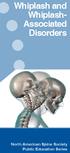 Whiplash and Whiplash- Associated Disorders North American Spine Society Public Education Series What Is Whiplash? The term whiplash might be confusing because it describes both a mechanism of injury and
The Animal Welfare Act Regulations for the Transportation of Wildlife
 The Animal Welfare Act Regulations for the Transportation of Wildlife The following sections of the Code of Federal Regulations Title 9 are the most relevant to the transportation of animals by UIUC researchers,
Introduction to Animals
 Introduction to Animals Unity and Diversity of Life Q: What characteristics and traits define animals? 25.1 What is an animal? WHAT I KNOW SAMPLE ANSWER: Animals are different from other living things
.org. Cervical Radiculopathy (Pinched Nerve) Anatomy. Cause
 Cervical Radiculopathy (Pinched Nerve) Page ( 1 ) Cervical radiculopathy, commonly called a pinched nerve occurs when a nerve in the neck is compressed or irritated where it branches away from the spinal
THE SPINAL CORD AND THE INFLUENCE OF ITS DAMAGE ON THE HUMAN BODY
 THE SPINAL CORD AND THE INFLUENCE OF ITS DAMAGE ON THE HUMAN BODY THE SPINAL CORD. A part of the Central Nervous System The nervous system is a vast network of cells, which carry information in the form
EFFECT OF POULTRY HOUSING SYSTEMS ON EGG PRODUCTION
 953 Bulgarian Journal of Agricultural Science, 18 (No 6) 2012, 953-957 Agricultural Academy EFFECT OF POULTRY HOUSING SYSTEMS ON EGG PRODUCTION V. GERZILOV 1, V. DATKOVA 2, S. MIHAYLOVA 1, 2 and N. BOZAKOVA
Therapeutic Canine Massage
 Meet our Certified Canine Massage Therapist, Stevi Quick After years of competitive grooming and handling several breeds in conformation, I became interested in training and competing with my dogs in the
The type of cancer Your specific treatment Your pre training levels before diagnose (your current strength and fitness levels)
 Exercise and Breast Cancer: Things you can do! Cancer within the fire service is one of the most dangerous threats to our firefighter s health & wellness. According to the latest studies firefighters are
Manual Handling- The Whole Story!
 Manual Handling- The Whole Story! For Responsible Managers and Assessors Course Notes Mark Mallen Group Health and Safety Manager July 2005 Course Content 1 What is Manual Handling? 2 What s the Problem?
The Anatomy of Spinal Cord Injury (SCI)
 The Anatomy of Spinal Cord Injury (SCI) What is the Spinal Cord? The spinal cord is that part of your central nervous system that transmits messages between your brain and your body. The spinal cord has
Chetek-Weyerhaeuser High School
 Chetek-Weyerhaeuser High School Anatomy and Physiology Units and Anatomy and Physiology A Unit 1 Introduction to Human Anatomy and Physiology (6 days) Essential Question: How do the systems of the human
Anatomy and Physiology: Understanding the Importance of CPR
 Anatomy and Physiology: Understanding the Importance of CPR Overview This document gives you more information about the body s structure (anatomy) and function (physiology). This information will help
Calcaneus (Heel Bone) Fractures
 Copyright 2010 American Academy of Orthopaedic Surgeons Calcaneus (Heel Bone) Fractures Fractures of the heel bone, or calcaneus, can be disabling injuries. They most often occur during high-energy collisions
LIFTING AND BACK SAFETY TRAINING LESSON PLAN
 LIFTING AND BACK SAFETY TRAINING LESSON PLAN Topic: Back Safety and Proper Lifting Techniques This presentation is designed to assist trainers conducting Lifting and Back Safety training for workers. Back
Level 2 Award / Certificate in Proficiency in Protecting the Welfare of Animals at Time of Killing
 Level 2 Award / Certificate in Proficiency in Protecting the Welfare of Animals at Time of Killing August 2013 6-14 Guided Learning Hours (Award) 51-90 Guided Learning Hours (Certificate) Credit Value
Unique reproductive strategies have developed to ensure maximum reproductive success.
 Animal Reproductive Strategies The ultimate goal of each species is to produce the maximum number of surviving offspring using the least amount of energy. This is called the reproductive effort. Asexual
Signs of a Gravid Tortoise
 Signs of a Gravid Tortoise Indications that a tortoise is gravid may vary from tortoise to tortoise, but can include any or all of the following:- Loss of appetite The physical space occupied in the body
EUROPEAN COMMISSION DIRECTORATE-GENERAL FOR AGRICULTURE AND RURAL DEVELOPMENT. Expert Group for Technical Advice on Organic Production EGTOP
 EUROPEAN COMMISSION DIRECTORATE-GENERAL FOR AGRICULTURE AND RURAL DEVELOPMENT Directorate H. Sustainability and Quality of Agriculture and Rural Development H.3. Organic farming Expert Group for Technical
Throughout this reference summary, you will find out what massage therapy is, its benefits, risks, and what to expect during and after a massage.
 Massage Therapy Introduction Massage therapy is the manipulation of the soft tissues of the body, including the skin, tendons, muscles and connective tissue by a professional, for relaxation or to enhance
SHAKEN BABY SYNDROME:
 SHAKEN BABY SYNDROME: A SAFETY MANUAL FOR HAND IN HAND CHILD CARE SHAKEN BABY SYNDROME BACKGROUND: The dangers of shaking a baby are becoming more and more apparent, often with disastrous results. The
Impacts of Banning Cage Egg Production In the United States
 Impacts of Banning Cage Egg Production In the United States A report prepared for United Egg Producers August 2009 Promar International 1737 King Street, Suite 330 Alexandria, VA 22314 USA Tel:(703) 739-9090
honey bee By Henry Touray
 honey bee By Henry Touray Introduction For my project I have chosen to research Bees. I chose to find out about the bee because bees have been in the news lately. Lots of hives have died out and scientists
Seven steps to patient safety The full reference guide. Second print August 2004
 Seven steps to patient safety The full reference guide Second print August 2004 National Patient Safety Agency Seven steps to patient safety 113 Appendix Four F Examples of events according to severity
Welfare of ducks in intensive units
 Rev. sci. tech. Off. int. Epiz., 1994,13 (1), 125-129 Welfare of ducks in intensive units H. RAUD * and J.M. FAURE ** Summary: Intensive husbandry of ducks is currently creating problems with regard to
Temple Physical Therapy
 Temple Physical Therapy A General Overview of Common Neck Injuries For current information on Temple Physical Therapy related news and for a healthy and safe return to work, sport and recreation Like Us
Adult CCRN/CCRN E/CCRN K Certification Review Course: Integumentary and Musculoskeletal
 Adult CCRN/CCRN E/CCRN K Certification Review Course: Integumentary and Musculoskeletal Carol Rauen RN BC, MS, PCCN, CCRN, CEN Integumentary IV infiltration Pressure ulcers Wounds Infectious Surgical Trauma
Fact Sheet: Occupational Overuse Syndrome (OOS)
 Fact Sheet: Occupational Overuse Syndrome (OOS) What is OOS? Occupational Overuse Syndrome (OOS) is the term given to a range of conditions characterised by discomfort or persistent pain in muscles, tendons
Animal daoyin. Dr. Shen Hongxun. Exercises of the BUQI System
 Dr. Shen Hongxun Animal daoyin Exercises of the BUQI System Copyright 2005; Dr. Shen Hongxun, Gent All rights reserved. This tekst may not be reproduced, in whole or in part, by photocopy or print or any
WOMENCARE A Healthy Woman is a Powerful Woman (407) 898-1500. Hormone Therapy
 Hormone Therapy WOMENCARE A Healthy Woman is a Powerful Woman (407) 898-1500 At menopause, a woman's body makes less estrogen and she stops having menstrual periods. This is a natural stage in a woman's
What Alcohol Does to the Body. Chapter 25 Lesson 2
 What Alcohol Does to the Body Chapter 25 Lesson 2 Short-Term Effects of Drinking The short-term term effects of alcohol on the body depend on several factors including: amount of alcohol consumed, gender,
Wellness & Lifestyles Australia
 Wellness & Lifestyles Australia MANUAL HANDLING IN AGED CARE AND THE HEALTH CARE INDUSTRY E-BOOK prepared by Wellness & Lifestyles Australia 2007,2008,2009 Table of Contents Page No. IMPORTANT NOTICE...
Managing your watering system to improve feed conversion
 Managing your watering system to improve feed conversion By the Technical Team, Ziggity Systems, Inc., 101 Industrial Parkway East, Middlebury, Indiana 46540, USA Feed conversion rate is one of the more
Stem Cells and Hope for Patients
 Stem Cells and Hope for Patients by Maureen Condic, Ph.D. Most Americans know someone afflicted with an incurable medical condition. The possibility of stem cell cures has given hope to many who face such
Your Future by Design
 Retirement Research Series Your Future by Design Health, money, retirement: The different needs of men and women This research report is one of several reports in the Your Future by Design Retirement Research
THE NEWCASTLE UPON TYNE HOSPITALS NHS FOUNDATION TRUST SAFE USE AND STORAGE OF LIQUID NITROGEN AND SOLID CARBON DIOXIDE (DRY ICE)
 THE NEWCASTLE UPON TYNE HOSPITALS NHS FOUNDATION TRUST SAFE USE AND STORAGE OF LIQUID NITROGEN AND SOLID CARBON DIOXIDE (DRY ICE) GUIDANCE AND INFORMATION Effective: February 2007 Review February 2010
ARTICLE #1 PLEASE RETURN AT THE END OF THE HOUR
 ARTICLE #1 PLEASE RETURN AT THE END OF THE HOUR Alcoholism By Mayo Clinic staff Original Article: http://www.mayoclinic.com/health/alcoholism/ds00340 Definition Alcoholism is a chronic and often progressive
DIABETES. Eyes, Heart, Nerves, Feet, and Kidneys. www.kidney.org
 DIABETES Eyes, Heart, Nerves, Feet, and Kidneys www.kidney.org About the Information in this Booklet Did you know that the National Kidney Foundation (NKF) offers guidelines and commentaries that help