
CHAPTER 5.4 DOCUMENTATION
|
|
|
- Amy Harrison
- 9 years ago
- Views:
Transcription
1 Copyright 2008 United Nations. All rights reserved CHAPTER 5.4 DOCUMENTATION Any carriage of goods governed by ADR shall be accompanied by the documentation prescribed in this Chapter, as appropriate, unless exempted under to NOTE 1: For the list of documentation to be carried on board transport units, see NOTE 2: The use of electronic data processing (EDP) or electronic data interchange (EDI) techniques as an aid to or instead of paper documentation is permitted, provided that the procedures used for the capture, storage and processing of electronics data meet the legal requirements as regards the evidential value and availability of data during transport in a manner at least equivalent to that of paper documentation Dangerous goods transport document and related information General information required in the transport document The transport document(s) shall contain the following information for each dangerous substance, material or article offered for carriage: (a) (b) the UN number preceded by the letters "UN"; the proper shipping name supplemented, when applicable (see ) with the technical name in brackets (see ), as determined in accordance with 3.1.2; (c) - for substances and articles of Class 1: the classification code given in Column (3b) of Table A in Chapter 3.2. When, in Column (5) of Table A in Chapter 3.2, label model numbers other than 1, 1.4, 1.5 and 1.6 are given, these label model numbers, in brackets, shall follow the classification code; - for radioactive material of Class 7: the Class number: "7"; NOTE: For radioactive material with a subsidiary risk, see also special provision 172 in Chapter for substances and articles of other classes: the label model numbers given in Column (5) of Table A in Chapter 3.2 or applicable according to a special provision referred to in Column (6). When more than one label model numbers are given, the numbers following the first one shall be given in brackets. For substances and articles for which no label model is given in Column (5) of Table A in Chapter 3.2, their class according to Column (3a) shall be given instead; (d) where assigned, the packing group for the substance which may be preceded by the letters "PG" (e.g. "PG II"), or the initials corresponding to the words "Packing Group" in the languages used according to ; NOTE: For radioactive material of Class 7 with subsidiary risks, see special provision 172 (b) in Chapter

2 Copyright 2008 United Nations. All rights reserved (e) (f) the number and a description of the packages when applicable. UN packaging codes may only be used to supplement the description of the kind of package (e.g. one box (4G)); the total quantity of each item of dangerous goods bearing a different UN number, proper shipping name or, when applicable, packing group (as a volume or as a gross mass, or as a net mass as appropriate); NOTE 1: In the case of intended application of , the total quantity of dangerous goods for each transport category shall be indicated in the transport document in accordance with NOTE 2: For dangerous goods in machinery or equipment specified in this Annex, the quantity indicated shall be the total quantity of dangerous goods contained therein in kilograms or litres as appropriate. (g) (h) (i) (j) (k) the name and address of the consignor; the name and address of the consignee(s). With the agreement of the competent authorities of the countries concerned by the carriage, when dangerous goods are carried to be delivered to multiple consignees who cannot be identified at the start of the carriage, the words "Delivery Sale" may be given instead; a declaration as required by the terms of any special agreement; (Reserved) where assigned, the tunnel restriction code given in Column (15) of Table A of Chapter 3.2, in capitals within parenthesis. The tunnel restriction code need not be added in the transport document where the carriage is known beforehand not to pass through a tunnel with restrictions for carriage of dangerous goods. The location and order in which the elements of information required appear in the transport document is left optional, except that (a), (b), (c), (d) and (k) shall be shown in the order listed above (i.e. (a), (b), (c), (d), (k)) with no information interspersed, except as provided in ADR. Examples of such permitted dangerous goods descriptions are: "UN 1098 ALLYL ALCOHOL, 6.1 (3), I, (C/D)" or "UN 1098, ALLYL ALCOHOL, 6.1 (3), PG I, (C/D)" The information required on a transport document shall be legible. Although upper case is used in Chapter 3.1 and in Table A in Chapter 3.2 to indicate the elements which shall be part of the proper shipping name, and although upper and lower case are used in this Chapter to indicate the information required in the transport document, except for the provisions in (k), the use of upper or of lower case for entering the information in the transport document is left optional

3 Special provisions for wastes Copyright 2008 United Nations. All rights reserved If waste containing dangerous goods (other than radioactive wastes) is being carried, the UN number and the proper shipping name shall be preceded by the word "WASTE", unless this term is part of the proper shipping name, e.g.: "WASTE, UN 1230 METHANOL, 3 (6.1), II, (D/E)", or "WASTE, UN 1230 METHANOL, 3 (6.1), PG II, (D/E)", or "WASTE, UN 1993 FLAMMABLE LIQUID, N.O.S. (toluene and ethyl alcohol), 3, II, (D/E)", or "WASTE, UN 1993 FLAMMABLE LIQUID, N.O.S. (toluene and ethyl alcohol), 3, PG II, (D/E)" If the provision for waste as set out in is applied, the following shall be added to the proper shipping name: "WASTE IN ACCORDANCE WITH " (e.g. "UN 3264, CORROSIVE LIQUID, ACIDIC, INORGANIC, N.O.S., 8, II, (E), WASTE IN ACCORDANCE WITH "). The technical name, as prescribed in Chapter 3.3, special provision 274, need not be added Special provisions for dangerous goods packed in limited quantities No information is required in the transport document, if any, for carriage of dangerous goods packed in limited quantities according to Chapter Special provisions for salvage packagings When dangerous goods are carried in a salvage packaging, the words "SALVAGE PACKAGE" shall be added after the description of the goods in the transport document Special provision for empty means of containment, uncleaned For empty means of containment, uncleaned, which contain the residue of dangerous goods of classes other than Class 7, the words "EMPTY, UNCLEANED" or "RESIDUE, LAST CONTAINED" shall be indicated before or after the proper shipping name required in (b). Moreover, (f) does not apply The special provision of may be replaced with the provisions of , or , as appropriate For empty packagings, uncleaned, which contain the residue of dangerous goods of classes other than Class 7, including empty uncleaned receptacles for gases with a capacity of not more than 1000 litres, the particulars according to (a), (b), (c), (d), (e) and (f) are replaced with "EMPTY PACKAGING", "EMPTY RECEPTACLE", "EMPTY IBC" or "EMPTY LARGE PACKAGING", as appropriate, followed by the information of the goods last loaded, as described in (c). See example as follows: "EMPTY PACKAGING, 6.1 (3)". In addition, in such a case, if the dangerous goods last loaded are goods of Class 2, the information prescribed in (c) may be replaced by the number of the class "2" For empty means of containment other than packagings, uncleaned, which contain the residue of dangerous goods of classes other than Class 7 and for empty uncleaned receptacles for gases with a capacity of more than 1000 litres, the particulars according to

4 Copyright 2008 United Nations. All rights reserved (a) to (d) and (k) are preceded by "EMPTY TANK-VEHICLE", "EMPTY DEMOUNTABLE TANK", "EMPTY TANK-CONTAINER", "EMPTY PORTABLE TANK", "EMPTY BATTERY-VEHICLE", "EMPTY MEGC", "EMPTY MEMU", "EMPTY VEHICLE", "EMPTY CONTAINER" or "EMPTY RECEPTACLE", as appropriate, followed by the words "LAST LOAD:". Moreover, paragraph (f) does not apply. See examples as follows: "EMPTY TANK-VEHICLE, LAST LOAD: UN 1098 ALLYL ALCOHOL, 6.1 (3), I, (C/D)" or "EMPTY TANK-VEHICLE, LAST LOAD: UN 1098 ALLYL ALCOHOL, 6.1 (3), PG I, (C/D)" When empty means of containment, uncleaned, which contain the residue of dangerous goods of classes other than Class 7, are returned to the consignor, the transport documents prepared for the full-capacity carriage of these goods may also be used. In such cases, the indication of the quantity is to be eliminated (by effacing it, striking it out or any other means) and replaced by the words "EMPTY, UNCLEANED RETURN" (a) If empty tanks, battery- vehicles and MEGCs, uncleaned, are carried to the nearest place where cleaning or repair can be carried out in accordance with the provisions of , the following additional entry shall be made in the transport document: "Carriage in accordance with ". (b) If empty vehicles and containers, uncleaned, are carried to the nearest place where cleaning or repair can be carried out in accordance with the provisions of , the following additional entry shall be made in the transport document: "Carriage in accordance with " For the carriage of fixed tanks (tank vehicles), demountable tanks, battery-vehicles, tank-containers and MEGCs under the conditions of , the following entry shall be included in the transport document: "Carriage in accordance with " Special provisions for carriage in a transport chain including maritime or air carriage (Reserved) (Reserved) (Deleted) For carriage in accordance with , a statement shall be included in the transport document, as follows: "Carriage in accordance with " Special provisions for the carriage of IBCs or portable tanks after the date of expiry of the last periodic test or inspection (Reserved) For carriage in accordance with (b), (b), (b) or (b), a statement to this effect shall be included in the transport document, as follows: "Carriage in accordance with (b)", "Carriage in accordance with (b)", "Carriage in accordance with (b)" or "Carriage in accordance with (b)" as appropriate

5 Special provisions for carriage in multi-compartment tank-vehicles or transport units with more than one tank When by derogation from a multi-compartment tank-vehicle or a transport unit with more than one tank is marked in accordance with , the substances contained in each tank or in each compartment of a tank shall be specified in the transport document Special provisions for the carriage of substances carried under elevated temperature If the proper shipping name of a substance which is carried or offered for carriage in a liquid state at a temperature equal to or exceeding 100 C, or in a solid state at a temperature equal to or exceeding 240 C, does not convey the elevated temperature condition (for example, by using the term "MOLTEN" or "ELEVATED TEMPERATURE" as part of the proper shipping name), the word "HOT" shall immediately precede the proper shipping name Special provisions for the carriage of substances stabilized by temperature control If the word "STABILIZED" is part of the proper shipping name (see also ), when stabilization is by means of temperature control, the control and emergency temperatures (see ) shall be indicated in the transport document, as follows: "Control temperature:... C Emergency temperature:... C" Information required in accordance with special provision 640 in Chapter 3.3 Where it is required by special provision 640 of Chapter 3.3, the transport document shall bear the inscription "Special provision 640X" where "X" is the capital letter appearing after the pertinent reference to special provision 640 in column (6) of Table A of Chapter Special provisions for the carriage of solids in bulk containers conforming to When solid substances are carried in bulk containers conforming to , the following statement shall be shown on the transport document (see NOTE at the beginning of ): "Bulk container BK(x) approved by the competent authority of " Additional or special information required for certain classes Special provisions for Class 1 Copyright 2008 United Nations. All rights reserved (a) The transport document shall indicate, in addition to the requirements in (f): - the total net mass, in kg, of explosive contents 1 for each substance or article bearing a different UN number; - the total net mass, in kg, of explosive contents 1 for all substances and articles covered by the transport document; (b) For mixed packing of two different goods, the description of the goods in the transport document shall include the UN numbers and names printed in capitals in Columns (1) and (2) of Table A of Chapter 3.2 of both substances or articles. If more than two different goods are contained in the same package in conformity with the mixed packing provisions given in special provisions MP1, MP2 and MP20 to MP24, the transport document shall indicate under the description of the goods the UN numbers of all the substances and articles contained in the package, in the form, "Goods of UN Nos..."; 1 For articles, "explosive contents" means the explosive substance contained in the article

6 Copyright 2008 United Nations. All rights reserved (c) (d) (e) (f) (g) For the carriage of substances and articles assigned to an n.o.s. entry or the entry "0190 SAMPLES, EXPLOSIVE" or packed conforming to packing instruction P101 of , a copy of the competent authority approval with the conditions of carriage shall be attached to the transport document. It shall be drafted in an official language of the forwarding country and also, if that language is not English, French or German, in English, French or German unless agreements, if any, concluded between the countries concerned in the transport operation provide otherwise; If packages containing substances and articles of compatibility groups B and D are loaded together in the same vehicle in accordance with the requirements of , a copy of the competent authority approval of the protective compartment or containment system in accordance with , note a under the table, shall be attached to the transport document. It shall be drafted in an official language of the forwarding country and also, if that language is not English, French or German, in English, French or German unless agreements, if any, concluded between the countries concerned in the transport operation provide otherwise; When explosive substances or articles are carried in packagings conforming to packing instruction P101, the transport document shall bear the inscription "Packaging approved by the competent authority of..." (see , packing instruction P101); (Reserved) When fireworks of UN Nos. 0333, 0334, 0335, 0336 and 0337 are carried, the transport document shall bear the inscription: "Classification recognized by the competent authority of..." (State referred to in special provision 645 of 3.3.1). NOTE: The commercial or technical name of the goods may be entered additionally to the proper shipping name in the transport document Additional provisions for Class 2 (a) (b) For the carriage of mixtures (see ) in tanks (demountable tanks, fixed tanks, portable tanks, tank-containers or elements of battery-vehicles or of MEGCs), the composition of the mixture as a percentage of the volume or as a percentage of the mass shall be given. Constituents below 1% need not be indicated (see also ). The composition of the mixture need not be given when the technical names authorized by special provisions 581, 582 or 583 are used to supplement the proper shipping name; For the carriage of cylinders, tubes, pressure drums, cryogenic receptacles and bundles of cylinders under the conditions of , the following entry shall be included in the transport document: "Carriage in accordance with " Additional provisions for self-reactive substances of Class 4.1 and organic peroxides of Class For self-reactive substances of Class 4.1 and for organic peroxides of Class 5.2 that require temperature control during carriage (for self-reactive substances see ; for organic peroxides, see to ), the control and emergency temperatures shall be indicated in the transport document, as follows: "Control temperature:... C Emergency temperature:... C"

7 When for certain self-reactive substances of Class 4.1 and certain organic peroxides of Class 5.2 the competent authority has permitted the label conforming to model No.1 to be dispensed with for a specific packaging (see ), a statement to this effect shall be included in the transport document, as follows: "The label conforming to model No. 1 is not required" When organic peroxides and self-reactive substances are carried under conditions where approval is required (for organic peroxides see , and special provision TA2 of 6.8.4; for self-reactive substances see and , a statement to his effect shall be included in the transport document, e.g. "Carriage in accordance with ". A copy of the competent authority approval with the conditions of carriage shall be attached to the transport document. It shall be drafted in an official language of the forwarding country and also, if that language is not English, French or German, in English, French or German unless agreements, if any, concluded between the countries concerned in the transport operation provide otherwise When a sample of an organic peroxide (see ) or a self-reactive substance (see ) is carried, a statement to this effect shall be included in the transport document, e.g. "Carriage in accordance with " When self-reactive substances type G (see Manual of Tests and Criteria, Part II, paragraph (g)) are carried, the following statement may be given in the transport document: "Not a self-reactive substance of Class 4.1". When organic peroxides type G (see Manual of Tests and Criteria, Part II, paragraph (g)) are carried, the following statement may be given in the transport document: "Not a substance of Class 5.2" Additional provisions for Class 6.2 In addition to the information concerning the consignee (see (h)), the name and telephone number of a responsible person shall be indicated Additional provisions for Class The following information shall be inserted in the transport document for each consignment of Class 7 material, as applicable, in the order given and immediately after the information required under (a) to (c) and (k): (a) Copyright 2008 United Nations. All rights reserved The name or symbol of each radionuclide or, for mixtures of radionuclides, an appropriate general description or a list of the most restrictive nuclides; (b) (c) (d) (e) A description of the physical and chemical form of the material, or a notation that the material is special form radioactive material or low dispersible radioactive material. A generic chemical description is acceptable for chemical form. For radioactive material with a subsidiary risk, see last sentence of special provision 172 of Chapter 3.3; The maximum activity of the radioactive contents during carriage expressed in becquerels (Bq) with an appropriate SI prefix symbol (see ). For fissile material, the mass of fissile material in grams (g), or appropriate multiples thereof, may be used in place of activity; The category of the package, i.e. I-WHITE, II-YELLOW, III-YELLOW; The transport index (categories II-YELLOW and III-YELLOW only);

8 Copyright 2008 United Nations. All rights reserved (f) (g) (h) (i) (j) For consignments including fissile material other than consignments excepted under , the criticality safety index; The identification mark for each competent authority approval certificate (special form radioactive material, low dispersible radioactive material, special arrangement, package design, or shipment) applicable to the consignment; For consignments of more than one package, the information required in and in (a) to (g) above shall be given for each package. For packages in an overpack, container, or vehicle, a detailed statement of the contents of each package within the overpack, container, or vehicle and, where appropriate, of each overpack, container, or vehicle shall be included. If packages are to be removed from the overpack, container, or vehicle at a point of intermediate unloading, appropriate transport documents shall be made available; Where a consignment is required to be shipped under exclusive use, the statement "EXCLUSIVE USE SHIPMENT"; and For LSA-II and LSA-III substances, SCO-I and SCO-II, the total activity of the consignment as a multiple of A The consignor shall provide in the transport documents a statement regarding actions, if any, that are required to be taken by the carrier. The statement shall be in the languages deemed necessary by the carrier or the authorities concerned, and shall include at least the following information: (a) Supplementary requirements for loading, stowage, carriage, handling and unloading of the package, overpack or container including any special stowage provisions for the safe dissipation of heat (see special provision CV33 (3.2) of ), or a statement that no such requirements are necessary; (b) Restrictions on the mode of carriage or vehicle and any necessary routeing instructions; (c) Emergency arrangements appropriate to the consignment In case of international carriage of packages requiring competent authority design or shipment approval, for which different approval types apply in the different countries concerned, the UN number and proper shipping name required in shall be in accordance with the certificate of the country of origin of design The applicable competent authority certificates need not necessarily accompany the consignment. The consignor shall make them available to the carrier(s) before loading and unloading (Reserved) Format and language The document containing the information in and may be that already required by other regulations in force for carriage by another mode of carriage. In case of multiple consignees, the name and address of the consignees and the quantities delivered enabling the nature and quantities carried to be evaluated at any time, may be entered in other documents which are to be used or in any other documents made mandatory according to other specific regulations and which shall be on board the vehicle

9 The particulars to be entered in the document shall be drafted in an official language of the forwarding country, and also, if that language is not English, French, or German, in English, French or German, unless international road carriage tariffs, if any, or agreements concluded between the countries concerned in the transport operation, provide otherwise If by reason of the size of the load, a consignment cannot be loaded in its entirety on a single transport unit, at least as many separate documents, or copies of the single document, shall be made out as transport units loaded. Furthermore, in all cases, separate transport documents shall be made out for consignments or parts of consignments which may not be loaded together on the same vehicle by reason of the prohibitions set forth in The information relative to the hazards of the goods to be carried (as indicated in ) may be incorporated in, or combined with, an existing transport or cargo handling document. The layout of the information in the document (or the order of transmission of the corresponding data by electronic date processing (EDP) or electronic date interchange (EDI) techniques) shall be as provided in When an existing transport document or cargo handling document cannot be used for the purposes of dangerous goods documentation for multimodal transport, the use of documents corresponding to the example shown in is considered advisable Non-dangerous goods Copyright 2008 United Nations. All rights reserved When goods mentioned by name in Table A of Chapter 3.2, are not subject to ADR because they are considered as non-dangerous according to Part 2, the consignor may enter in the transport document a statement to that effect, e.g.: "Not goods of Class..." NOTE: This provision may be used in particular when the consignor considers that, due to the chemical nature of the goods (e.g. solutions and mixtures) carried or to the fact that such goods are deemed dangerous for other regulatory purposes the consignment might be subject to control during the journey. 2 If used, the relevant recommendations of the UNECE United Nations Centre for Trade Facilitation and Electronic Business (UN/CEFACT) may be consulted, in particular Recommendation No. 1 (United Nations Layout Key for Trade Documents) (ECE/TRADE/137, edition 81.3), UN Layout Key for Trade Documents - Guidelines for Applications (ECE/TRADE/270, edition 2002), Recommendation No. 11 (Documentary Aspects of the International Transport of Dangerous Goods) (ECE/TRADE/204, edition 96.1 currently under revision) and Recommendation No. 22 (Layout Key for Standard Consignment Instructions) (ECE/TRADE/168, edition 1989). Refer also to the UN/CEFACT Summary of Trade Facilitation Recommendations (ECE/TRADE/346, edition 2006) and the United Nations Trade Data Elements Directory (UNTDED) (ECE/TRADE/362, edition 2005)

10 5.4.2 Container packing certificate Copyright 2008 United Nations. All rights reserved If the carriage of dangerous goods in a large container precedes a voyage by sea, a container packing certificate conforming to section of the IMDG Code 3 shall be provided with the transport document 4. 3 Guidelines for use in practice and in training for loading goods in transport units have also been drawn up by the International Maritime Organization (IMO), the International Labour Organization (ILO) and the United Nations Economic Commission for Europe (UNECE) and have been published by IMO ("IMO/ILO/UNECE Guidelines for Packing of Cargo Transport Units (CTUs)"). 4 Section of the IMDG Code requires the following: "5.4.2 Container/vehicle packing certificate When dangerous goods are packed or loaded into any container or vehicle, those responsible for packing the container or vehicle shall provide a container/vehicle packing certificate specifying the container/vehicle identification number(s) and certifying that the operation has been carried out in accordance with the following conditions:.1 The container/vehicle was clean, dry and apparently fit to receive the goods;.2 Packages, which need to be segregated in accordance with applicable segregation requirements, have not been packed together onto or in the container/vehicle [unless approved by the competent authority concerned in accordance with (of the IMDG Code)];.3 All packages have been externally inspected for damage, and only sound packages have been loaded;.4 Drums have been stowed in an upright position, unless otherwise authorized by the competent authority, and all goods have been properly loaded, and, where necessary, adequately braced with securing material to suit the mode(s) of transport for the intended journey;.5 Goods loaded in bulk have been evenly distributed within the container/vehicle;.6 For consignments including goods of class 1, other than division 1.4, the container/vehicle is structurally serviceable in conformity with (of the IMDG Code);.7 The container/vehicle and packages are properly marked, labelled, and placarded, as appropriate;.8 When solid carbon dioxide (CO2-dry ice) is used for cooling purposes, the container/vehicle is externally marked or labelled in a conspicuous place, such as, at the door end, with the words: "DANGEROUS CO2 GAS (DRY ICE) INSIDE. VENTILATE THOROUGHLY BEFORE ENTERING ; and.9 A dangerous goods transport document, as indicated in (of the IMDG Code) has been received for each dangerous goods consignment loaded in the container/vehicle. NOTE: The container/vehicle packing certificate is not required for tanks The information required in the dangerous goods transport document and the container/vehicle packing certificate may be incorporated into a single document; if not, these documents shall be attached one to the other. If the information is incorporated into a single document, the document shall include a signed declaration such as It is declared that the packing of the goods into the container/vehicle has been carried out in accordance with the applicable provisions. This declaration shall be dated and the person signing this declaration shall be identified on the document. Facsimile signatures are acceptable where applicable laws and regulations recognize the legal validity of facsimile signatures If the dangerous goods documentation is presented to the carrier by means of electronic data processing (EDP) or electronic data interchange (EDI) transmission techniques, the signature(s) may be replaced by the name(s) (in capitals) of the person(s) authorized to sign."

11 Copyright 2008 United Nations. All rights reserved The functions of the transport document required under and of the container packing certificate as provided above may be incorporated into a single document; if not, these documents shall be attached one to the other. If these functions are incorporated into a single document, the inclusion in the transport document of a statement that the loading of the container has been carried out in accordance with the applicable modal regulations together with the identification of the person responsible for the container packing certificate shall be sufficient. NOTE: The container packing certificate is not required for portable tanks, tank-containers and MEGCs Instructions in writing As an aid during an accident emergency situation that may occur or arise during carriage, instructions in writing in the form specified in shall be carried in the vehicle crew s cab and shall be readily available These instructions shall be provided by the carrier to the vehicle crew in language(s) that each member can read and understand before the commencement of the journey. The carrier shall ensure that each member of the vehicle crew concerned understands and is capable of carrying out the instructions properly Before the start of the journey, the members of the vehicle crew shall inform themselves of the dangerous goods loaded and consult the instructions in writing for details on actions to be taken in the event of an accident or emergency The instructions in writing shall correspond to the following four page model as regards its form and contents

12 Copyright 2008 United Nations. All rights reserved INSTRUCTIONS IN WRITING Actions in the event of an accident or emergency In the event of an accident or emergency that may occur or arise during carriage, the members of the vehicle crew shall take the following actions where safe and practicable to do so: - Apply the braking system, stop the engine and isolate the battery by activating the master switch where available; - Avoid sources of ignition, in particular, do not smoke or switch on any electrical equipment; - Inform the appropriate emergency services, giving as much information about the incident or accident and substances involved as possible; - Put on the warning vest and place the self-standing warning signs as appropriate; - Keep the transport documents readily available for responders on arrival; - Do not walk into or touch spilled substances and avoid inhalation of fumes, smoke, dusts and vapours by staying up wind; - Where appropriate and safe to do so, use the fire extinguishers to put out small/initial fires in tyres, brakes and engine compartments; - Fires in load compartments shall not be tackled by members of the vehicle crew; - Where appropriate and safe to do so, use on-board equipment to prevent leakages into the aquatic environment or the sewage system and to contain spillages; - Move away from the vicinity of the accident or emergency, advise other persons to move away and follow the advice of the emergency services; - Remove any contaminated clothing and used contaminated protective equipment and dispose of it safely

13 Additional guidance to members of the vehicle crew on the hazard characteristics of dangerous goods by class and on actions subject to prevailing circumstances Danger labels and placards Hazard characteristics Additional guidance (1) (2) (3) Explosive substances and articles Explosive substances and articles Copyright 2008 United Nations. All rights reserved May have a range of properties and effects such as mass detonation; projection of fragments; intense fire/heat flux; formation of bright light, loud noise or smoke. Sensitive to shocks and/or impacts and/or heat. Take cover but stay away from windows. Slight risk of explosion and fire. Take cover. 1.4 Flammable gases 2.1 Risk of fire. Risk of explosion. May be under pressure. Risk of asphyxiation. May cause burns and/or frostbite. Containments may explode when heated.. Take cover. Keep out of low areas. Non-flammable, non-toxic gases 2.2 Toxic gases 2.3 Flammable liquids Flammable solids, self-reactive substances and desensitized explosives 4.1 Substances liable to spontaneous combustion Substances which, in contact with water, emit flammable gases Risk of asphyxiation. May be under pressure. May cause frostbite. Containments may explode when heated. Risk of intoxication. May be under pressure. May cause burns and/or frostbite. Containments may explode when heated. Risk of fire. Risk of explosion. Containments may explode when heated. Risk of fire. Flammable or combustible, may be ignited by heat, sparks or flames. May contain self-reactive substances that are liable to exothermic decomposition in the case of heat supply, contact with other substances (such as acids, heavy-metal compounds or amines), friction or shock. This may result in the evolution of harmful and flammable gases or vapours. Containments may explode when heated. Risk of spontaneous combustion if packages are damaged or contents are spilled. May react vigorously with water Take cover. Keep out of low areas. Use emergency escape mask. Take cover. Keep out of low areas. Take cover. Keep out of low areas. Prevent leaking substances from running into the aquatic environment or the sewage system. Prevent leaking substances from running into the aquatic environment or the sewage system Risk of fire and explosion in contact with water. Spilled substances should be kept dry by covering the spillages

14 Danger labels and placards Hazard characteristics Additional guidance (1) (2) (3) Oxidizing substances Organic peroxides Toxic substances Copyright 2008 United Nations. All rights reserved Risk of ignition and explosion. Risk of vigorous reaction in contact with flammable substances. Risk of exothermic decomposition at elevated temperatures, contact with other substances (such as acids, heavy-metal compounds or amines), friction or shock. This may result in the evolution of harmful and flammable gases or vapours. Avoid mixing with flammable or combustible substances (e.g. sawdust). Avoid mixing with flammable or combustible substances (e.g. sawdust). Risk of intoxication. Risk to the aquatic environment and the sewerage system. Use emergency escape mask. 6.1 Infectious substances Risk of infection. Risk to the aquatic environment and the sewerage system. 6.2 Radioactive material 7A 7B Risk of intake and external radiation. Limit time of exposure. RADIOACTIVE 7 7C 7D Fissile material Risk of nuclear chain reaction. 7E Corrosive substances 8 Miscellaneous dangerous substances and articles 9 Risk of burns. May react vigorously with each other, with water and with other substances. Risk to the aquatic environment and the sewerage system. Risk of burns. Risk of fire. Risk of explosion. Risk to the aquatic environment and the sewerage system. Prevent leaking substances from running into the aquatic environment or the sewage system. Prevent leaking substances from running into the aquatic environment or the sewage system. NOTE 1: For dangerous goods with multiple risks and for mixed loads, each applicable entry shall be observed. NOTE 2: Additional guidance shown above may be adapted to reflect the classes of dangerous goods to be carried and their means of transport

15 Equipment for personal and general protection to carry out general actions and hazard specific emergency actions to be carried on board the vehicle in accordance with section of ADR The following equipment shall be carried an board the transport unit for all danger label numbers: - for each vehicle, a wheel chock of a size suited to the maximum mass of the vehicle and to the diameter of the wheel; - two self-standing warning signs; - eye rinsing liquid a ; and for each member of the vehicle crew - a warning vest (e.g. as described in the EN 471 standard); - portable lighting apparatus; - a pair of protective gloves; and - eye protection (e.g. protective goggles). Additional equipment required for certain classes: Copyright 2008 United Nations. All rights reserved - an emergency escape mask b for each member of the vehicle crew shall be carried on board the vehicle for danger label numbers 2.3 or 6.1; - a shovel c ; - a drain seal c ; - a collecting container made of plastics c. a b c Not required for danger label numbers 1, 1.4, 1.5, 1.6, 2.1, 2.2 and 2.3. For example an emergency escape mask with a combined gas/dust filter of the A1B1E1K1-P1 or A2B2E2K2-P2 type which is similar to that described in the EN 141 standard. Only required for danger label numbers 3, 4.1, 4.3, 8 and

16 Copyright 2008 United Nations. All rights reserved Example of a multimodal dangerous goods form Example of a form which may be used as a combined dangerous goods declaration and container packing certificate for multimodal carriage of dangerous goods

17 * FOR DANGEROUS GOODS: you must specify: UN no., proper shipping name, hazard class, packing group (where assigned) and any other element of information required under applicable national and international regulations 1. Shipper / Consignor /Sender 2. Transport document number Copyright 2008 United Nations. All rights reserved Shipper's reference Page 1 of Pages 5. Freight Forwarder's reference 6. Consignee 7. Carrier (to be completed by the carrier) 8. This shipment is within the limitations prescribed for: (Delete non-applicable) 9. Additional handling information PASSENGER AND CARGO AIRCRAFT ONLY CARGO AIRCRAFT 10. Vessel / flight no. and date 11. Port / place of loading 12. Port / place of discharge 13. Destination SHIPPER'S DECLARATION I hereby declare that the contents of this consignment are fully and accurately described below by the proper shipping name, and are classified, packaged, marked and labeled /placarded and are in all respects in proper condition for transport according to the applicable international and national governmental regulations. 14. Shipping marks * Number and kind of packages; description of goods Gross mass (kg) Net mass Cube (m 3 ) 15. Container identification No./ 16. Seal number (s) 17. Container/vehicle size & type 18. Tare (kg) 19. Total gross mass vehicle registration No. (including tare) (kg) CONTAINER/VEHICLE PACKING CERTIFICATE 21.RECEIVING ORGANISATION RECEIPT I hereby declare that the goods described above have been Received the above number of packages/containers/trailers in apparent good order and condition packed/loaded into the container/vehicle identified above in unless stated hereon: RECEIVING ORGANISATION REMARKS: accordance with the applicable provisions ** MUST BE COMPLETED AND SIGNED FOR ALL CONTAINER/VEHICLE LOADS BY PERSON RESPONSIBLE FOR PACKING/LOADING 20. Name of company Haulier's name 22. Name of company (OF SHIPPER PREPARING THIS NOTE) Name / Status of declarant Vehicle reg. no. Name / Status of declarant Place and date Signature and date Place and date MULTIMODAL DANGEROUS GOODS FORM Signature of declarant DRIVER'S SIGNATURE Signature of declarant BLACK HATCHINGS BLACK HATCHINGS BLACK HATCHINGS BLACK HATCHINGS BLACK HATCHINGS BLACK HATCHINGS BLACK HATCHINGS BLACK HATCHINGS BLACK HATCHINGS BLACK HATCHINGS BLACK HATCHINGS BLACK HATCHINGS BLACK ** See

18 * FOR DANGEROUS GOODS: you must specify: UN no., proper shipping name, hazard class, packing group (where assigned) and any other element of information required under applicable national and international regulations MULTIMODAL DANGEROUS GOODS FORM 1. Shipper / Consignor /Sender Copyright 2008 United Nations. 2. Transport All rights document reserved number Shipper's reference Page 1 of Pages Continuation Sheet 5. Freight Forwarder's reference 14. Shipping marks * Number and kind of packages; description of goods Gross mass (kg) Net mass Cube (m 3 ) BLACK HATCHINGS BLACK HATCHINGS BLACK HATCHINGS BLACK HATCHINGS BLACK HATCHINGS BLACK HATCHINGS BLACK HATCHINGS BLACK HATCHINGS BLACK HATCHINGS BLACK HATCHINGS BLACK HATCHINGS BLACK -

BCGA LEAFLET L1. Guidance for Carriage of Gas Cylinders on Vehicles. Rev 2 : 2009
 BCGA LEAFLET L1 Guidance for Carriage of Gas Cylinders on Vehicles. Rev 2 : 2009 Copyright 2009 by British Compressed Gases Association. First printed 2005. All rights reserved. No part of this publication
How to prepare a DG Declaration according to IMDG (Amendment 31)
 How to prepare a DG Declaration according to IMDG (Amendment 31) 1. (NEW) Continuation Page: Chapter 5.4.1.2.3 requires multiple pages of the DG Declaration be numbered consecutively. PAGE 1 of 2; PAGE
A Guide to the Transportation of Dangerous Goods Regulations
 A Guide to the Transportation of Dangerous Goods Regulations November 2012 - 2 - This material is meant as a guide to certain parts of the Transportation of Dangerous Goods Regulations and is not meant
Hazardous Substance Class Definitions & Labels
 Hazardous Substance Class Definitions & Labels In the IMDG Code, substances are divided into 9 classes. A substance with multiple hazards has one 'Primary Class' and one or more 'Subsidiary Risks'. Some
PART 5. Consignment procedures
 PART 5 Consignment procedures - 239 - CHAPTER 5.1 GENERAL PROVISIONS 5.1.1 Application and general provisions This Part sets forth the provisions for dangerous goods consignments relative to marking,
Syllabus. for. Dangerous Goods Safety Adviser. Examinations
 Syllabus for Dangerous Goods Safety Adviser Examinations Amended version March 2012 Contents Page Introduction 1 Core 4 Road 8 Rail 11 Inland Waterways 14 All Classes 19 Introduction Introduction This
Guideline for hazardous goods transport. Bringing hazardous goods safely to their destination
 Guideline for hazardous goods transport Bringing hazardous goods safely to their destination Effective from 1. November 2013 1 Contents 1. Introduction 2. Scope and conditions 3. Excluded hazardous goods
DANGEROUS GOODS DOCUMENTATION
 Australian Chamber of Shipping Ltd ACN 002 950 870 Level 5, 6 Underwood Street, Sydney NSW. Tel (02) 9251 9977 Fax (02) 9251 9505 E-mail [email protected] FACT SHEET Number 02/2000 July 2000 DANGEROUS
The National Road Traffic Act 93 of 96
 The National Road Traffic Act 93 of 96 Chapter VIII of the Regulations: Transportation of Dangerous Goods and Substances by Road As published in Gov Gaz 20963 of 17 March 2000, enacted on 3 August 2001
*** SAFETY DATA SHEET ***
 *** SAFETY DATA SHEET *** 1. IDENTIFICATION OF THE SUBSTANCE/PREPARATION AND OF THE COMPANY/UNDERTAKING PRODUCT NAME ECCOBOND 50126 FC PART A RECOMMENDED USE SUPPLIER Adhesive ICI Belgium nv (Emerson &
Working with ADR. An introduction to the carriage of dangerous goods by road
 Working with ADR An introduction to the carriage of dangerous goods by road INTRODUCTION Dangerous goods, such as explosives, flammables or corrosives, have inherent hazards. There is a risk that incidents
2013 ADR regulated goods. The practical guide
 2013 ADR regulated goods The practical guide Contents I Introduction to Eurotunnel s Policy for ADR regulated goods Definition of terms used I List of ADR regulated goods accepted Class 1: Class 2: Class
ADR. Carriage of Dangerous Goods by Road. A Guide For Business
 ADR Carriage of Dangerous Goods by Road A Guide For Business A national culture where all commit to safe and healthy workplaces and the safe and sustainable management of chemicals Published in November
Department of Transportation Hazardous Material Regulations General Awareness, Safety & Security Training. For: University of Dayton Hazmat Employees
 Department of Transportation Hazardous Material Regulations General Awareness, Safety & Security Training For: University of Dayton Hazmat Employees February, 2014 Overview Hazardous materials are substances
SAFETY DATA SHEET. according to 1907/2006/EC, Article 31 CYTOFIXX (CYTOLOGICAL FIXATIVE)
 SAFETY DATA SHEET according to 197/26/EC, Article 31 Page 1/5 SECTION 1: Identification of the substance/mixture and of the company/undertaking 1.1. Product identifier Product name 1.3. Details of the
Hazmat Materials Training Fact Sheet Module 2 Classification. The classification of hazardous materials is based on three key factors:
 Hazmat Materials Training Fact Sheet Module 2 Classification The classification of hazardous materials is based on three key factors: Accident history Physical and chemical properties International hazard
Transportation of Dangerous Goods. Transportation of Dangerous Goods Training for Queen s University Shippers and Receivers.
 Transportation of Dangerous Goods Training for Queen s University Shippers and Receivers. Welcome to the Transportation of Dangerous Goods (TDG) online refresher/training course specifically designed for
HANDLING DANGEROUS GOODS IN PORTS PARTICIPANTS MANUAL
 HANDLING DANGEROUS GOODS IN PORTS General Awareness Course PARTICIPANTS MANUAL July 2011 FOREWORD In recent years transportation of dangerous goods has undergone significant growth. With the increase of
How To Transport Dangerous Goods In Germany
 Translation of version of 26. March 2014 (Federal Law Gazette 2014, p. 301) Ordinance on the Transport of Dangerous Goods by Sea (Transport of Dangerous Goods by Sea Ordinance GGVSee) * ) Section 1 Scope
TARLETON STATE UNIVERSITY HAZARDOUS MATERIALS TRANSPORTATION PROGRAM
 TARLETON STATE UNIVERSITY HAZARDOUS MATERIALS TRANSPORTATION PROGRAM Program Name: Hazardous Waste Transportation Office Name: TSU Risk Management & Compliance Rev. No.: 1 Concurrence and Approval This
Safety data sheet for product
 Safety data sheet for product 1. PRODUCT AND COMPANY IDENTIFICATION Product name: Lithium ion rechargeable battery cell Product code: None (All cylindrical models Sanyo manufactured and whose capacity
TRANSPORT OF DANGEROUS GOODS
 Recommendations on the TRANSPORT OF DANGEROUS GOODS Model Regulations Volume I Fifteenth revised edition UNITED NATIONS ST/SG/AC.10/1/Rev.15 (Vol.I) Recommendations on the TRANSPORT OF DANGEROUS GOODS
Transportation of Soils Contaminated with Flammable Liquids
 Transportation of Soils Contaminated with Flammable Liquids November 2012 - 2 - This material is meant as a guide to certain parts of the Transportation of Dangerous Goods Regulations and is not meant
TRANSPORT OF DANGEROUS GOODS
 Recommendations on the TRANSPORT OF DANGEROUS GOODS Model Regulations Twelfth revised edition UNITED NATIONS CONTENTS RECOMMENDATIONS ON THE TRANSPORT OF DANGEROUS GOODS... 1 Nature, purpose and significance
Shipping papers must contain the following information. The basic description must be provided in the order prescribed per 49 CFR 172.202.
 Hazardous Materials Training Module 6 Documentation Shipping papers are required, under most circumstances, by 49 CFR, Part 172, Subpart C to be prepared and tendered with the shipment and maintained away
Requirements for packaging, marking and labeling of dangerous goods
 INSTRUCTION 1 (1) Requirements for packaging, marking and labeling of dangerous goods Abstract General requirements for packages, packaging preparation and the marking and labels required for packages
Guide for Preparing SHIPPING PAPERS
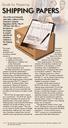 Guide for Preparing SHIPPING PAPERS One of the most frequently cited safety violations of the Hazardous Materials Regulations (HMR), Title 49 CFR Parts 100-185, is the failure of the shipper to properly
2002 E D I T I O N INSTRUCTOR
 2002 EDITION INSTRUCTOR Script Visual Narrative 1 This module presents general placarding requirements, placarding exceptions, and placard placement and design. Placards are placed on bulk packagings,
DANGEROUS GOODS PANEL (DGP) MEETING OF THE WORKING GROUP OF THE WHOLE
 International Civil Aviation Organization 23/3/11 WORKING PAPER DANGEROUS GOODS PANEL (DGP) MEETING OF THE WORKING GROUP OF THE WHOLE Atlantic City, United States, 4 to 8 April 2011 Agenda Item 2: Development
CARRIAGE OF GAS CYLINDERS BY ROAD IN CARS, VANS AND OTHER VEHICLES GUIDANCE FOR DRIVERS AT WORK
 CARRIAGE OF GAS CYLINDERS BY ROAD IN CARS, VANS AND OTHER VEHICLES GUIDANCE FOR DRIVERS AT WORK Rev 1 : 2005 BCGA L1 Rev 1 2005 Many thousands of gas cylinders are transported every day. There are certain
Hazardous Materials Packagings
 Hazardous Materials Packagings I. Hazmat Basics Bulk Containers, Non-Bulk Packagings and Intermediate Bulk Containers Packagings and containers used to transport Hazardous Materials are regulated in the
Inspection des engins de transport
 Inspection des engins de transport Qu est-ce qu on inspecte? Inspection des engins de transport Inspection administrative préalable à l'inspection: - Inspection des documents d'accompagnement. Dans la
REVISION NO : 3 August 2010
 1. PRODUCT AND COMPANY IDENTIFICATION Product Name Magnesium Powder Chemical Symbol Mg CAS No 7439-95-4 EINECS No 231-104-6 Supplier Name & Address THE METAL POWDER COMPANY LTD Thirumangalam - 625706 Tamil
Li-Ion Batteries <100 Wh
 Date of issue: 05/02/2015 Revision date: 13/07/2015 : Version: 7.6 SECTION 1: Identification of the substance/mixture and of the company/undertaking Product identifier Trade name Hilti B 7/1.5 Li-Ion,
SAFETY DATA SHEET EVO-STIK GRIPFILL SOLVENT FREE (Irl)
 Revision Date December 2014 SAFETY DATA SHEET According to Regulation (EC) No 1907/2006 1 / 6 SECTION 1: IDENTIFICATION OF THE SUBSTANCE/MIXTURE AND OF THE COMPANY/UNDERTAKING 1.1. Product identifier Product
SAFETY DATA SHEET BOSTIK AQUAGRIP 536
 Revision Date November 2014 1 / 6 SAFETY DATA SHEET BOSTIK AQUAGRIP 536 According to Regulation (EC) No 1907/2006 SECTION 1: IDENTIFICATION OF THE SUBSTANCE/MIXTURE AND OF THE COMPANY/UNDERTAKING 1.1.
SAFETY DATA SHEET EVO-STIK PLUMBERS MAIT
 Revision Date November 2012 Revision 9 1 / 5 SAFETY DATA SHEET According to Regulation (EC) No 1907/2006 SECTION 1: IDENTIFICATION OF THE SUBSTANCE/MIXTURE AND OF THE COMPANY/UNDERTAKING 1.1. Product identifier
Transport of Dangerous Goods by Road
 ECA-ECE-ICAP Workshop: UN Road Safety Conventions and Approaches to Preventing Drink Driving Transport of Dangerous Goods by Road Alibech Mireles Diaz Transport Division, UNECE United Nations Economic
Guide on the Segregation, Packaging, Labelling and Storage of Laboratory Chemical Wastes for Schools
 APPENDIX II Guide on the Segregation, Packaging, Labelling and Storage of Laboratory Chemical Wastes for Schools (Prepared by Environmental Protection Department) 1. Introduction The Waste Disposal (Chemical
Transportation of Radioactive Material
 Haza rdo us Reactor Concepts Manual Transportation of Radioactive Material Santa Fe The issues associated with the transportation of radioactive material are very complex due in part to the regulatory
Handling, storage, and transportation of health-care waste
 Handling, storage, and transportation of health-care waste 7 Handling, storage, and transportation of health-care waste 7.1 Waste segregation and packaging The key to minimization and effective management
International Maritime Dangerous Goods (IMDG) Special Provision 961 and 962
 SP961 and SP962 International Maritime Dangerous Goods (IMDG) Special Provision 961 and 962 Since 2010 when the International Maritime Organization decided to re-regulate vehicles, the applicability and
HAZARDOUS MATERIALS. Transportation Regulations at Tunnel and Bridge Facilities GEORGE WASHINGTON BRIDGE LINCOLN TUNNEL HOLLAND TUNNEL BAYONNE BRIDGE
 GEORGE HAZARDOUS MATERIALS Transportation Regulations at Tunnel and Bridge Facilities WASHINGTON BRIDGE NEW JERSEY LINCOLN TUNNEL HOLLAND TUNNEL NEW YORK BAYONNE BRIDGE GOETHALS BRIDGE OUTERBRIDGE CROSSING
: Fairy Professional Original Washing Up Liquid 5L
 PROFESSIONAL Fairy Professional Original Washing Up Liquid 5L Date of issue: 17/11/2011 Revision date: Version: 1.0 SECTION 1: Identification of the substance/mixture and of the company/undertaking 1.1.
Carriage of dangerous goods ADR Transport 2014
 Factsheet Carriage of dangerous goods ADR Transport 2014 Looking to transport hazardous chemicals? What do you need to do now? Please consult the material safety data sheet (MSDS) for your hazardous substances,
Reference in RID/ADR (restructured) to published standards and standards in preparation at CEN TC 23/256/261/268/286/296
 Attachment 2 to quarterly report of CEN Consultant ADR/RID Reference in RID/ADR (restructured) to published standards and standards in preparation at CEN TC 23/256/261/268/286/296 Notes: the standards
Packing for Transportation
 Within UCR Chemical Hazard Classes & Packing for Transportation Russell Vernon, Ph.D. Research Safety Manager 951-827-5119 direct 951-827-5528 admin [email protected] edu www.ehs.ucr.edu Introduction
MATERIAL SAFETY DATA SHEET
 DOT ID No: UN 2187 MATERIAL SAFETY DATA SHEET DOT Hazard Class: 2.2 Emergency No.: +971-6-5336481 Page No. : 1/5 DOT Shipping Label : Non Flammable Gas Date last updated: 22/09/2009 Revision no: 00 1.
The Carriage of Dangerous Goods and Use of Transportable Pressure Equipment Regulations 2007 (CDG&UTPER) The Carriage Of LPG Cylinders by Road
 The Carriage of Dangerous Goods and Use of Transportable Pressure Equipment Regulations 2007 (CDG&UTPER) The Carriage Of LPG Cylinders by Road 1.0 Who do the Regulations Apply to? The Regulations apply
SITPRO. International Trade Guides. Documents. Dangerous Goods Note Completion Guide
 SITPRO International Trade Guides Documents Dangerous Goods Note Completion Guide Dangerous Goods Note - SITPRO 1999 Design Completion Guide - Revised Edition - March 2007 BATHUNT (UK) PLC PO BOX 830 CROYDON
TRANSPORT OF DANGEROUS GOODS
 ST/SG/AC.10/1/Rev.16 (Vol.I) Recommendations on the TRANSPORT OF DANGEROUS GOODS Model Regulations Volume I Sixteenth revised edition UNITED NATIONS New York and Geneva, 2009 NOTE The designations employed
The potential to adversely affect human
 Purpose and Applicability of Regulations The potential to adversely affect human health and the environment is always present when using, storing, and transporting regulated materials. Consequently, numerous
The Safe Transport of Uranium Ore Concentrates
 wnti W o r l d N u c l e a r T r a N s p o rt I N s T I T u T e FACT SHEET NO.7 The Safe Transport of Uranium Ore Concentrates Dedicated to the safe, efficient and reliable transport of radioactive materials
BUBBLE JUICE CC AMERICAN DJ
 Page : 1/6 HEALT & SAFETY PRODUCT DATA SHEET ( Regulation CE n 1907/2006 changed) BUBBLE JUICE CC Code: 381020 AMERICAN DJ A.D.J. Supply Europe B.V. Junostraat 2 6468 EW Kerkrade - NETHERLANDS Page : 2/6
Material Safety Data Sheet For NiMH Batteries
 Document Number: RRS0541 Revision: 10 Page 1of 5 IDENTITY (As Used on Label and List) Nickel Metal Hydride Battery Section I Information of Manufacturer Manufacturer's Name GPI International Ltd. Address
Guidelines for the Safe Transport of Infectious Substances and Diagnostic Specimens
 Distr.: General Orig.: English Guidelines for the Safe Transport of Infectious Substances and Diagnostic Specimens WORLD HEALTH ORGANIZATION Division of Emerging and Other Communicable Diseases Surveillance
TECHNICAL INSTRUCTIONS FOR THE SAFE TRANSPORT OF DANGEROUS GOODS BY AIR
 CORRIGENDUM NO. 2 26/4/11 INTERNATIONAL CIVIL AVIATION ORGANIZATION TECHNICAL INSTRUCTIONS FOR THE SAFE TRANSPORT OF DANGEROUS GOODS BY AIR 2011-2012 EDITION CORRIGENDUM NO. 2 The attached addendum/corrigendum
Product Title Abstract
 Product Title Abstract MELSEC-Q PRODUCT SAFETY DATA SHEET for Q3MEM-BAT This document is the product safety data sheet for Q3MEM-BAT (CR2450HR produced by Hitachi Maxell, Ltd., Energy Division). FA System
EXPLOSIVE ATMOSPHERES - CLASSIFICATION OF HAZARDOUS AREAS (ZONING) AND SELECTION OF EQUIPMENT
 EXPLOSIVE ATMOSPHERES - CLASSIFICATION OF HAZARDOUS AREAS (ZONING) AND SELECTION OF EQUIPMENT OVERVIEW ASSESSING THE RISK RELATIONSHIP BETWEEN FIRES AND EXPLOSIONS CLASSIFYING HAZARDOUS AREAS INTO ZONES
2015 DG air transport update
 2015 DG air transport update 1 DG Regulations UN Recommendations (Orange Book) IAEA ST-1 (Radioactive Materials) IMO ICAO EC WP15 + National regulations IMDG-Code ICAO-TI IATA ADR IATA-DGR RID 2 IATA DGR
Material Safety Data Sheet
 Product Name Supplier Synonym MSDS# Date of Preparation/Revision In case of emergency Material Safety Data Sheet Carbon Dioxide (Dry Ice) Section 1. Chemical product and company identification Physical
MATERIAL SAFETY DATA SHEET. PRODUCT IDENTIFIER Carbon Dioxide, Refrigerated Liquid
 SECTION I- Product Information* MANUFACTURER: EPCO Carbon Dioxide Products, Inc. OFFICE PHONE: 1-800-259-3726 24-HOUR EMERGENCY: 1-800-259-8095 SHIPPING NAME: Carbon Dioxide, Refrigerated Liquid UN NUMBER:
The. can. usually be. the substance. or article. The from. to hazardous. Copyright
 Hazardous Materials Training Module 4 - Hazard Communication Unless otherwise accepted, packages must be marked with the correct proper shipping name that has been assigned to the hazardous material. The
APPLICATION FOR ADR ROAD VEHICLE APPROVAL CERTIFICATE
 APPLICATION FOR ADR ROAD VEHICLE APPROVAL CERTIFICATE Before filling in this application, please see notes on Page 8. Consult your DGSA if unclear about any aspect. (All relevant parts of this application
SAFETY DATA SHEET BUTANE CARTRIDGE
 SAFETY DATA SHEET BUTANE CARTRIDGE According to Regulation (EU) No 453/2010 SECTION 1: IDENTIFICATION OF THE SUBSTANCE/MIXTURE AND OF THE COMPANY/UNDERTAKING 1.1. Product identifier Product Name Product
ADR Programme. ADR 2011 Amendments. Soren Christiansen Special Advisor IRU Academy. IRU Academy ADR Programme 1
 ADR Programme ADR 2011 Amendments Soren Christiansen Special Advisor IRU Academy IRU Academy ADR Programme 1 46 ADR Contracting Parties (Turkey joined on 22 February 2010) Albania, Andorra, Austria, Azerbaijan,
STORE HAZARDOUS SUBSTANCES SAFELY. incompatibles gas cylinders
 STORE HAZARDOUS SUBSTANCES SAFELY Suitable containers incompatibles gas cylinders Oxy-Acetylene welding flammable substances 35 36 STORE HAZARDOUS SUBSTANCES SAFELY STORE HAZARDOUS SUBSTANCES SAFELY Storing
10 Importance of UN-approved packaging for dangerous goods
 Book it right and pack it tight: shipping containerised dangerous goods by sea Letter of indemnity Letters of indemnity form no part of the IMDG Code, but the shipping line may request one from you as
LPG, Flammable Liquids, Toxic and Corrosive Substances
 LPG, Flammable Liquids, Toxic and Corrosive Substances LPG, Flammable Liquids, Toxic and Corrosive Substances Safe Storage and Handling Today s focus is Dangerous substances under the Dangerous Substances
Safety Data Sheet Avesta Neutralization Agent 502
 Safety Data Sheet Avesta Neutralization Agent 502 This Safety Data Sheet contains information to help users understand the potential hazards relating to this product and provides advice for risk management.
Swallowed Do not induce vomiting give 250 ml water to drink. Seek immediate medical attention.
 Section 3- HAZARDS IDENTIFICATION R20/21 3.1 Hazardous substance dangerous goods 3.2 Risk Phrases R20/21 Harmful by inhalation in contact with skin. 3.3 Safety Phrases S16 Keep away from sources of ignition
Berea College Chemical waste/product Management Guide. October 2014
 Berea College Chemical waste/product Management Guide October 2014 Chemical Waste Chemical waste is generated in many locations across campus. Chemical waste is generated in laboratories, from painting
SECTION 1: IDENTIFICATION OF THE SUBSTANCE/MIXTURE AND OF THE COMPANY/UNDERTAKING SULPHURIC ACID DRAIN CLEANER
 SECTION 1: IDENTIFICATION OF THE SUBSTANCE/MIXTURE AND OF THE COMPANY/UNDERTAKING 1.1. Product identifier Product name Product No. SULPHURIC ACID DRAIN CLEANER H094 1.2. Relevant identified uses of the
Dangerous Goods Safety Guidance Note. Road transport of dangerous goods in receptacles of more than 500 L or kg
 Dangerous Goods Safety Guidance Note Road transport of dangerous goods in receptacles of more than 500 L or kg August 2013 Level 1, 303 Sevenoaks Street (cnr Grose Ave), Cannington WA 6107 Postal address:
MATERIAL SAFETY DATA SHEET (MSDS)/SAFETY DATA SHEET (SDS)
 I. Product and Company Identification Product Name: VetScan FeLV-FIV Test A point of care blood diagnostic product Part Numbers: 250-0000-5, 250-0000-25 Manufactured For Abaxis By: SA Scientific, Inc.
SAFETY DATA SHEET (REACH regulation (EC) n 1907/2006 - n 453/2010)
 SAFETY DATA SHEET (REGULATION (EC) n 1907/2006 - REACH) Date : 23/04/2015 Page 1/6 SAFETY DATA SHEET (REACH regulation (EC) n 1907/2006 - n 453/2010) SECTION 1 : IDENTIFICATION OF THE SUBSTANCE/MIXTURE
SAFETY DATA SHEET. In Accordance with OSHA Standard 1910.1200 APP D (USA)
 6F, No.15, Wu Chuan Rood, New Taipei Industrial Park, New Taipei City 248, Taiwan +886 2 2298 9236 E-mail: [email protected] http://www.jht-energy.com SAFETY DATA SHEET In Accordance with OSHA Standard
Health and Safety Guidance
 Health and Safety Guidance Guidance on the Classification, Labelling and Packaging (CLP) Regulations GUIDANCE/29/CLP/11 This guidance is aimed at those handling hazardous chemicals; from single substances
HAZARD COMMUNICATION & THE GLOBAL HARMONIZING SYSTEM EMPLOYEE TRAINING
 HAZARD COMMUNICATION & THE GLOBAL HARMONIZING SYSTEM EMPLOYEE TRAINING This easy-to-use Leader s Guide is provided to assist in conducting a successful presentation. Featured are: INTRODUCTION: A brief
Guidelines for Improving Safety and Implementing the SOLAS Container Weight Verification Requirements
 Guidelines for Improving Safety and Implementing the SOLAS Container Weight Verification Requirements July 1, 2015 Summary In November 2014, the International Maritime Organization (IMO) adopted mandatory
Technical Instructions for the Safe Transport of Dangerous Goods by Air
 Doc 9284 AN/905 Technical Instructions for the Safe Transport of Dangerous Goods by Air Approved and published by decision of the Council of ICAO 2013-2014 Edition International Civil Aviation Organization
M3463. Leader s Guide
 M3463 DOT HAZMAT GENERAL AWARENESS TRAINING Leader s Guide 1998, MARCOM GROUP LTD. DOT HAZMAT GENERAL AWARENESS TRAINING This easy-to-use Leader s Guide is provided to assist in conducting a successful
SAFETY DATA SHEET According to 91/155 EC
 PAGE 1/ 5 1. IDENTIFICATION OF THE SUBSTANCE/PREPARATION AND THE CONPANY/UNDERTAKING COMMERCIAL PRODUCT NAME COMPANY UHU GmbH & Co. KG Herrmannstraße 7 D77815 Bühl/Baden Tel.: +49 7223/2840 Telefax: +49
GUIDELINES REGARDING THE VERIFIED GROSS MASS OF A CONTAINER CARRYING CARGO
 E 4 ALBERT EMBANKMENT LONDON SE1 7SR Telephone: +44 (0)20 7735 7611 Fax: +44 (0)20 7587 3210 GUIDELINES REGARDING THE VERIFIED GROSS MASS OF A CONTAINER CARRYING CARGO MSC.1/Circ.1475 9 June 2014 1 The
Safety data sheet according to 1907/2006/EC, Article 31
 Page 1/5 1 Identification of the substance/mixture and of the company/undertaking Product identifier Article number: 070-B Registration number Not applicable Application of the substance / the preparation
SAFETY DATA SHEET TIDYFOAM E2 HAND CLEANER SANITIZER
 SECTION 1 PRODUCT AND COMPANY IDENTIFICATION Product Name : Product Code : A7804F Recommended use : E2 hand wash and sanitizer Product dilution information : Product is sold ready to use. Manufactured
FLAMMABLE LIQUIDS COMPLIANCE NOTE
 Issued by: Heather Rice Page: 1 of 7 COMPLIANCE NOTE INTRODUCTION This document provides additional guidance to support the Arrangement on Flammable Liquids (Ref No. CYC/HS/A27) CONTENTS Section Topic
: Febreze Cotton Fresh
 PROFESSIONAL Febreze Cotton Fresh Date of issue: 23/02/2011 Revision date: Version: 1.0 SECTION 1: Identification of the substance/mixture and of the company/undertaking 1.1. Product identifier Chemical
Creation Date: 20.07.1999 Revision Date: 11.08.2009 Page: 1 of 7
 Creation Date: 20.07.1999 Revision Date: 11.08.2009 Page: 1 of 7 1. Identification of Products Product Name: Guardex Chlor-Out Product Code: 20 35 568 010 Chemical Name: Sodium Sulphite Distributed by:
MATERIAL SAFETY DATA SHEET TOILET BOWL SANITIZER
 MATERIAL SAFETY DATA SHEET TOILET BOWL SANITIZER No. 1 Date Issued: 07/03/2011 COMPANY DETAILS NAME: Hygiene Systems (Pty) Ltd EMERGENCY TEL: 0860 494 4363 ADDRESS: 7 Hargan Road, TEL: 011 552 8403 SECTION
1. Product and Company Identification
 Material Safety Data Sheet Oligonucleotide (unmodified and modified) English 1 / 7 1. Product and Company Identification 1.1 Product identifier Chemical Name / Trade Name: Synthetic Nucleic Acid (Oligonucleotide)
MATERIAL SAFETY DATA SHEET - LINQSTAT Volume Conductive Film 1. CHEMICAL PRODUCT AND COMPANY IDENTIFICATION
 Americas CAPLINQ Corporation 957 Snowshoe Crescent Orleans, ON K1C 2Y3 Canada Tel: +1 (613) 482 2215 Fax: +1 (702) 995 1235 Europe and Asia CAPLINQ Europe B.V. Provincialeweg 1 1561KK Krommenie The Netherlands
MATERIAL SAFETY DATA SHEET In accordance with CE Regulation n 1907/2006. Annex II.
 Ref.: BA/909 ELSACYFRA Page: 1 of 5 RRR1. Identification of preparation and of the company/undertaking 1.1 Product name: ELSACYFRA 1.2 Use With the exception of products specifically labeled for In Vitro
Safety data sheet according to 1907/2006/EC, Article 31
 Page 1/6 1 Identification of the substance/mixture and of the company/undertaking Product identifier CAS Number: 66402-68-4 EC number: 266-340-9 Relevant identified uses of the substance or mixture and
SAFETY DATA SHEET according to Regulation (EC) No. 453/2010 Dental Use
 Page 1 of 7 SECTION 1 : Identification of the substance/preparation and of the company/undertaking 1.1. Product identifier Product code Product name Product description : BG/10329, CM/10332, WB/11436,
SAFETY DATA SHEET DUST REMOVER
 Revision Date NOVEMBER 2013 Revision 1 SAFETY DATA SHEET RS CLP/GHS revision date 01/02/15 SECTION 1: IDENTIFICATION OF THE SUBSTANCE/MIXTURE AND OF THE COMPANY/UNDERTAKING 1.1. Product identifier Product
Transportation of Radioactive Materials
 Transportation of Radioactive Materials November 2012 - 2 - This material is meant as a guide to certain parts of the Transportation of Dangerous Goods Regulations and is not meant to be a substitute for
SAFETY DATA SHEET INSTANT HAND SANITIZER GEL / SANTI-GEL
 SECTION 1 PRODUCT AND COMPANY IDENTIFICATION Product Name : Product Codes : 5607, 5612, 5619, 5630, 5634, 5635, 5647, 5666, 5679, 5682, 5693, 65636, 6667 Recommended use : Hand sanitizer Product dilution
ALVERNIA UNIVERSITY OSHA REGULATION: 29 CFR 1910.1200 HAZARD COMMUNICATION SECTION: 1700 REVISION DATE: 2/3/2012 REVISION: 4 NUMBER:
 OSHA REGULATION: 29 CFR 90.200 HAZARD COMMUNICATION 700 : DATE: /3/200 DATE: 2/3/202 A. POLICY. This procedure follows requirements set forth in 29 CFR 90.200. 2. It is the policy of Alvernia University