
HEAT REGULATION ABOUT OUR UNITS
|
|
|
- Sheena McGee
- 9 years ago
- Views:
Transcription
1 ABOUT OUR UNITS Model Still Air Incubator Our unit has a built in Hygrometer, two (2) extra large observation windows (9 ¾ by 3 ¾), extra temperature probe, and state of the art thermostat and circuitry, indicator light, easy quick connects for the Fan Kit (model 3100), ventilation plugs along with built in moisture rings in the bottom of the incubator. This unit holds approximately 45 chicken eggs, 115 quail eggs, 90 pheasant eggs and 41 turkey or duck eggs. 40 Watts / 120 VAC Model 2200 and Circulated Air Incubators In addition to the features listed above, these units have an installed Circulating (Forced Air) Fan Kit to help keep a uniform heat temperature inside the unit. Model Circulating (Forced) Air Fan Kit Our unit is easily installed inside the Still Air Incubator, Model 2100 to circulate the air temperature not regulate the air temperature. The Fan Kit spliced wires simply connect to the two (2) grey connects on the bottom of the circuit board cover. 120 VAC Model Automatic Egg Turner (AET) Our Automatic Egg Turner holds 41 large eggs except duck and turkey eggs. This unit is 120 Volt with a small motor used to turn the eggs six (6) times a day. The power supply cord exits through the one notch in the sides of the both TOP and BOTTOM cover. The unit is intended to be placed on top of the metal mesh floor. The AET turns the eggs approximately 30 to each side. This unit fits our Model 2100 and Model VAC. NOTE: Stop using the Automatic Egg Turner three (3) days before hatching, then remove the eggs from the (AET) and place back onto the metal mesh floor in their natural unsupported position. Place the probe thermometer on top of the eggs for monitoring 100F temperature. HATCHING During incubation, eggs must be turned at least 2-3 times a day at the same time. Turning the eggs by hand is the most demanding and tedious part of the incubation process make sure your hands are sanitized. We recommend marking each egg with a pencil X and O on opposite ends to keep track of the turning. Place the X side up then the O side up at the next turning time. Alternate this procedure each turning cycle until three (3) days before hatching. The eggs must be sanitized before being initially placed in the incubator with any egg disinfectant on the market. Place the eggs on their sides with the small end slightly down. Stop turning the eggs three (3) days before hatching the chicks are positioning themselves for hatching. Our Automatic Egg Turner holds 41 large eggs except duck and turkey. This unit fits our Model 2100 and We recommend all electrical units to be plugged directly into a certified GFCI grounded outlet. GETTING STARTED WITH YOUR INCUBATOR Remove the incubator from our packaging. You will see that the incubator comes in two parts (top and bottom). The BOTTOM of the incubator is the shorter cover without the two (2) observation windows and power supply cord. The TOP of the incubator is the larger cover with the heating element, thermostat knob, indicator light and two (2) large observation windows and power supply cord. Place the metal screen in the bottom of the BOTTOM cover for egg placement. Please note that both the BOTTOM and TOP cover has a notch on each cover to route the power supply cord when using the Automatic Egg Turner (Model 3200). Plug directly into a surge protector. HEAT REGULATION Your unit comes with two temperature gauges: A Hygrometer to use as a reference point for relative humidity & temperature, and a probe thermometer for the most accurate temperature reading for hatching. The ideal temperature for incubation is between 99 and 100 degrees F. Place the probe thermometer in the center of the incubators BOTTOM cover on top of the eggs so you can view the temperature of the unit. Do not allow the glass part of the probe thermometer to lie on the eggs. You may notice a difference in temperature readings between the Hygrometer and Probe Thermometer. This is normal. The probe thermometer must be calibrated prior to incubation. Use a thermometer you know to be accurate such as a meat thermometer, and slide the glass probe up or down to match. PLACEMENT OF THE INCUBATOR Your incubator needs to be installed in a room with constant temperature. The incubator is designed to bring your room temperature up to the desired specific temperature for hatching. Avoid drafty areas and direct sunlight. The ideal room temperature is 70 degrees F. +/- 3 degrees F for the Still Air Incubator. Please note the use of our Circulated Air Incubator or our Still Air Incubator with our installed optional Circulating Air Fan Kit (Model 3100) is preferred for rooms with temperatures between 60 degrees F and 80 degrees F. OPERATING THE INCUBATOR GETTING IDEAL HEAT OF 99.5 DEGREES F Turn the black control knob, located underneath the Hygrometer on the TOP cover, clockwise until you get the desired internal temperature of 99.5 degrees F. Once the probe thermometer reads 99.5F (or your egg species desired temperature), then turn the black control knob counterclockwise until the red indicator light turns off. The red indicator light will turn on and off frequently which is normal to control the desired temperature for your egg species. We suggest running the incubator for 6 to 8 hours prior to putting eggs in to confirm a steady, maintained temperature before starting your project. CONTROLLING THE HUMIDITY AND VENTILATION We suggest adding warm water to the BOTTOM cover moisture slots to give the eggs their natural moisture. Monitor and fill daily the moisture slots with warm water as needed. This will depend on your room humidity level. The Hygrometer should show relative humidity of approximately 55-60% during incubation and then increased to 65% during hatching. Proper ventilation is paramount during embryo development and should increase during the hatching process. We suggest you remove one RED ventilation plug on the TOP cover when the chicks start to hatch. The RED ventilation plugs are located on opposite ends of the two (2) large observation windows. After hatching remove both RED ventilation plugs to help dry the chicks. NOTE: The second RED ventilation plug should be used when using our Fan Kit. EMBRYONIC DEVELOPMENT - CANDLING Use our optional Model 3300 Egg Candler to check development progress of eggs and to identify infertile or dead in shell eggs for removal.

2 HELPFUL HINTS FOR A SUCCESSFUL HATCH Function of the incubator is to bring the room temperature up to the desired hatching temperature Ideal operating temperature is F. Ideal humidity during incubation is 55-60%, increasing to 65% during hatching Location of the incubator is crucial to a successful hatch Still Air incubator is ideal in room temperatures between 65F 72F Use optional Circulating Air Fan Kit in room temperatures between 60F 80F Need plenty of fresh air and a stable room temperature; basement is perfect Recommend putting paper underneath the incubator in case of water over-flow Always sanitize the unit both before and after hatch using anti-bacteria soap. Keep your hands fully sanitized when touching/turning the eggs Eggs capacity will affect the ventilation in the incubator; needs more oxygen After hatching remove both red ventilation plugs to help dry chicks Eggs should be placed on the metal screen laying on their side with small end slightly down. Do not crowd the eggs. Do not open the incubator the first day after the eggs have been set in place Eggs should be turned at least two to three times a day at the same time Stop turning the eggs 3 days before incubation as the chicks are in position for hatching Mark the eggs with an x and o on opposite ends with a pencil to make sure you have properly turned the eggs. Letter should face up once turned over. Use Egg Candler (Model 3300) to monitor development Farm Innovators, Inc. Toll: (800) Walter Glaub Dr Phone: (574) Plymouth, IN Fax: (574) MAINTENANCE Sanitizing Unit & Eggs Carefully wash and sanitize the entire incubator both before and after each hatching the eggs. We recommend using any anti-bacterial soap. You must also sanitize the eggs before putting them in the incubator. There are many egg disinfectants on the market. LIMITED WARRANTY Farm Innovators, Incorporated has carefully inspected, tested, and packaged this unit to insure safe and reliable operation. When you receive your incubator, examine it carefully to determine there is has been no damage that may have occurred in shipment. If damage has occurred, notify the firm from which you purchased the incubator. They will assist you in replacing the unit. The Models 2100, 2200, 3100, 3200, 3300, and 4200 are guaranteed for 60 days, under normal conditions and intended use of service, from the original date of consumer purchase or date stamped on the unit against defects due to materials and the company s workmanship only. The sole obligation shall be to replace the defective unit with a replacement unit. Units should be Checked for proper operation prior to returning as defective. Units must be returned prepaid. No liability for loss or damage of any nature or kind, whether arising out of or from the use of the product, whether or not defective, is assumed by Farm Innovators, Incorporated and/or their employees. Farm Innovators, Incorporated implies no warranty whatsoever to any factors relating to the successful hatching of any eggs. There are numerous factors that can lead to a successful and unsuccessful hatching of eggs. See the following website for further incubation information: About Our Units Hatching Getting Started Helpful Hints Maintenance Limited Warranty Farm Innovators, Inc. has carefully inspected, tested, and packaged this unit to insure safe operation. When you receive your product, examine it carefully to determine that there has been no damage that may have occurred in shipment. If damage has occurred, make notation and notify the company from which you purchased the unit. They will assist you. Please read instructions carefully before attempting to install and operate the unit. Know the unit s application, limitations, and potential hazards. Protect yourself and others by observing all safety information March

3 Poultry: Reproduction & Incubation Hatchery Management Guide for Game Bird and Small Poultry Flock Owners Five major functions are involved in the incubation and hatching of game bird and chicken eggs. The five functions are temperature, humidity, ventilation, egg turning, and sanitation. The major topics below are explained in detail in the text. Hatching Temperature Humidity in Incubators and Hatchers Ventilation Egg Turning Hatchery Sanitation Each of the five functions is important and may individually cause havoc in your attempt to hatch eggs if one is not conducted properly. When two or more are not controlled, it may be a disaster. Keep in mind, that changing or adjusting one of these functions may affect other functions and cause them to need adjustment as well. Therefore, changes in any one function should be made gradually and all functions should be watched closely for needed readjustment. HATCHING TEMPERATURE Most of the large commercial type incubators and hatchers are run at 99 o F. On the other hand, most of the smaller incubators and hatchers, like those commonly used by game bird producers, are run at 100 o F. Temperature is the easiest hatching function to regulate, provided you have a good set of controls to work with and provided you check the heating mechanism regularly. Without good, sensitive, easy-to-regulate, and dependable temperature controls, you can have low hatches, poor quality chicks, and you can sometimes lose the entire hatch. If your incubators and hatches are large enough to justify doing so, you should install a temperature sensitive alarm to warn you of the potential danger to the developing embryos. Temperature alarms are usually constructed of two temperature sensors. One is set to activate the alarm if the temperature drops below 97 or 98 o F. The other sensor is set to activate the alarm if the temperature goes above 102 o F. This is a simple explanation of the temperature alarm and how it is installed, but even so, it is not all that difficult to install. If the machines are not in your home but are nearby, you may want to run a small wire (like speaker wire) from the machines to an alarm in your house so that you can monitor the machines at night also. Item Inc Period (days) Incubation Periods & Incubation Operation Characteristics (Table 1) Chicken Turkey Duck Muscovy Duck Goose Guinea Peafowl

4 Temperature* ( o F, dry-bulb) Humidity ( o F, wet-bulb) No Egg Turning After 18th day 25 th day 25 th day 31 st day 25 th day 25 th day 25 th day Open Vents Additional ¼ Open Vents (if needed) 10 th day 14 th day 12 th day 15 th day 1 st day 14 th day 14 th day 18 th day 25 th day 25 th day 30 th day 25 th day 24 th day 25 th day * For Forced-air incubators. Add 2-3 o F. to the recommended temperatures if using a still-air incubator. Item Inc Period (days) Temperature* ( o F, dry-bulb) Humidity ( o F, wet-bulb) Incubation Periods & Incubation Operation Characteristics (Table 2) Pheasant Bobwhite Quail Coturnix Quail Chukar Partridge Grouse Pigeon No Egg Turning After 21st day 20 th day 15 th day 20 th day 22 nd day 15 th day Open Vents Additional ¼ Open Vents (if needed) 12 th day 12 th day 8 th day 12 th day 12 th day 8 th day 20 th day 20 th day 14 th day 20 th day 21 th day 14 th day * For Forced-air incubators. Add 2-3 o F. to the recommended temperatures if using a still-air incubator. Temperature fluctuations for short periods of time usually do not severely affect hatchability or chick quality because the temperature inside the egg changes more slowly than the air inside the incubator. However, a consistently low temperature will result in a late hatch and decreased hatchability. The chicks may be large, soft bodied, and weak. A consistently high temperature will result in an early hatch and decreased hatchability. The chicks may have short down (same results with low humidity) and have rough navels (not necessarily infected -- just abnormal closure). More chicks will be malformed, spraddled, weak, and small.

5 You do not want either, but if you have to choose one or the other, remember that high temperature is more harmful than low temperature. You can incubate eggs for three or four hours at 90 o F. without killing many embryos, but a temperature of 105 o F. for 30 minutes will kill many embryos. In general, the older the embryo at the time of the high temperature mishap, the greater the death loss. Incubators can easily overheat when kept where the sun can hit them, such as in a hot, room on the west of the house or in a small building that is subject to heating up considerably during hot summer afternoons. Machines in such conditions, when set near full capacity and with improper ventilation will almost surely overheat. This statement does not imply that the incubator should not be set to full capacity; on the contrary, other factors must be considered and corrected before you can take full advantage of the incubator's capabilities. HUMIDITY IN THE INCUBATOR AND HATCHER Most people think the wet bulb reading in a hatcher or incubator is percent relative humidity. This is, of course, not true. Percent relative humidity is determined by using both dry bulb and wet bulb readings. For example, if the dry bulb reading is 100 o F. and the wet bulb reading is 87.3 o F., the relative humidity is 60 percent. Under normal conditions the relative humidity in an incubator or hatcher should always be 57 to 60 percent. The following table gives the percent relative humidity figures for various dry and wet bulb readings. Wet Bulb Temperatures for Relative Humidities Dry Bulb Temperature, o F. Rel. Humidity 99 o 100 o 101 o 102 o o F., Wet Bulb Temperatures 45% % % % % % Incubator and hatcher manufacturers offer various suggestions for dry and wet bulb settings. However, you may find by experimenting with various settings that the best way is to simply run

6 the dry bulb at 100 o F. and the wet bulb at 85 to 87 o F. (Keep as near to 86 o F. as possible.) Use these settings from the first day of incubation until hatching is complete. There will be no need to vary the humidity level from 86 o F. if the hatching eggs were gathered and stored properly to prevent excessive moisture loss before setting, if the temperature in the machines was maintained at 100 o F., if eggs were turned frequently, if sanitation was good, and if your ventilation was properly adjusted during incubating and hatching. Attempting to increase the wet bulb reading to 90 or 92 o F. may decrease hatch if vents on the incubators and hatcher are closed too much. Closing the vents may increase the wet bulb reading and humidity inside the machines, but the developing embryos suffer from poor ventilation. Old, dirty, too short, and wrong-sized wicks on wet bulb thermometers can cause erroneous readings. It is essential that wicks be kept in the best condition. You should thoroughly clean the wicks weekly and replace them with new ones after four to eight washings. Regular changing of wicks is often thought to be unnecessary; it may not be, but if the relatively small cost of new wicks is compared to the cost of low hatchability caused by incorrect wet bulb readings, the new wicks are justified every time. Inferior wicks tend to give higher readings than are actually present. In other words, the wet bulb tends to act more like the dry bulb. This is because the flow of water through the wick has been slowed. Therefore, if attempting to maintain an 86 o F. wet bulb reading with faulty wicks, you may actually have an 84 o F. wet bulb environment in the machine. The two degrees difference for an entire incubation and hatch period can noticeably reduce hatchability. Where possible and practical, use a dual set of wet and dry bulb instruments in each machine. Excessive moisture loss from the eggs during storage before setting can produce the same symptoms that low humidity in the machines produces. A sign of low humidity is sticky embryos during pipping and hatching that results in embryos not being able to turn themselves in the shell and complete the act of pipping and detaching themselves from the shell. Low humidity also results in short down on the chicks, malformed, malpositioned, weak, and small chicks. Low humidity contributes to (but is not wholly responsible for) spraddlers, star gazers, and those that cannot stand, walk, or orient themselves well enough to reach food and water. If several large, soft bodied, mushy chicks are observed that make it through pipping and hatching but are dead in the tray, it is a sign of high humidity. A bad odor usually accompanies this condition. The condition normally occurs only in incubators and hatchers that have forced spray humidity systems that force too much moisture into the machines. Rarely does humidity run too high in a machine that relies on evaporation from pans if you are using the recommended evaporative pans, if the temperature is correct, and if the machines are properly and amply ventilated with fresh air. If by restricting ventilation the humidity is made too high (92 o to 94 o F.) during the final stages of incubation, the embryos are moist and develop to the 19 th, 20 th, or 21 st day of incubation, but die in the shell from suffocation. This suffocation results from improper ventilation rather than high humidity. VENTILATION OF INCUBATORS AND HATCHERS Ventilation is important in incubators and hatchers because fresh oxygenated air is needed for the respiration (oxygen intake and carbon dioxide given off) of developing embryos from egg

7 setting until chick removal from the incubator. The oxygen needs are small during the first few days compared to the latter stages of development. Egg shells contain three to six thousand small holes, called "pores", through which oxygen passes from the air to the developing embryo and through which carbon dioxide passes from the embryo to the outside air. The embryo's lungs are not developed during early embryonic development to the point that they can accommodate respiration by breathing. Respiration, therefore, is provided during the first three to five days by the vitelline blood circulation plexus growing from the embryo. To reach this plexus the gaseous exchange must travel through the egg pores and the albumen (egg white) to reach the vitelline circulation, which lies on the surface of the egg yolk. After the 4 th or 5 th day of development another structure, called the "allantois," grows from the embryo, extends through the albumen, and positions itself just underneath the egg shell. The allantois becomes the primary respiratory organ of the developing embryo and remains such until just before pipping begins. The transfer of respiratory function from the allantois to the lungs begins three or four days before pipping. The transfer is gradual and is completed by the time the chick finishes pipping the egg shell. The important thing to remember about embryonic respiration is that ventilation is important throughout the incubation process, especially toward the end, because the embryos are larger and respiring at a much higher rate than in the beginning. So how should you set the dampers (air inlet and outlet regulators) in your incubator? Since there are so many different makes and models, it would be too difficult to attempt to recommend a procedure for each one. Instead, here are some general guidelines for proper ventilation: The air exhausted from a hatcher or incubator should be vented (ducted) to the outside of the building. This is especially true if the incubator is located in a closed building or a small room. Such a venting system, if properly installed, provides added assurance that fresh air is available to the developing embryos. Nearly all of the large commercial poultry hatcheries are set up with this type of venting system. Small, home-type incubators are usually not designed for easy installation of vent ducts and, therefore, are seldom used. Instead, one may find four or five incubators operating in a 10'x12' room, exhaust air spilling into the room, and intake air being pulled in from the same room. Sometimes all the windows and doors will be closed to, as the owner says, "help hold the heat and humidity up in the incubator." Restricting the room ventilatior may help with temperature and humidity control, but ventilation suffers. In such an instance, the incubators are only able to circulate the stale, expelled air back through the machine that the embryos reuse for respiration. Recirculating stale exhaust air through the incubators can be reduced by placing the incubator in a large room with a few openings, or in a small room with a number of large openings (windows or doors). The best way is to either duct the used exhaust air outside and provide enough openings for fresh air to enter the room, or to provide plenty of openings for fresh air to enter and stale exhaust air to easily escape. The largest amount of air exchange is needed toward the end of the incubation period because the embryos are larger and respiring more. On large commercial incubators the dampers are always in the motion by slowly opening or closing unless they reach the point of being fully open or closed. Temperature inside the incubator regulates the opening and closing motion. If the thermostat is set on 100 o F., the dampers begin to open when the temperature is above 100 o F., and begin to close when the temperature is below 100 o F. (The dampers are set so they never

8 completely close.) With this method of control, the dampers tend to remain near the closed position during the winter months when colder air is being brought into the incubator. Conversely, during the late spring, summer, and early fall months, the warmer intake air usually causes the dampers to stay about half to full open. This same pattern fluctuates on a day-to-day basis in the spring by cool nights and hot days. During early embryonic development less heat is given off by the embryo and, therefore, the dampers tend to close more than they would be with embryos in the latter stages of development. The summary explanation for manual damper setting in single stage incubators is as follows: 1. Provide more ventilation as the embryos grow larger and as the outside temperature increases. 2. Provide approximately the same total size intake and exhaust openings (some incubators have one intake and two or more exhaust openings). 3. Give as much attention to proper ventilation as you do to temperature, humidity, etc. 4. Provide a way to get rid of the exhaust air, especially in small closed type incubator rooms, so that the machines can take in fresh clean air. 5. If multiple egg settings are made in the incubator, causing the embryos to be in various stages of development, environmental changes have the greatest influence on the need for damper change. Unless the intake air is quite cool, the damper openings should not be set more than one-half closed if the machine is almost full of eggs. How can you tell if ventilation is poor? The first thing noticed may be a poor hatch. Lack of proper ventilation can contribute to low hatchability if, after examining numerous dead embryos in the shell, the following conditions are observed: 1. The majority of embryos reach the 19 th or 20 th day of incubation. 2. They are not dehydrated. 3. They are not malpositioned. 4. The unabsorbed egg yolks appear to be disease free. 5. The wet bulb reading usually ran closer to 90 o F. rather than 86 o F. 6. The heating element is seldom on during latter stages of incubation. 7. The dampers are not as open as expected. EGG TURNING Birds, including chickens and quail, turn their eggs during nest incubation. Nature provides nesting birds with the instinct and we know turning is necessary in incubating machines to attain full hatching potential of the eggs. Do you know why egg turning is necessary for good hatching? The albumen (white) of an egg contains virtually no fat particles and has a specific gravity near that of water. The yolk, however, has a relatively high fat content. Fats and oils have specific gravities lower than water and float on water. The egg yolk tries to do the same thing -- float on the albumen. If an egg is left in one position, the yolk tends to float upward through the albumen toward the shell.

9 The developing embryo always rests on top of the yolk. When an egg is turned, the yolk turns in the albumen so the embryo is again positioned on top of the yolk. Nature probably does this so the embryo is always in the best position to receive body heat from the mother hen sitting on the eggs. If the egg is not turned, the yolk tends to float upward toward the shell and pushes the embryo nearer the shell. If the yolk travels rises enough, the developing embryo is squeezed between the yolk and shell. The embryo can be damaged or killed. Turning the egg causes the yolk to be repositioned away from the shell, making it safe for the developing embryo until time to turn the egg again. Strands of twisted albumen extend from the yolk into the albumen toward both the small and large ends of the egg. These strands are called chalazae. They help keep the yolk away from the shell. The chalazae hold the yolk firmly in the egg's center until egg quality begins to deteriorate, as when an egg is placed in a 100 o F temperature incubator. As the albumen becomes more watery, the chalazae lose their ability to hold the yolk in place, making it more important to turn the egg often after incubation begins. In general, the need for turning begins when eggs are set and remains until two or three days before the eggs begin pipping. In large commercial incubators the eggs are turned automatically each hour, 24 hours a day. Eggs in small incubators in the home sometimes get turned only twice a day, once in the morning and again in the evening. If manual turning, it is best to turn the eggs for an odd number of times each day (i.e., 3, 5 or 7 times). The longest period that the egg remains in one position is during the night hours. Turning an odd number of times will alternate the nights that the same side of the egg is uppermost. Some producers open an incubator, pull out a flat tray, and run their hands over the eggs. This, to them, is turning the eggs. Actually it is only stirring the eggs, because there is no definite way to tell if the eggs are just rolled around or if they actually end up in a different position. Many of the eggs may not get turned at all -- just rolled around. Turning eggs in this manner can also crack the egg shells. Many chicks develop in eggs with cracked shells (only the shell, not the membranes) but not many will pip and completely hatch because dehydration occurs and makes the environment sticky. The chick doesn't have enough strength to pip and free itself from this sticky environment. If using a relatively small incubator, you work away from home, and can turn the eggs only a few times a day, mark X on the top side of each egg with a pencil or felt tip pen. Each time you turn the eggs, visually check to see if each egg is actually turned by making sure the X ends up on the opposite side from where it was before turning. If using a machine that turns the eggs automatically, the eggs should be turned at least once every two hours. If the turning system is manual, turn as often as practical. Try to allow an equal time on each side. Eggs should not be turned within three or four days of hatching. Chicks need to position themselves for pipping and do this better if allowed to remain still while that process takes place. The embryo is large enough by this time that it has used most of the yolk for food and is no longer in danger of being squeezed between the yolk and shell. HATCHERY SANITATION

10 All incubator factors like temperature and humidity can be operating just right but poor hatchability can result because of poor sanitary practices. Poor sanitation causes not only poor hatch but subsequent early death loss during brooding. It can also cause a lingering morbidity problem that sometimes affects the birds during the grow-out period. Losses during the brooding and grow-out period caused by poor hatchery sanitation can cause more monetary loss than the loss from poor hatchability. Let's assume you are setting clean, well cared-for eggs. The most important tools available for use in cleaning and disinfecting an incubator and hatcher are water, detergent, and elbow grease. Some people mistakenly think disinfecting agents are the answer to their problems. They think disinfectants can replace poor cleaning, but this simply is not true. Remember this: It is almost impossible to disinfect a dirty environment. Why is this statement true? Because all disinfectants lose much of their effectiveness as soon as they come in contact with organic matter; the dirtier the surface being sanitized, the less effective the disinfectant being applied. Some disinfectants are more effective in the presence of organic matter than others. Cresol, cresylic acid, and coal tar disinfectants are the most effective disinfectants in the presence of organic matter. Since they are corrosive and emit noxious and toxic gases, they are not normally used in incubators, but in cleaning and disinfecting bird houses and pens. The most commonly used disinfectants in the hatchery are quaternary ammonia compounds (quats), multiple phenolics, and iodophors (iodine compounds). Quaternary ammonia may be the most commonly used disinfectant for equipment like incubators and hatching trays because quats are relatively non-irritating, non-corrosive, of low toxicity, and reasonably effective in the presence of organic matter. Since the incubator and its components should be cleaned free of organic matter before applying a disinfectant, quats are a good choice. Many hatcherymen use multiple phenolics. They have a wide germicidal range, low toxicity and corrosiveness, reasonably good effectiveness in the presence of organic matter, and good residual effect. The disadvantage is that multiple phenolics can cause a burning effect on the skin of anyone handling them in a strong solution or during a relatively long period of time. If using multiple phenolics at concentrations greater than the solution strength suggested on the label, wear rubber gloves for protection. Iodophores have wide germicidal activity, good effectiveness in the presence of organic matter, and cost less than quats or multiple phenolics. The disadvantages are that it stains, is corrosive when in acid solution, and has only a slight residual activity. A thorough cleaning job using plenty of elbow grease results in a 95 to 99 percent microbial removal. In such case, and when done often enough, little or no disinfectant is needed (assuming you are setting clean eggs). If, on the other hand, you are using a quick "hit or miss" system and a long time passes between thorough cleanup jobs, you are most likely falling short in disinfecting your machines. It is best to use a disinfectant following cleanup and maybe between cleanup jobs.

11 Fumigation is another method of disinfecting and is helpful when the cleaning is poor, the eggs are dirty, or the machines are filled with eggs, thus making it difficult to empty and clean properly. With clean eggs, machines, equipment, and intake air, fumigation is not needed. For excellent information on incubation, please visit the following website:

FARM INNOVATORS GUIDE TO INCUBATION
 FARM INNOVATORS GUIDE TO INCUBATION WHERE TO GET HATCHING EGGS Obtaining fertile eggs may present a problem, especially if you live in an urban area. Most of the eggs sold in grocery stores are not fertile
Incubating Eggs. Percent Hatchability is the percentage of fertile eggs which actually hatch out as live young.
 Incubating Eggs Phillip J. Clauer, Poultry Extension Specialist, Animal and Poultry Sciences Introduction Many domestic bird owners incubate eggs to help sustain their flock over time. This fact sheet
INCUBATOR & ACCESSORY INSTRUCTION MANUAL
 READ INSTRUCTIONS THOROUGHLY BEFORE USE INCUBATOR & ACCESSORY INSTRUCTION MANUAL Model 10200 Circulated Air Incubator Features fully-installed Circulated Air Fan Kit to help keep temperature uniform inside
Common Incubation Problems: Causes and Remedies
 PUBLICATION 8127 Common Incubation Problems: Causes and Remedies R. A. ERNST, F. A. BRADLEY, M. E. DELANY, U. K. ABBOTT, and R. M. CRAIG, Animal Science Department, University of California, Davis UNIVERSITY
THE ARTIFICIAL INCUBATION OF EGGS FOR BEGINNERS:
 THE ARTIFICIAL INCUBATION OF EGGS FOR BEGINNERS: It is your fault if the perfect egg does not hatch in an incubator where the temperature, humidity, turning method and airflow was correct. PERFECT EGGS:
BELLSOUTH 100 ELECTRONIC INCUBATOR
 BELLSOUTH 100 ELECTRONIC INCUBATOR Standard Manual Turning, pages 1-7 Fully Automatic Turning 9-13 Semi Automatic Turning 13 OPERATING INSTRUCTIONS FOR MANUAL EGG TURNING INCUBATOR IMPORTANT: READ THE
Managing Heat Stress in Poultry
 Managing Heat Stress in Poultry Amy E. Halls, Monogastric Nutritionist Shur-Gain, Nutreco Canada Inc. Heat stress has several serious and economical effects on poultry. In broilers and turkeys, it can
Chick Quality and First Week Mortality. Why is chick quality important? What factors affect chick quality? Objectives 4/5/2012
 Chick Quality and First Week Mortality What does a good, quality chick look like? Bright, alert and reactive Good yellow coloring Dry fluffy feathering Uniform size Well hydrated Healed navels Little vaccine
From Egg to Chick A Guide for Successful Incubation and Brooding
 From Egg to Chick A Guide for Successful Incubation and Brooding This Guide has been written to provide knowledge about the incubation and brooding of chicks. We hope to increase the pleasure, satisfaction
Hatching Eggs in the Classroom: A Teacher s Guide
 E-635 2/13 Hatching Eggs in the Classroom: A Teacher s Guide Gregory S. Archer and A. Lee Cartwright* Incubating and hatching chicken eggs is a hands-on learning experience you can use with students from
Bottom Loading Water Dispenser
 Bottom Loading Water Dispenser Model # 601000 TO REDUCE THE RISK OF INJURY AND PROPERTY DAMAGE, USER MUST READ THIS MANUAL BEFORE ASSEMBLING, INSTALLING & OPERATING DISPENSER. SAVE THIS MANUAL FOR FUTURE
Small Scale Poultry Housing
 Small Scale Poultry Housing Phillip J. Clauer, Poultry Extension Specialist, Animal and Poultry Sciences Small scale poultry coops seem to be built in almost every possible shape and size. Those building
DC REFRIGERATORS 12/24 VOLTS INSTALLATION AND OWNER S MANUAL
 DC REFRIGERATORS 12/24 VOLTS INSTALLATION AND OWNER S MANUAL Service Information If service or parts are required, contact the nearest Norcold Service Center. To find an authorized Norcold Service Center
Peasouper Operator s Manual
 Peasouper Operator s Manual Contact Information Le Maitre Special Effects, Inc. Canada 1960 Blue Heron Drive, London, ON. N6H 5L9 Phone Direct: (519) 659.7972 Phone Toll Free Direct: (800) 388.0617 Fax:
Proper Handling of Eggs: From Hen to Consumption
 Proper Handling of Eggs: From Hen to Consumption Phillip J. Clauer, Poultry Extension Specialist, Animal and Poultry Sciences To insure egg quality in small flocks, egg producers must learn to properly
BIOSECURITY PROCEDURES IN POULTRY PRODUCTION
 1 Annex VII CHAPTER 6.4. BIOSECURITY PROCEDURES IN POULTRY PRODUCTION Article 6.4.1. Introduction This chapter provides recommended biosecurity procedures in poultry production and is not specifically
Ultraviolet Germicidal Lamps Owner s Manual MODELS 1910 & 1930
 Ultraviolet Germicidal Lamps Owner s Manual MODELS 1910 & 1930 WARNING Ultraviolet light is harmful to eyes and skin. Never look at light produced by this lamp. Unplug lamp before servicing. Electrical
B-6092 5-00. Incubating and Hatching Eggs
 B-6092 5-00 Incubating and Hatching Eggs Incubating and Hatching Eggs A. Lee Cartwright* Eggs of exotic birds and common chickens require a standard measure of care in storage and incubation to ensure
#12 Professional Meat Grinders
 #12 Professional Meat Grinders MG-203100 (52021040) Manual Instruction Thank you, and congratulations on purchasing the Non-corrosive electric meat grinder. Your grinder comes complete with everything
Octagon 20 Eco and Octagon 40 Eco egg incubators. User instructions
 Octagon 20 Eco and Octagon 40 Eco egg incubators User instructions Contents Section Subject Page 1 Introduction 2 2 Unpacking 2 3 Location, Installation and Temperature 3 4 Storage of eggs 5 5 Humidity
Home Owners Guide HR SERIES HEAT RECOVERY VENTILATOR (HRV) Models HR100V, HR160H & HR220H RESIDENTIAL USE ONLY HR160H & HR220H
 HR SERIES HEAT RECOVERY VENTILATOR (HRV) Home Owners Guide Models HR100V, HR160H & HR220H RESIDENTIAL USE ONLY HR100V HR160H & HR220H READ AND SAVE THIS GUIDE PP0924 09/2013 ABOUT S&P S&P is the world's
USER INSTRUCTIONS FOR 10 LITRE PORTABLE DEHUMIDIFIER MODEL NO. DHMD102
 USER INSTRUCTIONS FOR 10 LITRE PORTABLE DEHUMIDIFIER MODEL NO. DHMD102 THANK YOU FOR CHOOSING YOUR NEW DEHUMIDIFIER. BEFORE USING THE UNIT READ THESE INSTRUCTIONS FULLY AND RETAIN THEM FOR FUTURE REFERENCE
floater imports DF169 ECO AIR COOLER EVAPORATIVE AIR COOLER WITH IONIZER USER S MANUAL
 floater imports DF169 ECO AIR COOLER EVAPORATIVE AIR COOLER WITH IONIZER USER S MANUAL WHAT IS AN ECO AIR COOLER? The ECO AIR COOLER uses evaporative cooling to provide an airflow that is cooler than the
SIBIR MANUAL V110 KE. English page 5 RKE - 1D 822 70 66-02
 SIBIR MANUAL RKE - 1D V110 KE English page 5 822 70 66-02 2 1 A. Flue tube E. Adapter I. Thermostat B. Flue baffle F. Burner base J. Lever arm C. Control knob G. Lamp glass D. Fuel gauge H. Lamp glass
CLEANING AND SANITIZING
 CLEANING AND SANITIZING Cleaning and sanitizing procedures must be part of the standard operating procedures that make up your food safety program. Improperly cleaned and sanitized surfaces allow harmful
2-SLICE COOL TOUCH TOASTER
 2-SLICE COOL TOUCH TOASTER PLA0405 Instruction Manual Due to on-going product improvements, specifications and accessories may change without notice. Actual product may differ slightly to that depicted.
THERAPEUTIC USE OF HEAT AND COLD
 THERAPEUTIC USE OF HEAT AND COLD INTRODUCTION Heat and cold are simple and very effective therapeutic tools. They can be used locally or over the whole body, and the proper application of heat and cold
Hatching Eggs in the Classroom:
 B-5084 The Egg and Embryo Life Science Series Hatching Eggs in the Classroom: A Teacher s Guide Texas Agricultural Extension Service Zerle L. Carpenter, Director The Texas A&M University System College
NewAir AC-10000E, AC-10000H Portable Air Conditioner Owner s Manual PLEASE READ AND SAVE THESE INSTRUCTIONS
 NewAir AC-10000E, AC-10000H Portable Air Conditioner Owner s Manual PLEASE READ AND SAVE THESE INSTRUCTIONS BEFORE USE GENERAL SAFETY INSTRUCTIONS: ALWAYS OPERATE THE UNIT IN AN UPRIGHT POSITION AND PLACE
15GAL STEEL OIL DRAIN WITH 110V PUMP
 15GAL STEEL OIL DRAIN WITH 110V PUMP OWNER S MANUAL WARNING: Read carefully and understand all ASSEMBLY AND OPERATION INSTRUCTIONS before operating. Failure to follow the safety rules and other basic safety
ASSEMBLY &OPERATING INSTRUCTIONS Solar Motion-Activated Security Light - 80 LED Lights Model #40225
 MOTION-ACTIVATED SECURITY LIGHT ASSEMBLY &OPERATING INSTRUCTIONS Solar Motion-Activated Security Light - 80 LED Lights Model #40225 IMPORTANT: READ ALL INSTRUCTIONS CAREFULLY BEFORE USE ABOUT YOUR SOLAR
WHYNTER 21 Bottle Dual Temperature Zone Freestanding Wine Cooler
 WHYNTER 21 Bottle Dual Temperature Zone Freestanding Wine Cooler MODEL# : WC-211DZ SB/W Instruction Manual Thank you for your purchase of this WHYNTER product. Please read this Instruction Manual carefully
INSTRUCTIONS FOR USE HUMIRA 40 MG/0.8 ML, 20 MG/0.4 ML AND 10 MG/0.2 ML SINGLE-USE PREFILLED SYRINGE
 INSTRUCTIONS FOR USE HUMIRA (Hu-MARE-ah) (adalimumab) 40 MG/0.8 ML, 20 MG/0.4 ML AND 10 MG/0.2 ML SINGLE-USE PREFILLED SYRINGE Do not try to inject HUMIRA yourself until you have been shown the right way
Instructions for Using the Watch Works Tool Kit to Change a Watch Battery
 Instructions for Using the Watch Works Tool Kit to Change a Watch Battery Click on this link http://www.allamericanwatches.com/site/626101/product/e2306-a to purchase the Watch Battery Replacement Tool
Ultrasonic support removal tank
 Ultrasonic support removal tank User guide and safety manual See inside for use and safety information. The Ultrasonic support removal tank automatically removes PLA support material from a printed ABS
Multi-Pitch Pitching Machine USER MANUAL
 Multi-Pitch Pitching Machine USER MANUAL TABLE OF CONTENTS Thank you for purchasing the Cimarron Multi-Pitch Pitching Machine. The Cimarron Multi-Pitch Pitching Machine is a high performance pitching machine
12 Volt 30 Amp Digital Solar Charge Controller
 12 Volt 30 Amp Digital Solar Charge Controller User s Manual WARNING Read carefully and understand all INSTRUCTIONS before operating. Failure to follow the safety rules and other basic safety precautions
USER MANUAL HRV CONSTRUCTO 2.0ES* HRV CONSTRUCTO 1.5ES* * THESE PRODUCTS EARNED THE ENERGY STAR BY MEETING STRICT ENERGY EFFICIENCY
 USER MANUAL RESIDENTIAL USE ONLY VB0175 HRV CONSTRUCTO 2.0ES* HRV CONSTRUCTO 1.5ES* * THESE PRODUCTS EARNED THE ENERGY STAR BY MEETING STRICT ENERGY EFFICIENCY GUIDELINES SET BY NATURAL RESOURCES CANADA
THE STUDY OF THE EFFECT OF DRY ICE ON THE TEMPERATURE OF WATER
 THE STUDY OF THE EFFECT OF DRY ICE ON THE TEMPERATURE OF WATER Justin Tunley Cary Academy ABSTRACT: The purpose of this study was to find out how much the temperature of water would change over time after
INSTRUCTIONS FOR USE HUMIRA 40 MG/0.8 ML SINGLE-USE PEN
 INSTRUCTIONS FOR USE HUMIRA (Hu-MARE-ah) (adalimumab) 40 MG/0.8 ML SINGLE-USE PEN Do not try to inject HUMIRA yourself until you have been shown the right way to give the injections and have read and understand
FASCINATION 700 HVLP TANNING PRO SYSTEM USER MANUAL
 FASCINATION 700 HVLP TANNING PRO SYSTEM USER MANUAL Congratulations on choosing the Fascination 700 HVLP Tanning Pro System! Your system includes the following items: 1 Fascination 700 HVLP Tanning Pro
What to do if your property is flooded with sewage
 What to do if your property is flooded with sewage Is there a health risk associated with sewage flooding? If you adopt basic hygiene procedures, and follow the instructions provided, you're unlikely to
Digital Photo Picture Frame. Operation Manual
 Digital Photo Picture Frame Operation Manual 20070309 CONGRATULATIONS on your purchase of a Polaroid 7 LCD Digital Photo Picture Frame. Please read carefully and follow all warnings and instructions in
Electric Fryers Instruction Manual Models: 8047D, 8048D, 8049D, 8050D, 8051D 8066, 8068, 8068FL, 8073, 8073BF and 8075
 Part No. 89047 Electric Fryers Instruction Manual Models: 8047D, 8048D, 8049D, 8050D, 8051D 8066, 8068, 8068FL, 8073, 8073BF and 8075 Cincinnati, OH 45241-4807 USA ELECTRIC FRYER SAFETY PRECAUTIONS Installation
Electric Kettle. Model: SK-1717 INSTRUCTIONS MANUAL
 Electric Kettle Model: SK-1717 INSTRUCTIONS MANUAL Thank you for your purchase. Please read this Instruction Manual thoroughly before use and keep in a safe place for future reference. READ ALL INSTRUCTIONS
McDonald s Kitchen Cleaning Instructions. Prepared for: Employees of McDonald s
 McDonald s Kitchen Cleaning Instructions Prepared for: Employees of McDonald s Prepared By: Aracelly Arana TECM 2700 MWF 10-10:50 May 9, 2014 Table of Contents Table of Contents Table of Contents... iii
Troubleshooting Your Refrigerator
 Troubleshooting Your Refrigerator With conscientious care, a refrigerator will perform for years with little or no repairs. Refrigerators are categorized according to the way frost is removed from them.
NOTE: Additional user information for your printer may be available in the "Manuals" section at support.dell.com.
 CAUTION: General Safety Instructions Use the following safety guidelines to help ensure your own personal safety and to help protect your equipment and working environment from potential damage. NOTE:
Installation and Operating Instructions (for chargers shown below)
 Installation and Operating Instructions (for chargers shown below) For additional information please call our Technical Support Group 800.742.2740 PRO CHARGING SYSTEMS, LLC 1551 Heil Quaker Boulevard,
Poultry Sample Questions from Animals In Pursuit
 Q. What is barring on a chicken s feather? A. Two alternating colors on a feather, running across its width Q. What commercial strain of layers is best for egg production? A. White Leghorn strains Q. How
3.6 CU.FT. REFRIGERATOR INSTRUCTION MANUAL
 3.6 CU.FT. REFRIGERATOR INSTRUCTION MANUAL Model No.: MCBR360W MCBR360B MCBR360S To ensure proper use of this appliance and your safety, please read the following instructions completely before operating
Home inspectors are not mold inspectors, however they do inspect for defects that
 CONDENSATION IN THE WALLS Home inspectors are not mold inspectors, however they do inspect for defects that can result in mold. Mold grows in wet or damp environments. Defects that result in a wet or damp
NewAir AC-10100E / AC-10100H Portable Air Conditioner Owner s Manual PLEASE READ AND SAVE THESE INSTRUCTIONS
 NewAir AC-10100E / AC-10100H Portable Air Conditioner Owner s Manual PLEASE READ AND SAVE THESE INSTRUCTIONS ELECTRICAL SAFETY This appliance is for indoor use only. Always turn off the unit and unplug
Dear Neuton Owner, This is a helpful hint to guide you in getting the most out of your NEUTON Battery and Charger.
 Battery-Powered Mower NEUTON 24-Volt Charger Instructions Booklet Dear Neuton Owner, In order for you to get the most out of your Neuton Mower, we recently reviewed and revised our battery-charging instructions.
Heated throw User manual
 Heated throw User manual OVELTHROWBB & OVELTHROWGB CONTENTS Safety & Warnings... 3 Product features.... 5 Controller... 5 Quick start guide.... 6 Using your heated throw.... 7 Before First Use... 7 Turning
SECURITY LIGHT. motion-activated. Assembly & operating instructions Solar Motion-Activated Security Light - 80 LED Lights
 motion-activated SECURITY LIGHT Model #: 40225, 40226 Assembly & operating instructions Solar Motion-Activated Security Light - 80 LED Lights Important: Read all instructions carefully before use About
Convection TCO600. For your safety and continued enjoyment of this product, always read the instruction book carefully before using.
 Convection Toaster Oven TCO600 For your safety and continued enjoyment of this product, always read the instruction book carefully before using. IMPORTANT SAFEGUARDS SAVE AND READ THESE INSTRUCTIONS When
OPERATING YOUR JEN-KEN GLASS KILN
 OPERATING YOUR JEN-KEN GLASS KILN SETTING UP THE KILN: G, GS AND GS-E GLASS KILLN SERIES Place your kiln in an open area away from all flammable surfaces, including walls and floors. If your floor is not
Temperature and Humidity
 Temperature and Humidity Overview Water vapor is a very important gas in the atmosphere and can influence many things like condensation and the formation of clouds and rain, as well as how hot or cold
OWNER S MANUAL BIG BEAR VORTEX FAN MODEL #BB-1 INTRODUCTION OPERATION SAFETY SERVICE WARRANTY CONTACT SPECIFICATIONS TROUBLESHOOTING
 OWNER S MANUAL BIG BEAR VORTEX FAN MODEL #BB-1 INTRODUCTION OPERATION SAFETY SERVICE WARRANTY CONTACT SPECIFICATIONS TROUBLESHOOTING PLEASE READ AND SAVE THESE INSTRUCTIONS - 2 - INTRODUCTION TO THE BIG
Please read this owner s Manual carefully before operating the unit. - Cooling - Heating - Dehumidifying - Fan
 Please read this owner s Manual carefully before operating the unit. - Cooling - Heating - Dehumidifying - Fan TABLE OF CONTENTS INTRODUCTION 2 IMPORTANT SAFEGUARDS...2 PACKAGE CONTAINS..2 NAMES OF PARTS.3
I N S T A L L A T I O N I N S T R U C T I O N S F O R T H E H i l k o i l Energy S aving Hot Water Kit
 I N S T A L L A T I O N I N S T R U C T I O N S F O R T H E H i l k o i l Energy S aving Hot Water Kit IMPORTANT: These installation instructions are meant to be used as a guide for woodstove owners and
Trouble Shooting BD & TW Compressor Systems 12 and 24 Volt
 Trouble Shooting BD & TW Compressor Systems 12 and 24 Volt Determine the Model. The data plate is on the left end near the wiring entrance. BD - BD air* TW - Tradewinds air** BDAW - BD air/water TWAW -
UV100A Ultraviolet Air Treatment System
 UV100A Ultraviolet Air Treatment System INSTALLATION INSTRUCTIONS APPLICATION When installed in forced air heating and cooling systems, the UV100A Ultraviolet Air Treatment System kills airborne microorganism
BC-5000 OPERATIONS MANUAL BATTERY CAPACITY TESTER COFKO LLC.
 BC-5000 BATTERY CAPACITY TESTER OPERATIONS MANUAL COFKO LLC. COPYRIGHT 2010 1 UNPACKING As you unpack your new BC-5000 battery capacity tester, inspect the tester for signs of shipping damage. If shipping
Amps Per Bank. Total Output. Battery System. Model Name. 6 amps 12 amps 10 amps 20 amps 30 amps 40 amps 15 amps 30 amps 45 amps
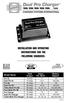 Model Name Total Output Amps Per Bank Battery System Pro XL Dual Pro XL Pro SE Dual Pro SE Three Bank Pro SE Four Bank Pro SE Pro Charger Dual Pro Charger Three Bank Pro Charger 6 amps 12 amps 10 amps
1. The Determination of Boiling Point
 1. The Determination of Boiling Point Objective In this experiment, you will first check your thermometer for errors by determining the temperature of two stable equilibrium systems. You will then use
Portable Evaporative Air Cooler. OWNER S MANUAL Read and save these instructions before use. Model: CL30XC
 Portable Evaporative Air Cooler OWNER S MANUAL Read and save these instructions before use Model: CL30XC Power rating: 250 Watts Voltage rating: 230 Volt, 50Hz Made in P.R.C. QUICK START GUIDE Fill with
Portable Air Conditioner
 Portable Air Conditioner Owner's Manual Model:3 in 1 12,000 Btu/h Series 3 Please read this owner s manual carefully before operation and retain it for future reference. CONTENTS 1. SUMMARY...1 2. PORTABLE
Instruction Manual. Fun Pop 8oz. Popper
 Instruction Manual Fun Pop 8oz. Popper 0700 Medallion Drive, Cincinnati, Ohio 4524-4807 USA Part No. 5940 SAFETY PRECAUTIONS Page 2 INSTALLATION INSTRUCTIONS Inspection of Shipment Unpack all cartons and
Retractable Screen. Replacement Screen Instructions
 Retractable Screen Patent Pending Replacement Screen Instructions For RTS, RET, & RTM Products ATTENTION! Retractable screens are not intended to provide security or provide for the retention of objects,
ClearView 100. Instruction Manual
 ClearView 100 Instruction Manual Important Safeguards This appliance is not intended for use by children or infirm persons without supervision. Young children should be supervised to ensure that they do
Odyssey of the Mind Technology Fair. Simple Electronics
 Simple Electronics 1. Terms volts, amps, ohms, watts, positive, negative, AC, DC 2. Matching voltages a. Series vs. parallel 3. Battery capacity 4. Simple electronic circuit light bulb 5. Chose the right
EXPRESS STILL WARNING It is legal in New Zealand to own and operate a still for the purpose of producing alcohol for your own consumption.
 THE EXPRESS STILL This still represents the next generation in home distillation equipment. It eliminates the problem of having to spend all day processing a 25 litre wash. Taking 1 hour to heat up, then
Extreme Heat: A Prevention Guide to Promote Your Personal Health and Safety
 Extreme Heat: A Prevention Guide to Promote Your Personal Health and Safety Heat-related deaths and illness are preventable yet annually many people succumb to extreme heat. Historically, from 1979-2003,
User s Guide. Oreck Air Purifier with HEPA Filtration. Important! Read this manual carefully, and keep for future reference.
 User s Guide Oreck Air Purifier with HEPA Filtration Important! Read this manual carefully, and keep for future reference. Enjoy Congratulations on your purchase of the Oreck Air Purifier with HEPA Filtration.
IMPORTANT SAFETY INSTRUCTIONS WARNING READ AND SAVE THESE OPERATING AND SAFETY INSTRUCTIONS BEFORE USING THIS HEATER.
 THERMAWAVE CERAMIC HEATER Model HZ-850 Series Model HZ-860 Series IMPORTANT SAFETY INSTRUCTIONS WARNING READ AND SAVE THESE OPERATING AND SAFETY INSTRUCTIONS BEFORE USING THIS HEATER. Warning Failure to
about your house How to Get the Ventilation That You Need in Your House Figure 1 Infiltration and exfiltration of air in a house
 about your house CE 64 How to Get the Ventilation That You Need in Your House Canadian houses are relatively airtight, and have been for years. The old farmhouses where people lived several generations
about your house Before You Start Renovating Your Basement Moisture Problems Figure 1 Moisture problems to solve
 about your house CE 28 c Before You Start Renovating Your Basement Moisture Problems Mold and decay on floor joists and sill plates Stuffy air, high humidity, poor air circulation Water draining in from
PATIENT GUIDE. Care and Maintenance Drainage Frequency: Max. Drainage Volume: Dressing Option: Clinician s Signature: Every drainage Weekly
 PATIENT GUIDE Care and Maintenance Drainage Frequency: Max. Drainage Volume: Dressing Option: Every drainage Weekly Clinician s Signature: ACCESS SYSTEMS Pleural Space Insertion Site Cuff Exit Site Catheter
Home Electrical Safety Challenge
 Home Electrical Safety Challenge Home Electrical Safety Challenge Why is there a different kind of outlet in my bathroom? What does that TEST button do? Why does the circuit breaker trip every time my
tire inflator with pressure gauge
 tire inflator with pressure gauge Model 95583 Assembly And Operation Instructions Due to continuing improvements, actual product may differ slightly from the product described herein. 3491 Mission Oaks
OWNER S MANUAL. Model AE150/AE300/AE500 1.5AMP MULTI-USE SMART BATTERY CHARGER READ ENTIRE MANUAL BEFORE USING THIS PRODUCT
 Model AE150/AE300/AE500 MULTI-USE SMART BATTERY CHARGER Certified by Californiia BCS Regulations AE300E AE500E 5AMP MULTI-USE AUTOMOTIVE BATTERY CHARGER 3AMP MULTI-USE SMART BATTERY CHARGER AE500E 5AMP
SECOND GRADE 1 WEEK LESSON PLANS AND ACTIVITIES
 SECOND GRADE 1 WEEK LESSON PLANS AND ACTIVITIES WATER CYCLE OVERVIEW OF SECOND GRADE WATER WEEK 1. PRE: Exploring the properties of water. LAB: Experimenting with different soap mixtures. POST: Analyzing
Conservation of Momentum Greg Kifer
 SCIENCE EXPERIMENTS ON FILE Revised Edition 6.7-1 Conservation of Momentum Greg Kifer Topic Conservation of momentum Time 1 hour! Safety Please click on the safety icon to view the safety precautions.
Heat Energy FORMS OF ENERGY LESSON PLAN 2.7. Public School System Teaching Standards Covered
 FORMS OF ENERGY LESSON PLAN 2.7 Heat Energy This lesson is designed for 3rd 5th grade students in a variety of school settings (public, private, STEM schools, and home schools) in the seven states served
FOR THE FOLLOWING MODELS: EE-8075W EE-8075O EE-8075R EE-8075BK
 FIREPLACE HEATER FOR THE FOLLOWING MODELS: EE-8075W EE-8075O EE-8075R EE-8075BK If you have any questions about the operation of your fireplace heater, please contact Crane Customer Care. Toll Free: 888-599-0992
Please read and keep these instructions. Run water through your machine before first use
 47070 Rev 1 24/3/05 2:23 PM Page 1 12 cup filter coffee maker Please read and keep these instructions getting the best from your new coffee maker Safety first Caution must be used when handling hot water,
Virginia 4-H School Enrichment
 18 U.S.C. 707 Virginia 4-H School Enrichment POULTRY Beginning of Life Lesson 1 The Egg Lesson 2 Incubation Acknowledgements: A special thank-you to the following individuals for their vision, hard work
Figure 1. Basic structure of the leaf, with a close up of the leaf surface showing Stomata and Guard cells.
 BIOL100 Laboratory Assignment 3: Analysis of Stomata Name: Stomata (singular=stoma) are the respiratory control structures in plants (see Figure 1 below). They are essentially small holes in the surface
UNIVERSITY OF ARKANSAS DIVISION OF AGRICULTURE RESEARCH AND EXTENSION COOPERATIVE EXTENSION SERVICE ON-FARM SOYBEAN DRYING AND STORAGE
 UNIVERSITY OF ARKANSAS DIVISION OF AGRICULTURE RESEARCH AND EXTENSION COOPERATIVE EXTENSION SERVICE Media Contact: Dr. Sammy Sadaka, PE Assistant Professor & Extension Engineer Phone: 501-671-2298 Fax:
PICCs and Midline Catheters
 Patient Education PICCs and Midline Catheters Patient s guide to PICC (peripherally inserted central catheter) and midline catheters What are PICCs and midline catheters used for? Any medicine given over
What You Will Learn in This Module: Testing for Pullorum-Typhoid Disease
 Module 5-B: Testing Poultry for Pullorum-Typhoid Disease This module applies only to individuals who have attended and successfully completed an Indiana State Poultry Association NPIP Blood Testing School
Operating Instructions Split System Air Conditioner
 Operating Instructions Split System Air Conditioner Model No. Indoor Unit Type Indoor Unit Type Nominal Capacity 26 36 F2 Low Silhouette Ducted S-26PF2U6 S-36PF2U6 Connectable outdoor unit lineup This
OWNER S MANUAL FOR PROFESSIONAL POPCORN MACHINE
 OWNER S MANUAL FOR PROFESSIONAL POPCORN MACHINE Model Numbers 1911-4 OZ POPPER THEATER POP 4 CONTEMPO POP 4 1104110 (120 volts) 1104210 (120 volts) 1104220 (120 volts) 1204110 (230 volts) 1204210 (230
Your safety and the safety of others are very important.
 NATURAL GAS TO PROPANE CONVERSION KIT 090 INSTALLATION INSTRUCTIONS FOR ALTITUDES 0 -,00 FT. ONLY PROPANE CONVERSION KIT SAFETY... INSTALLATION REQUIREMENTS... Tools and Parts... LP Gas Requirements...
STANDARD OPERATING PROCEDURES DIVISION OF COMPARATIVE MEDICINE UNIVERSITY OF SOUTH FLORIDA
 STANDARD OPERATING PROCEDURES DIVISION OF COMPARATIVE MEDICINE UNIVERSITY OF SOUTH FLORIDA SOP#: 1005.7 Date Issued: 10/98 Date Revised: 2/16 Page 1 of 7 TITLE: SCOPE: RESPONSIBILITY: PURPOSE: Animal Care
Portable Air Conditioner. OWNER S MANUAL Read these instructions before use. Model: MN12CES / MN10CESWW
 Portable Air Conditioner OWNER S MANUAL Read these instructions before use 8 Model: MN12CES / MN10CESWW Voltage rating: 120V~60Hz Power rating : 1100W (MN12CES) Power rating : 900W (MN10CESWW) Customer
Technical Data Sheet
 Februar, 2014 Technical Data Sheet PLA Polylactide Cas No. 9051-89-2 PLA is a thermoplastic resin derived from annually renewable resources Product Characteristics Typical Properties Value Unit Physical
INSTANT HOT WATER RECIRCULATING SYSTEM
 INSTANT HOT WATER RECIRCULATING SYSTEM INSTALLATION AND OPERATING INSTRUCTIONS Save manual for future reference MODEL 500800 Warning Please read carefully before proceeding with installation. Your failure