
Animal Research Project (Collaborative Lesson between Librarian and First Grade Teachers) First Grade EXCEL students
|
|
|
- Liliana Fisher
- 9 years ago
- Views:
Transcription
1 Animal Research Project (Collaborative Lesson between Librarian and First Grade Teachers) First Grade EXCEL students Objectives: Students will demonstrate knowledge of the animal researched by: presenting information gathered in written format presenting information gathered in an oral presentation Overview of Content Standards: Technology Standards for First Grade concepts introduced 2. Students will identify and use the shift key and pronunciation keys. 3. Students will type words, paragraphs, and compositions as appropriate for grade level. Technology Standards for First Grade concepts reinforced 1. Students will demonstrate responsible use of technology equipment. 2. Students will demonstrate respect for the computer work of others. 3. Students will access software from local drives, CDs. Technology Standards for Second Grade 4. Students will print files. English SOL Reading: VA SOL1.12 The student will write to communicate ideas. VA SOL11.9 The student will read and demonstrate comprehension of nonfiction. Oral Language: VA SOL1.3 The student will adapt or change oral language to fit the situation. c) Use appropriate voice level in small-group settings. d) Ask and respond to questions in small-group settings. Science SOL VA SOL1.5 The student will investigate and understand that animals, including people, have life needs and specific physical characteristics and can be classified according to certain characteristics. Key concepts include: life needs (air, food, water, and a suitable place to live); physical characteristics (body coverings, body shape, appendages, and methods of movement); and other characteristics (wild/tame, water homes/land homes). Technology/Media Components: Software: Title: Appleworks word processing software Title: Eyewitness Encyclopedia of Nature CD, Dorling Kindersley, copyright NET TV

2 Student Materials: Per student: labeled (student name) individual student folders to collect project papers (1) pencils (1) animal research information gathering sheet (1) animal research selection sheet (1) sheets for animal research final project (habitat, appearance, predators, food 1 each per student) glossary sheets (1) student rubric (1) computer and software: Access to a computer station with CD and Appleworks (1 each per student station) Per group: Zoo book magazines and other print materials (see attached bibliography) Each table group will have print materials for their animals (mammals, amphibians, reptiles, and birds) Teacher Preparation: Create labeled (student name) individual student folders to collect project papers Locate print materials and software (see attached bibliography) Create animal research info gathering sheets (one per student) Create animal research selection sheets (one per student) Create animal research report cover samples for each computer station (4) Create insert page samples for crediting source of cover picture (4) Create sheets for animal research final project (habitat, appearance, predators, food one each per student) Create animal information glossary sheets (one per student) Create labels for animal table groups (mammals, amphibians, reptiles, and birds one each per student) Create student rubric (one per student) Create Teacher/Librarian rubric (4) Pencils (one per student) NET TV and computer (1 of each) Prior classroom instruction on animals (mammals, amphibians, reptiles, and birds) Obtain binding supplies to complete final project

3 List of Activities/Tasks: Lesson 1 Type of activity: Explicit Teaching and Research Projects/Inquiry/Reports (duration: 1 hour) Students visit library to begin the research process Introduce the concept of research Distribute labeled student research folders Review animal information glossary and animal groups (mammals, amphibians, reptiles, and birds) Distribute and explain student rubric Use a computer station and the Net TV to: o introduce Animal Encyclopedia CD o review Appleworks word processing with entire group Provide students with print material (magazines and books) to read on animals Provide students with animal research selection sheet Provide students with student rubric and review expectations Students: Browse/read materials o Allow class time for students to fill in animal research selection sheet. o Instruct students that they must choose one animal from each group. o Give completed sheets to librarian who will assign one animal per student. o Supervise individual student information in folders Lesson 2 Type of activity: Research Projects/Inquiry/Reports (duration: 1 hour) Students visit the library to continue the research process Prior to the lesson, select an animal for each student Show students a blank example of the finished animal research report Inform students of their animal to research Group students according to: mammals, amphibians, reptiles, and birds Provide and discuss sheets for animal research final project (habitat, appearance, predators, food) Provide students with print material (magazines and books) to read on animals Provide sample coversheet for each computer station Supervise the rotation of groups from table work to computer work, approximately 20 minutes at the computers First Grade Teaching Assistant: Supervise and assist students working independently on animal info sheets

4 Students: Computer stations: o Groups work at computer stations, by animal group o Students locate their animal on the CD o Students print a picture of their animal o Students type and print a page for crediting the source of their picture o Students type and print a cover sheet for their research report Independent Work: o Students not using the computers work independently filling out the animal info sheet o Allow class time for students to use computers (Animal CD and Appleworks) to continue research Lesson 3 - Type of activity: Research Projects/Inquiry/Reports (duration: 45 minutes) Students visit the library to continue the research process following the previous session s lesson plans (see Lesson 2) o Allow class time for students to use computers (Animal CD and Appleworks) to continue research o Bind finished research reports Lesson 4 Type of activity: Reports (duration 45 minutes) Students visit the library to present their research to all first graders Give teachers Teacher/Librarian rubric for each presenter in their group Divide students into four groups to present so that each group has at least one mammal, one amphibian, one reptile, and one bird Coordinate and observe presentations in four different locations in the library Give student rubrics to presenters after presentation and collect when completed. Collect final project from presenters. Observe and evaluate presentations Complete Teacher/Librarian Rubric for each student presenter observed Students: Present final research to one group of first graders Complete student rubric Librarian Follow-up: Complete Teacher/Librarian Rubric for each student Give completed rubrics to teachers

5 Assessment/Evaluation: Formative assessment Librarian will observe, provide oral feedback and assist students as they use the CD and Appleworks software. Librarian will discuss research process individually with students as they perform their research and provide guidance toward higher level thinking skills through the use of verbal questioning. o Sample Questions: Does your animal hibernate? Why? Why not? Does your animal migrate? Why? Why not? Where could you look to find more information? What kinds of details would make your presentation more interesting? Why does your animal live where it does? Summative assessment Teacher rubric to be used by librarian and teachers to assess and evaluate research process and oral presentation. Student rubric to be used by students to assess and evaluate their own research process and oral presentation. Digital pictures of presenters to be taken by the librarian as students present orally and then given to students in print form with written feedback regarding their oral presentation. Student produced final written research paper.

First Grade Animal Research Project
 First Grade Animal Research Project Dear Parents: As you probably know, our first graders have been learning all about animals. We have spent the last couple of weeks learning to group different animals
Differentiated Instruction & Understanding By Design Lesson Plan Format
 Differentiated Instruction & Understanding By Design Lesson Plan Format Title: Classes of Vertebrates Subject Matter Emphasis and Level: 4 th Grade Science Author: Pat Klumb School District: Ethan 17-1
Exploring Animal Environments
 Third Grade Science Design Brief Exploring Animal Environments forest - desert - grassland rainforest - marshland - swamp - pond - river - ocean - stream Background: In our studies of science, we have
Local Government and Leaders Grade Three
 Ohio Standards Connection: Government Benchmark A Identify the responsibilities of the branches of the U.S. government and explain why they are necessary. Indicator 2 Explain the structure of local governments
Mythical Monsters Made Real!
 Mythical Monsters Made Real! A Cooperative Lesson on Physical and Behavioral Adaptations Purpose (Teacher Version): The purpose of this lesson is use the skills and knowledge learned in previous adaptation
Dr. Seuss and Read Across America
 Published on AASL Learning4Life Lesson Plan Database Dr. Seuss and Read Across America Created by: Honor Zalewski Title/Role: Teacher-Librarian Organization/School Name: Cumberland County Public Schools
Lesson Plan for Animals (including Insects!) of Antarctica
 Lesson Plan for Animals (including Insects!) of Antarctica Developed by Kathleen Lavelle, Angela Schneider, and Pam Shaffer, Avon East Elementary Team, Avon, Ohio Grade Level: 2-4 Objective: s will locate
Teacher notes and activities
 Teacher notes and activities This resource provides teachers in the early years with a versatile classroom resource that can be used on the Internet or printed out and presented as a booklet or worksheets.
Penguin Facts. Standards for the 21st-Century Learner. Published on AASL Learning4Life Lesson Plan Database
 Published on AASL Learning4Life Lesson Plan Database Penguin Facts Created by: Neely Swygert Title/Role: Teacher Librarian Organization/School Name: Gadsden Elementary Location: South Carolina Grade Level:
Genre Mini Unit. Writing Informational Nonfiction By Joyce Dunning
 Genre Mini Unit Writing Informational Nonfiction By Joyce Dunning Grade Level: 2 nd Grade State Core Standards: Standard 2, Objective 1: Demonstrate an understanding that print carries the message. Standard
Introduction and Pretest
 Introduction and Pretest PREPARATION It s recommended that the students complete the five proofreading lessons in the Writer s Guide before beginning this unit. The pretest in this introduction to the
Activity Template +++
 Activity Template +++ Title An ESL Yearbook! Author Deborah Sams Proficiency level X Beginning X Intermediate X Advanced Grade level Middle school and high school students can do this activity. Purpose
High School Student Project: AppleWorks or MS Office Investing in the Stock Market
 High School Student Project: AppleWorks or MS Office Investing in the Stock Market The Unit of Practice Invitation How can we give students an opportunity to apply the knowledge they ve gained from their
Materials: Children s literature written in Spanish, videos, games, and pictures comprise the list of materials.
 Pre-Kindergarten The primary focus of the Spanish program in Pre-Kindergarten is the exposure to a foreign language. Since students are introduced to a language and culture that may not be familiar, an
THE ENLIGHTENMENT Grade Level: Sixth Grade Presented by: Kim Meeks, Academy of Charter Schools, Denver, CO Length of Unit: 13 lessons
 THE ENLIGHTENMENT Grade Level: Sixth Grade Presented by: Kim Meeks, Academy of Charter Schools, Denver, CO Length of Unit: 13 lessons I. ABSTRACT This unit introduces the important philosophers of the
Refining Informational Writing: Grade 5 Writing Unit 3
 Unit Title: Refining Informational Writing Concepts: 1. Writers read mentor texts to study informational writing. 2. Writers generate ideas and experiment with notebook entries. 3. Writers learn strategies
Unit/Lesson Planning Guide: Key Questions to Consider While Planning
 Unit/Lesson Planning Guide: Key Questions to Consider While Planning Following is a guide to unit and lesson planning; it is based on approaches to unit and lesson planning introduced in TE 401 and used
Finding Your Way Using QR Codes
 Published on AASL Learning4Life Lesson Plan Database Finding Your Way Using QR Codes Created by: Karla Collins Title/Role: School Librarian Organization/School Name: Longwood University Location: Virginia
Systems of Transportation and Communication Grade Three
 1 Ohio Standards Connection: Geography Benchmark D Analyze ways that transportation and communication relate to patterns of settlement and economic activity. Indicator 8 Identify systems of transportation
Animal Report Format. B) Pictures, maps, and illustrations. 6) Conclusion 7) Bibliography 8) Project 9) Oral Presentation
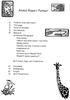 Animal Report Format 1) Creative cover and report 2) Title page 3) Table of Contents 4) Introduction 5) Research A) Content/Paragraphs -Description -Habitat and what helps it live there -Eating Habits
TEACHING Body Systems
 TEACHING GUIDE TEACHING Body Systems 3rd Grade Reading Level ISBN: 978-0-8225-2324-6 Green 2 TEACHING BODY SYSTEMS Standards Health Language Arts Writing Language Arts Reading Science Visual Arts Knows
2. Provide the scoring guide/rubric for the culminating task (summative assessment).
 2. Provide the scoring guide/rubric for the culminating task (summative assessment). Criteria Oral Presentation- Group project Poster Presentation display/ visual aids 1 - Attempts the standard use the
Third Grade, Ecology, Habitats, and Food Chains 2005 Colorado Unit Writing Project 1
 Ecology, Habitats and Food Chains Grade Level or Special Area: 3 rd Grade Written by: Sara Laughlin and Telena Haneline, The Academy of Charter Schools, Denver, Colorado Length of Unit: Nine lessons, approximately
WEST JEFFERSON HILLS SCHOOL DISTRICT THOMAS JEFFERSON HIGH SCHOOL DIGITAL DESIGN GRADES 10 11 12
 GRADES 10 11 12 Curriculum Strand: Desktop Publishing Learn and Apply Elements of Layout and Design PA Academic Objective Instructional student Methods will be able to Materials/ Resources Textbooks, trade
Third Grade Shapes Up! Grade Level: Third Grade Written by: Jill Pisman, St. Mary s School East Moline, Illinois Length of Unit: Eight Lessons
 Third Grade Shapes Up! Grade Level: Third Grade Written by: Jill Pisman, St. Mary s School East Moline, Illinois Length of Unit: Eight Lessons I. ABSTRACT This unit contains lessons that focus on geometric
PROUD TO BE A LION! 1. Define the term family based on the variety of human families represented in our own classroom community.
 Christine Payack Fairhill Elementary School, Fairfax, VA August, 2010 Grade Two, Virginia Science Strand: Life Processes. PROUD TO BE A LION! Major topics developed in this strand: basic needs and life
Fourth Grade Reading/LA Reading List 2014-2015
 Fourth Grade Reading/LA Reading List 2014-2015 Turtles in Paradise Jennifer L. Holm The Cricket In Times Square George Selden Clara Barton Augusta Stevenson Wordly Wise 3000 Book 4 School Specialty (3rd
FLORIDA ATLANTIC UNIVERSITY COLLEGE OF EDUCATION LESSON PLAN FORMAT
 FLORIDA ATLANTIC UNIVERSITY COLLEGE OF EDUCATION LESSON PLAN FORMAT Teacher Sarah M. Brown Date March 10 and 11, 2011 Subject Media/Technology Grade Level 1 st Length of Lesson Forty-five minutes Instructional
Animal Colors and Shapes Teacher s Guide
 Teacher s Guide Grade Level: K 2 Curriculum Focus: Math, Science Lesson Duration: 1 2 class periods Program Description Animals come in all colors, shapes, and sizes. Learn about the shapes animals have
Task Requirements. Task 4 Implementing and Analyzing Instruction to Promote Student Learning
 PPAT Assessment Task Requirements Task 4 Implementing and Analyzing Instruction to Promote Student Learning In this task, you will demonstrate your ability to plan and implement a lesson using standards-based
Urbanization Grade Nine
 Ohio Standards Connection: Geography Benchmark B Analyze geographic changes brought about by human activity using appropriate maps and other geographical data. Indicator 4 Explain the causes and consequences
CLIL UNIT: ANIMALS, OUR FRIENDS
 CLIL UNIT: ANIMALS, OUR FRIENDS Cristina Benítez García PALE 2010 INDEX.- 1) Background 3 2) Topic 3 3) Goals 3 4) Contents 5) Relation of the unit with the Basic Competences 4 6) Tasks 4 7) Standard matrix
Comparing Organs BIOLOGY SCIENCE INSTRUCTIONAL TASKS
 BIOLOGY SCIENCE INSTRUCTIONAL TASKS Comparing Organs Grade-Level Expectations The exercises in these instructional tasks address content related to the following science grade-level expectation: Contents
investigations. K.2 C Gather information using simple equipment and tools to extend the senses.
 KINDERGARTEN Unit 7: Exploring Characteristics and Basic Needs of Living Organisms 2010 TEKS 1998 TEKS Curriculum and Instruction Considerations K.2 The student develops abilities to ask questions and
Expository Reading and Writing By Grade Level
 Expository and Writing By Grade Level Kindergarten TEKS identify the topic of an informational text heard identify the topic and details in expository text heard or read, referring to the words and/or
Learning expeditions
 Learning expeditions Food webs How are all living things connected? Introduction: On this Expedition, your students will explore the question, How are all living things connected? by role playing different
Introduction To The Writing Process Animate And Publish Your Stories With The Zimmer Twins.
 The Introduction To The Writing Process Animate And Publish Your Stories With The Zimmer Twins. Grades: 4-6 Subjects: English, English As A Second Language Overview of Lesson Plan: Help students develop
Library Lesson Plans
 Date: Week 1 Grade Level: 3 Goal: Context: Today's lesson will be an overview of this month's stations: Fiction vs. Nonfiction, practice ABC order (paper & pencil), practice ABC order (computer) Students
Grade Level: Four Date: 11/13/2014 Time: 1:40-2:40 Topic: Animal Adaptations Length of Period: 60 minutes
 Lesson Plan Template 1. Lesson Plan Information Subject/Course: Science Name: Kayla Hachey Grade Level: Four Date: 11/13/2014 Time: 1:40-2:40 Topic: Animal Adaptations Length of Period: 60 minutes 2. Expectation(s)
Year: Teacher: Topic Dates Major Objectives Materials and Resources
 Subject: Long Range Plan Year: Teacher: Topic Dates Major Objectives Materials and Resources Evaluation Plan 1 EVALUATION PLAN 1998-98 September - December December - March March - June Language Arts Mathematics
Universidad Autónoma de Guadalajara Unidad Académica de Educación Secundaria y Media Superior Middle School Guide of classes for the student
 Universidad Autónoma de Guadalajara Unidad Académica de Educación Secundaria y Media Superior Middle School Guide of classes for the student Department Computing and Computer Technology. Time for homework
II. III. 2004 Core Knowledge National Conference, Grade Level, (Unit Name Here) 1
 Teaching A Touchy Topic: Life Cycles and Reproduction Grade Level: Fifth Grade Written by: Kimberly Ruckh, Linda Cambra, Dallas Bankston; Challenge Charter School, Glendale, Az. Length of Unit: Five Lessons
Life in the Bay Getting to know the Bay s plants and animals
 Life in the Bay Getting to know the Bay s plants and animals Over erview iew In this activity students will become acquainted with a plant or animal that lives in the San Francisco Bay. Students will research
Planning Commentary Respond to the prompts below (no more than 9 single-spaced pages, including prompts).
 Planning Commentary Respond to the prompts below (no more than 9 single-spaced pages, including prompts). 1. Central Focus a. Describe the central focus and purpose for the content you will teach in this
Introduction to Engineering Information Technology Lesson Plan
 Introduction to Engineering Information Technology Lesson Plan Objectives: The learner will demonstrate knowledge of information sharing skills by discussing each step of this lesson with group partners.
Form: Filled in table. Method: Peer assessment. Tool: Checklist. Form: Completed table. Method: Peer assessment. Tool: Checklist
 Lesson Plan English First Additional Language Grade 5 Content in context: Text from other Learning Area - Whether Los and ASs Learning Activities Details of Assessment Barriers to Learning LO 1 Listening
The student will explore and learn about the Legislative, Executive, and Judicial branches of the United States government.
 Teacher: Amy Moeller Grade: 5 th Time allotted: 45 minutes Curriculum Area: Social Studies Lesson Title: Branches of Government Lesson Overview The lesson aims to teach the main concepts of the three branches
Why Do Authors Use Text Features?
 Why Do Authors Use Text Features? Text Features Sticker Lesson Use this lesson as an introduction or review of what text features are and why authors use them. IRA/NCTE Standard Students apply a wide range
TExES Art EC 12 (178) Test at a Glance
 TExES Art EC 12 (178) Test at a Glance See the test preparation manual for complete information about the test along with sample questions, study tips and preparation resources. Test Name Art EC 12 Test
Lesson Effective Communication Skills
 Lesson Effective Communication Skills Lesson Overview In this lesson, participants will learn about various types of communication and how important effective communication is in the workplace. Lesson
Science Grade 05 Unit 04 Exemplar Lesson 01: Types of Energy
 Grade 05 Unit 04 Exemplar Lesson 01: Types of Energy This lesson is one approach to teaching the State Standards associated with this unit. Districts are encouraged to customize this lesson by supplementing
Kindergarten Number Sense Lesson Plan
 Amy Roman/EDUC 527 1 Kindergarten Number Sense Lesson Plan Introduction Topic: Counting Backward from 10 Length of Lesson: 30-45 minutes VA Standards of Learning: K.4 The student will a) count forward
Bar Graphs with Intervals Grade Three
 Bar Graphs with Intervals Grade Three Ohio Standards Connection Data Analysis and Probability Benchmark D Read, interpret and construct graphs in which icons represent more than a single unit or intervals
A Picture Book of Martin Luther King, Jr. By David A. Adler ISBN: 0-8234-0847-7
 Martin Luther King, Jr. A Picture Book of Martin Luther King, Jr. By David A. Adler ISBN: 0-8234-0847-7 Teacher: Danielle Burke Grade: 3 Unit Topic: Famous Americans History Essential Questions: How did
LESSON PLAN FOR FILLING OUT A JOB APPLICATION. Preview: Have students complete a Personal Data Sheet three days before the Job Application Lesson.
 LESSON PLAN FOR FILLING OUT A JOB APPLICATION Preview: Have students complete a Personal Data Sheet three days before the Job Application Lesson. Essential Question: How do you fill out a job application
Objective (s): TSWBAT explain how Ruby Bridges fight for equality affects us today aeb writing.
 Ruby Bridges Lesson Plan Name: Emily Freese Grade level of lesson: 2 nd grade Subject/Concept: Social Studies/Ruby Bridges Duration of lesson: 1 hour Objective (s): TSWBAT explain how Ruby Bridges fight
Music Makers. paper clips
 Fifth Grade Science Design Brief Music Makers Background: We know that sound is a form of energy produced and transmitted by vibrating matter and that pitch is determined by the frequency of a vibrating
Defining Student Voice
 Defining Student Voice Student* voice is the term used to describe students expressing their understanding of their learning process. Student performance improves when students understand the purpose of
unitedstreaming Jim Dornberg [email protected] 1 Monroe County ISD Instructional Technology Specialist Log-in to unitedstreaming
 Log-in to unitedstreaming www.unitedstreaming.com Returning users enter Username and Password Forget your username or password??? On your first visit only, enter your building specific new user passcode,
Me, Myself, and I. Subject: Language Arts: Writing. Level: Grade 3
 Grade 3 Lesson Plan Subject: Language Arts: Writing Level: Grade 3 Me, Myself, and I Abstract: In this lesson, students will write their life story. Reflecting on a series of key questions, students will
Assessment, Recording and Reporting Policy
 St Peter s CE (VA) Infants School Assessment, Recording and Reporting Policy Philosophy Assessment is essential for the promotion of effective learning and teaching. It enables the teacher to deliver an
Fourth Grade Science Fair
 Dear Parents and Students, Fourth Grade Science Fair The fourth grade teachers are proud to announce our annual Science Fair! ALL fourth graders will take part in this very special project and event. Students
Reduce. Reuse. Recycle.
 Reduce. Reuse. Recycle. Grade Level: 5 Subject Area: Science, English, Technology and Art Short Description: In this lesson, students will be presented with the idea of reduce, reuse, recycle and formulate
Kindergarten, What Animals Need 2005 Colorado Summer Writing Institute 1
 What Animals Need Grade Level or Special Area: Kindergarten Written by: Karla Burkhalter, Lincoln Academy, Arvada, CO Length of Unit: Eight lessons (seven 20-minute lessons, one lesson with a varying time
Reading Strategies by Level. Early Emergent Readers
 The charts below were created as a common language for teachers and students in the Wallingford Public Schools in kindergarten through eighth grade. The level of the chart selected for use in the classroom
Animal Classification K-4
 Animal Classification K-4 Introduction: The theme of this self-guided experience is classification of animals. Students will learn to use body coverings as an aid to classification. As the group tours
DynEd International, Inc.
 General Description: Proficiency Level: Course Description: Computer-based Tools: Teacher Tools: Assessment: Teacher Materials: is a multimedia course for beginning through advanced-level students of spoken
Classroom Instruction Plan Agricultural Communications Unit: Public Relations
 Classroom Instruction Plan Agricultural Communications Unit: Public Relations I. Interest Approach: How are you going to gain the attention of the students? Search for ways National FFA have promoted their
Integrating Technology in the Classroom
 Session 5 Integrating Technology in the Classroom Copyright 2012 SEDL Connecting Kids to Mathematics and Science 5.1 Acknowledgments Connecting Kids to Mathematics and Science was made possible through
UNITS OF STUDY LIBRARY KINDERGARTEN. 30 lessons
 UNITS OF STUDY LIBRARY KINDERGARTEN 30 lessons UNIT TITLES SUGGESTED TIMELINE 1. Introduction to the Library Media Center 30 minutes 2. Library Media Center procedures 30 minutes 3. Library tour and checkout
Insects. A Second Grade Unit by Pat Hart
 Insects A Second Grade Unit by Pat Hart Unit Overview In this unit the students will be engaged from the beginning with a hook that catches their attention and an authentic connection that gives them a
Food Webs and Food Chains Grade Five
 Ohio Standards Connection: Life Sciences Benchmark B Analyze plant and animal structures and functions needed for survival and describe the flow of energy through a system that all organisms use to survive.
Completed Formal Classroom Observation Form
 Completed Formal Classroom Observation Form (Once participants have filled in and discussed the blank Formal Classroom Observation Form, facilitators should hand out copies of this completed form) August
Arthur Phillip High School Assessment Task 3. Course: Industrial Technology Multimedia Year: 9. Area/s of study: Website Design Task Number: 3
 Arthur Phillip High School Assessment Task 3 Course: Industrial Technology Multimedia Year: 9 [Stage 4; School Certificate; Preliminary HSC; HSC] Area/s of study: Website Design Task Number: 3 Date Issued:
Personal Timelines Grade Two
 Ohio Standards Connection Data Analysis and Probability Benchmark C Represent data using objects, picture graphs and bar graphs. Indicators 3. Read and construct simple timelines to sequence events. 5.
professional development Training Guide
 professional development Training Guide u Webinar and training Information u Guided Tour u How To Tips Welcome! Your school now has unlimited access to the award-winning Britannica Online School Edition.
This hands-on activity incorporates observing, classifying, predicting, sequencing, formulating models, and drawing conclusions.
 SCIENCE Science and the Environment 4 th Grade FOOD CHAINS Overview: All organisms, or living things, depend on other organisms for nutrients. The movement of nutrients through an environment is visualized
Grade: 3 Teacher: Mrs. G. Subject: Science Standard: 6.23 Plants lifecycle Goal: Research and present information on a flower.
 p. 1 Deriving UDL Solutions Model Template Grade: 3 Teacher: Mrs. G. Subject: Science Standard: 6.23 Plants lifecycle Goal: Research and present information on a flower. Materials & Methods Printed textbook
Unit: Plants & Animals (Grade 2)
 Unit: Plants & Animals (Grade 2) Content Area: Science Course(s): Science Time Period: 8 weeks Length: Weeks Status: Published Unit Overview Students will determine the life cycles of plants and animals
Adopt an Ecosystem Project Grade Ten
 Ohio Standards Connection: Life Sciences Benchmark F Explain the structure and function of ecosystems and relate how ecosystems change over time. Indicator 15 Explain how living things interact with abiotic
The World is a Risky Place EPISODE # 207
 The World is a Risky Place EPISODE # 207 LESSON LEVEL Grades 9-12 KEY TOPICS Entrepreneurship Risk management Insurance LEARNING OBJECTIVES 1. Become aware of risks in life and business. 2. Learn ways
Giving Second Graders the Write Skills Grade Level:
 Giving Second Graders the Write Skills Grade Level: Written by: Length of Unit: 2 nd Grade Tracy de Nieves, Cheyenne Mountain Charter Academy, Colorado Springs, CO Ten one hour lessons or (suggested) 20
Animal Adaptations Investigation (K-3)
 Animal Adaptations Investigation (K-3) At a glance Students explore the Zoo in search of animals that fit certain categories and discover their adaptations. Time requirement One Zoo visit of at least 60
Sherman's Atlanta Campaign and the Importance of Railroads
 Lesson provided by: Eric Emmett, Ashworth Middle School: Gordon County Sherman's Atlanta Campaign and the Importance of Railroads Intended Setting An eighth grade Georgia social studies classroom utilizing
Basic Understandings
 Activity: TEKS: Exploring Transformations Basic understandings. (5) Tools for geometric thinking. Techniques for working with spatial figures and their properties are essential to understanding underlying
Main Idea in Informational Text Grade Three
 Ohio Standards Connection Informational, Technical and Persuasive Text Benchmark C Identify the central ideas and supporting details of informational text. Indicator 3 Identify and list the important central
NAME OF ASSESSMENT: Nonfiction Reading and Research-Based Argument Essay Writing Performance Assessment
 GRADE: Fifth NAME OF ASSESSMENT: Nonfiction Reading and Research-Based Argument Essay Writing Performance Assessment STANDARDS ASSESSED: Students will quote accurately from a text when explaining what
Introduction to Animals
 Introduction to Animals Unity and Diversity of Life Q: What characteristics and traits define animals? 25.1 What is an animal? WHAT I KNOW SAMPLE ANSWER: Animals are different from other living things
Build a Bridge. Based on the book
 Fifth Grade English Design Brief Build a Bridge Based on the book Bridge to Terabithia by Katherine Paterson Background: You have just completed reading the book Bridge to Terabithia. Jess has asked for
The Impact of Using Technology in Teaching English as a Second Language
 English Language and Literature Studies; Vol. 3, No. 1; 2013 ISSN 1925-4768 E-ISSN 1925-4776 Published by Canadian Center of Science and Education The Impact of Using Technology in Teaching English as
Socratic Seminar: The Power of Questions
 Socratic Seminar: The Power of Questions What is Socratic Seminar? A teaching strategy to encourage students to engage in critical thinking, listening, communicating, and wonder A forum in which students
Butterflies and Plants Grades: K and up
 Butterflies and Plants Grades: K and up Purpose: To focus exploration on the butterfly life cycle and how that life cycle is related to plants in the garden. Students should be exposed to the 4 stages
Week 4 Lesson Plan. Pre-K. Animals in the Wild. Macmillan /McGraw-Hill. Extend. the Unit
 Lesson Plan Extend Unit the Unit Pre-K Animals in the Wild Alphabet Time.....................2-3 Book Time.........................-5 Retelling Puppets................... 6 Content Area......................7-8
Assessment in the New National Curriculum
 Assessment in the New National Curriculum Introduction We believe that effective assessment provides information to improve teaching and learning. We give learners regular feedback on their learning so
Student Handout 1: Dichotomous Key Introduction
 Assignment 2: Big 6 Lesson Plan Roberta T. Jordan EDU566: Media Utilization and Curriculum Dr. Jane McGinn, Professor Student Handout 1: Dichotomous Key Introduction What is a Dichotomous Key? Instructions: