
Binocular Indirect Ophthalmoscopy Procedures in Co-managed Care Simon Barnard 1, Andrew Field 2
|
|
|
- Stella Wilkinson
- 9 years ago
- Views:
Transcription
1 Binocular Indirect Ophthalmoscopy Procedures in Co-managed Care Simon Barnard 1, Andrew Field 2 1 Director of Ocular Medicine, Institute of Optometry and Tutor in Ocular Disease, Department of Optometry & Visual Science, City University, London 2 Research Associate, Visual Perception Unit, Department of Psychology, Essex University; formerly Consultant Visiting Clinician, City University Introduction This chapter deals with the use of Binocular Indirect Ophthalmoscopy (BIO) lenses for the assessment of the retinal effects of systemic disease, with special reference to those diseases involved in shared care or co-management programmes. Much of the eye examination routine will be similar for a patient in a shared care programme as any other patient. However, in monitoring or managing eye disease there will be particular emphasis on extra diagnostic procedures and a detailed binocular indirect retinal examination under dilation is just one of many such procedures that may be necessary. Practitioners should therefore make themselves thoroughly familiar with indirect ophthalmoscopy by routinely examining all patients with this method, many of whom can be viewed with non-dilated pupils. Recently, the latest generation of headband binocular indirect ophthalmoscopes have methods of converging the entrance and exit pupils, and this facility places the headband ophthalmoscope in the same category of usefulness as the SLM BIO. It means that optometrists, who will presumably not be needing to dilate that frequently, will be able to usefully practice their indirect techniques on most patients. Then when necessary, a dilated examination will be a familiar technique greatly facilitated by the ease of view afforded by the fully open pupil. The current shared care procedures in the UK include diabetes and glaucoma. Both conditions require a close examination of the fundus posterior to the equator. The depth of retinal vascular lesions, disc evaluation and macular oedema are greatly assisted having a stereoscopic view of the fundus, and this is particularly suited to use of the slit lamp microscope binocular indirect method. Excursions into the far periphery, past the equator, are best observed using head-band indirect ophthalmoscopy. It is likely that optometrists will be involved in the shared care of post-surgical retinal detachments or the monitoring of suspect pre-detachment cases. Very small vascular abnormalities such as micro-aneurysms and neuro-retinal rim notching are best double-checked using the added benefit of higher magnification obtained with direct ophthalmoscopy, approximately x15 linear magnification, and comparing these with the stereoscopic view.

2 2 Admittedly the technique will initially require some practise before the optometrist will have gained the expertise to perform an accurate, complete and rapid examination of the fundus. New comers to either head-band or SLM indirect techniques will derive much benefit if they also make themselves familiar with the Imaginary Convex Eye technique, see the section on the Imaginary Convex Eye. From a patient perspective and their comfort, it should be borne in mind that the longer the retina is exposed to the continual bright illumination of the BIO, the greater the lingering after-effects that the patient may remember. Therefore, being fast efficient and keeping the illumination as low as possible are important. Filters A yellow filter offers the advantage of greater patient comfort and may possibly afford protection to the patient's retina. The elimination of the higher energy blue light is considered by many to be a sensible precaution when examining the fundus with near to full brightness illumination. However, the yellowing of the image may affect clinical interpretation. Add-on filter attachments may be a useful compromise for some practitioners. Other additional lenses can include a red free filter. This will either be green, turquoise or cyan. This aids interpretation when examining the retinal vasculature, small blood vessels and haemorrhages will appear with greater contrast, and particularly so with fluorescein angioscopy. The red free filter will also enhance the visibility of lost sectorial nerve fibre bundles caused by glaucoma for instance. The nerve fibre bundles radiate from the optic disc, and when there is a sectorial loss, the thinning of the retina removes the very slight opalescent overlay, and so the defective areas appear darker and often have a linear or striated appearance.

3 3 Indirect ophthalmoscopic theory With indirect ophthalmoscopy, the fundus is illuminated by light passing through a highly powered positive lens. Returning light passes back through the lens to form a real, inverted and laterally reversed image of the fundus between the lens and the practitioner. (Fig 1). The image will be approximately at the focus of the BIO lens. Therefore a +90D lens will produce a fundus image at approximately 11mm from the lens. Fig 1 Schematic and approximate positions of the virtual images of the inverted eye and fundus. The advantages of BIO compared to direct are the excellent field of view, the superior illumination, stereoscopic view and the ability to assess subtle diffuse fundus colour changes. Head-band or spectacle indirect ophthalmoscopes with a +20D power lens will provide a magnification of approximately x 3 and a static field of view of approximately 40º for an emmetropic eye. The total dynamic field of view can be as much as 240. Lenses of powers greater than +20D are useful for wide field examination, but do not give enough magnification for viewing fundus detail. With the SLM BIO and a Volk lens of +120D, the static field of view can be up to 120, and a dynamic field could be as much as 180. Table 1 compares field of view and magnification of the various ophthalmoscopic techniques.. Lens Power (D) Static Field of View ( ) Note 1 Transverse Magnification (TM) Note 2 Typical whole system magnification Note 3 Working Distance from cornea Direct ophthalmoscopy mm Headband BIO +20 lens mm Headband BIO +30 lens mm SLM BIO +60 lens mm SLM BIO +78 lens mm SLM BIO +90 lens mm SLM BIO +90 Superfield lens mm SLM BIO +132 Ultra View SP lens mm Note:

4 4 1. The field of view will depend on pupil diameter. For example, +132 lens will give 99 field with 7 mm pupil and 85 field with 2 mm undilated pupil. 2. Longitudinal (depth) magnification TM 2 3. The whole system magnification will include the SLM where applicable. 4. Lenses of 90 D or more are useful for patients on miotic therapy or in the presence of posterior synechiae (Prokopich and Flanagan, 1995) When a practitioner requires the detailed view of a fundus needed to investigate the fine lesions seen with diabetics ( such as microaneurysms, intra-retinal micro-vascular anomalies(irma), lipid, small haemorrhages and neovascularisation) additional SLM magnification will be required. Unless a lens of about +14 Dioptres is used, head band BIO will not give enough magnification to view small fundus detail. 1. Slit lamp microscope (SLM) binocular indirect ophthalmoscopy In recent years high powered positive aspheric lenses, in conjunction with the slit lamp biomicroscope, have been increasingly used to examine the retina. The advantages of these methods include the provision of (a) an excellent field of view (up to 120 degrees), (b) a stereoscopic view and (c) excellent illumination. In addition the optics of the biomicroscope offer variable magnification. These characteristics lend SLM BIO to be the method of choice for the routine examination of the fundi of patients in shared care or co-management programmes involving glaucoma and diabetes. The monitoring of patients having suspect peripheral retinal lesions involving detachments and degenerations for example, will be better served using head-band ophthalmoscopy, described later in this chapter. The SLM BIO technique produces a real, inverted and laterally reversed fundus image. Presently available lens powers range from +60 to +132 D. Lower power lenses provide higher magnification but offer a smaller field of view. General procedure for slit lamp microscope (SLM) binocular indirect ophthalmoscopy (BIO) Preparation Dilate the pupil. This will usually take 20 to 30 minutes following drug instillation. (see section on mydriasis). It will help to darken the room so that minimal lamp intensity can be used. The practitioner should be comfortable. If available, slit lamp elbow rests can be used. Position the patient comfortably at the slit lamp microscope. Instruct the patient to fixate a target straight ahead, over the practitioner s shoulder, stare wide and to blink normally.

5 5 SLM Settings. Commence with a low magnification, approximately x15. This can be increased during the routine as necessary. Set the focused beam such that the slit is approximately 1½-2½ mm wide and 5-10 mm long when in focus. The lamp should be set at low to medium intensity to start with. The lamp and microscope should be aligned at 90 to the patient. Procedure. Method A. Focus the slit lamp beam onto the centre of the patient's pupil. Interpose the BIO lens centrally and at about 1 cm from the eye (see table 1). It is not important which way round the BIO lens is held. The SLM should then be pulled backwards towards the practitioner until first the surface of the BIO lens comes into focus. A further movement of about 1 cm will then bring the aerial image of the fundus into focus. Method B. Pull the SLM away from the patient and laterally align the slit beam so that the blurred slit beam illuminates the centre of the patient's pupil. Interpose the BIO lens centrally about 2 cm from the eye. The SLM should then be moved forwards towards the patient. The inverted image of the patient's pupil will first come into focus followed by the fundus. If an inverted pupil cannot be obtained, you may need to have your patient move a little further away on the chin rest. A clear view of the BIO lens surface means that you have moved in too close. The BIO lens should then be moved towards the patient to obtain the optimum field of view making adjustments to the slit lamp as necessary. Having obtained a focused image, the fundus may then be examined by scanning across the field of view in a similar fashion to the method employed when examining the cornea. The brightly illuminated slit image of the fundus is seen within a less well illuminated larger field. Fine tuning the fundus view Lateral and longitudinal adjustments of the BIO lens may be made to optimise the field of view. When viewing finer fundus detail, temporally increase the lamp intensity and SLM magnification. A still larger field can be obtained by slightly moving the BIO lens and the SLM horizontally and in the same direction. Many practitioners have found the illuminated fixation target provided on the SLM useful for slowly scanning the more lateral aspects of the fundus. The target is

6 6 slowly moved laterally (or vertically), and the SLM adjusted to extend the lateral view. It may be helpful to move the illumination system slightly to one side of the microscope to remove disabling reflections. When examining the more peripheral parts of the fundus with the patient's eye directed away from the primary position, the BIO lens should be tilted to improve definition. Tilt the lens to the left during the patient's left gaze, to the right with right gaze, inferior edge closer to the eye with upwards gaze, and superior edge closer to the eye with downwards gaze (Fingeret et al, 1990) (Figure 2). In down gaze the practitioner will need to raise the superior lid using a finger of the hand holding the BIO lens ). Fig 2 Because the fundus image is inverted and laterally displaced it will be helpful for the practitioner to invert the record card whilst drawing the fundus. The card then may be turned back through 180 when the drawing is complete. A stereoscopic view of the fundus is possible down to pupils of approximately 4mm. With small pupils around the 4mm cut off point, the binocular overlap decreases and the practitioner will have to be careful to hold the BIO lens centrally between the two eyepieces of the microscope. Hints and tips for successful SLM BIO 1. Practitioners should practise on non-dilated eyes. 2. Should the fundus view become very dim or disappear, suspect that the patient has either screwed up his/her eyes, or is looking away from the fixation point. 3. If your hand is unsteady, and the image dim, oscillate the lens and move it to the direction of best vision. 4. A resting point for the elbows is essential. As previously mentioned some SLM manufacturers provide special elbow rests. 5. A +78D lens is good for nerve head evaluation, and the +90D lens will have a wider field of view, suitable for general use. 6. Depending upon the design of your SLM a +60D or a +78D lens may require the patient to move away from the SLM to be able to focus the retina. 7. Remember the Imaginary Convex Eye technique.

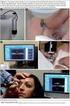
7 7 Head-Band Binocular Indirect Ophthalmoscopy In recent years head-band indirect ophthalmoscopes have been developed that enable the practitioner to converge the entrance and exit pupils. This very important improvement means that the optometrist can examine every patient using this technique without dilating until he/she has gained enough experience. Like SLM, dilation will then provide a technique that will become a easy task for the optometrist. The advantages of this method includes the provision of (a) an excellent field of view (approximately 40 degrees), (b) the ability to move around the patient and therefore enlarge upon the field of view, (c) a stereoscopic view, (d) excellent illumination and (e) scleral indentation. These characteristics lend head-band indirect ophthalmoscopy to be secondary to SLM indirect ophthalmoscopy for the routine examination of the fundi of patients in shared care or co-management programmes involving glaucoma and diabetes. However, the head-band indirect is particularly useful for examining fine variations in the fundus colour that may be caused by tumours or oedema for example, and for viewing the more peripheral areas of the retina anterior to the equator, areas that cannot be viewed with the direct ophthalmoscope. The use of indirect ophthalmoscopy is necessary for investigating symptoms such as photopsia and/or sudden onset floaters, posterior vitreous detachment, suspected retinal tears or retinal detachments detachments, and high myopes. This facility may well be useful in comanagement programmes monitoring post-operative detachment surgery, or the monitoring of peripheral lesions that may have a predisposition to detachment such as lattice degeneration. The head-band indirect technique produces a real, inverted and laterally reversed fundus image. Presently available lens powers range from +14D to +30 D. Lower power lenses provide higher magnification but offer a smaller field of view, and below about +20D, the lens needs to be held further from the patient s eye and may not be comfortable for steady positioning. Lenses above +20D may give less magnification than is desirable. General procedure for head-band binocular indirect ophthalmoscopy. Preparation Dilate your patient. This will usually take 20 to 30 minutes following drug instillation. (see section on mydriasis). It will help to darken the room so that minimal lamp intensity can be used. It will be preferable to have a patient chair that fully reclines, enabling the practitioner to move around the patient and hence gaining a full 360 traverse of the fundus. (Fig 3). If a reclining chair is not available, the practitioner will have to make more use of the patient fixating peripheral targets, and this will often mean that a smooth traverse of the peripheral fundus is not possible.(fig 4)

8 8 Fig 3 Fig 4 Instruct the patient to fixate a target in the primary position, stare wide and to blink normally. The primary position for a reclining patient will be immediately above his or her head. For a seated patient this will be over the practitioner s shoulder. Alignment of the head-band ophthalmoscope. Place the ophthalmoscope on the head and adjust the straps for maximum comfort, and making sure that the viewing part of the ophthalmoscope can be positioned in front of the practitioner s eyes at a comfortable angle. Adjust the wearing position so that the ophthalmoscope is not tilted in relation to the practitioner s eyes. If worn, there is usually ample room for the practitioner to wear his/her spectacles as well. If the practitioner is presbyopic, there is often a +2D lens available to insert into the ophthalmoscope system Face a wall approximately 40 cms away, and adjust the illumination mirror such that the illumination field is vertically centralised to the observation ports. Move the viewing ports horizontally by adjusting the interpupillary distance to align with the illumination field. Adjust the illumination system to give the required field, usually the widest available. Set the illumination at a medium intensity to start with. Use the yellow lens to reduce the amount of blue light on the retina, and if available, using a diffuser may widen the field of illumination. If being used on a non-dilated eye, make sure the system is set with the illumination and viewing systems at maximum convergence. This setting reduces the stereoscopic separation, and so should be set to the maximum separation that is able to produce a stereoscopic image. Procedure. The practitioner should first illuminate the patient s pupil area by pointing the head and hence the illumination towards the patient s eye. Interpose the BIO lens close to the eye about 2 cm, and centre the lens on to the pupil. The lens should be held with the more convex side towards the practitioner. Many lenses have a white or silver line indicating the side to be held closest to the patient.

9 9 Pull back the lens away from the patient s eye, at the same time taking care to keep the illumination centred on the pupil. Whilst withdrawing the lens, the practitioner will find a distance that provides an optimum field of view. This should be approximately at the focus of the lens, i.e. 5cms from the pupil using a +20D lens. The practitioner should make sure he/she is able to rest some part of the hand on the patient s head to stabilise the BIO lens. Having obtained an image filling the BIO lens, the fundus may then be examined by moving around the patient if reclining, or by redirecting the patient s fixation if seated. It is at this point that it becomes obvious that it is definitely preferable to have the patient reclining if possible. Fine tuning the fundus view Tilt the BIO lens to remove undesirable reflections. Adjust the system convergence to suit to pupil size. It may be helpful to adjust the illuminating mirror and point the illumination system slightly higher or lower than centre. When looking to the peripheral retina, and hence though an oblique pupil, it will be helpful to align the head with the long axis of the oblique pupil. This will allow a wider exit pupil for the stereoscopic viewing system, and hence help to keep your stereoscopic image. With a reclining patient this is easy to do, but examining a seated patient will when viewing the lateral aspects of the retina, require the practitioner to tilt his/her head 90, and this is obviously not very comfortable. Hints and tips for successful Head-band BIO. 1. Practitioners should practise on non-dilated eyes. Practical only with ophthalmoscopes that have converging systems. 2. It is essential to have a steady hand, and the practitioner must rest part of his hand on the patient s head. This is particularly so with non-dilated pupils. 3. Remember the Imaginary Convex Eye technique. 4. A better peripheral view will be obtained using a +28D or +30D lens and scleral indentation. However, a higher power lens will reduce magnification. 5. Fundus drawing should either be done from behind the patient if reclined, or with the record card inverted if seated. Scleral Indentation To take full advantage of head-band binocular indirect ophthalmoscopy, the practitioner should learn to perform scleral indentation. The procedure is neither as difficult nor as uncomfortable for the patient as may be imagined. Scleral indentation will neither cause nor worsen retinal tears or detachments. Preparation Have your patient ready as for head-band indirect ophthalmoscopy previously described.

10 10 The patient MUST be fully reclined. The practitioner should preferably be seated so that his/her head height is just a little higher than the patient s head. Instruct the patient to fixate a target immediately above the head and stare wide. Fig 5 Alignment of the head-band ophthalmoscope. As previously described. Procedure. The optometrist should choose a thimble or other type of depressor tool that feels comfortable to hold. Sitting to one side of the patient, the optometrist should gently place the probe on the outside of the lid. A starting position would be a little higher than the inner canthus, just missing the caruncle, and at 180 to the observation angle. (See fig 5). The practitioner should next illuminate the patient s pupil area by pointing the head and hence the illumination towards the patient s eye, and interpose the lens as previously described. Next, the practitioner should very gently and tangentially move the probe into the fold of the lid. It need not be moved in very far, perhaps about 8 mm from the limbus. The patient should not feel any untoward discomfort, and he/she should be instructed to mention if the procedure becomes uncomfortable, as this will probably mean the practitioner is pushing onto the eyeball. Look for the indentation in the lower field of the BIO lens, as it will be inverted. Keep the depressor moving slightly to aid finding the indented retina. Move around the patient to cover all angles, approximately 30 for each setting, and placing the probe at 180 to the point of observation.

11 11 Hints and tips for successful scleral indentation. 1. Practitioners should practise on non-dilated eyes, pupils above about 4 mm will be usable. Practical only with ophthalmoscopes that have converging systems. Yes, it is possible. 2. It is essential to have a steady hand, consequently the practitioner must rest both hands on the patient s head. 3. The 3 o /c and 9 o /c positions can be indented by placing the depressor slightly above on the upper lid (2 o /c and 10 o /c), and sliding the probe round to move it into the inner or outer canthal positions. If this is difficult, indentation can be done applying the probe to the sclera without the intervening lid, but topical anaesthesia should be used to make your patient comfortable. 4. Remember the Imaginary Convex Eye technique. 5. A better peripheral view will be obtained using +28D or +30D lenses. 6. Fundus drawing should be done from behind the patient. Imaginary Convex Eye ( Field & Barnard, 1993.) One of the main difficulties encountered by optometrists new to indirect ophthalmoscopy is that the image of the fundus is both inverted and reversed. Difficulties will then arise when the optometrist, having observed something of interest on the fundus needs to change the angle of view to bring the point of interest to the centre of the field of view. With the direct ophthalmoscope the practitioner will, for example, move upwards in order to direct the ophthalmoscope to view the inferior fundus image. The opposite is required with indirect ophthalmoscopy and this reversal of movement does take some getting used to. However, if the practitioner uses the ICE technique, his compensatory movements will then be in the right direction. The technique is used slightly differently with the head-band BIO compared to the SLM BIO, however in both cases the practitioner should imagine the fundus is convex and on the surface of the anterior eye. 1. SLM. To centralise the naevus, the practitioner should ask the patient to look upwards. (Fig 6) Fig 6

12 12 Head-Band. To centralise the naevus, the practitioner should move down to reveal more of the lower fundus. (Fig 7) Fig 7. Pupil dilation To obtain an adequate view when not practising, ophthalmoscopy should be carried out under mydriasis. Choice of drug The drug of choice is tropicamide 0.5% or 1% ( Minims Tropicamide, Mydriacyl) because it is both fast acting and of short duration as compared to cyclopentolate hydrochloride. It will abolish the pupil light reflex which is advantageous when carrying out BIO and fundus photography. Post-examination visual needs of the younger patient need to be considered since tropicamide has the potential for causing significant, albeit short-lived, cycloplegia. Phenylephrine is available in 2.5% and 10% concentrations. Minims Phenylephrine are available in both percentages. The 2.5% is generally adequate for most patients and the 10% concentration is rarely indicated in optometric practice. Neither the light reflex nor accommodation is abolished with sympathomimetics. Sphygmomanometry should be carried out on all diabetic patients of 40 years of age and older before the use of phenylephrine is considered. To obtain optimal mydriasis a combination of both drugs is indicated whenever possible, for example a drop of phenylephrine 2.5% in each eye followed a few minutes later by a drop of tropicamide 1%. Precautions The use of phenylephrine is contraindicated in the presence of vascular hypertension, a history of cardiac disorders, stroke or aneurysms and when the patient is using certain medications including monoamine oxidase inhibitors (e.g. phenelzine,

13 13 Nardil), alpha-2 adrenergic agonists (e.g. clonidine hydrochloride, Catapres, Dixarit), adrenergic neurone blockers (guanethidine monosulphate, Ismelin). The use of sympathomimetics should be avoided in optometric practice with longstanding diabetics particularly those with known marked background, preproliferative or proliferative retinopathy. Such patients are more likely to manifest a peripheral neuropathy which may include sympathetic denervation. These patients may show "super-sensitivity" to phenylephrine, the instillation of which may have an unwanted and exacerbated effect on the cardiovascular system. Guidelines for dilating patients with narrow angles 1) Care must be taken in the presence of a very narrow or shallow angle which has not been dilated previously. If the practitioner is confident that mydriasis will provoke angle closure, then an ophthalmological opinion should be sought. (Van Herick et al, 1969). 2) If the patient has been dilated previously, with no induced rise in ocular tension, the practitioner can dilate again. 3) In all cases of angle grades 1 and 2, the patient's ocular tensions should be checked before instillation of the drug(s) and again 30 minutes after completing the examination. It should be noted however that there can be rises in pressure some hours later. 4) The practitioner should always bear in mind that failure to examine the fundusproperly under mydriasis may lead to serious retinal changes being missed. The risk of provoking angle closure must be weighed against this in the knowledge that, in due course, a predisposed patient is, in any event, very likely to experience a sub-acute or acute glaucoma attack at sometime in the future. Post mydriatic management 1. The use of a parasympathomimetic such as pilocarpine to routinely reverse mydriasis is probably not indicated for most patients. The visual effects of tropicamide and phenylephrine are either very short in duration or insignificant and for most patients there is little to be gained by the instillation of a miotic. It should also be noted that pilocarpine may cause anterior displacement and steepening of the lens in some eyes. Thus there may be a very slight risk of provoking pupillary block glaucoma in predisposed eyes. Hyperopic eyes and/or eyes with shallow anterior chambers are considered to be more at risk (Doughty, 1995). 2. In the very unlikely and rare event of a significant rise (> 8 mm Hg) in ocular tensions due to angle closure following tropicamide and/or phenylephrine mydriasis, the practitioner should be aware of management strategies for the patient. Ophthalmologists differ in their philosophies and individual optometrists should discuss with their local consultant ophthalmologist what intervention should be employed in these circumstances. One treatment strategy would be to instil 1

14 14 drop of pilocarpine 1% or 2%. After 15 minutes (q 15 min) the pressures and angle should be checked again and another drop instilled if necessary. This procedure may be repeated until the attack is broken For some patients 1 or 2 drops may be sufficient to break the attack; in others, 4 to 6 drops might be required (Doughty, 1995). One should proceed cautiously with aggressive use of pilocarpine drops (q 15 min) if tonometry indicates excessively high intraocular pressures (i.e. > 50 mm Hg) since it has been suggested that such a use could exacerbate a pupil block; lowering the intraocular pressure with an oral carbonic anhydrase inhibitor should be the initial goal in such patients prior to the aggressive use of the miotic. Alternatively, the local ophthalmologist may prefer the optometrist to instil one drop of pilocarpine before referring the patient (preferably under escort) to the hospital Accident and Emergency Department or even send the patient directly to A & E with no pharmacological intervention. The optometrist should ensure that there is a practitioner available to receive the patient. References and further reading Doughty, M. J. Drugs, Medication and the Eye, Chapter 9, Glasgow-Caledonian University, 1995 Field.A and Barnard N.A.S., Imaginary convex eye. An aid to indirect ophthalmoscopy. Optometry Today, May 31, 22, 1993 Fingeret, M., Casser L., Woodcombe, H.T. Atlas of Primary Care Procedures, Appleton & Lang, Norwalk, 1990 Prokopich, C..L., and Flanagan, J.G. Indirect fundus biomicroscopy. Ophthal. Physiol. Opt. Vol 15 (Suppl 2), S38-S41, 1995 Van Herick, W., Shaffer, R.N., and Schwartz, A. Estimation of width of anterior chamber. Am J Ophthalmol., 68, , 1969

Taking Your Fundus Exam to the Next Level
 Taking Your Fundus Exam to the Next Level Dr. Kelly Thompson Cincinnati VA Medical Center Taking Your Fundus Exam to the Next Level Resident Assistants Student Subjects Fundus Biomicroscopy Indirect High
Fundus Photograph Reading Center
 Modified 7-Standard Field Digital Color Fundus Photography (7M-D) 8010 Excelsior Drive, Suite 100, Madison WI 53717 Telephone: (608) 410-0560 Fax: (608) 410-0566 Table of Contents 1. 7M-D Overview... 2
Vision Glossary of Terms
 Vision Glossary of Terms EYE EXAMINATION PROCEDURES Eyeglass Examinations: The standard examination procedure for a patient who wants to wear eyeglasses includes at least the following: Case history; reason
MODERN CLINICAL OPTOMETRY BILLING & CODING THE MEDICAL EYE EXAMINATION. Definitions of Eye Examinations. Federal Government Definition
 MODERN CLINICAL OPTOMETRY BILLING & CODING THE MEDICAL EYE EXAMINATION Craig Thomas, O.D. 3900 West Wheatland Road Dallas, Texas 75237 972-780-7199 [email protected] Definitions of Eye Examinations Optometry
PATIENT INFORMATION BOOKLET
 (060110) VISIONCARE S IMPLANTABLE MINIATURE TELESCOPE ( BY DR. ISAAC LIPSHITZ ) AN INTRAOCULAR TELESCOPE FOR TREATING SEVERE TO PROFOUND VISION IMPAIRMENT DUE TO BILATERAL END-STAGE AGE-RELATED MACULAR
The light. Light (normally spreads out straight... ... and into all directions. Refraction of light
 The light Light (normally spreads out straight...... and into all directions. Refraction of light But when a light ray passes from air into glas or water (or another transparent medium), it gets refracted
1 Always test and record vision wearing distance spectacles test each eye separately A 1mm pinhole will improve acuity in refractive errors
 Golden eye rules Examination techniques 1 Always test and record vision wearing distance spectacles test each eye separately A 1mm pinhole will improve acuity in refractive errors Snellen chart (6 metre)
Understanding posterior vitreous detachment
 Understanding posterior vitreous detachment About posterior vitreous detachment Causes of PVD Symptoms and diagnosis Treatment PVD and other eye conditions Coping Useful contacts About posterior vitreous
Information. From the LowVision Specialists. Guidelines for the fitting of telescopic systems
 Information From the LowVision Specialists Guidelines for the fitting of telescopic systems About a successful fitting Eye care professionals dispensing telescopic spectacles must ensure they have successfully
Esotropia (Crossed Eye(s))
 Esotropia (Crossed Eye(s)) Esotropia is a type of strabismus or eye misalignment in which the eyes are "crossed," that is, while one eye looks straight ahead, the other eye is turned in toward the nose.
THE EYES IN MARFAN SYNDROME
 THE EYES IN MARFAN SYNDROME Marfan syndrome and some related disorders can affect the eyes in many ways, causing dislocated lenses and other eye problems that can affect your sight. Except for dislocated
HEALTHY EYES. Type 2 diabetes. Information for patients. Disease Management Programme
 HEALTHY EYES Information for patients Type 2 diabetes Disease Management Programme WHAT CAN I DO FOR HEALTHY EYES DESPITE MY TYPE 2 DIABETES? More and more people suffer from type 2 diabetes; among them,
Chapter 17: Light and Image Formation
 Chapter 17: Light and Image Formation 1. When light enters a medium with a higher index of refraction it is A. absorbed. B. bent away from the normal. C. bent towards from the normal. D. continues in the
2) A convex lens is known as a diverging lens and a concave lens is known as a converging lens. Answer: FALSE Diff: 1 Var: 1 Page Ref: Sec.
 Physics for Scientists and Engineers, 4e (Giancoli) Chapter 33 Lenses and Optical Instruments 33.1 Conceptual Questions 1) State how to draw the three rays for finding the image position due to a thin
Light and its effects
 Light and its effects Light and the speed of light Shadows Shadow films Pinhole camera (1) Pinhole camera (2) Reflection of light Image in a plane mirror An image in a plane mirror is: (i) the same size
PRACTITIONER S FITTING GUIDE. Keratoconus Irregular Cornea Post Graft
 PRACTITIONER S FITTING GUIDE Keratoconus Irregular Cornea Post Graft Four lens designs to fit all corneal shapes... One simple systematic approach to fitting Featuring Easy-to-fit using a simple systematic
DIABETIC RETINOPATHY. Diabetes mellitus is an abnormality of the blood glucose metabolism due to altered
 DIABETIC RETINOPATHY Diabetes mellitus Diabetes mellitus is an abnormality of the blood glucose metabolism due to altered insulin production or activity. There are two types diabetes mellitus- Insulin
Cataract Testing. What a Patient undergoes prior to surgery
 Cataract Testing What a Patient undergoes prior to surgery FINANCIAL DISCLOSURE I have no financial interest or relationships to disclose What do most Technicians find to be the most mundane yet very important
Care and Use of the Compound Microscope
 Revised Fall 2011 Care and Use of the Compound Microscope Objectives After completing this lab students should be able to 1. properly clean and carry a compound and dissecting microscope. 2. focus a specimen
Alexandria Fairfax Sterling Leesburg 703-931-9100 703-573-8080 703-430-4400 703-858-3170
 DIABETIC RETINOPATHY www.theeyecenter.com This pamphlet has been written to help people with diabetic retinopathy and their families and friends better understand the disease. It describes the cause, symptoms,
Facts about diabetic macular oedema
 Patient information medical retina services Facts about diabetic macular oedema What is diabetic macular oedema? Diabetic eye disease is a leading cause of blindness registration among working age adults
Fundamental Shift in Use of Vision. Fundamental Shift in Use of Vision. Visual Fatigue Syndrome. Widespread Computer Use. Work, Home, School:
 Visual Fatigue Syndrome Fundamental Shift in Use of Vision The Price of Today s Near and Intermediate World Past: Primarily used Distance vision Today: Primarily use Intermediate/Near Dr. Kris Kerestan
LOCSU Enhanced Services
 LOCSU Enhanced Services Glaucoma Repeat Readings & OHT Monitoring Enhanced Service Pathway Issued by Local Optical Committee Support Unit May 2009 [Revised June 2012] Contents Page Executive Summary...
Thyroid Eye Disease. Anatomy: There are 6 muscles that move your eye.
 Thyroid Eye Disease Your doctor thinks you have thyroid orbitopathy. This is an autoimmune condition where your body's immune system is producing factors that stimulate enlargement of the muscles that
Guide to Eye Surgery and Eye-related Claims
 If you or a loved one have suffered because of a negligent error during eye treatment or surgery, you may be worried about how you will manage in the future, particularly if your eyesight has been made
Eye Diseases. 1995-2014, The Patient Education Institute, Inc. www.x-plain.com otf30101 Last reviewed: 05/21/2014 1
 Eye Diseases Introduction Some eye problems are minor and fleeting. But some lead to a permanent loss of vision. There are many diseases that can affect the eyes. The symptoms of eye diseases vary widely,
NEW YORK UNIVERSITY SCHOOL OF MEDICINE DEPARTMENT OF OPHTHALMOLOGY SUPERVISION OF RESIDENTS POLICY
 NEW YORK UNIVERSITY SCHOOL OF MEDICINE DEPARTMENT OF OPHTHALMOLOGY SUPERVISION OF RESIDENTS POLICY Applies to: All Ophthalmology Residents, including those in ACGME- and non-acgme-accredited specialty
Screening for Progressive Retinal Atrophy in Tibetan Terriers
 Screening for Progressive Retinal Atrophy in Tibetan Terriers What is PRA? Progressive retinal atrophy (PRA) is the name given to a group of conditions that are inherited and result in a progressive loss
Fitting Guide. Dallas 800-366-3933 Denver 800-362-4233 Tulsa 800-685-5367
 Fitting Guide Dallas 800-366-3933 Denver 800-362-4233 Tulsa 800-685-5367 Sagittal Depth Fitting the Jupiter lens design is based upon sagittal depth. Relative sagittal depth is not just the steepness of
PUPILS AND NEAR VISION. Akilesh Gokul PhD Research Fellow Department of Ophthalmology
 PUPILS AND NEAR VISION Akilesh Gokul PhD Research Fellow Department of Ophthalmology Iris Anatomy Two muscles: Radially oriented dilator (actually a myo-epithelium) - like the spokes of a wagon wheel Sphincter/constrictor
Laser Treatment for Diabetic Retinopathy
 Laser Treatment for Diabetic Retinopathy Your Questions Answered Patient Information Leaflet Diabetic Retinopathy and Laser An examination of your eyes has shown that your diabetes is affecting the back
Vitreo-Retinal and Macular Degeneration Frequently Asked Questions
 Vitreo-Retinal and Macular Degeneration Frequently Asked Questions What is a Vitreo-Retinal specialist? Retinal specialists are eye physicians and surgeons who focus on diseases in the back of the eye
Preparing for laser treatment for diabetic retinopathy and maculopathy
 Preparing for laser treatment for diabetic retinopathy and maculopathy This leaflet sets out to answer the questions people with diabetic retinopathy commonly ask about laser treatment. You might want
INTERNATIONAL CLINICAL DIABETIC RETINOPATHY DISEASE SEVERITY SCALE DETAILED TABLE
 Proposed Disease Severity Level No apparent Mild Non- Proliferative Moderate Nonproliferative Severe Non- Proliferative Proliferative INTERNATIONAL CLINICAL DIABETIC RETINOPATHY DISEASE SEVERITY SCALE
The Eye Care Center of New Jersey 108 Broughton Avenue Bloomfield, NJ 07003
 The Eye Care Center of New Jersey 108 Broughton Avenue Bloomfield, NJ 07003 Dear Patient, Welcome to The Eye Care Center of New Jersey! It means a great deal to us that you have chosen us to serve as your
The Nurse/Technician Role Within the Emerging Ophthalmic Technology - OCTs/B-Scan
 The Nurse/Technician Role Within the Emerging Ophthalmic Technology - OCTs/B-Scan Margie V. Wilson, COMT Chief Clinical Supervisor UCSD Shiley Eye Center Thanks, Carol! Unfortunately. I have not financial
GLAUCOMA. American Academy of Ophthalmology
 GLAUCOMA American Academy of Ophthalmology What is glaucoma? Glaucoma is a disease of the optic nerve, which is the part of the eye that carries the images we see to the brain. The optic nerve is made
Magnification Devices
 LOW VISION AIDS Optical Characteristics of the Low Vision Patient The definition of visual loss includes two components and limited resolving power or acuity, a blur that can't be eliminated with a simple
SLIT LAMP BQ 900 Sophisticated microscopy
 SLIT LAMP BQ 900 Sophisticated microscopy Tradition and Innovation Since 1858, visionary thinking and a fascination with technology have guided us to develop innovative products of outstanding reliability:
Laser Treatment of the Retina
 2014 Laser Treatment of the Retina Laser Treatment of the Retina What is laser treatment? Laser treatment involves using an intense beam of light (laser) that can be precisely focused to treat certain
The HIPPA Act of 1996 BILLING & CODING THE MEDICAL EYE EXAMINATION. Federal Government Definition. Optometry School Definition 7/20/2011
 BILLING & CODING THE MEDICAL EYE EXAMINATION Craig Thomas, O.D. 3900 West Wheatland Road Dallas, Texas 75237 972-780-7199 [email protected] The HIPPA Act of 1996 Result of law is to establish national standards
DISTANCE LEARNING COURSE. Anatomy of the Patient Exam. 2008 2012, BSM Consulting All rights reserved.
 DISTANCE LEARNING COURSE Anatomy of the Patient Exam 2008 2012, BSM Consulting All rights reserved. Table of Contents OVERVIEW... 1 PRELIMINARY WORK-UP... 1 OTHER DIAGNOSTIC TESTING... 3 DIAGNOSIS... 4
WAVELENGTH OF LIGHT - DIFFRACTION GRATING
 PURPOSE In this experiment we will use the diffraction grating and the spectrometer to measure wavelengths in the mercury spectrum. THEORY A diffraction grating is essentially a series of parallel equidistant
Diabetic Eye Screening Revised Grading Definitions
 Diabetic Eye Screening Revised Grading Definitions Version 1.3, 1 November 2012 To provide guidance on revised grading definitions for the NHS Diabetic Eye Screening Programme Project/Category Document
Fourth Nerve Palsy (a.k.a. Superior Oblique Palsy)
 Hypertropia Hypertropia is a type of strabismus characterized by vertical misalignment of the eyes. Among the many causes of vertical strabismus, one of the most common is a fourth nerve palsy (also known
Glaucoma. Quick reference guide. Issue date: April 2009. Diagnosis and management of chronic open angle glaucoma and ocular hypertension
 Issue date: April 2009 Glaucoma Diagnosis and management of chronic open angle glaucoma and ocular hypertension Developed by the National Collaborating Centre for Acute Care About this booklet This is
Which eye conditions can avastin injections be used for?
 What is avastin? Avastin is a drug that is licensed for the treatment of a certain type of colorectal cancer but can also be used to treat certain eye conditions by being injected into the eye. Although
Senses 3. The optics of the eye Accommodation of the eye Ammetropias The eyeground Visual field
 Senses 3 The optics of the eye Accommodation of the eye Ammetropias The eyeground Visual field Practical tasks Purkinje s images Keratoscopy Ophthalmoscopy Purkinje s flash figure Determination of the
CustomVue Treatments for Monovision in Presbyopic Patients with Low to Moderate Myopia and Myopic Astigmatism
 CustomVue Treatments for Monovision in Presbyopic Patients with Low to Moderate and Myopic Introduction Pre-Operative Examination Surgical Technique 1 2 IMPORTANT INFORMATION CustomVue Monovision treatments
Paragon RG-4 Fitting Reference Guide
 PARAGON VISION SCIENCES Paragon RG-4 Fitting Reference Guide* & Certification Manual 2008 *This document is an abbreviated version and does not replace the FDA approved professional fitting guide. Lenses
Rutgers Analytical Physics 750:228, Spring 2016 ( RUPHY228S16 )
 1 of 13 2/17/2016 5:28 PM Signed in as Weida Wu, Instructor Help Sign Out Rutgers Analytical Physics 750:228, Spring 2016 ( RUPHY228S16 ) My Courses Course Settings University Physics with Modern Physics,
Patient Information Cataract surgery
 Patient Information Cataract surgery Introduction This leaflet has been written to help you understand more about surgery for a cataract. It explains what the operation involves, the benefits and risks
To: all optometrists and billing staff
 Number: Opto 27 Date: September 29, 2011 Page: 1 of 1 Subject: Schedule of Optometric Benefits amendments October 1, 2011/New explanatory code list Reference: Schedule of Optometric Benefits To: all optometrists
What role does the nucleolus have in cell functioning? Glial cells
 Nervous System Lab The nervous system of vertebrates can be divided into the central nervous system, which consists of the brain and spinal cord, and the peripheral nervous system, which contains nerves,
Eye and Vision Care in the Patient-Centered Medical Home
 1505 Prince Street, Alexandria, VA 22314 (703) 739-9200200 FAX: (703) 739-9497494 Eye and Vision Care in the Patient-Centered Medical Home The Patient Centered Medical Home (PCMH) is an approach to providing
A concise guide to Safety Glasses, the different standards and the effects of light on the eye. Contents. Links. Year of publication: 2010
 A concise guide to Safety Glasses, the different standards and the effects of light on the eye Year of publication: 2010 Produced by the leading supplier of Safety Glasses in the UK. All Rights Reserved.
Experience and Quality Assurance MES Vision Provider Network nationwide Four
 Experience and Quality Assurance MESVision has been providing exceptional vision care services to millions of individuals and thousands of employer groups since 1976 MESVision is the only medically led
SECONDARY GLAUCOMA: Pseudoexfoliation (PXF), Pigmentary Dispersion Syndrome (PDS), Neovascular (NV), Uveitic
 SECONDARY GLAUCOMA: Pseudoexfoliation (PXF), Pigmentary Dispersion Syndrome (PDS), Neovascular (NV), Uveitic Many roads can lead to glaucoma. With the exception of primary open-angle glaucoma (POAG) and
What is Coding. Basics of Coding and Billing for the Optometric Staff. Vision Plan vs. Health Insurance. Vision Plan vs.
 What is Coding Basics of Coding and Billing for the Optometric Staff A system of diagnosis and procedure codes to describe an encounter, procedure, diagnostic test, or supplies provided to a patient. Jonathan
Color Vision Defects - Color Blindness
 Color Vision Defects - Color Blindness Introduction A color vision defect causes a person to see colors differently than most people. Color vision defects are sometimes called color blindness. There are
Alignement of a ring cavity laser
 Alignement of a ring cavity laser 1 Introduction This manual describes a procedure to align the cavity of our Ti:Sapphire ring laser and its injection with an Argon-Ion pump laser beam. The setup is shown
Information for patients attending appointments at King s College Hospital only
 Ambulatory Care & Local Networks Laser iridotomy Information for patients attending appointments at King s College Hospital only This leaflet answers some of the questions you may have about having laser
Marketing Samples Medical Optometry
 Marketing Samples Medical Optometry Intended Use The purpose of this marketing sample packet is to provide examples of the ways your practice can implement text for newsletters, emails or letters, on-hold
Diabetic retinopathy - the facts
 Diabetic retinopathy - the facts This leaflet sets out to answer some of your questions about the changes that may occur, or have occurred, in your eyes if you have diabetes. You might want to discuss
Your one stop vision centre Our ophthalmic centre offers comprehensive eye management, which includes medical,
 sight see OLYMPIA EYE & LASER CENTRE Your one stop vision centre Our ophthalmic centre offers comprehensive eye management, which includes medical, At the Olympia Eye & Laser Centre, our vision is to improve
Digital imaging in Indian optometry clinic--relevance & implementation
 Digital imaging in Indian optometry clinic--relevance & implementation -Rajesh Wadhwa M.Optom B.Sc.Hons.(Ophth.Tech.)(AIIMS) B.Sc.Hons.(DU); FIACLE;PGDHRM Digital imaging is simply the use of technology
How To Know If You Can See Without Glasses Or Contact Lense After Lasik
 The LASIK experience I WHO CAN HAVE LASIK? To be eligible for LASIK you should be at least 21 years of age, have healthy eyes and be in good general health. Your vision should not have deteriorated significantly
Convex Mirrors. Ray Diagram for Convex Mirror
 Convex Mirrors Center of curvature and focal point both located behind mirror The image for a convex mirror is always virtual and upright compared to the object A convex mirror will reflect a set of parallel
MITOSIS IN ONION ROOT TIP CELLS: AN INTRODUCTION TO LIGHT MICROSCOPY
 MITOSIS IN ONION ROOT TIP CELLS: AN INTRODUCTION TO LIGHT MICROSCOPY Adapted from Foundations of Biology I; Lab 6 Introduction to Microscopy Dr. John Robertson, Westminster College Biology Department,
Comparison to other anterior segment imaging devices
 found helpful in a number of areas of ophthalmology. However, in the field of anterior segment tumors its usefulness is confined to a subset of tumors that are confined to the iris, hypo pigmented, and
progressive lenses. ADJUSTING TO PROGRESSIVE LENSES Progressive Bifocal Lenses Explained By Dr. Dhavid Cooper
 Progressive Lenses ADJUSTING TO PROGRESSIVE LENSES Progressive Bifocal Lenses Explained By Dr. Dhavid Cooper Brought to you courtesy of FramesDirect.com and provided FREE of charge. Around the age of 40,
Lecture 17. Image formation Ray tracing Calculation. Lenses Convex Concave. Mirrors Convex Concave. Optical instruments
 Lecture 17. Image formation Ray tracing Calculation Lenses Convex Concave Mirrors Convex Concave Optical instruments Image formation Laws of refraction and reflection can be used to explain how lenses
Seeing Beyond the Symptoms
 Seeing Beyond the Symptoms Cataracts are one of the leading causes of vision impairment in the United States. 1 However, because cataracts form slowly and over a long period of time, many people suffer
Eye Injuries. The Eyes The eyes are sophisticated organs. They collect light and focus it on the back of the eye, allowing us to see.
 Eye Injuries Introduction The design of your face helps protect your eyes from injury. But injuries can still damage your eyes. Sometimes injuries are severe enough that you could lose your vision. Most
Informed Consent for Refractive Lens Exchange (Clear Lens Replacement)
 Mark Packer, M.D. Informed Consent for Refractive Lens Exchange (Clear Lens Replacement) This surgery involves the removal of the natural lens of my eye, even though it is not a cataract. The natural lens
A PATIENT GUIDE TO EYE SURGERY
 A PATIENT GUIDE TO EYE SURGERY RISKS ASSOCIATED WITH SURGERY There is a one in 1000 or less than one percent chance that a cataract surgery patient will experience complications that lead to blindness
Informed Consent for Refractive Lens Exchange (Clear Lens Replacement)
 Drs. Fine, Hoffman and Packer, LLC PHYSICIANS AND SURGEONS, EyeMDs OPHTHALMOLOGY I. Howard Fine, M.D. Richard S. Hoffman, M.D. Mark Packer, M.D. 1550 Oak Street, Suite 5 www.finemd.com Eugene, OR 97401-7701
9/16 Optics 1 /11 GEOMETRIC OPTICS
 9/6 Optics / GEOMETRIC OPTICS PURPOSE: To review the basics of geometric optics and to observe the function of some simple and compound optical devices. APPARATUS: Optical bench, lenses, mirror, target
VISION LOSS EVERYTHING YOU WANTED TO KNOW BUT WERE AFRAID TO ASK!
 VISION LOSS EVERYTHING YOU WANTED TO KNOW BUT WERE AFRAID TO ASK! People with vision loss can continue to lead productive, dignified and fulfilling lives. We can help. What will I learn from this booklet?
Thin Lenses Drawing Ray Diagrams
 Drawing Ray Diagrams Fig. 1a Fig. 1b In this activity we explore how light refracts as it passes through a thin lens. Eyeglasses have been in use since the 13 th century. In 1610 Galileo used two lenses
Geometrical Optics - Grade 11
 OpenStax-CNX module: m32832 1 Geometrical Optics - Grade 11 Rory Adams Free High School Science Texts Project Mark Horner Heather Williams This work is produced by OpenStax-CNX and licensed under the Creative
Power Diameter Base curve SOFT TORIC CONTACT LENS PROF.DR.SAMIHA ABOULMAGD 1
 Fitting Soft Contact Lens Prof. Dr. Samiha Aboulmagd MD Head of fophthalmology l Department Al-Azhar University 2010 1 Fitting of contact lens Power Diameter Base curve 2 PROF.DR.SAMIHA ABOULMAGD 1 Fitting
Keeping Your Eyes Healthy after Treatment for Childhood Cancer
 Keeping Your Eyes Healthy after Treatment for Childhood Cancer High doses of radiation to the brain, eye, or eye socket (orbit) during treatment for childhood cancer can have a long-lasting affect on the
LIVING WITH GLAUCOMA Volume 29, Number 1
 LIVING WITH GLAUCOMA Volume 29, Number 1 Fall 2014 DECODING THE VISUAL FIELD AND OTHER GLAUCOMA CONCERNS Dr. Daniel Laroche opened his address on September 20, 2014 at the Glaucoma Support group by complimenting
BACKGROUND INFORMATION AND INFORMED CONSENT FOR CATARACT SURGERY AND IMPLANTATION OF AN INTRAOCULAR LENS
 OMNI EYE SPECIALISTS A Madison Street Company Proudly Owned by Employees Specializing in Medical and Surgical Care of the Eye 55 Madison St, Suite 355 Denver CO 80206 303-377-2020 800-GO-2-OMNI www.omnieye.com
That s a BIG lens!! Scleral Contact Lenses. Average Corneal diameter = 11.5mm. Size matters. Soft Contact Lens 9/24/2014. Average RGP lens = 9.
 That s a BIG lens!! Scleral Contact Lenses MOA Convention 10.4.2014 Chris DeRose, OD Size matters Average RGP lens = 9.5 mm Average Corneal diameter = 11.5mm Soft Contact lens = 14.0 to 14.5mm Mini scleral
LOCSU / WOPEC courses to support local service development
 LOCSU / WOPEC courses to support local service development Excellence in Education for Eye Care Professionals LOCSU / WOPEC training courses are designed to support the delivery of enhanced eye care services
7.2. Focusing devices: Unit 7.2. context. Lenses and curved mirrors. Lenses. The language of optics
 context 7.2 Unit 7.2 ocusing devices: Lenses and curved mirrors Light rays often need to be controlled and ed to produce s in optical instruments such as microscopes, cameras and binoculars, and to change
Retinal Detachments Mark E. Hammer, M.D. Ivan J. Suñer, M.D. Marc C. Peden, M.D.
 Retinal Detachments Mark E. Hammer, M.D. Ivan J. Suñer, M.D. Marc C. Peden, M.D. What is a retinal detatchment? The retina is the light sensitive layer covering the inside of the back of the eye. It is
Informed Consent for Refractive Lens Exchange (Clear Lens Extraction)
 Informed Consent for Refractive Lens Exchange (Clear Lens Extraction) This form is designed to ensure that you have all the information you need to make a decision about whether or not you wish to undergo
Macular Degeneration
 Macular Degeneration Overview The macula is an area at the back of your eye that you use for seeing fine detail such as reading a book. Macular degeneration (MD) covers a number of conditions which affect
Informed Consent For Cataract Surgery And/Or Implantation of an Intraocular Lens
 Informed Consent For Cataract Surgery And/Or Implantation of an Intraocular Lens INTRODUCTION This information is given to you so that you can make an informed decision about having eye surgery. Take as
Tucson Eye Care, PC. Informed Consent for Cataract Surgery And/Or Implantation of an Intraocular Lens
 Tucson Eye Care, PC Informed Consent for Cataract Surgery And/Or Implantation of an Intraocular Lens INTRODUCTION This information is provided so that you may make an informed decision about having eye
Information about cataract surgery
 Information about cataract surgery Delivering the best in care UHB is a no smoking Trust To see all of our current patient information leaflets please visit www.uhb.nhs.uk/patient-information-leaflets.htm
Schedule of Benefits. for Optometry Services (April 1, 2009) Ministry of Health and Long-Term Care
 Schedule of Benefits for Optometry Services (April 1, 2009) Ministry of Health and Long-Term Care PREAMBLE [Commentary: The Schedule of Benefits for Optometry Services identifies the maximum amounts prescribed
SHEEP EYE DISSECTION PROCEDURES
 SHEEP EYE DISSECTION PROCEDURES The anatomy of the human eye can be better shown and understood by the actual dissection of an eye. One eye of choice for dissection, that closely resembles the human eye,
Cerebral Palsy and Visual Impairment
 CP Factsheet Cerebral Palsy and Visual Impairment Although cerebral palsy mainly causes difficulty with movement, other conditions may also occur. This is because other parts of the brain may also be affected