
GOT MILK? Background. Food Processing and Preservation. Milk Processing and Preservation
|
|
|
- Ronald Lloyd
- 9 years ago
- Views:
Transcription
1 GOT MILK? Background Food Processing and Preservation Food processing is the set of methods and techniques used to transform raw ingredients into food for consumption. Food processing occurs from the farm to the table. Several food processing methods are used to preserve foods. Over the years, these methods have been improved to increase the shelf-life of foods while minimizing changes to the quality and nutritional content. Some methods to preserve food include: Refrigeration and freezing Canning Irradiation Dehydration Freeze-drying Salting Pickling Pasteurizing Fermentation All of these processes work by slowing down the activity and growth of disease-causing bacteria, or by killing the bacteria all together. They also slow down or stop the action of enzymes which can degrade the quality of the food. How a food is processed can affect its appearance, odor, flavor, and texture. Milk Processing and Preservation Most milk sold in grocery stores and markets in the United States undergoes some sort of processing, mainly pasteurization and homogenization. These processes greatly increase the safety and the shelf-life of milk. In fact, in the U.S. it is illegal to sell raw (unpasteurized) milk because of the high risk of foodborne illness. Pasteurization: Pasteurization is the process of heating liquids to destroy disease-producing bacteria as well as yeasts, molds, viruses, and less harmful bacteria. High Temperature, Short Time The most common method used to pasteurize milk is high temperature, short time (HTST) pasteurization. In this process, milk is heated to 161 F for 15 seconds or 145 F for 30 minutes. The pasteurized milk is then immediately cooled to 45 F to minimize the growth of surviving organisms. Milk that is HTST pasteurized must still be refrigerated and has a shelf-life of about 2 to 3 weeks. Ultra High Temperature Another method used to pasteurize milk is called ultrapasteurization or ultrahigh temperature (UHT). In this process, milk is heated to F for 2-4 seconds. The high temperature kills off more bacteria and gives the product a longer shelf life. The milk is also immediately cooled after ultrapasteurization. If the ultrapasteurized milk is packaged in a sterile environment in aseptic packages, the product can last on the shelf (unrefrigerated) for over 6 months. 31

2 Homogenization: Homogenization is the process by which whole pasteurized milk is treated so that the fat globules are decreased in size to the extent that there is no separation of fat from the milk serum (the portion of the milk that contains water, carbohydrates, proteins, and minerals). Most milk purchased in the United States is homogenized; otherwise, the fat portion of the milk would separate from the serum portion. Whole Milk: Whole milk must contain a minimum of 3.25% milk fat and contain 8.25% milk solids, not fat (mainly carbohydrates, protein, and minerals). Both milkfat and milk solids, not fat, may be added or removed during processing to meet these criteria. Skim Milk: Skim milk is milk that has had as much of the fat drawn off as possible. It must contain less than 0.5% fat, a minimum of 8.25% milk solids, not fat, and must be fortifi ed with 2,000 IU (International Units) of vitamin A per quart. Lactose-Free Milk: Lactose-free milk is pasteurized, ultrapasteurized, or UHT-processed milk that has been treated with lactase to reduce the lactose content by 100%. Lactase is an enzyme that converts milk sugar, or lactose, into glucose and galactose. People who are lactose intolerant don t make enough lactase to fully digest lactose themselves. As a result, people who are lactose intolerant may experience mild to severe side effects within 30 minutes to 2 hours of eating dairy; however, the effects are not life threatening. Lactose intolerance should not be confused with cow s milk allergy, in which people experience an allergic reaction to the protein in milk that can be life threatening. Lactose-free milk is sweeter than untreated milk because the sugars glucose and galactose are sweeter than lactose. Evaporated Milk: Evaporated milk is manufactured by removing about 60% of the water from homogenized whole milk by heating it under a vacuum. The evaporated milk must be sealed in a container and sterilized at F for 15 minutes to prevent bacterial spoilage. Evaporated milk is usually light brown in color due to a reaction between the sugar in milk (lactose) and the protein in milk. This reaction is called the Maillard reaction. It also results in changes to the flavor of the milk. According to the United States Food and Drug Administration (FDA), evaporated milk must contain at least 6.5% by weight of milkfat and 23% total milk solids. If evaporated milk is packaged in a can, it may have a metallic flavor. Sweetened Condensed Milk: Sweetened condensed milk is obtained by evaporating fresh milk sweetened with sucrose or dextrose (or both) to a point where the finished product contains no less than 28% milk solids and 8% milkfat. Sweetened condensed milk does not need to be sterilized like evaporated milk because of the high sugar content, which is sufficient to prevent spoilage. Sweetened condensed milk is often used to make sweetened desserts. If sweetened condensed milk is packaged in a can, it may have a metallic flavor. References Himich Freeland-Graves, J and Peckham, GC Foundations of Food Preparation. 6th ed. Englewood Cliffs: Prentice Hall. 750 pgs. Nonfat Dry Milk: Nonfat dry milk is made from pasteurized skim milk that has had the water removed. It contains less than 5% moisture and 1.5% milkfat, unless otherwise labeled. To manufacture nonfat dry milk, fi rst two-thirds of the water is removed under pressure to form concentrated milk. Then the concentrated milk is dried by spraying the concentrated milk into a heated vacuum. This process is called spray-drying. The result is a fi ne powder that can be dissolved in warm water upon stirring. Nonfat dry milk is most commonly used in areas where there is no access to refrigeration. 32

3 GOT MILK? Administrator s Guide Grade levels: 8-12 Estimated Preparation Time: 30 minutes Estimated Demonstration Time: 30 minutes Standard Addressed: Content Standard F (Science and Technology in Local, National and Global Challenges) Individuals and society must decide on proposals involving new research and the introduction of new technologies into society. Decisions involve assessment of alternatives, risks, costs, and benefi ts, and consideration of who benefi ts and who suffers, who pays and who gains, and what the risks are and who bears them. Students should understand the appropriateness and value of basic questions What can happen? What are the odds? and How do scientists and engineers know what will happen? Reference: Himich Freeland-Graves, J and Peckham, GC Foundations of Food Preparation. 6th ed. Englewood Cliffs: Prentice Hall. 750 pgs. Objectives: To introduce food processing and food science to students To demonstrate the effects different processing methods have on the sensory properties of food products Materials: Whole milk Skim milk Lactose-free milk Nonfat dry milk Sweetened condensed milk Shelf-stable ultra high temperature milk Water Crackers Cups (enough for each member of the class to try each sample) Trays (enough for each member of the class) Be aware that some students may have food allergies or sensitivities. Alternatives: This demonstration can also be done with orange juice (from concentrate, not from concentrate, fresh squeezed, canned, orange juice drink, and Tang orange drink mix). Set-up Procedures: 1. Hydrate powdered milk according to package directions. 2. Label cups with random three-digit codes. For example: Whole milk (753), Skim milk (026). Record the number used for each sample. 3. Pour each type of milk into appropriately labeled cups. 4. Assemble the trays. Put one of each sample (in random order) on a tray along with crackers and a cup of water. 5. Bring samples to room temperature prior to serving. 33

4 Demonstration Procedures: 1. Students can voluntarily participate, but should not be forced to participate because all sensory tests that include human subjects must be conducted on a voluntary basis. Be aware that some students may have food allergies or sensitivities. 2. Give each student a tray. 3. Review the tasting guidelines on the student handout: i. Smell the sample by wafting the odor to your nose. Take an open hand with the palm towards your body and move your arm in a rapid clockwise circular manner over the sample so as to lift vapors of the substance towards the nose. Record any odor that you smell. ii. Take a small sip, and with the mouth closed, not swallowing any of the milk, move your tongue moderately fi ve or six times to assure that the rear of the tongue also comes into contact with the sample. At the same time, inhale and exhale slowly through the nose. This forces the aroma through the back of the nose, making it possible to note the aroma. Record any fl avors that you perceive. iii. Spit out the sample quickly and notice the aftertaste. Hold the sample in your mouth no longer than about ten seconds. Holding it longer will dull your senses of taste and smell. iv. If necessary, repeat the procedures as a further check on your findings. Sometimes it may be necessary to go on to the next sample, and come back later for a recheck. However, in order to avoid confusion and develop more confidence in your decision, do not recheck a sample any more than is necessary. v. It is advisable to allow a short interval of time between tasting samples. Also, in between samples, take a sip of water and eat a bite of cracker. 4. Ask students to taste products from left to right and record their observations about color, taste, smell, and mouth-feel on the ballot provided. 5. Remind students to take a sip of water and eat a bite of cracker between samples. 6. Ask students to share some of their observations 7. Discuss how each type of milk is processed and why the processing would affect the flavor (see background). Extension: Discuss standards of identity and labeling. Some information is included in the background. For more detailed information, visit: 34

5 Data Sheet: Sample # Attribute Appearance Odor Flavor Mouth-feel Data Sheet: Sample # Attribute Appearance Odor Flavor Mouth-feel 35

6 GOT MILK? Student Handout Background: Food processing is the set of methods and techniques used to transform raw ingredients into food for consumption. Several food processing methods are used to preserve foods. Over the years, these methods have been improved to increase the shelf-life of foods while minimizing changes to the quality and nutritional content. Some methods to preserve food include: Instructions: To taste each sample of milk, follow these procedures: 1. Taste samples one at a time from left to right. 2. Look at the first sample and record the sample number and the color of the milk sample on your data sheet. Refrigeration and freezing Canning Irradiation Dehydration Freeze-drying Salting Pickling Pasteurizing Fermentation All of these processes work by slowing down the activity and growth of disease-causing bacteria, or by killing the bacteria all together. They also slow down or stop the action of enzymes which can degrade the quality of the food. How a food is processed can affect its appearance, odor, flavor, and texture. Objectives: To investigate the effects of processing techniques on the sensory properties of food 3. Smell the sample by wafting the odor to your nose. Take an open hand with the palm towards your body and move your arm in a rapid clockwise circular manner over the sample so as to lift vapors of the substance towards the nose. Record any odor that you smell. 4. Take a small sip, and with the mouth closed, not swallowing any of the milk, move your tongue moderately five or six times to assure that the rear of the tongue also comes into contact with the sample. At the same time, inhale and exhale slowly through the nose. This forces the aroma through the back of the nose, making it possible to note the aroma. Record any flavors that you perceive. 5. Spit out the sample quickly and notice the aftertaste. Hold the sample in your mouth no longer than about ten seconds. Holding it longer will dull your senses of taste and smell. 6. If necessary, repeat the procedures as a further check on your findings. Sometimes it may be necessary to go on to the next sample, and come back later for a recheck. However, in order to avoid confusion and develop more confidence in your decision, do not recheck samples any more than is necessary. 7. It is advisable to allow a short interval of time between tasting samples. Also, in between samples, take a sip of water and eat a bite of cracker. 36

7 Some Potential Dairy Terms: Appearance Odor Flavor Mouth-feel Transparent (can see through it) Buttery Buttery Watery Opaque (can t see through it) Feed (grassy) Feed (grassy) Thick Glossy/shiny Metallic Metallic Slick/Smooth White Cooked Cooked Blue Musty Musty Yellow Rancid (like it s gone bad) Rancid (like it s gone bad) Bitter Salty Sweet Acidic (sour) Conclusion Questions: 1. Did the milk samples taste different? 2. If so, which attributes (appearance, odor, fl avor, and/or mouth-feel) were most different? 3. What about the way in which the samples were processed might have influenced these sensory properties? 37

FREEZING FOAMS Background
 FREEZING FOAMS Background The origins of ice cream manufacturing can be traced back to at least the 4th century B.C. Early references include the Roman emperor Nero (A.D. 37-68), who ordered ice to be
Ch. 57 MILK AND DAIRY PRODUCTS 7 CHAPTER 57. MILK AND DAIRY PRODUCTS GENERAL PROVISIONS
 Ch. 57 MILK AND DAIRY PRODUCTS 7 CHAPTER 57. MILK AND DAIRY PRODUCTS GENERAL PROVISIONS Subchap. Sec. A. MILK AND DAIRY PRODUCTS DEFINITIONS AND STANDARDS... 57.1 B. LABELING... 57.41 C. OTHER DAIRY PRODUCTS...
Agricultural Statistics ANNUAL REPORT OF MILK COLLECTION AND PRODUCTION OF DAIRY PRODUCTS
 MD 32 Methodological document ISSN 1840 488X Agricultural Statistics ANNUAL REPORT OF MILK COLLECTION AND PRODUCTION OF DAIRY PRODUCTS Bosnia and Herzegovina Agency for Statistics of Bosnia and Herzegovina
The functional properties of sugar
 The functional properties of sugar These days, sugar comes in many varieties and can therefore be used in many different food products. Sugar has a range of unique properties that, either individually
SENSORY EVALUATION. IS SEEING BELIEVING? Background. References. Sensory Evaluation Is Seeing Believing?
 SENSORY EVALUATION IS SEEING BELIEVING? Background Sensory Evaluation is defi ned as A scientifi c discipline used to evoke, measure, analyze, and interpret those responses to products that are perceived
Yeast bread outline. Yeast. Functions of other yeast bread ingredients Yeast bread cookery Spoilage of baked goods. Compressed Dry active
 Yeast breads Food Guide Pyramid Yeast bread outline Yeast Compressed Dry active Functions of other yeast bread ingredients Yeast bread cookery Spoilage of baked goods Microbial Staling Prevention and unstaling
MILK. Amount Type Function PROTEIN 3.5% High Biological Value Growth of new cells & repair of old /damaged cells
 MILK Nutritional Value Amount Type Function PROTEIN 3.5% High Biological Value Growth of new cells & repair of old /damaged cells FAT 4% (whole) Saturated Fat 0.5% (low fat) CARBOHYDRATE 4.5% Sugar in
Syllabus M.Tech. Food Technology DSC- FT- 1 A: FUNDAMENTALS OF FOOD SCIENCE AND TECHNOLOGY PART I
 Syllabus M.Tech. Food Technology DSC- FT- 1 A: FUNDAMENTALS OF FOOD SCIENCE AND TECHNOLOGY PART I Unit 1 Introduction to Food Science and Technology Definition, scope and current trends in food science
Food Allergies and Intolerances. Nan Jensen RD, LD/N Pinellas County Extension
 Food Allergies and Intolerances Nan Jensen RD, LD/N Pinellas County Extension Overview of Presentation Statistics What is food allergy? What foods causes allergies? What is a food intolerance? Possible
Food Science Activity Guide
 Food Science Activity Guide FOOD SCIENCE ACTIVITY GUIDE CONTENTS INTRODUCTION......................................................... 3 FOOD CHEMISTRY.......................................................
Both drink mixes contain similar basic ingredients, as listed in Table 1. Ascorbic acid (vitamin C) Ascorbic acid (vitamin C)
 MAKE YOUR OWN ORANGE DRINK AN EXPERIMENT IN DETERMINING HOW ADDITIVES AFFECT OUR FOOD 2000, 1999, 1996 by David A. Katz. All rights reserved. Reproduction permitted for education use provided original
Dairy Proteins. Table of Contents. Section Page. Cheese Milk Protein Review 2. Basic Flows and Definitions of Milk Products 4
 Dairy Proteins This document, prepared by the Wisconsin Center for Dairy Research and the Wisconsin Milk Marketing Board, is intended to help clarify the present dairy protein issue. It can also be used
10-ml Graduated cylinder 40 ml 3% Hydrogen peroxide solution (found in stores) Straight-edged razor blade Scissors and Forceps (tweezers)
 Name: Class: Date: Objectives * Measure the effects of changes in temperature, ph, and enzyme concentration on reaction rates of an enzyme catalyzed reaction in a controlled experiment. * Explain how environmental
The Flavor of Milk Chocolate Changes Caused by Processing
 The Flavor of Milk Chocolate Changes Caused by Processing Marlene Stauffer Blommer Chocolate Company The purpose of this paper is to discuss and demonstrate flavor differences among milk chocolates that
what is Fibersol-HS? Physical Characteristics Typical Essential Properties Fibersol-HS can be used to reduce calories and sugars.
 fiber fit for all! F ibersol- HS has been specially designed for applications where replacing liquid honey and sugar to reduce calories and adding fiber are beneficial! what is Fibersol-HS? Fibersol -HS
National Food Safety Standard Fermented Milk
 National Food Safety Standard of the People s Republic of China GB 19302-2010 National Food Safety Standard Fermented Milk Issued on 2010-03-26 Implemented on 2010-12-01 Published by Ministry of Health
How To Use Lactose In Confectionery
 Importance of whey ingredients in confectionery products Andréa Pernot-Barry Technical Director ZDS Central College of the German Confectionery Industry Whey ingredients in confectionery Lactose Whey powder
GCC STANDARDIZATION ORGANIZATION (GSO)
 GCC STANDARDIZATION ORGANIZATION (GSO) Final Draft Standard GSO 05/FDS 816 /2008 Labneh Prepared By GSO Technical Committee 05 for standards of food and agriculture products This document is a draft GSO
What impacts blood glucose levels?
 What you eat and how much you eat has an impact on your blood glucose levels. Your blood glucose level reflects how well your diabetes is controlled. There are many aspects to eating for target BG (Blood
Yogurt. What is Yogurt?
 Yogurt What is Yogurt? Yogurt is a cultured dairy product that can be made from whole, lowfat or skim milk, including reconstituted nonfat dry milk powder. The Food and Drug Administration (FDA) describes
Orange Fruit Processing
 Orange Fruit Processing Luis Cisneros-Zevallos, Ph.D. Department of Horticultural Sciences Texas A&M University Commercially Important Orange Varieties Valencia - most widely grown, late maturing, good
High Calorie, High Protein Recipes
 High Calorie, High Protein Recipes High Calorie, High Protein Shakes Using Nutrition Supplements Nutrition supplements are liquid, powder, or solid foods that have extra calories, protein, vitamins, and
Everything You Need to Know About Sucralose
 S u c r a l o s e Everything You Need to Know About Sucralose With obesity rates among Americans at an all-time high, many people may think they have to give up sweets in order to lose weight. But there
ABCs OF WINE SALES AND SERVICE
 Class 1 Worksheet Class 1: Module 1: What is Wine? 1. The winemaking equation is: Grapes + Yeast = A. (The first letter of the answer is provided) 2. As grapes ripen on the vine, the amount of natural
DAIRY CATTLE INFORMATION
 DID YOU KNOW??? DAIRY CATTLE INFORMATION An udder (the organ on the underside of the cow that stores the milk) can hold 25-50 pounds of milk! If you are 5-6 years old or younger, that one part of the cow
Water It s Crucial Role in Health. By: James L. Holly, MD
 Water It s Crucial Role in Health By: James L. Holly, MD After a two week hiatus, we return to our series entitled, Aging Well. It is often the case that in health we become so infatuated with the exotic,
Super Baby Food Book Sample Chapter: Starting Solids: What Age? Which Food First? How Much? What Consistency?
 Super Baby Food Book Sample Chapter: Starting Solids: What Age? Which Food First? How Much? What Consistency? When Should I Start Feeding My Baby Solid Foods? The answer is: when your pediatrician tells
Getting Energy from Food Your Digestive System
 9 Getting Energy from Food Your Digestive System The Digestive System You know how your body gets the oxygen it needs. But how do your body s cells get the nutrients they need? Nutrients come from the
Ministerial Ordinance on Milk and Milk products Concerning. Contents
 Ministerial Ordinance on Milk and Milk products Concerning Compositional Standards, etc. (Ministry of Health and Welfare Ordinance No. 52, December 27, 1951) Contents Ministerial Ordinance on Milk and
Human Services Career Cluster Food Science Course Number: 20.41810
 Human Services Career Cluster Food Science Course Number: 20.41810 Course Description: Food science integrates many branches of science and relies on the application of the rapid advances in technology
Analysis of Jaggery. What is Jaggery? Composition of Cane Jaggery
 Analysis of Jaggery What is Jaggery? Jaggery (also called as jaggeree) is a traditional, unrefined, noncentrifugal, whole cane-sugar consumed in Asia, Africa, Latin America and the Caribbean. Jaggery or
Dairy. Extra Cheese, Please! by: Cris Peterson. Talking Points: Activity: Butter Grade Level: Any Subject Area: Science & Social Studies
 Dairy Extra Cheese, Please! by: Cris Peterson Activity: Butter Grade Level: Any Subject Area: Science & Social Studies Materials Whipping cream (room temperature works best) Small jar, with lid (like a
Energetic Reactions: Ice Cream Experiment Teacher Guide
 Module Overview Heat transfer is an important part of many chemical reactions, but it is often not directly observed. In this module students conduct an experiment making homemade ice cream that requires
TEACHER ACTIVITY GUIDE
 Page 1/5 EXPECTED OUTCOMES TEACHER ACTIVITY GUIDE ROOT BEER PRODUCTION Taken from IFT Experiments in Food Science Series This activity will allow student an opportunity to explore yeast fermentation by
ABCs OF WINE TASTING Worksheet
 Class 1: Module 1 1. The winemaking equation is: Grapes + Yeast = A. (The first letter of the answer is provided) 2. As grapes ripen on the vine, the amount of sugar contained in each berry increases /
Figs Carolyn Washburn, Family and Consumer Science Agent Charlotte Brennand, Food Safety/Preservation Specialist
 June 2005 FN/Harvest/2005-06pr Figs Carolyn Washburn, Family and Consumer Science Agent Charlotte Brennand, Food Safety/Preservation Specialist Did you know?! The history of figs dates back over 2000 years
INTRODUCTION. Such chemical substances which are added to food materials to prevent their spoilage are known as chemical preservatives.
 INTRODUCTION Growth of microorganisms in a food material can be inhibited by adding certain chemical substances. However the chemical substances should not be harmful to the human beings. Such chemical
Acids and Bases. AND a widemouth container of the following solids:
 Acids and Bases GOAL To introduce students to acids and bases. MATERIALS: 3 10oz clear plastic cups 1 4 oz. bottle white vinegar - labeled Acid 1 4 oz. bottle of water - labeled Water 1 4 oz. bottle of
The senses and food British Nutrition Foundation 2010
 The senses and food Learning objectives To appreciate the different senses that are involved in eating food. To name the senses that are used in tasting food and drink. To recognise the 5 basic tastes.
WHEY PRODUCTS. Demineralised whey powder is made by removing dissolved salts and water.
 WHEY PRDUCTS Whey is the portion of milk left after cheese or casein is made. Whey is about 96% water but contains some valuable protein, much lactose (milk sugar) and various dissolved salts. Years ago,
DECISION. On the Technical Regulation of the Customs Union "On Safety of Milk and Dairy
 DECISION October 9, 2013 No. 67 Kazan On the Technical Regulation of the Customs Union "On Safety of Milk and Dairy Products" In accordance with Article 3 of the Agreement on the Eurasian Economic Commission
Nutrients: Carbohydrates, Proteins, and Fats. Chapter 5 Lesson 2
 Nutrients: Carbohydrates, Proteins, and Fats Chapter 5 Lesson 2 Carbohydrates Definition- the starches and sugars found in foods. Carbohydrates are the body s preferred source of energy providing four
ABU DHABI FOOD CONTROL AUTHORITY. Food Poisoning. www.facebook.com/adfca1. www.twitter.com/adfca. www.youtube.com/adfcamedia
 Food Poisoning جهاز أبوظبي للرقابة الغذائية ABU DHABI FOOD CONTROL AUTHORITY Food Poisoning www.facebook.com/adfca1 www.twitter.com/adfca www.youtube.com/adfcamedia Creating awareness among the consumers
First Grade Unit A: PHYSICAL SCIENCE Chapter 1: Observing Solids, Liquids and Gases Lessons 1 to 5
 First Grade Unit A: PHYSICAL SCIENCE Chapter 1: Observing Solids, Liquids and Gases Lessons 1 to 5 Physical Science Overview Materials (matter) come in different forms. Water can be rain falling (liquid)
THE ACTIVITY OF LACTASE
 THE ACTIVITY OF LACTASE Lab VIS-8 From Juniata College Science in Motion Enzymes are protein molecules which act to catalyze the chemical reactions in living things. These chemical reactions make up the
What happens to the food we eat? It gets broken down!
 Enzymes Essential Questions: What is an enzyme? How do enzymes work? What are the properties of enzymes? How do they maintain homeostasis for the body? What happens to the food we eat? It gets broken down!
Cookie Capers. Middle School Three or Four-Day Lesson
 Cookie Capers By Marla Prusa, Howell s Public Schools, Howells, NE 2011 National Home Baking Association Educator Award winner, with Sharon Davis, FCS Education www.homebaking.org Middle School Three or
ANSWER KEY. Acids, Bases, and Solutions. Chapter Project Worksheet 1 1. Answers will vary. Sample: cherries, blueberries,
 Chapter Project Worksheet 1 1. Answers will vary. Sample: cherries, blueberries, and grass 2. Answers will vary. Sample: Cut 5 g of cherries into small pieces and place in blender. Blend for two minutes,
USING THE FOOD LABEL TO FIND ITEMS THAT MEET THE EAT SMART IN PARKS GUIDELINES
 USING THE FOOD LABEL TO FIND ITEMS THAT MEET THE EAT SMART IN PARKS GUIDELINES FOOD LABELS Food Nacho chips label Although one serving of chips (1 ounce) meets the calorie guideline, 3 ounces of chips
Retail Nutritional Guide
 Retail Nutritional Guide Product Information Whitey s Ice Cream manufactures an extraordinarily wide variety of products, from those which are rich and indulgent, to some which are fat free, reduced calorie,
HOW YEAST WORKS 2011, 1997 by David A. Katz. All rights reserved. Reproduction permitted for education use provided original copyright is included.
 HOW YEAST WORKS 2011, 1997 by David A. Katz. All rights reserved. Reproduction permitted for education use provided original copyright is included. Materials Needed active dry yeast, 6 packages or a jar
Bottle Feeding Puppies and Kittens
 Bottle Feeding Puppies and Kittens Formula Goats milk works as a temporary substitute, but it can get expensive. Goats milk is sold at Wal-Mart and most grocery stores. Cow s milk is not an alternative;
1. According to the Food Guide Pyramid, how many daily servings do we need of fruits?
 NAME HOUR VIDEO WORKSHEET 1. According to the Food Guide Pyramid, how many daily servings do we need of fruits? 2. How many daily servings do we need of vegetables according to the Food Guide Pyramid?
The Basics of Nutrition: Understanding Nutrition Facts, Servings Sizes, & Adequate Portions
 The Basics of Nutrition: Understanding Nutrition Facts, Servings Sizes, & Adequate Portions K AT I E L. H O W E H E A LT H E D U C AT O R D I V I S I O N O F S T U D E N T A F FA I R S U S C U P S TAT
Kids Cooking Activities Using the Five Senses: Taste, Smell, Sight, Hearing, and Touch
 Kids Cooking Activities Using the Five Senses: Taste, Smell, Sight, Hearing, and Touch Provide experiences with food that not only develop small muscles for kneading, mixing, mashing, shaking, scrubbing,
Calcium and Vitamin D: Important at Every Age
 Calcium and Vitamin D: Important at Every Age National Institutes of Health Osteoporosis and Related Bone Diseases ~ National Resource Center 2 AMS Circle Bethesda, MD 20892-3676 Tel: (800) 624-BONE or
Liquid Diet. You can add enough liquid to any food to achieve a pourable consistency. Here are a few tips to keep in mind:
 Liquid Diet Your doctor and/or Registered Dietitian may recommend that you follow a liquid diet if you have trouble chewing or swallowing, if your stomach does not empty normally, if you have recently
This quick guide provides a summary of food safety and labelling advice for small scale home producers of chutneys, pickles, flavoured oils and jams.
 This quick guide provides a summary of food safety and labelling advice for small scale home producers of chutneys, pickles, flavoured oils and jams. General Food Safety Advice Registration Food business
Enzymes. A. a lipid B. a protein C. a carbohydrate D. a mineral
 Enzymes 1. All cells in multicellular organisms contain thousands of different kinds of enzymes that are specialized to catalyze different chemical reactions. Given this information, which of the following
CORN BY-PRODUCTS IN DAIRY COW RATIONS
 CORN BY-PRODUCTS IN DAIRY COW RATIONS Dennis Lunn, Ruminant Nutritionist Shur-Gain, Nutreco Canada Inc. CORN BY-PRODUCTS IN DAIRY COW RATIONS Dennis Lunn, Ruminant Nutritionist Shur-Gain, Nutreco Canada
Name Date Period. Keystone Review Enzymes
 Name Date Period Keystone Review Enzymes 1. In order for cells to function properly, the enzymes that they contain must also function properly. What can be inferred using the above information? A. Cells
Fresh Meat Processing. Objective
 Fresh Meat Processing Objective To show how carcasses and wholesale meat cuts are processed to provide us with a wide variety of retail meat products 1 Problem: We have a cooler of beef, what do we do
If a child or adult needs to avoid cows milk, remember that it may be present in many foods, such as:
 Milk Allergy Cows milk allergy affects around 3 6% of (3 6 in every 100) infants and young children who usually start to have symptoms in their first few months. This causes many health problems and is
Making Healthy Food Choices. Section 2: Module 5
 Making Healthy Food Choices Section 2: Module 5 1 Nutrition For Health What is healthy Tips on planning meals Making a shopping list/ Bulk orders Using WIC foods Cook and freeze What foods to choose How
Ice Cream Maker INSTRUCTION MANUAL WITH RECIPES. www.zokuhome.com
 Ice Cream Maker INSTRUCTION MANUAL WITH RECIPES www.zokuhome.com The Zoku Ice Cream Maker revolutionizes the way ice cream is made at home. Watch ice cream magically freeze before your eyes in minutes!
Food delivery & storage
 screen 1 Food delivery & storage 7. Rubbish bags in the way of deliveries This screen shows a delivery scene with a number of potential hazards to food safety. As a starting point students are encouraged
Reading Food Labels. Nutritional values The ingredients of the item The percentage of the Recommended Daily Intake (RDI) of particular nutrients
 Eating well involves choosing a variety of foods that are low in saturated and trans fats, low in salt and high in dietary fibre. Food labels carry useful information to help you make choices about the
Healthy Foods for my School
 yum, yum, yum, yum, yum, yum, yum, yum, yum, yum, yum, yum, yum, yum, yum, yum, yum, yum, yum, yum, yum, Healthy Foods for my School Nutrition Standards for Saskatchewan Schools Schools are an ideal place
Feeding Your Super Baby at 7 Months
 Super Baby Food Book Sample Chapter: Feeding Your Super Baby at 7 Months Introduce These New Foods to Your 7 Month Old: tofu cottage cheese homemade mixed cereals hard-cooked egg yolk (not egg white) asparagus
February 2006. 23 Best Foods for Athletes
 23 Best Foods for Athletes February 2006 1. Beans Legumes a. Excellent source of fiber (important for keeping blood sugar and cholesterol levels under control). b. High in protein and a good source of
Digestion of feeds in the milk-fed calf
 3 Digestion of feeds in the milk-fed calf This chapter describes the various processes of digestion in the milk-fed calf. The main points in this chapter The adult animal requires a fully functioning rumen
A breastfed baby s bowel motions are soft, a bright yellow colour and often very frequent, but each baby is different. Breastfed babies don t usually
 2 A breastfed baby s bowel motions are soft, a bright yellow colour and often very frequent, but each baby is different. Breastfed babies don t usually get constipated, even though some babies only have
GCSE Design and Technology: Food Technology. Other Guidance: Glossary of Terms
 GCSE Design and Technology: Food Technology Other Guidance: Glossary of Terms GLOSSARY OF TERMS This glossary has prepared in support of AQA s new GCSE Design and Technology: Food Technology specification.
CLEANING WATER. Student Section
 National Aeronautics and Space Administration CLEANING WATER Student Section Student Name This lesson challenges you to create and test a water filtration system. During this lesson, you will design and
How To Improve Energy Efficiency
 ERNEST ORLANDO LAWRENCE BERKELEY NATIONAL LABORATORY Energy Efficiency Improvement and Cost Saving Opportunities for the Dairy Processing Industry An ENERGY STAR Guide for Energy and Plant Managers Adrian
Food allergy /anaphylaxis
 Food allergy /anaphylaxis A food allergy or hypersensitivity is an abnormal response to a food that is triggered by the immune system. Allergic reactions are often mild, but can be sometimes very dangerous.
OSU FROZEN COOKING DESSERTS
 OSU COOKING FROZEN DESSERTS WITH SPLENDA Pittsburg County Extension Service 707 West Electric McAlester OK 74501 918.423.4120 (Office) 918.423.7053 (Fax) www.oces.okstate.edu/pittsburg Bringing the University
The Five Food Groups and Nutrition Facts
 session 4 The Five Food Groups and Nutrition Facts (Note to the presenter: Comments in parentheses are instructions to follow while giving the presentation. Do not read the comments to participants. This
Nutritional Guidelines for Roux-en-Y, Sleeve Gastrectomy and Duodenal Switch. Gastric Restrictive Procedures. Phase III Regular Consistency
 Nutritional Guidelines for Roux-en-Y, Sleeve Gastrectomy and Duodenal Switch Gastric Restrictive Procedures Phase III Regular Consistency The University of Chicago Hospitals Center for the Surgical Treatment
Experimental Design and Sensory Analysis
 Experimental Design and Sensory Analysis Hypothesis hypothesis = tentative assumption to test logical or empirical consequences of applying a variable in a research project null hypothesis = statement
Cooking A World of New Tastes
 Cooking A World of New Tastes S E G M E N T 2 Cooking With Moist Heat Steaming Boiling Glazing Segment 2 Cooking With Moist Heat 19 S E G M E N T 2 Cooking With Moist Heat Learning Objectives Apply steaming
SOLID FATS AND ADDED SUGARS (SoFAS) Know the Limits
 COOPERATIVE EXTENSION SERVICE UNIVERSITY OF KENTUCKY COLLEGE OF AGRICULTURE, LEXINGTON, KY, 40546 NEP-207B SOLID FATS AND ADDED SUGARS (SoFAS) Know the Limits The U.S. Department of Agriculture s Dietary
Registered Trade Mark
 2008 High Energy, High Protein, Low Fiber Guidelines Registered Trade Mark High Energy, High Protein, Low Fibre Guidelines Eating well, even though you may not feel hungry, is an important part of taking
Why does my child need to follow a milk and dairy free diet?
 Milk and dairy free diet Why does my child need to follow a milk and dairy free diet? Your child has an allergy to milk and dairy products, and their ingredients. An allergic reaction to milk and dairy
Infant formula. Produced by. A guide to safe preparation and feeding of infant formula
 This publication was produced by the Centre for Health Promotion, in partnership with the Department of Nutrition, Women s and Children s Health Network. Infant formula Produced by Women s and Children
The Huntington Library, Art Collections, and Botanical Gardens. How Sweet It Is: Enzyme Action in Seed Germination
 The Huntington Library, Art Collections, and Botanical Gardens How Sweet It Is: Enzyme Action in Seed Germination Overview This experiment is intended to familiarize students with the macromolecule starch,
DIABETES BINGO Remember the Daily Do s for Diabetes and Get Checked By Your Doctor!
 1 Test Choose Low Sodium Foods Eat 3 s Eat 3 s s of is 1 Most 2 3 Eat 3 s s of Eat 3 s Instead of Salt, Use Spice It s Nice! Test is 1 Most 4 is 1 s of Eat 3 s Instead of Salt, Use Spice It s Nice! 1 Cup
Eggs outline. Functions of eggs Egg structure Egg defects Egg grades Egg storage and preservation
 Eggs Eggs outline Functions of eggs Egg structure Egg defects Egg grades Egg storage and preservation Eggs outline Sizing Properties and food uses Foams Heat coagulation Egg functions Binding Meatloaf
Healthy Eating During Pregnancy
 Healthy Eating During Pregnancy Pregnancy is a time of great change. Your body is changing to allow your baby to grow and develop. Good nutrition will help you meet the extra demands of pregnancy while
Broward College. Changing Life One Day at a Time
 Broward College Changing Life One Day at a Time Occupational Intellectual Social Emotional Physical Spiritual An environment that supports healthy living Offer programs to promote and educate healthy behavior
TURKISH FOOD CODEX COMMUNIQUÉ ON RAW MILK AND HEAT PROCESSED DRINKING MILK (Communiqué Number: 2000/6)
 From the Ministry of Agriculture and Rural Affairs: TURKISH FOOD CODEX COMMUNIQUÉ ON RAW MILK AND HEAT PROCESSED DRINKING MILK (Communiqué Number: 2000/6) Objective Article 1- The objective of this Communiqué
Digestive System Why is digestion important? How is food digested? Physical Digestion and Movement
 Digestive System The digestive system is made up of the digestive tract a series of hollow organs joined in a long, twisting tube from the mouth to the anus and other organs that help the body break down
Bitter or sweet, dark or
 God s World News Lessons Loco for Cocoa by Jenny Pitcock Bitter or sweet, dark or white, studded with bacon or sprinkled with gold. Candy lovers eat chocolate every way imaginable. And there s no better
Electric Ice Cream Maker
 GC80/GC85 Electric Ice Cream Maker Owner s Guide READ AND SAVE THESE INSTRUCTIONS IMPORTANT SAFEGUARDS When using electrical appliances, basic safety precautions should always be followed, including the
PHYSICAL AND CHEMICAL PROPERTIES AND CHANGES
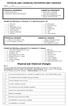 PHYSICAL AND CHEMICAL PROPERTIES AND CHANGES Name Key PHYSICAL PROPERTY CHEMICAL PROPERTY 1. observed with senses 1. indicates how a substance 2. determined without destroying matter reacts with something
Grade 4: Fruit Smoothies
 Grade : Fruit Smoothies What you need to know Section.. Teacher Background Section.. What You Need to Know in the Classroom: Junior Grades Section.9. Cooking Safely with Students Understand the benefits
HIGH FIBER DIET. (Article - Web Site) August 20, 2003
 HIGH FIBER DIET (Article - Web Site) August 20, 2003 Dietary fiber, found mainly in fruits, vegetables, whole grains and legumes, is probably best known for its ability to prevent or relieve constipation.
Acid, Acidified and Low-acid Foods
 EC 705 April 2000 Acid, Acidified and Low-acid Foods Canning Guidelines for Food Processors Department of Food Science and Human Nutrition College of Agriculture, Forestry & Life Sciences Clemson University
Introduction to Beneficial Bacteria
 Name Introduction to Beneficial Bacteria Materials 11X17 paper Colored Pencils Markers Magazine Scissors Glue Procedure 1. Using your What is a Microbe? booklet and other handouts, answer the following