
Fixed Access Ladders. Table of Contents. 1. Legislative Requirements
|
|
|
- Marilyn Whitehead
- 9 years ago
- Views:
Transcription
1 Fixed Access Ladders Engineering Data Sheet 2-04 Revised: January 1997 Table of Contents 1. Legislative Requirements 2. General 3. Rungs 4. Side Rails 5. Safety Cages 6. Attachment & Anchoring 7. Platforms 8. Inspection 9. References Figure 1. Typical Steel Access Ladder General Arrangement: Cage Not Required Figure 2. Typical Steel Access Ladder General Arrangement: Cage Required Figure 3. Typical Steel Access Ladder Elevated Access General Arrangement: Cage Requirement for Wide Landings Figure 4. Typical Steel Access Ladder Elevated Access General Arrangement: Cage Requirement for Narrow Landings 1. Legislative Requirements 1. Section 19 of the Regulations for Industrial Establishments states: Where frequent access is required to equipment elevated above or located below floor level, permanent platforms shall be provided with access by a fixed stair or access ladder. 2. Section 18 (1) of the regulation states: An access ladder fixed in position shall, a. be vertical; b. have rest platforms at not more than 9 metre (30 ft) intervals; c. be offset at each rest platform;

2 d. where the ladder extends over 5 metres (16 ft) above grade, floor or landing, have a safety cage commencing not more than 2.2 metres (7 ft) above grade and continuing at least 90 centimetres (36 inches) above the top landing with openings to permit access by a worker to rest platforms or to the top landing; e. have side rails that extend 90 centimetres (36 inches) above the landing; and f. have rungs which are at least 15 centimetres (6 inches) from the wall and spaced at regular intervals. 3. Section 18 (2) of the regulation also states that: Subsection (1) does not apply to an access ladder on a tower, water tank, chimney or similar structure which has a safety device which will provide protection should a worker using the ladder fall. 2. General 1. Fixed access ladders must be designed, constructed, installed and maintained so as not to endanger a worker, and must be capable of withstanding all loads to which they may be subjected. 1. Structural design, including attachment methods should be performed by a Professional Engineer. 2. The minimum design live load imposed by persons should be two loads of 1.1 kn (250 lb) each concentrated between any two consecutive attachments. Each rung in the ladder should be designed for a single concentrated live load of 1.1 kn (250 lb) minimum. 3. Other loads, such as concentrated loads, loads due to ice, wind, rigging or impact, and dead loads, must be considered in the design. 4. A safety factor of at least 4:1 should be applied in designing components for normal usage, and at least 10:1 for components supporting fall arrest systems. 2. All parts and surfaces of fixed ladder installations must be free of sharp edges, burrs, or other details that may be hazardous to the person using the ladder. 3. Prevention of unauthorized access may be achieved only by methods which do not compromise the safety or structural integrity of the ladder. For example: 1. A smooth panel may be locked over the lower rungs. 2. The bottom portion of an existing ladder must not be cut off for security purposes. 4. Design, condition and surface finish of rungs and side rails must permit secure foothold and handhold. Avoid highly polished surfaces which may become slippery, especially when wet. Avoid designs having rungs with sloping upper surfaces (a condition which may occur when a step-ladder is converted into a fixed ladder). 5. Where access is required to Heating, Ventilating and Air Conditioning (HVAC) or other equipment mounted on a roof or slung under a ceiling, the building design should ensure safe means of access for service or other personnel. 6. Roof access hatches served by fixed ladders must be at least 550 mm (21 5/8 in.) by 900 mm (2 ft 11 in.) on buildings more than 3 stories in building height, where the slope of the roof is less than 1 in When oversized clothing or equipment is anticipated (eg: self contained breathing apparatus), the ladder design should take such needs into consideration. However, dimensional extremes should be avoided to ensure that the ladder remains suitable for normal use. 8. Materials of construction shall be compatible with intended conditions of use. For example: Aluminum ladders must not be used in caustic environments. Ladders made of dissimilar metals should be protected against deterioration due to galvanic or electrolytic corrosion.

3 Wooden ladders should not be used in humid environments, or should be protected against deterioration from exposure to moisture. 9. If the distance from the top of a parapet to the roof-top exceeds one rung-space (ie: max. 300 mm or 12 inches) a means of climbing to and from the top of the parapet should be provided. 10.Fixed ladders should not be located in areas where the atmosphere creates or contributes to unsafe conditions. For example: where ice may build up or steam may condense on a ladder, where oil-or grease-laden air is present, such as cooking areas in commercial kitchens. 3. Rungs 1. The top of the uppermost rung of a ladder must be level with the top of the access/egress level or landing platform served by the ladder. Where there is a parapet, the access/egress level would be the roof if the parapet is cut to permit passage through the parapet. However, if the parapet is continuous, the access/egress level would be the top of the parapet. 2. Rungs should have a non-slip surface. 3. To accommodate functional or additional safety requirements, dimensions which exceed the minimum specified dimensions in Figures 1, 2 and 3 may be used provided sizes are increased from the minimum specified sizes to maintain the same factor of safety. In the design example attached (Fig. 1, "Typical Steel Access Ladder"), increasing the inside clear width of rungs from 400 mm (16") to 600 mm (24") would require an increase in the rung diameter from 20 mm (3/4") to 25 mm (1"). 4. Side Rails 1. Any shape of side rail may be used that provides a uniform gripping surface for the hands of workers using the ladder, as long as the shape permits a power grip. 1. Side rail shapes that do not permit a power grip should not be used. 2. The same shape of side rails should be maintained for all ladders in the same length of climb. 2. The minimum size (cross-section) of side rails recommended in this section (4.2) are based on satisfying the design criteria of section 2.1 (above), assuming the maximum spacing of supports specified in section (below). 1. For different design loads or support spacing, the minimum size of side rails must be adjusted in accordance with recognized design practice. 2. The same size (cross-section) of side rails should be maintained for all ladders in the same length of climb. 3. The minimum size (cross-section) recommended for a steel ladder (subject to normal atmospheric exposures) is 10 mm x 65 mm (3/8 inch x 2½ inch) solid flatbar stock. 4. For different materials the minimum recommended size must be adjusted in accordance with recognized design practice. 3. Where it is not practicable to have fixed extensions of side rails above a landing, equivalent provisions must be arranged. Extensions integrated into guardrails, telescoping side rails, extensions incorporated into roof hatches, etc., may be accepted by this Ministry. Centre-post extensions are not considered acceptable. 5. Safety Cages

4 1. With an elevated access, a cage must be provided where the top of the ladder is greater than 5 metres (16 feet) above ground level, roof or floor and where there is a danger of a worker falling from the ladder to the ground level, roof or floor, even if the length of the climb is less than 5 metres (16 ft). (See Fig. 3 and 4.) 1. An elevated access from a platform having 1.2 metres (48 inches) (or more) clearance between the ladder and any adjacent guard or rail, may utilize a standard cage (as per Figure 3). 2. An elevated access from a platform having less than 1.2 metres (48 inches) clearance between the ladder and any adjacent guardrail should have a cage continuous with the guardrail on the side(s) with clearance less than 1.2 metres (48 inches) (Figure 4). 2. Cages should be provided with horizontal hoops or bands to help impede the fall of a worker. 3. Cages should not be less than 680 mm (27") in width and should extend not less than 680 mm (27") and not more than 760 mm (30") from the centre-line of the rung (measured on the climbed side of the ladder, horizontally and perpendicular to the rung). These restrictions do not apply to the bottom flare of cages. 4. The inside of cages must be free of obstructions. 5. Cages must be designed to withstand all loads to which they may be subjected. 6. Attachment & Anchoring 1. Structural soundness of the wall, member or piece of equipment to which the ladder is to be attached must be confirmed by a competent person, prior to installation of the ladder. 2. Attachment method (eg: through-bolting, anchoring, welding, etc.) must be rated for the intended structural service and for the type of wall, member or piece of equipment. 1. Expansion anchors of all descriptions should be avoided with masonry walls, since anchor manufacturers' pull-out ratings are invariably given for poured concrete walls, and cannot be reliably attained in masonry walls. 2. Through-bolted connections (or equivalent) must be used for masonry walls, and other walls for which there is no anchor manufacturers' pull-out rating. Generally, through-bolted connections should be used wherever practicable. 3. Attachment and anchor bolts should have a minimum diameter of 12 mm (½ inch). 4. Maximum spacing of attachment points for a steel ladder with side rails should be 3 m (10 feet). For different materials or extra loads, this maximum spacing must be adjusted in accordance with recognized design practice. 3. To provide an improved margin of safety, there should be two means of anchoring the top of the ladder. This may be accomplished by fastening the side rail extension above the top of the access/egress level to the structure, building or equipment. 4. Modifications to the attachment of the ladder to the structure, building or equipment should be approved by a professional engineer. 7. Platforms 1. Suitable platforms should be provided along a ladder where worker activity is anticipated and where lack of such a platform will incur significant additional hazard to workers. For example: At the top of a ladder on a tower or similar structure, where work of significant duration can be anticipated (such as gathering of emissions information), a work platform should be provided.

5 On a roof access ladder, just under the roof hatch, where it can be anticipated that workers encumbered with tools and/or supplies need to unlock a roof hatch, a rest or landing platform should be provided. 2. Rest platforms (per section 1.2.(b), above) may be used for this purpose, where practicable. 3. Minimum total depth of the platform (from climbed side of ladder to guardrail) should be 760 mm (30 inches) and the minimum width of the platform should be 760 mm (30 inches). 4. Self-closing safety gates should be provided on platforms next to a ladder, whenever worker activity near the ladder can be foreseen. 8. Inspection 1. Fixed access ladder installations must be periodically inspected by a competent person for rust, corrosion and structural integrity, and must be maintained in a good condition, not likely to endanger any worker. These inspections should be conducted at least once per year. 2. Records of inspections and maintenance to fixed access ladder systems should be maintained. 9. References ANSI A America National Standard for Ladders, Fixed - Safety Requirements. USDOL - OSHA Fixed Ladders O.B.C Ontario Building Code

6 Figure 1. Typical Steel Access Ladder General Arrangement: Cage Not Required

7 Fixed Access Ladders Figure 2. Typical Steel Access Ladder General Arrangement: Cage Required

8 Fixed Access Ladders Figure 3. Typical Steel Access Ladder Elevated Access General Arrangement: Cage Requirement for Wide Landings

9 Figure 4. Typical Steel Access Ladder Elevated Access General Arrangement: Cage Requirement for Narrow Landings

10

11

SCOPE This guideline applies to all construction projects on Emory University properties, including renovation projects.
 1762 Clifton Road, Suite 1200 Atlanta, Georgia 30322 (404) 727-5922 FAX: (404) 727-9778 FALL PROTECTION DESIGN AND CONSTRUCTION GUIDELINES PURPOSE The purpose of this guideline is to provide safe design
Drew University Ladder Safety Program Policy and Inspection Procedure Draft 0412
 PURPOSE To establish and define the procedures to ensure that ladders at Drew University are installed, used, inspected and maintained in accordance with applicable standards. REFERENCES OSHA Portable
Walking and Working Surface Checklist:
 Walking and Working Surfaces Purpose: This information is presented to improve the level of safety in our operations, and to inform you that we will comply with the OSHA Standard 29 CFR 1910.23. Responsibility:
Ladder Inspections. Attachment 1 is a provided as a guideline for portable ladder inspections.
 Ladder Inspections Due to recent information, lessons learned, and accident reports from across the DOE complex, emphasis needs to be placed on the importance of inspecting ladders, both portable and fixed.
Fixed and Portable Ladders- A Guide to OSHA Rules
 Fixed and Portable Ladders- A Guide to OSHA Rules Introduction Working on and around stairways and ladders is hazardous. Stairways and ladders are major sources of injuries and fatalities among construction
Fall Protection System: A system put in place to protect workers from falling. (i.e. installation of guardrails, fall arrest, fall restraint, etc.
 SWP (6) FALL PROTECTION PROGRAM The following information on Fall Protection has been based around the BC OHS Regulations, standards, policies and guidelines. Prior to starting work outside of BC, the
WALKING-WORKING SURFACES (SLIPS, TRIPS, AND FALLS)
 WALKING-WORKING SURFACES (SLIPS, TRIPS, AND FALLS) Slips, trips, and falls constitute the majority of general industry accidents. They cause 15% of all accidental deaths, and are second only to motor vehicles
Safe ladder use. Construction Safety Series. When climbing up or down, workers should:
 Safe ladder use When climbing up or down, workers should: Always face the ladder. Workers must not use ladder-type material hoists for roof access unless the hoists are designed for that purpose. Use a
9.8.1.1. General (1) This Section applies to the design and construction of interior and exterior stairs, steps, ramps, railings and guards.
 Section 9.8. Stairs, Ramps, Handrails and Guards 9.8.1. Application 9.8.1.1. General (1) This Section applies to the design and construction of interior and exterior stairs, steps, ramps, railings and
Residential Deck Safety, Construction, and Repair
 Juneau Permit Center, 4 th Floor Marine View Center, (907)586-0770 This handout is designed to help you build your deck to comply with the 2006 International Residential Building code as modified by the
Florida Building Code 2004 SECTION 1009 STAIRWAYS AND HANDRAILS
 Florida Building Code 2004 SECTION 1009 STAIRWAYS AND HANDRAILS 1009.1 Stairway width. The width of stairways shall be determined as specified in Section 1005.1, but such width shall not be less than 44
The following symbol denotes a generally compliant condition: The following symbol denotes a generally noncompliant condition:
 This guide provides compliance information to help the metal and nonmetal mining industry comply with the requirements of the Mine Safety and Health Administration s (MSHA s) ladder standards. This document
Horizontal Cable Systems
 Safety From The Top Down Suspended Access Systems and Fall Protection Overview Horizontal cable systems are generally installed as a permanent fall protection system, typically consisting of two terminating
Number of Sides Required to Have a Handrail
 Excerpt from 2012 B.C. Building Code HANDRAILS & GUARDS 9.8.7. Handrails 9.8.7.1. Required Handrails 1) Except as provided in Sentences (2) to (4), handrails shall be installed on stairs and ramps in accordance
Residential Decks. Planning and Development Services Department
 Building Safety Division 8500 Santa Fe Drive Overland Park, KS 66212 (913) 895-6225 Fax (913) 895-5016 Email: [email protected] Planning and Development Services Department Residential Decks
Fall Protection, Title 29 Code of Federal Regulations (CFR) Part 45, Subpart M, Fall Protection, 1926.500, 1926.501, 1926.502, and1926.
 STANDARDS Fall Protection, Title 29 Code of Federal Regulations (CFR) Part 45, Subpart M, Fall Protection, 1926.500, 1926.501, 1926.502, and1926.503 1.0 Purpose This document meets the requirements outlined
This handout is a guide only and does not contain all of the requirements of the Minnesota State Building Code or city ordinances.
 Residential Decks Community Development Department Building Inspections Division 5200 85 th Avenue North / Brooklyn Park, MN 55443 Phone: (763) 488-6379 / Fax: (763) 493-8171 6/15 www.brooklynpark.org
`Fall Protection Guidelines in Construction
 `Fall Protection Guidelines in Construction A Publication Provided by: 1681 Campus Delivery Fort Collins, Colorado 80523 (970) 491-6151 email: [email protected] web: http://www.bernardino.colostate.edu/public/
One-third of all fatalities in the U.S. construction
 Guardrail systems: Fall prevention for floor and wall openings and open-sided floors One-third of all fatalities in the U.S. construction industry result from falls from elevations. Falls from elevations
SECTION 15410 GROUND WATER STORAGE TANKS
 SECTION 15410 GROUND WATER STORAGE TANKS PART 1 GENERAL.01 SCOPE A. Section Includes Requirements for designing, fabricating, and erecting a welded steel ground storage tank..02 SYSTEM DESCRIPTION A. Design
ladder Safety Types of Ladders
 Types of Ladders There are many types of ladders and it is important to choose the right ladder for the task. Here are some different types: Extension/straight Fixed access Tripod orchard (orchard use
POST AND FRAME STRUCTURES (Pole Barns)
 POST AND FRAME STRUCTURES (Pole Barns) Post and frame structures. The following requirements serve as minimum standards for post and frame structures within all of the following structural limitations:
OPTIONAL INFORMATION GUARDING FLOORS, STAIRS, AND OTHER OPENINGS SELF INSPECTION CHECKLIST
 OPTIONAL INFORMATION Name of School: Date of Inspection: Vocational Program/Course/Room: Signature of Inspector: GUARDING FLOORS, STAIRS, AND OTHER OPENINGS Guidelines: This checklist covers some of the
Ladders. Ladders New Reg
 Ladders Not 3 ft above roof On topcap Not secured Trip hazards Improper slope On top step Not on level surface Ladders New Reg GISO and CSO ladders standards were not consistent or complete safety hazards
ELEVATED WORK POLICY
 ELEVATED WORK POLICY 1.0 BACKGROUND The purpose of this program is to prevent accidents and injuries to workers from falls and to provide employees with the information for the safe use of fall protection
COMMONLY USED RESIDENTIAL BUILDING CODES
 COMMONLY USED RESIDENTIAL BUILDING CODES INTERNATIONAL RESIDENTIAL CODE (2009) form revised 5/10 STAIRWAYS 46. LANDINGS. Section R311 IRC 2009 R311.7.5 Landings for stairways. There shall be a floor or
RZ Guardrail System Installation Manual
 TM RZ Guardrail System Installation Manual RZ Guardrail System Compliance is based on OSHA standards: (Standards - 29 CFR) 1910.23 (e) and (Standards - 29 CFR) 1926.502 (b) Failure to read, understand
Fall Protection Program
 Fall Protection Program Policy: It is the policy of our company to provide fall protection for employees exposed to fall hazards greater than 7 ½ feet. Fall hazards include but, are not limited to; work
Ladder Program and Training Materials
 Prepared by Built Insurance Brokerage LLC Ladder Program and Training Materials Table of Contents Ladder Program... 1 Appendix A... 5 Appendix B... 7 Employee Handout... 9 Presentation Instructor Notes...
FALL PROTECTION PROGRAM
 FALL PROTECTION PROGRAM DEPARTMENT OF RISK MANAGEMENT AND SAFETY CREATED JUNE 2009 Table of Contents Fall Protection Requirements... 1 General Fall Protection... 1 Controlled Access Zones... 1 Guardrail
Ladder, Scaffolding, and Excavation Safety Plan
 Ladder, Scaffolding, and Excavation Safety Plan Environmental Health, Safety, and Risk Management Department Box 6113, SFA Station Nacogdoches, Texas 75962-6113 Revised: January 2011 LADDERS In reducing
Fixed ladders. Fixed ladders. Shaft ladders
 Fixed ladders Fixed ladders Fixed ladders are perfect to provide safe and permanent access to buildings, equipment or machines also at great heights, e.g.: + + Ascent for inspection and maintenance work
Uncovered Decks & Porches
 Uncovered Decks & Porches Building Guides for Homeowners Why Do I need a Permit? D I D Y O U K N O W? As owner-builder you are the responsible party of record on such a permit. If your work is being performed
PUMP JACK SYSTEM AND ACCESSORIES
 Pump Jack Model # 2200 A low cost, easy to operate, safe, portable scaffolding built of rugged steel. It's perfect for shingling, siding, sheathing, insulating, painting, building, roofing, home repair
FALL PROTECTION- Part 2 SELF INSPECTION CHECKLIST
 OPTIONAL INFORMATION Name of School: Date of Inspection: Vocational Program/Course/Room: Signature of Inspector: FALL PROTECTION- Part 2 Instructions: This checklist covers fall protection systems criteria
SITE SPECIFIC FALL PROTECTION PLAN
 1 THIS PLAN IS SPECIFIC TO: PROJECT & ADDRESS 1.1 THIS PLAN IS SPECIFIC TO THE FOLLOWING AREA(S) ON SITE: Parkade level: Typical level: Other: Between G/L: 1.2 THIS PLAN IS APPLICABLE TO THE FOLLOWING
PLEASE NOTE. For more information concerning the history of these regulations, please see the Table of Regulations.
 PLEASE NOTE This document, prepared by the Legislative Counsel Office, is an office consolidation of this regulation, current to June 9, 2012. It is intended for information and reference purposes only.
QUESTIONS AND ANSWERS ON NEW FALL PROTECTION LEGISLATION
 QUESTIONS AND ANSWERS ON NEW FALL PROTECTION LEGISLATION 50.4(1) An owner of a place of employment, an employer and a contractor shall each ensure that each component of a fall-protection system is inspected
Fall Protection and Fall Prevention. San José State University Environmental Health and Safety Facilities Development & Operations
 Fall Protection and Fall Prevention San José State University Environmental Health and Safety Facilities Development & Operations Learning Objectives To understand the hazards of falls To understand when
Prevention through Design: Eliminating Confined Spaces and Minimizing Hazards
 Prevention through Design: Eliminating Confined Spaces and Minimizing Hazards American Industrial Hygiene Association Developed by the AIHA Confined Spaces Committee Approved by the AIHA Board of Directors
Guarding Floor and Wall Openings and Holes OSHA Standard 1910.23 1
 ABE127 Guarding Floor and Wall Openings and Holes OSHA Standard 1910.23 1 Carol J. Lehtola, Charles M. Brown, and William J. Becker 2 The Impact of Safety on Florida Agriculture Florida agriculture, including
CHECKLIST Fall Protection
 Walking/working surfaces can support employees. Employees are protected from falling from elevated surfaces through the use of guardrail systems, safety net systems; personal fall arrest systems, controlled
ADMINISTRATIVE PROCEDURE
 Page 1 of 12 1. Purpose: The purpose of a Program is to establish procedures to protect all employees engaged in outdoor or indoor work activities that expose them to potential falls from elevations. This
General Safety. Always do a risk assessment.
 recipitous.co.uk Access Equipment Call 020 8684 6999 Scaffold Towers Ladders & Steps Podiums Rigging Tube & Fittings New & Used Sales Hire Repair Manufacture The Skymaster Ladder is a 3 section combination
How To Protect A Swimming Pool
 County of Gloucester Codes Compliance Building Department Building Three P. O. Box 329 Gloucester, Virginia 23061 Building Code Guidelines Residential Swimming Pools & Spas KEEP YOUR POOL SAFE CODE REQUIREMENTS
Fall protection systems and practices Duty to have fall protection Protection at or above 6' level.
 Duty to have fall protection Protection at or above 6' level. Walking/working surfaces inspected before work begins. Employees can only work on surfaces strong enough to support them. Page 1 Protection
PIPES AND TUBES FOR HVAC PIPING AND EQUIPMENT
 PIPES AND TUBES FOR HVAC PIPING AND EQUIPMENT GENERAL INFORMATION 1.1 This section applies to piping systems for chilled water, hot water, condenser water, steam, condensate return, fuel oil, refrigerant
RESIDENTIAL ROOFING & RE-ROOFING, ROOF VENTILATION AND ROOF SHEATHING REQUIREMENTS MICHIGAN RESIDENTIAL CODE 2000
 RESIDENTIAL ROOFING & RE-ROOFING, ROOF VENTILATION AND ROOF SHEATHING REQUIREMENTS MICHIGAN RESIDENTIAL CODE 2000 SECTION R905 REQUIREMENTS FOR ROOF COVERINGS R905.1 Roof covering application. Roof coverings
Planning Information. Passenger and Freight Elevators.
 A company of ThyssenKrupp Elevator Thyssen Aufzüge tk This planning information will give you an overview of the most important planning criteria of passenger and freight elevators. However you should
4 Installation Requirements
 4 Installation Requirements 9 4.1 Code Reference The authority having jurisdiction should be referenced to determine what law, ordinance or code shall apply in the use of flexible duct. Ducts conforming
SAFE ACCESS, LADDERS, FLOOR & WALL OPENINGS, STAIRS AND RAILING SYSTEMS
 SECTION 24 SAFE ACCESS, LADDERS, FLOOR & WALL OPENINGS, STAIRS AND RAILING SYSTEMS 24.A SAFE ACCESS - GENERAL 24.A.01 Safe access shall be provided to work areas and where danger exists of workers falling
PivotLoc Ladder Systems
 N25 ACCESS AND SAFETY EQUIPMENT SPECIFICATION CLAUSES PivotLoc Ladder Systems To be read with The Main Contract Preliminaries, General Conditions, Sub-Contract Preliminaries. MINIMUM CONTRACTOR STANDARD
HURRICANE MITIGATION RETROFITS FOR EXISTING SITE-BUILT SINGLE FAMILY RESIDENTIAL STRUCTURES
 HURRICANE MITIGATION RETROFITS FOR EXISTING SITE-BUILT SINGLE FAMILY RESIDENTIAL STRUCTURES 101 Retrofits Required. Pursuant to Section 553.844 553.884, Florida Statutes, strengthening of existing site-built,
De Beers Canada Inc. OP 050 SLIPS, TRIPS, FALLS AND PEDESTRIAN SAFETY - SURFACE
 1. Purpose And Scope To establish safe procedures for pedestrians travelling on sites, in plants, on roads in offices or the general area of the workplace. 2. Responsibilities Responsible Person All Personnel
Fall Protection Basics for Construction Activities
 Fall Protection Basics for Construction Activities Washington State has revised fall protection rules, effective April 1, 2013. This booklet provides an overview of the requirements. www.lni.wa.gov/safety
The replacement or modification of existing windows shall comply with the following requirements:
 City of La Habra Heights Building Division 1245 N. Hacienda Road La Habra Heights, CA 90631 Office: (562) 694-6302 ext. 228 Fax: (562) 690-5010 WINDOW REPLACEMENT 2010 CALIFORNIA RESIDENTIAL CODE (CRC)
Asphalt Shingle Application Requirements
 Alberta Allied Roofing Association Asphalt Shingle Application Requirements Section 1 Roof Decks 1.1 General Asphalt Shingles are not permitted to be installed directly over rigid insulation. When Asphalt
Fall Protection. Office of Risk Management. uottawa.ca. Guide
 Fall Protection Guide Office of Risk Management.ca 1 Contents SCOPE... 1 INTENT... 1 LEGISLATION AND REQUIREMENTS... 1 RESPONSABILITIES... 2 Supervisors... 2 Workers... 2 Facilities... 2 HAZARD CONTROL...
Summit Anchor Company, Inc.
 Summit Anchor Company, Inc. Safety From The Top Down Roof and Wall Safety/Tie-Back Anchors Suspended Access Systems and Fall Protection Overview National Safety Standards OSHA regulations specifically
FALL PROTECTION PROGRAM
 FALL PROTECTION PROGRAM Page 2 of 15 Table of Contents Applicability... 3 Overview... 3 Definitions... 3 Responsibilities... 5 Risk Assessment... 6 Risk Management... 7 Roof Access Procedure 10 Rescue
WORKING AT HEIGHT GUIDELINES. Version II
 WORKING AT HEIGHT GUIDELINES Version II 21 st September 2011 WORKING AT HEIGHT GUIDELINES EXECUTIVE SUMMARY Working at height is where an individual is carrying out work in any place in the course of obtaining
Portable Ladder Safety
 Portable Ladder Safety Agenda Importance of Ladder Safety An Approved Ladder Controlling Hazards Inspecting the Ladder Set Up Use Importance of Ladder Safety Any fall can be serious, and a fall from the
Work at Height / Falling Objects
 Introduction This information sheet gives employers and employees practical advice on work at height and falling objects and how to eliminate or reduce the risk of harm or damage occurring. It will assist
Table of Contents. Western States RustWall Wall and Soffit Panels Installation, Flashings & Shop Drawing Detail Guide
 Western States RustWall Wall and Soffit Panels Installation, Flashings & Shop Drawing Detail Guide Table of Contents Section Page Section Page Notes to Designer /Installers.. 1 Fastener Placement and Selection.2-3
Miller Engineered Solutions Customized Fall Protection Solutions. NEW! Now featuring Rigid Rail Systems
 Miller Engineered Solutions Customized Fall Protection Solutions NEW! Now featuring Rigid Rail Systems Custom systems for fall protection needs Vast network of trained and certified installer partners
Elkhorn Construction, Inc. Safety Manual Title: Fall Protection Policy Effective Date: 03-01-2000
 1. General Requirements (OSHA References: OSHA 29 CFR 1926.503) 1.1 Elkhorn Construction, Inc. employee-owners and subcontractors are required to use fall protection equipment or systems when an assessment
What is Fall protection?
 What is Fall protection? The Occupational Safety and Health Administration s (OSHA s) fall protection standard deals with both human and equipment-related issues. The standard identifies areas or activities
How to secure your property after a disaster
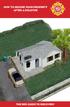 How to secure your property after a disaster The Red Guide to Recovery HOuse secured properly Board-Up of Windows, Doors and Roof Hole. Lot secured with Perimeter Fencing. Fires, floods, tornadoes, hurricanes,
Chapter 3 Pre-Installation, Foundations and Piers
 Chapter 3 Pre-Installation, Foundations and Piers 3-1 Pre-Installation Establishes the minimum requirements for the siting, design, materials, access, and installation of manufactured dwellings, accessory
FALL PROTECTION WORK PLAN
 FALL PROTECTION WORK PLAN INSTRUCTIONS A written fall protection work plan must be implemented by each employer on a job site where a fall hazard of 10 feet or greater exists, in accordance with OSHA Standards.
1997 Uniform Administrative Code Amendment for Earthen Material and Straw Bale Structures Tucson/Pima County, Arizona
 for Earthen Material and Straw Bale Structures SECTION 70 - GENERAL "APPENDIX CHAPTER 7 - EARTHEN MATERIAL STRUCTURES 70. Purpose. The purpose of this chapter is to establish minimum standards of safety
Charter Township of Shelby Harry Reese Building Director
 Charter Township of Shelby Harry Reese Building Director Phone: (586) 731-5969 52700 Van Dyke Fax: (586) 803-2099 Shelby Township, MI 48316-3572 E-mail: [email protected] OUTLINE PROCEDURES FOR PRIVATE
Wood Decks Zoning and construction requirements for open non-sheltered wood decks for residential dwellings.
 PLANNING, PROPERTY AND DEVELOPMENT DEPARTMENT Wood Decks Zoning and construction requirements for open non-sheltered wood decks for residential dwellings. September 2015 2 contents General Information
Draft for Public Comment Australian Standard
 COMMITTEE SF-013 DR AS 1657 (Project ID: 1488) Draft for Public Comment Australian Standard LIABLE TO ALTERATION DO NOT USE AS A STANDARD BEGINNING DATE FOR COMMENT: CLOSING DATE FOR COMMENT: 20 July 2012
D-Ring. Fixed Arm. 1.2 LIMITATIONS: The following application limitations must be recognized and considered before using this product:
 Instructions for the following series products: Parapet Wall Anchor (model number: 8523178) User Instruction Manual for Parapet Wall Anchor This manual is intended to meet the Manufacturer s Instructions
OSHA GUIDANCE DOCUMENT FALL PROTECTION IN RESIDENTIAL CONSTRUCTION
 OSHA GUIDANCE DOCUMENT FALL PROTECTION IN RESIDENTIAL CONSTRUCTION OSHA GUIDANCE DOCUMENT FALL PROTECTION IN RESIDENTIAL CONSTRUCTION Table of Contents Executive Summary... 1 Introduction... 1 Installing
Safety and Health Policy and Procedure Manual. FALL PROTECTION Section 0160. Table of Contents
 Safety and Health Policy and Procedure Manual FALL PROTECTION Section 0160 Table of Contents I. INTRODUCTION II. STANDARDS III. PURPOSE IV. SCOPE V. SCAFFOLDING VI. STAIRWAYS AND LADDERS A. Stairways B.
BUILDING PERMIT SPECIFICATIONS
 BUILDING PERMIT SPECIFICATIONS The below noted requirements are based upon La Plata County Building Code. These specifications are not intended as a complete set of requirements, but are intended to provide
UNIVERSITY OF WASHINGTON Facilities Services Design Guide. Architectural. Roofing. Basis of Design
 Basis of Design This section applies to roofing membranes, flashing and accessories. Design Criteria Adhere to the standards and details of the latest editions of the National Contractors Association (NRCA)
http://www.iccsafe.org/
 Sections R311 and R312 from the 2006 International Residential Code These sections of Chapter 3 of the 2006 International Residential Code for One and Two Family Dwellings (R311 and R312) including the
Portable Ladder Safety
 Page #: 1 of 6 Last Reviewed/Update Date: 7/27/11 Portable Ladder Safety 1. Purpose / Background The purpose of this Standard Operating Procedure (SOP) is to minimize the risk of injuries due to the incorrect
7. PRINCIPAL STEPS 8. POTENTIAL HAZARDS 9. RECOMMENDED CONTROLS
 ACTIVITY HAZARD ANALYSIS (AHA) 1. Contract Number: 2. Contractor Name: 3. Date prepared: 4. Title/Activity Performed: FIXED SCAFFOLDING 5. Location: 6. Estimated Date of Completion: 7. PRINCIPAL STEPS
Solar Water Heating and Solar Electric Generators Installed on One or Two Family Dwellings
 Solar Water Heating and Solar Electric Generators Installed on Category: Residential Construction Revised: [Paul L. Scarlett], Director Responsible Bureau Section: Development Services Center 1900 SW Fourth
Slips, Trips and Falls
 Slips, Trips and Falls Introduction o Slips, trips and falls cause: The majority of general industry accidents 15 percent of all accidental deaths (~12,000/yr) More fatalities than all other causes but
COMMERCIAL COOKING HOODS, VENTILATION & FIRE SUPPRESSION SYSTEM GUIDELINES AND PROCEDURES
 COMMERCIAL COOKING HOODS, VENTILATION & FIRE SUPPRESSION SYSTEM GUIDELINES AND PROCEDURES These guidelines are to be used for ALL commercial cooking hoods, ventilation systems and related fire suppression
Managing the risk of falls while working on roofs in housing construction
 Workplace Health and Safety Queensland Managing the risk of falls while working on roofs in housing construction Where the risk of falling is 3 metres or more (or roof slope over 26 ) Before you start
Chapter 10 - Scaffolding Systems
 Chapter 10 - Scaffolding Systems Contents Chapter 10 - Scaffolding Systems... 10-1 Check and Oil the Pump Jacks... 10-4 Set Pump Jack Brackets... Error! Bookmark not defined. Set Pump Jack Poles... 10-5
Fall Protection Solutions
 P R O V I D I N G S A F E T Y S O L U T I O N S W O R L D W I D E Fall Protection Solutions COLLECTIVE PROTECTION KEEGUARD FREE STANDING GUARD RAIL APPROVED BY CERAM AND APAVE KEE DOME SKYLIGHT FALL PROTECTION
Final inspections are completed by site visit only. Access to fenced yards shall be planned.
 ROOFING RESIDENTIAL BUILDING INSPECTIONS DEPARTMENT www.ci.blaine.mn.us This handout is intended only as a guide and is based in part on the 2015 Minnesota State Building Code, Blaine City ordinances,
2010 Residential Water Heater Replacement Check List
 2010 Residential Water Heater Replacement Check List The intent of this check list is to provide installers a general reference for the enforcement of code requirements in the Greater San Diego Area. This
This material was produced under grant number SH-17792-08-60-F-48 Occupational Safety and Health Administration, U.S. Department of Labor.
 Big Four Construction Hazards: Fall Hazards This material was produced under grant number SH-17792-08-60-F-48 Occupational Safety and Health Administration, U.S. Department of Labor. It does not necessarily
2001/069. Decks, stairways,gangways and their associated handrails OFFSHORE TECHNOLOGY REPORT HSE
 HSE Health & Safety Executive Decks, stairways,gangways and their associated handrails Prepared by Bomel Ltd for the Health and Safety Executive OFFSHORE TECHNOLOGY REPORT 2001/069 HSE Health & Safety
Davit Systems and Outriggers
 Safety From The Top Down Davit Systems and Outriggers Suspended Access Systems and Fall Protection Davits Overview Standards in the United States and Canada require a building to provide certified anchorages
Guide to Fall Protection Regulations
 Guide to Fall Protection Regulations Produced by: Workers Compensation Board of PEI PO Box 757 Charlottetown PE C1A 7L7 902-368-5697 or 1-800-237-5049 website: www.wcb.pe.ca Revised June 2013 Guide to
CT-02 CABLE TRAY SYSTEMS
 CT-02 CABLE TRAY SYSTEMS SYSTEMS THAT MAKE SENSE Introduction B-Line Systems was formed in 96 and has over 30 years experience manufacturing cable tray systems in which it has grown to become the industry
Introduction to Fall Protection
 Introduction to Fall Protection with John Evinger CRSP (204)228-8277 INSERT YOUR LOGO HERE Expected results of the day Today I will provide you with information to make you realize that you don t have
CITY OF TORONTO. BY-LAW No. 349-2008
 Authority: Licensing and Standards Committee Item 12.3, adopted as amended, by City of Toronto Council on April 28 and 29, 2008 Enacted by Council: April 29, 2008 CITY OF TORONTO BY-LAW No. 349-2008 To
WorkSafe Guidance Document FALL PROTECTION IN RESIDENTIAL CONSTRUCTION
 WorkSafe Guidance Document FALL PROTECTION IN RESIDENTIAL CONSTRUCTION WorkSafe Guidance Document Fall Protection in Residential Construction Table of Contents Executive Summary... 1 Introduction... 1
Slip, Trip & Fall Program Table of Contents
 Slip, Trip & Fall Program Table of Contents I. Introduction... 2 II. Scope... 2 III. Definitions... 2 IV. Responsibilities... 4 V. Practices... 5 VI. Slip-Fall Facility Checklist... 7 VII. References...