
Secondary School Certificate Examination Syllabus FOOD AND NUTRITION CLASSES IX-X. (based on National Curriculum 2007)
|
|
|
- Nigel Sherman
- 9 years ago
- Views:
Transcription
1 Secondary School Certificate Examination Syllabus FOOD AND NUTRITION CLASSES IX-X (based on National Curriculum 2007)

2 Published by Aga Khan University Examination Board Bungalow # 233 / E.I.Lines, Daudpota Road, Karachi, Pakistan. November 2004 Last Revised July 2009 All rights reserved This syllabus is developed by Aga Khan University Examination Board for distribution to all its affiliated schools

3 Secondary School Certificate Examination Syllabus FOOD AND NUTRITION CLASSES IX-X This subject is examined in the May Examination session only

4 S. No. Table of Contents Page No. Preface 5 1. Aims/Objectives of the National Curriculum (2007) 7 2. Rationale of the AKU-EB Examination Syllabus 7 3. Topics and Student Learning Outcomes of the Examination Syllabus Scheme of Assessment Teaching-Learning Approaches and Classroom Activities Recommended Texts and Reference Materials Definition of Cognitive Levels and Command Words 30 Annex: SSC Scheme of Studies 33 For queries and feedback Address: The Aga Khan University Examination Board Bungalow No. 233/ E.I.Lines, Daudpota Road, Karachi-Pakistan. Phone: (92-21) Fax: (92-21) [email protected] Website: Facebook: Last Revised July 2009 Page 4

5 PREFACE In pursuance of National Education Policy ( ), the Curriculum Wing of the Federal Ministry of Education has begun a process of curriculum reform to improve the quality of education through curriculum revision and textbook development (Preface, National Curriculum documents 2000 and 2002). AKU-EB was founded in August 2003 with the same aim of improving the quality of education nationwide. As befits an examination board it seeks to reinforce the National Curriculum revision through the development of appropriate examinations for the Secondary School Certificate (SSC) and Higher Secondary School Certificate (HSSC) based on the latest National Curriculum and subject syllabus guidance. AKU-EB has a mandate by Ordinance CXIV of 2002 to offer such examination services to English and Urdu medium candidates for SSC and HSSC from private schools anywhere in Pakistan or abroad, and from government schools with the relevant permissions. It has been accorded this mandate to introduce a choice of examination and associated educational approach for schools, thus fulfilling a key objective of the National Curriculum of Pakistan: Autonomy will be given to the Examination Boards and Research and Development cells will be established in each Board to improve the system (ibid. para (ii)). AKU-EB is committed to creating continuity of educational experience and the best possible opportunities for its students. In consequence it offered HSSC for the first time in September, 2007 to coincide with the arrival of its first SSC students in college or higher secondary school. Needless to say this is not an exclusive offer. Private candidates and students joining AKU-EB affiliated schools and colleges for HSSC Part 1 are eligible to register as AKU-EB candidates even though they have not hitherto been associated with AKU-EB. This examination syllabus exemplifies AKU-EB s commitment to national educational goals. It is in large part a reproduction, with some elaboration, of the Class IX and X National Curriculum of the subject. It makes the National Curriculum freely available to the general public. The syllabus recommends a range of suitable textbooks already in print for student purchase and additional texts for the school library. It identifies areas where teachers should work together to generate classroom activities and materials for their students as a step towards the introduction of multiple textbooks, another of the Ministry of Education s policy provisions for the improvement of secondary education (ibid. para ). Last Revised July 2009 Page 5

6 This examination syllabus brings together all those cognitive outcomes of the National Curriculum statement which can be reliably and validly assessed. While the focus is on the cognitive domain, particular emphasis is given to the application of knowledge and understanding, a fundamental activity in fostering attitudes befitting useful and peaceful citizens and the skills for and commitment to lifelong learning which is the cornerstone of national economic development (Preface to National Curriculum documents 2000 and 2002). To achieve this end AKU-EB has brought together university academics, teacher trainers, writers of learning materials and above all, experienced teachers, in regular workshops and subject panel meetings. AKU-EB provides copies of the examination syllabus to subject teachers in affiliated schools to help them in planning their teaching. It is the syllabus, not the prescribed text book which is the basis of AKU-EB examinations. In addition, the AKU-EB examination syllabus can be used to identify the training needs of subject teachers and to develop learning support materials for students. Involving classroom teachers in these activities is an important part of the AKU-EB strategy for improving the quality of learning in schools. The Curriculum Wing of the Federal Ministry of Education has recently released new subject specifications and schemes of study to take effect in September, These documents are a major step forward towards a standards-related curriculum and have been welcomed by AKU-EB. Our current SSC syllabuses have been revised to ensure conformity with the new National Curriculum We stand committed to all students entering the SSC course as well as those who have recently embarked upon the HSSC course in facilitating their learning outcome. Our examination syllabus document ensures all possible support. Dr. Thomas Christie Director, Aga Khan University Examination Board July 2009 Last Revised July 2009 Page 6

7 1. Aims/Objectives of the National Curriculum (2007) 1 Aims The curriculum for Food and Nutrition for grades IX-X aims to help individual students to: Develop knowledge of food and Nutrition with special reference to healthy living Develop professional attitude towards meeting food needs of the family Build capacity for utilization of available resources to meet human needs (production, consumption, and services) Develop skill in planning, preparing and serving meals. Objectives To inculcate dear understating of the terminology used in food science To give the knowledge to students for the special nutrient needs of people through the life cycle-expectant and lactating mothers, infancy, preschool, teenagers and old age Understanding the principles of nutrition and ability to use this knowledge in the feeding of normal and sick persons of all ages To describe the essential components of a nutritionally adequate diet To be able to plan a variety of nutritionally adequate meals To build capacity of the students to plan appropriate meals in accordance with the body needs and available resources Monitor and control the changes occurring in food during preparation and cooking To select appropriate equipment and be able to use it in a safe and appropriate manner To create understanding and ability for storage of food 2. Rationale of the AKU-EB Examination Syllabus 2.1 General Rationale In 2007, the Curriculum Wing of the Federal Ministry of Education (MoE) issued a revised part-wise Scheme of Studies according to which the total marks for the SSC examination have been increased from 850 to 1100 from the year 2008 and onwards. All subjects are to be taught and examined in both classes IX and X. It is therefore important for teachers, students, parents and other stakeholders to know: (a) that the AKU-EB Scheme of Studies for its SSC examination (Annex A) derives directly from the 2007 Ministry of Education Scheme of Studies; (b) which topics will be examined in Class IX and in Class X; 1 Government of Pakistan (2007), National Curriculum; Food and Nutrition Classes IX-X, Islamabad, Ministry of Education (Curriculum Wing) Last Revised July 2009 Page 7

8 (c) at which cognitive level or levels (Knowledge, Understanding, Application and other higher order skills) the topics and sub-topics will be taught and examined; This AKU-EB examination syllabus addresses these concerns. Without such guidance teachers and students have little option other than following a single textbook to prepare for an external examination. The result is a culture of rote memorization as the preferred method of examination preparation. The pedagogically desirable objectives of the National Curriculum which encourage observation, creativity and other higher order thinking [skills] are generally ignored. AKU-EB recommends that teachers and students use multiple teaching-learning resources for achieving the specific objectives of the National Curriculum reproduced in the AKU-EB examination syllabuses The AKU-EB examination syllabuses use a uniform layout for all subjects to make them easier for teachers to follow. Blank sheets are provided in each syllabus for writing notes on potential lesson plans. It is expected that this arrangement will also be found helpful by teachers in developing classroom assessments as well as by question setters preparing material for the AKU-EB external examinations. The AKU-EB aims to enhance the quality of education through improved classroom practices and improved examinations The Student Learning Outcomes (SLOs) in Section 3 start with command words such as list, describe, relate, explain, etc. The purpose of the command words is to direct the attention of teachers and students to specific tasks that candidates following the AKU-EB examination syllabuses are expected to undertake in the course of their subject studies. The examination questions will be framed using the same command words or the connotation of the command words to elicit evidence of these competencies in candidates responses. The definitions of command words used in this syllabus are given in Section 8. It is hoped that teachers will find these definitions useful in planning their lessons and classroom assessments The AKU-EB has classified SLOs under the three cognitive levels Knowledge (K), Understanding (U) and Application of knowledge and skills (A) in order to derive multiple choice questions and constructed response questions on a rational basis from the subject syllabuses ensuring that the intentions of the National Curriculum should be met in full. The weighting of marks to the Multiple Choice and Constructed Response Papers is also derived from the SLOs, command words and cognitive levels. In effect the SLOs derived from the National Curriculum determine the structure of the AKU-EB subject examination set out in Section Some topics from the National Curriculum have been elaborated and enriched for better understanding of the subject and/or to better meet the needs of students in the twenty-first century. These additional topics have been italicized in Section 3 of this syllabus. Last Revised July 2009 Page 8

9 2.2. Specific Rationale of the AKU-EB Food and Nutrition Examination Syllabus The Curriculum Development team for Food and Nutrition for grades IX-X was framed involving subject experts and teachers of Food and Nutrition from colleges all over Pakistan. Following strategies were adopted in designing/revising the curriculum: Need assessment by critically reviewing current curriculum Consultative meetings with the working teachers and professors to get feedback and comments on existing curriculum Identification of eminent areas of study Identification of standards for communicating the impending areas Study of foreign curricula for comparison and guidelines Drafting of contents Preparation of detailed contents in the light of competencies to be developed Preparation of specific learning outcomes according to the contents Preparation of study and evaluation scheme for implementing the curriculum The requirement to revise and update Food and Nutrition curriculum is based on the aspirations of the government and the society envisages vibrant and responsive curriculum. The prime focus of this curriculum is based on the broad areas of Food and Nutrition. This document is based on three broad categories of activities that connect Food and Nutrition with health and wellbeing of people: Knowing how to use knowledge scientifically Developing an understanding of home making tasks relating to foods, based on scientific knowledge Utilization of all the resources of modern science to improve the nutrition of the family This curriculum will broaden the horizon and vision of the students by teaching them latest techniques and developing scientific and practical approach. It will prepare the students for the world of work, as will as for pursuit of professional and specialized education. Last Revised July 2009 Page 9

10 3. Topics and Student Learning Outcomes of the Examination Syllabus Part I (Class IX) Topic 1. Introduction to the Study of Food and Nutrition Candidates should be able to: Student Learning Outcomes Cognitive Level 2 K U A 1.1 Introduction define food and diet; * differentiate between food and diet; * define nutrition; * differentiate among malnutrition, under nutrition and over-nutrition; * define a calorie; * explain the term Recommended Daily Allowance (RDA) and state the RDA of different food groups (proteins, vitamin A, B 1, B 2, C and D, calcium and iron) for children, males, females, pregnant and lactating mothers; * 1.2 Role of Nutrition in Health define nutrients; * explain the role of nutrition in physical health; mental health; preventing diseases; * 1.3 Functions of Foods describe the basic functions of food; * explain the role of food as a source of energy; * describe the role of food in tissue building and maintenance; * discuss the role of food in preventing diseases; * 2 K = Knowledge, U = Understanding, A= Application (for explanation see Section 7: Definition of command words used in Student Learning Outcomes and in Examination Questions). Last Revised July 2009 Page 10

11 NOTES Last Revised July 2009 Page 11

12 K U A 1.4 Good and Poor Nutrition identify poor and good nutrition; * describe the effects of nutrition on growth in children; * list the effects of nutrition on skin, hair, nails and gums; * discuss the effects of weight (gain / loss) on children and adults. * 2. Energy and Nutrients Candidates should be able to: 2.1 Nutrients describe basic nutrients like carbohydrates, proteins, fats, minerals * (calcium and iron), vitamins (A, C and D) and water; describe the functions of each nutrient; * identify the food sources of each nutrient; * discuss the effect of deficiencies of each nutrient; * describe the sources and functions of dietary fibre; * 2.2 Energy Value of Food compare energy value of different foods; * identify proper sources of energy in daily diet; * describe factors affecting energy requirement of the individuals (growth, daily physical activities, pregnancy). * 3. Balanced Diet Candidates should be able to: 3.1 Importance of Balanced Diet define balanced diet; * state the importance of balanced diet; * differentiate between balanced and unbalanced diet; * describe the different food groups (cereals, fruits and vegetables, milk products, meat); * Last Revised July 2009 Page 12

13 NOTES Last Revised July 2009 Page 13

14 3.1.5 explain the requirement of a balanced diet; i. at different ages-infancy, pre-school, adolescence, adulthood, old age; ii. between genders; iii. in relation to intensity of daily physical activity; iv. during pregnancy and lactation; K U A * 3.2 Health and Dietary Practices define health; * define dietary practices; * describe the factors influencing dietary practices; * discuss the role of unhealthy dietary practices on health; * 3.3 Planning Balanced Diets discuss the importance of healthy food choices; * compare and contrast serving size and the concept of portion size; * identify food groups in food pyramid; * plan a balanced diet from basic food groups; * 3.4 Food Composition Table use the food composition table; * estimate energy, protein content of given foods; * interpret food tables. * 4. Nutrient Composition Candidates should be able to: 4.1 Nutrient Composition of the Various Foods 4.2 Significance of Nutrient Composition describe the nutrient composition of the various foods; (milk, eggs, meat, fish, poultry, vegetables and fruits, cereals, pulses and nuts, fats, oils and sugar); explain the importance of knowing nutrient composition of different foods; identify food items keeping in mind nutrient composition. * * * Last Revised July 2009 Page 14

15 NOTES Last Revised July 2009 Page 15

16 5. Preparation and Cooking Candidates should be able to: K U A 5.1 Preparation and Cooking Methods explain the effects of cooking on colour, texture, palatability and * digestibility of various foods; Milk and milk products Eggs Meat and meat products Vegetable and fruits Cereals and starch describe the appropriate methods of preparing food; * demonstrate the different cooking methods; *P describe proper cooking methods for different foods; * explain cooking methods which minimizes nutrient losses; * plan, prepare and serve some common dishes from the following; *P Milk and milk products (custard, kheer, etc) Eggs (omelet, egg sandwiches, egg roll, etc) Meat and meat products (biryani, etc) Vegetable and fruits (potato and spinach bhujiya, vegetable rice, pea pulao, etc) Cereals and starch (paratha, cutlets, daal, etc) 5.2 Safety in the Kitchen explain the importance of the safety measures in the kitchen; * identify potential danger areas in the kitchen; * practise safety precautions in the kitchen; *P handle minor accidents in the kitchen. *P *Practical Activity Last Revised July 2009 Page 16

17 NOTES Last Revised July 2009 Page 17

18 Part II (Class X) Topic 6. Family and Community Nutrition Candidates should be able to: Student Learning Outcomes Cognitive Level K U A 6.1 Nutrition of Vulnerable Groups in the Community 6.2 Preventing Malnutrition in Community define community nutrition; * define vulnerable groups; * identify nutritional problems of different vulnerable groups; * explain the dietary needs of the vulnerable groups: * pregnant and lactating females infants preschools teenagers / adolescents elderly compare the additional food requirements of pregnant and lactating * mothers; compare breast-feeding and bottle-feeding; * compare the choices between home-made and commercial baby foods; * compare healthy snacks vs. junk food among teenagers; * modify family diets to suit the food needs of elderly in the family; * list various measures for preventing malnutrition; * discuss the prevention of nutrition disorders related to food shortage; * discuss the role of economics in community nutrition; * discuss awareness through nutrition education; * explain distribution of food in family and community; * discuss the importance of avoiding food wastage at family and community levels. * Last Revised July 2009 Page 18

19 NOTES Last Revised July 2009 Page 19

20 7. Meal Management Candidates should be able to: K U A 7.1 Principles of Meal define meal planning; * state the principles of meal planning; * explain the importance of meal planning; * 7.2 Menu Planning for Families of Different Income Levels 7.3 Menu Planning for Different Stages define menu planning; * describe a useful format for writing a menu; * plan menu for three different income levels: low middle high plan menus for different stages (pregnancy, infancy, early childhood, teenage and elderly); *P *P 7.4 Menu Planning for Different Occasions plan menus for different occasions like eid, birthday and wedding. *P 8. Table Setting and Meal Services Candidates should be able to: 8.1 Food Service and Table describe food service; * Setting explain significance of food service; * describe the different methods of food service formal, buffet, trolley and * tray; describe appropriate methods of food services for different occasions; * 8.2 Table Manners and Etiquettes *Practical Activity describe and demonstrate table manners and etiquettes, e.g. washing hands before eating meals, saying prayers while starting meal, using right hand while eating, use of table napkins. *P Last Revised July 2009 Page 20

21 NOTES Last Revised July 2009 Page 21
22 9. Purchases and Storage of Food Candidates should be able to: K U A 9.1 Purchase of Food explain the principles of purchase; * discuss the criteria of purchasing different types of food (fruits, * vegetables, bread); 9.2 Storage compare different types of food storage; * explain why food must be properly stored; * list correct storage procedures (refrigeration and freezing) for various food types. * 10. Food Preservation Candidates should be able to: 10.1 Food Preservation define preservation; * discuss the importance of food preservation; * explain the principles of preserving food; * compare different methods of preservation; heating canning, bottling removal of moisture drying reduction in temperature freezing chemical preservation sugar, salt, vinegar pasteurization; * 10.2 Food Spoilage define spoilage; * describe the mode of action of different spoiling agents (bacteria, fungi, action of enzyme); explain different methods of controlling food spoilage at home (refrigeration, kitchen hygiene, waste disposal); * * Last Revised July 2009 Page 22
23 NOTES Last Revised July 2009 Page 23
24 K U A 10.3 Food Additives define additives; * list the food additives; * discuss the role of additives in food preservation; * explain the role of food additives in relation to health hazards. * Last Revised July 2009 Page 24
25 NOTES Last Revised July 2009 Page 25
26 4. Scheme of Assessment Class IX Table 1: Number of Student Learning Outcomes by Cognitive Level Topic No. of SLOs Topics No. Sub-topics K U A Total 1. Introduction to the study of Food and Nutrition Energy and Nutrients Balanced Diet Nutrient Composition Preparation and Cooking Total Percentage Topic No. Table 2: Allocation of Marks for the Multiple Choice Questions (MCQs), Constructed Response Questions (CRQs) and Extended Response Questions (ERQs) Topics 1. Introduction to the study of Food and Nutrition No. of Subtopics Multiple Choice Questions Marks Constructed Response Questions Extended Response Questions Total Energy and Nutrients 2 3. Balanced Diet Nutrient Composition Preparation and Cooking Total Practical 10 Total 75 Latest Revision June 2012 Page 26
27 Topic No. 1. Topics Table 3: Paper Specifications Introduction to the study of Food and Nutrition 2. Energy and Nutrients 3. Balanced Diet 4. Nutrient Composition 5. Preparation and Cooking Marks Distribution MCQs 1 Mark CRQs 3 Marks *ERQ 6 Marks Choose any ONE from TWO MCQs 1 Mark CRQs 3 Marks each ERQ 6 Marks Choose any ONE from TWO MCQs 1 Mark CRQs 3 Marks MCQs 1 Mark CRQ 4 Marks Total Marks Total MCQs CRQs ERQs Practical 10 Total 75 * Extended response questions (ERQs) will require answers in more descriptive form. The answers will be in a paragraph rather than a word or a single sentence. Class X Table 4: Number of Student Learning Outcomes by Cognitive Level Topic No. of SLOs Topics No. Sub-topics K U A Total 6. Family and Community Nutrition Meal Management Table Setting and Meal Services Purchases and Storage of Food Food Preservation Total Percentage Latest Revision June 2012 Page 27
28 Topic No. Table 5: Allocation of Marks for the Multiple Choice Questions (MCQs), Constructed Response Questions (CRQs) and Extended Response Questions (ERQs) Topics No. of Subtopics Multiple Choice Questions Marks Constructed Response Questions Extended Response Questions Total 6. Family and 2 Community Nutrition Meal Management 4 8. Table Setting and Meal Services Purchases and Storage of Food Food Preservation Total Practical 10 Total 75 Topic No. Topics 6. Family and Community Nutrition 7. Meal Management 8. Table Setting and Meal Services 9. Purchases and Storage of Food 10. Food Preservation Table 6: Paper Specifications Marks Distribution MCQs 1 Mark CRQs 5 Marks each *ERQ 6 Marks Choose any ONE from TWO MCQs 1 Mark CRQs 3 Marks MCQs 1 Mark CRQs 4 Marks each MCQs 1 Mark CRQ 4 Marks ERQ 6 Marks Choose any ONE from TWO Total Marks Total MCQs CRQs ERQs Practical 10 Total 75 * Extended response questions (ERQs) will require answers in more descriptive form. The answers will be in a paragraph rather than a word or a single sentence Latest Revision June 2012 Page 28
29 4.1 Tables 1 and 4 summarize the number and nature of SLOs in each topic in classes IX and X. This will serve as a guide in the construction of the examination paper. It also indicates that more emphasis has been given to Understanding (60% and 64%), Application and higher order skills (12 and 9%) to discourage rote memorization. Tables 1 and 4 however do not translate directly into marks. 4.2 There will be two examinations, one at the end of Class IX and one at the end of Class X. 4.3 In each class, the theory paper will be in two parts: paper I and paper II. Both papers will be of duration of 3 hours. 4.4 Paper I theory will consist of 25 compulsory, multiple choice items. These questions will involve four response options. 4.5 Paper II theory will carry 40 marks and consist of a number of compulsory, structured questions and a number of extended response questions. Each extended response question will be presented in an either/or form. 4.6 Practical examination will be conducted separate from the theory paper. It will be based on the practical activities indicated in the syllabus. 4.7 All constructed response questions will be in a booklet which will also serve as an answer script. 4.8 Practical exams to assess performance skills will carry 10 marks in class IX and 10 marks in class X. 4.9 The practicals identified by a P should be carried out through out the academic year. It is essential for each school to equip its laboratories with ingredients, instruments, apparatus, utensils etc. according to the requirements of the practicals. Each school will be responsible to make sure that each student is provided the opportunity to do the practicals. 5. Teaching-Learning Approaches and Classroom Activities The teaching learning approaches should be student cantered. Teachers should enter into partnership with the students in the whole learning process, Each child s sell image as a learner should be well protected, especially when classroom discussions beings the socio-cultural values of the home and the community into high relief. Learning should be activity based wherever possible. Some SLOs explicitly require that students bring their own experience and informal researches to the classroom, which they can share with others. Rote learning of the concepts and principles of Home Economics should not be encouraged. Teachers should try to develop questions requiring comprehension and higher order skills like application. Latest Revision June 2012 Page 29
30 The content has been elaborated in terms of specific learning objectives that will help to broaden student s conceptual understating and learning of life skills directly relevant to meeting the challenges of 21 st century. In particular, care has been taken to recognize the modern life. Finally, SLOs encourage both teachers and students to concentrate on understanding and application rather then recall and role learning. The sequence of the topics has been developed to facilitate a deeper and more coherent understanding. 6. Recommended Texts and Reference Materials 1. Tull, Anita (1997). Food and Nutrition. Karachi: Oxford University Press. 2. Prof. Matina Zia (2006), Food Nutrition and Diet Basic Concepts. Lahore: Caravan Book House. 3. Mir. Zahida Yaqoob ( ). Food and Nutrition. Lahore: Salman Publishers. Recommended Websites: Definition of Cognitive Levels and Command Words 7.1 Definition of Cognitive Levels Knowledge This requires knowing and remembering facts and figures, vocabulary and contexts, and the ability to recall key ideas, concepts, trends, sequences, categories, etc. It can be taught and evaluated through questions based on: who, when, where, what, list, define, describe, identify, label, tabulate, quote, name, state, etc. Understanding This requires understanding information, grasping meaning, interpreting facts, comparing, contrasting, grouping, inferring causes/reasons, seeing patterns, organizing parts, making links, summarizing, solving, identifying motives, finding evidence, etc. It can be taught and evaluated through questions based on: why, how, show, demonstrate, paraphrase, interpret, summarize, explain, prove, identify the main idea/theme, predict, compare, differentiate, discuss, chart the course/direction, report, solve, etc. Latest Revision June 2012 Page 30
31 Application This requires using information or concepts in new situations, solving problems, organizing information and ideas, using old ideas to create new ones, generalizing from given facts, analyzing relationships, relating knowledge from several areas, drawing conclusions, evaluating worth, etc. It can be taught and evaluated through questions based on: differentiate, analyze, show relationship, propose an alternative, prioritize, give reasons for, categorize, illustrate, corroborate, compare and contrast, create, design, formulate, integrate, rearrange, reconstruct/recreate, reorganize, predict consequences etc. 7.2 Definition of Command Words Knowledge Define: Identify: List: Recall: State: Only a formal statement or equivalent paraphrase is required. No examples need to be given. Recognize with specific examples. Requires a number of points, generally each of one word, with no elaboration. Where a given number of points is specified, this should not be exceeded. To bring back to mind and write down, as it is given in the text that you have already memorized. A concise answer with little or no supporting argument, e.g. a numerical answer that can be obtained by inspection. Understanding Compare: Demonstrate/ Describe: Differentiate: To list the main characteristics of two entities clearly identifying similarities or differences. To show how a thing is related to another, usually it is reference to theory but sometimes it is by physical manipulation or experiment. To state in words (using diagrams where appropriate) the main points of the topic. It is often used with reference either to particular phenomena or to particular experiments. In the former instance, the term usually implies that the answer should include reference to (visual) observations associated with the phenomena. To identify those characteristics which always or sometimes differentiate two categories. Latest Revision June 2012 Page 31
32 Discuss: Explain: Use Modify Estimate To give a critical account of the points involved in the topic. To reason or use some reference to theory, depending on the context. To employ a tool or skill or method in order to achieve a result. To make changes in something in order to improve it or make it less extreme to bring it to the required criteria. To calculate or form an opinion by using available information. Application Differentiate Interpret Prepare: Plan Handle Practise To identify those characteristics which always or sometimes differentiate two categories. Clarify both the explicit meaning and the implications of given information. A practical activity in which choice of equipment, order of procedure and accuracy of measurement will all play a part. To design a series of actions to achieve required results. To be able to deal successfully with a given situation. To exercise the given instructions or rules in real situations. Latest Revision June 2012 Page 32
33 SSC Scheme of Studies 3 Annex AKU-EB as a national board offers SSC and HSSC qualifications for both English and Urdu medium schools. The revised SSC Scheme of Studies issued by the Curriculum Wing was implemented from September Accordingly, each SSC subject will be taught across both the classes IX and X. The Science and Humanities group subjects are offered at SSC level. The marks allocated to subjects in the revised National Scheme of Studies of September 2007 have been followed. SSC I and II (Class IX and X) subjects on offer for examination SSC Part-I (Class IX) Science Group Subjects Marks Theory Practical Total Medium English Compulsory-I English Urdu Compulsory-I OR Urdu Urdu Aasan a OR Urdu History and Geography of Pakistan-I b English Islamiyat-I OR Ethics-I c *30 - *30 English / Urdu Pakistan Studies-I *45 - *45 English / Urdu Mathematics-I English / Urdu Physics-I English / Urdu Chemistry-I English / Urdu Biology-I OR English / Urdu Computer Science-I English Total: * *525 SSC Part-II (Class X) Science Group Subjects Marks Theory Practical Total Medium English Compulsory-II English Urdu Compulsory-II OR Urdu Sindhi a OR Sindhi History and Geography of Pakistan-II b English Islamiyat-II OR Ethics-II c *45 - *45 English / Urdu Pakistan Studies-II *30 - *30 English / Urdu Mathematics-II English / Urdu Physics-II English / Urdu Chemistry-II English / Urdu Biology-II OR English / Urdu Computer Science-II English Total: * *525 a. Candidates from the province of Sindh may appear in Urdu Aasan in SSC Part I and in Sindhi in Part II examination. b. Foreign students may opt HISTORY and GEOGRAPHY OF PAKISTAN in lieu of Urdu Compulsory, subject to the Board s approval. c. For non-muslim candidates only. * The above will be implemented in SSC Part I 2013 Examinations and onwards SSC Part II 2014 Examinations and onwards 3 Government of Pakistan September Scheme of Studies for SSC and HSSC (Classes IX-XII). Islamabad: Ministry of Education, Curriculum Wing. Latest Revision June 2012 Page 33
34 SSC Part-I (Class IX) Humanities Group Subjects Marks Medium English Compulsory-I 75 English Urdu Compulsory-I OR Urdu Aasan a OR 75 History and Geography of Pakistan-I b Urdu Urdu English Islamiyat-I OR Ethics-I c *30 English / Urdu Pakistan Studies-I *45 English / Urdu General Mathematics-I 75 English / Urdu Any three of the following Elective Subjects 1. **Geography-I 2. General Science-I 3. Computer Science-I (65+10 practical) 4. Economics-I 5. Civics-I 6. **History of Pakistan-I 7. **Elements of Home Economics-I 8. **Food and Nutrition-I (65+10 practical) 9. **Art & Model Drawing-I 10. **Business Studies-I 11. **Environmental Studies-I 225 (75 each) English / Urdu English / Urdu English English / Urdu English / Urdu English / Urdu English / Urdu English / Urdu English English English Total: *525 SSC Part-II (Class X) Humanities Group Subjects Marks Medium English Compulsory-II 75 English Urdu Compulsory-II OR Sindhi a History and Geography of Pakistan-II b OR 75 Urdu Sindhi English Islamiyat-II OR Ethics-II c *45 English / Urdu Pakistan Studies-II *30 English / Urdu General Mathematics-II 75 English / Urdu Any three of the following Elective Subjects 1. **Geography-II 2. General Science-II 3. Computer Science-II (65+10 practical) 4. Economics-II 5. Civics-II 6. **History of Pakistan-II 7. **Elements of Home Economics-II 8. **Food and Nutrition-II (65+10 practical) 9. **Art & Model Drawing-II 10. **Business Studies-II 11. **Environmental Studies-II 225 (75 each) English / Urdu English / Urdu English English / Urdu English / Urdu English / Urdu English / Urdu English / Urdu English English English Total: *525 SSC Part-I and Part-II (Class IX-X) (Additional Subjects) SSC Part I SSC Part II Marks Medium 1. **Literature in English-I d 1. **Literature in English-II d 75 each English 2. **Commercial Geography-I d 2. **Commercial Geography-II d English 3. **Additional Mathematics-I d 3. **Additional Mathematics-II d English a. Candidates from the province of Sindh may appear in Urdu Aasan in SSC Part I and in Sindhi in Part II examination. b. Foreign students may opt HISTORY and GEOGRAPHY OF PAKISTAN in lieu of Urdu Compulsory, subject to the Board s approval. c. For non-muslim candidates only. d. Subject will be offered as Additional Subject. * The above will be implemented in SSC Part I 2013 Examinations and onwards **These subjects are offered ONLY in the May examination. SSC Part II 2014 Examinations and onwards Last Revised July 2009 Page 34
Secondary School Certificate Examination Syllabus PRINCIPLES OF ACCOUNTING CLASSES IX-X. SSC Principles of Accounting Syllabus 2013 Page 1
 Secondary School Certificate Examination Syllabus PRINCIPLES OF ACCOUNTING CLASSES IX-X SSC Principles of Accounting Syllabus 2013 Page 1 Published by Aga Khan University Examination Board Bungalow # 233
Secondary School Certificate Examination Syllabus COMPUTER SCIENCE CLASSES IX-X. (based on National Curriculum 2000)
 Secondary School Certificate Examination Syllabus COMPUTER SCIENCE CLASSES IX-X (based on National Curriculum 2000) Published by Aga Khan University Examination Board Bungalow # 233 / E.I.Lines, Daudpota
Higher Secondary School Certificate Examination Syllabus PRINCIPLES OF ACCOUNTING CLASSES XI-XII. (based on National Curriculum 2002)
 Higher Secondary School Certificate Examination Syllabus PRINCIPLES OF ACCOUNTING CLASSES XI-XII (based on National Curriculum 2002) Published by Aga Khan University Examination Board Bungalow # 233 /
Secondary School Certificate Examination Syllabus COMPUTER SCIENCE CLASSES IX-X. (based on National Curriculum 2000)
 Secondary School Certificate Examination Syllabus COMPUTER SCIENCE CLASSES IX-X (based on National Curriculum 2000) Published by Aga Khan University Examination Board Bungalow # 233 / E.1 Lines, Daudpota
Nutrition Education Competencies Aligned with the California Health Education Content Standards
 Nutrition Education Competencies Aligned with the California Health Education Content Standards Center for Nutrition in Schools Department of Nutrition University of California, Davis Project funded by
CHILD CARE DIPLOMA. Course Sample
 CHILD CARE DIPLOMA Course Sample Unit CHP2 Providing for children s physical needs inclusive of health and safety The Statutory framework for the EYFS is a requirement for all registered early years providers.
Lesson 3 Assessing My Eating Habits
 Lesson 3 Assessing My Eating Habits Overview This lesson introduces the federal guidelines for healthy eating. Students assess their eating habits against these guidelines and make suggestions for improvement.
Nutrients: Carbohydrates, Proteins, and Fats. Chapter 5 Lesson 2
 Nutrients: Carbohydrates, Proteins, and Fats Chapter 5 Lesson 2 Carbohydrates Definition- the starches and sugars found in foods. Carbohydrates are the body s preferred source of energy providing four
Pediatrics. Specialty Courses for Medical Assistants
 Pediatrics Specialty Courses for Medical Assistants 7007 College Boulevard, Suite 385 Overland Park, Kansas 66211 www.ncctinc.com t: 800.875.4404 f: 913.498.1243 Pediatrics Specialty Certificate Course
Writing learning objectives
 Writing learning objectives This material was excerpted and adapted from the following web site: http://www.utexas.edu/academic/diia/assessment/iar/students/plan/objectives/ What is a learning objective?
Syllabus M.Tech. Food Technology DSC- FT- 1 A: FUNDAMENTALS OF FOOD SCIENCE AND TECHNOLOGY PART I
 Syllabus M.Tech. Food Technology DSC- FT- 1 A: FUNDAMENTALS OF FOOD SCIENCE AND TECHNOLOGY PART I Unit 1 Introduction to Food Science and Technology Definition, scope and current trends in food science
GSCE CHILD DEVELOPMENT: REVISION TIPS!
 GSCE CHILD DEVELOPMENT: REVISION TIPS! Assessment. There is a choice between two levels of entry: Foundation and Higher. At Foundation level (paper 1) the grades available are G to C and the Higher level
a. Be responsible for orientation, training, scheduling and supervision of dietary employees on all shifts; (1-1-88)
 107.DIETARY SERVICE. 01. Dietary Supervision. A qualified food service supervisor shall be designated by the administrator to be in charge of the dietary department. This person shall: (1-1- a. Be responsible
Course Curriculum for Master Degree in Food Science and Technology/ Department of Nutrition and Food Technology
 Course Curriculum for Master Degree in Food Science and Technology/ Department of Nutrition and Food Technology The Master Degree in Food Science and Technology / Department of Nutrition and Food Technology,
The Curriculum of Health and Nutrition Education in Czech Republic Jana Koptíková, Visiting Scholar
 The Curriculum of Health and Nutrition Education in Czech Republic Jana Koptíková, Visiting Scholar ABSTRACT The average one-year health expenditure per capita in the European member states has doubled
Save Time and Money at the Grocery Store
 Save Time and Money at the Grocery Store Plan a Grocery List Making a list helps you recall items you need and also saves you time. Organize your list according to the layout of the grocery store. For
Policy/Program Memorandum No. 150
 Ministry of Education Policy/Program Date of Issue: October 4, 2010 Effective: Until revoked or modified Subject: Application: SCHOOL FOOD AND BEVERAGE POLICY Directors of Education Supervisory Officers
Nutrition Requirements
 Who is responsible for setting nutrition requirements in the UK? In the UK we have a set of Dietary Reference Values (DRVs). DRVs are a series of estimates of the energy and nutritional requirements of
Introduction to WIC. Objectives
 Objectives Introduction to WIC After completing this lesson, you will be able to: Describe the participants served by WIC. Describe how WIC improves the health of participants. Identify the history and
Healthy Foods for my School
 yum, yum, yum, yum, yum, yum, yum, yum, yum, yum, yum, yum, yum, yum, yum, yum, yum, yum, yum, yum, yum, Healthy Foods for my School Nutrition Standards for Saskatchewan Schools Schools are an ideal place
Material AICLE. 5º de Primaria.: Food and nutrition (Solucionario)
 Material AICLE. 5º de Primaria.: Food and nutrition (Solucionario) 3 SOLUTIONS Activity 3. Listen to the following audio and complete this chart. Then, check your answers using the information in activity
VEGETABLES AND FRUIT Help your child to like them. A guide for parents of young children
 VEGETABLES AND FRUIT Help your child to like them A guide for parents of young children Vegetables and fruit: help your child to like them ISBN: 2-7380-1350-3 April 2014 HabEat Project (http://www.habeat.eu/)
Marketing of Financial Services
 The Institute of Bankers Pakistan ISQ Syllabus Guide Marketing of Financial Services Stage 3 For queries and feedback The Institute of Bankers Pakistan, M.T. Khan Road, Karachi 74200, Pakistan UAN 111-IBP-ISQ
ECD /ECCE in China. Feb 6-8 Bangkok
 ECD /ECCE in China Feb 6-8 Bangkok Background Big population, total population 1.3 billion, the 0-6 years old population is about 100 million Demographic and geographic diversity and unbalanced development
Human Resource Management and Organizational Behavior
 The Institute of Bankers Pakistan ISQ Syllabus Guide Human Resource Management and Organizational Behavior Stage 2 For queries and feedback The Institute of Bankers Pakistan, M.T. Khan Road, Karachi 74200,
The Five Food Groups and Nutrition Facts
 session 4 The Five Food Groups and Nutrition Facts (Note to the presenter: Comments in parentheses are instructions to follow while giving the presentation. Do not read the comments to participants. This
Field 011: Career and Technical Education Family and Consumer Sciences Assessment Blueprint
 Field 011: Career and Technical Education Family and Consumer Sciences Assessment Blueprint Domain I Family Studies, Human Development, and Education 0001 Career, Community, and Family Connections (Standard
HEALTHY EATING POLICY
 NEWPORT COMMUNITY SCHOOL HEALTHY EATING POLICY Policy Statement This policy document sets out the School s aims, principles and strategies for the delivery of Healthy Eating Education in our school. Context
Day One Nutrition Education and Rehabilitation Program (NERP) Training 1. Exercise 1: Review of Model Family Chart and Food Square
 Day One Nutrition Education and Rehabilitation Program (NERP) Training 1 Exercise 1: Review of Model Family Chart and Food Square Time - 20 minutes To review the elements of the previous training session
Nutrient Reference Values for Australia and New Zealand
 Nutrient Reference Values for Australia and New Zealand Questions and Answers 1. What are Nutrient Reference Values? The Nutrient Reference Values outline the levels of intake of essential nutrients considered,
Pros and Cons of Dieting
 Pros and Cons of Dieting If losing weight is your goal, here is some information on the top ten most popular diets. Knowing the outcomes, side effects and what to expect before changing eating habits can
Certificate Course in Woman & Child Nutrition
 Certificate Course in Woman & Child Nutrition The aims and objectives of this course are: Section 1 Understand various stages throughout lifecycle of women Describe Nutritional requirements throughout
Food and digestion. Background. Suggested teaching sequence. A pupil working at:
 1 of 5 Food and digestion Background A pupil working at: Level 4 can use scientific names for the main organs of the digestive system and can accurately locate them; can use scientific names for food groups.
Do children with diabetes need a special diet?
 Do children with diabetes need a special diet? No! The basic nutritional needs of a child or adolescent with diabetes is the same as their peers Healthy eating is important for all children Children with
DIABETES & HEALTHY EATING
 DIABETES & HEALTHY EATING Food gives you the energy you need for healthy living. Your body changes most of the food you eat into a sugar called glucose. (glucose) Insulin helps your cells get the sugar
Home Economics CURRENT SECONDARY 1 TO 3 SECONDARY. Personal, Social and Humanities Education Key Learning Area Social Studies
 Home Economics Introduction 1. Home Economics is one of the subjects in the Technology Education Key Learning Area (TE KLA) at junior secondary level. It comprises major areas of study on food, clothing,
Level 3. Applying the Principles of Nutrition to a Physical Activity Programme Level 3
 MULTIPLE CHOICE QUESTION PAPER Paper number APNU3.0 Please insert this reference number in the appropriate boxes on your candidate answer sheet Title MOCK PAPER Time allocation 50 minutes Level 3 Applying
Healthy Eating During Pregnancy
 Healthy Eating During Pregnancy Pregnancy is a time of great change. Your body is changing to allow your baby to grow and develop. Good nutrition will help you meet the extra demands of pregnancy while
Sample Policies to Encourage Healthy Eating
 National Association of State Boards of Education, Alexandria, VA Sample Policies to Encourage Healthy Eating February 2003 This document is available on the Education Policy Studies Laboratory
University Hospitals of Leicester NHS Trust. Carbohydrates. A guide to carbohydrate containing foods for people with diabetes
 University Hospitals of Leicester NHS Trust Carbohydrates A guide to carbohydrate containing foods for people with diabetes This information is designed to help you to understand how carbohydrates affect
Healthy Menu Planning
 Healthy Menu Planning Please save paper and print the pages of this resource back-to-back! Table of Contents Considerations for Planning Menus... 4 Menu Planning Principles... 4 Menu Cycling...5 Guidelines
HEAD START PERFORMANCE STANDARDS W/ MENTAL HEALTH FOCUS
 HEAD START PERFORMANCE STANDARDS W/ MENTAL HEALTH FOCUS This list represents a variety of Head Start Performance Standards that include some aspect of mental health; however, it is not exhaustive of every
Nutrition and Chronic Kidney Disease
 Nutrition and Chronic Kidney Disease I have been told I have early kidney failure. What does this mean? What can I expect? This means that your kidneys are not doing as good a job as they should to help
School meals in Finland. Investment in learning
 School meals in Finland Investment in learning School meals in Finland Finns believe that it is important to ensure that everyone has equal access to education. We have one school for all. At the age of
Lesson Title: Nutrient Wise
 Standards This lesson aligns with the OSPI Health and Fitness Standards. This lesson will address GLE 1.5.1 Applies nutrition goals based on dietary guidelines and individual activity needs. GLE 1.5.4
William MacGregor Primary School Healthy Eating and Drinking Water Policy
 William MacGregor Primary School Healthy Eating and Drinking Water Policy Written: February 2014 Written By: Suzie Sedgley Review: February 2016 by the PSHE coordinator Our Vision RRS Articles this policy
Culinary Arts Program Syllabus
 Culinary Arts Program Syllabus Organization Washburn Institute of Technology Program Number 12.0505 Instructional Level Certificate Target Population Grades 11 & 12 Post-secondary Description This program
NUTR& 101 General Nutrition
 NUTR& 101 General Nutrition Instructor: Jill Emigh Email Address: [email protected] Phone: (509) 527-4558 Course Description (taken from the WWCC catalog) The study of food and nutrients and the application
Lesson 8 Setting Healthy Eating & Physical Activity Goals
 Lesson 8 Setting Healthy Eating & Physical Activity Goals Overview In this lesson, students learn about goal setting. They review the activity sheets they filled out earlier to log their eating and activity
Carbohydrate Counting (Quiz Number: Manatee3032009)
 Page 1 The goal of Carbohydrate Counting is to make clear to you which foods affect your blood glucose and then to spread these foods evenly throughout the day (or to match insulin peaks and durations).
NEW YORK STATE TEACHER CERTIFICATION EXAMINATIONS
 NEW YORK STATE TEACHER CERTIFICATION EXAMINATIONS TEST DESIGN AND FRAMEWORK September 2014 Authorized for Distribution by the New York State Education Department This test design and framework document
WELLNESS POLICY Comprehensive Health Education
 WELLNESS POLICY The Academy recognizes that it cannot achieve their primary mission of educating students for lifelong learning and success if students and staff are not physically, mentally and socially
Presentation Prepared By: Jessica Rivers, BASc., PTS
 Presentation Prepared By: Jessica Rivers, BASc., PTS Presentation Outline Why should we care about our eating habits? Why is nutrition so important as we age? How do we know if we are eating healthy? What
This quick guide provides a summary of food safety and labelling advice for small scale home producers of chutneys, pickles, flavoured oils and jams.
 This quick guide provides a summary of food safety and labelling advice for small scale home producers of chutneys, pickles, flavoured oils and jams. General Food Safety Advice Registration Food business
MIDDLESEX COMMUNITY COLLEGE EARLY CHILDHOOD EDUCATION PROGRAM. ECE 176: Health, Safety and Nutrition for the Young Child- Online
 MIDDLESEX COMMUNITY COLLEGE EARLY CHILDHOOD EDUCATION PROGRAM ECE 176: Health, Safety and Nutrition for the Young Child- Online Instructor: Norma Rosado-Javier CRN# 2007 Summer 2015-Online Credits: 3 College
Housing & Home Management
 Food Management: Grocery Shopping and Food Preparation In this section, youth will learn how to develop a weekly menu with nutritious meal options, create a grocery shopping list within a budget, save
CTE Culinary Arts I Curriculum Map Teacher Pages Chandler Unified School District #80
 Culinary Arts I Curriculum Map Teacher Pages Culinary I Curriculum Map Teacher Pages Semester 1 1.0 APPLY SANITATION AND SAFETY PROCEDURES 1.1 Define Hazard Analysis Critical Control Point (HACCP) 1.2
Nutrition. September 2001. Module Descriptor. www.fetac.ie
 The Further Education and Training Awards Council (FETAC) was set up as a statutory body on 11 June 2001 by the Minister for Education and Science. Under the Qualifications (Education & Training) Act,
Dietitian and Nutritionist Series
 New York State Department of Civil Service Committed to Innovation, Quality, and Excellence A Guide to the Written Test for the Dietitian and Nutritionist Series Andrew M. Cuomo Governor Table of Contents
A CONTENT STANDARD IS NOT MET UNLESS APPLICABLE CHARACTERISTICS OF SCIENCE ARE ALSO ADDRESSED AT THE SAME TIME.
 Anatomy and Physiology of Human Body Curriculum The Georgia Performance Standards are designed to provide students with the knowledge and skills for proficiency in science. The Project 2061 s Benchmarks
Lesotho new Integrated Curriculum for primary schools in Lesotho
 Lesotho new Integrated Curriculum for primary schools in Lesotho The Ministry of Education and Training (MoET) has introduced a new integrated primary school curriculum, designed to respond to the changing
How to run a Nutrition Education & Cooking Program
 How to run a Nutrition Education & Cooking Program The goal of this program was to increase people s awareness and use of healthier foods. This was done through a series of educational and fun interactive
Malted SAFE AND HEALTHY SAFE AND HEALTHY
 SAFE AND HEALTHY GENERAL OBJECTIVES To understand oral and written texts that include vocabulary about healthy habits, behavioural rules and basic structures about the unit. To produce oral and written
Specialization - I : Clinical Nutrition and Dietetics Papers are given. with Subject paper code A. Specialization -II :
 Specialization - I : Clinical Nutrition and Dietetics Papers are given with Subject paper code A. Specialization -II : Food Science and Quality Control Papers are given with Subject paper code B. (DFN21A)
Selection and Preparation of Foods Management of the Food Budget*
 Selection and Preparation of Foods Management of the Food Budget* Healthy meals on a limited budget! How can you serve healthy meals on a limited budget? It takes some time and planning, but you and your
Uganda Case Study: An Impact Evaluation of Cash and Food Transfers at Early Childhood Development Centers in Karamoja. Page 1
 Uganda Case Study: An Impact Evaluation of Cash and Food Transfers at Early Childhood Development Centers in Karamoja Page 1 Uganda vs. Ecuador Similarities to Ecuador case study: RCT rigorously comparing
Gooig ahh ah. When you re as cute as I am, you can afford to be fussy. You have to understand toddlers to understand their needs
 Gooig ahh ah When you re as cute as I am, you can afford to be fussy. You have to understand toddlers to understand their needs NAN Toddler milks can be used to complement the nutritional needs of toddlers
Words In The News. Teacher's pack Lesson plan and student worksheets with answers
 Words In The News Teacher's pack Lesson plan and student worksheets with answers Compulsory cooking classes 23 January 2008 CONTENTS 1. Level, topic, language, aims, materials 2. Lesson stages 3. Student
SWEDEN. School food policy (mandatory) Year of publication 2013
 SWEDEN School food policy (mandatory) Developed by Year of publication 2013 Web link(s) Cost-free and nutritious school meals for all students aged 7-16 are required by Education Act, 2010:800. Voluntary
Fad Diets & Healthy Weight Management
 Fad Diets & Healthy Weight Management GOAL: Participants will gain an understanding of the principles of weight management, including the dangers of fad dieting, healthy weight gain, and weight loss. Each
But what does my body need? (No...it is not just candy and soda!)
 Chapter 35: Page 349 In the last chapter, you learned how important your immune system is to your survival. This week, you are going to learn how to keep your immune system strong and ready to protect
Ready, Set, Start Counting!
 Ready, Set, Start Counting! Carbohydrate Counting a Tool to Help Manage Your Blood Glucose When you have diabetes, keeping your blood glucose in a healthy range will help you feel your best today and in
Eating Well with Diabetes. Cassie Vanderwall UW Health Nutrition Registered Dietitian Certified Personal Trainer Certified Diabetes Educator
 Eating Well with Diabetes Cassie Vanderwall UW Health Nutrition Registered Dietitian Certified Personal Trainer Certified Diabetes Educator Outline What is Diabetes? Diabetes Self-Management Eating Well
NUTRITION OF THE BODY
 5 Training Objectives:! Knowledge of the most important function of nutrients! Description of both, mechanism and function of gluconeogenesis! Knowledge of the difference between essential and conditionally
High Blood Pressure and Chronic Kidney Disease. For People With CKD Stages 1 4
 High Blood Pressure and Chronic Kidney Disease For People With CKD Stages 1 4 National Kidney Foundation s Kidney Disease Outcomes Quality Initiative (NKF-KDOQI ) The National Kidney Foundation s Kidney
Facilitator: Dr. Mervin E. Chisholm h Manager/Coordinator, IDU
 Developing Your Course Outline Facilitator: Dr. Mervin E. Chisholm h Manager/Coordinator, IDU What Will We Be Doing Today? Use instructional design models and to decide on appropriate it approaches to:
Talmudical Academy Wellness Policies on Physical Activity and Nutrition
 Talmudical Academy Wellness Policies on Physical Activity and Nutrition Preamble Whereas, children need access to healthful foods and opportunities to be physically active in order to grow, learn, and
NCPACE BIOL 1322 Syllabus Nutrition Pathways
 NCPACE BIOL 1322 Syllabus Nutrition Pathways Course Description This is an introduction to human nutrition. Topics will include classes, sources, and function of nutrients; digestion and absorption; and
WHAT S IN OUR SHOPPING CART?
 Theme: Me and My Choices WHAT S IN OUR SHOPPING CART? Overview: In this series of activities, students will set up an imaginary grocery store. They will discuss food choices and create a shopping list
NUTRIENTS: THEIR INTERACTIONS
 NUTRIENTS: THEIR INTERACTIONS TEACHER S GUIDE INTRODUCTION This Teacher s Guide provides information to help you get the most out of Nutrients: Their Interactions. The contents in this guide will allow
Level 3 Diploma in Hospitality Supervision and Leadership (NVQ) (7250) Logbook
 Level 3 Diploma in Hospitality Supervision and Leadership (NVQ) (7250) Logbook www.cityandguilds.com December 2009 Version 1.6 2 About the qualification 2.2 The structure of the Level 3 Diploma in Hospitality
Unit 3L.4: Body Parts and Functions
 Unit 3L.4: Organs in the Human body Keeping Healthy The Skeleton Science skills: Classification Observing Making models Data collection By the end of this unit you should: Compare the structure of humans
WHOLE GRAINS FOR GOOD HEALTH
 WHOLE GRAINS FOR GOOD HEALTH Section 1: What are Whole Grains? Whole grains are nutritious, delicious, and are included in the WIC program! Whole grains contain the entire grain kernel. That means whole
NCPACE BIOL 1322 Syllabus Nutrition Pathways
 NCPACE BIOL 1322 Syllabus Nutrition Pathways Course Description This is an introduction to human nutrition. Topics will include classes, sources, and function of nutrients; digestion and absorption; and
PowerPoint Presentation Script
 PowerPoint Presentation Script This presentation script can be used when giving the PowerPoint slide presentation. The script may be read as is or you can edit as necessary to provide your audience with
Why iron and haemoglobin are important
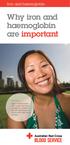 Iron and haemoglobin Why iron and haemoglobin are important Meet Kylie Kylie is a blood donor. Kylie knows that having a healthy iron enriched diet will help restore the iron removed with blood donation.
Lesson plan: Food safety when preparing and cooking food
 Lesson plan: Food safety when preparing and cooking food This lesson plan gives you delivery ideas for our GCSE Food preparation and nutrition (8585) The one hour session is designed to: enhance students'
The Basics of Nutrition: Understanding Nutrition Facts, Servings Sizes, & Adequate Portions
 The Basics of Nutrition: Understanding Nutrition Facts, Servings Sizes, & Adequate Portions K AT I E L. H O W E H E A LT H E D U C AT O R D I V I S I O N O F S T U D E N T A F FA I R S U S C U P S TAT
HOMEWORK PROGRAM JANUARY, 2002 HOMEWORK PHILOSOPHY STATEMENT
 JANUARY, 2002 HOMEWORK PHILOSOPHY STATEMENT Well chosen, clearly communicated homework is an integral part of the instructional process. Challenging homework assignments help students learn. Homework that
INFANTS AND YOUNG CHILD FEEDING (UPTO 2 YEARS)
 INFANTS AND YOUNG CHILD FEEDING (UPTO 2 YEARS) Breastfeeding is the best way to satisfy the nutritional and psychological needs of the baby. Mother s milk (breast milk, human milk) contains all nutrients
Senior Phase Grade 7 Today Planning Pack LIFE ORIENTATION
 M780636110212 Senior Phase Grade 7 Today Planning Pack LIFE ORIENTATION Contents: Work Schedule: Page Grade 7. 2 Lesson Plans: Grade 7. 3 Rubrics: Rubric 1 13 Rubric 2 14 Rubric 3 15 Work schedule for
New Jersey School Nutrition Policy Questions and Answers
 New Jersey School Nutrition Policy Questions and Answers FOR ALL GRADE LEVELS: Items that are prohibited to be served, sold or given out as free promotion anywhere on school property at anytime before
Committee on Medical Aspects of Food and Nutrition Policy
 Nutrient Intakes Last updated: December 2014 This paper describes how nutrient intakes are calculated from food purchases and how they are compared to nutrient recommendations and other dietary guidelines.
It is important to know that some types of fats, like saturated and trans fat, can raise blood cholesterol levels.
 Healthy Eating You are what you eat! So before you even shop for food, it is important to become a well informed, smart food consumer and have a basic understanding of what a heart healthy diet looks like.
Protecting and improving the nation s health. Vitamin D. Information for healthcare professionals
 Protecting and improving the nation s health Vitamin D Information for healthcare professionals 1 Vitamin D: Information for healthcare professionals Why is vitamin D important? Some of the UK population
TEACHING SCIENCES IN THE FINNISH COMPULSORY SCHOOL (PHYSICS, CHEMISTRY, BIOLOGY AND GEOGRAPHY) Brief description of the Finnish Educational system
 TEACHING SCIENCES IN THE FINNISH COMPULSORY SCHOOL (PHYSICS, CHEMISTRY, BIOLOGY AND GEOGRAPHY) Brief description of the Finnish Educational system The Educational policy of education in Finland stresses