
The functional properties of sugar. on a technical level
|
|
|
- Annice Little
- 9 years ago
- Views:
Transcription
1 The functional properties of sugar on a technical level

2 Dear Reader, In this brochure, we have gathered some of our deeper knowledge regarding the functional properties of sugar. Besides sweetening, sugar has many functional roles in food. Without sugar, jam would soon go off, ice cream would crystallise, and bread would lose its freshness and dry out. In addition, the taste of foods would be disappointing without the ability of sugar to round off and enhance natural taste components. Sugar has one or more unique, quality enhancing properties to offer almost all types of food production involving both solid and liquid foods. All these functional properties are not always well known and sometimes even forgotten, despite of the importance sugar actually do play in the different applications. You can also find information about the functional properties of sugar on our web site Nordic Sugar 2

3 Table of Contents Sweetness Sweetness 4-10 Flavour Interaction with other tastes and flavours Volume Bulking Solubility Texture Crystallisation Effect of sugar and sweeteners on pectin gel formation Particle size Solubility Viscosity Shelf life Sucrose hydrolysis Water activity and its implications in sugar-rich foods Fermentation Fermentation feedstocks Sucrose hydrolysis Freezing-point depression Solubility Sucrose hydrolysis Colour Browning reaction Sucrose hydrolysis Moisture retention Solubility Sucrose hydrolysis Water activity and its implications in sugar-rich foods

4 Schematic Overview Freezing Shelf Fermen- POINT moisture Sweetness Flavour Volume Texture life tation depression Colour retention Sweetness Interaction with other tastes and flavours Bulking Solubility Crystallisation Effect of sugar and sweeteners on pectin gel formation Particle size Viscosity Sucrose hydrolysis Water activity and its implications in sugar-rich foods Fermentation feedstocks Browning reaction 4

5 Sweetness Sucrose is the standard sweetener to which all other sweeteners are compared. The relative sweetness of sucrose is set to 1 or 100%. The only way to measure the sweetness of a substance is to taste it. When a substance is placed on the tongue, the taste buds decipher the chemical configuration of the substance and a signal of the taste is sent to the brain. A growing number of alternative sweeteners exist on the market; all with somewhat different sweetness compared to sucrose. The literature offers figures for the sweetness of the various sweeteners but in most cases these figures are related to just one application. It is necessary to know in what medium the product was tested because the sweetness of many sweeteners depends on concentration, ph, temperature and the use of other ingredients, for example other sweeteners or flavours. In some cases, psychological effects also influence the taste sensation: green jelly is perceived as less sweet than red jelly although they contain exactly the same amount of sweetener. Figure 1 shows some of the sweeteners available today and their approximate level of sweetness. Sweeteners are divided into two main groups: bulk sweeteners, with a relative sweetness lower or slightly higher than sucrose, and high intensity sweeteners (HIS) with a relative sweetness considerably above 1. HFCS Aspartame NHDC Sucrose Acesulfame-K Thaumatin Sorbitol HFCS Saccharin Fructose Cyclamate Sucralose Neotame Glucose syrup Twinsweet Figure 1. Approximate sweetness of selected sweeteners. SWEETNESS 5 Nordic Sugar A/S Langebrogade 1 P O Box 2100, 1014 Copenhagen K, Denmark Phone [email protected]

6 Natural sweeteners Sucrose, glucose and fructose are the most common sweeteners in nature. Glucose is always less sweet than sucrose, whereas the sweetness of fructose is highly dependent on temperature. Figure 2 shows that fructose is sweeter than sucrose at low temperatures, whereas the sweetening effect decreases as the temperature rises. Nordic Sugar has investigated beverages sweetened with sucrose, glucose and fructose alone and in different combinations. Table 1 shows the relative sweetness determined from these tests. Invert sugar is a 50:50 mix of fructose and glucose derived from inversion of sucrose. The ratios 30:70, 90:10, 80:20 and 50:50 in the table indicate the weight percentages of the sweeteners as dry substances. The amount of sweeteners added to the beverages corresponds to 6-10% sucrose. Relative sweetness Sweetener Relative sweetness C 20 C Temperature 40 C 60 C Figure 2. Effect of temperature on the relative sweetness of fructose. Source: Shallenberger RS, Taste Chemistry, 1993 Sucrose 1.0 Invert sugar 0.8 Sucrose: Invert sugar 30: Glucose Fructose Sucrose: Fructose 90: Sucrose: Fructose 80: Sucrose: Fructose 50: Table 1. Relative sweetness of raspberry-blackcurrant soft drinks. SWEETNESS 6

7 Glucose syrups Glucose syrup exists in many different versions depending on the degree of starch hydrolysis. There are also some variants with different levels of fructose due to isomerisation of the glucose molecule. Glucose syrups without fructose are less sweet than sucrose. Glucose syrups are given a DE number (glucose equivalents) based on the degree of breakdown. The higher the number, the more starch has been hydrolysed, see figure 3. Basic sweetness of glucose syrups Starch 0 Maltodextrin DE Glucose Syrup DE Glucose Syrup DE Glucose Syrup DE Glucose Syrup DE Glucose / Glucose DE Figure 3. Sweetness related to the DE equivalent of glucose syrup. SWEETNESS 7

8 The literature uses many different values for the relative sweetness of glucose syrups. Danisco therefore made tests with different mixes of sucrose and glucose syrup to evaluate the perception of sweetness. In the following example we compared non-carbonated raspberry and wild strawberry soft drinks and a carbonated soft drink called fruit soda (same type as Sprite) sweetened with either sucrose only (S 100) or a 50:50 mix of sucrose and a glucose syrup with 9% fructose at two different levels: S:F9 123 and S:F9 111 (123 and 111 indicate the amount of sweetener, counted as a dry substance compared to the amount of sucrose). A taste panel ranked the sweetness of the samples on a scale from 1-9, where 1 was least sweet and 9 was sweetest. Some samples were tested both fresh from production and after four months of storage. Figure 4 illustrates the relation between the sweetness of the three samples and shows that for the fresh samples S:F9 123 is closest to the sucrose-sweetened sample in two applications, while S:F9 111 comes closer in the application. After four months storage a dose of S:F9 123 is also necessary in this application. This is probably due to inversion of sucrose during storage, which increases the sweetness. The tests demonstrate that dosage tests must be made for each application to make sure that the product is sweetened optimally. Sweetness Raspberry Fresh Wild strawberry Fresh Fruit soda Fresh Wild strawberry 4 months Fruit soda 4 months S100 S:F9123 S:F9111 Figure 4. Sweetness in fresh and stored soft drinks. SWEETNESS 8

9 Polyols There are many different polyols available today, but all except one is less sweet than sucrose. The relative sweetness of the polyols appears from figure 5. All polyols have a more or less pronounced cooling effect due to negative heat solubility, which may add value to some products but cause problems in others. High intensity sweeteners (HIS) There are many different HIS products on the market. Table 2 lists the ones allowed in the EU. Restrictions for use in various applications apply to all of them, see the EU s sweetener directive ( food/food/chemicalsafety/additives/comm_legisl_en. htm) for more information on restrictions. Relative sweetness E number Sweeteners allowed in the EU E 950 E 951 Acesulfame K Aspartame Sucrose Xylitol Crystalline Maltitol Maltitol Syrup Sorbitol Mannitol Isomalt Lactitol Polydextrose E 952 E 954 E 955 E 957 E 959 E 962 Cyclamic acid, Na-Cyclamate, Ca-Cyclamate Saccharin and its Na-, K- and Ca-salts Sucralose Thaumatin Neohesperidin DC Twinsweet (salt of aspartame and acesulfame) Figure 5. Relative sweetness of selected sugar alcohols (polyols). Table 2. Sweeteners allowed in all EU countries. SWEETNESS 9

10 The relative sweetness of all HIS products is highly dependent on concentration and ph, as exemplified in figures 6 and 7. Relative sweetness of sodium saccharin Relative sweetness Relative sweetness of sucralose Relative sweetness Sucrose (%) Sucrose (%) ph 2.75 ph 3.1 ph 7.6 Figure 6. Dependence on concentration. Source: ABC International Consultants Figure 7. Dependence on ph and concentration. Source: Zannoni Low Calorie Foods 1993 Mixing different HIS products often creates synergy effects resulting in higher sweetness than when used separately. Figure 8 illustrates the effect of mixing aspartame and acesulfame K. Sweetness synergy Sweetness of acesulfame / aspartame blends % Sucrose mg/l blend 2 0 % Acesulfame K % Aspartame Figure 8. Example of synergy in HIS mixes. Source: von Rymon Lipinsky 1991 SWEETNESS 10

11 Other mixes of sweeteners also generate synergies. Table 3 lists a number of mixes and their synergistic ability. Sweetener mix Aspartame + Acesulfame K Aspartame + Saccharin Saccharin + Cyclamate Acesulfame K + Saccharin Sucralose + Aspartame Sucralose + Acesulfame K Sucralose + Saccharin Synergy Yes Yes Yes No No Yes Yes Table 3. Synergistic ability of selected HIS mixes. SWEETNESS 11

12 Flavour Interaction with other tastes and flavours Besides sweetness there are three other basic tastes: salt, sour and bitter. Sometimes umami is included as a fifth basic taste. In many food systems we use sweetness to balance the basic tastes and to enhance and modify flavours. Sour applications Beverages, jams and marmalades are all mixes of sweet and sour components. It is important to create a good balance between sourness and sweetness, which is often achieved by adding a mix of sugar and citric acid. This is a good mix because the time-intensity curves for both components are almost identical, i.e. the sweet and sour tastes reach their maximum almost simultaneously. The time-intensity curves for the natural sugars, sucrose, glucose and fructose, are illustrated in figure 1. Sweetness Fructose Glucose Sucrose 0 Time Figure 1. Time-intensity curves of fructose, glucose and sucrose. Source: Shallenberger RS, Taste Chemistry, 1993 FLAVOUR 12 Nordic Sugar A/S Langebrogade 1 P O Box 2100, 1014 Copenhagen K, Denmark Phone [email protected]

13 The time-intensity curves of different sweeteners vary greatly. The sweetness of, for instance, aspartame and sucralose lasts longer than that of natural sugars. It also outlasts the sourness of citric acid to the effect that the sweet taste lasts for too long. Using another acid, e.g. malic acid, can to some extent compensate for this, as its sour taste lasts longer. The time-intensity curves of some sweeteners, for instance Thaumatin and Neohesperidin DC, are so different from all acids that they cannot be used in sour applications because the sourness disappears even before the sweetness is perceived. The sweetness is also very long-lasting, see figure 2. Sweetness Time (s) Saccharin Sucrose NHDC Thaumatin Glycyrrhizin Figure 2. Time intensity curves of selected sweeteners. Source: Leatherhead Food RA Ingredients Handbook Sweeteners FLAVOUR 13

14 Sucrose is often used in fruit preparations because of its ability to enhance the flavours of the fruit. This ability varies for different types of sweeteners. To find the optimal sweetener mix it is necessary to perform tests for every application. However, some mixes are preferred in most applications. Figure 3 shows the results of tests made to rank the preference of selected sweetener mixes in two applications: non-carbonated raspberry and wild strawberry soft drinks. All mixes with sugar or glucose syrup reduced the energy by 40% compared to the drink sweetened with sugar only. Raspberry drink: A/S < ISAST < A/A < GH < Sucrose < ISAS < ISA40 < ISAS+ Wild Strawberry drink: GH < ISAST < ISAS+ < ISAS < Sucrose < A/A < ISA40 ISA40 ISAS ISAS+ ISAST GH A/A A/S Invert sugar, sucrose, aspartame Invert sugar, sucrose, aspartame, saccharin Invert sugar, sucrose, aspartame, saccharin, neohesperidin DC Invert sugar, sucrose, aspartame, saccharin, thaumatin Glucose syrup, aspartame, saccharin, neohesperidin DC Aspartame, acesulfame K Aspartame, saccharin Figure 3. Preference ranking for non-carbonated soft drinks with total (A/A and A/S) or 40% (ISA40, ISAS, ISAS+, ISAST, GH) energy reduction compared to the sugar-sweetened drink. FLAVOUR 14

15 Bitter applications In bitter applications such as chocolate and coffee, sugar is often used to moderate or disguise the bitterness. Using taste panels, Galvino examined the effect of sugar on coffee and vice versa. Varying amounts of sugar were added to a standard coffee (100% coffee) prepared from 100 grams of coffee made with 1 litre of water. It appears from figure 4 that sugar does have a strong influence on the perception of the coffee flavour and that the effect increases with increasing amounts of sugar, although not linearly. Likewise, the bitterness of coffee has a significant influence on the sweetness perceived, as illustrated in figure 5. Experienced coffee taste Black Coffee 3 gram 6 gram 12 gram sugar/100 ml Coffee concentration Figure 4. Effect of sugar on perceived coffee taste. Data from Galvino et al, Chemical Senses, FLAVOUR 15

16 Experienced sweetness Hot water 10% 40% % Coffee concentration Sugar (g/100 ml) Figure 5. Effect of coffee bitterness on perceived sweetness. Data from Galvino et al, Chemical Senses, FLAVOUR 16

17 Volume Bulking There are two main groups of sweeteners: bulk sweeteners and high intensity sweeteners (HIS). Bulk sweeteners not only add weight and volume to the product, they also have a big impact on mouthfeel and texture. High intensity sweeteners are used in such small amounts that they affect neither the volume nor the mouthfeel of the product. Natural sugars, glucose syrups and sugar alcohols are all bulk sweeteners. Weight/Volume Bulk sweeteners always add some weight to the product. At low concentrations, the volume is only slightly affected, whereas they contribute a substantial part of the volume in products with a high sweetener content, e.g. jam and marmalade. Bulk sweetener solutions have slightly different specific density (kg/m 3 ). Density also depends on concentration and temperature, as illustrated in tables 1-2 and figures 1-2. Table 3 and figure 3 show the volume achieved at different concentrations of sugar or glucose syrup. In dry applications, the weight/volume relation depends on particle size and particle size distribution. For ordinary caster sugar, the density is approximately 880 kg/m 3. The value may vary depending on handling. Density of aqueous sugar and glucose syrup solutions at 20 C G glucose glucose W % Sucrose Invert Fructose Glucose syrup DE42 syrup DE Table 1. Density (kg/m3) of aqueous sugar and glucose syrup solutions at 20 C. Source of data: Leatherhead Food RA Scientific & Technical Surveys. VOLUME 17 Nordic Sugar A/S Langebrogade 1 P O Box 2100, 1014 Copenhagen K, Denmark Phone [email protected]

18 Density of aqueous sugar and glucose syrup solutions at 20 C Density kg/m Weight % Sucrose Glucose Invert Glucose syrup 42DE Fructose Glucose syrup 63DE Figure 1. Density of aqueous sugar and glucose syrup solutions at 20 C. Density (kg/m 3 ) of aqueous sucrose solutions Temperature C 10% sucrose 20% sucrose 40% sucrose 65% sucrose Table 2. Density of aqueous sucrose solutions. Source of data: Leatherhead Food RA Scientific & Technical Surveys. VOLUME 18

19 Density of aqueous sucrose solutions (kg/m 3 ) Density kg/m Weight % 10% sucrose 20% sucrose 40% sucrose 65% sucrose Figure 2. Density of aqueous sucrose solutions. Volume/weight (l/kg) for sugars and glucose syrups at 20 C G glucose Glucose W % Sucrose Invert Fructose Glucose syrup DE42 syrup DE Table 3. Volume/weight (l/kg) for sugars and glucose syrups at 20 C. Source data: Table 1; 1/X * VOLUME 19

20 Mouthfeel At as low dosages as 7-10%, bulk sweeteners provide a different mouthfeel in beverages or yoghurt than high intensity sweeteners. In products that require even higher amounts of sweeteners, e.g. mustard and ketchup, a texturiser is needed to obtain the same texture with a high intensity sweetener as when using a bulk sweetener. In jams and marmalades, where the sugar content normally is 35-60%, bulk sweeteners not only add weight, volume and mouthfeel, they also influence the gelation process and, consequently, have a big effect on texture. Different bulk sweeteners have a slightly different effect on gelation and texture. Volume/weight (l/kg) for sugars and glucose syrups at 20 C Volume/weight l/kg Weight % Sucrose Glucose Invert Glucose syrup 42DE Fructose Glucose syrup 63DE Figure 3. Volume/weight (l/kg) for sugars and glucose syrups at 20 C. VOLUME 20

21 Solubility Basically, temperature and the chemical interaction between a given component and the water molecule determine the component s solubility in water. Figure 1 shows how much sucrose can be kept in solution in pure water at temperatures between 0 and 140 C. At temperatures above 100 C, pressurisation is necessary to achieve the solubility shown. The relatively high solubility of sucrose is an important parameter for its bulking effect in many foods and beverages. The dissolved sugar increases the viscosity of water-based solutions or mixtures, resulting in enhanced mouthfeel. Dissolved sugar lowers the freezing point of ice cream by preventing the water molecules from combining to form ice crystals, which slows down the freezing process. The frozen water crystals no longer in solution increase the sugar concentration in the remaining solution and lower the freezing point even further. Weight % Sucrose 100% 95% 90% 85% 80% 75% 70% 65% 60% 55% 50% Temperature C Sucrose Water Figure 1. Solubility of sucrose in pure water. VOLUME 21
22 In bakery products, the solubility, or hygroscopicity, of sugar makes it compete with flour proteins and starch granules for the available water, which minimises gluten formation and decreases gelatinisation of the starch. This makes the final product more moist and tender, and the hygroscopicity of the sugar ensures that it remains that way longer. The solubility of sucrose is lower than fructose but higher than glucose, as shown in figure 2. The presence of other ingredients in the solution or product affects the solubility and the potential crystallisation. Glucose syrups and invert sugar are typically used to avoid crystallisation of sucrose, but other ingredients such as proteins, texturisers and stabilisers also influence crystallisation. Weight % Fructose Sucrose 60 Glucose 40 Lactose Temperature C Figure 2. Solubility of selected sugars. VOLUME 22
23 Figure 3 shows the solubility of glucose, sucrose and mixes of sucrose and glucose, and figure 4 shows the solubility of sucrose, invert sugar and mixes of the two sugars. Mixing glucose or invert sugar with sucrose increases the solubility of the combined sugar matrix and allows for production of products with higher total sugar solids than when using single components. The solubility curves also show that glucose crystallisation is likely to occur in high glucose/low sucrose systems with high total solids. Since the most commonly used glucose syrups contain only a limited amount of glucose, glucose crystallisation is most likely to occur in systems with high amounts of invert sugar or isoglucose, or in products where large amounts of sucrose are converted into invert sugar due to low ph. Mix of sucrose and glucose saturation curves Weight % solids C 23 C 40 C 50 Glucose Sucrose Figure 3. Solubility of selected sugars. Mix of sucrose and invert sugar saturation curves Weight % solids C 40 C 30 C C Glucose saturation Sucrose saturation 60 Sucrose Invert sugar Figure 4. Solubility of mixtures of sucrose and invert sugar. Data from Keysers, H. Zucker und Süsswaren Wirtschaft. (1982); 35:147. VOLUME 23
24 Mixing sucrose with glucose syrup produces even higher weight % solids in solution at lower temperatures, as shown in figure 5. Here 84 weight % solids in solution is reached at 20 C by mixing 23.7% sucrose with 76.3% glucose syrup DE42. Mix of sucrose and glucose syrup DE42 saturation curves at 20 C Weight % solids Sucrose DE Figure 5. Solubility of mixtures of sucrose and glucose syrup DE42. Data from Birch, G.G., Green, L.F., Coulson, C.B., Glucose Syrups and Related Carbohydrates, London, Reference: Harold McGee, On Food and Cooking The Science and Lore of the Kitchen, Scribner, VOLUME 24
25 Texture Crystallisation Crystallisation of sugars is desirable in products such as fondant, dragees, fudge etc., but not in many other products like jam and jellies. Crystallisation occurs when the solubility limit of the sugar, typically sucrose or glucose, has been exceeded and a supersaturated environment has been created, as shown for sucrose in figure 1. The term supersaturated refers to the situation where more sugar than theoretically possible from the solubility data is in solution. As indicated in figure 1, the supersaturated solution has been reached either by lowering the temperature or by increasing the sucrose concentration, or both. A metastable region exists where the solution is in fact supersaturated but in practice no crystallisation is likely to occur. Sucrose, % (w/w) 90 Supersaturated region Evaporation 80 Metastable limit Cooling 70 Metastable region Undersaturated region Solubility limit Temperature C Figure 1. Phase diagram of the crystallisation of sucrose. TEXTURE 25 Nordic Sugar A/S Langebrogade 1 P O Box 2100, 1014 Copenhagen K, Denmark Phone [email protected]
26 In the supersaturated state, above the metastable limit, crystallisation in liquids is catalysed by the presence of small particles, rough edges in the equipment, stirring or shaking. At very high viscosity, and in gels, the onset of crystallisation requires a higher degree of supersaturation, which can occur when a jam is cooled in the refrigerator or the surface of a confectionery gel dries out. Typically high viscosity means slow crystallisation rates. Glucose syrups and invert sugar are typically used to avoid crystallisation of sucrose, but also ingredients like proteins, texturisers and stabilisers influence crystallisation. Unwanted crystallisation of sugars in products like jams and confectionery jellies may affect the appearance of the products, giving them a grainy look and a greyish colour, and the texture of confectionery products can appear short and crispy. Furthermore, the water activity of the product may increase, as water is squeezed out when the sugar solids are concentrated in crystals. Increased water activity may affect the shelf life of the product. C Concentration (%) To avoid unwanted crystallisation in jams and jellies the following issues should be considered: Sucrose/glucose syrup ratio in the recipe Crystallisation of glucose due to increasing invert sugar content Too heavy mechanical handling: mixing, kneading and pulling Insufficient mixing of ingredients added after cooking Recycling of products or intermediaries in the production line Not optimal storage conditions of finished products: high temperature and varying humidity Freezing-point depression Sugars are effective in lowering the freezing point of a solution. This is important in the manufacture of icecream products and frozen desserts. Frozen products containing sugars can be made softer and easier to scoop at a given temperature than the same products without sugars. Sugars are used to control or prevent the formation of ice crystals in these products. The lower the freezing point, the more difficult for the ice crystals to form. The freezing point is related to the number of molecules in solution. The greater the number of solute molecules present, the greater the depression of the freezing point. Monosaccharides are more effective than sucrose at lowering the freezing point. 42 DE Glucose syrup Sucrose Glucose Figure 2: Freezing-point depression of 42 DE glucose syrup, sucrose and glucose TEXTURE 26
27 Effect of sugar and sweeteners on pectin gel formation In jams, marmalades and jellies the long, string-like pectin molecules convert liquid into a solid-like structure by bonding and forming a fine-meshed network that holds the liquid in its cavities. Pectin is a polymeric carbohydrate of high molecular weight and is found in all plants. Protopectin and cellulose form the structure of the plant cell walls. Some fruits, typically berries, contain so much pectin that they can form gels on their own, while other fruits need supplementary gelling agents when used for jams and jellies. Commercial pectin for this purpose is derived from the peel of citrus fruits (lemon, lime, orange and grapefruit), or from apple pomace. Pectin consists primarily of a chain of galacturonic acid units linked by α-1,4 glucosidic bonds. Pectin molecules have a molecular weight of up to 150,000 and a degree of polymerisation of up to 800 units. The galacturonic acid chain is partially esterified as methyl esters. High ester pectins (high degree of esterification of the galacturonic acid chain) can form gels with the presence of sugar at low ph, while low ester pectins (low degree of esterification) typically need calcium ions present for forming gels, but can work at low sugar contents or without any sugar at all. For making a high ester (HE) pectin gel certain conditions are needed. When dissolved in water the negatively charged pectin molecules first need a low ph to reduce the charge and hereby reduce one barrier for making the molecule bond to itself. Next, the availability of water molecules must be reduced, as the pectin molecule will otherwise tend to bond to water rather than to itself. Sugar s great hydrophilic properties make it ideal for this application, so by adding sugar in adequate quantities the water is kept away from the pectin molecules, allowing them to interact and form the network, i.e. the gel. Typical conditions for jam making are: ph of , pectin concentration of 0.5-1% and sugar content of 60-65%. The mechanism behind low ester (LE) pectin gelling is as follows: When positively charged calcium ions are present, they form bridges between the negatively charged points of the pectin mo le cules and a network, or meshwork, is formed. If sucrose is substituted with glucose syrup, fructose, polyols or bulking agents, the conditions for gelation and the character of the gel differ. The distribution and orientation of the -OH groups appear to be the issue, not their effects on the colligative properties of water. Furthermore, different carbohydrate sweeteners have different abilities to form stable complexes with cations. This interaction can be unfavourable to the formation of pectin gel due to the decrease of calcium ions available to associate with pectin molecules and, therefore, decreasing gel rigidity. In low ester pectin gels, the rigidity essentially depends on the capacity of the carbohydrate sugar to compete with pectin for calcium ions. The interaction between carbohydrates and water is a secondary effect. This behaviour might be of considerable importance in dietary gels. TEXTURE 27
28 In high ester pectin gels, simple sugars like glucose, sucrose and maltose tend to give better true gel strengths than high molecular weight oligosaccharides found in glucose syrups. The large molecules tend to give a high deformation gel strength, but with low elasticity and with syneresis. When choosing glucose syrups for high ester pectin gels, high levels of maltose and glucose and low levels of high molecular weight oligosaccharides are important. Table 1 summarises the effect on pectin gel setting temperature when substituting sucrose with other sugars. The subsequent effect on gel strength is shown in table 2. Glucose syrup DE40 he-pectin LE-Pectin Glucose syrup DE60 HFCS 42 HFCS 55 Fructose Invert sugar Table 1. Effect of sugar composition on pectin gel setting temperature (relative to sucrose). The higher average molecular weight of the sweetener, the higher the tendency to increased setting temperature. he-pectin LE-Pectin Glucose syrup DE40 Glucose syrup DE60 HFCS 42 HFCS 55 Fructose Invert sugar Table 2. Effect of sugar composition on pectin gel strength (relative to sucrose). TEXTURE 28
29 The effect of various carbohydrate sweeteners on the gel strength of pectin jellies is illustrated in the following case study in which pectin jellies were made according to formula X1, see table 3. One third of the sucrose, on a weight basis, was substituted by a given alternative carbohydrate sweetener, and the gel strength of the resulting pectin jellies was measured. Figure 1 summarises the results for some of the basic sugars, and figure 2 shows the corresponding results for the glucose and fructose syrups listed in table 4. Case study : Gel strength from basic sugars Base : Formula X1 Force (N) Sucrose Resulting parameters Fructose ph Bx DS% a w Glucose Sucrose Fructose Glucose Xylitol Sorbitol Sorbitol Xylitol Distance (mm) Figure 1. Case study of gel strength basic sugars. TEXTURE 29
30 Gel strenght of pectin jellies with various glucose/fructose syrups Formula X1 Force (N) Glucose syrup DE40 Glucose syrup DE60 Isoglucose High maltose Glucose syrup DE45 Distance (mm) Figure 2. Case study of gel strength glucose / fructose syrups. Basic formula for case study with pectin jellies with various glucose/fructose syrups Formula X1 A. Water 30.0 kg Sodium Citric acid 0.4 kg 0.37 kg B. Pectin 1.5 kg G grindsted XSS 100 Sugar 5.0 kg C. Sugar 46.0 kg G glucose syrup 24.0 kg Water evaporated to 100 kg total (as DS) ph Bx DS% a w DE DE DE HM ISO-GL Table 4. Parameters for pectin jellies with glucose/ fructose syrups. Case study of formula X1. Parameters for pectin jellies with various glucose/ fructose syrups. D. Citric acid 50% 0.74 kg Starch moulded, hours Table 3. Basic formula for case study of pectin jellies. Reference: McGee, H., On Food and Cooking, Scribner, TEXTURE 30
31 Particle size Sugar particle size An important stage in sugar production is the crystallisation of sucrose. During the crystallisation process a specific crystal size and crystal size distribution are obtained by strict control of the nucleation and growth parameters of the sucrose crystals. Various commercial grades of crystallised sugar with different particle sizes are obtained by screening or milling of the crystalline sugar. By passing sugar through vibrating multi-deck screens, the crystals are separated into different size fractions. Size reduction can be obtained by grinding the sugar crystals. Sugar particle size is normally determined by way of a sieve analysis in which the particles are sorted by size, and the relations between the amounts of the different fractions are calculated. For crystalline, non-screened sugar it is assumed that the size distribution follows a normal distribution. Based on this assumption the mean particle size is calculated as the hypothetical mesh aperture of a sieve that allows 50% of the sugar to pass. The standard deviation is used as a measure for the particle size distribution and is normally stated as the coefficient of variance, which is the standard deviation related to the mean particle size. The mean particle size and the particle distribution determine the physical behaviour of the sugar, e.g. bulk density, flow properties and abrasion. Chemical properties such as purity and dissolution rate are also influenced by the crystal size. Bulk density primarily depends on the particle size and increases with decreasing particle size, see table 1. A narrow particle size distribution i.e. the particles are relatively uniform in size means a lower bulk density than for a wide particle size distribution. In the latter case, the voids between the large particles can be filled by smaller particles, resulting in higher bulk density. Particle size for 90% of the sugar mm Bulk density g/l %<0.1 mm 565 Table 1. Influence of particle size on bulk density (van der Poel et al., 1998). TEXTURE 31
32 The bulk density determines the space required for bulk storage of sugar in silos, and it affects volumetric dosing. In combination with the moisture content, the particle size distribution determines the flow properties of the sugar. If crystalline sugar is stored correctly (above 10 C and at 40-65% RH) it will remain freeflowing and can easily be conveyed by means of gravity, vacuum or compressed air. As regards purity, non-sucrose substances are mainly found in the syrup film covering the crystal surface. Since the specific surface area decreases markedly with increasing crystal sizes, sugar with a coarse crystal size is purer than sugar with a fine crystal size. The purity of icing sugar and other milled products of course depends on the purity of the starting material. In most cases, the purity of commercial sugars is above 99.9% with the major non-sugar present being water. The dissolution rate of sugar depends on the size of the particles (other conditions remaining constant), as fine particles dissolve more rapidly than coarse particles. However, when particles become very small they are difficult to moisten and disperse and tend to lump. In practice this is observed when more than 5% of the particles are less than 200 micron. Temperature also affects the dissolution rate, since increasing temperature increases dissolution rates, see figures 1-2. Instant Sugar is made from finely milled sugar spray-dried onto water droplets. This process produces agglomerates with a porous structure that makes the product rapid dissolving. The average particle size of Instant Sugar is micron. The average particle size of Icing Sugar and Standard Granulated Sugar is 20 micron and micron, respectively. Dissolution time of different types of sugar at 5 C % dissolved Seconds Icing sugar < 250 micron micron Instant sugar Std. granulated micron Figure 1: Dissolution time of different sugars at 5 C. TEXTURE 32
33 Dissolution time at 80 C % dissolved Seconds Icing sugar < 250 micron micron Instant sugar Std. granulated micron Figure 2. Dissolution time of different sugars at 80 C. Sugar particle size and applications The crystal size distribution affects the quality of the foods in which sugar is only partially dissolved and it is the main contributor to the structure or consistency of the product. Fine particles give a smooth texture and, as a rule-of-thumb, the mouthfeel is smooth and no particles are sensed when less than 5% of the particles are bigger than 30 micron. In moulded chocolate, sugar is found mainly in the crystalline state, although some amorphous sugar is formed during the preceding sugar milling and chocolate mass refining. Most of the amorphous sucrose, however, recrystallises during the conching process. The main purpose of the refining process is to reduce the particle size to avoid a sandy-gritty mouthfeel in the final product. Particle size also influences the flow and solid formation of chocolate. In cookies and sweet biscuits, where most of the sugar is dispersed in the fat phase, the particle size affects the dough spread during baking and as such the diameter and height of the final product. The finer the sugar, the more spread. Sugar particle size also affects the texture of the cookie or sweet biscuit and thus the mouthfeel. A coarser sugar produces a crisper cookie. TEXTURE 33
34 The texture and mouthfeel of fat/sugar-based biscuit fillings, toffee/fudge and marzipan are other examples of how sugar particle size influences the functional properties of food. Sugar particle size is also essential for the texture and mouthfeel of icings, frostings and fondants. In classical fondant manufacture the size of the crystals precipitated from the supersaturated solution affects the mouthfeel. Some of the factors affecting the grain size are the presence or introduction of undissolved sugar crystals, the temperature at which the agitation starts during cooling, and the presence of invert sugar. The fondant colour is also influenced by the sugar particle size, as smal particles give a whiter icing or fondant due to a different reflection of light. A high quality fondant has a particle size of about 10 micron. In dry blends, where sucrose is used as a carrier for other ingredients, including colours and flavours, crystal size is an important property. The risk of segregation of ingredients can be minimised by using screened sugar with a particle size close to that of the other ingredients or by using Instant Sugar, where the porous structure of the agglomerates ensures good binding of other ingredients. References: P.W. van der Poel, H. Schiweck, T. Schwartz (1998): Sugar Technology, Beet and Cane Sugar Manufacture (Bartens). M. Mathlouthi, P. Reiser (1995): Sucrose, properties and applications (Blackie Academic & Professional). TEXTURE 34
35 Viscosity The viscosity of sucrose solutions and other bulk sweeteners is highly dependent on the dry substance and temperature. Pure sucrose, fructose and glucose solutions, and mixes of them, are all Newtonian, meaning that the viscosity is independent of the shear rate. However, highly concentrated glucose syrups can be slightly pseudoplastic, i.e. the viscosity decreases when the shear rate increases. The viscosity has been measured, using flow curves on a Bohlin VOR Rheometer, at different concentrations and temperatures for selected sugars, sugar mixes and glucose syrups. The results are presented in tables 1-2 and illustrated in figures 1-2. rt temp. C Viscosity mpas Sucrose Invert Glucose Fructose Sucrose Invert Glucose Fructose Sucrose Invert Glucose Fructose Sucrose Invert Glucose Fructose Table 1. Viscosity of sucrose, invert sugar, glucose and fructose at different Rt and temperatures. 1 mpas = 1 cp. TEXTURE 35
36 Viscosity at different Rt and temperatures Viscosity mpas Rt % Sucrose 50 C Invert 50 C Glucose 50 C Fructose 50 C Sucrose 40 C Invert 40 C Glucose 40 C Fructose 40 C Sucrose 30 C Invert 30 C Glucose 30 C Fructose 30 C Sucrose 20 C Invert 20 C Glucose 20 C Fructose 20 C Figure 1. Viscosity of sucrose, invert sugar, glucose and fructose at different Rt and temperatures. rt temp. C Viscosity mpas DE DE DE DE DE DE DE DE Table 2. Viscosity of glucose syrup DE40 and DE60 at different Rt and temperatures. 1 mpas = 1 cp. TEXTURE 36
37 Viscosity at different Rt and temperatures Viscosity mpas Rt % DE40 50 C DE60 50 C Sucrose 50 C DE40 40 C DE60 40 C Sucrose 40 C DE40 30 C DE60 30 C Sucrose 30 C DE40 20 C DE60 20 C Sucrose 20 C Figure 2. Viscosity of sucrose, glucose syrup DE40 and glucose syrup DE60 at different Rt and temperatures. TEXTURE 37
38 Rt stands for refractometric dry substance. Rt is the same as real dry substance (Ds) for sucrose, whereas there is a difference between Rt and Ds for fructose, glucose, invert sugar and some types of glucose syrups. Table 3 shows the difference between Rt and Ds values of selected sugars. Fructose rt Ds Difference DE60 rt Ds Difference Glucose Rt Ds Difference DE40 Rt Ds Difference Invert Rt Ds Difference Table 3. Differences between refractometric dry substance (Rt) and true dry substance (Ds). TEXTURE 38
39 Figures 1-2 cover highly concentrated sugar solutions and can be used by the food industry to choose the right pump for sugar solutions. In food, sugars are mostly used in low concentrations. The viscosity of sucrose, glucose and fructose at 20 C and at concentrations between 1% and 70% appears from table 4 and figure 3. In jams and marmalades, which usually contain high amounts of sugar, the viscosity of the sugar has a big impact on the mouthfeel of the product. Although the viscosity of beverages is quite low (usually around 10%), the viscosity provided by the sugar is quite important for the overall mouthfeel of the beverage. % weight Viscosity mpas Sucrose Glucose Fructose 1 1,028 1,021 1, ,055 1,052 1, ,146 1,145 1, ,336 1,330 1, ,592 1,566 1, ,945 1,904 1, ,188 2,998 2, ,161 5,491 5, ,432 11,891 10, ,479 37,453 32, ,480 58, , , , ,571 Table 4. Viscosity of sucrose, glucose and fructose at 20 C. Source of data: Leatherhead Food RA Scientific & Technical Surveys. Viscosity of sucrose, glucose and fructose at 20 C Viscosity mpas Weight % Sucrose Glucose Fructose Figure 3. Viscosity of sucrose, glucose and fructose at 20 C. TEXTURE 39
40 Shelf Life Sucrose hydrolysis Introduction Inversion of sugar refers to the hydrolysis of the disaccharide, sucrose, to the monosaccharides, fructose and glucose, in equal proportions (1:1). The inversion is catalysed by hydrogen ions (acids) or enzymes. Fructose and glucose are referred to as invert sugar. Inversion of sucrose, first order kinetics After the inversion of sucrose, the rotation angle of polarised light passing through the solution is measured. Sucrose is dextrorotatory (from Latin dexter, right), but the resulting mixture of glucose and fructose is slightly laevorotatory (from Latin laevus, left). As the concentration of sucrose is lower and the glucose-fructose mixture has been formed, the rotation angle is to the left. The rotation of the light is directly proportional to the concentration of sucrose (c) in the solution, and the inversion follows the equation: The measured sucrose concentration is plotted versus time (t) on a semi-log plot giving a straight line with the slope k. The degree of inversion, X, can be calculated by the following equation: X = 100(1 - c t /c 0 ) k: rate constant (ml. g-1. min 1) c: sugar concentration (g. ml-1) X: degree of inversion (%) t: time (minutes) ln (c/c 0 ) = - k t which is of first order kinetics with k as the rate constant. CH 2 OH CH 2 OH CH 2 OH HOCH 2 OH OH HO H 2 0 OH OH HO HO OH OH HO HO OH OH CH 2 OH C 12 H 22 O 11 H 2 0 C 6 H 12 O 6 C 6 H 12 O 6 Sucrose water Glucose Fructose Figure 1. Inversion of sucrose. SHELF LIFE 40 Nordic Sugar A/S Langebrogade 1 P O Box 2100, 1014 Copenhagen K, Denmark Phone [email protected]
41 Rate of inversion in soft drinks, juice concentrate and marmalades We have studied the rate of inversion in selected soft drinks, juice concentrates and marmalades and the importance of ph and the concentration of sucrose and invert sugar. Fruit soda and soft drinks contained about 9% sucrose, wild strawberry and raspberry concentrates about 47% and marmalades about 65%. All products were sweetened with either sucrose (S) onlyor a mix of sucrose and invert sugar (SI) in a 40:60 ratio. The concentration of sucrose showed a minor impact on the rate of inversion, whereas ph had a very big influence (see figure 2). At ph 2.4 only about 10% of the sucrose was left after 100 days, while at ph 3.1 more than 60% of the sucrose remained after the same period of time. Products with a ph level of 2.9 and 3.0 showed relatively small differences in the rate of inversion. A comparison of figure 2 (the findings of our studies) with figure 3 (time required for a 50% inversion of sucrose at different ph levels and temperatures) shows relatively good agreement between the results. Sucrose % of start value Days of storage Sodasol. SI ph 2.4 Sodasol. SI ph 3.0 Sodasol. S ph 2.4 Sodasol. S ph 3.0 Wild strawberry S ph 3.1 Wild strawberry SI ph 3.1 Raspberry S ph 2.6 Raspberry SI ph 2.6 Marmalade S ph 3.0 Marmalade SI ph 3.0 Fruit soda S ph 2.9 Fruitsoda SI ph 2.9 Figure 2. Rate of inversion in soft drinks, juice concentrates and marmalades at different ph. SHELF LIFE 41
42 C day C hour min C 80 C 100 C ph Figure 3. Time required for a 50% inversion of sucrose at different ph and temperature. Properties of invert sugar Invert sugar has several properties that play an important role in many food applications. It has a high affinity for water and is used to make products retain moisture. This is important in, for example, the baking industry where invert sugar helps bakery products retain moisture and prolong shelf life. Since invert sugar has a tendency to absorb moisture from the atmosphere, it keeps bread and cakes fresh for a longer time. Invert sugar inhibits crystallisation and retains moisture, and it is therefore used in products such as icing, cake filling and confectionery. Adding invert sugar to a sucrose solution may increase the dry substance content of the solution due to higher solubility of the combined sugar solution compared to a pure sucrose solution. Invert sugar has lower water activity than sucrose. Low water activity has a preservative effect, resulting in longer shelf life. Glucose and fructose cause a Maillard reaction when heated with protein-rich food ingredients. The Maillard reaction results in browning and flavour development in the product. Invert sugar also affects the caramelisation process, producing a browning effect. SHELF LIFE 42
43 Water activity and its implications in sugar-rich foods Most people know that a bag of sugar can be left in the kitchen cabinet for years without any sign of spoilage while a slice of soft bread normally moulds in a few days. This is to a large extent due to the very low water activity (a w ) of pure granulated sugar as compared to that of bread. Water is a prerequisite for life on earth, and man has tried for thousands of years to preserve food by reducing the water content of foodstuffs by way of drying, smoking etc. However, the water content is not a very good measure of shelf life. Figure 1 shows that the water content of foods at a certain water activity varies considerably. Dried fruits, for instance, are microbiologically stable up to a water content of 18-25% while the corresponding limit for nuts can be as low as 4%. As a water activity of 0.7 is often taken as an upper limit for safe shelf life it is very important to know the actual water activity and not only the water content. Dried fruits Dried soup mixes Wheat flour, pasta Dried vegetables Rice Rolled oats Dried lean meat and fish Skim milk powder Dried whole egg Soya beans Cocoa Whole milk powder Nuts Water content (% w/w) Lower Upper Figure 1. The water content of foods at a w 0.70, i.e. the upper limit for safe storage. (Data from L. R. Beuchat) SHELF LIFE 43
44 Definitions and methods of measurement Water activity is a measure of the amount of water available for microorganism metabolism or other chemical reactions in a food product. It is defined as the ratio of the water vapour pressure of the food (p) to that of pure water (p0) at the same temperature. a w = p / p0 As water vapour pressure decreases when a food dries, a w falls, thus ranging from a maximum value of 1 for pure water to 0. The a w of gases or air, usually referred to as the equilibrium relative humidity (ERH), is related to a w as: %ERH = 100 * a w The expression RH is used when the air is not in equilibrium with its surroundings. The freezing point, boiling point and osmotic pressure also relate to a w. Water activity can be determined by a number of methods: direct measurement of the vapour pressure, gravimetric methods or by way of various electronic devices. However, it is essential that the water activity of a food is measured when the food is in equilibrium with the air above the food and at a constant temperature. An increase in temperature usually makes a w go up. If a foodstuff is allowed to adsorb water and the increase in water content is plotted against the corresponding a w, the resulting curve is called a water sorption isotherm. If the process is reversed and the foodstuff is dried, the resulting desorption curve will differ from the previous one. This phenomenon is called hysteresis and is shown for sucrose in figure 2. Sucrose, as other soluble crystalline compounds, is in different phases at different a w values: a crystalline phase, an amorphous phase and a solution. Hysteresis can be of great importance when, for instance, a hygroscopic food is stored under fluctuating humidity/ temperature conditions in a warehouse. Table 1 shows the concentration of some sugars at various a w values. Computer programs for calculating sorption isotherms for pure foodstuffs and mixtures are commercially available. They are based on mathematical modelling and elaborations of the relationship between concentration and vapour pressure of ideal solutions given by Raoult s law, which expresses a w = n1 / n1 + n2 where n1 is the moles of solvent and n2 the moles of solute. SHELF LIFE 44
45 Water content %w/w Sucrose solution Crystalline sucrose Water content <0.06% Desorption Amorphous sucrose Adsorption Saturated sucrose solution Figure 2. Sorption isotherm of sucrose. Based on data from Labuza, 1984, Maurandi & Mantovani, 1975, and J. Vindeløv, Concentration of sugars at various values of water activity at 25 C Sucrose a glucose b invert sugar c glucose syrup d DE42 a w (%, w/w, Brix) (%, w/w) (%, w/w) (%, w/w) Table 1: Concentration of sugars at various values of water activity at 25 C Based on data from: a Robinson and Stokes (1959), b Taylor and Rowlinson (1955), c Grover (1947), and d Cleland and Fetzer (1944). SHELF LIFE 45
46 Shelf life One of the most significant effects of water activity is its impact on shelf life. As water activity in a foodstuff decreases, the number of microbial species able to grow in that environment also decreases, as do their growth rate. Below the limit of 0.60, no microbial proliferation occurs and the product becomes fully stable in that respect. At least as long as the product is kept dry! Only very few specialised yeasts and moulds are able to grow below a w Therefore, this limit is in practice usually regarded as safe for prolonged storage. The minimal a w value for some microorganisms and the corresponding foodstuffs at the specific value is illustrated in figure 3. The water content, and hence the a w of some of the foodstuffs in the figure, may vary significantly, so it should be regarded as indicative only. Microbial growth is of course also greatly affected by other factors like temperature, ph and the availability of oxygen and nutrients (e.g. the type of sugars). This is why a pure liquid sugar (e.g. a solution of sucrose at 65% dry matter), due to its lack of other nutrients and the inability of many yeasts to utilise sucrose, is quite stable in spite of an a w value of about 0.87 where many yeasts are otherwise able to grow. In foodstuffs such as carbonated beverages, pickles and jams, not only the reduced a w caused by a high sugar concentration, but also the low ph of such products contribute to prolonged shelf life. This is in contrast to many bakery and dairy products, sauces and dressings where preservatives must be added to achieve similar shelf life. The importance of being careful when reducing the sugar content of a foodstuff should be pointed out in order to avoid an increase in a w above the critical level (0.90) for growth of pathogenic microorganisms. Water content %w/w CL. botulinum Salmonella Most bacteria Most yeasts Staphylococcus Most moulds Halophilic bacteria Fresh vegetables, fruits, meats, poultry, fish, milk Cured meats (e.g. ham), certain cheeses salami, some dry cheeses Flour, cakes, rice, beans, cereals, fruit juice concentrates Jams, honey, marmalade, marzipan, some marshmallows Extreme osmophiles e.g. some moulds and yeasts No microbial prolifiration Jelly, nuts Some sugar syrups, dried fruits, molasses, caramels, toffee, fudge, raw cane sugar Cookies, crackers granulated sugar a w Figure 3. Minimum water activity for the growth of some microorganisms. SHELF LIFE 46
47 Sporulation and toxin production is also affected by aw. Mycotoxin production is usually inhibited at a higher aw value than is growth, and germination of spores usually occurs at a higher aw value than sporulation. Other effects of water activity Not only microorganisms are affected by water activity. Also enzymatic activities in general as well as many other chemical reactions are affected, e.g. the rancidification of fat or the nonenzymatic browning of foodstuffs (Maillard reaction). However, these non-biological reactions cease at a water activity below 0.2. More practical implications of differences in water activity are of course the moisture migration from areas of food components with a high vapour pressure (high aw or ERH) towards areas with a lower vapour pressure. This is of great importance in, for instance, preserving the crunchiness and crispness of dry cereals or crackers as well as for the well-known moisture migration from warm to cold areas in warehouses and the problems this may create. SHELF LIFE 47
48 Fermentation Fermentation feedstocks Fermentation technology Fermentation technology is the oldest of all biotechnological processes. Strictly speaking, fermentation is an anaerobic energy-yielding metabolic process in which organic compounds, such as sugar, serve both as electron donors and as electron acceptors. In general, however, fermentation is considered as any process for the production of a prod uct by means of mass culture of microorganisms, thus also including the aerobic metabolic processes. Ancient fermented food processes such as the making of wine, bread, cheese, beer etc. are normally excluded from the concept of industrial fermentation, which rather comprises the making of products like antibiotics, organic acids, enzymes, vitamins, amino acids, biopolymers etc. There are several types of fermentation of which the most common are batch, fed-batch and continuous fermentation. A special type designed for solid media is the Solid State Fermentation (SSF). The main process steps are: Media preparation Inoculum preparation Fermentation Separation/ Isolation Downstream processing Final product The feedstocks The design of the nutrient medium for growth and product formation is a key step. The constituents of the medium must satisfy the elemental requirements for cell biomass, product formation and energy. Nutrients are classified as macronutrients (e.g. a carbon source, nitrogen, phosphorous, sulphur, potassium, magnesium) and micronutrients (trace minerals, vitamins and other growth factors). Usually the cost of the carbon source determines the production cost, and this is especially pronounced for high volume/low value products (e.g. ethanol, single cell protein, enzymes, organic acids, amino acids) where they may account for the majority of the total production cost. When producing low volume/high value products (e.g. antibiotics, hormones, vaccines), however, the quality of the carbon source becomes more important compared to the price. FERMENTATION 48 Nordic Sugar A/S Langebrogade 1 P O Box 2100, 1014 Copenhagen K, Denmark Phone [email protected]
49 Some important considerations in choosing feedstocks for fermentation processes include price, availability, consistency, stability, ease of handling and, of course, the effect on process productivity and downstream processing. The effect on downstream processing and its integration with the fermentation step has become an important area of development to increase efficiency and decrease costs. The most significant carbon and energy sources for fermentation are renewable sugars found in plant biomass, i.e. sucrose and starch. Structural polysaccharides, e.g. lignocellulose, are still of secondary importance because making the carbohydrates accessible is expensive and time consuming. However, in recent years the utilisation of waste as a source of raw material has gained significance. Such feedstocks can be used in Solid State Fermentations. Generally, the higher the cost of a given chemical, the lower the impact cost of the feedstocks is likely to have on the economics of the process. Sugar beet derived feedstocks Sucrose, which fulfils many of the feedstock requirements mentioned above, is one of the most important substrates for fermentation at present. It is available as highly purified granulated or liquid sugar. The latter could be more or less inverted to glucose and fructose and all are especially suitable for defined media. Both glucose and fructose, the building blocks of sucrose, are readily utilised by various microorganisms and therefore can serve as good fermentation substrates. Another source of sucrose is molasses, the by-product from sugar processing. Molasses is suitable for complex substrates. Apart from easily utilised sugars, about 44%, molasses also contains many valuable micronutrients like trace elements, amino acids and vitamins. Another advantage is the low cost. In some cases though, a pre-treatment may be necessary to remove undesirable impurities. Sugar beet pulp has been used as a substrate in a number of Solid State Fermentations, e.g. for enzyme and flavourings production. Reference: University of Guelph; FERMENTATION 49
50 Colour Browning reactions Maillard reaction One of the most important chemical reactions that occur in food is the Maillard reaction. It is critical in the production of the many flavour and colour compounds in processed food products, both desirable and undesirable. The Maillard reaction is a type of non-enzymatic browning which involves the reaction of reducing sugars, mainly D-glucose, and a free amino acid or a free amino group of an amino acid that is part of a protein chain. Other common reducing sugars are fructose, maltose and lactose. Sucrose is not a reducing sugar but yeasts or acids can hydrolyse sucrose to glucose and fructose. The Maillard reaction is named after the chemist who first examined it in detail. It is also called non-enzymatic browning to differentiate it from the enzymecatalysed browning commonly observed in freshly cut fruits and vegetables, such as apples and potatoes. The Maillard reaction comprises a series of reactions that are far from being clearly elucidated: The classical scheme of the chemical reaction is that of Hodge from See figure 1. The reaction is generally divided into three stages: The actual reactions are far more complicated than those outlined above, and there are many variations in the pathway. The products of these various pathways range from colourless to intensely coloured and many are volatile aroma compounds. Increasing temperature, increasing ph and lower water activity all increase the rate of Maillard browning. Water is produced during the Maillard reaction. Thus, as a consequence of the law of mass action, the reaction occurs less readily in foods with a high a w value. In addition, the reactants are diluted at high aw values while, at low a w, the mobility of reactants is limited, despite their presence at increased concentration. In practice, the Maillard reaction occurs most rapidly at intermediate aw values ( ), and a w is of most significance to the reaction in dried and intermediatemoisture foods, which have aw values in this range. While the Maillard reaction is useful in some cases, it also has a negative side. Reaction of reducing sugars with amino acids destroys the amino acid. This is especially important with L-lysine, an essential amino acid, which can react while the amino acid is a unit of a protein molecule. (1) The first stage involves the sugar-amine condensation and the Amadori rearrangement. The reaction steps have been well-defined and no browning occurs at this stage. (2) The second stage involves sugar dehydration and fragmentation, and amino acid degradation via the Strecker reaction especially at high temperatures as used in candy manufacture. At the end of stage two there is a beginning flavour formation. (3) The third stage is the formation of heterocyclic nitrogen compounds. Browning occurs at this stage. COLOUR 50 Nordic Sugar A/S Langebrogade 1 P O Box 2100, 1014 Copenhagen K, Denmark Phone [email protected]
51 oldose sugar amono compound s A s N-substituted glycosylamine 2H 2 O B Amadori rearrangement s I - amono - I - deoxy - 2 ketose (1,2-enol form) s Schiff base of HMF or furfural -3H 2 O C -2H 2 O s feductones s D s s + a-amono acid E Strecker degradation - amino comp d + H 2 O s HMF or furfural s s -2H +2H dehydro reductones s s fissino products (acetol, pyruvaldehyde diacetyl etc.) s CO 2 aldehyde + amino compd. F with or without amino comp d F F + amino comp d F + amino comp d s s G aldimines s s aldols and N-free polymers + amino comp d. s G aldimines or ketimines G aldimines s G s s G s G s G M E L A N O I D I N S (brown nitrogenous polymers and copolymery Figure 1. Hodge Maillard Browning Pathway COLOUR 51
52 Features of Maillard reaction Presence of reducing sugars and amino compounds (proteins, amino acids) Requires dry heat and high temperature baking, frying, toasting Rapid at ph>7.0, slower at ph<6.0 Colour: colourless yellow brown dark brown Benefits: contributes to flavours in bread, crusts, milk chocolates, caramels, fudges and toffees Drawbacks: loss of amino acids: lysine, histidine, arginine; (production of mutagenic heterocyclic amines) Melting point The melting point is the temperature at which the solid crystalline and liquid phases of a substance are in thermodynamic equilibrium at normal pressure. All solids, except the amorphous forms, have a definite melting point. Pure, crystalline solids melt over a narrow range of temperatures, whereas mixtures melt over a broad temperature range. The melting points can be used to identify compounds. Table 1 shows the melting points of some mono-, di- and trisaccharides. Caramelisation Caramelisation is defined as the thermal degradation of sugars leading to the formation of caramel aroma and brown-coloured products (caramel colours). The process is acid or base catalysed and generally requires temperatures >120 C. Above melting point, melted dry sugar takes on an amber colour and develops an appealing flavour and aroma. This amorphous substance resulting from the breakdown of sugar is known as caramel. Under heat, caramelisation transforms sugars from colourless, sweet compounds into substances ranging in colour from pale yellow to dark brown and in flavour from mild, caramel-type to burnt and bitter. If heating is continued caramelised sugars break down into black carbon. Caramelisation occurs in food, when food surfaces are heated strongly, e.g. the baking and roasting processes, the processing of foods with high sugar content such as jams and certain fruit juices, or in wine production. COLOUR 52
53 Mono- di- and Chemical formula Melting point C trisaccharides Fructose C 6 H Glucose C 6 H Sucrose C 12 H ± 4 Maltose C 12 H Lactose C 12 H Ribose C 5 H Mannose C 6 H Raffinose C 18 H Table 1. Melting points for some mono-, di- and trisaccharides. Source: Sugar Technologists Manual, Z. Bubnik, P. Kadlec, D. Urban, M. Bruhns. When sugar is heated the added heat energy can overcome the intermolecular forces and sugar melts to form a liquid. There is no temperature change during the phase change. If the melted sugar is further heated, the sugar is caramelised before it is hot enough to turn to vapour. COLOUR 53
54 Index Browning reaction Bulking Crystallisation Effect of sugar and sweeteners on pectin gel formation Fermentation feedstocks Interaction with other tastes and fl avours Particle size Solubility Sucrose hydrolysis Sweetness 4-10 Viscosity Water activity and its implications in sugar-rich foods
The functional properties of sugar
 The functional properties of sugar These days, sugar comes in many varieties and can therefore be used in many different food products. Sugar has a range of unique properties that, either individually
How To Use Lactose In Confectionery
 Importance of whey ingredients in confectionery products Andréa Pernot-Barry Technical Director ZDS Central College of the German Confectionery Industry Whey ingredients in confectionery Lactose Whey powder
DANISCO CULTOR A BROAD RANGE OF PECTINS
 DANISCO CULTOR A BROAD RANGE OF PECTINS Introduction to great pectin series Page 1 A Broad Range of Pectins Danisco offers a complete range of pectin covering a multitude of food and pharmaceutical applications.
Syllabus M.Tech. Food Technology DSC- FT- 1 A: FUNDAMENTALS OF FOOD SCIENCE AND TECHNOLOGY PART I
 Syllabus M.Tech. Food Technology DSC- FT- 1 A: FUNDAMENTALS OF FOOD SCIENCE AND TECHNOLOGY PART I Unit 1 Introduction to Food Science and Technology Definition, scope and current trends in food science
What impacts blood glucose levels?
 What you eat and how much you eat has an impact on your blood glucose levels. Your blood glucose level reflects how well your diabetes is controlled. There are many aspects to eating for target BG (Blood
Improving the Flavor of Fruit Products with Acidulants
 BARTEK Improving the Flavor of Fruit Products with Acidulants by Daniel Sortwell, NutriQuim, S.A. de C.V. and Anne Woo, Bartek Ingredients, Inc. Expotecnoalimentaria 96, March 28, 1996 Mexico City, Mexico
FIBERS F O O D & N U T R I T I O N E U R O P E
 FIBERS F O O D & N U T R I T I O N E U R O P E Dietary Fibers - technical and nutritional functionality. WHAT IS DIETARY FIBER? Dietary fibers are the edible parts of plants which are not digested and
USING THE FOOD LABEL TO FIND ITEMS THAT MEET THE EAT SMART IN PARKS GUIDELINES
 USING THE FOOD LABEL TO FIND ITEMS THAT MEET THE EAT SMART IN PARKS GUIDELINES FOOD LABELS Food Nacho chips label Although one serving of chips (1 ounce) meets the calorie guideline, 3 ounces of chips
Yeast bread outline. Yeast. Functions of other yeast bread ingredients Yeast bread cookery Spoilage of baked goods. Compressed Dry active
 Yeast breads Food Guide Pyramid Yeast bread outline Yeast Compressed Dry active Functions of other yeast bread ingredients Yeast bread cookery Spoilage of baked goods Microbial Staling Prevention and unstaling
A Beginner s Guide to Carbohydrate Counting
 A Beginner s Guide to Carbohydrate Counting This slide show explains: What foods contain carbohydrates How much of these foods you can eat Where to look up the carb content of foods Pia has a Bachelors
Nutrition Recommendations and Interventions for Diabetes
 Nutrition Recommendations and Interventions for Diabetes S U P P L E M E N T Medical nutrition therapy (MNT) is important in preventing diabetes, managing existing diabetes, and preventing, or at least
Sugars, Starches, and Fibers Are All Carbohydrates
 Sugars, Starches, and Fibers Are All Carbohydrates What are carbohydrates? Today's food advertisements call them carbs, but they are not all the same. They are a group of compounds that have some similarities
CHAPTER 21. Miscellaneous edible preparations
 NOTES : 1. This Chapter does not cover: CHAPTER 21 Miscellaneous edible preparations (a) mixed vegetables of heading 0712; (b) roasted coffee substitutes containing coffee in any proportion (heading 0901);
sugar sugar products for your sweet success
 sugar sugar products for your sweet success quality, supply, delivery Many of the world s largest and best-known food manufacturers rely on ADM for hundreds of essential food ingredients. Our renewably-sourced
My Diabetic Meal Plan during Pregnancy
 My Diabetic Meal Plan during Pregnancy When you have diabetes and are pregnant, you need to eat small meals and snacks throughout the day to help control your blood sugar. This also helps you get in enough
Chapter 2. The Chemistry of Life Worksheets
 Chapter 2 The Chemistry of Life Worksheets (Opening image courtesy of David Iberri, http://en.wikipedia.org/wiki/file:camkii.png, and under the Creative Commons license CC-BY-SA 3.0.) Lesson 2.1: Matter
OSU FROZEN COOKING DESSERTS
 OSU COOKING FROZEN DESSERTS WITH SPLENDA Pittsburg County Extension Service 707 West Electric McAlester OK 74501 918.423.4120 (Office) 918.423.7053 (Fax) www.oces.okstate.edu/pittsburg Bringing the University
INGREDIENTS FOR. the Ice Cream Industry
 INGREDIENTS FOR the Ice Cream Industry INTRODUCTION Ice cream with superb organoleptic properties is a matter of course when Danisco has had a hand in the recipe. Using our detailed knowledge and understanding
Diet for Oral Surgery/Wired Jaw
 Diet for Oral Surgery/Wired Jaw After oral surgery no chewing is allowed for a period of 4-8 weeks. During this time you will need a blenderized or liquid diet. This pamphlet will help you to get adequate
RESEARCHES REGARDING THE CHEMICAL LEAVENING AGENTS ROLE IN QUALITY OF BAKERY PRODUCTS. Abstract
 G. Pop. Journal of Agroalimentary Processes and Technologies, Volume XIII, No.1 (2007), 105-112 Full Paper Food Control RESEARCHES REGARDING THE CHEMICAL LEAVENING AGENTS ROLE IN QUALITY OF BAKERY PRODUCTS
MEAL PLANNING FOR MECHANICAL SOFT DIET
 MEAL PLANNING FOR MECHANICAL SOFT DIET Definition of Terms Calories Protein Blenderized Pureed Units of energy. A nutrient used by your body for growth and repair. The best sources are milk, meats, fish,
Meal Planning for a Mushy Soft Diet After Nissen Fundoplication
 Meal Planning for a Mushy Soft Diet After Nissen Fundoplication Name: Date: Dietitian: Telephone: Questions? CALL YOUR DIETITIAN! Patient Food and Nutrition Services University of Michigan Hospital 1500
Nutrients: Carbohydrates, Proteins, and Fats. Chapter 5 Lesson 2
 Nutrients: Carbohydrates, Proteins, and Fats Chapter 5 Lesson 2 Carbohydrates Definition- the starches and sugars found in foods. Carbohydrates are the body s preferred source of energy providing four
STANDARD FOR CHOCOLATE AND CHOCOLATE PRODUCTS (CODEX STAN 87-1981, Rev. 1-2003)
 CODEX STAN 87 Page 1 de 11 1 SCOPE STANDARD FOR CHOCOLATE AND CHOCOLATE PRODUCTS (CODEX STAN 87-1981, Rev. 1-2003) The standard applies to chocolate and chocolate products intended for human consumption
What s really in sugary drinks? Ingredient lists: Decoded
 What s really in sugary drinks? Common sugary drink ingredients more than just sugar. Many sugary drinks contain artificial colors and sweeteners, artificial flavors, and preservatives in addition to sugar.
Meal Planning for a Mushy Soft Diet After Laparoscopic Myotomy
 Meal Planning for a Mushy Soft Diet After Laparoscopic Myotomy Name: Date: Dietitian: Telephone: Why is it necessary to follow this diet? This diet is necessary for individuals who have had some types
SOLID FATS AND ADDED SUGARS (SoFAS) Know the Limits
 COOPERATIVE EXTENSION SERVICE UNIVERSITY OF KENTUCKY COLLEGE OF AGRICULTURE, LEXINGTON, KY, 40546 NEP-207B SOLID FATS AND ADDED SUGARS (SoFAS) Know the Limits The U.S. Department of Agriculture s Dietary
ANSWER KEY. Acids, Bases, and Solutions. Chapter Project Worksheet 1 1. Answers will vary. Sample: cherries, blueberries,
 Chapter Project Worksheet 1 1. Answers will vary. Sample: cherries, blueberries, and grass 2. Answers will vary. Sample: Cut 5 g of cherries into small pieces and place in blender. Blend for two minutes,
Method 4 (carbon dioxide)
 Method 4 (carbon dioxide) Aim Making a batch of scones, and investigating the most effective raising agent in terms of external and internal appearance, texture, degree of rise and flavour. Equipment You
Retail Nutritional Guide
 Retail Nutritional Guide Product Information Whitey s Ice Cream manufactures an extraordinarily wide variety of products, from those which are rich and indulgent, to some which are fat free, reduced calorie,
JAMS, JELLIES AND MARMALADE
 JAMS, JELLIES AND MARMALADE Introduction Collectively known as 'preserves', these products are finding an increased market in many countries, particularly in more affluent urban areas. However, it is important
Chapter 5 Student Reading
 Chapter 5 Student Reading THE POLARITY OF THE WATER MOLECULE Wonderful water Water is an amazing substance. We drink it, cook and wash with it, swim and play in it, and use it for lots of other purposes.
Relevance of Sweeteners to Health and Diet. Fiastuti Witjaksono Department of Nutrition Faculty of Medicine Universitas Indonesia
 Relevance of Sweeteners to Health and Diet Fiastuti Witjaksono Department of Nutrition Faculty of Medicine Universitas Indonesia Sweetener A sugar substitute Food additive that duplicates the effect of
WHEY PRODUCTS. Demineralised whey powder is made by removing dissolved salts and water.
 WHEY PRDUCTS Whey is the portion of milk left after cheese or casein is made. Whey is about 96% water but contains some valuable protein, much lactose (milk sugar) and various dissolved salts. Years ago,
NUTRITION FACTS AND INGREDIENTS ZV0 - ZV10
 ZV0 ADVANCED ELECTROLYTE DRINK WATERMELON PER 100g PER SERVING 4.5g TABLET ENERGY 269.1kJ 1152.0kcal 12.1kJ 51.8kcal PROTEIN 35.6g 1.6g CARBOHYDRATES 6.3g 0.28g SUGARS
Warm-Up 9/9. 1. Define the term matter. 2. Name something in this room that is not matter.
 Warm-Up 9/9 1. Define the term matter. 2. Name something in this room that is not matter. Warm-Up 9/16 1. List the three most important rules of lab safety. 2. Would you classify jello as a solid or a
HOW YEAST WORKS 2011, 1997 by David A. Katz. All rights reserved. Reproduction permitted for education use provided original copyright is included.
 HOW YEAST WORKS 2011, 1997 by David A. Katz. All rights reserved. Reproduction permitted for education use provided original copyright is included. Materials Needed active dry yeast, 6 packages or a jar
The Flavor of Milk Chocolate Changes Caused by Processing
 The Flavor of Milk Chocolate Changes Caused by Processing Marlene Stauffer Blommer Chocolate Company The purpose of this paper is to discuss and demonstrate flavor differences among milk chocolates that
Chapter 14 Solutions
 Chapter 14 Solutions 1 14.1 General properties of solutions solution a system in which one or more substances are homogeneously mixed or dissolved in another substance two components in a solution: solute
Organic Chemistry Lab Experiment 4 Preparation and Properties of Soap
 Organic Chemistry Lab Experiment 4 Preparation and Properties of Soap Introduction A soap is the sodium or potassium salt of a long-chain fatty acid. The fatty acid usually contains 12 to 18 carbon atoms.
PHYSICAL AND CHEMICAL PROPERTIES AND CHANGES
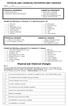 PHYSICAL AND CHEMICAL PROPERTIES AND CHANGES Name Key PHYSICAL PROPERTY CHEMICAL PROPERTY 1. observed with senses 1. indicates how a substance 2. determined without destroying matter reacts with something
Water Softening for Hardness Removal. Hardness in Water. Methods of Removing Hardness 5/1/15. WTRG18 Water Softening and Hardness
 Water Softening for Removal 1 in Water High concentration of calcium (Ca2+) and magnesium (Mg2+) ions in water cause hardness Generally, water containing more than 100 mg/l of hardness expressed as calcium
Chapter 6. Solution, Acids and Bases
 Chapter 6 Solution, Acids and Bases Mixtures Two or more substances Heterogeneous- different from place to place Types of heterogeneous mixtures Suspensions- Large particles that eventually settle out
DESSERT Apple and cinnamon crumble with custard. 5 11 year olds. www.cwt-chew.org.uk
 DESSERT Apple and cinnamon crumble with custard DESSERT Apple and cinnamon crumble with custard Apple and cinnamon crumble Custard 90g 80g Apple and cinnamon crumble This recipe makes 4 portions of about
ELIANE. The New Waxy Potato Starch of AVEBE Detmold, 2006
 ELIANE The New Waxy Potato Starch of AVEBE Detmold, 2006 Contents Introduction to ELIANE Characteristics of ELIANE, differences with other starches ELIANE in several food applications 2 What is ELIANE?
How To Eat Without Getting Sick
 Level 2 Dysphagia Mechanically Altered* This diet consists of foods that are moist, soft-textured and easily formed into a bolus. All foods on Level 1 are. Meats and other select foods may be ground or
Paediatric Diabetes: Carbohydrate counting
 Department of Nutrition and Dietetics Paediatric Diabetes: Carbohydrate counting Everyone with diabetes need to be careful about the foods they eat to ensure that their blood glucose levels stay as close
Everything You Need to Know About Sucralose
 S u c r a l o s e Everything You Need to Know About Sucralose With obesity rates among Americans at an all-time high, many people may think they have to give up sweets in order to lose weight. But there
Registered Trade Mark
 2008 High Energy, High Protein, Low Fiber Guidelines Registered Trade Mark High Energy, High Protein, Low Fibre Guidelines Eating well, even though you may not feel hungry, is an important part of taking
Heterogeneous Homogenous. Mixtures; Solutions. Phases of matter: Solid. Phases of Matter: Liquid. Phases of Matter: Gas. Solid, Liquid, Gas
 Phases of matter: Solid Heterogeneous Homogenous Mixtures Solutions Phases of Matter: Liquid Atoms and molecules are more spaced out and now can move. The material can be slightly compressed into a smaller
Healthy Eating for Diabetes
 Healthy Eating for Diabetes What is diabetes and why is it important to manage it? Diabetes occurs when there is too much glucose in the blood. Learning how to manage your diabetes will help you feel better
CAKE EMULSIFIERS NEW DEVELOPMENTS- ALPHA CRYSTALLINE GELS DRAFT-AMERICAN SOCIETY OF BAKING MEETING- 2001
 CAKE EMULSIFIERS NEW DEVELOPMENTS- ALPHA CRYSTALLINE GELS DRAFT-AMERICAN SOCIETY OF BAKING MEETING- 2001 Emulsion & Emulsifiers Oil and water are immiscible since the interaction results in high energy
Ice Cream Maker INSTRUCTION MANUAL WITH RECIPES. www.zokuhome.com
 Ice Cream Maker INSTRUCTION MANUAL WITH RECIPES www.zokuhome.com The Zoku Ice Cream Maker revolutionizes the way ice cream is made at home. Watch ice cream magically freeze before your eyes in minutes!
L 202/50 Official Journal of the European Union 31.7.2008 DECISIONS COUNCIL
 L 202/50 Official Journal of the European Union 31.7.2008 II (Acts adopted under the EC Treaty/Euratom Treaty whose publication is not obligatory) DECISIONS COUNCIL DECISION No 1/2007 OF THE EC-TURKEY
Illinois Department of Revenue Regulations TITLE 86: REVENUE CHAPTER I: DEPARTMENT OF REVENUE PART 130 RETAILERS' OCCUPATION TAX
 Illinois Department of Revenue Regulations Title 86 Part 130 Section 130.310 Food, Soft Drinks and Candy TITLE 86: REVENUE CHAPTER I: DEPARTMENT OF REVENUE PART 130 RETAILERS' OCCUPATION TAX Section 130.310
TO BULK ICE CREAM SCOOPING ACCOUNTS:
 TO BULK ICE CREAM SCOOPING ACCOUNTS: Government regulations require that ice cream manufacturers supply, at the point of sale, information regarding the complete ingredient list for all flavours of bulk
SUGAR SMARTS. Introduction. Preparation. Suggested Recipes. Key Concepts
 SUGAR SMARTS Introduction This lesson uses health concerns around diabetes to introduce a discussion of sugar in our diets. Depending on your audience, you may want to talk about diabetes more generally
User Guide. Standard 1.2.4 Labelling of Ingredients. December 2013. Ingredient Labelling of Foods
 Ingredient Labelling of Foods User Guide to Standard 1.2.4 Labelling of Ingredients December 2013 Ingredient Labelling of Foods Contents Background... 2 Food Standards in Australia and New Zealand... 2
Study the following diagrams of the States of Matter. Label the names of the Changes of State between the different states.
 Describe the strength of attractive forces between particles. Describe the amount of space between particles. Can the particles in this state be compressed? Do the particles in this state have a definite
Healthy Foods for my School
 yum, yum, yum, yum, yum, yum, yum, yum, yum, yum, yum, yum, yum, yum, yum, yum, yum, yum, yum, yum, yum, Healthy Foods for my School Nutrition Standards for Saskatchewan Schools Schools are an ideal place
FHT Flour Heat Treatment.
 FHT Flour Heat Treatment. Flour Heat Treatment. Modification of grain product properties. Definition of FHT Flour Heat Treatment is a process designed to modify the properties of flour, germ, and bran.
ALL- GRAIN WHEAT- MASH VODKA
 ALL- GRAIN WHEAT- MASH VODKA Most home distillers make vodka from sugar and water fermented with turbo yeast. However, the majority of commercial vodka distilleries make their finest vodkas from Winter
Leavener Lineup. Getting started. How do we use chemical reactions in the kitchen? Hands-on experiment. Year levels 4 5. Curriculum Links.
 rise and Shine: what Makes Bread Rise? Lesson 2 Leavener Lineup Year levels 4 5 Curriculum Links Science Science knowledge helps people to understand the effect of their actions (Yr 4, ACSHE062). Solids,
4 - H S U P P L E M E N T A L M AT E R I A L EM4748 JUDGING BAKED PRODUCTS
 4 - H S U P P L E M E N T A L M AT E R I A L EM4748 JUDGING BAKED PRODUCTS COOPERATIVE EXTENSION Judging Baked Products Sandra Garl Brown Quality baked products must look and taste good. Recognizing excellence
States of Matter CHAPTER 10 REVIEW SECTION 1. Name Date Class. Answer the following questions in the space provided.
 CHAPTER 10 REVIEW States of Matter SECTION 1 SHORT ANSWER Answer the following questions in the space provided. 1. Identify whether the descriptions below describe an ideal gas or a real gas. ideal gas
GOT MILK? Background. Food Processing and Preservation. Milk Processing and Preservation
 GOT MILK? Background Food Processing and Preservation Food processing is the set of methods and techniques used to transform raw ingredients into food for consumption. Food processing occurs from the farm
Acids, Bases, and ph
 CHAPTER 9 1 SECTION Acids, Bases, and Salts Acids, Bases, and ph KEY IDEAS As you read this section, keep these questions in mind: What properties do acids have? What properties do bases have? How can
Carbohydrate Counting
 Carbohydrate Counting This booklet is designed to provide information on carbohydrate counting for people managing their diabetes with insulin This booklet was given to you by: Name: Contact Tel No: Introduction
KINETIC MOLECULAR THEORY OF MATTER
 KINETIC MOLECULAR THEORY OF MATTER The kinetic-molecular theory is based on the idea that particles of matter are always in motion. The theory can be used to explain the properties of solids, liquids,
Gluten-Free Baking: Tips & Recipes
 Gluten-Free Baking: Tips & Recipes From the National Foundation for Celiac Awareness Webinar: Holiday Special: Gluten-Free Baking Featuring Chef Richard Coppedge, Jr., CMB, Professor, Baking and Pastry
Composition of Grapes
 Composition of Grapes By Murli Dharmadhikari Grapes are the most important raw material for making wine. A good understanding of grape composition is essential to understanding the process of winemaking
Carbon-organic Compounds
 Elements in Cells The living substance of cells is made up of cytoplasm and the structures within it. About 96% of cytoplasm and its included structures are composed of the elements carbon, hydrogen, oxygen,
About Coffee and Refractometers 2008-2010 Voice Systems Technology, Inc. (VST)
 About Coffee and Refractometers 2008-200 Voice Systems Technology, Inc. (VST) www.mojotogo.us.0 Coffee and Refractive Index Refractive Index measurements have been used for process control in the food
Reading Food Labels. Nutritional values The ingredients of the item The percentage of the Recommended Daily Intake (RDI) of particular nutrients
 Eating well involves choosing a variety of foods that are low in saturated and trans fats, low in salt and high in dietary fibre. Food labels carry useful information to help you make choices about the
Acidity and ph of apple juice
 Acidity and ph of apple juice Claude Jolicoeur 197 Aberdeen, Quebec, Quebec, Canada G1R 2C9 [email protected] http://cjoliprsf.awardspace.biz/ Acidity is an important property of apple juices, and is
Soft Drink Components
 Soft Drink Components Component Function Typical Use Level Water Sugars Carbon Dioxide Acids Flavours Juices Colouring Preservative Foaming Agent Hydrocolloids Cloudifiers Vitamins/Mineral/ Fibre up to
HIGH FIBER DIET. (Article - Web Site) August 20, 2003
 HIGH FIBER DIET (Article - Web Site) August 20, 2003 Dietary fiber, found mainly in fruits, vegetables, whole grains and legumes, is probably best known for its ability to prevent or relieve constipation.
Heart Healthy Diet: Tips for Lowering Cholesterol and Fat in Your Diet
 Heart Healthy Diet: Tips for Lowering Cholesterol and Fat in Your Diet Cholesterol Saturated Fats Polyunsaturated and Mono-unsaturated Fats This fat-like substance is needed for good health. However, high
Shake Recipes revised 9-18.qxp 9/19/2006 4:05 PM Page 1 FOREVER SHAKE IT UP! FOREVER LITE SHAKE RECIPES
 Shake Recipes revised 9-18.qxp 9/19/2006 4:05 PM Page 1 FOREVER SHAKE IT UP! FOREVER LITE SHAKE RECIPES Shake Recipes revised 9-18.qxp 9/19/2006 4:05 PM Page 2 Give your body the nutrients it needs with
SODIUM CARBOXYMETHYL CELLULOSE
 SODIUM CARBOXYMETHYL CELLULOSE Prepared at the 28th JECFA (1984), published in FNP 31/2 (1984) and in FNP 52 (1992). Metals and arsenic specifications revised at the 55 th JECFA (2000). An ADI not specified
Yoplait 1kg Vanilla. NUTRITION INFORMATION SERVINGS PER TUB: 5.7 SERVING SIZE: 175g % DI* PER SERVE AVE. QTY. PER SERVE. AVE. QTY.
 Yoplait 1kg Vanilla SERVINGS PER TUB: 5.7 697kJ (167 Cal) 8% 398kJ (95 Cal) PROTEIN, TOTAL 8.6g 17% 4.9g CARBOHYDRATE 25.2g 8% 14.4g - SUGARS 24.3g 27% 13.9g SODIUM 103mg 4% 59mg CALCIUM 289mg 36% RDI
Biochemistry of Cells
 Biochemistry of Cells 1 Carbon-based Molecules Although a cell is mostly water, the rest of the cell consists mostly of carbon-based molecules Organic chemistry is the study of carbon compounds Carbon
EXPERIMENT 20: Determination of ph of Common Substances
 Materials: ph paper and color chart (ph range 3 to 12) or ph meter distilled water white vinegar household ammonia (or baking soda) spot plate test or 3 small test tubes stirring rod solutions / fruits
Nutrition Guidelines for Diabetes
 Nutrition Guidelines for Diabetes Eating healthy foods and keeping a healthy body weight are very important parts of a diabetes treatment plan. A healthy diet and weight helps to keep your blood sugar
Orange Fruit Processing
 Orange Fruit Processing Luis Cisneros-Zevallos, Ph.D. Department of Horticultural Sciences Texas A&M University Commercially Important Orange Varieties Valencia - most widely grown, late maturing, good
Nonalcoholic Fatty Liver Disease. Dietary and Lifestyle Guidelines
 Nonalcoholic Fatty Liver Disease Dietary and Lifestyle Guidelines Risk factors for NAFLD Typically, but not always seen in patients who are overweight. May have Diabetes and or insulin resistance high
The Effect of Whole Wheat Flour on Banana Bread
 The Effect of Whole Wheat Flour on Banana Bread Kathryn Slaboski F&N November 9, Abstract: Eating a diet rich in whole grains has proven to reduce the risks of heart disease, diabetes, and obesity, among
Agricultural Statistics ANNUAL REPORT OF MILK COLLECTION AND PRODUCTION OF DAIRY PRODUCTS
 MD 32 Methodological document ISSN 1840 488X Agricultural Statistics ANNUAL REPORT OF MILK COLLECTION AND PRODUCTION OF DAIRY PRODUCTS Bosnia and Herzegovina Agency for Statistics of Bosnia and Herzegovina
ION EXCHANGE FOR DUMMIES. An introduction
 ION EXCHANGE FOR DUMMIES An introduction Water Water is a liquid. Water is made of water molecules (formula H 2 O). All natural waters contain some foreign substances, usually in small amounts. The water
ANALYSIS OF FOOD AND NATURAL PRODUCTS LABORATORY EXERCISE
 ANALYSIS OF FOOD AND NATURAL PRODUCTS LABORATORY EXERCISE Determination of carbohydrates in foodstuff (LC/RID method) Exercise guarantor: Assoc. Prof. Karel Cejpek, Ph.D. CONTENT Required knowledge...
STEVIOL GLYCOSIDES. Chemical and Technical Assessment. Prepared by Harriet Wallin FAO 2004
 Chemical and Technical Assessment 63rdJECFA STEVIOL GLYCOSIDES Chemical and Technical Assessment Prepared by Harriet Wallin FAO 2004 1 Introduction Stevioside was evaluated for safety by the 51 st meeting
Carbohydrate Counting For Persons with Diabetes
 MINTO PREVENTION & REHABILITATION CENTRE CENTRE DE PRÉVENTION ET DE RÉADAPTATION MINTO Carbohydrate Counting For Persons with Diabetes About This Kit This kit focuses on basic carbohydrate counting. Remember
Drink Menu Nutrition and Ingredient Information
 Drink Menu Nutrition and Ingredient Information Hot Drinks...2 Cappuccino... 3 Caffè Latte... 4 Flat White... 5 Long Black... 6 Short Black... 6 Macchiato... 6 Piccolo Latte... 6 Long White... 7 Caramelatte...
Low Fat Diet after Cardiac Surgery With or Without Chyle Leak
 Low Fat Diet after Cardiac Surgery With or Without Chyle Leak What is chyle? Chyle (sounds like kyle) is a milky white fluid that contains protein, fat, cholesterol, lymphocytes, and electrolytes. It is
Definition of Honey and Honey Products
 Definition of Honey and Honey Products Approved by the National Honey Board June 15, 1996 Updated September 27, 2003 PART A: HONEY I. Definition Honey is the substance made when the nectar and sweet deposits
Nutrition and Chronic Kidney Disease
 Nutrition and Chronic Kidney Disease I have been told I have early kidney failure. What does this mean? What can I expect? This means that your kidneys are not doing as good a job as they should to help
Carbohydrate Counting for Pediatric Patients With Type 1 Diabetes. Review Date 4/08 K-0591
 Carbohydrate Counting for Pediatric Patients With Type 1 Diabetes Review Date 4/08 K-0591 Program Purpose To increase knowledge of carbohydrate counting and insulin management skills for those caring for
Carbohydrate Counting for Patients with Diabetes. Lauren Dorman, MS RD CDE Registered Dietitian & Certified Diabetes Educator
 Carbohydrate Counting for Patients with Diabetes Lauren Dorman, MS RD CDE Registered Dietitian & Certified Diabetes Educator Program Purpose To increase knowledge of carbohydrate counting skills for nurses
This is a full list of all of the items that we make. Not all of these items are available every day, please call for availability.
 This is a full list of all of the items that we make. Not all of these items are available every day, please call for availability. Carrot Cake Ingredients: Brown rice flour, tapioca starch, sorghum flour,
DRY BEAN RECIPES. Beans, Beans and More Beans Soup
 DRY BEAN RECIPES Beans, Beans and More Beans Soup ¼ cup each dry Black Beans, Cranberry Beans, Pinto Beans and Light Red Kidney Beans 1 cup dry Navy Beans 6 cups water ½ cup onion, diced 2 cloves garlic,