
ON DECK STOWAGE OF CONTAINERS
|
|
|
- Douglas Hardy
- 9 years ago
- Views:
Transcription
1 ON DECK STOWAGE OF CONTAINERS Prepared by: American Institute of Marine Underwriters Technical Services Committee Page 1 of 29

2 TABLE OF CONTENTS Page Introduction 3 Loss Experience 3 Types of Containers 4 Types of Containerships 6 Securing Devices of Container Vessels 8 Stowage & Collapse of Stow Issues 11 Stowage of Containers on Barges 15 Cargo Securing Manuals 17 Operational Issues 18 Comments and Recommendations 22 References Revision History Attachments: List of Container Casualties Securing Hardware Diagrams Page 2 of 29

3 On Deck Stowage of Containers AIMU Technical Services Committee Introduction: Containerization has so revolutionized the ocean transportation of cargo that it is, today, the standard method of transporting break bulk cargo. Container ships have been plying the seas for a few decades and we are now seeing large container ships, capable of carrying 8,000 10,000 containers, with tiers of up to 8 high. Although this represents a tremendous economy of scale in the transporting of containers, we have seen a number of highly publicized incidents, involving the loss of large numbers of containers of containers overboard, during ocean transit. These incidents have resulted in additional damage to hundreds of other containers aboard the ship, as well as endangering the safety of the ship itself. Further, partially submerged containers pose a hazard to navigation to other vessels, particularly fishing vessels and small craft, as well as a potential environmental hazard. The first generation of container ships provided for carriage of containers on deck in tiers of only two high. The next generation allowed for carriage of containers on deck up to four tiers high. It is estimated that there are now over 4,600 container ships in service and today s container ships are now routinely carrying containers on deck up to eight (8) tiers high. It is also interesting to note that Korean shipyards have presented designs for container ships with 16,000 teu carrying capacity and the Society of Naval Architects & Marine Engineers (SNAME) reports that designers are working on plans for container ships of up to 22,000 teu capacity. These ships would have a carrying capacity of 50% greater than the large container ships in service today. This paper attempts to review the loss history of modern container ships, and the challenges posed by the stowage of containers on deck. Our concern is that there appears to be an evolving trend of near catastrophic losses of containers, stowed on deck of container ships. The purpose of this paper is to provide a better understanding of the risks associated with on deck stowage of cargo and to further the public discussion, as to the need for possible further regulatory requirements or industry safety initiatives. We will begin the discussion with a review of the loss experience, as extracted from a report delivered to the International Union of Marine Insurers (IUMI), in the Fall of 2000, by Committee Member, Captain James McNamara, President of the National Cargo Bureau. Loss Experience: There have been no comprehensive statistics kept, as to the number of containers lost overboard. When these incidents do occur, there usually is no press release and seldom is the loss publicized. There have been, at least, 50 reported incidents that we are aware of, since These have varied from only a handful of containers to 300 lost, at one time, with damages to hundreds of other containers. Attached to this report is a list of these losses, beginning in This by no means is a complete and comprehensive list, but all of the major container ship losses have been included. (How many unreported losses of containers overboard have there been?) Page 3 of 29

4 In reviewing the list, it is apparent that both the frequency and severity of losses began increasing sharply in 1997, as better than two thirds (2/3) of the losses, during the 12 year period, have occurred within the last 5 years. Further, the International Group of P&I Clubs estimates that over 10,000 containers have been damaged from collapsed stow, with approximately 25% lost at sea. General Discussion: Types of Containers Containerization of cargo aids in the speedy load/discharge of cargo from ships as well as providing additional protection for the cargo from theft, breakage, and contamination. At the advent of containerization, there was no standard size container, and many were custom built for particular trades or products. With the birth of the container vessel the need for standard size containers became a priority in order to facilitate the interchangeability of containers between different carriers. The two standard sizes that became established were 20 ft. and 35 ft. The 35 ft. standard was promoted by Sealand because that was the largest over the road trailer allowed in the United States at the time. Due to the pre-eminent position of Sealand in the container business it was able to make the 35 ft. standard container a major market factor. Most other carriers however adopted the 20 ft. and 40 ft. container as standard. As containerization gained popularity Sealand found it had to change its standard or face increasing costs in shifting containers aboard non-company vessels. Twenty foot and forty foot containers that are 8 ft. in height are the standard size today. However, no sooner was a standard established than shippers wanted special sizes to accommodate their prizes. Hence we have standard 8 ft. height containers and hi cube 9 06 containers, with varying lengths, up to 56 ft. Although there is often discussion about changing the width of containers, primarily to accommodate metric sized Euro-pallets, such a change is unlikely due to the enormous cost of modifying vessel cells. Just as container sizes have adjusted to accommodate shipper needs, various specialized containers have been developed to accommodate various types of products. The following details some of the container types that have developed in the last 20 years. Dry Cargo Container: This is the standard general cargo hard top container that most people are familiar with. It can be utilized to ship a wide spectrum of goods. It can also be modified to ship neo-bulk commodities with the insertion of a bag type liner. Standard sizes are 20 and 40 containers, but some lines also have 48 & 53 length containers. Height can be standard 8 or high cube Page 4 of 29

5 Refrigerated Container: Carriage of refrigerated and/or frozen cargo, for which precise temperature control is necessary. Compressor can be built into the front of the container or slung underneath the frame. These can also be in 20 or 40 lengths. Ventilated Container: Similar to the dry cargo container, it is used to provide ventilation and protection against water damage for cargoes. Common cargoes are ambient temperature bagged cargo, including coffee, spices, and chemicals. Tank Container: Tanks protected by an I-beam framework. Often used to carry small lots of chemicals and other hazardous materials. Page 5 of 29

6 Flatrack: Used to carry cargo that does not conform to the conventional dry cargo container due to size or configuration. Commonly used to carry machinery and large vehicles. For very large cargoes the ends can be folded down to create a Platform container. Open Top : Allows loading of the container through the top with a crane or through the rear doors. Particularly suitable for over-height cargoes that require more protection than that provided by a flat rack. Special Purpose: Some containers have been adapted for carriage of special cargoes such as livestock, or for other purposes such as additional power generators for refrigerated containers. Types of Container Ships Containers as a mode of freight transportation are carried aboard nearly every type of dry cargo vessel. They can be found aboard bulk carriers in ballast, LASH ships, freighters, barges, RoRo s, and of course dedicated containerships. The size of these vessels Page 6 of 29

7 varies, from a capacity of a few hundred to Post Panamax size of 11,000 teu and greater. Ships under construction now are in the 12,000 14,000 teu range and are called Ultra Large Container ships (ULC).(capacity > 10,000 teu). These larger container ships will create increased values of cargo aboard container ships. Both marine liability insurers and ocean cargo underwriters should be aware of these potential increases in values and might want to revisit their policy limits and/ or limits of coverage per mode of transportation. Ocean Going Containerships Container vessels do not have horizontal deck division within a hold, instead they rely on the container itself to provide the separation of cargoes. Each hold has vertical rails within the hold called cell guides, in which the containers can be stacked vertically. Depending on the size of the ship these containers may be stacked as many as 9 tiers below deck. Above deck the containers may be stacked up to 8 tiers high. Containers above deck are either secured with a cell guide structure or with lashings or tensioning rods applied by hand. Open Hatch container vessels contain cell guides that reach from the bottom of the hold to the uppermost container tier. They are equipped with large, highly efficient bilge pumps to keep the bottom of the hold dry, despite the weather. Because they have no hatch cover, they do not have any automatic CO 2 fire suppression system. (These ships are thoroughly discussed in the AIMU Technical Services Committee report on Open Top Container Ships.) Container ships are normally characterized by size and generation. In other words they are characterized by their deadweight carrying capacity and container carrying capacity (Trailer Equivalent unit or TEU). It is also customary to describe them in terms of whether they carry loading gear or have no gear, and some newer designs have no hatch cover or are called Open Top or Hatch Coverless container ships. For dedicated container ships, it was last reported in 2006 that there were 3,514 container ships in service, worldwide, with total carrying capacity of 8.1 million teu. This suggests that currently, the average container ship carries 2,306 teu. The new Ultra Large Container (ULC) ships recently delivered or under construction, therefore represent a substantial increase in carrying capacity from the average container ship in service today. Smaller vessels of 100 to 800 TEU are generally termed feeder vessels and are used to service smaller ports or carry on a regional level or on a coast. They are supplemented by larger vessels 10,000 TEU or more, which operate trans-oceanic. Page 7 of 29

8 Example of a feeder ship, note the comparatively low freeboard, which can expose containers to seas washing over the deck. Inland container operations within the United States are generally conducted by tug/barge units, but in Europe dedicated inland waterway container vessels operate. In the United States, there is also a growing feeder service, utilizing deck barges to carry containers on coastwise tows. Securing & Stowage Securing Devices for Container Vessel The securing of containers on a vessel actually starts when the container is loaded (or stuffed) at the shipper s facility. All securing plans aboard ship assume that the cargo within the container is properly stowed and secured. If a container is over loaded, improperly stowed or the cargo inadequately secured, this can lead to structural damage to the container which can result in a collapse of stow. This is particularly problematic in emerging industrial countries, such as China, where containers are often loaded at remote inland locations by shippers that are wholly unfamiliar with how to properly load and secure cargo within a container. It is equally important that the container is in structurally sound condition, particularly the corner posts and fittings. While the global demand for containers fluxuates, during times of robust global shipping, shortages of containers will occur, which can result in containers being used that are in unsatisfactory condition. The securing scheme for a ship is incorporated into the design of the vessel, at the shipyard where it is built. While the containers in the holds are usually secured in cell guides, the resting points of the containers on the tank top are strengthened under the tank top. The same applies for the containers carried on deck. In addition classification societies have established strict rules and regulations for welding of container bottom Page 8 of 29

9 foundations, padeyes, D-rings and other securing devices attached to the vessel s structure. Various types of Bottom Foundations are used: Deck Sockets Cloverleaf These can be flush or raised and can be single, double or quadruple sockets. Deck Sockets Dovetails. These are either single or double foundations. On commercial cellular container vessels, we mostly find the flush dovetail foundations for sliding twistlocks, while the military often uses raised foundations. This is due to the fact that often other cargo than containers is carried on deck and D-Rings or other securing devices are welded on deck, which have to be overcome, when containers are stowed. On commercial full container vessels these D-rings or lashing plates are positioned in accordance with the securing requirements adjacent to the container stacks. The containers themselves are in the stack secured directly to the deck by bottom stackers or bottom twistlocks. Within the stacks, are located intermediate stackers or twistlocks, bridge fittings or linkage plate. Bottom stackers are no locking devices, which hold the container in position. Bottom twistlocks additionally secure the container in place by locking them at the four corners. It should be noted that there is a difference in the load ratings between bottom locking devices and container top locking devices and these should not be used interchangeably. Diagram of stow dynamics from Sea Project Turning a handle, which turns the locking device in the corner casting, mechanically operates conventional twistlocks. These twistlocks stay on the top of a container, as it is Page 9 of 29

10 considered unsafe for the lashers to work on top of the container stacks to collect these twistlocks. The intermediate twistlocks, which currently have to be used on all ships calling in the United States, are semi automatic twistlocks. These are spring-loaded twistlocks, which secure both the containers in the stack. The semi automatic twistlock is attached to the bottom of the container that is going to be loaded. Upon lowering this container onto the container in the stack, the bottom lock will be activated and locks itself. Upon discharge, the lock at the bottom is opened by pulling at a wire with a knob at its end (the twistlock stays with the container on the top). The twistlock then travels with the container ashore, where it is removed by longshoremen. Standard Twistlock Stacker Fully Automatic Twistlock Fully Automatic Twistlocks (FAT) were introduced in recent years. These are Twistlocks that are able to release from the deck stow simply by making a vertical lift with a slight twist. (This eliminates the need which was present with the semi automatic twist locks to have the longshoremen take the extra step on the dock to remove the twist locks before placing a container on a chassis.) These new twistlocks tend to be smaller and are suspect in their reliability. A common factor in several incidents of loss of containers overboard has been the use of FAT s. Given these recent incidents involving FAT s, we understand that in 2006, two large manufacturers of FAT s recalled and have since replaced thousands of these with the semi-automatic twistlocks. If containers are stowed so close to one another (e.g. 20 containers on 40 stow places) that lashing cannot be done at both ends, linkage plates have to be inserted between the two stacks longitudinally and the accessible ends are lashed with bars crosswise. The uppermost containers have to be connected with tension-pressure bridge fittings. The most common lashing units are the lashing bars, which are hooked into the container corner castings and tightened by turnbuckles. The locking devices (heads) are either fixed or adjustable. Chain assemblies with turnbuckles and/or chain tensioners are also in use. Page 10 of 29

11 The container lashing gear is usually designed to be stronger than the container; problems may arise not from the container lashing gear, but the collapse of container frames due to racking or other influence. Stowage & Collapse of Stow Issues Stowage issues must be properly planned and addressed, in order for the standard container securing schemes to be effective. The heavier containers must be placed on the bottom tier and the lighter containers on the upper tiers; otherwise, the loads on the lower tier can become excessive and the container may collapse. There also will be greater accelerations and forces on the securing gear, when heavier containers are stacked in the higher tiers, although most of the force must be restrained by the lower tier Unfortunately, there is no universal definition of what constitutes a heavy or light container, and this can become a judgment issue. Container ship operators employ vessel planners at their terminals. The role of the planner is to calculate and determine at what position each container is to be loaded aboard the ship. The two critical pieces of information are the port of discharge and the weight of the loaded container. Planners determine the position for each container, while balancing ship stability, stack loading, and operational (discharge) needs. A standard 20 ISO rated container has a gross weight of approximately 24 Metric Tons (MT) and 32 MT for a standard ISO 40 container. A standard ISO container is designed to withstand 192 MT of weight stacked on its corner posts, when subject to dynamics that impart a G force of 1.8. This suggests that a bottom container can support a stack of 6 fully loaded 40 containers and 8 fully loaded 20 containers. With the worldwide shortage of containers, we are seeing shippers use containers that are not built to ISO standards and keeping containers in service that are in marginal condition. The condition of a container s corner posts and fittings is particularly important. In Sept. 2002, the IMO reported that a study among member governments between indicated that of 19,704 containers inspected, 1,737 (approximately 9%) were found with Container Safety Convention (CSC) plate and structural deficiencies. US Coast Guard requirements follow IMO s CSC guidelines for container structural inspections. These are to be made within 5 years of new and there after every 3 years or whenever a container undergoes major repair or conversion. The Coast Guard will exempt companies from these outside inspections, if they have an Approved Continuous Examination Program (ACEP). Inspection stickers are to be placed on the container, documenting the inspection date and due date of the next inspection. Below are some photos that show the poor condition of structural fittings and corner posts, which can lead to not only the loss of a container, but the collapse of the stow. Page 11 of 29

12 Example of a collapsed stow aboard a container ship. A recent example of a collapsed stow occurred in February of 2007, when the container ship Annabella encountered heavy seas, in the Baltic Sea. The next morning, it was discovered that a stack of containers had collapsed in the No. 3 hold. The containers in the hold included hazardous cargo, in the form of Butylene gas. This incident was investigated by the UK Maritime Accident Investigation Branch (MAIB) and it was determined that the collapse was due to the lower tier of containers being unable to support the dynamic loads being imparted, during the heavy weather. The report was also Page 12 of 29

13 critical of the flow of information between the shippers, planners, loading terminal, and the ship s Master. Another problem today is the practice of some carriers still accepting cargo, while the vessel is already in port and loading. The previous cargo plan then becomes obsolete and in many cases, late arriving heavy boxes end up on top of all other containers, changing considerably the vessel s pre-calculated stability and stow load pressures. Oversized containers can also present securing challenges because they will preclude the use of bridge fittings, which are normally used to tie the containers together, across the tops. The farther a container is placed away from amidships, the greater the accelerations will be on the container. Containers stacked on deck, near the stern, have generally had a greater incidence of loss than those carried in other locations. One notable example of this was the SW Monsoon, which suffered a collapse of stow across the entire stern (similar to the picture below) on its maiden voyage! Collapse of stow on the stern, where accelerations & forces are the greatest. To compensate for this, some companies have built Bird Cages or buttresses on the after deck, for the purpose of stacking and securing containers that are stowed on the stern. Another area that can be problematic is the securing of cargo itself, within the container. If heavy equipment is loaded within a container, and not adequately secured, the cargo can damage the container wall, or break through the side of the container, during the voyage. If this container is loaded in a lower tier (which heavier containers should be), then the Page 13 of 29

14 damaged container can cause a collapse of the stow of those containers loaded above it. The condition of the container itself, and its critical structural members, can also be a contributing factor in the collapse of the stow. When a container stow collapses, it can also create a domino effect, by damaging containers in the adjacent rows. However, in the aftermath of an incident with all containers lost, little evidence usually remains to establish the true cause of loss. Was it the collapse of a box or a failure of the lashing gear? Only one container in the bottom has to be weak, damaged even though not visible to the naked eye and the whole stack can collapse while the vessel moves at sea, irrespective of whether the stow was on or below deck. A Dutch consortium of ship owners, class societies, and lashing gear manufacturers has been formed by the Maritime Research Institute Netherlands (MARIN) to study the problem of why so many ship stacks of containers have been collapsing. This study is known as the Lashings at Sea Project and consists of accident reviews, engineering analysis & testing, and actual measurement and collection of data (accelerations, etc.) aboard container ships in service. Their preliminary findings were presented at a Liner Conference in London, in April 2008 and list the following contributory factors: Green water loads from bow slamming and boarding seas, particularly for lower freeboard feeder vessels Extreme motions, such as parametric rolling Accelerations at extreme GM Loads by horizontal hatch cover motions Hull flexing & deformation, from bow slamming, whipping & twisting Stack dynamics, including racking & transverse forces Misdeclared container weights Adjacent stack interaction Human error Wear & tear or condition of containers & fittings The results of the Lashings at Sea Project are expected to be available by year end of Page 14 of 29

15 The over loading of containers by shippers is a problem that seems to be growing, due to the increasing types of cargo now being loaded in containers. Today, we are routinely seeing containers that stuffed with scrap steel, grain and even large coils of steel. These are sometimes are loaded by shippers that simply do not adhere to the weight limitations of marine containers. The MAIB s recent investigation into the failure of the containership MSC Napoli in 2007 in the English Channel, found that of 660 dry containers that were stowed on deck 137 (or 20%) had actual weights greater than the weight listed in the container s Bill of Lading. The average weight overage was 3 MT and as much as 20 MT over the declared weight. While containers entering terminals in the US, and many terminals around the world, by truck are passed over certified weight scales, this is not the case for containers that arrive by rail. Therefore, the ship must often accept the weight of a container to be as declared by the shipper in their shipping documents. Stowage of Containers on Barges: Within recent years, steamship lines have been providing feeder service along the East Coast of the U.S. and to the Caribbean, by carrying containers on offshore deck barges. Some lines have used large RORO barges, with completely enclosed decks, with much success. Our concern is for those operations that utilize offshore deck barges, which are typically given only minor modifications, and are then placed in service carrying containers on deck. While we are unaware of any documented incident of containers damaged in a collapse of stow or lost overboard from coastwise barge tows, this type of feeder service may create some additional exposures to loss that are not typically associated with container ships. Stow aboard this barge is only 3 tiers high, but can be much higher. Page 15 of 29

16 Containers are designed to be carried aboard ships. When carried aboard deck barges, they present several increased exposures to underwriters, as compared to the same containers carried aboard ships. Some of the more common exposures are: 1) A loaded barge has a significantly lower freeboard than a loaded ship. Even with a breakwater, the barges are much more prone to shipping seas over the deck. This can result in wetting damage to the contents of the containers on the lowest tier of the stow, structural damage to the containers themselves, and even loss of containers overboard. 2) The stability characteristics of a barge are not as good as a ship, which tends to be much larger. Barges have a much faster natural roll period than ships. This means that the accelerations and forces imparted on the lashing gear can be greater than what they were designed to withstand. That is, container lashing and securing systems are designed for stowage aboard ships. 3) Once underway, the crew of the tug can not monitor the temperature and conditions of refrigerated containers, or others carrying perishable commodities. Also, refrigerated containers must rely upon a diesel generator set aboard the barge to provide electrical power. 4) Some companies are pushing the limits of stacking containers on deck, by carrying them in tiers of 5 and 6 high. In addition to presenting securing and lashing challenges, this type of stow creates a huge potential sail area that can make it difficult for the tug to handle its tow, particularly during high winds. 5) These barges are towed offshore on a towline. Therefore, proper inspection and maintenance of the towline, the towing bridle and all towing gear, is critical to the success of each voyage. Barges engaged in this service are subject to US Coast Guard inspection. Part of the Coast Guard s approval process requires the barge operator to develop and submit an Operations Manual, for review and approval. The focus of this manual, however, is on loading procedures and the necessary stability calculations, which are required to be made before each voyage. The above listed concerns are not required to be included in the Operations Manual and often are not. Some of the more typical types of losses, which Committee members have seen with the carriage of containers on decks of barges, involve: Failure of the towline or towing gear, during heavy weather (or high winds), resulting in the stranding of the barge, and heavy damage to the containers. Structural damage to containers from boarding seas, and containers lost overboard, even in seas as low as 10 12, under certain conditions. Fire spreading through containers, due to exhaust routing of the diesel generator sets and close stowage of containers, with flammable or combustible cargo. Unlike Page 16 of 29

17 container ships, these barges are not equipped with any sprinkler systems or fire suppression systems. Damage to perishable commodities, due to undetected failure of a container s refrigeration plant or failure of the on board diesel generator set. Cargo Securing Manuals Due to the dramatic increase in frequency of accidental discharge of containers overboard in the past decade, with the consequent increased hazard to navigation in open water and environmental concerns; the IMO elected to amend the Safety of Life at Sea (SOLAS) VI/5 and VII/5 to require a vessel customized Cargo Securing Manual, for vessels over 500 gross tons, engaged in international voyages. The purpose is to provide guidance for the Master and crew on board with respect to the proper stowage and securing of cargo units. These are specific manuals, made for specific ships. It is the responsibility of the Master to ensure that cargo units are at all times stowed and secured in an efficient manner taking into account the prevailing conditions and general conditions of safe stowage. It is the responsibility of the Master to ensure that all securing equipment is adequate for the load as calculated within the manual. IMO has published certain guidelines, which are to be incorporated into the manual. These manuals are usually approved by the vessel s classification society. Cargo Securing Manuals are a valuable reference tool, for all personnel in securing cargo in a safe manner. Cargo Securing Manuals are divided as follows: Chapter 1: Contains general statements concerning the applicability and use of the manual. Chapter 2: Contains a detailed listing of all fixed and portable securing devices aboard ship, including but not limited to: a) b) c) d) e) f) Name of Manufacturer Type designation of item along with a simple sketch for identification Identification markings using paint or stamped impressions Strength test of ultimate tensile strength results Result of non-destructive testing Maximum securing Load This chapter also includes the inspection and maintenance schemes to be used for securing devices aboard ship. Chapter 3: Contains handling and stowage instructions related to the securing devices and securing of cargo. This chapter also contains an evaluation of the forces acting on the cargo on a hatch by hatch basis. Annexes: There are 12 annexes which provide specific securing guidance for particular commodities. Examples are Stowage of Containers on the Deck of Non-Container Page 17 of 29

18 vessels, Stowage of wheel based cargoes and stowage and securing of heavy cargo such as locomotives and transformers, etc. Operational Issues: Current designs, particularly in the coastal feeder ship market, are seeing vessels with up to three-quarters of their cargo of containers carried on deck. One design for a 300 TEU coastal feeder ship has 228 containers on deck and only 72 below, a full 76% of the cargo on deck. The vessel has such a small freeboard that the deck edge immerses at only 11 degrees of heel. The figures for larger container ships are not so high, but, often over half of the containers are carried on deck. Many feeder ships have less than one meter of freeboard, and many feeder vessels are open deck barges, where the entire cargo is stowed on deck. The practical effects of such high deck loadings are: Reduce the stability to occasionally dangerous levels; Interfere with visibility from the bridge; Expose very high stacks to potential damage from heavy seas and bad weather; Reduce the effectiveness of lashing arrangements; Reduce freeboard to such an extent that deck edge immersion and even capsize becomes a real possibility; Render ships almost unmanueverable at slow speeds due to excessive windage Much has also been written about the phenomenon known as Parametric Rolling. It is generally accepted that smaller ships with lower freeboards (such as feeder ships) are more susceptible to parametric rolling than are larger ships. This is thought to occur during specific wave height and cycles that can generate extreme roll periods and place unexpectedly high loads on the deck securing gear. The severity of parametric rolling is significantly affected by the height and weight of containers stowed on deck. Some vendors are providing software that purports to alert the Master to when parametric rolling conditions exist, which would require a change in course or speed, or both. Also, classification societies are beginning to develop a designation for ships that are designed to avoid parametric rolling. The loss of containers overboard from the M/V Santa Clara 1 (9,600 GRT container ship, built in 1974) off the East coast of the U.S. in 1992, involved the loss of four (4) 20 containers each of which had been loaded with drums of arsenic trioxide, which is toxic. The U.S. Coast Guard, the NTSB and other agencies conducted a thorough investigation and the following conclusions were made. The results of the investigation are important, in that most all cases of containers lost overboard today have some combination of the same root causes as the SANTA CLARA I incident, which contained a host of operational issues, as follows: Page 18 of 29

19 1. The proximate cause of the cargo loss was the failure to adequately secure containers and cargo on deck. 2. Mechanical weaknesses in the cargo securing system which may have contributed directly to the loss of deck cargo include: a. inadequate number of wire lashings to overcome static and dynamic loads on the containers stow; b. improper (inverted) installations of wire lashings, putting an unreinforced eye over the penguin hooks; c. pairing of penguin hooks with wire lashings, possibly weakening the connection to the corner fitting of the container; d. use of already-damaged lashing gear; e. improper stowage configuration of outboard 20-foot containers in a 40-foot space, leaving one end of each container stack unsecured. f. deficient lashing configuration for the machinery on deck, minimizing the restraint against transverse sliding; g. insufficient number of clips on the machinery lashing; and h. unsecured hatch covers, permitting small lateral movements of the entire stow and slackening of the securing system. 3. Operational weaknesses which may have contributed to the casualty include: a. failure to follow recommended international standards for providing stowing/securing instructions (a Cargo Securing Manual) aboard ship; b. lashing under time constraint when underway into heavy weather, thus reducing the standard of care by the crew, and reducing the extent of actual lashing and securing; c. maintaining an inventory of too many varieties of securing gear onboard, complicating the job for lashing gangs or crew; d. Excessive stability, causing increased dynamic forces acting on the cargo, greater likelihood of synchronized rolling in seas, and therefore greater likelihood of large roll angles and green water on deck. The Master s unfamiliarity with the ship may have misled him in evaluating the stability conditions; e. Failure to properly assess the storm, its movement and relative winds; f. Failure to take early action in deteriorating weather to avoid putting the ship in a dangerous situation with limited safe alternatives remaining. The Master should have navigated to put the ship in a position where he could effectively Page 19 of 29

20 reduce speed, better control his heading in relation to the weather, and avoid heavy rolling and green water on deck. His unfamiliarity with the ship may have caused him to overestimate the capabilities of the ship in heavy weather; and g. Failure to effectively counteract synchronous rolling, pounding and attendant violent motions of the ship, by reducing speed and/or changing course. Some incidents of damage to Panamax and Post Panamax container ships, have fueled speculation about phenomenon known as parametric roll, which increases with the growth of the container ship size. 4. Other factors which may have contributed to the loss of cargo: a. An apparent structural weakness inherent in the material of fiberglass-reinforced plastic containers, strained with the carriage of heavy, dense cargo; and compounded by stowage of this container below another heavy container. b. Inadequate blocking and bracing of the cargo inside the containers, a condition that was exacerbated by palletizing the drums for container shipment. In January 2007, the container ship MSC Napoli, a 4,419 teu container ship, built in 1991, encountered heavy seas in the English Channel. This resulted in the hull suffering a catastrophic failure in the form of buckling, just forward of the engine room. Subsequently, the crew abandoned ship and the vessel was blown ashore and broke in half. This casualty was thoroughly investigated by the British MAIB. The engineering investigation and analysis indicated that the ship did not have sufficient buckling strength in way of the engine room, to withstand the hull whipping that was occurring in the heavy seas. Further investigation revealed that the classification rules, in effect at the time of the vessel s construction, did not require buckling strength calculations to be undertaken beyond the vessel s amidships area. There are a great number of container ships that were built with similar classification criteria and the MAIB has recommended that some 1,500 ships be reviewed by their class societies for sufficient buckling strength. In some cases, remedial action, in the form of hull stiffening, has been taken or is planned. Page 20 of 29

21 Photos of the MSC Napoli as shown in the MAIB casualty report Page 21 of 29
22 Comments and Recommendations: a) The world container fleet has grown considerably and is expected to continue to grow. Moreover, as discussed in the introductory remarks, container ships are being planned which are substantially larger than those in service today. Therefore, the on deck carriage of containers is an issue that will have even greater potential importance in the future. The reduction in the manning levels of ships crews and the continued pressure for ships to meet time schedule demands may also have an adverse effect on the situation. Present crew levels for some of today s container ships are reported to be as few as crewmen. The Master s operational decisions, relative to the ship s course and speed and ensuring that they are commensurate with sea conditions, are also important, and the ship should have access to modern weather forecasting tools and engage a professional weather routing service. b) We also must stress the importance of containers being properly loaded and the cargo adequately secured, which is generally the responsibility of the shipper or the party that stuffs or consolidates the cargo into containers for ocean export. For heavy cargo, it is important that there is proper weight distribution within the container. c) In addition to having the cargo properly stowed and secured within the container, the cargo must be properly identified. Misdeclared cargo, particularly hazardous cargo, can produce disastrous results, if improperly stowed aboard ship. Hazardous cargo must be declared and the Freight Forwarder must properly advise the carrier s voyage planners that develop the loading & stow plans for container ships. d) Based upon the recent history of large losses of containers overboard, the adequacy of traditional lashing and securing schemes for preventing such losses is questionable. The APL China casualty, in 1998, is perhaps the best example of the magnitude of losses that can be experienced on modern container ships, when heavy weather is encountered. Approximately 800 containers were lost or damaged, with financial losses reported to be approximately $100 million. e) As previously mentioned, a few steamship companies have begun putting cell guides on deck. These allow for the stacking and securing of on deck containers, in a fashion similar to that utilized by open top container ships. Other companies have used a type of bird cage or buttress structure for on deck stowage of containers on the stern, where on deck cargo is subject to higher accelerations and forces. All of these types of systems have proven to be highly effective in reducing the frequency and severity of losses to containers stowed on deck. We also note good results being reported for the new hatch coverless or open top container ships, which utilize a similar system for stacking containers above deck. (Although none of these will do anything to address potential losses from collapse of stow, due to overweight or misdeclared weights of containers, non-standard (ISO) containers, or deficient condition of the containers.) Page 22 of 29
23 f) One factor that this committee sees as a resolvable issue is the growing problem of overloaded and/or misdeclared weights of containers. There simply is no technical reason why containers arriving in terminals for loading, whether by truck or rail, can not be weighed and that weight compared to the shipper s declared weight, as part of a terminal s process for receiving cargo. Changes in the actual weight, as compared to the manifest weight ( said to contain ), can then be considered by vessel planners in determining the proper location for stowage of the container. Overloaded containers that exceed the design load of the container, should be rejected. g) Most recently, a joint report was issued by the International Chamber of Shipping (ICS) and the World Shipping Council (WSC) on Best Practices for Container Ship Operations. One of the recommendations from the report is that containers must be weighed to determine their actual weight, when entering the terminal and before they are loaded aboard ship. We would like to emphasize, however, that it is generally the shipper s responsibility to ensure that an accurate weight is determined and recorded on the bill of lading. h) The US Coast Guard will enforce the Cargo Securing Manual requirement of SOLAS, for vessels from any flag state that is a convention member state. As a result of recent rule changes, the US Coast Guard now requires all cargo ships of 500 gross tons and over, operating in U.S. waters and involved in international voyages, to have a certified cargo securing manual on board, when operating in U.S. waters, irrespective of whether their flag state is a signatory to SOLAS or not. i) The study being undertaken by the Lashings at Sea Project, as well as recommendations being issued by the UK MAIB, may have the impact of changing IMO safety regulations, as well as changes in class requirements for the construction of container ships. This report is expected to be concluded by year end of In conclusion, this committee believes that the on deck stowage of containers is an issue that should be in the forefront of industry safety discussions. The loss history of containers lost overboard or damaged from collapse of stow should be considered unacceptable. The prospect of container ships with a capacity of more than 50% greater than those in service today means that the industry can expect even more frequent and severe losses, unless corrective action is taken. The joint efforts of all stakeholders in the maritime industry should be engaged to find the best solutions for controlling the risks associated with transporting large numbers of on deck containers, on the high seas. These solutions should include improved accident reporting methods to develop accurate statistical records, information exchange, and both technical and procedural preventative measures, including weighing of containers before loading, all of which will promote the safety of life at sea, ships, cargo and protection of the environment. Page 23 of 29
24 References: For additional information on the stowage of containers on vessels, the reader may refer to the following publications. IMO Code of Safe Practice for Cargo Stowage & Securing (CSS Code) SOLAS Cargo Securing Manual Requirements IUMI Cargo Loss Prevention Paper, September 2000, (by Capt. James McNamara) NTSB Investigation & Report into the Santa Clara casualty. UK Maritime Accident Investigations Branch Annabella & MSC Napoli (MAIB) Investigation reports: Maritime Research Institute of the Netherlands (MARIN) Project AIMU Technical Service Committee Report, Open Top Container Ships Container Ship Operation Best Practices World Shipping Council ( & International Chamber of Shipping ( Inland Marine Underwriters Assoc. (IMUA) Guide to Cargo Carrying Conveyances Containers ( Attachments: - Container securing hardware diagrams Casualty list of containers lost overboard Page 24 of 29
25 Revision History 2008 Revisions Pg. 3 Introduction: o Increased size of ships to 10,000 teu & stowage 8 tiers high o Increase Korean S/Y design to 16,000 teu & SNAME estimate of 22,000teu Pg. 3-4 Loss History: o Update NCB unofficial casualty list, as of 2/08 (attachment) o Added loss estimates from Group P&I Club Pg. 5 Types of Container Ships: o Defined Panamax and ULC ships o Increased size of ships under construction to 12,000 14,000 teu o Discussed increased value and policy limits per mode of transport o Added 2006 estimate for container ships in service worldwide o Inserted photo of feeder vessel to show low freeboard Pgs. 4-6 Inserted photos courtesy of APL on types of containers Pgs Securing Devices: o Inserted diagram of lashings o Inserted photo of Standard & Fully Automatic Twist Locks o Described Fully Automatic Twist Lock (FAT) Pg Stowage & Collapse of Stow Issues Expanded Discussion: o ISO containers design capacities o Use of non-iso containers & condition o Added discussion of ACEP o Inserted photos of failed corner castings o Described Planner s role in ship loading o Recap of MAIB Annabella report o M/V SW Monsoon example & photo o Pg. 13 Discussion of Dutch Sea Project and added photo of ship in heavy seas o Pg. 14: MAIB MSC Napoli casualty overloading of containers Pg. 15 Stowage of Containers of Barges: Increased use in feeder service Pg. 18 Operational Issues: o Expanded discussion on Parametric rolling New software programs for predicting ABS design designation o Hull failure of MSC Napoli and MAIB recommendations Included photos Pg. 22 Comments & Recommendations: o Added present crew levels for container ships o Commented about proper stowage of cargo, misdeclared cargo, & communications o Clarified that Open Top container ships still face collapse of stow issues o Added Master operational issues course, speed, etc. o Added overloaded & misdeclared container loads & recommended all container be weighed before loading o Included recommendation from ICS and WSC about weighing containers o Awaiting conclusion of Sea Project and MAIB investigation of MSC Napoli casualty Pg References: Added the following websites o MAIB reports for Annabella & MSC Napoli o MARIN Sea Project o ICS and WSC Best Practices report o IMUA Page 25 of 29
26 On Deck Stowage of Containers AIMU Technical Services Committee Page 26 of 29
27 On Deck Stowage of Containers AIMU Technical Services Committee Page 27 of 29
28 On Deck Stowage of Containers Page 28 of 29
29 On Deck Stowage of Containers AIMU Technical Services Committee Page 29 of 29
REVISED GUIDELINES FOR THE PREPARATION OF THE CARGO SECURING MANUAL
 E 4 ALBERT EMBANKMENT LONDON SE1 7SR Telephone: +44 (0)20 7735 7611 Fax: +44 (0)20 7587 3210 REVISED GUIDELINES FOR THE PREPARATION OF THE CARGO SECURING MANUAL MSC.1/Circ.1353/Rev.1 15 December 2014 1
Ports and Carriers United on the Need to Weigh Loaded Containers
 December 12, 2011 For Immediate Release Ports and Carriers United on the Need to Weigh Loaded Containers The International Association of Ports and Harbors (IAPH) has joined with the World Shipping Council
History of the IMO Effort to Improve Container Safety
 History of the IMO Effort to Improve Container Safety 1. Existing Law May 2014 SOLAS Regulation VI/2 requires the shipper of containerized cargo to provide the ship s master or his representative with
WORK PROGRAMME. Comments on document MSC 89/22/11. Submitted by the World Shipping Council (WSC) and the International Chamber of Shipping (ICS)
 E MARITIME SAFETY COMMITTEE 89th session Agenda item 22 MSC 89/22/17 22 March 2011 Original: ENGLISH WORK PROGRAMME Comments on document MSC 89/22/11 Submitted by the World Shipping Council (WSC) and the
GUIDELINES REGARDING THE VERIFIED GROSS MASS OF A CONTAINER CARRYING CARGO
 E 4 ALBERT EMBANKMENT LONDON SE1 7SR Telephone: +44 (0)20 7735 7611 Fax: +44 (0)20 7587 3210 GUIDELINES REGARDING THE VERIFIED GROSS MASS OF A CONTAINER CARRYING CARGO MSC.1/Circ.1475 9 June 2014 1 The
Engineers at Liftech designed the structure of the first container crane and have designed and reviewed thousands of container cranes since.
 Engineers at Liftech designed the structure of the first container crane and have designed and reviewed thousands of container cranes since. Liftech is the structural review engineer of record for most
Carefully to Carry. There is a common failure to fully understanding the strength limits of tank tops, tween decks, hatchcovers and weather-decks
 UK P&I CLUB Carefully to Carry SEPTEMBER 2006 Preparing cargo plans structural limitations There is a common failure to fully understanding the strength limits of tank tops, tween decks, hatchcovers and
SOLAS. Verified Gross Mass Shipper Guide. www.kuehne nagel.com
 SOLAS Verified Gross Mass Shipper Guide www.kuehne nagel.com 1 SEA LOGISTICS SOLAS Verified Gross Mass What is SOLAS? SOLAS is part of the IMO (International Maritime Organization, a United Nations Agency)
Guidelines for Improving Safety and Implementing the SOLAS Container Weight Verification Requirements
 Guidelines for Improving Safety and Implementing the SOLAS Container Weight Verification Requirements July 1, 2015 Summary In November 2014, the International Maritime Organization (IMO) adopted mandatory
Ship Structure Committee Case Study. BULK CARRIERS: Design, Operation, and Maintenance Concerns for Structural Safety of Bulk Carriers
 Member Agencies: American Bureau of Shipping Defence Research and Development Canada Maritime Administration Military Sealift Command Naval Sea Systems Command Society of Naval Architects & Marine Engineers
Carefully to Carry. Lashing on containers on deck
 UK P&I CLUB Carefully to Carry SEPTEMBER 2006 Lashing on containers on deck In general terms, by a process of evolution, the lashing systems in use on small container vessels and post-panamax are very
Part 0 - Classification and Surveys Classification and Surveys I-0 2016-01
 Code Edition I - Ship Technology Part 0 - Classification and Surveys Classification and Surveys I-0 2016-01 Part 1 - Seagoing Ships Chapter 1 - Hull Structures I-1-1 2016-01 Chapter 1 - Hull Structures
TRANSPORT MODES AND THE CONSOLIDATION OF TRANSPORT LOTS
 TRANSPORT MODES AND THE CONSOLIDATION OF TRANSPORT LOTS November 2002 Department of Forest Economics, University of Helsinki Visit: for updates General When weighing between different modes of transport
SOLAS - VGM. March, 2016
 SOLAS - VGM March, 2016 Agenda Background information Main principles Method 1 Method 2 Method 1 vs Method 2 VGM Information Flow Definition: Shipper? Responsibility Shipper Accuracy vs Margin of Error
SOLAS Safety of Life at Sea Container Weight Requirement
 SOLAS Safety of Life at Sea Container Weight Requirement Revised July 21, 2016 WHAT IS THIS? Effective July 1, 2016, shippers listed on the carrier master bill of lading will be required to provide signed
MARINE INSURANCE GUIDELINES
 MARINE INSURANCE GUIDELINES What is Marine Insurance? Marine Insurance, is a contract whereby for a consideration stipulated to be paid by one interested in a ship or cargo that is subject to the risks
Trends in the Development of Container Vessels
 Trends in the Development of Container Vessels Presentation at NTU Athens 2005-05-25 Contents Technological Development of Container Vessels The current size limits and future prospects The 9200TEU Post-Panamax
DEVELOPMENT OF MEASURES TO PREVENT LOSS OF CONTAINERS. Verification of Container Weights
 E SUB-COMMITTEE ON DANGEROUS GOODS, SOLID CARGOES AND CONTAINERS 17th session Agenda item 7 DSC 17/7/.. 14 June 2012 Original: ENGLISH DEVELOPMENT OF MEASURES TO PREVENT LOSS OF CONTAINERS Verification
Abu Dhabi Ports Operating Company Abu Dhabi Terminals PJSC
 Abu Dhabi Ports Operating Company Abu Dhabi Terminals PJSC Khalifa Port Container Terminal Terms and Conditions of Use and Tariffs Schedule Tariff 1 P age INDEX A GENERAL SECTION 3 1 Application 3 2 Documentation
Bulk Cargo Liquefaction
 LOSS PREVENTION BRIEFING FOR NORTH MEMBERS CARGO / APRIL 2012 Bulk Cargo Liquefaction Contents Introduction... 1 What is Liquefaction?... 2 Consequences of Liquefaction... 2 SOLAS Requirements... 2 Liquefaction
Report of Investigation. into the Crew Fatality Caused. by a Deck Lifter Onboard. M.V. Dyvi Adriatic
 Report of Investigation into the Crew Fatality Caused by a Deck Lifter Onboard M.V. Dyvi Adriatic on 30 June 2005 Purpose of Investigation This incident is investigated, and published in accordance with
Report of Investigation into the fatal accident happened on board m.v. Najran at Kwai Chung Container Terminal on 15 May 2008
 Report of Investigation into the fatal accident happened on board m.v. Najran at Kwai Chung Container Terminal on 15 May 2008 Purpose of Investigation This incident is investigated, and published in accordance
GENERAL OCEAN TOW RECOMMENDATIONS FOR JACKUP DRILLING UNITS International Association of Drilling Contractors (I.A.D.C.) February 13, 1991
 GENERAL OCEAN TOW RECOMMENDATIONS FOR JACKUP DRILLING UNITS International Association of Drilling Contractors (I.A.D.C.) February 13, 1991 Manning 1. Manning should comply with U.S. Coast Guard regulations
ANY OTHER BUSINESS. Submitted by ICHCA International Ltd. (ICHCA) and the World Shipping Council (WSC) SUMMARY
 E MARITIME SAFETY COMMITTEE 96th session Agenda item 24 MSC 96/24/1 28 January 2016 Original: ENGLISH ANY OTHER BUSINESS Implementation of SOLAS requirements for Verified Gross Mass of packed containers:
SERVICE AND COMPETENCE YOU CAN RELY ON P&I AND FD&D AND TRADERS CHARTERERS
 SERVICE AND COMPETENCE YOU CAN RELY ON CHARTERERS AND TRADERS P&I AND FD&D CHARTERERS AND TRADERS P&I COVER A charterer is exposed to many of the same risks as a shipowner. As a trader, you may also be
Fourth Generation Modular Construction
 Allianz Global Corporate & Specialty Fourth Generation Modular Construction Marine Insurance Challenges: A technical report. 1 2 3 4 Foreword by Ron Johnson Modular Construction Trends Challenges and common
Safety Management System Manual Guidebook
 Safety Management System Manual Guidebook Developed by: Commandant (G-MSO-2) U.S. Coast Guard Table of Contents Chapter 1: Introduction 1 Chapter 2: Safety and Environmental Protection Policy 3 Chapter
Abu Dhabi Ports Operating Company Abu Dhabi Terminals PJSC
 Abu Dhabi Ports Operating Company Abu Dhabi Terminals PJSC Khalifa Port Container Terminal Terms and Conditions of Use and Tariffs Schedule Tariff Effective from 1st January, 2016 1 P age INDEX Item Subject
ANNEX 5 RESOLUTION MEPC.127(53) Adopted on 22 July 2005 GUIDELINES FOR BALLAST WATER MANAGEMENT AND DEVELOPMENT OF BALLAST WATER MANAGEMENT PLANS (G4)
 RESOLUTION MEPC.127(53) Adopted on 22 July 2005 GUIDELINES FOR BALLAST WATER MANAGEMENT AND DEVELOPMENT OF BALLAST WATER MANAGEMENT PLANS (G4) THE MARINE ENVIRONMENT PROTECTION COMMITTEE, RECALLING Article
20 Foot STANDARD CONTAINER OCEAN CONTAINERS
 Container Information Please note that there are an increasing number of container types which vary from these basics types. Your Griffin representative can assist you. Payload details are subject to prevailing
Good practice steel coils. Cargo stowage. It s your ship and equipment look after them and they will look after you GOOD PRACTICE
 steel coils Cargo stowage NUMBER 92 Cargo well-braced and secured Dunnage protection from condensation Controlling the risk of cargo shifting It is the duty cargo officer s responsibility to ensure cargo
Good practice. Enclosed lifeboat launching. It s your ship and equipment look after them and they will look after you GOOD PRACTICE
 Enclosed lifeboat launching NUMBER 72 Counterweight rigged correctly, externally All crew aware of operation through drills and lecture Monthly checks as per SMS The brake wire should fall free from the
BUILDING MATERIALS, Wood, Laminated (Page 1 of 3) Viz.: Rafters; Arches; Beams; Joists; Timbers or Planks, structural or roof.
 BUILDING MATERIALS, Wood, Laminated (Page 1 of 3) Viz.: Rafters; Arches; Beams; Joists; Timbers or Planks, structural or roof. 1155 & 4155 LCL: Applies to all freight in less than container load quantities.
Reefer claims loss prevention A loss prevention America Focus publication
 October 2009 Reefer claims loss prevention A loss prevention America Focus publication Phase 7 Final Delivery of the Refrigerated Container Proper care and handling of refrigerated containers during the
Curriculum Vitae SAN FRANCISCO, USA, RESIDENT SURVEYOR. British Subject and USA permanent resident
 Curriculum Vitae SAN FRANCISCO, USA, RESIDENT SURVEYOR Name: Status: GRAHAM WILLIAM ARCHER British Subject and USA permanent resident CONTACT: Email: [email protected] Phone: +1 415 389-0608 Mobile:
The 40-Foot CONTAINER. Containers await transfer in the marshalling yard at Port Elizabeth, New Jersey.
 THE INTERMODAL CONTAINER ERA The 40-Foot CONTAINER Industry Standard Faces Challenges and Change RON KATIMS PHOTO: NATIONAL OCEANIC AND ATMOSPHERIC ADMINISTRATION Containers await transfer in the marshalling
GUIDANCE ON DETENTION AND ACTION TAKEN
 1. INTRODUCTION 1.1. General GUIDANCE ON DETENTION AND ACTION TAKEN If deficiencies are found the PSCO must: decide on the appropriate action to be taken. be satisfied that they will be rectified. decide
Container design and types
 Container technology can transport mainly piece goods over great distances. The strong container protects good during the transport, the standardized dimensions let them store in well defined stacks and
A MASTER S GUIDE TO. Container Securing
 A MASTER S GUIDE TO Container Securing A MASTER S GUIDE TO CONTAINER SECURING IS THE FIFTH PUBLICATION IN THE MASTER S GUIDE SERIES. The Standard P&I Club The Standard P&I Club s loss prevention programme
History and Impact of the Intermodal Shipping Container
 History and Impact of the Intermodal Shipping Container John Tomlinson Pratt Institute For LIS 654-05/Carrie Bickner September 22, 2009 The intermodal shipping container, a large steel box built in a small
ECG Standard Shipping Terms
 ECG Standard Shipping Terms Version 1, September 2011 This document has been prepared by the ECG Maritime & Ports Commission and it is also available on the ECG website (www.ecgassociation.eu) The ECG
LNG as Ship Fuel. Effects on Ship Design, Operations and Supporting Infrastructure
 LNG as Ship Fuel Effects on Ship Design, Operations and Supporting Infrastructure New Technologies for the Marine Highway TRB Marine Highways Committee (AW010(1)) January 14, 2013 LNG as a Ship s Fuel
ST. VINCENT AND THE GRENADINES
 ST. VINCENT AND THE GRENADINES MARITIME ADMINISTRATION CIRCULAR N POL 008 - Rev 1 MARPOL ANNEX I OIL RESIDUE (SLUDGE) AMENDMENTS - MEPC 59 TO: SHIPOWNERS, SHIPS OPERATORS AND MANAGERS, MASTERS APPLICABLE
REPUBLIC OF LIBERIA BUREAU OF MARITIME AFFAIRS
 REPUBLIC OF LIBERIA BUREAU OF MARITIME AFFAIRS Marine Notice SAF-004 Rev. 04/05 TO: ALL SHIPOWNERS, OPERATORS, MASTERS AND OFFICERS OF MERCHANT SHIPS, AGENTS AND RECOGNIZED ORGANIZATIONS SUBJECT: Lifeboat
IMO. MSC/Circ.707 19 October 1995. Ref. T1/2.04 GUIDANCE TO THE MASTER FOR AVOIDING DANGEROUS SITUATIONS IN FOLLOWING AND QUARTERING SEAS
 INTERNATIONAL MARITIME ORGANIZATION 4 ALBERT EMBANKMENT LONDON SE1 7SR Telephone: 020-7735 7611 Fax: 020-7587 3210 Telex: 23588 IMOLDN G IMO E MSC/Circ.707 19 October 1995 Ref. T1/2.04 GUIDANCE TO THE
MAIB SAFETY BULLETIN 1/2006. Fire on board the Bermuda registered cruise ship. Star Princess
 MAIB SAFETY BULLETIN 1/2006 Fire on board the Bermuda registered cruise ship Star Princess on 23 March 2006 MAIB SAFETY BULLETIN 1/2006 This document, containing safety lessons, has been produced for marine
Welcome. Hellmann Project Cargo
 Welcome Hellmann Project Cargo Hellmann Project Cargo Hellmann Project Cargo, through our team of project professionals offers innovative and customized solutions to any of our clients project logistics
6 LOADING AND UNLOADING A FLATBED
 6 LOADING AND UNLOADING A FLATBED TRAILER Improper trailer loading causes many accidents and deaths. To safely load a trailer, you must consider: Overall load weight; Load weight distribution; Proper tongue
Wire Damage on Ships Cranes
 13.12.2005 Wire Damage on Ships Cranes (Capt. Dipl.-Ing. U. Kreitz,) On board sea-going vessels, rotation-resistant wire ropes with compacted strands are preferable for use in respect to ships cranes with
Òàëðåïû, çàêðûòîãî òèïà Turnbuckles, closed type B 1 - B 5
 Òàëðåïû, çàêðûòîãî òèïà Turnbuckles, closed type B 1 - B 5 B 1 Hook - hook B 2 Hook - jaw B 3 Jaw - jaw B 4 Hook - spacer B 5 Handwheel B 1 B 2 B 3 / / / 18,0 18,0 18,0 min-max () 950-1350 950-1350 950-1350
The entire document shall be read and understood before proceeding with a test. ISTA 3B 2013 - Page 1 of 35
 Packaged-Products for Less-Than-Truckload (LTL) Shipment ISTA 3 Series General Simulation Performance Test PROCEDURE VERSION DATE Last TECHNICAL Change: NOVEMBER 2012 Last EDITORIAL Change: JANUARY 2013
Rules for Classification and Construction Ship Technology
 I Rules for Classification and Construction Ship Technology 1 Seagoing Ships 20 Stowage and Lashing of Containers Edition 2013 The following Rules come into force on 1 May 2013. Alterations to the preceding
Wind influence on container handling, equipment and stacking
 Wind influence on container handling, equipment and stacking W. van den Bos, Faculty of Mechanical, Maritime and Materials Engineering, Section Transport Technology and Logistics, Delft University, The
Marine surveys Services and solutions
 Marine surveys Services and solutions Where will our knowledge take you? Contents Marine Casualty Investigation H&M / Technical Surveys Cargo Consultancy Audits, Inspections and Certification 4 5 6 Disputes
PROJECT CARGO RISK MANAGEMENT
 Loss Prevention Bulletin - AVA/2013/0007 June 10, 2013 PROJECT CARGO RISK MANAGEMENT AVA MARINE GROUP INC Member: AIMU - CMBU - MIABC Head Office: World Trade Center Suite 404 999 Canada Place Vancouver
ITF CRUISE SHIP SAFETY POLICY
 ITF CRUISE SHIP SAFETY POLICY INTRODUCTION The ITF Cruise Ship Safety Policy reflects the additional measures required as a result of the great number of passengers and crew carried and builds upon the
Shipping, World Trade and the Reduction of
 Shipping, World Trade and the Reduction of United Nations Framework Convention on Climate Change International Maritime Organization Marine Environment Protection Committee International Chamber of Shipping
Weatherdeck Hatch Covers Hydraulic Folding Types
 Weatherdeck Hatch Covers Hydraulic Folding Types technical information h2 Weatherdeck Hatch Covers Hydraulic Folding Types The weatherdeck hatch cover on a dry cargo ship has the following basic functions:
MATTHEW FENTON. Telephone +852 2358 4794 E-mail [email protected]
 Partner Brookes Bell Hong Kong Ltd (Marine Engineer) Room 2207 Tower 2, Lippo Centre 89 Queensway Hong Kong Nationality American Mobile +852 6286 6571 Telephone +852 2358 4794 E-mail [email protected]
Syllabus. for. Dangerous Goods Safety Adviser. Examinations
 Syllabus for Dangerous Goods Safety Adviser Examinations Amended version March 2012 Contents Page Introduction 1 Core 4 Road 8 Rail 11 Inland Waterways 14 All Classes 19 Introduction Introduction This
MARINE LIABILITY PRODUCTS
 MARINE LIABILITY PRODUCTS www.prosightspecialty.com/marine Tim McAndrew [email protected] 212-551-0618 Tom Zdrojeski [email protected] 212-551-0623 Robert Palmer [email protected]
accidents at sea REPORT Introduction SUMMARY 2013 General cargo vessels account for nearly 50% of all vessel types lost at sea
 REPORT SUMMARY 2013 Raúl García / WWF-Canon accidents at sea Introduction WWF has commissioned the first independent study looking at the collective data associated with shipping accidents in detail. It
C-TPAT Security Criteria Sea Carriers
 C-TPAT Security Criteria Sea Carriers Sea carriers must conduct a comprehensive assessment of their security practices based upon the following C-TPAT minimum-security criteria. Where a sea carrier does
Rules for Classification and Construction Ship Technology
 I Rules for Classification and Construction Ship Technology 1 Seagoing Ships 19 Guidelines for the Carriage of Refrigerated Containers on Board Ships Edition 2003 The following Guidelines come into force
Shipping, World Trade and the Reduction of
 Shipping, World Trade and the Reduction of United Nations Framework Convention on Climate Change International Maritime Organization International Chamber of Shipping COP 19 WARSAW UNFCCC Must Support
Safety of Life at Sea, 1974 (SOLAS)
 Safety of Life at Sea, 1974 (SOLAS) Prof. Manuel Ventura Ship Design I MSc in Marine Engineering and Naval Architecture Chap. III. Lifesaving Appliances and Arrangements 1 Cargo Ships Cargo Ships - Case
MOORING, TOWING OR HAULING EQUIPMENT ON ALL VESSELS - SAFE INSTALLATION AND SAFE OPERATION
 MARINE GUIDANCE NOTE MGN 308 (M+F) MOORING, TOWING OR HAULING EQUIPMENT ON ALL VESSELS - SAFE INSTALLATION AND SAFE OPERATION Notice to all Builders, Repairers, Owners, Operators, Masters, Skippers, Officers
How To Ensure Safety Of Lifting Equipment
 1 of 12 2 of 12 CONTENTS 1.0 OBJECTIVES... 3 2.0 SCOPE... 3 3.0 DEFINITION OF TERMS... 3 3.2.1 Loose Lifting Tackle... 3 3.2.2 Examination... 4 3.2.3 Inspection... 4 4.0 RESPONSIBILITIES & AUTHORITIES...
Industrial Guideline nr. 2
 Industrial Guideline nr. 2 OFFSHORE CONTAINERS Purpose Provide guidance for the safe use of offshore containers in the Dutch mining industry taking in account Dutch legislation and European standards.
International Maritime Dangerous Goods (IMDG) Special Provision 961 and 962
 SP961 and SP962 International Maritime Dangerous Goods (IMDG) Special Provision 961 and 962 Since 2010 when the International Maritime Organization decided to re-regulate vehicles, the applicability and
RISK MANAGEMENT IN THE NATIONAL SYSTEM A PRACTICAL GUIDE
 RISK MANAGEMENT IN THE NATIONAL SYSTEM A PRACTICAL GUIDE RISK MANAGEMENT IN THE NATIONAL SYSTEM A PRACTICAL GUIDE Contents Introduction 2 Terms associated with risk management 3 The risk management process
One of the most important parts of our business, is protecting yours. Here s how.
 Jarke Steel Sentry Protective Rail Systems One of the most important parts of our business, is protecting yours. Here s how. A busy warehouse, plant, or distribution center can pose a real challenge when
INVENTORY/REGISTER. to the Miscellaneous Papers of William F. Warm '44 Concerning Containerization. by Nicholas J.
 Series: Alumni Papers INVENTORY/REGISTER to the Miscellaneous Papers of William F. Warm '44 Concerning Containerization by Nicholas J. Falco, Archivist June 1995 Deposited at the: Archive/Maritime Historical
Statistical Summary Marine Occurrences 2013
 Statistical Summary Marine Occurrences 2013 Foreword This document provides Canadians with an annual summary of selected maritime safety data. It covers commercial vessels, which include all vessels registered
STABILITY WHAT IS IT AND HOW DOES IT WORK?
 STABILITY WHAT IS IT AND HOW DOES IT WORK? Eastland disaster, July 1915 Stability is the ability of a vessel to return to a previous position. Positive stability would then be to return to upright and
CHARTERER S LEGAL LIABILITY
 CHARTERER S LEGAL LIABILITY David J. Tantrum, Martin, Ottaway, van Hemmen & Dolan, Inc. June 3, 1999 Ladies and Gentlemen, good morning: Firstly, I would like to thank Mr. Murphy for inviting me here to
Sampling and testing iron ore fines Aide-mémoire
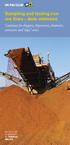 Sampling and testing iron ore fines Aide-mémoire UK P&I CLUB IS MANAGED BY THOMAS MILLER These notes are for the guidance of, shippers, shipowners, charterers, surveyors, ships crews and other parties
Examiners will give higher marks where evidence of wider reading /deeper understanding is demonstrated.
 ICS Examiners Report SHIP OPERATIONS AND MANAGEMENT (SOM) 2012 General Allow sufficient time to answer FIVE questions. A single answer cannot earn more than 20 marks. Read the question carefully, satisfy
Testimony of Matthew Paxton President, Shipbuilders Council of America
 Testimony of Matthew Paxton President, Shipbuilders Council of America Before the Subcommittee on Coast Guard and Maritime Transportation House Transportation and Infrastructure Committee Examining the
GUIDELINES FOR VOLUNTARY USE OF THE SHIP ENERGY EFFICIENCY OPERATIONAL INDICATOR (EEOI)
 INTERNATIONAL MARITIME ORGANIZATION 4 ALBERT EMBANKMENT LONDON SE1 7SR Telephone: 020 7735 7611 Fax: 020 7587 3210 IMO E Ref. T5/1.01 MEPC.1/Circ.684 17 August 2009 GUIDELINES FOR VOLUNTARY USE OF THE
Rating when used as a weight carrying hitch without spring bars:
 BOLT-TOGETHER WEIGHT DISTRIBUTING HITCH SYSTEM Rating when used as a weight distributing hitch with spring bars: Part Number 48051 4805 48053 48054 Max Tongue Weight 550 Ibs. 750 Ibs. 1000 Ibs. 1400 lbs.
REQUIREMENTS RESPECTING THE SECURITY OF OFFSHORE FACILITIES
 REQUIREMENTS RESPECTING THE SECURITY OF OFFSHORE FACILITIES Definitions 1. In these requirements: C-NLOPB means the Canada-Newfoundland and Labrador Offshore Petroleum Board; Chief Safety Officer means
A Contribution to the Analysis of Maritime Accidents with Catastrophic Consequence
 A Contribution to the Analysis of Maritime Accidents with Catastrophic Consequence Lusic Zvonimir M. Sc., Erceg Tonci Faculty of Maritime Studies Split, Croatia Zrinsko-Frankopanska 38, 21000 Split Phone:
-1- GATEWAY TERMINALS INDIA PRIVATE LIMITED Scale Of Rates. 1.1. GTI or Terminal means GATEWAY TERMINAL INDIA PVT. LTD.
 -1- Annex III GATEWAY TERMINALS INDIA PRIVATE LIMITED Scale Of Rates I. Definitions:- 1.1. GTI or Terminal means GATEWAY TERMINAL INDIA PVT. LTD. 1.2. Coastal Vessel shall mean any vessel exclusively employed
STATUTORY INSTRUMENT. No. of 2007. Merchant Shipping (Safe Ship Management Systems) Regulation 2007. ARRANGEMENT OF SECTIONS.
 STATUTORY INSTRUMENT. No. of 2007. Merchant Shipping (Safe Ship Management Systems) Regulation 2007. ARRANGEMENT OF SECTIONS. PART I. INTRODUCTION. 1. Interpretation accident Act approved safe ship management
There is no water, surface tension cracks, nor other environmental conditions present that reduce the stability of the excavation.
 Part 1926 Subpart P Introduction The Occupational Safety and Health Administration (OSHA) issued its first Excavation and Trenching Standard in 1971 to protect workers from excavation hazards. Since then,
Shipping, World Trade and the Reduction of
 Shipping, World Trade and the Reduction of International Chamber of Shipping CO DO P HA 18 United Nations Framework Convention on Climate Change International Maritime Organization UNFCCC Must Support
REVIEW OF STCW PASSENGER SHIP-SPECIFIC SAFETY TRAINING. Proposed Amendments to the STCW Convention passenger ship specific safety training
 E SUB-COMMITTEE ON HUMAN ELEMENT, TRAINING AND WATCHKEEPING 3rd session Agenda item 10 HTW 3/10 30 October 2015 Original: ENGLISH REVIEW OF STCW PASSENGER SHIP-SPECIFIC SAFETY TRAINING Proposed Amendments
CLASSIFICATION SOCIETIES - their key role
 CLASSIFICATION SOCIETIES - their key role Leading the way: dedicated to safe ships and clean seas, IACS Members make a unique contribution to maritime safety and regulation through technical support, compliance
FURTHER TECHNICAL AND OPERATIONAL MEASURES FOR ENHANCING ENERGY EFFICIENCY OF INTERNATIONAL SHIPPING
 MARINE ENVIRONMENT PROTECTION COMMITTEE 67th session Agenda item 5 MEPC 67/5/XX [ ] August 2014 Original: ENGLISH FURTHER TECHNICAL AND OPERATIONAL MEASURES FOR ENHANCING ENERGY EFFICIENCY OF INTERNATIONAL
Accident Report. Injury Pacific Way. 26 November 2005 Class A
 Accident Report Injury Pacific Way 26 November 2005 Class A SUMMARY Pacific Way Injury A crewmember suffered an injury to his wrist when the handle connected to the manually powered windlass that he was
GUIDELINES ON EARLY ASSESSMENT OF HULL DAMAGE AND POSSIBLE NEED FOR ABANDONMENT OF BULK CARRIERS
 INTERNATIONAL MARITIME ORGANIZATION 4 ALBERT EMBANKMENT LONDON SE1 7SR Telephone: 020 7735 7611 Fax: 020 7587 3210 IMO E Ref. T2-OSS/2.7.1 MSC/Circ.1143 13 December 2004 GUIDELINES ON EARLY ASSESSMENT
American Fast Freight
 Shipping Terms American Fast Freight Ad Valorem Tax A charge levied on persons or organizations based on the value of transaction. It is normally a given percentage of the price of the retail or manufacturing
Module Title: General Ship Knowledge
 CORK INSTITUTE OF TECHNOLOGY INSTITIÚID TEICNEOLAÍOCHTA CHORCAÍ Semester 1 FINAL Examinations 2009/10 School: National Maritime College of Ireland Programme Title: Bachelor of Science (Ordinary) in Nautical
Removals Glossary. for International Moves. With Bournes, it s personal.
 Removals Glossary for International Moves With Bournes, it s personal. Introduction Firstly on behalf of the moving industry we re going to start with an apology for being so confusing! In compiling the
GUIDELINES AND CRITERIA FOR VESSEL TRAFFIC SERVICES ON INLAND WATERWAYS (VTS Guidelines 2006)
 GUIDELINES AND CRITERIA FOR VESSEL TRAFFIC SERVICES ON INLAND WATERWAYS (VTS Guidelines 2006) 1. INTRODUCTION 1.1 These Guidelines are compatible with SOLAS regulation V/8-2 and IMO Assembly Resolution
Walking and Working Surface Checklist:
 Walking and Working Surfaces Purpose: This information is presented to improve the level of safety in our operations, and to inform you that we will comply with the OSHA Standard 29 CFR 1910.23. Responsibility: