
Have you ever thought of the amazing progress we, as human beings, have made in
|
|
|
- Leslie Phillips
- 9 years ago
- Views:
Transcription
1 Indian 2 INDIAN CULTURE Have you ever thought of the amazing progress we, as human beings, have made in various spheres of life, be it language, literature, art and architecture, science or religion? Have you ever wondered how all this has been possible? This happened because, we did not have to make a fresh beginning each time, but were able to make use of and build on the work of past generations. You have never had to bother about having to make your own script or creating a new language system for yourself. These are already given to you which you enjoy as a member of society. Then you build on it by making your contribution or addition which further becomes an asset for the coming generations. This is a continuous and never-ending process. It is a precious possession unique to human beings and is known as culture. is a way of life. You, your family has a culture and so does your region and your country. You may be curious to know about the uniqueness of Indian culture and find out its distinct characteristics. In this unit we will understand how Indian culture is unique and what are its characteristics. OBJECTIVES After reading this lesson you will be able to: describe the distinctive features of Indian culture; identify the central points and uniqueness of Indian culture; discuss the importance of spirituality in Indian culture; explain the points of diversity and underlying unity in it; and trace the process of infusion into and integration of elements from other cultures in Indian culture. 9

2 2.1 CHARACTERISTICS OF INDIAN CULTURE Indian Indian culture is as many sided as life. It includes intellectual and social aspects of any human being. It also takes account of the aesthetic instinct as well as the spiritual impulses of human being. It has also, in effect, an appeal to the subconscious as a force making for the formation of character. Look at the map of India and you see India is a vast country with a lot of diversity in her physical and social environment. We see people around us speaking different languages, having different religions and practising different rituals. You can also see these diversities in their food habits and dress patterns. Besides, look at the myriad forms of dance and music in our country. But within all these diversities there is an underlying unity which acts as a cementing force. The intermingling of people has been steadily taking place in India over centuries. A number of people of different racial stock, ethnic backgrounds and religious beliefs have settled down here. Let us not forget that the composite and dynamic character of Indian culture is a result of the rich contributions of all these diverse cultural groups over a long period of time. The distinctive features of Indian culture and its uniqueness are the precious possession of all Indians Continuity and Change Many great cultures had developed in different countries and regions of the world. Many of them have perished or have been replaced by other cultures. However Indian culture has had an enduring character. Despite major changes and upheavals significant threads of continuity can be traced throughout the course of Indian history right upto the present day. You may have read about the Harappan civilization which flourished in the Indian subcontinent over 4500 years ago. Archaeologists have found evidences to show that cultures existed here even before the matured phase of the Harappan civilization. This tells us that we have a very long history behind us. And yet what is amazing is that even today the pattern of a house in an Indian village is not very different from that of a Harappan house. Some aspects of Harappan culture are still practised, such as, the worshipping of Mother Goddess and Pashupati. Similarly, Vedic, Buddhist, Jain and many other traditions continue to be followed even today. At the same time one should not lose sight of the changes as are evident in the multistoried buildings in the metropolitan cities like Mumbai and Delhi, quite unlike the Harappan houses that had only one storey. The point to be noted here is that continuity and change in our civilization has gone hand in hand. In fact, a remarkable feature of Indian culture is that along with continuity it has kept on changing, whereas the basic spirit of our culture continued. It has kept on discarding what was becoming irrelevant in the modern age. In our long history, there have been periods of ups and downs. As a result, movements have grown and reforms brought about. The reform movements in the Vedic religion brought about by Jainism and Buddhism in sixth century BC and the religious and social awakening in the eighteenth and nineteenth centuries in 10

3 Indian modern India are a few examples when revolutionary changes were brought about in Indian thought and practices. Yet the thread of basic philosophy of Indian culture continued and still persists. Thus a process of continuity and change has always been a feature of Indian culture. This shows the dynamic character of our culture Variety and Unity Indian culture, over the last three mellenia, has successfully, but quietly, observed the best assimilable parts from other religions and cultures, from time to time and integated them into itself. Indeed few cultures in the world have such variety as the Indian culture. You may perhaps wonder why the people of Kerala use coconut oil while the people of Uttar Pradesh use mustard oil for cooking. This is because Kerala is a coastal state and coconut grows here in plenty. While Uttar Pradesh is a plain area which is favourable for the growth of mustard. What is the similarity in the Bhangra dance of Punjab or the Pongal of Tamil Nadu or the Bihu dance of Assam? Both are celebrated after a rich harvest of crops. Have you noticed the different languages that we speak like Bengali, Tamil, Gujarati or Oriya? India is the home of many forms of dance and music which we normally use for festivals and social functions like marriages or the birth of a child. A large number of languages and dialects are spoken in our country which has led to the growth of a great variety of literature. People belonging to eight great religions of the world co-exist here in a harmonious manner. Do you know that India is home to many religions of the world like Jainism, Buddhism, Sikhism and of course Hinduism. Numerous styles of architecture, sculpture and painting have developed here. Different styles of music and dance, both folk and classical, exist in the country. So also are numerous festivals and customs. This wide variety has led to the making of Indian culture both composite one and rich and beautiful at the same time. Why is there so much variety in our culture? There are many reasons for this. The vastness of the country and variation in its physical and climatic features is an obvious reason for the variety. The second important reason for the variety in our culture is the intermingling among various ethnic groups. Since time immemorial, people from far and near have been coming and settling here. We find people belonging to different racial stocks like the Proto-Australoids, the Negroids and the Mongoloids living in India. Various ethnic groups like Iranians, Greeks, Kushanas, Shakas, Hunas, Arabs, Turks, Mughals and Europeans also came to India, settled here and intermixed with the local population. The people belonging to other cultures brought their cultural habits, thoughts and ideas, which got amalgamated into the existing culture. You will be surprised to know that it was only around second century BC that stitched clothes such as salwars, kurtas, topees, etc. were brought to India, by the Kushanas, Shakas and Parthians. Prior to that Indians wore clothes which were unstitched. The latest is the introduction of shirts, trousers, skirts, etc. which were brought by the Europeans in 11

4 Indian the eighteenth century. India through the ages has shown a remarkable capacity for assimilation of ideas. This has contributed to the variety and richness of our culture. Along with contacts with outside cultures, cultural exchange between different regions of India has also continued. The Chikan work of Lucknow, Phulkari embrodery of Punjab, Kantha embroidery of Bengal, Patola of Orissa show a distinct regional flavour. Although the centres in the South, North, East and West of India have their characteristic cultures, yet these did not develop in absolute isolation. Inspite of physical barriers, Indians used to travel from one part of the country to another for trade or pilgrimage. Some regions were joined together through conquests or by alliance. As a result, people transmitted cultural habits and thoughts from one part of the country to the other. Military campaigns too took people from one place to another. This helped in exchanging ideas. Such contacts have led to the development of commonness in Indian culture, which has been maintained throughout our history. Another unifying factor is climate. Despite geographical diversity and climatic variations India experiences an inherent unity. The system of monsoons is the most important component of the Indian climatic pattern and this gives unity to the whole country. The coming of the monsoon has ensured that agriculture remains the main occupation of the people of India. On the other hand the differences in physical features have affected the food habits, dress, houses and economic activities of people leading to the formation of social, economic and political institutions. These factors in turn influenced the thinking and philosophy of the people. The variety in physical features and climate of India has thus led to the development of a variety of cultures in different regions. The typical features of different regions have given some identity to these cultures. The composite nature of our culture is reflected in our music, dance forms, drama and art forms like paintings, sculpture and architecture as well. Our literature in different languages also reflects this composite nature. Unity in diversity is reflected in our political forms as well. During the early Vedic period, society was pastoral, that is, people used to move from place to place in search of pastures. But as the these people started practising agriculture, they settled down. This settled life led to community development and growth of towns which needed rules and regulations. Thus emerged a political organisation. This included the sabhas and samitis which were political bodies through which people participated in governance. In course of time, the concept of rashtra emerged and possession of territory became the new measure of power. In some places, republics came up. The period from sixth to fourth century BC is known as the age of mahajanapadas in India. In these kingdoms kings had more powers. Subsequently large empires were also established with emperors exercising absolute powers. You may be aware of ancient rulers such as Ashoka, Samudragupta and Harshavardhana. The Mughals also established a vast empire in India. The British established themselves in India and in l858, India became a part of the British Empire. However in 1947, we were able to gain our freedom after a long struggle. Today we are a sovereign, socialist, secular and democratic republic and a uniform system of government prevails over the length and breadth of the country. 12

5 Indian INTEXT QUESTIONS Name the state where Bhangra is a popular dance form. 2. What is the dance form of Assam known as? 3. Who brought salwars, kurtas, topees etc. to India around second century BC? 4. Which region is famous for Patola? Secular Outlook The secular character of Indian culture is a result of the intermingling of people belonging to diverse cultural groups over a long period of time. There have been instances of occasional conflicts here and there, but by and large, people have lived together peacefully for centuries. The popular cultural traditions of India are the best examples of such cultural synthesis in which a large number of people belonging to different religious groups come together. You are aware that there is a great variety of thoughts and habits in our country. Among such a variety, dominance of one particular thought is not possible. You will recall that Hindus, Muslims, Christians, Sikhs, Buddhists, Jains, Parsees and Jews live in India. The constitution declares India to be a secular country. Everyone is free to profess, practise and propagate any religion of his/her own choice. The state has no religion of its own and all religions are treated equally by the state. No one is to be discriminated on the basis of religion. The people have, to a large extent, developed a broad outlook and they believe in the concept of live and let others live. Right to freedom of religion ensures secular nature of our polity. In the Western context development of secularism meant complete separation of the church and the state. In India secularism is taken as a more positive concept to cope with the complex social structure in the country with a view to protecting the interests of all, particularly the minorities Universalism The concept of coexistence has not been confined to the geographical and political boundaries of the country only. India has a universal outlook and it has been promoting the message of peace and harmony to the entire world. India has been raising a strong voice against racialism and colonialism. It has protested against the formation of power blocks in the world. In fact India became one of the founder members of the non-aligned movement. India is committed to the development of other underdeveloped nations. In this manner, India has been discharging her responsibilities as a part of the world fraternity and has been contributing to the progress of the world. 13

6 Indian It has to be remembered that the subcontinent of India has been one cultural unit throughout the ages, cutting across political boundaries Materialistic and Spiritualistic is spiritual development of a race or nation in the field of mind, interests, conduct, thought, art, skills and civilization. India is popularly known to be a land of spirituality particularly to the West. However, Indian history from ancient times to present day shows that the developments of materialistic and non-materialistic culture have been going on alongside. You will recall that the Harappan civilization was an urban one. It had a systematic town planning where roads cut each other at right angles. They had a profound knowledge of mathematics, weights and measures. They had built their towns in a scientific manner and had an elaborate drainage system. The Harappans had external trade and travelled across the seas to trade with the Sumerians. Excellent books on medicines, planets, stars, and plants were written. Discoveries of theories-like earth rotates around the sun or earth is round were made by Indians long before Europe accepted them. Similarly in the area of mathematics and in the field of medicine and other sciences India s achievements in ancient times have been remarkable. There was no opposition or resistance by religious or other thoughts in pursuing such knowledge. In philosophical thought even atheistic thinking developed and grew in India. You may be aware that Jainism and Buddhism are silent about the existence of God. What does all this tell us? Indeed, that Indian culture has been both materialistic and non-materialistic or spiritualistic. The culture of India is the living expression of the simplicity and profoundity of her people. 2.2 CULTURAL IDENTITY, RELIGION, REGION AND ETHNICITY Our cultural identities are based on various factors such as religion and region. As a result each Indian possesses multiple identities. Which of these identities asserts itself at a certain point of time and prevails over the others, depends on the political, social or economic context in which the person finds himself/herself. Thus each person may have some things in common with another, but may be vastly different in some other aspects. For example, except belief, forms of worship and rituals, there may be little that is common among those who follow a particular faith from the point of view of the whole country. Even in the forms of worship and rituals there are sectorian and regional differences. 14

7 Indian Thus culturally, Hindus are not all similar, nor are all the Muslims. Brahmins in Tamil Nadu are quite different from their counterparts in Kashmir. Similarly, Muslims in Kerala and Uttar Pradesh are dissimilar in several aspects of their culture. Regional identities are more real. People of different religions and jatis may have common regional cultural traits like language, food, dress, values and also the worldview. In Bengal, both Hindus and Muslims take pride in being Bengalis. Elsewhere one finds Hindus, Christians and Muslims sharing several elements of regional culture. In principle, different religious groups owe their allegiance to different religious doctrines. For instance the Vedas and Shastras may be sources of inspiration for Hindus, Koran and Hadees for Muslims, and the Bible for Christians. However, at the level of rituals and life styles there is a lot of intermingling among followers of different religions. Ethnic culture is strong among the tribal groups. For example, in the small state of Nagaland, there are more than a dozen tribes and they differ from each other in their dress, speech and beliefs. Bastar district of Chhattisgarh has several groups claiming different ethnic origins. 2.3 CULTURAL INFLUENCES In the modern context, there are at least three significant influences on our culture. They are westernisation, emergent national cultural styles and popular culture. Before independence some Western modes were adopted by the aristocracy and members of the civil services. The influence, over the years, has spread to the middle classes and to a small extent, to the villages as well. The growing demand for English medium schools in the villages is a proof of this statement. During the struggle for freedom a new style emerged. This became a national style. For example the Gandhi cap and khadi may now be only ceremonial and a symbol, but it contributed to the unity of the country and provided commonness to culture. Popular culture which is the product of mass media is another unifying factor. The impact of films has been tremendous. Radio and television also reshape images and attitudes. Their hold on us is undeniable. Modern media has promoted issues that are of both traditional and public interest. INTEXT QUESTIONS Give two examples of people who came to India from outside and settled here. 2. Which component of climate gives unity to India? 3. Name the civilization with which the Harappans were known to have had trade relations across the seas. 15

8 Indian WHAT YOU HAVE LEARNT The meaning of culture is very wide and comprehensive. It has been defined as a sum total of integrated learned behaviour. It connotes a way of life of the people living in a society. constitutes knowledge, belief, arts, morals, law, customs and any other capabilities and habits acquired by humans as members of society. Due to its adaptability and comprehensiveness, Indian culture has survived through the ages. Unity in diversity is one of the major characteristics of Indian culture which makes it unique. A synthesis of various cultures came about through the ages to give shape to what is recognised as Indian culture today. Spirituality and value based life style is the core of Indian culture but it has a scientific temperament too. TERMINAL EXERCISE 1. What are the different components of culture? 2. Give the meaning of material and non-material culture. 3. Define the secular character of Indian culture. 4. Describe the distinctive features of Indian culture. 5. Write short notes on the following: a. Cultural synthesis in India b. Spirituality c. Adapatability as a characteristic of Indian culture 6. Explain in detail unity in diversity in the context of Indian culture Punjab ANSWERS TO INTEXT QUESTIONS 16

9 Indian 2. Bihu 3. Kushans, Shakas and Parthians 4. Orissa Kushans and Mughals 2. Monsoons 3. Sumerian 17

3. The Buddha followed some Hindu ideas and changed others, but he did not consider himself to be a god.
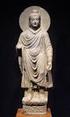 True / False Indicate whether the statement is true or false. 1. Like the ancient Greeks, Indian astronomers proposed the theory that the Earth was round and revolved around the sun. 2. During his time
Understanding Secularism. Chapter 2
 Chapter 2 Understanding Secularism Imagine yourself as a Hindu or Muslim living in a part of the United States of America where Christian fundamentalism is very powerful. Suppose that despite being a US
Jainism Jainism also began in India; religion teaches ahimsa nonviolence - Jains believe all living things have souls and should not be hurt
 Lesson 3 Buddhism and India s Golden Age MAIN IDEAS Belief System A teacher called the Buddha developed a new religion that focused on helping people to escape suffering. Government The Maurya rulers united
Religious education. Programme of study (non-statutory) for key stage 4. (This is an extract from The National Curriculum 2007)
 Religious education Programme of study (non-statutory) for key stage 4 and years 12 and 13 (This is an extract from The National Curriculum 2007) Crown copyright 2007 Qualifications and Curriculum Authority
Religious education. Programme of study (non-statutory) for key stage 3. (This is an extract from The National Curriculum 2007)
 Religious education Programme of study (non-statutory) for key stage 3 and attainment targets (This is an extract from The National Curriculum 2007) Crown copyright 2007 Qualifications and Curriculum Authority
ORIGIN OF THE ARYANS. Argument Against Aryan Migration to the Indian Suncontinent BY K.J. SHARMA
 ORIGIN OF THE ARYANS Argument Against Aryan Migration to the Indian Suncontinent BY K.J. SHARMA Aryan in English is derived from the Sanskrit language, "Ārya" Ārya" " meaning noble, civilized or "honorable.
SOCIAL BACKGROUND OF OFFICERS IN THE INDIAN ADMINISTRATIVE SERVICE SANTOSH GOYAL
 SOCIAL BACKGROUND OF OFFICERS IN THE INDIAN ADMINISTRATIVE SERVICE SANTOSH GOYAL The Indian Administrative Service (IAS) is the highest cadre of the civil services in India and is the successor to the
Unit 01 - Study Questions 1. In what ways did geography and climate affect the development of human society? 2. What were the economic and social
 Unit 01 - Study Questions 1. In what ways did geography and climate affect the development of human society? 2. What were the economic and social results of the agricultural revolution? 3. What are the
I. FAIR PLAY WHERE DOES IT COME FROM? WHAT IS IT?
 I. FAIR PLAY WHERE DOES IT COME FROM? WHAT IS IT? Fair play is a term that is employed in various ways. Although mainly associated with sporting vocabulary, it is also applied to different situations where
The English word Culture is derived from the Latin term cult or cultus meaning
 : An Introduction MODULE - I 1 CULTURE: AN INTRODUCTION The English word is derived from the Latin term cult or cultus meaning tilling, or cultivating or refining and worship. In sum it means cultivating
Devon Agreed Syllabus for Religious Education 2014
 Devon Agreed Syllabus for Religious Education 2014 In collaboration with Torbay and Plymouth Dedication This syllabus is dedicated to the memory of Terence Copley; Professor of Religious Education at the
The Rise and Spread of Islam Study Guide
 The Rise and Spread of Islam Study Guide Terms: Bedouins: Nomadic people of Arabia who eventually became Islamic. Ka aba: Place believed where Abraham had worshipped. When Mohammed prayed there with the
KS 1 Template Examples
 KS 1 Template Examples Key Stage: 2 Panoramic Q2 Is happiness the purpose of life? Example of content to be (Please give three or four areas which could be explored within this unit) Pupils consider a
Ninth Grade History & Social Science World History I
 SEPTEMBER WHI.1 Historical Research and Geographical Analysis *(ongoing throughout year) identify, analyze, and interpret primary and secondary sources use maps, globes, artifacts, pictures identify major
DENSITY OF POPULATION. Figures Map Table/Statements Notes
 7 DENSITY OF POPULATION Figures Map Table/Statements Notes 7 Density of population Experience shows that a very populous city can rarely, if ever, be well governed. To the size of states there is a limit,
This activity will work best with children in kindergarten through fourth grade.
 ACTIVITY SUMMARY Reading Guide, page 1 of 3 During this activity, you and your child will actively read Martin s Big Words, using the suggested reading strategies. WHY Through this activity, your child
Lesson Plan 7 Help Wanted: The Importance of Strong Leaders and Dedicated Supporters
 Live Out Loud is a nonprofit organization committed to connecting LGBTQ students with positive role models from our community. For more information about our resources and programs, visit us online at
INTRODUCTION TO TRADITIONAL MEDIA
 Introduction to 25 Optional Module 7A INTRODUCTION TO TRADITIONAL MEDIA In your earlier lessons, you have learnt a lot about communication, various media forms used for communication as well as the use
Nottingham City and County City SACRE RE Syllabus: Non-statutory exemplification
 TITLE: Religion here and now YEAR GROUP: 5 or 6 Nottingham City and County City SACRE RE Syllabus: Non-statutory exemplification 29/05/2009 Lat Blaylock / Nottingham City and County SACRE / Units of Work
Unit 5: KS2 Key Theme: Religion and the Individual Year 4 Spring Term
 Unit 5: KS2 Key Theme: Religion and the Individual Year 4 Spring Term ABOUT THIS UNIT: Work in this unit will enable children to explore aspects of, Christianity and Islam and to discover what is expected
The Printing Press: A Vehicle for Modernity
 The Printing Press: A Vehicle for Modernity November 3, 2010 Ailsa Lapp COMM345 Assignment #1 Professor: Virginia McKendry Throughout the history of civilization, the invention of printing has been argued
WELCOME TO GOD S FAMILY
 WELCOME TO GOD S FAMILY To all who received him, to those who believed in his name, he gave the right to become children of God children born not of natural descent, nor of human decision or a husband
Study on Interior Design and Architectural Culture. Haoran Yang. Environmental art college, Hebei Academy of Fine Arts, Shijiazhuang, 050700, China
 International Conference on Education Technology and Economic Management (ICETEM 2015) Study on Interior Design and Architectural Culture Haoran Yang Environmental art college, Hebei Academy of Fine Arts,
Urdu pathway structure as part of BA South Asian Studies (4 years) and BA South Asian Studies and... (4 years)
 Urdu pathway structure as part of BA South Asian Studies (4 years) and BA South Asian Studies and... (4 years) Students must take 4 course units each year. If a student passes 4 course units in one language
Community Dialogue Participant s Guide. Lessons from Islamic Spain for Today s World
 Community Dialogue Participant s Guide Many Religions, One Community: Lessons from Islamic Spain for Today s World Many Religions, One Community Guidelines for Interfaith Dialogues Remember the goals of
How to Simplify Your Life
 Life Reference: Matthew 6:24-34 Focus Verse: But seek ye first the kingdom of God, and his righteousness: and all these things shall be added unto you (Matthew 6:33). Stuff! Wonderful stuff everywhere!
AFRICAN KINGDOMS. Ghana. Around AD 800 the rulers of many farming villages united to create the kingdom of Ghana.
 AFRICAN KINGDOMS In Africa, towns soon became part of an important trade network. Gold and salt were the most important products traded. People needed salt in their diets to prevent dehydration. There
History. Programme of study for key stage 3 and attainment target (This is an extract from The National Curriculum 2007)
 History Programme of study for key stage 3 and attainment target (This is an extract from The National Curriculum 2007) Crown copyright 2007 Qualifications and Curriculum Authority 2007 Curriculum aims
National Quali cations 2014
 N X76/7/01 MONDAY, 26 MAY 9:00 AM 10:0 AM National Quali cations 201 Religious, Moral and Philosophical Studies Total marks 60 SECTION 1 WORLD RELIGION 20 marks Attempt ONE Part SECTION 2 MORALITY AND
About the Trust Frequently Asked Questions
 About the Trust Frequently Asked Questions Welcome A very warm welcome from the Tauheedul Education Trust. We are an academy trust based in Blackburn, Lancashire. We run Muslim faith based and non-faith
The Literature of Classical Greece
 The Literature of Classical Greece The golden age of classical Greece lasted from the early fifth to the late fourth century BC, and was concentrated in Asia Minor and the Greek Isles. Although this era
KEY QUESTIONS Lesson 1 - Creation and the Environment
 KEY QUESTIONS Lesson 1 - Creation and the Environment What do you like/dislike about your environment? How would you care for... e.g. a friend, a pet? What makes a person/thing special? What does the Bible
National Quali cations 2015
 N X76/7/11 FRIDAY, 8 MAY 9:00 AM 10:0 AM National Quali cations 201 Religious, Moral and Philosophical Studies Total marks 60 Section 1 World Religion 20 marks Attempt ONE Part Section 2 Morality and Belief
FOLK ART OF INDIA MODULE - 1. Folk Art of India. Notes
 4 FOLK ART OF INDIA India has inherited a pre-aryan culture which is reflected in the folk art. Different religions, sects and beliefs have co-existed throughout Indian traditional life. Cults like Tantra
Teacher s Guide For. Ancient History: The Greek City-State and Democracy
 Teacher s Guide For Ancient History: The Greek City-State and Democracy For grade 7 - College Programs produced by Centre Communications, Inc. for Ambrose Video Publishing, Inc. Executive Producer William
SSWH3 THE STUDENT WILL EXAMINE THE POLITICAL, PHILOSOPHICAL, AND CULTURAL INTERACTION OF CLASSICAL MEDITERRANEAN SOCIETIES FROM 700 BCE TO 400 CE.
 SSWH3 THE STUDENT WILL EXAMINE THE POLITICAL, PHILOSOPHICAL, AND CULTURAL INTERACTION OF CLASSICAL MEDITERRANEAN SOCIETIES FROM 700 BCE TO 400 CE. A. COMPARE THE ORIGINS AND STRUCTURE OF THE GREEK POLIS,
www.discoveryschemeofwork.com
 The Pan Berkshire Agreed Syllabus for Religious Education and Discovery RE www.discoveryschemeofwork.com Copyright of this document is the property of Jan Lever Education Consultancy and Training Ltd.
ASIA THEOLOGICAL ASSOCIATION (INDIA)
 ASIA THEOLOGICAL ASSOCIATION (INDIA) APPROVED MODEL FOR TWO-YEAR DIPLOMA PROGRAMME According to the guidelines provided by the Accreditation Commission, the three year B.Th. degree programme will have
Culture (from the Encarta Encyclopedia)
 Culture (from the Encarta Encyclopedia) 1. Introduction Culture, in anthropology, is the patterns of behavior and thinking that people living in social groups learn, create, and share. Culture distinguishes
Press Note on Poverty Estimates, 2009-10
 Press Note on Poverty Estimates, 2009-10 Government of India Planning Commission March 2012 GOVERNMENT OF INDIA PRESS INFORMATION BUREAU ***** POVERTY ESTIMATES FOR 2009-10 New Delhi, 19 th March, 2012
Authority and Power. What is Power?
 Authority and Power Almost everyone has power over at least some others. To pretend otherwise can be extremely dangerous because it can lead to the abuse of the power we have but refuse to recognise. Jesus
Hobbes, Locke, Montesquieu, and Rousseau on Government
 CONSTITUTIONAL RIGHTS FOUNDATION Bill of Rights in Action 20:2 Hobbes, Locke, Montesquieu, and Rousseau on Government Starting in the 1600s, European philosophers began debating the question of who should
Science and Religion
 1 Science and Religion Scripture: Colossians 1:15-20 By Pastor John H. Noordhof Williamsburg Christian Reformed Church October 21, 2012 Morning Service People of God: Today we will deal with the troubling
Embroidered umbrella in the Tarnetar Fair in Gujarat. Written and Illustrated by ABHISHEIKH
 GUJARAT A JOURNEY THROUGH INDIA Embroidered umbrella in the Tarnetar Fair in Gujarat Written and Illustrated by ABHISHEIKH Gujarat by Abhisheikh Illustrations Abhisheikh Text Pratham Books, 2008 First
UNIVERSAL ADULT FRANCHISE AND THE METHODS OF REPRESENTATION
 17 UNIVERSAL ADULT FRANCHISE AND THE METHODS OF REPRESENTATION I n an earlier lesson, you have studied that the opening words of the Preamble to the Indian Constitution are: We, the people of India. What
Muhammad Became the Prophet of Islam monotheistic, hajj, The Five Pillars of Islam include all of the following except
 World History Chapter 11 The Muslim World (622 1650) Session 1 Rise of Islam How did Muhammad become the prophet of Islam? What are the teachings of Islam? How did Islam help shape the way of life of its
About Armenian Identity (6)
 About Armenian Identity (6) The Turk of the Armenian 23 January 2004 Issue 408 In our age when global and universal values dominate over local values, let alone living one s cultural identity in its real
A-H 106 RENAISSANCE THROUGH MODERN ART. (3) Historical development of Western art and architecture from the fourteenth century through the present.
 # 101 INTRODUCTION TO VISUAL STUDIES. (3) The course introduces students to the concepts and techniques of visual literacy. It explores a full spectrum of man-made visual forms encountered by contemporary
C H A R T E R O F V A L U E S OF C I T I Z E N S H I P AND I N T E G R A T I O N
 C H A R T E R O F V A L U E S OF C I T I Z E N S H I P AND I N T E G R A T I O N SCIENTIFIC COUNCIL - MINISTRY OF INTERIOR OFFICIAL TRANSLATION ITALY AS A COMMUNITY OF PERSONS AND VALUES Italy is one of
Bringing up Muslim Children
 Business Name Bringing up Muslim Children Summary of Cardiff University research project Authors Jonathan Scourfield, Sophie Gilliat-Ray, Asma Khan and Sameh Otri Bringing up Muslim Children How did we
Orphans and Vulnerable Children in India A Broad Overview. Kavitha P. Das, B.D.S., M.P.H.
 Orphans and Vulnerable Children in India A Broad Overview Kavitha P. Das, B.D.S., M.P.H. Background India is the worlds largest democracy with a population of over a billion- 400 million of which are children
Comparative Religion. College of Humanities and Social Sciences
 Comparative Religion College of Humanities and Social Sciences INTRODUCTION The mission of the Department of Comparative Religion is to describe and interpret the developments, worldviews and practices
Studies of Religion I
 2001 HIGHER SCHOOL CERTIFICATE EXAMINATION Studies of Religion I Total marks 0 General Instructions Reading time minutes Working time 1 1 2 hours Write using black or blue pen Write your Centre Number
Chapter 6 Learning Guide Religion
 Chapter 6 Learning Guide Religion Key Issue 1 Where Are Religions Distributed? Pgs. 168-178 1. Define universalizing religion: 2. Define ethnic religion: Universalizing Religions 3. Give the percentage
SCHEHERAZADE LESSON PLAN. Discovering the world of the Arabian Nights fairy tales through the music of Rimsky-Korsakov s Scheherazade
 Content focus: Music Visual Arts Language Arts History/Social Sciences SCHEHERAZADE LESSON PLAN Discovering the world of the Arabian Nights fairy tales through the music of Rimsky-Korsakov s Scheherazade
Religious Studies (Short Course) Revision Religion and Young People
 Religious Studies (Short Course) Revision Religion and Young People How to use this presentation The first part of this presentation (blue headings) will give you brief information, religious viewpoints
- 7. Oracle bones were used a. to practice written Chinese. b. to try to predict the future. p Ch 14 Ancient China section 1
 Name: Class: Date: ID: A p Ch 14 Ancient China section 1 Multiple Choice Identzh the choice that best completes the statement or answers the question. - I. Before the Shang kingdom arose, Chinese civilization
6 th Grade Vocabulary-ALL CAMPUSES
 6 th Grade Vocabulary-ALL CAMPUSES 6.1 History. The student understands that historical events influence contemporary events. (B) analyze the historical background of the United States to evaluate relationships
Affirming Baptism and Forming Faith
 ABFF questions 1 Affirming Baptism and Forming Faith These discussion questions follow the sequence of the Affirming Baptism and Forming Faith document and may require four or more sessions. Facilitators
The Church 02. 1 P a g e
 The Church 02 In the creed, we say that we believe in one, holy, catholic and apostolic Church. These four properties or characteristics were seen as so essential to the nature of the Church that they
HISTORY CLASS : XI THEMES IN WORLD HISTORY. 348 CURRICULUM AND SYLLABUS for Classes XI & XII. Periods - 200 One Paper 3 Hours Marks - 100
 348 CURRICULUM AND SYLLABUS for Classes XI & XII HISTORY CLASS : XI Periods - 200 One Paper 3 Hours Marks - 100 UNITS/THEMES PERIODS MARKS I. Early societies 25 10 I. Roman Empires 50 26 I. Changing Traditions
Religion and Science
 Religion and Science Glossary Cosmology the study of the origins of the universe How did the world come into existence? Theory one Aristotle Taught that the universe has always existed and would always
Acts 11 : 1-18 Sermon
 Acts 11 : 1-18 Sermon Imagine a church being riven apart by different personalities leading different groups each trying to pull it in different directions. Imagine a church whose future is threatened
1. Find a partner or a small team of three or four classmates to work on this lesson.
 Culture Inspiration for this lesson came from ESL Special Collection found at: http://www.literacynet.org/esl/tta5.html. Within that website, there is Building Bridges: A Peace Corps Guide to Cross-Cultural
A Philosophy Of Public Education For Prince Edward Island Schools
 A Philosophy Of Public Education For Prince Edward Island Schools Purpose The purpose of the Prince Edward Island public education system is to provide for the development of children so that each may
Make a list of qualities which a good leader must have.
 Make a list of qualities which a good leader must have. Are these examples of good or bad leaders? 1. David Beckham 2. Hitler 3. Martin Luther King 4. Jesus Christ Sikhism Sikhism is quite a new religion.
HOW TO WRITE A DYNAMITE COMPARE AND CONTRAST AP ESSAY Remember :
 HOW TO WRITE A DYNAMITE COMPARE AND CONTRAST AP ESSAY Remember : 1. Introduction should be no longer than 2-3 sentences. 2. Thesis must be clear, analytical (i.e.,complex - arguable, tenable and comprehensive
Web Edition: PROVISIONAL POPULATION TOTALS. Chapter 5. Census of India 2001 Series 1, India, Paper 1 of 2001. Chapter 5
 Web Edition: PROVISIONAL POPULATION TOTALS Chapter 5 Census of India 2001 Series 1, India, Paper 1 of 2001 Chapter 5 Density of Population 1 D e n s i t y o f P o p u l a t i o n One of the important indices
The difference between United States of America and United Kingdom
 The difference between United States of America and United Kingdom Flags Surface The United States of America (commonly abbreviated to the United States, the U.S., the, America, and the States) is a federal
RUSTENBURG HIGH SCHOOL FOR GIRLS. RELIGION POLICY February 2009
 RUSTENBURG HIGH SCHOOL FOR GIRLS RELIGION POLICY February 2009 PREAMBLE Rustenburg High School for Girls recognises the particular value of the rich and diverse religious heritage of our school community.
The Arts and Architecture
 Lesson 4 The Legacy of Greece MAIN IDEAS Culture Greek art and architecture introduced new styles and concepts that set standards for generations of artists around the world. Culture The Greek love of
Distribution of Population by Religions
 Drop-in-Article on Census - No.4 Distribution of Population by Religions Religious profile of the populace is an important socio-cultural and demographic feature noticeable from the first Census in 1872
A CHARTER OF EUROPEAN IDENTITY. Foreword
 A CHARTER OF EUROPEAN IDENTITY 28 October 1995 Foreword In a speech to the European Parliament on March 8th, 1994, the poet Václav Havel, President of the Czech Republic, indicated the need for a Charter
Greek Tragedy The Sixth Century BCE
 Introduction: The Sixth Century BCE, or the End of the Pre Classical Age Theatron: Performance Space Actors and Acting in Greek Tragedy Conclusion: Euripides Orestes, or Why the Greeks Went to the Theatre
Fourth Grade Social Studies Content Standards and Objectives
 Fourth Grade Social Studies Content Standards and Objectives Standard 1: Citizenship characterize and good citizenship by building social networks of reciprocity and trustworthiness (Civic Dispositions).
Fundamentals Explained
 Fundamentals Explained Purpose, values and method of Scouting Item Code FS140099 July 13 Edition no 2 (103297) 0845 300 1818 Fundamentals Explained This document contains detailed information on Fundamentals
Vision IAS www.visionias.cfsites.org www.visionias.wordpress.com PAPER II A: INTRODUCING INDIAN SOCIETY
 Vision IAS www.visionias.cfsites.org www.visionias.wordpress.com IAS SOCIOLOGY (MAINS) Questions Pattern & Trends Analysis PAPER II A: INTRODUCING INDIAN SOCIETY 1. Explain the significance of empirical
Shinnyo-En at a glance
 Shinnyo-En at a glance What is Shinnyo-En? Shinnyo-En is an independent Buddhist order, which belongs to the Mahayana school of Buddhism in Japan. The complex Buddhist term Shinnyo ( reality ) designates
LILLIAN PITAWANAKWAT LESSON PLAN 2006 All Rights Reserved 4D Interactive Inc. 416-530-2752 1
 Elder Lillian Pitawanakwat Nation Ojibwe/Potawotami Lesson Plan Grade Level Junior (Grades 1-6) Time Required 3 4 hours Subject Strand Links Geography Natural Science Astronomy Traditional Teachings The
Growth and Development of World Religions
 Growth and Development of World Religions Lesson Abstract A world religion unites people of different cultural traditions and languages and is portable in that adherents are not bound or tied to one particular
Year 2 History: Ancient Egypt Resource Pack
 Year 2 History: Ancient Egypt Resource Pack This pack includes the following lessons: Locating Egypt The River Nile Archeology Hieroglyphics Pharaohs Every effort has been made to seek permission for the
Religious Studies Cognates. Christianity This cognate introduces students to historical and contemporary Christianity.
 Religious Studies Cognates Christianity This cognate introduces students to historical and contemporary Christianity. REL 232 History of Christianity REL 101 Introduction to Religion REL 103 One God REL
Ancient Rome Unit Plan Unit Overview Rationale Goals and Essential questions Objectives
 Ancient Rome Unit Plan Name: Laura Johnson Unit Overview This unit will focus on Ancient Rome, the rise of the Roman Republic, the transition of that republic to an empire, and the fall of that empire.
PROPHETIC UTTERANCE AND THE BLACK CHURCH LESSON THREE
 PROPHETIC UTTERANCE AND THE BLACK CHURCH LESSON THREE Dr. Ricky A. Woods Senior Minister First Baptist Church-West Charlotte, NC We now turn our attention toward prophetic preaching as it emerges as the
Four Noble Truths, Eightfold Path, Enlightenment
 The Way of Martial Arts MONTHLY INTERACTIVE LESSONS TO HELP IMPROVE YOUR DAILY LIFE B Y M A S T E R E R I C S B A R G E Lesson 39 Four Noble Truths, Eightfold Path, Enlightenment As you know, all of the
Section 1: You should only answer all the questions on the topic you have studied.
 X265/12/01 NATIONAL QUALIFICATIONS 2015 FRIDAY, 8 MAY 1.00 PM 2.45 PM RELIGIOUS, MORAL AND PHILOSOPHICAL STUDIES HIGHER Paper 1 There are two Sections in this paper: Section 1 Morality in the Modern World
More than nine-in-ten Hispanics identify with a specific religion. That, along with several other measures
 Chapter 2 Religious Practices and Beliefs More than nine-in-ten Hispanics identify with a specific religion. That, along with several other measures of belief and behavior, means that Hispanics as a group
NCSS Theme #1 Lesson Plan: Culture
 NCSS Theme #1 Lesson Plan: Culture Lesson Title: World Religions Lesson Author: Kathryn Yarbrough Key Curriculum Words: Judaism, Christianity, Islam, Buddhism, Hinduism, religion, monotheism, polytheism
DIVERSITY. Harmony, Division and Solution. Diversity means differences or variations or unlikeness. In our modern world,
 DIVERSITY Harmony, Division and Solution Diversity means differences or variations or unlikeness. In our modern world, diversity plays an important role. Present study, diversity has been sorted with many
SUGGESTED LEARNING CONTEXTS
 SUGGESTED LEARNING CONTEXTS Within the broad area of the place of religion in society teachers may choose from one or more o the suggested contexts (this list is not exhaustive): Religion in history e.g.
BSC LRSC NDSCS WSC DSU MISU NDSU UND
 Philosophy & Religion The following matrix indicates those courses deemed transferable among institutions listed across the top of the matrix. The numbers on the matrix represent the number of semester
LAR: Use artefacts, stories and music to learn about religious celebrations.
 LAR=Learning About Religion Key skills grid for Nursery LFR- Learning From Religion questions about religion and culture. Use artefacts, stories and music to learn about important Use artefacts and stories
Dr. B. R. AMBEDKAR OPEN UNIVERSITY. Faculty of Social Sciences B.A. SOCIOLOGY SYLLABUS
 Dr. B. R. AMBEDKAR OPEN UNIVERSITY Faculty of Social Sciences B.A. SOCIOLOGY SYLLABUS SECOND YEAR COURSE - 01: PRINCIPLES OF SOCIOLOGY COURSE - 02: INDIAN SOCIETY THIRD YEAR COURSE - 03: SOCIAL DEMOGRAPHY
SOCIAL STUDIES UNIT OUTLINES FIFTH GRADE
 SOCIAL STUDIES UNIT OUTLINES FIFTH GRADE In fifth grade, students use their understanding of social studies concepts and cause-and-effect relationships to study the development of the United States up
SACRED GROUND: PLURALISM, PREJUDICE, AND THE PROMISE OF AMERICA. By Eboo Patel (Beacon Press, 2012) A BOOK DISCUSSION GUIDE
 SACRED GROUND: PLURALISM, PREJUDICE, AND THE PROMISE OF AMERICA By Eboo Patel (Beacon Press, 2012) A BOOK DISCUSSION GUIDE Created by Interfaith Youth Core PURPOSE OF THIS DISCUSSION GUIDE Interfaith cooperation
Indian Castes Connection to Current Times
 What Is a Caste? Have you ever heard of the American Dream? It refers to the idea that anyone can become anything in the land of opportunity that you can be born into a poor family but grow up to become
ESTIMATES OF MORTALITY INDICATORS
 CHAPTER 4 ESTIMATES OF MORTALITY INDICATORS Mortality is one of the basic components of population change and related data is essential for demographic studies and public health administration. It is the