
Early Canid Domestication: The Farm-Fox Experiment
|
|
|
- Claribel Rich
- 9 years ago
- Views:
Transcription
1 Early Canid Domestication: The Farm-Fox Experiment Foxes bred for tamability in a 40-year experiment exhibit remarkable transformations that suggest an interplay between behavioral genetics and development Lyudmila N. Trut Lyudmila N. Trut is head of the research group at the Institute of Cytology and Genetics of the Siberian Department of the Russian Academy of Sciences, in Novosibirsk. She received her doctoral degree in Her current research interests are the patterns of evolutionary transformations at the early steps of animal domestication. Her research group is developing the problem of domestication as an evolutionary event with the use of experimental models, including the silver fox, the American mink, the river otter and the wild gray rat. Address: Institute of Cytology and Genetics of the Russian Academy of Sciences, Novosibirsk 90, Russia. Internet: [email protected]. 160 American Scientist, Volume 87 When scientists ponder how animals came to be domesticated, they almost inevitably wind up thinking about dogs. The dog was probably the first domestic animal, and it is the one in which domestication has progressed the furthest far enough to turn Canis lupus into Canis familiaris. Evolutionary theorists have long speculated about exactly how dogs association with human beings may have been linked to their divergence from their wild wolf forebears, a topic that anthropologist Darcy Morey has discussed in some detail in the pages of this magazine (July August 1994). As Morey pointed out, debates about the origins of animal domestication tend to focus on the issue of intentionality the extent to which domestication was the result of deliberate human choice. Was domestication actually self-domestication, the colonization of new ecological niches by animals such as wolves? Or did it result from intentional decisions by human beings? How you answer those questions will determine how you understand the morphological and physiological changes that domestication has brought about whether as the results of the pressure of natural selection in a new niche, or as deliberately cultivated advantageous traits. In many ways, though, the question of intentionality is beside the point. Domestication was not a single event but rather a long, complex process. Natural selection and artificial selection may both have operated at different times or even at the same time. For example, even if prehistoric people deliberately set out to domesticate wolves, natural selection would still have been at work. The selective regime may have changed drastically when wolves started living with people, but selective pressure continued regardless of anything Homo sapiens chose to do. Another problem with the debate over intentionality is that it can overshadow other important questions. For example, in becoming domesticated, animals have undergone a host of changes in morphology, physiology and behavior. What do those changes have in common? Do they stem from a single cause, and if so, what is it? In the case of the dog, Morey identifies one common factor as pedomorphosis, the retention of juvenile traits by adults. Those traits include both morphological ones, such as skulls that are unusually broad for their length, and behavioral ones, such as whining, barking and submissiveness all characteristics that wolves outgrow but that dogs do not. Morey considers pedomorphosis in dogs a byproduct of natural selection for earlier sexual maturity and smaller body size, features that, according to evolutionary theory, ought to increase the fitness of animals engaged in colonizing a new ecological niche. The common patterns are not confined to a single species. In a wide range of mammals herbivores and predators, large and small domestication seems to have brought with it strikingly similar changes in appearance and behavior: changes in size, changes in coat color, even changes in the animals reproductive cycles. Our research group at the Institute of Cytology and Genetics in Novosibirsk, Siberia, has spent decades investigating such patterns and other questions of the early evolution of domestic animals. Our work grew out of the interests and ideas of the late director of our institute, the geneticist Dmitry K. Belyaev. Like Morey, Belyaev believed that the patterns of changes observed in domesticated animals resulted from genetic changes that occurred in the course of selection. Belyaev, however, believed that the key factor selected for was not size or reproduction, but behavior specifically amenability to domestication, or tamability. More than any other quality, Belyaev believed, tamability must have determined how well an animal would adapt to life among human beings. Because behavior is rooted in biology, selecting for tameness and against aggression means selecting for physiological changes in the systems that govern the body s hormones and neurochemicals. Those changes, in turn, could have had far-reaching effects on the development of the animals themselves, effects

2 Figure 1. In the late 1950s, the Russian geneticist Dmitry K. Belyaev began a decades-long effort to breed a population of tame foxes. Belyaev, then director of the Institute of Cytology and Genetics of the U.S.S.R. (now Russian) Academy of Sciences in Novosibirsk, Siberia, hoped to show that physical and morphological changes in domestic animals such as dogs could have resulted from selection for a single behavioral trait, friendliness toward people. Fourteen years after his death, the experiment continues, and the results appear to support Belyaev s hypothesis. (All photographs courtesy of the author.) that might well explain why different animals would respond in similar ways when subjected to the same kinds of selective pressures. To test his hypothesis, Belyaev decided to turn back the clock to the point at which animals received the first challenge of domestication. By replaying the process, he would be able to see how changes in behavior, physiology and morphology first came about. Of course, reproducing the ways and means of those ancient transformations, even in the roughest outlines, would be a formidable task. To keep things as clear and simple as possible, Belyaev designed a selective-breeding program to reproduce a single major factor, strong selection pressure for tamability. He chose as his experimental model a species taxonomically close to the dog but never before domesticated: Vulpes vulpes, the silver fox. Belyaev s fox-breeding experiment occupied the last 26 years of his life. Today, 14 years after his death, it is still in progress. Through genetic selection alone, our research group has created a population of tame foxes fundamentally different in temperament and behavior from their wild forebears. In the process we have observed some striking changes in physiology, morphology and behavior, which mirror the changes known in other domestic animals and bear out many of Belyaev s ideas. Belyaev s Hypothesis Belyaev began his experiment in 1959, a time when Soviet genetics was starting to recover from the anti-darwinian ideology of Trofim Lysenko. Belyaev s own career had suffered. In 1948 his commitment to orthodox genetics had cost him his job as head of the Department of Fur Animal Breeding at the Central Research Laboratory of Fur Breeding in Moscow. During the 1950s he continued to conduct genetic re March April 161

3 appearance of dwarf and giant varieties piebald coat color wavy or curly hair rolled tails shortened tails, fewer vertebrae floppy ears changes in reproductive cycle all all sheep, poodles, donkeys, horses, pigs goats, mice, guinea pigs dogs, pigs dogs, cats, sheep dogs, cats, pigs, horses, sheep, goats, cattle all except sheep 162 American Scientist, Volume 87 Figure 2. Early in the process of domestication, Darwin noted long ago, animals often undergo similar morphological and physiological changes. Because behavior is rooted in biology, Belyaev believed that selection for behavior implied selection for physiological characteristics that would have broader effects on the animals development. These effects might explain patterns in the responses of various animals to domestication. search under the guise of studying animal physiology. He moved to Novosibirsk, where he helped found the Siberian Department of the Soviet (now Russian) Academy of Sciences and became the director of the Department s Institute of Cytology and Genetics, a post he held from 1959 until his death in Under his leadership the institute became a center of basic and applied research in both classical genetics and modern molecular genetics. His own work included ground-breaking investigations of evolutionary change in animals under extreme conditions (including domestication) and of the evolutionary roles of factors such as stress, selection for behavioral traits and the environmental photoperiod, or duration of natural daylight. Animal domestication was his lifelong project, and fur bearers were his favorite subjects. Early in the process of domestication, Belyaev noted, most domestic animals had undergone the same basic morphological and physiological changes. Their bodies changed in size and proportions, leading to the appearance of dwarf and giant breeds. The normal pattern of coat color that had evolved as camouflage in the wild altered as well. Many domesticated animals are piebald, completely lacking pigmentation in specific body areas. Hair turned wavy or curly, as it has done in Astrakhan sheep, poodles, domestic donkeys, horses, pigs, goats and even laboratory mice and guinea pigs. Some animals hair also became longer (Angora type) or shorter (rex type). Tails changed, too. Many breeds of dogs and pigs carry their tails curled up in a circle or semicircle. Some dogs, cats and sheep have short tails resulting from a decrease in the number of tail vertebrae. Ears became floppy. As Darwin noted in chapter 1 of On the Origin of Species, not a single domestic animal can be named which has not in some country drooping ears a feature not found in any wild animal except the elephant. Another major evolutionary consequence of domestication is loss of the seasonal rhythm of reproduction. Most wild animals in middle latitudes are genetically programmed to mate once a year, during mating seasons cued by changes in daylight. Domestic animals at the same latitudes, however, now can mate and bear young more than once a year and in any season. Belyaev believed that similarity in the patterns of these traits was the result of selection for amenability to domestication. Behavioral responses, he reasoned, are regulated by a fine balance between neurotransmitters and hormones at the level of the whole organism. The genes that control that balance occupy a high level in the hierarchical system of the genome. Even slight alterations in those regulatory genes can give rise to a wide network of changes in the developmental processes they govern. Thus, selecting animals for behavior may lead to other, far-reaching changes in the animals development. Because mammals from widely different taxonomic groups share similar regulatory mechanisms for hormones and neurochemistry, it is reasonable to believe that selecting them for similar behavior tameness should alter those mechanisms, and the developmental pathways they govern, in similar ways. For Belyaev s hypothesis to make evolutionary sense, two more things must be true. Variations in tamability must be determined at least partly by an animal s genes, and domestication must place that animal under strong selective pressure. We have looked into both questions. In the early 1960s our team studied the patterns and nature of tamability in populations of farm foxes. We cross-bred foxes of different behavior, cross-fostered newborns and even transplanted embryos between donor and host mothers known to react differently to human beings. Our studies showed that about 35 percent of the variations in the foxes defense response to the ex-

4 perimenter are genetically determined. To get some idea of how powerful the selective pressures on those genes might have been, our group has domesticated other animals, including river otters (Lutra lutra) and gray rats (Rattus norvegicus) caught in the wild. Out of 50 otters caught during recent years, only eight of them (16 percent) showing weak defensive behavior made a genetic contribution to the next generation. Among the gray rats, only 14 percent of the wild-caught yielded offspring living to adulthood. If our numbers are typical, it is clear that domestication must place wild animals under extreme stress and severe selective pressure. Figure 3. Piebald coat color is one of the most striking mutations among domestic animals. The pattern is seen frequently in dogs (border collie, top right), pigs, horses and cows. Belyaev s hypothesis predicted that a similar mutation he called Star, seen occasionally in farmed foxes, would occur with increasing frequency in foxes selected for tamability. The photograph above shows a fox in the selected population with the Star mutation. The Experiment In setting up our breeding experiment, Belyaev bypassed that initial trauma. He began with 30 male foxes and 100 vixens, most of them from a commercial fur farm in Estonia. The founding foxes were already tamer than their wild relatives. Foxes had been farmed since the beginning of this century, so the earliest steps of domestication capture, caging and isolation from other wild foxes had already left their marks on our foxes genes and behavior. From the outset, Belyaev selected foxes for tameness and tameness alone, a criterion we have scrupulously followed. Selection is strict; in recent years, typically not more than 4 or 5 percent of male offspring and about 20 percent of female offspring have been allowed to breed. To ensure that their tameness results from genetic selection, we do not train the foxes. Most of them spend their lives in cages and are allowed only brief time dosed contacts with human beings. Pups are caged with their mothers until they are to 2 months old. Then they are caged with their litter mates but without their mothers. At three months, each pup is moved to its own cage. To evaluate the foxes for tameness, we give them a series of tests. When a pup is one month old, an experimenter offers it food from his hand while trying to stroke and handle the pup. The pups are tested twice, once in a cage and once while moving freely with other pups in an enclosure, where they can choose to make contact either with the human experimenter or with another pup. The test is repeated monthly until the pups are six or seven months old. At seven or eight months, when the foxes reach sexual maturity, they are scored for tameness and assigned to one of three classes. The least domesticated foxes, those that flee from experimenters or bite when stroked or handled, are assigned to Class III. (Even Class III foxes are tamer than the calmest farm-bred foxes. Among other things, they allow themselves to be hand fed.) Foxes in Class II let themselves be petted and handled but show no emotionally friendly response to experimenters. Foxes in Class I are friendly toward experimenters, wagging their tails and whining. In the sixth generation bred for tameness we had to add an even higher-scoring category. Members of Class IE, the domesticated elite, are eager to establish human contact, whimpering to attract attention and sniffing and licking experimenters like dogs. They start displaying this kind of behavior before they are one month old. By the tenth generation, 18 percent of fox pups were elite; by the 20th, the figure had reached 35 percent. Today elite foxes make up 70 to 80 percent of our experimentally selected population. Now, 40 years and 45,000 foxes after Belyaev began, our experiment has achieved an array of concrete results. The most obvious of them is a unique population of 100 foxes (at latest count), each of them the product of between 30 and 35 generations of selection. They are unusual animals, docile, eager to please and unmistakably domesticated. When tested in groups in an enclosure, pups compete for atten March April 163

5 Figure 4. In typical silver foxes, such as those in the founding population of Belyaev s breeding experiment, ears are erect, the tail is low slung and the fur is silver-black, save for the tip of the tail. (All drawings of foxes were made from the author s photographs.) 164 American Scientist, Volume 87 tion, snarling fiercely at one another as they seek the favor of their human handler. Over the years several of our domesticated foxes have escaped from the fur farm for days. All of them eventually returned. Probably they would have been unable to survive in the wild. Physical Changes Physically, the foxes differ markedly from their wild relatives. Some of the differences have obvious links to the changes in their social behavior. In dogs, for example, it is well known that the first weeks of life are crucial for forming primary social bonds with human beings. The window of bonding opens when a puppy becomes able to sense and explore its surroundings, and it closes when the pup starts to fear unknown stimuli. According to our studies, nondomesticated fox pups start responding to auditory stimuli on day 16 after birth, and their eyes are completely open by day 18 or 19. On average, our domesticated fox pups respond to sounds two days earlier and open their eyes a day earlier than their nondomesticated cousins. Nondomesticated foxes first show the fear response at 6 weeks of age; domesticated ones show it after 9 weeks or even later. (Dogs show it at 8 to 12 weeks, depending on the breed.) As a result, domesticated pups have more time to become incorporated into a human social environment. Moreover, we have found that the delayed development of the fear response is linked to changes in plasma levels of corticosteroids, hormones concerned with an animal s adaptation to stress. In foxes, the level of corticosteroids rises sharply between the ages of 2 to 4 months and reach adult levels by the age of 8 months. One of our studies found that the more advanced an animal s selection for domesticated behavior was, the later it showed the fear response and the later came the surge in its plasma corticosteroids. Thus, selection for domestication gives rises to changes in the timing of the postnatal development of certain physiological and hormonal mechanisms underlying the formation of social behavior. Other physical changes mirror those in dogs and other domesticated animals. In our foxes, novel traits began to appear in the eighth to tenth selected generations. The first ones we noted were changes in the foxes coat color, chiefly a loss of pigment in certain areas of the body, leading in some cases to a star-shaped pattern on the face similar to that seen in some breeds of dog. Next came traits such as floppy ears and rolled tails similar to those in some breeds of dog. After 15 to 20 generations we noted the appearance of foxes with shorter tails and legs and with underbites or overbites. The novel traits are still fairly rare. Most of them show up in no more than a few animals per 100 to a few per 10,000. Some have been seen in commercial populations, though at levels at least a magnitude lower than we recorded in our domesticated foxes. Alternative Explanations What might have caused these changes in the fox population? Before discussing Belyaev s explanation, we should consider other possibilities. Might rates and patterns of changes observed in foxes be due, for example, to inbreeding? That could be true if enough foxes in Belyaev s founding population carried a recessive mutant gene from the trait along with a dominant normal gene that masked its effects. Such mixed-gene, or heterozygous, foxes would have been hidden carriers, unaffected by the mutation themselves but capable of passing it on to later generations.

6 Figure 5. Foxes in Belyaev s experimental group were selected to breed depending on how they reacted to their human keepers. Vicious foxes (top left) were excluded from the experimental population. Foxes showing slight fear and no viciousness toward humans were used in cross-breeding for the next generation (top right). Their offspring (photograph, bottom) were calm and showed no negative emotional responses to people. As Morey pointed out, inbreeding might well have been rampant during the early steps of dog domestication. But it certainly cannot explain the novel traits we have observed in our foxes, for two reasons. First, we designed the mating system for our experimental fox population to prevent it. Through outbreeding with foxes from commercial fox farms and other standard methods, we have kept the inbreeding coefficients for our fox population between 0.02 and That means that whenever a fox pup with a novel trait has been born into the herd, the probability that it acquired the trait through inbreeding (that is, by inheriting both of its mutant genes from the same ancestor) has varied between only 2 and 7 percent. Second, some of the new traits are not recessive: They are controlled by dominant or incompletely dominant genes. Any fox with one of those genes would have shown its effects; there could have been no hidden carriers in the original population. Another, subtler possibility is that the novelties in our domesticated population are classic by-products of strong selection for a quantitative trait. In genetics, quantitative traits are characteristics that can vary over a range of possibilities; unlike Gregor Mendel s peas, which were either smooth or wrinkly with no middle ground, quantitative traits such as an animal s size, the amount of milk it produces or its overall friendliness toward human beings can be high, low or anywhere in between. What makes selecting for quantitative traits so perilous is that they (or at least the part of them that is genetic) tend to be controlled not by single genes but by complex systems of genes, known as polygenes. Because polygenes are so intricate, anything that tampers with them runs the risk of upsetting other parts of an organism s genetic machinery. In the case of our foxes, a breeding program that alters a polygene might upset the genetic balance in some animals, causing them to show unusual new traits, most of them harmful to the fox. Note that in this argument, it does not matter whether the trait being selected for is tameness or some other quantitative trait. Any breeding program that affects a polygene might have similar effects. The problem with that explanation is that it does not explain why we see the particular mutations we do see. If disrupted polygenes are responsible, then the effects of a selection experiment ought to depend strongly on which mutations already existed in the population. If Belyaev had started with 130 foxes from, say, North America, then their descen March April 165

7 response to sound fear of unknown eyes fully open window of socialization days weeks farmed foxes domesticated foxes dogs 166 American Scientist, Volume 87 Figure 6. Dogs begin forming social bonds with human beings as soon as they can see and hear; they stop bonding once they start showing fear of the unknown. In foxes bred for tamability, the window of bonding opens earlier and closes later than it does in ordinary farmed foxes. dants today would have ended up with a completely different set of novelties. Domesticating a population of wolves, or pigs, or cattle ought to produce novel traits more different still. Yet as Belyaev pointed out, when we look at the changes in other domesticated animals, the most striking things about them are not how diverse they are, but how similar. Different animals, domesticated by different people at different times in different parts of the world, appear to have passed through the same morphological and physiological evolutionary pathways. How can that be? According to Belyaev, the answer is not that domestication selects for a quantitative trait but that it selects for a behavioral one. He considered genetic transformations of behavior to be the key factor entraining other genetic events. Many of the polygenes determining behavior may be regulatory, engaged in stabilizing an organism s early development, or ontogenesis. Ontogenesis is an extremely delicate process. In principle, even slight shifts in the sequence of events could throw it into chaos. Thus the genes that orchestrate those events and keep them on track have a powerful role to play. Which genes are they? Although numerous genes interact to stabilize an organism s development, the lead role belongs to the genes that control the functioning of the neural and endocrine systems. Yet those same genes also govern the systems that control an animal s behavior, including its friendliness or hostility toward human beings. So, in principle, selecting animals for behavioral traits can fundamentally alter the development of an organism. As our breeding program has progressed, we have indeed observed changes in some of the animals neurochemical and neurohormonal mechanisms. For example, we have measured a steady drop in the hormone-producing activity of the foxes adrenal glands. Among several other roles in the body, the adrenal cortex comes into play when an animal has to adapt to stress. It releases hormones such as corticosteroids, which stimulate the body to extract energy from its reserves of fats and proteins. After 12 generations of selective breeding, the basal levels of corticosteroids in the blood plasma of our domesticated foxes had dropped to slightly more than half the level in a control group. After 28 to 30 generations of selection, the level had halved again. The adrenal cortex in our foxes also responds less sharply when the foxes are subjected to emotional stress. Selection has even affected the neurochemistry of our foxes brains. Changes have taken place in the serotonin system, thought to be the leading mediator inhibiting animals aggressive behavior. Compared with a control group, the brains of our domesticated foxes contain higher levels of serotonin; of its major metabolite, 5-oxyindolacetic acid; and of tryptophan hydroxylase, the key enzyme of serotonin synthesis. Serotonin, like other neurotransmitters, is critically involved in shaping an animal s development from its earliest stages. Selection and Development Evidently, then, selecting foxes for domestication may have triggered profound changes in the mechanisms that regulate their development. In particular, most of the novel traits and other changes in the foxes seem to result from shifts in the rates of certain ontogenetic processes in other words, from changes in timing. This fact is clear enough for some of the novelties mentioned above, such as the earlier eye opening and response to noises and the delayed onset of the fear response to unknown stimuli. But it also can explain some of the less obvious ones. Floppy ears, for example, are characteristic of newborn fox pups but may get carried over to adulthood. Even novel coat colors may be attributable to changes in the timing of embryonic development. One of the earliest novel traits we observed in our domesticated foxes was a loss of pigment in parts of the head and body. Belyaev determined that this piebald pattern is governed by a gene that he named Star. Later my colleague Lyudmila Prasolova and I discovered that the Star gene affects the migration rate of melanoblasts, the embryonic precursors of the pig-

8 Figure 7. Changes in the foxes coat color were the first novel traits noted, appearing in the eighth to tenth selected generations. The expression of the traits varied, following classical rules of genetics. In a fox homozygous for the Star gene, large areas of depigmentation similar to those in some dog breeds are seen (top). In addition some foxes displayed the brown mottling seen in some dogs, which appeared as a semirecessive trait. ment cells (melanocytes) that give color to an animal s fur. Melanocytes form in the embryonic fox s neural crest and later move to various parts of the embryo s epidermis. Normally this migration starts around days 28 to 31 of the embryo s development. In foxes that carry even a single copy of the Star gene, however, melanoblasts pass into the potentially depigmented areas of the epidermis two days later, on average. That delay may lead to the death of the tardy melanoblasts, thus altering the pigmentation in ways that give rise to the distinctive Star pattern. One developmental trend to which we have devoted particular attention has to do with the growth of the skull. In 1990 and 1991, after noticing abnormal developments in the skulls and jaws of some of our foxes, we decided to study variations in the animals cranial traits. Of course, changes in the shape of the skull are among the most obvious ways in which dogs differ from wolves. As I mentioned earlier, Morey believes that they are a result of selection (either natural or artificial) for reproductive timing and smaller body size. In our breeding experiment, we have selected foxes only for behavior, not size; if anything, our foxes may be slightly longer, on average, than the ones Belyaev started with 40 years ago. Nevertheless, we found that their skulls have been changing. In our domesticated foxes of both sexes, cranial height and width tended to be smaller, and snouts tended to be shorter and wider, than those of a control group of farmed foxes. Another interesting change is that the cranial morphology of domesticated adult males became somewhat feminized. In farmed foxes, the crania of males tended to be larger in volume than those of females, and various other proportions differed sharply between the sexes. In the domesticated foxes the sexual dimorphism decreased. The differences in volume remained, but in other respects the skulls of males became more like those of females. Analysis of cranial allometry showed that the changes in skull proportions result either from changes in the timing of the first appearance of particular structures or from changes in their growth rates. Because we studied the skulls only of adult foxes, however, we cannot judge whether any of these changes are pedomorphic, as Morey believes they are in dogs. The most significant changes in developmental timing in our foxes may be the smallest ones: those that have to do with reproduction. In the wild, foxes reach sexual maturity when they are about 8 months old. They are strict seasonal breeders, mating once a year in response to changes in the length of the day (in Siberia the mating season runs from late January to late March) and giving birth to litters ranging from one to thirteen pups, with an average of four or five. Natural selection has hard-wired these traits into foxes with little or no genetic variation. Fur farmers have tried for decades to breed foxes that would reproduce more often than annually, but all their attempts have failed. In our experimental fox population, however, some reproductive traits have changed in a correlated manner. The domesticated foxes reach sexual maturity about a month earlier than nondomesticated foxes do, and they give birth to litters that are, on average, one pup larger. The mating season has lengthened. Some females breed out of season, in November December or April May, and a few of them have mated twice a year. Only a very small number of our vixens have shown such 1999 March April 167

9 characteristic animals per 100,000 with trait domesticated population nondomesticated population increase in frequency (percent) depigmentation (Star ) 12, ,646 brown mottling gray hairs floppy ears short tail ,900 tail rolled in circle 9, , American Scientist, Volume 87 Figure 8. Foxes in the domesticated population show an unusually high incidence of certain other changes, including (clockwise from top left) floppy ears, shortened legs and tails, tails curled upward like dogs, and underbites and overbites. The rates of some common aberrations are compared in the table. In addition to the Star depigmentation pattern, the increased incidence of doglike tail characteristics was most marked. unusual behavior, and in 40 years, no offspring of an extraseasonal mating has survived to adulthood. Nevertheless, the striking fact is that, to our knowledge, out-of-season mating has never been previously observed in foxes experiencing a natural photoperiod. Lessons Learned Forty years into our unique lifelong experiment, we believe that Dmitry Belyaev would be pleased with its progress. By intense selective breeding, we have compressed into a few decades an ancient process that originally unfolded over thousands of years. Before our eyes, the Beast has turned into Beauty, as the aggressive behavior of our herd s wild progenitors entirely disappeared. We have watched new morphological traits emerge, a process previously known only from archaeological evidence. Now we know that these changes can burst into a population early in domestication, triggered by the stresses of captivity, and that many of them result from changes in the timing of developmental processes. In some cases the changes in timing, such as earlier sexual maturity or retarded growth of somatic characters, resemble pedomorphosis. Some long-standing puzzles remain. We believed at the start that foxes could be made to reproduce twice a year and all year round, like dogs. We would like to understand why this has turned out not to be quite so. We are also curious about how the vocal repertoire of foxes changes under domestication. Some of the calls

10 of our adult foxes resemble those of dogs and, like those of dogs, appear to be holdovers from puppyhood, but only further study will reveal the details. The biggest unanswered question is just how much further our selective-breeding experiment can go. The domestic fox is not a domestic dog, but we believe that it has the genetic potential to become more and more doglike. We can continue to increase that potential through further breeding, but the foxes will realize it fully only through close contact with human beings. Over the years, other investigators and I have raised several fox pups in domestic conditions, either in the laboratory or at home as pets. They have shown themselves to be good-tempered creatures, as devoted as dogs but as independent as cats, capable of forming deep-rooted pair bonds with human beings mutual bonds, as those of us who work with them know. If our experiment should continue, and if fox pups could be raised and trained the way dog puppies are now, there is no telling what sort of animal they might one day become. Whether that will happen remains to be seen. For the first time in 40 years, the future of our domestication experiment is in doubt, jeopardized by the continuing crisis of the Russian economy. In 1996 the population of our breeding herd stood at 700. Last year, with no funds to feed the foxes or to pay the salaries of our staff, we had to cut the number to 100. Earlier we were able to cover most of our expenses by selling the pelts of the foxes culled from the breeding herd. Now that source of revenue has all but dried up, leaving us increasingly dependent on outside funding at a time when shrinking budgets and changes in the grant-awarding system in Russia are making long-term experiments such as ours harder and harder to sustain. Like many other enterprises in our country, we are becoming more entrepreneurial. Recently we have sold some of our foxes to Scandinavian fur breeders, who have been pressured by animal-rights groups to develop animals that do not suffer stress in captivity. We also plan to market pups as house pets, a commercial venture that should lead to some interesting, if informal, experiments in its own right. Many avenues of both applied and basic research remain for us to pursue, provided we save our unique fox population. Acknowledgments This article is dedicated to the memory of Dmitry K. Belyaev. The research was supported by grants RBD000 and RBD300 from the International Scientific Funds, grants and from the Russian Fund of Fundamental Research, and grant 1757 of the Russian University Fund. The author expresses her gratitude to Anna Fadeeva for translation of the manuscript from Russian into English. She is also grateful to Irina Plysnina for Figure 9. Forty years into the experiment, between 70 and 80 percent of the foxes bred for tameness are members of the human-friendly domesticated elite. When raised as pets, they are devoted, affectionate and capable of forming strong social bonds with people (here, with technical assistant Marina Nurgalieva). The foxes seek out human contact and lick experimenters hands and faces. The friendly behavior is evident before the fox pups are a month old. help during preparation of the manuscript and to Yekaterina Omelchenko for technical assistance. Bibliography Belyaev, D. K Domestication of animals. Science Journal (U.K.) 5: Belyaev, D. K Destabilizing selection as a factor in domestication. The Journal of Heredity 70: Belyaev, D. K., A. O. Ruvinsky and L. N. Trut Inherited activation-inactivation of the star gene in foxes. The Journal of Heredity 72: Belyaev, D. K., and L. N. Trut Accelerating evolution. Science in the USSR 5:24 29, Falconer, D. S Introduction to Quantitative Genetics. New York: Longman. Logvinenko, N. S., P. M. Krass, L. N. Trut, L. N. Ivanova and D. K. Belyaev Genetics and phenogenetics of hormonal characteristics of animals. V. Influence of domestication on ontogenesis of estrogen- and progesterone-secreting functions of ovaries and adrenals in silver fox females. Genetica 15: (in Russian). Morey, D. F The early evolution of the domestic dog. American Scientist 82: Raff, R. A., and T. C. Kaufman Embryos, Genes and Evolution. New York: Macmillan Publishing Company. Scott, J. P., and J. L. Fuller Genetics and the Social Behavior of the Dog. Chicago: University of Chicago Press. Trut, L. N The variable rates of evolution transformations and their parallelism in terms of destabilizing selection. Journal of Animal Breeding and Genetics 105: Trut, L. N Sex ratio in silver foxes: effects of domestication and the star gene. Theoretical and Applied Genetics 92: Wayne, R. K Molecular evolution of the dog family. Trends in Genetics 9: Zeuner, F. T Domestication of animals. In A History of Technology, Volume I, ed. C. Singer, E. J. Holmyard, A. R. Hall and T. I. Williams. Oxford: Oxford University Press. Links to Internet resources for further exploration of Early Canid Domestication: The Farm-Fox Experiment are available on the American Scientist Web site: amsci/articles/ articles99/trut.html 1999 March April 169

Genetics for the Novice
 Genetics for the Novice by Carol Barbee Wait! Don't leave yet. I know that for many breeders any article with the word genetics in the title causes an immediate negative reaction. Either they quickly turn
Heredity. Sarah crosses a homozygous white flower and a homozygous purple flower. The cross results in all purple flowers.
 Heredity 1. Sarah is doing an experiment on pea plants. She is studying the color of the pea plants. Sarah has noticed that many pea plants have purple flowers and many have white flowers. Sarah crosses
Practice Questions 1: Evolution
 Practice Questions 1: Evolution 1. Which concept is best illustrated in the flowchart below? A. natural selection B. genetic manipulation C. dynamic equilibrium D. material cycles 2. The diagram below
A trait is a variation of a particular character (e.g. color, height). Traits are passed from parents to offspring through genes.
 1 Biology Chapter 10 Study Guide Trait A trait is a variation of a particular character (e.g. color, height). Traits are passed from parents to offspring through genes. Genes Genes are located on chromosomes
Dogs and More Dogs. NOVA presents the story of dogs and how they evolved into the most diverse mammals on the planet.
 Program Overview NOVA presents the story of dogs and how they evolved into the most diverse mammals on the planet. The program: discusses the evolution and remarkable diversity of dogs. notes that there
Biology 1406 - Notes for exam 5 - Population genetics Ch 13, 14, 15
 Biology 1406 - Notes for exam 5 - Population genetics Ch 13, 14, 15 Species - group of individuals that are capable of interbreeding and producing fertile offspring; genetically similar 13.7, 14.2 Population
The Wolf Is a Dog Is a Wolf Or Is It? The Wild Wolf and the Domestic Dog
 The Wolf Is a Dog Is a Wolf Or Is It? The Wild Wolf and the Domestic Dog Teacher Notes Grade: 5 and up Subject: Language Arts Duration: Several days of observation of a family dog or that of friends. Much
Terms: The following terms are presented in this lesson (shown in bold italics and on PowerPoint Slides 2 and 3):
 Unit B: Understanding Animal Reproduction Lesson 4: Understanding Genetics Student Learning Objectives: Instruction in this lesson should result in students achieving the following objectives: 1. Explain
Mendelian and Non-Mendelian Heredity Grade Ten
 Ohio Standards Connection: Life Sciences Benchmark C Explain the genetic mechanisms and molecular basis of inheritance. Indicator 6 Explain that a unit of hereditary information is called a gene, and genes
Summary. 16 1 Genes and Variation. 16 2 Evolution as Genetic Change. Name Class Date
 Chapter 16 Summary Evolution of Populations 16 1 Genes and Variation Darwin s original ideas can now be understood in genetic terms. Beginning with variation, we now know that traits are controlled by
7A The Origin of Modern Genetics
 Life Science Chapter 7 Genetics of Organisms 7A The Origin of Modern Genetics Genetics the study of inheritance (the study of how traits are inherited through the interactions of alleles) Heredity: the
Heredity - Patterns of Inheritance
 Heredity - Patterns of Inheritance Genes and Alleles A. Genes 1. A sequence of nucleotides that codes for a special functional product a. Transfer RNA b. Enzyme c. Structural protein d. Pigments 2. Genes
GCSE BITESIZE Examinations
 GCSE BITESIZE Examinations General Certificate of Secondary Education AQA SCIENCE A BLY1B Unit Biology B1b (Evolution and Environment) AQA BIOLOGY Unit Biology B1b (Evolution and Environment) FOUNDATION
The Story of Human Evolution Part 1: From ape-like ancestors to modern humans
 The Story of Human Evolution Part 1: From ape-like ancestors to modern humans Slide 1 The Story of Human Evolution This powerpoint presentation tells the story of who we are and where we came from - how
Chapter 9 Patterns of Inheritance
 Bio 100 Patterns of Inheritance 1 Chapter 9 Patterns of Inheritance Modern genetics began with Gregor Mendel s quantitative experiments with pea plants History of Heredity Blending theory of heredity -
Evolution (18%) 11 Items Sample Test Prep Questions
 Evolution (18%) 11 Items Sample Test Prep Questions Grade 7 (Evolution) 3.a Students know both genetic variation and environmental factors are causes of evolution and diversity of organisms. (pg. 109 Science
Evidence for evolution factsheet
 The theory of evolution by natural selection is supported by a great deal of evidence. Fossils Fossils are formed when organisms become buried in sediments, causing little decomposition of the organism.
Activity 12 Zoos: Past and Present
 Activity 12 Zoos: Past and Present Objective & Overview: Through surveys and research, students will learn about the evolution of zoos, from menageries to educational and conservation institutions. Teacher
Animal Models of Human Behavioral and Social Processes: What is a Good Animal Model? Dario Maestripieri
 Animal Models of Human Behavioral and Social Processes: What is a Good Animal Model? Dario Maestripieri Criteria for assessing the validity of animal models of human behavioral research Face validity:
Reproductive System & Development: Practice Questions #1
 Reproductive System & Development: Practice Questions #1 1. Which two glands in the diagram produce gametes? A. glands A and B B. glands B and E C. glands C and F D. glands E and F 2. Base your answer
Grade 5 Standard 5 Unit Test Heredity. 1. In what way will a kitten always be like its parents? The kitten will...
 Grade 5 Standard 5 Unit Test Heredity Multiple Choice 1. In what way will a kitten always be like its parents? The kitten will... A. be the same color. B. learn the same things. C. have the same body structures.
6. Evolution and Domestication of Wolves
 6. Evolution and Domestication of Wolves Wolf Evolution Scientists are not absolutely certain how and where the wolf evolved. By examining fossil bones, especially skulls, of animals that lived millions
The Developing Person Through the Life Span 8e by Kathleen Stassen Berger
 The Developing Person Through the Life Span 8e by Kathleen Stassen Berger Chapter 3 Heredity and Environment PowerPoint Slides developed by Martin Wolfger and Michael James Ivy Tech Community College-Bloomington
Bio EOC Topics for Cell Reproduction: Bio EOC Questions for Cell Reproduction:
 Bio EOC Topics for Cell Reproduction: Asexual vs. sexual reproduction Mitosis steps, diagrams, purpose o Interphase, Prophase, Metaphase, Anaphase, Telophase, Cytokinesis Meiosis steps, diagrams, purpose
Grade 8 English Language Arts 59B Reading and Responding Lesson 23
 GRADE 8 English Language Arts Reading and Responding: Lesson 23 Read aloud to the students the material that is printed in boldface type inside the boxes. Information in regular type inside the boxes and
Basics of Marker Assisted Selection
 asics of Marker ssisted Selection Chapter 15 asics of Marker ssisted Selection Julius van der Werf, Department of nimal Science rian Kinghorn, Twynam Chair of nimal reeding Technologies University of New
Inheritance of Color And The Polled Trait Dr. R. R. Schalles, Dept. of Animal Sciences and Industry Kansas State University
 Inheritance of Color And The Polled Trait Dr. R. R. Schalles, Dept. of Animal Sciences and Industry Kansas State University Introduction All functions of an animal are controlled by the enzymes (and other
Biological kinds and the causal theory of reference
 Biological kinds and the causal theory of reference Ingo Brigandt Department of History and Philosophy of Science 1017 Cathedral of Learning University of Pittsburgh Pittsburgh, PA 15260 E-mail: [email protected]
Wolf? Wolf? A L A. Whatever Happened. Term. The word alpha applied to wolves. to the
 Whatever Happened to the Term A L A P H Wolf? The word alpha applied to wolves has had a long history. For many years books and articles about wolves have mentioned the alpha male and alpha female or the
Problems 1-6: In tomato fruit, red flesh color is dominant over yellow flesh color, Use R for the Red allele and r for the yellow allele.
 Genetics Problems Name ANSWER KEY Problems 1-6: In tomato fruit, red flesh color is dominant over yellow flesh color, Use R for the Red allele and r for the yellow allele. 1. What would be the genotype
Lesson Plan: GENOTYPE AND PHENOTYPE
 Lesson Plan: GENOTYPE AND PHENOTYPE Pacing Two 45- minute class periods RATIONALE: According to the National Science Education Standards, (NSES, pg. 155-156), In the middle-school years, students should
Wolf Communication. Olfactory Communication
 Wolf Communication Wolves communicate in many ways employing vocalisation, body language, eye contact, touching and scent. At any one time, many of the signals are read simultaneously, giving a far greater
Worksheet: The theory of natural selection
 Worksheet: The theory of natural selection Senior Phase Grade 7-9 Learning area: Natural Science Strand: Life and living Theme: Biodiversity, change and continuity Specific Aim 1: Acquiring knowledge of
TeachingEnglish Lesson plans. Science and Cloning. Topic: Science vocabulary
 Science and Cloning Topic: Science vocabulary Aims: - To improve oral communication - To link the student's knowledge and interest in science with their English class - To act as an introduction to the
Mendelian Genetics in Drosophila
 Mendelian Genetics in Drosophila Lab objectives: 1) To familiarize you with an important research model organism,! Drosophila melanogaster. 2) Introduce you to normal "wild type" and various mutant phenotypes.
Healthy puppies come from breeders who:
 If you re looking for a new dog, check your local RSPCA or other animal rescue group first. There are many wonderful puppies and dogs out there looking for new homes. But if you can t find the right dog
Junior s Family Tree Inherited Traits of Animals
 Junior s Family Tree Inherited Traits of Animals Objectives 1. Students will understand genetic make-up is received from both parents and is expressed by traits that can be predicted. 2. Students will
Appendix J. Genetic Implications of Recent Biotechnologies. Appendix Contents. Introduction
 Genetic Improvement and Crossbreeding in Meat Goats Lessons in Animal Breeding for Goats Bred and Raised for Meat Will R. Getz Fort Valley State University Appendix J. Genetic Implications of Recent Biotechnologies
Process 3.5. A Pour it down the sink. B Pour it back into its original container. C Dispose of it as directed by his teacher.
 Process 3.5 Biology EOI sample test questions Objective numbers correspond to the State Priority Academic Student Skills (PASS) standards and objectives. This number is also referenced with the local objective
TWO NEW DNA BASED TESTS AVAILABLE FOR THE NSDTR
 TWO NEW DNA BASED TESTS AVAILABLE FOR THE NSDTR Written by Danika Bannasch DVM PhD; Professor Department of Population Health and Reproduction, School of Veterinary Medicine, University of California-Davis
Preparation. Educator s Section: pp. 1 3 Unit 1 instructions: pp. 4 5 Unit 2 instructions: pp. 6 7 Masters/worksheets: pp. 8-17
 ActionBioscience.org lesson To accompany the article by Lawrence M. Page, Ph.D.: "Planetary Biodiversity Inventories: A Response to the Taxonomic Crisis" (May 2006) http://www.actionbioscience.org/biodiversity/page.html
Screening for Progressive Retinal Atrophy in Tibetan Terriers
 Screening for Progressive Retinal Atrophy in Tibetan Terriers What is PRA? Progressive retinal atrophy (PRA) is the name given to a group of conditions that are inherited and result in a progressive loss
Evolutionary Evidence
 Evolutionary Evidence 7th Grade, Science and English/Language Arts: Age of Mammals Make the most of your Museum field trip by integrating it into your classroom curriculum. These lesson plans provide a
Exercise. Rule #1 Exercise boosts brain power.
 Exercise Rule #1 Exercise boosts brain power. Our brains were built for walking 12 miles a day! To improve your thinking skills, move. Exercise gets blood to your brain, bringing it glucose for energy
Helen Geeson BSc PGCE. Background
 The Genetics of Dachshund Coats and Colours Helen Geeson Sc PGCE ackground Dogs have 39 pairs of Chromosomes (one from each parent). Chromosomes are long chains of genes which are the coded instructions
The Concept of Inclusive Fitness 1 Ethology and Behavioral Ecology Spring 2008
 The Concept of Inclusive Fitness 1 Ethology and Behavioral Ecology Spring 2008 I. The components of Fitness A. Direct fitness W d, darwinian fitness, W gained by increasing ones own reproduction relative
History of the study of animal behavior
 History of the study of animal behavior 100,000 years B.P. through ~1850 People have been making detailed descriptions of the natural history of animals since the dawn of our species 100,000 years B.P.
Behaving Intelligently: Leadership Traits & Characteristics Kristina G. Ricketts, Community and Leadership Development
 COOPERATIVE EXTENSION SERVICE UNIVERSITY OF KENTUCKY COLLEGE OF AGRICULTURE, LEXINGTON, KY, 40546 ELK1-102 LEADERSHIP BEHAVIOR Behaving Intelligently: Leadership Traits & Characteristics Kristina G. Ricketts,
MCB41: Second Midterm Spring 2009
 MCB41: Second Midterm Spring 2009 Before you start, print your name and student identification number (S.I.D) at the top of each page. There are 7 pages including this page. You will have 50 minutes for
Many dogs love to play and to be petted. But not all dogs are friendly or want to play all the time.
 Dear Parents: Many children are bitten and injured by dogs each year. Bites can result from family dogs, neighbor dogs, as well as strange dogs. These injuries often occur because children do not understand
Endocrine System: Practice Questions #1
 Endocrine System: Practice Questions #1 1. Removing part of gland D would most likely result in A. a decrease in the secretions of other glands B. a decrease in the blood calcium level C. an increase in
PRODUCERS can choose to use natural
 Artificial Insemination PRODUCERS can choose to use natural or artificial means of breeding their animals. Technology has advanced in the last 30 to 40 years to allow animal producers to use means other
Dog Breeds HISTORY. Canine Ancestry. Development of Different Breeds
 Dog Breeds HISTORY Canine Ancestry The canine family tree can be traced back some 38 million years. This family tree includes 37 recognized species and 13 genera spread throughout the world. From Africa
Cystic Fibrosis Webquest Sarah Follenweider, The English High School 2009 Summer Research Internship Program
 Cystic Fibrosis Webquest Sarah Follenweider, The English High School 2009 Summer Research Internship Program Introduction: Cystic fibrosis (CF) is an inherited chronic disease that affects the lungs and
This is a series of skulls and front leg fossils of organisms believed to be ancestors of the modern-day horse.
 Evidence of Evolution Background When Charles Darwin first proposed the idea that all new species descend from an ancestor, he performed an exhaustive amount of research to provide as much evidence as
The First Female Homo erectus Pelvis, from Gona, Afar, Ethiopia
 PRESS RELEASE The First Female Homo erectus Pelvis, from Gona, Afar, Ethiopia To be published in the Journal Science 14 November, 2008 Prepared by the Gona Palaeoanthropological Research Project Stone
Biology Final Exam Study Guide: Semester 2
 Biology Final Exam Study Guide: Semester 2 Questions 1. Scientific method: What does each of these entail? Investigation and Experimentation Problem Hypothesis Methods Results/Data Discussion/Conclusion
CHROMOSOMES AND INHERITANCE
 SECTION 12-1 REVIEW CHROMOSOMES AND INHERITANCE VOCABULARY REVIEW Distinguish between the terms in each of the following pairs of terms. 1. sex chromosome, autosome 2. germ-cell mutation, somatic-cell
FAQs: Gene drives - - What is a gene drive?
 FAQs: Gene drives - - What is a gene drive? During normal sexual reproduction, each of the two versions of a given gene has a 50 percent chance of being inherited by a particular offspring (Fig 1A). Gene
IDENTIFICATION OF ORGANISMS
 reflect Take a look at the pictures on the right. Think about what the two organisms have in common. They both need food and water to survive. They both grow and reproduce. They both have similar body
Principles of Evolution - Origin of Species
 Theories of Organic Evolution X Multiple Centers of Creation (de Buffon) developed the concept of "centers of creation throughout the world organisms had arisen, which other species had evolved from X
12.1 The Role of DNA in Heredity
 12.1 The Role of DNA in Heredity Only in the last 50 years have scientists understood the role of DNA in heredity. That understanding began with the discovery of DNA s structure. In 1952, Rosalind Franklin
Evolution by Natural Selection 1
 Evolution by Natural Selection 1 I. Mice Living in a Desert These drawings show how a population of mice on a beach changed over time. 1. Describe how the population of mice is different in figure 3 compared
Each person normally has 23 pairs of chromosomes, or 46 in all. We inherit one chromosome per pair from our mother and one from our father.
 AP Psychology 2.2 Behavioral Genetics Article Chromosomal Abnormalities About 1 in 150 babies is born with a chromosomal abnormality (1, 2). These are caused by errors in the number or structure of chromosomes.
HUMAN SKIN COLOR: EVIDENCE FOR SELECTION
 OVERVIEW HUMAN SKIN COLOR: EVIDENCE FOR SELECTION This activity supports the viewing of the short film The Biology of Skin Color. Students watch the film in segments and use real data to propose hypotheses,
Tech Prep Articulation
 Tech Prep Articulation Agriculture & Natural Resources Tech Prep Education: Tech Prep education in Missouri is an articulated two-year secondary and two or more year post-secondary education program which:
A Hands-On Exercise To Demonstrate Evolution
 HOW-TO-DO-IT A Hands-On Exercise To Demonstrate Evolution by Natural Selection & Genetic Drift H ELEN J. YOUNG T RUMAN P. Y OUNG Although students learn (i.e., hear about) the components of evolution by
Recovering the Romanovs
 Recovering the Romanovs Description of activity Recovering the Romanovs is an excellent opening to any unit on human genetics. To complete the three parts of this module, approximately three 40-minute
Name: 4. A typical phenotypic ratio for a dihybrid cross is a) 9:1 b) 3:4 c) 9:3:3:1 d) 1:2:1:2:1 e) 6:3:3:6
 Name: Multiple-choice section Choose the answer which best completes each of the following statements or answers the following questions and so make your tutor happy! 1. Which of the following conclusions
LAB : THE CHI-SQUARE TEST. Probability, Random Chance, and Genetics
 Period Date LAB : THE CHI-SQUARE TEST Probability, Random Chance, and Genetics Why do we study random chance and probability at the beginning of a unit on genetics? Genetics is the study of inheritance,
Genomic Selection in. Applied Training Workshop, Sterling. Hans Daetwyler, The Roslin Institute and R(D)SVS
 Genomic Selection in Dairy Cattle AQUAGENOME Applied Training Workshop, Sterling Hans Daetwyler, The Roslin Institute and R(D)SVS Dairy introduction Overview Traditional breeding Genomic selection Advantages
AP Biology Essential Knowledge Student Diagnostic
 AP Biology Essential Knowledge Student Diagnostic Background The Essential Knowledge statements provided in the AP Biology Curriculum Framework are scientific claims describing phenomenon occurring in
Trasposable elements: P elements
 Trasposable elements: P elements In 1938 Marcus Rhodes provided the first genetic description of an unstable mutation, an allele of a gene required for the production of pigment in maize. This instability
Class Time: 30 minutes. Other activities in the Stem Cells in the Spotlight module can be found at: http://gslc.genetics.utah.edu/teachers/tindex/
 Teacher Guide: Color-Label-Learn: Creating Stem Cells for Research ACTIVITY OVERVIEW Abstract: Students color and label images on a worksheet and answer questions about the on-line content featured in
Hair & Fiber. (Unit 5)
 37 Hair & Fiber (Unit 5) Morphology of Hair Hair is encountered as physical evidence in a wide variety of crimes. A review of the forensic aspects of hair examination must start with the observation that
Lesson Overview. Biodiversity. Lesson Overview. 6.3 Biodiversity
 Lesson Overview 6.3 6.3 Objectives Define biodiversity and explain its value. Identify current threats to biodiversity. Describe how biodiversity can be preserved. THINK ABOUT IT From multicolored coral
CATS HAVE KITTENS. Are You My Mother?, P.D. Eastman. (New York: Beginner Books, Inc. 1960).
 Alabama Department of Public Health Mother s Milk Education Package for Grades K-12 Level K Adapted from New York Department of Health Level K CATS HAVE KITTENS LEARNING OBJECTIVE FOR LEVEL K: Students
MS. Structure, Function, and Information Processing
 MIDDLE SCHOOL LIFE SCIENCE Alignment with National Science Standards Use the chart below to find Science A-Z units that best support the Next Generation Science Standards* for Middle School Life Science,
The impact of genomic selection on North American dairy cattle breeding organizations
 The impact of genomic selection on North American dairy cattle breeding organizations Jacques Chesnais, George Wiggans and Filippo Miglior The Semex Alliance, USDA and Canadian Dairy Network 2000 09 Genomic
AP: LAB 8: THE CHI-SQUARE TEST. Probability, Random Chance, and Genetics
 Ms. Foglia Date AP: LAB 8: THE CHI-SQUARE TEST Probability, Random Chance, and Genetics Why do we study random chance and probability at the beginning of a unit on genetics? Genetics is the study of inheritance,
Okami Study Guide: Chapter 3 1
 Okami Study Guide: Chapter 3 1 Chapter in Review 1. Heredity is the tendency of offspring to resemble their parents in various ways. Genes are units of heredity. They are functional strands of DNA grouped
Supported by. A seven part series exploring the fantastic world of science.
 Supported by A seven part series exploring the fantastic world of science. Find out about the different types of teeth in your mouth. Milk Teeth As a child you have 20 milk teeth. Your first tooth appears
Genetics Lecture Notes 7.03 2005. Lectures 1 2
 Genetics Lecture Notes 7.03 2005 Lectures 1 2 Lecture 1 We will begin this course with the question: What is a gene? This question will take us four lectures to answer because there are actually several
Brain Development: Conception to Age 3
 Brain Development: Conception to Age 3 Decades of research show that the environment of a child s earliest years can have effects that last a lifetime. Thanks to recent advances in technology, we have
PRACTICE PROBLEMS - PEDIGREES AND PROBABILITIES
 PRACTICE PROBLEMS - PEDIGREES AND PROBABILITIES 1. Margaret has just learned that she has adult polycystic kidney disease. Her mother also has the disease, as did her maternal grandfather and his younger
Swine EPD Terminology
 Swine EPD Terminology EPD- Expected Progeny Difference is the best estimate or indicator of a sire or dam s genetic potential. It is the actual differences in production a pork producer could expect from
vision evolving guidelines
 vision To foster a collective, industry supported strategy for the future of the Holstein Breed which will act as a tool for Canadian dairy producers to maximize profitability and genetic improvement.
Human-like social skills in dogs?
 Human-like social skills in dogs? Brian Hare and Michael Tomasello Max Planck Institute for Evolutionary Anthropology, Deutscher Platz 6, Leipzig, Germany Domestic dogs are unusually skilled at reading
Influence of Sex on Genetics. Chapter Six
 Influence of Sex on Genetics Chapter Six Humans 23 Autosomes Chromosomal abnormalities very severe Often fatal All have at least one X Deletion of X chromosome is fatal Males = heterogametic sex XY Females
History of the Animal Science Industry
 History of the Animal Science Industry Early Domestication Humans began domesticating animals more than 10,000 years ago beginning with dogs. Ruminants (cattle, sheep and goats) were the first food animals
A guide to living with Urban Coyotes
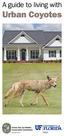 A guide to living with Urban Coyotes Living with coyotes ThinkStock Coyotes are found throughout Florida. This adaptable animal belongs to the dog family and resembles a small German shepherd. In Florida,
Guidance For Research Involving Human Embryonic Stem Cells, Germ Cells, And Cells Obtained From Cord Blood
 Guidance For Research Involving Human Embryonic Stem Cells, Germ Cells, And Cells Obtained From Cord Blood Supreme Council of Health Department of Research Guidance Regarding Research Involving Human Embryonic
Biology 1406 Exam 4 Notes Cell Division and Genetics Ch. 8, 9
 Biology 1406 Exam 4 Notes Cell Division and Genetics Ch. 8, 9 Ch. 8 Cell Division Cells divide to produce new cells must pass genetic information to new cells - What process of DNA allows this? Two types
Utah State Office of Education Elementary STEM Endorsement Course Framework Nature of Science and Engineering
 Course Description: Utah State Office of Education Elementary STEM Endorsement Course Framework Nature of Science and Engineering In this course participants will experience introductory explorations of
Stem Cell Quick Guide: Stem Cell Basics
 Stem Cell Quick Guide: Stem Cell Basics What is a Stem Cell? Stem cells are the starting point from which the rest of the body grows. The adult human body is made up of hundreds of millions of different
Evolution, Natural Selection, and Adaptation
 Evolution, Natural Selection, and Adaptation Nothing in biology makes sense except in the light of evolution. (Theodosius Dobzhansky) Charles Darwin (1809-1882) Voyage of HMS Beagle (1831-1836) Thinking
BREEDING SOUNDNESS EVALUATION OF BULLS
 Proceedings, Applied Reproductive Strategies in Beef Cattle November 12 and 13, 2005, Texas A&M University, College Station BREEDING SOUNDNESS EVALUATION OF BULLS Derry Magee Clinical Associate Professor
AP Biology 2015 Free-Response Questions
 AP Biology 2015 Free-Response Questions College Board, Advanced Placement Program, AP, AP Central, and the acorn logo are registered trademarks of the College Board. AP Central is the official online home
Genetic Mutations. Indicator 4.8: Compare the consequences of mutations in body cells with those in gametes.
 Genetic Mutations Indicator 4.8: Compare the consequences of mutations in body cells with those in gametes. Agenda Warm UP: What is a mutation? Body cell? Gamete? Notes on Mutations Karyotype Web Activity
14.3 Studying the Human Genome
 14.3 Studying the Human Genome Lesson Objectives Summarize the methods of DNA analysis. State the goals of the Human Genome Project and explain what we have learned so far. Lesson Summary Manipulating