
Variability of hygienic behavior in bee
|
|
|
- Martina Ashlynn Bates
- 9 years ago
- Views:
Transcription
1 674 Bulgarian Journal of Agricultural Science, 21 (No 3) 2015, Agricultural Academy Variability of hygienic behavior in bee Apis mellifera macedonica C. XONIS 1, A. THRASYVOULOU 1 and H. F. El TAJ 2 1 Aristotle University of Thessaloniki, Apiculture-Sericulture Laboratory, Thessaloniki 54124, Greece 2 Hajee Mohammad Danesh Science and Technology University, Department of Entomology, Dinajpur, Bangladesh Abstract XONIS, C., A. THRASYVOULOU and H. F. El TAJ, Variability of hygienic behavior in bee Apis mellifera macedonica. Bulg. J. Agric. Sci., 21: The hygienic behavior is an essential factor for the selective improvement of resistant bees against the mite Varroa destructor. Bees with hygienic behavior remove the diseased or dead brood of closed cells. However, the expression of hygienic behavior varies greatly from month to month. In our work we examined the first year, for a period of four months, seven colonies of the Macedonian race (Apis mellifera macedonica) and the second year for a period of three months, 16 colonies of the same race. We found large variation in hygienic behavior each month in 17 of the 23 colonies (74%). Unlike in six of the 23 colonies (26%), in which was found a little variation of hygienic behavior (CV 15%), there was a positive correlation between the hygienic behavior and mite infestation on bee population. The hygienic behavior explains 32% of the variance of the mite infestation on bee population. Also, it was found that the hygienic behavior in the six colonies not affected by the strength of the colonies. Key words: hygienic behavior, Apis mellifera macedonica, Varroa destructor, strength, variation Introduction The hygienic behavior is described as the uncapping and removal of dead, diseased or parasitized brood. Rothenbuhler (1964a) assumed a two-locus model for uncapping and removal of brood diseases and proposed that one locus controls the uncapping of brood cells containing dead pupae, while the second controls the removal of the cell contents. This model was re-evaluated by Moritz (1988) who suggested a more complex three- or more loci model for the removal behavior. Varroa-specific hygienic reactions seem to be even more complex and included repeated uncapping and resealing of infested brood cells (Rosenkranz et al., 1993b; Boot et al., 1999; Aumeier et al., 2000). This may be due to the participation of several genetically distinct worker bees which are specialized in different hygienic tasks. The removal of mite infested brood does not necessarily include the death of the mites, as it was observed that most mites seem to escape from the opened brood cells during the removal process (Boecking and Spivak, 1999). However, the removal of mites from the brood leads to an interruption of the reproductive cycle of the parasite, a prolonged phoretic phase or even the death of the mites (Rosenkranz et al., 2010). The removal of mite-infested brood represents the main factor for the selective breeding of mite tolerant European honey bees (Spivak and Reuter, 1998a; Ibrahim and Spivak, 2006; Harris, 2007). Several methods have been described to quantify the hygienic behavior of a honey bee colony, of which the frozen brood test and the pin test are now widely used (Spivak, 1996a; Spivak, 1996b; Boecking and Spivak, 1999 and Gramacho et al., 1999). In both tests, a certain number of brood cells are killed either by freezing or by piercing; after a defined period the percentage of removed dead brood cells is recorded and used as a measure for hygienic behavior. However, several restrictions exist for successful selection of a Varroa-specific hygienic behavior (Rosernkranz et al., 2010). It is not clear whether the mechanisms for the detection of dead brood are the same as for the detection of mite-infested cells and whether there is sufficient correlation [email protected]

2 Variability of Hygienic Behavior in Bee (Apis Mellifera Macedonica) 675 between killed brood and removal of mite infested brood cells (Boecking et al., 2000). The expression of hygienic behavior is known to be strongly influenced by environmental factors. For example, weak colonies, or a lack of incoming nectar have been shown to reduce the removal response to mite-infested and dead brood cells, respectively (Momot and Rothenbühler, 1971; Boecking and Drescher, 1993; Spivak and Gilliam, 1993; Spivak, 1996b). Moreover, the results of Boecking and Drescher (1998) demonstrate that the rate of removal of mite infested or dead brood within a particular colony even under the same environmental conditions is not always consistent between assays (Hoffmann, 1996; Rodrigues et al., 1996; Spivak and Downey, 1998). The aim of this study is to investigate the variations in the expression of hygienic behavior of Apis mellifera macedonica. Moreover, the hygienic behavior and the mite infestation were studied in two periods. We studied the colonies which showed a stable hygienic behavior and we compared this behavior in relation to infestation by the mite on bee population. Finally we compared the hygienic behavior in relation to the strength of the beehive. Materials and Methods The study was conducted in two periods. The first measurement period (May August 2011) we used seven colonies out of twelve that survived the winter, without treatment against the mite. All colonies had sister queens and similar brood and bee population. The hygienic behavior and the percentage of mite infestation in brood and adult bees were calculated. In the second period (May July 2012) 16 new colonies were used with queen sisters, which survived the winter after chemical control of mite, of the 19 original colonies, were created in October of The new colonies were produced by rearing from the hive of the first period which had the highest percentage of hygienic behavior. The 16 colonies were treated with coumaphos to control the mite. After treatment, the infection rate of the mite was zero. In each hive there was calculated hygienic behavior, the brood, the population and the degree of mite infestation. Also only the hygienic behavior, in October and November of 2012, in 10 additional colonies of the apiary was measured. These colonies were headed by naturally mated queens. To estimate the mite infestation of the bee population 3 samples of 100 adult bees, collected from three frames of brood (a total of 300 bees) were placed into a vial containing 25% alcohol solution. After 24 hours the dead bees and mites were counted. To estimate the infestation level of brood, three samples of 200 sealed cells from three frames of brood were opened diagonally and the infestation level was found according to Pappas and Thrasyvoulou (1988). The degree of hygienic behavior was performed by freezing (- 20 C) for 24 hours a section of 100 sealed brood cells and repositioned in the original hive (Taber, 1982; Taber and Gilliam, 1987; Spivak and Downey, 1998). In the frame of the sealed brood there was a cut with a utility knife 120 cells (6 cells x 20 cells) in the shape parallelogram. Among the 120 cells were from 5 to 15 cells which had not been closed combs or were empty. Of the 120, 100 closed cells were selected for measurement of hygienic behavior. On transparent film marked with dots 100 sealed cells. After 48 hours from the repositioning of the freeze-killed brood section, clean cells were counted. The colonies were hygienic if they completely removed an average of 95% of the frozen brood from both comb sections within 48 h. The assay, according to Spivak and Downey (1998), should be repeated at least twice. Comparisons of hygienic behavior with the mite infestation rates (brood and population) of bees, and τhe strength of the colonies which were performed by using the statistical analysis software program SPSS 11.5 for Windows. Results and Discussion Variations in the expression of hygienic behavior The hygienic behavior was studied in 23 colonies during 2011 and The results of this work show the large variation of hygienic behavior from month to month with a range of 10-70% in the first period and 1-73% in the second period (Tables 1 and 2). It was found that in five of the seven colonies in 2011 and in 12 of the 16 colonies in 2012 the coefficient of variation was high (CV > 15%). Also in 10 additional colonies, which were not part of the experiment, there were calculated in variation of hygienic behavior in October and November of 2012 (Table 3) after 7, 10 and 19 days between measurements. It showed a wide variation in the hygienic behavior, with a range of % and only one in ten colonies had little coefficient of variation (CV = 16%). It has been reported in previous studies that the hygienic behavior is influenced by external environmental factors, as the abundance of nectar (Trump et al., 1967; Momot and Rothenbühler, 1971) and seasonal factors remain unclear (Mondragón et al., 2005) and it is not constant each year in each hive. Pernal et al. (2012) suggested this problem with the year-to-year comparisons of colonies chosen for breeding. While the analysis by comparing has been previously used to test the hypothesis that the selection increases hygienic behavior, it is limited in that comparisons among successively selected generations are made across different years (Palacio

3 676 C. Xonis, A. Thrasyvoulou and H. F. El Taj Table 1 Percentage (%) of hygienic behavior within 48h in the period from May to August 2011 Year 2011 Percentage (%) of hygienic behavior within 48h Colonies May June July August Mean in 48h CV % 48h a* c a a a b bc 10 Mean 45 * The comparison was made between the months for each hive separately. Based on the criterion of Duncan, means with different alphabet letter are statistically significant different in 0.05 level Table 2 Percentage (%) of hygienic behavior in the period from May to July 2012 Year 2012 Percentage (%) of hygienic behavior within 48h Colonies May June July Mean in 48h CV % 48h d* cd bcd bcd bcd abcd abc ab abcd ab ab ab ab ab ab a 59 Mean 53 * Same as Table 1. Table 3 Repetition of hygienic behavior in 10 colonies Year 2012 Percentage (%) of hygienic behavior within 48h Colonies 17 Okt. 24 Okt 12 Nov 22 Nov. ΜΟ 48h CV % 48h

4 Variability of Hygienic Behavior in Bee (Apis Mellifera Macedonica) 677 et al., 2000). In doing this, the year was confounded with generation, making it impossible to separate the variation from year to year due to additive genetic effects from the year-toyear environmental variation. Unlike recent study by Bigio et al. (2013) showed that the availability of nectar (by feeding or not feeding sucrose syrup) not affects the expression of hygienic behavior and that hygienic behavior is not greatly affected by environmental conditions. In our work it was found that environmental conditions did not greatly affect the hygienic behavior at two colonies in the first period and at four colonies in the second period which had not large variations, as well it was found that there had not large variations in measurements per month (CV 15%). According to previous studies (Arathi and Spivak, 2001) the bees with hygienic behavior can modulate the extent of performance of the behavior depending on the genetic composition of the colony. In colonies that were composed of 25% bees with hygienic behavior and 75% without hygienic behavior, hygienic bees responded to the stimulus of dead brood by increasing the rate of performance of hygienic tasks, by becoming more persistent and by extending the period of task performance inside the beehive, of middle-aged nurse bees, between 15 and 20 days old (Arathi et al., 2000). Genetically mixed colonies did not reach efficiency levels of a colony with 100% hygienic bees, suggesting that the proportion of bees in the colony that are able to perform the task at any time and must be large for successful colony-level expression of the trait. Increased activity of individual hygienic bees in mixed colonies is not sufficient to meet the increased demand for task performance (Arathi et al., 2006). Therefore, it is likely that the low variation in hygienic behavior of the six colonies in our experiment is due to the higher proportion of worker bees with the characteristic of hygienic behavior, which engaged with the cleaning of cells. Correlation between hygienic behavior and infestation by the mite The first period in seven colonies the degree of mite infestation in brood ranged from 0-24% (average 5%) and on the population of bees from 0-14% (average 3%). In the second period in 16 colonies the degree of mite infestation on the population of bees ranged from 0-17% (average 5%), (Table 4). Among the seven colonies there was no statistically significant difference in the degree of mite infestation in the population of bees (F = 1.389, df = 6, p > 0.05). Similarly, no statistically significant difference between the 16 colonies in degree of mite infestation in the population of bees (F = 1.426, df = 15, p > 0.05). Between the hygienic behavior and the infection rate of mite on bee population it was found that there was no correlation between the two factors in 7 (r = 0.07, p > 0.05, N = 28), at 16 (r = 0.018, p > 0.05, N = 48) and a total of 23 colonies of two periods (r = 0.051, p > 0.05, Ν = 76) for a significance level of In contrast to, the six colonies it was found that there was a positive correlation between the hygienic behavior and mite infestation on bee population (r = 0.568, p = 0.004, N = 20) for a significance level of It has been observed by Boecking and Spivak (1999) that most mites escape from the brood cells during the process of cleaning and are adherent on the nurse bees. According to the study of Arechavaleta-Velascoa and Guzmán-Novoa (2001) colonies with the highest mite population growth had more mites on adult bees, fewer mites falling to hive floors, and a lower proportion of injured mites. They concluded that a combined effect of grooming and hygienic behavior was responsible for the differences between colonies and found that grooming behavior explains 38% of the variation in the degree of mite infestation in colonies (Arechavaleta-Velascoa and Guzmán- Novoa, 2001). In our work we found that the hygienic behavior explains 32% of variation of infection rate of mite on bee population (R 2 = 0.323, p = 0.004, N = 20) for a significance level of In the first period, in the two colonies, the degree of mite infestation was on average 4.0% in the population of bees, while the second period, in the four colonies, the degree of infestation was lower at 3.3% on average. Noteworthy also is the fact that in the four colonies of the second period, the beehive with the less variation (CV = 1%) had a greater infestation on bee population (5.7% on average) compared to the hive with the largest variation (CV = 15%, 0.7% on the Table 4 Average percentage (%) of mites infestation in bee-brood and on bee population Number of Mite infestation, % Year colonies May June July August Br* Pop** Br Pop Br Pop Br Pop ±1 2±2 3±3 1±1 4±4 2±2 11±9 7± ±2 4±4 9±8 *Br=brood, Pop**=Population of bees

5 678 average). It is therefore possible that differences in the degree of infestation of apiaries was due to different proportions of worker bees with the characteristic of hygienic behavior and grooming behavior, as well between different resistance mechanisms, these two behaviors are the most important. Colonies reared for hygienic behavior are not possible to survive indefinitely without some sort of periodic treatment. However, it is encouraging that lines bred for hygienic behavior which may require less frequent treatments than unselected lines (Spivak and Reuter, 2001b). In our study we found that non-selected colonies for hygienic behavior to which no treatment was applied against the mite, during wintering, had more losses (collapsed five of the 12 original colonies, 42%), in contrast to colonies, selected for hygienic behavior, in which only one treatment was applied during the wintering (3 of the 19 colonies, 16%). Correlation of hygienic behavior and the strength of the colony The strength of the colonies was calculated from the number of frames of brood and bee population. In the first period, the 7 colonies had an average of 7 ± 2 frames of brood and 13 ± 7 frames of population, while the second period, the 16 colonies had an average of 7 ± 2 frames of brood and 10 ± 5 frames of population (Table 5). At 7 colonies in 2011 it was found that between hygienic behavior and the number of frames of brood there was no correlation (r = 0.186, p = 0.172, N = 28). Similarly there was no correlation between the hygienic behavior and the number of frames of bees (r = , p = 0.325, N = 28) for a significance level of Also, from the statistical analysis of the 16 colonies in 2012 it was found that there was no correlation between the hygienic behavior and the number of frames of brood (r = , p = 0.116, N = 48) and the number of frames of bees (r = , p = 0.169, N = 48) for a significance level of The correlation between the hygienic behavior of six of the 23 colonies, which have a low coefficient of variability (CV 15%) and the number of frames of brood and population, also showed that there was no correlation between them C. Xonis, A. Thrasyvoulou and H. F. El Taj (r = 0.003, p = 0.495, N = 20 and r = , p = 0.346, N = 20, respectively). It has been shown by previous studies that weakened colonies with small bee populations have diminished response to hygienic behavior (Boecking and Drescher, 1993; Spivak and Gilliam, 1993). In a recent study (Bigio et al., 2013) it was observed that the manipulation of brood (by adding or removing brood) had no effect on levels of hygienic behavior. Conclusion In our study we found that the hygienic behavior is not linked to the strength of the beehive. Even in colonies with low variation in hygienic behavior, which had an average of 6 (± 2) frames of brood and 10 (± 4) frames of population, the change in strength of the colony did not affect the expression of the trait. In conclusion it can be said that the selection of colonies with the trait of hygienic behavior should be based on the stability of repetitions of the measurements. At least three repetitions, either every month or the same month, will be taken in each hive for the final selection of colony with smaller variance (CV 15%). The hygienic behavior explains 32% of the variance of the mite infestation on bee population and with the grooming behavior may be sufficient as a mechanism of resistance to V. destructor. References Arathi, H. S. and M. Spivak, Influence of colony genotypic composition on the performance of hygienic behaviour in the honey bee (Apis mellifera L.). Animal Behaviour, 62: Arathi, H. S., I. Burns and M. Spivak, Ethology of hygienic behaviour in the honey bee, Apis mellifera (Hymenoptera: Apidae): behavioural repertoire of hygienic bees. Ethology, 106: Arathi, H. S., G. Ho and M. Spivak, Inefficient task partitioning among non-hygienic honeybees, Apis mellifera L., and implications for disease transmission. Anim. Behav., 72: Arechavaleta-Velasco, Μ. Ε. and E. Guzmán-Novoa, Relative effect of four characteristics that restrain the population Table 5 Average number of frames of brood and bees Number of Number of frames Year colonies May June July August Br* Pop** Br Pop Br Pop Br Pop ±1 7±2 7±2 15±2 8±2 17±3 6±2 14± ±3 11±5 6±3 12±5 5±2 10±5 *Br=brood, Pop**=Population of bees

6 Variability of Hygienic Behavior in Bee (Apis Mellifera Macedonica) 679 growth of the mite Varroa destructor in honey bee (Apis mellifera) colonies. Apidologie, 32: Aumeier, P., P. Rosenkranz and L. S. Goncalves, A comparison of the hygienic response of Africanized and European (Apis mellifera carnica) honey bees to Varroa-infested brood in tropical Brazil. Genet. Mol. Biol., 23 (4): Bigio, G., R. Schürch and F. L. Ratnieks, Hygienic behavior in honey bees (Hymenoptera: Apidae): effects of brood, food, and time of the year. Journal of Economic Entomology, 106 (6): Boecking, O. and M. Spivak, Behavioral defenses of honey bees against Varroa jacobsoni Oud. Apidologie, 30: Boecking, O. and W. Drescher, Preliminary data on the response of Apis mellifera to brood infested with Varroa jacobsoni and the effect of this resistance mechanism. In: L. J. Connor et al. (Eds.), Asian Apiculture, Wicwas Press, Cheshire, USA, pp Boecking, O. and W. Drescher, Research on Varroa resistant traits in European honey bee races. EUROBEE AIR3- CT , EU, Brussels, final report, 22 pp. Boecking, O., K. Bienefeld and W. Drescher, Heritability of the Varroa-specific hygienic behavior in honey bees (Hymenoptera: Apidae). J. Anim. Breedg. Genet., 117 (6): Boot, W. J., J. N. M. Calis, J. Beetsma, D. M. Hai, N. K. Lan, T. Van Tran, L. Q. Trung and N. H. Minh, Natural selection of Varroa jacobsoni explains the different reproductive strategies in colonies of Apis cerana and Apis mellifera. Exp. Appl. Acarol., 23 (2): Gramacho, K., L. S. Goncalves, P. Rosenkranz and D. De Jong, Influence of body fluid from pin-killed honey bee pupae on hygienic behaviour. Apidologie, 30: Harris, J. W., Bees with Varroa-sensitive hygiene preferentially remove mite infested pupae aged 5 days post capping. J. Apicult. Res., 46: Hoffmann, S., Untersuchungsmethoden und Analyse der quantitativ genetischen Basis unterschiedlicher Varroatose- Anfälligkeit von Bienenvölkern der Carnica-Rasse (Apis mellifera carnica Pollmann), Inaugural-Dissertation, Rheinische Friedrich-Wilhelms-Universität, Bonn, 171 pp. Ibrahim, A. and M. Spivak, The relationship between hygienic behavior and suppression of mite reproduction as honey bee (Apis mellifera) mechanisms of resistance to Varroa destructor. Apidologie, 37: Momot, J. P. and W. C. Rothenbuhler, Behaviour genetics of nest cleaning in honey bees. VI. Interactions of age and genotype of bees, and nectar flow. J. Apic. Res., 10: Mondragón, L., M. Spivak and R. Vandame, A multifactorial study of the resistance of honeybees Apis mellifera to the mite Varroa destructor over one year in Mexico. Apidologie, 36 (3): Moritz, R. F. A., A reevaluation of the 2-locus model for hygienic behavior in honeybees (Apis mellifera L.). J. Hered., 79 (4): Palacio, M. A., E. E Figini, S. R. Ruffinengo, E. M. Rodriguez, M. L. Hoyo and E. L. Bedascarrasburne, Changes in a population of Apis mellifera L. selected for hygienic behavior and its relation to brood disease tolerance. Apidologie, 31: Pappas, N. and A. Thrasyvoulou, Searching for an accurate method to evaluate the degree of Varroa infestation in honey bee colonies. In R. Cavalloro (Ed), European Research on Varroatosis Control, Commission of the European Communities (Proceedings of a meeting of the EC Experts Group, Bad Homburg, October 1986). AA Balkema Publishers, Rotterdam, pp Pernal, F. S., A. Sewalem and P. A. Melathopoulos, Breeding for hygienic behaviour in honeybees (Apis mellifera) using free-mated nucleus colonies. Apidologie, 43: Rodrigues, I., J. Beetsma, W. J. Boot and J. Calis, Testing hygienic behavior in four different honeybee strains. In: M. J. Sommeijer and P. J. Franke (Eds), Proc. Sec. Exp. Appl. Entomol. Netherlands Entomol. Soc. 7, Netherlands Entomological Society, Amsterdam, the Netherlands, pp Rosenkranz, P., N. C. Tewarson, A. Singh and W. Engels, 1993b. Differential hygienic behaviour towards Varroa jacobsoni in capped worker brood of Apis cerana depends on alien scent adhering to the mites. J. Apicult. Res., 32: Rosenkranz, P., P. Aumeier and B. Ziegelmann, Biology and control of Varroa destructor. Journal of Invertebrate Pathology, 103: Rothenbühler, W., 1964a. Behavior genetics of nest cleaning behavior in honeybees I. Response of four inbred lines to disease killed brood. Anim. Behav., 12: Spivak, M. and D. Downey, Field assays for hygienic behavior in honey bees (Apidae: Hymenoptera). Journal of Economic Entomology, 91: Spivak, M. and G. S. Reuter, 1998a. Performance of hygienic honey bee colonies in a commercial apiary. Apidologie, 29: Spivak, M. and G. S. Reuter, 2001b. Varroa destructor infestation in untreated honey bee (Hymenoptera: Apidae) colonies selected for hygienic behaviour. J. Econ. Entomol., 94 (2): Spivak, M. and M. Gilliam, Facultative expression of hygienic behaviour of honey bees in relation to disease resistance. J. Apic. Res., 32: Spivak, M., 1996a. Response of hygienic honey bees to Varroa mites. Resist. Pest Manag., pp Spivak, M., 1996b. Honey bee hygienic behavior and defense against Varroa jacobsoni. Apidologie, 27: Taber, S. and M. Gilliam, Breeding honey bees for resistance to diseases. Korean J. Apic., pp Taber, S., Determining resistance to brood diseases. Am. Bee J., 122: Trump, R. F., V. C. Thompson and W. C. Rothenbühler, Behaviour genetics of nest cleaning in honeybees V. Effect of previous experience and composition of mixed colonies on response to disease-killed brood. J. Apic. Res., 6: Received October, 5, 2014; accepted for printing January, 20, 2015.

Background Honeybees are declining throughout the world Colony Collapse Disorder Complex Many factors compounded over time Media hype
 Potential Solutions to Honey Bee Decline: Hygienic i Behavior Alicia Moulton USU Extension Ag/4-H Agent Wasatch County Background Honeybees are declining throughout the world Colony Collapse Disorder Complex
Dissertation zur Erlangung des Doktorgrades der Naturwissenschaften
 Parasite host interactions between Varroa destructor Anderson and Trueman and Apis mellifera L.: Influence of parasitism on flight behaviour and on the loss of infested foragers Dissertation zur Erlangung
Managing Varroa Mites in Honey Bee Colonies
 Managing Varroa Mites in Honey Bee Colonies The varroa mite (Varroa destructor) is the most serious pest of honey bee colonies worldwide. This parasite was first detected in North Carolina in 1990, having
MBA Annual Convention Advanced Technology Center Jones County Junior College Ellisville, MS November 6 7, 2015
 MBA Annual Convention Advanced Technology Center Jones County Junior College Ellisville, MS November 6 7, 2015 Go to Exit 85 on Interstate 59 (intersection with Highway 590; approximately 10 miles south
Tackling Europe s bee decline The role veterinarians can play. Federation of Veterinarians of Europe
 Tackling Europe s bee decline The role veterinarians can play Federation of Veterinarians of Europe Bees : minute animals, massive importance Bees have a lot of responsibility on their tiny striped backs.
Beekeeping PARASITIC MITES OF HONEY BEES. Greg Hunt, Bee Specialist, Purdue University
 Beekeeping PURDUE EXTENSION E-201-W Department of Entomology PARASITIC MITES OF HONEY BEES Greg Hunt, Bee Specialist, Purdue University VARROA MITES Varroa mites (Varroa destructor) can be seen on the
Contact us: Beehavin Apiary 225 Douglas Pike Smithfield, RI 02917. (401) 885-5172 [email protected]
 Contact us: Beehavin Apiary 225 Douglas Pike Smithfield, RI 02917 (401) 885-5172 [email protected] ! Beekeepers who work towards goal typically have the best success! First Year Beekeeper Goals! Learn
SEASONAL APLICATION OF JENTER S METHOD FOR A SUCCESSFUL QUEEN BEES REARING IN ALBANIA
 SEASONAL APLICATION OF JENTER S METHOD FOR A SUCCESSFUL QUEEN BEES REARING IN ALBANIA L. Sena, S. Sena, F. Gjurgji and M. Nikolla Department of Animal Production, Faculty of Agriculture and Environment,
Experience with Thermosolar Hive
 Experience with Thermosolar Hive We have got 10 years of experience with thermotherapy and working with the Thermosolar Hive. There is also a university research that confirms high efficiency of our hive.
Queen Management Notes New Hampshire Bee Meeting October 28, 2006
 Queen Management Notes New Hampshire Bee Meeting October 28, 2006 By Dan Conlon Warm Colors Apiary South Deerfield, Massachusetts [email protected] 413-665-4513 www.warmcolorsapiary.com Understanding
INTERMEDIATE BEEKEEPING WEEK 1 CAROL COTTRILL
 INTERMEDIATE BEEKEEPING WEEK 1 CAROL COTTRILL BEE BIOLOGY WHY IT MATTERS There is a spectrum there are different ways to try to do things. I once thought you could do it all by a cookbook, and now I think
Essential Oils and Organic Acids for the Control of Varroa destructor in Honey Bees (Apis mellifera)
 Rusty Burlew July 12, 2009 Essential Oils and Organic Acids for the Control of Varroa destructor in Honey Bees (Apis mellifera) It wasn t until 1986 that parasitic Varroa mites were introduced into the
Beneficial Microflora in Honey Bee Colonies
 Beneficial Microflora in Honey Bee Colonies Diana Sammataro, Ph.D. USDA-ARS Carl Hayden Bee Research Center Tucson, AZ Our Website: http://gears.tucson.ars.ag.gov Lactobacillus spp. Bifidobacterium spp.
Index to: Practical Beekeeper. The. Volumes I, II & III. by Michael Bush
 Index to: The Practical Beekeeper Volumes I, II & III by Michael Bush Index to: The Practical Beekeeper Volume I, II & III This index is valid for all three separate volumes and the complete book. Copyright
HONEY AND WAX ANALYSIS FOR ACRINATHRIN RESIDUES
 APIACTA 38 (2003) 34-39 34 HONEY AND WAX ANALYSIS FOR ACRINATHRIN RESIDUES SZERLETICS TÚRI Mária - SZALAI MÁTRAY-Enikő 2 József Fodor National Center of Public Health, National Institute of Food Hygienie
2016 Bee College Tentative Short Course Descriptions
 2016 Bee College Tentative Short Course Descriptions A Beekeeper s Year For starting beekeepers, the first year could be the hardest since you are trying to figure out all the quirks of beekeeping. Come
honey bee By Henry Touray
 honey bee By Henry Touray Introduction For my project I have chosen to research Bees. I chose to find out about the bee because bees have been in the news lately. Lots of hives have died out and scientists
BIOSECURITY OR DISEASE RISK MITIGATION STRATEGY FOR THE AUSTRALIAN HONEY BEE INDUSTRY
 BIOSECURITY OR DISEASE RISK MITIGATION STRATEGY FOR THE AUSTRALIAN HONEY BEE INDUSTRY Australian Honey Bee Industry Council Postal Address: PO Box R838 ROYAL EXCHANGE NSW 1225 Phone: 61 2 9221 0911\ Fax:
Graft-Free Queen Rearing Morris Ostrofsky
 Many beekeepers reach a point in their beekeeping experience where they are comfortable with the basics and are seeking a new challenge. In an environment in which beekeepers have to deal with exotic pests
CONTROL OF VARROA A Guide for New Zealand Beekeepers
 CONTROL OF VARROA A Guide for New Zealand Beekeepers CONTROL OF VARROA A Guide for New Zealand Beekeepers has been published by the Ministry of Agriculture and Forestry as part of its on-going assistance
Types of Bee Hives British Standard National using 14 12 brood box. Member John Farrow s Double Brood Hive. using double brood box
 Types of Bee Hives British Standard National using 14 12 brood box Summary: Increasingly popular as the brood chamber is large enough for a colony and there are half as many brood frames to inspect compared
Texas Laws, Rules and Regulations
 BY Cameron Crane Within the Harris County Beekeepers Association there was a bit of discussion last year about various Texas laws, regulations, rules and licensing. With a nice break this holiday season,
UNOFFICIAL COPY: THE BEE LAW
 UNOFFICIAL COPY: THE BEE LAW The following is an unofficial copy of the Bee Law (Act of December 12, 1994, P.L. 903, No. 131)(3 Pa.C.S.A. 2101 2117). The document reflects the current version of this statute.
University of Florida Florida Master Beekeeper Program Requirements and General Information
 1 University of Florida Florida Master Beekeeper Program Requirements and General Information I) Apprentice Beekeeper: A: must be a Florida registered beekeeper or a registered beekeeper in home state
SYLLABUS FOR SEMBA'S BEEKEEPING COURSE FOR BEGINNERS. Classes held: 1:00 p.m., Sundays, except as noted
 SYLLABUS FOR SEMBA'S BEEKEEPING COURSE FOR BEGINNERS General Overview of Course: This course is designed for beginners to learn about the biology of the honey bee, the honey bee hive, tools needed to work
IPM Elements for Honey Bees in the Mid-Atlantic States
 IPM Elements for Honey Bees in the Mid-Atlantic States The purpose of this document is to consolidate current integrated approaches to honey bee pest management in the mid-atlantic region. The goals are:
How do you keep your bees? Alternative hive configurations
 How do you keep your bees? Alternative hive configurations (By Wally Shaw Anglesey BKA) Introduction The most important part of any honey bee colony is that beneath the queen excluder. The boxes that make
Seasonal Management Resource Listing
 Orange County Beekeepers Association Bee School Seasonal Management Resource Listing Books Beekeeper s Handbook - Diana Sammataro and Alphonse Avitabile, ISBN: 0801485037 A comprehensive well-illustrated
Introduction to New Beekeeping
 the new way to enjoy beekeeping - safely! Introduction to New Beekeeping with Dartington hives Robin Dartington Spring 2008 The cover shows the demonstration apiary in Letchworth Herts. Dartington long
TOOLS FOR VARROA MANAGEMENT
 TOOLS FOR VARROA MANAGEMENT A GUIDE TO EFFECTIVE VARROA SAMPLING & CONTROL HEALTHY BEES HEALTHY PEOPLE HEALTHY PLANET First Edition 2015 Revised September 17, 2015 Copyright 2015 The Keystone Policy Center
BEEKEEPING IN HUNGARY
 BEEKEEPING IN HUNGARY When people who are working in the honey or beekeeping sector hear the name of Hungary, automatically think to acacia honey. The cause of this is the fact that Hungary produces the
Cloake Board Method of Queen Rearing and Banking
 Cloake Board Method of Queen Rearing and Banking Rearing your own queens is one of the more interesting and rewarding aspects of beekeeping. It provides a means to maintain young, vigorous queens in colonies
Castes in Social Insects
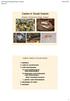 Castes in Social Insects Module Chemical Ecology, Ayasse Outline Castes in Social Insects 1. definition 2. castes in social insects 3. caste determination A. psychophysiological caste determination B.
AARHUS UNIVERSITY JUNE 15, 2010 BED BUGS OLE KILPINEN DANISH PEST INFESTATION LABORATORY INSTITUTE OF INTEGRATED PEST MANAGEMENT DENMARK
 BED BUGS OLE KILPINEN DANISH PEST INFESTATION LABORATORY INSTITUTE OF INTEGRATED PEST MANAGEMENT AARHUS DENMARK 1 Bed bug problems in Europe Bed bug biology -new results and importance for control Host
Class Insecta - The insects
 A Introduction 1. Very species rich 2. Characteristics a. 3 pairs of legs b. 2 pairs of wings (most) except flies (1 pair of wings - Diptera) B. Distribution 1. All habitats except saltwater - replaced
Rearing queen bees. Introduction. Races of bees. The queen. Mark Johnstone. Project Officer, Honey Bees, Richmond
 SEPTEMBER 2008 PRIMEFACT 828 Rearing queen bees Mark Johnstone Project Officer, Honey Bees, Richmond Introduction As a beekeeper you may have purchased queen bees from a commercial queen breeder and have
Beekeeping for Beginners
 Utah State University DigitalCommons@USU All PIRU Publications Pollinating Insects Research Unit 1965 Beekeeping for Beginners William P. Nye Utah State University G. F. Knowlton Follow this and additional
Results of Research: Using Essential Oils for Honey Bee Mite Control
 Page 1 of 7 Results of Research: Using Essential Oils for Honey Bee Mite Control Jim Amrine, Bob Noel, Harry Mallow, Terry Stasny, Robert Skidmore (Last Updated: December 30, 1996) Back to Mite Control
Colony Growth and Seasonal Management of Honey Bees
 Colony Growth and Seasonal Management of Honey Bees Management of honey bees varies based on whether pollination or honey production is the primary objective. A simple scheme for those interested in maximizing
James W. Amrine Jr. 1 and Robert Noel 2
 FORMIC ACID FUMIGATOR FOR CONTROLLING HONEY BEE MITES IN BEE HIVES James W. Amrine Jr. 1 and Robert Noel 2 1. Division of Plant and Soil Sciences, G-168 Agricultural Sciences Buildinng, West Virginia University,
STUDENT VERSION INSECT COLONY SURVIVAL OPTIMIZATION
 STUDENT VERSION INSECT COLONY SURVIVAL OPTIMIZATION STATEMENT We model insect colony propagation or survival from nature using differential equations. We ask you to analyze and report on what is going
Quick Start Guide to Natural Beekeeping with the Warre Hive
 Quick Start Guide to Natural Beekeeping with the Warre Hive How you can use the Warre Top Bar Hive to Create a Smart, Simple and Sustainable Beekeeping Experience BY NICK HAMPSHIRE FREE REPORT FROM DIYBEEHIVE.COM
MODEL BEEKEEPING ORDINANCE
 MODEL BEEKEEPING ORDINANCE For Florida (Local and Municipal) Governments Whereas, honey bees are beneficial to mankind and to Florida in particular, by providing agricultural fruit and vegetable pollination
APPLICATION OF INFORMATION TECHNOLOGIES IN PRECISION APICULTURE ABSTRACT
 APPLICATION OF INFORMATION TECHNOLOGIES IN PRECISION APICULTURE A. Zacepins, E. Stalidzans Department of Computer Systems Faculty of Information Technologies Latvia University of Agriculture Liela iela
Apocephalus borealis Brues, 1924 (Diptera: Phoridae) a fly that attacks honey bees.
 Apocephalus borealis Brues, 1924 (Diptera: Phoridae) a fly that attacks honey bees. Nickname: The Zombie Fly. Summary of: Core A., Runckel C., Ivers J., Quock C., Siapno T., DeNault S., Brown B.[Phorids],
Promoting Pollination Farming for Native Bees
 Promoting Pollination Farming for Native Bees Overview Pollination, the transfer of pollen grains to fertilize the ovules of flowers to produce seeds and fruits, is essential to agriculture and natural
Selecting for Robustness in Pigs
 Selecting for Robustness in Pigs Pramod Mathur, Saskia Bloemhof, Hamed Rashidi, Egbert Knol NSIF: Nov 2012 Why robustness? Globalization of pork production Global warming Easier spread of diseases and
How To Control A Varroa Destructor
 Controlling Varroa destructor (Acari: Varroidae) in honeybee Apis mellifera (Hymenoptera: Apidae) colonies by using Thymovar and BeeVital Ethem Akyol 1, Halil Yeninar 2 1 Department of Beekeeping. Nigde
Second Grade Insects Assessment
 Second Grade Insects Assessment 1a. The stiff shell that covers an insect s body is called an: a. outer shell b. exoskeleton 1b. The stiff shell that covers and insect s body is called an: a. outer shell
STANDARDS FOR HIVE PRODUCTS. Demeter International e.v. Table of Contents. - to be implemented by each member country by the 31 st December 2007 -
 STANDARDS FOR BEEKEEPING AND HIVE PRODUCTS June 2004 - to be implemented by each member country by the 31 st December 2007 - Demeter International e.v. Table of Contents Page 1. Validity and Basis...1
Beekeeping. B a c k y a r d ANR-135
 Beekeeping A l a b a m a C o o p e r a t i v e E x t e n s i o n S y s t e m A l a b a m a A & M U n i v e r s i t y a n d A u b u r n U n i v e r s i t y ANR-135 Beekeeping James E. Tew A l a b a m a
Social Insects. Social Insects. Subsocial 4/11/10. More widespread 13 orders of insects no reproductive division of labor
 Social Insects Sociality evolved multiple times in insects Much of Earth s fauna consists of social insects They play major roles in entire ecosystems Proliferation of ants and termites associated with
Teaching Animal Science in Greece. Prof. George Zervas Agricultural University of Athens Dept. of Nutritional Physiology and Feeding
 Teaching Animal Science in Greece Prof. George Zervas Agricultural University of Athens Dept. of Nutritional Physiology and Feeding Courses on Animal Science are offered by: the Agricultural University
Course Outline. Parental care and sexual conflict. Papers for 22 October. What is sexual conflict? 10/19/2009
 Parental and sexual conflict Course Outline 1. Sexual selection * 2. Parent offspring conflict * 3. Sexual conflict over parental René van Dijk Email: [email protected] 19 October 2009 4. Genomic
Cassian Teotimi Mumbi, Angela Richard Mwakatobe, Issa Hamisi Mpinga, Allen Richard, Raphael Machumu
 2014; 2 (3): 188-196 ISSN 2320-7078 JEZS 2014; 2 (3): 188-196 2014 JEZS Received: 04-04-2014 Accepted: 27-05-2014 Cassian Teotimi Mumbi Tanzania Wildlife Research Institute (TAWIRI), P.O. Box 661, Arusha,
Worksheet: The theory of natural selection
 Worksheet: The theory of natural selection Senior Phase Grade 7-9 Learning area: Natural Science Strand: Life and living Theme: Biodiversity, change and continuity Specific Aim 1: Acquiring knowledge of
Métodos estándar para estimar parámetros sobre la fortaleza de las colonias de Apis mellifera
 Journal of Apicultural Research 52(1): (2013) IBRA 2013 DOI 10.3896/IBRA.1.52.1.03 REVIEW ARTICLE Standard methods for estimating strength parameters of Apis mellifera colonies Keith S Delaplane 1*, Jozef
There are queen cells in my hive - what should I do?
 There are queen cells in my hive - what should I do? Pictures courtesy of Wally Shaw, Brian Jones and Claire Waring Introduction You have opened a hive and found queen cells. First of all, don t panic
Glass Jar Beekeeping Creating Edible Art By Morris Ostrofsky
 1 Glass Jar Beekeeping Creating Edible Art By Morris Ostrofsky Bees have always perfectly packaged honey in wax comb. Before the advent of modern bee hives, the bees built honey comb in straw skeps. Around
Montgomery County Beekeepers Association (M.C.B.A.) Mentor Program
 Montgomery County Beekeepers Association (M.C.B.A.) Mentor Program 1 Table of Contents Page 1. Mentor----------- 3 2. Mentee----------- 9 3. Program Director--- 18 2 Beekeeping Mentor New beekeepers frequently
HOUSEHOLD POVERTY REDUCTION THROUGH BEEKEEPING AMONGST UGANDA RURAL WOMEN
 HOUSEHOLD POVERTY REDUCTION THROUGH BEEKEEPING AMONGST UGANDA RURAL WOMEN Margaret OGABA Chairperson, Kitgum Women Beekeepers Association (KITWOBEE), P.O.Box 120, Kitgum, UGANDA, c/o E-mail: [email protected]
fr fire retardant MARMOLEUM
 MARMOLEUM fr fire retardant MARMOLEUM fr 63038 63173 63174 sahara van gogh caribbean 63120 63163 63164 indian summer opera rosato 63182 63055 63030 blue fresco blue lapponia 63032 63146 63048 graphite
FAQs: Gene drives - - What is a gene drive?
 FAQs: Gene drives - - What is a gene drive? During normal sexual reproduction, each of the two versions of a given gene has a 50 percent chance of being inherited by a particular offspring (Fig 1A). Gene
PureTek Genetics Technical Report February 28, 2016
 Utilization of commercial female data in maternal genetic improvement programs D. W. Newcom, 1 BS, MS, PhD; V. Duttlinger, 2 AS; C. Witte, 2 BS; M. Brubaker, 2 BS, MS; S. E. Lawrence, 2 BS, MS; C. Dematawewa,
Sub-lethal exposure to neonicotinoids impaired honey bees winterization before proceeding to colony collapse disorder
 Bulletin of Insectology 67 (1): 125-130, 2014 ISSN 1721-8861 Sub-lethal exposure to neonicotinoids impaired honey bees winterization before proceeding to colony collapse disorder Chensheng LU 1, Kenneth
Population Ecology. Life History Traits as Evolutionary Adaptations
 Population Ecology An Overview of Population Ecology Population ecology is the study of factors that affect population: Density Growth A population is a group of individuals of a single species that occupy
TECHNICAL NOTE: PLASTIC MATS PREVENT FOOTPAD INJURIES IN RABBIT DOES
 W orld R abbit Science World Rabbit Sci. 2011, 19: 233-237 doi:10.4995/wrs.2011.868 WRSA, UPV, 2003 TECHNICAL NOTE: PLASTIC MATS PREVENT FOOTPAD INJURIES IN RABBIT DOES Rommers J.M. and Jong de I.C. Wageningen
Biology 1406 - Notes for exam 5 - Population genetics Ch 13, 14, 15
 Biology 1406 - Notes for exam 5 - Population genetics Ch 13, 14, 15 Species - group of individuals that are capable of interbreeding and producing fertile offspring; genetically similar 13.7, 14.2 Population
4-H-593-W. 4-H Beekeeping. Advanced Beekeeping Methods
 4-H-593-W 4-H Beekeeping Advanced Beekeeping Methods 4-H Beekeeping, Division III: Advanced Beekeeping Methods The 4-H beekeeping project is intended to help you learn about bees and how to be a beekeeper.
METHODS. [Quarterly Journal of Microscopical Science, Vol. 97, part 1, pp. 39-45, March 1956.]
![METHODS. [Quarterly Journal of Microscopical Science, Vol. 97, part 1, pp. 39-45, March 1956.]](/thumbs/39/19254081.jpg "METHODS. [Quarterly Journal of Microscopical Science, Vol. 97, part 1, pp. 39-45, March 1956.]") The Site of Damage in Amoebae exposed to Low Concentrations of Methyl di-(p-chloroethyl)-amine (a 'Nitrogen Mustard') By M. J. ORD {From the Department of Zoology, King's College, London, W.C. ) 9 SUMMARY
The Site of Damage in Amoebae exposed to Low Concentrations of Methyl di-(p-chloroethyl)-amine (a 'Nitrogen Mustard') By M. J. ORD {From the Department of Zoology, King's College, London, W.C. ) 9 SUMMARY
Honey Bee Background Information
 Honey Bee Background Information Honey bees are very important. Honey bees are the strongest link in the chain between the people who grow the food and the people who eat the food. Without honey bee pollination,
Florida Beekeeping Management Calendar 1
 ENY156 Florida Beekeeping Management Calendar 1 J.D. Ellis and C.M. Zettel Nalen 2 Florida's warm temperatures are very conducive to beekeeping; however, the climate, ecotype, and floral resources differ
What is a Honey Bee? What is an Africanized Honey Bee?
 What is a Honey Bee? Honey bees are not native to the North America Honey bees currently pollinate about 90 agricultural crops (accounting for 80% of the pollination in the US): ~ $10 billion pollination
10-1 ORGANIC BEEKEEPING
 African Organic Agriculture Training Manual A Resource Manual for Trainers 10-1 ORGANIC BEEKEEPING Draft Version 1.0 June 2011 Ready for field testing African Organic Agriculture Training Manual IMPRINT
Chemical versus Biological Control of Sugarcane. By Abid Hussain Matiari Sugar Mills Ltd.
 Chemical versus Biological Control of Sugarcane By Abid Hussain Matiari Sugar Mills Ltd. Sugarcane It is an important cash crop, Pakistan is the fifth largest cane producing country. However, its yield
Bee Ordinances in North Texas
 Bee Ordinances in North Texas Wow! You keep bees??!? Is that legal? Topics why we need to know different levels of regulation where to find out more standard disclaimers Why we need to know protect your
OXALIC ACID TREATMENTS FOR VARROA CONTROL (REVIEW)
 APIACTA 38 (2003) 81-87 81 OXALIC ACID TREATMENTS FOR VARROA CONTROL (REVIEW) Antonio Nanetti 1, Ralph Büchler ², Jean-Daniel Charriere ³, Ingemar Friesd, Stine Helland 4, Anton Imdorf ³, Seppo Korpela
Effect of Egg Size and Strain and Age of Hens on the Solids Content of Chicken Eggs 1
 Effect of Egg Size and Strain and Age of Hens on the Solids Content of Chicken Eggs 1 D. U. AHN,*,2 S. M. KIM,,3 and H. SHU *Animal Science Department, Iowa State University, Ames, Iowa 50011, Food Science
Estimating Income and Costs: Calculating a Price
 Estimating Income and Cost: Calculating a Price Estimating Income and Costs: Calculating a Price Karen Mundy, Department of Agricultural and Applied Economics, Virginia Tech S. Gary Bullen, Department
CHAPTER TWELVE TABLES, CHARTS, AND GRAPHS
 TABLES, CHARTS, AND GRAPHS / 75 CHAPTER TWELVE TABLES, CHARTS, AND GRAPHS Tables, charts, and graphs are frequently used in statistics to visually communicate data. Such illustrations are also a frequent
Robust procedures for Canadian Test Day Model final report for the Holstein breed
 Robust procedures for Canadian Test Day Model final report for the Holstein breed J. Jamrozik, J. Fatehi and L.R. Schaeffer Centre for Genetic Improvement of Livestock, University of Guelph Introduction
Practice Questions 1: Evolution
 Practice Questions 1: Evolution 1. Which concept is best illustrated in the flowchart below? A. natural selection B. genetic manipulation C. dynamic equilibrium D. material cycles 2. The diagram below
AP Biology Essential Knowledge Student Diagnostic
 AP Biology Essential Knowledge Student Diagnostic Background The Essential Knowledge statements provided in the AP Biology Curriculum Framework are scientific claims describing phenomenon occurring in
Production and Value of Honey and Maple Products
 Catalogue no. 23-221-X. Service bulletin Production and Value of Honey and Maple Products 2009. Highlights Honey Canadian honey production in 2009 was 64.8 million pounds, comparable to the 2008 levels
The Scottish Beekeepers Association. Insurance. (Public and Products Liability Insurance) and. The Compensation Scheme.
 The Scottish Beekeepers Association Insurance. (Public and Products Liability Insurance) and The Compensation Scheme. This is a synopsis of the cover. It is not the policy, and the Scottish Beekeepers
Chi-square test Fisher s Exact test
 Lesson 1 Chi-square test Fisher s Exact test McNemar s Test Lesson 1 Overview Lesson 11 covered two inference methods for categorical data from groups Confidence Intervals for the difference of two proportions
AP ENVIRONMENTAL SCIENCE 2012 SCORING GUIDELINES
 AP ENVIRONMENTAL SCIENCE 2012 SCORING GUIDELINES Question 3 The active ingredients in many pesticides are chemical compounds that kill organisms such as insects, molds, and weeds. Proponents claim that
Ageing OECD Societies
 ISBN 978-92-64-04661-0 Trends Shaping Education OECD 2008 Chapter 1 Ageing OECD Societies FEWER CHILDREN LIVING LONGER CHANGING AGE STRUCTURES The notion of ageing societies covers a major set of trends
The Business of Beekeeping in South Carolina
 The Business of Beekeeping in South Carolina David E. MacFawn Lexington, South Carolina June, 2015 Beekeeping is a complex endeavor that takes up-front knowledge and planning to be successful. One needs
MATERIAL AND METHODS Plant and animal material Experimental design Data analysis RESULTS Behaviour of C. septempuncta 476
 et al., 1981a,c) and predators were free to leave a host plant at any time. The interactions between predator and prey were quantified and the fate of the aphids in the colony was noted. MATERIAL AND METHODS
ABSTRACT. Of the PhD thesis:,, Etiopathogenic, clinical and therapeutic investigations in American foulbrood in honey bees
 ABSTRACT Of the PhD thesis:,, Etiopathogenic, clinical and therapeutic investigations in American foulbrood in honey bees Key words: bees, American foulbrood, Paenibacillus larvae, hydro alcoholic plant
Crop Profile for Honey Bees in Texas
 Prepared: June, 2003 Crop Profile for Honey Bees in Texas State Ranking General Production Information Texas National Rank (number colonies) = 7 Texas National Rank (Honey production) = 7 Texas Honey value
Biodiversity Concepts
 Biodiversity Concepts WHAT IS BIODIVERSITY? Biodiversity is the variety of life on Earth. For any kind of animal or plant each individual is not exactly the same as any other; nor are species or ecosystems.
Okami Study Guide: Chapter 3 1
 Okami Study Guide: Chapter 3 1 Chapter in Review 1. Heredity is the tendency of offspring to resemble their parents in various ways. Genes are units of heredity. They are functional strands of DNA grouped