
Pregnancy Intendedness
|
|
|
- Ethan Warner
- 9 years ago
- Views:
Transcription
1 Pregnancy Intendedness What moms had to say: "Very excited! We wanted to be pregnant for 8 years!" "I felt too old." "I wanted to have a baby to get some support so I could be on my own; if didn't have a baby, can't get Medicaid-tried to get help and past bills are too old." I have endometriosis, I was on the pill and I got pregnant. I am thrilled that our daughter is here and healthy. I have to say I had a hard pregnancy, shots 2 times a week because progesterone was low. My husband and I are very happy [baby s name] is here. Thanks! I think there should be more resources available to teens about choices, not just about abstinence. Obviously that's not working. I see a lot of teenaged mothers around. They're having sex and not being educated about their bodies, their choices, birth control and the consequences. They also need information on what happens when the baby is here. Money issues, freedom issues, body issues, etc. We were very excited about our pregnancy due to the fact I was a 5 year breast cancer survivor. It was questionable if we would be able to due to chemotherapy, but I got pregnant 1 month after trying. We took every precaution & prenatal vitamin even before we got pregnant! (Also read many books, too). I am a high school teacher and I see a lot of young girls who are pregnant and have no knowedge of how to care for babies. Keep up the good work with the education programs that the state is providing. Babies are such a wonderful responsiblity and need love, comfort, and proper care. Most people think that "teen" pregnancy is a bad thing and is frowned on. I don't think that is true! Some of my friends (20 years and under) have had unplanned pregnancies and they are now great parents. But in my case, it was different. I was 17 yrs old when I found out that I had Endometriosis. I was told that my chances of having kids dropped every day. I was then put on the Depo Shot but I got very sick from it. So when I turned 18, my boy friend and I talked to our parents. We all agreed that we should try to have kids now! We tried for 6 months. I couldn't get pregnant. So I then had a laprascopy to remove my Endometriosis. I was pregnant 4 months after the surgery. I am so happy and I love my baby. I would do it all over again if I had to. 18

2 Bearing children and forming families are among the most meaningful and satisfying aspects of adult life, and it is in this context that encouraging intended pregnancy is so central the lives of children and their families would be strengthened considerably by an increase in the proportion of pregnancies that are purposefully undertaken and consciously desired. The Best of Intentions Institute of Medicine, 1995 (From 1999 New Mothers Survey) Unplanned or unintended pregnancies reduce the opportunities for women to receive information about and make changes to diet and weight, use of folic acid, exercise, smoking, and use of alcohol and drugs before they get pregnant. Identifying and reducing environmental risks (such as exposure to toxoplasmosis), evaluating vaccination and immunity status, and managing medical conditions such as diabetes also may be delayed North Dakota New Mothers Survey Feelings About Being Pregnant REFERENCE TABLES 1-2. Respondents were asked to think back to how they felt about becoming pregnant just before they got pregnant. Respondents had the following response options to choose from: I wanted to be pregnant sooner, I wanted to be pregnant later, I wanted to be pregnant then, or I didn t want to be pregnant then or at any time in the future. Of all respondents, two-thirds said they wanted to be pregnant then or sooner (63.9 percent). Nearly 61 percent of Medicaid recipients indicated their pregnancies were not planned, meaning they wanted to be pregnant later (47.7 percent), or they did not want to be pregnant then or at anytime in the future (13.1 percent). Non-Medicaid recipients were nearly twice as likely as Medicaid recipients to have planned their pregnancies, that is they wanted to be pregnant then or sooner (73.8 percent and 39.2 percent, respectively). The proportion of unplanned pregnancies for WIC recipients was 56 percent, similar to Medicaid; 45 percent of WIC recipients said they wanted to be pregnant later, and 11 percent said they did not want to be pregnant then or at anytime in the future. Non-WIC recipients were more likely than WIC recipients to say they wanted to be pregnant then (53.6 percent and 32.2 percent, respectively). Multiparas (had previous live births) were more likely than primiparas (first-time mothers) to say they wanted to be pregnant sooner or then (68.4 percent and 58.2 percent, respectively). A larger proportion of primiparas than multiparas said they wanted to be pregnant later (36.5 percent and 24.4 percent, respectively). 19

3 Table 1. Feelings About Being Pregnant by Medicaid, WIC, and Primipara Status Wanted to be All respondents Medicaid* WIC Primiparas pregnant % 95% CI % 95% CI % 95% CI % 95% CI Sooner 18.1 (15.6,20.5) 11.1 (7.4,14.9) 11.7 (8.4,15.1) 19.1 (15.3,23.0) Later 29.7 (26.7,32.6) 47.7 (42.1,53.2) 45.1 (39.8,50.3) 36.5 (31.7,41.3) Then 45.8 (42.6,49.0) 28.1 (23.3,33.0) 32.2 (27.4,37.0) 39.1 (34.2,43.9) Never** 6.5 (4.9,8.0) 13.1 (9.0,17.1) 11.0 (7.7,14.3) 5.3 (2.8,7.8) TOTAL % *CDC defines a Medicaid recipient as a woman who reported receiving Medicaid prior to pregnancy or that Medicaid paid for prenatal care or the delivery. **Respondents who said they didn t want to be pregnant then or at any time in the future. Table 2. Feelings About Being Pregnant by Non-Medicaid, Non-WIC, and Multipara Status Wanted to be All respondents Non-Medicaid Non-WIC Multiparas pregnant % 95% CI % 95% CI % 95% CI % 95% CI Sooner 18.1 (15.6,20.5) 20.7 (17.6,23.9) 21.8 (18.4,25.2) 17.3 (14.0,20.5) Later 29.7 (26.7,32.6) 22.7 (19.2,26.2) 21.3 (17.9,24.7) 24.4 (20.7,28.1) Then 45.8 (42.6,49.0) 53.1 (49.1,57.0) 53.6 (49.4,57.7) 51.1 (46.8,55.3) Never* 6.5 (4.9,8.0) 3.5 (2.1,5.0) 3.4 (1.8,4.9) 7.3 (5.2,9.3) TOTAL % *Respondents who said they didn t want to be pregnant then or at any time in the future. Unintended Pregnancies REFERENCE TABLE 3. Respondents feelings about being pregnant can be categorized as either unintended or intended pregnancies. An unintended pregnancy includes respondents who said they wanted to be pregnant later, as well as those who said they didn t want to be pregnant then or at any time in the future (never). An intended pregnancy includes respondents who said they wanted to be pregnant then or sooner. Younger mothers (respondents 15 to 19 years of age) were at least four times more likely to have unintended rather than intended pregnancies (81.9 percent and 18.1 percent, respectively). In contrast, respondents who were 25 or older were much more likely to have intended rather than unintended pregnancies. First-time mothers who were WIC recipients were twice as likely to have unintended pregnancies as intended pregnancies (66.8 percent and 33.2 percent, respectively). Among respondents who were non-wic recipients, the majority of pregnancies were intended for both multiparas and primiparas (77.9 percent and 71.9 percent, respectively). Respondents who were white were nearly twice as likely to have intended rather than unintended pregnancies (65.5 percent and 34.5 percent, respectively). Respondents who were white were more likely to have intended pregnancies than Native American respondents (65.5 percent and 47.8 percent, respectively). However, caution should be used when interpreting these data due to small numbers. Data about mothers of other races are not reportable because of too few respondents. Respondents who had not graduated from high school (having between 9 and 11 years of education) were twice as likely to have unintended rather than intended pregnancies (66.5 percent and 33.5 percent, respectively). In contrast, those who had at least some college (13 or more years of education) were significantly more likely to have intended pregnancies. Urban or rural residence was not a factor in whether the respondent s pregnancy was intended. 20

4 Respondents who did not have insurance were more likely to have unintended than intended pregnancies (59.2 percent and 40.8 percent, respectively). In contrast, respondents who did have insurance were significantly more likely to have intended rather than unintended pregnancies (71.5 percent and 28.5 percent, respectively). Table 3. Selected Characteristics by Intendedness of Pregnancy Intended Unintended Characteristics % 95% CI % 95% CI TOTAL % Mother s age 15 to 19 years 18.1 (8.1,28.1) 81.9 (71.9,91.9) to 24 years 50.1 (44.1,56.1) 49.9 (43.9,55.9) to 29 years 72.0 (66.9,77.2) 28.0 (22.8,33.1) to 34 years 78.0 (72.6,83.5) 22.0 (16.5,27.4) years and older 77.0 (68.4,85.6) 23.0 (14.5,31.6) WIC participation and Gravid status WIC primiparas 33.2 (25.5,41.0) 66.8 (59.0,74.5) WIC multiparas 52.0 (44.9,59.1) 48.0 (40.9,55.1) Non-WIC participation and Gravid status Non-WIC primiparas 71.9 (65.9,77.9) 28.1 (22.1,34.1) Non-WIC multiparas 77.9 (73.2,82.6) 22.1 (17.4,26.8) Mother s race White 65.5 (62.3,68.7) 34.5 (31.3,37.7) Native American 47.8 (36.2,59.3) 52.2 (40.7,63.8) Other NR NR NR NR NR Mother s education 8 years or less NR NR NR NR NR 9 to 11 years 33.5 (21.5,45.5) 66.5 (54.5,78.5) years 51.2 (44.7,57.6) 48.9 (42.4,55.3) to 15 years 64.8 (59.3,70.4) 35.2 (29.6,40.8) or more years 78.1 (73.8,82.4) 21.9 (17.6,26.2) Urban/rural residence Urban 65.9 (61.4,70.4) 34.1 (29.6,38.6) Rural 62.1 (57.9,66.4) 37.9 (33.6,42.2) Insurance status No, did not have insurance 40.8 (35.1,46.5) 59.2 (53.5,65.0) Yes, had insurance 71.5 (67.9,75.1) 28.5 (24.9,32.1) NOTE: NR means not reportable due to too few responses. 21

5 Appropriate prenatal care can be important to both mother and child because it can promote healthier pregnancies by managing preexisting and pregnancy-related medical conditions, providing health behavior advice, and assessing the risk of poor pregnancy outcomes. Measuring the incidence of tobacco use during pregnancy is important because it is one of the key preventable causes of a number of adverse pregnancy outcomes, including low birthweight, intrauterine growth retardation, miscarriage, and infant mortality, as well as negative consequences for child health and development. Alcohol use during pregnancy can severely jeopardize birth outcomes, independent of other risk factors including tobacco use and other maternal risk factors. National Vital Statistics Reports, Births: Final Data for U.S. Department of Health and Human Services, Centers for Disease Control and Prevention, National Center for Health Statistics, and National Vital Statistics System. REFERENCE TABLE 4. Two-thirds of respondents whose pregnancies were unintended said they did not take a multivitamin at all in the month before becoming pregnant (65.7 percent). While the majority of respondents whose pregnancies were intended said they took a multivitamin at least one to three times per week (64.9 percent), more than one-third said they did not take a multivitamin at all (35.1 percent). A large majority of respondents who had intended pregnancies started prenatal care in the first trimester (85.0 percent). Nearly one-third of respondents who had unintended pregnancies started their prenatal care late, meaning after the first trimester (29.9 percent). One in 10 respondents who had intended pregnancies smoked in the last three months of pregnancy, while one in four respondents who had unintended pregnancies smoked (10.6 percent and 24.8 percent, respectively). An overwhelming majority of respondents who had intended and unintended pregnancies said they did not use alcohol during the last three months of pregnancy (97.6 percent and 94.2 percent, respectively). Although one might conclude that respondents who had unintended pregnancies were more likely to use alcohol during the last three months than respondents who had intended pregnancies, the data cannot confirm this relationship due to small numbers. Table 4. Intendedness of Pregnancy by At-Risk Behaviors Intended Unintended At-risk behaviors % 95% CI % 95% CI Multivitamin use Didn t take a multivitamin at all 35.1 (31.3,39.0) 65.7 (60.6,70.9) 1 to 3 times per week 11.7 (9.1,14.2) 12.7 (9.1,16.2) 4 to 6 times per week 12.0 (9.4,14.6) 5.6 (2.8,8.4) Every day of the week 41.2 (37.3,45.2) 16.0 (12.0,19.9) Prenatal care Prenatal care in first trimester 85.0 (82.1,87.9) 68.3 (63.2,73.4) No prenatal care in first trimester 14.6 (11.7,17.5) 29.9 (24.9,34.9) Did not go for prenatal care 0.4 (0.0,0.9) 1.8 (0.2,3.4) 22

6 Intended Unintended At-risk behaviors % 95% CI % 95% CI Tobacco use in last 3 months of pregnancy Did NOT use tobacco during last 3 months of pregnancy 89.4 (87.0,91.8) 75.2 (70.5,79.8) Did use tobacco during last 3 months of pregnancy 10.6 (8.2,13.0) 24.8 (20.2,29.5) Alcohol use in last 3 months of pregnancy Did NOT use alcohol during last 3 months of pregnancy 97.6 (96.3,98.8) 94.2 (91.5,96.9) Did use alcohol during last 3 months of pregnancy 2.5 (1.2,3.7) 5.8 (3.1,8.5) TOTAL % Family Planning Practices REFERENCE TABLE 5. Respondents were asked if they were trying to become pregnant at the time they became pregnant with their new baby. Overall, 55 percent said yes (data not shown). Mothers who were not trying to become pregnant were asked if they had been doing anything to keep from getting pregnant. More than half of respondents not trying to become pregnant said they were not using any birth control methods when they became pregnant (55.4 percent) (data not shown). Medicaid recipients not trying to become pregnant were more likely not to be using birth control than to be using birth control (57.2 percent and 42.8 percent, respectively). Among WIC recipients not trying to become pregnant, proportions were similar between those not using birth control and those using birth control (51.7 percent and 48.3 percent, respectively). Table 5. Medicaid Recipient Status and WIC Recipient Status by Whether Those Not Trying to Become Pregnant Were Using Birth Control Not using birth control Using birth control Medicaid and WIC % 95% CI % 95% CI TOTAL % Medicaid status Medicaid* 57.2 (50.7,63.8) 42.8 (36.2,49.3) Non-Medicaid 54.5 (47.4,61.5) 45.6 (38.5,52.6) WIC status WIC 51.7 (45.2,58.2) 48.3 (41.8,54.9) Non-WIC 60.4 (53.1,67.7) 39.6 (32.3,47.0) *CDC defines a Medicaid recipient as a woman who reported receiving Medicaid prior to pregnancy or that Medicaid paid for prenatal care or the delivery. REFERENCE TABLE 6. One third of respondents not trying to become pregnant and not using birth control were between 20 and 24 years of age. Among respondents not trying to become pregnant, gravid status was not a factor in whether or not respondent used birth control. 23

7 Table 6. Whether Those Not Trying to Become Pregnant Were Using Birth Control by Age and Gravid Status Not using birth control Using birth control Age and gravid status % 95% CI % 95% CI Mother s age 15 to 19 years 17.3 (11.8,22.7) 15.3 (9.2,21.5) 20 to 24 years 34.4 (28.4,40.3) 33.5 (26.8,40.2) 25 to 29 years 21.6 (16.1,27.0) 29.0 (22.3,35.7) 30 to 34 years 18.0 (13.2,22.8) 13.0 (8.0,17.9) 35 years and older 8.8 (5.1,12.5) 9.2 (5.0,13.3) TOTAL % Gravid status Primipara 49.2 (42.6,55.7) 43.9 (36.4,51.3) Multipara 50.8 (44.3,57.4) 56.1 (48.7,63.6) REFERENCE TABLE 7. The top three reasons respondents who had not been trying to become pregnant gave for not using birth control were that they did not mind getting pregnant (43.2 percent), they thought they could not get pregnant at the time (19.4 percent), and their partner did not want to use anything (17.0 percent). Although a small proportion, it is important to recognize that 4 percent of respondents who were not trying to become pregnant had problems getting birth control when they needed it. Respondents who said they were not using birth control because their partner did not want to use anything tended to be younger; 39 percent were between 15 and 19 years of age and an additional 35 percent were between 20 and 24 years of age (data not shown). Caution should be used when interpreting these data due to small numbers. Table 7. Reasons For Not Using Birth Control Among Those Not Trying to Become Pregnant Reasons % 95% CI Did not mind getting pregnant 43.2 (37.0,49.4) Thought they could not get pregnant at the time 19.4 (14.5,24.2) Partner did not want to use anything 17.0 (12.2,21.9) Had side effects from method of birth control 10.8 (7.2,14.3) Thought self or partner was sterile 6.8 (3.7,9.8) Had problems getting birth control when needed it 4.1 (1.5,6.6) Other reasons 18.4 (13.6,23.2) Other Issues Three-fourths of respondents indicated they had health insurance just before they became pregnant. Seven percent said they were on Medicaid prior to their pregnancy (data not shown). More than half of respondents said they had other babies who were born alive (57.4 percent). Eight percent said they delivered a low birthweight baby (less than 5 pounds, 8 ounces) prior to this pregnancy, while 10 percent said their previous delivery resulted in a pre-term birth (born more than 3 weeks before due date) (data not shown). 24

Maternal Health Services Utilization
 What moms had to say: I couldn't get an appointment earlier in my pregnancy. Maternal Health Services Utilization I think that there should be some sort of affordable insurance for self-employed farmers.
I think what you guys are doing is great. Keep up the good work. I hope there are things you can change and improve. Thanks.
 Respondent Profile What moms had to say: Concerns about a single mother like me, working most of the time and hard-up, working so hard to support kids and to pay bills. I 'm glad and thankful for this
Oral Health Services Utilization
 Oral Health Services Utilization What moms had to say: "The dentist that I went to never told me to take a lot of calcium when I was pregnant with my 4 year old. So my teeth fell out. So now at 23 I have
Prenatal Stress and Complications
 What moms had to say: Prenatal Stress and Complications I think doctors or nurses or whoever should help other pregnant women understand and deal with post-partum blues, cause I'm am still struggling with
Important Information About PRAMS Please Read Before Starting the Survey
 Important Information About PRAMS Please Read Before Starting the Survey The Pregnancy Risk Assessment Monitoring System (PRAMS) is a research project conducted by the Bloustein Center for Survey Research
Lesson Seventeen: Uncovering the Facts about Adoption, Abortion and Teen Parenthood
 Lesson Seventeen: Uncovering the Facts about Adoption, Abortion and Teen Parenthood Student Learning Objectives: The students will be able to... 1. Identify who can legally consent to have an abortion,
Promoting Family Planning
 Promoting Family Planning INTRODUCTION Voluntary family planning has been widely adopted throughout the world. More than half of all couples in the developing world now use a modern method of contraception
With your help, more babies can be healthier.
 With your help, more babies can be healthier. Pregnancy Risk Assessment Monitoring System (PRAMS) Please mark your answers. Follow the directions included with the questions. If no directions are presented,
Ana M. Viamonte Ros, M.D., M.P.H. State Surgeon General
 Florida Department of Health Division of Disease Control Bureau of Epidemiology Chronic Disease Epidemiology Section Charlie Crist Governor Ana M. Viamonte Ros, M.D., M.P.H. State Surgeon General Florida
How has your view of healthy eating changed during pregnancy? B Y A T H A R K H A L I D A N D D A F I N A N I S H O R I
 How has your view of healthy eating changed during pregnancy? B Y A T H A R K H A L I D A N D D A F I N A N I S H O R I Hypothesis Decisions based on eating choices would shift towards the healthy alternative
What Can We Learn About Teen Pregnancy from Rural Adolescents?
 What Can We Learn About Teen Pregnancy from Rural Adolescents? Josie A. Weiss, PhD, FNP-BC, FAANP Associate Professor Christine E. Lynn College of Nursing Florida Atlantic University Objectives of Presentation
Adolescent Mortality. Alaska s adolescent mortality rate is 29% higher than the national rate and almost 1.6 times the Healthy People 2010 target.
 Alaska Maternal and Child Health Data Book 23 15 Adolescent Mortality Nationally, unintentional injury, assault and suicide account for 51% of deaths among adolescents ages 1-14 years in 2. Over the last
State of Illinois Department of Healthcare and Family Services Healthcare Programs for Families
 State of Illinois Department of Healthcare and Family Services Healthcare Programs for Families Member Handbook Table of Contents Healthcare programs for families...1 Welcome to your health insurance program!...1
AUSTRALIA AND NEW ZEALAND FACTSHEET
 AUSTRALIA AND NEW ZEALAND FACTSHEET What is Stillbirth? In Australia and New Zealand, stillbirth is the death of a baby before or during birth, from the 20 th week of pregnancy onwards, or 400 grams birthweight.
Vermont PRAMS Data Brief
 Prenatal Counseling part 3 Alcohol, Tobacco & Drugs This is a report on the Pregnancy Risk Assessment Monitoring System (PRAMS), a survey conducted on a sample of Vermont women with live births since 2001.
Teenage Pregnancy in Inuit Communities: Issues and Perspectives
 Teenage Pregnancy in Inuit Communities: Issues and Perspectives Introduction The paper explores the many complex issues surrounding teenage pregnancy in Inuit communities. Fifty-three individuals participated
PREGNANCY RISK ASSESSMENT MONITORING SYSTEM
 PREGNANCY RISK ASSESSMENT MONITORING SYSTEM A Survey of the Health of Mothers and Babies in Rhode Island RHODE ISLAND DEPARTMENT OF HEALTH First, we would like to ask a few questions about you and the
CHAPTER I INTRODUCTION. Here in the Philippines, we believe in the saying of our national hero Dr.
 1 CHAPTER I INTRODUCTION Background of the Study Here in the Philippines, we believe in the saying of our national hero Dr. Jose P. Rizal that Youth is the hope of our Mother land. In their hand lies the
A Strategic Plan for Improving Preconception Health and Health Care: Recommendations from the CDC Select Panel on Preconception Care
 1 A Strategic Plan for Improving Preconception Health and Health Care: Recommendations from the CDC Select Panel on Preconception Care Presentation by Kay A. Johnson, MPH, EdM Research Assistant Professor,
MALAWI YOUTH DATA SHEET 2014
 MALAWI YOUTH DATA SHEET 2014 2 of Every 3 People in Malawi Are Under Age 25 Age 80+ 75-79 70-74 65-69 60-64 55-59 50-54 45-49 40-44 35-39 30-34 25-29 Male Female 20-24 POPULATION 700,000 700,000 0 POPULATION
Pakistan Demographic and Health Survey 2006-07
 Education Most Pakistani Women Lack Any Education Only one in three ever-married women ages 15-49 in Pakistan has any education. Most women never learn how to read. The new Demographic and Health Survey
49. INFANT MORTALITY RATE. Infant mortality rate is defined as the death of an infant before his or her first birthday.
 49. INFANT MORTALITY RATE Wing Tam (Alice) Jennifer Cheng Stat 157 course project More Risk in Everyday Life Risk Meter LIKELIHOOD of exposure to hazardous levels Low Medium High Consequences: Severity,
Baby Steps To A Healthy Pregnancy
 Preconception Middlesex-London Health Unit 50 King Street, London, ON N6A 5L7 519-663-5317 Published 2015. Copyright of the Middlesex London Health Unit. All rights reserved. Baby Steps To A Healthy Pregnancy
OUTCOME: Provide general counseling and local resource information for prenatal care, adoption and pregnancy termination options.
 REVISED: (ORIGINAL: 1/04) Non-Directive Counseling Guidelines for Clinics I. PURPOSE: County Health Department (CHD) clinic staff are to offer pregnant women the opportunity to be provided with non-directive
4/30/2013 HPV VACCINE AND NORTH DAKOTA HPV IMMUNIZATION RATES HUMAN PAPILLOMAVIRUS (HPV) HUMAN PAPILLOMAVIRUS HPV CONTINUED
 HPV VACCINE AND NORTH DAKOTA HPV IMMUNIZATION RATES HUMAN PAPILLOMAVIRUS (HPV) HUMAN PAPILLOMAVIRUS What is human papillomavirus (HPV)? HPV is the most common sexually transmitted infection. There are
Infant Feeding Survey 2010: Summary
 Infant Feeding Survey 2010: Summary Authors: Fiona McAndrew, Jane Thompson, Lydia Fellows, Alice Large, Mark Speed and Mary J. Renfrew A survey carried out on behalf of the Health and Social Care Information
Do you drink or use other drugs? You could be harming more than just your health.
 Do you drink or use other drugs? You could be harming more than just your health. Simple questions. Straight answers about the risks of alcohol and drugs for women. 1 Why is my health care provider asking
Delaying First Pregnancy
 Delaying First Pregnancy Introduction The age at which a woman has her first pregnancy affects the health and life of a mother and her baby. While pregnancy can present health risks at any age, delaying
How To Help A Pregnant Woman In Texas
 Public Health Nurse Home Visiting Programs Presented by Meredith Krugel, RN, LCSW Douglas County Public Health Nurse Home Visiting Oregon currently has four different nurse home visiting programs: Maternity
Healthy Children Iniative
 Healthy Children Iniative Introduction The Departments of Education, Culture and Employment and Health and Social Services are working together to achieve a vision where: Healthy children of healthy parents
BENEFITS OF BREASTFEEDING
 BENEFITS OF BREASTFEEDING There are many benefits to breastfeeding. Even if you are able to do it for only a short time, your baby's immune system can benefit from breast milk. Here are many other benefits
PERINATAL NUTRITION. Nutrition during pregnancy and lactation. Nutrition during infancy.
 PERINATAL NUTRITION Nutrition during pregnancy and lactation Nutrition during infancy. Rama Bhat, MD. Department of Pediatrics, University of Illinois Hospital Chicago, Illinois. Nutrition During Pregnancy
PREVENTIVE HEALTHCARE GUIDELINES INTRODUCTION
 PREVENTIVE HEALTHCARE GUIDELINES INTRODUCTION Health Plan of Nevada and Sierra Health and Life suggest that health plan members get certain screening tests, exams and shots to stay healthy. This document
2. Incidence, prevalence and duration of breastfeeding
 2. Incidence, prevalence and duration of breastfeeding Key Findings Mothers in the UK are breastfeeding their babies for longer with one in three mothers still breastfeeding at six months in 2010 compared
Pregnant and Parenting Youth in Foster Care in Washington State: Comparison to Other Teens and Young Women who Gave Birth
 January 2014 RDA Report 11.202 Olympia, Washington Pregnant and Parenting in Care in Washington State: Comparison to Other and Women who Gave Birth Laurie Cawthon, MD, MPH Barbara Lucenko, PhD Peter Woodcox,
30% Opening Prayer. Introduction. About 85% of women give birth at home with untrained attendants; the number is much higher in rural areas.
 This is the second of four studies on maternal health M AT E R N A L a n d C H I L D H E A LT H : A f g h a n i s t a n b y K a r e n B o k m a About 85% of women give birth at home with untrained attendants;
Mc Knight Risk Factor Survey
 Mc Knight Risk Factor Survey Grades 4-5 1 The questions below ask about what it is like to be a girl or young woman today. There are no right or wrong answers. We just want to know what you think. If you
Mississippi State Department of Health. Fiscal Years 2014-2018. Strategic Plan
 Mississippi State Department of Health Fiscal Years 2014-2018 Strategic Plan Prepared in Accordance with the Mississippi Performance Budget and Strategic Planning Act of 1994 Office of Health Administration
Influences on Birth Defects
 Influences on Birth Defects FACTS About 150,000 babies are born each year with birth defects. The parents of one out of every 28 babies receive the frightening news that their baby has a birth defect There
Alabama s Rural and Urban Counties
 Selected Indicators of Health Status in Alabama Alabama s Rural and Urban Counties Jointly produced to assist those seeking to improve health care in rural Alabama by The Office of Primary Care and Rural
HIV/AIDS AND OTHER SEXUALLY TRANSMITTED INFECTIONS 11
 HIV/AIDS AND OTHER SEXUALLY TRANSMITTED INFECTIONS 11 11.1 INTRODUCTION D. Zanera and I. Miteka The 2004 Malawi Demographic and Health Survey (MDHS) collected information on HIV/AIDS as well as other sexually
ILLEGAL JOB INTERVIEW QUESTIONS (AND LEGAL ALTERNATIVES)
 ILLEGAL JOB INTERVIEW QUESTIONS (AND LEGAL ALTERNATIVES) The following questions should not be asked of any job applicant. If there is any question about the following list, consult with Human Resources.
BUTTE COUNTY PUBLIC HEALTH DEPARTMENT POLICY & PROCEDURE
 BUTTE COUNTY PUBLIC HEALTH DEPARTMENT POLICY & PROCEDURE SUBJECT: Pregnancy Testing and Counseling Protocol P&P # APPROVED BY: EFFECTIVE DATE: Mark Lundberg MD Health Officer REVISION DATE: 2/20/2010 Phyllis
pregnant pregnant pregnant pregnant pregnan pregnant ant pregnant pregnant pregnant egnant pregnant pregnant pregnant pregnant pregna
 Pregnant and don t know what to do? A guide to your options pregna regnant ant pregnan egnant 2 3 Are you but not sure you want to have the baby? Do you need more information about the options available
A Guide to Your Baby s Care The First Year
 A Guide to Your Baby s Care The First Year A Guide to Your Baby s Care The First Year What s Inside Congratulations! Your baby is finally here. Having a baby is a special gift. You ll want to take good
World Health Day Diabetes and RMNCAH in Africa: R for Reproductive Health
 World Health Day Diabetes and RMNCAH in Africa: R for Reproductive Health Managing diabetes and reproductive health in developing contexts. The 2016 World Health Day theme to scale up prevention, strengthen
Huron County Community Health Profile
 2014 Huron County Community Health Profile ` Prepared by: Eileen Unruh RN, MSN Samantha Fackler RN, MSN 11/1/2014 1 HURON COUNTY COMMUNITY HEALTH PROFILE TABLE OF CONTENTS INTRODUCTION.... 4 DEMOGRAPHICS...
Mississippi State Department of Health. Fiscal Years 2012-2016. Strategic Plan
 Mississippi State Department of Health Fiscal Years 2012-2016 Strategic Plan Prepared in Accordance with the Mississippi Performance Budget and Strategic Planning Act of 1994 Office of Health Administration
Thinking of getting pregnant?
 Thinking of getting pregnant? Make sure you re protected against German measles the safest way to protect the health of you and your baby Catching German measles (rubella) can be very serious for your
BIRTH CERTIFICATE INFORMATION: www.aahealth.org/birthcertificates
 Visit the Anne Arundel County Department of Health s website, www.aahealth.org, for information about the Department s services and links to national, state and local resources. Follow the Department of
Teenage Pregnancy in Worcester Public Schools (WPS) and Beyond. Kim Henlotter Matt Schreckinger Sonia Varghese Heather Wiggin Robyn Wing
 Teenage Pregnancy in Worcester Public Schools (WPS) and Beyond Kim Henlotter Matt Schreckinger Sonia Varghese Heather Wiggin Robyn Wing U.S. vs. International (2001) www.massteenpregnancy.org/data/international.html
NATIONAL BABY FACTS. Infants, Toddlers, and Their Families in the United States THE BASICS ABOUT INFANTS AND TODDLERS
 NATIONAL BABY FACTS Infants, Toddlers, and Their Families in the United States T he facts about infants and toddlers in the United States tell us an important story of what it s like to be a very young
My name is Ana Maria Alvarez
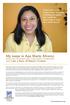 I had come to the United States dreaming of finding my mother but I ended up discovering so much more about myself. My name is Ana Maria Alvarez and I am 20 years old. I am from Guatemala I came to Mary
A Descriptive Study of Depression, Substance Abuse, and Intimate Partner Violence Among Pregnant Women
 A Descriptive Study of Depression, Substance Abuse, and Intimate Partner Violence Among Pregnant Women 1 OVERVIEW This presentation is based on the study of pregnant women enrolled in the Augusta Partnership
Chapter 12: Substance Abusing Pregnant Women, Substance Exposed Children and Their Families
 Chapter 12: Substance Abusing Pregnant Women, Substance Exposed Children and Their Families Introduction Substance abuse includes the abuse of alcohol, tobacco and other drugs. Prenatal substance abuse
Introduction to WIC. Objectives
 Objectives Introduction to WIC After completing this lesson, you will be able to: Describe the participants served by WIC. Describe how WIC improves the health of participants. Identify the history and
Developing Human Fetus
 Period Date LAB. DEVELOPMENT OF A HUMAN FETUS After a human egg is fertilized with human sperm, the most amazing changes happen that allow a baby to develop. This amazing process, called development, normally
Adolescent Pregnancy and Parenting
 1 2 3 4 5 6 7 8 9 10 11 12 13 14 15 Adolescent Pregnancy and Parenting Policy Hearing Panel Second Round Revision BACKGROUND The social work profession is in a distinctive position to respond to the issues
MATERNAL AND CHILD HEALTH 9
 MATERNAL AND CHILD HEALTH 9 Ann Phoya and Sophie Kang oma This chapter presents the 2004 MDHS findings on maternal and child health in Malawi. Topics discussed include the utilisation maternal and child
Kansas Home Visiting Program Identification of High Risk Communities: Methodology and Findings
 Kansas Home Visiting Program Identification of High Risk Communities: Methodology and Findings Sharon Homan, PhD and Cheng-Chung Huang, MPH Kansas Health Institute Jamie Kim and Garry Kelley, Epidemiologists
State Health Assessment Health Priority Status Report Update. June 29, 2015 Presented by UIC SPH and IDPH
 State Health Assessment Health Priority Status Report Update June 29, 2015 Presented by UIC SPH and IDPH 1 Health Priority Presentation Objectives 1. Explain context of how this discussion fits into our
Malawi Population Data Sheet
 Malawi Population Data Sheet 2012 Malawi s Population Is Growing Rapidly Malawi Population (Millions) 26.1 19.1 13.1 9.9 8.0 4.0 5.5 1966 1977 1987 1998 2008 2020 2030 Malawi s population is growing rapidly,
PARENTING WITH A DISABILITY. Know Your Rights Toolkit
 PARENTING WITH A DISABILITY Know Your Rights Toolkit 4 PARENTS WITH DISABILITIES May 5, 2016 Dear Friends: It s normal for parents to want to do everything they can to keep their children safe and make
The Health and Well-being of the Aboriginal Population in British Columbia
 The Health and Well-being of the Aboriginal Population in British Columbia Interim Update February 27 Table of Contents Terminology...1 Health Status of Aboriginal People in BC... 2 Challenges in Vital
Long-term impact of childhood bereavement
 Long-term impact of childhood bereavement Preliminary analysis of the 1970 British Cohort Study (BCS70) Samantha Parsons CWRC WORKING PAPER September 2011 Long-Term Impact of Childhood Bereavement Preliminary
Supporting Information 1. Iodine deficiency disorders, such as goiter, cretinism and mental retardation, are easily prevented.
 Iodine Note to Communicators Iodine is a mineral that is essential for the development and growth of the human body. Iodine deficiency disorders (IDD) begin to affect infants before they are born and can
Give Your Baby a Healthy Start
 The dangers of smoking, drinking, and taking drugs Give Your Baby a Healthy Start Tips for Pregnant Women and New Mothers What you do today can stay with your baby forever Your baby needs your love and
BABY PHASES... Whether You Are Pregnant Now Or Just Thinking About It.
 BABY PHASES... Whether You Are Pregnant Now Or Just Thinking About It. Healthchoice and the Winnie Palmer Hospital for Women & Babies Maternal Education and Breastfeeding Education Center offer an exceptional
in children less than one year old. It is commonly divided into two categories, neonatal
 INTRODUCTION Infant Mortality Rate is one of the most important indicators of the general level of health or well being of a given community. It is a measure of the yearly rate of deaths in children less
How Care Management Can Help You. Disease Management Program. MISSOURI 2015 ISSUE ii
 MISSOURI 2015 ISSUE ii How Care Management Can Help You Got a question or concern about your health? Care Management helps members with special needs. It pairs a member with a care manager. The care manager
F r e q u e n t l y As k e d Qu e s t i o n s
 page 1 Folic Acid Q: What is folic acid? A: Folic (FOH-lik) acid is a B vitamin. It helps the body make healthy new cells. Folic acid and folate mean the same thing. Folic acid is a manmade form of folate.
Preventive Care Guideline for Asymptomatic Low Risk Adults Age 18 through 64
 Preventive Care Guideline for Asymptomatic Low Risk Adults Age 18 through 64 1. BMI - Documented in patients medical record on an annual basis. Screen for obesity and offer intensive counseling and behavioral
AIDS Knowledge Test. Instructions
 AIDS Knowledge Test Instructions This survey has True/False questions. For example: Pittsburgh's hockey team is the Bruins. We want you to do two things: First, answer the question. In this example, you
WHOOPS PROOF BIRTH CONTROL. How to Reach Women and Increase Their Positive Regard for the Most Effective Methods of Contraception
 WHOOPS PROOF BIRTH CONTROL How to Reach Women and Increase Their Positive Regard for the Most Effective Methods of Contraception INTRODUCTION The use of highly effective, low-maintenance methods of birth
Brief Overview of MIRA Channel (Women Mobile Lifeline Channel)
 Brief Overview of MIRA Channel (Women Mobile Lifeline Channel) MIRA Channel or Women Mobile Lifeline Channel - is an integrated mobile phone channel to provide healthcare information and services to rural
Getting Pregnant: The Natural Approach Revealing the Secrets to Increase Your Fertility
 Getting Pregnant: The Natural Approach Revealing the Secrets to Increase Your Fertility Page 1 Contents Introduction 3 Part I Understanding Fertility and Infertility Chapter 1: What is Fertility? 4 - Signs
Definition of Foundational Public Health Services
 Definition of Foundational Public Health Services FOUNDATIONAL CAPABILITIES A. Assessment (Surveillance and Epidemiology). The foundational definition of this capability includes: 1. Ability to collect
Healthy Start FAQ: How to Talk with Moms about Breastfeeding: Starting the Conversation
 Healthy Start FAQ: How to Talk with Moms about Breastfeeding: Starting the Conversation On May 12, 2015, Cathy Carothers facilitated the first part of a three-part webinar on breastfeeding. This first
Ten Tips for Parents. To Help Their Children Avoid Teen Pregnancy
 Ten Tips for Parents To Help Their Children Avoid Teen Pregnancy Ten Tips for Parents To Help Their Children Avoid Teen Pregnancy The National Campaign to Prevent Teen Pregnancy has reviewed research
Important facts to remember
 Important facts to remember If you re pregnant or trying to get pregnant, or if you know someone who is, there are several important points to remember: See a healthcare professional regularly. Get plenty
Public Health - Seattle & King County
 - Seattle & King County Mission Statement Alonzo Plough, Director The mission of Public Health - Seattle & King County is to provide public health services that promote health and prevent disease among