
The day was like any other for Dr. Earl Gedney, an
|
|
|
- Candice Andrea Neal
- 9 years ago
- Views:
Transcription
1 A History of the American College of Osteopathic Sclerotherapeutic Pain Management, the Oldest Prolotherapy Organization Donna Alderman, DO A B S T R A C T Modern Prolotherapy evolved from the insights and courage of a few doctors in the early part of the 1900 s. These pioneers would then form groups to teach others, share knowledge, and improve techniques. The earliest record of such a group started as the American Society of Herniologists in 1926, now known as the American College of Osteopathic Sclerotherapeutic Pain Management. This fascinating article reviews the history of these courageous men and how their hard work and efforts developed into a organization that not only promotes and teaches state-of-the-art Prolotherapy, but is on the cutting edge of musculoskeletal medicine. Journal of Prolotherapy. 2009;4: KEYWORDS: American College of Osteopathic Sclerotherapeutic Pain Management, Prolotherapy, Sclerotherapy, herniologists, Osteopathy. The day was like any other for Dr. Earl Gedney, an osteopathic surgeon at the Osteopathic Hospital in Philadelphia. It was Dr. Gedney prepped for surgery, as usual, but this time when he went through the electric doors to the operating room, the doors closed prematurely on his hand, pulling his thumb joint so far that it hung limp off his hand. After checking with several colleagues and getting X-rays, Dr. Gedney learned there was no fracture, no correctable dislocation, only a very severe stretching of the ligaments and tendons at the thumb joint. He suffered in pain and could barely move his thumb. Far worse, he was told by the best surgeons he knew that there was nothing that could be done for him and that he would have to retire from doing what he loved most, being a surgeon. (See Figure 1.) Dr. Gedney was not the type of person to give up. He was resourceful I N T H E S P O T L I G H T and intelligent. Gedney had been pondering the problem of the hypermobile joint since 1925 when, as a medical student, he heard a lecture on restricted motion in lumbar segments. At that time the young Gedney asked the speaker, the late Dr. Charles Muttart, the question: What about treatment of the vertebra that is too freely mobile? Dr. Muttart answered: That, my young man, is the problem for your generation to solve. Gedney took this to heart. Faced with the situation of his own hypermobile joint, Gedney put his thoughts together. He had recently attended a lecture discussing sclerosing (irritating) solutions for abdominal hernias (muscle weakness or tears) and knew of a group of physicians who had been doing this for years. These physicians were known as herniologists. The idea behind the herniologists method of treatment was that irritating injections would stimulate repair and scar tissue formation, making muscular tissue at the hernia site thicker and stronger. This was in the days before modern surgery when surgical risk was quite high, so a non-surgical approach was popular for hernia repair. The first organization for hernia sclerosing methods was formed in 1923 and became the American Society of Herniologists in By the early 1930s, such procedures were declared a success in the treatment of hernias. The American Osteopathic Society of Herniologists was formed in 1938 for the injection of hernias, veins and hemorrhoids. One of its early Presidents was Dr. Harry Earl Stahlman, a 1918 graduate of the internship program at the Philadelphia College of Osteopathy. (See Figures 2-4.) What happened next set the stage for modern Prolotherapy. Dr. Gedney extrapolated his knowledge of nonsurgical hernia repair to the nonsurgical repair of joints, ligaments and tendons. Reasoning he had little to lose by being a guinea pig for his theory, he started injecting his thumb with the sclerosing solutions and had a dramatically successful result. Before long, he was back working as a surgeon. However, Gedney took it a step further. Excited about his result, Figure 1. Earl Gedney, DO. Figure 2. Harry Stahlman, DO. 200

2 Figure 5. January 1937 Osteopathic Digest Announcement for Gedney Osteopathic Hospital. Figure 3. Diploma of Harry Earl Stahlman, 1918 internship class Philadelphia College of Ostepathy. Figure 4. Board members listed on the letterhead of the American Society of Herniologists. he started on a lifelong career of research and in June 1937, he published his first article Special Technic: Hypermobile Joint: a preliminary report (Osteopathic Profession. 1937; 9:30-31), followed by a presentation: The hypermobile joint further reports on injection method at the February 13, 1938 meeting of the Osteopathic Clinical Society of Philadelphia. Gedney outlined the theory of using sclerosing solutions for joints which had become stretched and were causing pain. The 1937 article gave a preliminary protocol and two case reports, one of a patient with knee pain and another with low back pain, both successfully treated by addressing the hypermobile joint with irritating solutions. He had also recently fathered the Gedney Osteopathic Hospital in Philadelphia where he continued his research. (See Figure 5.) Gedney began experimenting with different irritating solutions and perfecting his technique for joint injections, along with his colleague, David Shuman, DO, a 1931 graduate of the Philadelphia College of Osteopathy and who was then an instructor there. (See Figure 6.) Both men began studying and using this technique on unstable joints, especially knees, lumbar spines and sacroiliac joints. In 1949, an article by Shuman appeared in the medical literature: Sclerotherapy Injections may be the best way to restrengthen ligaments in case of slipped knee cartilage (Osteopathic Profession, 1949). Both Gedney and Shuman continued to do research and publish reports throughout the 1950s. Skepticism, however, among orthopedic surgeons existed and more evidence and studies were needed. Now practicing in Maine, Dr. Gedney was determined to provide this evidence, using his own money to fund research if needed. In March, 1950, a Bangor, Maine paper headlined: Figure 6. David Shuman, from 1931 yearbook, Philadelphia College of Osteopathy. Bangor Doctor Seeks New Approach To Spinal Fusion Of Lower Back In His Experiments With Monkeys. 201

3 The article goes on to explain that Gedney had been contemplating this type of needle surgery study for 20 years, since his graduation from the Philadelphia College of Osteopathy, in order to address the alternative to surgical bone fusion to the complete satisfaction of bone surgeons. (See Figure 7.) The paper reported that Dr. Gedney expected to pay out more than $3,000 from his own pocket to finish this study. The article also states, The doctor says this experiment is a follow-up to another completed in 1940 which resulted in a new internationally recognized technique in treating hypermobile or loose joints. This method involves needle surgery. Unfortunately there does not appear to be any conclusion published to the monkey study, however there are three Gedney publications from addressing disc, low back or sacroiliac issues and injection treatment, but all with regard to human subjects. (Disk syndrome: new approach in the treatment of symptomatic intervertebral disk, Osteopathic Profession, September 1951, 11-15; Technic for sclerotherapy in the management of hypermobile sacroiliac, Osteopathic Profession, August 1952, 16-19; ; Progress report on use of sclerosing solutions in low back syndromes, Osteopathic Profession, August 1954, 18-21, ) By the 1950s, hernia surgical techniques had progressed so well that there was less demand for hernia sclerotherapy, and because of the interest generated by Gedney and Shuman, the herniologists began paying more attention to joint injections. Two groups formed out of the original group of herniologists: The Sclerotherapy College and, in Philadelphia, the Osteopathic College of Joint Sclerotherapy. In 1954 the two groups combined, forming the American Osteopathic College of Sclerotherapy, which became recognized and chartered by the AOA in David Shuman went on to be Secretary-Treasurer of the American Osteopathic College of Sclerotherapy from and also served as President of the Organization, as well as holding distinguished positions as President of the Philadelphia County Osteopathic Society, head of Department of Osteopathic Therapeutics (Juanita Park Medical Center), and Member of the Board of Directors of Blue Cross. In 1960 Shuman published the first layperson s book on joint sclerotherapy, entitled Your Aching Back and What You Can Do About It. The book writes: application of sclerotherapy to weakened sacroiliacs was easy. No operation, no blood, no bone grafts. Just a little weekly hypodermic injection, repeated ten or perhaps a dozen times, and the sacroiliac stayed put. But when it came to problems like spondy [spondylolisthesis], beyond the reach of all operative techniques, and ruptured discs, where operations could promise only a little more than half a chance at complete recovery, sclerotherapy assumed its greatest significance. No myelograms, no nucleograms, no arthrodesis, no fusions, not even hospitalization. Just simple injections, easily made at an office visit the patient could make on his way to the movies. (Gedney and Staab, Your Aching Back and What You Can Do About It, Gramercy Publishing Co, NY, 1960, p. 104). Figure 7. Dr. Gedney with one of his monkeys Pretty, The Bangor Daily News, Bangor, Maine, Friday March 10, 1950, p. 22. The book goes on to give numerous case reports, diagrams and examples. It also discusses the work of George Hackett, MD, another surgeon interested in joint sclerotherapy. About the time Gedney was starting to use joint sclerotherapy, George Hackett, MD, made an observation while doing hernia repair on patients previously treated for hernias with sclerosants. He is quoted as saying, Injections made (usually in error) at 202

4 the junction of ligament and bone resulted in profuse proliferation of new tissue at this union. Although there is no evidence of direct collaboration between Hackett, and either Gedney or Shuman, the studies done independently support each other s conclusions, that sclerotherapy (Prolotherapy) for joint pain and disability worked. Drs Gedney and Shuman and others spent years in their research efforts. They looked at the microscopic effects on ligaments and tendons of various formulas to establish workable protocols for various treatment areas. They formed a lecture team and traveled to various osteopathic medical centers to lecture and demonstrate injections until In 1967, Shuman wrote a journal article stressing the importance of combining the osteopathic principles of mobilization and ambulation, along with joint sclerotherapy, for low back disorders, a novel concept because at the time most low back pain patients were being confined to bed rest for long periods of time. (Ambulation, osteopathic manipulative therapy, and joint sclerotherapy in the management of common low-back disorders, Journal of the American Osteopathic Association, :52-59). In 1986, the name of the American Osteopathic College of Sclerotherapy was changed to reflect its evolution into predominantly injections for joint pain. The new name was The American College of Osteopathic Pain Management and Sclerotherapy. In 1996 the group was granted full status as a college by the AOA and became the American College of Osteopathic Pain Management and Sclerotherapy. Because of a conflict over the use of the term sclerotherapy which was also being used by the osteopathic dermatology group to denote varicose veins injections, the AOA changed our name to The American College of Osteopathic Sclerotherapeutic Pain Management (ACOSPM), which is its current name. After twenty years this name has recently come under discussion as needing updating. Studies and biopsies over the last two decades have shown that Prolotherapy solutions in use today stimulate the proliferation of new normal ligament and tendon tissue, not scar tissue which was originally believed and which is reflected in the name sclero (scar) therapy. To further confuse the issue, the word sclerotherapy has become almost exclusively identified by the general public as meaning varicose vein injections. Thus sclerotherapy has become somewhat of a misnomer as it relates to regenerative joint injections such as Prolotherapy. At the most recent ACOSPM board meeting last spring, discussion began on the idea of changing the name to more accurately represent modern terminology while also preserving the unique historical background of the group. The new name proposed is: The American Osteopathic College of Prolotherapy and Sclerotherapeutic Pain Management. This preserves the historical background of sclerotherapy, and allows continued adjunct teaching of hernia, vein and hemorrhoid injections, but also puts forward the current main emphasis and purpose of our group: Prolotherapy joint injections to stimulate the repair and regeneration of injured joints, ligaments and tendons. Meetings of the ACOSPM continue, with membership open to both DOs and MDs. Over the past forty years these meetings have taken place at least once or twice yearly, offering instruction to both novice and veteran physicians interested in learning about Prolotherapy and other pain injection techniques. At those conferences speakers demonstrate and share their knowledge. Topics include training in Prolotherapy technique as well as hands on workshops and introduction to current developments in the field such as platelet rich plasma (PRP) Prolotherapy injections. Also taught at the meetings are complementary pain injection techniques such as neural therapy and mesotherapy, providing additional tools for the pain practitioner to help his/her patient. Dr. Aline Fournier, a leader in the field of mesotherapy, and Dr. Gerald Harris, a leader in the field of neural therapy, are both regular speakers at the conferences. Other topics for upcoming meetings include the use of stem cells in Prolotherapy and current research. The ACOSPM s journal, GET THE POINT has recently been reinstated and is available on the group s website, Also in the works at the ACOSPM is the creation of a residency program. This has already been presented at a meeting of the American Osteopathic Association (AOA) and is pending approval at the next AOA meeting. The residency program will be open to applications from members and will offer extensive training and practice in Prolotherapy and adjunct treatments. The development of an AOA sanctioned residency program is quite exciting as it allows for the creation of standards, protocols and board certification, and opens the door for the more consistent acceptance of medical insurance reimbursement for these procedures. 203

5 Video recordings of ACOSPM meetings from the 1980s onward document instruction and lectures. (See Figures 8-12.) In conclusion, as an osteopathic physician I cannot help but appreciate the striking correlation between Prolotherapy and the osteopathic principles that must have appealed to the early pioneers in the field: that the body has the inherent capacity to repair itself, with the physician an assistant in this process. Prolotherapy also encompasses the Hippocratic notion of First, do no harm. While complications can occur, they are rare as compared to surgical risk, another appealing element for the early pioneers. The American College of Osteopathic Sclerotherapeutic Pain Management has come a long way in terms of medical and technical advances and the forwarding of the principles of Prolotherapy. I am sure if Drs. Earl Gedney, David Shuman, Harry Stahlman and the others were still with us they would be proud of how far we have come. n Figure 8. Dr. Rodney Chase demonstrating low back injections. Figure 9. Dr. F. Curtis Hudgins demonstrating low back injections. I would like to express special thanks to the following individuals who helped me in their historical knowledge, research assistance and/or sending photos and information: Figure 10. Dr. John Sessions demonstrating low back injections. Figure 11. Dr. John Sessions discussing neck ligament referral patterns. Kent Pomeroy, MD, for his detailed historical chronology and support of our group. Mark Stahlman, NYC, grandson of Dr. Harry Stahlman, for taking the time to pull out his grandfather s photo albums and memorabilia, and also to Steve Stahlman, whose detailed family tree helped me to find one of the original herniologists. Linda Pavina, Executive Director of the American College of Osteopathic Sclerotherapeutic Pain Management, for her assistance in answering questions and transferring historical videos to DVD. Gerald Harris, DO, for locating the out of print book by David Shuman, and providing other useful information. Mitzi Killeen, Cataloger & Special Collections, Philadelphia College of Osteopathic Medicine medical library, for pulling, scanning, and ing the archived information on Earl Gedney and David Shuman. Also thanks to Stephanie Ferretti and Randall Blackwell at the library for sending needed reference articles. Figure 12. Dr. John Sessions, first graduating class, Texas College of Osteopathic Medicine, 1974 (back row). Dr. Sessions is a current ACOSPM Board Member. 204

.org. Arthritis of the Hand. Description
 Arthritis of the Hand Page ( 1 ) The hand and wrist have multiple small joints that work together to produce motion, including the fine motion needed to thread a needle or tie a shoelace. When the joints
.org. Herniated Disk in the Lower Back. Anatomy. Description
 Herniated Disk in the Lower Back Page ( 1 ) Sometimes called a slipped or ruptured disk, a herniated disk most often occurs in your lower back. It is one of the most common causes of low back pain, as
Treatment Options for Rotator Cuff Tears A Guide for Adults
 Treatment Options for Rotator Cuff Tears A Guide for Adults Is This Guide for Me? YES, if your doctor has told you that you have a rotator cuff tear, which is an injury to one or more of the muscles and
Calcaneus (Heel Bone) Fractures
 Copyright 2010 American Academy of Orthopaedic Surgeons Calcaneus (Heel Bone) Fractures Fractures of the heel bone, or calcaneus, can be disabling injuries. They most often occur during high-energy collisions
SPINAL FUSION. North American Spine Society Public Education Series
 SPINAL FUSION North American Spine Society Public Education Series WHAT IS SPINAL FUSION? The spine is made up of a series of bones called vertebrae ; between each vertebra are strong connective tissues
Lumbar Laminectomy and Interspinous Process Fusion
 Lumbar Laminectomy and Interspinous Process Fusion Introduction Low back and leg pain caused by pinched nerves in the back is a common condition that limits your ability to move, walk, and work. This condition
ARTHRITIS INTRODUCTION
 ARTHRITIS INTRODUCTION Arthritis is the most common disease affecting the joints. There are various forms of arthritis but the two that are the most common are osteoarthritis (OA), and rheumatoid arthritis
Open Discectomy. North American Spine Society Public Education Series
 Open Discectomy North American Spine Society Public Education Series What Is Open Discectomy? Open discectomy is the most common surgical treatment for ruptured or herniated discs of the lumbar spine.
www.backandspinefl.com Back and Spine Center 509 Riverside Dr., Suite 203 Stuart, FL 34994 Phone: (772) 288-5862
 Non-Profit ORG. U.S. Postage PAID West Palm BCH. FL. PERMIT NO. 4709 www.backandspinefl.com Back and Spine Center 509 Riverside Dr., Suite 203 Stuart, FL 34994 Phone: (772) 288-5862 The evolution of neurosurgery
Patient Guide to Lower Back Surgery
 The following is a sampling of products offered by Zimmer Spine for use in Open Lumbar Fusion procedures. Patient Guide to Lower Back Surgery Open Lumbar Fusion Dynesys The Dynesys Dynamic Stabilization
MEDICAL BREAKTHROUGHS RESEARCH SUMMARY
 MEDICAL BREAKTHROUGHS RESEARCH SUMMARY TOPIC: STEM CELLS FOR SPORTS INJURIES REPORT: MB # 3975 BACKGROUND: Sports injuries can occur during any sports or exercise activities. The term typically refers
Does the pain radiating down your legs, buttocks or lower back prevent you from walking long distances?
 Does the pain radiating down your legs, buttocks or lower back prevent you from walking long distances? Do you experience weakness, tingling, numbness, stiffness, or cramping in your legs, buttocks or
Low Back Injury in the Industrial Athlete: An Anatomic Approach
 Low Back Injury in the Industrial Athlete: An Anatomic Approach Earl J. Craig, M.D. Assistant Professor Indiana University School of Medicine Department of Physical Medicine and Rehabilitation Epidemiology
Lumbar Spinal Stenosis
 Copyright 2009 American Academy of Orthopaedic Surgeons Lumbar Spinal Stenosis Almost everyone will experience low back pain at some point in their lives. A common cause of low back pain is lumbar spinal
Herniated Lumbar Disc
 Herniated Lumbar Disc North American Spine Society Public Education Series What Is a Herniated Disc? The spine is made up of a series of connected bones called vertebrae. The disc is a combination of strong
Herniated Disk in the Lower Back
 Nader M. Hebela, MD Fellow of the American Academy of Orthopaedic Surgeons http://orthodoc.aaos.org/hebela Cleveland Clinic Abu Dhabi Cleveland Clinic Abu Dhabi Neurological Institute Al Maryah Island
Back & Neck Pain Survival Guide
 Back & Neck Pain Survival Guide www.kleinpeterpt.com Zachary - 225-658-7751 Baton Rouge - 225-768-7676 Kleinpeter Physical Therapy - Spine Care Program Finally! A Proven Assessment & Treatment Program
Patient Guide to Neck Surgery
 The following is a sampling of products offered by Zimmer Spine for use in Anterior Cervical Fusion procedures. Patient Guide to Neck Surgery Anterior Cervical Fusion Trinica Select With the Trinica and
visualized. The correct level is then identified again. With the use of a microscope and
 SURGERY FOR SPINAL STENOSIS Laminectomy A one inch (or longer for extensive stenosis) incision is made in the middle of the back over the effected region of the spine. The muscles over the bone are moved
VCA Animal Specialty Group 5610 Kearny Mesa Rd., Suite B San Diego, CA 92111 858-560-8006 www.vcaanimalspecialtygroup.com.
 Disk Disease While not limited to small breeds, disc disease is much more prevalent among Dachshunds, Lhasa Apsos, Poodles, Beagles and Pekingese primarily due to genetic factors. These traits result in
OSTEOPATHIC CARE OF CHILDREN
 OSTEOPATHIC CARE OF CHILDREN OSTEOPATHIC HEALTHCARE OF MAINE OSTEOPATHIC CARE OF CHILDREN Donald V. Hankinson, D.O. Childhood is a time when the potential for mental, physical and spiritual growth is profound.
.org. Plantar Fasciitis and Bone Spurs. Anatomy. Cause
 Plantar Fasciitis and Bone Spurs Page ( 1 ) Plantar fasciitis (fashee-eye-tiss) is the most common cause of pain on the bottom of the heel. Approximately 2 million patients are treated for this condition
Temple Physical Therapy
 Temple Physical Therapy A General Overview of Common Neck Injuries For current information on Temple Physical Therapy related news and for a healthy and safe return to work, sport and recreation Like Us
Animal Systems: The Musculoskeletal System
 Animal Systems: The Musculoskeletal System Tissues, Organs, and Systems of Living Things Cells, Cell Division, and Animal Systems and Plant Systems Cell Specialization Human Systems The Digestive The Circulatory
KNEE LIGAMENT REPAIR AND RECONSTRUCTION INFORMED CONSENT INFORMATION
 KNEE LIGAMENT REPAIR AND RECONSTRUCTION INFORMED CONSENT INFORMATION The purpose of this document is to provide written information regarding the risks, benefits and alternatives of the procedure named
Information on the Chiropractic Care of Lower Back Pain
 Chiropractic Care of Lower Back Pain Lower back pain is probably the most common condition seen the the Chiropractic office. Each month it is estimated that up to one third of persons experience some type
San Diego Stem Cell Treatment Center Frequently Asked Questions
 San Diego Stem Cell Treatment Center Frequently Asked Questions What is a Stem Cell? A stem cell is basically any cell that can replicate and differentiate. This means the cell can not only multiply, but
.org. Cervical Radiculopathy (Pinched Nerve) Anatomy. Cause
 Cervical Radiculopathy (Pinched Nerve) Page ( 1 ) Cervical radiculopathy, commonly called a pinched nerve occurs when a nerve in the neck is compressed or irritated where it branches away from the spinal
SPINAL STENOSIS Information for Patients WHAT IS SPINAL STENOSIS?
 SPINAL STENOSIS Information for Patients WHAT IS SPINAL STENOSIS? The spinal canal is best imagined as a bony tube through which nerve fibres pass. The tube is interrupted between each pair of adjacent
Do you have Back Pain? Associated with:
 Do you have Back Pain? Associated with: Herniated Discs? Protruding Discs? Degenerative Disk Disease? Posterior Facet Syndrome? Sciatica? You may be a candidate for Decompression Therapy The Dynatronics
Plantar Fascia Release
 Plantar Fascia Release Introduction Plantar fasciitis is a common condition that causes pain around the heel. It may be severe enough to affect regular activities. If other treatments are unsuccessful,
Neck Injuries and Disorders
 Neck Injuries and Disorders Introduction Any part of your neck can be affected by neck problems. These affect the muscles, bones, joints, tendons, ligaments or nerves in the neck. There are many common
Scaphoid Fracture of the Wrist
 Page 1 of 6 Scaphoid Fracture of the Wrist Doctors commonly diagnose a sprained wrist after a patient falls on an outstretched hand. However, if pain and swelling don't go away, doctors become suspicious
.org. Achilles Tendinitis. Description. Cause. Achilles tendinitis is a common condition that causes pain along the back of the leg near the heel.
 Achilles Tendinitis Page ( 1 ) Achilles tendinitis is a common condition that causes pain along the back of the leg near the heel. The Achilles tendon is the largest tendon in the body. It connects your
.org. Rotator Cuff Tears. Anatomy. Description
 Rotator Cuff Tears Page ( 1 ) A rotator cuff tear is a common cause of pain and disability among adults. In 2008, close to 2 million people in the United States went to their doctors because of a rotator
Consult Newsletter. Enter the rendering provider NPI # in the unshaded area of the field. Only one provider can be billed per claim form (optional).
 Notice If a website link within this document does not direct you to the appropriate information or website location, please contact Provider Services by telephone. The Provider Services directory is located
Endoscopic Plantar Fasciotomy
 Endoscopic Plantar Fasciotomy Introduction Plantar fasciitis is a common condition that causes pain centralized around the heel. It may be severe enough to affect regular activities. Health care providers
Here is a SPECIAL REPORT on Spinal Decompression Therapy
 Here is a SPECIAL REPORT on Spinal Decompression Therapy YOU MAY BE ABLE TO AVOID SURGERY WITH SPINAL DECOMPRESSION THERAPY If you or a loved one is suffering from disc herniation(s), degenerative joint
Regenerative Medicine
 January 2014 LIVING WATERS MEDICAL SPA AND WELLNESS CENTER Happy New Year A New Year: A New YOU! Regenerative Medicine We have all made numerous New Year s Resolutions in our life times, many I m sure
Lumbar Spinal Stenosis
 Lumbar Spinal Stenosis North American Spine Society Public Education Series What Is Lumbar Spinal Stenosis? The vertebrae are the bones that make up the lumbar spine (low back). The spinal canal runs through
.org. Ankle Fractures (Broken Ankle) Anatomy
 Ankle Fractures (Broken Ankle) Page ( 1 ) A broken ankle is also known as an ankle fracture. This means that one or more of the bones that make up the ankle joint are broken. A fractured ankle can range
Lower Back Pain. Introduction. Anatomy
 Lower Back Pain Introduction Back pain is the number one problem facing the workforce in the United States today. To illustrate just how big a problem low back pain is, consider these facts: Low back pain
Orthopaedic Spine Center. Anterior Cervical Discectomy and Fusion (ACDF) Normal Discs
 Orthopaedic Spine Center Graham Calvert MD James Woodall MD PhD Anterior Cervical Discectomy and Fusion (ACDF) Normal Discs The cervical spine consists of the bony vertebrae, discs, nerves and other structures.
LOW BACK PAIN. common of these conditions include: muscle strain ( pulled muscle ), weak core muscles
 LOW BACK PAIN Most episodes of low back pain are caused by relatively harmless conditions. The most common of these conditions include: muscle strain ( pulled muscle ), weak core muscles (abdominal and
Orthopaedic Approaches to Chronic Neck and Lower Back Pain
 Orthopaedic Approaches to Chronic Neck and Lower Back Pain David C. Urquia, MD Augusta Orthopaedic Associates / Waterville Orthopedics Introduction We see many patients who have longstanding pain in the
Platelet-Rich Plasma (PRP) Injections for Osteoarthritis and Chronic Tendinitis. How will you benefit from a PRP injection?
 Platelet-Rich Plasma (PRP) Injections for Osteoarthritis and Chronic Tendinitis How will you benefit from a PRP injection? Emory Healthcare patients can now benefit from a treatment called platelet-rich
Orthopaedic Stem Cell Treatment
 Orthopaedic Stem Cell Treatment Stem Cell Injections Surgically Implanted Stem Cells Learn about the treatment option that is best for you. Emory Healthcare patients can benefit from surgical implantation
DENVER CHIROPRACTIC CENTER GLENN D. HYMAN, DC, CSCS
 DENVER CHIROPRACTIC CENTER GLENN D. HYMAN, DC, CSCS Are you in the right place? Please read this before proceeding with paperwork: At Denver Chiropractic Center, we specialize in treating muscles with
American Heritage Life Insurance Company
 Policy GVAP1 pays the following benefits for covered on and off the job accidental injuries that result within 90 days (180 days for Accidental Death or Dismemberment) from the date of the accident. A
https://www.laserspineinstitute.com/back_problems/foraminal_stenosis/e...
 Questions? Call toll free 1-866-249-1627 Contact us today. We're here for you seven days a week. MRI Review Consultation Live help Call 1-866-249-1627 Chat Live Home Laser Spine Institute Laser Spine Institute's
SPINE SURGERY - LUMBAR DECOMPRESSION
 SPINE SURGERY - LUMBAR DECOMPRESSION Information Leaflet Your Health. Our Priority. Page 2 of 7 Introduction This booklet has been compiled by the physiotherapy department to help you understand lumbar
Appointment Types First outpatient. Clinic Types CATS Spine CATS Hip and Knee CATS General Orthopaedic Injection Clinic Podiatry/Foot and Ankle
 Clinic Types CATS Spine CATS Hip and Knee CATS General Orthopaedic Injection Clinic Podiatry/Foot and Ankle Conditions Treated Ankle & foot pain & stiffness Back pain & stiffness Carpal Tunnel/ Nerve impingement/entrapment
A Patient s Guide to Artificial Cervical Disc Replacement
 A Patient s Guide to Artificial Cervical Disc Replacement Each year, hundreds of thousands of adults are diagnosed with Cervical Disc Degeneration, an upper spine condition that can cause pain and numbness
ACL Injuries in Women Webcast December 17, 2007 Christina Allen, M.D. Introduction
 ACL Injuries in Women Webcast December 17, 2007 Christina Allen, M.D. Please remember the opinions expressed on Patient Power are not necessarily the views of UCSF Medical Center, its medical staff or
THE MEDICAL TREATMENT GUIDELINES
 THE MEDICAL TREATMENT GUIDELINES I. INTRODUCTION A. About the Medical Treatment Guidelines. On December 1, 2010, the NYS Workers' Compensation Board is implementing new regulations and Medical Treatment
2015 American Association of Orthopedic Medicine Annual Workshop Cervical/Thoracic Spine, Upper Extremity. Denver, CO 16 hrs
 Education: 2015 American Association of Orthopedic Medicine Annual Workshop Cervical/Thoracic Spine, Upper Extremity. Denver, CO 16 hrs 2015 AAOM Annual Workshop: Pre Conference. Ultrasound Imaging and
Re: Inquiry into Australia Post s treatment of injured and ill workers
 Re: Inquiry into Australia Post s treatment of injured and ill workers I became a night shift mail sorter at Delivery Centre working for 25 hours a week In the same month 2004 I obtained my bike license
Depression. Introduction Depression is a common condition that affects millions of people every year.
 Depression Introduction Depression is a common condition that affects millions of people every year. Depression has an impact on most aspects of everyday life. It affects eating and sleeping routines,
Elbow Injuries and Disorders
 Elbow Injuries and Disorders Introduction Your elbow joint is made up of bone, cartilage, ligaments and fluid. Muscles and tendons help the elbow joint move. There are many injuries and disorders that
Lumbar Nerve Root Block
 Lumbar Nerve Root Block Spinal Unit Tel: 01473 702032 or 702097 Issue 2: January 2009 Imaging techniques, such as an MRI scan, can reveal small disc bulges and / or wear and tear in the spine with possible
Treating Bulging Discs & Sciatica. Alexander Ching, MD
 Treating Bulging Discs & Sciatica Alexander Ching, MD Disclosures Depuy Spine Teaching and courses K2 Spine Complex Spine Study Group Disclosures Take 2 I am a spine surgeon I like spine surgery I believe
.org. Fractures of the Thoracic and Lumbar Spine. Cause. Description
 Fractures of the Thoracic and Lumbar Spine Page ( 1 ) Spinal fractures can vary widely in severity. While some fractures are very serious injuries that require emergency treatment, other fractures can
MANAGING BACK PAIN GETTING YOU BACK INTO ACTION MANAGING BACK PAIN. www.healthcare-rm.com
 H E A L T H R I S K M A N A G E M E N T MANAGING BACK PAIN MANAGING BACK PAIN GETTING YOU BACK INTO ACTION GETTING YOU BACK INTO ACTION www.healthcare-rm.com Who is this for? CONTENTS Introduction about
Wrist and Hand. Patient Information Guide to Bone Fracture, Bone Reconstruction and Bone Fusion: Fractures of the Wrist and Hand: Carpal bones
 Patient Information Guide to Bone Fracture, Bone Reconstruction and Bone Fusion: Wrist and Hand Fractures of the Wrist and Hand: Fractures of the wrist The wrist joint is made up of the two bones in your
Information for the Patient About Surgical
 Information for the Patient About Surgical Decompression and Stabilization of the Spine Aging and the Spine Daily wear and tear, along with disc degeneration due to aging and injury, are common causes
A Patient s Guide to Guyon s Canal Syndrome
 A Patient s Guide to DISCLAIMER: The information in this booklet is compiled from a variety of sources. It may not be complete or timely. It does not cover all diseases, physical conditions, ailments or
The Arizona Quarterly Spine Official Newsletter of SpineScottsdale Physical Therapy and the Center for SpineHealth
 Q2 2013 What s new in 2013? P a g e 1 SpineScottsdale Physical Therapy The Arizona Quarterly Spine Official Newsletter of SpineScottsdale Physical Therapy and the Center for SpineHealth Center for SpineHealth
.org. Posterior Tibial Tendon Dysfunction. Anatomy. Cause. Symptoms
 Posterior Tibial Tendon Dysfunction Page ( 1 ) Posterior tibial tendon dysfunction is one of the most common problems of the foot and ankle. It occurs when the posterior tibial tendon becomes inflamed
Get Back to the Life You Love! The MedStar Spine Center in Chevy Chase
 Get Back to the Life You Love! The MedStar Spine Center in Chevy Chase The MedStar Spine Center in Chevy Chase Relief from Pain, Restoration of Function Non-surgical, Minimally Invasive and Complex Surgical
Sciatica Yuliya Mutsa PTA 236
 Sciatica Yuliya Mutsa PTA 236 Sciatica is a common type of pain affecting the sciatic nerve, which extends from the lower back all the way through the back of the thigh and down through the leg. Depending
Whiplash and Whiplash- Associated Disorders
 Whiplash and Whiplash- Associated Disorders North American Spine Society Public Education Series What Is Whiplash? The term whiplash might be confusing because it describes both a mechanism of injury and
If you have opted out of the student plan, check with your other health plan to see if it covers chiropractic services.
 MacEwan Student Centre, Room 370 2500 University Drive NW Calgary, AB, Canada T2N 1N4 ucalgary.ca/wellnesscentre CHIROPRACTIC SERVICES FAQs How much does it cost? The SU Wellness Centre has very affordable
A Patient s Guide to Diffuse Idiopathic Skeletal Hyperostosis (DISH)
 A Patient s Guide to Diffuse Idiopathic Skeletal Hyperostosis (DISH) Introduction Diffuse Idiopathic Skeletal Hyperostosis (DISH) is a phenomenon that more commonly affects older males. It is associated
Direct Lateral Interbody Fusion A Minimally Invasive Approach to Spinal Stabilization
 APPROVED IRN10389-1.1-04 Direct Lateral Interbody Fusion A Minimally Invasive Approach to Spinal Stabilization Because it involves accessing the spine through the patient s side, the Direct Lateral approach
NIA Magellan 1 Hip, Knee & Spine Surgery Frequently Asked Questions (FAQs) for Florida Blue Medicare Advantage BlueMedicare SM HMO and PPO Plans
 NIA Magellan 1 Hip, Knee & Spine Surgery Frequently Asked Questions (FAQs) for Florida Blue Medicare Advantage BlueMedicare SM HMO and PPO Plans Question GENERAL Why is Florida Blue implementing a Musculoskeletal
Options for Cervical Disc Degeneration A Guide to the M6-C. clinical study
 Options for Cervical Disc Degeneration A Guide to the M6-C clinical study Each year, hundreds of thousands of adults are diagnosed with Cervical Disc Degeneration, an upper spine condition that can cause
Herniated Disk. This reference summary explains herniated disks. It discusses symptoms and causes of the condition, as well as treatment options.
 Herniated Disk Introduction Your backbone, or spine, has 24 moveable vertebrae made of bone. Between the bones are soft disks filled with a jelly-like substance. These disks cushion the vertebrae and keep
SPINE AND NECK SURGERY: MAKING A DECISION THAT S RIGHT FOR YOU
 1. GET THE FACTS: Back and neck pain affects 8 out of 10 people at some point in their life. Acute back and neck pain comes on suddenly and usually lasts from a few days to a few weeks. Chronic back and
Marc A. Cohen, MD, FAAOS, FACS Diplomate American Board of Spinal Surgery Fellow American College of Spinal Surgery
 Marc A. Cohen, MD, FAAOS, FACS Diplomate American Board of Spinal Surgery Fellow American College of Spinal Surgery 221 Madison Ave Morristown, New Jersey 07960 (973) 538 4444 Fax (973) 538 0420 Patient
THE MAJOR IMPACT OF THE NEW MINOR INJURIES CATEGORY
 THE MAJOR IMPACT OF THE NEW MINOR INJURIES CATEGORY By Cary N. Schneider September, 2010 VOL. 4, ISSUE 4 Cary N. Schneider is a partner at Beard Winter LLP who specializes in accident benefit and tort
BOYER CHIROPRACTIC INC
 Patient Name: Birthdate: Sex: M / F Address: City: State: Zip: Telephone: Social Security #: Driver Lic. #: Occupation: Employer: Work Phone: Address: City: State: Zip: Subscriber Name: Health Plan: Subscriber
WEEKLY SAFETY MEETING All Euramax Subsidiaries BACK SAFETY / PROPER LIFTING. Safety Meeting Contents. Meeting Notice. Leaders Guide.
 Safety Meeting Contents Meeting Notice Employee Handout Employee Quiz Meeting Sign-In Sheet Employee Puzzle PRIOR TO THE WEEKLY MEETING: - Post the meeting notice by the timeclock - Read through the and
July 2012 Exercise Away Your Knee Pain It seems counterintuitive, but when it hurts to move
 Exercise Away Your Knee Pain It seems counterintuitive, but when it hurts to move your knee, the best thing you can do is move your knee. A 2009 study in the British Medical Journal found that supervised
5 SECRETS TO MD REFERRALS JEFF LANGMAID, DC
 5 SECRETS TO MD REFERRALS JEFF LANGMAID, DC 5 SECRETS TO MD REFERRALS BY JEFFREY M. LANGMAID, DC Copyright 2014@ The Evidence Based Chiropractor All rights reserved. No portion of these materials may be
How To Treat Injured Dogs With Physical Therapy
 By Janet D. Collins Physical therapy (PT) for animals: A new and exploding field of treatment for injured pets, principally dogs. Just as in humans, PT can have amazing results, giving the animals a new
Anterior Cervical Discectomy and Fusion
 A Patient s Guide to Anterior Cervical Discectomy and Fusion 651 Old Country Road Plainview, NY 11803 Phone: 5166818822 Fax: 5166813332 [email protected] DISCLAIMER: The information in this booklet is
Butler Chiropractic and Wellness "WHAT... "You Should Know and Ask" before going to the Chiropractor"
 Butler Chiropractic and Wellness "WHAT... "You Should Know and Ask" before going to the Chiropractor" 1. What is chiropractic care? There's nothing mysterious about chiropractic. It's a natural method
Basal Joint Arthritis
 Basal Joint Arthritis What Is Basal Joint Arthritis? Arthritis is a disease that causes inflammation and stiffness in the joints. It often affects the joint at the base of the thumb, called the basal joint.
MICHAEL C. WEISS, D.O., FAOAO
 MICHAEL C. WEISS, D.O., FAOAO Chairman, Department of Surgery American Osteopathic Board of Orthopedic Surgery National Board of Osteopathic Medical Examiners The American Osteopathic Academy of Orthopedics
Arthroscopy of the Hand and Wrist
 Arthroscopy of the Hand and Wrist Arthroscopy is a minimally invasive procedure whereby a small camera is inserted through small incisions of a few millimeters each around a joint to view the joint directly.
Is Your Neck Or Back Pain Caused By A Herniated Disc?
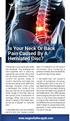 Is Your Neck Or Back Pain Caused By A Herniated Disc? The bones in your spine are called the vertebrae. The vertebrae are held together and in place by ligaments and small discs that act as shock absorbers.
Spinal Anatomy. * MedX research contends that the lumbar region really starts at T-11, based upon the attributes of the vertebra.
 Spinal Anatomy Overview Neck and back pain, especially pain in the lower back, is one of the most common health problems in adults. Fortunately, most back and neck pain is temporary, resulting from short-term
1 REVISOR 5223.0070. (4) Pain associated with rigidity (loss of motion or postural abnormality) or
 1 REVISOR 5223.0070 5223.0070 MUSCULOSKELETAL SCHEDULE; BACK. Subpart 1. Lumbar spine. The spine rating is inclusive of leg symptoms except for gross motor weakness, bladder or bowel dysfunction, or sexual
THE VEIN CENTER. State-of-the-Art Treatment for Varicose Veins and Spider Veins
 THE VEIN CENTER State-of-the-Art Treatment for Varicose Veins and Spider Veins Vein Disorders Nearly 50 percent of the adult population suffers from undesirable, sometimes painful vein disease. The most
Clients w/ Orthopedic, Injury and Rehabilitation Concerns. Chapter 21
 Clients w/ Orthopedic, Injury and Rehabilitation Concerns Chapter 21 Terminology Macrotrauma A specific, sudden episode of overload injury to a given tissue, resulting in disrupted tissue integrity (Acute)
SOLUTIONS Cancer supplemental cancer insurance
 Available for state of Arkansas employees. WASHINGTON NATIONAL SOLUTIONS Cancer supplemental cancer insurance Benefits. Options. Advocacy. CN-BR-C-SOA PLAN C Each year, millions of Americans are diagnosed