
NE Brazil Part One: Beaches to the Badlands 2013
|
|
|
- Oswald Price
- 9 years ago
- Views:
Transcription
1 Field Guides Tour Report NE Brazil Part One: Beaches to the Badlands 2013 Jan 8, 2013 to Feb 9, 2013 Marcelo Padua (I & II), Dan Lane (I) & Bret Whitney (II) For our tour description, itinerary, past triplists, dates, fees, and more, please VISIT OUR TOUR PAGE. PLEASE NOTE: This list is only partially indicative of the tour as we will operate it in 2015 and thereafter. In 2015, the tour will be quite similar to what we used to call Beaches and Badlands Part 1, plus a week-long extension to southern Bahia that will add a great many species. At this time, we do not plan to visit two regions we used to bird on old West to the Araguaia Part 2, namely northern Minas Gerais and the Araguaia region of Tocantins. Those areas have proven to be just too wet at this time of year to be consistently productive. Birding Northeast Brazil is not easy. The remaining patches of habitat are few and far apart, and due to massive habitat loss many of the birds endemic to the area are now endangered. During the many years that we have been running this tour we have seen more than one species disappear from nature, as is the case with Spix's Macaw and possibly Alagoas, with no reported sighting for quite some time now. Habitats on our route vary from beautiful coastal plains and mountains covered with lush vegetation and rich in moisture to the arid, where droughts are a constant part of life. Weather plays a major role in the success of this tour, as the rains can make it very difficult to reach the patches of habitat that are still preserved, but severe droughts make life hard on birds that in return become less vocal and responsive to tape. This year we were faced with the most severe drought in 50 years in Northeast Brazil and we felt the effects of it every day in the field, but we nevertheless managed to see most of the rarities that we set out to find. Our tour started on the coast, where we stayed at a beautiful hotel right on the beach that served as our base for finding special birds such as Forbes's Blackbird, Seven-colored Tanager, Alagoas Tyrannulet, Pinto's Spinetail, Long-tailed Woodnymph, and the tiny Orangebellied Antwren. We then headed to the historic town of Palmares, famous for being the home of the of the largest community of escaped slaves in the 1600's. Today it holds one of two known patches of suitable habitat for a number of endangered species such as Alagoas Foliage-gleaner and Alagoas Antwren, both of which may now be gone from the wild. We still managed to find quite a few rarities in the A Ruby-topaz Hummingbird feeding at a cactus flower (Photo by guide Marcelo Padua) area, from Scalloped Antbird, Mantled Hawk, and Black-hooded Berryeater to some other species that are always a treat to see, such as Rufous Gnateater and Spotted Nothura. Up next was the state of Ceara where we enjoyed great looks at Spot-winged Wood-Quail, Gray-headed Spinetail, Gould's Toucanet, Ochraceous Piculet, Caatinga Antwren, and the stunning Araripe Manakin, and we finished things off with a memorable hunt for Pygmy Nightjar. Our next goal was to find the endangered Indigo Macaw, but our long drive to their foraging grounds ended initially in disappointment due to bad weather. But we came back for another try the next day and our persistence paid off with great looks at several pairs at close range. We rounded out Part I of the tour with a visit to the historic town of Lencois, where we found several of our targets such as Hooded Visorbearer, Sincora Antwren, Collared Crescentchest, Broad-tipped Hermit, San Francisco Sparrow, and Gray-backed Tachuri. A tour of the old part of the city of Salvador culminated in a memorable dinner where we said goodbye to the folks returning home and met up with Bret and the participants joining Part II of the tour. Our second section of the tour got off to a great start in Boa Nova, where we had superb looks at several Northeast Brazil specialties such as Slender Antbird, Narrow-billed Antwren, and an exceptionally cooperative Caatinga Antwren, as well as a great sample of Atlantic Forest specialties which included Striated Softtail, Golden-chevroned Tanager, and White-collared Foliage-gleaner. But the real treat was visiting a nearby area that was one of the most remarkable shows in nature I had ever seen. Dozens of hummingbirds like Ruby Topaz, Versicolored Emeralds, and Swallow-tailed Hummingbirds were concentrated in a small area feeding on cactus flowers -- an image that will forever be imprinted in my memory. Field Guides Birding Tours

2 Up next was the coastal area of Porto Seguro, where we connected with a several great specialties such as Hook-billed Hermit, White-winged Potoo, the nominate form of Red-billed Scythebill, and a fruiting tree that was a magnet for White-winged Cotingas. Our next goal was one of the most anticipated moments of the tour for both me and Bret -- our search for the critically endangered Stresemann's Bristlefront, one of the rarest birds in the world, for the first time on a tour. We had absolutely amazing looks at this bird that has an estimated world population of only about 15 individuals. The state of Minas Gerais continued to reward us with great sightings as we had prolonged scope looks at Moustached Woodcreeper, very good looks at White-browed Antpitta, Great Xenops, Bahia Nighthawk, Rusty-breasted Nunlet, and White-naped Jay. As we moved west to the Araguaia, we continued racking up a number of great endemics, such as Cardinal, Bananal Antbird, and an as yet undescribed species of spinetail. This was a challenging year for conditions in Northeast Brazil, but our experience of many years running this tour made it possible for us to find most of the endemics and rarities nevertheless, and most importantly we had a great time while we were at it. Your guides are already looking forward to doing it all over again next year! --Marcelo NOTE: Our list below includes both Part I and Part II of the tour, and sightings for each tour are marked with either a Roman numeral I or Roman numeral II, respectively, and if a species was heard only on one part or the other, this is marked with an asterisk (*). KEYS FOR THIS LIST One of the following keys may be shown in brackets for individual species as appropriate: * = heard only, I = introduced, E = endemic, N = nesting, a = austral migrant, b = boreal migrant BIRDS Rheidae (Rheas) GREATER RHEA (Rhea americana) II Tinamidae (Tinamous) BROWN TINAMOU (Crypturellus obsoletus) II* UNDULATED TINAMOU (Crypturellus undulatus) II* YELLOW-LEGGED TINAMOU (Crypturellus noctivagus) I*/II* [E] SMALL-BILLED TINAMOU (Crypturellus parvirostris) I*/II TATAUPA TINAMOU (Crypturellus tataupa) II* RED-WINGED TINAMOU (Rhynchotus rufescens) I*/II* WHITE-BELLIED NOTHURA (Nothura boraquira) I* - This was seen by a few participants as it crossed the road on the way to the Indigo Macaw's site, but most of the group could just hear it. SPOTTED NOTHURA (Nothura maculosa) I - During the time that we spent around Palmares we saw one of them around some pastures. Anhimidae (Screamers) HORNED SCREAMER (Anhima cornuta) II - We saw these amazing birds near Praia Alta where they were relatively common! Anatidae (Ducks, Geese, and Waterfowl) WHITE-FACED WHISTLING-DUCK (Dendrocygna viduata) I/II BLACK-BELLIED WHISTLING-DUCK (Dendrocygna autumnalis) II COMB DUCK (Sarkidiornis melanotos) I - Mary spotted 5 Comb Ducks as they flew over us near Petrolina. ORINOCO GOOSE (Neochen jubata) II - The araguaia river basin is the best area in Brazil to see these handsome Geese. This year there was a huge concentration of them in the areas and we had spectacular views. MUSCOVY DUCK (Cairina moschata) II BRAZILIAN TEAL (Amazonetta brasiliensis) I/II WHITE-CHEEKED PINTAIL (Anas bahamensis) I Cracidae (Guans, Chachalacas, and Curassows) RUSTY-MARGINED GUAN (Penelope superciliaris) II CHESTNUT-BELLIED GUAN (Penelope ochrogaster) II - We had these Guans very close to the lodge at Praia Alta. BARE-FACED CURASSOW (Crax fasciolata) II - Seen repeatedly on a sand bank across the river from our lodge at Praia Alta. Odontophoridae (New World Quail) SPOT-WINGED WOOD-QUAIL (Odontophorus capueira) I - It took a lot of work and quite a bit of walking up the hill this year, but we managed to pull one of these shy birds across the trail. Allowing everyone to get pretty good looks at it. Podicipedidae (Grebes) LEAST GREBE (Tachybaptus dominicus) I PIED-BILLED GREBE (Podilymbus podiceps) I Ciconiidae (Storks) JABIRU (Jabiru mycteria) II - This impressive Stork is always a crowd pleaser and we had great looks at it near Praia Alta. Field Guides Birding Tours

3 WOOD STORK (Mycteria americana) I/II Fregatidae (Frigatebirds) MAGNIFICENT FRIGATEBIRD (Fregata magnificens) I Phalacrocoracidae (Cormorants and Shags) NEOTROPIC CORMORANT (Phalacrocorax brasilianus) I/II Anhingidae (Anhingas) ANHINGA (Anhinga anhinga) I/II Ardeidae (Herons, Egrets, and Bitterns) LEAST BITTERN (Ixobrychus exilis) II* RUFESCENT TIGER-HERON (Tigrisoma lineatum) I/II - The interesting name of this heron refers to the pattern of the juvenile birds which resemble the pattern of a Tiger. COCOI HERON (Ardea cocoi) II GREAT EGRET (Ardea alba) I/II SNOWY EGRET (Egretta thula) I/II LITTLE BLUE HERON (Egretta caerulea) I/II CATTLE EGRET (Bubulcus ibis) I/II STRIATED HERON (Butorides striata) I/II BLACK-CROWNED NIGHT-HERON (Nycticorax nycticorax) I/II Threskiornithidae (Ibises and Spoonbills) GREEN IBIS (Mesembrinibis cayennensis) II BARE-FACED IBIS (Phimosus infuscatus) II BUFF-NECKED IBIS (Theristicus caudatus) II ROSEATE SPOONBILL (Platalea ajaja) II Cathartidae (New World Vultures) BLACK VULTURE (Coragyps atratus) I/II TURKEY VULTURE (Cathartes aura) I/II LESSER YELLOW-HEADED VULTURE (Cathartes burrovianus) I/II KING VULTURE (Sarcoramphus papa) II Pandionidae (Osprey) OSPREY (Pandion haliaetus) II Accipitridae (Hawks, Eagles, and Kites) SWALLOW-TAILED KITE (Elanoides forficatus) I BLACK HAWK-EAGLE (Spizaetus tyrannus) I - We had a pair of birds circling over our heads on the second day of Part one. SNAIL KITE (Rostrhamus sociabilis) I/II - A huge flock of birds migrating near the town of Pirapora on part two. PLUMBEOUS KITE (Ictinia plumbea) I/II CRANE HAWK (BANDED) (Geranospiza caerulescens gracilis) I SAVANNA HAWK (Buteogallus meridionalis) I/II GREAT BLACK-HAWK (Buteogallus urubitinga) II ROADSIDE HAWK (Rupornis magnirostris) I/II HARRIS'S HAWK (Parabuteo unicinctus) I/II WHITE-TAILED HAWK (Geranoaetus albicaudatus) I/II MANTLED HAWK (Pseudastur polionotus) I [E] GRAY-LINED HAWK (Buteo nitidus) II - This species was formerly treated as the same as the Gray Hawk which occurs all the way up to Southern US, but It was recently split. We had great scope views of one individual spotted by Rita at the Peruacu National Park in the State of Minas Gerais. SHORT-TAILED HAWK (Buteo brachyurus) I ZONE-TAILED HAWK (Buteo albonotatus) I/II Eurypygidae (Sunbittern) SUNBITTERN (Eurypyga helias) II - Seen only by Rita. Rallidae (Rails, Gallinules, and Coots) RUFOUS-SIDED CRAKE (Laterallus melanophaius) I GRAY-BREASTED CRAKE (Laterallus exilis) II* GIANT WOOD-RAIL (Aramides ypecaha) II - The Giant Woodrail is a common sight around the lodge at Praia Alta. LITTLE WOOD-RAIL (Aramides mangle) I - This is the second year in a row that the flight times and the Tide worked out for us to make a detour to see this bird. GRAY-NECKED WOOD-RAIL (Aramides cajaneus) II* ASH-THROATED CRAKE (Porzana albicollis) I - We tried very hard, but only about five people managed to get on the bird as it stuck its head out of the grass a few times. Field Guides Birding Tours

4 BLACKISH RAIL (Pardirallus nigricans) I*/II* PURPLE GALLINULE (Porphyrio martinicus) I/II AZURE GALLINULE (Porphyrio flavirostris) II - We had Excellent looks at this species on the road that leads to the Lodge At Praia Alta. COMMON GALLINULE (Gallinula galeata) I/II Heliornithidae (Finfoots) SUNGREBE (Heliornis fulica) II* Aramidae (Limpkin) LIMPKIN (Aramus guarauna) I/II Charadriidae (Plovers and Lapwings) PIED LAPWING (Vanellus cayanus) II - This might just be the most beautiful member of the family. Always a treat to see. SOUTHERN LAPWING (Vanellus chilensis) I/II COLLARED PLOVER (Charadrius collaris) I SEMIPALMATED PLOVER (Charadrius semipalmatus) I Recurvirostridae (Stilts and Avocets) BLACK-NECKED STILT (Himantopus mexicanus) I/II Jacanidae (Jacanas) WATTLED JACANA (Jacana jacana) I/II - It was really neat to watch the adult tuck the chicks under its wings when they detected our presence at Praia Alta. Scolopacidae (Sandpipers and Allies) SPOTTED SANDPIPER (Actitis macularius) I/II SOLITARY SANDPIPER (Tringa solitaria) I/II GREATER YELLOWLEGS (Tringa melanoleuca) I WILLET (Tringa semipalmata) I WHIMBREL (Numenius phaeopus) I - Seen in the area where we had the Little Woodrail, along with several other shorebirds. RUDDY TURNSTONE (Arenaria interpres) I SEMIPALMATED SANDPIPER (Calidris pusilla) I SHORT-BILLED DOWITCHER (Limnodromus griseus) I SOUTH AMERICAN SNIPE (Gallinago paraguaiae) I Laridae (Gulls, Terns, and Skimmers) LARGE-BILLED TERN (Phaetusa simplex) II GULL-BILLED TERN (Gelochelidon nilotica) I - Seen briefly at the site for the Little Woodrail. Columbidae (Pigeons and Doves) ROCK PIGEON (Columba livia) I/II PALE-VENTED PIGEON (Patagioenas cayennensis) II SCALED PIGEON (Patagioenas speciosa) I/II - When it comes to pigeons Brazil is not the home of the most beautiful ones, but this one is quite impressive once you get a good look at it. PICAZURO PIGEON (Patagioenas picazuro) I/II EARED DOVE (Zenaida auriculata) I PLAIN-BREASTED GROUND-DOVE (Columbina minuta) I RUDDY GROUND-DOVE (Columbina talpacoti) I/II SCALED DOVE (Columbina squammata) I/II PICUI GROUND-DOVE (Columbina picui) I/II BLUE GROUND-DOVE (Claravis pretiosa) I* WHITE-TIPPED DOVE (Leptotila verreauxi) I/II GRAY-FRONTED DOVE (Leptotila rufaxilla) I* RUDDY QUAIL-DOVE (Geotrygon montana) I* Opisthocomidae (Hoatzin) HOATZIN (Opisthocomus hoazin) II - These fascinating birds feed only on leaves and they have a fascinating digestive system that includes a foregut, a unique trait among birds. Cuculidae (Cuckoos) LITTLE CUCKOO (Coccycua minuta) II - Only seen by a few! SQUIRREL CUCKOO (Piaya cayana) I/II DARK-BILLED CUCKOO (Coccyzus melacoryphus) I/II - this is a migrant species and they are not always easy to find. This year we found them on both parts of the tour GUIRA CUCKOO (Guira guira) I/II STRIPED CUCKOO (Tapera naevia) I*/II GREATER ANI (Crotophaga major) II - These gregarious cuckoos migrate down from the amazon during this time of year and can be found in great Field Guides Birding Tours

5 numbers at the Araguaia around this time of the year. SMOOTH-BILLED ANI (Crotophaga ani) I/II Tytonidae (Barn-Owls) BARN OWL (Tyto alba) II - A family living in the barn (how appropriate!) at Praia Alta. Strigidae (Owls) TROPICAL SCREECH-OWL (Megascops choliba) II GREAT HORNED OWL (GREAT HORNED) (Bubo virginianus nacurutu) II FERRUGINOUS PYGMY-OWL (Glaucidium brasilianum) I/II BURROWING OWL (Athene cunicularia) I/II Caprimulgidae (Nightjars and Allies) LEAST NIGHTHAWK (Chordeiles pusillus) I - We had excellent looks at these amazingly well camouflaged species at day time near Petrolina. BAHIAN NIGHTHAWK (Nyctiprogne vielliardi) II - One of the highlights of the second part of the tour was seeing this range restricted species so well as several of them came out to forage at dusk in Minas Gerais. [E] COMMON PAURAQUE (Nyctidromus albicollis) I RUFOUS NIGHTJAR (Antrostomus rufus) I LITTLE NIGHTJAR (Caprimulgus parvulus) I - We heard this one very well on our way to Lencois, but a few people managed to get a look at it. PYGMY NIGHTJAR (Caprimulgus hirundinaceus) I/II - Seen on both parts of the tour, on part one we saw subspecies Cearae and on part two we had subspecies Vielliardi. [E] SCISSOR-TAILED NIGHTJAR (Hydropsalis torquata) I/II - Dan spotted one in flight for us near Juazeiro do Norte. Nyctibiidae (Potoos) COMMON POTOO (Nyctibius griseus) I* WHITE-WINGED POTOO (Nyctibius leucopterus) II - Wow, this one had more than its share of drama. But we ended up have spectacular looks at it. Apodidae (Swifts) WHITE-COLLARED SWIFT (Streptoprocne zonaris) I SICK'S SWIFT (Chaetura meridionalis) I/II SHORT-TAILED SWIFT (Chaetura brachyura) II BAND-RUMPED SWIFT (Chaetura spinicaudus) I GRAY-RUMPED SWIFT (Chaetura cinereiventris) II LESSER SWALLOW-TAILED SWIFT (Panyptila cayennensis) I/II FORK-TAILED PALM-SWIFT (Tachornis squamata) I - This species is typically associated with Mauritia Palms, as they invariably nest in dead leafs from this palm in most of the range. But here in northeast Brazil they are found nesting in Carnauba Palm leafs. Trochilidae (Hummingbirds) BLACK JACOBIN (Florisuga fusca) I/II - Seen just by Kent and Bret on part II [E] HOOK-BILLED HERMIT (Glaucis dohrnii) II - Despite the size this is one of the great birds from part two of the tour and we managed to call it in a couple of times. [E] RUFOUS-BREASTED HERMIT (Glaucis hirsutus) I/II BROAD-TIPPED HERMIT (Anopetia gounellei) I [E] GREAT-BILLED HERMIT (MARGARETTA'S) (Phaethornis malaris margarettae) [E] GREAT-BILLED HERMIT (CAMARGO'S) (Phaethornis malaris camargoi) I [E] CINNAMON-THROATED HERMIT (Phaethornis nattereri) II REDDISH HERMIT (Phaethornis ruber) I/II PLANALTO HERMIT (Phaethornis pretrei) I/II SCALE-THROATED HERMIT (Phaethornis eurynome) I/II HOODED VISORBEARER (Augastes lumachella) I -I was a foggy and rainy morning and things were not looking good for us, but we actually managed to find one of these spectacular hummers with relative ease. [E] BLACK-EARED FAIRY (Heliothryx auritus) I - We had scope views of this Elegant Hummingbird. What a treat! WHITE-TAILED GOLDENTHROAT (Polytmus guainumbi) I/II RUBY-TOPAZ HUMMINGBIRD (Chrysolampis mosquitus) I/II - Seeing them feeding in cacti flowers just a few feet away from us was one of the highlights of part two for me. BLACK-THROATED MANGO (Anthracothorax nigricollis) I/II RACKET-TAILED COQUETTE (Discosura longicaudus) II - We saw a couple of females near Porto Seguro. FRILLED COQUETTE (Lophornis magnificus) II - Brief looks at a female. [E] STRIPE-BREASTED STARTHROAT (Heliomaster squamosus) II - A great spot by Bill! [E] GLITTERING-BELLIED EMERALD (Chlorostilbon lucidus) I/II BLUE-CHINNED SAPPHIRE (Chlorestes notata) I/II SWALLOW-TAILED HUMMINGBIRD (Eupetomena macroura) I/II FORK-TAILED WOODNYMPH (Thalurania furcata) I LONG-TAILED WOODNYMPH (Thalurania watertonii) I - We had several good looks at this handsome endemic. [E] Field Guides Birding Tours

6 VIOLET-CAPPED WOODNYMPH (Thalurania glaucopis) II SOMBRE HUMMINGBIRD (Aphantochroa cirrochloris) II PLAIN-BELLIED EMERALD (Amazilia leucogaster) I/II - We usually connect with this one on part one, but seeing it near Porto Seguro on Part two was a treat. VERSICOLORED EMERALD (Amazilia versicolor) I/II GLITTERING-THROATED EMERALD (Amazilia fimbriata) I/II SAPPHIRE-SPANGLED EMERALD (Amazilia lactea) II RUFOUS-THROATED SAPPHIRE (Hylocharis sapphirina) II WHITE-CHINNED SAPPHIRE (Hylocharis cyanus) I/II Trogonidae (Trogons) GREEN-BACKED TROGON (Trogon viridis) I*/II BLUE-CROWNED TROGON (Trogon curucui) II SURUCUA TROGON (Trogon surrucura) II [E] Alcedinidae (Kingfishers) RINGED KINGFISHER (Megaceryle torquata) I/II AMAZON KINGFISHER (Chloroceryle amazona) I/II GREEN KINGFISHER (Chloroceryle americana) I/II GREEN-AND-RUFOUS KINGFISHER (Chloroceryle inda) II - Great looks near Praia Alta. AMERICAN PYGMY KINGFISHER (Chloroceryle aenea) II Bucconidae (Puffbirds) WHITE-EARED PUFFBIRD (Nystalus chacuru) I/II* SPOT-BACKED PUFFBIRD (Nystalus maculatus) I - Dan spotted a bird perched on a wire right by the road for us. Strange, but very appreciated. CRESCENT-CHESTED PUFFBIRD (Malacoptila striata) II [E] RUSTY-BREASTED NUNLET (Nonnula rubecula) II - Great looks at a pair of these shy puffbirds in Minas Gerais. BLACK-FRONTED NUNBIRD (Monasa nigrifrons) II SWALLOW-WINGED PUFFBIRD (Chelidoptera tenebrosa) I/II Galbulidae (Jacamars) THREE-TOED JACAMAR (Jacamaralcyon tridactyla) II - Finding a colony of these endemic Jacamars at the Stresemann's Bristlefront site was a nice bonus. RUFOUS-TAILED JACAMAR (Galbula ruficauda) I/II Ramphastidae (Toucans) LETTERED ARACARI (Pteroglossus inscriptus) I BLACK-NECKED ARACARI (Pteroglossus aracari) I/II GOULD'S TOUCANET (Selenidera gouldii) I TOCO TOUCAN (Ramphastos toco) II CHANNEL-BILLED TOUCAN (Ramphastos vitellinus) I Picidae (Woodpeckers) GOLDEN-SPANGLED PICULET (GOLDEN-SPANGLED) (Picumnus exilis pernambucensis) I GOLDEN-SPANGLED PICULET (GOLDEN-SPANGLED) (Picumnus exilis exilis) I/II SPOTTED PICULET (Picumnus pygmaeus) I/II - This one was particularly difficult to find on part one this year, but we managed to find one nearly at the end of the tour. WHITE-WEDGED PICULET (Picumnus albosquamatus guttifer) II TAWNY PICULET (Picumnus fulvescens) I [E] OCHRACEOUS PICULET (Picumnus limae) I [E] WHITE WOODPECKER (Melanerpes candidus) II* YELLOW-FRONTED WOODPECKER (Melanerpes flavifrons) II LITTLE WOODPECKER (Veniliornis passerinus) I/II RED-STAINED WOODPECKER (Veniliornis affinis) I/II YELLOW-THROATED WOODPECKER (Piculus flavigula erythropis) II [E] GOLDEN-GREEN WOODPECKER (Piculus chrysochloros) I/II - We were about to pack up and head back to Salvador when Dan heard this one on the last day of part one. He later found us another one near Boa Nova on part two. Way to go Dan! GREEN-BARRED WOODPECKER (Colaptes melanochloros) I/II CAMPO FLICKER (Colaptes campestris) I BLOND-CRESTED WOODPECKER (Celeus flavescens) I/II [E] CREAM-COLORED WOODPECKER (Celeus flavus) II RINGED WOODPECKER (Celeus torquatus) II - This is the rare Tinnunculus subspecies. LINEATED WOODPECKER (Dryocopus lineatus) I* Cariamidae (Seriemas) Field Guides Birding Tours

7 RED-LEGGED SERIEMA (Cariama cristata) I*/II Falconidae (Falcons and Caracaras) BARRED FOREST-FALCON (Micrastur ruficollis) I - We had one individual at dusk near Juazeiro do Norte. RED-THROATED CARACARA (Ibycter americanus) II - This is one of many amazonian species that make it into the Araguaia River Basin. SOUTHERN CARACARA (Caracara plancus) I/II YELLOW-HEADED CARACARA (Milvago chimachima) I/II LAUGHING FALCON (Herpetotheres cachinnans) I/II AMERICAN KESTREL (Falco sparverius) I/II APLOMADO FALCON (Falco femoralis) I/II BAT FALCON (Falco rufigularis) II* PEREGRINE FALCON (Falco peregrinus) II - One individual flew by outside of Januaria in Minas Gerais. Psittacidae (Parrots) OCHRE-MARKED PARAKEET (Pyrrhura cruentata) II - AKA Blue-throated Parakeet MAROON-BELLIED PARAKEET (Pyrrhura frontalis) II GRAY-BREASTED PARAKEET (Pyrrhura griseipectus) I - We had great looks at a pair of these birds as they worked hard to get out of the endangered species list. [E] WHITE-EYED PARAKEET (Aratinga leucophthalma) I/II GOLDEN-CAPPED PARAKEET (Aratinga auricapillus) I/II [E] PEACH-FRONTED PARAKEET (Aratinga aurea) I/II CACTUS PARAKEET (Aratinga cactorum) I/II [E] INDIGO MACAW (Anodorhynchus leari) I - Who would have thought that rain would have been a problem in the most severe drought in 50 years. We got to the foraging grounds of the Macaws and they had left because of bad weather. Fortunately we came back the next day and got spectacular looks at them. [E] BLUE-AND-YELLOW MACAW (Ara ararauna) II BLUE-WINGED MACAW (Primolius maracana) II YELLOW-COLLARED MACAW (Primolius auricollis) II RED-SHOULDERED MACAW (Diopsittaca nobilis) I BLUE-WINGED PARROTLET (Forpus xanthopterygius) I/II PLAIN PARAKEET (Brotogeris tirica) I*/II YELLOW-CHEVRONED PARAKEET (Brotogeris chiriri) II GOLDEN-TAILED PARROTLET (Touit surdus) II - Flying! BLUE-HEADED PARROT (REICHENOW'S) (Pionus menstruus reichenowi) I/II [E] SCALY-HEADED PARROT (Pionus maximiliani) II RED-BROWED PARROT (Amazona rhodocorytha) II - These are tha parrots that we saw near Porto Seguro. TURQUOISE-FRONTED PARROT (Amazona aestiva) II* ORANGE-WINGED PARROT (Amazona amazonica) II - Great looks along the river at Praia Alta. Thamnophilidae (Typical Antbirds) TUFTED ANTSHRIKE (Mackenziaena severa) II - Fantastic looks of a female foraging over an ant swarm near Boa Nova. [E] GREAT ANTSHRIKE (Taraba major) I/II - Subspecies Stagurus. SILVERY-CHEEKED ANTSHRIKE (Sakesphorus cristatus) I/II [E] GLOSSY ANTSHRIKE (Sakesphorus luctuosus) II - this handsome river edge specialist is fairly common at Praia Alta. BARRED ANTSHRIKE (Thamnophilus doliatus) II* BARRED ANTSHRIKE (CAATINGA) (Thamnophilus doliatus capistratus) I/II [E] RUFOUS-WINGED ANTSHRIKE (Thamnophilus torquatus) I CHESTNUT-BACKED ANTSHRIKE (Thamnophilus palliatus) II* PLANALTO SLATY-ANTSHRIKE (Thamnophilus pelzelni) I/II SOORETAMA SLATY-ANTSHRIKE (Thamnophilus ambiguus) I/II [E] VARIABLE ANTSHRIKE (Thamnophilus caerulescens) I/II WHITE-SHOULDERED ANTSHRIKE (Thamnophilus aethiops distans) I - Seen on the first days of the tour this population is quite disjunct from the others and the subspecies is rarely seen. PLAIN ANTVIREO (Dysithamnus mentalis) I WHITE-FLANKED ANTWREN (Myrmotherula axillaris) II WHITE-FLANKED ANTWREN (SILVERY-FLANKED) (Myrmotherula axillaris luctuosa) I/II [E] BAND-TAILED ANTWREN (Myrmotherula urosticta) I/II STRIPE-BACKED ANTBIRD (Myrmorchilus strigilatus strigilatus) I/II CAATINGA ANTWREN (Herpsilochmus sellowi) I/II - Described by Bret on a paper with illustrations by Dan Lane. So it was quite an honor to see it with both these guys present. And we saw them really well. BAHIA ANTWREN (Herpsilochmus pileatus) II [E] BLACK-CAPPED ANTWREN (Herpsilochmus atricapillus) I/II Field Guides Birding Tours

8 PECTORAL ANTWREN (Herpsilochmus pectoralis) II - unfortunately we got to the area where we were going to look for it on part one very late in the day and the area had burned recently, so we missed it. But on part two we went to our traditional go to spot and got them nicely! [E] RUFOUS-WINGED ANTWREN (Herpsilochmus rufimarginatus frater) I RUFOUS-WINGED ANTWREN (Herpsilochmus rufimarginatus rufimarginatus) II [E] NARROW-BILLED ANTWREN (Formicivora iheringi) II [E] WHITE-FRINGED ANTWREN (Formicivora grisea) I/II BLACK-BELLIED ANTWREN (Formicivora melanogaster) I/II - This really handsome antwren is very common in the Caatinga. Good for us because we had great looks at them on both parts of the tour. RUSTY-BACKED ANTWREN (Formicivora rufa rufa) I/II SINCORA ANTWREN (Formicivora grantsaui) I - We had to work hard for this one this year. We searched for it all over the place, but I think it was just waiting for nice weather to come out, because when the rain stopped we had great looks at them. [E] FERRUGINOUS ANTBIRD (Drymophila ferruginea) II* [E] OCHRE-RUMPED ANTBIRD (Drymophila ochropyga) [E] ORANGE-BELLIED ANTWREN (Terenura sicki) I [E] RIO DE JANEIRO ANTBIRD (Cercomacra brasiliana) II - Always great to see this shy bird, especially when it behaves so well. [E] BANANAL ANTBIRD (Cercomacra ferdinandi) II - With a range that is restricted to the Araguaia and some of its tributaries, this Antbird is always a treat to see. Even when you get stuck in the mud in the process of doing so. [E] WHITE-BACKED FIRE-EYE (Pyriglena leuconota pernambucensis) I [E] FRINGE-BACKED FIRE-EYE (Pyriglena atra) I - When plan A fails, just roll with the punches and come up with plan B, C... Fortunately we ended up having great looks at it. [E] WHITE-SHOULDERED FIRE-EYE (Pyriglena leucoptera) II [E] SLENDER ANTBIRD (Rhopornis ardesiacus) II - Being the only species in the Genus the Slender Antbird is a rare and very distinctive bird that only occurs in mata de cipo habitat and is closely associated with Bromeliads. We have recently come to learn that the area where we see them has been converted to a National Park. Great News! [E] BAND-TAILED ANTBIRD (Hypocnemoides maculicauda) II SCALLOPED ANTBIRD (Myrmeciza ruficauda) I [E] WHITE-BIBBED ANTBIRD (Myrmeciza loricata) I [E] Melanopareiidae (Crescentchests) COLLARED CRESCENTCHEST (Melanopareia torquata) I - The last family for Joyce. Congratulations! Conopophagidae (Gnateaters) RUFOUS GNATEATER (CEARA) (Conopophaga lineata cearae) I [E] RUFOUS GNATEATER (RUFOUS) (Conopophaga lineata lineata) II* BLACK-CHEEKED GNATEATER (Conopophaga melanops nigrifrons) I [E] BLACK-CHEEKED GNATEATER (Conopophaga melanops perspicillata) II [E] Grallariidae (Antpittas) WHITE-BROWED ANTPITTA (Hylopezus ochroleucus) I/II [E] Rhinocryptidae (Tapaculos) STRESEMANN'S BRISTLEFRONT (Merulaxis stresemanni) II - This is one of the rarest land birds in the World with an estimated population of about 15 individuals. We were so lucky to get such great looks at it. [E] Formicariidae (Antthrushes) RUFOUS-CAPPED ANTTHRUSH (Formicarius colma) I* Furnariidae (Ovenbirds and Woodcreepers) RUFOUS-BREASTED LEAFTOSSER (Sclerurus scansor cearensis) I/II [E] OLIVACEOUS WOODCREEPER (REISER'S) (Sittasomus griseicapillus reiseri) I/II [E] OLIVACEOUS WOODCREEPER (OLIVACEOUS) (Sittasomus griseicapillus olivaceus) II PLAIN-BROWN WOODCREEPER (PLAIN-WINGED) (Dendrocincla fuliginosa turdina) II WEDGE-BILLED WOODCREEPER (Glyphorynchus spirurus) PLANALTO WOODCREEPER (Dendrocolaptes platyrostris) II MOUSTACHED WOODCREEPER (Xiphocolaptes falcirostris franciscanus) II - It was incredible to see this bird in the scope for several minutes. [E] LESSER WOODCREEPER (NORTHERN) (Xiphorhynchus fuscus atlanticus) I [E] LESSER WOODCREEPER (LESSER) (Xiphorhynchus fuscus tenuirostris) II [E] BUFF-THROATED WOODCREEPER (Xiphorhynchus guttatus) I/II STRAIGHT-BILLED WOODCREEPER (Dendroplex picus) I/II RED-BILLED SCYTHEBILL (Campylorhamphus trochilirostris major) II - These are the birds that we saw near Pirapora in Minas Gerais. RED-BILLED SCYTHEBILL (Campylorhamphus trochilirostris trochilirostris) II - These are the birds around that we saw in Porto Seguro. [E] BLACK-BILLED SCYTHEBILL (Campylorhamphus falcularius) II - Great looks at this Bamboo specialist. [E] NARROW-BILLED WOODCREEPER (Lepidocolaptes angustirostris) I/II SCALED WOODCREEPER (WAGLER'S) (Lepidocolaptes squamatus wagleri) II [E] Field Guides Birding Tours
![[E] RUFOUS-WINGED ANTWREN (Herpsilochmus rufimarginatus frater) I RUFOUS-WINGED ANTWREN (Herpsilochmus rufimarginatus rufimarginatus) II [E] NARROW-BILLED ANTWREN (Formicivora iheringi) II [E]](/docs-images/47/20709459/images/page_8.jpg "WHITE-FRINGED ANTWREN (Formicivora grisea) I/II BLACK-BELLIED ANTWREN (Formicivora melanogaster) I/II - This really handsome antwren is very common in the Caatinga.")
9 PLAIN XENOPS (Xenops minutus) I/II STREAKED XENOPS (Xenops rutilans) I/II WING-BANDED HORNERO (Furnarius figulus) I/II PALE-LEGGED HORNERO (Furnarius leucopus) I/II RUFOUS HORNERO (Furnarius rufus) I/II SHARP-TAILED STREAMCREEPER (Lochmias nematura) II WHITE-COLLARED FOLIAGE-GLEANER (Anabazenops fuscus) II [E] GREAT XENOPS (Megaxenops parnaguae) I/II - Recent taxonomic work shows that this species is more closely related to Foliage-gleaners than it is to Xenopses. [E] PALE-BROWED TREEHUNTER (Cichlocolaptes leucophrus) II [E] WHITE-EYED FOLIAGE-GLEANER (Automolus leucophthalmus leucophthalmus) II RUFOUS-FRONTED THORNBIRD (RUFOUS-FRONTED) (Phacellodomus rufifrons rufifrons) I/II GREATER THORNBIRD (Phacellodomus ruber) II PINK-LEGGED GRAVETEIRO (Acrobatornis fonsecai) II [E] STRIATED SOFTTAIL (Thripophaga macroura) II [E] RUSTY-BACKED SPINETAIL (RUSTY-BACKED) (Cranioleuca vulpina reiseri) II [E] PALLID SPINETAIL (Cranioleuca pallida) II* [E] GRAY-HEADED SPINETAIL (Cranioleuca semicinerea) I/II [E] CAATINGA CACHOLOTE (Pseudoseisura cristata) I/II [E] CHOTOY SPINETAIL (Schoeniophylax phryganophilus) II YELLOW-CHINNED SPINETAIL (Certhiaxis cinnamomeus) I/II UNDESCRIBED SPINETAIL (Certhiaxis sp. nov.) II - This new species which is closely related to the Yellow-chinned spinetail has been know for many years now, but is still waiting for a formal description. [E] BAHIA SPINETAIL (Synallaxis whitneyi) II - It is always fun to see a bird in the presence of the person for which the bird is named. [E] PINTO'S SPINETAIL (Synallaxis infuscata) I - We had a miserable time trying to see one on the second day of the tour, but Dan found one for us a couple of days later that behaved beautifully. [E] SOOTY-FRONTED SPINETAIL (Synallaxis frontalis) I/II PALE-BREASTED SPINETAIL (Synallaxis albescens) I/II SPIX'S SPINETAIL (Synallaxis spixi) I - AKA Chicli Spinetail. OCHRE-CHEEKED SPINETAIL (Synallaxis scutata) I/II RED-SHOULDERED SPINETAIL (Gyalophylax hellmayri) I - Great looks near Petrolina. [E] Tyrannidae (Tyrant Flycatchers) WHITE-LORED TYRANNULET (Ornithion inerme) I SOUTHERN BEARDLESS-TYRANNULET (Camptostoma obsoletum) I/II SUIRIRI FLYCATCHER (Suiriri suiriri bahiae) I/II CHAPADA FLYCATCHER (Suiriri islerorum) II MOUSE-COLORED TYRANNULET (Phaeomyias murina) I/II YELLOW TYRANNULET (Capsiempis flaveola) I/II* GRAY-BACKED TACHURI (Polystictus superciliaris) I [E] FOREST ELAENIA (Myiopagis gaimardii) I/II GRAY ELAENIA (Myiopagis caniceps) I/II GREENISH ELAENIA (Myiopagis viridicata) I/II YELLOW-BELLIED ELAENIA (Elaenia flavogaster) I/II LARGE ELAENIA (Elaenia spectabilis) I/II PLAIN-CRESTED ELAENIA (Elaenia cristata) I WHITE-CRESTED TYRANNULET (Serpophaga subcristata) II* OCHRE-BELLIED FLYCATCHER (Mionectes oleagineus) I* SEPIA-CAPPED FLYCATCHER (Leptopogon amaurocephalus) I/II ALAGOAS TYRANNULET (Phylloscartes ceciliae) I - There are only two sites in the world where this bird is known to occur and they have not been seen for quite a while in one of them, so we were very fortunate to see it. Even if briefly! [E] MINAS GERAIS TYRANNULET (Phylloscartes roquettei) II - Every year I wake up hoping that that one tree is still there. Fortunately it was and we got good looks at them once again. [E] OUSTALET'S TYRANNULET (Phylloscartes oustaleti) II [E] ROUGH-LEGGED TYRANNULET (BURMEISTER'S) (Phyllomyias burmeisteri burmeisteri) I/II PLANALTO TYRANNULET (Phyllomyias fasciatus) I/II SOUTHERN SCRUB-FLYCATCHER (Sublegatus modestus) I AMAZONIAN TYRANNULET (Inezia subflava) II TAWNY-CROWNED PYGMY-TYRANT (Euscarthmus meloryphus) I/II RUFOUS-SIDED PYGMY-TYRANT (Euscarthmus rufomarginatus) I LESSER WAGTAIL-TYRANT (Stigmatura napensis bahiae) I/II [E] Field Guides Birding Tours

10 GREATER WAGTAIL-TYRANT (Stigmatura budytoides gracilis) I/II [E] EARED PYGMY-TYRANT (Myiornis auricularis) I/II DRAB-BREASTED PYGMY-TYRANT (Hemitriccus diops) II [E] WHITE-BELLIED TODY-TYRANT (Hemitriccus griseipectus naumburgae) I [E] STRIPE-NECKED TODY-TYRANT (Hemitriccus striaticollis) I/II HANGNEST TODY-TYRANT (Hemitriccus nidipendulus) II - A bird with a cool name like that just makes you want to see it. We had great looks at one near Boa Nova. [E] PEARLY-VENTED TODY-TYRANT (Hemitriccus margaritaceiventer) I/II BUFF-BREASTED TODY-TYRANT (Hemitriccus mirandae) I [E] FORK-TAILED PYGMY-TYRANT (Hemitriccus furcatus) II [E] OCHRE-FACED TODY-FLYCATCHER (Poecilotriccus plumbeiceps) II RUSTY-FRONTED TODY-FLYCATCHER (Poecilotriccus latirostris) II GRAY-HEADED TODY-FLYCATCHER (Todirostrum poliocephalum) I/II [E] COMMON TODY-FLYCATCHER (Todirostrum cinereum) I/II YELLOW-OLIVE FLYCATCHER (MATO GROSSO) (Tolmomyias sulphurescens pallescens) II YELLOW-OLIVE FLYCATCHER (SOORETAMA) (Tolmomyias sulphurescens sulphurescens) I/II [E] GRAY-CROWNED FLYCATCHER (Tolmomyias poliocephalus) I/II YELLOW-BREASTED FLYCATCHER (Tolmomyias flaviventris) I/II WHITE-THROATED SPADEBILL (Platyrinchus mystaceus) I CLIFF FLYCATCHER (Hirundinea ferruginea bellicosa) I WHISKERED FLYCATCHER (Myiobius barbatus) II BRAN-COLORED FLYCATCHER (Myiophobus fasciatus) I/II EULER'S FLYCATCHER (Lathrotriccus euleri) I/II TROPICAL PEWEE (Contopus cinereus) II FUSCOUS FLYCATCHER (Cnemotriccus fuscatus) II WHITE-RUMPED MONJITA (Xolmis velatus) II WHITE MONJITA (Xolmis irupero niveus) I/II [E] BLACK-BACKED WATER-TYRANT (Fluvicola albiventer) I/II MASKED WATER-TYRANT (Fluvicola nengeta) I/II This bird is so common in the area that you can find it even by the Pool of some of the hotels. WHITE-HEADED MARSH TYRANT (Arundinicola leucocephala) I/II LONG-TAILED TYRANT (Colonia colonus) II CATTLE TYRANT (Machetornis rixosa) I/II CINNAMON ATTILA (Attila cinnamomeus) II* BRIGHT-RUMPED ATTILA (Attila spadiceus) I*/II* SIRYSTES (Sirystes sibilator) II* ASH-THROATED CASIORNIS (Casiornis fuscus) I/II [E] GRAYISH MOURNER (Rhytipterna simplex) II DUSKY-CAPPED FLYCATCHER (Myiarchus tuberculifer) I SWAINSON'S FLYCATCHER (Myiarchus swainsoni) II SHORT-CRESTED FLYCATCHER (Myiarchus ferox) I/II BROWN-CRESTED FLYCATCHER (Myiarchus tyrannulus) I LESSER KISKADEE (Pitangus lictor) II GREAT KISKADEE (Pitangus sulphuratus) I/II BOAT-BILLED FLYCATCHER (Megarynchus pitangua) I/II RUSTY-MARGINED FLYCATCHER (Myiozetetes cayanensis) II SOCIAL FLYCATCHER (Myiozetetes similis) I/II STREAKED FLYCATCHER (Myiodynastes maculatus) I/II PIRATIC FLYCATCHER (Legatus leucophaius) I/II* VARIEGATED FLYCATCHER (Empidonomus varius) I/II CROWNED SLATY FLYCATCHER (Empidonomus aurantioatrocristatus) II TROPICAL KINGBIRD (Tyrannus melancholicus) I/II FORK-TAILED FLYCATCHER (Tyrannus savana) II - The birds we saw are migrants from central and northern Argentina. Cotingidae (Cotingas) BLACK-HEADED BERRYEATER (Carpornis melanocephala) I/II* [E] PURPLE-THROATED FRUITCROW (Querula purpurata) II SCREAMING PIHA (Lipaugus vociferans) I*/II CINNAMON-VENTED PIHA (Lipaugus lanioides) II* [E] WHITE-WINGED COTINGA (Xipholena atropurpurea) II - We found a fruiting tree that was just full of them. What a treat. [E] Pipridae (Manakins) Field Guides Birding Tours

11 PALE-BELLIED TYRANT-MANAKIN (Neopelma pallescens) I PIN-TAILED MANAKIN (Ilicura militaris) II [E] WHITE-BEARDED MANAKIN (Manacus manacus) I/II ARARIPE MANAKIN (Antilophia bokermanni) I - Awesome. Enough said! [E] BLUE-BACKED MANAKIN (Chiroxiphia pareola) I SWALLOW-TAILED MANAKIN (Chiroxiphia caudata) II [E] WHITE-CROWNED MANAKIN (WHITE-CROWNED) (Pipra pipra cephaleucos) II [E] BAND-TAILED MANAKIN (Pipra fasciicauda) I RED-HEADED MANAKIN (Pipra rubrocapilla) I/II Tityridae (Tityras and Allies) BLACK-TAILED TITYRA (Tityra cayana) BLACK-CROWNED TITYRA (Tityra inquisitor) I/II BROWN-WINGED SCHIFFORNIS (BROWN-WINGED) (Schiffornis turdina intermedia) I* [E] BROWN-WINGED SCHIFFORNIS (BROWN-WINGED) (Schiffornis turdina turdina) II - Known until recently as Thrush-like Schiffornis, but it was just split into five different species. Both birds we saw on the tour belong to the Brown-winged Schiffornis group. For more information you may refer to proposal 505 of the South American Classification Comittee. GREENISH SCHIFFORNIS (Schiffornis virescens) II [E] GREEN-BACKED BECARD (Pachyramphus viridis) II WHITE-WINGED BECARD (Pachyramphus polychopterus) I/II BLACK-CAPPED BECARD (Pachyramphus marginatus) II CRESTED BECARD (Pachyramphus validus) II Vireonidae (Vireos) RED-EYED VIREO (MIGRATORY CHIVI) (Vireo olivaceus chivi) I/II GRAY-EYED GREENLET (Hylophilus amaurocephalus) I/II* [E] LEMON-CHESTED GREENLET (Hylophilus thoracicus) II - The bird we saw is quite distinctive from any other population and is part of an unamed population. ASHY-HEADED GREENLET (Hylophilus pectoralis) II RUFOUS-BROWED PEPPERSHRIKE (Cyclarhis gujanensis) I/II Corvidae (Crows, Jays, and Magpies) CURL-CRESTED JAY (Cyanocorax cristatellus) II WHITE-NAPED JAY (Cyanocorax cyanopogon) I/II [E] Hirundinidae (Swallows) BLUE-AND-WHITE SWALLOW (Pygochelidon cyanoleuca) I/II SOUTHERN ROUGH-WINGED SWALLOW (Stelgidopteryx ruficollis) I/II PURPLE MARTIN (Progne subis) I GRAY-BREASTED MARTIN (Progne chalybea) I/II BROWN-CHESTED MARTIN (Progne tapera) I/II WHITE-WINGED SWALLOW (Tachycineta albiventer) I/II BARN SWALLOW (Hirundo rustica) I/II Troglodytidae (Wrens) HOUSE WREN (Troglodytes aedon) I/II THRUSH-LIKE WREN (Campylorhynchus turdinus) II MOUSTACHED WREN (Pheugopedius genibarbis) I/II BUFF-BREASTED WREN (Cantorchilus leucotis) II LONG-BILLED WREN (Cantorchilus longirostris bahiae) I/II - Great looks at these odd looking Wrens. [E] Polioptilidae (Gnatcatchers) LONG-BILLED GNATWREN (Ramphocaenus melanurus) I/II TROPICAL GNATCATCHER (Polioptila plumbea) I/II MASKED GNATCATCHER (Polioptila dumicola) II - These are the birds we saw in the Araguaia region where they replace the Tropical Gnatcatcher. Donacobiidae (Donacobius) BLACK-CAPPED DONACOBIUS (Donacobius atricapilla) I/II Turdidae (Thrushes and Allies) PALE-BREASTED THRUSH (Turdus leucomelas) I/II RUFOUS-BELLIED THRUSH (Turdus rufiventris) I/II CREAMY-BELLIED THRUSH (Turdus amaurochalinus) I/II Mimidae (Mockingbirds and Thrashers) Field Guides Birding Tours
![[E] BLUE-BACKED MANAKIN (Chiroxiphia pareola) I SWALLOW-TAILED MANAKIN (Chiroxiphia caudata) II [E] WHITE-CROWNED MANAKIN (WHITE-CROWNED) (Pipra pipra cephaleucos) II [E] BAND-TAILED MANAKIN (Pipra](/docs-images/47/20709459/images/page_11.jpg "fasciicauda) I RED-HEADED MANAKIN (Pipra rubrocapilla) I/II Tityridae (Tityras and Allies) BLACK-TAILED TITYRA (Tityra cayana) BLACK-CROWNED TITYRA (Tityra inquisitor) I/II BROWN-WINGED SCHIFFORNIS")
12 TROPICAL MOCKINGBIRD (TROPICAL) (Mimus gilvus antelius) I/II - A species endemic to coastal areas in Brazil. [E] CHALK-BROWED MOCKINGBIRD (Mimus saturninus) I/II Motacillidae (Wagtails and Pipits) YELLOWISH PIPIT (Anthus lutescens) I Parulidae (New World Warblers) MASKED YELLOWTHROAT (Geothlypis aequinoctialis) I TROPICAL PARULA (Setophaga pitiayumi) I*/II GOLDEN-CROWNED WARBLER (Basileuterus culicivorus) I/II FLAVESCENT WARBLER (Myiothlypis flaveola) I/II RIVERBANK WARBLER (Myiothlypis rivularis) II* Thraupidae (Tanagers and Allies) RED-COWLED CARDINAL (Paroaria dominicana) I/II [E] CRIMSON-FRONTED CARDINAL (Paroaria baeri) II - One of the species restricted to the Araguaia river basin, which we saw extremely well. [E] CINNAMON TANAGER (Schistochlamys ruficapillus) I/II WHITE-BANDED TANAGER (Neothraupis fasciata) I SCARLET-THROATED TANAGER (Compsothraupis loricata) II - This is usually a bird that we have to struggle to see, but this year they seemed to be everywhere we went on part two. [E] HOODED TANAGER (Nemosia pileata) I/II ORANGE-HEADED TANAGER (Thlypopsis sordida) II BLACK-GOGGLED TANAGER (Trichothraupis melanops) II GRAY-HEADED TANAGER (Eucometis penicillata) II FLAME-CRESTED TANAGER (Tachyphonus cristatus) I WHITE-LINED TANAGER (Tachyphonus rufus) I SILVER-BEAKED TANAGER (Ramphocelus carbo) II BRAZILIAN TANAGER (Ramphocelus bresilius) I/II [E] SAYACA TANAGER (Thraupis sayaca) I/II GOLDEN-CHEVRONED TANAGER (Thraupis ornata) II [E] PALM TANAGER (Thraupis palmarum) I/II BURNISHED-BUFF TANAGER (Tangara cayana) I/II TURQUOISE TANAGER (WHITE-BELLIED) (Tangara mexicana brasiliensis) II [E] OPAL-RUMPED TANAGER (SILVER-BREASTED) (Tangara velia cyanomelas) I [E] GREEN-HEADED TANAGER (Tangara seledon) II [E] SEVEN-COLORED TANAGER (Tangara fastuosa) I - We had this bird on the first days of the tour in the same area where we saw the Yellowfaced Siskin. [E] RED-NECKED TANAGER (Tangara cyanocephala) I [E] GILT-EDGED TANAGER (Tangara cyanoventris) I/II [E] BLUE DACNIS (Dacnis cayana) I/II RED-LEGGED HONEYCREEPER (Cyanerpes cyaneus) I/II GREEN HONEYCREEPER (Chlorophanes spiza) II GUIRA TANAGER (Hemithraupis guira) I/II RUFOUS-HEADED TANAGER (Hemithraupis ruficapilla) II [E] YELLOW-BACKED TANAGER (Hemithraupis flavicollis melanoxantha) I CHESTNUT-VENTED CONEBILL (Conirostrum speciosum) I/II BICOLORED CONEBILL (Conirostrum bicolor) I/II - In Northeast Brazil this species is usually found in mangroves and that is exactly where we found them. STRIPE-TAILED YELLOW-FINCH (Sicalis citrina) I ORANGE-FRONTED YELLOW-FINCH (Sicalis columbiana) II SAFFRON FINCH (Sicalis flaveola) I/II GRASSLAND YELLOW-FINCH (GRASSLAND) (Sicalis luteola luteiventris) I WEDGE-TAILED GRASS-FINCH (Emberizoides herbicola) I/II PALE-THROATED PAMPA-FINCH (Embernagra longicauda) I [E] BLUE-BLACK GRASSQUIT (Volatinia jacarina) I/II PLUMBEOUS SEEDEATER (Sporophila plumbea) I RUSTY-COLLARED SEEDEATER (Sporophila collaris collaris) II - Although this is the nominate bird it does not have any rusty as the english name suggests. Another case of a poorly named bird. LINED SEEDEATER (Sporophila lineola) II YELLOW-BELLIED SEEDEATER (Sporophila nigricollis) I/II DOUBLE-COLLARED SEEDEATER (Sporophila caerulescens) II WHITE-THROATED SEEDEATER (Sporophila albogularis) I/II [E] Field Guides Birding Tours

13 WHITE-BELLIED SEEDEATER (Sporophila leucoptera) II COPPER SEEDEATER (Sporophila bouvreuil) II - Formerly called Capped Seedeater. We had great looks at an adult male spotted by Ted at Praia Alta. For more information see proposals 502 and 517 from the South American Classification Comittee. COAL-CRESTED FINCH (Charitospiza eucosma) I/II - This handsome bird is nomadic and its presence depends entirely on weather conditions and the abundance of food. This year we were fortunate enough to come across them on both parts of the tour. PILEATED FINCH (Coryphospingus pileatus) I/II BANANAQUIT (Coereba flaveola) I/II SOOTY GRASSQUIT (Tiaris fuliginosus) II GREEN-WINGED SALTATOR (Saltator similis) I/II BUFF-THROATED SALTATOR (Saltator maximus) I/II Emberizidae (Buntings and New World Sparrows) PECTORAL SPARROW (Arremon taciturnus) I/II SAO FRANCISCO SPARROW (Arremon franciscanus) I/II - It took a lot of work on both tours to find this bird but we managed to see them on part one and two. [E] SAFFRON-BILLED SPARROW (Arremon flavirostris) II GRASSLAND SPARROW (Ammodramus humeralis) I/II RUFOUS-COLLARED SPARROW (Zonotrichia capensis) I/II Cardinalidae (Cardinals and Allies) YELLOW-GREEN GROSBEAK (Caryothraustes canadensis) I*/II ULTRAMARINE GROSBEAK (Cyanocompsa brissonii) I*/II Icteridae (Troupials and Allies) WHITE-BROWED BLACKBIRD (Sturnella superciliaris) I/II CHOPI BLACKBIRD (Gnorimopsar chopi) I/II FORBES'S BLACKBIRD (Curaeus forbesi) I - It is funny to see how things change from one year to the next. Last year we looked for them all over the place, yet this year they seemed so easy to see. [E] CHESTNUT-CAPPED BLACKBIRD (Chrysomus ruficapillus) I/II BAY-WINGED COWBIRD (PALE) (Agelaioides badius fringillarius) I/II SHINY COWBIRD (Molothrus bonariensis) I/II GIANT COWBIRD (Molothrus oryzivorus) II EPAULET ORIOLE (Icterus cayanensis) I/II CAMPO TROUPIAL (Icterus jamacaii) I/II - The birds from Minas Gerais have an orange nape and may be an unnamed population. ORANGE-BACKED TROUPIAL (Icterus croconotus) II SOLITARY BLACK CACIQUE (Cacicus solitarius) I/II RED-RUMPED CACIQUE (Cacicus haemorrhous) I/II - We were having dinner one night on part one when Ted mentioned he had not seen one of these, and the bird flew right into the dinning room, sat on the bar for a few seconds and flew back out. Just amazing. YELLOW-RUMPED CACIQUE (Cacicus cela) II Fringillidae (Siskins, Crossbills, and Allies) PURPLE-THROATED EUPHONIA (Euphonia chlorotica) I/II VIOLACEOUS EUPHONIA (Euphonia violacea) I/II GOLDEN-RUMPED EUPHONIA (Euphonia cyanocephala) I - a rare sighting in this area. ORANGE-BELLIED EUPHONIA (Euphonia xanthogaster) II CHESTNUT-BELLIED EUPHONIA (Euphonia pectoralis) I [E] YELLOW-FACED SISKIN (Spinus yarrellii) I [E] Passeridae (Old World Sparrows) HOUSE SPARROW (Passer domesticus) I/II Estrildidae (Waxbills and Allies) COMMON WAXBILL (Estrilda astrild) I/II MAMMALS BRAZILIAN FREE-TAILED BAT (Tadarida brasiliensis) I TUFTED-EAR MARMOSET (Callithrix jacchus) I/II [E] TUFTED-EAR MARMOSET (Callithrix jacchus geoffroyi) II [E] BROWN HOWLER MONKEY (Alouatta fuscus) II* BROWN-THROATED THREE-TOED SLOTH (Bradypus variegatus) I CAVY SP. (Galea/Cavia sp.) I BLACK-RUMPED AGOUTI (Dasyprocta prymnolopha) II AMAZON RIVER DOLPHIN (Inia geoffrensis) II CRAB-EATING FOX (Cerdocyon thous) I Field Guides Birding Tours

14 TAYRA (Eira barbara) I/II MARSH DEER (Blastocerus dichotomus) II ADDITIONAL COMMENTS Totals for the tour: 539 bird taxa and 11 mammal taxa Field Guides Birding Tours

Birds of Mata Estrela private reserve, Rio Grande do Norte, Brazil
 Birds of Mata Estrela private reserve, Rio Grande do Norte, Brazil Fábio Olmos Cotinga 20 (2003): 26 30 As aves das florestas costeiras do Rio Grande do Norte são muito pouco conhecidas. Estas florestas,
Brazil Pantanal Custom tour
 Brazil Pantanal Custom tour 10 th - 21 st August, 2015 Report by Charley Hesse. Tour leader: Charley Hesse Photos by Charley Hesse, Jack Faller & Jerry Connolly. Our group at the geocentric centre of South
A TRIP REPORT FOR A BIRDING TRIP TO NORTH-EAST BRAZIL
 [email protected] www.birding-in-peru.com A TRIP REPORT FOR A BIRDING TRIP TO NORTH-EAST BRAZIL April 6 th 25 th 2013 Leader: Fred Tavares With Wally Goldfrank & Lois Goldfrank, Barry Walker
MATO GROSSO, BRAZIL: PANTANAL SAFARI & CHAPADA DOS GUIMARÃES
 409BMG 11/12/08/EL/RS P/AW/KZ//09/08/08 MATO GROSSO, BRAZIL: PANTANAL SAFARI & CHAPADA DOS GUIMARÃES JUNE 19 JULY 1, 2009 2008 In a country renowned for its diversity of habitats and avifauna, the Brazilian
BIRDS OF A CENTRAL SÃO PAULO WOODLOT: 1. CENSUSES 1982-2000
 SÃO PAULO WOODLOT BIRDS 197 BIRDS OF A CENTRAL SÃO PAULO WOODLOT: 1. CENSUSES 1982-2000 WILLIS, E. O. 1,2 and ONIKI, Y. 2 1,2 Departamento de Zoologia, Unesp, Campus de Rio Claro, C.P. 199, CEP 13506-900,
MATO GROSSO, BRAZIL: PANTANAL SAFARI & CHAPADA DOS GUIMARÃES
 407BMG 6/1/07/EL/RS P/AW/KZ//07206/06 MATO GROSSO, BRAZIL: PANTANAL SAFARI & CHAPADA DOS GUIMARÃES AUGUST 1-13, 2007 2007 In a country renowned for its diversity of habitats and avifauna, the Brazilian
MATO GROSSO, BRAZIL: PANTANAL SAFARI & CHAPADA DOS GUIMARÃES
 408BMG 3/12/08/EL/RS P/AW/KZ//09/20/07 MATO GROSSO, BRAZIL: PANTANAL SAFARI & CHAPADA DOS GUIMARÃES JUNE 22 JULY 4, 2008 2008 In a country renowned for its diversity of habitats and avifauna, the Brazilian
Birding in north-east Brazil, part 2: The vast state of Bahia
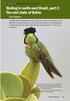 >> Birding Sites Birding north-east Brazil: Bahia Birding in north-east Brazil, part 2: The vast state of Bahia Ciro Albano No birder can feel satisfied without ever visiting the country of Brazil, home
Birds of the Chapada Diamantina, Bahia, Brazil
 Birds of the Chapada Diamantina, Bahia, Brazil Ricardo Parrini, Marcos A. Raposo, José Fernando Pacheco, André M. P. Carvalhães, Tadeu A. Melo Júnior, Paulo Sérgio M. Fonseca and Jeremy Minns Cotinga 11
A report on the birds seen during a trip to the Atlantic forest and cerrado around Rio de Janeiro Brazil
 A report on the birds seen during a trip to the Atlantic forest and cerrado around Rio de Janeiro Brazil From October 27, 2010 till November 19, 2010 by Regis Nossent Other participant: Filip Beeldens
ULTIMATE SOUTHEAST BRAZIL
 The Brazilian endemic Black-headed Berryeater (Eduardo Patrial) ULTIMATE SOUTHEAST BRAZIL 1 16/27 NOVEMBER 2014 LEADER: EDUARDO PATRIAL Five hundred and ninety two (592) species of birds were recorded
Brasiliansk safari 18/7 7/8 2009
 Brasiliansk safari 18/7 7/8 2009 Samuel Hansson www.heliangelus.se Bondegatan 2 [email protected] 573 40 Tranås Tel. 0140-107 44 Participants Samuel Hansson, Tranås Markus Lagerqvist, Askim Henrik
Bird watching is organized by Alecturist Mr. Tomaz Remzgar
 Bird watching is organized by Alecturist Mr. Tomaz Remzgar Bird watching trip 1: Birds of alpine forests DURATION: 6-8 hours HABITATS: coniferous forest, mixed forest, rock cliffs PRICE: 180 A trip into
SURINAME. 1 Birdquest Detailed Tour Itinerary: Suriname
 1 Birdquest Detailed Tour Itinerary: Suriname SURINAME Main Tour Duration: 15 days Palumeu Extension: 6 days The delightful country of Suriname (sometimes spelled Surinam) is the smallest sovereign state
Colombia Trip Report
 RBT Colombia: Santa Marta Extension Trip Report - 2014 1 Colombia Trip Report Santa Marta Extension 25 th to 30 th November 2014 (6 days) Buffy Hummingbird by Clayton Burne Trip report compiled by tour
Trip Report Cuba I: Caribbean Endemics
 Trip Report Cuba I: Caribbean Endemics 5 th to 14 th March 2010 Trip report compiled by tour leader: Luis Segura Tour Summary Our Cuba tour commenced in the bustling metropolis of Havana (known locally
Birding Trip in Brazil Cerrado Pantanal and the Amazon July - August 2009
 Birding Trip in Brazil Cerrado Pantanal and the Amazon July - August 2009 Authors: Francine BRONDEX, [email protected] & Pierre COMMENVILLE, [email protected], More pictures of the
AMAZONIAN BRAZIL Alta Floresta, the Rio Azul, and Cristalino Jungle Lodge
 AMAZONIAN BRAZIL Alta Floresta, the Rio Azul, and Cristalino Jungle Lodge 27 September to 09 October 2009 Rufous-necked Puffbird, Pousada Rio Azul, Pará trip report and photos by Bradley Davis ([email protected])
The birds of Reserva Ecológica Guapiaçu (REGUA), Rio de Janeiro, Brazil
 The birds of Reserva Ecológica Guapiaçu (REGUA), Rio de Janeiro, Brazil Leonardo Pimentel and Fábio Olmos Received 30 September 2009; final revision accepted 15 December 2010 Cotinga 33 (2011): OL 8 24
DECOY COMPETITION RULE BOOK
 34th Annual Havre de Grace Decoy & Wildlife Festival May 1, 2, 3, 2015 DECOY COMPETITION RULE BOOK GENERAL RULES AND REGULATIONS 1. All entrants must complete the entry form. Entry form must be signed.
BIRD LIST, Brazil July 2005
 BIRD LIST, Brazil July 2005 During this trip 601 species were observed, 10 of them were only heard, 2 are feral species. 1. Greater Rhea Rhea americana Near-threatened (NT) 07/07/2005 - Pantanal - between
JANUARY 1 JANUARY 2 JANUARY 3. Possible First Occurrences Today. Possible First Occurrences Today. Possible First Occurrences Today
 JANUARY 1 Black-capped Chickadee Two-note Song Canada Goose Sandhill Cranes Last Seen Wisconsin River Open JANUARY 2 Black-capped Chickadee Two-note Song Sandhill Cranes Last Seen Wisconsin River Open
Bluebonnet Bird Monitoring Project 2013 Annual Report. Photos by John Hartgerink and Eric Liffmann
 Bluebonnet Bird Monitoring Project 2013 Annual Report Photos by John Hartgerink and Eric Liffmann Introdu on to the Monitoring Project Begining in March 2010, the Bluebonnet Bird Monitoring Project (BBMP)
BEST OF BRAZIL: PANTANAL & ATLANTIC FOREST
 410BOB & BOB O 12/30/09/EL/RS P/KZ//09/21/09 BEST OF BRAZIL: PANTANAL & ATLANTIC FOREST AUGUST 14-27, 2010 IGUAÇU FALLS EXTENSION AUGUST 26-31, 2010 2009 This tour offers an in-depth introduction to two
FIELD CHECKLIST OF BIRDS
 FIELD CHECKLIST OF BIRDS Blue Jay While in its 1977 spring session, the Prince Edward Island legislature officially declared the Blue Jay as avian emblem for the province. During Environment Week of 1976,
Ecuador - Galapagos - Peru Spring 2015
 Ecuador - Galapagos - Peru Spring 2015 Date Count Sighting Comments FIRST SIGHTINGS: : 30, : 36 Species: 253 - Subspecies: 8 - Forms: 256 Total Records: 568 Cinnamon Teal 3 05/11/2015 09:30 AM Laguna de
COSTA RICA: The Introtour 18-28 July 2015
 A Tropical Birding SET DEPARTURE tour COSTA RICA: The Introtour 18-28 July 2015 Tour Leader: Sam Woods INTRODUCTION The stunning Fiery-throated Hummingbird NB. All of the photos of species seen on the
Seattle is -- FOR THE BIRDS. How to Identify Common Seattle Birds
 Seattle is -- FOR THE BIRDS How to Identify Common Seattle Birds Want to learn more about birds? Join Seattle Audubon s Family and Youth Programs Mailing List to hear about upcoming opportunities. Name:
Birds in the Parque Estadual dos Três Picos, Rio de Janeiro state, south- east Brazil
 Cotinga31-OL-090605:Cotinga 6/5/2009 2:34 PM Page 96 Birds in the Parque Estadual dos Três Picos, Rio de Janeiro state, south- east Brazil Francisco Mallet- Rodrigues and Maria Luisa Marinho de Noronha
COLOMBIA. 22 February 14 March 2010 Custom tour
 COLOMBIA 22 February 14 March 2010 Custom tour Tour leaders: Nick Athanas, with Trevor Ellery for the first three days Report and photos by Nick Athanas Santa Marta Antpitta now coming into a worm feeder
Birds and flyies in San Casa - Copán
 HONDURAS: COPAN February 20 25, 2010 LEADERS: KEVIN ZIMMER & YOBANI PERAZA COMPILED BY: KEVIN ZIMMER VICTOR EMANUEL NATURE TOURS, INC. 2525 WALLINGWOOD DRIVE, SUITE 1003 AUSTIN, TX 78746 WWW.VENTBIRD.COM
Altitudinal distribution of birds in a mountainous region in southeastern Brazil
 doi: 10.1590/S1984-46702010000400003 Altitudinal distribution of birds in a mountainous region in southeastern Brazil Francisco Mallet-Rodrigues 1 ; Ricardo Parrini 2 ; Leonardo M. S. Pimentel 3 & Rafael
OCCASIONAL PAPERS OF THE MUSEUM OF ZOOLOGY THE UNIVERSITY OF MICHIGAN
 OCCASIONAL PAPERS OF THE MUSEUM OF ZOOLOGY THE UNIVERSITY OF MICHIGAN NOTES ON PARAGUAYAN BIRDS ABSTRACT.-Storer, Robert W. 1989. Notes on Paraguayan Birds. OCC. Pap. Mus. Zool., Univ. Michigan, 719:l-21.
PROJETO BICHOS DO PANTANAL Pesquisa avifauna novembro/14 a fevereiro/15 PROJETO BICHOS DO PANTANAL
 PROJETO BICHOS DO PANTANAL Pesquisa avifauna novembro/14 a fevereiro/15 PROJETO BICHOS DO PANTANAL Mato Grosso - MT Novembro/2014 a Fevereiro/2015 PROJETO BICHOS DO PANTANAL Pesquisa avifauna novembro/14
A Tropical Birding CUSTOM tour COSTA RICA. Tour Leader: Sam Woods
 A Tropical Birding CUSTOM tour COSTA RICA 29 th July 8 th August 2015 Tour Leader: Sam Woods The cantankerous Magnificent Hummingbird loves nothing more than a fight with its rivals! NB. All of the photos
Date Species Species_2 Gender # Road Milepost or Specific Location Comments 4/10/2013 Red Fox Fox, Red 1 Tank Farm 5/25/2013 Emperor Goose Goose,
 Date Species Species_2 Gender # Road Milepost or Specific Location Comments 4/10/2013 Red Fox Fox, Red 1 Tank Farm 5/25/2013 Emperor Goose Goose, Emperor 4 Nome River Bridge Norton Sound Side 5/28/2013
Paphos 12 th 26 th March 2014
 Paphos 12 th 26 th March 2014 Trip Report By Bob Shiret View of Akamas Peninsular Introduction This report follows last April s where as you will see a different mix of birds were seen. The holiday was
Rarity of birds in the Jaú National Park, Brazilian Amazon
 Animal Biodiversity and Conservation 29.2 (2006) 179 Rarity of birds in the Jaú National Park, Brazilian Amazon S. H. Borges Borges, S. H., 2006. Rarity of birds in the Jaú National Park, Brazilian Amazon.
TOUR REPORT BIRD BANDING WORKSHOP October 5-13, 2000 Leader: David Ascanio E.
 TOUR REPORT BIRD BANDING WORKSHOP October 5-13, 2000 Leader: David Ascanio E. This list contains all the birds, mammals and reptiles seen in the 2000 Bird Banding Workshop. Los s proved to be an important
Bird Photography Site Guide Port Aransas, TX and environs
 Bird Photography Site Guide Port Aransas, TX and environs Overview Port Aransas, TX is located on the northern end of Mustang Island, less than an hour s drive from Corpus Christi. It has been known as
The birds of Serra da Canastra National Park and adjacent areas, Minas Gerais, Brazil
 The birds of Serra da anastra National Park and adjacent areas, Minas Gerais, Brazil Luís Fábio Silveira É apresentada uma listagem da avifauna do Parque Nacional da Serra da anastra e regiões próximas,
Common Backyard Birds of Alabama
 Common Backyard Birds of Alabama Alabama Ornithological Society (AOS) state list includes 420 species: 158 species regularly breed in Alabama 174 species regularly winter 80 species migrate through Alabama
OROKLINI MARSH. Introduction
 OROKLINI MARSH Introduction I have been a keen Bird-watcher for many years and my interest has gradually changed to carrying out in depth study of specific sites rather than random outings to various areas.
RBT Cuba I Trip Report - 2015 1. Cuba Trip Report. Caribbean Endemic Birding I 21 st February to 1 st March 2015 (9 days)
 RBT Cuba I Trip Report - 2015 1 Cuba Trip Report Caribbean Endemic Birding I 21 st February to 1 st March 2015 (9 days) Cuban Nightjar by Clayton Burne Trip report compiled by tour leader: Clayton Burne
Pantanal, Brazil 12th July to 20th July 2015
 Steve Firth Catherine Griffiths Pantanal, Brazil 12th July to 20th July 2015 This trip was an attempt to see some mammal species that had eluded us on many previous visits to South America. Cats were the
Peru 14. July to 29. August 2011 by Jens Ole Byskov
 Peru 14. July to 29. August 2011 by Jens Ole Byskov I was in Peru 25 year back in time, and I always wanted to return to this beautiful and interesting country. In my opinion, it is one of the most beautiful
NE BRAZIL 2011 SHORT NOTES FOR VISITING BIRDERS
 NE BRAZIL 2011 SHORT NOTES FOR VISITING BIRDERS Petri Hottola (University of Oulu, Finnish University Network for Tourism Studies, Finland) In December 2010 and January 2011 I visited the northeastern
Guatemala Birding in the Realm of the Maya
 Guatemala Birding in the Realm of the Maya Naturetrek Tour Itinerary Outline itinerary Day 1 Day 2 Day 3/6 Day 7/8 Day 9/11 Day 12/13 Day 14 Day 15 Day 16 Fly Guatemala City, transfer Antigua Antigua/Finca
Birding Trip Report. Portugal 17 th to 23 rd April 2013. Tony Small & Dave Hardaker. [email protected]
 Birding Trip Report Portugal 17 th to 23 rd April 2013 Tony Small & Dave Hardaker. [email protected] Area around the back of Guerreiro, leading to LPN, Alentejo. We booked flights with Easyjet from
Birds, Ilha Grande, state of Rio de Janeiro, Southeastern Brazil
 Birds, Ilha Grande, state of Rio de Janeiro, Southeastern Brazil Maria Alice S. Alves Maurício Brandão Vecchi Universidade do Estado do Rio de Janeiro, Departamento de Ecologia. Rua São Francisco Xavier,
Identifying Hawks in Flight using the SPASMATIC method:
 Identifying Hawks in Flight using the SPASMATIC method: S HAPE (relative sizes and proportions of wings, tail, and head) P ATTERN/PLUMAGE (contrasting patterns of dark and light) A CTIONS (How does the
PANAMA S DARIÉN LOWLANDS: CANOPY CAMP
 PANAMA S DARIÉN LOWLANDS: CANOPY CAMP JANUARY 14-22, 2017 2016 This tour to the lowlands of eastern Panama fuses the rich diversity of tropical birds for which Panama is justly famous with the classic
Lista de Aves de Costa Rica
 Lista de Aves de Costa Rica Elaborada por: Luis Sandoval y Julio E. Sánchez Unión de Ornitólogos de Costa Rica 18 de febrero de 2012 www.uniondeornitologos.org Presentación Presentamos la Lista Oficial
Trip Report. By Bob Shiret
 Paphos 16 th 30 th March 2016 Trip Report By Bob Shiret Introduction I have to confess that before embarking on this year`s trip I doubted whether I would be constructing a report afterwards as it could
Peru (Oost- & West Andes & Amazone regenwoud) - juli 2012
 Peru (Oost- & West Andes & Amazone regenwoud) - juli 2012 Engels Wetenschappelijk Nederlands Wng Amazilia Hummingbird Amazilia amazilia Lesson-amazilia x Amazon Kingfisher Chloroceryle amazona Amazoneijsvogel
South-west Iceland 24th February 2nd March 2016
 South-west Iceland 24th February 2nd March 2016 This was by no means a birding holiday, but more of a trip for me and my wife to relax and spend some time planning the birth of our first child and celebrate
Cuba Caribbean Endemic Birding 3 rd to 12 th March 2012 (10 days)
 Cuba Caribbean Endemic Birding 3 rd to 12 th March 2012 (10 days) Tour Leader: Forrest Rowland Top Ten Tour Highlights: 1. Cuban Tody 2. Blue-headed Quail-Dove 3. Gundlach s Hawk Cuban Tody by Matthew
Integrating Bird Conservation and Natural Resources Management: Best Management Practices. Jennifer Devlin, City of Portland, Environmental Services
 Integrating Bird Conservation and Natural Resources Management: Best Management Practices Jennifer Devlin, City of Portland, Environmental Services When to Plan Disturbance: August 1 January 31 best time
Corsica. April 30th May 17th 2012. A Trip Report by Tim Hajda
 Corsica April 30th May 17th 2012 A Trip Report by Tim Hajda Introduction Corsica is a stunningly beautiful French island in the western Mediterranean Sea. Thanks to its relatively low population density
Novitates PUBLISHED BY
 LESTER L. SHORT Notes on a Collection of Birds From the Paraguayan Chaco AMERICAN MUSEUM Novitates PUBLISHED BY THE AMERICAN MUSEUM OF NATURAL HISTORY CENTRAL PARK WEST AT 79TH STREET NEW YORK, N.Y. 10024
PANAMA S DARIÉN LOWLANDS: CANOPY CAMP
 PANAMA S DARIÉN LOWLANDS: CANOPY CAMP OCTOBER 17-25, 2014 2014 This new tour to the lowlands of eastern Panama fuses the rich diversity of tropical birds for which Panama is justly famous with the classic
GUIDANCE: Avoiding Impacts on Nesting Birds During Construction and Revegetation Projects
 TERRESTRIAL ECOLOGY ENHANCEMENT STRATEGY GUIDANCE: Anna s Hummingbirds Photo by Phillip G.Engstrom Avoiding Impacts on Nesting Birds During Construction and Revegetation Projects Version 2 October 2010
Trip Report Madeira 22 February 1 March 2005
 1 (6) Trip Report Madeira 22 February 1 March 2005 Together with my two children, Alexander 13 years and Nina 9 years I made a combined vacation and birding tour to Madeira. We flew from Malmö-Sturup airport
Holiday Highlights New York City 7 14 May 2016
 Leaders: Simon Eaves and Darren Rees Holiday Highlights New York City 7 14 May 2016 Guests: Chris & Norman Haynes, Lyn & Dave Maslin, Val & Wayne Colson, June Forrest, Liz & Keith Barton, Margaret Dixey,
Where Do Birds Live?
 Objectives You will learn about 1) where birds build nests, 2) the materials they use, 3) different nest characteristics and 4) how to observe nesting activity. Introduction Birds hatch their young in
Predation on vertebrates by Neotropical passerine birds
 Predation on vertebrates by Neotropical passerine birds Lundiana 6(1):57-66, 2005 2005 Instituto de Ciências Biológicas - UFMG ISSN 1676-6180 Leonardo E. Lopes 1,2, Alexandre M. Fernandes 1,3 & Miguel
Title: Create A New Animal. Grade Level: 3 rd -5 th. Subject: Biology. Time: 60-90 minutes
 Title: Create A New Animal Grade Level: 3 rd -5 th Subject: Biology Time: 60-90 minutes Objective: Students will better understand physical adaptations of certain animals, and how those adaptations increase
Hungary & Transylvania May 10 th 21 st 2011 Trip Report
 Hungary & Transylvania May 10 th 21 st 2011 Trip Report May 10 th The group consisting of Peter & Dot Kitching, Keith Deacon & Nadine Hodson, Brenda Seaton, Ann & Graham Johnson, Dick & Jan Brown and Maurice
Layers of the Rain Forest Distance Learning
 Layers of the Rain Forest Distance Learning Summary and Goals Students will be able to identify the layers of the rain forest and animal species that live in each layer. Grade Levels Grades 3-5 Engage
Guthrie, D.A., "Bird Surveys along a Portion of the Santa Clara River and Its Tributaries Upstream from the Castaic Creek Confluence, near Valencia
 Guthrie, D.A., "Bird Surveys along a Portion of the Santa Clara River and Its Tributaries Upstream from the Castaic Creek Confluence, near Valencia California, 2000" (August 2, 2000; 2000E) BIRD SURVEYS
Avifauna of a relict mangrove forest in San Pedro, dpto. Piura, Peru
 Avifauna of a relict mangrove forest in San Pedro, dpto. Piura, Peru Renán C. Valega Received 22 July 2005; final revision accepted 2 August 2006 Cotinga 27 (2007): 42 47 El relicto de manglar de San Pedro
Spring tour B Kiskunság - Bükk Mountains - Lake Tisza - Hortobágy (5 days, 4 nights)
 Spring tour B Kiskunság - Bükk Mountains - Lake Tisza - Hortobágy (5 days, 4 nights) During this 5-days (4 nights) tour we will visit 3 National Parks. Kiskunság NP, Bükk NP and Hortobágy NP offering us
Go Slow in Sweden. Naturetrek Go Slow Tour Itinerary. Outline itinerary. Fly Vasteras and transfer Svartådalen. Day 1
 Naturetrek Go Slow Outline itinerary Day 1 Fly Vasteras and transfer Svartådalen. Day 2/5 Birding & natural history excursions around Svartådalen. Day 6 Birding around Svartådalen and fly London. Departs
Birding Cyprus by foot, by bike, by bus and by car
 Birding Cyprus by foot, by bike, by bus and by car APRIL 2012 Having visited Cyprus once before, back in 1997, a return visit seemed overdue. A week long package deal via lowcostholidays got return flights
NORTH KARELIAN BIRDING AREAS
 NORTH KARELIAN BIRDING AREAS Bird towers 1. Kitee, Hovinlampi (2 towers) 2. Joensuu, Höytiäinen channel estuary 3. Rääkkylä, Jouhtenuslampi 4. Valtimo, Lake Kalliojärvi (2 towers) 5. Rääkkylä, Lake Kiesjärvi
Lakes And Reservoirs Mid Atlantic Coastal Plain
 Lakes And Reservoirs Mid Atlantic Coastal Plain There are 22 natural lakes in the Coastal Plain. Basins range from Carolina bays to peatland depressions. Most natural lakes in North Carolina are acidic
Owls. Choose words from the list at the end of the page to fill in the blank spaces.
 Owls Choose words from the list at the end of the page to fill in the blank spaces. Owls are _ of prey. A bird of prey is one that catches its food in its Owls hunt for their at night. A bird that hunts
Monitoring the State of
 Monitoring the State of Ontario's Migratory Landbirds Ontario's Migratory Landbirds: Who are they? Red-winged Blackbird Photo: Ron Ridout irds are a large and diverse group. For conservation planning purposes,
Naturetrek Tour Report 25 August - 5 September 2014
 Naturetrek 25 August - 5 September 2014 Report compiled by Gustavo Cañas Valle Naturetrek Cheriton Mill Cheriton Alresford Hampshire SO24 0NG England T: +44 (0)1962 733051 F: +44 (0)1962 736426 E: [email protected]