
A PSYCHOLOGICAL POSTULATION FOR THE UNDERSTANDING OF CLASSROOM EMOTIONAL ABUSE
|
|
|
- Ross Walters
- 9 years ago
- Views:
Transcription
1 Europen Journal of Educational Studies 1(3), Ozean Publication A PSYCHOLOGICAL POSTULATION FOR THE UNDERSTANDING OF CLASSROOM EMOTIONAL ABUSE Okoza Jolly, *Oyaziwo Aluede And A.I Ojugo Ambrose Alli University, Ekpoma, Edo State, Nigeria * address for correspondence : [email protected] Abstract : Emotional abuse of secondary school students by teachers is an active label for describing the violations of students rights. It is a strong school violence that can impede students development and productivity. This work portrays how emotional abuse can destroy self concept of students in the classroom in concordance with Rogerians theory. In line with Rogers theory, emotional abuse is undue pressure from teachers. Such pressure can stifle students development. This work recommends that since emotional abuse destroys growth promoting climate in the classroom, teachers should internalize the principles of unconditional positive regard as enunciated by Rogers that is characterized by genuineness, sympathy and empathy. These are ingredients that can facilitate students learning and development. INTRODUCTION Emotional abuse, which is a subtype of abuse and neglect, is a problem affecting all races, religions, and socioeconomic groups. The World Health Organization (WHO) estimates that around the world, 40 million children suffer from abuse or neglect and need health and social intervention (WHO, 1999). Emotional abuse is a concerted attack by an adult on a child s development of self and social competence, a pattern of psychically destructive behaviour (Garbarino, Guttman & Seeley, 1986). Today, school violence is one of the most important problems facing children and their families, since growing number of students perceive their school context as an unsafe environment (Aluede, 2004). In some family settings, inappropriate and abusive parent will denigrate and insult the child, express conditional love and ambivalent feelings towards the child, and will emotionally or physically reject the child s attention (Alfandary, 1993). Children who found themselves in such situation either in their school or family circle are likely to suffer damage to their self-esteem and their internalization of positive role models and adaptive interactional patterns. This state of psychological maltreatment experienced by students is perceived as a socio-economic malaise by all and sundry in our society. Such experience will impact negatively on the mental abilities of a child such as intelligence, memory, recognition and attention, feelings and capacity to develop relationships (O Hagan, 1993). Psychological abuse or mental injury and other forms of abuse may have informed the Federal Republic of Nigeria (1999) to insert in her constitution, section 34 which states the Rights to dignity of human persons. In addition, subsection (1) of section 34 states further that every individual is entitled to respect for the dignity of his human person and accordingly: (a) no person shall be subjected to torture or inhuman or degrading treatment. The foundations for good mental health are laid in the emotional development that occurs in infancy and later childhood and appears to be dependant upon the quality of and frequency of response to an infant or child from a parent or primary caregiver (O Hagan, 1993). If a parent inadvertently or deliberately engages in a pattern of inappropriately emotional responses, the child can be said to have experienced emotional abuse. The term abuse conjures up images of violence and cruelty. It infers a deliberate action, an intention to harm and to damage. It is an active label for the violations of one person s rights by another. But in order to be able to talk about emotional abuse, we need to recognize that the term also describes what is not being done, what is being omitted, neglected and denied and most importantly, how it is done unintentionally, out of ignorance, indifference or distress (Alfandary, 1993) 125

2 Emotional abuse is as difficult to detect as it is damaging. It is an invisible wound. It is often ignored as its recognition may leave us feeling enraged, impotent and devastated. We may try to protect ourselves from it as adults by denying its emotional impact, projecting our feelings and down-playing its significance. But in later years, we become morally indignant when confronted with the extreme examples of its consequences such as juvenile delinquency (Alfandary, 1993). This denial, (Polansky, 1981) is putting democratic society in great danger. Students in secondary school may experience some forms of emotional abuse such as rejecting, isolating, terrorizing, ignoring, controlling, etc, that may have effects on their passage through the three major developmental stages of infancy, childhood and adolescence (Garbarino, et al, 1986). Like other forms of violence, emotional abuse is based on power and control. Emotional abuse of children can result in serious and /or behavioural problems, including depression, lack of attachment or emotional bond to a parent or guardian, low cognitive ability and educational underachievement, and poor social skills (McEachern, Aluede & Kenny, 2008). Children who experience rejection are more likely than accepted children to exhibit hostility, aggressive or passive- aggressive behaviour, to be extremely dependent, to have negative opinions of themselves and their abilities, to be emotionally unstable or unresponsive, and to have negative perception of the world around them. Most extant literature has focused more on physical abuse and sexual abuse, than the prevalence of emotional abuse in Nigeria s school system. There is rarity of empirical studies on emotional abuse by the teacher on students in Nigeria. Even though teachers serve not only as educators, but also, as important socializing agents who fulfill basic socio-emotional needs, such as belongings and self- esteem. This fact is supported by research evidence that teacher - child relationship exerts a major influence on the children s social, behavioural, emotional and academic adjustment (Pianta, 1999). Put simply, teachers act in loco parentis in the school to nurture children. But, teachers who consistently communicate a negative sense of identity to the child and refuse to accept and respond to the child s needs for human contact and attachment cannot be said to be promoting the developmental needs of the child. This action by the teacher amount to rejection, a form of emotional abuse. Some teachers are unaware of the impact of their behaviour upon children. It is possible that teachers are also unaware that emotional abuse is a form of child abuse that has serious damaging consequences on the development of children. They may perceive emotional abuse as a means of molding and shaping children s behaviour. Teachers may also lack alternatives in dealing with children who misbehave in schools. In the classroom, the importance of children s mental health should not be underestimated. Emotional abuse can affect it. Children must survive as psychologically intact individuals. It is apparent that a chronic pattern of psychological maltreatment destroys a child s sense of self and personal safety. This leads to adverse effects on intrapersonal thoughts, emotional health, social skills, learning impairments, and physical health (Nesbit & Philpot, 2002). A child may recover from physical pain and injuries, but may never recover from the terror, degradation, humiliation or breach of trust involved in emotional abuse (Briggs, 1995; Briggs & Hawkins, 1997). Although individual acts can be abusive, emotional abuse usually describes an ongoing interaction. It is a repeated pattern of damaging interactions between teachers or parents and the child that becomes typical of the relationship (Glaser, & Prior, 1997). The severity of emotional abuse should not be underestimated, and hence Geffner (2007) points out that emotional abuse can be thought of as the non-physical abuse of the self and spirit, which degrades worth and interferes with human development and productivity. The thrust of this paper is to evolve a theory that capture emotional abuse of students by their classroom teachers. This, Rogerian s self- concept theory is particularly indicated to be relevant. Rogers Theory The central concept in Rogers s theory is the self, an organized, consistent set of perceptions of and beliefs about oneself (Rogers, 1959). Once formed, plays a powerful role in guiding our perceptions and directing our behaviour. Rogers believed that our behaviour is not a reaction to unconscious conflicts, but a response 126

3 to our immediate conscious experience of self and environment (Rogers, 1951). Rogers (1951) believed that, without undue pressure from others, individuals naturally move toward personal growth, selfacceptance, and self-actualization, which is the fulfillment of their potential for love, creativity, and meaning. Emotional abuse is an undue pressure that can stifle such fulfillment in the life of children. Rogers ( ) began his inquiry about human nature with people who were troubled. Rogers (1961) examined the conditioned, controlling world that kept them from having positive self-concept and reaching their full potential as human beings. Under the stress of pressure from society and family, however, people can develop rigid and distorted perspectives of self and can lose touch with their own values and needs. This can lead to emotional distress, unhealthy behaviour, and even loss of touch with reality. Emotional abuse will remove genuineness, acceptance and empathy that are the water, sun and nutrients that enable people to grow like vigorous oak tree. For as persons are accepted and prized, they tend to develop a more caring attitude towards themselves (Rogers, 1980, p. 116). Rogers theorized that at the beginning of their lives, children cannot distinguish between themselves and their environment. As they interact with their world, children begin to distinguish between the me and not me. The self-concept continues to develop in response to our life experiences, though many aspects of it remain quite stable over time (Passer & Smith, 2001). Once the self concept is established, there is a tendency to maintain it, for it helps us to understand ourselves in relation to the world. We therefore have needs for self-consistency (an absence of conflict among self perceptions) and congruence (consistency between self perceptions and experience). The self is a whole, consisting of one s self perceptions (how attractive I am, how well I get along with others, how good a scholar I am) and the value we attach to these perceptions (good / bad, worthy/ unworthy for example). Self concept refers to individuals overall perception of their abilities, behaviour, and personality. In Rogers s view, a person who has an inaccurate self-concept is likely to be maladjusted. It is believed that emotional abuse can cause such maladjustment in children. A child who is abused emotionally will suffer severe anxiety, depression, withdrawal, selfharming behaviour or aggressive behaviour towards others. Furthermore, the degree of congruence between self-concept and experience helps define one s level of adjustment. The more rigid and inflexible people s self concepts are, the less open they will be to their experiences and the more maladjusted they will become. If there is significant degree of incongruence between self and experience, and the experience are forceful enough, the defenses used to deny and distort reality may collapse, resulting in extreme anxiety and a temporary disorganization of the self concept. Rogers distinguished between the real self that is, the self as it really is as a result of our experiences and the ideal self, which is the self we would like to be. The greater the discrepancy between the real self and ideal self said Rogers, the more maladjusted we will be. To improve our adjustment, we can develop more positive perceptions of our real self, not worry so much about what others want, and increase our positive experiences in the world (Santrock, 2000). Rogers theorized on the need for positive regard. He believed that we are born with an innate need for positive regard that is, for acceptance, sympathy, and love from others. Rogers viewed positive regard as essential for healthy development. Ideally, positive regard received from parents is unconditional that is independent of how the child behaves. Unconditional positive regard communicates that the child is inherently worthy of love. Rogers stressed that we can help a person develop a more positive self-concept through unconditional positive regard, empathy and genuineness. He said that we need to be accepted by others, regardless of what we do. Furthermore, unconditional positive regard is Rogers s term for accepting, valuing, and being positive toward another person regardless of the person s behaviour. Rogers recognized that when a person s behaviour is below acceptable standards, inappropriate, or even obnoxious, the person still needs the respect, comfort, and love of others. Rogers strongly believed that unconditional positive regards elevate the person s self-worth (Passer & Smith, 2001; Santrock, 2000). Rogers also said we can help other people develop a more positive self-concept if we are empathic and genuine. Being empathic means being a sensitive listener and sense what it is like to be the client at any moment and understanding another s true feelings. Being genuine means being open with our feelings and dropping our pretenses and not hiding behind a facade. For Rogers, unconditional positive regard, empathy 127

4 and genuineness are three key ingredients of human relations. We can use these techniques to get other people to feel good about themselves and the techniques also help us to get along better with others. Another aspect of Rogers Theory is Conditional Positive regard. Conditional positive regard is Rogers term for love and praise being withheld unless the individual conforms to parents or social standards. The result is lower self esteem. People need positive regard not only from others, but also from themselves. We all want to feel good about ourselves. Thus a need for positive self regard from parents and other significant people in the past teaches that they are worthy of approval and love only when they meet certain standards. This fosters the development of conditions of worth that dictate when we approve or disapprove of ourselves. Rogers believed that conditions of worth can tyrannize people and cause major incongruence: between self and experience, together with a need to deny or distort aspects of experience. Rogers (1980) theorized on the fully functioning person and stressed the importance of becoming a fully functioning person someone who is open to experience, is not very defensive, is aware of and sensitive to the self and external world, and for the most part has a harmonious relationship with others (Nolen- Hoeksema, 2004). They feel a sense of inner freedom, self-determination, and choice in the direction of their growth. They have no fear of behaving spontaneously, freely, and creatively. Because they are fairly free of conditions of worth, they can accept inner and outer experiences as they are without modifying them defensively to suit a rigid self-concept or expectations of others (Nolen Hoeksema, 2004). Rogers (1980) believed that a person s basic tendencies are to actualize, maintain, and enhance life. He thought that the tendency for fulfillment toward actualizing one s essential nature and attaining potential is inborn in every person. By giving the self a central place in his theory, Rogers helped stimulate a great deal of research on the self esteem and its effects on behaviour. Self esteem (how positively or negatively we feel about ourselves) is a very important aspect of personal well being, happiness, and adjustment. Self esteem is related to many positive behaviours and life outcomes. People with high self esteem are less susceptible to social pressure, have fewer interpersonal problems, are happier with their lives, achieve at a higher and more persistent level, and are more capable of forming satisfying love relationships. In contrast, people with a poor self image are more prone to psychological problems like anxiety and depression, to physical illness, and to poor social relationships and underachievement. Children develop higher self esteem when their parents communicate unconditional acceptance and love, establish clear guidelines for behaviour, and reinforce compliance while giving the child freedom to make decision and express opinions within those guidelines. THE RELEVANCE OF CARL ROGERS THEORY TO EMOTIONAL ABUSE Carl Rogers s humanistic theory is relevant to research work on emotional abuse of students by teachers based on these reasons: Firstly, we are born with an innate need for positive regard that is, for acceptance, sympathy and love from others, says Rogers. Emotional abuse of students will negate such fulfillments in students lives. A teacher who spurn, reject, ignore, hurts, and isolate children will stifle the fulfillment of Rogers s species specifics characteristics. Consequently, development and productivity of children may be hampered. It is therefore apparent that when we are abreast with Rogers innate tendencies of human needs, we may be able to conduct good classroom management that will foster positive interaction in teacher children relationship and learning. Secondly, self concept is a central theme in Rogers and other humanists views. Self concept is individuals total perceptions of their abilities, behaviour, and personality. Emotional abuse of students may adversely affect development of positive self-concept. Students who are verbally assaulted, denigrated, belittled will not thrive in developing positive self concept. Self concept is still being developed in childhood and adolescence, much more than in adulthood (Nolen Hoekmsema, 2004). A period of significant experience of emotional abuse of students by teachers in the classroom while one s self 128

5 concept is undergoing substantial change may have long lasting effects on the content or structure of self concept. It is obvious that any experience we may come across that will be at variance with our self concept may predispose us to threat and anxiety. Emotional abuse is a key toxic ingredient in the development of such neuropsychiatric problems. Rogers s theory serves as an awareness process in the avoidance of circumstances that will lead to emotional block in the lives of growing children. Thirdly, Rogers Unconditional Positive Regard, empathy and genuineness should serve as guiding principles in classroom management. Rogers recognized that when person s behaviour is below acceptable standards, inappropriate or even obnoxious, the person still needs respects, comfort and love of others. A classroom where there is incidence and prevalence of emotional abuse of students, these humanistic characteristics are conspicuously absent. To develop good classroom ambience, we need to cultivate the spirit of empathy, genuineness and good listening ability. When unconditional positive regard is given little attention and conditional positive regard is highly emphasized, it leads to lower self-esteem. CONCLUSION Rogers theory is relevant to emotional abuse in that through his theory we know that for children to develop higher self esteem, parents, teachers, and significant others should communicate acceptance and love, establish clear guidelines for behaviour, and reinforce compliance while giving the child freedom to make decisions and expression of opinions. Emotional abuse is based on power and control and carried out with words, gestures and policies. It can result in serious and / or behavioural problems, including depression, lack of attachment, low cognitive ability and poor social skills. To facilitate good human development and productivity, our classroom management should be guided by Rogers theory and deliberate and conscious efforts should be taken to avoid emotionally abusive learning environment. 129

6 REFERENCES Alfandary, R. (1993). The emotional abuse of children. Retrieved November, 11, 2007 from exe/2710/3105. Aluede, O. (2004). Psychological maltreatment of students: A form of child abuse and school violence. Journal of Human Ecology, 16 (4) Briggs, F. (1995). From Victim to Offender: How Child Sexual Abuse Victims Become Offenders. Allen and Unwin St. Leonards, NSW. Briggs, F., & Hawkins, R. (1997) Child protection; A guide for teachers and child care professionals. St. Leonards, New South Wales, Australia: Allen & Uwin. Federal Republic of Nigeria (1999). Constitution of the Federal republic of Nigeria. The Federal Government Press, Lagos, Nigeria. Garbarino, J., & Garbarino, A.C. (1986). Emotional maltreatment of children. Chicago, IL: National committee for the Prevention of Child Abuse. Garbarino, J., & Guttman, E., Seeley., J. (1986). Psychologically battered child. San Francisco, CA: Jossey-Bass. Geffner, R. A. (2007). Interventions, research, and theories of Psychological maltreatment, Trauma, and non physical aggression. Journal of Emotional Abuse. Retrieved 3 November, 2007 from https: // www. har worth press.com/store/ product. asp/ sid= H2GFSAGNAGIM9 GGHM8 U8CV.. Glaser, D. & Prior, V. (1997). Is the term child protection applicable to emotional abuse? Child Abuse Review, 6: McEachern, A.G, Aluede, O., & Kenny M.C. (2008). Emotional maltreatment in the classroom: Implications and Interventions for Counsellors. Journal of Counseling and Development. 86 (1) Nesbit, W.C., & Philpott, D.F. (2002). Confronting subtle emotional abuse in classrooms. Guidance and Counselling, 17, O Hagan, K. ( 1993). Emotional and Psychological abuse of Children. Toronto, Canada: University of Toronto Press. Passer; M.W & Smith, R.E. (2001). Psychology. McGraw Hill higher Education, New York, USA. Pianta, R.C. (1999). Enhancing relationship between children and teachers. Washington, DC: American Psychological Association. Polansky, N. (1981). Damaged parents, Chicago: The University of Chicago. Rogers, C. R. (1959). A theory of therapy, personality and interpersonal relationships, as developed in the client centered framework. In S. koch (Ed), Psychology: a study of a science (Vol.3). New York; Mc Graw-Hill. Rogers, C. R. (1961). On becoming a person: A therapist s view of psychotherapy. Boston: Houghton Mifflin Rogers, C.R. (1980) A way of being. Boston: Houghton Mifflin. 130

7 Santrrock, J.W. (2000). Psychology. McGraw- hill Higher Education, SA. World Health Organization. (1999). Report on the consultation on child abuse prevention. Geneva: World Health Organization. 131

What is the Humanist Perspective? What are the key ideas in the Humanistic perspective of personality?
 What is the Humanist Perspective? LP 13C Humanist Perspective 1 What are the key ideas in the Humanistic perspective of personality? Differences with the Psychoanalysts: Humanists focus on the healthy
Learners with Emotional or Behavioral Disorders
 Learners with Emotional or Behavioral Disorders S H A N A M. H A T Z O P O U L O S G E O R G E W A S H I N G T O N U N I V E R S I T Y S P E D 2 0 1 S U M M E R 2 0 1 0 Overview of Emotional and Behavioral
Insecure Attachment and Reactive Attachment Disorder
 Attachment Disorders Insecure Attachment and Reactive Attachment Disorder When infants and young children have a loving caregiver consistently responding to their needs, they build a secure attachment.
How unique are you? Activity 10.1 p136 - Make a list of the things about yourself that you think are different from other people.
 THE SELF The Humanistic Approach BATs Define the terms unique and free will (E) Describe the humanistic theory of Self. (D) Explain the differences between selfconcept, ideal self and self-esteem (C) How
Scottish Parliament Health and Sport Committee s Inquiry into Teenage Pregnancy in Scotland Evidence from CHILDREN 1 ST
 Scottish Parliament Health and Sport Committee s Inquiry into Teenage Pregnancy in Scotland Evidence from CHILDREN 1 ST February 2013 For over 125 years CHILDREN 1 ST has been working to build a better
Person-centred Therapy
 Person-centred Therapy A GUIDE TO COUNSELLING THERAPIES (DVD) Published by: J & S Garrett Pty Ltd ACN 068 751 440 All Case Histories in this text are presented as examples only and any comparison which
Chapter Five Socialization. Human Development: Biology and Society. Social Isolation
 Chapter Five Socialization Socialization is the lifelong process of social interaction through which individuals acquire a self-identify and the physical, mental, and social skills needed for survival
WHICH talking therapy for depression?
 WHICH talking therapy for depression? A guide to understanding the different psychological therapies you may be offered to treat your depression 1 Contents Introduction 3 Cognitive Behavioural Therapy
SELF THEORY HARRY ALBERT VAN BELLE
 SELF THEORY HARRY ALBERT VAN BELLE Carl Rogers developed his self theory well after he had formulated his person-centered therapy. His view of personality grew out of his view of therapy, and the former
Socialization From Infancy to Old Age A. Socialization and the Self self a. Self-identity Socialization
 I. Socialization From Infancy to Old Age A. Socialization and the Self 1. Over our lives, we develop a sense of self: a perception of being a distinct personality with a distinct identity. a. Self-identity:
Personality Difficulties
 Personality Difficulties The essential features of a personality disorder are impairments in personality (self and interpersonal) functioning and the presence of pathological personality traits. There
Chapter 10 Personality Name Period Date. MULTIPLE CHOICE. Choose the one alternative that best completes the statement or answers the question.
 Chapter 10 Personality Name Period Date MULTIPLE CHOICE. Choose the one alternative that best completes the statement or answers the question. 1) The BEST kind of personality test is one that is. A) both
CORE-INFO: Emotional neglect and emotional abuse in pre-school children
 CORE-INFO: Emotional neglect and emotional abuse in pre-school children Introduction This leaflet summarises what is currently known about children aged less than six years who have been emotionally neglected
CHILD NEGLECT. Types of Neglect
 CHILD NEGLECT At 64%, child neglect is the most frequently identified type of child maltreatment in the United States. It is estimated at 917,200 cases or an estimated incidence rate of 14.6 per 1,000
SELF-ESTEEM. Purpose. Objectives. Learning Activities. Advance Preparation
 Purpose This lesson will teach younger children (pre-k) the importance of having a positive self-esteem and feeling good about themselves. Children will gain knowledge and skills to help them build a positive
1of 5. Parental Resilience. Protective & Promotive Factors
 Parental Resilience 1of 5 Being a parent can be a very rewarding and joyful experience. But being a parent can also have its share of stress. Parenting stress is caused by the pressures (stressors) that
Preview of Rogers's Theory
 Dikran J. Martin Psychology 116 Name:. Date:. Lecture Series: Chapter 14 ROGERS: Person-Centered Theory Pages. 12 TEXT: Cloninger, Susan C. (2004). Theories of Personality: Understanding Persons (4th)
Personality & Its Assessment
 Personality & Its Assessment Dr Elena Gregoria Chai Chin Fern Faculty of Social Sciences Universiti Malaysia Sarawak This OpenCourseWare@UNIMAS and its related course materials are licensed under a Creative
THE EFFECTS OF FAMILY VIOLENCE ON CHILDREN. Where Does It Hurt?
 THE EFFECTS OF FAMILY VIOLENCE ON CHILDREN Where Does It Hurt? Child Abuse Hurts Us All Every child has the right to be nurtured and to be safe. According to: Family Violence in Canada: A Statistical Profile
Policy Perspective Treatment and Recovery for Individuals and Families Experiencing Addiction January 11, 2016
 Policy Perspective Treatment and Recovery for Individuals and Families Experiencing Addiction January 11, 2016 Addiction and Recovery in the 2016 political arena The issue of addiction has been addressed
Emotional/Behavioral Disorders: Understanding the Challenges. Mark D. Nelson. Montana State University Bozeman. Tricia Williamson
 1 Emotional/Behavioral Disorders: Understanding the Challenges Mark D. Nelson Montana State University Bozeman Tricia Williamson Flathead High School Kalispell, Montana Emotional/Behavioral Disorders 2
Running Head: FORMULATION OF AN EDUCATIONAL PHILOSOPHY AND AN ORGANIZATIONAL FRAMEWORK. Lauren Jansen. Midwestern State University
 Educational Philosophy 1 Running Head: FORMULATION OF AN EDUCATIONAL PHILOSOPHY AND AN ORGANIZATIONAL FRAMEWORK Lauren Jansen Midwestern State University Educational Philosophy 2 Formulation Of An Educational
The Schema Therapy model
 The Schema Therapy model Presented by Dr Christopher Lee [email protected] Schema Modes Moment to moment emotional states that reflect the current clusters of cognitions, emotions and behaviour
MODULE 1.3 WHAT IS MENTAL HEALTH?
 MODULE 1.3 WHAT IS MENTAL HEALTH? Why improve mental health in secondary school? The importance of mental health in all our lives Mental health is a positive and productive state of mind that allows an
Maslow Holistic Dynamic Theory
 Maslow Holistic Dynamic Theory Holistic Dynamic Theory assumes that the whole person is continually being motivated by one need or another and that people have the potential to grow toward psychological
Protection of the Rights of Children and Women Suffering from Drug Addiction in the Family and Society - Shelter Don Bosco, Mumbai, India -
 Protection of the Rights of Children and Women Suffering from Drug Addiction in the Family and Society - Shelter Don Bosco, Mumbai, India - Article 24 of the Convention on the Rights of the Child recognizes
Bullying and Harassment at Work Policy
 Bullying and Harassment at Work Policy i) Statement Everyone should be treated with dignity and respect at work, irrespective of their status or position within the organisation. Bullying and harassment
Satir Transformational Systemic Therapy (in Brief)
 Satir Transformational Systemic Therapy (in Brief) What happens when a human being appears on the professional radar and, without directly challenging the prevailing system, provides new possibilities
What You Need to Know About Elder Abuse
 What You Need to Know About Elder Abuse What is Elder Abuse? Elder abuse, or the abuse of older adults, is often defined as any act or omission that harms a senior or jeopardizes his or her health or welfare.
Psych 305A: Lecture 9. The Self (part I) Carl Rogers
 Psych 305A: Lecture 9 The Self (part I) 1 Carl Rogers People are intrinsically good and striving toward self-understanding, self-acceptance, maturity, and autonomy People can develop innate goodness if
Return to Work after Brain Injury
 Return to Work after Brain Injury This section talks about return to work after head injury and what kind of difficulties people experience. It moves onto talking about what kind of help and support is
Essential Trauma Informed Practices in Schools. Shannon Cronn, N.C.S.P. Barb Iversen, M.C.
 Essential Trauma Informed Practices in Schools Shannon Cronn, N.C.S.P. Barb Iversen, M.C. Objectives: Participants attending this session will be able to: Define trauma Explain how trauma may impact child/teen
TRANSACTIONAL ANALYSIS
 TRANSACTIONAL ANALYSIS Developed by Eric Berne during the 1950 s, Transactional Analysis (TA) is a simple method of describing our experiences of life in a way that makes both sense and brings a smile
Assessing families and treating trauma in substance abusing families
 Children, Trauma and the impact of Substance abuse Day One Outpatient (874-1045) Amy Stevenson LCPC CCS ([email protected]) Don Burke LCPC CCS ([email protected]) Assessing families and treating trauma in
The Goal of Correctional Counseling
 41140_CH03_Pass2.qxd 8/9/07 12:21 PM Page 45 Jones and Bartlett Publishers. NOT FOR SALE OR DISTRIBUTION The Goal of Correctional Counseling 3 The goal of correctional counseling is usually based on two
M.A. DEGREE EXAMINATION, DECEMBER 2009. First Year. Psychology. Answer any FIVE of the following questions. Each question carries 15 marks.
 (DPSY 01) First Year Paper I GENERAL PSYCHOLOGY 1. Explain the definition and scope of psychology. 2. Explain the patterns of brain and behavior in human psychology? 3. Write about perceptual constancy
What is a personality disorder?
 What is a personality disorder? What is a personality disorder? Everyone has personality traits that characterise them. These are the usual ways that a person thinks and behaves, which make each of us
Delusions are false beliefs that are not part of their real-life. The person keeps on believing his delusions even when other people prove that the be
 Schizophrenia Schizophrenia is a chronic, severe, and disabling brain disorder which affects the whole person s day-to-day actions, for example, thinking, feeling and behavior. It usually starts between
Person-Centered Therapy and Personal Growth
 Journal of Social and Development Sciences Vol. 3, No. 9, pp. 337-345, Sep 2012 (ISSN 2221-1152) Person-Centered Therapy and Personal Growth Boontarika Narknisorn Kasetsart University, Thailand [email protected]
Chapter 13 & 14 Quiz. Name: Date:
 Name: Date: Chapter 13 & 14 Quiz 1. Regarding the difference between normal and abnormal behavior, which of the following statements is TRUE? A) Abnormal behavior is unusual, whereas normal behavior is
Talking to our children about Violence and Terrorism: Living in Anxious times
 Talking to our children about Violence and Terrorism: Living in Anxious times Living in Anxious Times: Introductory Remarks Since the September 11 attack America has changed. Children and adults alike
The purpose of this policy is to support a comprehensive and collaborative approach to responding to child abuse and neglect by:
 SECTION 1000: STUDENTS AND SCHOOLS POLICY 1045: CHILD PROTECTION Date Adopted: June 18, 2014 POLICY STATEMENT The Board affirms that children have a right to be protected from abuse and neglect, and employees
KidsMatter Early Childhood Connecting with the Early Childhood Education and Care National Quality Framework
 KidsMatter Early Childhood Connecting with the Early Childhood Education and Care National Quality Framework KidsMatter Early Childhood KidsMatter Early Childhood Mental Health Initiative has been developed
Restorative Parenting: Engaging Parents & Families of
 Restorative Parenting: Engaging Parents & Families of Restorativ e Homeless Youth The 7 Minute Movie Trailer Parenting David Mathews, PsyD, LICSW Program Director Bridge for Youth Perspectives The Goal
Reference document. Alcohol addiction
 Reference document Alcohol addiction Table of content Introduction 2 Definition 2 Signs and symptoms 3 Intervening with an employee 4 Available treatments and resources 5 Conclusion 5 Reference document
Government of Western Australia Department for Child Protection and Family Support. How do I recognise when a child is at risk of abuse or neglect?
 Government of Western Australia Department for Child Protection and Family Support How do I recognise when a child is at risk of abuse or neglect? Physical abuse Physical abuse is when someone is deliberately
SCHOOL DISTRICT NO. 53 (Okanagan Similkameen) POLICY
 SCHOOL DISTRICT NO. 53 (Okanagan Similkameen) POLICY No. F-12 Adopted: June 20, 2012 CHILD PROTECTION Preamble: The Board of Education believes that the health and welfare of a child is an important element
Safe & Caring Schools Policy Revised 2013
 Safe & Caring Schools Policy Revised 2013 1. Background and Purpose Increased public awareness and concern regarding the societal issues of bullying and violent behaviour among youth prompted the Department
Definitions of Child Abuse in the State of Oregon
 Definitions of Child Abuse in the State of Oregon Oregon law defines physical abuse as an injury to a child that is not accidental. Most parents do not intend to hurt their children, but abuse is defined
The European Marine Energy Centre Ltd. HARASSMENT AND BULLYING POLICY
 The European Marine Energy Centre Ltd. HARASSMENT AND BULLYING POLICY Table of Contents 1 Policy Statement... 3 2 Scope... 3 3 Definitions... 3 4 Detailed Guidelines... 5 4.1 What to do if you are being
Theories and Principles of Interpersonal Communication. Stephanie Kellogg
 Interpersonal Communication 1 Theories and Principles of Interpersonal Communication Stephanie Kellogg Teaching Module COM 5600 Dr. Chad Edwards February 19, 2007 Interpersonal Communication 2 Theories
PhD. IN (Psychological and Educational Counseling)
 PhD. IN (Psychological and Educational Counseling) I. GENERAL RULES CONDITIONS: Plan Number 2012 1. This plan conforms to the regulations of the general frame of the programs of graduate studies. 2. Areas
Chapter 18: Emotional and Social Development in Late Adulthood
 Chapter 18: Emotional and Social Development in Late Adulthood 18.1 Describe Erikson s stage of ego integrity versus despair. (p. 604) 18.2 Discuss Peck s tasks of ego integrity, Joan Erikson s stage of
OPENING ACTIVITY BALL OF STRING FLING
 NWAC Youth Violence Prevention Workshop Bullying OPENING ACTIVITY BALL OF STRING FLING Acknowledgements Recognizing and Responding to Violence against Women in Aboriginal Communities created in conjunction
Cognitive Therapies. Albert Ellis and Rational-Emotive Therapy Aaron Beck and Cognitive Therapy Cognitive-Behavior Therapy
 Psyc 100 Ch 15C therapies 1 Cognitive Therapies Albert Ellis and Rational-Emotive Therapy Aaron Beck and Cognitive Therapy Cognitive-Behavior Therapy Psyc 100 Ch 15C therapies 2 Cognitive Therapies Unlike
Abuse in Same-Sex Relationships
 1 Abuse in Same-Sex Relationships Abuse in relationships is any behavior or pattern of behavior used to coerce, dominate or isolate the other partner. It is the use of any form of power that is imposed
GRANGE TECHNOLOGY COLLEGE ANTI-BULLYING POLICY
 GRANGE TECHNOLOGY COLLEGE ANTI-BULLYING POLICY Approved: 4 September 2014 Review Date: Page 1 of 7 GRANGE TECHNOLOGY COLLEGE ANTI-BULLYING POLICY Introduction Schools have a duty of care for pupils and
A THEORY OF HUMAN MOTIVATION. Abraham H. Maslow
 A THEORY OF HUMAN MOTIVATION Abraham H. Maslow ABRAHAM MASLOW Abraham Maslow developed the theory of human motivation now known as Maslow's Hierarchy of Needs. A psychologist, Maslow noted that some human
4 Possessive/Jealous. Men in Relationships
 4 Possessive/Jealous Men in Relationships A possessive/jealous man will: Tell you how to dress; Be overly concerned about where you are going when socializing; Insist on escorting you to mundane places;
This historical document is derived from a 1990 APA presidential task force (revised in 1997).
 LEARNER-CENTERED PSYCHOLOGICAL PRINCIPLES: A Framework for School Reform & Redesign TABLE OF CONTENTS: Background Learner-Centered Principles Prepared by the Learner-Centered Principles Work Group of the
Main body by Glen McCallum, Wellness Wheel Counsellor
 Introduction by Vince Natomagan Main body by Glen McCallum, Wellness Wheel Counsellor As practised by the Pinehouse Reclaiming Our Community working group Honourable Mention: Dr. Tom Hengen, Pyschologist
PERSONALITY. Fast Track Chapter 10 (Bernstein Chapter 14)
 PERSONALITY Fast Track Chapter 10 (Bernstein Chapter 14) PERSONALITY the unique and consistent pattern of behavior, thinking, and feeling that makes up an individual Major Research Approaches Psychodynamic
HEALTH AND SOCIAL CARE
 2016 Suite Cambridge TECHNICALS LEVEL 3 HEALTH AND SOCIAL CARE Unit 22 Psychology for health and social care J/507/4443 Guided learning hours: 60 Version 2 Revised content March 2016 ocr.org.uk/healthandsocialcare
FORM 22 REPORTING OF ABUSE OR DELIBERATE NEGLECT OF CHILD (Regulation 33) [SECTION 110 OF THE CHILDREN S ACT 38 OF 2005]
![FORM 22 REPORTING OF ABUSE OR DELIBERATE NEGLECT OF CHILD (Regulation 33) [SECTION 110 OF THE CHILDREN S ACT 38 OF 2005]](/thumbs/40/21202980.jpg "FORM 22 REPORTING OF ABUSE OR DELIBERATE NEGLECT OF CHILD (Regulation 33) [SECTION 110 OF THE CHILDREN S ACT 38 OF 2005]") FORM 22 REPORTING OF ABUSE OR DELIBERATE NEGLECT OF CHILD (Regulation 33) [SECTION 110 OF THE CHILDREN S ACT 38 OF 2005] REPORTING OF ABUSE TO PROVINCIAL DEPARTMENT OF SOCIAL DEVELOPMENT, DESIGNATED CHILD
FORM 22 REPORTING OF ABUSE OR DELIBERATE NEGLECT OF CHILD (Regulation 33) [SECTION 110 OF THE CHILDREN S ACT 38 OF 2005] REPORTING OF ABUSE TO PROVINCIAL DEPARTMENT OF SOCIAL DEVELOPMENT, DESIGNATED CHILD
Kern Community College District Board Policy Manual Section Eleven General Personnel Administration
 Kern Community College District Board Policy Manual Section Eleven General Personnel Administration 11E Code of Ethics The Kern Community College District recognizes that a commitment to the highest ethical
Young Men s Work Stopping Violence & Building Community A Multi-Session Curriculum for Young Men, Ages 14 19 From HAZELDEN
 Young Men s Work Stopping Violence & Building Community A Multi-Session Curriculum for Young Men, Ages 14 19 From HAZELDEN What is Young Men s Work? Young Men s Work: Stopping Violence and Building Community
Office of Adoption and Child Protection
 Office of Adoption and Child Protection Executive Summary Florida Child Abuse Prevention and Permanency Plan: July 2010 June 2015 The central focus of the Florida Child Abuse Prevention and Permanency
SPECIALIST ARTICLE A BRIEF GUIDE TO PSYCHOLOGICAL THERAPIES
 SPECIALIST ARTICLE A BRIEF GUIDE TO PSYCHOLOGICAL THERAPIES Psychological therapies are increasingly viewed as an important part of both mental and physical healthcare, and there is a growing demand for
How ACT Fits Into ERP Treatment for OCD Page 1 Jonathan Grayson, Ph.D.
 How ACT Fits Into ERP Treatment for OCD Page 1 I. Introduction A. Therapy must be tailored to the patient, not the patient to the therapy. 1. The alternative is a manualized treatment program suitable
A Behavioral Perspective of Childhood Trauma and Attachment Issues: Toward Alternative Treatment Approaches for Children with a History of Abuse
 A Behavioral Perspective of Childhood Trauma and Attachment Issues: Toward Alternative Treatment Approaches for Children with a History of Abuse By: Walter Prather and Jeannie A. Golden ABSTRACT This article
MENTAL. Matters: SCDSB supports positive mental health
 MENTAL Matters: SCDSB supports positive mental health TABLE OF CONTENTS A) Ontario Strategy 2 B) Board Strategy 2 C) Vision, Mission, Values 3 D) What is Mental Health? 4 E) Resilience 5 F) Mental Health
Living and learning together as a Catholic community in Christ. Religion reason and kindness are at the heart of our ethos through education.
 Living and learning together as a Catholic community in Christ. Religion reason and kindness are at the heart of our ethos through education. ST MICHAELS COLLEGE ANTI BULLYING POLICY 2015 As a Catholic
Strengthening the Adoptive Family: An Attachment-Based Family Therapy Approach
 Strengthening the Adoptive Family: An Attachment-Based Family Therapy Approach Reena Bernards, LCMFT January 31, 2014 Jonah Green and Associates, LLC Initial Thoughts about Adoption Adoption has both losses
A Guide for Parents. of Elementary and Secondary School Students
 A Guide for Parents of Elementary and Secondary School Students The effects of bullying go beyond the school yard. As a parent, here s what to watch for, what you can do, and where you can go to get help.
Psychological Impact of Disasters Clinical and General Approaches
 Psychological Impact of Disasters Clinical and General Approaches Dr.V.D.Swaminathan Professor of Psychology & Director in charge University Students Advisory Bureau, University of Madras Disaster means
Hallie Sheade, Hannah Yterdal, Cynthia Chandler, Ed.D, LPC-S, LMFT-S University of North Texas. B.A. Wings of Hope Equitherapy
 Hallie Sheade, M.S., LPC, RPT, NCC - Equine Connection Counseling Doctoral Candidate University of North Texas Hannah Yterdal, B.A. Wings of Hope Equitherapy Masters Counseling Student University of North
Borderline Personality Disorder and Treatment Options
 Borderline Personality Disorder and Treatment Options MELISSA BUDZINSKI, LCSW VICE PRESIDENT, CLINICAL SERVICES 2014 Horizon Mental Health Management, LLC. All rights reserved. Objectives Define Borderline
CHILD ABUSE AND NEGLECT SERVICES CHILD PROTECTIVE SERVICES
 PORTAGE COUNTY HEALTH AND HUMAN SERVICES CHILD ABUSE AND NEGLECT SERVICES CHILD PROTECTIVE SERVICES Frequently Asked Questions Regarding Child Abuse and Neglect How do I make a child abuse and/or neglect
Play Therapy with Sexually Abused Children
 What is Play Therapy? Play Therapy with Sexually Abused Children Daniel S. Sweeney, Ph.D. NW Center for Play Therapy Studies George Fox University... a dynamic interpersonal relationship between a child
Psychology 305A: Lecture 5. Freud Part 2
 Psychology 305A: Lecture 5 Freud Part 2 1 Freudian Theory of Personality 2 Psychoanalytic Theory: Basic Assumptions 1. Psychological Determinism Life/sex instinct Death/aggression instinct 2. Importance
WHY DO WE HAVE EMOTIONS?
 WHY DO WE HAVE EMOTIONS? Why do we have emotions? This is an excellent question! Did you think: Emotions make us human or They help us feel? These are partly correct. Emotions do define us as humans and
Running head: THE EFFECTS OF EXTRA-CURRICULAR ACTIVITIES
 Extra-Curricular Activities 1 Running head: THE EFFECTS OF EXTRA-CURRICULAR ACTIVITIES The Effects of Extra-Curricular Activities on Student s Perceived Academic Self-Efficacy Extra-Curricular Activities
Physical Symptoms Mood Symptoms Behavioral Symptoms
 Prescription drugs are the 3 rd most commonly abused drugs amongst teens in Nebraska, and the same statistic holds true on a national level. The rise in prescription drug abuse is becoming increasingly
Counseling Antisocial Clients: A Microskills Approach By Norma Gluckstern-Packard and Ralph Packard Produced by Microtraining Associates, Inc.
 Counseling Antisocial Clients: A Microskills Approach By Norma Gluckstern-Packard and Ralph Packard Produced by Microtraining Associates, Inc. Introduction to the Video Purpose: The purpose of this video
THE ABSENT MOTHER. The Psychological and Emotional Consequences of Childhood Abandonment and Neglect. Dr. Judith Arndell Clinical Psychologist
 THE ABSENT MOTHER. The Psychological and Emotional Consequences of Childhood Abandonment and Neglect Dr. Judith Arndell Clinical Psychologist The Psychological Parent The object of the child s deepest
Risk and Resilience 101
 Risk and Resilience 101 July 2004 Thirty years ago, most prevention efforts relied on fear. They tried to convince young people that smoking or using drugs would damage their health and ruin their futures.
Child Welfare Trauma Referral Tool
 Module 4, Activity 4F; Module 4, Activity 4G Child Welfare Trauma Referral Tool This measure is designed to help child welfare workers make more trauma-informed decisions about the need for referral to
Chapter 13. Prejudice: Causes and Cures
 Chapter 13 Prejudice: Causes and Cures Prejudice Prejudice is ubiquitous; it affects all of us -- majority group members as well as minority group members. Prejudice Prejudice is dangerous, fostering negative
Visualizing Psychology
 Visualizing Psychology by Siri Carpenter & Karen Huffman PowerPoint Lecture Notes Presentation Chapter 12: Personality Siri Carpenter, Yale University Karen Huffman, Palomar College Lecture Overview Trait
Bullying: A Systemic Approach to Bullying Prevention and Intervention
 Bullying: A Systemic Approach to Bullying Prevention and Intervention Session 3 Educators and Teachers icare.ebrschools.org An Alcohol, An Alcohol, Drug Abuse Drug Abuse and Violence and Violence Prevention
INDIVIDUAL CHANGE Learning and the process of change in what ways can models of
 INDIVIDUAL CHANGE Learning and the process of change in what ways can models of learning help us understand individual change? The behavioural approach to change how can we change people s behaviour? The
The policy also aims to make clear the actions required when faced with evidence of work related stress.
 STRESS MANAGEMENT POLICY 1.0 Introduction Stress related illness accounts for a significant proportion of sickness absence in workplaces in the UK. Stress can also be a contributing factor to a variety
Racial Harassment and Discrimination Definitions and Examples (quotes are from the Stephen Lawrence Inquiry report, 23 March, 1999)
 APPENDIX C Racial Harassment and Discrimination Definitions and Examples (quotes are from the Stephen Lawrence Inquiry report, 23 March, 1999) Racial Harassment is an act designed to intimidate, humiliate,
Key Points. SNAPSHOT The impact of domestic violence on children. www.benevolent.org.au. Domestic violence and children
 Social issues SNAPSHOT The impact of domestic violence on children Key Points Domestic violence and children Children, especially babies and young children, affected by domestic violence experience significant
How To Answer Those Tough Questions. About Elder Abuse NEGLECT FINANCIAL EXPLOITATION EMOTIONAL ABUSE PHYSICAL ABUSE
 How To Answer Those Tough Questions About Elder Abuse HOW TO ANSWER THOSE TOUGH QUESTIONS ABOUT ELDER ABUSE This booklet is designed as a reference for your organization when responding to inquiries about
MANAGEMENT OF STRESS AT WORK POLICY
 MANAGEMENT OF STRESS AT WORK POLICY Co-ordinator: Director of HR Reviewer: Grampian Area Partnership Forum Approver: Grampian Area Partnership Forum Signature Signature Signature Identifier: NHS/OH&S/Pol
Bullying. Take Action Against. stealing money. switching seats in the classroom. spreading rumors. pushing & tripping
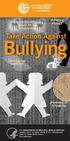 switching seats in the classroom stealing money Take Action Against Bullying spreading rumors pushing & tripping U.S. DEPARTMENT OF HEALTH & HUMAN SERVICES Substance Abuse and Mental Health Services Administration
Promoting Self Esteem and Positive Identity While Reducing Anxiety and Depression in Dyslexic Children
 Promoting Self Esteem and Positive Identity While Reducing Anxiety and Depression in Dyslexic Children Presented by: Roberto Olivardia, Ph.D. Harvard Medical School [email protected] Dr.