
Structural and optical properties of PbS thin films deposited by chemical bath deposition
|
|
|
- Corey Daniel
- 9 years ago
- Views:
Transcription
1 Materials Chemistry and Physics 97 (2006) Structural and optical properties of PbS thin films deposited by chemical bath deposition S. Seghaier a,, N. Kamoun a, R. Brini b, A.B. Amara c a Laboratoire de Physique de la Matière Condensée, Faculté des Sciences de Tunis, 2092 El Manar, Tunisia b Laboratoire de Photovoltaïque et des Matériaux Semi-conducteurs, Ecole Nationale, d Ingénieurs de Tunis, El Manar, Tunisia c Laboratoire de Physique des Matériaux, Faculté des Sciences de Bizerte, 7003 Zarzouna, Tunisia Received 10 May 2005; received in revised form 22 July 2005; accepted 23 July 2005 Abstract In the current paper lead sulphide (PbS) thin films have been deposited on glass slide substrates via a simple and easily controlled method, proceeding large area films, using the chemical bath deposition technique. The reactive substances used to obtained the PbS layers were (Pb(NO 3 ) 2 ), (NaOH), (SC(NH 2 ) 2 ) and H 2 O for different concentration and dipping times, at constant room temperature. The structure was determined by X-ray diffraction studies. The films are very adherent to the substrate and well crystallized according to the centered cubic structure with the preferential orientation (2 0 0). The surface morphology and crystallite sizes were determined by scanning electron microscope measurements. The optical properties were carried out from spectroscopy measurements of transmission reflection and ellipsometry. The thickness of these films was controlled by changing the dipping times and the concentrations of the reaction solution. Experiments showed that the growth parameters and thermal treatment influenced the structure, the morphology and the optical properties of PbS films Elsevier B.V. All rights reserved. Keywords: PbS thin films; Chemical bath deposition; Structure; Optical properties 1. Introduction Lead sulphide (PbS) is an important direct narrow gap semiconductor material with an approximate energy band gap of 0.4 ev at 300 K and a relatively large excitation Bohr radius of 18 nm [1]. These properties make PbS very suitable for infrared detection application [2]. This material has also been used in many fields such as photography [3],Pb 2+ ionselective sensors [4] and solar absorption [5]. In addition, PbS has been utilized as photoresistance, diode lasers, humidity and temperature sensors, decorative and solar control coatings [6,7]. These properties have been correlated with the growth conditions and the nature of substrates. For these reasons, many research groups have shown a great interest in the development and study of this material by various deposition processes such as electrodeposition [8], spray pyrolysis Corresponding author. Tel.: ; fax: address: samia @yahoo.ca (S. Seghaier). [9], photoaccelerated chemical deposition [6], microwaveheating [10,11] and chemical bath deposition (CBD) [12 16]. CBD method is presently attracting considerable attention, as it does not require sophisticated instrumentation. It is relatively inexpensive, easy to handle, convenient for large area deposition and capable of yielding good quality thin films. The characteristics of chemically deposited PbS thin films by CBD strongly depend on the growth conditions. In this paper, we report the structural and optical properties of PbS thin films obtained by CBD method at various concentrations of the precursors and different deposition time. 2. Experimental 2.1. Synthesis of lead sulphide The PbS thin films were grown on ordinary glass slide (2.5 cm 2.5 cm 2 mm) substrates. The deposition was /$ see front matter 2005 Elsevier B.V. All rights reserved. doi: /j.matchemphys

2 72 S. Seghaier et al. / Materials Chemistry and Physics 97 (2006) done in a reactive solution prepared in a 50 ml beaker containing lead nitrate, which concentration range [Pb(NO 3 ) 2 ] was set between and M. This reactive was mixed in alkaline aqueous solution with thiourea at concentration [SC(NH 2 ) 2 ] varying between 0.09 and 0.20 M. The alkalinity is set using sodium hydroxide [NaOH] in the range M. The bidistilled water was added to the solution to achieve a total volume of 50 ml. Cleaned substrates was vertically immersed into the solution. The beaker with the reactive solution was immersed in water heating bath circulator placed on heating magnetic agitator and was maintained at room temperature. The substrates were subsequently taken out of the chemical bath after different dipping time t D (10 t D 70 min), rinsed with bidistilled water, dried and placed into a desiccator. The reaction process for forming lead sulphide films is considered as follows [17]: Pb(NO 3 ) 2 + 2NaOH Pb(OH) 2 + 2NaNO 3 Pb(OH) 2 + 4NaOH Na 4 Pb(OH) 6 Na 4 Pb(OH) 6 4Na + + HPbO 2 + 3OH + H 2 O SC(NH 2 ) 2 + OH CH 2 N 2 + H 2 O + SH HPbO 2 + SH PbS + 2OH The resulting films were homogeneous, well adhered to the substrate with darker surface like mirror. The thickness of each grown film was calculated from the density of g cm 3 (of bulk PbS) and the mass of the deposit surface area that is determined by the double weight method Instruments These films were structurally characterized by, X-ray diffraction (XRD) using a bruker D8 Advance X-ray diffractometer with Cu K irradiation (λ = Å) and by scanning electron microscopy (SEM) images carried out with XL 30/EDAX BSE microscope. This study was complemented with ellipsometry and spectroscopy measurements. The ellipsometry analysis were performed at λ = Å using a L 117 Gaertner Manual Ellipsometer. The optical transmittance and reflectance spectrum were examined on UV-3100 Schimadzu UV vis spectrophotometer. Pb 2+ ions sources, 0.10 M thiourea [SC(NH 2 ) 2 ], as sulphurliberating solution and 0.57 M sodium hydroxide [NaOH] that is used as complexing agent for Pb 2+ ions. The deposition is carried out at a constant temperature T D equal to 25 C. The substrates were subsequently taken out of the beaker after dipping time from 10 to 70 min. Fig. 1 shows the XRD patterns of the PbS thin films deposited at several growth time, in the above condition. The crystallography of the film is good and characterized by three principal peaks corresponding to (1 1 1), (2 0 0) and (2 2 0) orientations. The width at half maximum of the (2 0 0) line is in the range for all time deposition, the values are indicative of the good crystallinity. By comparison with the data from JCDF cards No , all diffraction peaks can be indexed within experimental error as a face-centered cubic structure of PbS. The narrow peaks show that the materiel has good crystallinity preferentially oriented along the (2 0 0) direction which is perpendicular to the substrate and which intensity depends on t D value. Table 1 displays the ratio values of the relative diffraction peaks intensities (I 111 /I 200 ) and (I 220 /I 200 ) for PbS films produced for various dipping times. From the following table we can note that an increase in the deposition time from 10 to 40 min is accompanied by an increase in the I 111 /I 200 ratio. For t D values varying between 40 and 60 min, we notice that the peak (1 1 1) intensity is practically constant, whereas the intensity of (2 0 0) increases reaching its maximum for a growth time equal to 60 min. Both the intensity ratio I 111 /I 200 and I 220 /I 200 for thin films grown during 60 min, are equal to and 0.094, these values are lower than the theoretical one equal to 0.8 and 0.6, respectively, showing that the PbS samples grown by CBD have (2 0 0) preferred orientation with strong intensity and full width at half maximum. That can be related to the larger number of both Pb 2+ and S 2 ions in the reaction solution at t D equal to 60 min. Similar results were obtained by Valenzuela- Jauregui et al. [16] and Larramendi et al. [13]. However, for t D equal to 70 min, the intensity of (2 0 0) decreases. In this case, we notice also that the thin layers obtained are very rough. We tried to make thin layers of PbS for t D more than 70 min and we noticed that the layer is detached from its substrate. Recently, rectangular and rod-like PbS crystals have been successfully prepared in systems containing organic polyamines with N-chelation properties such as triethylenetetramine [18] and ethylenedimine [19], respectively. However, we have determined the average crystallite sizes L by measuring full width at half of the (2 0 0) peaks and by 3. Results and discussion 3.1. Structure and surface morphology Effect of the deposition time To optimize the deposition time, we produced PbS thin layers on glass from M lead nitrate [Pb(NO 3 ) 2 ]as Table 1 Variation of PbS peak orientation degree as a function of the deposition time (t D ) t D (min) I 111 /I I 220 /I
![185 M. This reactive was mixed in alkaline aqueous solution with thiourea at concentration [SC(NH 2 ) 2 ] varying between 0.09 and 0.20 M.](/docs-images/47/19989113/images/page_2.jpg "The alkalinity is set using sodium hydroxide [NaOH] in the range 0.55 0.60 M. The bidistilled water was added to the solution to achieve a total volume of 50 ml.")
3 S. Seghaier et al. / Materials Chemistry and Physics 97 (2006) Fig. 1. X-ray diffraction spectra of PbS layer, CBD-prepared with [Pb(NO 3 ) 2 ] = M, [NaOH] = 0.57 M, [SC(NH 2 ) 2 ] = 0.1 M, T D =25 C and for various deposition time (t D ). using the Scherrer formula [20]: 0.9λ L = cos θ 0 (2θ) For different deposition time, comparable L values are measured from SEM micrograph as shown in Table 2. Table 2 Effect of the deposition time on PbS grain size deduced from MEB and XRD analysis t D (min) Grain size (Å) SEM L (Å) of (2 0 0) XRD On the other hand, SEM analysis gives the morphology of the PbS nanocrystals. The prepared thin films have a pyramidal shape with a rather compact surface, which does not show any fissures, faults and disturbances. Fig. 2 shows the thickness variation of PbS thin films as a function of deposition time. The curve shows an initial slow growth involving the creation of nucleation centers; it corresponds to the induction phase. The growth phase (20 60 min) at which the thickness is obtained in a linear dependence. They increase steadily with dipping time up to 60 min to reach the max value of nm, so while the film thickness increases the grain size goes up (see Table 2), and the terminal phase in which the growth slows down. We can conclude the uniformity, the good adhesion and the best crystallinity of PbS on glass sub-

4 74 S. Seghaier et al. / Materials Chemistry and Physics 97 (2006) strate is obtained for an immersion time equal to 60 min from the bath described above. Fig. 2. Thickness of PbS films as a function of deposition time Effect of the lead nitrate concentration In this study we set deposition time t D at its optimal value equal to 60 min and we tried to change the [Pb(NO 3 ) 2 ] from to M per step of M. The XRD patterns of as-prepared PbS are shown in Fig. 3 all diffraction peaks, can be indexed to the pure cubic phase of PbS. No peak of any other phase was detected. The strong intensity and narrow peaks show that the material has good crystallinity and (2 0 0) preferred orientation. The crystallography of the film is good and characterized by three peaks corresponding to (1 1 1), (2 0 0) and (2 2 0) orientations. The (2 0 0) reflection peak has very strong intensity and the full width at half maximum of line is the order of for a concentration equal to M. This indicates a good preferential orientation of the grains with c-axis perpendicular to the plane of the substrate. The values of the intensity ratios I 111 /I 200 and I 220 /I 200 for lead nitrate concentrations equal to M are in the order of and 0.371, respectively, as it indicated in Table 3. The Fig. 3. XRD pattern of PbS thin layers, CBD-prepared on glass substrate with [NaOH] 0.57 M, [SC(NH 2 ) 2 ] = 0.1 M, t D = 60 min, T D =25 C and for various Pb(NO 3 ) 2 concentration.
![Effect of the lead nitrate concentration In this study we set deposition time t D at its optimal value equal to 60 min and we tried to change the [Pb(NO 3 ) 2 ] from 0.165 to 0.185 M per step of 0.](/docs-images/47/19989113/images/page_4.jpg "005 M. The XRD patterns of as-prepared PbS are shown in Fig. 3 all diffraction peaks, can be indexed to the pure cubic phase of PbS. No peak of any other phase was detected.")
5 S. Seghaier et al. / Materials Chemistry and Physics 97 (2006) Table 3 Variation of PbS peak orientation degree as a function of the lead nitrate concentration [Pb(NO 3 ) 2 ](M) I 111 /I I 220 /I (2 0 0) preferential direction is also observed with a middle intensity [16,17]. As shown in Fig. 4a fat uniform structure can be seen, which in a compact way, carpets the substrate surface with lead sulphide crystallites of various size. So Table 4 shows that the mean size of PbS crystallites, depends on the Pb(NO 3 ) 2 concentration in the bath solution. Besides, dispersed small spherical structures can also be observed, which seem to be formed by cluster of microparticles. These disturbances on surfaces are less marked for a [Pb(NO 3 ) 2 ] equal to M. Nevertheless, the pyramidal crystallites Fig. 4. SEM surface micrograph of PbS thin films deposited on glass substrate prepared with [NaOH] = 0.57 M, [SC(NH 2 ) 2 ] = 0.1 M, T D =25 C and for various [Pb(NO 3 ) 2 ]: (a) M, (b) M, (c) M, (d) M and (e) M.

6 76 S. Seghaier et al. / Materials Chemistry and Physics 97 (2006) Table 4 Mean PbS grain size as a function of lead nitrate concentration deduced from SEM and XRD analysis [Pb(NO 3 ) 2 ](M) Grain size (Å) SEM L (Å) of (2 0 0) XRD are uniformly distributed on the surface make thin film with strong compactness. The coalescence of crystallites on thin film surface affirms their privileged orientation along (2 0 0) direction. With lead nitrate concentration equal to M and dipping time of 40 min, Mahmoud and Hamid [17] show the presence of randomly oriented inter-grown aggregate crystals in a heterogeneous size distributed on the surface film. Elsewhere the study of the dependence of the PbS thickness values on the lead nitrate concentration in same preceding conditions is reported by Fig. 5. While the [Pb(NO 3 ) 2 ] exceeds M, the thickness of PbS layer decreases. The result seems to confirm that the nucleation rate is mainly regulated by the concentration of Pb 2+ ions in solution, which results in the development of PbS complex. We can note that for a [Pb(NO 3 ) 2 ] equal to M, the quantity of Fig. 5. PbS film thickness as a function of lead nitrate concentration. Pb 2+ is high, so it favourites the growth of lead sulphide thin films with a maximum thickness above 826 nm. As far as lead nitrate concentration increases, PbS is formed and the film is removed from its substrate then, so the solution becomes depleted of ions, resulting in a lower rate of deposition. Fig. 6. XRD pattern of PbS thin films deposited on glass with [Pb(NO 3 ) 2 ] = M, [SC(NH 2 ) 2 ] = 0.1 M, T D =25 C, t D = 60 min and for various sodium hydroxide concentration [NaOH]: (a) 0.56 M, (b) 0.57 M, (c) 0.58 M and (d) 0.59 M.

7 S. Seghaier et al. / Materials Chemistry and Physics 97 (2006) Effect of the sodium hydroxide concentration The presence of the sodium hydroxide in this prepared CBD bath is very vital for the deposition of PbS thin films, so it assures the precipitation of Na(OH) 2 and the hydrolysis of thiourea. In this study, we have set the deposition time and the lead nitrate concentration at the previous optimal values according to the structural and morphological analyses. These values are, respectively, 60 min and M. We have varied the [NaOH] in the interval [ M] with a step of In addition, we note by variation of the basic nature reagent, that the ph of the solution varies from to Fig. 6 proves strongly the effect of the [NaOH] on PbS thin films structure. The spectra of the samples deposited with a [NaOH] less than 0.57 M, is practically amorphous. It shows small and broad peaks indicative of a film poor quality. Similarly, Fig. 7 shows that the film thickness is rather low so we concluded that lower concentration of sodium hydroxide gives lower growth rates. For [NaOH] equal to 0.57 M, X-ray diffraction patterns show the appearance of the PbS diffraction lines (Fig. 6b). The resulting film showed good adhesion to the glass substrate with thickness equal to 826 nm (Fig. 7). While the [NaOH] increases from 0.57 M, we note that the intensity of the all PbS peaks gradually decreases. From this analysis we can conclude that the (2 0 0) direction is the preferential orientation of PbS. However, the well crystallinity obtained for a sodium hydroxide concentration equal to 0.57 M, setting the solution ph to Effect of the thiourea concentration In this study [SC(NH 2 ) 2 ] varies from 0.09 to 0.2 M. The XRD pattern of the films is shown in Fig. 8. From this study, we note that for a concentration value different from 0.1 M the films are amorphous with weak thicknesses as shown in Fig. 9. However, for thiourea concentration equal to 0.1 M the layers essentially consists of PbS compound (Fig. 8), as shown by the three principal orientations (1 1 1), (2 0 0) Fig. 8. XRD pattern of PbS thin layers, CBD-prepared on glass substrate with [NaOH] = 0.57 M, [Pb(NO 3 ) 2 ] = M, t D = 60 min, T D =25 C and for various SC(NH 2 ) 2 concentration. and (2 2 0) characterizing a cubic structure. These diffraction peaks are rather narrow, indicating a good crystallinity with a (2 0 0) preferential orientation. By examination of the effect of [SC(NH 2 ) 2 ] on the film thickness we can deduce that if [SC(NH 2 ) 2 ] increases from 0.09 to 0.1 M, the film thickness increases from 305 to 826 nm. For concentration value exceeding 0.1 M, we note a reduction in the layer thickness and the film has bad crystallization. Under these optimal conditions determined in this work the PbS film studied by EDAX analysis (energy dispersive spectrometry) confirmed that the film is only composed by PbS compound with a concentration ratio practically equal to the theoretical value [Pb]/[S] = 1 (see Fig. 10) Annealing effect We study the effect of the heat treatment under nitrogen during 1 h at 200 C on the structure of lead sulphide carried out from deposition bath with optimal conditions: [Pb(NO 3 ) 2 ] = M, [NaOH] = 0.57 M, Fig. 7. Thickness of PbS films as a function of sodium hydroxide concentration. Fig. 9. PbS film thickness as a function of thiourea concentration.

8 78 S. Seghaier et al. / Materials Chemistry and Physics 97 (2006) Fig. 10. EDS analysis of as-deposited layer on glass with [Pb(NO 3 ) 2 ]= M, [SC(NH 2 ) 2 ] = 0.1 M, [NaOH] = 0.57 M, t D = 60 min and T D = 25 C. [SC(NH 2 ) 2 ] = 0.1 M, t D = 60 min at room temperature. Thin layer is well crystallized in the cubic structure before heat treatment (Fig. 11a), but after heating (Fig. 11b) all peaks corresponding to PbS compound have disappeared without trace. This result can be explained by an increase of the disorder in the layer so the film becomes amorphous and/or by a decrease of thin layer thickness after annealing Optical properties In this work, we study the influence of the deposition parameters on the optical properties of chemically deposited PbS films. The first part will be devoted to the study of the effect of lead nitrate concentration and the effect of heat treatment on the transmittance and reflectance spectra. The second part will proceed in determining the refractive index n 1 and the extinction coefficient k 1 in various points of coordinates (x, y) on PbS thin layer surface using an extinction ellipsometer. Fig. 12. Transmittance spectra of PbS thin layers, CBD-prepared on glass substrate with [NaOH] = 0.57 M, [SC(NH 2 ) 2 ] = 0.1 M, t D = 60 min, T D =25 C and for various Pb(NO 3 ) 2 concentration Transmittance and reflectance measurements Optical measurements were undertaken in order to compare the optical performances of PbS films prepared with different values of lead nitrate concentration. Transmittance and reflectance measurements at nearnormal incidence were performed over a spectral ranging between 300 and 1800 nm on PbS thin films deposited on glass substrate with optimal deposition parameters, determined according to X-ray diffraction analysis but with different values of lead nitrate concentration varying from to M. Fig. 12 shows the optical transmission spectra of representative samples of lead sulphide coatings on glass from baths prepared at various lead nitrate concentration. We can explain the decrease of transmission for [Pb(NO 3 ) 2 ] equal to 0.165, and M by the presence of very thin layer Fig. 11. XRD pattern of PbS thin layers, CBD-prepared on glass substrate with [NaOH] = 0.57 M, [Pb(NO 3 ) 2 ] = M, [SC(NH 2 ) 2 ] = 0.10 M, T D =25 C and t D = 60 min, before thermal treatment (a) and after heat treatment under nitrogen for 1 h at 200 C (b). Fig. 13. transmission and reflection spectra of PbS thin layers deposited on glass with [NaOH] = 0.57 M, [Pb(NO 3 ) 2 ] = M, [SC(NH 2 ) 2 ] = M, T D =25 C and t D = 60 min: (a) before and (b) after annealing under nitrogen at 200 C during 1 h.

9 S. Seghaier et al. / Materials Chemistry and Physics 97 (2006) of Pb(OH 2 ) on the film surface. Such films produce considerably lower specular reflectance and transmittance due to diffuse reflection from the surface. It is known that Pb(OH 2 ) formation can be reduced or avoided by minimizing the quantity of Pb 2+ ions in the bath as well as by optimizing the OH ion concentration in the bath so that the solubility product for the Pb(OH 2 ) is not exceeded [21]. This result can be also explained by the reduction of the thickness for [Pb(NO 3 ) 2 ] equal to 0.165, and M as can bee seen in Fig. 5. Fig. 13 shows the modifications of the transmittance and reflectance spectra of the PbS with [Pb(NO 3 ) 2 ] = M, after heat treatment at 200 C under nitrogen during 1 h, we observe a decrease of T and an increase of R values over the whole spectral range. The result can be interpreted by the PbS layers being amorphous after heat treatment as shown in Fig. 11b. We notice the presence of rather weak interference fringes on both the T and R spectra, which confirm that the PbS films have uniform thickness and good surface homogeneity Ellipsometry measurements In this section we determined the complex index N 1 = n 1 ik 1 by measuring the ellipsometric parameter Ψ and at a wavelength of 633 nm and for different point surface, of PbS thin films realized in optimal conditions. Fig. 14 displays the surface topography of the refraction index n 1 (x, y) and the extinction coefficient k 1 (x, y) as a function of point surface coordinates (x, y) of the PbS thin films before and after annealing. As seen in this figure, the topography of n 1 and k 1 along the surface is quite uniform but it get more homogeneous after thermal treatment (Fig. 14b). The ellipsometric analysis shows that the reflective index n 1 and k 1 vary, respectively, between the following ranges n 1 Fig. 14. Surface topography of the refraction index n 1 and the extinction coefficient k 1 of PbS layers CBD-deposited on glass for [NaOH] = 0.57 M, [Pb(NO 3 ) 2 ] = M, [SC(NH 2 ) 2 ] = M, T D =25 C and t D = 60 min: (a) before and (b) after heat treatment under nitrogen at 200 C during 1 h.

10 80 S. Seghaier et al. / Materials Chemistry and Physics 97 (2006) between them is due to the uncertainties of measurement. There is a good agreement between SEM and ellipsometric analysis. The stoichiometric compound is also confirmed by the EDAX measurements. From these studies, we were able to determine this quality of the surface and, there for a good epitaxy. References Fig. 15. SEM micrograph of the PbS fractured film CBD-deposited on glass for [NaOH] = 0.57 M, [Pb(NO 3 ) 2 ] = M, [SC(NH 2 ) 2 ] = M, T D =25 C and t D = 60 min. from 2.5 to 3 and k 1 from 1.5 to 2. Elsewhere at a wavelength of 550 nm bulk PbS is a highly absorbing material with a complex refraction index N 1 = 4.3 i1.23 [22]. 4. Conclusions In this study, we have presented a chemical bath deposition method to elaborate the PbS crystallites. From structural analysis we can conclude that the best crystallinity and the great adhesion of PbS on glass substrate is obtained by employing M of lead nitrate, 0.57 M of sodium hydroxide and 0.1 M of thiourea as reactants, at room temperature for dipping time equal to 60 min, formed only by lead sulphide compound with face-centered cubic structure preferentially oriented according to the (2 0 0) perpendicular direction to the plane of the substrate. The films gown in this condition were well crystallized, with good surface homogeneity and roughness. Thickness of films elaborated in these conditions have determined by doubles weighting is practically equal to 826 nm and by SEM micrograph we have found 833 nm (Fig. 15). These two values are comparable and the difference [1] J.L. Machol, F.W. Wise, R.C. Patel, D.B. Tanner, Phys. Rev. B 48 (1993) [2] P. Gadenne, Y. Yagil, G. Deutscher, J. Appl. Phys. 66 (1989) [3] P.K. Nair, O. Gomezdaza, M.T.S. Nair, Adv. Mater. Opt. Electron. 1 (1992) 139. [4] H. Hirata, K. Higashiyama, Bull. Chem. Soc. Jpn. 44 (1971) [5] T.K. Chaudhuri, S. Chatterjes, Proceedings of the International Conference on Thermoelectronics, vol. 11, 1992, p. 40. [6] P.K. Nair, V.M. Garcia, A.B. Hernandez, M.T.S. Nair, J. Phys. D: Appl. Phys. 24 (1991) [7] Ileana Pop, Cristina Nascu, Violeta Ionescu, E. Indrea, I. Bratu, Thin Solid Films 307 (1997) [8] Maheshwar Sharon, K.S. Ramaiah, Mukul Kumar, M. Neumann- Spallart, C. Levy-Clement, Electroanal. Chem. 436 (1997) [9] B. Thangaraju, P. Kaliannan, Semicond. Sci. Technol. 15 (2000) [10] Yonghong Ni, Fei Wang, Hongjiang Liu, Gui Yin, Jianming Hong, Xiang Ma, Zheng Xu, Cryst. Growth 262 (2004) [11] Yu Zhao, Xue-Hong Liao, Jian-Min Hong, Jun-Jie Zhu, Mater. Chem. Phys. 87 (2004) [12] Cristina Nascu, Valentina Vomir, Ileana Pop, Violeta Ionescu, Rodica Grecu, Mater. Sci. Eng. B 41 (1996) [13] E.M. Larramendi, O. Calzadilla, A. Gonzalez-Arias, E. Hernandez, J. Ruiz-Garcia, Thin Solid Films 389 (2001) [14] E. Pentia, L. Pintilie, C. Tivarus, I. Pintilie, T. Botila, Mater. Sci. Eng. B 80 (2001) [15] Rakesh K. Joshi, Aloke Kanjilal, H.K. Sehgal, Appl. Surf. Sci. 221 (2004) [16] J.J. Valenzuela-Jauregui, R. Ramirez-Bon, A. Mendoza-Galvan, M. Sotelo-Lerma, Thin Solid Films 441 (2003) [17] S. Mahmoud, O. Hamid, FIZIKA A (Zagreb) 10 (2001) [18] T. Sugimoto, S.H. Chen, A. Muramatsu, Colloid Surf. A 135 (1998) 207. [19] M. Chen, Y. Xie, Z. Yao, Y. Qian, G. Zhou, Mater. Res. Bull. 37 (2002) 247. [20] A. Guinier, Théorie et Technique de la radiocristallographie, Ed. Dunod, Paris, [21] R.A. Zingaro, D.O. Skovlin, J. Electrochem. Soc. 111 (1964) 42. [22] Landolt-Börnstein, Physical Data, Tables and Functions, Series III, 17 (1961) 155.
![SEM micrograph of the PbS fractured film CBD-deposited on glass for [NaOH] = 0.57 M, [Pb(NO 3 ) 2 ] = 0.170 M, [SC(NH 2 ) 2 ] = 0.100 M, T D =25 C and t D = 60 min. from 2.5 to 3 and k 1 from 1.](/docs-images/47/19989113/images/page_10.jpg "5 to 2. Elsewhere at a wavelength of 550 nm bulk PbS is a highly absorbing material with a complex refraction index N 1 = 4.")
Preparation of ZnS and SnS Nanopowders by Modified SILAR Technique
 Journal of Physical Sciences, Vol. 13, 009, 9-34 ISSN: 097-8791 : www.vidyasagar.ac.in/journal Preparation of ZnS and SnS Nanopowders by Modified SILAR Technique Department of Physics The University of
International Journal of Multidisciplinary Research and Modern Education (IJMRME) ISSN (Online): 2454-6119 (www.rdmodernresearch.org) Volume I, Issue
 STUDIES ON OPTICAL AND STRUCTURAL PROPERTIES OF Ag2S FILMS PREPARED BY CHEMICAL BATH DEPOSITION METHOD Goverdhan Yadu*, K. K. Pathak**, Kusumanjali Deshmukh*** & Mini A. Pateria*** * Govt. Rajeev Lochan
Effect of Deposition Time on ZnS Thin Films Properties by Chemical Bath Deposition (CBD) Techinique
 World Applied Sciences Journal 19 (8): 1087-1091, 01 ISSN 1818-495 IDOSI Publications, 01 DOI: 10.589/idosi.wasj.01.19.08.591 Effect of Deposition Time on ZnS Thin Films Properties by Chemical Bath Deposition
ISSN 0975-413X CODEN (USA): PCHHAX
 Available online at www.derpharmachemica.com ISSN 0975-413X CODEN (USA): PCHHAX Der Pharma Chemica, 2016, 8(4):96-100 (http://derpharmachemica.com/archive.html) Characterization of cadmium sulfide thin
Chapter 4 Indium Tin Oxide Films Deposited by d.c. Sputtering
 Chapter 4 Indium Tin Oxide Films Deposited by d.c. Sputtering 4.1. Introduction Indium-tin-oxide (ITO) thin films are widely used in optoelectronics devices, flat panel display and electrochromic (EC)
Available online at www.scholarsresearchlibrary.com. Scholars Research Library
 Available online at www.scholarsresearchlibrary.com Archives of Physics Research, 2011, 2 (2): 27-35 (http://scholarsresearchlibrary.com/archive.html) ISSN 0976-0970 CODEN (USA): APRRC7 Studies on Characterization
Phase Characterization of TiO 2 Powder by XRD and TEM
 Kasetsart J. (Nat. Sci.) 42 : 357-361 (28) Phase Characterization of TiO 2 Powder by XRD and TEM Kheamrutai Thamaphat 1 *, Pichet Limsuwan 1 and Boonlaer Ngotawornchai 2 ABSTRACT In this study, the commercial
The effect of film thickness on physical properties of fluorine-doped indium oxide thin films
 Materials Science-Poland, Vol. 22, No. 2, 2004 The effect of film thickness on physical properties of fluorine-doped indium oxide thin films S. M. ROZATI *, T. GANJ Physics Department, University of Guilan,
REFRACTIVE INDEX, OPTICAL BANDGAP AND OSCILLATOR PARAMETERS OF PBS THIN FILMS DEPOSITED BY CBD TECHNIQUE
 REFRACTIVE INDEX, OPTICAL BANDGAP AND OSCILLATOR PARAMETERS OF PBS THIN FILMS DEPOSITED BY CBD TECHNIQUE ABSTRACT Nanocrystalline lead sulfide (PbS) thin films were synthesized on glass substrate by chemical
The study of structural and optical properties of TiO 2 :Tb thin films
 Optica Applicata, Vol. XXXVII, No. 4, 2007 The study of structural and optical properties of TiO 2 :Tb thin films AGNIESZKA BORKOWSKA, JAROSLAW DOMARADZKI, DANUTA KACZMAREK, DAMIAN WOJCIESZAK Faculty of
Modification of Pd-H 2 and Pd-D 2 thin films processed by He-Ne laser
 Modification of Pd-H 2 and Pd-D 2 thin films processed by He-Ne laser V.Nassisi #, G.Caretto #, A. Lorusso #, D.Manno %, L.Famà %, G.Buccolieri %, A.Buccolieri %, U.Mastromatteo* # Laboratory of Applied
Al 2 O 3, Its Different Molecular Structures, Atomic Layer Deposition, and Dielectrics
 Al 2 O 3, Its Different Molecular Structures, Atomic Layer Deposition, and Dielectrics Mark Imus Douglas Sisk, Ph.D., Mentor Marian High School RET Program University of Notre Dame Project Proposal Tunneling
Sputtered AlN Thin Films on Si and Electrodes for MEMS Resonators: Relationship Between Surface Quality Microstructure and Film Properties
 Sputtered AlN Thin Films on and Electrodes for MEMS Resonators: Relationship Between Surface Quality Microstructure and Film Properties S. Mishin, D. R. Marx and B. Sylvia, Advanced Modular Sputtering,
Effect of ph on the Size of Gold Nanoparticles
 International Journal of Electronic and Electrical Engineering. ISSN 0974-2174, Volume 7, Number 2 (2014), pp. 159-164 International Research Publication House http://www.irphouse.com Effect of ph on the
Optical Properties of Sputtered Tantalum Nitride Films Determined by Spectroscopic Ellipsometry
 Optical Properties of Sputtered Tantalum Nitride Films Determined by Spectroscopic Ellipsometry Thomas Waechtler a, Bernd Gruska b, Sven Zimmermann a, Stefan E. Schulz a, Thomas Gessner a a Chemnitz University
Luminescence study of structural changes induced by laser cutting in diamond films
 Luminescence study of structural changes induced by laser cutting in diamond films A. Cremades and J. Piqueras Departamento de Fisica de Materiales, Facultad de Fisicas, Universidad Complutense, 28040
BIOACTIVE COATINGS ON 316L STAINLESS STEEL IMPLANTS
 Trends Biomater. Artif. Organs. Vol. 17(2) pp 43-47 (2004) http//www.sbaoi.org BIOACTIVE COATINGS ON 316L STAINLESS STEEL IMPLANTS N. Ramesh Babu*,+, Sushant Manwatkar*, K. Prasada Rao* and T. S. Sampath
Supporting Information
 Supporting Information Simple and Rapid Synthesis of Ultrathin Gold Nanowires, Their Self-Assembly and Application in Surface-Enhanced Raman Scattering Huajun Feng, a Yanmei Yang, a Yumeng You, b Gongping
Pulsed laser deposition of organic materials
 Pulsed laser deposition of organic materials PhD theses Gabriella Kecskeméti Department of Optics and Quantum Electronics University of Szeged Supervisor: Dr. Béla Hopp senior research fellow Department
Characterization of sputtered NiO thin films
 Surface & Coatings Technology 198 (2005) 138 142 www.elsevier.com/locate/surfcoat Characterization of sputtered NiO thin films Hao-Long Chen a, *, Yang-Ming Lu b, Weng-Sing Hwang a a Department of Materials
Effect of surface area, pore volume and particle size of P25 titania on the phase transformation of anatase to rutile
 Indian Journal of Chemistry Vol. 48A, October 2009, pp. 1378-1382 Notes Effect of surface area, pore volume and particle size of P25 titania on the phase transformation of anatase to rutile K Joseph Antony
NANOSTRUCTURED ZnO AND ZAO TRANSPARENT THIN FILMS BY SPUTTERING SURFACE CHARACTERIZATION
 Rev.Adv.Mater.Sci. Nanostructured ZnO 10 and (2005) ZAO 335-340 transparent thin films by sputtering surface characterization 335 NANOSTRUCTURED ZnO AND ZAO TRANSPARENT THIN FILMS BY SPUTTERING SURFACE
UV/VIS/IR SPECTROSCOPY ANALYSIS OF NANOPARTICLES
 UV/VIS/IR SPECTROSCOPY ANALYSIS OF NANOPARTICLES SEPTEMBER 2012, V 1.1 4878 RONSON CT STE K SAN DIEGO, CA 92111 858-565 - 4227 NANOCOMPOSIX.COM Note to the Reader: We at nanocomposix have published this
EXPERIMENTAL STUDY OF STRUCTURAL ZONE MODEL FOR COMPOSITE THIN FILMS IN MAGNETIC RECORDING MEDIA APPLICATION
 EXPERIMENTAL STUDY OF STRUCTURAL ZONE MODEL FOR COMPOSITE THIN FILMS IN MAGNETIC RECORDING MEDIA APPLICATION Hua Yuan and David E. Laughlin Department of Materials Science and Engineering, Carnegie Mellon
Oil absorption in mesoporous silica particles
 Processing and Application of Ceramics 4 [4] (2010) 265 269 Oil absorption in mesoporous silica particles Radislav Filipović 1,2,*, Dragica Lazić 1, Mitar Perušić 1, Ivan Stijepović 3 1 Faculty of Technology,
PREPARATION OF CdS:Fe THIN FILMS AND THE STUDY OF THEIR PHASE FORMATION AND OPTICAL PROPERTIES WITH POST-DEPOSITION ANNEALING
 Chalcogenide Letters Vol. 8, No. 3, March 211, p. 199-26 PREPARATION OF CdS:Fe THIN FILMS AND THE STUDY OF THEIR PHASE FORMATION AND OPTICAL PROPERTIES WITH POST-DEPOSITION ANNEALING P.U. ASOGWA * Department
h e l p s y o u C O N T R O L
 contamination analysis for compound semiconductors ANALYTICAL SERVICES B u r i e d d e f e c t s, E v a n s A n a l y t i c a l g r o u p h e l p s y o u C O N T R O L C O N T A M I N A T I O N Contamination
2. Deposition process
 Properties of optical thin films produced by reactive low voltage ion plating (RLVIP) Antje Hallbauer Thin Film Technology Institute of Ion Physics & Applied Physics University of Innsbruck Investigations
DETECTION OF COATINGS ON PAPER USING INFRA RED SPECTROSCOPY
 DETECTION OF COATINGS ON PAPER USING INFRA RED SPECTROSCOPY Eduard Gilli 1,2 and Robert Schennach 1, 2 1 Graz University of Technology, 8010 Graz, Austria 2 CD-Laboratory for Surface Chemical and Physical
Spectrophotometry and the Beer-Lambert Law: An Important Analytical Technique in Chemistry
 Spectrophotometry and the Beer-Lambert Law: An Important Analytical Technique in Chemistry Jon H. Hardesty, PhD and Bassam Attili, PhD Collin College Department of Chemistry Introduction: In the last lab
The properties of chemical bath deposited cadmium sulfide thin films with the effect of ammonia salt concentration
 Available online at www.pelagiaresearchlibrary.com Advances in Applied Science Research, 2016, 7(2): 178-182 ISSN: 0976-8610 CODEN (USA): AASRFC The properties of chemical bath deposited cadmium sulfide
KINETIC DETERMINATION OF SELENIUM BY VISIBLE SPECTROSCOPY (VERSION 1.8)
 Selenium Determination, Page 1 KINETIC DETERMINATION OF SELENIUM BY VISIBLE SPECTROSCOPY I. BACKGROUND. (VERSION 1.8) The majority of reactions used in analytical chemistry possess the following characteristics:
Vacuum Evaporation Recap
 Sputtering Vacuum Evaporation Recap Use high temperatures at high vacuum to evaporate (eject) atoms or molecules off a material surface. Use ballistic flow to transport them to a substrate and deposit.
Improvement of surface porosity and properties of alumina films by incorporation of Fe micrograins in micro-arc oxidation
 Applied Surface Science 253 (2006) 863 868 www.elsevier.com/locate/apsusc Improvement of surface porosity and properties of alumina films by incorporation of Fe micrograins in micro-arc oxidation Fanya
Sn-Cu Intermetallic Grain Morphology Related to Sn Layer Thickness
 Journal of ELECTRONIC MATERIALS, Vol. 36, No. 11, 2007 DOI: 10.1007/s11664-007-0270-x Ó 2007 TMS Special Issue Paper -Cu Intermetallic Grain Morphology Related to Layer Thickness MIN-HSIEN LU 1 and KER-CHANG
6 Reactions in Aqueous Solutions
 6 Reactions in Aqueous Solutions Water is by far the most common medium in which chemical reactions occur naturally. It is not hard to see this: 70% of our body mass is water and about 70% of the surface
The study of deep-level emission center in ZnO films grown on c-al 2 O 3 substrates
 The study of deep-level emission center in ZnO films grown on c-al 2 O 3 substrates Guotong Du Yuantao Zhang, Jinzhong Wang, Yongguo Cui (College of Electronic Science and Engineering, State Key Laboratory
Coating Thickness and Composition Analysis by Micro-EDXRF
 Application Note: XRF Coating Thickness and Composition Analysis by Micro-EDXRF www.edax.com Coating Thickness and Composition Analysis by Micro-EDXRF Introduction: The use of coatings in the modern manufacturing
2 Absorbing Solar Energy
 2 Absorbing Solar Energy 2.1 Air Mass and the Solar Spectrum Now that we have introduced the solar cell, it is time to introduce the source of the energy the sun. The sun has many properties that could
Light management for photovoltaics using surface nanostructures
 Light management for photovoltaics using surface nanostructures Roberta De Angelis Department of Industrial Engineering and INSTM, University of Rome Tor Vergata New Materials For Optoelectronics webnemo.uniroma2.it
Laser-induced modification of metal nanoparticles formed by laser ablation technique in liquids
 Applied Surface Science 247 (2005) 418 422 www.elsevier.com/locate/apsusc Laser-induced modification of metal nanoparticles formed by laser ablation technique in liquids N.V. Tarasenko *, A.V. Butsen,
UNIT I: INTRFERENCE & DIFFRACTION Div. B Div. D Div. F INTRFERENCE
 107002: EngineeringPhysics Teaching Scheme: Lectures: 4 Hrs/week Practicals-2 Hrs./week T.W.-25 marks Examination Scheme: Paper-50 marks (2 hrs) Online -50marks Prerequisite: Basics till 12 th Standard
Characterization of nickel based catalysts supported by different oxides and prepared by sol gel method
 Characterization of nickel based catalysts supported by different oxides and prepared by sol gel method Mourad Halouane 1, Ouzna Kheffache 2, Saliha Menad 1, Djamila Halliche 2 1 Laboratoire de Recherche
Effect of the oxide film formed on the electrical properties of Cu-Zn alloy electric contact material
 Effect of the oxide film formed on the electrical properties of Cu-Zn alloy electric contact material Hao-Long Chen *, Ke-Cheng Tseng and Yao-Sheng Yang Department of Electronic Engineering, Kao Yuan University,
NEAR FIELD OPTICAL MICROSCOPY AND SPECTROSCOPY WITH STM AND AFM PROBES
 Vol. 93 (1997) A CTA PHYSICA POLONICA A No. 2 Proceedings of the 1st International Symposium on Scanning Probe Spectroscopy and Related Methods, Poznań 1997 NEAR FIELD OPTICAL MICROSCOPY AND SPECTROSCOPY
A metal-free polymeric photocatalyst for hydrogen production from water under visible light
 A metal-free polymeric photocatalyst for hydrogen production from water under visible light Xinchen Wang, Kazuhiko Maeda, Arne Thomas, Kazuhiro Takanabe, Gang Xin, Johan M. Carlsson, Kazunari Domen, Markus
Improved Contact Formation for Large Area Solar Cells Using the Alternative Seed Layer (ASL) Process
 Improved Contact Formation for Large Area Solar Cells Using the Alternative Seed Layer (ASL) Process Lynne Michaelson, Krystal Munoz, Jonathan C. Wang, Y.A. Xi*, Tom Tyson, Anthony Gallegos Technic Inc.,
Spectroscopic Ellipsometry:
 Spectroscopic : What it is, what it will do, and what it won t do by Harland G. Tompkins Introduction Fundamentals Anatomy of an ellipsometric spectrum Analysis of an ellipsometric spectrum What you can
Upon completion of this lab, the student will be able to:
 1 Learning Outcomes EXPERIMENT B4: CHEMICAL EQUILIBRIUM Upon completion of this lab, the student will be able to: 1) Analyze the absorbance spectrum of a sample. 2) Calculate the equilibrium constant for
Synthesis and Characterization of MnO 2 Nanoparticles using Co-precipitation Technique
 International Journal of Chemistry and Chemical Engineering. ISSN 2248-9924 Volume 3, Number 3 (2013), pp. 155-160 Research India Publications http://www.ripublication.com Synthesis and Characterization
Chemical vapor deposition of novel carbon materials
 Thin Solid Films 368 (2000) 193±197 www.elsevier.com/locate/tsf Chemical vapor deposition of novel carbon materials L. Chow a, b, *, D. Zhou b, c, A. Hussain b, c, S. Kleckley a, K. Zollinger a, A. Schulte
Glancing XRD and XRF for the Study of Texture Development in SmCo Based Films Sputtered Onto Silicon Substrates
 161 162 Glancing XRD and XRF for the Study of Texture Development in SmCo Based Films Sputtered Onto Silicon Substrates F. J. Cadieu*, I. Vander, Y. Rong, and R. W. Zuneska Physics Department Queens College
EXPERIMENT 11 UV/VIS Spectroscopy and Spectrophotometry: Spectrophotometric Analysis of Potassium Permanganate Solutions.
 EXPERIMENT 11 UV/VIS Spectroscopy and Spectrophotometry: Spectrophotometric Analysis of Potassium Permanganate Solutions. Outcomes After completing this experiment, the student should be able to: 1. Prepare
JOURNAL INTEGRATED CIRCUITS AND SYSTEMS, VOL 1, NO. 3, JULY 2006. 39
 JOURNAL INTEGRATED CIRCUITS AND SYSTEMS, VOL 1, NO. 3, JULY 2006. 39 Self-Assembled Polystyrene Micro-Spheres Applied for Photonic Crystals and Templates Fabrication Daniel S. Raimundo 1, Francisco J.
Types of Epitaxy. Homoepitaxy. Heteroepitaxy
 Epitaxy Epitaxial Growth Epitaxy means the growth of a single crystal film on top of a crystalline substrate. For most thin film applications (hard and soft coatings, optical coatings, protective coatings)
STRUCTURAL STUDIES OF MULTIFERROIC THIN FILMS
 STRUCTURAL STUDIES OF MULTIFERROIC THIN FILMS Lisa Krayer (UCSD) Mentor: Daniel Pajerowski (NIST) Collaborating with: (University of Florida) Professor Amlan Biswas Daniel Grant NCNR
University of California at Santa Cruz Electrical Engineering Department EE-145L: Properties of Materials Laboratory
 University of California at Santa Cruz Electrical Engineering Department EE-145L: Properties of Materials Laboratory Lab 8: Optical Absorption Spring 2002 Yan Zhang and Ali Shakouri, 05/22/2002 (Based
Laser beam sintering of coatings and structures
 Laser beam sintering of coatings and structures Anne- Maria Reinecke, Peter Regenfuß, Maren Nieher, Sascha Klötzer, Robby Ebert, Horst Exner Laserinstitut Mittelsachsen e.v. an der Hochschule Mittweida,
Coating Technology: Evaporation Vs Sputtering
 Satisloh Italy S.r.l. Coating Technology: Evaporation Vs Sputtering Gianni Monaco, PhD R&D project manager, Satisloh Italy 04.04.2016 V1 The aim of this document is to provide basic technical information
X-Ray Study of Soft and Hard Magnetic Thin Films
 Copyright (C) JCPDS-International Centre for Diffraction Data 1999 13 X-Ray Study of Soft and Hard Magnetic Thin Films Po-Wen Wang, 390 Reed St., Stormedia, Inc., Santa Clara CA. 95050 Abstract : This
6) How wide must a narrow slit be if the first diffraction minimum occurs at ±12 with laser light of 633 nm?
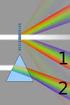 Test IV Name 1) In a single slit diffraction experiment, the width of the slit is 3.1 10-5 m and the distance from the slit to the screen is 2.2 m. If the beam of light of wavelength 600 nm passes through
Chapter 4 COATINGS Full Reflective Coatings:
 Chapter 4 COATINGS Technical developments in coatings for plastic optics have resulted in optical and durability characteristics once believed possible only with glass. These advances in coating technology
Porous silicon based optical multilayers
 Porous silicon based optical multilayers PhD thesis János Volk Supervisor: Dr. István Bársony MTA Research Institute for Technical Physics and Materials Sciences Budapest 2005 Premises Due to the discovery
Study of tungsten oxidation in O 2 /H 2 /N 2 downstream plasma
 Study of tungsten oxidation in O 2 /H 2 /N 2 downstream plasma Songlin Xu a and Li Diao Mattson Technology, Inc., Fremont, California 94538 Received 17 September 2007; accepted 21 February 2008; published
Anharmonicity and Weak Mode Assignment in La 2 x Sr x CuO 4 with Oxygen Isotopic Substitution
 Vol. 111 (2007) ACTA PHYSICA POLONICA A No. 1 Proceedings of the Symposium K: Complex Oxide Materials for New Technologies of E-MRS Fall Meeting 2006, Warsaw, September 4 8, 2006 Anharmonicity and Weak
Keywords: Planar waveguides, sol-gel technology, transmission electron microscopy
 Structural and optical characterisation of planar waveguides obtained via Sol-Gel F. Rey-García, C. Gómez-Reino, M.T. Flores-Arias, G.F. De La Fuente, W. Assenmacher, W. Mader ABSTRACT Planar waveguides
Metrology of silicon photovoltaic cells using coherence correlation interferometry
 Loughborough University Institutional Repository Metrology of silicon photovoltaic cells using coherence correlation interferometry This item was submitted to Loughborough University's Institutional Repository
Ultraviolet Spectroscopy
 Ultraviolet Spectroscopy The wavelength of UV and visible light are substantially shorter than the wavelength of infrared radiation. The UV spectrum ranges from 100 to 400 nm. A UV-Vis spectrophotometer
Phase Bulb Refurbation and Optmic Thin Film
 A simple system for measuring small phase retardation of an optical thin film T.N. Hansen* a, H. Fabricius a a DELTA Light & Optics, Venlighedsvej 4, 970-Hørsholm, Denmark ABSTRACT This paper describes
3 - Atomic Absorption Spectroscopy
 3 - Atomic Absorption Spectroscopy Introduction Atomic-absorption (AA) spectroscopy uses the absorption of light to measure the concentration of gas-phase atoms. Since samples are usually liquids or solids,
Fundamentals of modern UV-visible spectroscopy. Presentation Materials
 Fundamentals of modern UV-visible spectroscopy Presentation Materials The Electromagnetic Spectrum E = hν ν = c / λ 1 Electronic Transitions in Formaldehyde 2 Electronic Transitions and Spectra of Atoms
Chemical Sputtering. von Kohlenstoff durch Wasserstoff. W. Jacob
 Chemical Sputtering von Kohlenstoff durch Wasserstoff W. Jacob Centre for Interdisciplinary Plasma Science Max-Planck-Institut für Plasmaphysik, 85748 Garching Content: Definitions: Chemical erosion, physical
Chemical Synthesis. Overview. Chemical Synthesis of Nanocrystals. Self-Assembly of Nanocrystals. Example: Cu 146 Se 73 (PPh 3 ) 30
 Chemical Synthesis Spontaneous organization of molecules into stable, structurally well-defined aggregates at the nanometer length scale. Overview The 1-100 nm nanoscale length is in between traditional
Physical & Chemical Properties. Properties
 Physical & Chemical Properties Properties Carbon black can be broadly defined as very fine particulate aggregates of carbon possessing an amorphous quasi-graphitic molecular structure. The most significant
Back to Basics Fundamentals of Polymer Analysis
 Back to Basics Fundamentals of Polymer Analysis Using Infrared & Raman Spectroscopy Molecular Spectroscopy in the Polymer Manufacturing Process Process NIR NIR Production Receiving Shipping QC R&D Routine
INFRARED SPECTROSCOPY (IR)
 INFRARED SPECTROSCOPY (IR) Theory and Interpretation of IR spectra ASSIGNED READINGS Introduction to technique 25 (p. 833-834 in lab textbook) Uses of the Infrared Spectrum (p. 847-853) Look over pages
COMPARISON OF TEXTURE IN COPPER AND ALUMINUM THIN FILMS DETERMINED BY XRD AND EBSD *
 201 COMPARISON OF TEXTURE IN COPPER AND ALUMINUM THIN FILMS DETERMINED BY XRD AND EBSD * J. Müller 1, D. Balzar 1,2, R.H. Geiss 1, D.T. Read 1, and R.R. Keller 1 1 Materials Reliability Division, National
experiment5 Understanding and applying the concept of limiting reagents. Learning how to perform a vacuum filtration.
 81 experiment5 LECTURE AND LAB SKILLS EMPHASIZED Synthesizing an organic substance. Understanding and applying the concept of limiting reagents. Determining percent yield. Learning how to perform a vacuum
Size effects. Lecture 6 OUTLINE
 Size effects 1 MTX9100 Nanomaterials Lecture 6 OUTLINE -Why does size influence the material s properties? -How does size influence the material s performance? -Why are properties of nanoscale objects
Basic Properties and Application of Auto Enamels
 Basic Properties and Application of Auto Enamels Composition of Ceramic Automotive Glass Enamels Ceramic automotive glass colours are glass enamels that fire on to the glass during the bending process
Effects of aging on the kinetics of nanocrystalline anatase crystallite growth
 Materials Chemistry and Physics 95 (2006) 275 279 Effects of aging on the kinetics of nanocrystalline anatase crystallite growth Hsing-I Hsiang, Shih-Chung Lin Department of Resources Engineering, National
Supplementary Material (ESI) for Chemical Communications This journal is (c) The Royal Society of Chemistry 2009
 Supporting Information Supplementary Material (ESI) for Chemical Communications Controlled Synthesis of Co 3 O 4 Nanopolyhedrons and Nanosheets at Low Temperature Hongying Liang a, Joan M. Raitano a, Lihua
ph: Measurement and Uses
 ph: Measurement and Uses One of the most important properties of aqueous solutions is the concentration of hydrogen ion. The concentration of H + (or H 3 O + ) affects the solubility of inorganic and organic
X-ray thin-film measurement techniques
 Technical articles X-ray thin-film measurement techniques II. Out-of-plane diffraction measurements Toru Mitsunaga* 1. Introduction A thin-film sample is two-dimensionally formed on the surface of a substrate,
Photoinduced volume change in chalcogenide glasses
 Photoinduced volume change in chalcogenide glasses (Ph.D. thesis points) Rozália Lukács Budapest University of Technology and Economics Department of Theoretical Physics Supervisor: Dr. Sándor Kugler 2010
MISCIBILITY AND INTERACTIONS IN CHITOSAN AND POLYACRYLAMIDE MIXTURES
 MISCIBILITY AND INTERACTIONS IN CHITOSAN AND POLYACRYLAMIDE MIXTURES Katarzyna Lewandowska Faculty of Chemistry Nicolaus Copernicus University, ul. Gagarina 7, 87-100 Toruń, Poland e-mail: [email protected]
CHAPTER 2 EXPERIMENTAL. g/mol, Sigma-Aldrich, Germany. 2.1.2 Magnesium acetate tetrahydrate (C 4 H 6 MgO. 4 4H 2 O), assay 99.0%,
 CHAPTER 2 EXPERIMENTAL 2.1 Chemicals and Equipments 2.1.1 Zinc naphthenate (2(C 11 H 7 O 2 ). Zn), assay
DOE Solar Energy Technologies Program Peer Review. Denver, Colorado April 17-19, 2007
 DOE Solar Energy Technologies Program Peer Review Evaluation of Nanocrystalline Silicon Thin Film by Near-Field Scanning Optical Microscopy AAT-2-31605-05 Magnus Wagener and George Rozgonyi North Carolina
Laboratory #3 Guide: Optical and Electrical Properties of Transparent Conductors -- September 23, 2014
 Laboratory #3 Guide: Optical and Electrical Properties of Transparent Conductors -- September 23, 2014 Introduction Following our previous lab exercises, you now have the skills and understanding to control
Study on Wet Etching of AAO Template
 Study on Wet Etching of AAO Template Guofeng Hu, Haiming Zhang, Wenwen Di & Tingting Zhao School of Science, Tianjin Polytechnic University, Tianjin 300160, China E-mail: [email protected] Abstract The
Silicon, the test mass substrate of tomorrow? Jerome Degallaix The Next Detectors for Gravitational Wave Astronomy Beijing - 2015
 Silicon, the test mass substrate of tomorrow? Jerome Degallaix The Next Detectors for Gravitational Wave Astronomy Beijing - 2015 Program of the talk... What we have now What we know about silicon What
P R E A M B L E. Facilitated workshop problems for class discussion (1.5 hours)
 INSURANCE SCAM OPTICS - LABORATORY INVESTIGATION P R E A M B L E The original form of the problem is an Experimental Group Research Project, undertaken by students organised into small groups working as
Lab #11: Determination of a Chemical Equilibrium Constant
 Lab #11: Determination of a Chemical Equilibrium Constant Objectives: 1. Determine the equilibrium constant of the formation of the thiocyanatoiron (III) ions. 2. Understand the application of using a
Using the Spectrophotometer
 Using the Spectrophotometer Introduction In this exercise, you will learn the basic principals of spectrophotometry and and serial dilution and their practical application. You will need these skills to
Introduction to VLSI Fabrication Technologies. Emanuele Baravelli
 Introduction to VLSI Fabrication Technologies Emanuele Baravelli 27/09/2005 Organization Materials Used in VLSI Fabrication VLSI Fabrication Technologies Overview of Fabrication Methods Device simulation
Problem Set 6 UV-Vis Absorption Spectroscopy. 13-1. Express the following absorbances in terms of percent transmittance:
 Problem Set 6 UV-Vis Absorption Spectroscopy 13-1. Express the following absorbances in terms of percent transmittance: a 0.051 b 0.918 c 0.379 d 0.261 e 0.485 f 0.072 A = log P o /P = log1/t = - log T